 Iranian President Hassan Rouhani made his case Thursday to the American people and the world for "a constructive approach" to contentious issues including his nation's nuclear program, arguing that failing to engage "leads to everyone's loss."
"We must work together to end the unhealthy rivalries and interferences that fuel violence and drive us apart," Rouhani said in an op-ed published Thursday evening on the Washington Post's website.
It's not the first time a leader from a country often at odds with the United States has used its newspapers to convey his or her views. Just last week, for instance, Russian President Vladimir Putin argued against international military intervention in Syria and jabbed his U.S. counterpart for saying Americans should consider themselves "exceptional" -- a remark that quickly elicited derision from across the U.S. political spectrum.
But Rouhani's tone differed from Putin's, echoing the theme of "prudence and hope" and the promise of more positive engagement with the rest of the world that helped propel him to an election win in June.
"To move beyond impasses, ... we need to aim higher," he said. "Rather than focusing on how to prevent things from getting worse, we need to think -- and talk -- about how to make things better."
Contending "the age of blood feuds" and the idea of diplomacy as a "zero-sum game" no longer apply in a "changed" world, Rouhani said leaders should engage each other "on the basis of equal footing and mutual respect."
"My approach to foreign policy seeks to resolve ... issues by addressing their underlying causes," he said. "We must work together to end the unhealthy rivalries and interferences that fuel violence and drive us apart."
Chief among those issues, for Iran, is its nuclear program. Iranian officials have insisted its aim is peaceful and for energy purposes only, but skeptical U.S., Israeli and other officials accuse Tehran of working to develop nuclear weapons. Iran's lack of openness on the issue and its perceived lack of cooperation with international nuclear authorities, have led to stringent international sanctions and increased tensions in the region.
In his opinion column Thursday, Rouhani sought to frame the debate over what he called "our peaceful nuclear energy program." This program, he said, is tied into not only addressing Iran's energy needs but also into establishing its place in the world.
"To us, mastering the atomic fuel cycle and generating nuclear power is as much about diversifying our energy resources as it is about who Iranians are as a nation, our demand for dignity and respect, and our consequent place in the world," he said.
The Washington Post column appears to be part of a U.S.-targeted public relations initiative by Rouhani, coming a day after he talked with NBC News.
In that interview, Rouhani said, "We have never pursued or sought a nuclear bomb and we are not going to do so."
There's little dispute Supreme Leader Ayatollah Ali Khamenei is Iran's most powerful figure. Still, Rouhani said Thursday that he and his delegation will head to New York with the "full power and has complete authority" to make a deal with others on nuclear matters.
The Iranian president also talked about trading letters with Obama this summer, an exchange he called "positive and constructive."
"It could be subtle and tiny steps for a very important future," Rouhani told NBC, according to video on the network's website. "I believe the leaders in all countries could think in their national interests and that they should not be under the influence of (interest) groups."
Rouhani's Washington Post op-ed published a few hours after U.S. Secretary of State John Kerry -- also speaking in Washington -- characterized some of the new Iranian president's remarks as "very positive."
Yet he offered his compliment with a caveat: "Everything needs to be put to the test, and we'll see where we go."
Kerry punted on a question of whether Rouhani and U.S. President Barack Obama will next week when both attend the U.N. General Assembly in New York.
Asked the same question Wednesday, White House spokesman Jay Carney said "there are currently no plans" for such a face-to-face meeting though he also didn't rule it out.
And Carney did hint the United States is open to talks with Iran -- with whom it has feuded regarding Iran's nuclear program, a dispute that's led to harsh international sanctions and raised the specter of war in the region -- to "test" whether Tehran is sincere in its hope to improve its international standing.
"I think it's fair to say that (Obama) believes there is an opportunity for diplomacy when it comes to the issues that have presented challenges to the United States and our allies with regards to Iran," Carney said. "And we hope that the Iranian government takes advantage of this opportunity."
In fact, there were high-level talks Thursday -- involving Iranian Foreign Minister Javad Zarif and U.N. Secretary-General Ban Ki-moon.
Zarif called the meeting "constructive," saying it involved "satisfactory negotiations" on various issues such as Iran's nuclear program, according to the state-run Islamic Republic News Agency.
Ban's office also issued a positive statement on the meeting, saying the two "discussed Iran's growing cooperation with the international community on a host of issues, including the nuclear file, as well the role Iran could play in promoting a political solution to the conflict in Syria."
This cooperation has been spearheaded by Rouhani, himself a former nuclear negotiator who vowed during his campaign to try to reduce tensions between Iran and the outside world.
That includes expressing openness in talks on its nuclear program. The 64-year-old cleric, who is considered a moderate, said last month that as long as there are "negotiations without threats, the way for interaction is open."
Iranian President Hassan Rouhani made his case Thursday to the American people and the world for "a constructive approach" to contentious issues including his nation's nuclear program, arguing that failing to engage "leads to everyone's loss."
"We must work together to end the unhealthy rivalries and interferences that fuel violence and drive us apart," Rouhani said in an op-ed published Thursday evening on the Washington Post's website.
It's not the first time a leader from a country often at odds with the United States has used its newspapers to convey his or her views. Just last week, for instance, Russian President Vladimir Putin argued against international military intervention in Syria and jabbed his U.S. counterpart for saying Americans should consider themselves "exceptional" -- a remark that quickly elicited derision from across the U.S. political spectrum.
But Rouhani's tone differed from Putin's, echoing the theme of "prudence and hope" and the promise of more positive engagement with the rest of the world that helped propel him to an election win in June.
"To move beyond impasses, ... we need to aim higher," he said. "Rather than focusing on how to prevent things from getting worse, we need to think -- and talk -- about how to make things better."
Contending "the age of blood feuds" and the idea of diplomacy as a "zero-sum game" no longer apply in a "changed" world, Rouhani said leaders should engage each other "on the basis of equal footing and mutual respect."
"My approach to foreign policy seeks to resolve ... issues by addressing their underlying causes," he said. "We must work together to end the unhealthy rivalries and interferences that fuel violence and drive us apart."
Chief among those issues, for Iran, is its nuclear program. Iranian officials have insisted its aim is peaceful and for energy purposes only, but skeptical U.S., Israeli and other officials accuse Tehran of working to develop nuclear weapons. Iran's lack of openness on the issue and its perceived lack of cooperation with international nuclear authorities, have led to stringent international sanctions and increased tensions in the region.
In his opinion column Thursday, Rouhani sought to frame the debate over what he called "our peaceful nuclear energy program." This program, he said, is tied into not only addressing Iran's energy needs but also into establishing its place in the world.
"To us, mastering the atomic fuel cycle and generating nuclear power is as much about diversifying our energy resources as it is about who Iranians are as a nation, our demand for dignity and respect, and our consequent place in the world," he said.
The Washington Post column appears to be part of a U.S.-targeted public relations initiative by Rouhani, coming a day after he talked with NBC News.
In that interview, Rouhani said, "We have never pursued or sought a nuclear bomb and we are not going to do so."
There's little dispute Supreme Leader Ayatollah Ali Khamenei is Iran's most powerful figure. Still, Rouhani said Thursday that he and his delegation will head to New York with the "full power and has complete authority" to make a deal with others on nuclear matters.
The Iranian president also talked about trading letters with Obama this summer, an exchange he called "positive and constructive."
"It could be subtle and tiny steps for a very important future," Rouhani told NBC, according to video on the network's website. "I believe the leaders in all countries could think in their national interests and that they should not be under the influence of (interest) groups."
Rouhani's Washington Post op-ed published a few hours after U.S. Secretary of State John Kerry -- also speaking in Washington -- characterized some of the new Iranian president's remarks as "very positive."
Yet he offered his compliment with a caveat: "Everything needs to be put to the test, and we'll see where we go."
Kerry punted on a question of whether Rouhani and U.S. President Barack Obama will next week when both attend the U.N. General Assembly in New York.
Asked the same question Wednesday, White House spokesman Jay Carney said "there are currently no plans" for such a face-to-face meeting though he also didn't rule it out.
And Carney did hint the United States is open to talks with Iran -- with whom it has feuded regarding Iran's nuclear program, a dispute that's led to harsh international sanctions and raised the specter of war in the region -- to "test" whether Tehran is sincere in its hope to improve its international standing.
"I think it's fair to say that (Obama) believes there is an opportunity for diplomacy when it comes to the issues that have presented challenges to the United States and our allies with regards to Iran," Carney said. "And we hope that the Iranian government takes advantage of this opportunity."
In fact, there were high-level talks Thursday -- involving Iranian Foreign Minister Javad Zarif and U.N. Secretary-General Ban Ki-moon.
Zarif called the meeting "constructive," saying it involved "satisfactory negotiations" on various issues such as Iran's nuclear program, according to the state-run Islamic Republic News Agency.
Ban's office also issued a positive statement on the meeting, saying the two "discussed Iran's growing cooperation with the international community on a host of issues, including the nuclear file, as well the role Iran could play in promoting a political solution to the conflict in Syria."
This cooperation has been spearheaded by Rouhani, himself a former nuclear negotiator who vowed during his campaign to try to reduce tensions between Iran and the outside world.
That includes expressing openness in talks on its nuclear program. The 64-year-old cleric, who is considered a moderate, said last month that as long as there are "negotiations without threats, the way for interaction is open."
Thursday, September 19, 2013
Iran's president calls for 'constructive' dialogue, end to 'unhealthy' rivalries
Iranian President Hassan Rouhani made his case Thursday to the American people and the world for "a constructive approach" to contentious issues including his nation's nuclear program, arguing that failing to engage "leads to everyone's loss."
"We must work together to end the unhealthy rivalries and interferences that fuel violence and drive us apart," Rouhani said in an op-ed published Thursday evening on the Washington Post's website.
It's not the first time a leader from a country often at odds with the United States has used its newspapers to convey his or her views. Just last week, for instance, Russian President Vladimir Putin argued against international military intervention in Syria and jabbed his U.S. counterpart for saying Americans should consider themselves "exceptional" -- a remark that quickly elicited derision from across the U.S. political spectrum.
But Rouhani's tone differed from Putin's, echoing the theme of "prudence and hope" and the promise of more positive engagement with the rest of the world that helped propel him to an election win in June.
"To move beyond impasses, ... we need to aim higher," he said. "Rather than focusing on how to prevent things from getting worse, we need to think -- and talk -- about how to make things better."
Contending "the age of blood feuds" and the idea of diplomacy as a "zero-sum game" no longer apply in a "changed" world, Rouhani said leaders should engage each other "on the basis of equal footing and mutual respect."
"My approach to foreign policy seeks to resolve ... issues by addressing their underlying causes," he said. "We must work together to end the unhealthy rivalries and interferences that fuel violence and drive us apart."
Chief among those issues, for Iran, is its nuclear program. Iranian officials have insisted its aim is peaceful and for energy purposes only, but skeptical U.S., Israeli and other officials accuse Tehran of working to develop nuclear weapons. Iran's lack of openness on the issue and its perceived lack of cooperation with international nuclear authorities, have led to stringent international sanctions and increased tensions in the region.
In his opinion column Thursday, Rouhani sought to frame the debate over what he called "our peaceful nuclear energy program." This program, he said, is tied into not only addressing Iran's energy needs but also into establishing its place in the world.
"To us, mastering the atomic fuel cycle and generating nuclear power is as much about diversifying our energy resources as it is about who Iranians are as a nation, our demand for dignity and respect, and our consequent place in the world," he said.
The Washington Post column appears to be part of a U.S.-targeted public relations initiative by Rouhani, coming a day after he talked with NBC News.
In that interview, Rouhani said, "We have never pursued or sought a nuclear bomb and we are not going to do so."
There's little dispute Supreme Leader Ayatollah Ali Khamenei is Iran's most powerful figure. Still, Rouhani said Thursday that he and his delegation will head to New York with the "full power and has complete authority" to make a deal with others on nuclear matters.
The Iranian president also talked about trading letters with Obama this summer, an exchange he called "positive and constructive."
"It could be subtle and tiny steps for a very important future," Rouhani told NBC, according to video on the network's website. "I believe the leaders in all countries could think in their national interests and that they should not be under the influence of (interest) groups."
Rouhani's Washington Post op-ed published a few hours after U.S. Secretary of State John Kerry -- also speaking in Washington -- characterized some of the new Iranian president's remarks as "very positive."
Yet he offered his compliment with a caveat: "Everything needs to be put to the test, and we'll see where we go."
Kerry punted on a question of whether Rouhani and U.S. President Barack Obama will next week when both attend the U.N. General Assembly in New York.
Asked the same question Wednesday, White House spokesman Jay Carney said "there are currently no plans" for such a face-to-face meeting though he also didn't rule it out.
And Carney did hint the United States is open to talks with Iran -- with whom it has feuded regarding Iran's nuclear program, a dispute that's led to harsh international sanctions and raised the specter of war in the region -- to "test" whether Tehran is sincere in its hope to improve its international standing.
"I think it's fair to say that (Obama) believes there is an opportunity for diplomacy when it comes to the issues that have presented challenges to the United States and our allies with regards to Iran," Carney said. "And we hope that the Iranian government takes advantage of this opportunity."
In fact, there were high-level talks Thursday -- involving Iranian Foreign Minister Javad Zarif and U.N. Secretary-General Ban Ki-moon.
Zarif called the meeting "constructive," saying it involved "satisfactory negotiations" on various issues such as Iran's nuclear program, according to the state-run Islamic Republic News Agency.
Ban's office also issued a positive statement on the meeting, saying the two "discussed Iran's growing cooperation with the international community on a host of issues, including the nuclear file, as well the role Iran could play in promoting a political solution to the conflict in Syria."
This cooperation has been spearheaded by Rouhani, himself a former nuclear negotiator who vowed during his campaign to try to reduce tensions between Iran and the outside world.
That includes expressing openness in talks on its nuclear program. The 64-year-old cleric, who is considered a moderate, said last month that as long as there are "negotiations without threats, the way for interaction is open."
Can Pakistan talk its way to peace with the Taliban?
 Pakistani politicians have offered talks to the Taliban, but with attacks continuing and the militants issuing demanding conditions for negotiations, the road to peace looks as long and tortuous as ever.
At the instigation of the new Prime Minister Nawaz Sharif, a conference of Pakistan's political parties last week called for talks with the Tehreek-e-Taliban Pakistan (TTP), the main grouping of the militants.
An umbrella faction for armed Islamist outfits but also criminals and mafia gangs, the TTP was created in 2007 and pledged allegiance to Al-Qaeda. In the years since, it has carried out hundreds of attacks, killing more than 6,000 people.
The TTP initially hailed the initiative but on Sunday issued a series of tough conditions for taking part in talks, including the release of all of its members held in Pakistani jails and the complete withdrawal of government forces from the tribal areas along the Afghan border that are its stronghold.
The same day, the militants carried out a series of attacks in the country's restive northwest that left seven soldiers and police dead, including a general commanding an army division.
TTP spokesman Shahidullah Shahid said they had not been approached for talks and the war with the Pakistani authorities would continue unless the government announced a ceasefire.
After Sunday's attacks, army chief General Ashfaq Kayani released a statement affirming the army's support for talks but vowing not to cave in to the TTP's demands.
"While it is understandable to give peace a chance through the political process no-one should have any misgivings that we would let terrorists coerce us into accepting their terms," Kayani said.
Peace deals reached with the TTP in the past, in limited geographical areas, have fallen apart quickly and Pakistani media have questioned whether a genuine, effective peace agreement was really possible.
They noted the difficulties apparent in trying to reconcile the government and army's firm commitment to maintaining Pakistan's territorial integrity and constitution with the Taliban's desire for the imposition of sharia law, among other issues.
It is a dilemma which some say is fuelling division within the militant ranks as much as debate among the politicians and men in khaki.
"The attack on a senior military general is a sign that there are Taliban groups who don't want to negotiate with the government," said Mian Iftikhar Hussain, former information minister in the northwestern Khyber Pakhtunkhwa province, which has borne the brunt of TTP attacks.
The Pakistani Taliban are made up of a myriad of factions which have declared "holy war" on the government in Islamabad, which they accuse of kowtowing to Washington, India and religious minorities such as Shiites.
Citing intelligence sources, Hussain said that while some Taliban groups support talks, notably those in Punjab which are vehemently anti-Indian and historically close to the military, others do not.
The latter include the hardline group of Mullah Fazlullah, which took control of Swat valley in 2007 before being kicked out by a major army operation two years later.
Hussain said Sunday's attacks were "basically an effort to spoil the peace talks", a view backed up by a senior Taliban commander, who said Fazlullah's group were behind the blast that killed the general.
Journalist and analyst Rahimullah Yousufzai said there has been some contact with the TTP but nothing of substance has been achieved so far.
"Lots of questions remain unanswered: how do you talk, where, how do you implement any agreement? Do you need to free prisoners?" he told AFP.
Moreover, the support of the army -- still the most powerful institution in the country -- for a talks process is not guaranteed to last indefinitely. Kayani will retire in November and the identity and inclinations of his successor are unknown.
Imran Khan, the head of the Pakistan Tehreek-e-Insaf political party in power in Khyber Pakhtunkhwa provincial government, said the authorities must use the traditional channel of tribal elders for the talks.
"The government has no choice (but to negotiate), this is the only solution. In the past the army did, but now the federal government should take responsibility," he told AFP.
Read more: http://www.foxnews.com/world/2013/09/19/can-pakistan-talk-its-way-to-peace-with-taliban/#ixzz2fMUl8gm0
Pakistani politicians have offered talks to the Taliban, but with attacks continuing and the militants issuing demanding conditions for negotiations, the road to peace looks as long and tortuous as ever.
At the instigation of the new Prime Minister Nawaz Sharif, a conference of Pakistan's political parties last week called for talks with the Tehreek-e-Taliban Pakistan (TTP), the main grouping of the militants.
An umbrella faction for armed Islamist outfits but also criminals and mafia gangs, the TTP was created in 2007 and pledged allegiance to Al-Qaeda. In the years since, it has carried out hundreds of attacks, killing more than 6,000 people.
The TTP initially hailed the initiative but on Sunday issued a series of tough conditions for taking part in talks, including the release of all of its members held in Pakistani jails and the complete withdrawal of government forces from the tribal areas along the Afghan border that are its stronghold.
The same day, the militants carried out a series of attacks in the country's restive northwest that left seven soldiers and police dead, including a general commanding an army division.
TTP spokesman Shahidullah Shahid said they had not been approached for talks and the war with the Pakistani authorities would continue unless the government announced a ceasefire.
After Sunday's attacks, army chief General Ashfaq Kayani released a statement affirming the army's support for talks but vowing not to cave in to the TTP's demands.
"While it is understandable to give peace a chance through the political process no-one should have any misgivings that we would let terrorists coerce us into accepting their terms," Kayani said.
Peace deals reached with the TTP in the past, in limited geographical areas, have fallen apart quickly and Pakistani media have questioned whether a genuine, effective peace agreement was really possible.
They noted the difficulties apparent in trying to reconcile the government and army's firm commitment to maintaining Pakistan's territorial integrity and constitution with the Taliban's desire for the imposition of sharia law, among other issues.
It is a dilemma which some say is fuelling division within the militant ranks as much as debate among the politicians and men in khaki.
"The attack on a senior military general is a sign that there are Taliban groups who don't want to negotiate with the government," said Mian Iftikhar Hussain, former information minister in the northwestern Khyber Pakhtunkhwa province, which has borne the brunt of TTP attacks.
The Pakistani Taliban are made up of a myriad of factions which have declared "holy war" on the government in Islamabad, which they accuse of kowtowing to Washington, India and religious minorities such as Shiites.
Citing intelligence sources, Hussain said that while some Taliban groups support talks, notably those in Punjab which are vehemently anti-Indian and historically close to the military, others do not.
The latter include the hardline group of Mullah Fazlullah, which took control of Swat valley in 2007 before being kicked out by a major army operation two years later.
Hussain said Sunday's attacks were "basically an effort to spoil the peace talks", a view backed up by a senior Taliban commander, who said Fazlullah's group were behind the blast that killed the general.
Journalist and analyst Rahimullah Yousufzai said there has been some contact with the TTP but nothing of substance has been achieved so far.
"Lots of questions remain unanswered: how do you talk, where, how do you implement any agreement? Do you need to free prisoners?" he told AFP.
Moreover, the support of the army -- still the most powerful institution in the country -- for a talks process is not guaranteed to last indefinitely. Kayani will retire in November and the identity and inclinations of his successor are unknown.
Imran Khan, the head of the Pakistan Tehreek-e-Insaf political party in power in Khyber Pakhtunkhwa provincial government, said the authorities must use the traditional channel of tribal elders for the talks.
"The government has no choice (but to negotiate), this is the only solution. In the past the army did, but now the federal government should take responsibility," he told AFP.
Read more: http://www.foxnews.com/world/2013/09/19/can-pakistan-talk-its-way-to-peace-with-taliban/#ixzz2fMUl8gm0
Pakistan testing powerful Internet filtering software
Al Jazeera and Reuters
Activists say online censorship targets secular, liberal voices while extremist websites remain largely unfilteredIn a nondescript, creeper-draped building in the capital of Islamabad, a small team of men is purging Pakistan's Internet. Shadowy government officials are blocking thousands of pages deemed undesirable, but they are not fast enough. So the government is now testing Canadian software that can block millions of sites a second. Internet censorship helps shape the views of 180 million Pakistanis on militancy, democracy and religion. Online debates dissect attacks by U.S. drone aircraft, the uneasy alliance with the United States and prospects for peace with arch rival India. But activists say liberal voices are increasingly silenced while militants speak freely. They worry customized filters from the Canadian firm Netsweeper will only deepen that divide. "Secular, progressive and liberal voices are being increasingly targeted," said Shahzad Ahmad, the founder of Bytes For All, which campaigns for Internet freedoms. "Anything can be banned without debate." An internet provider who declined to be identified said the number of banned pages doubled in the last five years, partly a reaction to cartoons or films offensive to Muslims. Now the Pakistani government is ramping up its capacity for censorship. Citizen Lab, a research center at the University of Toronto, published a report in June showing that Pakistan was testing filtering software supplied by Netsweeper. Both the Pakistani government and Netsweeper have declined to comment. In 2012, the government circulated a five-page document seeking filtering software, a move embraced by Pakistani Internet service providers who welcomed the assistance of an outside contractor to lighten the burden of censorship. Following the announcement of the filtering grant, Wahajus Siraj, head of the national ISP association, told The Washington Post that opponents of new filtering software "don't fully understanding the concept of it." "This is not new censorship," said Siraj. "It’s making the manual system more efficient." Activists worry that the change is part of a larger clampdown on Internet freedoms. Bolo Bhi, an internet freedom group whose name means "Speak Up," said Pakistan wanted the strict online censorship practiced by its ally China. About 42 million Pakistanis are online, the government says, and the Internet is one of the few places where they can speak freely, said Bolo Bhi director Farieha Aziz. Twitter, for instance, helps voters reach leaders directly. "Now Pakistanis can get direct access to politicians," said Aziz. "Previously they were just on television, telling you stuff." Bolo Bhi asked technology companies to refuse the bid, and many did so, but Netsweeper took the contract, Citizen Lab said. Activists say tests run to install the filtering system led to the temporary blocking of sites like Twitter, Facebook and Tumblr. State lawyers have referred to the tests in a court case in which the government is being sued by free-speech activists. Many sites on human rights, news and religion are already permanently blocked. "The Internet Pakistan is seeing is not the same as the rest of the world is seeing," said Ronald Deibert of Citizen Lab. Pakistani officials decline to discuss Netsweeper, even with their own legislators. "They told us they'd shelved it," said legislator Bushra Gohar, who raised the matter in the National Assembly. "There are violent groups operating openly in this country and they want to ban objectionable content?" A slippery slope Officially, only sites that are blasphemous, pornographic or threaten national security are banned. But activists fear a "slippery slope" effect by which censorship could gradually creep into the political and social spheres with the help of high-grade software. Pages banned in recent months include a Facebook group wanting to end the death penalty for blasphemy, a band whose song mocked the military, a site tracking sectarian murders, and a cleric who has spoken against sectarian violence, according to an official list seen by Reuters. Activists allege that the government is not consistently applying their declared censorship principles, citing the fact that extremist websites are rarely blocked online. Hate speech denouncing religious minorities like Shi'ites, who make up about 20 percent of Pakistan's population, is freely available online. So are pages maintained by militant groups the Pakistani government has banned. Lawyer Yasser Latif Hamdani, who is suing the government on behalf of Internet freedom activists, said while some of the hundreds of web pages he had found blocked were pornographic, most were secular or sites belonging to religious minorities. "I can't think of any religious extremist group that has been blocked," he said. "They are not blocking the guys who are going to come on the road and start burning things. They are not blocking the people who are inciting violence against religious minorities." Last year, at least 325 Shi'ites were killed in Pakistan. And 200 more were killed in twin bombings this year. The government does not release statistics, but the Internet Service Providers Association of Pakistan said about 4,500 URLs have been banned, including some websites like YouTube. For their part, Pakistani government officials have insisted that more pervasive filtering might allow Pakistan to reopen sites like YouTube by blocking links to specific material and allowing the rest. The Google-owned video-sharing channel was blocked a year ago after clerics organized violent protests against an anti-Islam film posted on the site. Thousands of protesters armed with sticks and stones battled riot police in major cities. In the meantime, censorship is theoretically decided by the Inter-Ministerial Committee (IMC), a secretive body comprising members of the security forces, religious leaders and chaired by a secretary from the Ministry of Information Technology. The secretary declined requests for an interview. But the committee only meets a couple of times a year, and the authorities are directing hundreds of pages to be banned each month, an industry official said. Sometimes the IMC retroactively approved bans from the Ministry of IT, headquartered on the fourth floor of the nondescript brick building, said a government official who was not authorized to speak to the media. He could not say who added sites to the blocked list in the first place.
Five Pakistanis Killed by Afghan Forces in Border Firing
http://www.tolonews.com/Pakistan accused Afghan forces of killing five Pakistanis on Wednesday in cross-border "indiscriminate firing" in its southwestern Baluchistan province. The Pakistan foreign ministry issued a statement saying that it had protested the killing of "five innocent people in firing by the Afghan border police". "The Afghan Charge d' Affaires was summoned to the Foreign Office and a strong protest was lodged over the indiscriminate firing today (Wednesday) by the Afghan Border Police, which resulted in the killing of five innocent Pakistanis," the statement said. Pakistani officials said that shots were fired near the village of Godwana, in the Zhob district of Baluchistan province, which also borders Iran. Afghan forces fired in the Pakistani area in the morning, Zulfiqar Durrani, a senior administration official in Zhob, told AFP. "Their soldiers entered Pakistani territory to launch indiscriminate fire," he said. Pakistan asked the Afghan government to launch an inquiry into the incident, saying it had conveyed "serious concern". It also asked Afghanistan to "adhere to the border coordination and cooperation mechanisms, and prevent the recurrence of such incidents," the statement said. The foreign ministry said that such incidents are "detrimental to the friendly relations and undermine goodwill between the two brotherly countries". Pakistan and Afghanistan share a disputed, porous and unmarked 2,400-kilometre (1,500-mile) border, and have tricky diplomatic relations, accusing each other previously of cross border violations and sending gunmen to create unrest. Pakistan has been a frontline in the US-led war on terror in Afghanistan to eliminate Al-Qaeda and Taliban militants from the war-torn country.
Pakistan: Atrocities against women
This summary is not available. Please
click here to view the post.
The Pakistani state on its knees
Without setting the parameters for what exactly is the state willing to concede to the TTP in exchange for peace, the prime minister and his APC have left the door wide open for the terrorists to keep making highly perverse demands The Tehreek-e-Taliban Pakistan (TTP) has claimed the killing of Major General Sanaullah Khan, GOC Swat Division, along with Lt-Colonel Tauseef and Lance Naik Irfan Sattar in an IED bombing in Upper Dir on Sunday. In a statement released a day after the attack, General Ashfaq Pervez Kayani said that while peace must be given a chance through the political process, no one should have any misgivings that “we would let terrorists coerce us into accepting their terms” and that “the military has the ability and the will to take the fight to the militants.” Frankly, there is little in the general’s almost decade-long track record at the helm, first as the ISI director and then as the army chief, to suggest that he would deliver on his pledge, especially with one foot out the door. General Kayani, like the politicians who signed the September 9 declaration of the All Parties Conference (APC), did not deem it necessary to even name the enemy that he intends to take the fight to. Of late the Pakistani media is abuzz with the claims that the Pakistan army wishes to fight the Taliban while the politicians lack such resolve. The fact is that the army has been ceding territory to the jihadists of assorted varieties for about 10 years now. And wherever and whenever it has acted against the terrorists, it has done so reluctantly and after dragging its feet not for days or months but literally years. The Swat operation is often cited as a success story and also to show that the-then ruling Pakistan People’s Party (PPP) and the Awami National Party (ANP) wanted to negotiate with the TTP while the army wanted to act decisively. The reality however is that the TTP takeover of Swat happened over at least two years while the mullahs governed the Khyber-Pukhtunkhwa and the army chief General Pervez Musharraf ruled the country. The PPP-ANP coalition was forced into negotiating with the TTP when the army — the only fighting force they could rely on — was gun shy when it mattered the most. Consider the much-trumpeted Rah-e-Nijat operation in South Waziristan Agency. The operation was announced some six months before the action actually started in October 2009. Stealth and caution were both thrown to the winds. As expected, the Taliban did not stay and fight pitched battles and simply melted away into their hideouts in the neighbouring North Waziristan Agency (NWA), Orakzai Agency and Balochistan. Media fanfare surrounding the Pakistan army’s incursion into and conquest of Kotkai — the hometown of the TTP head honcho, Hakimullah Mehsud — sounded then as if the Allies had descended upon the Führerbunker. Only there was no Hakimullah there. Fast forward four years almost to the date and the TTP chief is dictating terms to a nuclear-armed state! It is indeed somewhat surprising that almost all top TTP leaders from Nek Muhammad Wazir and Baitullah Mehsud to Wali-ur-Rehman escaped alive from the Pakistan army operations. They were all killed in the much-maligned drone attacks. The simple point is that if the Pakistan army wished to build a case against the TTP it could have done much better than the six-monthly speeches that General Kayani delivers about the internal threat being the pre-eminent danger without naming names and ever pointing a finger. Sheer incompetence, of course, cannot be conclusively excluded but it is hard to believe that with its tremendous wherewithal, including a whole division of media men and women that virtually raised hell about the PPP’s attempt to bring the ISI under civilian control, the Kerry-Lugar-Berman Act and the Memogate matter, the army failed to capture and mould the narrative to fight against the TTP. There is little doubt, at least in the minds of many in Khyber Pakhtunkhwa and FATA, that the army did not wish to take on the Taliban for various reasons. The three primary reasons being: a) the military establishment’s plans for the ‘endgame’ in Afghanistan; b) concerns about the domestic terrorist fallout that might not be manageable, especially in Punjab province; and c) the army’s rank and file lacking the will to fight the jihadists they have supported for decades. Additionally, when the army-friendly media machine went into overdrive to build the image of the pro-Taliban/negotiation Imran Khan, many other leaders took it as their cue to hop onto the dialogue bandwagon. Nonetheless, what Prime Minister Nawaz Sharif has presided over in the name of an APC is nothing short of a humiliating collective capitulation to the TTP, which has been rechristened as ‘stakeholders’ in the declaration that reviles NATO, the United States and its drones as the cause of terrorist evil in Pakistan. It merely shows how delusional, hypocritical and cavalier the political leadership is. Mr Khan might be naïve about the TTP being amenable to unconditional talks but Mr Sharif is most certainly not. By letting Mr Khan and his ilk virtually hijack the APC and dictate its outcome, Mr Sharif has virtually offered the TTP a velvet fist in a velvet glove. States, especially those brandishing nukes at the drop of a hat, do not negotiate with terrorists. The Irish Republican Army (IRA) model cited by some is a false analogy. The IRA subscribed to everything that a modern state stands for while the TTP rejects everything that is modern. Without setting the parameters for what exactly is the state willing to concede to the TTP in exchange for peace, the prime minister and his APC have left the door wide open for the terrorists to keep making highly perverse demands. Drone strikes and the US presence in Afghanistan may end soon but the TTP would certainly find another pretext to continue its violent campaign. The TTP’s negotiations ruse has always ended in more bloodshed and there is little reason to believe it would be different this time. Mr Sharif might have thought that sharing responsibility with other leaders would help build consensus for action if/when the talks fail. But chances are that like the TTP, its apologists too will come up with yet another justification for continued terrorism when drones and the US are out of the picture. After all, it previously was the Palestine and Kashmir problems that the jihadists used as a license to kill and their apologists for blaming the US and others. The TTP has clearly brought the Pakistani state down to its knees. Unless the army and the political leadership stop deluding themselves, this learned helplessness will only get worse.Dr Mohammad Taqi
Pakistan: Revision of textbooks — the PTI way
Analysts often see the cricketer-turned-politician Imran Khan as an enigma. His chic and modern supporters in urban Punjab have almost nothing in common with his coalition partners in Khyber-Pakhtunkhwa, i.e, the Jamaat-e-Islami or the Qaumi Watan Party. And now, with him having his first shot at governance in the Taliban infested province, Imran is finally being tested in the field of politics. Recently, the Pakistan Tehreek-e-Insaf (PTI) has embarked upon revising the province’s syllabus. The K-P information minister, Shah Farman, during a recent press conference on the curriculum, dodged criticism over his statement that “jihad is a part of our faith and every schoolchild should have knowledge about it and its true spirit.” So far, the changes in the syllabus have not been finalised, but media reports suggest that some of the recommendations include re-inserting Quranic verses on jihad for grade nine that the previous government of the Awami National Party (ANP) had excluded from the syllabus. The loudest criticism to Shah Farman’s statements has come from the ANP’s Bushra Gohar, who accused the PTI of having a pro-Taliban agenda to radicalise society by imposing on it the jihadist narrative through the education system. The previous ANP government made changes to the syllabus and did away with Zia’s version of Islamisation. This included adding messages of peace, deleting material on jihad (reproduced out of context) from the Islamiat textbook for grade nine and re-inserting them in the class 11 textbook. PTI’s information minister saw the ANP educational reforms as ‘criminal changes’. His party is now busy developing a syllabus that will reflect its version of Islamic ideology and culture of Pakistan. On the record, the PTI’s education minister, Atif Khan, has rejected all criticism, saying the party has no intention to add jihad to the syllabus and that they have so far only corrected mistakes in textbooks — such as replacing the picture of a woman wearing a skirt with a woman wearing a shalwar-kameez. PTI’s Shafqat Mahmood lashed out at the ANP saying that it is carrying out propaganda against the PTI because they were defeated in the elections. However, the party’s critics remain sceptical. Educationists like Mehdi Hassan feel that the PTI’s policy, like that of the JI, JUI-F and PML-N is very pro-Taliban. “They believe in making Pakistan a purist religious state according to their own interpretation of what that should be. If you want to make an Islamic state of that nature then you have to change the curriculum to include jihad, which forms an important factor in the kind of Islamisation they are promoting.” This is certainly not the first time Imran Khan has been accused of being conservative. Khan’s effigy was burned in Kabul last year when he termed the ongoing war against foreign troops in Afghanistan as ‘jihad.’ His coalition partner the JI, too, shares Imran’s ideology and initially wanted the education ministry for itself, so any move to radicalise the curriculum will be welcome by his coalition partners. Perhaps the severest constraints to further radicalise the syllabus will be donor considerations, since it is the British who fund a large part of the education programme in K-P and may not be able to justify funding a provincial government seen as sympathetic to the Taliban agenda. However, if some of PTI’s jeans clad supporters are confronted with all the contradictions back in Punjab, they simply brush them aside, saying that Imran is a modern progressive leader. At the same time, many within the PTI insist that there is an ongoing struggle between the more liberal faction of the PTI and the more conservative. So, then, who is Imran Khan? I believe that Imran’s policies in K-P in the next five years will show exactly where he stands on divisive ideological issues.By Munizae Jahangir

Young Journalist Running From Pakistan’s ‘Dirty War’
The Baloch HalThe Seattle Times:By Sarah Stuteville “He was shot dead,” explains Muatasim Qazi, floating his cursor over the face of a man in a white tunic. He clicks away and a new photo pops up, this one of an older man sitting alongside a sunny riverbank, “He was a poet and a scholar … we were at a picnic” says Qazi. “He was also killed.” We’re looking at photos of Qazi’s life in Balochistan — the province in eastern Pakistan where he grew up. And every one of them reveals a story so graphically violent they’re hard to reconcile with the 25-year-old journalist’s dormlike apartment, complete with stacks of pizza coupons, tangles of bikes and rooftop views of the University District. When I first met Qazi and learned he was seeking political asylum in the United States, I assumed it had something to do with religious extremists in Pakistan. But in fact, Qazi is caught up in what many call Pakistan’s “dirty war,” a conflict between ethnic Baloch separatists looking to create their own country and the Pakistani government that desperately wants to stop them. “There’s been a long-term secessionist movement in Balochistan,” says Bob Dietz, Asia coordinator of the Committee to Protect Journalists , an organization assisting Qazi with his asylum case, “It’s the poorest part of Pakistan, but paradoxically it has a lot of resources — especially natural gas.” Baloch journalists, especially those seen to have a political point of view, can become targets, says Dietz. CPJ’s online list of the 52 journalists killed in Pakistan since 1992 regularly lists Quetta or other regions of Balochistan as the place of death. Qazi says that he knew he was taking on some risk when he decided to pursue his profession (a choice he made as a teenager, motivated by a love of writing). But he says he had no idea it would lead to his exile. In 2010, an international community-college exchange brought Qazi to the Pacific Northwest to attend Everett Community College. While he was here, news from home went from bad to worse. The government banned the paper he worked for — The Baloch Hal — and news of journalist killings intensified. “They started being people I knew,” he says. And then there were the phone calls. “My brother started getting these phone calls from blank numbers” says Qazi, his voice quieting at the memory. “They’d be asking about me, who I was, where I was, and when I was coming back.” In June of 2011, Qazi decided to miss his flight back to Pakistan and instead applied for political asylum. In doing so, he hopes to join the ranks of the more than 300 people granted asylum in Washington state each year. Jordan Wasserman of the Northwest Immigrant Rights Project, a legal aid organization, says most asylum seekers his organization sees are from Africa. They also see a large number from Central America who are fleeing drug or gang violence or domestic violence. Qazi’s path hasn’t been easy. Next week Qazi will submit his asylum application to a judge at the immigration court downtown. This is his second attempt. His first application was denied — a failure he blames on an inability to talk about his emotions. Qazi’s stories are horrific. In them, mutilated bodies float down the river that runs through his hometown, permanent encampments of mothers mourn the disappearance of their children and newsrooms are surrounded by armed men. And it’s true that he can tell them with a sort of matter-of-factness — the kind that comes with too much exposure to too many bad things. “A lot of times there are cultural issues that make it difficult for people to discuss things that have happened to them,” says Wasserman of the Northwest Immigrant Rights Project, which connected Qazi with a pro-bono lawyer. “Their histories are often times so horrific that it can be hard to believe that one human being would do that to another human being.” But when Qazi tells me of his dreams, the ones where a blindfold is pulled over his eyes and he’s dragged off the bed into the night, there’s no questioning his emotions — or the pure fear in his eyes. (Courtesy: The Seattle Times) Sarah Stuteville is a multimedia journalist and co-founder of The Seattle Globalist, www.seattleglobalist.com, a blog covering Seattle’s international connections. Sarah Stuteville: sarah@seattleglobalist.com. Twitter: @SeaStute Republished in The Baloch Hal on September 8, 2013
Pakistan: Shahzeb Khan's murder: ''The Spider’s Web''
by Lal Khan

Introduction: In June this year, Shahrukh Jatoi the son of a Sindhi feudal landlord, was handed the death penalty after being found guilty of shooting dead university student Shahzeb Khan last December. The case raised furore all over Pakistan as it was a clear example of the corruption and cronyism that exists within Paksitani society. As Khan's father said: “This is the brutal reign of the feudals. They don’t spare anyone.”. Despite being found guilty and sentenced to death Jatoi was pardoned last week after paying Khan's family a sum of 350 million Rs ($3.3m).The release of Shahrukh Jatoi and others in the Shahzaib murder case by way of Qisas, or payment of Blood Money to the parents of the deceased victim, has yet again triggered a debate on the status of laws enacted in the name of religion. A rich killer from the feudal aristocracy, despite having blood on his hands, went scot-free only because he belonged to a class that could quash the verdict and bend justice through their obscene wealth. However, it is not just the law of Qisas one needs to condemn. The entire judicial set up makes a mockery of justice. After sixty -six years of Pakistan’s existence the legal code inherited from the British, the Islamic courts, the tribal Jirgas and rural panchayats is operative at different levels of society. It’s not just that a universal legal system is missing but that the vast majority of the population does not have the financial means to obtain justice. The real situation is that from the lower courts to the Supreme Court the whole judicial system is so complicated, slow and expensive that the toiling classes are even denied the most elementary kind of bourgeois democratic justice. Justice as well as proper health care, decent education and other basic necessities have become the privileges of the rich and the mighty. As the ancient Athenian poet, lawmaker and statesman Solon said: “Laws are like spiders’ webs: if some light or powerless thing falls into them, it is caught, but a bigger one can break through and get away” This scenario has been omnipresent in all class societies but under crony capitalism with its burgeoning crisis in countries like Pakistan obtaining justice has become a psychological and financial torment. The expenses and fees in the high and supreme courts are so astronomical that not more than five percent of the people of the country can afford to seek justice through this path. The bourgeois revolutions in Europe that erupted in the wake of the renaissance created new types of nation states in concert with the rising capitalist economics. This is also true for the US and other advanced capitalist countries where the bourgeois revolutions were completed to various degrees. One of the corner stones of these new states was the judiciary. This institution was proclaimed sacred and the other institutions of the state, such as the dominant media and the intelligentsia, inculcated this myth into the general social consciousness. The ruling classes and the far sighted experts of capital ensured that the judiciary lived in a world that apart from society and was above all its ills and defects. With a multitude of concocted myths, respect for and fear of the judiciary was instilled in the psyche of society. They were very careful and cautious not to over use this state institution in order to preserve it as a tool to curb the revolts of the oppressed class in extraordinary revolutionary periods. The British brought this judicial system to the subcontinent and imposed it over the prevalent existing judicial practices. This system that the British introduced still dominates India, Bangladesh, Pakistan and other countries of the British ex colonies. During the time of the British Raj there were several cases in which the judiciary was used to impose imperialist rule but the most significant one was the trial of Bhagat Singh and other militants of the HSRA (Hindustan Socialist Republican Association). These revolutionary freedom fighters had planned to challenge the judicial system and spread their revolutionary message through the proceedings of the court trial. The Viceroy, Lord Irvin, was so much irritated by the tactic of these militants that he issued a special ordinance, which not only curbed their legal rights but also brought the trial to a hasty conclusion. This resulted in the hanging of Raj Guru, Sukhdev and Bhagat Sing in the early hours of 23rd March 1931. In Pakistan the most controversial case of the use of the judiciary by a despotic regime was the execution of Zulfiqar Ali Bhutto in April 1979. To date this case continues to reverberate and exposes the real nature and the class bias of the so called independent and sacred institutions. Of the seven member full bench of the Supreme Court, two judges were sent home in spurious circumstances on the grounds that they had expressed doubts on the veracity of the evidence and the tyrant Gen Zia ul Haq was not prepared to take a chance on the outcome. When the death verdict was announced it was a split decision of three to two. This case is being reopened but the yet again process is being strangled by legal complications, which are deliberately enacted to delay and subvert the proceedings. These episodes expose the real character of the judiciary and the laws of an imperialist state. The capitalist state is created to sustain the rule of capital and the ruling classes. All institutions of such states are designed for this particular purpose. Whenever a system or a regime is threatened, all these institutions play their role in these crucial events. Usually, the judiciary is the last resort as an institution to be used to rescue the ruling class and their system. However, when a state and system fails to deliver the basic needs of the masses and widening disparity and exploitation creates social unrest, judicial activism comes into play. Many suo-moto notices of the courts have been very selective, resulting in the ignoring of some of the most crucial issues and pandering to relatively insignificant issues as a tool to deflect the masses from attending to their day to day burning issues. Judicial activism also exposes the growing crisis of the state as its institutions begin to decay and erode with the worsening crisis of the economy and the society. The present Chief Justice and his predecessors have time and time again vowed to eradicate corruption from the judiciary. These pledges have been futile. In an economy where the informal sector is thrice the size of the formal sector the sickness of the system becomes acute. The informal or the black economy is itself a manifestation of the corruption and crime raging in the country. This black capital intrudes into the state and society. Its investment is mainly in nonproductive sectors of short-term duration and the flight of capital is easy. Conversely, what is happening is, the deterioration of life in society through an excruciating rise in poverty, deprivation, disease, unemployment, terrorism, violence, extortion and misery. That is the only future that capitalism can offer. In a system which fails to deliver health, education and the other basic necessities of life, to talk of delivering real justice on the doorstep is a delusion and a deception.
Wednesday, September 18, 2013
Obama To Test Iran President's Interest In Dialogue
 President Barack Obama said on Tuesday that Iran's new President Hassan Rouhani appears to want to open a dialogue with the United States and that he is willing to test whether this is the case.
Obama's comment in an interview with Spanish-language network Telemundo was the latest indication the president would like to jump from the crisis over Syria's chemical weapons to a new search for a diplomatic deal to ensure Iran does not develop a nuclear weapon.
President Barack Obama said on Tuesday that Iran's new President Hassan Rouhani appears to want to open a dialogue with the United States and that he is willing to test whether this is the case.
Obama's comment in an interview with Spanish-language network Telemundo was the latest indication the president would like to jump from the crisis over Syria's chemical weapons to a new search for a diplomatic deal to ensure Iran does not develop a nuclear weapon.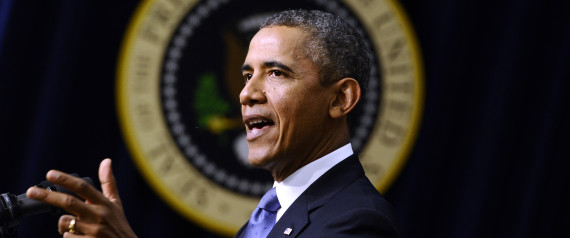
Bahrain opposition leader arrested, charged with inciting terrorism
 A leading opposition figure in Bahrain has been jailed after being charged with "inciting and advocating terrorism," Bahrain's Public Prosecution Office said. Activists in the tiny Persian Gulf kingdom, however, insist the charges against Khalil Al Marzooq are politically motivated and accuse the country's leadership of attempting to stifle dissent.
Al Marzooq, secretary general of Al-Wefaq, the main Shia opposition party, was arrested Tuesday after being interrogated about a speech he delivered last week. According to BNA, Bahrain's official news agency, he was summoned to a police station, questioned and then referred to the Public Prosecution Office.
In a statement, the office accused Al Marzooq of being "affiliated with the terrorist organization" and added that he had been "speaking at many forums, inciting and promoting terrorist acts, advocating principles which incite such acts, supporting violence committed by the terrorist coalition, and legally justifying criminal activities."Taher Al-Mosawi, the head of Al-Wefaq's media center, says that Al Marzooq did not incite violence and that Bahrain opposition parties are suspending participation in national dialogue.
Al-Wefaq called the government's actions in regard to Al Marzooq "reckless" and "a clear targeting of political action in Bahrain." The party added in a statement that it believes his detention is, in part, a reaction to a European Parliament resolution passed last week regarding the human rights situation in Bahrain.
That resolution called for "the respect of human rights and fundamental freedoms in Bahrain" and urged Bahraini authorities "to immediately end all acts of repression, release all prisoners of conscience, and respect the rights of juveniles."
European Parliament member Marietje Schaake told CNN that "the lack of progress in terms of dialogue and reforms towards the rule of law and respect for human rights in Bahrain continue to be of great concern to the European Parliament."
Schaake spearheaded the effort to get the resolution passed. "For the sake of the well-being of all people in Bahrain," she said, "and for the future of the country, the crackdown on peaceful demonstrations must end. The blanket ban on assembly in Manama is not helping reconciliation, either."
Bahraini opposition activists say that Al Marzooq's arrest is just the latest in a country where many prominent dissidents have been jailed in the past two years and that it only underscores how tense the situation remains in Bahrain.
In February 2011, at the height of the Arab Spring, Bahraini citizens, spurred by successful uprisings in Tunisia and Egypt, demanded democratic reforms and other changes in the way the country was run.
Anger from the majority Shiite population was directed at the ruling Sunni minority.
But Bahrain's uprising failed to gain the traction of other regional revolutions after a crackdown by authorities in the tiny island state, backed by troops from nearby Saudi Arabia and the United Arab Emirates.
Demonstrators say authorities killed dozens of people and arrested, tortured and imprisoned hundreds of others. Opposition leaders have tried to keep the protest movement alive.
A leading opposition figure in Bahrain has been jailed after being charged with "inciting and advocating terrorism," Bahrain's Public Prosecution Office said. Activists in the tiny Persian Gulf kingdom, however, insist the charges against Khalil Al Marzooq are politically motivated and accuse the country's leadership of attempting to stifle dissent.
Al Marzooq, secretary general of Al-Wefaq, the main Shia opposition party, was arrested Tuesday after being interrogated about a speech he delivered last week. According to BNA, Bahrain's official news agency, he was summoned to a police station, questioned and then referred to the Public Prosecution Office.
In a statement, the office accused Al Marzooq of being "affiliated with the terrorist organization" and added that he had been "speaking at many forums, inciting and promoting terrorist acts, advocating principles which incite such acts, supporting violence committed by the terrorist coalition, and legally justifying criminal activities."Taher Al-Mosawi, the head of Al-Wefaq's media center, says that Al Marzooq did not incite violence and that Bahrain opposition parties are suspending participation in national dialogue.
Al-Wefaq called the government's actions in regard to Al Marzooq "reckless" and "a clear targeting of political action in Bahrain." The party added in a statement that it believes his detention is, in part, a reaction to a European Parliament resolution passed last week regarding the human rights situation in Bahrain.
That resolution called for "the respect of human rights and fundamental freedoms in Bahrain" and urged Bahraini authorities "to immediately end all acts of repression, release all prisoners of conscience, and respect the rights of juveniles."
European Parliament member Marietje Schaake told CNN that "the lack of progress in terms of dialogue and reforms towards the rule of law and respect for human rights in Bahrain continue to be of great concern to the European Parliament."
Schaake spearheaded the effort to get the resolution passed. "For the sake of the well-being of all people in Bahrain," she said, "and for the future of the country, the crackdown on peaceful demonstrations must end. The blanket ban on assembly in Manama is not helping reconciliation, either."
Bahraini opposition activists say that Al Marzooq's arrest is just the latest in a country where many prominent dissidents have been jailed in the past two years and that it only underscores how tense the situation remains in Bahrain.
In February 2011, at the height of the Arab Spring, Bahraini citizens, spurred by successful uprisings in Tunisia and Egypt, demanded democratic reforms and other changes in the way the country was run.
Anger from the majority Shiite population was directed at the ruling Sunni minority.
But Bahrain's uprising failed to gain the traction of other regional revolutions after a crackdown by authorities in the tiny island state, backed by troops from nearby Saudi Arabia and the United Arab Emirates.
Demonstrators say authorities killed dozens of people and arrested, tortured and imprisoned hundreds of others. Opposition leaders have tried to keep the protest movement alive.
Russia prepared to receive Syrian national opposition coalition for talks
http://www.itar-tass.com/It is high time not to talk the Syrian opposition into participating in talks, but make them do it, Russian Foreign Minister Sergei Lavrov said after the negotiations with visiting Egyptian counterpart Nabil Fahmy here on Monday. “We use the phrase to talk the opposition into participating in a conference (Geneva-2) all the time,” the minister said. “Probably, it is high time to begin using another verb - make the opposition participate in the conference,” Lavrov noted. Russia is always prepared to receive the Syrian National Coalition of Opposition and Revolutionary Forces for talks, Russia's Foreign Minister added. “We are working with the opposition. The heads of almost all opposition groups visited our country, expect for the national coalition, which has an invitation to visit us. We will be prepared to receive the coalition’s leaders, because it is needed to talk to all parties,” the minister noted. “In any conflict a scenario should be the following - no isolation of a concrete party, but its involvement (in talks - Itar-Tass),” Lavrov noted.
Syria’s Assad Pledges to Destroy Chemical Weapons
 Syrian President Bashar Assad has pledged to destroy his country’s chemical weapons, in an interview with a US TV channel.
Elimination of such weapons would take about a year, Assad told the Fox News channel Wednesday. He once again denied that his regime was to blame for the recent alleged use of chemical weapons near the capital Damascus.
Syria will not set forth any conditions for chemical arms destruction, and is ready for a return of UN chemical weapons inspectors, Assad said.
On Saturday, after days of intense negotiations, Russian Foreign Minister Sergei Lavrov and US Secretary of State John Kerry announced an ambitious plan under which all chemical weapons in Syria would be opened up to international inspectors by November and destroyed by mid-2014.
UN inspectors said Monday that they had found “clear and convincing evidence” that chemical weapons, including the nerve agent sarin, were used in an August 21 attack that killed hundreds of people in the Damascus suburb of Ghouta.
he inspectors had no mandate to determine who had launched the attack, which the US and some of its Western allies have attributed to the Assad regime, but Moscow and Syria have called a provocation by anti-Assad rebels.
Lavrov said Tuesday that the UN report presented a day earlier had failed to answer certain questions and reiterated Moscow’s position that the Ghouta attack had been a “provocation” by opposition forces.
The unrest in Syria began in March 2011 and later escalated into a civil war. More than 100,000 people have been killed in the conflict so far, according to UN estimates.
Assad also said in the Fox News interview that Syria handed over to Russia data confirming that “terrorists” had used sarin in Syria.
Russian Deputy Foreign Minister Sergei Ryabkov said Tuesday after meeting with his Syrian counterpart Walid Muallem in Damascus that the Syrian authorities handed over to Russia evidence proving that Syrian opposition forces had allegedly been involved in the use of chemical weapons last month.
Syrian President Bashar Assad has pledged to destroy his country’s chemical weapons, in an interview with a US TV channel.
Elimination of such weapons would take about a year, Assad told the Fox News channel Wednesday. He once again denied that his regime was to blame for the recent alleged use of chemical weapons near the capital Damascus.
Syria will not set forth any conditions for chemical arms destruction, and is ready for a return of UN chemical weapons inspectors, Assad said.
On Saturday, after days of intense negotiations, Russian Foreign Minister Sergei Lavrov and US Secretary of State John Kerry announced an ambitious plan under which all chemical weapons in Syria would be opened up to international inspectors by November and destroyed by mid-2014.
UN inspectors said Monday that they had found “clear and convincing evidence” that chemical weapons, including the nerve agent sarin, were used in an August 21 attack that killed hundreds of people in the Damascus suburb of Ghouta.
he inspectors had no mandate to determine who had launched the attack, which the US and some of its Western allies have attributed to the Assad regime, but Moscow and Syria have called a provocation by anti-Assad rebels.
Lavrov said Tuesday that the UN report presented a day earlier had failed to answer certain questions and reiterated Moscow’s position that the Ghouta attack had been a “provocation” by opposition forces.
The unrest in Syria began in March 2011 and later escalated into a civil war. More than 100,000 people have been killed in the conflict so far, according to UN estimates.
Assad also said in the Fox News interview that Syria handed over to Russia data confirming that “terrorists” had used sarin in Syria.
Russian Deputy Foreign Minister Sergei Ryabkov said Tuesday after meeting with his Syrian counterpart Walid Muallem in Damascus that the Syrian authorities handed over to Russia evidence proving that Syrian opposition forces had allegedly been involved in the use of chemical weapons last month.
'Al-Qaeda and Al-Nusra in Syria may have significant amounts of sarin'
 The US military have reportedly proved that sarin gas production is going on among some Sunni salafists in Iraq, and via Turkey, can reach Syrian rebels, former Pentagon official Michael Maloof told RT, citing classified sources.
RT: France, the US and UK are saying the UN report clearly points to the Assad government's involvement in the August attack . But how can they be so sure, especially as the document states that improvised rockets may have been used, possibly pointing to rebel involvement?
Michael Maloof: I have a report from a source who has direct connections with classified information and he basically told me that [the] US military did an assessment based upon 50 indicators and clandestine interviews that the sourcing of sarin originated out of Iraq and into Turkey before some of it was confiscated in May in Turkey. He believes that since that report was disseminated in August in 2013, that there has actually been a more significant amount of sarin production both in Iraq and in Turkey going to the opposition, principally Al-Qaeda and Al-Nusra.
That was their specific target, to see to what extent Al-Qaeda was actually involved in production, in research and dissemination. He says what was confiscated was bench level or small specimens at the time, but that the production now they believe is much more robust and that the non-proliferation, genie, as he says, is no longer exclusive. So there's quite an increasing concern that this is still ongoing, that production is occurring among some Sunni salafists in Iraq and continues to be transported into Turkey.
RT: Can you tell us more about that classified document you’ve seen, which shows that the US knew that Al-Qaeda linked rebels in Syria had sarin gas?
MM: The document itself was published in August 2013 by the National Ground Intelligence Center (NGIC). It’s part of the intelligence community. The fact that some of it was actually captured in May along the border in Turkey and it was actually Al-Qaeda, and since it was disseminated my sources are telling me that production has probably increased significantly and sarin gas is being produced quite widely now. That it's actually ongoing and there's actually a Saudi financier whose name I’m trying to obtain right now.
This raises a whole host of questions, and even though Mr Kerry says we know what the origin of the August 21 shot was into the outskirts of Damascus that killed hundreds of people including children, he tells me that they have been scouring Syria for more than a year looking at all the Syrian military activities and that they have no information on any artillery having been fired that day at that time into that location. So this raises all kinds of further questions as to what this information is which Kerry possesses, but refuses to share with the world.
RT: Why is the US not taking any action against the Syrian rebels then? After all, they believe that Al-Qaeda, their sworn enemy has chemical weapons.
MM: Clearly the administration does not want to get more deeply involved in a Middle East conflict. It’s probably a political and policy call on the Obama administration’s part. Again, this is speculation on my part, but I think it would go absolutely against the grain of trying to assist the rebels and I think the administration’s goal really is regime change. You have an opposition and foreign fighters that have now integrated into the opposition being involved in this. This absolutely goes contrary to what their policy direction is and results in tremendous confusion.
We’ve had separate reports already that Al-Qaeda elements are rather significant in numbers and have permeated into the opposition. So the ability to distinguish who gets what and where becomes much more problematic for this administration. I think that the administration is trying to oust Assad, but the fact that you have those foreign fighters there, for them to admit it would absolutely undermine their entire policy approach.
‘US cannot afford another war with questionable results’
RT: The US says they want to see the Geneva peace talks take place - yet they've just offered more support to the opposition. How is that going to bring the peace process closer?
MM: You've got to distinguish the opposition. The opposition has refused to meet as long as the Assad government is going to be represented at Geneva 2. But I think with Russian President Putin’s direction and leadership in all this, I think the United States is compelled to have that meeting and to try and resolve this. It certainly isn’t going to please the opposition but the United States has basically boxed itself into a corner on this policy approach, because the next question is what happens in response to any bombing or regime change.
Regime change would clearly be done through military action and by force, so what the repercussions of that will be is something the administration doesn’t want to confront, and I think it’s something the opposition feels very disappointed about and it could be very demoralizing for them as a consequence.
The United States cannot afford to get involved in another military conflict with questionable results, and certainly in terms of time, where it’s all going to lead to. So I think it would be in the interests of the United States and Russia to get Geneva 2 underway and get something resolved. I think the leadership of Mr. Putin and certainly Foreign Minister Lavrov have come up with a solution and I think that that’s something that has to be pursued. Whether you get the opposition to come along is highly questionable, but I think at this stage the big boys are calling the shots on this, not the opposition.
You must keep in mind that the opposition itself is very fragmented. You have over a thousand elements in there that don’t talk to one another, it’s not a unified effort, and this actually consolidates Assad’s position, particularly with the help of Iran and Russia at this point.
The US military have reportedly proved that sarin gas production is going on among some Sunni salafists in Iraq, and via Turkey, can reach Syrian rebels, former Pentagon official Michael Maloof told RT, citing classified sources.
RT: France, the US and UK are saying the UN report clearly points to the Assad government's involvement in the August attack . But how can they be so sure, especially as the document states that improvised rockets may have been used, possibly pointing to rebel involvement?
Michael Maloof: I have a report from a source who has direct connections with classified information and he basically told me that [the] US military did an assessment based upon 50 indicators and clandestine interviews that the sourcing of sarin originated out of Iraq and into Turkey before some of it was confiscated in May in Turkey. He believes that since that report was disseminated in August in 2013, that there has actually been a more significant amount of sarin production both in Iraq and in Turkey going to the opposition, principally Al-Qaeda and Al-Nusra.
That was their specific target, to see to what extent Al-Qaeda was actually involved in production, in research and dissemination. He says what was confiscated was bench level or small specimens at the time, but that the production now they believe is much more robust and that the non-proliferation, genie, as he says, is no longer exclusive. So there's quite an increasing concern that this is still ongoing, that production is occurring among some Sunni salafists in Iraq and continues to be transported into Turkey.
RT: Can you tell us more about that classified document you’ve seen, which shows that the US knew that Al-Qaeda linked rebels in Syria had sarin gas?
MM: The document itself was published in August 2013 by the National Ground Intelligence Center (NGIC). It’s part of the intelligence community. The fact that some of it was actually captured in May along the border in Turkey and it was actually Al-Qaeda, and since it was disseminated my sources are telling me that production has probably increased significantly and sarin gas is being produced quite widely now. That it's actually ongoing and there's actually a Saudi financier whose name I’m trying to obtain right now.
This raises a whole host of questions, and even though Mr Kerry says we know what the origin of the August 21 shot was into the outskirts of Damascus that killed hundreds of people including children, he tells me that they have been scouring Syria for more than a year looking at all the Syrian military activities and that they have no information on any artillery having been fired that day at that time into that location. So this raises all kinds of further questions as to what this information is which Kerry possesses, but refuses to share with the world.
RT: Why is the US not taking any action against the Syrian rebels then? After all, they believe that Al-Qaeda, their sworn enemy has chemical weapons.
MM: Clearly the administration does not want to get more deeply involved in a Middle East conflict. It’s probably a political and policy call on the Obama administration’s part. Again, this is speculation on my part, but I think it would go absolutely against the grain of trying to assist the rebels and I think the administration’s goal really is regime change. You have an opposition and foreign fighters that have now integrated into the opposition being involved in this. This absolutely goes contrary to what their policy direction is and results in tremendous confusion.
We’ve had separate reports already that Al-Qaeda elements are rather significant in numbers and have permeated into the opposition. So the ability to distinguish who gets what and where becomes much more problematic for this administration. I think that the administration is trying to oust Assad, but the fact that you have those foreign fighters there, for them to admit it would absolutely undermine their entire policy approach.
‘US cannot afford another war with questionable results’
RT: The US says they want to see the Geneva peace talks take place - yet they've just offered more support to the opposition. How is that going to bring the peace process closer?
MM: You've got to distinguish the opposition. The opposition has refused to meet as long as the Assad government is going to be represented at Geneva 2. But I think with Russian President Putin’s direction and leadership in all this, I think the United States is compelled to have that meeting and to try and resolve this. It certainly isn’t going to please the opposition but the United States has basically boxed itself into a corner on this policy approach, because the next question is what happens in response to any bombing or regime change.
Regime change would clearly be done through military action and by force, so what the repercussions of that will be is something the administration doesn’t want to confront, and I think it’s something the opposition feels very disappointed about and it could be very demoralizing for them as a consequence.
The United States cannot afford to get involved in another military conflict with questionable results, and certainly in terms of time, where it’s all going to lead to. So I think it would be in the interests of the United States and Russia to get Geneva 2 underway and get something resolved. I think the leadership of Mr. Putin and certainly Foreign Minister Lavrov have come up with a solution and I think that that’s something that has to be pursued. Whether you get the opposition to come along is highly questionable, but I think at this stage the big boys are calling the shots on this, not the opposition.
You must keep in mind that the opposition itself is very fragmented. You have over a thousand elements in there that don’t talk to one another, it’s not a unified effort, and this actually consolidates Assad’s position, particularly with the help of Iran and Russia at this point.
Author Provides Glimpse Into Afghanistan's Secret Subcultures, Hidden Worlds


Bangladesh: SC verdict on Quader Mollah
 THE Supreme Court yesterday handed down death sentence to Abdul Quader Mollah, Assistant Secretary General of Jamaat-e-Islami, for his crimes against humanity in 1971. It is worthwhile to note that with this verdict, the SC has overturned the life term that the trial court, ICT-2 awarded him on February 5, 2012.
The highest court’s judicial decision provides a reason to feel satisfied for the fact that this is the first of the war crimes trial cases where the legal process has run its full course.
Trying war criminals was the demand of the nation, and through the SC judgement it has been duly met. We would like, on this occasion, to congratulate Sheikh Hasina and her government for having instituted the trial against war criminals in the first place.
It may be recalled that in the face of public protest against the earlier punishment of life term awarded to Mollah, the government was prompted to have the International Crimes (Tribunals) Act-1973 amended to ensure that the state could appeal against the judgement to the higher court.
At this point, one finds the main opposition BNP’s stance on the war crimes trial ambivalent and confounding. That is so because they are yet to clarify what they actually mean by their argument of maintaining international standard in the conduct of the trial.
We hope that all other war crimes-related cases pending with the court will also see speedy culmination in keeping with highest standard of justice.
THE Supreme Court yesterday handed down death sentence to Abdul Quader Mollah, Assistant Secretary General of Jamaat-e-Islami, for his crimes against humanity in 1971. It is worthwhile to note that with this verdict, the SC has overturned the life term that the trial court, ICT-2 awarded him on February 5, 2012.
The highest court’s judicial decision provides a reason to feel satisfied for the fact that this is the first of the war crimes trial cases where the legal process has run its full course.
Trying war criminals was the demand of the nation, and through the SC judgement it has been duly met. We would like, on this occasion, to congratulate Sheikh Hasina and her government for having instituted the trial against war criminals in the first place.
It may be recalled that in the face of public protest against the earlier punishment of life term awarded to Mollah, the government was prompted to have the International Crimes (Tribunals) Act-1973 amended to ensure that the state could appeal against the judgement to the higher court.
At this point, one finds the main opposition BNP’s stance on the war crimes trial ambivalent and confounding. That is so because they are yet to clarify what they actually mean by their argument of maintaining international standard in the conduct of the trial.
We hope that all other war crimes-related cases pending with the court will also see speedy culmination in keeping with highest standard of justice.
Afghanistan: Elections 2014: What’s on the voters’ minds?
AFGHANISTAN TODAY
by Masood Momin
Afghanistan will elect a new president and provincial councils on April 5, 2014. With less than a week to go until candidates start registering, Afghanistan Today presents a snapshot survey conducted among a cross-section of people around the country to see which issues are dominating the discourse. - See more at: http://www.afghanistan-today.org/article/?id=554#sthash.RLOel8o0.dpuf"I do not intend to participate in the upcoming presidential elections,” says Ahmad Shah, a 32-year-old grocer from Paktya Province. “The elections will be fraudulent, not transparent, allowing an individual to come to power who puts their personal interests before national interests. By contrast, Hakim Alipour, a professor at Ibn-e-Sina Institute of Higher Education in Mazar-e Sharif, believes the act of voting is a fundamental right to be exercised by all. “I want a say in the events that are shaping this country by participating,” he said, while urging the government to credibly commit itself to holding legitimate and transparent elections. Security and more security Gholam Jabar is a resident of Wamah District in Nuristan Province who would love to cast his ballot on April 5 but does not expect to have the opportunity. “Here we have Taliban and no security,” he said, adding that few people expect the elections to take place in this region. “And we have more Pakistani Taliban than their Afghan counterparts,” he added, calling upon the government to first clear out the area so people like him can fulfill their civic duty. Kabir Ahmad is a civil society activist in the Kohistan District of Kapisa Province. He believes that poor security in that area will mean the majority of families will not allow their wives and daughters to participate in the elections.As for local allegiances, he believes that “If the Taliban had a candidate in the upcoming elections, nobody would go to vote. And if anyone goes to vote, they would not vote for the Taliban.” (The Taliban have not nominated any candidates, but Karzai's government has extended the invitation to run.) Marzia Hosseini is the manager of a private loan-giving institution in Mazar-e Sharif. “I do not think I will vote since my participation in the last elections made no difference in the past years. Instead, the security situation deteriorated further,” she said. Family affair Others point to traditional methods of decision-making undermining the spirit of free elections. “In our district, people vote collectively, not individually,” said Abdul Bary, a 25-year-old student from Badakhshan’s Miami District. Others point to traditional methods of decision-making undermining the spirit of free elections. “In our district, people vote collectively, not individually,” said Abdul Bary, a 25-year-old student from Badakhshan’s remote Maaymi District. “The decision about who to vote for is made by families, not individual members of the family,” he added. He also criticized the choice of election date, since many parts of the province will still be locked with snow. Shareefullah Khan, 45, is a school teacher in the Gul Tapa area of Kunduz City. In the last presidential elections he voted for Hamid Karzai but now regrets his choice. “I believe President Karzai formed a government based on a compromise, without considering what is good for Afghanistan,” said Khan, who is still undecided whether he will vote in April. Enough empty promises Mohammad Reshad Ghoroob sells phone cards and changes money in Kabul’s Qala-e-Fatullah District. His vote will not only go to the candidate who promises a firm stance on security, but one who is as focused on the economy, he said. Sona is another resident of the capital who works as a nurse in a private hospital. She is determined to take part in the elections and will vote for her “favourite candidate”. And this will be the one who “has good programmes to eliminate violence against women.” Mohammad Asef, 42, owns a grocery store in Kandahar Province. He still believes in the value of general elections and that a legitimate and productive government can be created as a result. But seeing is believing: “I will vote for the person with good and effective strategies to fight corruption, strengthen the rule of law and enhance meritocracy … I do not believe in empty promises.” - See more at: http://www.afghanistan-today.org/article/?id=554#sthash.RLOel8o0.dpuf
Pakistan: A judge and police join hands to deny justice to a Christian woman in Toba Tek Singh
http://www.pakistanchristianpost.com/Iqra Saddiq, a Christian girl in a village No. 330, GB Siowal, Toba Tek Singh was illegally arrested by four policemen, one of them named as Javed and a private man , Arif Gujjar on 28th of July 2013. She remained in the illegal custody of Police Station City, Toba Tek Singh until 5th of August that it came to the notice of General Secretary of Pakistan Christian Congress, Punjab on 5th of August and the Chief Organizer Pakistan Christian Congress Punjab, Mr. Akram Waqar Gill, who immediately went to the said police station. Upon our anger and protest against this severe illegality and illegitimate action by police, the police falsely involved the young girl in a robbery case and send to her Judicial lock up to avoid protest by Pakistan Christian Congress and the people of the village. Sadaf Saddique Khokhar, the secretary general of Pakistan Christian Congress, Punjab and attorney for Iqra Saddique was following this case of persecution and seduction of a young girl. It was clearly brought in the information and knowledge of the court that the girl has been tortured and seduced by policemen whereby her medical exam was necessary to be held. In spite of the orders by the court the Police did not hold the medical exam for Iqra to prove that she was tortured and seduced sexually. Mr. Sadaf Saddique applied again, the second time, calling upon the courts to make it sure that the orders of the court be followed and the medical exam done! In spite of asking and inquiring the police about the why of not following the orders of the court, the Judge, Mr. Asif Iqbal joins his hands with the police and tore and destroyed an important piece of evidence from the file of Iqra Saddique presented by Mr. Sadaf Saddique, attorney at law. This is severe persecution by this judge in a persecution of Iqra. We demand that justice be served to Iqra and that Mr. Asif Iqbal, the judge be held responsible for this criminal misconduct. Mr. Sadaf Saddique has already filed a case against the Judge to Member Inspection Team whereby inquiry shall be conducted against his for this professional and criminal misconduct. We demand the Chief Justice of Pakistan to take action. If this mishandling of judges is not taken serious, then the people will stop trusting Judiciary for their problems. Justice should be served!
Al-Qaeda suspect arrested from Punjab University hostel

Pakistan: National Nutrition Survey: ‘Women and children suffer from acute malnutrition’
The Express TribuneAfter a two-year delay, the Planning Commission of Pakistan launched the National Nutrition Survey (NNS) 2011, at a ceremony on Tuesday. The findings of the NNS-2011, launched in collaboration with the Ministry of National Health Services, Regulations and Coordination, reveal that 58.1 per cent of households are food insecure and only three per cent of children receive a diet that meets the minimum standards of dietary diversity. Just three countries account for half of malnourished women and children globally and Pakistan is one of them, stated the report. “Major factors leading to chronic malnutrition in the country are poverty, high illiteracy rates among mothers and food insecurity.” However, the findings of the NNS 2011 indicate a slight improvement since 2001 in terms of core maternal and childhood nutrition indicators which have profound effect on children’s immunity, growth and mental development.


Delaying tactics?: Iran-Pakistan pipeline project
 THE planned import of gas through a multi-billion-dollar pipeline from Iran has become a major foreign policy challenge for Islamabad. Slow progress on the project also reflects a disconnect between the country’s business interests and its foreign policy objectives. Prime Minister Nawaz Sharif underscored this predicament when he admitted some time ago that the US had warned Pakistan of sanctions if it went ahead with the
Iran-Pakistan gas pipeline project. Indeed, it was Washington’s pressure that pulled India away from the project. In return, New Delhi secured a civil nuclear cooperation deal with the Americans. Islamabad, on the other hand, has dragged its feet on the project — which is to start delivery of 750mmcfd Iranian gas from the end of next year — at the expense of its growing present and future energy requirements. Even a Foreign Office view that the completion of the project would not invite international sanctions has been unable to push the government into starting the construction of the 781km pipeline on its side.
Now Islamabad has asked Tehran to reduce the interest rate on $500m, one-third of the total cost of laying the pipeline on Pakistan’s side. While the government is fully within its rights to ask for reduction in the borrowing cost, or renegotiating the price of gas, such demands should not appear as delaying tactics while Pakistan waits for a nod from Washington. If this is not what Islamabad is entangled in right now why hasn’t any headway been made more than six months after the presidents of Pakistan and Iran inaugurated the construction phase of the pipeline on the Pakistani side? Why hasn’t a sovereign guarantee for Iranian financing been extended to achieve the financial close of the project? A plausible explanation could be that both countries were busy organising their respective elections. Still the fact that no progress has been made weeks after the political transition in Islamabad and Tehran is a subject of negative speculation.
The Americans must also realise the importance of Iranian gas for this country and stop trying to wean Islamabad away from the project. By dropping its opposition to the pipeline project, Washington will also be sending positive signals to the new Iranian leader who has already expres-sed willingness to talk on Tehran’s controversial nuclear programme. But more importantly, it is for the Pakistan government to understand what is best for its people.
THE planned import of gas through a multi-billion-dollar pipeline from Iran has become a major foreign policy challenge for Islamabad. Slow progress on the project also reflects a disconnect between the country’s business interests and its foreign policy objectives. Prime Minister Nawaz Sharif underscored this predicament when he admitted some time ago that the US had warned Pakistan of sanctions if it went ahead with the
Iran-Pakistan gas pipeline project. Indeed, it was Washington’s pressure that pulled India away from the project. In return, New Delhi secured a civil nuclear cooperation deal with the Americans. Islamabad, on the other hand, has dragged its feet on the project — which is to start delivery of 750mmcfd Iranian gas from the end of next year — at the expense of its growing present and future energy requirements. Even a Foreign Office view that the completion of the project would not invite international sanctions has been unable to push the government into starting the construction of the 781km pipeline on its side.
Now Islamabad has asked Tehran to reduce the interest rate on $500m, one-third of the total cost of laying the pipeline on Pakistan’s side. While the government is fully within its rights to ask for reduction in the borrowing cost, or renegotiating the price of gas, such demands should not appear as delaying tactics while Pakistan waits for a nod from Washington. If this is not what Islamabad is entangled in right now why hasn’t any headway been made more than six months after the presidents of Pakistan and Iran inaugurated the construction phase of the pipeline on the Pakistani side? Why hasn’t a sovereign guarantee for Iranian financing been extended to achieve the financial close of the project? A plausible explanation could be that both countries were busy organising their respective elections. Still the fact that no progress has been made weeks after the political transition in Islamabad and Tehran is a subject of negative speculation.
The Americans must also realise the importance of Iranian gas for this country and stop trying to wean Islamabad away from the project. By dropping its opposition to the pipeline project, Washington will also be sending positive signals to the new Iranian leader who has already expres-sed willingness to talk on Tehran’s controversial nuclear programme. But more importantly, it is for the Pakistan government to understand what is best for its people.
Pakistan: Mysteriously mum National Assembly
 The Supreme Court of Pakistan has delivered another bold decision on Tuesday in which it stayed withdrawal of army from Malakand, calling upon the government to consult military leadership to this effect. After killing high profile army officer in Upper Dir, the TTP has said that they are still at war with the government troops and would continue their atrocious attacks on army personnel and civilians. In their preconditions for talks, Taliban are demanding army pull-out and in turn Pakistan military says that it will not let the rebels to dictate terms. Amidst the TPP’s continued brutal acts, the government’s resolve to initiate peace talks with the Taliban, having all their combat capabilities intact, is hardly understandable. Even astonishing is the posture adopted by the Members of the National Assembly. The House offered fateha for the departed soul of the general and his colleagues but thereafter, the law-makers kept mysterious mum over the sad incident that has created a fair amount of the skepticism about much trumpeted consensus amongst civil and military leadership on the peace talks. Though the army chief has not opposed the negotiations either yet the two seem not to be on the page. The law-makers should have strongly condemned the latest act of terrorism. The subdued response from the law-makers as if the government has made up its mind to announce unilateral ceasefire to join all powerful rebels on the negotiating table. Will it be acceptable for military offering sacrifices in the war on terror and will the military leadership join the table with enemy they have been fighting for a long time? Only time will tell the future course of action the military. The tune and the choice of the words that the TPP has used in the latest public statement it looks as if the TPP is in no mood to give any let-up to the government. Reading the situation carefully, the government must take stock of the situation judiciously so that it could put up the best defense of the country rather than madly following the Americans pursuit of the peace process in Afghanistan. Make no mistake, the international forces operative in the region are offering continued backing to the TPP to sustain its strength in a region where the writ of the government is just minimum. Any concession to rebels at this point in time may offer an advantage to the international forces working to create a buffer zone between Pakistan and Afghanistan because it may provide them chance to clamp complete control over the region. Strangely enough, the PTI chief, who always opposed the drone attacks that are supposed to be directed at those who had killed thousands of civilians and military personnel, left the House without saying a word on the sad incident. He may have some respect for the TPP but he must not forget that without Amy efforts it will be difficult to keep the frontiers of the country intact. Thus no width should be offered to the TTP and other anti-state forces working in the region. Every peace effort must aim at upholding the integrity and sovereignty of Pakistan. Undermining the utility of the Pakistan army in the tribal areas under the rule of rebels’ guns can be a fatal mistake.
Tuesday, September 17, 2013
Karzai Meets With Youth, Talks About Elections, BSA
http://tolonews.com/At a gathering organized for Afghan youth in Kabul on Tuesday, President Hamid Karzai spoke to a crowd of hundreds of young Afghans from around the country about the importance of the upcoming elections and the Bilateral Security Agreement (BSA) with the U.S. The gathering on Tuesday organized by the Youth Secretariat, a part of the Ministry of Information and Culture, saw over 400 hundred young Afghans from around the country converge on the capital. President Karzai said that the elections were the only way to bring peace and stability to Afghanistan. He warned that if the elections were not held it would threaten the future of Afghanistan. "Elections are the strength and stability of Afghanistan and there should be no doubt whether or not the elections will be held on time," President Karzai said. Concerns about whether or not the elections will be held on time, or at all, have primarily been related to security concerns. Nevertheless, in addition to security threats, many Afghans have expressed worries about the potential for fraud and other improprieties in the elections, which were a major problem in 2009. President Karzai assured those present at the event on Tuesday that the upcoming elections would be held in a transparent manner and he would not allow any foreign entities to interfere with the process. "The elections would be impartial and no foreign entities will be allowed to interfere," Karzai said. According to a recent survey conducted by Asses, Transform and Reach Consulting in five provinces, 50% of respondents said they agreed with the statement "the foreigners might interfere in the results of the elections," while only 17% said they didn't agree. When asked about the BSA, President Karzai said that he would sign the agreement only if security is assured by it, the foreign troops can guarantee Afghan sovereignty and the strengthening of the Afghan forces. "Security must be provided and if there is an American base and security is not provided, it is not acceptable to us. Also, strengthening of the Afghan security forces and respect for national sovereignty are some of our pre-conditions," Karzai said. BSA talks were stalled back in June when the Afghan President froze them out of frustration with the U.S. over the botched attempt at negotiations with the Taliban in Qatar. Although they soon recommenced, it has been no secret that there has been tension between Washington and Kabul over them. Back in July, U.S. officials said they would give Kabul until October to finalize the agreement. It is unlikely any American troops will stay in Afghanistan after the NATO combat mission ends in 2014 if an accord is not met, which is an outcome – called the "zero option" – that the U.S. has floated in apparent attempts to put pressure on the Karzai administration. Most experts say a comprehensive withdraw of U.S. forces would be extremely dangerous for Afghan security in the coming years. Before the security transition enters its last months, however, Presidential and Provincial elections are set to take place are taking up much of the focus of the Afghan government and public. They are scheduled to take place on April 5. The nomination filing process for candidates began on Monday. With only 19 days remaining for the nomination filing process to end, news about the probable candidates is expected to start opening up over the coming weeks. The Independent Election Commission (IEC) will announce the names of the electoral candidates on October 16.
U.S. poverty rises despite economic recovery
 The number of U.S. residents living in poverty edged up to 46.5 million last year, the latest sign that an economic recovery marked by a stock market boom has not trickled down to ordinary Americans.
The figures from the Census Bureau on Tuesday highlighted the lingering scars from the 2007-2009 recession and added fresh fuel to debates over government austerity and widening income inequality. It could also renew calls to raise the minimum wage.
Although the number of people in poverty went up from 46.2 million in 2011, the national poverty rate was unchanged at 15 percent, the annual report said. The poverty threshold in 2012 was an income of $23,492 for a family of four.
"Today's data underscore that it is time for Congress to pivot from a focus on austerity to an agenda emphasizing jobs and shared economic growth," said Neera Tanden, president of the Center for American Progress, a liberal policy group in Washington.
The recovery from the worst recession since the 1930s has been marked by a jump in stock prices to record highs, aided in part by the Federal Reserve's ultra easy monetary policy.
While the Standard & Poor's 500 index gained 16 percent on a total return basis last year, including reinvested dividends, the Census Bureau report showed median household income slipped to $51,017 from of $51,100 in 2011.
The economy has struggled to sustain growth rates of more than 2.5 percent since the recession ended.
Although the bulk of the more than 8 million jobs lost during the downturn have been recouped, many of the jobs have been in services industries such as retail and restaurants that typically do not pay well.
Belt-tightening in Washington to slash the government's budget deficit has significantly shrunk the social safety net.
About 16.1 million children and 3.9 million people aged 65 years and older were living in poverty last year.
"Millions are struggling to keep their heads above water, while the richest one percent is doing better than ever," said Joan Entmacher, vice president of Family Economic Security at the National Women's Law Center in Washington.
MORE HAVE HEALTH INSURANCE
There was some encouraging news in the report. About 48 million people did not have health insurance last year, down slightly from 48.6 million in 2011.
The number with health insurance rose to 263.2 million in 2012 from 260.2 million the prior year. The rate of uninsured people declined for a second straight year since President Barack Obama's Affordable Care Act was passed in 2010.
Much of the decline was due to an increase in enrollment in the Medicare program for Older Americans as the population aged, said Brett O'Hara, chief of the health and disability statistics branch of the Census Bureau. O'Hara also cited expansion of government-paid coverage for children.
The U.S. government expects further declines in the uninsured rate. About 9 million people are expected to gain insurance through the expansion of the Medicaid program for the poor in 2014, now planned in about half of U.S. states.
An additional 7 million people are expected to buy insurance in 2014 on subsidized, state-based public exchanges set up under the law.
Employment-based insurance coverage fell to 54.9 percent from 55.1 percent. The rate of people insured through government programs such as Medicare and Medicaid rose to 32.6 percent from 32.2 percent.
In 2012, the uninsured rate for households with annual income less than $25,000 was 24.9 percent compared with a 7.9 percent rate for those households with income of $75,000 or more, the report said.
The uninsured rate for children in poverty was 12.9 percent compared with 7.7 percent for children not in poverty, the Census found.
The number of U.S. residents living in poverty edged up to 46.5 million last year, the latest sign that an economic recovery marked by a stock market boom has not trickled down to ordinary Americans.
The figures from the Census Bureau on Tuesday highlighted the lingering scars from the 2007-2009 recession and added fresh fuel to debates over government austerity and widening income inequality. It could also renew calls to raise the minimum wage.
Although the number of people in poverty went up from 46.2 million in 2011, the national poverty rate was unchanged at 15 percent, the annual report said. The poverty threshold in 2012 was an income of $23,492 for a family of four.
"Today's data underscore that it is time for Congress to pivot from a focus on austerity to an agenda emphasizing jobs and shared economic growth," said Neera Tanden, president of the Center for American Progress, a liberal policy group in Washington.
The recovery from the worst recession since the 1930s has been marked by a jump in stock prices to record highs, aided in part by the Federal Reserve's ultra easy monetary policy.
While the Standard & Poor's 500 index gained 16 percent on a total return basis last year, including reinvested dividends, the Census Bureau report showed median household income slipped to $51,017 from of $51,100 in 2011.
The economy has struggled to sustain growth rates of more than 2.5 percent since the recession ended.
Although the bulk of the more than 8 million jobs lost during the downturn have been recouped, many of the jobs have been in services industries such as retail and restaurants that typically do not pay well.
Belt-tightening in Washington to slash the government's budget deficit has significantly shrunk the social safety net.
About 16.1 million children and 3.9 million people aged 65 years and older were living in poverty last year.
"Millions are struggling to keep their heads above water, while the richest one percent is doing better than ever," said Joan Entmacher, vice president of Family Economic Security at the National Women's Law Center in Washington.
MORE HAVE HEALTH INSURANCE
There was some encouraging news in the report. About 48 million people did not have health insurance last year, down slightly from 48.6 million in 2011.
The number with health insurance rose to 263.2 million in 2012 from 260.2 million the prior year. The rate of uninsured people declined for a second straight year since President Barack Obama's Affordable Care Act was passed in 2010.
Much of the decline was due to an increase in enrollment in the Medicare program for Older Americans as the population aged, said Brett O'Hara, chief of the health and disability statistics branch of the Census Bureau. O'Hara also cited expansion of government-paid coverage for children.
The U.S. government expects further declines in the uninsured rate. About 9 million people are expected to gain insurance through the expansion of the Medicaid program for the poor in 2014, now planned in about half of U.S. states.
An additional 7 million people are expected to buy insurance in 2014 on subsidized, state-based public exchanges set up under the law.
Employment-based insurance coverage fell to 54.9 percent from 55.1 percent. The rate of people insured through government programs such as Medicare and Medicaid rose to 32.6 percent from 32.2 percent.
In 2012, the uninsured rate for households with annual income less than $25,000 was 24.9 percent compared with a 7.9 percent rate for those households with income of $75,000 or more, the report said.
The uninsured rate for children in poverty was 12.9 percent compared with 7.7 percent for children not in poverty, the Census found.
Malala receives top Amnesty award

Pakistan: Inflation rate reversal of positive economic trend
Pakistan People’s Party Parliamentarian Sindh chapter General Secretary Taj Haider termed the rising inflation rate and the raising of Bank Rate by the State Bank of Pakistan as reversal of a positive economic trend, which would result in serious consequences for national economy. Haider reminded that back in 2008 when the PPP government had taken over the inflation rate in Pakistan had touched 25 percent. That rate was gradually brought down with sound economic policies of raising national production. In June 2013, inflation rate had come down to as low as 5.8 percent. Quite alarmingly in August and September 2013 it had risen to 8.5% and 8.9 percent indicating a serious trend of rapidly rising inflation in the country. The Bank Rate in 2008 was abnormally high at 14 percent. This had greatly raised the cost of doing business. PPP government was repeatedly advised against bringing down the Bank Rate as according to text book economists a reduction in Bank Rate creates inflationary pressures, he said adding that the PPP government faced the challenge in order to boost production and to promote business activity and started reducing the Bank Rate gradually. By the end of its tenure PPP government had brought down the Bank Rate by a full 5 percentage points to 9 percent. He was of the opinion that the recent increase of the Bank Rate by half percentage points had obviously been made with the purpose of arresting inflation. However, in the present scenario it will have just the opposite effect by raising the cost of doing business, restarting production and causing lay-off of workers and employees. He said that a vicious negative economic cycle had been set in by the present government in its first 100 days by raising the prices of wheat, electricity, petroleum and petroleum products and now by increasing the Bank Rate.http://mediacellppp.wordpress.com/

Subscribe to:
Posts (Atom)