Friday, September 6, 2013

OBAMA SETS TUESDAY SPEECH; BIG CHALLENGES ON SYRIA

Beset by divisions at home and abroad, President Barack Obama candidly acknowledged deep challenges Friday in pursuing support for a military strike against Syria from international allies and the U.S. Congress. He refused to say whether he might act on his own, a step that could have major implications for the U.S. as well as for the remainder of his presidency. The White House laid out an intense week of lobbying, with Obama addressing the nation from the White House Tuesday night. "I did not put this before Congress just as a political ploy or as symbolism," Obama said, adding that it would be a mistake to talk about any backup strategy before lawmakers vote on a use-of-force resolution. The president spoke to reporters at the end of a two-day international summit, where he sought backing for a strike against Syria in retaliation for a deadly chemical weapons attack against civilians. But Obama appeared to leave the summit with no more backing than he had when he arrived. In fact, Russian President Vladimir Putin, a staunch ally of Syrian President Bashar Assad, said he was the one with support from the majority of countries attending the Group of 20 meeting. Putin insisted anew that Obama seek approval from the United Nations before taking military action, despite the fact that Russia has blocked previous Security Council efforts to punish Assad throughout Syria's bloody 2½-year civil war. The White House tried to counter Putin's assessment by releasing a joint statement from the U.S. and 10 other countries announcing support for "efforts undertaken by the United States" to enforce an international prohibition on chemical weapons use. The statement did not specify military action against Syria, but administration officials said the intent was to show international support for that type of response. The countries signing the statement with the U.S. were Australia, Canada, France, Italy, Japan, South Korea, Saudi Arabia, Spain, Turkey and the United Kingdom. Putin said the U.S. push for military action has been supported only by Turkey, Canada, Saudi Arabia and France. "The use of force against a sovereign nation is only possible as self-defense — and Syria hasn't attacked the United States — and on approval of the U.N. Security Council," Putin said. "Those who do otherwise place themselves outside the law." Indeed, Obama's coalition appeared anything but strong. Britain's Parliament has already voted against military action. Even French President Francois Hollande, who has expressed willingness to form a military coalition with the U.S. against Syria, displayed sudden caution, saying he would wait until a United Nations investigation into the Aug. 21 sarin gas attack was released before deciding whether to intervene militarily. The U.N. report is not expected to be released until mid-to late-September. Obama and Hollande discussed strategy during a meeting on the sidelines of the summit Friday. The U.S. president also held a surprise meeting with Putin, one that Putin initiated with some small talk during a break in Friday morning's summit session. A senior administration official said the two leaders, who have a strained relationship, eventually moved to a corner, pulled together their chairs and talked for about 20 to 30 minutes as other summit participants looked on. The official was not authorized to describe the meeting publicly and spoke only the condition of anonymity. Both Obama and Putin later said their conversations were candid, but yielded no new agreement on Syria. The burden of undertaking military action appeared to be weighing on Obama throughout his 50-minute post-summit question-and-answer session. He made several references to the immense responsibility the world places on the United States in responding to humanitarian crises, saying that the first question often asked is, "Why isn't the United States doing something about this?" The president departed Russia Friday night, bound for Washington where he also faces tough going in rallying support for military action, including from fellow Democrats. Force-authorization resolutions face an uncertain future in Congress, and a significant segment of the American public opposes a strike. In addition to Obama's Tuesday night speech, administration officials scheduled new classified briefings for lawmakers and White House chief of staff Denis McDonough was making the rounds on all five Sunday talk shows. The president admitted his campaign may not succeed. "It's conceivable at the end of the day I don't persuade a majority of the American people that it's the right thing to do," he said. "And then each member of Congress is going to have to decide." The options facing the U.S. and the international community are neither convenient nor appetizing, Obama said. But he appealed for action on moral grounds, citing U.S. estimates that the chemical weapons attack killed more than 1,400 people, including 426 children. Other estimates are somewhat lower. "There are times where we have to make hard choices if we're going to stand up for the things that we care about," he said. "And I believe that this is one of those times." Two recent polls show Americans oppose airstrikes, with a Pew Research Center survey showing 48 percent opposed to 29 percent in favor and a Washington Post-ABC News poll showing 59 percent opposed and 36 in support. Both surveys were taken over the recent Labor Day holiday weekend as the U.S. released its assessment of whether the Syrian government used chemical weapons and Obama announced he would seek congressional approval. Sen. Dianne Feinstein, D-Calif., chairwoman of the Senate Intelligence Committee, said the public sentiment might be different if Americans could see the evidence from the chemical weapons attack, including the convulsions and other side effects of the nerve gases. "They don't know what I know. They haven't heard what I've heard," she said. An Associated Press survey found 34 senators in support or leaning in favor of authorizing military action, 32 against or leaning that way and 34 undecided ahead of votes next week. Tallies in the House show a significant number of Republicans and Democrats are also opposed to military action or leaning against it. Senate Majority Leader Harry Reid on Friday formally introduced the resolution, which would authorize the "limited and specified use" of the U.S. armed forces against Syria for 90 days while prohibiting American ground troops from combat. Lawmakers return from their five-week recess on Monday and will begin to debate, with a Senate vote to move ahead on the resolution expected Wednesday. "I think we're going to get 60 votes. It's a work in progress," Reid said. Obama's unexpected decision last week to seek congressional approval halted what had seemed to be a march toward quick military action in retaliation for a chemical weapons attack the U.S. says was perpetrated by Assad's government. Obama has repeatedly said the deployment of the deadly gases would cross a "red line" and change his calculus regarding a bloody civil war in which he has been reluctant to intervene. If Congress votes down a resolution authorizing force, the president could risk further damage to his credibility if he doesn't follow through on his warnings to Assad. But moving forward against the will of Congress could worsen his already difficult relationship with Republicans and jeopardize the rest of his legislative agenda. Earlier Friday, White House deputy national security adviser Tony Blinken said of the president that it is "neither his desire nor his intention to use that authority absent Congress backing him." Obama deflected a question about the remark during his news conference, again refusing to give a yes-or-no answer about what he would do if Congress turns him down. On the ground in Syria Friday, a monitoring group said the government sent reinforcements, including tanks and armored personnel carriers, to a predominantly Christian village north of Damascus where rebels have battled government troops this week. Opposition fighters led by an al-Qaida-linked rebel faction had attacked the ancient mountainside sanctuary of Maaloula and briefly entered the village. The assault has spotlighted fears among Syria's religious minorities about the prominent role of Islamic extremists in the rebel ranks fighting to overthrow Assad. Meanwhile, the Kremlin said Russia was boosting its naval presence in the Mediterranean Sea, moving warships into the area. That was stoking fears about a larger international conflict if the United States orders airstrikes. The U.S. already has five Navy destroyers armed with Tomahawk missiles on standby in the Mediterranean. ___

Face-to-face meeting of world leaders fails to break impasse on Syria

An unprecedented face-to-face discussion among world leaders ahead of a possible U.S.-led military mission failed – as expected – to bridge the strong divide over how best to address the Syrian crisis. U.S. President Barack Obama left St. Petersburg, Russia, with a letter of support signed by the United Kingdom, Italy, Spain, Turkey, Japan, the Republic of Korea, Australia, and Saudi Arabia. The discussion took place while Group of 20 leaders met in Russia to discuss global economic issues.“We support efforts undertaken by the United States and other countries to reinforce the prohibition on the use of chemical weapons,” the letter states, giving the U.S. new political support. It is clear though by the limited list of signatories that there remain G20 countries – such as Germany and the broader European Union – that are in-between the U.S. position and that of Russia and China, who strongly oppose military intervention in Syria. Prime Minister Stephen Harper, for his part, said he strongly urged fellow leaders Thursday night to consider the consequences of inaction in the context of history. “I may be oversimplifying it somewhat, but broadly speaking, we have two camps here,” said Mr. Harper, referring to those who support the position of U.S. and France and those who oppose a military strike in Syria. “We’re at an impasse here in terms of what the world community believes should or shouldn’t be done, and those who want to act have our full support.” He criticized the fact that some G20 leaders are of the view that no action can take place unless it has the support of the UN Security Council, where both Russia and China have a veto. President Obama told reporters that the world needs to consider the consequences of not acting in Syria and the message that would send. He also said that he and Russian President Vladimir Putin did have a conversation on the margins of the summit. The President said that while the media has been analyzing the body language of their exchanges, the conversations between the two of them are always cordial. “On Syria, I said ‘Look, I don’t expect us to agree,’” Mr. Obama said. However he said he reminded Mr. Putin that they both do agree that there must be a political transition in order to end the fighting in Syria and that both of them should work to help that happen. “It remains important for us to work together,” he said. The President declined several times to answer whether or not the U.S. would act in Syria without the support of Congress, dismissing the questions as "parlour games." In a detailed answer that looked back on past military decisions, Mr. Obama said politicians sometimes have to make decisions that are right, but not necessarily popular. "These kinds of actions are always unpopular because they seem distant and removed," he said. "People are struggling with jobs and bills to pay and they don't want their sons or daughters put in harm's way... When people say that it is a terrible stain on all of us that hundreds of thousands of people were slaughtered in Rwandwa, well imagine if Rwanda was going on right now?" On Friday, Canada announced $45-million in additional support for the region. The money is aimed at providing food, clean water and sanitation, medical assistance, shelter and protection – both in Syria and for Syrian refugees in neighbouring countries. Ottawa says it has now contributed $203-million in humanitarian assistance related to the Syrian crisis since January 2013. British Prime Minister David Cameron – who chaired a meeting Friday morning focused on Syria that was attended by Canadian Foreign Affairs Minister John Baird – announced about $85-million in aid. While speaking with reporters following the summit, Mr. Harper referenced the fact that chemical weapons have not generally been used since the First World War. He noted that he grew up near Sunnybrook hospital in Toronto – created in 1948 as Canada’s largest veterans’ hospital – and had the opportunity to hear from victims of chemical weapons. “Terrible stories,” he said, in reference to visits veterans would make to his classroom. “I can tell you it was a very real recollection when I was a boy that those kinds of things had happened. But as I pointed out last night, even in the Second World War, even in the war against fascism and Hitler, those forces did not on the battlefield resort to chemical weapons. So I really do believe here that if we’re going to sit back and allow a regime to try and win a military conflict through the use of chemical weapons, we are in new territory, we are in brand new territory that is extremely dangerous and that there will be no turning back from. Even the most ferocious, despicable and brutal powers from the past 100 years have all stayed away from this kind of warfare. So as I say, I think we’re in new territory and I think it demands a different kind of response from our allies than we would have been prepared to do in other circumstances.”

China's Xi tells Obama Syria crisis can't be resolved with military strike

Chinese President Xi Jinping told his U.S. counterpart Barack Obama on Friday that the crisis in Syria should not be resolved through a military strike and urged him to consider a political solution, state news agency Xinhua said. Xi's are the highest-level comments from China since an August 21 chemical weapons attack in Syria. They follow remarks by a foreign ministry spokesman, who urged a role for the U.N. Security Council in resolving the crisis after the United States said it had given up trying to work with the council on Syria. "A political solution is the only right way out for the Syrian crisis, and a military strike cannot solve the problem from the root," Xinhua quoted Xi as telling Obama on the sidelines of a G20 summit in St. Petersburg in Russia. "We expect certain countries to have a second thought before action." China has called for a full and impartial investigation by U.N. chemical weapons inspectors in Syria into the attack, and has warned against pre-judging the results. It has also said that whoever used chemical weapons had to be held accountable. Xi stressed to Obama China's position on adhering to the two principles of "maintaining the basic norms of international law and relations" and the prohibition of the use of chemical weapons, according to remarks broadcast by state television. He urged the international community to work toward a meeting on Syria at a second conference in Geneva, with the aim of discussing an open political transition in Syria. Russia and China have both vetoed previous Western efforts to impose U.N. penalties on Syrian President Bashar al-Assad. But China has also been keen to show it is not taking sides and has urged the Syrian government to talk to the opposition and take steps to meet demands for political change. It has said a transitional government should be formed. Remarks on Thursday by Samantha Power, the U.S. ambassador to the United Nations, left no doubt that Washington would not seek U.N. approval for a military strike on Syria in response to the chemical attack. Asked about those comments, Chinese Foreign Ministry spokesman Hong Lei said the Security Council needed to be used. "China supports the important role that the U.N. Security Council plays in properly resolving the Syria issue," Hong told a daily news briefing in Beijing. "We hope relevant parties can continue communications and coordination and hold deep consultations so as to resolve the relevant issue in a peaceful way," he added. Separately, Xi urged Obama to adopt an "objective and fair attitude" in matters related to the Asia-Pacific region, where there are disputes over maritime rights and islands. Xi also reiterated China's long-held view on resumption of six-party talks on the Korean peninsula.

Bangladesh : Violence against women

Have we failed to stand up to it?
WOMEN have become an endangered species in Bangladesh. Hardly a day passes without news of violence against women; of girls, daughters, wives subjected to brutality and torture. Last Friday’s issue of The Daily Star carried not one but three stories of violence perpetrated on women. In one instance a jilted suitor in Barisal reacted by attacking his inamorata, causing her grievous injuries and subsequently her death. In another instance a young girl of fifteen could not bear the humiliation of being stalked, and not finding solace even in her parents, who rebuked her on hearing of the incident instead of giving her the much needed consolation and support, hanged herself. The third woman succumbed to her injuries after an acid attack in her home. These are but only a few instances of the widespread violence against women in the country. Needless to say, most of the violence is perpetrated by persons known to the victims or by those that live in the same vicinity, and also, regrettably, by members of her family. We feel that the state should devise more robust ways to prevent these crimes, and more punitive measures, apart from the existing laws, should be conceived that would act as severe deterrence. For example, the said stalker was arrested and sentenced immediately to one year prison term by a mobile court, but it was too late for the unfortunate girl, and, for an act that has eventually caused the life of the young girl, too little.

Afghanistan: Banarjee’s assassination won’t deter Afghan-India relations

http://www.afghanistantimes.af/
Under any circumstances are Afghan-India relations ordained to tarnish even in spite of impulsions and compulsions of savages and brutes whose resolve is demoralization and destruction. Strings of relations between both have traditionally been strong and friendly and their determination for amity and harmony will never ever wither with trifling and even significant occurrences. Once again, the Taliban militants attempted to put the long-lasting bonds of Afghanistan and India in harm’s way by killing an Indian national. On Thursday, the Taliban allegedly assassinated Sushmita Banerjee, an Indian author, outside her house in Paktika province. Her body was riddled with loads of bullets, with her hair ripped off. Banerjee who was also known as Sayed Kamala had been running a health clinic in the province. Banerjee, a Calcutta resident who had moved to Afghanistan in 1989 after marrying an Afghan businessman, had recently returned to be with her husband. She was a brave woman who had dared the Taliban two decades ago. She set an example of bravery after she escaped from the clutches of the Taliban in 1994. Banerjee's death came 18 years after the Taliban sentenced her to death for refusing to wear a burqa in public. It’s absurd to regard Banerjee’s murder as less of a shock, because life of every human being is so precious and valuable. Her murder came as a shock to many and was a palpable manifestation of the Taliban fundamentalists’ extreme hatred of philanthropists. Radical Taliban who often prey on the naivet and gullibility of the masses are the foes of Afghanistan and India. They opt for the cruelest acts of barbarism to show their arrogance and defiance against humanitarian services and morality. India became the largest regional provider of humanitarian and reconstruction aid to Afghanistan after the Taliban regime toppled. Dubbed as Afghanistan’s historical friend, India has been working in various construction projects, as part of its rebuilding efforts in Afghanistan. India’s aid to Afghanistan has been vast and generous since then. Its focal strategy in Afghanistan is to build transportation links that bypass Pakistan, helping reduce the Afghan economy's dependence on Pakistan. India has provided hundreds of millions of dollars in humanitarian and economic aid, making it the largest regional provider of aid for Afghanistan. India's support and collaboration extends to rebuilding of air links, power plants and investing in health and education sectors as well as helping to train Afghan civil servants, diplomats and police. India also seeks the development of supply lines of electricity, oil and natural gas. In 2005, India proposed Afghanistan's membership in the South Asian Association for Regional Cooperation (SAARC). Both nations also developed strategic and military cooperation against militancy. Afghanistan strengthened its ties with India in wake of persisting tensions and problems with Pakistan. India pursues a policy of close collaboration with Afghanistan. Although India has been targeted on many occasions by the Taliban radicals in Afghanistan, it keeps its resolve intact and doesn’t allow its ties with Afghanistan wane. A top Indian diplomat in her recent visit to Indian consulate in Jalalabad had reassured that militancy can’t deter the friendly relations between Afghanistan and India. No matter how malignant and fierce the intimidations and provocations by the foes of the two countries have been, India has never had the impulse and whims to put its cozy relations with Afghanistan in jeopardy. The Taliban and their extremist affiliates and delinquents should know that they cannot undermine the bonds between Afghanistan and India that shaped a few millennia ago. Their brutality and vicious actions will unleash agony and melancholy upon themselves only and there comes a time when they will answer to their crimes.

President Zardari : Pakistan’s first elected President completes five-year term

http://www.thehindu.com/
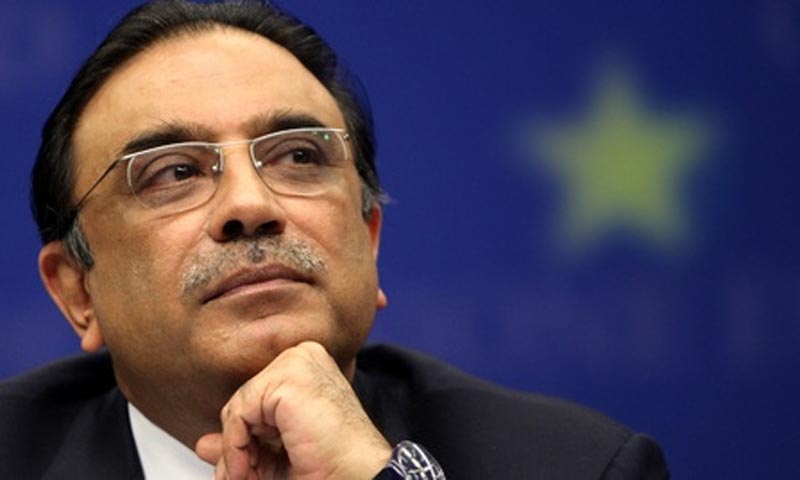
As Asif Ali Zardari prepares to step down on Sunday, speculation is rife on what he will do in future.
Having surprised many by becoming Pakistan’s first elected President to complete a five-year term, Asif Ali Zardari will step down from office on Sunday and will be succeeded by India-born Mamnoon Hussain. The husband of late former Premier Benazir Bhutto, Mr. Zardari had a controversial term but was able to keep democracy on track through a series of understandings and alliances with the country’s main political parties. Mr. Zardari, the de facto chief of the Pakistan People’s Party, faced a strong and assertive judiciary that pursued him over multi-million dollar graft cases against him in Switzerland. One casualty of the struggle was former Premier Yousuf Raza Gilani, who lost his job when he was disqualified by the Supreme Court for refusing to implement its order to ask Swiss authorities to reopen the cases. As Mr. Zardari prepares to step down, speculation is rife on what he will do in future. Some say he is likely to spend his time abroad while others close to him say he will remain in Pakistan and work to strengthen the PPP, which is now the main Opposition party. The PPP faced a crushing defeat in the May 11 general election but emerged as the second largest party after the ruling PML-N. Mr. Zardari’s son Bilawal, who is the chairman of the PPP, can run for Parliament only after he turns 25 in September. Bilawal stayed away from the PPP’s lacklustre poll campaign because of “security threats.” After Mr. Zardari steps down, the new President will be sworn in on Monday. Replacing Mr. Zardari would be Mamnoon Hussain, who beat former judge Wajihuddin Ahmad of the Pakistan Tehrik-e-Insaf in a one-sided Presidential poll. Born in the historic city of Agra, India, Mr. Hussain, who belongs to an Urdu-speaking ethnic group that migrated from India during the Partition, was the ruling PML-N’s candidate.
Ceremonial role
Though Mr. Zardari wielded considerable power as the PPP led the previous Government, Mr. Hussain will assume a largely ceremonial post at a time when the PML-N Government is framing a new counter-terrorism policy. Among the many issues that Mr. Hussain will have to consider after he assumes office is the controversial subject of ending a moratorium on executions imposed by Mr. Zardari. While Prime Minister Nawaz Sharif wanted to end the moratorium, Mr. Zardari wanted it to continue.

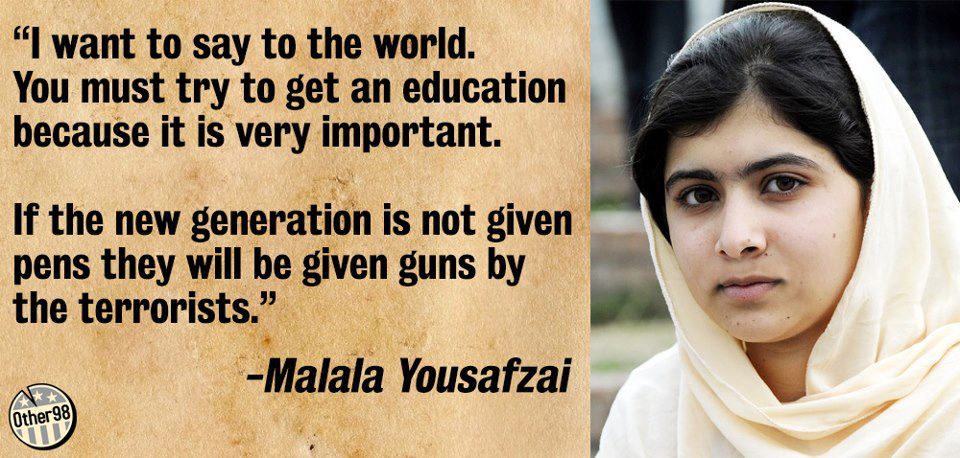
Pakistani teen activist Malala honoured, vows to step up fight

Pakistani teen Malala Yousafzai, shot in the head last year by the Taliban for campaigning for girls' education, vowed on Friday to intensify her struggle for "a world where everyone can go to school." Speaking at a ceremony in The Hague where she was awarded the 2013 International Children's Peace Prize, Malala said last October's attack on her had made her more determined than ever to continue her campaign. "I was just one target for their violence," Malala said in her acceptance speech, referring to her near-fatal shooting when a Taliban gunman's bullet grazed her brain.
"There are many others for whom we must continue... so that children all over the world can have a right to go to school," she said to thunderous applause. Malala, 16, received her prize from the 2011 Nobel Peace laureate, Yemeni journalist and activist Tawakkol Karman, who told a humbled Malala "you are my hero." "You cried: 'No one can stop me or any girl from learning'," Karman told Malala, speaking in Arabic in an address praising the Pakistani teen's achievement. "The bullet aimed at your head at that moment was a milestone in the history of your country," Karman said at the ceremony at the historic Knight's Hall near the Dutch parliament. After she was shot, Malala was given life-saving treatment in Britain where she now lives. Her brave fight for survival and her speech at the United Nations in July have made her a leading contender for this year's Nobel Peace Prize. But the response to her in Pakistan has been mixed, with many hailing her as a national heroine while others have criticized her for promoting a "Western" agenda. The International Children's Peace Prize, an initiative of the Dutch-based KidsRights Foundation, was launched in 2005 and set off by former Soviet leader Mikhail Gorbachev when he chaired the Summit of Nobel Peace Laureates in Rome. It carries a cash value of 100,000 euros ($133,000) that is invested in projects relating to the winner's cause. Last year's winner was 13-year-old Cris "Kesz" Valdez for his work with Filipino street children while he himself was destitute.

President Zardari will visit Lahore ‘to rejuvenate PPP’

President Asif Ali Zardari is arriving in Lahore on Sept 8, the day his term in presidency ends, in a bid to ‘rejuvenate’ the Pakistan Peoples Party in Punjab. The PPP Punjab executive committee on Thursday passed a resolution, commending President Zardari for completing his five-year term despite various challenges. It also praised him for ‘promoting the politics of tolerance and reconciliation and strengthening democracy in the country’. PPP leaders Manzoor Wattoo, Raja Riaz, Firdous Ashiq Awan, Chaudhry Manzoor, Tanvir Ashraf Kaira, Shaukat Basra, Aslam Gill, Raja Amer, Omar Sharif Bokhari, Beelam Hasnain and Faiza Malik were present in the meeting held here at the Model Town residence of Mr Wattoo. The resolution said the PPP would be more active when Mr Zardari would be free to look after its affairs. Raja Riaz said on the occasion the party would get a new lease of life, especially in Punjab, when Mr Zardari would be among the PPP workers. He said the party needed overhauling and angry workers should be wooed. Wattoo said Mr Zardari during his visit would meet the party workers and reorganise the PPP. The meeting passed another resolution condemning the flaws in the Local Government Bill 2013. “The party has requested PPP Secretary General Sardar Latif Khosa to challenge the bill in the court,” Wattoo told reporters after the meeting. He said the party was more concerned about the holding of local body polls on non-party basis which, he said, was against the spirit of devolution of power. “The bill which empowers the chief minister to sack the chairman of a union council is also unfair. Besides, the government under the constitution cannot undertake the process of delimitation as the power rested with the Election Commission of Pakistan,” he said. Replying to a question about denial of some Pakistan Tehreek-i-Insaf leaders that their party would not go for an alliance with the PPP in the forthcoming local body elections, Wattoo said there could be cooperation between the two parties with regard to ‘seat adjustment’. Shaukat Basra said the PML-N government had disappointed the masses by allowing price hike, inflation and increase in electricity, fuel and gas prices. “People were expecting relief from the PML-N government but it had extremely disappointed them during its 100 days in power,” he said. Wattoo demanded the government should withdraw the increase in electricity tariff forthwith.

Firing leaves at least eight dead in Peshawar

At least eight unidentified people were killed late Friday night when unknown gunmen attacked their vehicles in Peshawar, the capital of troubled Khyber Pakhtunkhwa province bordering Afghanistan, said a police official. SHO Badaber Police Station, Abidur Rehman told Dawn.com the incident took place near Gulzar Chowk in Peshawar’s Matni area – a buffer zone between provincial capital and lawless tribal region of Dara Adamkhel. “At least eight people are killed and number of others are inured,” said Rehman. He said vehicles travelling to southern districts including a Karachi-bound Bus on Kohat Road were the apparent target of the attackers. The dead bodies and injured were being shifted to Leady Reading Hospital in Peshawar. Police and other law enforcement forces have cordoned off the area and a search operation to arrest the miscreants was underway. Meanwhile, local residents reportedly came out on the street and exchanged fire with the attackers alongside security forces. The clash lasted for an hour at least. The motive and the perpetrators of the attack were not immediately known. Earlier in the day, at least five people were injured when a motorcycle packed with explosives detonated inside the Hashtnagri police station, located in the centre of the city. More than 40,000 Pakistani people have been killed in attacks by al Qaeda and Taliban-led militants in the last decade. Washington considers the tribal belt as the main hub of Taliban and al Qaeda militants plotting attacks on the West and in Afghanistan.

Blast at Peshawar police station injures five: police

At least five people were injured Friday when an explosion rocked a police station in central Peshawar, the capital of northwestern Khyber Pakhtunkhwa province, police said. Police Superintendent Ismail Kharak said a motorcycle packed with explosives detonated inside the Hashtnagri police station, located in the centre of the city. The injured, which included three policemen, were shifted to the Lady Reading Hospital for emergency care. A number of vehicles parked inside the station were damaged by the blast, he added. Kharak said investigation was underway into how the motorcycle had entered the police station.

Pakistan: It lost his dream, but can Pakistan find Muhammad Ali Jinnah’s speech on his vision for the nation's future?

It was the speech in which Muhammad Ali Jinnah set out his vision for the nascent Pakistan, a nation he hoped would be prosperous, tolerant and where corruption would find no home. Sixty-six years later Jinnah’s vision has all but disappeared, and so has his speech. While transcripts of the words he delivered on 11 August 1947 are easily available, whatever recordings there might once have been appear to have been lost. For many years, broadcasters and activists in Pakistan have been scouring various archives in a hunt for the “lost speech”, adamant that the words and vision of the country’s founder have never been more sorely needed. This week, in a partial breakthrough, officials at Radio Pakistan, part of the state-owned broadcaster, announced that they had been sent two important Jinnah recordings from staff at All India Radio (AIR), their counterpart in India. The recordings were made in 1947 and are of considerable historical importance, but they are not the missing speech of 11 August. The head of the Indian broadcaster, Leeladhar Mandloi, said his staff had no knowledge of that recording. “They are pretty important and significant,” said Javed Khan Jadoon, of Radio Pakistan’s current affairs department, speaking from Islamabad. “Every speech delivered by him is an important one.” The first of the two recordings given to Radio Pakistan by AIR dates from 3 June 1947 when Jinnah, who trained as a barrister in London and spoke in a clipped, accent-less style, talked in Delhi about the decision to hold a referendum in the then North- West Frontier Province on whether it would join India or Pakistan. The other was made on 14 August, the day Pakistan was born, in which he addressed the country’s constituent assembly in Karachi and in which he talked of different religious communities living together. “The tolerance and goodwill that the great Emperor Akbar showed to all non-Muslims is not of recent origin,” he said. “It dates back 13 centuries, when our Prophet, not only by words, but by deeds, treated the Jews and Christians handsomely after he conquered them.” That address echoes the missing speech he made three days earlier, again to the constituent assembly, and which today is clung to by those Pakistanis who decry the way in which religious and ethnic minorities in Pakistan face widespread discrimination and frequent violence. In it, Jinnah, who would die just 13 months later, told the assembly members that he dreamt of a time when people would not be described as Hindus or Muslims, simply as citizens of Pakistan. “You are free. You are free to go to your temples, you are free to go to your mosques or to any other place of worship in this state of Pakistan,” Jinnah declared. “You may belong to any religion or caste or creed – that has nothing to do with the business of the state.” The search for the missing recording gathered pace in 2008 when Murtaza Solangi became director-general of the Pakistan Broadcasting Corporation. He learnt that because in the summer of 1947, the AIR studios in Lahore and Peshawar were not equipped with recording equipment, engineers were dispatched from the Delhi headquarters to capture and broadcast Jinnah’s speeches. The BBC also reportedly broadcast the speech. Mr Solangi raised the issue with various Indian officials and broadcasters and was led to believe AIR might have a copy. “The speech matters to Pakistanis who want a pluralistic, tolerant Pakistan,” said Mr Solangi. Mr Solangi said over the years the story of the lost recording had taken on mythical status. He said many people believe copies of it were deliberately destroyed during the rule of military dictator Muhammad Zia-ul-Haq, whose desire to increasingly “Islamicise” Pakistan would have been at stark odds with Jinnah’s wishes. Mr Solangi had speculated that if AIR did not possess the recording, it might be elsewhere in Delhi. However, the BBC Delhi bureau and the National Archives of India said they did not have it. An official at the Nehru Memorial Museum said they thought they only had recordings of Jawaharlal Nehru, India’s first prime minister. Mr Solangi, whose term as director-general expired earlier this year and who now works as writer and analyst, said he was not disheartened and that he would “keep on trucking” in his quest to find the recording. Meanwhile, officials at Radio Pakistan now have to figure out what to do with their two new treasures. Some have suggested that the recordings should be broadcast to mark Jinnah’s birthday on 11 September. Mr Jadoon said: “We have to decide when to run them and how to do that. An editorial judgement will be made.”
‘You may belong to any religion...’: Extract
If we want to make this great State of Pakistan happy and prosperous we should wholly and solely concentrate on the well-being of the people, and especially of the masses and the poor. If you will work in cooperation, forgetting the past, burying the hatchet, you are bound to succeed. If you change your past and work together in a spirit that everyone of you, no matter to what community he belongs, no matter what relations he had with you in the past, no matter what is his colour, caste or creed, is first, second and last a citizen of this State with equal rights, privileges and obligations, there will be no end to the progress you will make. I cannot emphasise it too much. We should begin to work in that spirit and in course of time all these angularities of the majority and minority communities, the Hindu community and the Muslim community – because even as regards Muslims you have Pathans, Punjabis, Shias, Sunnis and so on and among the Hindus you have Brahmins, Vashnavas, Khatris, also Bengalees, Madrasis, and so on – will vanish. Indeed, if you ask me, this has been the biggest hindrance in the way of India to attain the freedom and independence and but for this we would have been free peoples long long ago. No power can hold another nation, and specially a nation of 400 million souls, in subjection; nobody could have conquered you, and even if it had happened, nobody could have continued its hold on you for any length of time but for this. Therefore, we must learn a lesson from this. You are free; you are free to go to your temples, you are free to go to your mosques or to any other place of worship in this State of Pakistan. You may belong to any religion or caste or creed – that has nothing to do with the business of the State. As you know, history shows that in England, conditions some time ago were much worse than those prevailing in India today. The Roman Catholics and the Protestants persecuted each other. Even now there are some states in existence where there are discriminations made and bars imposed against a particular class. Thank God, we are not starting in those days. We are starting in the days when there is no discrimination, no distinction between one community and another, no discrimination between one caste or creed and another. We are starting with this fundamental principle that we are all citizens and equal citizens of one State.

NATO weapons readily available in Pakistan

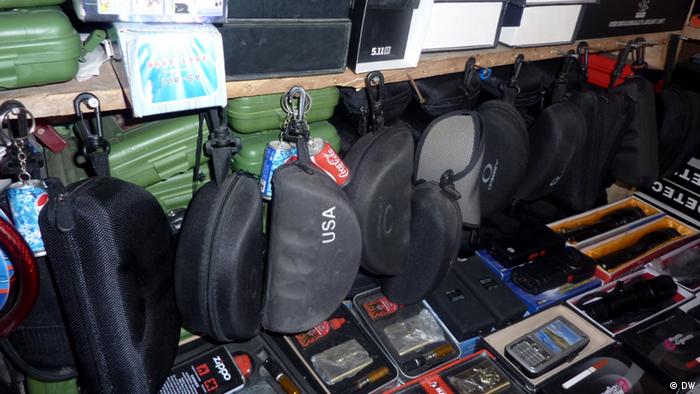
As NATO troops prepare to leave Afghanistan, some of their equipment is being smuggled out and sold in Pakistani markets. Experts say that banned militant groups are also laying their hands on sophisticated weapons. Peshawar's "Karkhano Market" is famous for selling smuggled western goods. From the US-made sniper rifles to Chinese laptops, you can buy anything here. The market is situated in Khyber Agency, a northwestern tribal area close to Afghanistan, which does not come directly under the jurisdiction of the Pakistani federal government. From this and other tribal areas, much of the illegal foreign goods are also brought to the markets of the central Peshawar city, which is also the capital of Khyber Pakhtunkhwa, a province which has been marred by violence perpetrated by the Taliban insurgents.These days the markets of Khyber Agency and Peshawar are flooded with equipment used by NATO troops in neighboring Afghanistan. As the international troops prepare to leave the country in 2014, their used stuff is being smuggled out of Afghanistan to Pakistan's restive northwestern areas. The militants also attack the trucks carrying NATO goods and weapons, which they also sell to local shopkeepers.
The goods available in these markets include pistols, Kalashnikovs, night vision goggles, daggers, military uniforms, sleeping bags, laptops, cameras and medicine. Sniper rifles, however, are in big demand in these markets. You have to place a purchase order and make payments in advance to get these sophisticated weapons. Usually bought by tribal militias, the demand for sniper rifles is such that their prices have increased manifold in the past few years. A good rifle can be purchased for up to a million Pakistani rupees or 8,000 euros. Though the business is still covert and illegal weapons are not sold out openly in these markets, those who really want to buy them can get them without much difficulty.
Illegal trade
Authorities, however, deny that illegal western goods are readily available in these markets. "No illegal product is being sold in these markets," a police officer at a check post near a Peshawar market told DW on condition of anonymity. "What you find in these markets are Chinese goods, which are available everywhere in the country. You won't find a single weapon in Peshawar markets," he said. The officer admitted, however, that illegal weapons are being sold and purchased freely in adjacent tribal areas. "We have no authority in these areas. But I can assure you that no illegal weapon can be smuggled into Peshawar."But counter-terrorism and security experts contradict these claims. They say that much of the sophisticated illegal weaponry is transported from tribal areas to the rest of the country without much hindrance. Pak-Afghan Business Forum's director Zia-ul-Haq Sarhadi shares this view: "The authorities do not check the trucks going back and forth from Afghanistan into Pakistan. Nobody knows what is inside these trucks. For the past ten years, the Pakistani authorities have not been able to monitor smuggling along the border," Sarhadi told DW.
Other items
US-made products are very popular in Pakistan. Foreign products such as shoes and rucksacks available in Peshawar's illegal markets are quite cheaper in comparison to what you get in proper stores.A US-made pair of boots can be purchased for three thousand rupees (20 to 25 euros) in these illegal markets, whereas those in the city stores cost at least twenty thousand. Some shopkeepers say these are not stolen items. They are cheaper because there is no custom duty on them, they claim. However, DW has learnt that much of this mechandise comes from the containers robbed by criminal gangs or militant groups. Many a time, truckers also steal these goods and sell them at a low price. Local sources claim that as NATO troops get ready to withdraw from Afghanistan, many international non-governmental organizations working in Kabul are also wrapping up their work. They are disposing of their used products, which are then sold by Afghan merchants to shopkeepers in Kabul and Peshawar. Inayat Khan, a Peshawar-based shopkeeper, told DW that not all items are actually made in America. "Many products are made in China. The shopkeepers put the made-in-USA label on these Chinese products and sell it to consumers, charging more money," Khan said.

Message from Mr. Asif Ali Zardari President of the Islamic Republic of Pakistan (On the occasion of Defence Day 6th September, 2013)

http://mediacellppp.wordpress.com/
On the occasion of Defence Day today, we salute the people for demonstrating exemplary unity and the armed forces for their valour and courage. We also pay homage to the martyrs who laid down their lives or suffered otherwise in 1965 defending the country. They laid down their lives so that we live in safety and with honour. An abiding lesson of September 6 is that no aggression can succeed as long as the people are united in fighting for the cause and as long as our brave soldiers are standing ready to guard our frontiers and shed blood for it. September 6 is no ordinary day for Pakistanis. Back in 1965 on this day the people of Pakistan closed their ranks in standing behind the armed forces of the country to face a serious threat to the country. This unprecedented national unity and courage of the armed forces has indeed made the day a memorable occasion in our national calendar. The need to imbibe the spirit of September 6 this year is even greater as the country is confronted with a new and far more serious challenge to its existence from the militants, extremists and fanatics. Let us therefore on this occasion renew our pledge to defend our country from all kinds of threats be they external or internal and also the ethos of this nation. No other nation has paid such a heavy price as the people of Pakistan in fighting the militants and to safeguard their right to live in accordance with the democratic values for which Pakistan was created. On this occasion let us renew our resolve to fight the militants to the finish. Let us also pay homage to our sons and daughters who laid down their lives in the defense of the motherland. Their sacrifices will never go in vain. Pakistan Paindabad!

Farewell for President Zardari today

The PPP has invited all opposition parties to a farewell reception the party is giving to President Asif Ali Zardari in the Parliament House on Wednesday. A source close to the Leader of the Opposition in National Assembly, Khursheed Shah, said that leaders of Pakistan Tehreek-i-Insaf (PTI), PML-Q, Awami National Party (ANP), Jamaat-i-Islami (JI) and parliamentarians from Fata (Federally Administered Tribal Areas) had been invited to the reception. He said an invitation had also been sent to National Assembly Speaker Sardar Ayaz Sadiq, but it could not be known whether he would attend the function or not. The source said Prime Minister Nawaz Sharif had not been invited to the function. Besides opposition leaders, former prime ministers Yousuf Raza Gilani and Raja Pervez Ashraf and journalists covering the parliament have also been invited to the reception. Sources in the National Assembly said the reception was being hosted in the Speaker’s banquet hall in the Parliament House without getting a formal approval from the speaker. However, they added, the speaker did not object to the use of hall for the function. Talking to Dawn, Khursheed Shah said all parliamentarians belonging to opposition parties had been invited to the reception. It has been learnt that Mr Zardari would be the first president in the country’s history to whom a farewell reception is being given in the Parliament House. President Zardari will address participants of the function after a welcome address by the opposition leader. Mr Zardari will be first elected president of the country to complete his five-year term on Sept 8. He has the distinction of addressing the joint sitting of the parliament for six times.

Pakistan: IMF deal must not lead to complacency

As expected, the Executive Board of the International Monetary Fund (IMF) approved on 4th August 2013 a three-year arrangement under the Extended Fund Facility (EFF) for Pakistan amounting to dollar 6.68 billion or 425 percent of the country's quota to help the country forestall a balance of payments (BoP) crisis, rebuild foreign exchange reserves and support its economic reform programme to promote inclusion growth. The approval of the loan enables an initial disbursement by the IMF of about dollar 544.5 million while the remaining amount will be evenly distributed over the duration of the programme, subject to the completion of quarterly reviews. According to the Fund, the programme, among other things, is expected to help the economy rebound and reduce fiscal deficit; it is also aimed at enabling government to undertake comprehensive structural reforms to boost investment and growth. Adherence to the programme was also expected to catalyse the mobilisation of resources from other sources. Deputy Managing Director of the Fund, Takatoshi Kato, asserted that "by providing large financial support to Pakistan, the IMF is sending a strong signal to the donor community about the country's improved macroeconomic prospects." Despite the challenges it faces, Pakistan is a country with abundant potential, given its geographical location and rich human and natural resources. The Fund has also noted that Pakistani authorities have already taken some difficult decisions to achieve the intended objectives of the programme. Some of the prior actions included an understanding between federal and provincial governments on a budget surplus as the 18th Constitutional Amendment and the 7th NFC Award have shifted the tilt of resources from centre to the provinces, issuance of notices to at least 10,000 new potential taxpayers to broaden the tax net, subsidies in the power sector have been targeted to those using up to 200 units while effective measures are being taken to curb electricity theft and recovery from defaulters to reform the entire power sector. Approval of the EFF by the IMF at this critical juncture is undoubtedly a major event for the economy of Pakistan. Keeping in view the payment obligations of the country, particularly to the IMF, the threat of default was imminent as foreign exchange reserves held by the State Bank of Pakistan had dwindled to only dollar 5 billion or equivalent to about 5 weeks of inputs. A significantly large amount sanctioned by the IMF coupled with expected flows from other sources would help the country to plug the huge gap in the external sector accounts and increase or stabilise the foreign exchange reserves of the country around the present levels. Obviously, concessional loans of such a magnitude were not possible from other sources. The real benefit of the programme, however, will be the expected restoration of macroeconomic stability through tightening of fiscal and monetary policies in a manner that would ensure social stability and extend support for the poor during the adjustment process. By entering into a proper arrangement the Fund and Pakistani authorities have sent a strong signal to the donor community and foreign investors about country's determination to improve its macroeconomic prospects by following appropriate policies. Given the present state of the economy, particularly the alarming situation in the external sector, disruption in foreign trade with all its hazardous consequences and meltdown of the economy was a real possibility. However, it needs to be noted that the Fund staff this time has put more emphasis on highlighting the bright aspects of economy to make a favourable case for Pakistan. For instance, Pakistan had always abundant potential due to geographical location and rich human and natural resources but failed to exploit these resources to improve its economy. One, however, fails to understand how it is going to be different this time. Also, this is the 16th programme that Pakistan and IMF have agreed to since 1958 but the authorities of the country have mostly been lacking in resolve and unable to unshackle the economy from the dependency syndrome. This needs to change because the mood of multilateral institutions, including the IMF, can change fairly quickly, depending in particular on the US stance, which is the largest shareholder in these organisations. Therefore, instead of asking for waivers during the programme, it would be better to own the programme and adhere faithfully to Fund's conditionalities to achieve the targeted goals. This is particularly so because the programme has been agreed after mutual consultations and designed to attain a sustainable position in various sectors of economy. Finance Minister Ishaq Dar has been insisting that the EFF programme is homegrown and largely designed at our terms; but he has to work very hard to do the needful and prove that he could succeed where others have mostly failed. He must not become complacent over any success. Macroeconomic objectives of the programme revolve around the country's weakest points and it would take a lot of courage and resolution to undertake policies to achieve the targeted goals. The Finance Minister has kept his word. The Ministry of Finance has released a Letter of Intent (LoI) along with a "Memorandum on Economic and Financial Policy for 2013/14-2015-16" on the Ministry's website without waiting for the Fund to do so. With uncertainty rampant around us, it would be difficult, if not hazardous, to speculate on the likely contours of the upcoming Monetary Policy Statement (MPS). However, the PML (N) government has taken some tough but realistic measures with regard to utility tariff and POL prices. These hikes are bound to put pressure on the price line this year. Further, any laxity on the fiscal front will also add to pressure on monetary policy. The challenge for economic managers is to choose between orthodox steps or take risk. The IMF has been wrong on its core inflation estimates for Pakistan before and can be erroneous again. Local businesses fix prices on the anchor of PKR parity and not interest rate unlike the developed economies. A sharp depreciation of the rupee in recent days and weeks has unhinged the price line and stabilising it again is the challenge the present government faces. Aren't the matters that appear simple always complex?

Taliban-linked militant killed in U.S. drone strike in Pakistan

A senior Taliban-linked commander designated a foreign terrorist by the United States was killed on Friday in a suspected U.S. drone strike in Pakistan's ethnic Pashtun tribal region on the Afghan border, security and militant sources said.
The drones fired two missiles on a compound in the village of Dargah Mandi in North Waziristan, destroying a house and killing seven people, one security official said. Another official put the toll at five. Security sources said all those killed were insurgents. The location of the attack is known as a stronghold of the Haqqani network, which regularly attacks U.S. forces in Afghanistan from its mountain hideouts in Pakistan. An intelligence source in the region said Sangeen Zadran, a senior Haqqani commander who also served as the Taliban's shadow governor of Afghanistan's Paktika province, was among the dead. There was no official comment on the death toll. Pakistan's foreign ministry condemned the U.S. drone strike in a statement. In a sign of how deeply Taliban-linked militants are entrenched in the tribal areas, mosques in Miranshah, the main regional town, made loudspeaker announcements that a funeral prayer for Zadran would be offered on Friday, residents said. The United States placed Zadran, who was 45, on its list of global terrorists in 2011. He had long been accused of involvement in bomb attacks and assaults on U.S. bases in eastern Afghanistan, planning movements of foreign Taliban fighters and orchestrating kidnappings of Afghan and foreign nationals in border areas. A source among insurgents on the ground said the dead from Friday's drone attack also included a 32-year-old al Qaeda commander who was an expert in explosives, and identified him as Zubir al Muzi, an Egyptian national. U.S. drones have been hitting militant targets in troubled and inaccessible border areas such as North Waziristan, the main stronghold of groups aligned with al Qaeda and the Taliban, since 2004. Pakistan is angry over the drone strikes, saying they cause civilian casualties and violate its sovereignty. In response, the United States has reduced their use in recent years. It is hard to assess the impact of drone attacks because independent observers and journalists have almost no access to the areas where the strikes occur. Most information comes from officials who speak on condition of anonymity. U.S. drone strikes in Pakistan have fallen significantly over the past 2-1/2 years, to total 20 this year. There were 48 in all of 2012 and 73 in 2011, a tally by the New America Foundation shows.

U.S. Drone Strike Kills 6 in Pakistan

At least six people were killed in an American drone strike in Pakistan’s restive northwestern tribal areas early Friday, according to government officials and local news reports. The American drone strike was directed at a house in the Ghulam Khan area of the North Waziristan tribal region, close to the border with Afghanistan. The identities of those killed were not immediately clear. North Waziristan has long been a haven for Taliban and Qaeda militants. Still, American drone strikes are deeply unpopular in the country, and opposition to them has become an essential staple of local politics and grievances against the United States. Pakistani politicians and government officials condemn the missile strikes, which are directed by the C.I.A., as a violation of the country’s sovereignty. Opposition politicians like Imran Khan, leader of the Pakistan Tehreek-e-Insaf political party, have long campaigned against the strikes, saying that they result more in civilian casualties than militant killings. In October 2012, Mr. Khan led a big protest rally to the edges of the tribal regions against the use of drones on Pakistani soil. The number of U.S. drone strikes has, however, dropped sharply in recent months. The last drone attack occurred on Aug. 31, when at least four suspected militants were killed in an attack in North Waziristan. John Kerry, the U.S. secretary of state, hinted in a visit to Pakistan earlier in August that the drone strikes could end soon. “The program will end as we have eliminated most of the threat and continue to eliminate it,” Mr. Kerry said at the time in an interview broadcast on state-run television. “I think the president has a very real timeline, and we hope it’s going to be very, very soon.” The drone strike on Friday came as Pakistan celebrated Defense Day, marking a day of remembrance for those killed in the 1965 war with neighboring India. As news of the drone strike spread, there was a flurry of critical reactions, especially on Twitter, the microblogging site. Shireen Mazari, a lawmaker and information secretary of Mr. Khan’s political party, remarked that the American drone strike “reminds us of the changing nature of multiple threats” the country is facing. In a Twitter posting, Mr. Khan himself condemned the drone strike and said he planned to take it up with Prime Minister Nawaz Sharif during a meeting of all political parties on Sept. 9. Mr. Sharif has convened a much-awaited meeting of political leaders next Monday in Islamabad to devise a national strategy to deal with militancy and terrorism.

Thursday, September 5, 2013

Video appears to show Syrian rebel forces threatening to pursue own chemical weapons

A newly discovered video posted on a pro-Syrian regime website shows rebel commanders talking about their own “red line” after the government allegedly launched a chemical attack against civilians there last month. The tape was reviewed by multiple analysts who said at the very least the rebels appeared to be issuing an ultimatum – if there was no military response to the attack by the West, they threatened to pursue their own chemical weapons. Last year, President Obama described any use of chemical weapons in Syria as a “red line” that would warrant a response. The four and a half minute video posted two days after the Aug. 21 Damascus attack features rebel commanders speaking while a black and white Islamist flag flies in the background. Fox News Middle East specialist Walid Phares, who reviewed the tape, said, "The narrative is jihadi and the red line they're talking about is about the use of weapons they have not used before -- and what comes to my mind would be chemical or biological." A separate analysis identified one of the men as a deputy to General Salim Idris, the leader of the Free Syrian Army, the same group some members of Congress describe as the moderate opposition in Syria. Yigal Carmon, the president of the Middle East Media Research Institute, who also reviewed the tape, said,"The message is if the West doesn't act, we (the rebels) too will have no red lines, and will use chemical weapons." While there is no evidence the opposition has chemical weapons, the possibility of their use has been discussed according to Phares. "A year ago on some of the jihadi chat rooms, including in Syria, there has been talks about using all of the weapons needed and it's ideologically permissible for them to use those weapons," he said. At the same time, and apparently compounding the situation, the flow of foreign fighters into Syria has grown significantly according to Thomas Joscelyn of the Foundation for Defense of Democracies. "This a dire situation where we have the Assad regime which is despicable in one hand and Al Qaeda and its allies on the other," Joscelyn said. He estimated there were 10,000 Islamist fighters in Syria and many are battle hardened and effective. "A big part of the problem here is the extremist groups, including Al Qaeda, basically have the best fighters, the best trainers, the best leaders for this type of jihad,” he said. “So even groups that are not extremist in nature tend to defer to them in the fighting because they're the most efficient. "What we're seeing inside Syria right now is very much a replay of what happened in Iraq. In Iraq, we underestimated Al Qaeda's designs on the country and what they were trying to do." The true composition of the rebels is a question the House and Senate intelligence committees, led by Republican Mike Rogers, and Democrat Dianne Feinstein respectively, continue to wrestle with according to a former senior staff member. "This is what the American people pay millions and millions and billions of dollars for -- to be able to ask of the intelligence community the very hard questions of who people are and what their motives are," said Michael Allen, former staff director of the House Intelligence committee. "It's an imperfect business, but I think we're getting there and we can have some confidence that there are elements of the rebels that we can support."
Read more: http://www.foxnews.com/politics/2013/09/05/video-appears-to-show-syrian-rebel-forces-threatening-to-pursue-own-chemical/#ixzz2e4nic8i4

Tough crowd heckles McCain in town hall meeting on Syria

Smiling, Obama and Putin Mask Their Disputes

President Obama and his advisers view the coming decision on military action against Syria as a potential turning point that could effectively define his foreign policy for his final three years in office.As he lobbied world leaders at a summit meeting here in person and members of Congress back in Washington by telephone on Thursday, Mr. Obama argued that a failure to act would be an abdication of the so-called indispensable role played by the United States since the end of the cold war, leaving no one to step in when international bodies fail to. In private, Mr. Obama and his team see the votes as a guidepost for the rest of his presidency well beyond the immediate question of launching missiles at Syrian military targets. If Congress does not support a relatively modest action in response to a chemical attack that killed more than 1,400 people in Syria, Obama advisers said, the president will not be able to count on support for virtually any use of force. Although Mr. Obama has asserted that he has the authority to order the strike on Syria even if Congress says no, White House aides consider that almost unthinkable. As a practical matter, it would leave him more isolated than ever and seemingly in defiance of the public’s will at home. As a political matter, it would almost surely set off an effort in the House to impeach him, which even if it went nowhere could be distracting and draining. As a result, Mr. Obama would be even more reluctant to order action in the one case that has most preoccupied military planners: the development of a nuclear bomb by Iran. Any operation to take out Iranian nuclear facilities would require a far more extensive commitment of military force than the missile strike envisioned against Syria. Moreover, a rejection of the Syria strike would make Mr. Obama less likely to leave behind a robust force in Afghanistan after combat troops are withdrawn at the end of 2014. “I think this vote determines the future of his foreign policy regardless of whether it’s a yes vote or a no vote,” said Rosa Brooks, a former top Defense Department official under Mr. Obama. “If he ekes out a yes vote, he’s beholden to the Republicans.” But, she added, “if he gets a no vote and stands down on Syria, he’s permanently weakened and will indeed probably be more inward looking.” Already a sometimes-reluctant warrior, Mr. Obama pulled out all American troops from Iraq, ordered a withdrawal from Afghanistan and lately has talked about scaling back his aggressive use of drones in Pakistan and eventually ending the war against terrorism. Some critics have argued that in subcontracting the Syria decision to Congress, Mr. Obama was looking for an excuse not to act and someone else to blame. White House officials deny that, saying what the president really wants is a united front. But to opponents of a Syria strike, a retreat from further use of force in the wake of a Congressional rejection would finally reverse what they see as excessive militarism since Sept. 11, 2001. The restraint on future military flexibility that the White House professes to fear, in this view, would be something to celebrate. It may be that the dire talk from the White House reflects a strategy to muscle Congress into line: Vote against this, the message being, and you vote against protecting Israel from Iran. And it may be that even if White House officials believe it today, Mr. Obama would still act to stop developments in the Iranian nuclear program or to address some other threatening circumstance if the moment ever arrived. “Obviously defeat would be a blow to presidential leadership but I think not fatal to a decision to attack Iran because the stakes are different,” said Gary Samore, a former national security aide to Mr. Obama. “The danger is that Iran might misread Congressional opposition to a Syria attack as a green light to move toward building nukes, which would force Obama’s hand.” Nancy Soderberg, who was a diplomat at the United Nations under President Bill Clinton, said a negative vote would cut Congress out of foreign policy. “Rather than tying the president’s hands for the next three years, a failure in the House would leave him more reliant on his inner circle and a few key world leaders in making the difficult choices between force and diplomacy,” she said. But Mr. Obama and his aides are trying to thread a needle at home and abroad. Even as they argue that the stakes are profound, they assure that the intervention would be modest. While Mr. Obama argues that nothing less than world credibility is at stake, he is aiming only a “shot across the bow” to deter further use of chemical weapons not to end a civil war that has killed 100,000. That makes this situation different from, say, the circumstances surrounding Kosovo in the 1990s, when the United States led NATO forces to stop mass slaughter. Mr. Obama presented his case to leaders gathered here from the Group of 20 nations, but found as much wariness as he has in Congress. While France, Turkey and Saudi Arabia support such a strike, most of the others were more cautious, and the meeting’s host, President Vladimir V. Putin, was openly hostile. Chinese officials warned that a strike would raise oil prices and upset the global economy, while Italy’s prime minister said he worried that it widen the conflict. From the Vatican, Pope Francis wrote a letter urging the leaders “to lay aside the futile pursuit of a military solution.” Mr. Obama, who met separately with Prime Minister Shinzo Abe of Japan and President Dilma Rousseff of Brazil, was hoping mainly to win support for the idea of holding Syria responsible even if not for his method. The Group of 20 meeting put on full display the increasingly awkward and tense relationship between Mr. Obama and Mr. Putin. To protest Russia’s decision to grant temporary asylum to Edward J. Snowden, the former National Security Agency contractor who disclosed secret programs, Mr. Obama last month canceled a separate one-on-one meeting in Moscow and declined even a private session here in St. Petersburg. As he arrived at Constantine Palace, Mr. Obama was greeted by Mr. Putin, and the two shook hands and smiled in a businesslike if not warm encounter lasting about 15 seconds. They did not pat backs or grab elbows as leaders often do, and at the opening session they sat separated by the leaders of Australia and Indonesia, with nothing to say to each other as long as the cameras were on. Diving into the meetings, Mr. Obama tried to manage dual audiences, the one in front of him representing the world’s greatest powers and the one back home that holds the fate of his foreign policy in its hands. “One thing for Congress to consider,” said Benjamin J. Rhodes, his deputy national security adviser, “is the message that this debate sends about U.S. leadership around the world — that the U.S. for decades has played the role of undergirding the global security architecture and enforcing international norms. And we do not want to send a message that the United States is getting out of that business in any way.”

CNN vote count: Obama long way from congressional approval on Syria

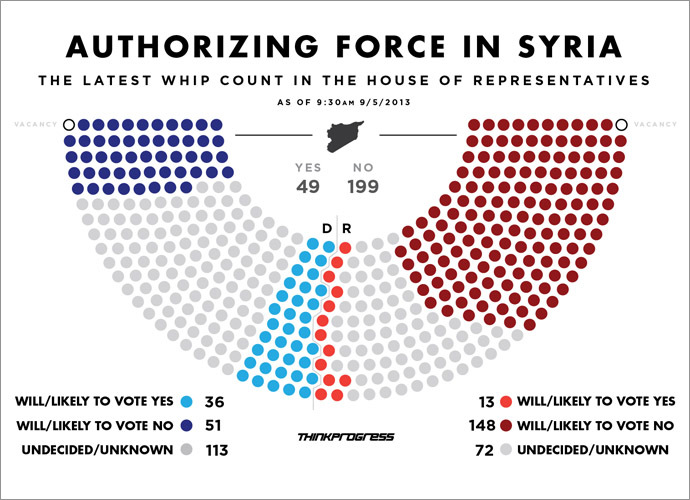
President Barack Obama still has has a long way to go to secure congressional authorization for military action against Syria even after clearing a key hurdle in the Senate. According to CNN, there are 18 "no" votes in the Senate and 24 "yes." Fifty-eight senators -- almost the same number of votes needed to overcome any filibuster -- remain undecided. After changing an Obama-sponsored proposal authorizing a military response to alleged chemical weapons use by Syria, the Senate Foreign Relations Committee voted on Wednesday to approve it by a 10-7 margin. The outcome set up debate next week in the full chamber. CNN vote count: How the Senate will vote | House Three Republicans -- Sen. John McCain of Arizona, Sen. Jeff Flake of Arizona and Sen. Bob Corker of Tennessee -- voted in favor of taking action. And that's where the good news ends for the White House. Obama needs at least 217 votes in the House to secure his resolution. In that chamber, there are nearly four "no" votes for every "yes" at the moment. According to CNN's count, 109 members plan to vote "no," while 23 -- including a number of high profile Republicans -- plan to back it. More than 280 representatives remain undecided.
Of concern to the administration is a trend showing an increase in "no" votes, although lawmakers remain out of town until next week and many have yet to receive classified briefings where the administration says it can spell out more evidence and more candidly answer questions. Rep. Mike McCaul, chairman of the House Homeland Security committee, Rep. Bob Gibbs and Rep. Cynthia Lummis are among those who have come out against the plan. Rep. Ileana Ros-Lehtinen, a Florida Republican, signaled through a spokesman on Wednesday that she was planning to vote "yes." But the same official said on Thursday that she wanted to first see the resolution language and was now undecided. Those decisions put those lawmakers at odds with their leadership since House Speaker John Boehner and Majority Leader Eric Cantor have backed Obama. Boehner has said it is up to the White House to get the votes. House Democrats, too, have reservations about Syria. Many, especially liberals, cite war weariness and prolonged intervention in Iraq and Afghanistan as reasons to oppose new military action. Others want to hear more details in classified meetings or see resolution language, which in the Senate would limit any strike, set a time limit for action, and prohibit the use of American troops in Syria. "After 6,668 American troop deaths and tens of thousands of American wounded, after spending $2 trillion in Iraq and Afghanistan representing $40,000 in debt for every American family, now is the time to nation-build in America and invest in the growth of the American economy," New York Rep. Brian Higgins, a Democrat, said in a statement to CNN. Despite the vocal opposition in Congress, Obama remained confident he'd get the necessary support. "I believe Congress will approve it because I think America recognizes that as difficult as it is to take any military action and even one as limited as we are talking about, even one without boots on the ground, that's a sober decision," he said at a news conference on Wednesday in Sweden.

Audit faults U.S. health spending in Afghanistan

An independent audit released Thursday accused the U.S. Agency for International Development of “reckless disregard toward the management of U.S. taxpayer dollars,” prompting an angry rebuttal from the agency leading American reconstruction efforts in Afghanistan. The special inspector general for Afghanistan reconstruction said the agency funded a $236-million health program without verifying the Afghan government’s cost estimate and provided the money directly to the Afghan Health Ministry despite its weak financial management capabilities. Agency officials rejected the audit's findings. In a letter, the agency’s Afghanistan mission director, William Hammink, said U.S. officials did verify the costs before launching the program and defended measures the agency had taken to reduce the risk that funds would be wasted or misspent.U.S. money isn’t provided directly to the Health Ministry but instead goes into an account at the Afghan Central Bank, where USAID and the ministry’s contract management unit must sign off before any funds are disbursed, officials said. “The report provides no evidence that the extensive measures taken by USAID to safeguard taxpayer resources have resulted in high risk of misuse of funds,” Hammink wrote. The agency has been the subject of a series of highly critical audits by the special inspector general, John F. Sopko, a hard-charging former prosecutor who has railed against the U.S. practice of funneling more aid money directly to the Afghan government. In recent months, Sopko has alleged major problems with a $47-million USAID stabilization program and said the Afghans probably won’t be able to maintain two agency-built hospitals. The reports grab headlines, but agency officials say the audits often overstate problems or cite shortcomings that have already been fixed. “We have a long-standing issue with the spectacular nature of the headlines of his audits,” said one agency official who spoke on condition of anonymity. “They’re all sizzle, and when you get to audit there’s not much steak there.” To be sure, the agency’s decade-long, $15-billion reconstruction effort in Afghanistan is a juicy target for an auditor. Agency officials acknowledge missteps, primarily in the early years, but they say they and the Afghan government have improved oversight and accountability. The audit released Thursday focuses on a program called Partnership Contracts for Health, which helps provide basic health services in 13 provinces serving about half of Afghanistan’s population. USAID officials say the 4-year-old program is a success, citing improved health outcomes across the board in Afghanistan and polls showing that Afghans believe their government has improved health services.

Pakistani Insurgents Attack Kabul Mosque

http://www.tolonews.com/
In the early hours of Thursday morning, two Pakistani nationals, said to be members of the terrorist group Lashkar Jangawi, open fired on worshipers in a Shiite mosque in western Kabul. Three people were injured in the attack, but a nearby National Directorate of Security (NDS) patrol was able to arrive on the scene quickly and neutralize both attackers before anyone else was hurt. In a statement released later on Thursday, the NDS stated that the attack on the Imam Hassan Mujtaba mosque was an attempt by Pakistani intelligence officials to incite sectarian conflict between Shiite and Sunni Muslims in Afghanistan. "Pakistani fundamentalist groups are trying to start a religious conflict in Afghanistan, but they will never succeed," said Amrullah Saleh, former NDS Director. Nevertheless, no group has yet claimed responsibility for the attack. The mosque that was targeted was in the Dasht-e-Barche area of Kabul. Local residents and those who were worshipping in the mosque praised the way the NDS soldiers handled themselves and called for similar precision from security forces in the future. "The security forces prevented a catastrophe from happening," said Haqjo, a local resident. The attackers were reportedly disguised in Afghan National Police (ANP) uniforms. Following news of the attack, Dastagir Hedayat, along with other Afghan Islamic scholars, condemned the targeting of mosques, saying such acts were deplorable and a clear violation of Islamic values. In the past, the Taliban has targeted mosques, though know sectarian motivations have ever been attributed to such attacks. This incident comes just after President Hamid Karzai traveled to Islamabad to meet with newly elected Pakistani Prime Minister Nawaz Sharif. The trip, which was intended to facilitate dialogue around bilateral relations between the two neighbors and the Taliban peace process, was considered a modest success. However, with incidents like the one on Thursday, and continued allegations from Afghan officials of Pakistan supporting insurgent and terrorist activities, it would seem a great deal still remains to be resolved between the two nations.

Pakistan warns against attack on Syria

Pakistan has warned that any military attack on Syria will have serious consequences and plunge the already volatile region into deeper conflict. Speaking at his weekly news briefing in Islamabad Thusrday‚ Foreign Office Spokesperson Aizaz Ahmad Chaudhry said the approach to address the Syrian situation should be guided by principles enshrined in the UN charter like respect for sovereignty‚ territorial integrity‚ non interference in internal matters and resolution of disputes through peaceful manner. He said Islamabad remains opposed to the use of force‚ urges maximum restraint from all sides and dialogue among Syrians for peaceful solution of the problem. When asked about Pakistan s stance on use of chemical weapons in Syria‚ the spokesperson said we regard the use of chemical weapons by any side as a matter of grave concern and condemns it in clear terms. He said allegations of the use of chemical weapons in Syria must be interrogated. Report of the United Nations is very vital in this regard and its findings should be thoroughly examined for an acceptable way forward. When his attention was drawn towards Washington Post regarding Pakistan s nuclear arsenals‚ Aizaz Ahmad Chaudhry dismissed the report saying it is based on incorrect assessment. He said Pakistan is committed to the objectives of disarmament and non-proliferation. He said a robust command and control system is in place for safety and security of nuclear arsenals and installations. He said the US state department in a recent statement has also vindicated our point. He said Pakistan follows best international practices and standards set by the International Atomic Energy Agency. He emphasized that Pakistan and the United States are engaged in a multidimensional cooperation. Both the sides have agreed to revive the work of working groups that will lead to the resumption of strategic level in early next year. On the expected meeting of the prime ministers of India and Pakistan on the sideline of UN General Assembly session‚ the spokesperson said both the countries are in touch and working out the date. He said the meeting will provide a useful opportunity to remove the existing trust deficit in relations. Emphasizing the need for dialogue for settlement of outstanding issues‚ he said disruption of dialogue benefits only those who do not want peace. On the tension at the line of control‚ Aizaz Ahmad Chaudhry said Pakistan has expressed grave concerns over the violations on the Line of Control by India and urged it to respect the 2003 ceasefire agreement. When asked about Pakistani prisoners in Bagram prison‚ the spokesperson said we are in contact with the Afghan and US authorities for the early release and transfer of these prisoners to Pakistan.

Challenges of News Media in Balochistan

The Baloch Hal
By Aurangzaib Khan
There aren’t any obvious parallels in the cases of FATA journalist Hayatullah’s murder and the Balochistan authorities’ action against ARY TV. On the surface, both case s are poles apart. And not just because they relate to regions that are as far removed from the national gaze as the distances that separate them. Except, in both cases journalists revealed versions of stories related to the thorny issues of drones in FATA and insurgency in Balochistan that contradicted the government’s. The mainstream media is often blamed – and not without a reason – for blinking on remote borderlands hit worst by militancy and insurgency, more so Balochistan. But unsung are the local journalists who dare break a story – they are our windows on the restive border areas that journalists from outside have virtually no access to. Local journalists walk the fine line, caught in the crosshairs of conflicting interests that the state and anti-state elements seek to propagate or protect through brutal tactics aimed at information control. Hayatullah was among the first of casualties caused by drones, in a manner of speaking. He died taking the lid off of a tacit deal between the Musharraf’s military government and the Americans to use drones against al Qaeda and Taliban targets in FATA. His pictures of Hellfire missiles hitting Abu Hamza Rafia’s house in North Waziristan, published in Ausaf and the European Pressphoto Agency, gave the lie to Musharraf government’s claim that the al Qaeda militant died in a blast of explosives stored in the house. With the drone deal out of the bag, Hayatullah was kidnapped and killed by unknown people that the judicial commission constituted for inquiry into the murder failed to identify. The commission’s brief was to probe the alleged involvement of security agencies in Hayatullah’s murder. According to Committee for Protection of Journalists, Hayatullah “passed his will to his tribe and explicitly stated, ‘If I am kidnapped or get killed, the government agencies will be responsible.’” We don’t know if the security agencies killed Hayatulllah. However, from the military officials’ refusal to cooperate with the commission to “get statements recorded despite directives of ministry of defense”, and the “cruel misinformation campaign during his six-month disappearance” that the government engaged in, there is one conclusion we can safely arrive at: The state certainly didn’t do much to protect him or bring his killers to justice. Even after his death – followed by the death of his wife killed in a bomb attack probably because she knew too much – the PPP government kept the commission’s report under wraps for five years. Now consider the case of ARY in Balochistan. ARY received a graphic video of the destruction of Ziarat Residency from the Baloch Liberation Army, one of the more vicious banned groups alongside Lasker-e – Jhangvi that can’t take no from journalists when it comes to their demand for media coverage of anti-state, sectarian activities. The cost of refusal, these groups have shown time and again, are high for the media and the journalistic community. ARY aired the BLA footage that contradicted the government version, not with words but visuals. Whether it was done out of journalistic responsibility or in the face of threat, it doesn’t matter because on both counts – for journalism or self- protection – the decision can be justified. Revealing lies and obfuscation that governments – military or democratic – engage in has consequences ala Snowden and Sergeant Manning. For ARY it came in the form of Supreme Court censure and police action. For Hayatullah, it was death delivered with a bullet to the head. In Balochistan, where authorities have failed to protect journalists from state agencies and the anti-state banned groups including insurgents and sectarian elements, the case against ARY points to a third front against media – a legal threat. The shadow of court and police action under the Anti-terrorism Act looms large over journalists and journalism in a province we see or hear little about in the mainstream media. In October 2011, while reporting on an incidence of sectarian massacre in Mastung in which 26 members of the Shia sect were killed, newspapers in Quetta carried statements from Lashkar –e –Jhangvi, the sectarian group that claimed responsibility. In the statement, the group has called Shias “Kafir” or infidels. The Balochistan High Court Chief Justice Qazi Faez Issa took suo moto notice of the sectarian killings and during the hearing of the case, issued an order that “the press and the media are directed not to print or publish any propaganda of an organization that has been banned.” Media representatives summoned to the high court said they received threats from proscribed organizations that they would be targeted if the media didn’t comply with demands to publish their statements. It was out of fear that they carried such stories. The court order however said that it could not be a justification for violation of law and constitution of Pakistan – Section II of the Anti-terrorism Act that says “the printing, publishing and disseminating any material that instigates hatred or gives projection to any proscribed organization” will face the consequences provided in the law. Journalists guilty of committing contempt of the high court order would be sent to prison for 6 months whereas a court case registered under Anti-Terrorism Act could lead to 3 years in prison. The local newspapers have continued carrying statements from the banned organizations saying “6 months in prison are better than death at the hands of militant organizations.” After the High Court order, journalists met several times, only to decide that if they followed the court order, they could not possibly work. On the occasion they said no to underground groups, the response was, “if we can attack the DIGFC house and the Police Chief, we can attack your office which is far less secure”. To comply with the court’s decision, the local journalists formed an editorial board to edit stories for “sensitive” content and a uniform message before distributing them to media outlets. As expected, it hasn’t worked as newspapers tend to follow their own policies. The judiciary justified the order saying it is mindful of the freedom of press guaranteed under Article 19 but “the said Fundamental Right itself restricts such freedom if it results in incitement to an offence ” and that “it is not expected that media which is stated to be the fourth pillar of the State would undermine or weaken the integrity and the cohesion of the State and the people residing within it.” The court sources insisted that at a time when the media was concerned about safety, the court order ensured exactly. The see the order as a legal “protection” rather than hindrance – a reason that the journalists could offer to resist pressure and threats from militant organizations. However statements from judiciary that journalists “should close offices if they can’t stand up to threats” betrays ignorance and insensitivity towards media and the way it works. The ARY case was something waiting to happen. Since the Balochistan High Court order in 2011, the Quetta police has charged journalists and registered cases against media that continue to publish statements from banned groups. On any given day in any newspaper, there are a number of these that the insecure, threatened local media working in a volatile, unsafe Balochistan can’t say no. That said, there are concerns about practices within media that exposes it to threats and leads to restrictions on press freedom. While the media is quick to renounce moves threatening its independence, fact is, there is little soul searching or effort on part of media groups and owners to address the abysmal professional and ethical standards. “Journalism overall has deteriorated”, says a veteran journalist based in Quetta. “The standards have gone down due to absence of independent, professional editors. Partisan editors and media networks force journalists to do stories in keeping with their interest instead of the public’s.” Media professionals in the province recognize the fact that journalists – due to pressures, inducements or political loyalties – often side with militants, insurgents or the military. Certain journalists, especially those in the districts, identify with the cause and stance of combatants and fail to disassociate themselves from them professionally. A big threat to journalists stems from the fact that they become party to the conflict by siding or sympathizing with one group or another. In meetings with the government, judiciary and the military, questions about media focus on “bad” news, banned organizations and sensational reporting come up repeatedly. According to a court source, “it is the competition for breaking news that is the killer because the newspapers and tv networks compete through sensationalism. The militants dictate the headlines, even the pages the story should go on. This fear of the militants has also affected the standards of journalism because it is forced to promote violence and hatred.” However, when the chief justice is irked by the graphic display of the Ziarat Residency demolition at the hands of insurgents, and the police, getting their cue from the court’s disapproval, proceed to register a case against media, they are essentially displaying the same attitude as Hayatullah’s killers in a bid to control media. Only this time, they are not shooting the messenger but gunning for the medium. In doing that, they willfully ignore that the local media, the only source of information on the restive Balochistan, is besieged by pressures from all sides – the insurgents, the military, the political parties, the religious sectarian groups, the tribes and the government. While protecting the society (and the obfuscation of truths the governments engage in), aren’t the courts – and the state – responsible for protecting the journalist, also a citizen, and the people’s right to information? Can the journalist, working under hazardous circumstances in Balochistan, say no to BLA or LJ when they come, armed and dangerous, to their media offices, insisting on coverage of their activities? In the words of a local journalist, “The anti-state elements are not under control of the government, the state or the judiciary, whose writ is even weaker once you leave Quetta. The judiciary can ask for bullet-proof cars but the journalists have no protection.” While there is little that the local media can do to protect itself from militant organizations, the state – and the media owners – can help by seeking an end to impunity for media rights violations and providing journalists an environment free of fear and coercion. “The state”, says a local journalist,” knows we are only doing our job. It has a responsibility towards protecting us. The anti-state elements have none.”

Bomb Attack At Pakistani Girls School

http://www.rferl.org/
A bomb has exploded outside a girls school in the northwestern town of Bannu, wounding 14 people. Deputy Superintendent of Police Nematullah Marwat told RFE/RL's Radio Mashaal that the bombing on September 5 occurred as classes were letting out for the day. The school is located in an area where there is a women’s market, but Marwat said it appeared the target was the school. Marwat said six of the people injured were students. There have been attacks in Bannu and other areas nearby that targeted girls schools, but the incidents usually happened at night or on holidays when there was no one present. Islamic militants in Bannu have stated they are against education for girls.

Pakistan: Ahmadi factory worker target-killed in Karachi allegedly due to his religious beliefs

ahmadiyyatimes.blogspot.com/
A factory worker, Aijaz Ahmad, 36, was on his way to work in Orangi when two armed motorcyclist fired at him. With the murder of Aijaz Ahmad on Wednesday morning, the number of Ahmadis being killed in targeted attacks in a fortnight has risen to three. On August 21, Zahoor Ahmad Kiyani, 46, who also belongs to the Ahmediyya community was sitting outside his house with a neighbour when he was riddled with bullets. His neighbour was shot too when he attempted to catch the attackers. Last week, a homeopathicdoctor, Tahir Ahmad, also an Ahmadi, was murdered by armed men in his office when he was seeing his patients. Jama’at Ahmadiyya Pakistan’s spokesperson Saleemuddin, while condemning the killings, said that incidents of target killings have increased ever since religious conferences have been held all over the country to celebrate the day, September 7, 1974, when Ahmadis were declared as non-Muslims. The past few months have been comparatively peaceful for the Ahmadi community except for a killing in June and the recent ones, which clearly indicate an alarming situation, he said. “It is the responsibility of the government to stop the people from spreading hatred through their literature and through their sermons.” An Ahmadiyya community member, Masood Ahmad, said that since two of the recent killings took place in Orangi, it shows that the residents have become intolerant towards the the community. “There are no-go areas in Orangi where criminals are stronger and the police are weak,” he said. Over the last few days, wall-chalking has also increased in this area and people are afraid to leave their homes and go out for work, he added. Published in The Express Tribune, September 5th, 2013.

Secular Pakistan or dismemberment of Pakistan into very small states?

posted by Taj
Shehla Raza speaks from the heart. The crimes against Shia and Sufi Sunni (brelvi) which form about 80 percent of Pakistan’s population have been steadily increasing since 1985. Shia Muslims are especially targeted, Shia doctors even Shia prisoners are beheaded in Jail breaks. A minority powered by the ideology of the
British Saudi Arabia is out murder or convert the majority of Shia and Sufi Sunni (brelvi) to only follow their version of Islam. If we put a Bander (monkey) in charge of Kaaba should we follow that Bandar? Following the dictates of Hegelian dialectic, the Globalists have created two antagonizing forces, the “Liberal-Democratic” West, against Terrorism, or “political Islam”, to force us into the acceptance of their final alternative, a New World Order. The West and Islam have had a long era of compatibility, but this history has been denied to foster the myth of a “Clash of Civilizations”. In order to inflame the sentiments of the West against Islam, our attention has been focused on the specter of fanatical Wahhabism, and more specifically, its most notorious exponent, Osama bin Laden. However, as outlined in an excellent article by Peter Goodgame, The Globalists and the Islamists, the Globalists have had a hand in shaping and financing all the terrorist organizations of the twentieth century, including the Muslim Brotherhood of Egypt, Hamas of Palestine and the Afghan Mujahideen. But the history of their duplicity dates farther back still, to the 18th Century, when British Freemasons created the Wahhabi sect of Saudi Arabia itself, to further their imperialistic objectives. That a British spy by the name of Hempher was responsible for shaping of the extreme tenets of Wahhabism was mentioned in a Turkish work, Mir’at al-Haramain, by Ayyub Sabri Pasha between 1933-1938.
http://www.globalresearch.ca/globalists-created-wahhabi-terrorism-to-destroy-islam-and-justify-a-global-state/2757
This pattern violence in Pakistan clearly signals the decline into an abyss. The globalist have been fueling the ugly face of Islam (Saudi) to justify global domination. So when a non muslim hears the Azan of Muslims or “Allah Hu Akbar” the first thing to come to mind is a beheading. There is no return from it unless Pakistan embraces what it was originally created for. A pluralistic place which would be a sanctuary for the minorities of India. This was the main reason the the Christians in Punjab Assembly cast the deciding vote in favor of the creation of the State of Pakistan. Why would they do that if they knew it would be destined to be the intolerant Islamic state with no clue what type of Islam it should follow or what it means. There is still time to revert to a pluralistic State, a democratic Republic or Pakistan or a Peoples Republic of Pakistan. Let people have the sovereignty not God, because God is hijacked by those (Wahhabis) that behead others and eat the organs of their victims. Failure to do so will only mean more blood shed and further dismemberment of Pakistan into very small states and enslavement to a new world order.
- See more at: http://lubpak.com/archives/282621#sthash.Z2Pxso00.dpuf

Pakistan: Kayani meets President Zardari

Chief of the Army Staff General Ashfaq Pervez Kayani met President Asif Ali Zardari here on Thursday. Issues related to national security and terrorism came under discussion during the meeting. Earlier, the president received a farewell luncheon hosted by Prime Minister Nawaz Sharif, where he vowed to support the PML-N government in a bid to strengthen democracy and democratic institutions.