Tuesday, August 20, 2013

Pakistan: ‘Minorities stayed away from polls’

Ahmadiyya Times
“In a metropolitan city like Karachi, which is comparatively more vibrant, non-Muslims were forced to vote for a certain party.”
Apart from a handful of constituencies in Sindh with a significant non-Muslim population, minorities remained indifferent to the May 11 general elections in Pakistan, experts noted at a symposium held on Saturday. “We [minorities] are in a position where it’s easy for anyone from the ‘majority’ to come and threaten us. We get scared even by those who have no standing,” said Sabir Michael, a professor of economics at SZABIST. “In a metropolitan city like Karachi, which is comparatively more vibrant, non-Muslims were forced to vote for a certain party.” He was speaking at the conference titled “Expert Group on Communities Vulnerable Because of Their Beliefs” organised by the Human Rights Commission of Pakistan (HRCP). The experts noted that major political parties, who claim to be secular, avoided fielding non-Muslim candidates from general seats even in their strongholds. Whatever few nominations they filed were mere “gimmicks to impress the international organisations”, they claimed. “A party like Jamiat Ulema-e-Islam nominated a Christian woman on reserved seats for females in Baluchistan,” said Zahid Farooq, a Christian social activist. “But parties, like the Pakistan People’s Party having a known secular bent, did not do it this time.” Speaking about rural electorates, Sham Kumar, a freelance journalist from Balochistan, said the feudal structure was so well-entrenched in the rural areas of the country that non-Muslim individuals did not even have an identity. “The feudal lords rule the roost no matter how many laws you come up with, the reality on the ground is different,” he maintained. Other speakers hailed the joint electorate system as the way forward for the “integration of different communities”. But the Ahmadiyya community resented the election commission’s decision of issuing a separate voter list for the community exclusively. “We boycotted the elections because of this discrimination,” said Masood Khan, a community spokesperson. The election commission printed a separate voter list for the Ahmadiyya community containing their names and addresses “jeopardising” their security, he said. “It was illegal and we did not have any platform to appeal against the decision,” Khan added. The observers also highlighted some of the key issues being faced by the minority communities, including the educational curriculum and the media’s lack of empathy. Inder Ahuja, a Hindu activist, claimed that minority students of class I and II were forced to learn the basic Islamic injunctions at government schools, as these were part of the compulsory syllabus. The media’s lack of attention toward the issues of the minorities was raised by Michael. He said the electronic media in the country was still in its early years but the whole industry had been hopelessly commercialised. “The minorities get airtime only during their religious festivals and sometimes on August 14 but they are ignored throughout the year.” Aijaz Qureshi, a rights activist, disagreed however. He said the regional electronic media, especially in Sindh, had regularly highlighted concerns like “forced conversions” and had constantly been at the forefront of minority cause.

Zamurd Khan and PPP

by Zulfiqar Ali
A man drives in a vehicle with black windows. Enters the most secured area of the country. No one stops him. Then a PPP Jiyala shows bravery. Now all are saying that PPP had nothing to do with it. Sure it is his personal heroics but he is groomed and is PPP worker. If a PPP Jiyala does something wrong, then it is PPP culture. If PPP secures Karachi, then it is Naseer ullah Babar ( I admire him a lot and he never took sole credit) and Suddle DESPITE PPP. As long as Swat operation was not going well initially, it was PPP govt.’s fault. When it was successful, it was army’s success. Initially Balochistan was calming down. Then Gen Kayani and GHQ were heroes. Now it was PPP govt.’s fault. If there are no measles vaccines available in Punjab, it is bureaucracy’s fault malign the good name of PMLN. If water is accumulated in Karachi after rains, there will be 50 TV programs. Now in Lahore, sab ki maaN mar gai hai. Is there any difference how we treated League and Bhashani before?
- See more at: http://lubpak.com/archives/281573#sthash.YDjZK2dL.dpuf

Zamurrad’s sin: adding insult to injury

By Ayaz Amir
The emperor without his clothes; Government of the Mandate made to look foolish, in full view of a bemused and disbelieving nation; a lone gunslinger, with wife and children, at the centre of it all; and the government’s talk champion, undisputed in his field, Nisar Ali Khan, otherwise holding forth on everything from foreign policy to the state of the nation, missing from the scene of this heady performance. Not only not to be seen but, amazingly, not even to be heard. This drama – for once the word drama not out of place – goes on and on, for more than five hours…the setting, Jinnah Avenue in Islamabad but the audience, prime-time audience too, the entire nation, the government’s role throughout outstripping the bounds of the serious and becoming wild comedy. And if this wasn’t hilarious enough, into the TV frames walks Zamurrad Khan, patting the kids and, using this as a feint, lunging at the gunman, Sikander. Shots are heard and it’s all over. From the government’s point of view not only is this the wrong end to the drama, this is rubbing it in, because Zamurrad’s pedigree is all wrong. He, the St George to the rescue, instant hero hailed as a hero across the nation, is from the hated, discredited, not-to-be-mentioned PPP. If a script had to go wrong it couldn’t get more wrong than this. This is adding insult to injury.
Stunned into silence…all quiet on the PML-N front. But if most PML-N leading figures have not been able to bring themselves to say a good word about Zamurrad they have had the decency to remain quiet. Not so the party’s Admiration Wing, the media qawwals with soaring voices who sing Mian Nawaz Sharif’s praises day and night. Foam on their lips, wild anger in their eyes: how dare Zamurrad, and by extension the PPP, steal the honours of this comic evening? There’s almost a campaign afoot to malign Zamurrad. He was being stupid and foolhardy and it could all have gone horribly wrong. The gunman could have opened fire, blood would have flowed, and then who would have been responsible for the consequences? It’s hard to figure out what’s more funny, the drama as it unfolded, showing the best of our officialdom in a coma, or this wild-eyed reaction. It could have gone so horribly wrong. Ah, so true, as in every act of daring – a lone act like Zamurrad’s or something reckless on the battlefield – there is always the danger of things going wrong. But does anyone have to tell the qawwals that this is what risk-taking means? You take your chances. You know that your head might hit the rocks, that the chances of success are slight and the margin of error great. And yet the brave soul, the intrepid soul, the foolhardy soul who if he had any sense would stick to his bed or his armchair, takes his chance, plunging into the swirling waters. Have the qawwals never heard of Danton? At the height of the French Revolution, in the midst of internal turmoil and external invasion (the Austrian army was attacking from the east), what was Danton’s prescription to save the situation? “…il nous faut de l’audace, et encore de l’audace, et toujours de l’audace” – “We need audacity, and yet more audacity, and always audacity.” Much on similar lines Marshal Foch’s famous battle-cry in the First World War: “My centre is giving way, my right is retreating, situation excellent, I am attacking.” Let not the musicians forget that fortune favours the brave. Did fair lady ever warm to a timorous man? You can’t get a lady onto the dance floor, forget about anything more spectacular, without some pluck and daring…a smile on your lips, a slightly rakish manner. Horses don’t care for nervous riders. Women have never cared for cowards or narrators of cautionary tales (one reason for my less than stellar success in this sphere). Yes, Zamurrad’s folly could have triggered a minor massacre. But then Tariq bin Ziyad could have been defeated before the Rock of Gibraltar and, having set fire to his boats himself, never an action more foolhardy, how would he have escaped? Hannibal crossing the Alps, the Mongols riding so far away from home, Babur venturing into unknown India …(examples from history which are legion), foolhardy moves that could easily have gone wrong. And then who would have been responsible for the consequences? The Islamabad pantomime should have been allowed to go on. Zamurrad had no business trying to put on the stunt he did. But he pulled it off, at great personal risk to himself. Of the crowd gathered there he alone proved to be the man of the moment. That is what matters. The rest is irrelevant. And he was lucky, not a small matter. Napoleon, other things apart, wanted his generals to be lucky. Of course there will be more attempts to belittle Zamurrad. The PML-N has always been good at this sort of a thing. And the interior minister, with his gift for manoeuvre, will keep trying to obfuscate the issue. But the more he does so, the more he hurls threats at police officials for allowing Zamurrad to get near the gunman (and more on the same lines), the more attention will he draw to the comic performance of his own departments that eventful evening. But he is his own best judge and will do what he thinks is best. As close Nawaz Sharif adviser in 1998 he was instrumental in gifting Musharraf to the nation as army chief. He hasn’t apologised for that. He won’t apologise for this latest fiasco. Expect him instead to keep painting Zamurrad as the chief villain of this piece. Reminiscent of Goebbels really: keep repeating a thing, however outrageous, and people will come to believe it. Only problem in this case is that the nation was witness to this farce… in real time too. So the scope for revisionism, or exaggeration, becomes a bit limited. But think of the larger canvas. The PPP down and out, to the extent that no one ready to take its name in polite company; and the PML-N on the summit of things, expected to perform the unlikeliest of miracles. Now this shot-in-the-arm for the PPP; and for the PML-N a downsizer, revealing both party and emperor in their naked glory…all because of a character from Hafizabad called Sikander. Strange are the ways of Providence. Of the qawwals and their choreographers we need to put some questions. At this juncture of our history, Pakistan beset with as many perils as France was during its revolutionary period, turmoil within and the enemy not only at the gates but spread all over, does the country need more Nisar Ali Khans and Imran Khans, going round and round in circles, unable to give things their proper name, prophets of caution and dithering, or do we need some foolhardy souls as role models, who can come forward, holding their lives in their hands – role models like the winsome Malala Yousafzai or the overweight Zamurrad Khan? Our hearts should go out to Nawaz Sharif. He’s always had a transparent face, quick to show joy and depression. These days he looks so confused. And counsellors with a gift of the gab, always ready with silver-tongued answers, don’t help matters. He would have made a passable prime minister for ordinary times. If only these were ordinary times. But let us not lose heart and let us pray for some pale reflection of a Danton – we won’t get the real article – to teach a nation not too familiar with audacity the virtues of audacity. So here’s to Malala, and here’s to Zamurrad Khan, and in the desert of our desires may there be more like them.

Khyber-Pakhtunkhwa : The business of extortion quietly flourishes

The Express Tribune
What was once considered a Karachi problem has quietly crept into other parts of the country, including Khyber-Pakhtunkhwa and the tribal belt, where it’s eating up already-fractured businesses.
Entrepreneurs and industrialists in Charsadda district have been receiving threats from unknown cell numbers or via letters to pay extortion money or face death. The size of the demand is usually proportionate to the value or size of the business. As yet, it seems most people who receive such demands have been silently paying them. While a decade of militancy and insurgencies has deeply dented infrastructure and forced industrialists to relocate to Punjab and other parts of the country, it seems now extortion may force many out of business. Refusing to pay up Standing up against armed extortionists is not an easy task, and it becomes even more futile when the police seem either complicit or inept. Atta Muhammad owns a local school and had been asked – the third such attempt – to pay Rs1.5 million as protection money. As a result his house was attacked thrice. In the most recent attempt, culprits lobbed hand grenades into his house. Muhammad had filed an FIR but the police were unable to provide any protection as, according to SHO Nasir Khan, “We are already short on resources; we cannot give security to every individual.” Muhammad is not the only businessman under attack. According to the Charsadda police, the owner of a CNG station on Mardan road was asked to provide the money demanded. When he refused, unidentified criminals planted a homemade explosive close to his residence and his station. Fortunately, no one was hurt in the explosion. Police, however, did not take any action. Another CNG station on Peshawar road was fired at when the owner refused to pay. His guard suffered injuries in the gunfire but, again, no one seems to be able to discuss if any action was taken to catch the criminals or protect the businessman. An associate of another businessman told The Express Tribune on condition of anonymity that his friend received a phone call from the tribal region asking for Rs1.5 million. When the entrepreneur refused, he was targeted with an improvised explosive device. He also filed an FIR with the local police station, but while officials promised to investigate, their best advice was ‘be cautious in your movement.” Up in arms When extortionists stole another businessman’s vehicle and attacked his house on several occasions, he was enterprising enough to build a protection tower. He mans it himself during the night and has hired a guard for the day. Muhammad, the school owner, thought of a similar solution. While, in an earlier news report he said he would keep his resolve against such threats, he also pointed out he would be forced to take up arms for “self-defence” if the police failed to arrest the culprits. Subdivision police official Saleem Riaz Khan told The Express Tribune law enforcement agencies understand the gravity of the situation. “We have lodged FIRs against unidentified individuals and investigation is underway.” However, he was unable to share more information due to the sensitive nature of the matter. Victims say some calls can be traced to the tribal areas as well as to Afghanistan. While many file complaints, most people quietly pay up.

Asfandyar vows to defeat PTI in KP by-polls

Awami National Party (ANP) chief Asfandyar Wali Khan on Monday said since PTI chief Imran Khan has been keeping his silence over the deteriorating law and order situation, therefore he will face a historic defeat in the August 22 by-polls. Addressing a public gathering at Nishtar Hall in Peshawar, he said in the aftermath of Bannu jailbreak, Imran Khan had said that ANP lost the right to rule the province. “What does Imran have to say now about his right to rule the province after D I Khan jailbreak,” he questioned. The ANP chief said despite the Pakistan Tehrik-i-Insaf government was informed 48 hours prior to the attack, it failed to prevent it. “The PTI chairman has advised his party leaders to not use a word of condemnation in statements issued after every terrorist attack,” he claimed. People of the province were deceived with slogan of a “new Pakistan,” said Asfandyar. “Is this the new Pakistan where ministers are afraid of attending funerals of even their colleagues in the provincial assembly,” he added. Speaking about the slain ANP leader and senior KP minister Bashir Ahmed Bilour, who was killed in a suicide attack in December last year, he said that Bashir Bilour was a brave man and never bowed down to the terrorist threats. “People of Peshawar should honour the sacrifices of Bashir Ahmed Bilour and vote for his brother Ghulam Ahmed Bilour in the upcoming by-election,” he appealed the masses. Asfandyar Wali said that Jamiat Ulema-i-Islam-Fazl and ANP would jointly defeat the opponents in the August 22 by-polls and the PTI will face a stunning defeat in every district of the province. Ghulam Ahmed Bilour, the ANP candidate for NA-1 Peshawar, said that all the promises of the PTI were a mere drama therefore Pakhtun people will now vote for him. Mian Iftikhar Hussain, Abdur Rauf Jan of JUI-F and Zulfiqar Afghani of PPP also addressed the gathering.

Pakistan’s ex-President Musharraf charged with Benazir Bhutto's murder

Pakistan’s former president, Pervez Musharraf, has been charged with the murder of former premier Benazir Bhutto in 2007. The ex-military leader has denied all the charges set against him. "He was charged with murder, criminal conspiracy for murder and facilitation for murder," public prosecutor Chaudhry Azhar told AFP at the anti-terrorism court in Rawalpindi hearing the case. Opposition leader Benazir Bhutto was killed in December 2007 during a political rally in the city of Rawalpindi by a suicide bomber. The judge ruled that Musharraf was complicit in her murder because he did not provide adequate security during the rally. General Musharraf, who ruled Pakistan from 1999-2008, refrained from making any comments following his indictment. The case has been adjourned until August 27. The hearing was held in a special anti-terrorism court in Rawalpindi close to the capital Islamabad. Security was stepped up for the hearing with hundreds of police deployed along the road leading to the courthouse and on the rooftops after Musharraf’s lawyers warned of threats to the former leader’s life.

Pakistan: Nawaz speech was a waste of time and inappropriate

Editorial:The Frontier Post...A speech so
Nawaz's maiden speech of his third term to the nation was ill-advised and ill-timed. He said what the nation already knew and had formed opinions on all issues and his government's steps to counter these. He gave no new hope to the nation, set no new targets for his government and had no new proposals which were needed to brought to the notice of the masses. He did not even seek populace support on some new and harsh steps his government could be about to take. One wonders what induced him to address the nation at this stage of his current term. In his third term as prime minister of the nation, he and his advisors should have known that a ruler when he makes a special occasion of addressing the nation, he raises the expectation of the nation. Such a speech is also delivered at time of new crises when the population's cooperation is sought. But there was nothing new in the speech. His invitation to Taliban for dialogue; his threat that his government had also the means to fight the menace with state power; his talk of corruption of the previous government; his lamentations at the breakdown of government institutions; the amount of accumulated debt on the nation; the examples of mismanagement in financial matters; favouritism and nepotism in government appointments; the shortage of electricity; the growing shadows of terrorism on the future of the country; his government's actions to control and bring about the end of load shedding, the list of power generation projects to be begun; the payment of circular debt; the success in increasing somewhat the power generation in the country; his offer to the provinces to provide all the possible help in curbing lawlessness and overcoming financials difficulties; his action to not act against the mandate of the people of Khyber Pakhtunkhwa, the installation of CM and governor in Balochistan who were not from his party; his directions to PML-N men not to join efforts to topple the government in Azad Kashmir and many other issues and the views of the PM and his party on these all have been not just reported in the media but have been thoroughly discussed on various forums. The speech did not create ripples of excitement among the masses, as what he said in his speech had already been initiated by his government or stated by him on various occasions during his two and half month rule. There is a reason that a prime minister gives the maiden speech of his or her term when the National Assembly elects him as the future leader of the country. Emotions are high and his or her supporters have as yet have not fallen into their daily drudgery and are ready to welcome and hang on to every word he or she says. More than playing for the gallery, the speech of the new prime minister sends a strong message of what policies the government will pursue and what is expected of the civil servants, the army and the people as the new government during the time when the manifesto of the party recently come to power is implemented. The speech sets the direction that the new government wants to lead. However, there were expectation regarding the PM's speech. His economic strategy was already revealed. His policy on terrorism was already announced by the interior minister. Nevertheless, the nation expected some breakthrough news, if not actual breakthrough, either in the situation regarding terrorism or on the economic front. The most that one can say is that he renewed his offer of peace talks with the terrorists which has its own value and at the same his threat that he had the power to exercise force in the matter may also serve the purpose somewhat. But he could have done all that during a press conference. He or his minister could also have in piecemeal reminded the people of the problems his government had inherited and the steps that were being taken. The speech was a waste of time and inappropriate and there was no occasion for it. It gave a negative impression about Nawaz Sharif's government. It rather deepened the thinking that the PM is not thinking of taking unusual steps in these unusual times for the country to get out of the many faceted crises it faces.

Monday, August 19, 2013

CIA documents acknowledge its role in Iran's 1953 coup

The CIA has released documents which for the first time formally acknowledge its key role in the 1953 coup which ousted Iran's democratically elected Prime Minister, Mohammad Mossadeq. The documents were published on the independent National Security Archive on the 60th anniversary of the coup. They come from the CIA's internal history of Iran from the mid-1970s. "The military coup... was carried out under CIA direction as an act of US foreign policy," says one excerpt. The US role in the coup was openly referred to by then US Secretary of State Madeleine Albright in 2000, and by President Barack Obama in a 2009 speech in Cairo. But until now the intelligence agencies have issued "blanket denials" of their role, says the editor of the trove of documents, Malcolm Byrne. This is believed to be the first time the CIA has itself admitted the part it played in concert with the British intelligence agency, MI6. Mr Byrne says the documents are important not only for providing "new specifics as well as insights into the intelligence agency's actions before and after the operation", but because "political partisans on all sides, including the Iranian government, regularly invoke the coup". The documents were obtained by the NSA under the Freedom of Information Act. Iranians elected Mossadeq in 1951 and he quickly moved to renationalise the country's oil production, which had been under British control through the Anglo-Persian Oil Company - which later became British Petroleum or BP. That was a source of serious concern to the US and the UK, which saw Iranian oil as key to its post-war economic rebuilding. The Cold War was also a factor in the calculations. "[I]t was estimated that Iran was in real danger of falling behind the Iron Curtain; if that happened it would mean a victory for the Soviets in the Cold War and a major setback for the West in the Middle East," says coup planner Donald Wilber in one document written within months of the overthrow. "No remedial action other than the covert action plan set forth below could be found to improve the existing state of affairs." The documents show how the CIA prepared for the coup by placing anti-Mossadeq stories in both the Iranian and US media. The coup strengthened the rule of Shah Mohammad Reza Pahlavi - who had just fled Iran following a power struggle with Mossadeq and returned following the coup, becoming a close ally of the US. The US and UK intelligence agencies bolstered pro-Shah forces and helped organise anti-Mossadeq protests. "The Army very soon joined the pro-Shah movement and by noon that day it was clear that Tehran, as well as certain provincial areas, were controlled by pro-Shah street groups and Army units," Wilber wrote. "By the end of 19 August... members of the Mossadeq government were either in hiding or were incarcerated." The Shah returned to Iran after the coup and only left power in 1979, when he was overthrown in the Islamic revolution.

Oldest globe to depict the New World may have been discovered

WASHINGTON POST
An Austrian collector has found what may be the oldest globe, dated 1504, to depict the New World, engraved with immaculate detail on two conjoined halves of ostrich eggs. The globe, about the size of a grapefruit, is labeled in Latin and includes what were considered exotic territories such as Japan, Brazil and Arabia. North America is depicted as a group of scattered islands. The globe’s lone sentence, above the coast of Southeast Asia, is “Hic Sunt Dracones.”“ ‘Here be dragons,’ a very interesting sentence,” said Thomas Sander, editor of the Portolan, the journal of the Washington Map Society. The journal published a comprehensive analysis of the globe Monday by collector Stefaan Missinne. “In early maps, you would see images of sea monsters; it was a way to say there’s bad stuff out there.” The only other map or globe on which this specific phrase appears is what can arguably be called the egg’s twin: the copper Hunt-Lenox Globe, dated around 1510 and housed by the Rare Book Division of the New York Public Library. Before the egg, the copper globe had been the oldest one known to show the New World. The two contain remarkable similarities. After comparing the two globes, Missinne concluded that the Hunt-Lenox Globe is a cast of the engraved ostrich egg. Many minute details, such as the lines and contours of the egg’s territories, oceans and script, match those on the well-studied Hunt-Lenox Globe. The egg’s shape is slightly irregular, while the copper globe is a perfect sphere. Also, the markings around the equator of the egg, where the two halves are joined, appear quite muddled. Missinne argues that the egg has shrunk and warped over time, and he confirmed a loss in shell density by using computed tomography. He also says the two halves were cast separately, then joined later with a type of glue that obscured the engravings around the equator. The egg, whose owner remains anonymous, was purchased in 2012 at the London Map Fair from a dealer who said it had been part of an important European collection for decades, according to Missinne. From there, Missinne, a real estate project developer originally from Belgium, consulted more than 100 scholars and experts in his year-long analysis of the globe. “He’s put about five years of research into one year,” said Sander, who called Missinne’s journey “an incredible detective story.” Missinne, 53, developed his passion for collecting exotic and rare objects 20 years ago, when he bought his first antique map — an 18th-century copper engraving of northern Germany — without knowing its origins and went on an investigation to find out more about it. “From prints and maps, you come to globes, and from globes, you come to other artifacts including art-chamber objects like this ostrich-egg globe,” he said. Missinne speculates that the egg could have loose connections to the workshop of Leonardo da Vinci, based on the etching of an Indian Ocean ship similar to one by an artist well-acquainted with Leonardo. The egg has no name engraved on it, so the maker remains unknown. But Sander thinks that someone from da Vinci’s time consolidated knowledge from travelers of the era and made the globe for an Italian noble family. “In that time period, the ostrich was quite the animal, and it was a big thing for the noble people to have ostriches in their back gardens,” Sander said. The globe passed from family to family, and after World War II, like many other precious artifacts, it was sold during times of economic crises, Sander and Missinne said. Other scholars who have heard about the egg said they find Missinne’s work impressive but want him to provide more details. “Where this thing comes from needs to be clarified,” said Chet Van Duzer of the John Carter Brown Library in Providence, R.I., an expert in Renaissance cartography. “It is an exciting discovery, no question, but I also think that more testing should be done.” John W. Hessler of the Library of Congress said he saw “a couple red flags that popped up” while reading Missinne’s paper. He has heard from a number of sources that Missinne is actually the anonymous owner of the globe, raising a possible conflict of interest, given that Missinne is touting the importance of the discovery. Missinne declined to comment on whether he owns the globe. Washington Map Society board member Jeffrey Katz said as long as the scholarly aspect is there, it doesn’t matter whether the author of the study is also the owner of the globe. “If he’s the owner, more power to him; if he isn’t the owner, same thing,” Katz said. And while Hessler said he finds the globe interesting, “the Leonardo connection is pure nonsense.” Duzer agreed that the link is “tenuous in the extreme.” Hessler described two types of people in the rare-book and map world: those who get overly excited at any new finding and those who are more skeptical. “I tend to be on the skeptical side,” he said.

Everyone knows politicians lie. Why don’t reporters say so?

By Olivier Knox, Yahoo! News
It was Aug. 6, 2007, and President George W. Bush hadn’t told the truth. He had claimed, during a press conference with Afghan President Hamid Karzai, that Iran “has proclaimed its desire to build a nuclear weapon.” While the United States and its allies have long accused Tehran of trying to build an atomic arsenal, Iran has never openly declared that it wants nuclear weapons. The president had said something false. What was a reporter to do? The headline on my story called Bush’s claim “dubious.” The piece said he had delivered “an inaccurate accusation at a time of sharp tensions between Washington and Tehran.” I didn’t call it a lie (I still wouldn’t). A National Security Council official telephoned to say “good catch” and assure me the claim was a mistake and would not be repeated. It wasn’t. The current controversy around the National Security Agency surveillance programs has — once again — raised questions about the credibility of senior government officials. President Barack Obama assured Jay Leno that “there is no spying on Americans.” Director of National Intelligence James Clapper said he gave the “least untruthful” testimony he could when he told Congress that the NSA doesn’t collect information on millions of Americans. The leaks from former NSA contractor Edward Snowden paint a very different picture. But you probably won’t see a lot of “liar” labels from the mainstream media. (One exception: PolitiFact’s “Pants on Fire” rating, but even there the “liar, liar” is implicit.) Why not? And does it matter? Part of the answer is that we don’t necessarily know when someone is lying — meaning when they knowingly pass along something that isn’t true with the intent to deceive. One official told me Clapper’s assertion that the NSA doesn’t collect information about millions of Americans was technically true because the intelligence community definition of “collect” means that an analyst has reviewed the information. So the NSA could scoop up millions of phone records and that wouldn’t technically count as “collection.” More broadly, there is the thinking that if someone believes their statement to be technically true, it doesn't meet the definition of lying — at least for reporting purposes. On Main Street, it can be a different story. “I do think the blogosphere is too quick to say ‘You guys are pansies 'cause you won’t say lie,’” Ron Fournier, the National Journal writer who worked for years at The Associated Press, told Yahoo News. “We should save the liar label for when we have goods — when not only is the information wrong, it’s knowingly wrong,” said Fournier. But Ron disagreed that the “technically true” standard applied to Clapper. “When Director Clapper admits to Congress that he told a partial truth, or an untruth, and then justifies it — whether you think it’s credible or not, because it’s national security — he’s given us the goods to say ‘That’s a lie.’” There’s another aspect to the “knowingly untrue” standard. For years, I’ve (mentally) plotted sources on a graph where one axis is “honesty” and the other is “knowledge.” Some sources know a lot but aren’t totally honest; others are totally honest but don’t know a lot. (And then there are those officials I trust so little that if they told me “good morning,” I would need a second source to confirm it.) A source could be 100 percent forthcoming — but the information could still be misleading because they don't have the full picture. What happens when an official is given bad information — and repeats it? That can put the institution on the hook (“The Pentagon lied…”) but the individual could have acted in good faith. “We’re told untruths and half truths and partial truths every day, and we should call them out,” Fournier said. “‘I am not a crook’? Richard Nixon lied. ‘I did not have sexual relations with that woman…’? Bill Clinton lied.” (Cue 15-year-old debate over whether the dictionary definition of “sexual relations” includes Clinton’s behavior with Monica Lewinsky. Some Democrats argued it technically did not.) Because lying involves an intent to deceive, there’s another hurdle. Let’s call it the “misspeak” hurdle. Shockingly, government officials sometimes just get stuff wrong. They’re sure that something is true. It isn’t. It’s not reassuring to hear a plea of incompetence (“The congressman misspoke”), and sometimes it’s laughably incredible. But it happens. Does it matter whether reporters use the word "lie"? Independent national security reporter Marcy Wheeler, who doesn’t hesitate to use the word, says it does — especially in the ongoing debate about government surveillance. When it comes to officials who make “demonstrably false” claims, “they should not be trusted in the debate, because they violated our trust,” she told Yahoo News. This is especially true in the NSA debate because government officials benefit from “information asymmetry” — they have access to the nation’s secrets, and the public ordinarily doesn’t have the information necessary to judge their statements. In effect, the public is trusting them to provide an incomplete but accurate description of what the government is doing in order to have an honest debate. “Once somebody has made one of these outrageous comments, then I just think they’re not entitled to credibility,” Wheeler told Yahoo News. “It’s sorta my job to point that out.” So why don’t mainstream media reporters use the word? For fear of alienating officials who might provide the, uhhh, raw material for their next story. “There’s a sense that you don’t want to call them liars, even while acknowledging that they misled, because you won’t be entitled to those droppings in the future,” she said. But calling an official’s comments “false” or “inaccurate” or putting their quote next to facts that flatly contradict it can serve the same purpose as calling out a “lie” — and doesn’t require assessing someone’s understanding of the facts, or motives. “The president said the government doesn’t spy on us. Whether or not that’s a lie, or we call it a lie, is not that important. The information was wrong. We do know that the government is spying on us,” according to Fournier. “His credibility is hurt. You don’t have to slap the lie label on that for his credibility to be hurt,” he said. And it's not a particularly awesome time for the government — or the media — to lose more credibility. Then again, the most famous story about the honest nature of a (future) politician — Washington and the cherry tree — is a lie. Probably.

President Obama, First Family Get New Dog Named Sunny

Bo is a big brother! President Barack Obama and Michelle Obama have welcomed a new addition to their family -- a puppy named Sunny. The Obamas -- Barack, 52, Michelle, 49, Malia, 15, Sasha, 12, and dog Bo. Introduced the newest member of their family with a special YouTube video and photos of the adorable new pup."Sunny was born in Michigan in June 2012, and arrived at the White House today," they announced on The White House Blog. "Just like Bo, she's a Portuguese Water Dog, which works great for the Obamas because of allergies in their family. Sunny is the perfect little sister for Bo -- full of energy and very affectionate -- and the First Family picked her name because it fit her cheerful personality."The announcement also mentioned how First Lady Michelle told reporters in October that she hosted a "doggie play date" because "Bo doesn't have enough dog interaction." That problem has now been solved! The statement continued, "We suspect Sunny will follow in Bo's footsteps and keep the President company in the Oval Office, go for walks with the First Family after their 6:30 family dinner and even jump up on the First Lady's lap from time to time!"On Monday, Michelle tweeted a photo of her two dogs with the caption, "So excited to introduce the newest member of the Obama family -- our puppy, Sunny!"

Barack Obama did Hillary Clinton a huge favor

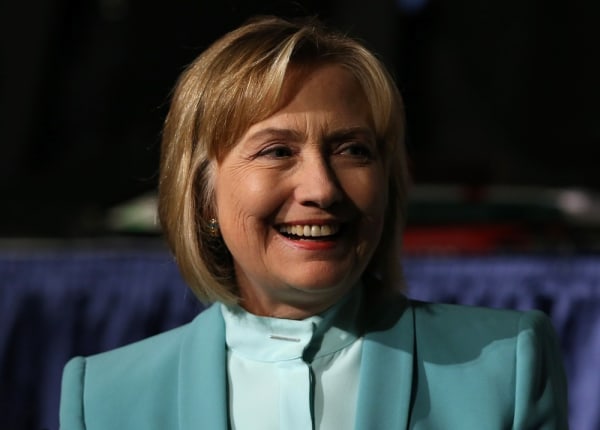
Hillary Clinton has started to re-enter the public spotlight, very possibly beginning a new stage of her career that may lead to the presidential election of 2016. In recent appearances, Clinton seems energized and spirited. She has already begun to talk about issues like women's rights and voting rights, causes that have animated her for decades. Gone is the constrained demeanor that turned off many potential supporters in previous years. The real Hillary Clinton seems to be emerging. Republicans are instantly attacking as might be expected. Former House speaker and presidential candidate Newt Gingrich, an arch nemesis of the Clintons in the 1990s, warned that she was promoting "left-wing ideas" that would lead to her defeat.Those kinds of attacks won't have the same weight as they did eight years ago. The former first lady, senator, and secretary of state is in excellent position to run the kind of campaign that is true to her history, in large part because of the impact that President Obama has had in the past six years. Democrats are more confident about throwing their support behind a candidate who stands proudly for the key tenets of the liberal tradition: a belief that government can help solve social problems in the United States. Unlike her husband, who felt in the early 1990s that he had to emphasize his centrist, new Democratic credentials, President Obama has opened the doors for a Democrat to build their campaigns on the tradition of the New Deal and Great Society, rather than running away from that legacy. How did President Obama make this happen? Most important, the president has been far more assertive in his willingness to use the federal government to address big domestic challenges than many Democrats who preceded him. The Affordable Care Act put into place a large series of regulations aimed at providing better and more accessible care for a health care system whose costs had spun out of control.The Dodd-Frank Act provided a regulatory framework to prevent the kind of risky behavior that led to the 2008 financial crash, and the economic stimulus provided government money to help get the economy moving again. Since his re-election in 2012, an important mark for Democrats that these kinds of policies don't result in inevitable defeat, Obama has also fought back against the austerity drives of the GOP, defending key government programs from the scalpel. After the Supreme Court weakened the Voting Rights Act, Obama vowed to protect the law and Attorney General Eric Holder announced that he would not allow states to violate rights. Though hesitant at first, President Obama has embraced the major social movement of our day—gay rights—taking a more progressive stand than any president before him. In short, President Obama has broken an important barrier for Clinton, or any other Democrat, by allowing members of his party to be proud of their ideals and challenging the notion that the only way for their party to win is to agree with the right. President Obama has also shifted the center of political debate by driving Republicans further to the right ever since the 2010 midterms. Tea party Republicans have placed immense pressure on the Republican leadership to take harder line stances on issues like the budget. Republicans moved so far to the right they have made liberal Democrats seem much more moderate. Liberal Democrats, who back in the 1990s could still be attacked as "the far left" can appear more "reasonable" to the mainstream when compared with conservative Republicans. The tea party has also opened the door to Clinton, as Obama discovered with Mitt Romney in 2012, to build a campaign that argues the GOP is too extreme to govern. In a very different way, President Obama has created a huge opportunity for Hillary Clinton because of his failures. Despite his accomplishments, he has failed to make progress on a number of important issues that Clinton can embrace as central to her platform, setting her up to be a leader who can complete and move beyond what President Obama has started. The most important is the economic insecurity of the middle class. The sluggish economic recovery and historically high rates of inequality, which Obama himself laments but has not been able to reverse, give Clinton a potent theme to run on. Gingrich might call such rhetoric left wing, but for millions of Americans it will strike the exact right chord. Clinton, who demonstrated her skill on the international stage, also has a chance to address some of the disappointments with President Obama's foreign policy. Many Democrats are watching the events in Egypt, deeply concerned that the unraveling of democracy will undermine the kinds of promises that Obama made about liberal internationalism and the ability of diplomacy to solve global problems without resort to war. Many Democrats are also unhappy with the ongoing revelations about how Obama continued with President Bush's war on terror programs, making them even more robust with extensive NSA surveillance and drone attacks. Unlike most of the Democrats who are considering entering into the campaign, Clinton now has an extensive record of experience on foreign policy that will bolster her credentials as she talks about what she would do to correct these problems. If she tackles these issues effectively, she could energize support from liberals in her party who previously dismissed her as the candidate of the status quo. Even if President Obama's approval ratings decline further, Clinton has an opportunity to win public support using the framework Obama put forward. Hillary Clinton now has an excellent chance to put together the kind of presidential campaign that was elusive in 2008, one that could very well give the nation its first female president. In the coming months she will have to decide whether she wants to take this step or to instead focus on her work as a global leader outside government. But the opportunity for her is there and Obama, who once was engaged with her in some of the most bitter fights that Democrats have seen among their own in many years, has changed the terms of the debate in ways that will greatly benefit her.

Best Arab Song(Milk And Honey)

ISRAEL: Ben-Eliezer: Sisi is preventing Egypt from turning into Iran

Israel's Former defense min. to 'Post': Israel should stay out of Egypt.
Israel should stay out of the turmoil in Cairo and focus on peace talks, MK Binyamin Ben-Eliezer (Labor) said Monday, after an Israeli official said Jerusalem is telling governments that the key issue is not democracy, but to keep Egypt from falling apart. "Israel shouldn't get involved in an internal Egyptian matter," Ben-Eliezer, a former defense minister, told The Jerusalem Post. "I really hope Israel will focus more on the peace process and increase cooperation with the Egyptian army to ensure quiet in Sinai and stop militants from shooting at aircraft." Ben-Eliezer pointed to violence in Syria, Lebanon and Iraq in recent weeks, saying "it's not a simple issue" and that Israel should "push forward in the peace process so we aren't blamed for almost everything." While the Labor MK said he does not know what the government is telling the US and Europe, he relayed a similar message to The Jerusalem Post. "[Deposed Egyptian Islamist President Muhammad] Morsi is trying to lead Egypt to be something similar to Iran," Ben-Eliezer explained. "The [2011] revolution overturned a military dictatorship, but [Egypt's army chief General Abdel Fattah] al-Sisi understands that Morsi wants an Islamic dictatorship – not Muslim, Islamic, which means they believe jihad [holy war] is permissible." Ben-Eliezer said the Muslim Brotherhood wants to turn Egypt into an Islamic Republic like Iran with revolutionary guards that support violence and terror. According to Ben-Eliezer, al-Sisi learned that underground militias with weapons were being formed and realized he's dealing with terrorist groups. Though he was not democratically elected, "al-Sisi wouldn't have made this move if he didn't have the backing of most, about 80 percent, of the Egyptian people," the former defense minister added. "The West is making a mistake to some extent by saying that the nation chose Morsi and he was democratically elected. That's true, but there have been fascist regimes that took advantage of democracies to rise to power. I don't want to give examples, but those who know history know what I'm talking about," Ben-Eliezer stated, in what seemed to be a thinly-veiled reference to Hitler. Ben-Eliezer added that al-Sisi did not have a choice but to depose Morsi, because the army's job is to defend and protect the Egyptian nation and prevent chaos. As for Israel's peace treaty with Egypt, the Labor MK is confident that there is no danger. "The Egyptian Army won't give up [on the peace treaty]. The army is its own kingdom within Egypt, and it protects the peace treaty because it understands its joint interests with Israel," he stated. Ben-Eliezer said there is cooperation and coordination in intelligence and military action between Egypt and Israel. At the same time, he expressed concern about the execution of 25 Egyptian soldiers in the Sinai on Monday, saying the news is "inauspicious." "It just shows what I've been saying – these are terrorist organizations and jihad is part of their worldview," Ben-Eliezer concluded.

VIDEO: ASFAND YAR WALI THRASHES IMRAN KHAN IN SPEECH


Asfand Yar Wali Thrashes Imran Khan in Speech by RohailAsghari

Morsi accused of complicity in 2012 protest death

Egypt's ousted leader Mohamed Morsi was accused Monday of complicity in the deaths and torture of protesters outside his presidential palace in late 2012, judicial sources said. He already stands accused of crimes related to his 2011 escape from prison, and the new allegations mean his current detention will be extended by 15 days started next week. Read more: http://voiceofrussia.com/news/2013_08_19/Morsi-accused-of-complicity-in-2012-protest-death-6005/

Egypt: Mubarak cleared in corruption case, lawyer says will be released soon

http://www.egyptindependent.com/
On Monday, the Cairo Criminal Court cleared former Egyptian president Hosni Mubarak of financial corruption related to the renovation of presidential palaces during his rule. Mostafa Baz, Assistant Interior Minister for the Prisons Sector, said Mubarak will remain in custody pending investigation over charges of obtaining illicit gifts from the state-run al-Ahram press organization. The only legal grounds for Mubarak's continued detention rest on another corruption case which will be cleared up later this week, Mubarak’s lawyer, Farid al-Deeb told Reuters. "All we have left is a simple administrative procedure that should take no more than 48 hours. He should be freed by the end of the week," Deeb said. Former Prosecutor General Talaat Abdallah had referred Mubarak and his two sons, Alaa and Gamal, to trial over charges of seizing general budget allocations devoted for the renovation of presidential palaces. Mubarak and his sons had been accused of seizing more than LE1 billion over the past 10 years. The Administrative Control Authority said that Mubarak abused his power as president for profiteering and acquiring huge sums from the state budget to perform fake construction at the presidential palaces. The money was instead alleged to have been directed to private villas. Once disclosed, media referred to the case as the biggest instance of corruption under the former leader who stepped down in 2011 over massive popular protests. The criminal court on Monday returned the case to prosecution services in order to add new defendants. Mubarak had been released pending investigations over other charges but has remained in custody as he is still facing trials over multiple other charges of murder and corruption, including this case.

Runa laila Live - Mera Babu Chail Chabeela

PPP tabled local govt bill approved by Sindh Assembly

The Sindh Assembly has passsed the Local Government Bill during its session on Monday, Geo News reported. The Pakistan People’s Party presented its local government bill in the Sindh Assembly for approval amid much hue and cry from the opposition. As the bill was presented by the provincial Law Minister Sikandar Mandhro, members of the MQM chanted slogans against it rejecting the bill and likening it to the 1979 local government system. The leader of the opposition, MQM’s Faisal Subzwari said the bill was in conflict with article 140-A of the constitution while adding that copies of the bill-spanning over 120 pages-were not provided before the assembly session for scrutiny. The bill was approved amid protest from certain members who said they were not given time to scrutinize the bill and therefore were not in a position to propose amendments.

KHYBER PAKHTUNKHWA: School blown up in Mohmand Agency

The Express Tribune News
A state run boy’s school was blown up in Mohmand Agency on Monday. The number of destroyed schools in Mohmand has been recorded at 110, where about 30 are under construction. The school Malik Meer Dad is located in Mozi Kor Ghazi Baig area of upper Mohmand Tehsil Haleemzai. The two-room school building was partially destroyed as a result of the explosion. Twelve people, including the school owner, have been arrested in the search operation under the joint responsibility clause of the Frontier Crimes Regulation (FCR), said Upper Mohmand Assistant Political Agent Jamshed Khan. Mohmand agency is among those tribal agencies where educational institutions have faced such attacks. Safi is the most affected areawhere about 80 percent of the schools have been destroyed. Educational activities were not in progress yet in these areas, with exception of those where the Pakistan Army has made and rebuilt institutions like Soran pass. The remaining schools are in the pipeline for reconstruction with UAE Government assistance. These schools were closed in 2008 due to militancy in the area and the education department announced in 2011 that all these schools were reopened. According to Sajjid Khan, a student of Lakaro Safi, GHS Lakaro was closed in 2008 and has not been reopened. The government has shown the school as open in the paper, said Sajjid. He goes to GHS Nahqi Haleemzai which is about 15 km away from his house. Mohmand Agency PA Khushal Khan, in his speech on 14 August, urged the tribal elders to help the admin reopen such ghost schools and said that he will terminate all those who fail to deliver in future. FATA which is bordering Afghanistan is a militancy hit area where about 476 educational institutions have been destroyed according to FATA education department statistics. The Government, Pakistani army and different NGOs are working on rebuilding it, as a majority of the residents have migrated and their children are now studying in the areas they migrated to while others have left studies due to migration.

Afghan attorney-general 'sacked' by Hamid Karzai for meeting Taliban

Afghan President Hamid Karzai has sacked his attorney-general after the chief law officer held an unsanctioned meeting with Taliban peace negotiators in the United Arab Emirates, a senior Afghan official and a legislator told Reuters on Monday. Attorney-general Muhammad Isaaq Aloko met members of a Taliban peace negotiation team in Dubai, despite being told by the presidential palace not to attend the meeting, the official said. "He was instructed not to go," said the official, who declined to be identified. A prominent member of parliament also said Aloko had been sacked. But an official in Aloko's office denied his boss had been dismissed, saying he was at the presidential palace "celebrating Independence Day" on Monday. Peace talks between the Karzai administration and the Taliban are seen as crucial to averting another round of war as Afghanistan's NATO-led force prepares to end its military mission by the end of next year. Talks with the Taliban began in 2010 but they have been marked by a series of missteps, delays and allegations of plotting and interference. The senior Afghan official said some senior cabinet members were trying to persuade Karzai to reverse his decision to dismiss Aloko. The meeting in Dubai was in the first week of August and involved other prominent Afghans including members of the government's High Peace Council, which Karzai set up in 2010 to pursue talks with the Taliban.

Afghanistan celebrates 94th Independence Day

http://www.pajhwok.com/
Afghanistan is celebrating its 94th Independence Day today (Monday), with a series of event marking the day being held in the central capital Kabul and other major cities. Afghanistan, which has never been under British occupation, won freedom from the United Kingdom 94 years ago during former King Ghazi Amanullah Khan's rule. The day dawned with a 21-cannon salute from the Ministry of Defence in Kabul before President Hamid Karzai laid a floral wreath on the Freedom Monument. Independence Day celebrations have been a low-key affair after a militant assault spoiled an event in front of the Eidgah Mosque five years ago, forcing President Karzai and other leaders to leave the venue. A number of world leaders, including Russian, Korean, Bhutanese, Italian, Uzbekistan, Algerian and Australian leaders greeted President Karzai and wished peace and stability in Afghanistan.

Indian general warns Pakistan of ‘befitting reply’

An Indian general warned Pakistan on Sunday that it was making a “serious mistake” and said a “befitting reply” would be given with “full force” at a time and place of India’s choosing. “You (Pakistan) are making a serious mistake (with regard to ceasefire violations and BAT attacks) — do not do it,” General Officer Commanding Major General V.P. Singh told reporters in Rajouri, India-held Kashmir. He was replying to a volley of questions about what strong message he wanted to convey to Pakistan with regard to alleged ceasefire violations and what India had described as “border action team” (BAT) attacks on Indian posts along the Line of Control in Poonch. According to Indian officials, BAT is a mix of “Pakistani special forces personnel and terrorists” who carry out attacks on Indian targets. “What you are putting across, it is not going to affect, deter us or weaken our resolve,” General Singh said. Regarding the Indian army’s strategy in the wake of the alleged BAT attacks, Gen Singh said: “As far as BAT action is concerned, we are absolutely aware what kind of response it (Pakistan) is going to get — that response will be delivered.”

Rimsha Masih blasphemy case: ''Justice defeated''

Perhaps one should not be surprised that a trial court has exonerated Khalid Jadoon Chishti of all charges in the concocted blasphemy case against a young Christian girl Rimsha Masih dating back to November 2012. His acquittal became inevitable when the witnesses in the case resiled from their original testimony that it was not Rimsha but the cleric who had desecrated the Quran and falsely accused the girl. In court they stated they had been coerced by the police into pointing the finger of blame at Chishti. This flip-flop by the witnesses compelled the court to give a verdict in favour of the cleric. Whether the witnesses were lying then or now is difficult to prove. Their original statement, taken by the police in the absence of a magistrate, was nullified in court. However, one cannot rule out the possibility of pressure on the witnesses to take their words back. The history of blasphemy cases is riddled with such injustices. The accused in a blasphemy case, usually implicated on false charges, have either been killed through an engineered mob or incarcerated for an indefinite period, having all the doors to judicial recourse shut on them. Those brave few who dared raise their voice against this misuse of the blasphemy law were brutally murdered, such as the Governor Punjab Salmaan Taseer and Federal Minister for Minorities Shahbaz Bhatti. The irony is that the injustice is allowed to continue by maintaining the flawed blasphemy law intact, making no effort to improve the weak prosecution regime, and ignoring the urgent need for a witness protection system (which would also help in terrorism cases). All this enables false blasphemy accusers like Chishti to literally bet away with murder. Rimsha, who was falsely accused of desecrating the Quran by Chishti, the cleric of her neighbourhood mosque, was put in jail in August 2012 on blasphemy charges. The case caught worldwide attention because the girl was not only a minor but mentally challenged. It was not the first time that a Christian had to face this kind of ordeal at the hands of a few miscreants posing as offended Muslims. There are still many Christians, such as Aasia Masih (in defence of whom Salmaan Taseer paid with his life), and others, who are rotting in jail for lack of credible due process, a fundamental right of every citizen of Pakistan. Rimsha’s case was stage managed to panic the residents of the Christian slum in suburban Islamabad where she lived so that they would flee for fear of their lives, leaving the area free to be occupied by land grabbers on whose behest Chishti appears to have been working. Blasphemy charges have been used as a convenient tool by land mafias to get their dirty job done hidden behind the fig leaf of religion, as well as to settle scores, vendettas, etc. The recent incident of Joseph Colony in Lahore was another example of such skullduggery. The lacuna in the law of being able to get away scot-free with false blasphemy accusation must be plugged. If the government is unable to repeal or amend the blasphemy law, a cowardice on display by successive governments, at the very least the strengthening of the prosecution and witness protection system and penalties for false accusation must be introduced to earn our claim of a state and society wedded to the principles of justice.

Unending Bloodbath In Quetta

By AnuQuetta violencerag Tripathi
THE BALOCH HAL
On August 8, 2013, at least 38 persons, including 21 Policemen, were killed and another 40 were injured in a suicide bombing at a funeral in the Police Lines area of Quetta, the provincial capital of Balochistan. Among those killed were Deputy Inspector General (DIG) Operations, Fayyaz Ahmed Sumbal; Superintendent of Police (SP), Headquarters, Mehrullah; Deputy Superintendent of Police (DSP) Shamsur Rehman; SP Traffic, Mohammad Anwer Khilji; Inspector Shakeel Akbar; and five personnel of the Anti-Terrorist Force (ATF). The majority of the injured personnel were from the Balochistan Constabulary, ATF, and Police. According to sources, Inspector General (IG) Balochistan, Mustahq Ahmed Shukera and Capital City Police Officer (CCPO) Mir Zubair Mehmood were the prime targets of the attack. However, they escaped the blast since they arrived at the location just minutes later. The bomber struck when the officers and personnel had gathered to pay their last respects to the Station House Officer (SHO) of the City Police Station, Mohibullah, who had been killed by terrorists in the Killi Almo area of Quetta earlier in the day. The terrorists had opened indiscriminate fire on a Police van, killing the SHO and injuring six others. The Tehreek-e-Taliban Pakistan (TTP) claimed responsibility for both incidents. A day later, on August 9, 2013, eight persons were killed and several others were injured when terrorists opened fire targeting former Provincial Minister Ali Madad Jattak, in the Eastern bypass area of Quetta, during Eid prayers. Jattak, however, survived in the attack. According to partial data compiled by the South Asia Terrorism Portal (SATP), Quetta alone has recorded at least 1,325 fatalities [1,091 civilians, 189 Security Force (SF) personnel, and 45 terrorists] out of a total of 4,217 fatalities (2,813 civilians, 787 SF personnel and 617 terrorists) in the Balochistan Province, since 2004 (all data till August 11, 2013). The Province has already recorded 702 fatalities (537civilians, 105 SF personnel and 60 terrorists) in 2013, of which 369 fatalities (309 civilians, 43 SF personnel, and 17 terrorists) were killed in Quetta alone. The current year has already recorded the highest fatalities in Quetta. Some of the major incidents (involving three or more killings) in Quetta in 2013 include: June 30: At least 28 Shias were killed and 60 were injured when a suicide bomber blew himself up near the Abu Talib Imambargah (Shia place of worship) in the Aliabad area of Hazara Town in Quetta. June 15: At least 14 female students, four nurses and four SF personnel, including Quetta Deputy Commissioner of Police Abdul Mansur Khan, were killed and another 27 sustained injuries when unidentified terrorists first blew up a bus of the Sardar Bahadur Khan (SBK) Women’s University in Quetta, and subsequently carried out a blast inside the Bolan Medical College’s teaching hospital in the city, where the injured were admitted. May 23: 13 persons, including 12 Balochistan Constabulary (BC) personnel, were killed and another 17 sustained injuries in an explosion near Link Badini Road in Quetta. May 12: Balochistan Inspector General of Police Mushtaq Sukhera narrowly escaped a suicide attack in the high security zone on Zarghoon Road in Quetta that killed at least six persons and injured 46. February 16, 2013: A remote-controlled bomb targeting Shias killed 84 persons, including women and children, and wounded another 200 in Quetta. January 10: At least 117 persons were killed and over 216 were injured in three separate bomb blasts in Quetta. At 8.30 pm, a suicide bomber blew himself up inside a snooker club on Alamdar Road, which has two Shia prayer halls. Within 10 minutes, as Police, rescuers and media persons rushed to the site, another bomb fixed to a vehicle parked nearby went off. The twin blasts killed 105 persons and injured another 169. Earlier in the day, at 3.50 pm, a powerful bomb exploded under a Frontier Corps (FC) vehicle near a public plaza and crowded food market at the busy Bacha Khan Chowk, killing 12 persons and injuring 47. Anti-Shia extremist formations including the Tehrik-e-Taliban Pakistan (TTP) and the Lashkar-e-Jhangvi (LeJ) are the principal perpetrator of violence in Quetta. In 2013 five incidents resulting in 239 fatalities have been claimed by the LeJ, and another two incidents, resulting in 39 fatalities, were claimed by the TTP. Separately, Baloch nationalist groups have claimed responsibility for six killings in two incidents. The remaining the fatalities remain unclaimed. Significantly, Northern Balochistan, of which Quetta is a part, is dominated by Islamist terrorist outfits and Sunni sectarian formations such as the TTP and the LeJ. A multiplicity of Baloch nationalist groupings operate principally in South Balochistan. According to the SATP database, since 2004, the Baloch insurgency-affected regions of South Balochistan have accounted for at least 1,684 fatalities, including 940 civilians, 413 SF personnel and 331 terrorists. The Northern areas of the Province, under the influence of Islamist and Sunni sectarian terrorist formations, LeJ and TTP, recorded 2,533 fatalities, including 1,981 civilians, 403 SF personnel and 149 terrorists, over the same period. Since 2004, 243 civilian killings (141 in the South and 102 in the North) have been claimed by Baloch separatist formations such as the Baloch Republican Army (BRA), Baloch Liberation Army (BLA), Balochistan Liberation Tigers (BLT) and United Baloch Army (UBA). The Islamist extremist formations, primarily LeJ and TTP, claimed responsibility for the killing of 422 civilians, all in North, mostly in Quetta. The remaining 2,103 civilian fatalities remain unattributed. As SAIR has noted, a large proportion of the ‘unattributed’ fatalities, particularly in the Southern region, are believed to be the result of enforced disappearances carried out by state agencies, or by their proxies, prominently including the Tehrik-e-Nafaz-e-Aman Balochistan (TNAB, Movement for the Restoration of Peace, Balochistan). Sectarian violence orchestrated by Islamabad-backed Islamist formations is also responsible for a significant proportion of civilian fatalities. Evidently, the Islamist terrorist formations have created havoc in Quetta in particular and Balochistan at large, with Government failing to respond. On July 2, 2013, Prime Minister Nawaz Sharif, during his visit to Quetta, indirectly conceded the failure of an adequate state response, “The administration here needs to bring improvement in their governance and the authorities in police need to realize their duty.” Sharif pointed out that Quetta was a ‘small city of around 20 lanes’ and that it should not be too hard to secure such a place. As in other areas of Pakistan, it is the collusion and complicity of elements within the state establishment that have created spaces for the proliferation of terrorist groupings, and have inhibited effective state responses against the terrorists. It is significant that Quetta has long been the operational base of a number of terrorist formations operating in Afghanistan with the backing of the Inter Services Intelligence. Given Islamabad’s unchanged game plan to continue with its mischief in Afghanistan, and to use Sunni extremist mobilization and terror as an instrument for domestic political management, the present crisis can only deepen. (Courtesy: Eurasia Review)

President Zardari concerns over loss caused by floods

http://mediacellppp.wordpress.com/
President Asif Ali Zardari Sunday expressed serious concern over the loss of lives and properties across the country by recent floods triggered by heavy monsoon rains. Expressing his concern, the President has called upon all the authorities concerned to gear up efforts to provide relief to the affected people including provision of shelter and medical assistance to the displaced population. The President said that the special needs and requirements of the children and women must be taken into account while making relief arrangements. The President also called upon the provincial authorities to chalk out comprehensive plans and strategies for rehabilitation of the affected keeping in view past experience.

PAKISTAN: Are Ismailis being dragged into the mayhem?

by Asif Zaidi
Editor’s note: This incident highlights, yet again, the intellectually dishonest approach of Pakistan’s intelligentsia when the falsely misrepresent Shia Genocide is a Shia-Sunni war and Saudi-Iran Proxy war. The Ismailis, a Shia sub-sect are a low profile community who have made positive contributions to Pakistan’s health and education sectors. Their targetting by extremist Takfiri terrorists proves that the latter are the problem and simply cannot tolerate the other. The media should not, in good faith, allow such terrorists to present their justifications without challenging their bigotry and intolerance. The attack on Ismail Shia muslims once again highlight that blaming the victim will not solve anything. Its time to condemn the Takfiri Deobandi-Salafist terrorists without any ifs, buts, or etc instead of entertaining absurd justifications. Similarly the Shia Bohra Community was attacked last year.
Rather than serving as a moment to gauge the country’s progress and success, 14th August has become a day for frenzied reveling in God knows what. This year was no exception, with a couple of people killed and scores injured by the bullets fired aimlessly to rejoice in Pakistan’ birthday. Just a day before 14th August, along the nation’s celebratory passage to its Independence Day, something important occurred that could be a bad omen for a very peaceful community within the country. This involved grenade attacks on Ismaili community’s places of worship – the Jamatkhanas at Karimabad and Metroville Karachi. A 26 year old woman and her four year old daughter were killed and over 40 others injured. At Karimabad, the hand grenade was hurled from outside the main entrance at 7:15 pm – 15 minutes before the evening prayer. The site of the blast was the front lawn, an area designated for women and children. The explosion caused some infrastructure damage, including shattered glass windows. That this display of barbarism happened against a community that actively seeks to remain uncontroversial, whose members have contributed a lot to Pakistan’s creation and its economy, and which stands out in Pakistan through its civility is a frightfully ominous reminder that nobody is safe. Meanwhile, Karachi City Police Chief Ghulam Qadir Thebo said that the Tehreek-i-Taliban Pakistan (TTP) and Lashkar-e-Jhangvi nexus was suspected to be responsible for the attacks, because similar threats had been issued by outlawed militant organisations last year. The police chief explained that the TTP issued a warning letter to the Aga Khan Foundation regarding death sentences of two convicts, Attaullah alias Qasim and Mohammad Azam alias Sharif. Both were to be executed on June 26, 2012, in the murder case of Dr Ali Raza Pirani. A member of the Aga Khan community had served as a key witness in the case. However, President Zardari had put a stay on their execution, which is in keeping with the PPP government’s collusion with the terrorist organizations. Nevertheless, with a new government now in the saddle, black warrants for both convicts had been re-issued recently and the prisoners are scheduled to be hanged soon.. The police are looking into the possibility of the organizations having carried out the attack to harass and intimidate the Ismaili community. No wonder this has immensely worried the community in a country where their cousins in faith –twelver Shias- are already being killed in huge numbers and other minorities in faith are also ceaselessly persecuted. So far Ismailis had somehow managed to escape the wrath of the extremists and they would surely be worried by getting some attention from the extremists. The grenade attacks were an overt attempt to hurt, maim, or kill Ismailis. This horrific attack has outraged the community’s leaders. Understandably, this assault on yet another community in the country got little attention as people in the country took out silencers from the motorbikes, fired shots in the air, raised our ‘green’ flags to the skies and marched in their thousands in all the squares. Little did it seem to matter that the spate of attacks since the new governments at the centre and the provinces took over shows that Pakistan –like under the PPP rule- continues to be a state below the functioning standards, where the militants reign supreme. The quality deemed most odious in the humans —savagery in its many forms— is amply displayed by the actions and attitudes of the Jihadists. There idea of religion enfolds enactment of barbarian virtues and the imposition of their brand of faith. To facilitate their gory task, and to justify it, these militants indoctrinate their followers to dehumanize the enemy. The contamination does not stop with militants;it eventually affects the society they dwell in. For example, Tamils justified Tiger atrocities including child conscription. Similarly many Sinhalese try to ignore/excuse the horrendous content of ‘Killing Fields’. An honest present day description of Pakistan would constitute an exploration of a horrific world of oppression, terror, callousness, and human suffering. Denial cannot slay this Hydra; the only way is for the nation to unite and fight the war that it has been in for the past ten years. We need to accept the reality and make a sincere and serious effort to fight for our survival. The extremists are the country’s real enemy and they must be beaten back. Recognition of internal barbarity must be dealt with within the self, not through denial or unconvincing attacks on others. Our struggle continues to beckon for the past ten years – one in which the horror of self-righteousness and human potential for cruelty are laid bare.
- See more at: http://lubpak.com/archives/281507#sthash.txUNZBlz.dpuf

Sunday, August 18, 2013

Egypt draft constitution may ban religious political parties

The new Egyptian constitution may seek to ban all religious parties from the political arena, sources told Ahram Online. The interim government may declare the Muslim Brotherhood a terror organization amid clashes which have left over 800 dead. The new draft constitution is expected to be announced on Wednesday, Ali Awad, head of the ten-member technical committee and legal aid to the interim president, said in a Sunday press conference. Following the ousting of former President Mohamed Morsi, interim President Adly Mansour created a ten-member committee tasked with proposing amendments to the constitution. The panel consists of six judges and four constitutional law professors. A second committee, comprised of 50 public figures will then have 60 days to review those amendments, to determine if the new proposals are fit for a public referendum. Parliamentary elections are expected to follow after the referendum. “Fundamental changes must be introduced to [the] 2012 Islamist-backed constitution,” Ahram Online quoted source close to the committee as saying. According to the source, the committee has agreed that the new constitution will ban political parties based on religious ideology. Such a move will clash directly with Morsi’s Article 2 of 2012's constitution, which stipulates that Islamic Sharia law supersedes civilian judiciary. Last week, however, Awad was quoted as saying that Article 2 will be kept “in order to stress the Islamic identity of Egypt.” The source said the ban is necessary, as a number of political parties were formed on religious ideology with an ultimate goal of creating a religious state in Egypt. Such caution against religious extremism arose after “proposals from more than 400 political, economic, and social institutions, pressing hard for the necessity of safeguarding Egypt against Islamist factions trying to change the civil nature of the country into a religious oligarchy.” Among one of the other major amendments proposed would be the annulment of the ban against Hosni Mubark’s National Democratic Party (NDP), the source claimed. Committee sources also stated that the “the upper house of parliament, the Shura Council, would be scrapped.” “Most political factions also press for the elimination of this council, which was exploited by the Muslim Brotherhood and its allies over one year to impose their Islamist ideology on the country,” a source said, adding that the Shura Council costs the state budget “too much money at a time of severe economic crisis.” Some changes are expected to be introduced to the High Constitutional Court and the media in order to reinforce the institutions’ independence and shield them from further “intimidation by ruling regimes.” Earlier, Egyptian Prime Minister Hazem el-Beblawi proposed dissolving the Muslim Brotherhood as the army clashed with pro-Morsi supporters across the country. “There will be no reconciliation with those whose hands have been stained with blood and who turned weapons against the state and its institutions,” Beblawi told reporters. The Muslim Brotherhood has also been blamed for dozens of attacks on churches and Christian communities in Egypt. However, Amr Darrag from the Freedom and Justice Party told RT that “the Muslim Brotherhood has always been protecting churches.” Citing a priest in Minya - where many Christian churches were attacked this week - Darrag said that the “attacks were orchestrated by thugs who cooperate with security forces.” He added that allegations of Islamist groups attacking the places of worship are unfounded. “These allegations are being propounded by the current [regime], in order to justify the aggression.” Furthermore, Darrag told RT that mass media often misinterprets the whole picture, placing pro-Morsi protesters in one camp and government forces in the other. They are composed of “several fractions of Egyptians,” the politician said, adding that some are not organized or united under any banner. “They are all protesting and marching to regain democracy back.” Over 800 people were killed in violent clashes after the interim government cleared out overall peaceful sit-ins in support of deposed Egyptian leader Mohamed Morsi.

Noor Jehan - Sanu Nehar Wale Pul Tay Bula Ke

Syrian Kurd refugees flee in fear of al Nusra rebel group

Thousands of refugees are crossing the border into Iraqi Kurdistan from Syria as the civil war becomes increasingly hostile.

Egypt seen as graveyard of Islamist ambitions for power

As the army ruthlessly crushes the Muslim Brotherhood on the streets of Cairo, having swept away its elected president, Egypt is being painted as the graveyard of the Arab Spring and of Islamist hopes of shaping the region's future.
This week's bloody drama has sent shockwaves out of Egypt, the political weathervane and cultural heart of the Arab world. The effect on the region of the army's power grab will not be uniform, because while countries such as Egypt are locked in a battle over identity, other states, from Syria to Yemen, and Libya to Iraq, are in an existential struggle for survival. The Egyptian chapter of the Arab awakening began with the uprising that ended the 30-year dictatorship of Hosni Mubarak and has moved on to the spectacular implosion of the Brotherhood that replaced him. Having been outlawed intermittently since their founding 80 years ago, the organization won parliamentary and presidential elections, then self-destructed in one year. Deposed President Mohamed Mursi alienated all but a hard-core constituency by devoting his energy to seizing control of Egypt's institutions rather than implementing policies to revive its paralyzed economy and heal political divisions, analysts say. "I was surprised by the rapid fall of the Islamists," said Jamel Arfaoui, an analyst on Tunisia, the birthplace of the Arab Spring uprisings. "I was expecting that the Muslim Brotherhood would continue long in power and benefit from the experience of the Islamists in Turkey," where the Islamist-rooted Justice and Development Party has won three straight elections. The Egyptian Brothers, or Al-Ikhwan, now have reason to fear they could be back in the wilderness for decades after the army, with much bloodshed, imposed a state of emergency last week. The last time emergency rule was implemented - after the assassination of President Anwar Sadat in 1981 - it remained in force for more than 30 years.
TOXIC BRAND?
In power, Mursi and his backers in the Brotherhood proved unable to collaborate with either Islamist allies or secular adversaries and fatally alienated an army they first tried to co-opt. They have left the country more divided than at any time since it became a republic in 1953. "They have no understanding whatsoever of the way democratic politics operates," says George Joffe, an expert on North Africa at Cambridge University. "It is difficult to imagine how anyone, given the opportunity of power, could in any circumstances have behaved as stupidly as they did. It is staggering incompetence." The 2011 upheavals promoted Islamist groups affiliated with or similar to the Brotherhood to the heart of politics across the Arab world, and most observers say events in Egypt are not just a national but a regional setback for the organization. "The Brotherhood have committed political suicide. It will take them decades to recover ... because a significant number of Egyptians now mistrust them. Al-Ikhwan is a toxic brand now in Egypt and the region," said academic Fawaz Gerges, adding that the damage goes beyond Egypt to its affiliates in Tunisia, Jordan and Gaza, where the ruling Hamas evolved from the Brotherhood. This has delighted leaders as distinct as King Abdullah of Saudi Arabia, traditionally wary of rival flavors of Islam, and Bashar al-Assad, who greeted last month's military takeover in Egypt as vindication of his own bloody fight against Islamists. Some say Egypt is a setback for democracy itself in the Arab world. "It delegitimizes the ballot box and legitimizes in the eyes of Arabs that the army is the only institution we can fall back on to protect us against disintegration or Islamists who hijack the state," said Gerges of the London School of Economics. Tarek Osman, author of "Egypt on the Brink", said Egypt represented a clash over whether these states are to be governed according to traditions of secular nationalism or see their rich, ancient identities squeezed into the Islamist strait-jacket of the Brotherhood. It is "the Islamic frame of reference versus old, entrenched, rich national identities", he says: "This identity clash is a root cause for the antagonism that wide social segments have for the Islamists."
STRUGGLE FOR IDENTITY AND SURVIVAL
The struggle might be about the identity of the state in countries like Egypt and Tunisia, where political structures are relatively strong, but in Libya and Yemen, riven by tribal rivalries and lacking properly functioning institutions, it is about the survival of the state. "In Libya, the Brotherhood is hardly in the scene," says Joffe. "The danger is that there is chaos, no centralized government, not even regional authority of any kind." In Libya, armed militias have filled the vacuum left by the overthrow of Muammar Gaddafi. In Yemen, the militant Islamists of al Qaeda have taken over swathes of land, while sectarian, tribal and regional rivalries are tearing the country of 25 million apart. In Syria, a popular uprising against Assad's 40-year family rule has evolved into a civil war that has killed 100,000 people and provided a new opportunity for al Qaeda and a proxy battleground for regional rivals Saudi Arabia and Iran. And now in Iraq, fresh venom is being injected into the conflict between the country's Sunni minority and Shi'ite-led majority. It is obvious, analysts say, that the future of the East Mediterranean nation states, Iraq, Syria and Lebanon, is in danger. These countries were created by Britain and France from the Arab provinces of the Ottoman Empire after World War One, but their imperial interests took priority over the sectarian and ethnic cohesion of the new states. The faultlines have since been kept in check by the deep freeze of the Arab security state. The removal of former Iraqi dictator Saddam Hussein in a U.S.-led invasion in 2003 and the lethal challenge to Assad has certainly brought Islamism to the fore, and made these countries the front line of the Shi'ite-Sunni sectarian battle. "Sectarianism now rules supreme. The Iraq war and its aftermath - effectively dividing the country along confessional lines - and then the Syrian civil war, which is already sending tremors into tense sectarian-ridden Lebanon, create various triggers for potentially wider conflicts. "Now that these nation states have fallen (in Iraq and Syria) and face serious threats (in Lebanon), these realities are crumbling, and the region's societies are confronting these demons," Osman said. Al Qaeda militants have been quick to exploit sectarian tensions in Iraq, the power vacuum in Yemen and civil war in Syria. They have yet to play a significant role in Egypt, though the Egyptian Foreign Ministry, as part of a push to disseminate the state's narrative of events, has distributed photos showing, among other things, Muslim Brotherhood members carrying clubs, firearms and a black al Qaeda flag. The Brotherhood denies links to the network.
IRREPRESSIBLE YOUTH
In the new Arab order, the region's leaders and generals are finding that their people will no longer roll over in the face of violent suppression. Heavy-handed attempts to stamp out civic unrest led to the ousting of Zine al-Abidine Ben-Ali in Tunisia, Hosni Mubarak in Egypt, Ali Abdullah Saleh in Yemen and Gaddafi in Libya, as well as triggering the revolt against Assad. Although the Brotherhood is the big loser of recent weeks, the war zone in Cairo where young Islamists keep pouring into the streets undeterred by tanks and snipers of the mighty Egyptian army and security forces is a vivid illustration. In Egypt, Tunisia, Syria and other parts of the region, over two-thirds of the population are under 30-years old, which should give pause to the generals and secret policemen as much as the politicians, whether Islamist or secular. "Not only do these huge young masses have immediate economic demands; they are also the first Arab generation ever to grow up with immediate gratification and expression," says Tarek Osman. "Their exposure to the Internet, satellite channels and instant communication make them express their views quickly, share their frustrations instantly, build and destroy narratives at incredible speeds, and certainly they are not willing to wait and be patient for inexperienced leaders to learn on the job."

Guessing game as Pakistan's powerful army chief prepares to retire

In a nation long plagued by military coups, the question of who will replace Pakistan's all-powerful army chief has taken on new urgency this year as the country tries to shake off the legacy of decades of military dictatorship. General Ashfaq Kayani, arguably the most powerful man in the nuclear-armed country, is expected to step down after six years in November - presenting Pakistan's new premier with the toughest of choices yet since coming to power in May. The army has ruled Pakistan for more than half of its history since independence in 1947. But even during periods of civilian rule, the army has set security and foreign policy. Prime Minister Nawaz Sharif says he wants to disentangle the military from politics and he has taken over the foreign affairs and defense portfolios in an apparent show of determination to wrest those responsibilities from the army. But the military is unlikely to relinquish its hold at such a sensitive time. As Western forces prepare to withdraw from Afghanistan by the end of next year, Pakistan is striving to prevent old rival India from increasing its influence there. Illustrating the difficulties Sharif might face in setting foreign policy, his bid to improve ties with India has been undermined by violence between Indian and Pakistani forces in the disputed Kashmir region. While the two armies trade fire and blame, Pakistan's civilian government can only look on. Nevertheless, the Pakistani military has meddled less in politics under Kayani, earning him a reputation as a pragmatic leader willing to ease the military's grip on political affairs and publicly endorse democracy. Sharif, himself ousted in a military coup in 1999, has a difficult relationship with the army, and picking Kayani's successor could be the defining moment of his second term. "It's not just that Nawaz wants someone he can trust and who he can use to neutralize the army's political role," one retired senior military official told Reuters. "The army also wants someone who will be able to work with Nawaz." The job has been at the centre of a drawn-out guessing game and officials would not speculate publicly on it. But in private interviews with army officers, politicians and diplomats, several names have emerged as possible contenders. Those include Lieutenant General Rashad Mahmood, the current chief of general staff, Lieutenant General Tariq Khan, who is considered pragmatic on U.S. relations, and Lieutenant General Haroon Aslam, the most senior official after Kayani. Some have even floated the idea that Kayani - whose term was extended for three years in 2010 to the discontent of some of the top brass climbing the ranks below him - might end up staying in the job for another three years.
"NO GUARANTEES"
Kayani, a chain-smoking, unsmiling man known for his low-key manner, is dubbed the Quiet General of Pakistani politics. His public statements in support of Pakistan's transition to democracy have earned him respect in the West. In a speech just before the May election, Kayani said a bad democracy was better than the worst kind of dictatorship. And yet his words hardly concealed a warning that the army's support for democracy would not be available forever. "Everyone says that under Kayani the army is now transformed and we can trust in its democratic credentials. But let's not jump the gun," said a source in Sharif's administration. "One era of soft military leadership does not make for a lasting legacy. The civilians will have to work hard to make sure everyone knows their limits." But even under Kayani some generals have grumbled quietly over the softer approach, and a new army chief might feel pressure to exert his authority over the civilians. This could set the military on a collision course with Sharif again, like in 1999 when he was overthrown by General Pervez Musharraf and jailed. Just a year earlier, Sharif had picked Musharraf as his new army chief. "There are no guarantees the current status quo will last beyond Kayani," said one diplomat in Islamabad. Criticizing the top brass has long been taboo. But that too has changed after the Supreme Court ruled last year that the military must stop interfering in politics, eroding the generals' untouchable status in the eyes of the public. The army's standing also took a hit over a secret 2011 operation by U.S. forces to kill Osama bin Laden on Pakistani soil. Ordinary Pakistanis saw it as a violation of sovereignty that the army had failed to prevent. Technically, Kayani has to come up with a shortlist of three candidates and send it to Sharif for approval. In reality, Sharif may not have much choice but he will at least try to strike a semblance of balance, officials say. "A super assertive new chief whose first priority is to win back the former glory of his institution and a prime minister who likes being the boss and won't share the spotlight with anyone. That's an interesting combination," said one official close to outgoing President Asif Ali Zardari. "The new crop of generals are not even remotely as patient as (Kayani) when it comes to the screw-ups of civilian leaders."

De Ta Zhwand Wa : Rahim Shah & Shahzad Adeel 2013 Official Video