 By: Ahmad Dohman
It is not easy for Saudi Arabia to acknowledge that poverty exists in its society. The third richest country in the world — known for its wealth of oil and natural resources, which fills its coffers with money — is not expected to accept its growing poverty crisis. The stereotypical image of Saudis places them nowhere near poverty. It portrays them as rich individuals that squander their money to fulfill their desire to consume unnecessary goods and wants. One cannot imagine a poor Saudi citizen living in a modest home and spending three-quarters of his salary to secure basic needs of food and water. Saudi Arabia is a financially stable country that grants a lot of donations and aid to surrounding countries. It also supports global development funds and has its doors open to millions of workers. That said, how could this country leave its own people destitute at home?Acknowledging the presence of poor citizens
It took the kingdom quite a long time to concede to the presence of poor people. Perhaps the openness of Saudis to the virtual world and social networking sites pushed this reality to the forefront of the minds of officials and people. Many short films, videos and pictures exposed cases of poverty and introduced it to the government and citizens. These films discussed the suffering of families living under the poverty line, and showed men discussing the details of their miserable lives characterized by their low-incomes, which sometimes does not exceed $50 per month. One Saudi discussed how he is supporting his family, which is made up of eight married and unemployed men, while another spoke about how he was arbitrarily fired and posted his appeal to the king on YouTube.
What went wrong and how did the situation in the kingdom deteriorate to that extent?
The absence of accurate figures and official statistics for a long time made the issue of poverty in Saudi Arabia highly debatable. Everyone had a say on this issue, yet no one was able to propose a solution to uproot it. So far, no one has acknowledged the fact that the crisis is snowballing and that poverty is affecting the healthy environment that the kingdom wants to secure for its citizens. According to this year’s statistics, the government announced that the social security services have benefited around 800,000 cases. A case is a unit indicating one Saudi family, with the average family size in Saudi Arabia being between six to eight people. The Ministry of Social Affairs announced later on that its services would include families of up to 15 persons. Hence, according to calculations based on the aforementioned data, the number of poor people in Saudi Arabia exceeds 6 million out of 20 million, which is the estimated population of Saudi Arabia. The increase in the number of beneficiaries from social security services indicates a decrease in the size of the middle class, thus turning the latter into lower class.
Link to the US Federal Reserve
The Saudi economy suffers from being associated with the policies of the US Federal Reserve, which has suffered from a number of disadvantages in the past ten years. This link made the Saudi economy prone to massive inflation and led to a decline in the purchasing power of the Saudi riyal. This is despite the support provided by the government for basic goods and materials. The rapid increase in commodity prices did not go hand-in-hand with an increase in salaries, which led many families to suffer from the high cost of living. The society attempted to deal with this situation by pressuring the owners of companies and wealthy men to stop the increase in food costs, by boycotting them. The recent campaign was to boycott the purchase of chicken after the price doubled.
High cost of living and housing crisis
In addition to the high cost of basic needs, the recent period witnessed a housing crisis and an increase in the cost of rents. Statistics have shown that 80% of Saudis live in rented houses, and owning a house has become a dream for Saudis due to the rise in land prices and construction costs, which have reached unimaginable rates. This rise further pressured citizens earning minimum wage (which does not exceed $600 a month), who are paying for food, water and housing for families that are made up of at least six members.
Unemployment, which has spread throughout Saudi society and plagued a large segment of its citizens due to the presence of a foreign workforce, has led to further worsening the issue of poverty. The concept of family in Saudi Arabia falls within the scope of the extended family, in other words the children after marriage continue to live with their families.
What is the strategy?
The kingdom attempted to set a strategy to fight poverty. According to the minister of social affairs, the present plan is intended to treat corruption and its four main causes:
1. Finding a solution to unemployment that led Saudi Arabia rank second after Iraq with the highest unemployment rate in the Middle East and the Arab world.
2. Finding a solution to the housing crisis and the rising cost of rents.
3. Finding a solution to the issue of minimum wages and the rising cost of living.
4. Accelerating the implementation of development projects and balanced development projects between different areas.
Pumping money into the economy is not a radical solution to the issue of poverty; it is rather a temporary numbing of the situation that will make individuals further depend on aid. It would have been better to treat the roots of the crisis, instead of focusing on treating the surface of the crisis by distributing food supplies and depending on charity aid. The government could have provided the needy with food stamps, which would allow them to buy food at reasonable prices in shopping centers.
Jazan is the poorest city in Saudi Arabia. It is situated in the south of the country and the number of families suffering from extreme poverty amounts to 19,700. Al-Qasim is the least poor area in Saudi Arabia. According to the anti-poverty national strategy “the percentage of families living under poverty line in Jazan is 34%.” Najranin in southern Saudi Arabia is the second poorest area with 24.53% of its families living under poverty line, followed by al-Madinah, situated in the west, with 24.07%, and the area situated at the northern border with 23%.
Read more: http://www.al-monitor.com/pulse/culture/2012/10/poverty-rising-issue-in-saudi-society.html#ixzz2cC3KtJma
By: Ahmad Dohman
It is not easy for Saudi Arabia to acknowledge that poverty exists in its society. The third richest country in the world — known for its wealth of oil and natural resources, which fills its coffers with money — is not expected to accept its growing poverty crisis. The stereotypical image of Saudis places them nowhere near poverty. It portrays them as rich individuals that squander their money to fulfill their desire to consume unnecessary goods and wants. One cannot imagine a poor Saudi citizen living in a modest home and spending three-quarters of his salary to secure basic needs of food and water. Saudi Arabia is a financially stable country that grants a lot of donations and aid to surrounding countries. It also supports global development funds and has its doors open to millions of workers. That said, how could this country leave its own people destitute at home?Acknowledging the presence of poor citizens
It took the kingdom quite a long time to concede to the presence of poor people. Perhaps the openness of Saudis to the virtual world and social networking sites pushed this reality to the forefront of the minds of officials and people. Many short films, videos and pictures exposed cases of poverty and introduced it to the government and citizens. These films discussed the suffering of families living under the poverty line, and showed men discussing the details of their miserable lives characterized by their low-incomes, which sometimes does not exceed $50 per month. One Saudi discussed how he is supporting his family, which is made up of eight married and unemployed men, while another spoke about how he was arbitrarily fired and posted his appeal to the king on YouTube.
What went wrong and how did the situation in the kingdom deteriorate to that extent?
The absence of accurate figures and official statistics for a long time made the issue of poverty in Saudi Arabia highly debatable. Everyone had a say on this issue, yet no one was able to propose a solution to uproot it. So far, no one has acknowledged the fact that the crisis is snowballing and that poverty is affecting the healthy environment that the kingdom wants to secure for its citizens. According to this year’s statistics, the government announced that the social security services have benefited around 800,000 cases. A case is a unit indicating one Saudi family, with the average family size in Saudi Arabia being between six to eight people. The Ministry of Social Affairs announced later on that its services would include families of up to 15 persons. Hence, according to calculations based on the aforementioned data, the number of poor people in Saudi Arabia exceeds 6 million out of 20 million, which is the estimated population of Saudi Arabia. The increase in the number of beneficiaries from social security services indicates a decrease in the size of the middle class, thus turning the latter into lower class.
Link to the US Federal Reserve
The Saudi economy suffers from being associated with the policies of the US Federal Reserve, which has suffered from a number of disadvantages in the past ten years. This link made the Saudi economy prone to massive inflation and led to a decline in the purchasing power of the Saudi riyal. This is despite the support provided by the government for basic goods and materials. The rapid increase in commodity prices did not go hand-in-hand with an increase in salaries, which led many families to suffer from the high cost of living. The society attempted to deal with this situation by pressuring the owners of companies and wealthy men to stop the increase in food costs, by boycotting them. The recent campaign was to boycott the purchase of chicken after the price doubled.
High cost of living and housing crisis
In addition to the high cost of basic needs, the recent period witnessed a housing crisis and an increase in the cost of rents. Statistics have shown that 80% of Saudis live in rented houses, and owning a house has become a dream for Saudis due to the rise in land prices and construction costs, which have reached unimaginable rates. This rise further pressured citizens earning minimum wage (which does not exceed $600 a month), who are paying for food, water and housing for families that are made up of at least six members.
Unemployment, which has spread throughout Saudi society and plagued a large segment of its citizens due to the presence of a foreign workforce, has led to further worsening the issue of poverty. The concept of family in Saudi Arabia falls within the scope of the extended family, in other words the children after marriage continue to live with their families.
What is the strategy?
The kingdom attempted to set a strategy to fight poverty. According to the minister of social affairs, the present plan is intended to treat corruption and its four main causes:
1. Finding a solution to unemployment that led Saudi Arabia rank second after Iraq with the highest unemployment rate in the Middle East and the Arab world.
2. Finding a solution to the housing crisis and the rising cost of rents.
3. Finding a solution to the issue of minimum wages and the rising cost of living.
4. Accelerating the implementation of development projects and balanced development projects between different areas.
Pumping money into the economy is not a radical solution to the issue of poverty; it is rather a temporary numbing of the situation that will make individuals further depend on aid. It would have been better to treat the roots of the crisis, instead of focusing on treating the surface of the crisis by distributing food supplies and depending on charity aid. The government could have provided the needy with food stamps, which would allow them to buy food at reasonable prices in shopping centers.
Jazan is the poorest city in Saudi Arabia. It is situated in the south of the country and the number of families suffering from extreme poverty amounts to 19,700. Al-Qasim is the least poor area in Saudi Arabia. According to the anti-poverty national strategy “the percentage of families living under poverty line in Jazan is 34%.” Najranin in southern Saudi Arabia is the second poorest area with 24.53% of its families living under poverty line, followed by al-Madinah, situated in the west, with 24.07%, and the area situated at the northern border with 23%.
Read more: http://www.al-monitor.com/pulse/culture/2012/10/poverty-rising-issue-in-saudi-society.html#ixzz2cC3KtJma
Friday, August 16, 2013
Poverty in the Kingdom Saudi Arabia
By: Ahmad Dohman
It is not easy for Saudi Arabia to acknowledge that poverty exists in its society. The third richest country in the world — known for its wealth of oil and natural resources, which fills its coffers with money — is not expected to accept its growing poverty crisis. The stereotypical image of Saudis places them nowhere near poverty. It portrays them as rich individuals that squander their money to fulfill their desire to consume unnecessary goods and wants. One cannot imagine a poor Saudi citizen living in a modest home and spending three-quarters of his salary to secure basic needs of food and water. Saudi Arabia is a financially stable country that grants a lot of donations and aid to surrounding countries. It also supports global development funds and has its doors open to millions of workers. That said, how could this country leave its own people destitute at home?Acknowledging the presence of poor citizens
It took the kingdom quite a long time to concede to the presence of poor people. Perhaps the openness of Saudis to the virtual world and social networking sites pushed this reality to the forefront of the minds of officials and people. Many short films, videos and pictures exposed cases of poverty and introduced it to the government and citizens. These films discussed the suffering of families living under the poverty line, and showed men discussing the details of their miserable lives characterized by their low-incomes, which sometimes does not exceed $50 per month. One Saudi discussed how he is supporting his family, which is made up of eight married and unemployed men, while another spoke about how he was arbitrarily fired and posted his appeal to the king on YouTube.
What went wrong and how did the situation in the kingdom deteriorate to that extent?
The absence of accurate figures and official statistics for a long time made the issue of poverty in Saudi Arabia highly debatable. Everyone had a say on this issue, yet no one was able to propose a solution to uproot it. So far, no one has acknowledged the fact that the crisis is snowballing and that poverty is affecting the healthy environment that the kingdom wants to secure for its citizens. According to this year’s statistics, the government announced that the social security services have benefited around 800,000 cases. A case is a unit indicating one Saudi family, with the average family size in Saudi Arabia being between six to eight people. The Ministry of Social Affairs announced later on that its services would include families of up to 15 persons. Hence, according to calculations based on the aforementioned data, the number of poor people in Saudi Arabia exceeds 6 million out of 20 million, which is the estimated population of Saudi Arabia. The increase in the number of beneficiaries from social security services indicates a decrease in the size of the middle class, thus turning the latter into lower class.
Link to the US Federal Reserve
The Saudi economy suffers from being associated with the policies of the US Federal Reserve, which has suffered from a number of disadvantages in the past ten years. This link made the Saudi economy prone to massive inflation and led to a decline in the purchasing power of the Saudi riyal. This is despite the support provided by the government for basic goods and materials. The rapid increase in commodity prices did not go hand-in-hand with an increase in salaries, which led many families to suffer from the high cost of living. The society attempted to deal with this situation by pressuring the owners of companies and wealthy men to stop the increase in food costs, by boycotting them. The recent campaign was to boycott the purchase of chicken after the price doubled.
High cost of living and housing crisis
In addition to the high cost of basic needs, the recent period witnessed a housing crisis and an increase in the cost of rents. Statistics have shown that 80% of Saudis live in rented houses, and owning a house has become a dream for Saudis due to the rise in land prices and construction costs, which have reached unimaginable rates. This rise further pressured citizens earning minimum wage (which does not exceed $600 a month), who are paying for food, water and housing for families that are made up of at least six members.
Unemployment, which has spread throughout Saudi society and plagued a large segment of its citizens due to the presence of a foreign workforce, has led to further worsening the issue of poverty. The concept of family in Saudi Arabia falls within the scope of the extended family, in other words the children after marriage continue to live with their families.
What is the strategy?
The kingdom attempted to set a strategy to fight poverty. According to the minister of social affairs, the present plan is intended to treat corruption and its four main causes:
1. Finding a solution to unemployment that led Saudi Arabia rank second after Iraq with the highest unemployment rate in the Middle East and the Arab world.
2. Finding a solution to the housing crisis and the rising cost of rents.
3. Finding a solution to the issue of minimum wages and the rising cost of living.
4. Accelerating the implementation of development projects and balanced development projects between different areas.
Pumping money into the economy is not a radical solution to the issue of poverty; it is rather a temporary numbing of the situation that will make individuals further depend on aid. It would have been better to treat the roots of the crisis, instead of focusing on treating the surface of the crisis by distributing food supplies and depending on charity aid. The government could have provided the needy with food stamps, which would allow them to buy food at reasonable prices in shopping centers.
Jazan is the poorest city in Saudi Arabia. It is situated in the south of the country and the number of families suffering from extreme poverty amounts to 19,700. Al-Qasim is the least poor area in Saudi Arabia. According to the anti-poverty national strategy “the percentage of families living under poverty line in Jazan is 34%.” Najranin in southern Saudi Arabia is the second poorest area with 24.53% of its families living under poverty line, followed by al-Madinah, situated in the west, with 24.07%, and the area situated at the northern border with 23%.
Read more: http://www.al-monitor.com/pulse/culture/2012/10/poverty-rising-issue-in-saudi-society.html#ixzz2cC3KtJma
Journalists in Bahrain jailed in attempt to keep protests quiet
The country’s renowned wealth overshadows those living in poverty.It is not easy for Saudi Arabia to acknowledge that poverty exists in its society. The third richest country in the world — known for its wealth of oil and natural resources, which fills its coffers with money — is not expected to accept its growing poverty crisis. The stereotypical image of Saudis places them nowhere near poverty. It portrays them as rich individuals that squander their money to fulfill their desire to consume unnecessary goods and wants. One cannot imagine a poor Saudi citizen living in a modest home and spending three-quarters of his salary to secure basic needs of food and water. Saudi Arabia is a financially stable country that grants a lot of donations and aid to surrounding countries. It also supports global development funds and has its doors open to millions of workers. That said, how could this country leave its own people destitute at home?Acknowledging the presence of poor citizens It took the kingdom quite a long time to concede to the presence of poor people. Perhaps the openness of Saudis to the virtual world and social networking sites pushed this reality to the forefront of the minds of officials and people. Many short films, videos and pictures exposed cases of poverty and introduced it to the government and citizens. These films discussed the suffering of families living under the poverty line, and showed men discussing the details of their miserable lives characterized by their low-incomes, which sometimes does not exceed $50 per month. One Saudi discussed how he is supporting his family, which is made up of eight married and unemployed men, while another spoke about how he was arbitrarily fired and posted his appeal to the king on YouTube. What went wrong and how did the situation in the kingdom deteriorate to that extent? The absence of accurate figures and official statistics for a long time made the issue of poverty in Saudi Arabia highly debatable. Everyone had a say on this issue, yet no one was able to propose a solution to uproot it. So far, no one has acknowledged the fact that the crisis is snowballing and that poverty is affecting the healthy environment that the kingdom wants to secure for its citizens. According to this year’s statistics, the government announced that the social security services have benefited around 800,000 cases. A case is a unit indicating one Saudi family, with the average family size in Saudi Arabia being between six to eight people. The Ministry of Social Affairs announced later on that its services would include families of up to 15 persons. Hence, according to calculations based on the aforementioned data, the number of poor people in Saudi Arabia exceeds 6 million out of 20 million, which is the estimated population of Saudi Arabia. The increase in the number of beneficiaries from social security services indicates a decrease in the size of the middle class, thus turning the latter into lower class. Link to the US Federal Reserve The Saudi economy suffers from being associated with the policies of the US Federal Reserve, which has suffered from a number of disadvantages in the past ten years. This link made the Saudi economy prone to massive inflation and led to a decline in the purchasing power of the Saudi riyal. This is despite the support provided by the government for basic goods and materials. The rapid increase in commodity prices did not go hand-in-hand with an increase in salaries, which led many families to suffer from the high cost of living. The society attempted to deal with this situation by pressuring the owners of companies and wealthy men to stop the increase in food costs, by boycotting them. The recent campaign was to boycott the purchase of chicken after the price doubled. High cost of living and housing crisis In addition to the high cost of basic needs, the recent period witnessed a housing crisis and an increase in the cost of rents. Statistics have shown that 80% of Saudis live in rented houses, and owning a house has become a dream for Saudis due to the rise in land prices and construction costs, which have reached unimaginable rates. This rise further pressured citizens earning minimum wage (which does not exceed $600 a month), who are paying for food, water and housing for families that are made up of at least six members. Unemployment, which has spread throughout Saudi society and plagued a large segment of its citizens due to the presence of a foreign workforce, has led to further worsening the issue of poverty. The concept of family in Saudi Arabia falls within the scope of the extended family, in other words the children after marriage continue to live with their families. What is the strategy? The kingdom attempted to set a strategy to fight poverty. According to the minister of social affairs, the present plan is intended to treat corruption and its four main causes: 1. Finding a solution to unemployment that led Saudi Arabia rank second after Iraq with the highest unemployment rate in the Middle East and the Arab world. 2. Finding a solution to the housing crisis and the rising cost of rents. 3. Finding a solution to the issue of minimum wages and the rising cost of living. 4. Accelerating the implementation of development projects and balanced development projects between different areas. Pumping money into the economy is not a radical solution to the issue of poverty; it is rather a temporary numbing of the situation that will make individuals further depend on aid. It would have been better to treat the roots of the crisis, instead of focusing on treating the surface of the crisis by distributing food supplies and depending on charity aid. The government could have provided the needy with food stamps, which would allow them to buy food at reasonable prices in shopping centers. Jazan is the poorest city in Saudi Arabia. It is situated in the south of the country and the number of families suffering from extreme poverty amounts to 19,700. Al-Qasim is the least poor area in Saudi Arabia. According to the anti-poverty national strategy “the percentage of families living under poverty line in Jazan is 34%.” Najranin in southern Saudi Arabia is the second poorest area with 24.53% of its families living under poverty line, followed by al-Madinah, situated in the west, with 24.07%, and the area situated at the northern border with 23%.
Bahrain police, Shiite protesters clash in villages
 Protesters calling for the overthrow of Bahrain's ruling Sunni monarchy clashed with police across several Shiite villages overnight, witnesses said Friday without reporting casualties.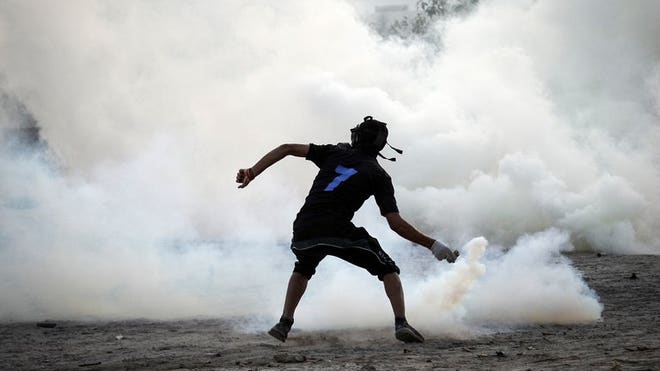
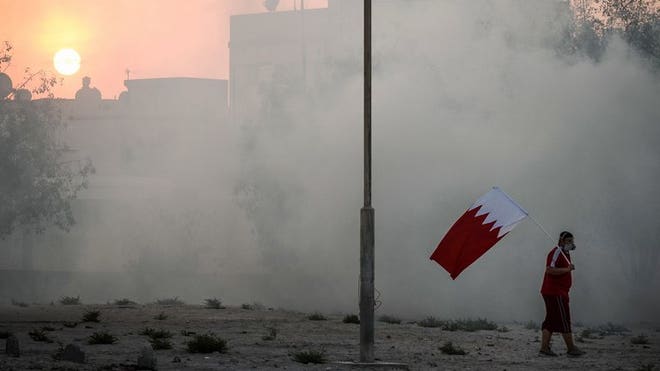
Bahrain detention center riot leaves 40 hurt
 At least 40 Bahraini prisoners were hurt on Friday when security forces used batons, tear gas, pepper spray and stun grenades against inmates protesting over their conditions, an activist said.
The Interior Ministry said security forces had restored order after a number of detainees rioted.
"They tried to break the doors, the police interfered and restored order," a tweet by the ministry said.
Sayed al Muhafada of the Bahrain Centre for Human Rights said he had received a call from inside the prison telling him that around 100 prisoners, most held for terrorism offences, were protesting over being deprived of family visits and other grievances.
The small Gulf Arab state and Western ally, which hosts the U.S. Fifth Fleet, has been buffeted by bouts of unrest since February 2011 when an uprising led by members of the Shi'ite majority demanded the Sunni al-Khalifa dynasty give up power.
The authorities crushed the revolt but protests and clashes have persisted despite continuing talks between government and opposition, leaving Bahrain on the front line of a tussle for regional influence between Shi'ite Iran and Sunni Saudi Arabia.
At least 40 Bahraini prisoners were hurt on Friday when security forces used batons, tear gas, pepper spray and stun grenades against inmates protesting over their conditions, an activist said.
The Interior Ministry said security forces had restored order after a number of detainees rioted.
"They tried to break the doors, the police interfered and restored order," a tweet by the ministry said.
Sayed al Muhafada of the Bahrain Centre for Human Rights said he had received a call from inside the prison telling him that around 100 prisoners, most held for terrorism offences, were protesting over being deprived of family visits and other grievances.
The small Gulf Arab state and Western ally, which hosts the U.S. Fifth Fleet, has been buffeted by bouts of unrest since February 2011 when an uprising led by members of the Shi'ite majority demanded the Sunni al-Khalifa dynasty give up power.
The authorities crushed the revolt but protests and clashes have persisted despite continuing talks between government and opposition, leaving Bahrain on the front line of a tussle for regional influence between Shi'ite Iran and Sunni Saudi Arabia.
ANP leader Najma Hanif gunned down in Peshawar
 Unknown miscreants gunned down Awami National Party (ANP) leader Najma Hanif after breaking into her house in Peshawar late on Friday night.
She was gunned down at her residence in phase one of the upscale Hyatabad neighbourhood of Peshawar.
Police sources told Dawn.com that unknown gunmen opened fire at Najma Hanif after breaking into her home just before midnight on Friday. The attackers managed to escape the site unhurt and unidentified, they added.
In-charge of police unit at Hyatabad Medical Complex, Ismail khan has confirmed that Najma Hanif was hit in the head and face and was received dead at the hospital.
It is pertinent to mention that her husband Hanif Jadoon, who also was an ANP leader, was killed along with his son and guard in a suicide bomb attack in July 2011.
The ANP leader was a candidate for a provincial assembly seat reserved for women in Khyber Pakhtunkhwa. Her body has been sent to her native town in Swabi district.
ANP chief Asfandyar Wali has condemned the brutal killing saying sacrifices of Najma’s family will always be remembered.
Unknown miscreants gunned down Awami National Party (ANP) leader Najma Hanif after breaking into her house in Peshawar late on Friday night.
She was gunned down at her residence in phase one of the upscale Hyatabad neighbourhood of Peshawar.
Police sources told Dawn.com that unknown gunmen opened fire at Najma Hanif after breaking into her home just before midnight on Friday. The attackers managed to escape the site unhurt and unidentified, they added.
In-charge of police unit at Hyatabad Medical Complex, Ismail khan has confirmed that Najma Hanif was hit in the head and face and was received dead at the hospital.
It is pertinent to mention that her husband Hanif Jadoon, who also was an ANP leader, was killed along with his son and guard in a suicide bomb attack in July 2011.
The ANP leader was a candidate for a provincial assembly seat reserved for women in Khyber Pakhtunkhwa. Her body has been sent to her native town in Swabi district.
ANP chief Asfandyar Wali has condemned the brutal killing saying sacrifices of Najma’s family will always be remembered.
President Zardari lauds Zamurd for his courage
http://mediacellppp.wordpress.com/
President Asif Ali Zardari has lauded the courage of PPP leader Zamurd Khan who, risking his own life, helped law enforcing agencies get hold of the armed man in Islamabad. The President also appreciated the role of security agencies who handled the situation in a discreet manner and averted any mishap.
Protest camp for Baloch missing persons set ablaze
http://balochwarna.com/The hunger strike camp set up outside Quetta Press Club by Voice for Baloch Missing Persons (VBMP) for recovery of missing persons was set on fire by unidentified people on night between Wednesday and Thursday. VBMP, a local organisation formed by relatives of missing persons, is striving hard for the recovery of their beloved ones for over last three years in Quetta, Karachi and Islamabad. Unidentified people set the camp on fire and soon it was reduced to ashes. When Vice Chairman of VBMP Mama Abdul Qadir was contacted, he regretted that the right of peaceful protest from relatives of missing persons was also being snatched. “I don’t know who have actually burnt the camp but we have been constantly receiving threats and warnings from government functionaries to dismantle the camp or face consequences,” he added. It may be mentioned here that a son of Mama Abdul Qadir Baloch named Jalil Reki, who was leader of Baloch Republican Party, was abducted in 2009 allegedly by government functionaries from his Sariab Road residence and later his tortured and bullet-riddled body was found in Kech district in 2011. “I and my fellow protesters have received death threats but we will never end our peaceful protest for the recovery of our beloved ones who are being assaulted in torture cells,” Qadir Baloch said, adding that chief justice of Supreme Court who is hearing a case in Quetta had taken notice of burning of strike camp. “We have hopes that CJ would do something for recovery of missing persons but so far his efforts are not yielding results,” he said He appealed chief Justice and other humanitarian organisations to take notice of brutalities allegedly committed by government functionaries against innocent Balochs in the province.
Poland to cut number of troops in Afghanistan in October
India's unfair obsession with lighter skin

The Dark is Beautiful campaign hopes to halt India's huge appetite for skin whitening products, and has a new champion in film star Nandita DasMonisha Rajesh


 While she agrees that there is a long history behind the obsession with skin colour, owing to caste and culture, she thinks the current causes should be targeted first. "Indians are very racist. It's deeply ingrained. But there is so much pressure by peer groups, magazines, billboards and TV adverts that perpetuate this idea that fair is the ideal," she says.
Das has often faced directors and makeup artists trying to lighten her when she plays the role of an educated, upper-class woman. "They always say to me: 'Don't worry, we will lighten you, we're really good at it,' as a reassurance. It's perpetuating a stereotype that only fair-skinned women can be educated and successful."
In 2005, the cosmetics company Emami launched Fair & Handsome for men, with an ad featuring the Bollywood star Shah Rukh Khan tossing a tube of whitening cream to a hopeful young fan, which the Dark is Beautiful campaign is seeking to have withdrawn. "Shah Rukh Khan is saying that to be successful you have to be fair," says Das. "Don't these people have any kind of conscience? You can't be naive; you know what kind of impact you have and yet you send out the message that says: 'Forget about working hard, it's about skin colour.'"
While she agrees that there is a long history behind the obsession with skin colour, owing to caste and culture, she thinks the current causes should be targeted first. "Indians are very racist. It's deeply ingrained. But there is so much pressure by peer groups, magazines, billboards and TV adverts that perpetuate this idea that fair is the ideal," she says.
Das has often faced directors and makeup artists trying to lighten her when she plays the role of an educated, upper-class woman. "They always say to me: 'Don't worry, we will lighten you, we're really good at it,' as a reassurance. It's perpetuating a stereotype that only fair-skinned women can be educated and successful."
In 2005, the cosmetics company Emami launched Fair & Handsome for men, with an ad featuring the Bollywood star Shah Rukh Khan tossing a tube of whitening cream to a hopeful young fan, which the Dark is Beautiful campaign is seeking to have withdrawn. "Shah Rukh Khan is saying that to be successful you have to be fair," says Das. "Don't these people have any kind of conscience? You can't be naive; you know what kind of impact you have and yet you send out the message that says: 'Forget about working hard, it's about skin colour.'"
Pakistan: Challenging the state's identity
Pakistan: Attack on Jaffar Express near Machh
PTI, PPP lash out at govt over Islamabad imbroglio

Zamurad Khan’s heroics save the day


Thursday, August 15, 2013
PPP Patron-in-Chief hails Zamrud Khan’s bravery
http://mediacellppp.wordpress.com/
Patron in Chief of Pakistan People’s Party Bilawal Bhutto Zardari has saluted the courage and valour of PPP leader Zamrud Khan. He said that it was always PPP Jiyalas who came forward and put their lives in danger in the time of need.

Islamabad standoff comes to a heroic end; culprit held
GEO TV
The armed standoff, which continued in Islamabad for hours, finally came to a heroic end after an unarmed Pakistan Peoples Party leader, Zamarud Khan risking his life attacked the armed man leading to his arrest, Geo News reported.
Khan engaged the armed man in negotiation and then tried to overpower him but the latter slipped out of his hands. Police opened aerial fire which scared the culprit and he surrendered himself to police by lying on ground.
No one including the culprit, his wife, and children were hurt in the action, however two policemen including DSP Arif Hussian sustained injured by the shots fired by the perpetrator. Zamarud Khan also remained unscathed in the action.
Using a woman and two children as human shield, an armed man, demanding the imposition of Shariah system in Pakistan and the ouster of the incumbent government, held the whole city hostage for several hours ago.
It all started after the man, later identified as Malik Sikander, armed with at least two assault rifles, an AK-47 and an SMG, started shooting near Jinnah Avenue.
"The man fired several shots after which police and media arrived at the scene", an eyewitness said.
His wife and two children, a boy and a girl, are also with him, who seem to be calm despite a heavy police contingent with guns aimed at them positioned nearby. One of the kids is injured evident from a bandage on his forehead, the TV footage showed.
The car he is driving is a black Toyota Corolla, which according to sources was rented from Islamabad. The car's front fender is hanging loose, which eyewitnesses said came off after Siikander rammed the car into a police mobile to launch his insane mission.
As of now the man stands surrounded by Islamabad police and elite force sharpshooters, but he appears calm, smoking cigarettes and downing energy drinks. He has plenty of water with him to last him even through the night, sources, however, said the police had offered to provide food for his children.
Witnessing this nail-biting real-life thriller, which is no where near a climax, the whole country is glued to their TV screens.
Hundreds people including mediamen, law enforcers and onlookers are at the scene as the drama is unfolding not far from the Parliament House and Presidency, and Prime Minister House.
His wife, who has been shuttling between the police and her armed husband as a messenger, told the police that her husband would only negotiate with a high-ranking police official.
Upon this SSP operations, Dr Rizwan walked over to him and tried to talk him into dropping his weapons but to no avail. So far several such negotiations have taken place but the stalemate persists.
He many a times successfully had the police commandoes, who were stealthily trying to close in, pushed back by threatening to open fire.
According to reports along with a safe passage and protection to his family an over-the-board imposition of Islamic Shariah system across Pakistan as well as ouster of the current government is among his demands.
The police have blocked out the spot by setting up tent-cloth-screens around the car of the armed man. Sources said that it showed the lawmen were likely preparing for a decisive action.
Meanwhile, police have also raided his house in his hometown for clues to as to what could be on his mind with regard to his further line of action. The police interrogated his relatives to gather more information about him. However, they did not disclose anything.
According to certain callers claiming to be his relatives or neighbors, Sikander belongs to Hafizabad and is a bigamist.
However no one could confirm the woman, who is by his side right now, is also his wife.
There are conflicting reports that he is a former Pakistan Air Force serviceman.
Now unemployed, Sikander just recently returned from Dubai, where he was reportedly employed as a migrant worker.
It was also reported that the man was psychotic.
Another report said that Siikander was deported from Dubai in 1990. He had also married a 45-year-old Arab woman, however there was no word on the status of that relation, the report said.
Egypt's interim PM defends deadly crackdown

Egypt: Attacks on police facilities, churches continue as pro-Morsy sit-ins dispersed by force
http://www.egyptindependent.com/Three unidentified people fired at a Central Security Forces (CSF) camp using automatic rifles in Port Said early Thursday. Two soldiers were injured and transferred to a hospital.

EGYPT: Foreign governments and media ignore attacks on Christians
 The Ministry of Foreign Affairs has accused foreign governments and international media of ignoring recent attacks on Egypt’s Christian communities and misrepresenting the Al-Nahda Square and Rabaa Al-Adaweya Square sit-ins as peaceful.
The ministry also claim that the violence that swept the country following the clearing of the sit-ins was the Muslim Brotherhood’s “plan B” for either regaining power or “bringing the entire Egyptian house down with them.
In a statement published in English on Thursday the ministry said: “Beyond overlooking the violent and dangerous reality of the Rabaa and Nahda sit-ins, a number of foreign governments and international media outlets have also chosen to overlook the recent increase in killings and attacks that are once again targeting Egypt’s Christian community.”
The ministry pointed out that attacks on Churches occurred around the country after the sit-ins in Cairo and Giza were dispersed. The statement added: “Mobs of Moslem [sic] Brotherhood members and their supporters, at the behest of extremist preachers, are threatening and attacking Egypt’s Christians.”
Because of the recent international attention given to the situation in Egypt the ministry said, “it is only natural” for Egyptians to “wonder why foreign governments and international media outlets have decided to exclude the intensified attacks on the Egypt’s Christian community from their field of vision.”
The ministry stressed: “The Rabaa and Nahda sit-ins were not exclusively peaceful gatherings, and they posed a clear danger to Egypt’s national security.”
The Ministry of Foreign Affairs has accused foreign governments and international media of ignoring recent attacks on Egypt’s Christian communities and misrepresenting the Al-Nahda Square and Rabaa Al-Adaweya Square sit-ins as peaceful.
The ministry also claim that the violence that swept the country following the clearing of the sit-ins was the Muslim Brotherhood’s “plan B” for either regaining power or “bringing the entire Egyptian house down with them.
In a statement published in English on Thursday the ministry said: “Beyond overlooking the violent and dangerous reality of the Rabaa and Nahda sit-ins, a number of foreign governments and international media outlets have also chosen to overlook the recent increase in killings and attacks that are once again targeting Egypt’s Christian community.”
The ministry pointed out that attacks on Churches occurred around the country after the sit-ins in Cairo and Giza were dispersed. The statement added: “Mobs of Moslem [sic] Brotherhood members and their supporters, at the behest of extremist preachers, are threatening and attacking Egypt’s Christians.”
Because of the recent international attention given to the situation in Egypt the ministry said, “it is only natural” for Egyptians to “wonder why foreign governments and international media outlets have decided to exclude the intensified attacks on the Egypt’s Christian community from their field of vision.”
The ministry stressed: “The Rabaa and Nahda sit-ins were not exclusively peaceful gatherings, and they posed a clear danger to Egypt’s national security.”
Inside Quetta: daily life in a terrorist haven


Cameron Handed 70,000-Name Afghan Interpreters Petition
http://www.tolonews.com/
 Winston Churchill's great-grandson on Wednesday delivered a petition with more than 70,000 signatures to Prime Minister David Cameron's office, demanding action to protect Afghan interpreters who have served with British troops.
Alexander Perkins, a former soldier who has served two tours in Afghanistan himself, said Britain owed the interpreters a "huge debt" and they would be "sent to their deaths" if they were not offered asylum.
Some 600 Afghan interpreters who served on the frontline with British forces are being offered UK visas under a relocation package announced in May, while around 600 others will qualify for training or education in Afghanistan as well as payment for up to five years.
But Perkins, 27, said that the deal falls "short of the mark" as it offers only five-year visas rather than permanent residence in Britain, and only applies to interpreters with 12 months' continuous service before December 19, 2012.
"We're pulling out in 2014 and we're going to leave these guys behind," Perkins said as he handed in the petition.
"There's a fair chance that a large number of these guys are going to be persecuted by the Taliban, and some of them probably will end up being killed."
Perkins set up the petition on the website Change.org, calling for Britain to offer resettlement to interpreters who completed their duties between 2006 and 2011.
He added that his great-grandfather Churchill "would have been shocked by the way our government is treating men who risked their lives to help British forces".
Britain is withdrawing 3,800 of its 9,000 troops from Afghanistan this year, as NATO prepares for a full security handover to Afghan forces at the end of 2014.
A government spokesman described the redundancy package for Afghan staff as "comprehensive", adding that Britain ensures protection, including the possibility of relocation, is offered to any former employees facing threats regardless of when they worked.
"The prime minister has been very clear that we should not turn our backs on our local staff in Afghanistan," the spokesman said.
Winston Churchill's great-grandson on Wednesday delivered a petition with more than 70,000 signatures to Prime Minister David Cameron's office, demanding action to protect Afghan interpreters who have served with British troops.
Alexander Perkins, a former soldier who has served two tours in Afghanistan himself, said Britain owed the interpreters a "huge debt" and they would be "sent to their deaths" if they were not offered asylum.
Some 600 Afghan interpreters who served on the frontline with British forces are being offered UK visas under a relocation package announced in May, while around 600 others will qualify for training or education in Afghanistan as well as payment for up to five years.
But Perkins, 27, said that the deal falls "short of the mark" as it offers only five-year visas rather than permanent residence in Britain, and only applies to interpreters with 12 months' continuous service before December 19, 2012.
"We're pulling out in 2014 and we're going to leave these guys behind," Perkins said as he handed in the petition.
"There's a fair chance that a large number of these guys are going to be persecuted by the Taliban, and some of them probably will end up being killed."
Perkins set up the petition on the website Change.org, calling for Britain to offer resettlement to interpreters who completed their duties between 2006 and 2011.
He added that his great-grandfather Churchill "would have been shocked by the way our government is treating men who risked their lives to help British forces".
Britain is withdrawing 3,800 of its 9,000 troops from Afghanistan this year, as NATO prepares for a full security handover to Afghan forces at the end of 2014.
A government spokesman described the redundancy package for Afghan staff as "comprehensive", adding that Britain ensures protection, including the possibility of relocation, is offered to any former employees facing threats regardless of when they worked.
"The prime minister has been very clear that we should not turn our backs on our local staff in Afghanistan," the spokesman said.
Ex-NATO Chief: 15,000 Troops Should Stay In Afghanistan After 2014
 The United States and its allies should immediately announce how many troops will stay on in Afghanistan after 2014, former NATO supreme commander Admiral James Stavridis argued on Wednesday.
Stavridis, who recently finished a four-year stint as the alliance's top military leader, said it was vital to unveil the troop plans quickly to counter Taliban propaganda claiming foreign troops are abandoning the country.
In a commentary, Stavridis wrote that he supported keeping 15,000 US and allied forces in the country after the bulk of coalition troops withdraw as planned in 2014.
"I believe the correct number is about 9,000 US and 6,000 allied troops, for a total of about 15,000 allied trainers who would focus on mentoring, training, and advising the 350,000 strong Afghan National Security Forces," Stavridis wrote in Foreign Policy.
"Instead of waiting for months, we should move now to decide and publicly reveal the commitment," the admiral said.
There are now roughly 100,000 troops in Afghanistan in the NATO-led coalition, with the Americans making up about two-thirds of the force.
US officials have long suggested they expected to retain a smaller force of about 8,000 to 12,000 troops after 2014.
But, amid difficult negotiations on a long-term security accord with Kabul, White House officials have spoken of a possible "zero option" with no US boots on the ground after next year.
The former top commander of US and alliance forces in Afghanistan, General John Allen, has called for keeping 13,600 American troops in the country, as well as a number of NATO forces. He too has urged President Barack Obama to announce the troop decision as soon as possible.
By announcing troop plans now, Stavridis said the allies "would break the Taliban narrative decisively, making a lie of their oft-repeated trope that 'the foreigners are leaving,'" the admiral wrote.
The move "would reassure the Afghans" and "demonstrate needed leadership to the large international coalition that is awaiting US decisions," he wrote.
"It would also encourage the conclusion of the strategic agreement between the United States and Afghanistan, " he added.
The current head of the International Security Assistance Force (ISAF) in Afghanistan, General Joe Dunford, has indicated he would provide recommendations on troop numbers after this year's "fighting season" ends in October.
While acknowledging serious difficulties in the war effort, Stavridis defined "success" in Afghanistan as a "democratic (if somewhat corrupt) nation that has reasonable control over its borders" and dominance over an insurgency that does not pose a dire threat to the state.
If 15,000 allied troops stay in Afghanistan, there was cause to be "cautiously optimistic" the country would meet the criteria of success, he wrote.
But if no foreign troops remain after 2014, that would mean "probable mission failure," according to Stavridis.
Read more: http://www.businessinsider.com/nato-chief-troop-levels-afghanistan-2014-2013-8#ixzz2c2Nh5lNZ
The United States and its allies should immediately announce how many troops will stay on in Afghanistan after 2014, former NATO supreme commander Admiral James Stavridis argued on Wednesday.
Stavridis, who recently finished a four-year stint as the alliance's top military leader, said it was vital to unveil the troop plans quickly to counter Taliban propaganda claiming foreign troops are abandoning the country.
In a commentary, Stavridis wrote that he supported keeping 15,000 US and allied forces in the country after the bulk of coalition troops withdraw as planned in 2014.
"I believe the correct number is about 9,000 US and 6,000 allied troops, for a total of about 15,000 allied trainers who would focus on mentoring, training, and advising the 350,000 strong Afghan National Security Forces," Stavridis wrote in Foreign Policy.
"Instead of waiting for months, we should move now to decide and publicly reveal the commitment," the admiral said.
There are now roughly 100,000 troops in Afghanistan in the NATO-led coalition, with the Americans making up about two-thirds of the force.
US officials have long suggested they expected to retain a smaller force of about 8,000 to 12,000 troops after 2014.
But, amid difficult negotiations on a long-term security accord with Kabul, White House officials have spoken of a possible "zero option" with no US boots on the ground after next year.
The former top commander of US and alliance forces in Afghanistan, General John Allen, has called for keeping 13,600 American troops in the country, as well as a number of NATO forces. He too has urged President Barack Obama to announce the troop decision as soon as possible.
By announcing troop plans now, Stavridis said the allies "would break the Taliban narrative decisively, making a lie of their oft-repeated trope that 'the foreigners are leaving,'" the admiral wrote.
The move "would reassure the Afghans" and "demonstrate needed leadership to the large international coalition that is awaiting US decisions," he wrote.
"It would also encourage the conclusion of the strategic agreement between the United States and Afghanistan, " he added.
The current head of the International Security Assistance Force (ISAF) in Afghanistan, General Joe Dunford, has indicated he would provide recommendations on troop numbers after this year's "fighting season" ends in October.
While acknowledging serious difficulties in the war effort, Stavridis defined "success" in Afghanistan as a "democratic (if somewhat corrupt) nation that has reasonable control over its borders" and dominance over an insurgency that does not pose a dire threat to the state.
If 15,000 allied troops stay in Afghanistan, there was cause to be "cautiously optimistic" the country would meet the criteria of success, he wrote.
But if no foreign troops remain after 2014, that would mean "probable mission failure," according to Stavridis.
Read more: http://www.businessinsider.com/nato-chief-troop-levels-afghanistan-2014-2013-8#ixzz2c2Nh5lNZ
Pakistan: Writ of state must prevail
 Is it their desperation over failure to win the hearts and minds of people of Pakistan or elation over spectacular jailbreak and wanton killings that motivated the banned Tehreek-i-Taliban Pakistan offer to engage in dialogue with the government, there is no agreed answer as yet. But for the government to say 'yes' to the dialogue offer it is all the more difficult now given an almost impossible to meet precondition put forward by them. Don't hang our men is the precondition. Belonging to Punjabi Taliban affiliate of the TTP these four men are on death row, and now that Zardari-enforced moratorium on hanging has been lifted they are due for execution next week. Should the Nawaz Sharif government go ahead with executions "it will have to pay the price", warns Maulana Asmatullah Muavia, the spokesman for the TTP (Punjab). He hasn't quantified the 'price' as such but did threaten withdrawal of dialogue offer, as he says was the case when TTP's second-in-command Waliur Rehman was killed in a drone strike and the offer was withdrawn.
The Maulana has tried to sell also a thesis that per se the PML (N) and PTI are not against the Taliban, but it's the "pro-establishment and pro-Indian lobbies" that are out to sabotage the dialogue. How ironic it is that the very people whose hands carry the blood of thousands of innocent Pakistanis and who have spared no effort whatsoever to undermine the strategic potentialities of Pakistan, the only country in the world created in the name of Islam, should be telling us who is our friend and who is our enemy. We hope the PML (N) government would not be taken in by this blackmail and go ahead with executions under the law. That the Pakistan government should be forced to spare the criminals under threat of negative reprisals is not on.
But the drama does not end here. There are some people in here who are still espousing the cause of the Taliban. On Monday, the Jamaat-i-Islami chief Syed Munawar Hussain called upon the government to take the Taliban's offer of peace talks "seriously and hold a meaningful dialogue with militants". JUI-F chief Maulana Fazlur Rahman too advocates the same approach. No wonder then both of them have been nominated by the TTP as 'guarantors' on behalf of the government. The JI chief is upset that the government has yet to respond to the Taliban offer, and tauntingly asks 'if it is waiting for a green signal from the US government'. According to him, if the Americans can talk to the Afghan Taliban then what is wrong if there is a Pakistan government-Taliban dialogue? With due respect to the Jamaat chief's prognosis, one would like him to comprehend the enormity of the mismatch between these two situations. The Afghan Taliban are fighting against foreign occupation. But is this the case in Pakistan? TTP is fighting its own people. While the chief of Afghan Taliban Mullah Omar has modified his stand for the cause of peace in his country by signalling to his opponents that the 'Islamic Emirate doesn't think of monopolizing power, rather we believe in reaching understanding with Afghans regarding an Afghan-inclusive government based on Islamic principles'. Do we know, or does anybody know of any such accommodation offered by the TTP. Even when it's difficult to find out what has prompted the TTP has renewed its offer talks to the government, one thing can be said with certainty is that this killing machine has no future in Pakistan. It may kill many thousands more but it can never win hearts and minds of the people of Pakistan. What is it that it is left with to talk about with the government? Talks or no talks the writ of the state must prevail, and no leader worth his salt would spare a convict under a threat like the one made by the Punjabi Taliban to the Nawaz Sharif government.
Is it their desperation over failure to win the hearts and minds of people of Pakistan or elation over spectacular jailbreak and wanton killings that motivated the banned Tehreek-i-Taliban Pakistan offer to engage in dialogue with the government, there is no agreed answer as yet. But for the government to say 'yes' to the dialogue offer it is all the more difficult now given an almost impossible to meet precondition put forward by them. Don't hang our men is the precondition. Belonging to Punjabi Taliban affiliate of the TTP these four men are on death row, and now that Zardari-enforced moratorium on hanging has been lifted they are due for execution next week. Should the Nawaz Sharif government go ahead with executions "it will have to pay the price", warns Maulana Asmatullah Muavia, the spokesman for the TTP (Punjab). He hasn't quantified the 'price' as such but did threaten withdrawal of dialogue offer, as he says was the case when TTP's second-in-command Waliur Rehman was killed in a drone strike and the offer was withdrawn.
The Maulana has tried to sell also a thesis that per se the PML (N) and PTI are not against the Taliban, but it's the "pro-establishment and pro-Indian lobbies" that are out to sabotage the dialogue. How ironic it is that the very people whose hands carry the blood of thousands of innocent Pakistanis and who have spared no effort whatsoever to undermine the strategic potentialities of Pakistan, the only country in the world created in the name of Islam, should be telling us who is our friend and who is our enemy. We hope the PML (N) government would not be taken in by this blackmail and go ahead with executions under the law. That the Pakistan government should be forced to spare the criminals under threat of negative reprisals is not on.
But the drama does not end here. There are some people in here who are still espousing the cause of the Taliban. On Monday, the Jamaat-i-Islami chief Syed Munawar Hussain called upon the government to take the Taliban's offer of peace talks "seriously and hold a meaningful dialogue with militants". JUI-F chief Maulana Fazlur Rahman too advocates the same approach. No wonder then both of them have been nominated by the TTP as 'guarantors' on behalf of the government. The JI chief is upset that the government has yet to respond to the Taliban offer, and tauntingly asks 'if it is waiting for a green signal from the US government'. According to him, if the Americans can talk to the Afghan Taliban then what is wrong if there is a Pakistan government-Taliban dialogue? With due respect to the Jamaat chief's prognosis, one would like him to comprehend the enormity of the mismatch between these two situations. The Afghan Taliban are fighting against foreign occupation. But is this the case in Pakistan? TTP is fighting its own people. While the chief of Afghan Taliban Mullah Omar has modified his stand for the cause of peace in his country by signalling to his opponents that the 'Islamic Emirate doesn't think of monopolizing power, rather we believe in reaching understanding with Afghans regarding an Afghan-inclusive government based on Islamic principles'. Do we know, or does anybody know of any such accommodation offered by the TTP. Even when it's difficult to find out what has prompted the TTP has renewed its offer talks to the government, one thing can be said with certainty is that this killing machine has no future in Pakistan. It may kill many thousands more but it can never win hearts and minds of the people of Pakistan. What is it that it is left with to talk about with the government? Talks or no talks the writ of the state must prevail, and no leader worth his salt would spare a convict under a threat like the one made by the Punjabi Taliban to the Nawaz Sharif government.
PakIndia: Unremitting tensions on the LoC
EDITORIAL: DAILY TIMESSince the deaths of five Indian soldiers in an ambush on the Line of Control (LoC), the tensions between the nuclear-armed neighbours have increased manifold. The disputed and much fought over Kashmir region is now, once again, in the grip of fear and threat. While minor skirmishes have been seen time and again along the LoC, the 10-year-old ceasefire has held by and large. But the series of incidents of exchange of firing in the area for the last nine days are alarming because they show no signs of abating. According to the Pakistani authorities, fresh cross-border shelling has resulted in further civilian casualties and tensions rising a notch further. The Indian government has gone so far as to say that it fears Pakistan’s intentions, which may be to focus the proxy militants’ attention on Kashmir once again after the US’s 2014 withdrawal from Afghanistan. While Pakistan vehemently denies this, the fact that precisely this chain of events occurred in 1989 after the Soviets withdrew from Afghanistan does not escape those worried minds advocating peace and amity on both sides of the border. While a typical knee-jerk reaction can be seen by the authorities on both sides, the attitude of the media in India and Pakistan is not at all conducive towards any kind of lasting stability. The media-fed hysteria is mounting by the day, with jingoism and propaganda playing a huge part in not helping to defuse the volatility. Since August 6, the overall goodwill seen of late between the two countries has dissipated, giving way to fiery Indian protests against the Pakistan High Commission in New Delhi, threats to PIA’s offices throughout India, stoppage of a Lahore-bound Dosti (Friendship) bus, and now Pakistan’s foreign office contemplating a withdrawal of its diplomats from New Delhi because of the possible threat to their safety. Hafiz Saeed of the Jamaat-ud-Dawa has reinforced Indian fears that the militants are just waiting to fight in Kashmir after 2014. It is time to end this spiralling descent into madness. It is for the Nawaz Sharif government to understand that those who aim to sabotage its efforts towards peace with India are the very elements it aids with funds. People like Hafiz Saeed must be put behind bars, war cries must be silenced, and military commanders, who have been keeping the peace on the LoC all these years, be allowed to control the situation through their hotlines and field meetings. We have been working at the negotiation process with India too hard and for too long after the 2008 Mumbai attacks to see it flounder because of undesirable elements whose vested interest lies in continued conflict, not peace, amity and progress.
Missing CM: ANP moves adjournment motion against PTI's Khattak
The Express TribuneThe Awami National Party has submitted an adjournment motion in the Senate against Khyber-Pakhtunkhwa Chief Minister Pervez Khattak because of his absence from the flag hoisting ceremony on Independence Day. Khattak, who represents the Pakistan Tehreek-e-Insaf (PTI) government in Khyber-Pakhtunkhwa, was missing from the flag hoisting ceremony held at Police Lines on August 14. This was the first ceremony being held under the PTI government. As per standard procedure, chief minister (CM) was the chief guest at the main ceremony at police lines. However, just before the ceremony kicked off, it was learnt CM Pervez Khattak will not be attending the ceremony and Health Minister Shaukat Yousafzai and Information Minister Shah Farman will be presiding over the event instead. The chief minister’s spokesperson said that he was in Islamabad to attend a meeting with United Nations (UN) General Secretary Ban Ki-moon so the health minister was asked to attend the flag hoisting ceremony instead. Awami National Party (ANP) leader Zahid Khan, speaking outside the Senate, said that it was unfortunate that things that had never happened before were now happening since the PTI government took over. He claimed that Khattak was not in Islamabad and had not woken up in the morning, which is why he had missed the ceremony.
Pakistan: Absence of leadership and changing global scenario
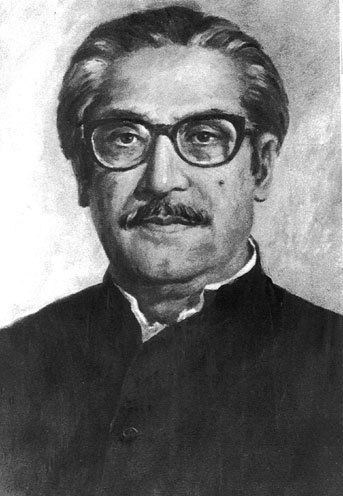
In remembrance of Bangabandhu ( Sheikh Mujibur Rahman )

India: Ties with Pak can't improve if terror acts continue
 In a strong message to Pakistan, Prime Minister Manmohan Singh on Thursday said anti-India activities emanating from there will have to stop for relations to improve and asserted that all steps will be taken to prevent "dastardly" acts like the recent killing of jawans on the LoC.
Addressing the nation on the 67th Independence Day from the ramparts of Red Fort, the Prime Minister said terrorist and naxal violence in the country have reduced but the area of national security calls for constant vigil.
India, he said, has strived for friendship with its neighbouring countries. "However, for relations with Pakistan to improve it is essential they prevent the use of their territory and territory under their control for any anti-India activity," he said.
Referring to the August 6 killing of five Indian soldiers by the Pakistan army in a cross-LoC attack in Poonch sector of Jammu and Kashmir, he termed it as a "dastardly" act and said "we will take all possible steps to prevent such incidents in the future."
In his 30-minute speech, Singh also appeared to target the BJP and Gujarat Chief Minister Narendra Modi, saying there was no place for "narrow and sectarian ideologies" in modern, progressive and secular India.
He warned such ideologies will "divide" society and "weaken our democracy".
"We should prevent them from growing," he said. Singh, in his 10th consecutive Independence Day address and his last before the 2014 Lok Sabha elections, stressed that there was a need to strengthen secular traditions to promote tolerance.
"I would appeal to all political parties, all sections of our society and public at large to work in this direction," he said.
In a strong message to Pakistan, Prime Minister Manmohan Singh on Thursday said anti-India activities emanating from there will have to stop for relations to improve and asserted that all steps will be taken to prevent "dastardly" acts like the recent killing of jawans on the LoC.
Addressing the nation on the 67th Independence Day from the ramparts of Red Fort, the Prime Minister said terrorist and naxal violence in the country have reduced but the area of national security calls for constant vigil.
India, he said, has strived for friendship with its neighbouring countries. "However, for relations with Pakistan to improve it is essential they prevent the use of their territory and territory under their control for any anti-India activity," he said.
Referring to the August 6 killing of five Indian soldiers by the Pakistan army in a cross-LoC attack in Poonch sector of Jammu and Kashmir, he termed it as a "dastardly" act and said "we will take all possible steps to prevent such incidents in the future."
In his 30-minute speech, Singh also appeared to target the BJP and Gujarat Chief Minister Narendra Modi, saying there was no place for "narrow and sectarian ideologies" in modern, progressive and secular India.
He warned such ideologies will "divide" society and "weaken our democracy".
"We should prevent them from growing," he said. Singh, in his 10th consecutive Independence Day address and his last before the 2014 Lok Sabha elections, stressed that there was a need to strengthen secular traditions to promote tolerance.
"I would appeal to all political parties, all sections of our society and public at large to work in this direction," he said.
India: 66 years on, an incomplete quest for national identity
By: Paramita Ghosh , Hindustan TimesFor years, Indians have dribbled the same ball across the length and breadth of India and asked what it should be as a country. Can it be nationalist when it is pulled in different directions by strong regional sentiments? Is it secular when it has had a mixed record in undermining religious majoritarianism? Is it politically democratic with a one-man-one-vote system but socially undemocratic because of the same reason? And has its flagship theme, unity in diversity, actually meant a management of differences and not their embrace? The HT-C fore survey reveals what being Indian means to Indians 66 years after Independence. A high 45% disapprove of inter-caste/faith/community marriages. ‘Close friendship’ with people from other religious communities/caste groups is possible (58%) but 29% said the differences were considered. Pan-Indianism as an idea is popular (59%) but cracks under socio-economic pressures. More people (55%) feel natives of a state should get preference in jobs/education in their own state. Rival, and often contradictory, pulls have, in fact, been built into India’s identity from the start. In The Idea of India, Sunil Khilnani points out how the triumph of Nehru’s modern political vision was, ironically enough, guaranteed precisely through the preservation of pre-modern hierarchies and privileges such as rural property orders.“A principle of positive discrimination, or affirmative action, in compensation for past injuries inflicted on the lowest in the social order was introduced in the form of reservation thus establishing a language of community rights in a society where the liberal language of individual rights and equality was little used,” he writes.
 Has nothing changed? For young urban Indians, caste or religion is not a factor. “That could be because we are apathetic,” said Ritesh, a Mumbai-based manager. This is perhaps why though a high percentage (43%) of 18-35 year-olds surveyed said they “approve” of mixed unions, they don’t resist or put up a fight when parents disapprove.
“When we love someone, we don’t ask about caste, but when it’s marriage, many give in and obey their parents,” said Ritesh.
Sub-national movements like Telangana are also being seen by many as a challenge to the ‘idea of India’. Columnist Shobhaa De has called the birth of new states a “Balkanization.” Radha Kumar, director general, Delhi Policy Group, however, said: “Creating new administrative units in one country can only become problematic if there is no rule of the Constitution and the freedoms of movement, employment, citizenship are not guaranteed.”
For Manju Nath, a teacher in Patna — for whom a sense of state is strong as with 16% of Indians in the survey — said an Indian identity should have no quarrel with regional aspirations. “Smaller units lead to better governance I feel,” she said.Shared vision
Social scientist Yogendra Yadav argued that the model of integration that India followed was not the European model of nation-state, that of homogenisation, a looking for unity in sameness such as followed by countries such as France or Germany.
“What India followed was the state-nation, not nation-state, in which unity was not a function of singular cultural traditions, therefore it does not search for one language, one culture, one religion. There has been an attempt to try to create unity through political identity and through a shared vision of the future, ” he said. But how has this model of unity among diversity fared?
Laxman Singh, a Dalit student in Noida, describes his cultural and nationalistic experience of being a lower caste well. “In the cities no one asks you your caste anymore, but the caste system is diluted not broken. Economic policies that ensure lower castes stay poor continue.”
So while he is “not gloomy” about the future of India, he said he is no nationalist. “Gandhi said if you want to know how progressive a country is, go to the last poor man standing. Nationalism is for the elite,” he said.
Religion, or rather its place in the politico-cultural identity of India, is also an area that has not been settled. Sunandan Roychowdhury, professor at Amity University has an optimistic take: “If you graph days of riots or conflicts with days of peace, in India, the latter outnumbers the former.”
But does that make us truly secular? Nineteen percent of people surveyed are ready to snap ties with a sibling or child if she were to marry someone from a different religious background. Just like in our electoral democracy, in which the right to vote is equal for a rich and a poor man and yet does not change existing socio-economic structures, have we made peace with secularism only so as to leave it open to all kinds of uses?
Has nothing changed? For young urban Indians, caste or religion is not a factor. “That could be because we are apathetic,” said Ritesh, a Mumbai-based manager. This is perhaps why though a high percentage (43%) of 18-35 year-olds surveyed said they “approve” of mixed unions, they don’t resist or put up a fight when parents disapprove.
“When we love someone, we don’t ask about caste, but when it’s marriage, many give in and obey their parents,” said Ritesh.
Sub-national movements like Telangana are also being seen by many as a challenge to the ‘idea of India’. Columnist Shobhaa De has called the birth of new states a “Balkanization.” Radha Kumar, director general, Delhi Policy Group, however, said: “Creating new administrative units in one country can only become problematic if there is no rule of the Constitution and the freedoms of movement, employment, citizenship are not guaranteed.”
For Manju Nath, a teacher in Patna — for whom a sense of state is strong as with 16% of Indians in the survey — said an Indian identity should have no quarrel with regional aspirations. “Smaller units lead to better governance I feel,” she said.Shared vision
Social scientist Yogendra Yadav argued that the model of integration that India followed was not the European model of nation-state, that of homogenisation, a looking for unity in sameness such as followed by countries such as France or Germany.
“What India followed was the state-nation, not nation-state, in which unity was not a function of singular cultural traditions, therefore it does not search for one language, one culture, one religion. There has been an attempt to try to create unity through political identity and through a shared vision of the future, ” he said. But how has this model of unity among diversity fared?
Laxman Singh, a Dalit student in Noida, describes his cultural and nationalistic experience of being a lower caste well. “In the cities no one asks you your caste anymore, but the caste system is diluted not broken. Economic policies that ensure lower castes stay poor continue.”
So while he is “not gloomy” about the future of India, he said he is no nationalist. “Gandhi said if you want to know how progressive a country is, go to the last poor man standing. Nationalism is for the elite,” he said.
Religion, or rather its place in the politico-cultural identity of India, is also an area that has not been settled. Sunandan Roychowdhury, professor at Amity University has an optimistic take: “If you graph days of riots or conflicts with days of peace, in India, the latter outnumbers the former.”
But does that make us truly secular? Nineteen percent of people surveyed are ready to snap ties with a sibling or child if she were to marry someone from a different religious background. Just like in our electoral democracy, in which the right to vote is equal for a rich and a poor man and yet does not change existing socio-economic structures, have we made peace with secularism only so as to leave it open to all kinds of uses?
Wednesday, August 14, 2013
No more sit-ins will be allowed in Egypt
Egyptian Interior Minister Mohamed Ibrahim says that supporters of deposed President Mohamed Morsi will not be allowed to hold any more sit-ins in the country.
Ibrahim made the remark on Wednesday after riot police -- backed by armored vehicles, bulldozers and helicopters -- broke up two sit-in camps set up by Morsi supporters in Cairo, Reuters reported.
"We will not allow any other sit-in in any square in any place in the country," Ibrahim said in a televised news conference.
Police fire teargas, birdshot at Bahrain demonstrators
Bahraini police fired teargas and birdshot to disperse scattered protests across the country on Wednesday, as Shi'ite Muslims responded to a call by online activists for pro-democracy demonstrations.
 The main opposition group said around 60 rallies were held in 40 locations, in an upsurge of a two-and-a-half-year-old campaign to push the Sunni Muslim ruling family for more democracy in the Shi'ite-majority nation of 1.25 million people.
The United States temporarily closed its embassy and Bahrani authorities tightened security after opposition figures used social media to call for rallies.
Small protests passed off peacefully across Bahrain earlier in the day, witnesses and activists said, but demonstrators and riot police clashed in some areas as evening fell.
Security forces converged on the al-Seef district of Manama after activists used Twitter to encourage demonstrators to gather there, in defiance of a blanket ban on protests in the capital.
In a village west of Manama, a standoff deteriorated into a clash between police on one side of a barbed wire fence they had erected overnight and about 300 demonstrators chanting anti-government slogans on the other.
Witnesses said police charged the crowd, firing birdshot and teargas. Similar clashes occurred in other Shi'ite villages where demonstrators threw fire-bombs at police.
The Bahrain Centre for Human Rights activist group said at least 10 people suffered from teargas inhalation or were wounded by birdshot. A spokesman for the main opposition Al Wefaq Society said two people were in a serious condition.
"Despite the campaign of intimidation and surrounding villages with barbed wire, thousands of people turned up for the protests," said Sayed Yousif al-Muhafda of the Bahrain Centre for Human Rights.
FIRE-BOMB
The Interior Ministry reported that an Asian worker had been injured by a fire-bomb as he tried to open a road blocked by protesters in a village south of Manama, and said burning tires had been used to block a main road in Muharraq to the northeast.
It described the use of fire-bombs and road blocks as "terrorism", for which new laws passed this month allow tougher penalties including longer prison terms and the stripping of Bahraini nationality.
Police arrested a woman driver and other occupants of her car, saying she had tried to run over a policeman at a road block.
The concerted new pro-democracy push is being driven by "Tamarrod" (Rebellion), a loose association of opposition activists who coalesced in early July.
Tamarrod is named after the Egyptian movement that helped muster massive protests against President Mohamed Mursi and his Muslim Brotherhood before the military removed the country's first freely-elected leader on July 3.
The Bahrain opposition complains of discrimination against majority Shi'ites in areas such as employment and public services, and is demanding a constitutional monarchy with a government chosen from within a democratically-elected parliament. The government denies any discrimination.
Bahrain, a tiny island state that hosts the U.S. Fifth Fleet as a bulwark for U.S.-aligned Gulf monarchies against Iran, has suffered bouts of unrest since February 2011 when a Shi'ite-led uprising demanded the al-Khalifa dynasty give up power.
The authorities crushed the revolt, one of a series of "Arab Spring" upheavals, but protests and clashes have persisted, despite talks between government and opposition.
That unrest has planted Bahrain on the front line of a tussle for regional influence between Shi'ite Iran and Sunni Saudi Arabia.
The main opposition group said around 60 rallies were held in 40 locations, in an upsurge of a two-and-a-half-year-old campaign to push the Sunni Muslim ruling family for more democracy in the Shi'ite-majority nation of 1.25 million people.
The United States temporarily closed its embassy and Bahrani authorities tightened security after opposition figures used social media to call for rallies.
Small protests passed off peacefully across Bahrain earlier in the day, witnesses and activists said, but demonstrators and riot police clashed in some areas as evening fell.
Security forces converged on the al-Seef district of Manama after activists used Twitter to encourage demonstrators to gather there, in defiance of a blanket ban on protests in the capital.
In a village west of Manama, a standoff deteriorated into a clash between police on one side of a barbed wire fence they had erected overnight and about 300 demonstrators chanting anti-government slogans on the other.
Witnesses said police charged the crowd, firing birdshot and teargas. Similar clashes occurred in other Shi'ite villages where demonstrators threw fire-bombs at police.
The Bahrain Centre for Human Rights activist group said at least 10 people suffered from teargas inhalation or were wounded by birdshot. A spokesman for the main opposition Al Wefaq Society said two people were in a serious condition.
"Despite the campaign of intimidation and surrounding villages with barbed wire, thousands of people turned up for the protests," said Sayed Yousif al-Muhafda of the Bahrain Centre for Human Rights.
FIRE-BOMB
The Interior Ministry reported that an Asian worker had been injured by a fire-bomb as he tried to open a road blocked by protesters in a village south of Manama, and said burning tires had been used to block a main road in Muharraq to the northeast.
It described the use of fire-bombs and road blocks as "terrorism", for which new laws passed this month allow tougher penalties including longer prison terms and the stripping of Bahraini nationality.
Police arrested a woman driver and other occupants of her car, saying she had tried to run over a policeman at a road block.
The concerted new pro-democracy push is being driven by "Tamarrod" (Rebellion), a loose association of opposition activists who coalesced in early July.
Tamarrod is named after the Egyptian movement that helped muster massive protests against President Mohamed Mursi and his Muslim Brotherhood before the military removed the country's first freely-elected leader on July 3.
The Bahrain opposition complains of discrimination against majority Shi'ites in areas such as employment and public services, and is demanding a constitutional monarchy with a government chosen from within a democratically-elected parliament. The government denies any discrimination.
Bahrain, a tiny island state that hosts the U.S. Fifth Fleet as a bulwark for U.S.-aligned Gulf monarchies against Iran, has suffered bouts of unrest since February 2011 when a Shi'ite-led uprising demanded the al-Khalifa dynasty give up power.
The authorities crushed the revolt, one of a series of "Arab Spring" upheavals, but protests and clashes have persisted, despite talks between government and opposition.
That unrest has planted Bahrain on the front line of a tussle for regional influence between Shi'ite Iran and Sunni Saudi Arabia.
Anti-government protests in Bahrain amidst tight security
 Police have reportedly used tear gas and birdshot to contain long-planned protests in the Gulf State of Bahrain. The country’s Shi’ite majority is demanding a greater say in the political decisions of the Sunni-ruled country.
The long-planned protests mark two-and-a-half years since the unsuccessful uprising in the oil-rich state during which protesters called for the abdication of King Hamad, who has been in power since 1999.
Despite a ban on public demonstrations, throngs walked through capital Manama shouting "Democracy! Democracy!", as police erected barriers and checkpoints through many of the main streets. In defiance government threats to use force against what they claim to be foreign-backed "riots" many in the villages outside Manama protested by organizing sit-ins outside their houses.In the village of Shakoora about 300 demonstrators clashed with a police cordon over a specially-built barbed wire fence, penning them in.
In other Shi'ite settlements, the protests remained peaceful, and no casualties have been reported throughout the day.
Unlike in Egypt, where protesters against the recently ousted Muslim Brotherhood government were backed by the military, Bahrain's security forces remain loyal to the government.
Authorities warned they would "forcefully confront'' any large demonstrations. Concrete barriers lined major streets in the capital, Manama, and security checkpoints surrounded by barbed wire guarded roads leading to the city from majority Shiite neighborhoods.
"Based on what we are following in the field, the government violence against protesters is inevitable,'' a spokesman for the group organizing the rallies, Hussain Yousif, told AP. "But we need to go ahead and show the world and the government that the Bahraini people have the right to express their political demands,'' he added. While protesters insist they'll remain peaceful and defiant, there have been attacks in recent weeks around Bahrain, including some from bombs made with natural gas canisters. Citing the fear of violence, the US temporarily closed its embassy in Bahrain on Wednesday after activists called on people to meet nearby. The kingdom is home to the US Navy's 5th Fleet, and is the Pentagon's main base to counter Iran's expanding military presence in the Gulf and protect oil shipping lanes through the Gulf of Hormuz.
The protests have been organized by the Tamarod Bahrain campaign, which features several opposition groups and has adopted the name of Egypt's Tamarod movement. They are expected to stage nonviolent protests in nine areas of the country, with the largest expected in Manama. Wednesday coincides with the 42nd anniversary of Bahrain's independence from Britain. It also marks 2 1/2 years since the current wave of unrest started."The government will forcefully confront the suspicious calls to violate law and order and those who stand behind them through decisive measures,'' Prime Minister Prince Khalifa bin Salman Al Khalifa told the official Bahrain News Agency on Monday.
Meanwhile, Bahrain's largest opposition group, the Islamist al Wefaq Society, said it was not planning to join the protesters, but made it clear it supported the right to hold peaceful demonstrations.
RT correspondent Lucy Kafanov says that the Bahrain government has dealt with all protests firmly in the country, since the beginning of the Arab Spring. "Bahrain has been rocked by political unrest since 2011. For the past two years the majority Shiite opposition has been pushing for democratic reforms, but those demands have been met with an iron fist," Kafanov said.The opposition is demanding a constitutional monarchy with a government chosen from within a democratically elected parliament. It claims there is discrimination against majority Shiites in areas such as employment and public services. The government has denied any discrimination.
"There have been lots of violations in Bahrain, but unfortunately there's rarely anything in the Western media regarding all the violations. Torture is a daily act," Jalal Fairooz, former opposition MP from the Wefaq Party, told RT.
"Over the past week three major human groups, including Amnesty International, have issued a very strong urging for the UK government and other foreign governments to stop supporting the dictator and try to enforce respect of human rights,” Fairooz said. “But unfortunately the money and petrodollars talk louder than principles in the West.”While there is no clear epicenter of revolt in Bahrain's uprising history, like Egypt's Tahrir Square, the capital's Pearl Square was cleared by police raids and sealed off from the public in the early weeks of the unrest. The organizers of the nationwide protests have called instead on Bahrain residents to flood the streets. The Tamarod campaign leaders have urged workers to join in a general strike and for shop owners to close their businesses. The Bahrain Chamber of Commerce and Industry has called on workers and business owners to ignore the protests.
Clashes have calmed down in recent months after the ruling family introduced some reforms, including giving the elected parliament more oversight powers and promising deeper investigations into alleged abuses by security forces. Many Shiites have dismissed the reforms as window dressing, however, saying that the monarchy is still in control of all key decision-making.Bahrain's parliament has passed strict new laws to curb opposition activists, including banning protests in the capital and giving authorities the right to remove citizenship from those convicted of violence.
Courts also have jailed prominent opposition figures and others, including some with alleged links to Iranian-backed groups such as Lebanon's Hezbollah. Bahrain and other Gulf states claim that Iran, a majority Shiite country, has a hand in the protests. Iran denies the claim.
Joe Stork, deputy director of Human Rights Watch's Middle East and North Africa office, said Bahrain should allow the protests to take place.
"The fact that some protesters perpetrate acts of violence in some demonstrations does not justify a blanket ban on demonstrations and protests in the capital city,'' Stork said. "Bahrain's total ban on protests clearly violates the right of citizens and residents to come together to raise political demands peacefully.''
Police have reportedly used tear gas and birdshot to contain long-planned protests in the Gulf State of Bahrain. The country’s Shi’ite majority is demanding a greater say in the political decisions of the Sunni-ruled country.
The long-planned protests mark two-and-a-half years since the unsuccessful uprising in the oil-rich state during which protesters called for the abdication of King Hamad, who has been in power since 1999.
Despite a ban on public demonstrations, throngs walked through capital Manama shouting "Democracy! Democracy!", as police erected barriers and checkpoints through many of the main streets. In defiance government threats to use force against what they claim to be foreign-backed "riots" many in the villages outside Manama protested by organizing sit-ins outside their houses.In the village of Shakoora about 300 demonstrators clashed with a police cordon over a specially-built barbed wire fence, penning them in.
In other Shi'ite settlements, the protests remained peaceful, and no casualties have been reported throughout the day.
Unlike in Egypt, where protesters against the recently ousted Muslim Brotherhood government were backed by the military, Bahrain's security forces remain loyal to the government.
Authorities warned they would "forcefully confront'' any large demonstrations. Concrete barriers lined major streets in the capital, Manama, and security checkpoints surrounded by barbed wire guarded roads leading to the city from majority Shiite neighborhoods.
"Based on what we are following in the field, the government violence against protesters is inevitable,'' a spokesman for the group organizing the rallies, Hussain Yousif, told AP. "But we need to go ahead and show the world and the government that the Bahraini people have the right to express their political demands,'' he added. While protesters insist they'll remain peaceful and defiant, there have been attacks in recent weeks around Bahrain, including some from bombs made with natural gas canisters. Citing the fear of violence, the US temporarily closed its embassy in Bahrain on Wednesday after activists called on people to meet nearby. The kingdom is home to the US Navy's 5th Fleet, and is the Pentagon's main base to counter Iran's expanding military presence in the Gulf and protect oil shipping lanes through the Gulf of Hormuz.
The protests have been organized by the Tamarod Bahrain campaign, which features several opposition groups and has adopted the name of Egypt's Tamarod movement. They are expected to stage nonviolent protests in nine areas of the country, with the largest expected in Manama. Wednesday coincides with the 42nd anniversary of Bahrain's independence from Britain. It also marks 2 1/2 years since the current wave of unrest started."The government will forcefully confront the suspicious calls to violate law and order and those who stand behind them through decisive measures,'' Prime Minister Prince Khalifa bin Salman Al Khalifa told the official Bahrain News Agency on Monday.
Meanwhile, Bahrain's largest opposition group, the Islamist al Wefaq Society, said it was not planning to join the protesters, but made it clear it supported the right to hold peaceful demonstrations.
RT correspondent Lucy Kafanov says that the Bahrain government has dealt with all protests firmly in the country, since the beginning of the Arab Spring. "Bahrain has been rocked by political unrest since 2011. For the past two years the majority Shiite opposition has been pushing for democratic reforms, but those demands have been met with an iron fist," Kafanov said.The opposition is demanding a constitutional monarchy with a government chosen from within a democratically elected parliament. It claims there is discrimination against majority Shiites in areas such as employment and public services. The government has denied any discrimination.
"There have been lots of violations in Bahrain, but unfortunately there's rarely anything in the Western media regarding all the violations. Torture is a daily act," Jalal Fairooz, former opposition MP from the Wefaq Party, told RT.
"Over the past week three major human groups, including Amnesty International, have issued a very strong urging for the UK government and other foreign governments to stop supporting the dictator and try to enforce respect of human rights,” Fairooz said. “But unfortunately the money and petrodollars talk louder than principles in the West.”While there is no clear epicenter of revolt in Bahrain's uprising history, like Egypt's Tahrir Square, the capital's Pearl Square was cleared by police raids and sealed off from the public in the early weeks of the unrest. The organizers of the nationwide protests have called instead on Bahrain residents to flood the streets. The Tamarod campaign leaders have urged workers to join in a general strike and for shop owners to close their businesses. The Bahrain Chamber of Commerce and Industry has called on workers and business owners to ignore the protests.
Clashes have calmed down in recent months after the ruling family introduced some reforms, including giving the elected parliament more oversight powers and promising deeper investigations into alleged abuses by security forces. Many Shiites have dismissed the reforms as window dressing, however, saying that the monarchy is still in control of all key decision-making.Bahrain's parliament has passed strict new laws to curb opposition activists, including banning protests in the capital and giving authorities the right to remove citizenship from those convicted of violence.
Courts also have jailed prominent opposition figures and others, including some with alleged links to Iranian-backed groups such as Lebanon's Hezbollah. Bahrain and other Gulf states claim that Iran, a majority Shiite country, has a hand in the protests. Iran denies the claim.
Joe Stork, deputy director of Human Rights Watch's Middle East and North Africa office, said Bahrain should allow the protests to take place.
"The fact that some protesters perpetrate acts of violence in some demonstrations does not justify a blanket ban on demonstrations and protests in the capital city,'' Stork said. "Bahrain's total ban on protests clearly violates the right of citizens and residents to come together to raise political demands peacefully.''
Subscribe to:
Posts (Atom)