Wednesday, August 14, 2013
Bahraini regime forces fire tear gas at anti-regime protesters
Egypt imposes state of emergency after 95 people killed in clashes
India rape: Police hunt attacker of 7-year-old
 A 7-year-old girl was raped in a train's toilet compartment in central India over the weekend, police said Tuesday.
The incident comes amid widespread outrage in recent months over sex crimes across India.The child was lured away from her mother and her friend by a man in a park in Raipur, the capital of Chhattisgarh state, on Friday, railway police superintendent K.C. Agrawal told CNN.
Police suspect that man then took her on board a train and sexually assaulted her in the toilet compartment of a carriage sometime between Friday night and Saturday morning.The suspect "was apparently known to the friend of the child's mother," Agrawal said.
The alleged attacker, around age 40, remains at large.
Police teams, Agrawal said, have fanned out to capture the suspect, whose identity has not been disclosed.
The victim, who was found on Saturday morning at a train station, is under treatment at a hospital, and her condition is stable, police said.A robust public dialogue on sex crimes in India emerged in December after the gang rape of a 23-year-old woman in a bus in New Delhi. The student died in a Singapore hospital.
Her case focused the nation's attention and anger on sex crimes. An outcry quickly grew over reportedly widespread harassment of women in public.
Demonstrators took to the streets to call for stricter laws on sexual assault and changes in cultural attitudes toward women.
Last month, a court convicted six men to life in prison in the gang rape of a Swiss tourist in Madhya Pradesh state. The men have denied the charges.
The victim and her husband were on a cycling tour across India and had set up camp near a forest in Datia district when a group of men assaulted them, beating the husband and raping the wife, according to police.
The men were members of a local tribe who live near where the travelers were camping.
A 7-year-old girl was raped in a train's toilet compartment in central India over the weekend, police said Tuesday.
The incident comes amid widespread outrage in recent months over sex crimes across India.The child was lured away from her mother and her friend by a man in a park in Raipur, the capital of Chhattisgarh state, on Friday, railway police superintendent K.C. Agrawal told CNN.
Police suspect that man then took her on board a train and sexually assaulted her in the toilet compartment of a carriage sometime between Friday night and Saturday morning.The suspect "was apparently known to the friend of the child's mother," Agrawal said.
The alleged attacker, around age 40, remains at large.
Police teams, Agrawal said, have fanned out to capture the suspect, whose identity has not been disclosed.
The victim, who was found on Saturday morning at a train station, is under treatment at a hospital, and her condition is stable, police said.A robust public dialogue on sex crimes in India emerged in December after the gang rape of a 23-year-old woman in a bus in New Delhi. The student died in a Singapore hospital.
Her case focused the nation's attention and anger on sex crimes. An outcry quickly grew over reportedly widespread harassment of women in public.
Demonstrators took to the streets to call for stricter laws on sexual assault and changes in cultural attitudes toward women.
Last month, a court convicted six men to life in prison in the gang rape of a Swiss tourist in Madhya Pradesh state. The men have denied the charges.
The victim and her husband were on a cycling tour across India and had set up camp near a forest in Datia district when a group of men assaulted them, beating the husband and raping the wife, according to police.
The men were members of a local tribe who live near where the travelers were camping.
Pak-India: The legacy of Partition
 Syed Badrul Ahsan
CRACKS began to develop in India’s unity as a country when the poet Mohammad Iqbal began propounding the idea of Muslims being an entity separate from all other communities in the land. The All-India Muslim League developed the theme a little further and made it clear that the Muslims inhabiting the north-west and east of India would need to constitute themselves into independent states. The die, if one were inclined to observe circumstances in such critical manner, was cast. And yet the Cabinet Mission in 1946 raised the hope that somehow the territorial integrity of the country could be retained through a major restructuring of politics before independence could come to India.
Mohammad Ali Jinnah reluctantly accepted the Cabinet Mission scheme. So did the leading lights of the Indian National Congress, until Jawaharlal Nehru put a damper on the entire plan. He made it clear that his party was not obligated to see the plan reach a definitive conclusion. That was on July 10, 1946. The Muslim League, already uncomfortable at having accepted the Cabinet Mission Plan, saw Nehru’s remarks as a godsend and swiftly backed out of it. A month later, thanks to the Muslim League’s Direct Action Day, Muslims and Hindus cheerfully hacked away at one another in Calcutta. That was on 16 August. Four days later, anywhere between five thousand and ten thousand people, Hindus and Muslims, lay dead all across the streets of the huge metropolis. Partition had become inevitable.
Within days of the state of Pakistan coming into being on August 14, 1947, Jinnah went on an aerial survey of the situation on the ground. The sight of hundreds of thousands of refugees making their way away from their ancestral homes and toward villages and towns they had never seen or been to earlier sent a wave of shock through his being. ‘What have I done?’–that was the question he raised. No one answered. Within months, millions of Hindus and Sikhs would leave their ancient homes in Punjab and Bengal and trek to an uncertain future across unknown geography. Millions of Muslims would make their way to Pakistan, convinced that it was there they would live in dignity as masters of their destiny.
Sixty six years after Partition, one would do well to take stock of the ramifications of the vivisection of the land. Hindus and Muslims have only seen their relations worsen through the decades, to a point where communalism continues to define life all the way from Pakistan through India to Bangladesh. Hindutva undermines the secular vision that was once Nehru’s legacy. In Pakistan and to a certain extent in Bangladesh, religious bigotry threatens to wreck liberalism of all sorts. India’s Muslims remain largely backward, poor and, in a very big way, less than well-educated. In Pakistan, Hindus are as good as non-existent; and the tiny Christian minority is always the target of blasphemy law peddlers in the country. Bangladesh’s Hindu population has been on a steep decline, despite the country’s self-proclaimed secularism; its Christian community becomes smaller by the day; and after Ramu, its Buddhists are not sure this is their country any more.
Post-partition India has thrown up the likes of Bal Thackeray, who thought all Muslims should be kicked out of the country. Today, it is the controversial, none too Muslim-friendly Narendra Modi who dreams of being prime minister someday. In Pakistan and Bangladesh, no one imagines that a Hindu or Christian or Buddhist can play leading roles in politics and in the administration. If India’s BJP touts Hindu nationalism, Pakistan’s political parties continue to see nothing beyond Islam, while Bangladesh’s rightwing discovers, through ‘Bangladeshi nationalism’, a clever way of repudiating Bengali nationhood in favour of a shrewd pursuit of religion-based politics. Secular politics never took roots in Pakistan. In India and Bangladesh, it has been forced to the ropes.
The division of India has led to a diminution of politics through the rise of dynasties across the old country. The Bhuttos in Pakistan, the Nehru-Gandhis in India and the Mujib and Zia clans in Bangladesh have created the perfect conditions for mediocrity to thrive in politics. Behind these larger dynasties come the little ones–in politics, in the movies, indeed nearly everywhere. The modern-day republic is thus but another name for monarchies in new wrapping.
Partition saw the best among the Hindu community–teachers, philanthropists, doctors–leave Muslim Pakistan and make new homes across the newly drawn frontiers. It saw Muslim gentry, as in West Bengal, make the arduous decision to move to the new state of Pakistan in hopes of a better future. Both groups, as also their descendants, have remained trapped in nostalgia. Artistes and writers have seen their futures devastated by Partition. The singer Noor Jehan went off to Pakistan, together with Saadat Hasan Manto. Khushwant Singh, Kuldip Nayar and Inder Kumar Gujral, their homeland suddenly foreign territory for them, resettled in an India vastly different from the one they had known earlier. Sahibzada Yaqub Khan trooped off to Pakistan even as his parents and siblings decided to stay on in India. Jinnah, Liaquat Ali Khan, H.S. Suhrawardy and Bhutto abandoned homes in India and made new homes in Pakistan.
Partition has seen democracy, minus the aberration of the 1975-77 Emergency, thrive in India. In Pakistan, the army has undermined prospects of democracy four times and continues to wield unbridled influence over the making of policy. In Bangladesh, the liberation of which was a revolt against Pakistan, military coups have led to the systematic murder of politicians and leading freedom fighters.
Partition gave us Louis Mountbatten and Cyril Radcliffe, who gave us divided homes and villages and provinces. It gave us three wars. It gave the people of the subcontinent defence budgets that have left them impoverished.
Sixty six years after 1947, the legacy of Partition remains questionable, for children in India, Pakistan and Bangladesh grow into adulthood without knowledge of one another, with mistrust and suspicion blocking the road to a full, satisfying comprehension of our post-modern world.
Syed Badrul Ahsan
CRACKS began to develop in India’s unity as a country when the poet Mohammad Iqbal began propounding the idea of Muslims being an entity separate from all other communities in the land. The All-India Muslim League developed the theme a little further and made it clear that the Muslims inhabiting the north-west and east of India would need to constitute themselves into independent states. The die, if one were inclined to observe circumstances in such critical manner, was cast. And yet the Cabinet Mission in 1946 raised the hope that somehow the territorial integrity of the country could be retained through a major restructuring of politics before independence could come to India.
Mohammad Ali Jinnah reluctantly accepted the Cabinet Mission scheme. So did the leading lights of the Indian National Congress, until Jawaharlal Nehru put a damper on the entire plan. He made it clear that his party was not obligated to see the plan reach a definitive conclusion. That was on July 10, 1946. The Muslim League, already uncomfortable at having accepted the Cabinet Mission Plan, saw Nehru’s remarks as a godsend and swiftly backed out of it. A month later, thanks to the Muslim League’s Direct Action Day, Muslims and Hindus cheerfully hacked away at one another in Calcutta. That was on 16 August. Four days later, anywhere between five thousand and ten thousand people, Hindus and Muslims, lay dead all across the streets of the huge metropolis. Partition had become inevitable.
Within days of the state of Pakistan coming into being on August 14, 1947, Jinnah went on an aerial survey of the situation on the ground. The sight of hundreds of thousands of refugees making their way away from their ancestral homes and toward villages and towns they had never seen or been to earlier sent a wave of shock through his being. ‘What have I done?’–that was the question he raised. No one answered. Within months, millions of Hindus and Sikhs would leave their ancient homes in Punjab and Bengal and trek to an uncertain future across unknown geography. Millions of Muslims would make their way to Pakistan, convinced that it was there they would live in dignity as masters of their destiny.
Sixty six years after Partition, one would do well to take stock of the ramifications of the vivisection of the land. Hindus and Muslims have only seen their relations worsen through the decades, to a point where communalism continues to define life all the way from Pakistan through India to Bangladesh. Hindutva undermines the secular vision that was once Nehru’s legacy. In Pakistan and to a certain extent in Bangladesh, religious bigotry threatens to wreck liberalism of all sorts. India’s Muslims remain largely backward, poor and, in a very big way, less than well-educated. In Pakistan, Hindus are as good as non-existent; and the tiny Christian minority is always the target of blasphemy law peddlers in the country. Bangladesh’s Hindu population has been on a steep decline, despite the country’s self-proclaimed secularism; its Christian community becomes smaller by the day; and after Ramu, its Buddhists are not sure this is their country any more.
Post-partition India has thrown up the likes of Bal Thackeray, who thought all Muslims should be kicked out of the country. Today, it is the controversial, none too Muslim-friendly Narendra Modi who dreams of being prime minister someday. In Pakistan and Bangladesh, no one imagines that a Hindu or Christian or Buddhist can play leading roles in politics and in the administration. If India’s BJP touts Hindu nationalism, Pakistan’s political parties continue to see nothing beyond Islam, while Bangladesh’s rightwing discovers, through ‘Bangladeshi nationalism’, a clever way of repudiating Bengali nationhood in favour of a shrewd pursuit of religion-based politics. Secular politics never took roots in Pakistan. In India and Bangladesh, it has been forced to the ropes.
The division of India has led to a diminution of politics through the rise of dynasties across the old country. The Bhuttos in Pakistan, the Nehru-Gandhis in India and the Mujib and Zia clans in Bangladesh have created the perfect conditions for mediocrity to thrive in politics. Behind these larger dynasties come the little ones–in politics, in the movies, indeed nearly everywhere. The modern-day republic is thus but another name for monarchies in new wrapping.
Partition saw the best among the Hindu community–teachers, philanthropists, doctors–leave Muslim Pakistan and make new homes across the newly drawn frontiers. It saw Muslim gentry, as in West Bengal, make the arduous decision to move to the new state of Pakistan in hopes of a better future. Both groups, as also their descendants, have remained trapped in nostalgia. Artistes and writers have seen their futures devastated by Partition. The singer Noor Jehan went off to Pakistan, together with Saadat Hasan Manto. Khushwant Singh, Kuldip Nayar and Inder Kumar Gujral, their homeland suddenly foreign territory for them, resettled in an India vastly different from the one they had known earlier. Sahibzada Yaqub Khan trooped off to Pakistan even as his parents and siblings decided to stay on in India. Jinnah, Liaquat Ali Khan, H.S. Suhrawardy and Bhutto abandoned homes in India and made new homes in Pakistan.
Partition has seen democracy, minus the aberration of the 1975-77 Emergency, thrive in India. In Pakistan, the army has undermined prospects of democracy four times and continues to wield unbridled influence over the making of policy. In Bangladesh, the liberation of which was a revolt against Pakistan, military coups have led to the systematic murder of politicians and leading freedom fighters.
Partition gave us Louis Mountbatten and Cyril Radcliffe, who gave us divided homes and villages and provinces. It gave us three wars. It gave the people of the subcontinent defence budgets that have left them impoverished.
Sixty six years after 1947, the legacy of Partition remains questionable, for children in India, Pakistan and Bangladesh grow into adulthood without knowledge of one another, with mistrust and suspicion blocking the road to a full, satisfying comprehension of our post-modern world.
Saudi prince slams Riyadh crackdown, corruption
 A Saudi prince who is living in exile has spoken out against the suppression of dissident voices and rampant corruption in Saudi Arabia.
In an interview with Russia's RT on Wednesday, Khalid Bin Farhan Al Saud said Saudi Arabia has stepped up its crackdown on protests while supporting the insurgency in Syria.
“There is no independent Judiciary, as both police and the prosecutor’s office are accountable to the Interior Ministry. This ministry’s officials investigate ‘crimes’ (they call them crimes), related to freedom of speech. So they fabricate evidence and don’t allow people to have attorneys”, the prince said in the interview.
“Even if a court rules to release such a ‘criminal’, the Ministry of Interior keeps him in prison, even though there is a court order to release him. There have even been killings! Killings! And as for the external opposition, Saudi intelligence forces find these people abroad! There is no safety inside or outside the country,” he added.
The Saudi prince also criticized Washington for ignoring corruption in the world’s largest oil exporter due to long-term interests.
“The White House certainly does maintain a longstanding alliance with the leaders of Saudi Arabia, cemented by common political, economic and military interests in the Middle East,” said Prince Khaled.
The Saudi prince defected last month from the royal family and is now living in exile in Germany.
Since February 2011, protesters have held demonstrations on an almost regular basis in Saudi Arabia, primarily calling for the release of all political prisoners, freedom of expression and assembly, and an end to widespread discrimination.
However, the demonstrations have turned into protests against the Al Saud regime, especially since November 2011, when security forces killed five protesters and injured many others in the Eastern Province.
A Saudi prince who is living in exile has spoken out against the suppression of dissident voices and rampant corruption in Saudi Arabia.
In an interview with Russia's RT on Wednesday, Khalid Bin Farhan Al Saud said Saudi Arabia has stepped up its crackdown on protests while supporting the insurgency in Syria.
“There is no independent Judiciary, as both police and the prosecutor’s office are accountable to the Interior Ministry. This ministry’s officials investigate ‘crimes’ (they call them crimes), related to freedom of speech. So they fabricate evidence and don’t allow people to have attorneys”, the prince said in the interview.
“Even if a court rules to release such a ‘criminal’, the Ministry of Interior keeps him in prison, even though there is a court order to release him. There have even been killings! Killings! And as for the external opposition, Saudi intelligence forces find these people abroad! There is no safety inside or outside the country,” he added.
The Saudi prince also criticized Washington for ignoring corruption in the world’s largest oil exporter due to long-term interests.
“The White House certainly does maintain a longstanding alliance with the leaders of Saudi Arabia, cemented by common political, economic and military interests in the Middle East,” said Prince Khaled.
The Saudi prince defected last month from the royal family and is now living in exile in Germany.
Since February 2011, protesters have held demonstrations on an almost regular basis in Saudi Arabia, primarily calling for the release of all political prisoners, freedom of expression and assembly, and an end to widespread discrimination.
However, the demonstrations have turned into protests against the Al Saud regime, especially since November 2011, when security forces killed five protesters and injured many others in the Eastern Province.
Afghanistan's future depends on foreign soldiers
 Afghanistan's future security will remain dependent on international troops for many years after most foreign combat forces leave by the end of 2014, the U.S. commander of the NATO-led force in the South Asian country said.
With the formal security handover to Afghans closing in, intense debate is underway about how many troops the United States and its mainly NATO allies should leave behind to conduct training, support and counter-terror operations.
The White House favors about 7,000 U.S. troops, but some in the U.S. military would prefer two or three times as many.
However many there are left behind, they will play a vital role in supporting the Afghan National Security Forces. ANSF numbers have been projected at 352,000 by the time they take over, although they have not reached that level yet, according to some official U.S. estimates.
U.S. General Joseph Dunford, the last commander of the NATO-led mission in Afghanistan, would not be drawn on how many he thought should remain, referring instead to "sustainability".
In an interview with Reuters on Tuesday he argued for a significant presence after the U.S.-dominated International Security Assistance Force (ISAF) is disbanded next year.
"The post-2014 presence is a lot more complicated than the numbers and the numbers have become a distraction, to be honest with you," Dunford said in his Kabul headquarters.
"It's about a lot more than numbers. It's about what capability is required to sustain the Afghan security forces after 2014," he said.
Twelve years into the war, launched in the aftermath of the September 11 attacks on the United States, the Taliban and other insurgents are still able to make telling blows against foreign troops and Afghan government institutions.
That makes the decision about the post-2014 force, to be made in Washington later this year, even more important. Others, such as Germany and Italy, will make smaller contributions.
ISAF currently numbers about 87,000 troops, three-quarters of them American. Dunford said the intense debate about the size of the residual force was not helpful.
One of the sticking points about that force has been the suspension of talks between Afghanistan and the United States over a bilateral security pact to replace the ISAF mission.
The collapse of a similar pact between the United States and Baghdad in 2011 led Washington to pull all its troops out of Iraq, which has since descended back into sectarian violence.
The pact talks were suspended in June amid Afghan anger over the opening of a Taliban office in Qatar, which President Hamid Karzai's government blamed partly on U.S. involvement.
Dunford said he had talked "at every level from district and province to members of parliament ... to President Karzai" and was adamant the pact would be signed.
He also said it was too early to judge whether the mission in Afghanistan had been successful, or how America's longest war would be remembered.
"Our objective is a stable, secure and unified Afghanistan. And we're still working towards that end," Dunford said.
"And if we achieve the objective ... I think it will be remembered as being successful."
Afghanistan's future security will remain dependent on international troops for many years after most foreign combat forces leave by the end of 2014, the U.S. commander of the NATO-led force in the South Asian country said.
With the formal security handover to Afghans closing in, intense debate is underway about how many troops the United States and its mainly NATO allies should leave behind to conduct training, support and counter-terror operations.
The White House favors about 7,000 U.S. troops, but some in the U.S. military would prefer two or three times as many.
However many there are left behind, they will play a vital role in supporting the Afghan National Security Forces. ANSF numbers have been projected at 352,000 by the time they take over, although they have not reached that level yet, according to some official U.S. estimates.
U.S. General Joseph Dunford, the last commander of the NATO-led mission in Afghanistan, would not be drawn on how many he thought should remain, referring instead to "sustainability".
In an interview with Reuters on Tuesday he argued for a significant presence after the U.S.-dominated International Security Assistance Force (ISAF) is disbanded next year.
"The post-2014 presence is a lot more complicated than the numbers and the numbers have become a distraction, to be honest with you," Dunford said in his Kabul headquarters.
"It's about a lot more than numbers. It's about what capability is required to sustain the Afghan security forces after 2014," he said.
Twelve years into the war, launched in the aftermath of the September 11 attacks on the United States, the Taliban and other insurgents are still able to make telling blows against foreign troops and Afghan government institutions.
That makes the decision about the post-2014 force, to be made in Washington later this year, even more important. Others, such as Germany and Italy, will make smaller contributions.
ISAF currently numbers about 87,000 troops, three-quarters of them American. Dunford said the intense debate about the size of the residual force was not helpful.
One of the sticking points about that force has been the suspension of talks between Afghanistan and the United States over a bilateral security pact to replace the ISAF mission.
The collapse of a similar pact between the United States and Baghdad in 2011 led Washington to pull all its troops out of Iraq, which has since descended back into sectarian violence.
The pact talks were suspended in June amid Afghan anger over the opening of a Taliban office in Qatar, which President Hamid Karzai's government blamed partly on U.S. involvement.
Dunford said he had talked "at every level from district and province to members of parliament ... to President Karzai" and was adamant the pact would be signed.
He also said it was too early to judge whether the mission in Afghanistan had been successful, or how America's longest war would be remembered.
"Our objective is a stable, secure and unified Afghanistan. And we're still working towards that end," Dunford said.
"And if we achieve the objective ... I think it will be remembered as being successful."
Chaudhry Nisar obfuscates Shia genocide in Pakistan
Let Us Build Pakistan


Pakistan: The internal threat: Independence Day

Pakistan: Independence Day
Editorial: Daily TimesThe national security paradigm that the military establishment has clung to for the last 66 years has made Pakistan the most insecure country in the world, where no one is willing to make investment, where people do not want to come as tourists, where its own people are hard put to find opportunities to grow and prosper. It is a country considered the bedrock and breeding ground of terrorism. Branded even more dangerous than Afghanistan, Pakistan has a few happy occasions to share with its people and many more to shed tears on for the wrong policies of its leaders (especially military rulers). Pakistan's reliance on proxies for projecting power in the region, especially against Afghanistan and India, has come back to haunt it in the shape of jihadi terrorism. The manufacturing of jihadi extremists through a network of madrassas established with Saudi money has by now reaped a deadly crop. The irony is that this adventure with Islamic extremism has resulted in severe fallouts, shaking the very foundation of Pakistan’s existence through internal terrorism and mayhem. We have been double dealing on virtually every issue. On the one hand we are churning out human bombs (suicide bombers) and on the other have been complicit in US drone attacks. We shook hands with India way back in 1999 and invited Prime Minister Vajpayee to Pakistan on a friendship bus. Even before the euphoria of the Lahore Declaration was fully absorbed, the Kargil adventure was staged. We allied ourselves with the US to hunt down the most wanted man of the world, Osama bin Laden, took money for our services, but were unable to trace him to the garrison city of Abottabad. We installed our favoured government of the Taliban in Afghanistan and later ostensibly helped the US against them while providing them safe havens on Pakistani soil. We want friendship with India yet spare no chance to infiltrate jihadists into Kashmir. This double dealing has now become the hallmark of our reputation, with the result that countries like the US and even our all-weather friend China have developed mistrust for us. While internally the country is bleeding to death because of the failing institutions that date back to the British era, we continue with our adventures in the neighbourhood, undeterred by their deadly blowback. Arguably, crises such as energy and the economy reflect our crumbling state institutions, structure and capabilities. We continue to give a free hand in Balochistan to groups like Lashkar-e-Jhangvi to conduct a sectarian genocide. The nationalists in the province have been long terrorized through the kidnapping and kill and dump policies of the military. A man with Rs 10 million on his head and implicated in the Mumbai attacks, Hafiz Saeed, is given right in the heart of Lahore at Gaddafi stadium an open space to deliver explosive Eid sermons on jihad, focusing on Kashmir. Meantime the pantomime of exchange of fire, casualties, accusations has flared up again on the LoC. The days are numbered for a continuation of these adventurist jihadi policies. Either we are heading for an internal collapse, or into isolation as a pariah state. Before any of these happen, it is time to recollect Jinnah’s vision on this Independence Day to create a tolerant, liberal and progressive state that works for the welfare of its people. For that we have to shed the proxy syndrome that has crippled the country in every respect.
HRCP Slams Killing of Labourers in Balochistan
The Baloch Hal

A sadder 14th August never was

President Zardari urges nation to stand united; never allow Constitution to be subverted
http://mediacellppp.wordpress.com/


Tuesday, August 13, 2013
True or False? Health Myths, Facts and Half-Truths
When it comes to the facts about staying healthy, misinformation is rampant. We’ve all heard conventional wisdom on everyday issues — like how to fight a common cold and how to get the best abs. Some doctors even perpetuate it! But is all of it really true? If you’re not sure what’s fact, fiction or a little of both, this guide will help you sort it all out. Reading in dim light is bad for your eyes False. It won’t damage your eyes, it’s just uncomfortable, says Marguerite McDonald, M.D., clinical professor of ophthalmology at NYU Langone Medical Center. If you read in low light, the extra effort your eye muscles make to pull your vision into sharper focus can cause a headache, she explains. “You can read more comfortably, faster and longer with good lighting.” You’ll get arthritis from cracking your knuckles False. A lot people crack their knuckles to loosen up stiffness in the fingers, but it doesn’t cause arthritis. If you already have it, though, cracking your knuckles can “place a minor stress on the joints,” says David Katz, M.D., director of the Yale University Prevention Research Center. Because that stress could potentially make osteoarthritis a bit worse, Dr. Katz advises that you think twice before cracking your knuckles. If you drop food on the floor, you can eat it if grab it in 5 seconds (or less) Maybe. It depends on the floor, says Katz. “In general, our gastrointestinal tracts can tolerate many of the germs in the environment and kill them,” he says. “But if your floor is contaminated with Salmonella, it would be a bad idea!” Researchers at Clemson University did a series of experiments in which they dropped traces of Salmonella on wood, tile and carpeted floors. They found that the bacteria can survive in high enough concentrations for up to four weeks and be easily transferred onto food that was dropped on the floor. So the five-second rule should probably be broken — a few seconds is enough time to attract some nasty bacteria to your food. Really, it’s enough to make you sick. Sugar isn’t any better for you than high-fructose corn syrup True. Your body basically can’t tell the difference so it processes both sweeteners the same way, says Leslie Bonci, M.P.H., R.D., director of sports nutrition at the University of Pittsburgh Medical Center and author of “Walk Your Butt Off.” The problem is that high fructose corn syrup is so ubiquitous that you may be eating and drinking it all the time without even noticing. “It’s used in a lot of foods because it is cheap and blends well,” Bonci says, so it’s easy to ingest vast quantities of it from sodas, fruit drinks, candies and other processed foods. Your best bet is to read the package label: If you see high fructose corn syrup high up on the ingredients list, put the item back on the shelf. Taking vitamin C can prevent a cold False. There’s no evidence that vitamin C can prevent colds, says Katz. But research from Basel, Switzerland, suggests that taking a combination of 1,000 mg of vitamin C and 10 mg of zinc while you have a cold can reduce congestion by up to 27 percent. This vitamin combo can also shorten the length of your cold, which usually lasts for about a week. Ringing in your ears means you’re losing you hearing True. “The lion’s share of people who have tinnitus [ringing in the ears] have some hearing loss,” according to Dwight Jones, M.D., professor and chairman of otolaryngology-head and neck surgery at the University of Nebraska Medical Center. The hair cells in in the inner ear amplify low-level sound, so if they die off, it usually results in hearing loss and tinnitus, explains Dr. Jones. Unfortunately, there isn’t an effective way to treat tinnitus although you can use a fan or white-noise machine to mask the ringing in your ears while you’re sleeping or trying to concentrate. Ringing in the ears can also be a sign that wax is impacted in the outer ear canal, but that’s a much less common cause. Green mucus indicates a sinus infection False. “Ear, nose, and throat doctors don’t put a lot of stock in the color of the mucus because it doesn’t always mean anything,” says Jones. You can get green nasal discharge from mucus that’s been sitting in the nasal cavities or from adenoids in the back of your nose. Better indications of a sinus infection are facial pain and pressure, a fever, headache or streaks of blood in the mucus. Brushing your teeth after drinking coffee or red wine prevents stains on your teeth Maybe…but at a price. Both drinks are fairly acidic, which means that brushing your teeth right after drinking one of them can scratch the enamel of your teeth, explains Gigi Meinecke, D.M.D., a dentist in Potomac, Maryland, and a spokesperson for the Academy of General Dentistry. “Abrading the protective enamel of the tooth can make it thin out and become more susceptible to decay. The abrasions may also make your teeth more sensitive to temperature and sometimes sweets.” A better approach: Rinse your mouth with water after drinking one of these beverages and wait at least 30 minutes before you brush. You should use hydrogen peroxide to clean cuts and wounds True. “Hydrogen peroxide helps remove dead tissue from a wound so the body’s immune system can heal what’s left,” says Michael Carius, M.D., chairman of the department of emergency medicine at Norwalk Hospital in Conn. (But it doesn’t make the wound heal any faster). To treat a cut or scrape, wash the wound with soap and water, dab it with a cotton swab dipped in hydrogen peroxide, then apply an antibacterial ointment, followed by a bandage, to help the wound stay clean as it heals. Repeat once or twice a day. Crunches give you six-pack abs False. “Crunches work mostly your upper abdominal muscles,” explains Jennifer Cohen, a fitness expert in Los Angeles and author of “No Gym Required.” To tone and strengthen your entire core, which includes that six packs — it’s more effective to do planks and side planks. You’ll also need to burn body fat through aerobic exercise and by improving your eating habits, she adds.By Stacey Colino, iVillage.com

U.K: Commons Inquiry into Saudi Arabia and Bahrain 'Jeopardised by Secret Meeting with BAE Systems'
http://www.ibtimes.co.uk/Human rights groups have lashed out at a Commons inquiry into Britain's relationship with Saudi Arabia and Bahrain after MPs gathered secret evidence from BAE Systems. The pressure group Campaign Against the Arms Trade (CAAT) wrote to Conservative MP Richard Ottaway, chairman of the Foreign Affairs Select Committee, condemning the decision to meet representatives of the British-based multinational defence company behind closed doors. The committee met Sir Sherard Cowper-Coles, former ambassador to Saudi Arabia and international business development director to BAE, and the company's head of government relations, Bob Keen, in March. Specific details about the meeting have not been disclosed. Amnesty International also shared concerns over the secrecy of the meeting. Its UK arms programme director, Oliver Sprague, told The Times: "BAE Systems has form when it comes to secretive arms deals with Saudi Arabia."It's worrying that once again it seems to have been able to get away with a behind-closed-doors and undocumented meeting." In his letter to CAAT, seen by IBTimes UK, Ottaway said: "The committee invited Sir Sherard to give evidence in public, but neither Sir Sherard nor any other representative from BAE was willing to provide oral evidence. Though frustrating, the committee judged that it was better to hear from Sir Sherard informally than not at all and we therefore agreed to hold an informal meeting on 19 March." He said that no transcripts or official minutes were made though a committee member took notes. A spokesperson for BAE Systems told IBTimes UK: "We agreed with the committee to give evidence informally, in order to be as helpful as possible, without compromising diplomatic and commercial sensitivities. "The discussion drew on Sir Sherard's wide experience of Saudi matters, and his knowledge of the region, and also touched on BAE Systems' position in the kingdom." CAAT also complained over the committee's choice of adviser, Sir William Patey, an Arabist who was ambassador to Saudi Arabia from 2007-10. His appointment raised fears of bias, according to Ann Feltham, CAAT's parliamentary coordinator. "As a recent former ambassador, Sir William has been closely involved in implementing the current policy with regards to Saudi Arabia, policy that has remained the same for decades," reads a letter to Ottaway seen by IBTimes UK. "In consequence, he could not be expected to approach the inquiry in a disinterested and questioning manner. "His appointment raises major questions over the impartiality of the inquiry and its openness to new approaches with regards to the UK's relations with the two countries." The MP replied saying that the committee was free to accept or reject Patey's advice. But CAAT said: "This indeed may be the case but public perception is important and Sir William is seen as someone very much involved with the established UK-Saudi Arabia policy and relationship." CAAT said it welcomed the enquiry when it was announced in September 2012 (as exclusively disclosed by IBTimes UK), but "has been concerned about some aspects of its work". "This includes, the appointment of Patey as adviser, the secret evidence of BAE, and the delayed publication of many of the evidence statements, including those of CAAT and other critical voices. [The first set of statements was published in early January 2013, the second was delayed till the end of July)]," Kaye Stearman, media co-ordinator for CAAT, said. Bahrain is in talks with Saudi officials over a £1bn deal for a delivery of BAE-made Eurofighter Typhoons.
Journalists arrested in Bahrain as Shia population protests its Sunni monarchy
 Journalists in Bahrain are being arrested and mistreated in a bid to prevent reporting of mass protests today demanding democratic rights in the island kingdom where the majority of the population is Shia but absolute power is in the hands of the Sunni monarchy.
In a further sign of nervousness on the part of authorities in Bahrain ahead of the protests, the country’s prime minister issued an ominous warning in an apparent attempt to deter protesters from taking to the streets.
“The government will forcefully confront suspect calls to violate law and order and those who stand behind them through decisive measures,” Sheikh Khalifa bin Salman Al Khalifa was quoted by the official Bahrain news agency as saying.
The warning comes just days after a Royal decree was issued that outlawed the holding of demonstrations and sit-ins in the capital Manama. The decree also introduced a new law that would impose penalties on parents who allow their children to take part in protests.
Bahrain saw giant demonstrations during the Arab Spring of 2011, but these were brutally crushed by the security forces aided by the armed intervention of 1,500 troops from Saudi Arabia and other Gulf monarchies. A report commissioned by the Bahraini government itself revealed that there had been unlawful killings and widespread torture by the Bahraini security forces.
Tension is increasing again as the security forces focus on detaining print journalists, cameramen, photographers and bloggers in the run up to today’s “Tamarrod” (“rebellion” in Arabic) protests, which are modelled on those in Egypt that led to the overthrow of President Mohammed Morsi on 3 July.
“The authorities plan to impose a news blackout on the 14 August demonstration,” says the Paris-based Reporters without Borders, a lobbying group seeking to protect journalists, adding that the authorities “have no hesitation about arbitrarily arresting news providers and denying them access to lawyers.” At least one foreign journalist has been prevented from boarding a plane to Bahrain.
Blogger Mohammed Hassan was arrested at his home at 2am on 31 July and taken to El-Hod El-Gaf prison at the same time as photographer Hussain Hubail was detained as he was about to leave Manama international airport. They have been charged with being members of the 14th February media network, calling for participation in an illegal demonstration and being in contact with members of the Bahraini opposition in exile.
A sign of a harsher attitude by the government is the increasing number of allegations of torture, which had diminished after the publication of the Bassiouni report in November 2011. Reporters Without Borders says that Mr Hassan alleges he was tortured during his detention, with mistreatment including beatings to the back, lower abdomen and hands. He says he was given electric shocks and forced to sign documents which he had not read. Mr Hubail, a freelance photographer who has worked for Agence France-Presse and Voice of America, says he was compelled to remain standing for three days without rest while being punched and kicked.
The harsher actions of the Bahraini security forces may be because repression on the island over the last two-and-a-half years has failed to prevent nightly protests in Shia villages. Sectarian animosities between the Shia and Sunni are acute.
The crushing of peaceful protests demanding democratic rights in Bahrain has caused some embarrassment to the US and Britain which were so vocal in denouncing similar repression in Syria and Libya. By contrast, criticism from Washington and London of the persecution of dissidents in Bahrain has been so mild as to reassure the government that they support its continuation in power.
Journalists in Bahrain are being arrested and mistreated in a bid to prevent reporting of mass protests today demanding democratic rights in the island kingdom where the majority of the population is Shia but absolute power is in the hands of the Sunni monarchy.
In a further sign of nervousness on the part of authorities in Bahrain ahead of the protests, the country’s prime minister issued an ominous warning in an apparent attempt to deter protesters from taking to the streets.
“The government will forcefully confront suspect calls to violate law and order and those who stand behind them through decisive measures,” Sheikh Khalifa bin Salman Al Khalifa was quoted by the official Bahrain news agency as saying.
The warning comes just days after a Royal decree was issued that outlawed the holding of demonstrations and sit-ins in the capital Manama. The decree also introduced a new law that would impose penalties on parents who allow their children to take part in protests.
Bahrain saw giant demonstrations during the Arab Spring of 2011, but these were brutally crushed by the security forces aided by the armed intervention of 1,500 troops from Saudi Arabia and other Gulf monarchies. A report commissioned by the Bahraini government itself revealed that there had been unlawful killings and widespread torture by the Bahraini security forces.
Tension is increasing again as the security forces focus on detaining print journalists, cameramen, photographers and bloggers in the run up to today’s “Tamarrod” (“rebellion” in Arabic) protests, which are modelled on those in Egypt that led to the overthrow of President Mohammed Morsi on 3 July.
“The authorities plan to impose a news blackout on the 14 August demonstration,” says the Paris-based Reporters without Borders, a lobbying group seeking to protect journalists, adding that the authorities “have no hesitation about arbitrarily arresting news providers and denying them access to lawyers.” At least one foreign journalist has been prevented from boarding a plane to Bahrain.
Blogger Mohammed Hassan was arrested at his home at 2am on 31 July and taken to El-Hod El-Gaf prison at the same time as photographer Hussain Hubail was detained as he was about to leave Manama international airport. They have been charged with being members of the 14th February media network, calling for participation in an illegal demonstration and being in contact with members of the Bahraini opposition in exile.
A sign of a harsher attitude by the government is the increasing number of allegations of torture, which had diminished after the publication of the Bassiouni report in November 2011. Reporters Without Borders says that Mr Hassan alleges he was tortured during his detention, with mistreatment including beatings to the back, lower abdomen and hands. He says he was given electric shocks and forced to sign documents which he had not read. Mr Hubail, a freelance photographer who has worked for Agence France-Presse and Voice of America, says he was compelled to remain standing for three days without rest while being punched and kicked.
The harsher actions of the Bahraini security forces may be because repression on the island over the last two-and-a-half years has failed to prevent nightly protests in Shia villages. Sectarian animosities between the Shia and Sunni are acute.
The crushing of peaceful protests demanding democratic rights in Bahrain has caused some embarrassment to the US and Britain which were so vocal in denouncing similar repression in Syria and Libya. By contrast, criticism from Washington and London of the persecution of dissidents in Bahrain has been so mild as to reassure the government that they support its continuation in power.
Music lovers remember iconic Nazia Hassan

Pakistan's religious minority problem
By By Robert P. George


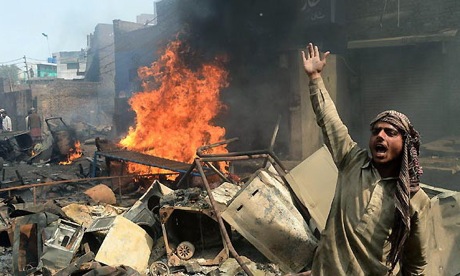
As Afghanistan endgame looms, a deadly edge to India-Pakistan rivalry
President Karzai to visit Pakistan on 26 August
http://www.khaama.com/
 According to reports Afghan president Hamid Karzai will visit Pakistan at the end of this month to meet with the Pakistani officials regarding the Afghan peace process.
An official in presidential palace speaking on the condition of anonymity said that president Hamid Karzai will visit Pakistan on 26 August.
Foreing ministry spokesman, Janan Mosazai earlier said that the work on a comprehensive agenda for president Hamid Karzai’s visit to Pakitan is in process.
Pakistan’s role in Afghan peace process is seen as critical to get the Afghan Taliban to sit down to talks about ending the 12-year war as most foreign troops prepare to pull out of Afghanistan by the end of next year.
The Afghan peace process was stalled following the opening of the Taliban office in Qatar, after president Hamid Karzai was angered over the Taliban displaying a banner and a flag.
According to reports Afghan president Hamid Karzai will visit Pakistan at the end of this month to meet with the Pakistani officials regarding the Afghan peace process.
An official in presidential palace speaking on the condition of anonymity said that president Hamid Karzai will visit Pakistan on 26 August.
Foreing ministry spokesman, Janan Mosazai earlier said that the work on a comprehensive agenda for president Hamid Karzai’s visit to Pakitan is in process.
Pakistan’s role in Afghan peace process is seen as critical to get the Afghan Taliban to sit down to talks about ending the 12-year war as most foreign troops prepare to pull out of Afghanistan by the end of next year.
The Afghan peace process was stalled following the opening of the Taliban office in Qatar, after president Hamid Karzai was angered over the Taliban displaying a banner and a flag.
Afghanistan the “Saudi Arabia of lithium”
 The Afghanistan’s natural resources are considered to be a silver lining for the economy of Afghanistan, as the NATO-led international coalition
security forces are preparing to leave the country.
The withdrawal of the NATO troops and reduction of international community’s aid to Afghanistan has created fears of economic crisis among the Afghans, however, there are optimisms that the natural resources of Afghanistan could play a vital role in economic development of the country.
U.S. agencies estimate Afghanistan’s mineral deposits to be worth upwards of $1 trillion. Afghanistan’s copper, cobalt, iron, barite, sulfur, lead, silver, zinc, niobium, and 1.4 million metric tons of rare earth elements (REEs) — may be a silver lining.
A classified Pentagon memo called Afghanistan the “Saudi Arabia of lithium.” (Although lithium is technically not a rare earth element, it serves some of the same purposes.)
Jim Bullion, who heads a Pentagon task force on postwar development quoted by The American said, the maps reveal that Afghanistan could “become a world leader in the minerals sector.”
There are optimisms that Afghanistan’s mineral wealth may be able to help knit the country back together after decades of war, having Rare Earth Elements (REEs), which are high in demand.
The REEs are are essential to the manufacture of a host of modern technologies, including cell phones, televisions, hybrid engines, computer components, lasers, batteries, fiber optics, and superconductors.
According to the American, congressional findings have called rare earth elements “critical to national security,” and understandably so. REEs are key to the production of tank navigation systems, missile guidance systems, fighter jet engines, missile defense components, satellites, and
military grade communications gear.
Currently, China is considered to be one of the major suppliers of Rare Earth Elements, and produce 97 percent of the world’s REEs. However, the global market has reportedly been manipulated by China.
The overall exports of REEs were reduced to 72 percent in the second half of 2010 following a maritime dispute with Japan, and China stopped supplying REEs to Japanese customers.
There optimisms that Afghanistan can be part of the long term solution to the REE supply problem in the long term. However, concerns regarding the corruption and security remains a challenge.
The rule of law, human capital, and infrastructure which are critical to attract foreign investment is yet another challenge, which prevents to build a rare earth mining system from scratch in the short term.
In the meantime, china is considered to be a vital player and can play an important and constructive role in Afghanistan, as the country is is eager to develop Afghanistan’s mineral wealth.
China is one of the major foreign investment in the mining sector of Afghanistan, it has so won exploration rights for copper, coal, oil, and lithium deposits across Afghanistan.
The Afghanistan’s natural resources are considered to be a silver lining for the economy of Afghanistan, as the NATO-led international coalition
security forces are preparing to leave the country.
The withdrawal of the NATO troops and reduction of international community’s aid to Afghanistan has created fears of economic crisis among the Afghans, however, there are optimisms that the natural resources of Afghanistan could play a vital role in economic development of the country.
U.S. agencies estimate Afghanistan’s mineral deposits to be worth upwards of $1 trillion. Afghanistan’s copper, cobalt, iron, barite, sulfur, lead, silver, zinc, niobium, and 1.4 million metric tons of rare earth elements (REEs) — may be a silver lining.
A classified Pentagon memo called Afghanistan the “Saudi Arabia of lithium.” (Although lithium is technically not a rare earth element, it serves some of the same purposes.)
Jim Bullion, who heads a Pentagon task force on postwar development quoted by The American said, the maps reveal that Afghanistan could “become a world leader in the minerals sector.”
There are optimisms that Afghanistan’s mineral wealth may be able to help knit the country back together after decades of war, having Rare Earth Elements (REEs), which are high in demand.
The REEs are are essential to the manufacture of a host of modern technologies, including cell phones, televisions, hybrid engines, computer components, lasers, batteries, fiber optics, and superconductors.
According to the American, congressional findings have called rare earth elements “critical to national security,” and understandably so. REEs are key to the production of tank navigation systems, missile guidance systems, fighter jet engines, missile defense components, satellites, and
military grade communications gear.
Currently, China is considered to be one of the major suppliers of Rare Earth Elements, and produce 97 percent of the world’s REEs. However, the global market has reportedly been manipulated by China.
The overall exports of REEs were reduced to 72 percent in the second half of 2010 following a maritime dispute with Japan, and China stopped supplying REEs to Japanese customers.
There optimisms that Afghanistan can be part of the long term solution to the REE supply problem in the long term. However, concerns regarding the corruption and security remains a challenge.
The rule of law, human capital, and infrastructure which are critical to attract foreign investment is yet another challenge, which prevents to build a rare earth mining system from scratch in the short term.
In the meantime, china is considered to be a vital player and can play an important and constructive role in Afghanistan, as the country is is eager to develop Afghanistan’s mineral wealth.
China is one of the major foreign investment in the mining sector of Afghanistan, it has so won exploration rights for copper, coal, oil, and lithium deposits across Afghanistan.
عید کی چھٹیاں ختم ہوتے ہی لوڈ شیڈنگ میں پھر اضافہ عوام سراپا احتجاج
http://dunya.com.pk/
مختلف شہروں میں بجلی کی آ نکھ مچولی پھر سے شروع ہو گئی، فیصل آباد میں غیر علانیہ لوڈشیڈنگ کا دورانیہ 18گھنٹے ہوگیا سہراب گوٹھ کراچی میں بجلی کی کئی کئی گھنٹے بندش کیخلاف مکینوں کا احتجاجی مظاہرہ، پشاور میں چارسدہ روڈ بلاک کر دیلاہور، اسلام آباد، کراچی(سٹاف رپورٹر،اے پی اے ، آئی این پی )عید کی چھٹیاں ختم ہوتے ہی ملک بھر میں بجلی کی آنکھ مچولی پھر سے شروع ہو گئی ہے جس کے باعث عوام میں شدید غصہ پایا جاتا ہے ۔ فیصل آباد اور گرد ونواح میں بجلی کی لوڈشیڈنگ کا دورانیہ 16 سے 18گھنٹے ہوگیا ہے ۔کراچی کے علاقے سہراب گوٹھ کے مکینوں نے لوڈ شیڈنگ کے خلاف شدید احتجاج کیا۔ کے ای ایس سی کا کہنا ہے کہ ہر گھنٹے بعد اڑھائی گھنٹے لوڈشیڈنگ کی جائے گی۔مختلف علاقوں میں گھنٹوں بجلی غائب رہی اورشہریوں کو شدید مشکلات کا سامنا کرنا پڑا ۔ تفصیل کے مطابق کراچی کے علاقے سہراب گوٹھ میں بجلی کی بندش کے خلاف شہریوں نے شدید احتجاج کیا اور ٹائر جلا کر سپرہائی وے کو بلاک کردیا جس سے ٹریفک کی روانی متاثر ہوئی۔نارتھ کراچی، یو پی سوسائٹی، ناظم آباد، نارتھ ناظم آباد، گلشن معمار ملیر اور عباسی ہسپتال کے گردونواح میں بھی طویل لوڈ شیڈنگ جاری رہی ۔ بجلی کی بندش کے باعث مختلف علاقوں میں پانی کی شدید قلت ہے اور علاقہ مکین بجلی اور پانی کی بندش کے دوہرے عذاب میں مبتلا ہیں۔پشاور میں شیرو جھنگی چارسدہ روڈ کے رہائشیوں نے بھی بجلی کی طویل اور غیر علانیہ لوڈ شیڈنگ کے خلاف گزشتہ روز احتجاجی مظاہرہ کر کے چارسدہ روڈ کو ہر قسم کی ٹریفک کے لئے بند کردیا جس سے ٹریفک کانظام شدید درہم برہم ہوا ۔

http://dunya.com.pk/index.php/pakistan/2013-08-13/193376#.Ugn3xZL2aSo
India-Pakistan Tensions Spike as Two Sides Trade Fire Across the Border
Pakistan: Time for action
By: ZAHID HUSSAIN
A MACABRE dance of death continues to grip the country. There is little hope that it will be stopped. Deaths have become mere statistics while the country is being turned into a killing field.
The killing of some 30 policemen in Quetta in a suicide bombing during a funeral and the death of 11 young boys in a terrorist attack at a football stadium in Karachi were perhaps the two most gruesome incidents highlighting the latest bloody wave of violence. Not a single day passes without terrorist strikes taking their toll.
From the storming of the D.I. Khan jail to the brutal slaughter of foreign mountaineers in the remote northern areas, the incidents illustrate the growing stridency of the militants and collapsing state authority. Even the country’s capital has virtually been under siege with the looming threat of a major terrorist attack. This is perhaps one of the most dangerous points in the country’s history. An implosion is waiting to happen, threatening the unity of the country.
Yet there seems to be no realisation on the part of our political leadership of the gravity of the situation. There are mere words of condemnation; there is no action. While the country has been drenched in blood the prime minister was away on a weeklong private trip to Saudi Arabia. There seems to be no urgency in dealing with the scourge threatening national security.
Confusion and dithering have gravely affected the nation’s response to this daunting challenge. The policy disarray in various state institutions has become more pronounced with the latest surge in terrorist violence. The prevailing inertia in the government and widening differences among the political parties ruling different provinces have resulted in complete policy paralysis, providing the militants the space and environment to operate more freely.
The audacious raid on the D.I. Khan jail and the escalation in targeted killings of policemen in Khyber Pakhtunkhwa to a large extent are the result of the unwillingness of the new provincial government to take on the militants. The soft-pedalling of the Pakistan Tehreek-i-Insaf (PTI) government has led security agencies to lower their guard thus giving new impetus to militancy in the province.
Despite the intelligence report about the impending jail raid, the administration failed to take appropriate measures to prevent the attack. A demoralised and ill-equipped police and other civilian security agencies could hardly match the heavily armed and well-trained raiders.
Most appalling, however, is the callous attitude of the political leadership towards the victims of terrorism and the security personnel killed fighting the militants. The funeral of the policemen — many of them senior officers — killed in Quetta last week took place without any senior member of the provincial or central government attending it.
Perhaps, it is far worse in KP where dozens of policemen have been killed in targeted attacks by the militants over the past two months since the installation of the PTI-led government.
Unlike in the past during the Awami National Party government, let alone attending the funeral of policemen who have been killed, no minister even visits the venue of a terrorist attack. Since the outbreak of militant violence in the province, the police despite their few resources and lack of counterterrorism training have fought valiantly. They have been on the frontline in the battle against the Taliban in the province. Many high-ranking police officers are among those who have fallen victim to targeted killings.
But the morale of the KP police has now hit a new low under the PTI-Jamaat-i-Islami (JI) administration. Instead of strengthening the capacity of the police force, the ministers spout the mantra of ‘peace negotiations with the Taliban’ after each terrorist attack. KP Chief Minister Pervez Khattak is not even willing to call the Taliban (who themselves have claimed responsibility for most terrorist attacks), an enemy.
How can one expect the police to defend the post when the administration appears so eager to make peace with the militants? Can one blame the prison guards and the policemen for not offering any resistance to the D.I. Khan jail attackers and for fleeing the scene and taking off their uniform? The present PTI-JI government seems to be reminiscent of the Muttahida Majlis-i-Amal rule that allowed the Taliban to expand their influence in the province.
What is most pitiable is that we don’t even honour and acknowledge the sacrifices of the officers and soldiers killed in the battlefield or in terrorist attacks. More than 4,000 soldiers including nine general officers have so far been killed battling the insurgents. But hardly ever have the country’s top political leaders bothered to condole with the families of those killed, let alone visited the battle zones.
It is left to the military to honour their martyrs. The annual Martyrs’ Day observed by the military is never attended by the top political leadership. At the ceremony, the table for the families of those killed becomes longer each year. How would they be feeling about the rants of some leading political figures that ‘it is not our war’? Certainly such a flawed narrative will not boost the morale of the young officers fighting the enemy in the treacherous tribal regions. If it is not our war then what are they fighting for?
With the spreading of militant violence the last thing Pakistan can afford at this point is to continue engaging in this inane debate of ‘whose war is it’. This becomes even more ridiculous as Pakistan’s own unity and integrity is under threat. The latest surge in terrorist attacks across the country should serve an eye-opener to political leaders still confused about the enemy. There is no time to lose as the country is fast sliding into chaos. The government must act before it is too late.
Pakistan: The terrorist landscape
Daily TimesEid has come and gone. There were moments of joy on the occasion in the company of family, friends and acquaintances, visits to recreational sites (mercifully spared the malign attention of terrorists), picnics and merriment. However, this was the bright side of the country’s picture. The dark side was never far from the surface though, as events proved. This Eid, celebrated amid blood and fear, saw attempted terrorist attacks in Bara Kahu near Islamabad in which a suicide bomber was shot dead before he could explode his vest, but not before he had killed a security guard and injured a few prayer attendees at an imambargah. This foiled attack came in the aftermath of the bombing in Quetta Police Lines on the funeral of an officer killed that morning. While the country held its breath in trepidation at what might yet be in store, the security forces in select parts of the country were active over the holidays. Two attackers were killed in an assault on a Mastung, Balochistan, Frontier Corps (FC) check post. On the other hand, two FC men were injured in a blast on their convoy on the Quetta bypass. A landmine blast in Dera Murad Jamali killed one and injured three persons when their vehicle hit the landmine. A terrorist was gunned down in Matni, Peshawar. The security forces claimed having killed eight persons linked to the Machh area attacks in Bolan the other day in which FC personnel and bus passengers travelling home to Punjab were killed. Other than the fact that all this went on over the Eid holidays, it was business as usual on the terrorist front in the Islamic Republic. Since the PML-N government came to power two months or so ago, the intensity and frequency of terrorist attacks has incrementally increased. This despite the fact that the PML-N, like the PTI, fought the elections on a platform of initiating talks with the Taliban, an offer reciprocated by the TTP until the killing by a drone of their second-in-command Waliur Rehman. Subsequent attacks all the over the country have been justified by the TTP as revenge for Waliur Rehman’s killing. On the other hand, the governments, whether at the Centre or in the provinces, have appeared frozen in the glare of headlights like frightened rabbits. The much-touted “comprehensive” (Chaudhry Nisar’s term) national counter-terrorism strategy continues to elude the light of day. The redoubtable Chaudhry Nisar says the government does not want to launch the strategy in a hurry. That it is certainly not guilty of. But his (and others’) confusion is underlined by the usual mantra he trotted out in Quetta about all our troubles stemming from our involvement in a war that was not ours and into which we were forcibly thrust. Imran Khan echoes him in reiterating that ‘withdrawal’ from the US-led war on terror would deny the terrorists the space to project jihad as revenge for drone attacks and other sundry things. In case Chaudhry Nisar and Imran Khan have not noticed, or forgotten, the US is withdrawing from Afghanistan and the region by the end of next year. We should be worrying about the aftermath of that withdrawal instead of sitting complacently in our comfort zone of ‘not our war’. The Taliban have brought that ‘not our war’ home to us, so the whole chicken and egg conundrum of which came first, terrorism or the drone attacks, seems academic and futile, certainly in terms of policy prescriptions. Ambiguity on the approach to terrorism does not stop our leaders from making statements of intent and will. Prime Minister Nawaz Sharif reiterates his ‘determination’ to eliminate terrorism. Welcome. But now that ‘determination’ must find shape in the form of a policy, strategy, and implementation, all conspicuous so far by their absence. Vacuums are inherently subject to being filled. If the political forces seem paralysed so far in the face of the terrorist onslaught, the Supreme Court once again has stepped in with a suo motu on the recent violence in Balochistan. Having failed to achieve much in the case of the missing persons, let us hope the apex court has something more positive to contribute in this latest endeavour. Every drop that irrigates the killing fields of the terrorist landscape against them can only be welcomed. But we need more than drops of rain. We urgently need a national effort to tackle the terrorists and return this fertile land to its true self: a tolerant, progressive, modern, forward looking culture and society. Big challenge, so far inadequate response.
Tourism in Balochistan: Off-Limits And Forgotten
The Baloch Hal
By Muhammad Akbar Notezai
 Mysterious valleys, juniper forests, long stretches of deserts and blue seas, rugged mountains enriched with natural resources and much more make Balochistan one of the most attractive and exotic regions in Pakistan for tourist attractions.
Also, the province forms huge land mass of Pakistan, which is approximately 347, 190 Sq Kms.
Spring (March-May) and autumn (September-November) are ideal times to visit its beautiful and wonderful places. This is when days are pleasantly cool, but nights get distinctly chilly. In spring, the valleys are carpeted with wild flowers, and in autumn, the orchards are heavy with ripe fruits.
The summers are hot, even in Quetta, the provincial capital of Balochistan, though the nearby hills of Ziarat average a pleasant 27 degree Celsius , down the plains, for example at Sibi, temperatures go as high as 52?C.
Balochistan is bestowed with great scenic beauty, including: panoramic mountains, rich cultural heritage, abundant resources, hilly stations, orchards, deserts, golden beaches, marine life, flora and fauna, archaeological sites, historic forts, prehistoric caves and rock shelter dwelling, mud volcanoes, etc.
There are excellent hiking, trekking and caving opportunities. The geographical contrast from the golden beaches of the Arabian Sea to the Sulaiman Range is wonderful, especially for a newcomer.
Ziarat, which is also known as valleys of juniper, is situated 133 km from Quetta at an altitude of 8,400 feet above the sea level. The local tourists mostly prefer Ziarat resort to visit. It possesses the oldest and largest junipers of the world. It is also said that some juniper trees are as old as 5,000 years. Besides, people from the other province of the country largely visit Ziarat district in summer season.
The Shrine of Baba Kharwari is also situated in Ziarat. A large number of people visit his shrine and offer sacrifices. While during Eid holidays, local tribesmen gather around the shrine.
Other exciting places of Ziarat are Zizree, the Gorges Ferntangi, Shaista Tangi, Sandeman Tagi, Chashma Walk and Karbi Tangi.
Makran is the south-west administrative division of the province, with an area of about 24, 000 sq miles. It is bounded on the west by Iran with a common border of about 320 km and on the south by the Arabian Sea. The coastline of Makran is about 400 km long, which has geo-strategic significance due to its proximity with the straits of Hormuz.
Gwadar is an important coastal town besides being the biggest fishing centre in the entire coastal belt of Balochistan. Today, Gwadar is a new seaport with an attractive beach. There is also a beautiful island named Astola.
A few of the interesting places of Gwadar are Koh-e-Mehdi, Darya-e- Cham (eye of sea), Ghar (cave), Shrine of Nakhuda Bangti Ismail, and Pishukam beach.
Quetta is a major tourist attraction. Hanna Lake, Urak Valley, Hazarganji, Chiltan National Park, Zarghun and Lak Pass, etc, are the most beautiful places for tourists. Despite having beautiful places, the government has not been able to exploit these as tourist resorts.
After the 18th Amendment, all powers have been transferred to the provinces. But due to the element of corruption and bureaucratic lethargy, the devolution of powers seems to be slow.
“Foreign and local tourists rarely visit places these days due to the law and order situation. Besides, investors do not invest in this sector,” laments Yaqoob Shah, Director of PTDC (Pakistan Tourism Development Corporation) Balochistan. “We can boost up our tourism economy if we succeed to bring investors’ attention towards this sector,” he adds.
Tourists have been kidnapped in Chaghi district of Balochistan. The two Czech tourists are still missing in Chaghi.
Mysterious valleys, juniper forests, long stretches of deserts and blue seas, rugged mountains enriched with natural resources and much more make Balochistan one of the most attractive and exotic regions in Pakistan for tourist attractions.
Also, the province forms huge land mass of Pakistan, which is approximately 347, 190 Sq Kms.
Spring (March-May) and autumn (September-November) are ideal times to visit its beautiful and wonderful places. This is when days are pleasantly cool, but nights get distinctly chilly. In spring, the valleys are carpeted with wild flowers, and in autumn, the orchards are heavy with ripe fruits.
The summers are hot, even in Quetta, the provincial capital of Balochistan, though the nearby hills of Ziarat average a pleasant 27 degree Celsius , down the plains, for example at Sibi, temperatures go as high as 52?C.
Balochistan is bestowed with great scenic beauty, including: panoramic mountains, rich cultural heritage, abundant resources, hilly stations, orchards, deserts, golden beaches, marine life, flora and fauna, archaeological sites, historic forts, prehistoric caves and rock shelter dwelling, mud volcanoes, etc.
There are excellent hiking, trekking and caving opportunities. The geographical contrast from the golden beaches of the Arabian Sea to the Sulaiman Range is wonderful, especially for a newcomer.
Ziarat, which is also known as valleys of juniper, is situated 133 km from Quetta at an altitude of 8,400 feet above the sea level. The local tourists mostly prefer Ziarat resort to visit. It possesses the oldest and largest junipers of the world. It is also said that some juniper trees are as old as 5,000 years. Besides, people from the other province of the country largely visit Ziarat district in summer season.
The Shrine of Baba Kharwari is also situated in Ziarat. A large number of people visit his shrine and offer sacrifices. While during Eid holidays, local tribesmen gather around the shrine.
Other exciting places of Ziarat are Zizree, the Gorges Ferntangi, Shaista Tangi, Sandeman Tagi, Chashma Walk and Karbi Tangi.
Makran is the south-west administrative division of the province, with an area of about 24, 000 sq miles. It is bounded on the west by Iran with a common border of about 320 km and on the south by the Arabian Sea. The coastline of Makran is about 400 km long, which has geo-strategic significance due to its proximity with the straits of Hormuz.
Gwadar is an important coastal town besides being the biggest fishing centre in the entire coastal belt of Balochistan. Today, Gwadar is a new seaport with an attractive beach. There is also a beautiful island named Astola.
A few of the interesting places of Gwadar are Koh-e-Mehdi, Darya-e- Cham (eye of sea), Ghar (cave), Shrine of Nakhuda Bangti Ismail, and Pishukam beach.
Quetta is a major tourist attraction. Hanna Lake, Urak Valley, Hazarganji, Chiltan National Park, Zarghun and Lak Pass, etc, are the most beautiful places for tourists. Despite having beautiful places, the government has not been able to exploit these as tourist resorts.
After the 18th Amendment, all powers have been transferred to the provinces. But due to the element of corruption and bureaucratic lethargy, the devolution of powers seems to be slow.
“Foreign and local tourists rarely visit places these days due to the law and order situation. Besides, investors do not invest in this sector,” laments Yaqoob Shah, Director of PTDC (Pakistan Tourism Development Corporation) Balochistan. “We can boost up our tourism economy if we succeed to bring investors’ attention towards this sector,” he adds.
Tourists have been kidnapped in Chaghi district of Balochistan. The two Czech tourists are still missing in Chaghi.
Subscribe to:
Posts (Atom)