 The death toll in Friday’s twin blasts that ripped through a congested market and a taxi stand in Parachinar town, increased to 57 when on Saturday another 12 injured persons succumbed to their injuries. According to reports pouring from the Parachinar, the main town of Kurram tribal area bordering Afghanistan, almost all the dead and injured were Shias. Following the sectarian clashes, in 2007, Parachinar, situated 250 kilometers west of Peshawar, comprises a population of 50,000 had been given an elaborated security blanket by army and paramilitary forces on all roads leading to the town. But on Friday all security checks proved futile, when back-to-back blasts rocked the town. Another 50 terrorists unleashed another attack on a check post of paramilitary Frontier Corps soldiers, leaving five of them seriously injured. In a retaliatory firing six militants were perished in Hangu district situated in the northwestern Khyber Pakhtunkhwa province.
Over the years, the Pakistan army and its paramilitary forces have launched hot pursuit against the terrorists and Al Qaeda operatives. Withering all crackdowns of the army and paramilitary forces, the terrorists rip through the all security walls at will, dismissing all tall claims of the Pakistan and the US led forces, making frequent drone strikes in the tribal belt, to have attained any significant success against terrorists. The militancy seems far from being over. In repeated mass massacres in the tribal belt and Balochistan, the human blood is continuously going down the drains.
The number of the war victims is growing an alarming rate. Poverty in the region is constantly growing; hence encouraging the foreign media to air the reports about Pakistan inability to enforce the writ of the state. Some of them have gone to the extent of talking about, God forbid, another Dhaka like debacle. Strangely enough, the ruling PML-N is yet to react to these reports in public. In the election run-up, the ruling PML-N attached top priority to the militancy and energy crisis but after swearing in earlier last month, the rulers seemingly has put in all its focus on power shortage, making quick clearance to the circular debt in the first week of the term, leaving the fighting against militancy to backburner.
The incumbent rulers are yet to announce measures aiming at strengthening the provincial governments to tackle the issue. Despite suffering massive loss of men and material in war on terror, the Pakistan army is fighting the war on its own, without taking the nation on board about its inability to root out terrorism.
Now the time is ripe for the armed forces to go for all-out war on terror, shunning aside the reliance on outside forces active in the region, taking it for granted that none of them is working for the cause of Pakistan. As a last resort, the Centre, provincial governments and the military top brass should sit together to chalk out a joint strategy afresh to save lives of the countrymen, keeping the frontiers of the state in tact.
The death toll in Friday’s twin blasts that ripped through a congested market and a taxi stand in Parachinar town, increased to 57 when on Saturday another 12 injured persons succumbed to their injuries. According to reports pouring from the Parachinar, the main town of Kurram tribal area bordering Afghanistan, almost all the dead and injured were Shias. Following the sectarian clashes, in 2007, Parachinar, situated 250 kilometers west of Peshawar, comprises a population of 50,000 had been given an elaborated security blanket by army and paramilitary forces on all roads leading to the town. But on Friday all security checks proved futile, when back-to-back blasts rocked the town. Another 50 terrorists unleashed another attack on a check post of paramilitary Frontier Corps soldiers, leaving five of them seriously injured. In a retaliatory firing six militants were perished in Hangu district situated in the northwestern Khyber Pakhtunkhwa province.
Over the years, the Pakistan army and its paramilitary forces have launched hot pursuit against the terrorists and Al Qaeda operatives. Withering all crackdowns of the army and paramilitary forces, the terrorists rip through the all security walls at will, dismissing all tall claims of the Pakistan and the US led forces, making frequent drone strikes in the tribal belt, to have attained any significant success against terrorists. The militancy seems far from being over. In repeated mass massacres in the tribal belt and Balochistan, the human blood is continuously going down the drains.
The number of the war victims is growing an alarming rate. Poverty in the region is constantly growing; hence encouraging the foreign media to air the reports about Pakistan inability to enforce the writ of the state. Some of them have gone to the extent of talking about, God forbid, another Dhaka like debacle. Strangely enough, the ruling PML-N is yet to react to these reports in public. In the election run-up, the ruling PML-N attached top priority to the militancy and energy crisis but after swearing in earlier last month, the rulers seemingly has put in all its focus on power shortage, making quick clearance to the circular debt in the first week of the term, leaving the fighting against militancy to backburner.
The incumbent rulers are yet to announce measures aiming at strengthening the provincial governments to tackle the issue. Despite suffering massive loss of men and material in war on terror, the Pakistan army is fighting the war on its own, without taking the nation on board about its inability to root out terrorism.
Now the time is ripe for the armed forces to go for all-out war on terror, shunning aside the reliance on outside forces active in the region, taking it for granted that none of them is working for the cause of Pakistan. As a last resort, the Centre, provincial governments and the military top brass should sit together to chalk out a joint strategy afresh to save lives of the countrymen, keeping the frontiers of the state in tact.
Sunday, July 28, 2013
Pakistan: Saving the people & the country
The death toll in Friday’s twin blasts that ripped through a congested market and a taxi stand in Parachinar town, increased to 57 when on Saturday another 12 injured persons succumbed to their injuries. According to reports pouring from the Parachinar, the main town of Kurram tribal area bordering Afghanistan, almost all the dead and injured were Shias. Following the sectarian clashes, in 2007, Parachinar, situated 250 kilometers west of Peshawar, comprises a population of 50,000 had been given an elaborated security blanket by army and paramilitary forces on all roads leading to the town. But on Friday all security checks proved futile, when back-to-back blasts rocked the town. Another 50 terrorists unleashed another attack on a check post of paramilitary Frontier Corps soldiers, leaving five of them seriously injured. In a retaliatory firing six militants were perished in Hangu district situated in the northwestern Khyber Pakhtunkhwa province.
Over the years, the Pakistan army and its paramilitary forces have launched hot pursuit against the terrorists and Al Qaeda operatives. Withering all crackdowns of the army and paramilitary forces, the terrorists rip through the all security walls at will, dismissing all tall claims of the Pakistan and the US led forces, making frequent drone strikes in the tribal belt, to have attained any significant success against terrorists. The militancy seems far from being over. In repeated mass massacres in the tribal belt and Balochistan, the human blood is continuously going down the drains.
The number of the war victims is growing an alarming rate. Poverty in the region is constantly growing; hence encouraging the foreign media to air the reports about Pakistan inability to enforce the writ of the state. Some of them have gone to the extent of talking about, God forbid, another Dhaka like debacle. Strangely enough, the ruling PML-N is yet to react to these reports in public. In the election run-up, the ruling PML-N attached top priority to the militancy and energy crisis but after swearing in earlier last month, the rulers seemingly has put in all its focus on power shortage, making quick clearance to the circular debt in the first week of the term, leaving the fighting against militancy to backburner.
The incumbent rulers are yet to announce measures aiming at strengthening the provincial governments to tackle the issue. Despite suffering massive loss of men and material in war on terror, the Pakistan army is fighting the war on its own, without taking the nation on board about its inability to root out terrorism.
Now the time is ripe for the armed forces to go for all-out war on terror, shunning aside the reliance on outside forces active in the region, taking it for granted that none of them is working for the cause of Pakistan. As a last resort, the Centre, provincial governments and the military top brass should sit together to chalk out a joint strategy afresh to save lives of the countrymen, keeping the frontiers of the state in tact.

Saturday, July 27, 2013
Afghanistan: Naheed Farid: Kabul’s Youngest MP Promotes Youth-Driven Change
http://www.eurasianet.org/
 At 29 years old, Naheed Farid is the youngest member of Afghanistan’s lower house of parliament. She recently took time out from her hectic schedule to answer questions from EurasiaNet.org about her efforts to “break taboos” and encourage young people to get more involved in the Afghan political process.
Farid holds an undergraduate degree from Herat University and a master’s in international relations from The George Washington University in the US. She garnered the most votes of the more than 400 female candidates in the 2010 parliamentary elections.
She has found it is difficult to get things done in the legislature. Resistance to change is strong, and efforts to press ahead with legislation designed to improve education and equal opportunities for women have stalled recently. These days, Farid characterizes the Afghan legislature as “backward,” but still retains hope that change is possible through grass-roots activism. A transcript of Farid’s interview with EurasiaNet.org follows:
EurasiaNet: What motivated you to pursue a career in politics?
Farid: It was a decision of circumstance and situation. You can’t keep quiet against a system that commits unlimited violence against women, is reluctant toward children’s education and rights, and discriminates against minorities.
EurasiaNet: What is it like for a woman to participate in Afghanistan’s political process?
Farid: When I decided to run for office in the 2010 parliamentary elections, I did not expect [such enormous] pressure. … I will never forget the day a religious ex-MP came to my house and asked my father to waive my campaign. His reasoning was that [it would be dishonorable] and indecent if I were to work in the National Assembly. He told my father that the family’s reputation would be ruined and [that it would be] a huge embarrassment if I won. … You can imagine how hard it was to hang posters in the city, participate in TV debates, and ask people to vote for you. … I was determined to break taboos and represent my people in the Afghanistan Parliament, even if I was threatened by the Taliban or ridiculed by journalists. My confidence increased the motivation of my campaign team.
EurasiaNet: Were you surprised that you won a parliamentary seat?
Farid: After 58 days of campaigning, the big day arrived: in the morning I was thinking; ‘even if I don't get enough votes, I am [still] the winner because it took extraordinary courage to campaign in such a controversial battlefield.’ … At the end of election day in 2010 I received the news that I won! I received the highest number of votes among women candidates. … I was amazed that people from the religious community voted for me in addition to youth, women, intellectuals, and professionals. I could not believe that I was able to overcome the conservative ideology of my society and receive the religious votes. I was welcomed by my generation and many youth voted for me. I am sure it was because they had the same wish as mine - to ‘break the taboos.’
EurasiaNet: As a woman and the youngest MP, how do you make your voice heard?
Farid: Since many of my constituents are youth, I can easily contact my followers using social networks such as Facebook, which [allows me to] connect with more than 65,000 youth around the country. I travel and give speeches in the mosques, or I report them through media interviews. As long as you have people to hear you, you have countless opportunities to make your voice heard.”
EurasiaNet: Do you see the current parliament as capable of handling the country’s challenges?
Farid: I would say the present parliament of Afghanistan is experiencing backwardness. After a decade of practicing democracy, we still receive negative reactions from conservatives and fundamentalist parliamentarians [ who collectively comprise a majority] toward democratic values, such as women’s and minority rights and equality. In recent weeks, we had three bills rejected based on [these issues]. They rejected the Law of Elimination of Violence against Women, they disposed of seats reserved for women in many electoral institutions of the country, and they rejected the Higher Education Law because of tribal [traditions].
EurasiaNet: What is needed to get youth and women more involved in politics?
Farid: As we approach a power transition and international troop withdrawals in 2014, a huge wave of disappointment [has occurred] among the new generation and women. The most important element [for youth and women] in Afghanistan’s ongoing political process is hope!
At 29 years old, Naheed Farid is the youngest member of Afghanistan’s lower house of parliament. She recently took time out from her hectic schedule to answer questions from EurasiaNet.org about her efforts to “break taboos” and encourage young people to get more involved in the Afghan political process.
Farid holds an undergraduate degree from Herat University and a master’s in international relations from The George Washington University in the US. She garnered the most votes of the more than 400 female candidates in the 2010 parliamentary elections.
She has found it is difficult to get things done in the legislature. Resistance to change is strong, and efforts to press ahead with legislation designed to improve education and equal opportunities for women have stalled recently. These days, Farid characterizes the Afghan legislature as “backward,” but still retains hope that change is possible through grass-roots activism. A transcript of Farid’s interview with EurasiaNet.org follows:
EurasiaNet: What motivated you to pursue a career in politics?
Farid: It was a decision of circumstance and situation. You can’t keep quiet against a system that commits unlimited violence against women, is reluctant toward children’s education and rights, and discriminates against minorities.
EurasiaNet: What is it like for a woman to participate in Afghanistan’s political process?
Farid: When I decided to run for office in the 2010 parliamentary elections, I did not expect [such enormous] pressure. … I will never forget the day a religious ex-MP came to my house and asked my father to waive my campaign. His reasoning was that [it would be dishonorable] and indecent if I were to work in the National Assembly. He told my father that the family’s reputation would be ruined and [that it would be] a huge embarrassment if I won. … You can imagine how hard it was to hang posters in the city, participate in TV debates, and ask people to vote for you. … I was determined to break taboos and represent my people in the Afghanistan Parliament, even if I was threatened by the Taliban or ridiculed by journalists. My confidence increased the motivation of my campaign team.
EurasiaNet: Were you surprised that you won a parliamentary seat?
Farid: After 58 days of campaigning, the big day arrived: in the morning I was thinking; ‘even if I don't get enough votes, I am [still] the winner because it took extraordinary courage to campaign in such a controversial battlefield.’ … At the end of election day in 2010 I received the news that I won! I received the highest number of votes among women candidates. … I was amazed that people from the religious community voted for me in addition to youth, women, intellectuals, and professionals. I could not believe that I was able to overcome the conservative ideology of my society and receive the religious votes. I was welcomed by my generation and many youth voted for me. I am sure it was because they had the same wish as mine - to ‘break the taboos.’
EurasiaNet: As a woman and the youngest MP, how do you make your voice heard?
Farid: Since many of my constituents are youth, I can easily contact my followers using social networks such as Facebook, which [allows me to] connect with more than 65,000 youth around the country. I travel and give speeches in the mosques, or I report them through media interviews. As long as you have people to hear you, you have countless opportunities to make your voice heard.”
EurasiaNet: Do you see the current parliament as capable of handling the country’s challenges?
Farid: I would say the present parliament of Afghanistan is experiencing backwardness. After a decade of practicing democracy, we still receive negative reactions from conservatives and fundamentalist parliamentarians [ who collectively comprise a majority] toward democratic values, such as women’s and minority rights and equality. In recent weeks, we had three bills rejected based on [these issues]. They rejected the Law of Elimination of Violence against Women, they disposed of seats reserved for women in many electoral institutions of the country, and they rejected the Higher Education Law because of tribal [traditions].
EurasiaNet: What is needed to get youth and women more involved in politics?
Farid: As we approach a power transition and international troop withdrawals in 2014, a huge wave of disappointment [has occurred] among the new generation and women. The most important element [for youth and women] in Afghanistan’s ongoing political process is hope!
Syrians worried about growing influence of extremists
 Most Syrians, having undergone four decades of secular rule, seem averse to the prospect that the power to rule their country may one day fall in the hands of some Islamic fundamentalists.
Syrians' resentment at the extremists, who are taking advantage of the ongoing to crisis to expand their influence, is becoming increasingly manifest in their daily conversation and comments on social media websites.
Even those sympathetic to the rebels at the start of the crisis have become disillusioned with them, as they have come under the sway of al-Nusra Front, an al-Qaida-linked group whose main goal is to establish an Islamic state in Syria.
Frustration is also creeping up on Syrians as they feel the road back to security and stability is obscure and drawn-out.
"We were looking for more freedom and felt the revolution would give us more benefits... However, we now feel we are moving backwards and will soon return to the medieval era," said Hanadi, 49, a private sector employee.
She said whoever still thinks what happens in Syria is a revolution is lying to themselves. "It's anything but a revolution for freedom."
"How could they bring us freedom if they (the rebels) themselves are captives held by the extremists?" she questioned.
Ahmed, in his 50s, agreed with Hanadi. "Al-Nusra Front fighters come up every day with a new unimaginable fatwa, or religious edict."
He pointed to a new fatwa imposed in the northern city of Aleppo, which forbids eating croissants because they are in the shape of a crescent, the emblem of an Islamic state.
The fatwa claims that the Europeans eat croissants during festivals to celebrate their victories over the Muslims.
Syrians post cynical comments on social media sites, poking fun at such fatwas, the latest of which ban women from driving cars and force little girls to wear veils.
Residents of some hotspots in northern Syria, where al-Nusra Front is active, said that the group has banned smoking and listening to music, and has set up its own courts and applies its own interpretation of Islam.
Islamic hardliners control large swathes of Aleppo, which are governed by a group of "chieftains" who consider the land as a " liberated Islamic emirate."
Clashes also erupted lately between al-Nusra fighters and the rebel Free Syrian Army, who has grown at odds with the former's extremist views.
Western diplomats said recently that more than 100 battalions of the Syrian Free Army, some operating in Damascus' countryside, might soon turn against al-Nusra Front and other Jihadi groups.
Daily Telegraph disclosed recently that hundreds of defectors have started returning to the army because they are frustrated with the failure to achieve the revolution goals and the penetration of the Islamists in their ranks.
David Shedd, deputy director of the U.S. Defense Intelligence Agency, warned that extremist groups such as Jabhat al-Nusra have been the most successful in operations against troops loyal to President Bashar al-Assad.
Left unchecked, he said, more radical elements of the opposition would have a greater role, eclipsing moderates in a post-Assad Syria.
Al-Nusra Front's leader, Sheikh Abu Mohammed al-Joulani, has reportedly called for the establishment of the rule of Islam and Sharia in Syria, rejecting the political process and elections.
Most Syrians, having undergone four decades of secular rule, seem averse to the prospect that the power to rule their country may one day fall in the hands of some Islamic fundamentalists.
Syrians' resentment at the extremists, who are taking advantage of the ongoing to crisis to expand their influence, is becoming increasingly manifest in their daily conversation and comments on social media websites.
Even those sympathetic to the rebels at the start of the crisis have become disillusioned with them, as they have come under the sway of al-Nusra Front, an al-Qaida-linked group whose main goal is to establish an Islamic state in Syria.
Frustration is also creeping up on Syrians as they feel the road back to security and stability is obscure and drawn-out.
"We were looking for more freedom and felt the revolution would give us more benefits... However, we now feel we are moving backwards and will soon return to the medieval era," said Hanadi, 49, a private sector employee.
She said whoever still thinks what happens in Syria is a revolution is lying to themselves. "It's anything but a revolution for freedom."
"How could they bring us freedom if they (the rebels) themselves are captives held by the extremists?" she questioned.
Ahmed, in his 50s, agreed with Hanadi. "Al-Nusra Front fighters come up every day with a new unimaginable fatwa, or religious edict."
He pointed to a new fatwa imposed in the northern city of Aleppo, which forbids eating croissants because they are in the shape of a crescent, the emblem of an Islamic state.
The fatwa claims that the Europeans eat croissants during festivals to celebrate their victories over the Muslims.
Syrians post cynical comments on social media sites, poking fun at such fatwas, the latest of which ban women from driving cars and force little girls to wear veils.
Residents of some hotspots in northern Syria, where al-Nusra Front is active, said that the group has banned smoking and listening to music, and has set up its own courts and applies its own interpretation of Islam.
Islamic hardliners control large swathes of Aleppo, which are governed by a group of "chieftains" who consider the land as a " liberated Islamic emirate."
Clashes also erupted lately between al-Nusra fighters and the rebel Free Syrian Army, who has grown at odds with the former's extremist views.
Western diplomats said recently that more than 100 battalions of the Syrian Free Army, some operating in Damascus' countryside, might soon turn against al-Nusra Front and other Jihadi groups.
Daily Telegraph disclosed recently that hundreds of defectors have started returning to the army because they are frustrated with the failure to achieve the revolution goals and the penetration of the Islamists in their ranks.
David Shedd, deputy director of the U.S. Defense Intelligence Agency, warned that extremist groups such as Jabhat al-Nusra have been the most successful in operations against troops loyal to President Bashar al-Assad.
Left unchecked, he said, more radical elements of the opposition would have a greater role, eclipsing moderates in a post-Assad Syria.
Al-Nusra Front's leader, Sheikh Abu Mohammed al-Joulani, has reportedly called for the establishment of the rule of Islam and Sharia in Syria, rejecting the political process and elections.
Obama calls Korean War a victory, honors veterans
http://www.reuters.com/
 Commemorating the 60th anniversary of the armistice that ended the Korean War, President Barack Obama said on Saturday that U.S. troops and their allies achieved victory in that conflict despite a lukewarm reception when they returned home.
The war ended in a stalemate in 1953, with the absence of a peace treaty resulting in a demilitarized zone that now separates North and South Korea. Pyongyang commemorated the day with a massive military parade and declared victory as well.
"Here, today, we can say with confidence that this war was no tie. Korea was a victory," Obama said to cheers from an outdoor crowd populated by war veterans from the United States and South Korea.
"When 50 million South Koreans live in freedom ... in stark contrast to the repression and poverty of the North, that's a victory; that's your legacy," he said.
The Korean War started in 1950 when the United States rallied the United Nations to send troops to counter the North's invasion of the South.
Secretary of Defense Chuck Hagel, Vice Chairman of the Joint Chiefs of Staff Admiral James Winnefeld and representatives from the South Korean government attended the event, which included a wreath-laying ceremony conducted to "Taps" before the 19 steel statues of Korean War soldiers at the memorial on Washington's National Mall.
The chairman of South Korea's National Policy Committee, Kim Jung-hoon, who represented the country's president, Park Geun-hye, acknowledged the ambiguous end to a long-fought war.
"This armistice was not the result of mere negotiations at the table," Kim said. "It was signed after endless battles, countless sacrifices and pain endured by our veterans and their grieved families."
When U.S. troops returned home, Obama said they went right back to work, with their sacrifices seemingly unacknowledged in what would become known as "The Forgotten War."
"Unlike the Second World War, Korea did not galvanize our country. These veterans did not return to parades. Unlike Vietnam, Korea did not tear at our country. These veterans did not return to protests," Obama said.
"Here in America, no war should ever be forgotten, and no veteran should ever be overlooked."
About 5,000 people attended the event, according to the commemoration committee. The crowd was filled with South Koreans and Americans alike, with spectators singing the South Korean national anthem nearly as loudly as the U.S. anthem.
Obama also acknowledged the strong military ties Washington has with South Korea, where more than 28,000 U.S. troops are now stationed. For some younger Koreans, the continued presence of troops is controversial, but the crowd erupted in applause when Obama mentioned his commitment to U.S. military supremacy.
"Our allies and adversaries must know the United States of America will maintain the strongest military the world has ever known, bar none, always," Obama said. "That is what we do."
Commemorating the 60th anniversary of the armistice that ended the Korean War, President Barack Obama said on Saturday that U.S. troops and their allies achieved victory in that conflict despite a lukewarm reception when they returned home.
The war ended in a stalemate in 1953, with the absence of a peace treaty resulting in a demilitarized zone that now separates North and South Korea. Pyongyang commemorated the day with a massive military parade and declared victory as well.
"Here, today, we can say with confidence that this war was no tie. Korea was a victory," Obama said to cheers from an outdoor crowd populated by war veterans from the United States and South Korea.
"When 50 million South Koreans live in freedom ... in stark contrast to the repression and poverty of the North, that's a victory; that's your legacy," he said.
The Korean War started in 1950 when the United States rallied the United Nations to send troops to counter the North's invasion of the South.
Secretary of Defense Chuck Hagel, Vice Chairman of the Joint Chiefs of Staff Admiral James Winnefeld and representatives from the South Korean government attended the event, which included a wreath-laying ceremony conducted to "Taps" before the 19 steel statues of Korean War soldiers at the memorial on Washington's National Mall.
The chairman of South Korea's National Policy Committee, Kim Jung-hoon, who represented the country's president, Park Geun-hye, acknowledged the ambiguous end to a long-fought war.
"This armistice was not the result of mere negotiations at the table," Kim said. "It was signed after endless battles, countless sacrifices and pain endured by our veterans and their grieved families."
When U.S. troops returned home, Obama said they went right back to work, with their sacrifices seemingly unacknowledged in what would become known as "The Forgotten War."
"Unlike the Second World War, Korea did not galvanize our country. These veterans did not return to parades. Unlike Vietnam, Korea did not tear at our country. These veterans did not return to protests," Obama said.
"Here in America, no war should ever be forgotten, and no veteran should ever be overlooked."
About 5,000 people attended the event, according to the commemoration committee. The crowd was filled with South Koreans and Americans alike, with spectators singing the South Korean national anthem nearly as loudly as the U.S. anthem.
Obama also acknowledged the strong military ties Washington has with South Korea, where more than 28,000 U.S. troops are now stationed. For some younger Koreans, the continued presence of troops is controversial, but the crowd erupted in applause when Obama mentioned his commitment to U.S. military supremacy.
"Our allies and adversaries must know the United States of America will maintain the strongest military the world has ever known, bar none, always," Obama said. "That is what we do."
Pakistan: When the Presidential election is more important than the Parachinar blast

By Zara ShahidPakistan is a rather strange place. If you are unable to fast because you are unwell, you can end up with a black eye and maybe a few broken ribs. This is courtesy of our informal, yet thorough and self proclaimed moral police marching down the streets 365 days of the year; they are the ‘righteous’. However, if you want to join in the Ramazan festivities beware that shopping for iftar in a local market or going to a mosque may become a gamble on life. The twin blasts in Parachinar yesterday, left at least 50 dead and around a 122 severely injured. Is it an uncanny coincidence that this was a famously Shia dominated area and that Ansaar ul Mujahiden (a local Sunni militant group) has taken responsibility? No, it is not. Shias have been targeted time and again, the numbers of casualties more chilling each time whilst the state and mainstream media maintain obstinate silence about the affair. Remember, back in January when the residents of Alamdar Road were protesting alongside dead bodies of their loved ones in the penetrating cold? It took two days for the media and the government to acknowledge and respond to their demands – two whole days. And, this time was no different. Last night the electronic media obsessed over the Presidential election whilst the families of the Parachinar victims were tortured by crippling grief and hopelessness. Clearly, the media has better issues to address than the grief of these stricken souls. But the truth is, we don’t care who the next president is; what we care about is how the state is going to protect our people. What I find amusing is that such tragedies usually result in spats – government officials and the opposition, mainstream political parties and highbrow personalities, from those who were responsible to prevent the disaster to those who will now use it to undermine their opponents. Although, each one of them are able to find someone to blame, they are unable resolve the issue and come up with a solution. The same happens when Hazaras are butchered; when a roadside bomb explodes in Peshawar, or when innocent people are massacred anywhere in Pakistan. These statements are awfully trite; they bear the same run down sentences, hurriedly altered to suit the new situation - the place, date and number of dead. “The Prime Minister strongly condemns the Quetta blasts.” “PM Nawaz Sharif has strongly condemned the blast in Lahore and reiterated his determination to overcome the menace of terrorism!” “President Asif Ali Zardari has strongly condemned the blasts in Quetta targeting a bus of the Sardar Bahadar Khan Women’s University and the Bolan Medical Complex”. Yes, this is precisely what we owe the victims. The proclamations are brandished over the electronic media, printed in newspapers and spread on social media; with that, the job is done. We can all go home now and carry on with our lives. However beyond the numbers and standard statements announcing the dead, there is an identity of a person that they forget to mention; the nameless faces who bear the brunt of our law and order situation are not merely numbers. They are human beings with families. Beyond the blame games and ‘security lapses’ there is the macabre silence clinging on to the houses of these victims that they are unable to remove. There are families that are torn and hearts that are broken. But there will be no justice. Smug in the comfort of our homes we fail to see the story behind these numbers, the incredible human tragedy behind the label of an ‘unfortunate incident.’ But, these news stories are real. I have grown up seeing our eagerness to condemn these killings and our tardiness to actually do something about them. It makes me feel like a hypocrite. We stage mass protests when Rohingya Muslims are persecuted in Burma but do nothing to ensure that the state assists the families of sectarian violence victims here, at home. We are hopping mad when Kashmiris are killed by the Indian army but do little when our Rangers shoot an innocent man point blank. We are the flag bearers of Palestinian independence but treat our own minorities like animals. This is great- isn’t it? Grandiose condemnations don’t bring back the dead nor do they guarantee the right to life, property and liberty for masses. They just prove that no one cares past image building stunts. You do not have to belong to a particular religious sect to empathise with the families of sectarian attack victims. You don’t have to be a Karachiite to mourn the hundreds killed in the city each day. You don’t have to be a Christian to feel for Rimsha Masih. You don’t have to live in Fata to feel the terror of drones buzzing overhead echoing death. You just have to have a tea spoon full of humanity. The path that lies between condemnation and action determines who we are as people and as citizens. It is this distance that can save the lives of many others; the action that would alleviate the misery of victims’ families. The action that would ensure justice is done.

Afghanistan: Hundreds of ‘High Value’ Detainees Freed To ‘Accelerate’ Peace Process
http://tolonews.com/TOLOnews has gained access to some leaked documents which confirm that on the orders of President Karzai and the High Peace Council (HPC) over 520 insurgents were released from various prisons across the country between 2011 and 2012. The documents also revealed that among the released insurgents there were suicide bombers and masterminds behind several terror attacks. These masterminds were convicted of carrying out deadly terror attacks across the country. However, the Interior Ministry denied the reports and said that they did not receive any information about the decision taken by the President. Experts feel that by releasing the insurgents, the government wants to win the confidence of the Taliban. The leaked documents mentioned that at least 135 suicide bombers who were arrested by the Security Forces were among those released from the prisons. 116 insurgents who were convicted of killing police personnel and Afghan National Army (ANA) soldiers were also let loose. The revelation did not end here, 86 dangerous terror plotters and masterminds of several terror attacks were also let loose. "To strengthen and accelerate the peace process, the President had issued "Order No 33" and released the prisoners convicted of carrying out several terror attacks across the country," internal and external security and the decision was taken to strengthen peace process," said Amir Muhammad Jamshed, the chief of the Afghan Prison and Detention Centres. Several analysts strongly criticised the move and said that there is no guarantee that the released prisoners will not join any terror outfit. According to them, this move will do no good and in fact, prolong the ongoing crisis in the country. "If the insurgents are not prosecuted and kept in the prison, this will worsen the security situation of the country," said an analyst. Unfortunately, it was found that in most cases, the released prisoners rejoined the Taliban and continued their armed confrontations with the Afghan Security Forces and foreign forces. "A Taliban detainee known as Mullah Karim rejoined the group and became its Governor for the Balkh region, just days after he was released from jail. He carried out several terror attacks after his release," said Abdurrazaq Qaderi, security chief of the Balkh province. TOLOnews reporter found that 520 militants were released in 2011 and 2012 and they were not among those that were freed during the month of Ramadan this year (2013). The President's order to release the dangerous militants was strongly criticised and the US had warned that they will rejoin the Taliban and continue their terror attacks. It was because of the same concern that the US had tried to avoid transferring the control of Bagram prison to the Afghan Security Forces. TOLOnews broke the news after 80 prisoners were released from a prison in southern Helmand. Earlier on Thursday, Masood Ahmad Bakhtor, the Deputy Governor of Helmand announced that the prisoners were released from the prison on the basis of "Order No 33" of the President. Mr. Bakhtor also mentioned that the jail terms of 24 other prisoners were canceled as per the Presidential Decree. Local officials in the southern province of Helmand confirmed that some prisoners were released from the Helmand prison on the orders of the President. Meanwhile, the Afghan government assured that it is committed to provide employment opportunities to the released prisoners so that they do not start their terror activities again. "The released prisoners will be given 5,000 AFN on monthly basis and the government is also committed to provide vocational training for six months to the inmates released from the jails," said Mr. Bakhtor. With so many dangerous terrorists on the loose, only time will tell whether it will help in accelerating the stalled peace process or worsen the security situation of the country.
Freedom In Afghanistan Under Serious Risk
 By: Shafiq Hamdam
FreedomDuring the last one decade freedom of expression and freedom of media is one of the major joined achievements of the Afghan government and its international partners. The gain, which everyone appreciates and talk loudly about it. Afghan government and its international partners talk about securing the joint achievements, which called reversible and fragile. Lately freedom of expression and media has been seriously under attack and risk, and this issue has to be addressed strategically.
Afghan journalists and social activists are under extreme risk and there is no guarantee of their safety and protection. Serving for democracy and freedom during last one decade tens of Afghan journalists, writers and social activists either killed during the war or killed by pro-government elements and insurgents. Yet there is not any solid statistic of the social activists’ fatalities and it is because that this issue has not been taken seriously. But according to NAI, an independent Afghan media watchdog, pro-government elements are involved in majority of violations against media and journalists in Afghanistan.
Lately the numbers of journalists and social activists have been either arrested or threatened to stop their actives. Life is not easy for a journalist and social activist anymore. In absence of access to information law and the presence of a very inequitable media law Afghan media and social activist can be threatened, questioned and impeached at any moment by the Afghan authorities. On regular bases here are ongoing cases against media in the media commission, which is established by the government. So far majority of Afghan media outlets have been impeached by the commission and questioned.
The Afghanistan Independent Human Rights Commission (AIHRC) an institution, which plays an absolutely crucial role in protecting the rights of all Afghans were also targeted by Afghan government and their activities have been blocked by senior politicians. In December 2011 including Ahmad Nader Nadery an outspoken human rights activist, President Hamed Karzai removed three commissioners of the commission. Mr. Nadery was removed formally because of his mandates had expired. But his removal was linked to his outspokenness about electoral fraud in the 2009 presidential elections and his involvement in preparing the, yet to be released, AIHRC conflict-mapping report documenting war crimes in Afghanistan from 1978 to 2001. In June 2013 despite broad disagreement of the Afghan civil society organization, United Nations Human Rights, Human Rights Watch and other organizations the Afghan president renewed mandate of four commissioners and appointed five new commissioners of the AIHRC. But Mr. Nadery’s mandate was not renewed. There are serious concerns about some individuals appointed in the AIHRC, but the government has ignored all international commitment and demands and replaced some of very active commoners with some contradictory figures.
The ICG report titled “Afghanistan: The Long, Hard Road to the 2014 Transition” was released on 6 October 2012. It discusses the weaknesses of Afghanistan’s political and electoral system and calls for urgent attention and reforms. The report was rejected by the Afghan government and the organization was threatened for prosecution. Early this year the government also condemned and rejected a UN Office on Drugs and Crimes (UNODC) report on corruption in Afghanistan and called the act a political pressure on the Afghan government.
In June 2013 head of Integrity Watch Organization, a non governmental organization over sighting transparency, was summoned by the Supreme Court about their survey on corruption in the judiciary system. Early July 2013 the Supreme Court of Afghanistan denied the latest report by Transparency International which called the judiciary institutions of Afghanistan, one of the most corrupt organizations in the Afghan government and the court accused the organization for working under a political agenda and the organization is summoned by the Supreme Court. But every Afghan citizen can confirm the report of widespread corruption in the judiciary system of Afghanistan.
While tens of corrupt officials, who has been accused of millions of USD corruption are living free. On July 5th Afghan Attorney General Office arrested Mr. Abdurahman Sakhizada, an Afghan writer and anti-corruption activist in accusation of writing a disclosure article, where he discovered corruption in the High Office of Oversight and Anti-Corruption (HOO), a presidential decree based institution over sighting Afghan government. Mr. Sakhizada was released after nearly two weeks, his father who is a police officer, said that his son has been tortured in the custody.
However the issue of brain drain has been widely debated in Afghan media and on December 31st BBC Farsi investigative report shows that nearly 40% of Afghan diplomats have not returned home after completion of their assignments abroad. But on 14th July Ministry of Foreign Affairs of Afghanistan issued a statement rejecting The New York Times Report titled “As Uncertainty Reigns Back Home, Many Afghan Envoys Decline to Return” dated 12 July 2013. The harsh statement called the report “irresponsible act and unprofessional journalism” and asked from Kabul based NYT correspondence for clarifications. Such pressures continue on a daily basis at all levels and the example I have brought here were a few of those.
Afghans have not fought with the Taliban and terrorists to secure western countries, but they fought for the word of freedom and the freedom of expression and women come at the top of the reason of our fight and sacrifice. Now democracy and freedom become a mutual interest and benefit of Afghanistan and the international community. But there are increased concerns pressures will increase. The corrupt officials, drug smugglers, the warlord and mafia will continue to threat journalists and social activist to keep them shut. And some government officials will continue the misuse of their power. But the question is what the international community does to secure their biggest achievements? This is freedom of expression and freedom of the media. This fact should not be ignored by the world community and they should closely work with the Afghan people to secure theses gains. Otherwise the tremendous joint gains have made by Afghanistan and its intentional partners will be forfeited
By: Shafiq Hamdam
FreedomDuring the last one decade freedom of expression and freedom of media is one of the major joined achievements of the Afghan government and its international partners. The gain, which everyone appreciates and talk loudly about it. Afghan government and its international partners talk about securing the joint achievements, which called reversible and fragile. Lately freedom of expression and media has been seriously under attack and risk, and this issue has to be addressed strategically.
Afghan journalists and social activists are under extreme risk and there is no guarantee of their safety and protection. Serving for democracy and freedom during last one decade tens of Afghan journalists, writers and social activists either killed during the war or killed by pro-government elements and insurgents. Yet there is not any solid statistic of the social activists’ fatalities and it is because that this issue has not been taken seriously. But according to NAI, an independent Afghan media watchdog, pro-government elements are involved in majority of violations against media and journalists in Afghanistan.
Lately the numbers of journalists and social activists have been either arrested or threatened to stop their actives. Life is not easy for a journalist and social activist anymore. In absence of access to information law and the presence of a very inequitable media law Afghan media and social activist can be threatened, questioned and impeached at any moment by the Afghan authorities. On regular bases here are ongoing cases against media in the media commission, which is established by the government. So far majority of Afghan media outlets have been impeached by the commission and questioned.
The Afghanistan Independent Human Rights Commission (AIHRC) an institution, which plays an absolutely crucial role in protecting the rights of all Afghans were also targeted by Afghan government and their activities have been blocked by senior politicians. In December 2011 including Ahmad Nader Nadery an outspoken human rights activist, President Hamed Karzai removed three commissioners of the commission. Mr. Nadery was removed formally because of his mandates had expired. But his removal was linked to his outspokenness about electoral fraud in the 2009 presidential elections and his involvement in preparing the, yet to be released, AIHRC conflict-mapping report documenting war crimes in Afghanistan from 1978 to 2001. In June 2013 despite broad disagreement of the Afghan civil society organization, United Nations Human Rights, Human Rights Watch and other organizations the Afghan president renewed mandate of four commissioners and appointed five new commissioners of the AIHRC. But Mr. Nadery’s mandate was not renewed. There are serious concerns about some individuals appointed in the AIHRC, but the government has ignored all international commitment and demands and replaced some of very active commoners with some contradictory figures.
The ICG report titled “Afghanistan: The Long, Hard Road to the 2014 Transition” was released on 6 October 2012. It discusses the weaknesses of Afghanistan’s political and electoral system and calls for urgent attention and reforms. The report was rejected by the Afghan government and the organization was threatened for prosecution. Early this year the government also condemned and rejected a UN Office on Drugs and Crimes (UNODC) report on corruption in Afghanistan and called the act a political pressure on the Afghan government.
In June 2013 head of Integrity Watch Organization, a non governmental organization over sighting transparency, was summoned by the Supreme Court about their survey on corruption in the judiciary system. Early July 2013 the Supreme Court of Afghanistan denied the latest report by Transparency International which called the judiciary institutions of Afghanistan, one of the most corrupt organizations in the Afghan government and the court accused the organization for working under a political agenda and the organization is summoned by the Supreme Court. But every Afghan citizen can confirm the report of widespread corruption in the judiciary system of Afghanistan.
While tens of corrupt officials, who has been accused of millions of USD corruption are living free. On July 5th Afghan Attorney General Office arrested Mr. Abdurahman Sakhizada, an Afghan writer and anti-corruption activist in accusation of writing a disclosure article, where he discovered corruption in the High Office of Oversight and Anti-Corruption (HOO), a presidential decree based institution over sighting Afghan government. Mr. Sakhizada was released after nearly two weeks, his father who is a police officer, said that his son has been tortured in the custody.
However the issue of brain drain has been widely debated in Afghan media and on December 31st BBC Farsi investigative report shows that nearly 40% of Afghan diplomats have not returned home after completion of their assignments abroad. But on 14th July Ministry of Foreign Affairs of Afghanistan issued a statement rejecting The New York Times Report titled “As Uncertainty Reigns Back Home, Many Afghan Envoys Decline to Return” dated 12 July 2013. The harsh statement called the report “irresponsible act and unprofessional journalism” and asked from Kabul based NYT correspondence for clarifications. Such pressures continue on a daily basis at all levels and the example I have brought here were a few of those.
Afghans have not fought with the Taliban and terrorists to secure western countries, but they fought for the word of freedom and the freedom of expression and women come at the top of the reason of our fight and sacrifice. Now democracy and freedom become a mutual interest and benefit of Afghanistan and the international community. But there are increased concerns pressures will increase. The corrupt officials, drug smugglers, the warlord and mafia will continue to threat journalists and social activist to keep them shut. And some government officials will continue the misuse of their power. But the question is what the international community does to secure their biggest achievements? This is freedom of expression and freedom of the media. This fact should not be ignored by the world community and they should closely work with the Afghan people to secure theses gains. Otherwise the tremendous joint gains have made by Afghanistan and its intentional partners will be forfeited
Balochistan: 10 security men killed in attack on Gwadar check post
 At least 10 security officials were killed and five others injured when unknown insurgents attacked a security check post in Gawadar district of the restive Balochistan province.
The check post of coastguards was located in Sansar area, a mountainous region some 100 kilometers away from Gwadar, the port city in Balochistan.
Heavy contingent of security officials and rescue teams were sent to the remote area, an official said.
According to sources, more than ten insurgents used rockets and automatic weapons to target the security men. A total of 14 security personnel were deployed at the check post.
So far, No group claimed responsibility of the attack.
At least 10 security officials were killed and five others injured when unknown insurgents attacked a security check post in Gawadar district of the restive Balochistan province.
The check post of coastguards was located in Sansar area, a mountainous region some 100 kilometers away from Gwadar, the port city in Balochistan.
Heavy contingent of security officials and rescue teams were sent to the remote area, an official said.
According to sources, more than ten insurgents used rockets and automatic weapons to target the security men. A total of 14 security personnel were deployed at the check post.
So far, No group claimed responsibility of the attack.
Pakistan: Banking system: negative outlook
 In a new report released on 22nd July, 2013, Moody's Investors Service has reiterated that the outlook for Pakistan's banking system remains negative, reflecting banks' large and increasing holdings of government bonds, which render their balance sheets vulnerable to sovereign credit risk and the challenging domestic operating environment which will continue to pressure asset quality. These negative pressures are only partly mitigated by banks' low cost and stable deposit-funded profiles.
According to Moody's estimates, Pakistani banks' exposure to government securities and loans to public sector companies increased to 674 percent of Tier I capital as of March, 2013 (or 46 percent of total assets), up from 382 percent as of December, 2010. As for the future, banks' high and increasing exposure to Pakistani government debt will remain a major source of credit risk, as the government will continue to run large deficits over the outlook period, which will be financed in a large part by domestic banking sector. Operating conditions will also remain challenging due to low growth rate, significant fiscal imbalances, low foreign exchange reserves, fragile political environment and structural problems, particularly in the energy sector where power outages have depressed manufacturing activities and led to a fall in private investment. This will suppress demand for credit and lead to increases in NPLs which stood at 14.7 percent as of March, 2013. Also, reported NPL figures understate the full extent of asset-quality deterioration in the banking system due to high level of problematic government guaranteed loans that are not classified as NPLs.
We feel that what the Moody's has said makes ample sense and needs to be considered seriously for reversing the course. Large and increasing holdings of government bonds have of course made the banking system highly vulnerable to sovereign credit risk and challenging domestic operating environment has pressurised its asset quality. In fact, banks are no more functioning as intermediaries between savers and investors but investing most of their resources in government bonds and government guaranteed securities. This suits the banks because they get adequate profits without any risk but the private sector which is supposed to be the engine of growth is deprived of the badly needed credit. Moody's is also not optimistic about the future. It believes that major issues of the economy like low growth, fiscal imbalances, and other structural problems would continue to induce banks to invest in government securities and follow the same pattern. NPLs were under-reported and they did not reflect the full extent of asset quality deterioration. Fortunately, negative pressures were partly neutralised by stable and low cost deposits. Implicit in the observations of the Moody's is the advice that Pakistan should revert back to the old practice through which most of the bank credit is disbursed to the private sector, borrowings by the government for budgetary support are contained within reasonable limits and banks perform their normal intermediary functions between savers and investors. In the context of Pakistan, it is only possible if budget deficit is reduced sharply and most of the deficit is financed either from foreign sources or through non-bank domestic sources. However, while analysing the situation, Moody's seems to have ignored some of the latest developments. For instance, concerted efforts by the new government to raise higher levels of revenues and a fresh programme with the IMF could serve to reduce the budget deficit to manageable levels and lower the budgetary borrowings from the banking system. Political environment is also no longer fragile after the induction of the new government. Therefore, there is a chance that banking system may have a positive rather than a negative outlook after few months.
In a new report released on 22nd July, 2013, Moody's Investors Service has reiterated that the outlook for Pakistan's banking system remains negative, reflecting banks' large and increasing holdings of government bonds, which render their balance sheets vulnerable to sovereign credit risk and the challenging domestic operating environment which will continue to pressure asset quality. These negative pressures are only partly mitigated by banks' low cost and stable deposit-funded profiles.
According to Moody's estimates, Pakistani banks' exposure to government securities and loans to public sector companies increased to 674 percent of Tier I capital as of March, 2013 (or 46 percent of total assets), up from 382 percent as of December, 2010. As for the future, banks' high and increasing exposure to Pakistani government debt will remain a major source of credit risk, as the government will continue to run large deficits over the outlook period, which will be financed in a large part by domestic banking sector. Operating conditions will also remain challenging due to low growth rate, significant fiscal imbalances, low foreign exchange reserves, fragile political environment and structural problems, particularly in the energy sector where power outages have depressed manufacturing activities and led to a fall in private investment. This will suppress demand for credit and lead to increases in NPLs which stood at 14.7 percent as of March, 2013. Also, reported NPL figures understate the full extent of asset-quality deterioration in the banking system due to high level of problematic government guaranteed loans that are not classified as NPLs.
We feel that what the Moody's has said makes ample sense and needs to be considered seriously for reversing the course. Large and increasing holdings of government bonds have of course made the banking system highly vulnerable to sovereign credit risk and challenging domestic operating environment has pressurised its asset quality. In fact, banks are no more functioning as intermediaries between savers and investors but investing most of their resources in government bonds and government guaranteed securities. This suits the banks because they get adequate profits without any risk but the private sector which is supposed to be the engine of growth is deprived of the badly needed credit. Moody's is also not optimistic about the future. It believes that major issues of the economy like low growth, fiscal imbalances, and other structural problems would continue to induce banks to invest in government securities and follow the same pattern. NPLs were under-reported and they did not reflect the full extent of asset quality deterioration. Fortunately, negative pressures were partly neutralised by stable and low cost deposits. Implicit in the observations of the Moody's is the advice that Pakistan should revert back to the old practice through which most of the bank credit is disbursed to the private sector, borrowings by the government for budgetary support are contained within reasonable limits and banks perform their normal intermediary functions between savers and investors. In the context of Pakistan, it is only possible if budget deficit is reduced sharply and most of the deficit is financed either from foreign sources or through non-bank domestic sources. However, while analysing the situation, Moody's seems to have ignored some of the latest developments. For instance, concerted efforts by the new government to raise higher levels of revenues and a fresh programme with the IMF could serve to reduce the budget deficit to manageable levels and lower the budgetary borrowings from the banking system. Political environment is also no longer fragile after the induction of the new government. Therefore, there is a chance that banking system may have a positive rather than a negative outlook after few months.
PML-N arrogance makes mockery of presidential poll
 The Supreme Court’s decision to change the date of the presidential election over and above majority of stakeholders’ desire has brought into disrepute, both nationally and internationally, the entire polling exercise and the Pakistan Muslim League-Nawaz (PML-N) stance during the entire episode indicates the ruling party’s desire for a solo flight in politics. Political analysts and leaders say that the way the PML-N handled the controversy brought out its approach towards politics and political parties, as if Sharifs and their political aides were least interested in politics and political parties for the time being, reveling in wielding their new-found powers and mandate from the recent elections. There are no efforts on part of the PML-N leadership to pacify the PPP leadership or others. Nor has there been any effort on its part to create consensus over the presidential candidate despite suggestions from national leaders in this regard. The Sharifs have missed two opportunities to seize initiative and avoid creating controversy. First was when it decided to go to the SC after the Election Commission turned down its request to change the poll schedule. It could have avoided controversy had Raja Zafarul Haq in his petition before the apex court named other leaders in parliament the stakeholders. In that case it would have been binding on the SC to issue notices to other parties. If the government failed to involve other parties, the ECP official did not try to highlight or agitate this point before the court. This gave an opportunity to PPP leader Aitzaz Ahsan to trace a nexus between the government, SC and ECP. The Aitzaz-led PPP team presented its case quite effectively and convincingly in the eyes of most political folks. Even after the decision, the PML-N leaders could still engage the parties, especially the PPP and PTI, for a damage-control exercise for the sake of optics, if not genuine reconciliation. But there was no effort from the party when there was already rumour of boycott of election from the PPP and PTI. The PML-N’s reluctance in this regard is beyond comprehension, said one senior politicians. “With its success assured, the PML-N should have gone an extra mile to avoid any controversy and convince the political leadership to stay away from the boycott,” he commented. But again, no such thing happened, making the entire presidential election controversial needlessly. The political leaders recall the way PPP managed the last presidential elections, giving every party a chance to contest and still coming out victorious. The controversy has served to energise and activate the opposition. Those watching the opposition are quite impressed the way a team spirit is developing in the PPP. Amin Fahim, Khursheed Shah, Aitzaz Ahsan, and Raza Rabbani have made their case quite effectively. They not only took all parties on board but they almost managed to secure the backing of PTI chief Imran Khan. This underline the prospect of opposition parties coming together in the future if need be. It was learnt that some politics came in the way of a joint announcement from the PTI and PPP. “I think both wanted to take credit and lead the way. This pre-empted both sides to jointly announce the boycott,” a source privy to talks between the PPP and PTI said. - See more at: http://www.pakistantoday.com.pk/2013/07/27/news/national/pml-n-arrogance-makes-mockery-of-presidential-polls/#sthash.nToXunSh.dpuf
Pakistan's Load Shedding Protests: ‘City of Pirs’ erupts in violent protests
 Irate protesters burnt and vandalised Multan Electric Power Company (Mepco) offices and police stations on Friday in protest against unscheduled load-shedding and non-replacement of obsolete electricity transformers.
The first demonstration was organised near Garden Town Colony on the National Highway connecting Multan with South Punjab. The protests turned violent later in the afternoon when hundreds of demonstrators joined the mob.
The protesters burnt tyres and blocked the highway.They chanted slogans against Mepco and the government for protracted power outages in their neighbourhoods.
The company’s sub-division in Garden Town was attacked and burnt. Vehicles, official records and other items were either stolen or burnt.
There was no staff present at the time and security guards on the site were injured by the mob.
Senior Superintendent Police (Operations) Khurram Shakoor told The Express Tribune that Mepco officials will submit their report in the next 12 hours about the losses incurred and the police was arranging for all CCTV footage of near by banks to arrest the criminals.
Mepco official Naeem said the estimated loss stood at about Rs4 million to Rs5 million.
The protesters also attacked the first response of police officers who had arrived on the scene to stop the mob from ransacking the 20-year-old building, but reinforcements soon arrived to disperse the unruly crowd.
Rescue 1122 officials and firefighters took three hours to extinguish the fire.
The power company’s officials told The Express Tribune that the power cuts were according to schedule. They insisted that the power cuts lasted for 10 hours a day and not 16.
In another demonstration organised in New Multan Colony, protesters attacked the New Multan sub-division of Mepco but were dispersed by the timely arrival of police.
The people were protesting against the non-replacement of an electricity transformer for the past four days. Officials at the sub-division said teams of workers were working at the head office to repair the dysfunctional electricity transformers and the New Multan transformer would be repaired accordingly. They teams were working round the clock.
Elsewhere, more than 500 men staged a protest near Sewara Square on Nawabpur Road in the city over a dysfunctional transformer in the area.
But they were restricted to the square by police personnel which led to them attack a police check post of Gulghast police station.
The demonstrators accused local sub-divisional officer Babar Lodhi for demanding a bribe of Rs50,000 from them to replace the transformer.
Irate protesters burnt and vandalised Multan Electric Power Company (Mepco) offices and police stations on Friday in protest against unscheduled load-shedding and non-replacement of obsolete electricity transformers.
The first demonstration was organised near Garden Town Colony on the National Highway connecting Multan with South Punjab. The protests turned violent later in the afternoon when hundreds of demonstrators joined the mob.
The protesters burnt tyres and blocked the highway.They chanted slogans against Mepco and the government for protracted power outages in their neighbourhoods.
The company’s sub-division in Garden Town was attacked and burnt. Vehicles, official records and other items were either stolen or burnt.
There was no staff present at the time and security guards on the site were injured by the mob.
Senior Superintendent Police (Operations) Khurram Shakoor told The Express Tribune that Mepco officials will submit their report in the next 12 hours about the losses incurred and the police was arranging for all CCTV footage of near by banks to arrest the criminals.
Mepco official Naeem said the estimated loss stood at about Rs4 million to Rs5 million.
The protesters also attacked the first response of police officers who had arrived on the scene to stop the mob from ransacking the 20-year-old building, but reinforcements soon arrived to disperse the unruly crowd.
Rescue 1122 officials and firefighters took three hours to extinguish the fire.
The power company’s officials told The Express Tribune that the power cuts were according to schedule. They insisted that the power cuts lasted for 10 hours a day and not 16.
In another demonstration organised in New Multan Colony, protesters attacked the New Multan sub-division of Mepco but were dispersed by the timely arrival of police.
The people were protesting against the non-replacement of an electricity transformer for the past four days. Officials at the sub-division said teams of workers were working at the head office to repair the dysfunctional electricity transformers and the New Multan transformer would be repaired accordingly. They teams were working round the clock.
Elsewhere, more than 500 men staged a protest near Sewara Square on Nawabpur Road in the city over a dysfunctional transformer in the area.
But they were restricted to the square by police personnel which led to them attack a police check post of Gulghast police station.
The demonstrators accused local sub-divisional officer Babar Lodhi for demanding a bribe of Rs50,000 from them to replace the transformer.
Pakistan's Presidential Election: Throwing out the baby with the bathwater
پاڑا چنار: رمضان کے مقدس مہینے میں تکفیری دیوبندیوں نے 75 روزے دارشیعہ مسلمان شہید کردیے
 by Sarah Khan
پاکستان کے قبائلی علاقے کرم ایجنسی میں حکام کے مطابق پاڑا چنار کے مرکزی بازار میں ہونے والے دو بم دھماکوں کے نتیجے میں پچھتر سے زیادہ شیعہ مسلمان شہید اور دو سو سے زیادہ زخمی ہو گئے ہیں
پاکستان کے سرکاری ذرائع ابلاغ کے مطابق یہ دھماکے جمعہ کی شام کو افطار سے کچھ دیر پہلے ہوئے۔
پاکستانی میڈیا اور سوشل میڈیا پر شیعہ مسلمانوں کی نسل کشی پر مکمل خاموشی ہے – کچھ صحافیوں اور سیاستدانوں نے بے دلی سے مزمت کی لیکن کسی نے کھل کر یہ نہیں کہا کہ آج 75 سے زیادہ شیعہ مسلمانوں کو شہید کرنے والے سپاہ صحابہ طالبان کے دیوبندی دہشت گرد تھے جن کو سعودی عرب اور پاکستانی فوج کی سرپرستی حاصل ہے
پاکستانی فوج کے لے پالک صحافی اور خوشامدی کویٹہ میں ہونے والی شیعہ نسل کشی کو ہزارہ نسل کشی کہتے ہیں، کراچی میں شیعہ نسل کشی کو سنی شیعہ فرقہ واریت کا نام دیتے ہیں جبکہ پاراچنار میں ہونے والے شیعہ مسلمانوں کے قتل عام کو قبائلی جھگڑا کہ کر چھپا یا جاتا ہے
سوشل میڈیا پر شیعہ مسلمانوں نے پاکستانی فوج اور پاکستان مسلم لیگ نواز کی جانب سے سپاہ صحابہ اور طالبان کے تکفیری دیوبندی دہشت گردوں کی سرپرستی کی مذمت کی اور اس ارادے کا اظہار کیا کہ مطالبات کی منظوری تک رائونڈ لاہور میں نواز شریف اور شہباز شریف کے محل کا گھیراؤ کیا جائے گا
کرم ایجنسی کے حکام نے خدشہ ظاہر کیا کہ دونوں دھماکے خودکش ہو سکتے ہیں۔ برطانوی خبر رساں ادارے رائٹرز نے کرم ایجنسی کے پولیٹکل انتظامیہ کے سربراہ ریاض محسود کے حوالے سے بتایا کہ دونوں خودکش دھماکے تھے اور دو موٹر سائیکل سوار خودکش حملہ آروں نے دو امام بار گاہوں کے سامنے ایک منٹ کے اندر اندر دھماکے کیے۔
زخیوں کو پاڑا چنار ہسپتال منتقل کر دیا گیا ہے۔ دھماکوں کے بعد سکیورٹی فورسز نے علاقے کو گھیر لیا جبکہ ایجنسی ہیڈ کوارٹر ہستپال میں ایمرجنسی نافذ کر دی گئی ہے۔ پاڑا چنار کے سرکاری ہسپتال کے ڈاکٹر زاہد حسین نے امریکی خبر رساں ادارے اے پی کو بتایا کہ زخمیوں کی بڑی تعداد کی وجہ سے ہسپتال میں جگہ کم پڑ گئی ہے اور کئی زخمیوں کو طبی امداد ہسپتال کے گراؤنڈ میں دی جا رہی ہے۔
دھماکوں کے فوری بعد مقامی پولیس ایک ترجمان فضل ندیم خان نے اے پی کو بتایا کہ ایک بم موٹر سائیکل پر نصب کیا گیا تھا۔
انہوں نے بتایا کہ ماہرین دھماکوں کی جگہ کا معائنہ کر رہے ہیں۔ ایک دوسری سرکاری جاوید علی کے مطابق پہلے دھماکے کے تقریباً چار منٹ کے بعد دوسرا دھماکہ ہوا اور یہ پہلے دھماکے کی جگہ سے تقریباً تین سو سے چار سو میٹر کے فاصلے پر ہوا۔
کرم ایجنسی میں اس سے پہلے بھی شیعہ مسلمانوں کے خلاف تشدد کے واقعات پیش آ چکے ہیں ایجنسی کو ملک کے دوسرے علاقوں سے ملانے والے مرکزی سڑک کافی عرصے تک بند رہی۔ اور شیعہ مسلمان قبائل ایک طویل عرصے تک سپاہ صحابہ، طالبان اور پاکستانی فوج کے ہاتھوں محصور رہے
پارا چنار میں یہ اپنی نوعیت کا کوئی پہلا دھماکا نہیں اس پہلے بھی یہاں شیعہ کو ایک سوچی سمجھی سازش کے تحت نشانہ بنایا جاتا رہا ہے لیکن حکومت اور عدلیہ آنکھوں پر ہاتھ رکھے ہوئے ہی
- See more at: http://lubpak.com/archives/277759#sthash.r2nkNz08.dpuf
by Sarah Khan
پاکستان کے قبائلی علاقے کرم ایجنسی میں حکام کے مطابق پاڑا چنار کے مرکزی بازار میں ہونے والے دو بم دھماکوں کے نتیجے میں پچھتر سے زیادہ شیعہ مسلمان شہید اور دو سو سے زیادہ زخمی ہو گئے ہیں
پاکستان کے سرکاری ذرائع ابلاغ کے مطابق یہ دھماکے جمعہ کی شام کو افطار سے کچھ دیر پہلے ہوئے۔
پاکستانی میڈیا اور سوشل میڈیا پر شیعہ مسلمانوں کی نسل کشی پر مکمل خاموشی ہے – کچھ صحافیوں اور سیاستدانوں نے بے دلی سے مزمت کی لیکن کسی نے کھل کر یہ نہیں کہا کہ آج 75 سے زیادہ شیعہ مسلمانوں کو شہید کرنے والے سپاہ صحابہ طالبان کے دیوبندی دہشت گرد تھے جن کو سعودی عرب اور پاکستانی فوج کی سرپرستی حاصل ہے
پاکستانی فوج کے لے پالک صحافی اور خوشامدی کویٹہ میں ہونے والی شیعہ نسل کشی کو ہزارہ نسل کشی کہتے ہیں، کراچی میں شیعہ نسل کشی کو سنی شیعہ فرقہ واریت کا نام دیتے ہیں جبکہ پاراچنار میں ہونے والے شیعہ مسلمانوں کے قتل عام کو قبائلی جھگڑا کہ کر چھپا یا جاتا ہے
سوشل میڈیا پر شیعہ مسلمانوں نے پاکستانی فوج اور پاکستان مسلم لیگ نواز کی جانب سے سپاہ صحابہ اور طالبان کے تکفیری دیوبندی دہشت گردوں کی سرپرستی کی مذمت کی اور اس ارادے کا اظہار کیا کہ مطالبات کی منظوری تک رائونڈ لاہور میں نواز شریف اور شہباز شریف کے محل کا گھیراؤ کیا جائے گا
کرم ایجنسی کے حکام نے خدشہ ظاہر کیا کہ دونوں دھماکے خودکش ہو سکتے ہیں۔ برطانوی خبر رساں ادارے رائٹرز نے کرم ایجنسی کے پولیٹکل انتظامیہ کے سربراہ ریاض محسود کے حوالے سے بتایا کہ دونوں خودکش دھماکے تھے اور دو موٹر سائیکل سوار خودکش حملہ آروں نے دو امام بار گاہوں کے سامنے ایک منٹ کے اندر اندر دھماکے کیے۔
زخیوں کو پاڑا چنار ہسپتال منتقل کر دیا گیا ہے۔ دھماکوں کے بعد سکیورٹی فورسز نے علاقے کو گھیر لیا جبکہ ایجنسی ہیڈ کوارٹر ہستپال میں ایمرجنسی نافذ کر دی گئی ہے۔ پاڑا چنار کے سرکاری ہسپتال کے ڈاکٹر زاہد حسین نے امریکی خبر رساں ادارے اے پی کو بتایا کہ زخمیوں کی بڑی تعداد کی وجہ سے ہسپتال میں جگہ کم پڑ گئی ہے اور کئی زخمیوں کو طبی امداد ہسپتال کے گراؤنڈ میں دی جا رہی ہے۔
دھماکوں کے فوری بعد مقامی پولیس ایک ترجمان فضل ندیم خان نے اے پی کو بتایا کہ ایک بم موٹر سائیکل پر نصب کیا گیا تھا۔
انہوں نے بتایا کہ ماہرین دھماکوں کی جگہ کا معائنہ کر رہے ہیں۔ ایک دوسری سرکاری جاوید علی کے مطابق پہلے دھماکے کے تقریباً چار منٹ کے بعد دوسرا دھماکہ ہوا اور یہ پہلے دھماکے کی جگہ سے تقریباً تین سو سے چار سو میٹر کے فاصلے پر ہوا۔
کرم ایجنسی میں اس سے پہلے بھی شیعہ مسلمانوں کے خلاف تشدد کے واقعات پیش آ چکے ہیں ایجنسی کو ملک کے دوسرے علاقوں سے ملانے والے مرکزی سڑک کافی عرصے تک بند رہی۔ اور شیعہ مسلمان قبائل ایک طویل عرصے تک سپاہ صحابہ، طالبان اور پاکستانی فوج کے ہاتھوں محصور رہے
پارا چنار میں یہ اپنی نوعیت کا کوئی پہلا دھماکا نہیں اس پہلے بھی یہاں شیعہ کو ایک سوچی سمجھی سازش کے تحت نشانہ بنایا جاتا رہا ہے لیکن حکومت اور عدلیہ آنکھوں پر ہاتھ رکھے ہوئے ہی
- See more at: http://lubpak.com/archives/277759#sthash.r2nkNz08.dpuf
Pakistan's Shia Genocide: Twin suicide blasts kill 48 in Parachinar

 Forty-eight persons were killed and more than 100 others were injured on Friday in coordinated twin suicide bombings at Parachinar, the main town of Kurram Agency bordering Afghanistan.
Riaz Mehsud, Political Agent of Kurram Agency, said the suicide bombers came on motorbikes and blew themselves up in the Parachinar bazaar. He said around 400 persons were busy shopping for Iftar in the narrow roadside markets when the suicide blasts took place.
“One suicide bomber blew himself up first in one corner of the bazaar and a minute later the second bomber carried out the attack in another corner, causing widespread destruction,” the top government official in the Kurram tribal region said.
He said all the injured had been shifted to the public sector Agency Headquarters Hospital in Parachinar where emergency had already been declared and all hospital staff called for duty.
“We received 72 injured persons and among them more than a dozen are in critical condition. We may shift them to Peshawar for better treatment,” said Dr Gul Hussain from Parachinar on phone.
A Parachinar resident Amjad Hussain said a large number of tribesmen were busy shopping mostly for eatables for breaking their fast when the blast took place. “I saw people running for their lives when the first blast took place in one corner of the bazaar. Just then another blast occurred. The next thing I saw were human bodies and the injured lying all over the place,” he recalled. He said the local people shifted the injured to the hospital on self-help basis.
Another local tribesman, Gulfat Hussain said many people died before they could be shifted to hospital due to lack of immediate medical care. “Announcements were made from loudspeakers in the mosques appealing to the people to come to hospital and donate blood for the injured people,” he said.
Heavy contingent of security forces rushed to the spot and cordoned off the area after the blast.Meanwhile, a communique by commissioner Kohat Division stated that 34 persons were killed and more than 80 were injured in the twin suicide blasts in Parachinar.
Earlier, two persons were killed and seven others sustained injuries when a double-cabin pickup vehicle was attacked with an improvised explosive device (IED) in the Kharpati area in lower Kurram Agency on Friday.
The sources said the vehicle carrying passengers was heading to Parachinar when it was targeted with an IED planted along the roadside.
Parachinar, inhabited by Shias like the rest of upper Kurram Agency, has suffered terrorist attacks in the past as well. For almost four years, the main road from Thall to Parachinar was blocked due to the attacks by Pakistani Taliban militants and passengers had to use the Afghanistan route to drive to Torkham before entering Pakistan. The road was eventually opened by the security forces, but the passenger vehicles still need a security escort to pass safely through the Sunni-populated lower Kurram valley where some of the militants are still operating.
Meanwhile, Khyber Pakhtunkhwa Governor Shaukatullah directed the commissioner Kohat and political agent Kurram Agency to provide better medical treatment to the victims of the twin blasts in Parachinar.
Meanwhile, the Tehrik-e-Taliban Pakistan (TTP), through one of its front organisations, claimed responsibility for the two bomb explosions in Parachinar.
Talking to reporters from an undisclosed location by phone, a spokesman for the proscribed TTP’s sub-network, Ansarul Mujahideen, said it was behind the bombings. The spokesman, Abu Baseer claimed responsibility for the twin blasts in Parachinar. “The suicide bombers of Ansarul Mujahideen carried out the twin suicide attacks in Parachinar on Friday and the target were members of the Shia community,” the spokesman claimed.
He said the attacks were carried out to seek revenge of alleged atrocities by the Shia community on Sunni Muslims in Syria and Iraq. “We have planned more similar attacks against the Shia community in Pakistan to seek revenge of the brutalities of Shia on Sunni Muslims in Syria and Iraq,” Abu Baseer warned.
APP adds from Islamabad: President Asif Ali Zardari has strongly condemned the blasts in Parachinar that claimed 45 precious lives while injuring many others.The president expressed sympathies with the bereaved families and prayed for eternal peace of those who embraced martyrdom as a result of the terrorist activity.
Forty-eight persons were killed and more than 100 others were injured on Friday in coordinated twin suicide bombings at Parachinar, the main town of Kurram Agency bordering Afghanistan.
Riaz Mehsud, Political Agent of Kurram Agency, said the suicide bombers came on motorbikes and blew themselves up in the Parachinar bazaar. He said around 400 persons were busy shopping for Iftar in the narrow roadside markets when the suicide blasts took place.
“One suicide bomber blew himself up first in one corner of the bazaar and a minute later the second bomber carried out the attack in another corner, causing widespread destruction,” the top government official in the Kurram tribal region said.
He said all the injured had been shifted to the public sector Agency Headquarters Hospital in Parachinar where emergency had already been declared and all hospital staff called for duty.
“We received 72 injured persons and among them more than a dozen are in critical condition. We may shift them to Peshawar for better treatment,” said Dr Gul Hussain from Parachinar on phone.
A Parachinar resident Amjad Hussain said a large number of tribesmen were busy shopping mostly for eatables for breaking their fast when the blast took place. “I saw people running for their lives when the first blast took place in one corner of the bazaar. Just then another blast occurred. The next thing I saw were human bodies and the injured lying all over the place,” he recalled. He said the local people shifted the injured to the hospital on self-help basis.
Another local tribesman, Gulfat Hussain said many people died before they could be shifted to hospital due to lack of immediate medical care. “Announcements were made from loudspeakers in the mosques appealing to the people to come to hospital and donate blood for the injured people,” he said.
Heavy contingent of security forces rushed to the spot and cordoned off the area after the blast.Meanwhile, a communique by commissioner Kohat Division stated that 34 persons were killed and more than 80 were injured in the twin suicide blasts in Parachinar.
Earlier, two persons were killed and seven others sustained injuries when a double-cabin pickup vehicle was attacked with an improvised explosive device (IED) in the Kharpati area in lower Kurram Agency on Friday.
The sources said the vehicle carrying passengers was heading to Parachinar when it was targeted with an IED planted along the roadside.
Parachinar, inhabited by Shias like the rest of upper Kurram Agency, has suffered terrorist attacks in the past as well. For almost four years, the main road from Thall to Parachinar was blocked due to the attacks by Pakistani Taliban militants and passengers had to use the Afghanistan route to drive to Torkham before entering Pakistan. The road was eventually opened by the security forces, but the passenger vehicles still need a security escort to pass safely through the Sunni-populated lower Kurram valley where some of the militants are still operating.
Meanwhile, Khyber Pakhtunkhwa Governor Shaukatullah directed the commissioner Kohat and political agent Kurram Agency to provide better medical treatment to the victims of the twin blasts in Parachinar.
Meanwhile, the Tehrik-e-Taliban Pakistan (TTP), through one of its front organisations, claimed responsibility for the two bomb explosions in Parachinar.
Talking to reporters from an undisclosed location by phone, a spokesman for the proscribed TTP’s sub-network, Ansarul Mujahideen, said it was behind the bombings. The spokesman, Abu Baseer claimed responsibility for the twin blasts in Parachinar. “The suicide bombers of Ansarul Mujahideen carried out the twin suicide attacks in Parachinar on Friday and the target were members of the Shia community,” the spokesman claimed.
He said the attacks were carried out to seek revenge of alleged atrocities by the Shia community on Sunni Muslims in Syria and Iraq. “We have planned more similar attacks against the Shia community in Pakistan to seek revenge of the brutalities of Shia on Sunni Muslims in Syria and Iraq,” Abu Baseer warned.
APP adds from Islamabad: President Asif Ali Zardari has strongly condemned the blasts in Parachinar that claimed 45 precious lives while injuring many others.The president expressed sympathies with the bereaved families and prayed for eternal peace of those who embraced martyrdom as a result of the terrorist activity.
Bilawal Bhutto Zardari strongly condemns Parachinar blasts
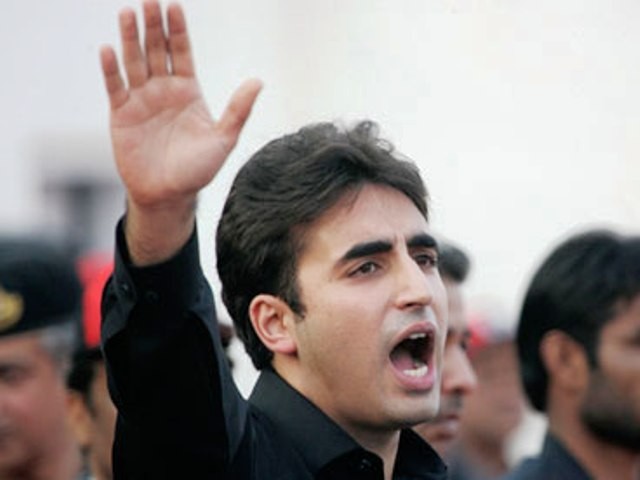 Patron-in-Chief of Pakistan Peoples Party Bilawal Bhutto Zardari has strongly condemned the bomb explosions in Parachinar. He expressed profound grief over the loss of several innocent lives in the barbaric incident that also caused injuries to many others.
Bilawal Bhutto Zardari said that the elements spilling the blood of innocent people by carrying out acts of terrorism were open enemies of Islam and the country.
He said such cowardice acts will not shake the determination of the nation to eradicate terrorism and people of Pakistan would get rid of the fiends of terrorism and extremism by remaining united.
Bilawal Bhutto offered condolences to the grieving families and prayed for the eternal peace of the departed souls. He also prayed for the speedy recovery of the injured.
Patron-in-Chief of Pakistan Peoples Party Bilawal Bhutto Zardari has strongly condemned the bomb explosions in Parachinar. He expressed profound grief over the loss of several innocent lives in the barbaric incident that also caused injuries to many others.
Bilawal Bhutto Zardari said that the elements spilling the blood of innocent people by carrying out acts of terrorism were open enemies of Islam and the country.
He said such cowardice acts will not shake the determination of the nation to eradicate terrorism and people of Pakistan would get rid of the fiends of terrorism and extremism by remaining united.
Bilawal Bhutto offered condolences to the grieving families and prayed for the eternal peace of the departed souls. He also prayed for the speedy recovery of the injured.
Friday, July 26, 2013
Egypt military builds criminal case against Morsi
Interrogators subject ousted Muslim Brotherhood president to barrages of questions about inner workings of his presidencyEgypt’s criminal investigation against the ousted president, announced Friday, is likely just the start of wider legal moves against Mohammed Morsi and his Muslim Brotherhood — ominous prospects for a country seething with violent divisions.During Morsi’s three weeks in secret detention, military intelligence agents have extensively questioned him on the inner workings of his presidency and of the Brotherhood, seeking to prove he committed crimes including handing state secrets to the Islamist group, military officials told The Associated Press. Military intelligence has had sole access to him and has questioned him at least once a day, sometimes for up to five hours, the officials said. At times they have presented him voice recordings of his conversations to question him on them, they said. Throughout, Morsi has been denied access to television and newspapers, they said. He has been moved at least three times between Defense Ministry facilities in armored vehicles under heavy guard. He is currently in a facility outside Cairo, they said, without elaborating. The military appears not to have decided yet what to do with the information it is gathering. But the officials said it could be used to fuel the civilian prosecution already underway, indict other Brotherhood figures or to justify a more dramatic move: renewing the ban on the Muslim Brotherhood itself. The group was banned for decades, but became legal after Mubarak’s fall and was widely seen as the real power and decision-maker behind Morsi during his year in office. Morsi and the group denied it played any role. “We allowed Hosni Mubarak to be put on trial and he is one of our own, so there is nothing to stop us from doing this,” said one military official familiar with the thinking of the military leadership. Mubarak was a career air force officer touted as a war hero before he became president in 1981. After his 2011 ouster, he was put on trial for complicity in killing protesters. Since army chief Gen. Abdel-Fattah el-Sissi removed Morsi on July 3, Egypt’s first freely elected president has been held incommunicado by the military. Six well placed military and security officials, including two in military intelligence, spoke to AP on condition of anonymity because they were not authorized to discuss the closed-door questioning. On Friday, civilian prosecutors announced they had launched an investigation into Morsi on charges of murder and conspiring with the Palestinian militant group Hamas. At the heart of the case are allegations that Morsi and the Brotherhood worked with Hamas to carry out an attack on a prison that broke Morsi and around 30 other members of the group out of detention during the 2011 uprising against Mubarak. The attack killed 14 inmates. The investigation is the first step toward an indictment and possible trial on the charges, which are punishable by death. Prosecutors ordered Morsi detained for 15 days pending the completion of the investigation and security officials late Friday said he was likely to be moved shortly to a civilian, high-security prison south of Cairo. The officials spoke on condition of anonymity because they were not authorized to speak to the media. The Brotherhood and Hamas deny the charges, calling them politically motivated. Morsi and the Brotherhood figures freed with him have said local residents attacked the Wadi el-Natroun prison to free their own relatives and that they escaped amid the chaos. The move to prosecute Morsi shows the “bankruptcy of the leaders of the bloody coup,” Brotherhood spokesman Ahmed Aref said in a statement. Egyptians, he added, will reject “the return of the dictatorial police state and all the repression, tyranny and theft it entails.” But the accounts of Morsi’s interrogations suggest the military has a more ambitious aim to cripple the 85-year-old Brotherhood. A move to ban the group again would likely bring a backlash from Islamists. One senior Brotherhood official, Mohammed el-Beltagy, sought to belittle the significance of such a move. “They can dissolve it if they want. They are dissolving the whole country now,” he told the AP at the site of the group’s main protest sit-in at an eastern Cairo district. Another Brotherhood figure told AP that the group is fully aware that a new ban “cannot be ruled out.” But he warned that the result would be “a tragic phase” that would “end with el-Sissi’s fall.” He spoke on condition of anonymity because the group had not authorized him to discuss the implications of a ban. The Brotherhood has contended that the military is aiming to crush the Islamist movement after the military coup, which the group and its allies say aims to destroy Egyptian democracy. El-Sissi removed Morsi after four days of massive protests against him by millions of Egyptians. The military’s lines of questioning appear aimed at proving the secretive Brotherhood went far beyond its legal status as a non-government organization involved solely in religious work and put itself above the law. Military intelligence agents have interrogated Morsi extensively on his actions as president, the officials said. Among the topics are his discussions with foreign leaders during his trips abroad and his ties with Turkey and top Brotherhood ally Qatar, and with Gaza’s Hamas rulers, the officials said. One main avenue is to determine if he gave sensitive state information to Islamist allies abroad or to the Brotherhood, they said. Another line of questioning focuses on the deeply secretive finances of the Brotherhood and its funding channels abroad, they said. As a sign of how enmeshed the Brotherhood was with the president, one senior military official noted an incident soon after Morsi took office on June 30, 2012. Morsi brought 19 members of the Brotherhood’s top leadership body with him for his first briefing by the then-head of the General Intelligence Agency, Maj. Gen. Murad Muwafi. When Muwafi objected to their presence because they had no security clearance, Morsi casually told him, “Come on, general, there are no strangers here.” Muwafi went on to give the briefing but avoided sharing sensitive material, said the official, who was directly involved in contacts between the Morsi administration and the military and intelligence agencies. Several weeks later, Morsi fired Muwafi. The 61-year-old Morsi initially refused to answer investigators’ questions but eventually cautiously cooperated, according to a military official with access to records of the questioning. Throughout, however, he repeatedly declared that he remains Egypt’s legitimate president, the official said. He often insisted he tirelessly served Egypt’s best interests but was thwarted by the “deep state,” the phrase used by Egyptians to refer to Mubarak loyalists and other entrenched powers in the army, security forces and state institutions. Morsi is observing the dawn-to-sunset fast of the holy month of Ramadan and when not being questioned, he has spent his time praying and reading the Quran, Islam’s holy book. He was making a point of praying loudly, seeking God’s assistance against his “oppressors,” several officials said. When confronted with audio recordings and documents, Morsi bristled and said his investigators should treat him with the respect a president is entitled to, said the official with access to the questioning records. At another point, Morsi sarcastically told his interrogators that he did not see the point of them asking him questions since they had video and sound recordings of everything he did while in office, the official said. Another area that Morsi was being interrogated about is his pardon for dozens of jailed militants who once embraced violence. The officials said the military believes many of them move to Sinai and formed jihadi cells that include foreign extremists. In the same vein, the military investigators are questioning Morsi on his perceived attempt to stop the military from pursuing militants behind the killing nearly a year ago of 16 army troops at a remote post near the Israel and Gaza borders in Sinai. During his presidency, Morsi’s aides said he was trying to move away from the approach of security crackdowns in Sinai to negotiations to ease discontent among the population there. Opponents accused him of protecting jihadis. Besides Morsi, five other senior Brotherhood figures have been detained and face investigations by prosecutors on a variety of charges, including inciting violence. More than a dozen others have arrest warrants against them but have not been detained.
MILLIONS RALLY IN EGYPT, RESPONDING TO ARMY CALL
 Called out by the army, the largest crowds in 2 1/2 years of upheaval filled Egypt's streets Friday, while ousted President Mohammed Morsi was formally placed under investigation on a host of allegations including murder and conspiracy with the Palestinian militant group Hamas.
Morsi's supporters also showed no signs of backing down, though they turned out in vastly smaller numbers. The demonstrations in Cairo were mostly peaceful into the evening. But by late Friday night in Cairo, police fired tear gas to disperse hundreds of Morsi supporters near a sit-in they held for weeks, setting off clashes that lasted into early Saturday morning — in a possible sign of a new intolerance for marches that block city streets. A field hospital doctor said seven protesters were killed and hundreds injured.
In the city of Alexandria, seven people were killed and over 100 were injured in clashes between supporters and opponents of Morsi, officials said.
The announcement by prosecutors of the investigation against Morsi, which is likely to pave the way to a formal indictment and eventually a trial, was the first word on his legal status since he was deposed by the military July 3. Since then, the Islamist leader has been held incommunicado in a secret location.
Both sides tried to show how much public support they enjoy. But the millions who turned out for the pro-army demonstrations overwhelmed the streets in multiple cities in Egypt, including some that rarely seen any rallies since the 2011 uprising.
Throngs of people turned out in Cairo's Tahrir Square and in other cities, answering a call by army chief Gen. Abdel-Fattah el-Sissi, who urged them to give him a mandate to stop "potential terrorism" by supporters of Morsi's Muslim Brotherhood.
Portraits of the smiling el-Sissi in sunglasses dominated the crowd in Tahrir and one near the presidential palace across town. Posters with his picture were emblazoned with the words "the love of the people," and demonstrators wore small photos of him around their necks or carried a picture of his face on an Egyptian one-pound note.
Security was heavy after el-Sissi vowed to protect the rallies from attacks by rivals. Tanks guarded one entrance to Tahrir and police were stationed at other parts.
"The army is here to protect the people. They don't lie," said Ezzat Fahmi, a 38-year-old in the crowd. He said el-Sissi called the rallies "so the entire world can see that the Egyptian people don't want the Brotherhood anymore."
El-Sissi's plea came at a time when the political standoff with Morsi's supporters showed no sign of resolution. It raised speculation that he may be planning a crackdown on the toppled president's allies, who have held a sit-in outside the Rabaa al-Adawiyah Mosque in Cairo and near daily rallies elsewhere in the capital for three weeks.
The rallies have often turned violent, with more than 180 people killed this month. The Morsi supporters and opponents blame each other for the bloodshed, and people in both camps have been seen carrying weapons.
The unrest, as well as claims that Islamist groups are stockpiling weapons and escalating attacks against troops in the Sinai, were used by the country's new military-backed rulers as a basis for demanding popular support.
The interim leader, Adly Mansour, told the private TV station al-Hayat that his government seeks to include everyone, but it will not accept lawlessness, blocked roads and attacks on state institutions. He urged the pro-Morsi protesters to go home, promising they won't be pursued or arrested.
"I can't negotiate with whoever has committed a crime. But those who were duped or those who want to belong to Egyptian society, we welcome them," he said. But he added: "The state must interfere (against lawlessness) firmly."
Not long after the speech, police moved in quickly to break up a crowd of Morsi supporters marching on a main overpass in Cairo near the pro-Morsi sit-in, firing tear gas. Clashes with security forces ensued as protesters tried to extend their sit-in beyond the mosque into a main boulevard.
Witnesses said police forces fired birdshots and live ammunition at the crowd in clashes that lasted for hours. Field hospital doctor Alaa Mohammed said seven people were killed, most of them shot in the head and chest, including a 19-year-old. He said two other protesters were in critical condition, and hundreds were injured.
Interior Minister Mohammed Ibrahim told a private TV station that the sit-in at the Rabaa mosque will be removed by legal means. He did not elaborate but said residents of the area have filed police reports against the encampment.
Police spokesman Hani Abdel-Latif told The Associated Press that 53 pro-Morsi supporters were arrested around Egypt on Friday in possession of weapons, ranging from knives to homemade guns.
El-Sissi deposed Morsi after four days of huge protests by millions of Egyptians demanding the removal of the country's first freely elected president following months of disagreements between him and the largely secular opposition.
The accusations against Morsi are connected to a prison break during the 2011 uprising against autocrat Hosni Mubarak. Gunmen attacked the Wadi el-Natroun prison northwest of Cairo, freeing inmates, including Morsi and about 30 other figures from the Muslim Brotherhood. The prosecutors allege Morsi and the Brotherhood worked with Hamas to carry out the break, in which 14 guards were killed.
Egypt's MENA news agency said Morsi was being investigated over allegations of collaborating with Hamas "to carry out anti-state acts, attacking police stations and army officers and storming prisons, setting fire to one prison and enabling inmates to flee, including himself, as well as premeditated killing of officers, soldiers and prisoners."
In recent months, a court in the Suez Canal city of Ismailia has heard testimony from prison officials and intelligence officers indicating Morsi and his Brotherhood colleagues were freed when gunmen led by Hamas operatives stormed the prison.
Morsi supporters called the investigation politically motivated. Muslim Brotherhood spokesman Ahmed Aref said the move showed "the complete bankruptcy of the leaders of the bloody coup."
Brotherhood officials have said they escaped when local residents broke into the prison to free their relatives and that they had no knowledge of it ahead of time.
Hamas has consistently denied any involvement in the jailbreak. A spokesman for the militant group, Sami Abu Zuhri, condemned Morsi's detention order as "an attempt to drag Hamas into the Egyptian conflict."
U.S. State Department spokeswoman Jen Psaki expressed deep concern about reports of Morsi's detention.
"I can't speak to the specific charges. But we do believe that it is important that there be a process to work toward his release," she said. "Clearly, this process should respect the personal security of him and take into account the volatile political situation in Egypt and that's where our focus is. We have conveyed publicly and privately that his personal security and treatment is of utmost importance."
MENA said Morsi has now been formally detained for 15 days pending the completion of the investigation. It did not say whether he would now be moved to a facility where he could receive family visits.
The head of the prison authority, Maj. Gen. Mostafa Baz, said he has not yet received orders for Morsi's transfer to any of his facilities. The news agency indicated that Morsi has already been interrogated.
Egyptian institutions lined up behind el-Sissi's call for Friday's pro-military rallies, reflecting the extent of antagonism against the Brotherhood's hold on power in the past year.
State TV and most of the private broadcasters showed the pro-army rallies in various cities around Egypt, including aerial footage provided by military helicopters. Nationalist songs and parts of el-Sissi's speech in which he called for support were played throughout the day.
On Friday evening, TV networks stopped running soap operas that are wildly popular during the Muslim holy month of Ramadan. In a further show of support, church bells rang out during evening prayers when hundreds of thousands of protesters broke their Ramadan fasts. Interim Prime Minister Hazem el-Belbawi participated in the rally held outside the presidential palace.
A giant banner stretched across an entrance to Tahrir Square, the cradle of the 2011 uprising. It read: "The people, the source of all power, mandate the army and police to purge terrorism."
Three tanks guarded another street leading into the square, and helicopters swooped overhead.
"We have no parliament. Today is a quick referendum to support el-Sissi against the Brotherhood, whose members are terrorists," said Mohammed el-Shaer, who stood in Tahrir holding a portrait of the general in a golden frame. El-Shaer held the hand of his 10-year-old daughter, who was dressed in a military fatigues.
He called the rally a "popular referendum" on el-Sissi.
In eastern Cairo, tens of thousands of Morsi supporters at the Rabaa mosque sit-in chanted against el-Sissi and vowed to continue their push for the president's reinstatement. Others marched through some neighborhoods of Cairo.
Their rallies were mostly covered on TV by Al-Jazeera Mubasher Misr, and pro-Morsi activists emailed journalists videos and links to a live feed.
"When I first heard el-Sissi's call I was anxious," said 39-year-old Sayed el-Rawi, protesting outside the mosque. "But today, we saw that his speech encouraged more people to go down in the streets. ... They won't be able to break up the sit in."
The rival demonstrations are only deepening the country's divisions since Morsi's fall.
Clashes and fistfights broke out between both camps in Alexandria, with seven people killed and over 100 injured, according to health official Ibrahim el-Roubi. Some pro-Morsi supporters took cover inside a major mosque, leading to a standoff with opponents who besieged the place, locking them inside for hours.
Skirmishes also broke out in the Mediterranean coastal cities of Damietta and Mahalla, in the southern city of Luxor, and a Cairo neighborhood that left 64 injured, Health Ministry spokesman Khaled el-Khateeb and local security officials said.
It remains unclear what steps the military is planning after Friday's show of strength — whether it would try to break up sit-ins by Morsi supporters or attempt to arrest more than a dozen Brotherhood figures who have warrants against them.
On the front page of the state-owned Al-Akhbar newspaper, the word "wanted" in English was plastered across photos of a number of Brotherhood leaders and allies who are facing warrants. Many of them are believed to be taking refuge at the Rabaa al-Adawiyah sit-in.
The prosecutors' announcement on Morsi also could signal a greater move to go after the Brotherhood in courts. Besides Morsi, five other senior figures from the group have been detained.
Hassan Mohammed, a 30-year old teacher who came from southern Egypt to join the pro-Morsi rally, remained steadfast.
"Even if we are going to die, me and my family, we won't leave this place before our president comes back. Even if it takes seven years. We are ready to be martyrs in the name of religion and the nation," he said.
Called out by the army, the largest crowds in 2 1/2 years of upheaval filled Egypt's streets Friday, while ousted President Mohammed Morsi was formally placed under investigation on a host of allegations including murder and conspiracy with the Palestinian militant group Hamas.
Morsi's supporters also showed no signs of backing down, though they turned out in vastly smaller numbers. The demonstrations in Cairo were mostly peaceful into the evening. But by late Friday night in Cairo, police fired tear gas to disperse hundreds of Morsi supporters near a sit-in they held for weeks, setting off clashes that lasted into early Saturday morning — in a possible sign of a new intolerance for marches that block city streets. A field hospital doctor said seven protesters were killed and hundreds injured.
In the city of Alexandria, seven people were killed and over 100 were injured in clashes between supporters and opponents of Morsi, officials said.
The announcement by prosecutors of the investigation against Morsi, which is likely to pave the way to a formal indictment and eventually a trial, was the first word on his legal status since he was deposed by the military July 3. Since then, the Islamist leader has been held incommunicado in a secret location.
Both sides tried to show how much public support they enjoy. But the millions who turned out for the pro-army demonstrations overwhelmed the streets in multiple cities in Egypt, including some that rarely seen any rallies since the 2011 uprising.
Throngs of people turned out in Cairo's Tahrir Square and in other cities, answering a call by army chief Gen. Abdel-Fattah el-Sissi, who urged them to give him a mandate to stop "potential terrorism" by supporters of Morsi's Muslim Brotherhood.
Portraits of the smiling el-Sissi in sunglasses dominated the crowd in Tahrir and one near the presidential palace across town. Posters with his picture were emblazoned with the words "the love of the people," and demonstrators wore small photos of him around their necks or carried a picture of his face on an Egyptian one-pound note.
Security was heavy after el-Sissi vowed to protect the rallies from attacks by rivals. Tanks guarded one entrance to Tahrir and police were stationed at other parts.
"The army is here to protect the people. They don't lie," said Ezzat Fahmi, a 38-year-old in the crowd. He said el-Sissi called the rallies "so the entire world can see that the Egyptian people don't want the Brotherhood anymore."
El-Sissi's plea came at a time when the political standoff with Morsi's supporters showed no sign of resolution. It raised speculation that he may be planning a crackdown on the toppled president's allies, who have held a sit-in outside the Rabaa al-Adawiyah Mosque in Cairo and near daily rallies elsewhere in the capital for three weeks.
The rallies have often turned violent, with more than 180 people killed this month. The Morsi supporters and opponents blame each other for the bloodshed, and people in both camps have been seen carrying weapons.
The unrest, as well as claims that Islamist groups are stockpiling weapons and escalating attacks against troops in the Sinai, were used by the country's new military-backed rulers as a basis for demanding popular support.
The interim leader, Adly Mansour, told the private TV station al-Hayat that his government seeks to include everyone, but it will not accept lawlessness, blocked roads and attacks on state institutions. He urged the pro-Morsi protesters to go home, promising they won't be pursued or arrested.
"I can't negotiate with whoever has committed a crime. But those who were duped or those who want to belong to Egyptian society, we welcome them," he said. But he added: "The state must interfere (against lawlessness) firmly."
Not long after the speech, police moved in quickly to break up a crowd of Morsi supporters marching on a main overpass in Cairo near the pro-Morsi sit-in, firing tear gas. Clashes with security forces ensued as protesters tried to extend their sit-in beyond the mosque into a main boulevard.
Witnesses said police forces fired birdshots and live ammunition at the crowd in clashes that lasted for hours. Field hospital doctor Alaa Mohammed said seven people were killed, most of them shot in the head and chest, including a 19-year-old. He said two other protesters were in critical condition, and hundreds were injured.
Interior Minister Mohammed Ibrahim told a private TV station that the sit-in at the Rabaa mosque will be removed by legal means. He did not elaborate but said residents of the area have filed police reports against the encampment.
Police spokesman Hani Abdel-Latif told The Associated Press that 53 pro-Morsi supporters were arrested around Egypt on Friday in possession of weapons, ranging from knives to homemade guns.
El-Sissi deposed Morsi after four days of huge protests by millions of Egyptians demanding the removal of the country's first freely elected president following months of disagreements between him and the largely secular opposition.
The accusations against Morsi are connected to a prison break during the 2011 uprising against autocrat Hosni Mubarak. Gunmen attacked the Wadi el-Natroun prison northwest of Cairo, freeing inmates, including Morsi and about 30 other figures from the Muslim Brotherhood. The prosecutors allege Morsi and the Brotherhood worked with Hamas to carry out the break, in which 14 guards were killed.
Egypt's MENA news agency said Morsi was being investigated over allegations of collaborating with Hamas "to carry out anti-state acts, attacking police stations and army officers and storming prisons, setting fire to one prison and enabling inmates to flee, including himself, as well as premeditated killing of officers, soldiers and prisoners."
In recent months, a court in the Suez Canal city of Ismailia has heard testimony from prison officials and intelligence officers indicating Morsi and his Brotherhood colleagues were freed when gunmen led by Hamas operatives stormed the prison.
Morsi supporters called the investigation politically motivated. Muslim Brotherhood spokesman Ahmed Aref said the move showed "the complete bankruptcy of the leaders of the bloody coup."
Brotherhood officials have said they escaped when local residents broke into the prison to free their relatives and that they had no knowledge of it ahead of time.
Hamas has consistently denied any involvement in the jailbreak. A spokesman for the militant group, Sami Abu Zuhri, condemned Morsi's detention order as "an attempt to drag Hamas into the Egyptian conflict."
U.S. State Department spokeswoman Jen Psaki expressed deep concern about reports of Morsi's detention.
"I can't speak to the specific charges. But we do believe that it is important that there be a process to work toward his release," she said. "Clearly, this process should respect the personal security of him and take into account the volatile political situation in Egypt and that's where our focus is. We have conveyed publicly and privately that his personal security and treatment is of utmost importance."
MENA said Morsi has now been formally detained for 15 days pending the completion of the investigation. It did not say whether he would now be moved to a facility where he could receive family visits.
The head of the prison authority, Maj. Gen. Mostafa Baz, said he has not yet received orders for Morsi's transfer to any of his facilities. The news agency indicated that Morsi has already been interrogated.
Egyptian institutions lined up behind el-Sissi's call for Friday's pro-military rallies, reflecting the extent of antagonism against the Brotherhood's hold on power in the past year.
State TV and most of the private broadcasters showed the pro-army rallies in various cities around Egypt, including aerial footage provided by military helicopters. Nationalist songs and parts of el-Sissi's speech in which he called for support were played throughout the day.
On Friday evening, TV networks stopped running soap operas that are wildly popular during the Muslim holy month of Ramadan. In a further show of support, church bells rang out during evening prayers when hundreds of thousands of protesters broke their Ramadan fasts. Interim Prime Minister Hazem el-Belbawi participated in the rally held outside the presidential palace.
A giant banner stretched across an entrance to Tahrir Square, the cradle of the 2011 uprising. It read: "The people, the source of all power, mandate the army and police to purge terrorism."
Three tanks guarded another street leading into the square, and helicopters swooped overhead.
"We have no parliament. Today is a quick referendum to support el-Sissi against the Brotherhood, whose members are terrorists," said Mohammed el-Shaer, who stood in Tahrir holding a portrait of the general in a golden frame. El-Shaer held the hand of his 10-year-old daughter, who was dressed in a military fatigues.
He called the rally a "popular referendum" on el-Sissi.
In eastern Cairo, tens of thousands of Morsi supporters at the Rabaa mosque sit-in chanted against el-Sissi and vowed to continue their push for the president's reinstatement. Others marched through some neighborhoods of Cairo.
Their rallies were mostly covered on TV by Al-Jazeera Mubasher Misr, and pro-Morsi activists emailed journalists videos and links to a live feed.
"When I first heard el-Sissi's call I was anxious," said 39-year-old Sayed el-Rawi, protesting outside the mosque. "But today, we saw that his speech encouraged more people to go down in the streets. ... They won't be able to break up the sit in."
The rival demonstrations are only deepening the country's divisions since Morsi's fall.
Clashes and fistfights broke out between both camps in Alexandria, with seven people killed and over 100 injured, according to health official Ibrahim el-Roubi. Some pro-Morsi supporters took cover inside a major mosque, leading to a standoff with opponents who besieged the place, locking them inside for hours.
Skirmishes also broke out in the Mediterranean coastal cities of Damietta and Mahalla, in the southern city of Luxor, and a Cairo neighborhood that left 64 injured, Health Ministry spokesman Khaled el-Khateeb and local security officials said.
It remains unclear what steps the military is planning after Friday's show of strength — whether it would try to break up sit-ins by Morsi supporters or attempt to arrest more than a dozen Brotherhood figures who have warrants against them.
On the front page of the state-owned Al-Akhbar newspaper, the word "wanted" in English was plastered across photos of a number of Brotherhood leaders and allies who are facing warrants. Many of them are believed to be taking refuge at the Rabaa al-Adawiyah sit-in.
The prosecutors' announcement on Morsi also could signal a greater move to go after the Brotherhood in courts. Besides Morsi, five other senior figures from the group have been detained.
Hassan Mohammed, a 30-year old teacher who came from southern Egypt to join the pro-Morsi rally, remained steadfast.
"Even if we are going to die, me and my family, we won't leave this place before our president comes back. Even if it takes seven years. We are ready to be martyrs in the name of religion and the nation," he said.
Moon may influence sleep, study finds

BY Simon RoachEven if moonlight isn't streaming through your curtains, the phase of the moon may affect how well you sleep
 Science and myth rarely agree, but new research suggests that the lunar cycle could have an effect on the quality of sleep.
The study by researchers at the University of Basel in Switzerland found that even in the absence of moonlight, participants slept less deeply and for shorter periods during the full moon than at other lunar phases. It is a phenomenon already known in other organisms as the "circalunar rhythm", but has never before been shown in humans.
Christian Cajochen, who was the lead researcher on the study, said: "A lot of people complain about bad sleep during moon stages, or they claim that 'it was the moon', and there's a lot of myth involved. We decided to go back in our old data to see whether we could effectively quantify such an effect."
Previous research has found no association between the phases of the moon and human physiology or behaviour. "While I'm quite cautious and sceptical about the data myself, I have to say after a proper statistical analysis that, to our surprise, we found something there," said Cajochen. "There is a circalunar influence."
The brain pattern, eye movements and hormone secretion of volunteers were studied while they slept. Participants were also asked for subjective assessments of their sleep quality.
The results, published in Current Biology, showed that around the full moon, subjects' brain activity associated with deep sleep decreased by 30%, they took 5 minutes longer to fall asleep, had 20 minutes less sleep overall and lower levels of melatonin – a hormone known to regulate sleep. These findings correlated with the volunteers' own perception that sleep quality was poorer during the full moon.
"I think one issue in the past was that they compared a lot of people by mixing different laboratories, different devices, and including data from patients, so the entire thing was not standardised," Cajochen said. "The advantage here is that we really had a standardised protocol."
The data was taken from a previous study that was not originally looking at the moon's influence. Participants were kept in a very controlled environment, with artificial lighting, regulated temperature and no way of checking the time. This ensured that internal body rhythms could be investigated independently of external influences.
"The only disadvantage with such a standardised procedure is that we could only investigate 33 people," said Cajochen. "What I would like to do in the future is to increase the number of subjects and then to follow up each person through the entire moon cycle."
But such a study would have problems of its own, he added. "If you're actually going to tell people you're investigating the influence of the moon, then you may trigger some expectation or sensitivity in them. Sleep is also a psychological thing, of course."
If true, the mechanisms responsible for the phenomenon are unknown. Malcolm von Schantz, a molecular neurobiologist at Surrey University, said: "Essentially it could be either two things: the moon itself has a gravitational pull which somehow affects our physiology. I find that very unlikely as the gravitational pull of the moon is fairly weak. It doesn't cause tides in lakes for example, only in large oceans. In fact, if you're sitting within 15 inches of the wall right now then the wall has a stronger gravitational pull on you than the moon does. So I don't think we have a sort of mini-tide in ourselves.
"The alternative is that there is a 'counter', a mechanism which keeps track somehow of the phases of the moon."
Marine animals are already known to follow a circalunar rhythm and some believe it is tightly intertwined with the circadian rhythm – the other internal clock that many organisms, humans included, have which is entrained to the sun. "In worms, at least, there is a crossover between these two clocks," said Cajochen. "But we are not worms any more."
Other researchers have wondered why a human circalunar clock should exist in the first place. Michael Hastings, a neuroscientist studying circadian rhythms at Cambridge University, said: "In evolutionary terms, it sounds plausible to me at least. If you were a hunter gatherer, you'd want to be out there on a full moon, not a new moon. It might be that there's something about suppression of sleep under those circumstances because you should be out hunting.
"I think at best it's intriguing. There's a biological plausibility, if we take the hunter gatherer scenario, with regard to the mechanisms … It is such a striking and unexpected finding that replication by other sleep labs is absolutely critical."
Not everyone is concerned that there were only 33 subjects - von Schantz even said these numbers are "fairly sizeable" for such a study.
"It's true, the body of negative data on the effects of the moon on a huge number of parameters is fairly impressive," he added. "It's entirely conceivable that all those previous studies are correct, but that there is also an effect in a limited number of other parameters, one of them being sleep, for reasons we don't yet understand."
Science and myth rarely agree, but new research suggests that the lunar cycle could have an effect on the quality of sleep.
The study by researchers at the University of Basel in Switzerland found that even in the absence of moonlight, participants slept less deeply and for shorter periods during the full moon than at other lunar phases. It is a phenomenon already known in other organisms as the "circalunar rhythm", but has never before been shown in humans.
Christian Cajochen, who was the lead researcher on the study, said: "A lot of people complain about bad sleep during moon stages, or they claim that 'it was the moon', and there's a lot of myth involved. We decided to go back in our old data to see whether we could effectively quantify such an effect."
Previous research has found no association between the phases of the moon and human physiology or behaviour. "While I'm quite cautious and sceptical about the data myself, I have to say after a proper statistical analysis that, to our surprise, we found something there," said Cajochen. "There is a circalunar influence."
The brain pattern, eye movements and hormone secretion of volunteers were studied while they slept. Participants were also asked for subjective assessments of their sleep quality.
The results, published in Current Biology, showed that around the full moon, subjects' brain activity associated with deep sleep decreased by 30%, they took 5 minutes longer to fall asleep, had 20 minutes less sleep overall and lower levels of melatonin – a hormone known to regulate sleep. These findings correlated with the volunteers' own perception that sleep quality was poorer during the full moon.
"I think one issue in the past was that they compared a lot of people by mixing different laboratories, different devices, and including data from patients, so the entire thing was not standardised," Cajochen said. "The advantage here is that we really had a standardised protocol."
The data was taken from a previous study that was not originally looking at the moon's influence. Participants were kept in a very controlled environment, with artificial lighting, regulated temperature and no way of checking the time. This ensured that internal body rhythms could be investigated independently of external influences.
"The only disadvantage with such a standardised procedure is that we could only investigate 33 people," said Cajochen. "What I would like to do in the future is to increase the number of subjects and then to follow up each person through the entire moon cycle."
But such a study would have problems of its own, he added. "If you're actually going to tell people you're investigating the influence of the moon, then you may trigger some expectation or sensitivity in them. Sleep is also a psychological thing, of course."
If true, the mechanisms responsible for the phenomenon are unknown. Malcolm von Schantz, a molecular neurobiologist at Surrey University, said: "Essentially it could be either two things: the moon itself has a gravitational pull which somehow affects our physiology. I find that very unlikely as the gravitational pull of the moon is fairly weak. It doesn't cause tides in lakes for example, only in large oceans. In fact, if you're sitting within 15 inches of the wall right now then the wall has a stronger gravitational pull on you than the moon does. So I don't think we have a sort of mini-tide in ourselves.
"The alternative is that there is a 'counter', a mechanism which keeps track somehow of the phases of the moon."
Marine animals are already known to follow a circalunar rhythm and some believe it is tightly intertwined with the circadian rhythm – the other internal clock that many organisms, humans included, have which is entrained to the sun. "In worms, at least, there is a crossover between these two clocks," said Cajochen. "But we are not worms any more."
Other researchers have wondered why a human circalunar clock should exist in the first place. Michael Hastings, a neuroscientist studying circadian rhythms at Cambridge University, said: "In evolutionary terms, it sounds plausible to me at least. If you were a hunter gatherer, you'd want to be out there on a full moon, not a new moon. It might be that there's something about suppression of sleep under those circumstances because you should be out hunting.
"I think at best it's intriguing. There's a biological plausibility, if we take the hunter gatherer scenario, with regard to the mechanisms … It is such a striking and unexpected finding that replication by other sleep labs is absolutely critical."
Not everyone is concerned that there were only 33 subjects - von Schantz even said these numbers are "fairly sizeable" for such a study.
"It's true, the body of negative data on the effects of the moon on a huge number of parameters is fairly impressive," he added. "It's entirely conceivable that all those previous studies are correct, but that there is also an effect in a limited number of other parameters, one of them being sleep, for reasons we don't yet understand."
President Zardari's anti-Taliban legacy has no heirs
President Zardari has urged the Pakistani government to curb terrorism in his last parliament address. But the newly-elected PM Sharif has made it clear he won't go against the Taliban - a path Zardari gladly took.
 Pakistani President Asif Ali Zardari, widower of the slain former Prime Minister Benazir Bhutto, has never hesitated to call the Islamist extremists his enemies. In fact, he says they are his "personal enemies," as the Taliban allegedly assassinated his wife Bhutto in December 2007 during a public rally in the northeastern city of Rawalpindi.
After his Pakistan People's Party (PPP) came into power in 2008, President Zardari allied himself with other liberal movements such as the nationalist Awami National Party (ANP) in the restive northwestern Khyber Pakhtunkhwa province bordering Afghanistan, and the Muttahida Qaumi Movement (MQM) in the southern Sindh province. The alliance was mainly forged to defeat the Taliban.However, all three parties paid the heaviest price for their opposition to the Taliban. Their leaders and workers were killed by the extremists with impunity. Their collaboration with the US in an unpopular "war on terror" in Pakistan also cost them this year's May 11 parliamentary elections. The Pakistani people rejected them and elected instead conservative parties like Prime Minister Nawaz Sharif's Muslim League in Islamabad and cricketer-turned-politician Imran Khan's Pakistan Tehreek-e-Insaf (PTI) or the Movement for Justice party in Khyber Pakhtunkhwa. The anti-Taliban ANP was wiped out of the province.
The last speech
In his last speech to the joint session of the parliament's lower house (National Assembly) and the upper house (Senate) before the end of his presidency, Zardari made it clear that he was not ready to change his stance on extremism or compromise with the Taliban.
Zardari's speech came just hours after Islamist militants targeted NATO supply trucks in a northwestern tribal area near the Afghan border, killing at least six people.
"The nation is united against militancy. We need strong leadership to overcome the threat," he said to newly-elected parliamentarians. "We are ready to make peace with those willing to give up violence. But we should also be ready to use force against those who challenge the writ of the state."
Zardari also said that the fact that the Pakistani people turned out in a large number to vote in the past national elections, despite the threats of violence, was proof that Pakistanis believed in democracy.
But will Prime Minister Sharif pay heed to Zardari's advice? Will he go against the Taliban and other extremist groups in Pakistan or make peace with them? Will Imran Khan, whose party governs the strategically important Khyber Pakhtunkhwa province in the war against the Taliban, reconsider his policies vis-à-vis the Taliban and terrorism?
The answer is a definite 'No'. Both these leaders have avowed that they would make truce with the Islamists and won't follow the Zardari legacy.
Stronger Taliban
Peshawar-based development worker and political activist Maqsood Ahmad Jan believes that Sharif's and Khan's insistence on peace talks with the Taliban are emboldening the extremists in Pakistan.
"The new rulers have turned a blind eye to Taliban atrocities. Some parties say that the Taliban are like their children. The result is that the radicals are getting bolder and that kidnappings for ransom are on the rise," Jan told DW. He lamented that Sharif's Muslim League and Khan's PTI offered no words of sympathy to people targeted by the Islamist militants on a regular basis.
Jan is of the view that not only the Taliban will get stronger under new rulers, the Sharif government will not be able to deal with various crises that Pakistan is facing, mainly the energy crisis. He thinks this will frustrate the Pakistani people who will probably look towards the PPP and the ANP again in future.
"Sharif and Khan have no idea how to deal with the Taliban. The Khyber Pakhtunkhwa chief minister recently said he did not know who was behind the terrorist attacks."
'Unpopular war'
But experts say that despite the fact that most Pakistanis are against Islamist extremists and prefer liberal and center-right parties over hardline Islamic ones, they want their government to review its support to the US in the protracted war against the Taliban. They want peace and do not care whether it comes at the cost of giving concessions to the militants.
According to DW's Peshawar correspondent Faridullah Khan, Khyber Pakhtunkhwa has been one of the worst hit by the "war on terror" and many people there are against US drone strikes in the semi-governed northwestern tribal areas. In his opinion, many people held the ANP and PPP responsible for this situation. It was something that right-wing groups are benefiting from, he said.
Political experts like Malik Siraj Akbar, who is based in the US, are critical of Pakistan's response to the Taliban and the menace of terrorism. Akbar told DW in an interview that the main reason why liberal Pakistani parties faced a dilemma was that Pakistan had not officially "owned" the so-called war on terror. "Pakistan is not ideologically convinced that it is its war."
For this reason, counter-terrorism experts in in the country say Zardari and other liberals have not been able to get the masses behind them in the fight against terror.
Another dilemma
The ANP, like the PPP and the MQM, face another ideological dilemma. Not only the Pakistani state, but now also the US, wants to talk to the Taliban and make its peace with the militants.
"So what is the future of the parties like the ANP and the PPP who have been supporting the onslaught on the Islamists?" asked Dr. Riaz Ahmed, a political activist in Karachi, who described why he believed the attacks on anti-Taliban leaders had increased. "Politicians who want an offensive against the extremists are now a hindrance in the negotiations with the Taliban. They are being removed from the scene," Ahmed told DW.Muhammad Shah Afridi, a former conservative member of parliament from Khyber Agency, one of the semi-governed tribal agencies bordering Afghanistan, told DW that if the US and NATO could negotiate with the Taliban then Pakistan should do the same.
"War is not the solution to this conflict. We will have to talk (to the Taliban)," Afridi said.
Zardari had also welcomed the US initiative of "peace talks" with the Taliban. But experts believe it is not enough to convince the Taliban that he and his party are "friends." There are many in the ranks of the PPP and other liberal Pakistani parties who still oppose the Taliban and do not want to change their own ideological course. But experts are not sure how long they will be able to carry on with this legacy.
Islamic parties have always been demanding that the government makes peace with the radicals.
Pakistani President Asif Ali Zardari, widower of the slain former Prime Minister Benazir Bhutto, has never hesitated to call the Islamist extremists his enemies. In fact, he says they are his "personal enemies," as the Taliban allegedly assassinated his wife Bhutto in December 2007 during a public rally in the northeastern city of Rawalpindi.
After his Pakistan People's Party (PPP) came into power in 2008, President Zardari allied himself with other liberal movements such as the nationalist Awami National Party (ANP) in the restive northwestern Khyber Pakhtunkhwa province bordering Afghanistan, and the Muttahida Qaumi Movement (MQM) in the southern Sindh province. The alliance was mainly forged to defeat the Taliban.However, all three parties paid the heaviest price for their opposition to the Taliban. Their leaders and workers were killed by the extremists with impunity. Their collaboration with the US in an unpopular "war on terror" in Pakistan also cost them this year's May 11 parliamentary elections. The Pakistani people rejected them and elected instead conservative parties like Prime Minister Nawaz Sharif's Muslim League in Islamabad and cricketer-turned-politician Imran Khan's Pakistan Tehreek-e-Insaf (PTI) or the Movement for Justice party in Khyber Pakhtunkhwa. The anti-Taliban ANP was wiped out of the province.
The last speech
In his last speech to the joint session of the parliament's lower house (National Assembly) and the upper house (Senate) before the end of his presidency, Zardari made it clear that he was not ready to change his stance on extremism or compromise with the Taliban.
Zardari's speech came just hours after Islamist militants targeted NATO supply trucks in a northwestern tribal area near the Afghan border, killing at least six people.
"The nation is united against militancy. We need strong leadership to overcome the threat," he said to newly-elected parliamentarians. "We are ready to make peace with those willing to give up violence. But we should also be ready to use force against those who challenge the writ of the state."
Zardari also said that the fact that the Pakistani people turned out in a large number to vote in the past national elections, despite the threats of violence, was proof that Pakistanis believed in democracy.
But will Prime Minister Sharif pay heed to Zardari's advice? Will he go against the Taliban and other extremist groups in Pakistan or make peace with them? Will Imran Khan, whose party governs the strategically important Khyber Pakhtunkhwa province in the war against the Taliban, reconsider his policies vis-à-vis the Taliban and terrorism?
The answer is a definite 'No'. Both these leaders have avowed that they would make truce with the Islamists and won't follow the Zardari legacy.
Stronger Taliban
Peshawar-based development worker and political activist Maqsood Ahmad Jan believes that Sharif's and Khan's insistence on peace talks with the Taliban are emboldening the extremists in Pakistan.
"The new rulers have turned a blind eye to Taliban atrocities. Some parties say that the Taliban are like their children. The result is that the radicals are getting bolder and that kidnappings for ransom are on the rise," Jan told DW. He lamented that Sharif's Muslim League and Khan's PTI offered no words of sympathy to people targeted by the Islamist militants on a regular basis.
Jan is of the view that not only the Taliban will get stronger under new rulers, the Sharif government will not be able to deal with various crises that Pakistan is facing, mainly the energy crisis. He thinks this will frustrate the Pakistani people who will probably look towards the PPP and the ANP again in future.
"Sharif and Khan have no idea how to deal with the Taliban. The Khyber Pakhtunkhwa chief minister recently said he did not know who was behind the terrorist attacks."
'Unpopular war'
But experts say that despite the fact that most Pakistanis are against Islamist extremists and prefer liberal and center-right parties over hardline Islamic ones, they want their government to review its support to the US in the protracted war against the Taliban. They want peace and do not care whether it comes at the cost of giving concessions to the militants.
According to DW's Peshawar correspondent Faridullah Khan, Khyber Pakhtunkhwa has been one of the worst hit by the "war on terror" and many people there are against US drone strikes in the semi-governed northwestern tribal areas. In his opinion, many people held the ANP and PPP responsible for this situation. It was something that right-wing groups are benefiting from, he said.
Political experts like Malik Siraj Akbar, who is based in the US, are critical of Pakistan's response to the Taliban and the menace of terrorism. Akbar told DW in an interview that the main reason why liberal Pakistani parties faced a dilemma was that Pakistan had not officially "owned" the so-called war on terror. "Pakistan is not ideologically convinced that it is its war."
For this reason, counter-terrorism experts in in the country say Zardari and other liberals have not been able to get the masses behind them in the fight against terror.
Another dilemma
The ANP, like the PPP and the MQM, face another ideological dilemma. Not only the Pakistani state, but now also the US, wants to talk to the Taliban and make its peace with the militants.
"So what is the future of the parties like the ANP and the PPP who have been supporting the onslaught on the Islamists?" asked Dr. Riaz Ahmed, a political activist in Karachi, who described why he believed the attacks on anti-Taliban leaders had increased. "Politicians who want an offensive against the extremists are now a hindrance in the negotiations with the Taliban. They are being removed from the scene," Ahmed told DW.Muhammad Shah Afridi, a former conservative member of parliament from Khyber Agency, one of the semi-governed tribal agencies bordering Afghanistan, told DW that if the US and NATO could negotiate with the Taliban then Pakistan should do the same.
"War is not the solution to this conflict. We will have to talk (to the Taliban)," Afridi said.
Zardari had also welcomed the US initiative of "peace talks" with the Taliban. But experts believe it is not enough to convince the Taliban that he and his party are "friends." There are many in the ranks of the PPP and other liberal Pakistani parties who still oppose the Taliban and do not want to change their own ideological course. But experts are not sure how long they will be able to carry on with this legacy.
Islamic parties have always been demanding that the government makes peace with the radicals.
President Zardari condemns Parachinar blasts
President Asif Ali Zardari has strongly condemned the blasts in the market of Parachinar, Kurrum Agency, on Friday that has claimed several precious lives while injuring many others. The President expressed his sympathies with the bereaved families and prayed for eternal peace of those who embraced martyrdom as a result of the terrorist activity.He called upon the concerned to ensure that the best possible medical assistance was provided to the injured and prayed for early recovery of the injured.
Bangladesh: Rana Plaza disaster
 Where is the compensation?
It has been three months since the devastation of Rana Plaza disaster that killed more than 1,100 people, orphaned some 200 children and maimed hundreds. Most families of victims or those fortunate to have survived the ordeal having sustained serious injury have not received any monetary aid from the BGMEA, the foreign buyers or the government. However, we take note of the financial assistance handed over by the prime minister to 123 of the family members of the victims on July 24. This state of affairs is not acceptable.
Rehabilitation from injury costs money. And what is to become of the children who have lost one or both parents? Who takes care of them? With all eyes fixed upon the amended Bangladesh Labour Law focusing on workers’ rights, improvement of building and fire safety measures, it appears that the issue of rehabilitation and compensation has been pushed out of the public view. And the discrepancy in compensation could not be starker. Newspaper reports tell us that while some victims received compensation as high as Tk1.5million, others have received only their salaries from BGMEA, while the bulk have been left to fend for themselves.
What is now evident is that the manner in which information about actual number of victims was collected was unprofessional. This has created much confusion about who should receive what compensation. Furthermore, there is lack of consensus about precisely who should recompense the victims. It is high time authorities step in to clear up the confusion and set-up a mechanism whereby the survivors can make ends meet.
Where is the compensation?
It has been three months since the devastation of Rana Plaza disaster that killed more than 1,100 people, orphaned some 200 children and maimed hundreds. Most families of victims or those fortunate to have survived the ordeal having sustained serious injury have not received any monetary aid from the BGMEA, the foreign buyers or the government. However, we take note of the financial assistance handed over by the prime minister to 123 of the family members of the victims on July 24. This state of affairs is not acceptable.
Rehabilitation from injury costs money. And what is to become of the children who have lost one or both parents? Who takes care of them? With all eyes fixed upon the amended Bangladesh Labour Law focusing on workers’ rights, improvement of building and fire safety measures, it appears that the issue of rehabilitation and compensation has been pushed out of the public view. And the discrepancy in compensation could not be starker. Newspaper reports tell us that while some victims received compensation as high as Tk1.5million, others have received only their salaries from BGMEA, while the bulk have been left to fend for themselves.
What is now evident is that the manner in which information about actual number of victims was collected was unprofessional. This has created much confusion about who should receive what compensation. Furthermore, there is lack of consensus about precisely who should recompense the victims. It is high time authorities step in to clear up the confusion and set-up a mechanism whereby the survivors can make ends meet.
Suicide bombs kill 39 near Shi'ite mosques in Pakistan
Pakistan: Powerful explosions kill 7 people, injure 24 in northwestern Pakistan
Two powerful explosions have claimed the lives of at least seven people in the Shia-dominated town of Parachinar in Pakistan's tribal region of Kurram, leaving 24 injured.
Pakistan: Supreme Court’s politically biased decision to bring the Presidential elections forward
Let Us Build PakistanPakistan’s blatant Pro Taliban and Pro PML-N judiciary once again disgraced itself with its latest unconstitutional and politically biased decision to hold the Presidential elections earlier the Constitutionally scheduled date. The Election Commission of Pakistan reversed its own statement “Earlier the ECP had stated that it was not constitutionally possible to hold early elections.” http://tribune.com.pk/story/581281/presidential-elections-sc-asks-ecp-to-reconsider-july-30-as-election-date/ After all, the Supreme Court had to comply when its political ally, the PML N filed a petition to bring the election day forward. Pakistan’s (Fake) Civil Society whose undignified alliance with the Hamid Guls and Sipah Sahabas in the Lawyer’s Movement to restore the current PCO Chief Justice
President Zardari celebrates 58th birthday today



Subscribe to:
Posts (Atom)