The attack on Sayyeda Zainab’s (A.S.) mausoleum, in the Syrian capital, Damascus, is an instance of the Takfiri Deobandis from Pakistan partnering with Wahhabis and Salafis to form the Global Al- Qaeda that is unwittingly backed by NATO and the Western alliance. Hopefully, this is an error based on misunderstanding by the Western Alliance of just who exactly who these animals are, as there is no doubt, that the American people have not forgotten the terror committed by these same Al Qaeda on 9/11. This is a disaster for the global community! The significance of Sayyeda Zainab (AS) cannot be overstated. She was the co-leader of Karbala with Imam Hussain against an unjust and oppressive Caliphate. Taliban has now set up camp in Syria. It was Al Qaeda, who has paired with Pakistani Taliban, to perpetrate a religious profanity by attacking a Shrine so important to the Muslim community. This attack on the shrine of Sayyeda Zainab (AS) is a disaster not just for Muslims, but for religious communities everywhere. Those of us with a love of history understand that great religious events shape history, and recognize that the desecration of this kind should not be relegated to the back pages of press reports. Why are Pakistani Muslims and world leaders so silent? Perhaps it should be explained, and understood, who Sayyeda Zainab (AS) is. It is well known that on the 5th day of the 5th month of the 5th Hijri, after the completion of the Panjatan, the daughter Seyyada Zainab (AS) was born to Ali (The rightly guided Caliph) and Batool (the daughter of the founder of Islam). Sayyeda is a revered personage for Muslims everywhere. Sayyeda Zainab (AS) had two great missions to reveal the truth. One was to show the true face of Yazid and his followers, and the other was to uncover who the Ahlulbayt really were and what their importance was. At every step of her long journey she fulfilled these two missions. The whole world is indebted to her sacrifices and her courage, as Sayyeda became a verification of the words of Allah; “Those who believed and migrated and strive hard in Allah’s way with their possessions and their lives are far higher in rank in Allah’s view. They are those who achieved salvation.” As you can see, Sayyeda Zainab (AS) can be seen as the Christian saint might be viewed, or, the Rosa Parks, Anne Frank, or, even as wounded Malala and martyred Benazir Bhutto combined into one. Universal belief that Assad is the villain is not proof of the validity of the rebels. The rebels are Islamist. Meanwhile the United States is forgetting lessons of 1980 Afghanistan, and that attempting to put out a fire by pouring oil on it. General Martin Dempsey, the U.S. chairman of the Joint Chiefs of Staff, incredibly has briefed President Obama on options for military intervention in Syria. The Rebel leader, Jarba is a veteran secular dissident and seen as close to Saudi Arabia which has repeatedly urged the European Union to arm Syrian rebels. This is in spite of some Western and South Asian skepticism of supplying arms to the opposition that could fall into the hands of Islamist radicals. It should not be forgotten that the rebels in Syria are Saudi-funded Wahhabi terrorists fighting against the Assad Government, and are as much our enemies as Assad. The objective of these Salafists is the same as the past destruction of Sufi shrines in Mali, Libya and Syria by Al Qaeda/Taliban affiliated Takfiri Salafi/ Deobandi/ Wahabis. The Muslims leaders have said in their condemnation messages that it is Saudi Arabia that is attempting to attack the sacred places of Muslims, the Baitullah and the Holy Shrine of Our Last Holy Prophet Hazrat Muhammad PBUH, which is situated in the Masjid e Nabawi Premises. The first step of Al Saud have already demolished the Holy Shrines of all the Family Members of the Holy Prophet in the “Baqee Cemetery” commonly known as “ Janaat ul Baqee.” These Salafists have proven only one thing: In maligning Islam, by creating and sponsoring the Groups Like Taliban, al Qaeda , and allied groups they are simply the descendants of the Munafiqeen, that is, Munafiqeen e Dunya, i.e., hypocrites of the world, who consider themselves Muslims, but in fact, a disputable claim. Whether Jundullah, Boko Haram, Free Syrian Army, or any other group, operating in any part of the world under the banner of Al Saud, they are Takfiri Salafists that kill Muslims, and are nothing but political opportunists, bent on a Caliphate fantasy. Sayyeda Zainab (AS) as the co-leader at Karbala with Imam Hussain (AS), renders the Sayyeda Zainab(AS) Mauseleum as a symbol of courage to all humanity. Humanity needs to stand up for the reverence for historical monuments of humanitarian importance.http://lubpak.com/archives/276475
Sunday, July 21, 2013
Sayyeda Zainab’s tomb attacked by Syria rebels, Al Qaeda and Pakistani Taliban

Pakistan: 203 incidents of sectarian violence in 18 months
Daily Times
 In the last 18 months, 203 incidents of sectarian violence in Pakistan resulted in 1,800 casualties, including 717 deaths, of which 635 were Shia.
Sectarian and religious violence in Pakistan is on the rise, and between January 2012 and June 2013, the Shia community has been the worst victim of these incidents, disclosed a detailed Fact Sheet issued by US Commission on International Religious Freedom (USCIRF) on Thursday.
The fact sheet prepared under the Pakistan Religious Violence Project, an undertaking of the USCIRF, took into account publicly reported attacks against religious communities in Pakistan during the past 18 months.
The report stated that while Shias are more at risk of becoming victims of suicide bombings and targeted shootings, the already poor religious freedom environment for Hindus, Christians, and Ahmadis continued to deteriorate, with a number violent incidents occurring against members of these communities.
"The Shia bore the brunt of attacks from militants and terrorist organisations, with some of the deadliest attacks occurring during holy months and pilgrimages," said the report.
The report said that the information used in the fact sheet was acquired from newspaper reports and news articles available in the public domain. "The Project seeks to be inclusive, tracking all reported incidents involving physical attacks targeting a member of a religious community or a major religious gathering place (temples, churches, shrines, or mosques). However, it is not exhaustive and some acts of violence are certain to have been overlooked. While each incident has not been independently verified, it is based on the newspaper stories and articles," the fact sheet made it clear.
Since January 2012, the Shia community was attacked 77 times, killing 635 members and injuring 834. They also suffered 18 incidents of bomb blasts and 46 times witnessed targeted shootings.
Christians, the second biggest religious community of Pakistan, were attacked 37 times in which 11 Christians were killed and 36 injured. They were also attacked in targeted shootings that claimed 3 lives, while 5 Christian girls were also raped.
Ahmadis witnessed 54 attacks including 1 bomb blast and 26 incidents of targeted shootings in which 22 Ahmadis were killed and 39 injured.
In terms of rape victims, Pakistani Hindus are the worst victims as per the report. In 18 months around 7 incidents were reported in which Hindu girls were raped. Not this alone, but 2 Hindus died and 4 were injured in 16 attacks. Besides that 3 Hindus were killed in targeted shootings, the report went on to add.
The Pakistani Sikhs, a minority within a minority, was attacked 3 times in which one was killed.
Some other groups of different minorities were also attacked 16 times, in which 46 people died and 195 people were injured.
The Project's findings paint a grim and challenging picture for the new government of Prime Minister Nawaz Sharif.
"It was positive that the Prime Minister raised concerns about religious minorities during his maiden speech before the National Assembly, as well as travelled to Quetta after a recent bombing targeting Shia and tasked his government to act.
However, concrete, resolute action is needed to ensure that perpetrators of violence are arrested, prosecuted and jailed. To stem the rising tide of violent religious extremism, groups and individuals responsible for attacks on religious communities must be punished," stated the report.
In addition, while banned militant groups and private citizens are responsible for the majority of attacks on religious communities, government actors are not blameless - police officers have turned a blind eye to mob attacks or have refused to file police reports when victims are religious minorities, the report further stated.
"The climate of impunity threatening all Pakistanis, regardless of their faith, also is exacerbated by the much abused blasphemy and anti-Ahmadi laws," stated the report of the project.
In the last 18 months, 203 incidents of sectarian violence in Pakistan resulted in 1,800 casualties, including 717 deaths, of which 635 were Shia.
Sectarian and religious violence in Pakistan is on the rise, and between January 2012 and June 2013, the Shia community has been the worst victim of these incidents, disclosed a detailed Fact Sheet issued by US Commission on International Religious Freedom (USCIRF) on Thursday.
The fact sheet prepared under the Pakistan Religious Violence Project, an undertaking of the USCIRF, took into account publicly reported attacks against religious communities in Pakistan during the past 18 months.
The report stated that while Shias are more at risk of becoming victims of suicide bombings and targeted shootings, the already poor religious freedom environment for Hindus, Christians, and Ahmadis continued to deteriorate, with a number violent incidents occurring against members of these communities.
"The Shia bore the brunt of attacks from militants and terrorist organisations, with some of the deadliest attacks occurring during holy months and pilgrimages," said the report.
The report said that the information used in the fact sheet was acquired from newspaper reports and news articles available in the public domain. "The Project seeks to be inclusive, tracking all reported incidents involving physical attacks targeting a member of a religious community or a major religious gathering place (temples, churches, shrines, or mosques). However, it is not exhaustive and some acts of violence are certain to have been overlooked. While each incident has not been independently verified, it is based on the newspaper stories and articles," the fact sheet made it clear.
Since January 2012, the Shia community was attacked 77 times, killing 635 members and injuring 834. They also suffered 18 incidents of bomb blasts and 46 times witnessed targeted shootings.
Christians, the second biggest religious community of Pakistan, were attacked 37 times in which 11 Christians were killed and 36 injured. They were also attacked in targeted shootings that claimed 3 lives, while 5 Christian girls were also raped.
Ahmadis witnessed 54 attacks including 1 bomb blast and 26 incidents of targeted shootings in which 22 Ahmadis were killed and 39 injured.
In terms of rape victims, Pakistani Hindus are the worst victims as per the report. In 18 months around 7 incidents were reported in which Hindu girls were raped. Not this alone, but 2 Hindus died and 4 were injured in 16 attacks. Besides that 3 Hindus were killed in targeted shootings, the report went on to add.
The Pakistani Sikhs, a minority within a minority, was attacked 3 times in which one was killed.
Some other groups of different minorities were also attacked 16 times, in which 46 people died and 195 people were injured.
The Project's findings paint a grim and challenging picture for the new government of Prime Minister Nawaz Sharif.
"It was positive that the Prime Minister raised concerns about religious minorities during his maiden speech before the National Assembly, as well as travelled to Quetta after a recent bombing targeting Shia and tasked his government to act.
However, concrete, resolute action is needed to ensure that perpetrators of violence are arrested, prosecuted and jailed. To stem the rising tide of violent religious extremism, groups and individuals responsible for attacks on religious communities must be punished," stated the report.
In addition, while banned militant groups and private citizens are responsible for the majority of attacks on religious communities, government actors are not blameless - police officers have turned a blind eye to mob attacks or have refused to file police reports when victims are religious minorities, the report further stated.
"The climate of impunity threatening all Pakistanis, regardless of their faith, also is exacerbated by the much abused blasphemy and anti-Ahmadi laws," stated the report of the project.
Lahore: City still at high risk for measles
The Express TribuneDespite the government’s claims of running a successful measles vaccination drive in the province, a recently submitted Expanded Programme on Immunisation (EPI) report has declared Lahore ‘high risk’ and the Health Department has recommended monitoring and surveillance of measles in the district, The Express Tribune has learnt. The report has been drawn up by EPI Senior Medical Officers Ashfaq Ahmad Joyia and Dr Waqar Hammid, appointed observers by the Directorate General of Health Services for the measles vaccination ‘catch-up’ campaign in Lahore. The report says Ravi, Wagha and Iqbal Town are among the worst affected towns in the district. The observers have identified major weaknesses in the campaign. The report lists the names of children and areas not covered in the vaccination. “Lahore is now a high risk district because the measles virus has been here for some time. District health authorities must ensure more than 95 per cent EPI coverage among children in nomadic settlements,” the report reads. It suggests that nomadic settlements should be included in the EPI’s tour plan. It warns that the routine EPI coverage in these settlements is alarmingly poor, especially in Ravi Town’s Khokhar village. It says 94.74 per cent children have not been vaccinated and 5.26 have been only partially vaccinated in a nomadic settlement on Khokhar Road, which has been there for eight years. “The routine EPI coverage among the nomadic population in UC 12 (Iqbal Town), which lies in the vicinity of Family Health Hospital, is extremely poor. As many as 85.7 per cent children have not been vaccinated and 14.3 per cent have been partially vaccinated.” The statistics have been shared with the Deputy District Officer Health (DDOH), who has decided that those responsible for the poor coverage must be tried under the PEEDA Act [Punjab Employees Efficiency, Discipline and Accountability]. A list of names of unvaccinated children and their parents is attached to both reports. “EPI, is the single most effective tool to reduce infant mortality. It can lead to the eradication of diseases like measles. A delay in the implementation of EPI programmes at any level can expose the target population to the measles virus. This will ultimately increase morbidity and mortality due to preventable diseases, like measles,” the report adds. The observers have recommended that the district health authorities be more vigilant and vibrant. The district health management should make a distribution plan for the cold chain equipment provided by the EPI directorates, so that incidents of vaccine waste can be avoided. The DDOH and area in-charges must be held accountable if they don’t achieve more than 95 per cent EPI coverage in their areas. Union council medical officers should also be part of the campaign in their catchment areas, the report suggests. The observers have suggested stern action against the DDOHs and vaccinators responsible for vaccination in Ravi, Wagha and Iqbal Town. Copies of the report have been provided to the health secretary, director general, the EPI Director, the district coordination officer and the health district officer. EPI Director Munir Ahmad told The Express Tribune that the department had taken action against those responsible for low EPI coverage in the three towns. “When the campaign was completed, the health secretary chaired a meeting to evaluate progress on the vaccination in Lahore. The areas left out earlier, have now been covered,” he said. The anti-measles vaccination drive in Lahore took place between April 29 and May 5. As many as 190 children in the Punjab have died of measles since January including 86 of the children from Lahore. In Punjab, 22,250 measles patients have been reported, of which 5,800 have been from Lahore.
European Parliament identifies Wahabi and Salafi roots of global terrorism
Pakistan: Quetta, other parts of Balochistan still without electricity
THE FRONTIER POSTSeventeen districts of Balochistan, including Quetta, are still without electricity, local tv reports on Saturday. Furthermore, no security clearance hindering restoration of electricity to the 17 districts of the province. Failure to achieve security clearance is hindering the restoration, repairs of recently destroyed electricity tower in Bolan, creating a 1380 MW shortfall in 17 districts of Balochistan. Unknown persons had blown four towers of 132 Kv, 220 Kv electricity tower at Bibi Nani, located between Sibi and Machh on Wednesday-Thursday midnight, plunging 17 districts of Balochistan, including Quetta, Mastung, Qalat, Qila Abdullah, Naushki, Chagi , Ziarat and others into utter darkness. The remaining districts are being supplied periodical electricity, at every alternate hour through district, agro and rural regions. The people of the affected parts of the province have demanded for rectification of the situation, besides taking stringent security measures.
Saturday, July 20, 2013
Trayvon Martin: Protests across US at Zimmerman verdict
 Protests have taken place in more than 100 US cities, a week after George Zimmerman was cleared of murdering unarmed black teenager Trayvon Martin.
Demonstrators demanded federal charges to be brought against Mr Zimmerman, 29, over the February 2012 incident.
A Florida jury agreed that the neighbourhood watch volunteer killed the 17 year-old in self-defence.
In his first comments, President Barack Obama admitted many black men in the US experienced racial profiling.
The protests against the court's decision were led by the National Action Network, headed by civil rights activist the Reverend Al Sharpton.
"We are not coming out with violence, we are coming to denounce violence. The violence that was perpetrated on an unarmed, innocent man named Trayvon Martin," Mr Sharpton told at a rally in New York.
Thousands gathered for "Justice for Trayvon" protests in at least 100 other cities across America, including Atlanta, Chicago, Los Angeles and Miami.
Mr Sharpton told supporters on Saturday morning that he wanted to see the scrapping of "stand your ground" self-defence laws, such as that in force in Florida.
"We are trying to change laws so that this never, ever happens again," he said.
The teenager's mother, Sybrina Fulton, told the crowd: "Today it was my son. Tomorrow it might be yours."
Rapper Jay Z and his wife, the singer Beyonce, appeared on stage at the New York rally.
In Miami, Trayvon Martin's father, Tracy Martin, was among those who gathered to the words of the civil rights song We Shall Overcome.
'Could have been me'
In an unexpected press call on Friday, Mr Obama said very few black men in the US had not experienced racial profiling.
Mr Obama said the pain that African-Americans felt around the case came from the fact that they viewed it through "a set of experiences and a history that doesn't go away".
He said African Americans were also keenly aware of racial disparities in the application of criminal laws.
"That all contributes to a sense that if a white male teen was involved in the same kind of scenario, both the outcome and the aftermath might have been different," Mr Obama said.
"When Trayvon Martin was first shot, I said that this could have been my son. Another way of saying that is Trayvon Martin could have been me, 35 years ago."
He shared his experiences of being racially profiled in the past, such as being followed while out shopping.
"There are very few African-American men who haven't had the experience of walking across the street and hearing the locks click on the doors of cars.
"There are very few African-Americans who haven't had the experience of getting on an elevator and a woman clutching her purse nervously and holding her breath until she has a chance to get off," he said.
Mr Obama called for the protests to remain peaceful, saying any violence "dishonours what happened to Trayvon Martin".
He said that although criminal matters and law enforcement were traditionally dealt with on a state and not a federal level, it would be useful to examine some state and local laws to see if they encourage confrontation in certain situations.
On Wednesday, US Attorney General Eric Holder cited the case as he urged a nationwide review of the "stand your ground" laws, which permit the use of deadly force if a person feels seriously threatened.
The issue was never raised during the trial, though the judge included a provision about the law in her instructions to the jury, allowing it to be considered as a legitimate defence.
Trayvon Martin was shot dead by Mr Zimmerman after an altercation in a gated community in Sanford, Florida.
Last Saturday, the all-female jury of six found him not guilty of second-degree murder and manslaughter.
Protests have taken place in more than 100 US cities, a week after George Zimmerman was cleared of murdering unarmed black teenager Trayvon Martin.
Demonstrators demanded federal charges to be brought against Mr Zimmerman, 29, over the February 2012 incident.
A Florida jury agreed that the neighbourhood watch volunteer killed the 17 year-old in self-defence.
In his first comments, President Barack Obama admitted many black men in the US experienced racial profiling.
The protests against the court's decision were led by the National Action Network, headed by civil rights activist the Reverend Al Sharpton.
"We are not coming out with violence, we are coming to denounce violence. The violence that was perpetrated on an unarmed, innocent man named Trayvon Martin," Mr Sharpton told at a rally in New York.
Thousands gathered for "Justice for Trayvon" protests in at least 100 other cities across America, including Atlanta, Chicago, Los Angeles and Miami.
Mr Sharpton told supporters on Saturday morning that he wanted to see the scrapping of "stand your ground" self-defence laws, such as that in force in Florida.
"We are trying to change laws so that this never, ever happens again," he said.
The teenager's mother, Sybrina Fulton, told the crowd: "Today it was my son. Tomorrow it might be yours."
Rapper Jay Z and his wife, the singer Beyonce, appeared on stage at the New York rally.
In Miami, Trayvon Martin's father, Tracy Martin, was among those who gathered to the words of the civil rights song We Shall Overcome.
'Could have been me'
In an unexpected press call on Friday, Mr Obama said very few black men in the US had not experienced racial profiling.
Mr Obama said the pain that African-Americans felt around the case came from the fact that they viewed it through "a set of experiences and a history that doesn't go away".
He said African Americans were also keenly aware of racial disparities in the application of criminal laws.
"That all contributes to a sense that if a white male teen was involved in the same kind of scenario, both the outcome and the aftermath might have been different," Mr Obama said.
"When Trayvon Martin was first shot, I said that this could have been my son. Another way of saying that is Trayvon Martin could have been me, 35 years ago."
He shared his experiences of being racially profiled in the past, such as being followed while out shopping.
"There are very few African-American men who haven't had the experience of walking across the street and hearing the locks click on the doors of cars.
"There are very few African-Americans who haven't had the experience of getting on an elevator and a woman clutching her purse nervously and holding her breath until she has a chance to get off," he said.
Mr Obama called for the protests to remain peaceful, saying any violence "dishonours what happened to Trayvon Martin".
He said that although criminal matters and law enforcement were traditionally dealt with on a state and not a federal level, it would be useful to examine some state and local laws to see if they encourage confrontation in certain situations.
On Wednesday, US Attorney General Eric Holder cited the case as he urged a nationwide review of the "stand your ground" laws, which permit the use of deadly force if a person feels seriously threatened.
The issue was never raised during the trial, though the judge included a provision about the law in her instructions to the jury, allowing it to be considered as a legitimate defence.
Trayvon Martin was shot dead by Mr Zimmerman after an altercation in a gated community in Sanford, Florida.
Last Saturday, the all-female jury of six found him not guilty of second-degree murder and manslaughter.
President Obama’s Anguish

Rallies for Trayvon Martin begin across U.S.


Explosion hits Beijing airport


An explosion occurred Saturday evening at Terminal 3 of the Beijing Capital International Airport, police said. A wheel-chaired Chinese man, identified as Ji Zhongxing from eastern Shandong province, set off a home-made explosive device outside the arrivals exit of the Terminal 3 at around 6:24 p.m., an initial police investigation showed. The device was detonated after the 34-year-old was stopped from handing out leaflets to get attention to his complaints, according to the probe. Ji himself was injured, but suffered no life-threatening injuries and is currently under treatment. The explosion caused no other injuries. The police cordon at the arrivals exit has been removed, and the airport has begun to resume normal order. Police authorities are further investigating the case.
Dozens injured in Bahrain as police, protesters exchange fire - reports
Do
 Dozens of people were reportedly injured in Bahrain early Friday, after police fired birdshot to disperse hundreds of anti-government protesters in several Shiite villages. A policeman was also wounded after being shot by a homemade gun.
The protests, which erupted late Thursday and lasted until the early hours of Friday, were called by the opposition February 14 Coalition youth group, according to witnesses cited by AFP.
“We will remove you [King] Hamad,” was reportedly the banner slogan issued by the group to rally protesters against the Sunni monarch.Activists said that dozens were injured in clashes as police responded to protests by firing birdshot. Meanwhile, the Bahraini Ministry of Interior posted on Twitter that “security forces confronted a terror group” near Manama, and that a policeman was wounded after being shot with a homemade gun. AFP quoted witnesses confirming both the police fire and the shooting, but said that an official list of casualties was not immediately available.Demonstrators have repeatedly clashed with security forces since the start of protests against the Sunni dynasty. The demonstrations have not ceased, despite a 2011 crackdown backed by Saudi-led Gulf troops.
The Bahraini government has often referred to protesters – mostly Shiite Muslims - as “terrorists,” and recently used a car bomb explosion outside a Sunni mosque as a pretext to ban the opposition protests in several Shiite villages.
At least 80 people have been killed in Bahrain since the uprising began, according to the International Federation for Human Rights.
Dozens of people were reportedly injured in Bahrain early Friday, after police fired birdshot to disperse hundreds of anti-government protesters in several Shiite villages. A policeman was also wounded after being shot by a homemade gun.
The protests, which erupted late Thursday and lasted until the early hours of Friday, were called by the opposition February 14 Coalition youth group, according to witnesses cited by AFP.
“We will remove you [King] Hamad,” was reportedly the banner slogan issued by the group to rally protesters against the Sunni monarch.Activists said that dozens were injured in clashes as police responded to protests by firing birdshot. Meanwhile, the Bahraini Ministry of Interior posted on Twitter that “security forces confronted a terror group” near Manama, and that a policeman was wounded after being shot with a homemade gun. AFP quoted witnesses confirming both the police fire and the shooting, but said that an official list of casualties was not immediately available.Demonstrators have repeatedly clashed with security forces since the start of protests against the Sunni dynasty. The demonstrations have not ceased, despite a 2011 crackdown backed by Saudi-led Gulf troops.
The Bahraini government has often referred to protesters – mostly Shiite Muslims - as “terrorists,” and recently used a car bomb explosion outside a Sunni mosque as a pretext to ban the opposition protests in several Shiite villages.
At least 80 people have been killed in Bahrain since the uprising began, according to the International Federation for Human Rights.


Saudi rights activist Iman al-Qahtani given travel ban


Film,TV actor Nadeem turns 72
Famous film and television actor Nadeem Baig turned 72 Friday. Born as Mirza Nazeer Baig Mughal on July 19, 1941, Nadeem is a Pakistani actor who is considered as the best actor of his time in Pakistani film industry.
He has acted in several films, telefilms, and TV drama serials. He was born in Vijayawada in Andhra Pardesh state of India in 1941.
He was interested in singing and used to take part in musical competitions, and was noticed by the famous singer Firdousi Begum.
She was impressed by his singing talent and encouraged him to try playback singing in Dhaka's film industry.
Nadeem's film career spans more than 45 years. He started his career in 1967 and appeared in his first film Chakori in a leading role with Shabana as opposite actress.
The film was produced and directed by Captain Ehtesham, who, in real life, became his father-in-law in 1968. The film did well in both circuits of Pakistani film industry, i.e., West and East.
He achieved Nigar Award in the best actor's category for Chakori. With consecutive hit films, like Chotay Sahab and Sangdil, he became one of the leading film actors of Pakistan in the 1970s and 1980s.
Nadeem's commercially successive films include Nadan (1973), Anari, Pechan (1975), Talash (1976), Aina (1977), Hum Donon (1980), Lajawab, Qurbani (1981), Sangdil (1982), and Dehleez (1983). Besides acting, Nadeem has sung many songs for films.
After Supermodel, no bikinis for Veena Malik



US rules out post-2014 presence sans BSA
http://www.afghanistantimes.af/There would be no American troops on the ground in Afghanistan post 2014 without the Bilateral Security Agreement (BSA) being signed, a top US general said the other day.

Afghanistan: Funds for roads end up in private pockets
http://www.pajhwok.com/Only a fraction of Kabul’s streets are paved properly. The vast majority of roads are nothing but potholes and dirt, yet contractors regularly overshoot road-building budgets. The Independent Media Consortium Productions (IMCP) investigates the money trail.* The Kabul Municipality has accused the Turkish-owned Copy International and three Afghan firms -- Hewadwal, Latifi and Quyash Niazi -- of inflating road-construction costs. A committee appointed by the president’s office in end-2008 to probe the charges of embezzling funds and failing to adhere to the terms of the contract had representatives from the ministries of economy, public works, and finance, the State Administration Office and Kabul Municipality. The findings were submitted with evidence to the presidential palace. Kabul residents complain the roads that have been repaired are in the10th, 1st, 2nd and 17th districts where the rich and powerful live. Meanwhile, work has not finished on a 2 km stretch from Campany to Mahtab Qala that should have completed in end 2011. In the 13th district, Reza, a resident says, “The work is going on very slowly on Barchi road, a grinder works like an ant …” The findings, which IMC has made public for the first time, has been endorsed by its authors Engineer Abdul Ahad Wahid, Technical and Construction Deputy Mayor of Kabul Municipality, Muradi, representative of the palace, Engineer Adel Shah, representative of Ministry of Public Works, Nayeb Khail representative of Finance Ministry and Bismillah Bismil, the technical adviser to Kabul Municipality. The companies that claimed the entire budget for the projects, did not bother to return the money for work that remains outstanding. Instead, additional funds handed out by the Kabul Municipality have also been pocketed. Investigations by IMC reveal that Quyash Niazi spent 4.43 million dollars to pave a 70 metre wide road in the west of Kabul but charged Kabul Municipality 7.2 million dollars. Copy International spent 16 million dollars on the road from the airport to Intercontinental Hotel, but collected 18 million dollars. Documents submitted by Hewadwal show the cost of work on Qala Zaman Khan in the 16th district was 5.1 million dollars but Kabul municipality has disbursed 10.5 million dollars. Receipts and invoices also show that the cost of repair work for the 60 metre-Ahmad Shah Mena road in the 12th district through Bagrami executed by Latifi was 11 million dollars but Kabul municipality paid 12.95 million dollars.
Taliban-style edict for women spreads alarm in Afghan district
PAKISTAN: Women in Karak barred from leaving home without 'mehram'
dawn.comA committee of local clerics (ulema) in Khyber Pakhtunkhwa's Karak district banned the entry in markets of women who are not accompanied by a 'mehram' (close male family member). The local clerics committee of Khattak Ittehad held a meeting at the Tehsil Masjid Karak, headed by former district amir of Jamiat-i-Ulema Islam Hafiz Abne Amin on Friday decided that women roaming in the city bazaars (markets) without male members of their family were a source of spreading vulgarity in the society and should be stopped. The meeting which was also attended by Mualana Mir Zaqeem, Mualana Abdul Rehman and other clerics. The clerics also met the local administration and the police to implement the decision but they had refused to facilitate the implementation of this decision. When contacted, Mir Zaqeem who is the head of Khattak Ittehad, Karak city said that the decision was taken because most unaccompanied women were becoming a source of spreading vulgarity, especially in the holy month of Ramazan. He added that a group of such women (without a mehram) were also involved in theft and robberies. The Maulana further said that unaccompanied women in bazaars was not only against local Pakhtun culture but also against religious norms. He added that those women who were accompanied by a mehram would not be stopped from coming to bazaars. The clerics committee also requested local shopkeepers not to sell goods to women who are shopping alone in bazaars. Reaction of civil society Resident Director of Aurat Foundation Shabina Ayaz said that the decision of the ulema was a violation of fundamental human rights and was a denial of a woman's right to live on her own will. She added that the state must act swiftly to ensure women rights. She further said a few individuals should not have the authority to decide for 48 per cent womenfolk who had equal rights as any male member of the society in Pakistan. Qamar Nasim the programme coordinator of a civil society organisation has termed the ban a gross violation of the women rights and demanded that authorities take action against the culprits invloved. Nasim said a similar step was taken last year before Eid as well but due to pressure from the civil society the administration had the decision reversed. The chief executive of Paiman Trust, Mussarat Qadeem is of the view that this order is morally, ethically and humanly an act of gross women right violation and an injustice with women. If the jirgas and the local committees are so concerned about the women, they should come to their help and provide the daily needs to the destitute women at their doorsteps.
Pakistan: Imran Khan’s proposal
Daily TimesThe All Parties Conference (APC) to reach consensus on a viable national security strategy was supposed to be held on July 12, but was postponed by the Pakistan Muslim League-Nawaz (PML-N) government. There may be good reasons behind the delaying of the APC, such as the realization that the much-touted negotiations with the Tehreek-e-Taliban Pakistan (TTP) may not be the best way, by themselves, to tackle national security issues. The Prime Minister (PM) has consulted the ISI and has also been briefed by the interior ministry on the menace of terrorism, which may have caused a shift in the PML-N leadership’s attitude. The PM has recently become less vocal about negotiating with the TTP, unlike previously when he was enthusiastically promoting the rhetoric that negotiations were the only way out of this conundrum. Imran Khan’s recent statement in which he asks the PM and the Chief of Army Staff to have a closed-door meeting with him further jeopardizes the prospects of an APC taking place soon. He claims that an APC on national security may be ‘inappropriate’ at this time because disclosing all facts regarding national security publicly will not be prudent. He further says that a closed-door meeting to ascertain all the facts should be held first before making an attempt to formulate a holistic anti-terrorism policy. The Pakistan Tehreek-e-Insaaf (PTI) leader has previously also expressed his party’s lack of faith in an APC as similar meetings held in the past did not prove to be successful. Imran Khan shed some light on why previous APCs did not produce results and said that the PPP government continuously lied to parliament and the people about its covert agreements with the US regarding the war on terror and issues such as drone strikes. Imran Khan’s proposal is puzzling to say the least. He may be right in saying that certain sensitive information concerning national security should not be disclosed publicly, but if he wishes to have a meeting behind closed doors with the PM and COAS, why shouldn’t the rest of the political leadership be taken on board and apprised of the situation in similar fashion? One individual should not be given such a privileged status that his request to be privately briefed by the civil and military heads of the country is obliged. Moreover, Imran Khan’s incessant claims that the root cause of terrorism in Pakistan is our involvement in the war on terror are flawed, as the Pakistani Taliban came into existence years after Pervez Musharraf allied Pakistan with the US. The TTP, in fact, was the result of the Lal Masjid operation carried out by the military regime in 2007. The TTP’s goals are to topple the state system and impose their version of Shariah on the people. As has become manifest over the years, the TTP and its affiliated organizations have no qualms about ruthlessly killing soft targets such as civilians just to bring the government to its knees and force it to comply with their unreasonable demands. Negotiations can only take place where there is room for compromise. Considering that the TTP does not even believe in the political process and considers many political leaders of Pakistan to be infidels worthy of being killed, how can anyone expect to hold meaningful negotiations with such irrational people? Imran Khan is right in saying that the civilian-military leadership should be on the same page and that the people deserve to know the truth about any secret deals with the US. However, he should understand that the leadership of every major political party has an equal right to be consulted regarding terrorism. Also, Imran Khan should realize that the right way to deal with the Pakistani Taliban is to adopt a firm approach, although the door for negotiations should never be closed for any faction of TTP that believes in dialogue. The federal government, provincial governments and the security apparatus should all build consensus on adopting a zero-toleration policy against these miscreants who have caused immense damage to Pakistan.
Pakistan: All-out war against extremism

Pakistan:Father of Christian girl victim of rape by Muslims threatens to commit suicide if justice not ensured

Malala and mattersof the mind

By Kamila Hyat

Friday, July 19, 2013
Gordon Brown: How Malala forced terrorists onto defensive
 By Gordon Brown, special to CNN

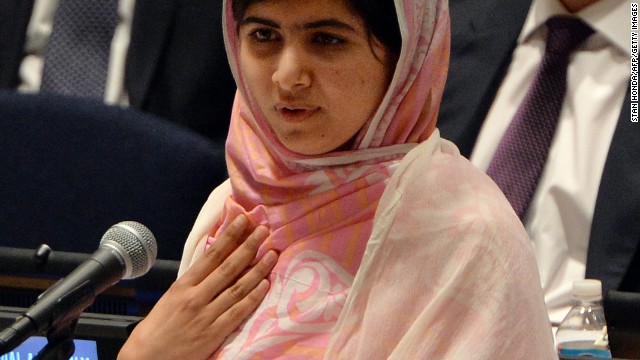 It is a remarkable twist of history that it has taken the courage of a wounded 16-year-old girl to force an entire army of terrorists -- with all their guns, bombs and grenades -- onto the back foot.Reeling from adverse comment worldwide, Adnan Rasheed, the Taliban commander who spoke out on Wednesday, tried to suggest that all that the Taliban opposes is western education. But in trying to extricate the Taliban from the charge that they oppose girls' schooling full stop, his comments reveal that the only education they favour is indoctrination and the only form of government they embrace theocratic.
Rasheed's protestations are at odds with the reality of 1,000 closed schools in Pakistan and Afghanistan because of arson attacks - and threats of the same. Indeed schools have been shut hundreds of miles from any Pakistani army presence, undermining the claim that only schools used as army bases are attacked.
In the last few weeks alone, 14 young women were blown up when the bus carrying them from college was firebombed; a school principal was shot dead and his pupils maimed in broad daylight at a prize giving ceremony held in the playground of an all-girls school in Karachi; and a teacher was gunned down in front of her son as she drove to teach at another female college.
These atrocities testify to the continued war against education. Not a word the Taliban utter about the right of girls like Malala to go to school will be believed until they stop bombing schools, killing teachers and massacring girls.But Malala has shown it is possible to stand up to Taliban intimidation and, emboldened by her courage, two million Pakistanis have signed petitions supporting the right of girls to go to school, part of four million signatures worldwide. This includes a million signatures from out-of-school girls and boys in Pakistan, who supported -- in some cases by putting thumb marks on the petition -- a plea for universal education delivered to the Pakistani President and Secretary-General of the UN.
As I found when I visited Pakistan only a few months ago, the silent majority is prepared to be silent no more. With girls openly wearing 'I am Malala' headbands and t-shirts and identifying with Malala's demands, they are defying Taliban threats - and Pakistan cannot ever be the same again.
A modern civil rights struggle is now underway, led by young people and influenced by online information about what is happening in other countries. Young people are insistent that education is a universal right, demanding that all the barriers that stand in the way -- child labour, child marriage, child trafficking and blanket discrimination against girls -- are pushed aside.
The recent revelations of both Taliban weakness and the strength of public opinion for education should signal much more than a set of petitions: it should be the start of a determined Pakistani effort to speed up the delivery of education to every girl and every boy. Pakistan cannot achieve its full potential until girls and boys are educated, for employment and for citizenship.
Today there are at least seven million girls and boys out of school in Pakistan -- and most girls will never complete their education. Even in 2050, only one in five young adults will have had the chance of college or university on current trends.
Illiteracy, especially among girls, will hold Pakistan's development back for decades unless something is done. China, Singapore, Taiwan, Korea and even Bangladesh will enrol millions of students at college and university -- but while Pakistan's population will grow to 300 or perhaps 400 million, making it one of the world's most populated countries, it will remain in the dark ages for education.
We also know that young people denied opportunity fall prey to extremist propaganda. This is yet another reason why a new Pakistani national education plan is required, involving all NGOs, and, while recognising that education is a devolved not federal matter in Pakistan, a national consensus on doubling investment in schools is now urgently needed.
In the last few months, we have been working with the government, civil society organisations, UN sister organisations and donor governments to draw up proposals to expand education, to get girls in particular to school, and to help the provinces where education attendance is lowest. This includes Malala's home of KPK, where 700,000 children are not at school, 600,000 of them girls.
We will discuss these proposals at a summit meeting between the UN Secretary-General Ban Ki-moon and Nawaz Sharif in September when the new Pakistani Prime Minister visits New York. And I will visit Pakistan to meet civil society organisations to assess the role they can play in improving educational opportunities for the left-out millions.
The good news is that we need no scientific invention or technological breakthrough to deliver education for all: we need instead the same willpower to move mountains that Malala showed when she stood up to the Taliban and lit the fuse that could inspire a modern educational revolution.
It is a remarkable twist of history that it has taken the courage of a wounded 16-year-old girl to force an entire army of terrorists -- with all their guns, bombs and grenades -- onto the back foot.Reeling from adverse comment worldwide, Adnan Rasheed, the Taliban commander who spoke out on Wednesday, tried to suggest that all that the Taliban opposes is western education. But in trying to extricate the Taliban from the charge that they oppose girls' schooling full stop, his comments reveal that the only education they favour is indoctrination and the only form of government they embrace theocratic.
Rasheed's protestations are at odds with the reality of 1,000 closed schools in Pakistan and Afghanistan because of arson attacks - and threats of the same. Indeed schools have been shut hundreds of miles from any Pakistani army presence, undermining the claim that only schools used as army bases are attacked.
In the last few weeks alone, 14 young women were blown up when the bus carrying them from college was firebombed; a school principal was shot dead and his pupils maimed in broad daylight at a prize giving ceremony held in the playground of an all-girls school in Karachi; and a teacher was gunned down in front of her son as she drove to teach at another female college.
These atrocities testify to the continued war against education. Not a word the Taliban utter about the right of girls like Malala to go to school will be believed until they stop bombing schools, killing teachers and massacring girls.But Malala has shown it is possible to stand up to Taliban intimidation and, emboldened by her courage, two million Pakistanis have signed petitions supporting the right of girls to go to school, part of four million signatures worldwide. This includes a million signatures from out-of-school girls and boys in Pakistan, who supported -- in some cases by putting thumb marks on the petition -- a plea for universal education delivered to the Pakistani President and Secretary-General of the UN.
As I found when I visited Pakistan only a few months ago, the silent majority is prepared to be silent no more. With girls openly wearing 'I am Malala' headbands and t-shirts and identifying with Malala's demands, they are defying Taliban threats - and Pakistan cannot ever be the same again.
A modern civil rights struggle is now underway, led by young people and influenced by online information about what is happening in other countries. Young people are insistent that education is a universal right, demanding that all the barriers that stand in the way -- child labour, child marriage, child trafficking and blanket discrimination against girls -- are pushed aside.
The recent revelations of both Taliban weakness and the strength of public opinion for education should signal much more than a set of petitions: it should be the start of a determined Pakistani effort to speed up the delivery of education to every girl and every boy. Pakistan cannot achieve its full potential until girls and boys are educated, for employment and for citizenship.
Today there are at least seven million girls and boys out of school in Pakistan -- and most girls will never complete their education. Even in 2050, only one in five young adults will have had the chance of college or university on current trends.
Illiteracy, especially among girls, will hold Pakistan's development back for decades unless something is done. China, Singapore, Taiwan, Korea and even Bangladesh will enrol millions of students at college and university -- but while Pakistan's population will grow to 300 or perhaps 400 million, making it one of the world's most populated countries, it will remain in the dark ages for education.
We also know that young people denied opportunity fall prey to extremist propaganda. This is yet another reason why a new Pakistani national education plan is required, involving all NGOs, and, while recognising that education is a devolved not federal matter in Pakistan, a national consensus on doubling investment in schools is now urgently needed.
In the last few months, we have been working with the government, civil society organisations, UN sister organisations and donor governments to draw up proposals to expand education, to get girls in particular to school, and to help the provinces where education attendance is lowest. This includes Malala's home of KPK, where 700,000 children are not at school, 600,000 of them girls.
We will discuss these proposals at a summit meeting between the UN Secretary-General Ban Ki-moon and Nawaz Sharif in September when the new Pakistani Prime Minister visits New York. And I will visit Pakistan to meet civil society organisations to assess the role they can play in improving educational opportunities for the left-out millions.
The good news is that we need no scientific invention or technological breakthrough to deliver education for all: we need instead the same willpower to move mountains that Malala showed when she stood up to the Taliban and lit the fuse that could inspire a modern educational revolution.
President Obama: ‘Trayvon Martin could have been me’
 President Obama made a surprise appearance in the White House briefing room Friday to share his thoughts on the acquittal of George Zimmerman in the shooting death of Trayvon Martin, saying it is important to look at the case through the lens of past discrimination.“Trayvon Martin could have been me 35 years ago,” Obama said in extensive remarks that were deeply personal and reflective. “And when you think about why, in the African American community at least, there’s a lot of pain around what happened here, I think it’s important to recognize that the African American community is looking at this issue through a set of experiences and a history that — that doesn’t go away.”
Obama continued: “And I don’t want to exaggerate this, but those sets of experiences inform how the African American community interprets what happened one night in Florida. And it’s inescapable for people to bring those experiences to bear.”
Obama, who spoke about both his own experience as a black man and what he sees in his daughters and their relationship to children of other races, noted, ”There are very few African American men who haven’t had the experience of being followed in a department store. That includes me.”
But he also struck a hopeful note, saying, “As difficult and challenging as this episode has been, things are getting better.”
Looking at his daughters Sasha and Malia with their friends, Obama remarked, “They’re better than we are, they’re better than we were, on these issues. And that’s true at every community I’ve visited across this country.”
“We should also have confidence that kids these days I think have more sense than we did back then, and certainly more than our parents did or our grandparents did,” Obama said. “And along this long journey, we’re becoming a more perfect union, not a perfect union, but a more perfect union.”
The president said he and his deputies were considering pursuing a few concrete policy options in the wake of the George Zimmerman verdict, such as trying to train state and local law enforcement officials how to better deal with issues of racial bias, and explore if laws such as “stand your ground” would “encourage the kinds of altercations and confrontations” rather than defuse them.
More broadly, he said he wanted to pursue a “long-term project” of “thinking about how to bolster and reinforce African American kids. There are a lot of kids out there that need help, that are getting a lot of negative reinforcement.”
And individual Americans, he said, would have to “do some soul-searching” about their own inherent racial biases, and ask, “Am I wringing as much bias out of myself as I can?”
“That would I think be an important exercise in the wake of this tragedy,” he said.
President Obama made a surprise appearance in the White House briefing room Friday to share his thoughts on the acquittal of George Zimmerman in the shooting death of Trayvon Martin, saying it is important to look at the case through the lens of past discrimination.“Trayvon Martin could have been me 35 years ago,” Obama said in extensive remarks that were deeply personal and reflective. “And when you think about why, in the African American community at least, there’s a lot of pain around what happened here, I think it’s important to recognize that the African American community is looking at this issue through a set of experiences and a history that — that doesn’t go away.”
Obama continued: “And I don’t want to exaggerate this, but those sets of experiences inform how the African American community interprets what happened one night in Florida. And it’s inescapable for people to bring those experiences to bear.”
Obama, who spoke about both his own experience as a black man and what he sees in his daughters and their relationship to children of other races, noted, ”There are very few African American men who haven’t had the experience of being followed in a department store. That includes me.”
But he also struck a hopeful note, saying, “As difficult and challenging as this episode has been, things are getting better.”
Looking at his daughters Sasha and Malia with their friends, Obama remarked, “They’re better than we are, they’re better than we were, on these issues. And that’s true at every community I’ve visited across this country.”
“We should also have confidence that kids these days I think have more sense than we did back then, and certainly more than our parents did or our grandparents did,” Obama said. “And along this long journey, we’re becoming a more perfect union, not a perfect union, but a more perfect union.”
The president said he and his deputies were considering pursuing a few concrete policy options in the wake of the George Zimmerman verdict, such as trying to train state and local law enforcement officials how to better deal with issues of racial bias, and explore if laws such as “stand your ground” would “encourage the kinds of altercations and confrontations” rather than defuse them.
More broadly, he said he wanted to pursue a “long-term project” of “thinking about how to bolster and reinforce African American kids. There are a lot of kids out there that need help, that are getting a lot of negative reinforcement.”
And individual Americans, he said, would have to “do some soul-searching” about their own inherent racial biases, and ask, “Am I wringing as much bias out of myself as I can?”
“That would I think be an important exercise in the wake of this tragedy,” he said.
Disputed islands with China not Japan's territories: Japanese scholar
 A Japanese scholar has said that the disputed islands between Japan and China are not Japanese inherent territories and he questioned statements by the Japanese Foreign Ministry on the disputed issue through his recent researches.
Murata Tadayoshi, honorary professor at Japan's Yokohama National University, concluded in "The Origin of Japan-China Territorial Disputes," his new book based on documents released by the Japanese government, that the disputed islands are not a part of Ryukyu, which was occupied by Japan in 1879 and changed its name to Okinawa.
"Geographically speaking, it is difficult for Okinawa fishermen to cross the 2000-meter-deep Okinawa Trough by small ships. However, for those who came from Fujian and Taiwan, the water surrounding the islands is shallow sea and they can fish there, even now," Tadayoshi told Xinhua in a recent interview.
He said that based on his research, he found that then Okinawa Governor Sutezou Nishimura was reluctant to follow then Home Minister Aritomo Yamagata's order to erect territorial markers on the islands as the governor knew the relations between the islets and China.
"In 1885, Nishimura suggested the Japanese government not to set indications on the islands because he actually acknowledged the relations between the islets and China and he replied to Yamagata that he was worried about the marker erecting," said Tadayoshi, adding Yamagata finally suspended his order.
"In fact, the Japanese government rejected the demands of incorporating the islands raised by other Okinawa governors in the 1890s," Tadayoshi said, "However, the thing changed in 1894 when Japan waged the Sino-Japanese War and Japan believed that it will defeat China."
"Japan 'stole'the islands during the Sino-Japanese war and the government did not announce the move neither to Japanese people nor the international community," the professor said.
Tadayoshi also said that the Japanese government only conducted a six-hour survey in October 1894 over the islands, rather than what the Foreign Ministry claimed in its statement that from 1885, surveys of the islands "had been thoroughly conducted by the Government of Japan through the agencies of Okinawa Prefecture and by way of other methods."
The professor said that in an attempt to allege there are no territorial disputes between Japan and China over the islands, the ministry declassified historical references but withheld some facts concerning the consensus reached by the two countries' leaders in the 1970s.
Tadayoshi also said that the findings about Nishimura is something new and quite newsworthy but no Japanese newspapers wrote any stories about it. "They used silence to 'kill'dissent, " he added.
"My study is on the basis of materials unveiled by the Japanese side and I believe that no one can refute my conclusion by using existed references. If new documents were released or found, I would like to review my points," the professor said.
Tadayoshi also hoped that Japan and China could communicate over the issue and map out rules to prevent unexpected accidents from occurring near the disputed islands. "China has made its own efforts towards reaching the goal," the professor added.
A Japanese scholar has said that the disputed islands between Japan and China are not Japanese inherent territories and he questioned statements by the Japanese Foreign Ministry on the disputed issue through his recent researches.
Murata Tadayoshi, honorary professor at Japan's Yokohama National University, concluded in "The Origin of Japan-China Territorial Disputes," his new book based on documents released by the Japanese government, that the disputed islands are not a part of Ryukyu, which was occupied by Japan in 1879 and changed its name to Okinawa.
"Geographically speaking, it is difficult for Okinawa fishermen to cross the 2000-meter-deep Okinawa Trough by small ships. However, for those who came from Fujian and Taiwan, the water surrounding the islands is shallow sea and they can fish there, even now," Tadayoshi told Xinhua in a recent interview.
He said that based on his research, he found that then Okinawa Governor Sutezou Nishimura was reluctant to follow then Home Minister Aritomo Yamagata's order to erect territorial markers on the islands as the governor knew the relations between the islets and China.
"In 1885, Nishimura suggested the Japanese government not to set indications on the islands because he actually acknowledged the relations between the islets and China and he replied to Yamagata that he was worried about the marker erecting," said Tadayoshi, adding Yamagata finally suspended his order.
"In fact, the Japanese government rejected the demands of incorporating the islands raised by other Okinawa governors in the 1890s," Tadayoshi said, "However, the thing changed in 1894 when Japan waged the Sino-Japanese War and Japan believed that it will defeat China."
"Japan 'stole'the islands during the Sino-Japanese war and the government did not announce the move neither to Japanese people nor the international community," the professor said.
Tadayoshi also said that the Japanese government only conducted a six-hour survey in October 1894 over the islands, rather than what the Foreign Ministry claimed in its statement that from 1885, surveys of the islands "had been thoroughly conducted by the Government of Japan through the agencies of Okinawa Prefecture and by way of other methods."
The professor said that in an attempt to allege there are no territorial disputes between Japan and China over the islands, the ministry declassified historical references but withheld some facts concerning the consensus reached by the two countries' leaders in the 1970s.
Tadayoshi also said that the findings about Nishimura is something new and quite newsworthy but no Japanese newspapers wrote any stories about it. "They used silence to 'kill'dissent, " he added.
"My study is on the basis of materials unveiled by the Japanese side and I believe that no one can refute my conclusion by using existed references. If new documents were released or found, I would like to review my points," the professor said.
Tadayoshi also hoped that Japan and China could communicate over the issue and map out rules to prevent unexpected accidents from occurring near the disputed islands. "China has made its own efforts towards reaching the goal," the professor added.
Bangladesh: War crimes trial: We should be united behind it
 Brig Gen Shahedul Anam Khan ndc, psc (Retd)
THE icon of the massacre of the Bengalis, the symbol of repression and torture in 1971, has been handed down a 90-year prison term. That Ghulam Azam’s age was the mitigating factor in the award of the verdict is very clear. His cohort and leader of the infamous Al-Badr gang in 1971, Mojaheed, has been awarded the death penalty.
Understandably, the degree of Ghulam Azam’s punishment has disappointed many; and for different reasons opinion is divided on the verdict. Some feel that he has not got his just desert. His party men think otherwise, and they think the same about Mojaheed.
However, if the Ghulam Azam verdict has divided opinion, just as Quader Mollah’s had, it may seem to some that the ICT trials have just about divided the nation. In our view it has been used to divide the nation. And that is what begs the question. Should an issue that has to do with our nationhood, like the trial of war criminals, which has been long pending, be allowed to divide the nation?
It should not be lost upon anybody that the trials under International Crimes Act, for crimes against humanity, perpetrated in 1971, is neither to seek revenge nor to victimise. For those not conversant with our history may be misled to think so, given that all the six accused who have been sentenced so far belong or belonged to a particular political party, and that too it is a part of the BNP- led opposition coalition.
Through the trial the nation is seeking justice for the grave hurt the people suffered as a result of the heinous activities of the accused. They had attempted to thwart a nation’s aspiration for independence, its struggle to break free of Pakistani shackles. And that they did, not politically but by brutalising the people of Bangladesh. They were the acolytes of the occupation army in 1971. And they were complicit in the killing of innocent Bengalis, in the wanton rape and arson.
And for far too long they have gone about with impunity. And all these they were able to do after the cruel killing of Bangabandhu when the changes after August 15, 1975, went in favour of the reactionary elements. President Zia’s policies not only revived the defeated forces they were also rehabilitated in politics that allowed them to regroup in the form of Jamaat-e-Islami Bangladesh and eventually call the shots. I feel it was then that the actual hiatus in the nation started to appear.
It is reprehensible that all the major parties, and certainly the military rulers, had tried to curry favour with Jamaat at some time or the other, for political gains. This party is now the largest member of the 18-party alliance.
To those who say the trials have created a divide in the nation my question is would we have had real integrity without the trials? Was it possible for us to forget the dark chapter of our history? More so when these people had never reconciled with the idea of Bangladesh and when they had been going about asserting that the Liberation War was a civil war and that no war crimes were committed in 1971, and that there were no war criminals in the country? And would that unity have survived long, knowing that it was built on a loose foundation.
In this regard the BNP’s ambivalence on the trial has confused many. One is not sure what is meant by ‘transparent’ and ‘international standards.’ A party that was created by a freedom fighter who gave out the clarion call for liberation on behalf of Bangabandhu should be opaque on the issue is disappointing.
There are a few national issues which politics must not be allowed to influence. Trial of war criminals is one such. No doubt BNP’s position on the issue is compelled by its association with Jamaat. BNP should realise that Jamaat is a dead weight around BNP’s neck, and any short-term dividend by associating with it is certain to be lost in the long run. There is every possibility that Jamaat, like the old man of the sea in Sinbad will never descend from BNP’s shoulder. And one is not sure whether BNP possesses the political adroitness to get it off its shoulders like Sinbad.
The ICT verdicts should help heal long festering wounds. The trials should unite the nation rather than divide. And those who say it will divide the nation are in fact the ones who want to divide us.
Brig Gen Shahedul Anam Khan ndc, psc (Retd)
THE icon of the massacre of the Bengalis, the symbol of repression and torture in 1971, has been handed down a 90-year prison term. That Ghulam Azam’s age was the mitigating factor in the award of the verdict is very clear. His cohort and leader of the infamous Al-Badr gang in 1971, Mojaheed, has been awarded the death penalty.
Understandably, the degree of Ghulam Azam’s punishment has disappointed many; and for different reasons opinion is divided on the verdict. Some feel that he has not got his just desert. His party men think otherwise, and they think the same about Mojaheed.
However, if the Ghulam Azam verdict has divided opinion, just as Quader Mollah’s had, it may seem to some that the ICT trials have just about divided the nation. In our view it has been used to divide the nation. And that is what begs the question. Should an issue that has to do with our nationhood, like the trial of war criminals, which has been long pending, be allowed to divide the nation?
It should not be lost upon anybody that the trials under International Crimes Act, for crimes against humanity, perpetrated in 1971, is neither to seek revenge nor to victimise. For those not conversant with our history may be misled to think so, given that all the six accused who have been sentenced so far belong or belonged to a particular political party, and that too it is a part of the BNP- led opposition coalition.
Through the trial the nation is seeking justice for the grave hurt the people suffered as a result of the heinous activities of the accused. They had attempted to thwart a nation’s aspiration for independence, its struggle to break free of Pakistani shackles. And that they did, not politically but by brutalising the people of Bangladesh. They were the acolytes of the occupation army in 1971. And they were complicit in the killing of innocent Bengalis, in the wanton rape and arson.
And for far too long they have gone about with impunity. And all these they were able to do after the cruel killing of Bangabandhu when the changes after August 15, 1975, went in favour of the reactionary elements. President Zia’s policies not only revived the defeated forces they were also rehabilitated in politics that allowed them to regroup in the form of Jamaat-e-Islami Bangladesh and eventually call the shots. I feel it was then that the actual hiatus in the nation started to appear.
It is reprehensible that all the major parties, and certainly the military rulers, had tried to curry favour with Jamaat at some time or the other, for political gains. This party is now the largest member of the 18-party alliance.
To those who say the trials have created a divide in the nation my question is would we have had real integrity without the trials? Was it possible for us to forget the dark chapter of our history? More so when these people had never reconciled with the idea of Bangladesh and when they had been going about asserting that the Liberation War was a civil war and that no war crimes were committed in 1971, and that there were no war criminals in the country? And would that unity have survived long, knowing that it was built on a loose foundation.
In this regard the BNP’s ambivalence on the trial has confused many. One is not sure what is meant by ‘transparent’ and ‘international standards.’ A party that was created by a freedom fighter who gave out the clarion call for liberation on behalf of Bangabandhu should be opaque on the issue is disappointing.
There are a few national issues which politics must not be allowed to influence. Trial of war criminals is one such. No doubt BNP’s position on the issue is compelled by its association with Jamaat. BNP should realise that Jamaat is a dead weight around BNP’s neck, and any short-term dividend by associating with it is certain to be lost in the long run. There is every possibility that Jamaat, like the old man of the sea in Sinbad will never descend from BNP’s shoulder. And one is not sure whether BNP possesses the political adroitness to get it off its shoulders like Sinbad.
The ICT verdicts should help heal long festering wounds. The trials should unite the nation rather than divide. And those who say it will divide the nation are in fact the ones who want to divide us.
Al-Qaeda’s planned emirate in Syria is West’s own doing
Warnings of Al-Qaeda's strength in Syria have gone unheeded.
Though the hardline Islamist group is gaining a foothold there, Washington neocons will not allow it to form a state in Northern Syria, award-winning blogger Neil Clark tells RT.
His concern that the unity of Syria is under threat from Al-Qaeda is shared by Fahad Almarsi, a spokesman for the Free Syrian Army, who told RT that the Islamists will only divide Syria and that the majority of Syrians do not want them there.
RT:
It’s not just about logistics here, but also some profit as well, as I guess Al-Qaeda is looking for profitable oil-smuggling routes and weapons supply routes as well?
Neil Clark:
Absolutely. It's interesting, isn’t it, that when President Assad was warning about Al-Qaeda in Syria from 2011 onwards, but the west said he was scaremongering etc. He said that Al-Qaeda had a foothold in Syria, and now we’re hearing this from the FSA, so it’s interesting. Those of us who did warn that this would happen were dismissed as apologists for Assad, apologists for the Syrian government, and now the west has got to wake up to what’s really going on. And having said that, I think it’s very important to understand the FSA strategy here - the Free Syrian Army is very keen to get Western intervention; they have now changed their strategy and they are saying look, Al-Qaeda are going to take control here unless you intervene and help us.
RT:
Who’s going to buy oil at the end of the day from Al-Qaeda?
NC:
I think it’s very important to understand that one of the biggest myths in international relations of the last 30 years is that the Western powers are implacably opposed to Al-Qaeda. They are not. They will support Al-Qaeda in certain areas of the world, Libya for example, in the Balkans in the 1990’s there were Al-Qaeda linked groups etc., if they want to topple a secular regime. And so it’s a myth to think they’re a big enemy. The biggest aim of Western foreign policy in this region is to counter Iran and Hezbollah. So I don’t actually think the West will allow an Al-Qaeda state to exist. However, they’re very happy for Al-Qaeda to work to topple President Assad.
RT: Regarding the oil again, if they got more control of it, a hold of it in Syria, how much could it effect world prices - or would that not be a significant problem?
NC:
I don’t think it would be a massive problem, but having said that I think their strategy has been to use Al-Qaeda to help topple secular regimes. If it looks if Al-Qaeda might actually get into power with a state of their own with oil supplies etc., then I think they would intervene. And I think it’s interesting that the neocons who actually want intervention in Syria are actually changing their tune here and saying we’ve got to intervene to help the FSA because otherwise Al-Qaeda will get control and so-called chemical weapons will end up in Al-Qaeda’s hands, so I think that the neocons who are looking for any excuse to intervene in Syria will now use this Al-Qaeda threat to try and get their way.
RT:
And of course we started this by talking about logistics as one of the key things here. Of course the FSA could find itself trapped on both fronts?
NC:
It could, and I think the FSA is in a very weak position here. The FSA has lost the war basically, and I think now their last gambit is to say 'look, you’ve got to help us,' and to try to portray themselves as the good guys, the moderate rebels. But they are not at all - they have committed some terrible crimes in Syria, terrible terrorist atrocities, so I think it’s a kind of a false division to say there are bad rebels and good rebels. The fact is that elections are due in Syria in 2014 and there’s no excuse for anyone to be using violence now for achieving political change.
RT: If they lose their foothold, if a terrorist state is established in the country, surely that’s a cue for foreign intervention of some kind, no?
NC: Well, absolutely - and this could be the end game because now, the Western powers hope, obviously because they thought that by now President Assad would have been toppled, he hasn’t because he’s got too much support in the country, so I think the neocon strategy now is to use Al-Qaeda as they have done for years to justify intervention, and I think this is the danger now. If it looks like an Al-Qaeda state will be established, the neocons will be putting pressure on president Obama to say 'look, you’ve got now to invade Syria to stop Al-Qaeda,' when all the time it’s actually been Western policy which has helped Al-Qaeda to get into this position in the first place.
Fahad Almarsi, a spokesman and manager of communications for the Free Syrian Army (FSA), told RT that he believes the warning of an Al-Qaeda state is credible and that the unity of Syria is under threat as never before. While criticizing Russia for supporting the Assad regime, he also pointed the finger at other world powers, who he didn’t mention by name, for supporting the Islamist extremists operating in Syria.
“It only helps the regime [of President Assad] to divide Syria. These Islamists and terrorists are supported by some regional and major states in the world. We are asking why financial and military support has reached those Islamists, but the FSA doesn’t get those arms.”
“The Russians have the key to the solution - if Moscow wants to keep the unity of Syria, it cooperates with other states there will be a solution.” he added.
He also said that the FSA wants to keep Syria united and was only interested in a victory for the Syrian people.
Subscribe to:
Posts (Atom)