



An explosion occurred Saturday evening at Terminal 3 of the Beijing Capital International Airport, police said. A wheel-chaired Chinese man, identified as Ji Zhongxing from eastern Shandong province, set off a home-made explosive device outside the arrivals exit of the Terminal 3 at around 6:24 p.m., an initial police investigation showed. The device was detonated after the 34-year-old was stopped from handing out leaflets to get attention to his complaints, according to the probe. Ji himself was injured, but suffered no life-threatening injuries and is currently under treatment. The explosion caused no other injuries. The police cordon at the arrivals exit has been removed, and the airport has begun to resume normal order. Police authorities are further investigating the case.




http://www.afghanistantimes.af/There would be no American troops on the ground in Afghanistan post 2014 without the Bilateral Security Agreement (BSA) being signed, a top US general said the other day.

http://www.pajhwok.com/Only a fraction of Kabul’s streets are paved properly. The vast majority of roads are nothing but potholes and dirt, yet contractors regularly overshoot road-building budgets. The Independent Media Consortium Productions (IMCP) investigates the money trail.* The Kabul Municipality has accused the Turkish-owned Copy International and three Afghan firms -- Hewadwal, Latifi and Quyash Niazi -- of inflating road-construction costs. A committee appointed by the president’s office in end-2008 to probe the charges of embezzling funds and failing to adhere to the terms of the contract had representatives from the ministries of economy, public works, and finance, the State Administration Office and Kabul Municipality. The findings were submitted with evidence to the presidential palace. Kabul residents complain the roads that have been repaired are in the10th, 1st, 2nd and 17th districts where the rich and powerful live. Meanwhile, work has not finished on a 2 km stretch from Campany to Mahtab Qala that should have completed in end 2011. In the 13th district, Reza, a resident says, “The work is going on very slowly on Barchi road, a grinder works like an ant …” The findings, which IMC has made public for the first time, has been endorsed by its authors Engineer Abdul Ahad Wahid, Technical and Construction Deputy Mayor of Kabul Municipality, Muradi, representative of the palace, Engineer Adel Shah, representative of Ministry of Public Works, Nayeb Khail representative of Finance Ministry and Bismillah Bismil, the technical adviser to Kabul Municipality. The companies that claimed the entire budget for the projects, did not bother to return the money for work that remains outstanding. Instead, additional funds handed out by the Kabul Municipality have also been pocketed. Investigations by IMC reveal that Quyash Niazi spent 4.43 million dollars to pave a 70 metre wide road in the west of Kabul but charged Kabul Municipality 7.2 million dollars. Copy International spent 16 million dollars on the road from the airport to Intercontinental Hotel, but collected 18 million dollars. Documents submitted by Hewadwal show the cost of work on Qala Zaman Khan in the 16th district was 5.1 million dollars but Kabul municipality has disbursed 10.5 million dollars. Receipts and invoices also show that the cost of repair work for the 60 metre-Ahmad Shah Mena road in the 12th district through Bagrami executed by Latifi was 11 million dollars but Kabul municipality paid 12.95 million dollars.
dawn.comA committee of local clerics (ulema) in Khyber Pakhtunkhwa's Karak district banned the entry in markets of women who are not accompanied by a 'mehram' (close male family member). The local clerics committee of Khattak Ittehad held a meeting at the Tehsil Masjid Karak, headed by former district amir of Jamiat-i-Ulema Islam Hafiz Abne Amin on Friday decided that women roaming in the city bazaars (markets) without male members of their family were a source of spreading vulgarity in the society and should be stopped. The meeting which was also attended by Mualana Mir Zaqeem, Mualana Abdul Rehman and other clerics. The clerics also met the local administration and the police to implement the decision but they had refused to facilitate the implementation of this decision. When contacted, Mir Zaqeem who is the head of Khattak Ittehad, Karak city said that the decision was taken because most unaccompanied women were becoming a source of spreading vulgarity, especially in the holy month of Ramazan. He added that a group of such women (without a mehram) were also involved in theft and robberies. The Maulana further said that unaccompanied women in bazaars was not only against local Pakhtun culture but also against religious norms. He added that those women who were accompanied by a mehram would not be stopped from coming to bazaars. The clerics committee also requested local shopkeepers not to sell goods to women who are shopping alone in bazaars. Reaction of civil society Resident Director of Aurat Foundation Shabina Ayaz said that the decision of the ulema was a violation of fundamental human rights and was a denial of a woman's right to live on her own will. She added that the state must act swiftly to ensure women rights. She further said a few individuals should not have the authority to decide for 48 per cent womenfolk who had equal rights as any male member of the society in Pakistan. Qamar Nasim the programme coordinator of a civil society organisation has termed the ban a gross violation of the women rights and demanded that authorities take action against the culprits invloved. Nasim said a similar step was taken last year before Eid as well but due to pressure from the civil society the administration had the decision reversed. The chief executive of Paiman Trust, Mussarat Qadeem is of the view that this order is morally, ethically and humanly an act of gross women right violation and an injustice with women. If the jirgas and the local committees are so concerned about the women, they should come to their help and provide the daily needs to the destitute women at their doorsteps.
Daily TimesThe All Parties Conference (APC) to reach consensus on a viable national security strategy was supposed to be held on July 12, but was postponed by the Pakistan Muslim League-Nawaz (PML-N) government. There may be good reasons behind the delaying of the APC, such as the realization that the much-touted negotiations with the Tehreek-e-Taliban Pakistan (TTP) may not be the best way, by themselves, to tackle national security issues. The Prime Minister (PM) has consulted the ISI and has also been briefed by the interior ministry on the menace of terrorism, which may have caused a shift in the PML-N leadership’s attitude. The PM has recently become less vocal about negotiating with the TTP, unlike previously when he was enthusiastically promoting the rhetoric that negotiations were the only way out of this conundrum. Imran Khan’s recent statement in which he asks the PM and the Chief of Army Staff to have a closed-door meeting with him further jeopardizes the prospects of an APC taking place soon. He claims that an APC on national security may be ‘inappropriate’ at this time because disclosing all facts regarding national security publicly will not be prudent. He further says that a closed-door meeting to ascertain all the facts should be held first before making an attempt to formulate a holistic anti-terrorism policy. The Pakistan Tehreek-e-Insaaf (PTI) leader has previously also expressed his party’s lack of faith in an APC as similar meetings held in the past did not prove to be successful. Imran Khan shed some light on why previous APCs did not produce results and said that the PPP government continuously lied to parliament and the people about its covert agreements with the US regarding the war on terror and issues such as drone strikes. Imran Khan’s proposal is puzzling to say the least. He may be right in saying that certain sensitive information concerning national security should not be disclosed publicly, but if he wishes to have a meeting behind closed doors with the PM and COAS, why shouldn’t the rest of the political leadership be taken on board and apprised of the situation in similar fashion? One individual should not be given such a privileged status that his request to be privately briefed by the civil and military heads of the country is obliged. Moreover, Imran Khan’s incessant claims that the root cause of terrorism in Pakistan is our involvement in the war on terror are flawed, as the Pakistani Taliban came into existence years after Pervez Musharraf allied Pakistan with the US. The TTP, in fact, was the result of the Lal Masjid operation carried out by the military regime in 2007. The TTP’s goals are to topple the state system and impose their version of Shariah on the people. As has become manifest over the years, the TTP and its affiliated organizations have no qualms about ruthlessly killing soft targets such as civilians just to bring the government to its knees and force it to comply with their unreasonable demands. Negotiations can only take place where there is room for compromise. Considering that the TTP does not even believe in the political process and considers many political leaders of Pakistan to be infidels worthy of being killed, how can anyone expect to hold meaningful negotiations with such irrational people? Imran Khan is right in saying that the civilian-military leadership should be on the same page and that the people deserve to know the truth about any secret deals with the US. However, he should understand that the leadership of every major political party has an equal right to be consulted regarding terrorism. Also, Imran Khan should realize that the right way to deal with the Pakistani Taliban is to adopt a firm approach, although the door for negotiations should never be closed for any faction of TTP that believes in dialogue. The federal government, provincial governments and the security apparatus should all build consensus on adopting a zero-toleration policy against these miscreants who have caused immense damage to Pakistan.


By Kamila Hyat

 By Gordon Brown, special to CNN

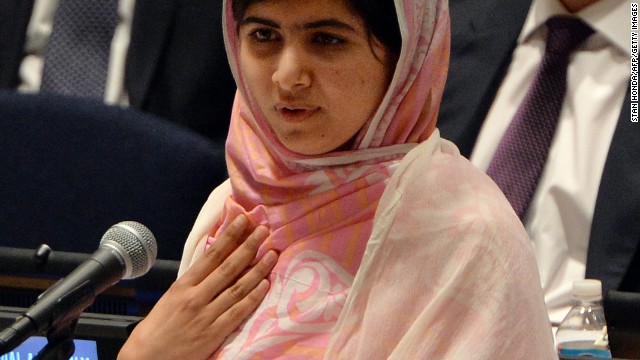 It is a remarkable twist of history that it has taken the courage of a wounded 16-year-old girl to force an entire army of terrorists -- with all their guns, bombs and grenades -- onto the back foot.Reeling from adverse comment worldwide, Adnan Rasheed, the Taliban commander who spoke out on Wednesday, tried to suggest that all that the Taliban opposes is western education. But in trying to extricate the Taliban from the charge that they oppose girls' schooling full stop, his comments reveal that the only education they favour is indoctrination and the only form of government they embrace theocratic.
Rasheed's protestations are at odds with the reality of 1,000 closed schools in Pakistan and Afghanistan because of arson attacks - and threats of the same. Indeed schools have been shut hundreds of miles from any Pakistani army presence, undermining the claim that only schools used as army bases are attacked.
In the last few weeks alone, 14 young women were blown up when the bus carrying them from college was firebombed; a school principal was shot dead and his pupils maimed in broad daylight at a prize giving ceremony held in the playground of an all-girls school in Karachi; and a teacher was gunned down in front of her son as she drove to teach at another female college.
These atrocities testify to the continued war against education. Not a word the Taliban utter about the right of girls like Malala to go to school will be believed until they stop bombing schools, killing teachers and massacring girls.But Malala has shown it is possible to stand up to Taliban intimidation and, emboldened by her courage, two million Pakistanis have signed petitions supporting the right of girls to go to school, part of four million signatures worldwide. This includes a million signatures from out-of-school girls and boys in Pakistan, who supported -- in some cases by putting thumb marks on the petition -- a plea for universal education delivered to the Pakistani President and Secretary-General of the UN.
As I found when I visited Pakistan only a few months ago, the silent majority is prepared to be silent no more. With girls openly wearing 'I am Malala' headbands and t-shirts and identifying with Malala's demands, they are defying Taliban threats - and Pakistan cannot ever be the same again.
A modern civil rights struggle is now underway, led by young people and influenced by online information about what is happening in other countries. Young people are insistent that education is a universal right, demanding that all the barriers that stand in the way -- child labour, child marriage, child trafficking and blanket discrimination against girls -- are pushed aside.
The recent revelations of both Taliban weakness and the strength of public opinion for education should signal much more than a set of petitions: it should be the start of a determined Pakistani effort to speed up the delivery of education to every girl and every boy. Pakistan cannot achieve its full potential until girls and boys are educated, for employment and for citizenship.
Today there are at least seven million girls and boys out of school in Pakistan -- and most girls will never complete their education. Even in 2050, only one in five young adults will have had the chance of college or university on current trends.
Illiteracy, especially among girls, will hold Pakistan's development back for decades unless something is done. China, Singapore, Taiwan, Korea and even Bangladesh will enrol millions of students at college and university -- but while Pakistan's population will grow to 300 or perhaps 400 million, making it one of the world's most populated countries, it will remain in the dark ages for education.
We also know that young people denied opportunity fall prey to extremist propaganda. This is yet another reason why a new Pakistani national education plan is required, involving all NGOs, and, while recognising that education is a devolved not federal matter in Pakistan, a national consensus on doubling investment in schools is now urgently needed.
In the last few months, we have been working with the government, civil society organisations, UN sister organisations and donor governments to draw up proposals to expand education, to get girls in particular to school, and to help the provinces where education attendance is lowest. This includes Malala's home of KPK, where 700,000 children are not at school, 600,000 of them girls.
We will discuss these proposals at a summit meeting between the UN Secretary-General Ban Ki-moon and Nawaz Sharif in September when the new Pakistani Prime Minister visits New York. And I will visit Pakistan to meet civil society organisations to assess the role they can play in improving educational opportunities for the left-out millions.
The good news is that we need no scientific invention or technological breakthrough to deliver education for all: we need instead the same willpower to move mountains that Malala showed when she stood up to the Taliban and lit the fuse that could inspire a modern educational revolution.
It is a remarkable twist of history that it has taken the courage of a wounded 16-year-old girl to force an entire army of terrorists -- with all their guns, bombs and grenades -- onto the back foot.Reeling from adverse comment worldwide, Adnan Rasheed, the Taliban commander who spoke out on Wednesday, tried to suggest that all that the Taliban opposes is western education. But in trying to extricate the Taliban from the charge that they oppose girls' schooling full stop, his comments reveal that the only education they favour is indoctrination and the only form of government they embrace theocratic.
Rasheed's protestations are at odds with the reality of 1,000 closed schools in Pakistan and Afghanistan because of arson attacks - and threats of the same. Indeed schools have been shut hundreds of miles from any Pakistani army presence, undermining the claim that only schools used as army bases are attacked.
In the last few weeks alone, 14 young women were blown up when the bus carrying them from college was firebombed; a school principal was shot dead and his pupils maimed in broad daylight at a prize giving ceremony held in the playground of an all-girls school in Karachi; and a teacher was gunned down in front of her son as she drove to teach at another female college.
These atrocities testify to the continued war against education. Not a word the Taliban utter about the right of girls like Malala to go to school will be believed until they stop bombing schools, killing teachers and massacring girls.But Malala has shown it is possible to stand up to Taliban intimidation and, emboldened by her courage, two million Pakistanis have signed petitions supporting the right of girls to go to school, part of four million signatures worldwide. This includes a million signatures from out-of-school girls and boys in Pakistan, who supported -- in some cases by putting thumb marks on the petition -- a plea for universal education delivered to the Pakistani President and Secretary-General of the UN.
As I found when I visited Pakistan only a few months ago, the silent majority is prepared to be silent no more. With girls openly wearing 'I am Malala' headbands and t-shirts and identifying with Malala's demands, they are defying Taliban threats - and Pakistan cannot ever be the same again.
A modern civil rights struggle is now underway, led by young people and influenced by online information about what is happening in other countries. Young people are insistent that education is a universal right, demanding that all the barriers that stand in the way -- child labour, child marriage, child trafficking and blanket discrimination against girls -- are pushed aside.
The recent revelations of both Taliban weakness and the strength of public opinion for education should signal much more than a set of petitions: it should be the start of a determined Pakistani effort to speed up the delivery of education to every girl and every boy. Pakistan cannot achieve its full potential until girls and boys are educated, for employment and for citizenship.
Today there are at least seven million girls and boys out of school in Pakistan -- and most girls will never complete their education. Even in 2050, only one in five young adults will have had the chance of college or university on current trends.
Illiteracy, especially among girls, will hold Pakistan's development back for decades unless something is done. China, Singapore, Taiwan, Korea and even Bangladesh will enrol millions of students at college and university -- but while Pakistan's population will grow to 300 or perhaps 400 million, making it one of the world's most populated countries, it will remain in the dark ages for education.
We also know that young people denied opportunity fall prey to extremist propaganda. This is yet another reason why a new Pakistani national education plan is required, involving all NGOs, and, while recognising that education is a devolved not federal matter in Pakistan, a national consensus on doubling investment in schools is now urgently needed.
In the last few months, we have been working with the government, civil society organisations, UN sister organisations and donor governments to draw up proposals to expand education, to get girls in particular to school, and to help the provinces where education attendance is lowest. This includes Malala's home of KPK, where 700,000 children are not at school, 600,000 of them girls.
We will discuss these proposals at a summit meeting between the UN Secretary-General Ban Ki-moon and Nawaz Sharif in September when the new Pakistani Prime Minister visits New York. And I will visit Pakistan to meet civil society organisations to assess the role they can play in improving educational opportunities for the left-out millions.
The good news is that we need no scientific invention or technological breakthrough to deliver education for all: we need instead the same willpower to move mountains that Malala showed when she stood up to the Taliban and lit the fuse that could inspire a modern educational revolution.
 President Obama made a surprise appearance in the White House briefing room Friday to share his thoughts on the acquittal of George Zimmerman in the shooting death of Trayvon Martin, saying it is important to look at the case through the lens of past discrimination.“Trayvon Martin could have been me 35 years ago,” Obama said in extensive remarks that were deeply personal and reflective. “And when you think about why, in the African American community at least, there’s a lot of pain around what happened here, I think it’s important to recognize that the African American community is looking at this issue through a set of experiences and a history that — that doesn’t go away.”
Obama continued: “And I don’t want to exaggerate this, but those sets of experiences inform how the African American community interprets what happened one night in Florida. And it’s inescapable for people to bring those experiences to bear.”
Obama, who spoke about both his own experience as a black man and what he sees in his daughters and their relationship to children of other races, noted, ”There are very few African American men who haven’t had the experience of being followed in a department store. That includes me.”
But he also struck a hopeful note, saying, “As difficult and challenging as this episode has been, things are getting better.”
Looking at his daughters Sasha and Malia with their friends, Obama remarked, “They’re better than we are, they’re better than we were, on these issues. And that’s true at every community I’ve visited across this country.”
“We should also have confidence that kids these days I think have more sense than we did back then, and certainly more than our parents did or our grandparents did,” Obama said. “And along this long journey, we’re becoming a more perfect union, not a perfect union, but a more perfect union.”
The president said he and his deputies were considering pursuing a few concrete policy options in the wake of the George Zimmerman verdict, such as trying to train state and local law enforcement officials how to better deal with issues of racial bias, and explore if laws such as “stand your ground” would “encourage the kinds of altercations and confrontations” rather than defuse them.
More broadly, he said he wanted to pursue a “long-term project” of “thinking about how to bolster and reinforce African American kids. There are a lot of kids out there that need help, that are getting a lot of negative reinforcement.”
And individual Americans, he said, would have to “do some soul-searching” about their own inherent racial biases, and ask, “Am I wringing as much bias out of myself as I can?”
“That would I think be an important exercise in the wake of this tragedy,” he said.
President Obama made a surprise appearance in the White House briefing room Friday to share his thoughts on the acquittal of George Zimmerman in the shooting death of Trayvon Martin, saying it is important to look at the case through the lens of past discrimination.“Trayvon Martin could have been me 35 years ago,” Obama said in extensive remarks that were deeply personal and reflective. “And when you think about why, in the African American community at least, there’s a lot of pain around what happened here, I think it’s important to recognize that the African American community is looking at this issue through a set of experiences and a history that — that doesn’t go away.”
Obama continued: “And I don’t want to exaggerate this, but those sets of experiences inform how the African American community interprets what happened one night in Florida. And it’s inescapable for people to bring those experiences to bear.”
Obama, who spoke about both his own experience as a black man and what he sees in his daughters and their relationship to children of other races, noted, ”There are very few African American men who haven’t had the experience of being followed in a department store. That includes me.”
But he also struck a hopeful note, saying, “As difficult and challenging as this episode has been, things are getting better.”
Looking at his daughters Sasha and Malia with their friends, Obama remarked, “They’re better than we are, they’re better than we were, on these issues. And that’s true at every community I’ve visited across this country.”
“We should also have confidence that kids these days I think have more sense than we did back then, and certainly more than our parents did or our grandparents did,” Obama said. “And along this long journey, we’re becoming a more perfect union, not a perfect union, but a more perfect union.”
The president said he and his deputies were considering pursuing a few concrete policy options in the wake of the George Zimmerman verdict, such as trying to train state and local law enforcement officials how to better deal with issues of racial bias, and explore if laws such as “stand your ground” would “encourage the kinds of altercations and confrontations” rather than defuse them.
More broadly, he said he wanted to pursue a “long-term project” of “thinking about how to bolster and reinforce African American kids. There are a lot of kids out there that need help, that are getting a lot of negative reinforcement.”
And individual Americans, he said, would have to “do some soul-searching” about their own inherent racial biases, and ask, “Am I wringing as much bias out of myself as I can?”
“That would I think be an important exercise in the wake of this tragedy,” he said.
 A Japanese scholar has said that the disputed islands between Japan and China are not Japanese inherent territories and he questioned statements by the Japanese Foreign Ministry on the disputed issue through his recent researches.
Murata Tadayoshi, honorary professor at Japan's Yokohama National University, concluded in "The Origin of Japan-China Territorial Disputes," his new book based on documents released by the Japanese government, that the disputed islands are not a part of Ryukyu, which was occupied by Japan in 1879 and changed its name to Okinawa.
"Geographically speaking, it is difficult for Okinawa fishermen to cross the 2000-meter-deep Okinawa Trough by small ships. However, for those who came from Fujian and Taiwan, the water surrounding the islands is shallow sea and they can fish there, even now," Tadayoshi told Xinhua in a recent interview.
He said that based on his research, he found that then Okinawa Governor Sutezou Nishimura was reluctant to follow then Home Minister Aritomo Yamagata's order to erect territorial markers on the islands as the governor knew the relations between the islets and China.
"In 1885, Nishimura suggested the Japanese government not to set indications on the islands because he actually acknowledged the relations between the islets and China and he replied to Yamagata that he was worried about the marker erecting," said Tadayoshi, adding Yamagata finally suspended his order.
"In fact, the Japanese government rejected the demands of incorporating the islands raised by other Okinawa governors in the 1890s," Tadayoshi said, "However, the thing changed in 1894 when Japan waged the Sino-Japanese War and Japan believed that it will defeat China."
"Japan 'stole'the islands during the Sino-Japanese war and the government did not announce the move neither to Japanese people nor the international community," the professor said.
Tadayoshi also said that the Japanese government only conducted a six-hour survey in October 1894 over the islands, rather than what the Foreign Ministry claimed in its statement that from 1885, surveys of the islands "had been thoroughly conducted by the Government of Japan through the agencies of Okinawa Prefecture and by way of other methods."
The professor said that in an attempt to allege there are no territorial disputes between Japan and China over the islands, the ministry declassified historical references but withheld some facts concerning the consensus reached by the two countries' leaders in the 1970s.
Tadayoshi also said that the findings about Nishimura is something new and quite newsworthy but no Japanese newspapers wrote any stories about it. "They used silence to 'kill'dissent, " he added.
"My study is on the basis of materials unveiled by the Japanese side and I believe that no one can refute my conclusion by using existed references. If new documents were released or found, I would like to review my points," the professor said.
Tadayoshi also hoped that Japan and China could communicate over the issue and map out rules to prevent unexpected accidents from occurring near the disputed islands. "China has made its own efforts towards reaching the goal," the professor added.
A Japanese scholar has said that the disputed islands between Japan and China are not Japanese inherent territories and he questioned statements by the Japanese Foreign Ministry on the disputed issue through his recent researches.
Murata Tadayoshi, honorary professor at Japan's Yokohama National University, concluded in "The Origin of Japan-China Territorial Disputes," his new book based on documents released by the Japanese government, that the disputed islands are not a part of Ryukyu, which was occupied by Japan in 1879 and changed its name to Okinawa.
"Geographically speaking, it is difficult for Okinawa fishermen to cross the 2000-meter-deep Okinawa Trough by small ships. However, for those who came from Fujian and Taiwan, the water surrounding the islands is shallow sea and they can fish there, even now," Tadayoshi told Xinhua in a recent interview.
He said that based on his research, he found that then Okinawa Governor Sutezou Nishimura was reluctant to follow then Home Minister Aritomo Yamagata's order to erect territorial markers on the islands as the governor knew the relations between the islets and China.
"In 1885, Nishimura suggested the Japanese government not to set indications on the islands because he actually acknowledged the relations between the islets and China and he replied to Yamagata that he was worried about the marker erecting," said Tadayoshi, adding Yamagata finally suspended his order.
"In fact, the Japanese government rejected the demands of incorporating the islands raised by other Okinawa governors in the 1890s," Tadayoshi said, "However, the thing changed in 1894 when Japan waged the Sino-Japanese War and Japan believed that it will defeat China."
"Japan 'stole'the islands during the Sino-Japanese war and the government did not announce the move neither to Japanese people nor the international community," the professor said.
Tadayoshi also said that the Japanese government only conducted a six-hour survey in October 1894 over the islands, rather than what the Foreign Ministry claimed in its statement that from 1885, surveys of the islands "had been thoroughly conducted by the Government of Japan through the agencies of Okinawa Prefecture and by way of other methods."
The professor said that in an attempt to allege there are no territorial disputes between Japan and China over the islands, the ministry declassified historical references but withheld some facts concerning the consensus reached by the two countries' leaders in the 1970s.
Tadayoshi also said that the findings about Nishimura is something new and quite newsworthy but no Japanese newspapers wrote any stories about it. "They used silence to 'kill'dissent, " he added.
"My study is on the basis of materials unveiled by the Japanese side and I believe that no one can refute my conclusion by using existed references. If new documents were released or found, I would like to review my points," the professor said.
Tadayoshi also hoped that Japan and China could communicate over the issue and map out rules to prevent unexpected accidents from occurring near the disputed islands. "China has made its own efforts towards reaching the goal," the professor added.
 Brig Gen Shahedul Anam Khan ndc, psc (Retd)
THE icon of the massacre of the Bengalis, the symbol of repression and torture in 1971, has been handed down a 90-year prison term. That Ghulam Azam’s age was the mitigating factor in the award of the verdict is very clear. His cohort and leader of the infamous Al-Badr gang in 1971, Mojaheed, has been awarded the death penalty.
Understandably, the degree of Ghulam Azam’s punishment has disappointed many; and for different reasons opinion is divided on the verdict. Some feel that he has not got his just desert. His party men think otherwise, and they think the same about Mojaheed.
However, if the Ghulam Azam verdict has divided opinion, just as Quader Mollah’s had, it may seem to some that the ICT trials have just about divided the nation. In our view it has been used to divide the nation. And that is what begs the question. Should an issue that has to do with our nationhood, like the trial of war criminals, which has been long pending, be allowed to divide the nation?
It should not be lost upon anybody that the trials under International Crimes Act, for crimes against humanity, perpetrated in 1971, is neither to seek revenge nor to victimise. For those not conversant with our history may be misled to think so, given that all the six accused who have been sentenced so far belong or belonged to a particular political party, and that too it is a part of the BNP- led opposition coalition.
Through the trial the nation is seeking justice for the grave hurt the people suffered as a result of the heinous activities of the accused. They had attempted to thwart a nation’s aspiration for independence, its struggle to break free of Pakistani shackles. And that they did, not politically but by brutalising the people of Bangladesh. They were the acolytes of the occupation army in 1971. And they were complicit in the killing of innocent Bengalis, in the wanton rape and arson.
And for far too long they have gone about with impunity. And all these they were able to do after the cruel killing of Bangabandhu when the changes after August 15, 1975, went in favour of the reactionary elements. President Zia’s policies not only revived the defeated forces they were also rehabilitated in politics that allowed them to regroup in the form of Jamaat-e-Islami Bangladesh and eventually call the shots. I feel it was then that the actual hiatus in the nation started to appear.
It is reprehensible that all the major parties, and certainly the military rulers, had tried to curry favour with Jamaat at some time or the other, for political gains. This party is now the largest member of the 18-party alliance.
To those who say the trials have created a divide in the nation my question is would we have had real integrity without the trials? Was it possible for us to forget the dark chapter of our history? More so when these people had never reconciled with the idea of Bangladesh and when they had been going about asserting that the Liberation War was a civil war and that no war crimes were committed in 1971, and that there were no war criminals in the country? And would that unity have survived long, knowing that it was built on a loose foundation.
In this regard the BNP’s ambivalence on the trial has confused many. One is not sure what is meant by ‘transparent’ and ‘international standards.’ A party that was created by a freedom fighter who gave out the clarion call for liberation on behalf of Bangabandhu should be opaque on the issue is disappointing.
There are a few national issues which politics must not be allowed to influence. Trial of war criminals is one such. No doubt BNP’s position on the issue is compelled by its association with Jamaat. BNP should realise that Jamaat is a dead weight around BNP’s neck, and any short-term dividend by associating with it is certain to be lost in the long run. There is every possibility that Jamaat, like the old man of the sea in Sinbad will never descend from BNP’s shoulder. And one is not sure whether BNP possesses the political adroitness to get it off its shoulders like Sinbad.
The ICT verdicts should help heal long festering wounds. The trials should unite the nation rather than divide. And those who say it will divide the nation are in fact the ones who want to divide us.
Warnings of Al-Qaeda's strength in Syria have gone unheeded.
Though the hardline Islamist group is gaining a foothold there, Washington neocons will not allow it to form a state in Northern Syria, award-winning blogger Neil Clark tells RT.
His concern that the unity of Syria is under threat from Al-Qaeda is shared by Fahad Almarsi, a spokesman for the Free Syrian Army, who told RT that the Islamists will only divide Syria and that the majority of Syrians do not want them there.
RT:
It’s not just about logistics here, but also some profit as well, as I guess Al-Qaeda is looking for profitable oil-smuggling routes and weapons supply routes as well?
Neil Clark:
Absolutely. It's interesting, isn’t it, that when President Assad was warning about Al-Qaeda in Syria from 2011 onwards, but the west said he was scaremongering etc. He said that Al-Qaeda had a foothold in Syria, and now we’re hearing this from the FSA, so it’s interesting. Those of us who did warn that this would happen were dismissed as apologists for Assad, apologists for the Syrian government, and now the west has got to wake up to what’s really going on. And having said that, I think it’s very important to understand the FSA strategy here - the Free Syrian Army is very keen to get Western intervention; they have now changed their strategy and they are saying look, Al-Qaeda are going to take control here unless you intervene and help us.
RT:
Who’s going to buy oil at the end of the day from Al-Qaeda?
NC:
I think it’s very important to understand that one of the biggest myths in international relations of the last 30 years is that the Western powers are implacably opposed to Al-Qaeda. They are not. They will support Al-Qaeda in certain areas of the world, Libya for example, in the Balkans in the 1990’s there were Al-Qaeda linked groups etc., if they want to topple a secular regime. And so it’s a myth to think they’re a big enemy. The biggest aim of Western foreign policy in this region is to counter Iran and Hezbollah. So I don’t actually think the West will allow an Al-Qaeda state to exist. However, they’re very happy for Al-Qaeda to work to topple President Assad.
RT: Regarding the oil again, if they got more control of it, a hold of it in Syria, how much could it effect world prices - or would that not be a significant problem?
NC:
I don’t think it would be a massive problem, but having said that I think their strategy has been to use Al-Qaeda to help topple secular regimes. If it looks if Al-Qaeda might actually get into power with a state of their own with oil supplies etc., then I think they would intervene. And I think it’s interesting that the neocons who actually want intervention in Syria are actually changing their tune here and saying we’ve got to intervene to help the FSA because otherwise Al-Qaeda will get control and so-called chemical weapons will end up in Al-Qaeda’s hands, so I think that the neocons who are looking for any excuse to intervene in Syria will now use this Al-Qaeda threat to try and get their way.
RT:
And of course we started this by talking about logistics as one of the key things here. Of course the FSA could find itself trapped on both fronts?
NC:
It could, and I think the FSA is in a very weak position here. The FSA has lost the war basically, and I think now their last gambit is to say 'look, you’ve got to help us,' and to try to portray themselves as the good guys, the moderate rebels. But they are not at all - they have committed some terrible crimes in Syria, terrible terrorist atrocities, so I think it’s a kind of a false division to say there are bad rebels and good rebels. The fact is that elections are due in Syria in 2014 and there’s no excuse for anyone to be using violence now for achieving political change.
RT: If they lose their foothold, if a terrorist state is established in the country, surely that’s a cue for foreign intervention of some kind, no?
NC: Well, absolutely - and this could be the end game because now, the Western powers hope, obviously because they thought that by now President Assad would have been toppled, he hasn’t because he’s got too much support in the country, so I think the neocon strategy now is to use Al-Qaeda as they have done for years to justify intervention, and I think this is the danger now. If it looks like an Al-Qaeda state will be established, the neocons will be putting pressure on president Obama to say 'look, you’ve got now to invade Syria to stop Al-Qaeda,' when all the time it’s actually been Western policy which has helped Al-Qaeda to get into this position in the first place.
Fahad Almarsi, a spokesman and manager of communications for the Free Syrian Army (FSA), told RT that he believes the warning of an Al-Qaeda state is credible and that the unity of Syria is under threat as never before. While criticizing Russia for supporting the Assad regime, he also pointed the finger at other world powers, who he didn’t mention by name, for supporting the Islamist extremists operating in Syria.
“It only helps the regime [of President Assad] to divide Syria. These Islamists and terrorists are supported by some regional and major states in the world. We are asking why financial and military support has reached those Islamists, but the FSA doesn’t get those arms.”
“The Russians have the key to the solution - if Moscow wants to keep the unity of Syria, it cooperates with other states there will be a solution.” he added.
He also said that the FSA wants to keep Syria united and was only interested in a victory for the Syrian people.
Brig Gen Shahedul Anam Khan ndc, psc (Retd)
THE icon of the massacre of the Bengalis, the symbol of repression and torture in 1971, has been handed down a 90-year prison term. That Ghulam Azam’s age was the mitigating factor in the award of the verdict is very clear. His cohort and leader of the infamous Al-Badr gang in 1971, Mojaheed, has been awarded the death penalty.
Understandably, the degree of Ghulam Azam’s punishment has disappointed many; and for different reasons opinion is divided on the verdict. Some feel that he has not got his just desert. His party men think otherwise, and they think the same about Mojaheed.
However, if the Ghulam Azam verdict has divided opinion, just as Quader Mollah’s had, it may seem to some that the ICT trials have just about divided the nation. In our view it has been used to divide the nation. And that is what begs the question. Should an issue that has to do with our nationhood, like the trial of war criminals, which has been long pending, be allowed to divide the nation?
It should not be lost upon anybody that the trials under International Crimes Act, for crimes against humanity, perpetrated in 1971, is neither to seek revenge nor to victimise. For those not conversant with our history may be misled to think so, given that all the six accused who have been sentenced so far belong or belonged to a particular political party, and that too it is a part of the BNP- led opposition coalition.
Through the trial the nation is seeking justice for the grave hurt the people suffered as a result of the heinous activities of the accused. They had attempted to thwart a nation’s aspiration for independence, its struggle to break free of Pakistani shackles. And that they did, not politically but by brutalising the people of Bangladesh. They were the acolytes of the occupation army in 1971. And they were complicit in the killing of innocent Bengalis, in the wanton rape and arson.
And for far too long they have gone about with impunity. And all these they were able to do after the cruel killing of Bangabandhu when the changes after August 15, 1975, went in favour of the reactionary elements. President Zia’s policies not only revived the defeated forces they were also rehabilitated in politics that allowed them to regroup in the form of Jamaat-e-Islami Bangladesh and eventually call the shots. I feel it was then that the actual hiatus in the nation started to appear.
It is reprehensible that all the major parties, and certainly the military rulers, had tried to curry favour with Jamaat at some time or the other, for political gains. This party is now the largest member of the 18-party alliance.
To those who say the trials have created a divide in the nation my question is would we have had real integrity without the trials? Was it possible for us to forget the dark chapter of our history? More so when these people had never reconciled with the idea of Bangladesh and when they had been going about asserting that the Liberation War was a civil war and that no war crimes were committed in 1971, and that there were no war criminals in the country? And would that unity have survived long, knowing that it was built on a loose foundation.
In this regard the BNP’s ambivalence on the trial has confused many. One is not sure what is meant by ‘transparent’ and ‘international standards.’ A party that was created by a freedom fighter who gave out the clarion call for liberation on behalf of Bangabandhu should be opaque on the issue is disappointing.
There are a few national issues which politics must not be allowed to influence. Trial of war criminals is one such. No doubt BNP’s position on the issue is compelled by its association with Jamaat. BNP should realise that Jamaat is a dead weight around BNP’s neck, and any short-term dividend by associating with it is certain to be lost in the long run. There is every possibility that Jamaat, like the old man of the sea in Sinbad will never descend from BNP’s shoulder. And one is not sure whether BNP possesses the political adroitness to get it off its shoulders like Sinbad.
The ICT verdicts should help heal long festering wounds. The trials should unite the nation rather than divide. And those who say it will divide the nation are in fact the ones who want to divide us.
Warnings of Al-Qaeda's strength in Syria have gone unheeded.
Though the hardline Islamist group is gaining a foothold there, Washington neocons will not allow it to form a state in Northern Syria, award-winning blogger Neil Clark tells RT.
His concern that the unity of Syria is under threat from Al-Qaeda is shared by Fahad Almarsi, a spokesman for the Free Syrian Army, who told RT that the Islamists will only divide Syria and that the majority of Syrians do not want them there.
RT:
It’s not just about logistics here, but also some profit as well, as I guess Al-Qaeda is looking for profitable oil-smuggling routes and weapons supply routes as well?
Neil Clark:
Absolutely. It's interesting, isn’t it, that when President Assad was warning about Al-Qaeda in Syria from 2011 onwards, but the west said he was scaremongering etc. He said that Al-Qaeda had a foothold in Syria, and now we’re hearing this from the FSA, so it’s interesting. Those of us who did warn that this would happen were dismissed as apologists for Assad, apologists for the Syrian government, and now the west has got to wake up to what’s really going on. And having said that, I think it’s very important to understand the FSA strategy here - the Free Syrian Army is very keen to get Western intervention; they have now changed their strategy and they are saying look, Al-Qaeda are going to take control here unless you intervene and help us.
RT:
Who’s going to buy oil at the end of the day from Al-Qaeda?
NC:
I think it’s very important to understand that one of the biggest myths in international relations of the last 30 years is that the Western powers are implacably opposed to Al-Qaeda. They are not. They will support Al-Qaeda in certain areas of the world, Libya for example, in the Balkans in the 1990’s there were Al-Qaeda linked groups etc., if they want to topple a secular regime. And so it’s a myth to think they’re a big enemy. The biggest aim of Western foreign policy in this region is to counter Iran and Hezbollah. So I don’t actually think the West will allow an Al-Qaeda state to exist. However, they’re very happy for Al-Qaeda to work to topple President Assad.
RT: Regarding the oil again, if they got more control of it, a hold of it in Syria, how much could it effect world prices - or would that not be a significant problem?
NC:
I don’t think it would be a massive problem, but having said that I think their strategy has been to use Al-Qaeda to help topple secular regimes. If it looks if Al-Qaeda might actually get into power with a state of their own with oil supplies etc., then I think they would intervene. And I think it’s interesting that the neocons who actually want intervention in Syria are actually changing their tune here and saying we’ve got to intervene to help the FSA because otherwise Al-Qaeda will get control and so-called chemical weapons will end up in Al-Qaeda’s hands, so I think that the neocons who are looking for any excuse to intervene in Syria will now use this Al-Qaeda threat to try and get their way.
RT:
And of course we started this by talking about logistics as one of the key things here. Of course the FSA could find itself trapped on both fronts?
NC:
It could, and I think the FSA is in a very weak position here. The FSA has lost the war basically, and I think now their last gambit is to say 'look, you’ve got to help us,' and to try to portray themselves as the good guys, the moderate rebels. But they are not at all - they have committed some terrible crimes in Syria, terrible terrorist atrocities, so I think it’s a kind of a false division to say there are bad rebels and good rebels. The fact is that elections are due in Syria in 2014 and there’s no excuse for anyone to be using violence now for achieving political change.
RT: If they lose their foothold, if a terrorist state is established in the country, surely that’s a cue for foreign intervention of some kind, no?
NC: Well, absolutely - and this could be the end game because now, the Western powers hope, obviously because they thought that by now President Assad would have been toppled, he hasn’t because he’s got too much support in the country, so I think the neocon strategy now is to use Al-Qaeda as they have done for years to justify intervention, and I think this is the danger now. If it looks like an Al-Qaeda state will be established, the neocons will be putting pressure on president Obama to say 'look, you’ve got now to invade Syria to stop Al-Qaeda,' when all the time it’s actually been Western policy which has helped Al-Qaeda to get into this position in the first place.
Fahad Almarsi, a spokesman and manager of communications for the Free Syrian Army (FSA), told RT that he believes the warning of an Al-Qaeda state is credible and that the unity of Syria is under threat as never before. While criticizing Russia for supporting the Assad regime, he also pointed the finger at other world powers, who he didn’t mention by name, for supporting the Islamist extremists operating in Syria.
“It only helps the regime [of President Assad] to divide Syria. These Islamists and terrorists are supported by some regional and major states in the world. We are asking why financial and military support has reached those Islamists, but the FSA doesn’t get those arms.”
“The Russians have the key to the solution - if Moscow wants to keep the unity of Syria, it cooperates with other states there will be a solution.” he added.
He also said that the FSA wants to keep Syria united and was only interested in a victory for the Syrian people.
http://www.washingtontimes.com/
 So much for thanks: As the U.S. accelerates its exit from a decadelong, $100 billion reconstruction effort in Afghanistan, American generosity is getting an unwelcome penalty in the form of taxes and fees imposed by President Hamid Karzai’s government on U.S. contractors supporting the rebuilding effort.
Everything from exiting military equipment and food for troops to new federal contract dollars are facing levies, customs fees and fines — a wave of taxation estimated to slice $1 billion or more off the top of aid that was supposed to go to the Afghan people. Instead, it’s going into the coffers of the Karzai government.
America’s top watchdog in the country said in a recent report that the taxes are legally questionable but that U.S. officials have had little success pushing back, setting up an unnecessarily expensive end to U.S. military operations in Afghanistan.
“Congress’s appropriations for the Afghanistan reconstruction effort are intended to build Afghan security forces, improve governance and foster economic development in Afghanistan,” the special inspector general for Afghanistan reconstruction wrote in a warning letter to congressional appropriators July 1. But “a substantial portion of these funds are being spent not to achieve these important goals, but, rather, to pay the cost of doing business in Afghanistan.”
For nickel-and-diming U.S. efforts to rebuild and defend its country, the Afghan government and its American reconstruction supervisors win this week’s Golden Hammer, an award given by The Washington Times to highlight egregious examples of wasted tax dollars.
Wave of confusion
The wave of taxation has created confusion among American officials, resulting in even more financial penalties, the inspector general says.
“In addition to levying nearly a billion dollars in business taxes on companies supporting U.S. government efforts in Afghanistan — most of which we believe are improper based on applicable international agreements — the Afghan government is assessing hundreds of millions of dollars in additional fines, fees, and penalties, some of which are also improper, on many of these same companies,” the watchdog wrote.
State Department officials overseeing the Afghan rebuilding effort took issue with parts of the inspector general’s conclusions, warning that questions of who and what are subject to national taxes are complex, with some contractors working with multiple federal, international and nongovernmental organizations.
“Not all work a foreign contractor performs in Afghanistan, including for the U.S. government, is necessarily covered by an agreement with the Afghan government providing for tax exemption,” Ambassador James Warlick, the deputy special representative for Afghanistan and Pakistan, wrote in his reply to the findings.
Mr. Warlick added that it is difficult to know whether all fees assessed by the Afghan government are in violation of treaties.
“Any exemption from taxes or customs duty in a country has to be negotiated, and the host country has to be willing to provide it,” he said.
The Afghan Embassy declined to comment on the report, but Najeeb Manalai, a spokesman for Kabul’s Ministry of Finance, told the military publication Stars and Stripes this month that the government was not violating any bilateral agreements.
“These taxes that we ask these companies to pay are according to the laws of Afghanistan,” he told the paper. “Afghanistan loses a lot through that military cooperation agreement. But still we respect that and we follow all the agreements we have made.”
Afghan officials say that many U.S. contractors working for the American government also do private-sector projects in the country, and those operations should be subject to local taxation. Mr. Manalai also disputed the estimate of a $1 billion tax bill, saying the levy was as little as a tenth of that sum.
Taxing the war effort
Though there is an agreement between the two countries exempting military supplies, the Defense Department’s shipments are still getting taxed, the inspector general found.
“The Afghan government is charging DOD commercial carriers customs process fees for every exempt container of goods shipped into Afghanistan in support of U.S. military operations,” the report noted.
Inspector General John Sopko’s office is urging Congress to step in, contending that the fees are starting to hurt the U.S. war effort. The Karzai government has stopped a number of trucks laden with food or fuel for U.S. military personnel and their allies, demanding that transit fees be paid before the trucks are released.
“This is an issue U.S. military leadership in Afghanistan is currently addressing with the Afghan government,” said Cmdr. Bill Speaks, a Pentagon spokesman who handles Afghanistan affairs. “We are confident the situation will be resolved soon.”
State and Defense Department officials have attempted to negotiate with Kabul, but investigators said the imposition of fees is supported by Mr. Karzai himself.
Meanwhile, U.S. contractors are starting to charge the taxes and levies back to the U.S. government, increasing the costs of procurement.
Earlier this year, the Afghan government stopped the transportation of 220 containers, some of which contained food for U.S. and allied troops. The contractor charges the U.S. government $100 per day per container for their use, so every day the containers are held by Afghanistan customs, the contractors is charging the U.S. government $22,000, the IG noted.
Much of the controversy surrounds a customs declaration form known as T1, with the Afghan government charging late fees for forms that aren’t turned in on time. But the U.S. Transportation Command — in charge of logistics for the military — maintains there’s an agreement with Kabul that exempts military supplies and told its contractors not to pay the fees.
That hasn’t stopped Afghanistan from levying the fees or, according to SIGAR, making it more difficult for contractors to pay their bills on time.
Afghan customs houses have stopped accepting copies of forms and started demanding the originals. The government normally gives a 21-day grace period to turn in T1 forms before assigning late fees, but customs officials have started the 21-day countdown as soon as they receive notification of the cargo — before its even crosses the border into Afghanistan.
“These changes have led personnel to fly to customs houses to hand-deliver original documents and avoid further fines,” SIGAR said.
Read more: http://www.washingtontimes.com/news/2013/jul/18/afghanistans-thanks-for-us-generosity-harsh-taxes-/#ixzz2ZV8Fwhqn
Follow us: @washtimes on Twitter
So much for thanks: As the U.S. accelerates its exit from a decadelong, $100 billion reconstruction effort in Afghanistan, American generosity is getting an unwelcome penalty in the form of taxes and fees imposed by President Hamid Karzai’s government on U.S. contractors supporting the rebuilding effort.
Everything from exiting military equipment and food for troops to new federal contract dollars are facing levies, customs fees and fines — a wave of taxation estimated to slice $1 billion or more off the top of aid that was supposed to go to the Afghan people. Instead, it’s going into the coffers of the Karzai government.
America’s top watchdog in the country said in a recent report that the taxes are legally questionable but that U.S. officials have had little success pushing back, setting up an unnecessarily expensive end to U.S. military operations in Afghanistan.
“Congress’s appropriations for the Afghanistan reconstruction effort are intended to build Afghan security forces, improve governance and foster economic development in Afghanistan,” the special inspector general for Afghanistan reconstruction wrote in a warning letter to congressional appropriators July 1. But “a substantial portion of these funds are being spent not to achieve these important goals, but, rather, to pay the cost of doing business in Afghanistan.”
For nickel-and-diming U.S. efforts to rebuild and defend its country, the Afghan government and its American reconstruction supervisors win this week’s Golden Hammer, an award given by The Washington Times to highlight egregious examples of wasted tax dollars.
Wave of confusion
The wave of taxation has created confusion among American officials, resulting in even more financial penalties, the inspector general says.
“In addition to levying nearly a billion dollars in business taxes on companies supporting U.S. government efforts in Afghanistan — most of which we believe are improper based on applicable international agreements — the Afghan government is assessing hundreds of millions of dollars in additional fines, fees, and penalties, some of which are also improper, on many of these same companies,” the watchdog wrote.
State Department officials overseeing the Afghan rebuilding effort took issue with parts of the inspector general’s conclusions, warning that questions of who and what are subject to national taxes are complex, with some contractors working with multiple federal, international and nongovernmental organizations.
“Not all work a foreign contractor performs in Afghanistan, including for the U.S. government, is necessarily covered by an agreement with the Afghan government providing for tax exemption,” Ambassador James Warlick, the deputy special representative for Afghanistan and Pakistan, wrote in his reply to the findings.
Mr. Warlick added that it is difficult to know whether all fees assessed by the Afghan government are in violation of treaties.
“Any exemption from taxes or customs duty in a country has to be negotiated, and the host country has to be willing to provide it,” he said.
The Afghan Embassy declined to comment on the report, but Najeeb Manalai, a spokesman for Kabul’s Ministry of Finance, told the military publication Stars and Stripes this month that the government was not violating any bilateral agreements.
“These taxes that we ask these companies to pay are according to the laws of Afghanistan,” he told the paper. “Afghanistan loses a lot through that military cooperation agreement. But still we respect that and we follow all the agreements we have made.”
Afghan officials say that many U.S. contractors working for the American government also do private-sector projects in the country, and those operations should be subject to local taxation. Mr. Manalai also disputed the estimate of a $1 billion tax bill, saying the levy was as little as a tenth of that sum.
Taxing the war effort
Though there is an agreement between the two countries exempting military supplies, the Defense Department’s shipments are still getting taxed, the inspector general found.
“The Afghan government is charging DOD commercial carriers customs process fees for every exempt container of goods shipped into Afghanistan in support of U.S. military operations,” the report noted.
Inspector General John Sopko’s office is urging Congress to step in, contending that the fees are starting to hurt the U.S. war effort. The Karzai government has stopped a number of trucks laden with food or fuel for U.S. military personnel and their allies, demanding that transit fees be paid before the trucks are released.
“This is an issue U.S. military leadership in Afghanistan is currently addressing with the Afghan government,” said Cmdr. Bill Speaks, a Pentagon spokesman who handles Afghanistan affairs. “We are confident the situation will be resolved soon.”
State and Defense Department officials have attempted to negotiate with Kabul, but investigators said the imposition of fees is supported by Mr. Karzai himself.
Meanwhile, U.S. contractors are starting to charge the taxes and levies back to the U.S. government, increasing the costs of procurement.
Earlier this year, the Afghan government stopped the transportation of 220 containers, some of which contained food for U.S. and allied troops. The contractor charges the U.S. government $100 per day per container for their use, so every day the containers are held by Afghanistan customs, the contractors is charging the U.S. government $22,000, the IG noted.
Much of the controversy surrounds a customs declaration form known as T1, with the Afghan government charging late fees for forms that aren’t turned in on time. But the U.S. Transportation Command — in charge of logistics for the military — maintains there’s an agreement with Kabul that exempts military supplies and told its contractors not to pay the fees.
That hasn’t stopped Afghanistan from levying the fees or, according to SIGAR, making it more difficult for contractors to pay their bills on time.
Afghan customs houses have stopped accepting copies of forms and started demanding the originals. The government normally gives a 21-day grace period to turn in T1 forms before assigning late fees, but customs officials have started the 21-day countdown as soon as they receive notification of the cargo — before its even crosses the border into Afghanistan.
“These changes have led personnel to fly to customs houses to hand-deliver original documents and avoid further fines,” SIGAR said.
Read more: http://www.washingtontimes.com/news/2013/jul/18/afghanistans-thanks-for-us-generosity-harsh-taxes-/#ixzz2ZV8Fwhqn
Follow us: @washtimes on Twitter
 By MATTHEW ROSENBERG
If the ease of the American exit from Afghanistan is based on the supply of Afghan good will, it has been a troubling and potentially very costly week for the United States.
Even as a top aide to President Hamid Karzai unleashed a new round of hostile talk on television this week, accusing the United States of using the Taliban to divide Afghanistan, another disagreement — over customs fees and missing paperwork for American cargo shipments out of Afghanistan — leapt into the open and threatened to steeply raise the price tag for the United States military withdrawal.
The common thread between them is a growing willingness by Afghan officials, from the president’s office down through the ministries, to publicly counter what they see as American arrogance. Just a few years after the setting of an American withdrawal deadline for 2014 evoked alarm and worry among Afghans, the tone now has perceptibly hardened: even the officials who openly want the Americans to stay are now saying that staying must be strictly on Afghan terms.
The latest is Finance Minister Omar Zakhilwal, once a favorite of the Western contingent in Afghanistan, whose anger at the American attitude about customs fees led him to institute steep fines and briefly led Afghan officials to close the border crossings to Western military shipments.
“At the heart of all this is not just a revenue collection issue,” Mr. Zakhilwal said in an e-mail on Thursday. It is about “respect of Afghan laws and procedures.”
Under a deal signed nearly a decade ago, goods shipped into Afghanistan by the American-led coalition are not subject to taxes or customs duties. But, Afghan officials said, each container brought in must be accompanied by paperwork to claim the exemption, and most of the forms were never filed.
The customs issues “have been lingering for many years now with no serious intention or effort” by the coalition to resolve them, Mr. Zakhilwal said.
Now that the coalition is trying to take out its equipment, the Afghan government is demanding each container either come with its paperwork — or a $1,000 fine. Najeebullah Manali, a Finance Ministry official, put the number of trucks at roughly 70,000. That would mean a fine of $70 million.
If anything, Mr. Zakhilwal said, the Afghan government was giving the coalition a break. “The duties owed to us run into hundreds of millions of dollars,” he said. “The truth is that quite a bit of these goods (mostly fuel) have been smuggled into the market with consequences not only for our revenue but also distorting our market and damaging competition.”
To force the issue, Afghanistan closed its border crossings with Pakistan to coalition shipments moving both ways on July 11. The crossings, through which most supplies move, were reopened on Wednesday after the Finance Ministry gave the coalition another month to settle the matter.
American officials have balked at paying the fines, portraying the Afghan border closing as a shakedown by a government that is short of cash and unwilling to tax its own business class, which has grown wealthy off American supply contracts.
Instead, the coalition has turned to air shipments. It has flown out more than two-thirds of the material it moved in the past month, American officials said. In previous months, more than two-thirds had been shipped by land.
Air shipments are a far more expensive solution than simply paying the fines demanded by the Afghan government. If continued, the air shipments could result in the withdrawal of forces reaching or exceeding $7 billion, the upper end of its estimated cost.
An administration official in Washington sought to play down the effects on the withdrawal. “We’ll work it out with the Afghans,” the official said. “No one is overly worried.”
The American officials spoke on the condition of anonymity, citing efforts under way to reach a settlement.
Those who could speak publicly about the dispute, which was first reported by The Washington Post, were circumspect. “We are experiencing challenges with our equipment retrograde at Afghan border-crossing points,” said Cmdr. William Speaks, a Pentagon spokesman, in an e-mail. “We are confident that the situation will be resolved soon.”
While American officials were willing to stay quiet in hopes of working out a deal with Mr. Zakhilwal, their sense of discretion did not extend to the claims by Abdul Karim Khurram, the chief of staff to Mr. Karzai, that the United States was working with the Taliban.
Mr. Khurram has irked American officials for years. One Westerner said that at coalition headquarters, he was viewed “as Satan himself.”
Mr. Khurram reinforced that view in an interview this week with the Afghan channel 1TV. He openly accused Washington of colluding with the Taliban and Pakistan, where the insurgents shelter, and, in the Afghan telling, they are given orders of whom to attack and when by the Pakistani military.
“In the past decade, America used the Taliban as tools in this war,” Mr. Khurram said. In this, he was being only slightly more strident than his boss, Mr. Karzai, who has also accused the United States and the Taliban of working to destabilize Afghanistan.
Mr. Khurram then claimed the United States was sending Taliban fighters to aid the Syrian rebels, while, in Afghanistan, the insurgents “kill children in cooperation with Americans.”
“Cooperating with America was a failure,” he concluded.
Mr. Khurram framed his commentary as a discussion of a long-term security deal that would keep American forces in Afghanistan past 2014, when the NATO combat mission here ends. Negotiations on the pact were suspended by Mr. Karzai last month after an American-orchestrated attempt to start peace talks with the Taliban went sour. This week, although American officials had publicly shied away from criticizing Mr. Karzai for airing similar themes, American officials issued a rare rebuttal.
“The allegation that the United States seeks to divide Afghanistan by giving a share to the Taliban is nonsense,” said Ambassador James B. Cunningham in a statement issued Thursday. “We have not spent blood and resources, alongside our Afghan comrades, in pursuit of any other purpose than a stable Afghanistan that can provide for the security of its people, strengthen its institutions, and pursue the future which its people deserve.”
As for the long-term security agreement, “we are ready to resume these negotiations at any time,” he added.
Mr. Khurram, in the television interview, acknowledged that Afghanistan needed the aid of American forces and financing beyond 2014. But given the experience of the past 12 years, Afghans had to carefully evaluate the terms under which the foreigners would remain “so the next generations do not curse us,” he cautioned.
Among the issues he mentioned: taxes.
By MATTHEW ROSENBERG
If the ease of the American exit from Afghanistan is based on the supply of Afghan good will, it has been a troubling and potentially very costly week for the United States.
Even as a top aide to President Hamid Karzai unleashed a new round of hostile talk on television this week, accusing the United States of using the Taliban to divide Afghanistan, another disagreement — over customs fees and missing paperwork for American cargo shipments out of Afghanistan — leapt into the open and threatened to steeply raise the price tag for the United States military withdrawal.
The common thread between them is a growing willingness by Afghan officials, from the president’s office down through the ministries, to publicly counter what they see as American arrogance. Just a few years after the setting of an American withdrawal deadline for 2014 evoked alarm and worry among Afghans, the tone now has perceptibly hardened: even the officials who openly want the Americans to stay are now saying that staying must be strictly on Afghan terms.
The latest is Finance Minister Omar Zakhilwal, once a favorite of the Western contingent in Afghanistan, whose anger at the American attitude about customs fees led him to institute steep fines and briefly led Afghan officials to close the border crossings to Western military shipments.
“At the heart of all this is not just a revenue collection issue,” Mr. Zakhilwal said in an e-mail on Thursday. It is about “respect of Afghan laws and procedures.”
Under a deal signed nearly a decade ago, goods shipped into Afghanistan by the American-led coalition are not subject to taxes or customs duties. But, Afghan officials said, each container brought in must be accompanied by paperwork to claim the exemption, and most of the forms were never filed.
The customs issues “have been lingering for many years now with no serious intention or effort” by the coalition to resolve them, Mr. Zakhilwal said.
Now that the coalition is trying to take out its equipment, the Afghan government is demanding each container either come with its paperwork — or a $1,000 fine. Najeebullah Manali, a Finance Ministry official, put the number of trucks at roughly 70,000. That would mean a fine of $70 million.
If anything, Mr. Zakhilwal said, the Afghan government was giving the coalition a break. “The duties owed to us run into hundreds of millions of dollars,” he said. “The truth is that quite a bit of these goods (mostly fuel) have been smuggled into the market with consequences not only for our revenue but also distorting our market and damaging competition.”
To force the issue, Afghanistan closed its border crossings with Pakistan to coalition shipments moving both ways on July 11. The crossings, through which most supplies move, were reopened on Wednesday after the Finance Ministry gave the coalition another month to settle the matter.
American officials have balked at paying the fines, portraying the Afghan border closing as a shakedown by a government that is short of cash and unwilling to tax its own business class, which has grown wealthy off American supply contracts.
Instead, the coalition has turned to air shipments. It has flown out more than two-thirds of the material it moved in the past month, American officials said. In previous months, more than two-thirds had been shipped by land.
Air shipments are a far more expensive solution than simply paying the fines demanded by the Afghan government. If continued, the air shipments could result in the withdrawal of forces reaching or exceeding $7 billion, the upper end of its estimated cost.
An administration official in Washington sought to play down the effects on the withdrawal. “We’ll work it out with the Afghans,” the official said. “No one is overly worried.”
The American officials spoke on the condition of anonymity, citing efforts under way to reach a settlement.
Those who could speak publicly about the dispute, which was first reported by The Washington Post, were circumspect. “We are experiencing challenges with our equipment retrograde at Afghan border-crossing points,” said Cmdr. William Speaks, a Pentagon spokesman, in an e-mail. “We are confident that the situation will be resolved soon.”
While American officials were willing to stay quiet in hopes of working out a deal with Mr. Zakhilwal, their sense of discretion did not extend to the claims by Abdul Karim Khurram, the chief of staff to Mr. Karzai, that the United States was working with the Taliban.
Mr. Khurram has irked American officials for years. One Westerner said that at coalition headquarters, he was viewed “as Satan himself.”
Mr. Khurram reinforced that view in an interview this week with the Afghan channel 1TV. He openly accused Washington of colluding with the Taliban and Pakistan, where the insurgents shelter, and, in the Afghan telling, they are given orders of whom to attack and when by the Pakistani military.
“In the past decade, America used the Taliban as tools in this war,” Mr. Khurram said. In this, he was being only slightly more strident than his boss, Mr. Karzai, who has also accused the United States and the Taliban of working to destabilize Afghanistan.
Mr. Khurram then claimed the United States was sending Taliban fighters to aid the Syrian rebels, while, in Afghanistan, the insurgents “kill children in cooperation with Americans.”
“Cooperating with America was a failure,” he concluded.
Mr. Khurram framed his commentary as a discussion of a long-term security deal that would keep American forces in Afghanistan past 2014, when the NATO combat mission here ends. Negotiations on the pact were suspended by Mr. Karzai last month after an American-orchestrated attempt to start peace talks with the Taliban went sour. This week, although American officials had publicly shied away from criticizing Mr. Karzai for airing similar themes, American officials issued a rare rebuttal.
“The allegation that the United States seeks to divide Afghanistan by giving a share to the Taliban is nonsense,” said Ambassador James B. Cunningham in a statement issued Thursday. “We have not spent blood and resources, alongside our Afghan comrades, in pursuit of any other purpose than a stable Afghanistan that can provide for the security of its people, strengthen its institutions, and pursue the future which its people deserve.”
As for the long-term security agreement, “we are ready to resume these negotiations at any time,” he added.
Mr. Khurram, in the television interview, acknowledged that Afghanistan needed the aid of American forces and financing beyond 2014. But given the experience of the past 12 years, Afghans had to carefully evaluate the terms under which the foreigners would remain “so the next generations do not curse us,” he cautioned.
Among the issues he mentioned: taxes.

By: SHEEMA KHAN
 She described her return to school as “the happiest moment,” exuding sheer joy at the prospect of once again having her “books and bags.” In an interview in Britain five months after a failed assassination attempt by Taliban gunmen in Pakistan, 15-year-old Malala Yousafzai spoke of her desire to study politics and law so she can “learn how to change the world” and help girls pursue an education. Learn? This remarkable young woman can teach the world.As she spoke, her sparkle testified to the power of human resiliency. And let’s not forget her two courageous schoolmates, Kainat Riaz and Shazia Ramzan, who were also shot that fateful day. They remain in Pakistan, threatened with violence, yet determined to go to school.
Malala’s return sends a powerful message to those who destroy schools (in Afghanistan and Pakistan) and books (in Mali): Your brutish ignorance will never extinguish our desire to know more about humanity and the world around us. No doubt, these religious extremists can’t fathom the irony of destroying symbols of literacy, ostensibly in the name of a faith whose very first command was “read” and whose holy text (the Koran) means “The Reading.”
Malala’s actions send an even greater message to girls and women everywhere: Your innate desire to learn is noble, and it should be prized and nurtured and, where barriers arise, you should fight to pursue your dream.
This message has been resonating with Muslim women throughout the world, percolating through social media, as they collectively organize, inspire and act. As 2011 Nobel Peace Prize winner Tawakkul Karman told an Ottawa audience last fall, women in the Middle East have taken part in three revolutions during the Arab spring: revolution against oppressive governments, revolution against oppressive cultural traditions and revolution against unjust fatwas – all aimed at freeing women to pursue their legitimate aspirations.
This is evident in Egypt, where women played a prominent role during the Arab Spring. They took authorities to task for humiliating “virginity tests.” And many oppose the Muslim Brotherhood’s scathing critique of a United Nations draft declaration calling for an end to violence against women, in which they condemned the “full sharing of roles within the family between men and women such as: spending, child care and home chores” or “giving wives full rights to file legal complaints against husbands accusing them of rape or sexual harassment.” They also are courageously fighting against sexual violence in the public sphere and regressive attitudes that blame women for rape.
For 30 years, Syrian preacher Houda al-Habash has been advocating the idea of education as a form of worship, and documentary filmmakers Julia Meltzer and Laura Nix have captured her efforts in The Light in Her Eyes. Female students attending her Koran school in Damascus are encouraged to develop a love for reading, since “anyone who reads expands her mind.” Ms. al-Habash’s efforts have given rise to a movement in which women are reclaiming space within the mosque, and reclaiming their faith while challenging tradition.
The dynamic struggle against the status quo by Muslim women overseas provides a model for Muslim women living in the West. Far too many Muslim institutions in Europe and North America marginalize women by refusing to treat them as equal partners. Their input is rarely sought, their perspectives rarely solicited at conferences. Muslim student groups at some universities forbid women from running for leadership.
As Sally Armstrong writes in Ascent of Women, education is key to female empowerment. Muslim women need not discard their faith nor passively accept male-centric interpretations, but rather use education to learn for themselves, think critically and challenge the status quo. Anne Sofie Roald, a Norwegian convert fluent in classical Arabic, has done so in her eye-opening book Women in Islam: The Western Experience.
Let’s take a cue from Malala Yousafzai and learn how to change the world.
She described her return to school as “the happiest moment,” exuding sheer joy at the prospect of once again having her “books and bags.” In an interview in Britain five months after a failed assassination attempt by Taliban gunmen in Pakistan, 15-year-old Malala Yousafzai spoke of her desire to study politics and law so she can “learn how to change the world” and help girls pursue an education. Learn? This remarkable young woman can teach the world.As she spoke, her sparkle testified to the power of human resiliency. And let’s not forget her two courageous schoolmates, Kainat Riaz and Shazia Ramzan, who were also shot that fateful day. They remain in Pakistan, threatened with violence, yet determined to go to school.
Malala’s return sends a powerful message to those who destroy schools (in Afghanistan and Pakistan) and books (in Mali): Your brutish ignorance will never extinguish our desire to know more about humanity and the world around us. No doubt, these religious extremists can’t fathom the irony of destroying symbols of literacy, ostensibly in the name of a faith whose very first command was “read” and whose holy text (the Koran) means “The Reading.”
Malala’s actions send an even greater message to girls and women everywhere: Your innate desire to learn is noble, and it should be prized and nurtured and, where barriers arise, you should fight to pursue your dream.
This message has been resonating with Muslim women throughout the world, percolating through social media, as they collectively organize, inspire and act. As 2011 Nobel Peace Prize winner Tawakkul Karman told an Ottawa audience last fall, women in the Middle East have taken part in three revolutions during the Arab spring: revolution against oppressive governments, revolution against oppressive cultural traditions and revolution against unjust fatwas – all aimed at freeing women to pursue their legitimate aspirations.
This is evident in Egypt, where women played a prominent role during the Arab Spring. They took authorities to task for humiliating “virginity tests.” And many oppose the Muslim Brotherhood’s scathing critique of a United Nations draft declaration calling for an end to violence against women, in which they condemned the “full sharing of roles within the family between men and women such as: spending, child care and home chores” or “giving wives full rights to file legal complaints against husbands accusing them of rape or sexual harassment.” They also are courageously fighting against sexual violence in the public sphere and regressive attitudes that blame women for rape.
For 30 years, Syrian preacher Houda al-Habash has been advocating the idea of education as a form of worship, and documentary filmmakers Julia Meltzer and Laura Nix have captured her efforts in The Light in Her Eyes. Female students attending her Koran school in Damascus are encouraged to develop a love for reading, since “anyone who reads expands her mind.” Ms. al-Habash’s efforts have given rise to a movement in which women are reclaiming space within the mosque, and reclaiming their faith while challenging tradition.
The dynamic struggle against the status quo by Muslim women overseas provides a model for Muslim women living in the West. Far too many Muslim institutions in Europe and North America marginalize women by refusing to treat them as equal partners. Their input is rarely sought, their perspectives rarely solicited at conferences. Muslim student groups at some universities forbid women from running for leadership.
As Sally Armstrong writes in Ascent of Women, education is key to female empowerment. Muslim women need not discard their faith nor passively accept male-centric interpretations, but rather use education to learn for themselves, think critically and challenge the status quo. Anne Sofie Roald, a Norwegian convert fluent in classical Arabic, has done so in her eye-opening book Women in Islam: The Western Experience.
Let’s take a cue from Malala Yousafzai and learn how to change the world.
 A young Norwegian woman has been sentenced to 16 months in jail after she reported a rape in Dubai.
The 25-year-old was in the United Arab Emirates on a business trip when she was raped and reported the assault to the local police.
Dubai police did not believe her, and instead took her passport and jailed her on suspicion of having had sex outside marriage.The Norwegian woman reported the sexual assault in March this year, after which she had to spend days in a cell before she was allowed to use a telephone.
With the help of family members, the Norwegian consulate was able to negotiate a release and she has been living under the protection of the Norwegian Sailor’s Church until her sentencing this week.'I received the harshest sentence for sex outside marriage, harshest sentence for drinking alcohol and on top of that I was found guilty of perjury,’ the woman told Verdens Gang.
‘It is a terrible situation she is in,’ said Gisle Meling, the priest at the Norwegian Sailor’s Church.
‘We are very surprised and had hoped it would go another way, but we live in a country which has a justice system which draws its conclusions with the help of Sharia law.’She was sentenced to one year and four months in jail but as Norway has no extradition treaty with Dubai, her future is uncertain.
The young Norwegian woman's story is not unique.
Earlier this year Australian Alicia Gali, 27, spoke of how she was thrown in a Dubai jail for eight months after she reported a rape.
Miss Gali was working at hotel chain Starwood when her drink was spiked in the staff bar.
She awoke to find that three colleagues had raped her, but when she went to a hospital for help, they turned her over to the police and she was charged with illicit sex outside marriage.
Under UAE law, rapists can only be convicted if either the perpetrator confesses or if four adult Muslim males witness the crime.
Under the Sharia-influenced laws, sex before marriage is completely forbidden and an unmarried couple holding hands in public can be jailed.
Foreigners jailed in Dubai are deported immediately after completing their sentences.
A young Norwegian woman has been sentenced to 16 months in jail after she reported a rape in Dubai.
The 25-year-old was in the United Arab Emirates on a business trip when she was raped and reported the assault to the local police.
Dubai police did not believe her, and instead took her passport and jailed her on suspicion of having had sex outside marriage.The Norwegian woman reported the sexual assault in March this year, after which she had to spend days in a cell before she was allowed to use a telephone.
With the help of family members, the Norwegian consulate was able to negotiate a release and she has been living under the protection of the Norwegian Sailor’s Church until her sentencing this week.'I received the harshest sentence for sex outside marriage, harshest sentence for drinking alcohol and on top of that I was found guilty of perjury,’ the woman told Verdens Gang.
‘It is a terrible situation she is in,’ said Gisle Meling, the priest at the Norwegian Sailor’s Church.
‘We are very surprised and had hoped it would go another way, but we live in a country which has a justice system which draws its conclusions with the help of Sharia law.’She was sentenced to one year and four months in jail but as Norway has no extradition treaty with Dubai, her future is uncertain.
The young Norwegian woman's story is not unique.
Earlier this year Australian Alicia Gali, 27, spoke of how she was thrown in a Dubai jail for eight months after she reported a rape.
Miss Gali was working at hotel chain Starwood when her drink was spiked in the staff bar.
She awoke to find that three colleagues had raped her, but when she went to a hospital for help, they turned her over to the police and she was charged with illicit sex outside marriage.
Under UAE law, rapists can only be convicted if either the perpetrator confesses or if four adult Muslim males witness the crime.
Under the Sharia-influenced laws, sex before marriage is completely forbidden and an unmarried couple holding hands in public can be jailed.
Foreigners jailed in Dubai are deported immediately after completing their sentences.