Wednesday, July 17, 2013
Karachi Killings Rise Sharply
Terror attack revelations: Pakistan urges India to explain its position
 Foreign Office Spokesperson on Wednesday hoped that the Indian government will explain its position and bring forth facts about the revelations made by a former Indian government official that New Delhi itself was behind the Mumbai and parliament attacks.
On July 14, an Indian home ministry former officer disclosed that a member of the secret service team had accused incumbent governments of 'orchestrating' the terror attack on Parliament and the 26/11 carnage in Mumbai.
The former Indian investigator Satish Verma revealed that India itself was behind Parliament in Delhi and Mumbai terror attacks.
In an exlcusive interview with Radio Pakistan's current affairs channel‚ Foreign Office spokersperson Aizaz Ahmed Chaudhry said authorities are reviewing the statement made by the former Indian official.
When asked about the denial made by Teheek-e-Taliban Pakistan that it is not sending its fighters to Syria‚ the spokesperson said the concerned departments are looking into the matter and take necessary action if they noticed anything in this regard.
He said non interference in the internal matters of other countries is the policy of Pakistan.
Foreign Office Spokesperson on Wednesday hoped that the Indian government will explain its position and bring forth facts about the revelations made by a former Indian government official that New Delhi itself was behind the Mumbai and parliament attacks.
On July 14, an Indian home ministry former officer disclosed that a member of the secret service team had accused incumbent governments of 'orchestrating' the terror attack on Parliament and the 26/11 carnage in Mumbai.
The former Indian investigator Satish Verma revealed that India itself was behind Parliament in Delhi and Mumbai terror attacks.
In an exlcusive interview with Radio Pakistan's current affairs channel‚ Foreign Office spokersperson Aizaz Ahmed Chaudhry said authorities are reviewing the statement made by the former Indian official.
When asked about the denial made by Teheek-e-Taliban Pakistan that it is not sending its fighters to Syria‚ the spokesperson said the concerned departments are looking into the matter and take necessary action if they noticed anything in this regard.
He said non interference in the internal matters of other countries is the policy of Pakistan.
Pakistan: Why has loadshedding increased?


Pakistan: No notification yet for increase in minimum wage despite one month lapse

PESHAWAR: Show of fury: Protests over load-shedding continue across the province
The Express TribuneHundreds of people from different cities of Khyber-Pakhtunkhwa continued to protest on Tuesday against the government’s failure to curb power outages during Ramazan, as had been promised earlier. Peshawar Residents of Peshawar and adjacent areas have demanded the provincial government to take action against Wapda for carrying out load-shedding during Iftar, Sehri and Taraweeh timings despite the government’s orders to not do so. Residents of Chugalpura held a protest against Pesco and asked the Peshawar High Court chief justice to take notice of the outages and order relevant authorities to reduce load-shedding. Mardan


Documentary to follow Pakistan's young education crusader Malala
 Davis Guggenheim, who won an Oscar for the 2006 environmental documentary "An Inconvenient Truth," starring former U.S. Vice President Al Gore, will direct the yet-to-be-titled documentary that is slated to be released in late 2014.
The film will follow Yousafzai as she campaigns for the right of children to education, said producers Walter Parkes and Laurie MacDonald, who also produced the 2007 Afghan drama, "The Kite Runner."
Davis Guggenheim, who won an Oscar for the 2006 environmental documentary "An Inconvenient Truth," starring former U.S. Vice President Al Gore, will direct the yet-to-be-titled documentary that is slated to be released in late 2014.
The film will follow Yousafzai as she campaigns for the right of children to education, said producers Walter Parkes and Laurie MacDonald, who also produced the 2007 Afghan drama, "The Kite Runner."


Balochistan: Hazaras targeted again
Daily TimesThe tragedies — and bodies — just seem to keep piling up in the restive province of Balochistan, which is now undergoing a bloody crusade of sectarian cleansing. Again the Hazara Shias of Quetta have been victimised in a target killing in which four Hazaras have been killed and two passersby have been seriously injured. Gunmen on a motorcycle laden with sophisticated weapons carried out the crime and, as usual, fled the scene. It is deeply unsettling that we have reached a stage at which such news does not seem to be out of the ordinary and the Shia Hazaras have become just another bloodied statistic. No investigation is necessary to determine whether or not this was a crime of specific assassination but the culprits must be brought to justice for once. To do that, the situation in Balochistan has to change. The province of Balochistan is home to a raging nationalist insurgency, one that pits them against the paramilitary Frontier Corps (FC), which stands suspected of being behind the missing persons whose bodies are routinely found tortured and dumped in different places around the province. If this is indeed true, it seems the agendas of all those involved in Balochistan’s unrest are clashing, and with violent results. The crime of the missing persons coupled with the continuous targeting of Shia Hazaras — who have been routinely murdered by the militants of the Lashkar-e-Jhangvi in the hundreds in suicide bomb attacks and assassinations — have made Balochistan a cesspool of hate, murder and misery. There is an urgent need to tackle the biggest problem facing not just the province but the entire country: terrorism. The kind of terrorism one is witnessing in Balochistan is of the most dangerous kind in which a significant minority is being declared a legitimate target for killing. The army, the intelligence agencies and the paramilitary force must let go of whatever agenda they have in the province and work together on relieving Balochistan of the terrorist virus. There is a dire need for the police and the intelligence to work together to eliminate those who are targeting on the basis of belief otherwise there really will be no province, no country left worth fighting for. Without the combined efforts of all those who hold Balochistan dear, these terrorists, who are promoting savage sectarian murder, will win in the void that has been created in the province. That does not work in favour of anyone.
QUETTA: Hazaras threaten civil disobedience
 Hazara political parties have threatened a civil disobedience movement against the targeted killing of their community members, the latest episode of which saw four Hazaras being shot dead on Monday evening.
A complete shutter down strike was observed on Tuesday in parts of the provincial capital against Monday’s killings on Masjid road. All major shops and markets remained closed on Toghi Road, Abdul Sattar Road, Alamdar Road, MecChongi road and their adjoining areas.
Political leaders of the Hazara community have held state institutions responsible for the attack.
At the Quetta Press Club, chiefs of the various Hazara political and rights groups gathered to address a press conference including Hazara Political Workers’ chief Muhammad Tahir Khan Hazara, Hazara Jirga chief Qayyum Chengaizi, president of the Shia Conference Daud Agha and Member Provincial Assembly Agha Muhammad.
They demanded an immediate halt to the targeted killing of Hazara youngsters.
“If this series does not stop, we will jam the entire city with other sympathising parties,” they said, adding that the killers of the four persons on Masjid Road were also also responsible for the killing of three at Khud-e-Dad Chowk.
They said that the attacks had been carried out as part of a conspiracy to promote sectarian violence in the city.
The Hazara leaders said that they were out of ideas for where they could go to secure their constitutional and human rights, adding that thousands of Hazara youngsters have been killed during the past few years.
“State institutions are directly involved in our massacre,” they alleged and added that instead of providing them protection, Hazaras were being pushed against the wall.
With the stores closed, the streets appeared barren. Stringent measures of security were adopted by the government and law enforcement agencies including police, Frontier Corps (FC) and the Anti Terrorist Force patrolled the area.
Shutter-down strike observed against Quetta killings: A complete shutter down was observed on Tuesday in Quetta on the call of Hazara Democratic Party (HDP) to protest Monday’s killings of four Hazara community men in an attack on Masjid road
Strict security measures were adopted to maintain law and order and avoid untoward incidents in the provincial capital.
At least seven people, including four members of the Shia Hazara community, were shot dead Monday in separate incidents of violence in Quetta. Gunmen opened fire at a vehicle in Quetta, killing four men belonging to the ethnic Shia Hazara community.
In a separate incident later at night, gunmen on a motorcycle shot dead three and injured another person in the city’s Khudaidad Chowk area. Later, gunmen opened fire at a cold drink shop in Khudaidad Chowk area, seriously injuring five people. The wounded were rushed to Civil Hospital, however, three of them succumbed to their injuries on their way.
Dozens of angry protesters blocked Jinnah Road outside Civil Hospital to protest the killings. They chanted slogans against the administration and demanded the arrests of the killers.
Later, the Hazara Democratic Party and other organisations called for three days of mourning and a shutter-down strike to protest against the killings. On the other hand, law enforcement agencies have arrested two suspected terrorists from Kachlak area.
Hazara political parties have threatened a civil disobedience movement against the targeted killing of their community members, the latest episode of which saw four Hazaras being shot dead on Monday evening.
A complete shutter down strike was observed on Tuesday in parts of the provincial capital against Monday’s killings on Masjid road. All major shops and markets remained closed on Toghi Road, Abdul Sattar Road, Alamdar Road, MecChongi road and their adjoining areas.
Political leaders of the Hazara community have held state institutions responsible for the attack.
At the Quetta Press Club, chiefs of the various Hazara political and rights groups gathered to address a press conference including Hazara Political Workers’ chief Muhammad Tahir Khan Hazara, Hazara Jirga chief Qayyum Chengaizi, president of the Shia Conference Daud Agha and Member Provincial Assembly Agha Muhammad.
They demanded an immediate halt to the targeted killing of Hazara youngsters.
“If this series does not stop, we will jam the entire city with other sympathising parties,” they said, adding that the killers of the four persons on Masjid Road were also also responsible for the killing of three at Khud-e-Dad Chowk.
They said that the attacks had been carried out as part of a conspiracy to promote sectarian violence in the city.
The Hazara leaders said that they were out of ideas for where they could go to secure their constitutional and human rights, adding that thousands of Hazara youngsters have been killed during the past few years.
“State institutions are directly involved in our massacre,” they alleged and added that instead of providing them protection, Hazaras were being pushed against the wall.
With the stores closed, the streets appeared barren. Stringent measures of security were adopted by the government and law enforcement agencies including police, Frontier Corps (FC) and the Anti Terrorist Force patrolled the area.
Shutter-down strike observed against Quetta killings: A complete shutter down was observed on Tuesday in Quetta on the call of Hazara Democratic Party (HDP) to protest Monday’s killings of four Hazara community men in an attack on Masjid road
Strict security measures were adopted to maintain law and order and avoid untoward incidents in the provincial capital.
At least seven people, including four members of the Shia Hazara community, were shot dead Monday in separate incidents of violence in Quetta. Gunmen opened fire at a vehicle in Quetta, killing four men belonging to the ethnic Shia Hazara community.
In a separate incident later at night, gunmen on a motorcycle shot dead three and injured another person in the city’s Khudaidad Chowk area. Later, gunmen opened fire at a cold drink shop in Khudaidad Chowk area, seriously injuring five people. The wounded were rushed to Civil Hospital, however, three of them succumbed to their injuries on their way.
Dozens of angry protesters blocked Jinnah Road outside Civil Hospital to protest the killings. They chanted slogans against the administration and demanded the arrests of the killers.
Later, the Hazara Democratic Party and other organisations called for three days of mourning and a shutter-down strike to protest against the killings. On the other hand, law enforcement agencies have arrested two suspected terrorists from Kachlak area.
BALOCHISTAN: Habib Jalib: The Unrivaled Nationalist
The Baloch HalOn July 14th, the Balochistan National Party (B.N.P.) remembered its assassinated secretary general and former member of the Pakistani Senate, Habib Jalib Baloch. Mr. Baloch was a Supreme Court lawyer and a prominent scholar on Baloch nationalism. He had formerly served as the chairman of the Baloch Students Organization (B.S.O.), a platform from where he had initiated his political career. Mr. Baloch was shot dead on July 14th, 2010 in Quetta city. The motives behind his killing are still unclear while the B.N.P. blames the Pakistani security establishment for plotting his murder as it has also raised fingers on the government for the killing of many other leaders and activists, including some members of the party’s Central Committee. While remembering Mr. Baloch, the B.N.P. pledged to continue his mission. What was Mr. Baloch’s mission and how can it be accomplished? Mr. Baloch was indeed one of the finest of the Baloch nationalist leaders. He was educated in the erstwhile Soviet Union and was among the highly educated breed of the Baloch nationalist leaders. He spent his entire life in activism and struggled to highlight the plight of the Baloch people. He elegantly presented Balochistan’s case on various platforms, ranging from conferences to television talk shows. He was an ardent champion of democracy and human rights. As a lawyer, he freely fought the cases of the missing Baloch persons while always led peaceful protest rallies of the B.N.P. Mr. Baloch, during the last days of his life, had become a supporter of Balochistan’s right to self-determination as he believed a mere call for provincial autonomy while living within the federation of Pakistan was insufficient. He believed in peaceful, democratic struggle for the attainment of the Baloch rights and did not endorse the use of violence for the achievement of oppressed people’s rights. During General Musharraf’s martial law, Mr. Baloch was also detained on a number of occasions. Firstly, he was held when Musharraf ordered the disruption of B.N.P.’s Lashkar-e-Balochistan long march. Later on, he was imprisoned for anti-emergency protests that condemned the detention of lawyers on the instructions of General Musharraf. Mr. Baloch belonged to a middle-class Baloch family and he had reached the top level of nationalist politics by the virtue of his own consistent hard work, commitment and engagement with the idea of Baloch nationalism. He was a fine self-made man who often inspired audiences with his cogent arguments and academic discussions. In Baloch nationalist history, very few people without a major tribal background have managed to reach the top. Many of Mr. Baloch’s contemporaries belonging to the middle class, such as late Raziq Bugti, either gave up or joined the government. He was among the few who neither belonged to a tribal family nor gave up his affiliation with the nationalist movement. He started as a Baloch nationalist during his studentship time and died as a nationalist at such a hard time that most key Baloch leaders, including those from his own party, had fled the country fearing assassination or arrest. Mr. Baloch held a unique position in Baloch politics and no one among all schools of thought in the Baloch politics could replace him. In a nutshell, the Baloch nationalist movement has not been able to produce qualified leaders like Mr. Baloch since he was forced to depart from this world. Most of nationalist leaders today lack Mr. Baloch’s acumen, understanding of the very philosophy of Baloch nationalism and its history. They have landed on leadership positions because someone in their families was a ‘nationalist’ at one point of time in the history. Mr. Baloch did not inherit his position from anyone in his family. He worked hard to achieve it. If the B.N.P. is truly committed to accomplishing Mr. Baloch’s goal, it should encourage and promote academic discussions and study circles among the young Baloch political activists. The Baloch nationalists desperately need qualified young men and women who should not only learn their own lessons of nationalism but also grasp proper understanding of global politics, contemporary challenges and political strategies. In his lifetime, Mr. Baloch guided a full generation of young activists and introduced them with the true essence of nationalism. Now, it is the time to emulate his practices.
Tuesday, July 16, 2013
Cairo tells Turkey not to meddle in Egypt’s internal affairs
 The new Egyptian government has warned Turkish Prime Minister Recep Tayyip Erdogan and his government officials against meddling in the North African’s internal affairs.
In an interview with Turkey’s English-language daily Today's Zaman on Sunday, Erdogan said that ousted leader Mohamed Morsi is the only legitimate president of Egypt.
"Currently, my president in Egypt is Morsi because he was elected by the people," he stated. "If we don't judge the situation like that it is tantamount to ignoring the Egyptian people.”
In separate statements, Turkish government officials recently denounced the Egyptian military's removal of Morsi, the country's first democratically elected leader, as an "unacceptable coup”.
On Tuesday, the Egyptian Foreign Ministry expressed "strong resentment at comments like these, which… represent a clear intervention in internal Egyptian affairs," said Badr Abdelatty, the ministry spokesman.
Later in the day, Egyptian presidential spokesman Ahmed Elmoslmany also issued a statement about the issue, saying, “I consider the (Turkish) statements inappropriate and I consider it interference in Egyptian internal affairs.”
"I clearly say to Ankara, it should respect Egyptian sovereignty and the will of the Egyptian people. Egypt did not interfere in what happened in Taksim Square," Elmoslmany said, referring to anti-government protests in Istanbul last month.
"Turkey has to understand it is speaking about a big country with a great history," he added.
Meanwhile, according to a report published on Tuesday in Today's Zaman, Turkish President Abdullah Gul demanded the immediate release of Morsi, who is being held incommunicado at an undisclosed location.
On July 13, several Egyptian MPs in the disbanded upper house of parliament also rejected the ouster of Morsi.
Speaking at a public rally organized by the Muslim Brotherhood in Cairo, some two dozen members of the Shura Council demanded the army reinstate Morsi, and called on other legislatures across the world not to recognize Egypt’s new military-appointed administration.
They rejected the legality of any action taken following what they called a military coup d’état against the elected president -- including the dissolution of the parliament.
In a televised speech late on July 3 night, Egyptian army chief General Abdel Fattah al-Sisi announced that Morsi, a former leading member of the Muslim Brotherhood, was no longer in office and declared that the head of the Supreme Constitutional Court, Adly Mahmoud Mansour, had been appointed as the new interim president of Egypt. The army also suspended the constitution.
Army officials said ousted President Morsi, who took office in June 2012, was being held “preventively” by the military.
On July 4, Mansour was sworn in as interim president. Next day, he dissolved the Shura Council by decree.
On July 5, Muslim Brotherhood supreme leader Mohammed Badie said the coup against Morsi is illegal and millions will remain on the street until he is reinstated as president.
Badie vowed to "complete the revolution" that toppled the Western-backed regime of former Egyptian dictator Hosni Mubarak in 2011.
The Egyptians launched the revolution against the pro-Israeli regime on January 25, 2011, which eventually brought an end to the 30-year dictatorship of Mubarak on February 11, 2011.
The new Egyptian government has warned Turkish Prime Minister Recep Tayyip Erdogan and his government officials against meddling in the North African’s internal affairs.
In an interview with Turkey’s English-language daily Today's Zaman on Sunday, Erdogan said that ousted leader Mohamed Morsi is the only legitimate president of Egypt.
"Currently, my president in Egypt is Morsi because he was elected by the people," he stated. "If we don't judge the situation like that it is tantamount to ignoring the Egyptian people.”
In separate statements, Turkish government officials recently denounced the Egyptian military's removal of Morsi, the country's first democratically elected leader, as an "unacceptable coup”.
On Tuesday, the Egyptian Foreign Ministry expressed "strong resentment at comments like these, which… represent a clear intervention in internal Egyptian affairs," said Badr Abdelatty, the ministry spokesman.
Later in the day, Egyptian presidential spokesman Ahmed Elmoslmany also issued a statement about the issue, saying, “I consider the (Turkish) statements inappropriate and I consider it interference in Egyptian internal affairs.”
"I clearly say to Ankara, it should respect Egyptian sovereignty and the will of the Egyptian people. Egypt did not interfere in what happened in Taksim Square," Elmoslmany said, referring to anti-government protests in Istanbul last month.
"Turkey has to understand it is speaking about a big country with a great history," he added.
Meanwhile, according to a report published on Tuesday in Today's Zaman, Turkish President Abdullah Gul demanded the immediate release of Morsi, who is being held incommunicado at an undisclosed location.
On July 13, several Egyptian MPs in the disbanded upper house of parliament also rejected the ouster of Morsi.
Speaking at a public rally organized by the Muslim Brotherhood in Cairo, some two dozen members of the Shura Council demanded the army reinstate Morsi, and called on other legislatures across the world not to recognize Egypt’s new military-appointed administration.
They rejected the legality of any action taken following what they called a military coup d’état against the elected president -- including the dissolution of the parliament.
In a televised speech late on July 3 night, Egyptian army chief General Abdel Fattah al-Sisi announced that Morsi, a former leading member of the Muslim Brotherhood, was no longer in office and declared that the head of the Supreme Constitutional Court, Adly Mahmoud Mansour, had been appointed as the new interim president of Egypt. The army also suspended the constitution.
Army officials said ousted President Morsi, who took office in June 2012, was being held “preventively” by the military.
On July 4, Mansour was sworn in as interim president. Next day, he dissolved the Shura Council by decree.
On July 5, Muslim Brotherhood supreme leader Mohammed Badie said the coup against Morsi is illegal and millions will remain on the street until he is reinstated as president.
Badie vowed to "complete the revolution" that toppled the Western-backed regime of former Egyptian dictator Hosni Mubarak in 2011.
The Egyptians launched the revolution against the pro-Israeli regime on January 25, 2011, which eventually brought an end to the 30-year dictatorship of Mubarak on February 11, 2011.
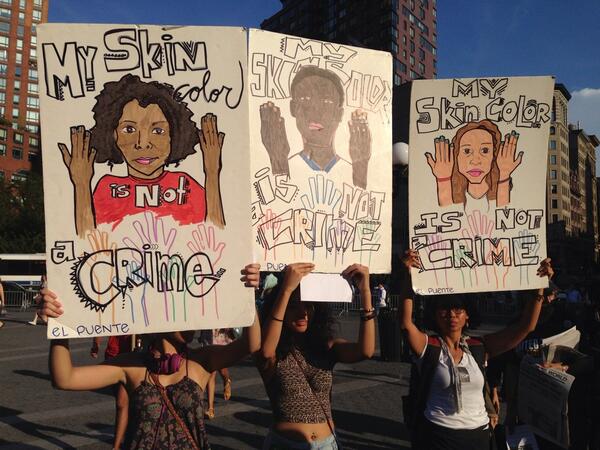
The Whole System Failed Trayvon Martin
 By CHARLES M. BLOW
In a way, the not-guilty verdict in the trial of George Zimmerman for his killing of Trayvon Martin was more powerful than a guilty verdict could ever have been. It was the perfect wrenching coda to a story that illustrates just how utterly and completely our system of justice — both moral and legal — failed Martin and his family.
This is not to dispute the jury’s finding — one can intellectually rationalize the decision — as much as it is to howl at the moon, to yearn for a brighter reality for the politics around dark bodies, to raise a voice and say, this case is a rallying call, not a death dirge.
The system began to fail Martin long before that night.
The system failed him when Florida’s self-defense laws were written, allowing an aggressor to claim self-defense in the middle of an altercation — and to use deadly force in that defense — with no culpability for his role in the events that led to that point.
The system failed him because of the disproportionate force that he and the neighborhood watchman could legally bring to the altercation — Zimmerman could legally carry a concealed firearm, while Martin, who was only 17, could not.
The system failed him when the neighborhood watchman grafted on stereotypes the moment he saw him, ascribing motive and behavior and intent and criminal history to a boy who was just walking home.
The system failed him when the bullet ripped through his chest, and the man who shot him said he mounted him and stretched his arms out wide, preventing him from even clutching the spot that hurt.
The system failed him in those moments just after he was shot when he was surely aware that he was about to die, but before life’s light fully passed from his body — and no one came to comfort him or try to save him.
The system failed him when the slapdash Sanford police did a horrible job of collecting and preserving evidence.
The system failed him when those officers apparently didn’t even value his dead body enough to adequately canvass the complex to make sure that no one was missing a teen.
The system failed him when he was labeled a John Doe and his lifeless body spent the night alone and unclaimed.
The system failed him when the man who the police found standing over the body of a dead teenager, a man who admitted to shooting him and still had the weapon, was taken in for questioning and then allowed to walk out of the precinct without an arrest or even a charge, to go home after taking a life and take to his bed.
The system failed him when it took more than 40 days and an outpouring of national outrage to get an arrest.
The system failed him when a strangely homogenous jury — who may well have been Zimmerman’s peers but were certainly not the peers of the teenager, who was in effect being tried in absentia — was seated.
The system failed him when the prosecution put on a case for the Martin family that many court-watchers found wanting.
The system failed him when the discussion about bias became so reductive as to be either-or rather than about situational fluidity and the possibility of varying responses to varying levels of perceived threat.
The system failed him when everyone in the courtroom raised racial bias in roundabout ways, but almost never directly — for example, when the defense held up a picture of a shirtless Martin and told the jurors that this was the person Zimmerman encountered the night he shot him. But in fact it was not the way Zimmerman had seen Martin. Consciously or subconsciously, the defense played on an old racial trope: asking the all-female jury — mostly white — to fear the image of the glistening black buck, as Zimmerman had.
This case is not about an extraordinary death of an extraordinary person. Unfortunately, in America, people are lost to gun violence every day. Many of them look like Martin and have parents who presumably grieve for them. This case is about extraordinary inequality in the presumption of innocence and the application of justice: why was Martin deemed suspicious and why was his killer allowed to go home?
Sometimes people just need a focal point. Sometimes that focal point becomes a breaking point.
The idea of universal suspicion without individual evidence is what Americans find abhorrent and what black men in America must constantly fight. It is pervasive in policing policies — like stop-and-frisk, and in this case neighborhood watch — regardless of the collateral damage done to the majority of innocents. It’s like burning down a house to rid it of mice.
As a parent, particularly a parent of black teenage boys, I am left with the question, “Now, what do I tell my boys?”
We used to say not to run in public because that might be seen as suspicious, like they’d stolen something. But according to Zimmerman, Martin drew his suspicion at least in part because he was walking too slowly.
So what do I tell my boys now? At what precise pace should a black man walk to avoid suspicion?
And can they ever stop walking away, or running away, and simply stand their ground? Can they become righteously indignant without being fatally wounded?
Is there anyplace safe enough, or any cargo innocent enough, for a black man in this country? Martin was where he was supposed to be — in a gated community — carrying candy and a canned drink.
The whole system failed Martin. What prevents it from failing my children, or yours?
I feel that I must tell my boys that, but I can’t. It’s stuck in my throat. It’s an impossibly heartbreaking conversation to have. So, I sit and watch in silence, and occasionally mouth the word, “breathe,” because I keep forgetting to.
By CHARLES M. BLOW
In a way, the not-guilty verdict in the trial of George Zimmerman for his killing of Trayvon Martin was more powerful than a guilty verdict could ever have been. It was the perfect wrenching coda to a story that illustrates just how utterly and completely our system of justice — both moral and legal — failed Martin and his family.
This is not to dispute the jury’s finding — one can intellectually rationalize the decision — as much as it is to howl at the moon, to yearn for a brighter reality for the politics around dark bodies, to raise a voice and say, this case is a rallying call, not a death dirge.
The system began to fail Martin long before that night.
The system failed him when Florida’s self-defense laws were written, allowing an aggressor to claim self-defense in the middle of an altercation — and to use deadly force in that defense — with no culpability for his role in the events that led to that point.
The system failed him because of the disproportionate force that he and the neighborhood watchman could legally bring to the altercation — Zimmerman could legally carry a concealed firearm, while Martin, who was only 17, could not.
The system failed him when the neighborhood watchman grafted on stereotypes the moment he saw him, ascribing motive and behavior and intent and criminal history to a boy who was just walking home.
The system failed him when the bullet ripped through his chest, and the man who shot him said he mounted him and stretched his arms out wide, preventing him from even clutching the spot that hurt.
The system failed him in those moments just after he was shot when he was surely aware that he was about to die, but before life’s light fully passed from his body — and no one came to comfort him or try to save him.
The system failed him when the slapdash Sanford police did a horrible job of collecting and preserving evidence.
The system failed him when those officers apparently didn’t even value his dead body enough to adequately canvass the complex to make sure that no one was missing a teen.
The system failed him when he was labeled a John Doe and his lifeless body spent the night alone and unclaimed.
The system failed him when the man who the police found standing over the body of a dead teenager, a man who admitted to shooting him and still had the weapon, was taken in for questioning and then allowed to walk out of the precinct without an arrest or even a charge, to go home after taking a life and take to his bed.
The system failed him when it took more than 40 days and an outpouring of national outrage to get an arrest.
The system failed him when a strangely homogenous jury — who may well have been Zimmerman’s peers but were certainly not the peers of the teenager, who was in effect being tried in absentia — was seated.
The system failed him when the prosecution put on a case for the Martin family that many court-watchers found wanting.
The system failed him when the discussion about bias became so reductive as to be either-or rather than about situational fluidity and the possibility of varying responses to varying levels of perceived threat.
The system failed him when everyone in the courtroom raised racial bias in roundabout ways, but almost never directly — for example, when the defense held up a picture of a shirtless Martin and told the jurors that this was the person Zimmerman encountered the night he shot him. But in fact it was not the way Zimmerman had seen Martin. Consciously or subconsciously, the defense played on an old racial trope: asking the all-female jury — mostly white — to fear the image of the glistening black buck, as Zimmerman had.
This case is not about an extraordinary death of an extraordinary person. Unfortunately, in America, people are lost to gun violence every day. Many of them look like Martin and have parents who presumably grieve for them. This case is about extraordinary inequality in the presumption of innocence and the application of justice: why was Martin deemed suspicious and why was his killer allowed to go home?
Sometimes people just need a focal point. Sometimes that focal point becomes a breaking point.
The idea of universal suspicion without individual evidence is what Americans find abhorrent and what black men in America must constantly fight. It is pervasive in policing policies — like stop-and-frisk, and in this case neighborhood watch — regardless of the collateral damage done to the majority of innocents. It’s like burning down a house to rid it of mice.
As a parent, particularly a parent of black teenage boys, I am left with the question, “Now, what do I tell my boys?”
We used to say not to run in public because that might be seen as suspicious, like they’d stolen something. But according to Zimmerman, Martin drew his suspicion at least in part because he was walking too slowly.
So what do I tell my boys now? At what precise pace should a black man walk to avoid suspicion?
And can they ever stop walking away, or running away, and simply stand their ground? Can they become righteously indignant without being fatally wounded?
Is there anyplace safe enough, or any cargo innocent enough, for a black man in this country? Martin was where he was supposed to be — in a gated community — carrying candy and a canned drink.
The whole system failed Martin. What prevents it from failing my children, or yours?
I feel that I must tell my boys that, but I can’t. It’s stuck in my throat. It’s an impossibly heartbreaking conversation to have. So, I sit and watch in silence, and occasionally mouth the word, “breathe,” because I keep forgetting to.
Obama: 'Suspicious' GOP opposes immigration overhaul for political reasons
http://news.yahoo.com/President Barack Obama charged Tuesday that some Republicans oppose comprehensive legislation to overhaul the nation’s immigration policies because they are “suspicious” that the measure will swell the ranks of Democrats. "I think some in the House who believe that immigration will encourage further demographic changes -- and that may not be good for them politically," he told Norma Garcia, of Telemundo's KXTX in Fort Worth, Texas. Obama also rejected calls for a piecemeal approach to the problem – as advocated by some key GOP lawmakers – and said he hoped that the bill could reach his desk in the fall. The president had previously said he hoped it would be done before lawmakers head home next month -- and face voters potentially angry about the sweeping blueprint. The president's comments came as he sat down for four question-and-answer sessions with Spanish-language TV interviewers, part of a White House push behind the measure, which has stalled in the Republican-held House of Representatives. "I don't think that we're gonna see it before the August recess," Obama told Garcia. Republican struggles with the bill mean "we may have to go through several more weeks of work before we actually pass the bill. So it probably will -- hopefully happen in the fall." And he told Maria Rozman of Telemundo’s KDEN station in Denver that “Republican House members are wrestling with it.” “Many of their constituents are suspicious of this, suspicious of what immigration might mean for their political futures in some cases,” he told Rozman. (Obama’s comments may have been directed at complaints from some Republicans, like Rep. Steve King of Iowa, who have described immigration reform as a way to give citizenship to “undocumented Democrats.” But at least he wasn’t concern-trolling Republicans, as some supporters of the overhaul have done.) Obama rejected Republican calls for doing immigration reform piecemeal – notably by pressing ahead with tougher border security first, and only then taking up a potential “path to citizenship” for the estimated 11 million undocumented immigrants on U.S. soil today. “The danger of doing it in pieces is that a lot of groups want different things. And you know, there's a tendency I think to put off the hard stuff until the end,” he told Garcia. “And if you've eaten your dessert before you've eaten your meal, at least with my children, sometimes they don't end up eating their vegetables.” “So we need to, I think, do this as a complete package.,” he said. Obama also rejected the notion that legalizing the status of undocumented immigrants must wait until U.S. borders are perfectly secure. “We can't make it perfect. You're never going to have zero people crossing the border without the proper papers,” he told Rozman. “But we can't use that as an excuse not to solve the problem.” “If we know that what we're doing right now is not working as well as it should, then let's fix 80% of it, 90% of it,” he said. “The fact that it might not fix 100% of it is not a reason not to significantly improve the system that we have right now." Obama also sat down with two Univision stations, KMEX of Los Angeles and WXTV of New York/New Jersey.
Trayvon Martin case: Los Angeles police warn troublemakers
 Los Angeles police are preparing to turn out in force to deter any fresh disturbances following the acquittal of a Florida neighbourhood watchman who killed an unarmed black teenager.
Police Chief Charlie Beck said criminal behaviour would not be tolerated.
On Monday night, about 150 people broke away from a march, defacing property, assaulting people and stopping traffic.
George Zimmerman, 29, was cleared on Saturday of 17-year-old Trayvon Martin's death in February 2012.
"We cannot allow a small group of individuals to not only damage the community, strike fear in the community, but also distort the message of so many in this community," Chief Beck said on Tuesday.
Los Angeles police are preparing to turn out in force to deter any fresh disturbances following the acquittal of a Florida neighbourhood watchman who killed an unarmed black teenager.
Police Chief Charlie Beck said criminal behaviour would not be tolerated.
On Monday night, about 150 people broke away from a march, defacing property, assaulting people and stopping traffic.
George Zimmerman, 29, was cleared on Saturday of 17-year-old Trayvon Martin's death in February 2012.
"We cannot allow a small group of individuals to not only damage the community, strike fear in the community, but also distort the message of so many in this community," Chief Beck said on Tuesday.
U.S: Black preachers calling for wide protests to press for Zimmerman charges

Israel trains for border clash with Syria

By Vladimir DuthiersThe Israeli army's Golani brigade recently wrapped up a two-week exercise of ground troops, special forces and air units along Israel's 81-mile-long (130 km) frontier with Syria. The drill was not aimed at preparing for an all-out war scenario but to respond to a new terror threat that has emerged from the ashes of the Syrian revolution. Israel Defense Forces claim that close to 3,000 fighters from the militant group Hezbollah have infiltrated Syria in support of the Assad regime and several hundred are now operating the Golan Heights. Hezbollah -- the Iranian-backed group based in southern Lebanon - has called for the destruction of the state of Israel. Leader Sheikh Hassan Nasrallah has stated that once the Syrian uprising is put down, he will turn his attention to Israel. "Statements that were made by high ranking officials that the Syrian border will become a border with terror is something we are dealing with every day," said Lt. Col. Anan Abbas, the Golani Brigade Commander. "We are making sure that there will be no penetration through the northern border of Israel." Abbas gave CNN an exclusive tour of the region that has seen a tripling of Israeli forces and intelligence gathering over the last six months. The IDF now monitors the region 24 hours a day, seven days a week. Corporal Chen Holtzman, a soldier working in the IDF's Intelligence Operations Center, said they have the authority to deploy special forces units, artillery and aerial bombings if they suspect a threat to Israel. "We can see it for a few miles coming at us," she said. "If we see something coming at us, we can tell that immediately and everybody is prepared to do something about that." In addition to the constant surveillance, Israel is erecting a fence with Syria along its side of the disengagement zone. The mountainous Golan, known for its beauty and favored by backpackers and hikers, is one of the most traveled areas for Israelis. It was captured by Israel during the Six-Day War in 1967 against Egypt, Iraq, Jordan and Syria, but since 1974, right up to the Syrian revolution, the area was a quiet, almost bucolic military posting. Syria's children deserve chance to be kids again The turmoil in Syria changed the equation and in June, both countries nearly came to a full-on, open confrontation at a crossing post in Quneitra. Syrian rebels overran government-backed forces and for a few hours occupied the area. The Israeli forces watched, ready to intercede if the fighting spilled across the border. "The shooting began at 5am," recalled Abbas. "It was a morning full of fighting where the Syrian army and rebels were shooting at one another." To strike back at the rebels, the Syrian army moved several tanks and armored vehicles into area and the IDF went on high alert. "We had a lot of forces ready to react. Tanks, intelligence, special forces ... artillery, air force -- everything was ready for this incident," said Abbas. "If we would have seen that there was a leakage or direct fire into our territory we would have reacted immediately and destroyed the source of fire." Even before the skirmish at Quneitra, shots between rebels and Syrian government forces have strayed across the border. The IDF's response to these is to destroy the firing position -- whether rebel or Syrian army. "I do not differentiate between a force that is Syrian or a force of the rebels," Abbas said. "If I identify armed men next to the fence, we are prepared to face all the threats and respond."
India Marks End of Era with Last Telegram
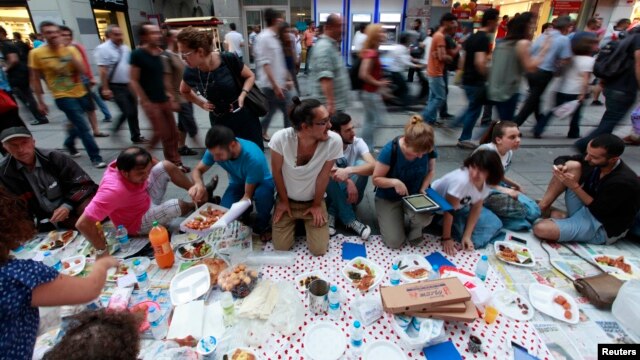
Ramadan Leads to Demonstrations in Turkey
In Second Term, Obama Is Seen as Using ‘Hidden Hand’ Approach
By PETER BAKER

Pakistan: Electricity shortfall reaches 3,000MW
Electricity shortfall has reached 3,000 megawatts on Tuesday. Whereas power breakdown was reported in several areas due to technical problems.
According to power ministry official, electricity generation remained 13,800MW against the demand of 16,800MW, creating a shortfall of 3,000MW.
Rural areas are facing load shedding for over 12 hours while urban areas are suffering up to 8 hours of power outages.
Long and unannounced phases of load shedding has made lives of people miserable as prolonged outages have resulted in shortage of drinking water in several areas.
Pakistan's Taliban presence turns Syria into a theatre of global jihad
The HinduThe Pakistani Taliban’s revelation that its fighters, drawn from various countries, have joined the Syrian rebels in battling President Bashar Al-Assad’s forces points to Syria becoming a theatre of global jihad. Quoting Taliban commanders in Pakistan, Reuters reported that hundreds of fighters joined the opposition combating the Syrian army. The report said the purpose of the exercise was to establish closer links with al-Qaeda’s central leadership. Figting group In Syria, the Taliban has been operating with groups such as the al-Qaeda linked Jabhat al-Nusra, whose fighters have been drawn from neighbouring countries such as Libya and Tunisia, forming a nucleus of fighters in the Levant that can mutate in the service of global jihad. Analysts say outfits such as the al-Nusra, the al-Qaeda in Iraq and a number of other extremists groups have organised themselves under the Syrian Islamic Front (SIF) umbrella group, forming the most potent fighting core of the Syrian opposition. According to Reuters, Taliban fighters had gone to Syria to fight alongside their “Mujahedeen friends”. “When our brothers needed our help, we sent hundreds of fighters along with our Arab friends,” said one senior Taliban commander. He added that the group would soon release videos demonstrating the “victories” recorded by the group in Syria. “Since our Arab brothers have come here for our support, we are bound to help them in their respective countries and that is what we did in Syria,” another commander was quoted as saying. “We have established our own camps in Syria. Some of our people go and then return after spending some time fighting there.” After overrunning the strategic town of Qusair on Syria’s border with Lebanon and tightening its grip around the militant stronghold of Homs, the Syrian army is aiming for peripheral consolidation around the capital Damascus. Iran’s Press TV has posted video footage of the Syrian army’s advance along Al-Qaboun and Jobar — suburbs of Damascus. Troops have blocked a tunnel and established control over an industrial zone that was used by the opposition in Al-Qaboun to reinforce fighters in Jobar. The Syrian military has also claimed that it has recovered chemical agents and chlorine from a militant hideout in Jobar.
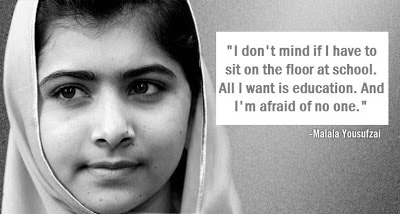
Malala’s diary inspires Pashtun girls yearning for education

Jamaat a ‘criminal organisation’

The first war crimes tribunal of Bangladesh on Monday said in its judgement, sentencing Jamaat-e-Islami guru Ghulam Azam to 90 years in prison, that the party had acted as a ‘criminal organisation’.The three-judge tribunal found the former Jamaat chief guilty of all the charges levelled against him that included conspiracy, incitement and complicity to war crimes as well as murder. The court also urged the government to take measures to prevent anti-Liberation elements from holding public offices. A former Dhaka University student leader, Azam was also found guilty for his superior role as head of Jamaat. The tribunal in its damning indictment stated that Jamaat had played a ‘foul role’ during the independence of Pakistan, under the leadership of the party’s founder Syed Abul A’la Maududi, and also during the independence of Bangladesh — this time under the leadership of Maududi’s disciple Ghulam Azam. The judgement states under the section on Jamaat’s role during the ‘independence struggle of Pakistan and Bangladesh’ that the party had opposed ‘the idea of a separate state for Muslims’ but turned its colours as soon as Pakistan got its independence in 1947. It then “claimed itself as the only Islamic patriotic political party of Pakistan”. Noting Jamaat’s opposition to Bangladesh’s independence also, the judgement states, “But as soon as Bangladesh got its independence in 1971 at the cost of millions of lives then Jamaat-e-Islami claims itself as a true patriotic party of Bangladesh, terming those pro-liberation parties as Indian agents.” The judgement then bins the party’s political wisdom saying that it had played a ‘foul role’ during both the historic occasions and goes further saying that Jamaat “utterly failed to realise the pulse of the common people” both times likely “due to its lack of farsightedness caused by fanaticism”. The judgement then turns its attention to the accused saying that ‘based on facts of common knowledge and evidence’ it could be gathered that “under the leadership of Ghulam Azam almost all the members of Jamaat-e-Islami along with its subordinate organs actively opposed the very birth of Bangladesh in 1971…” It goes on to say that after 42 years, some of the anti-liberation people are still at the helm of Jamaat-e-Islami. As a result, said tribunal Chairman Justice A T M Fazle Kabir, in a stiffening tone, the younger Jamaat members “are being psychologically reared up and nurtured with anti-liberation sentiment and communal feeling which is a matter of great anxiety for a nation”. The judgement noted that there was no proof of Jamaat ever changing its attitude towards the Liberation War by way of repentance or showing respect to the martyrs. The tribunal chief went on that in the interest of a democratic and non-communal Bangladesh “no such anti-liberation people should be allowed to sit in the helm of Executives of the Government, social or political parties including government and non-government organisations”. “We are of the opinion that the Government may take necessary steps to that end for debarring those anti-liberation persons from holding the said superior posts in order to establish a democratic and non-communal country for which millions of people sacrificed their lives during the War of Liberation.” The final part was perhaps the most damning for Jamaat. The tribunal’s judgement states, “Taking the contextual circumstances coupled with documentary evidence into consideration, we are led to observe that Jamaat-e-Islami as a political party under the leadership of accused Prof. Ghulam Azam intentionally functioned as a ‘Criminal Organisation’ especially during the War of Liberation of Bangladesh in 1971.”
Afghanistan: Escalating Setbacks for Women
Pakistan: ‘Sectarian attack’: Four Hazara traders shot dead in Quetta
The Express TribuneFour tradesmen hailing from the frequently-targeted Hazara community were gunned down and two passers-by were seriously wounded in a targeted killing incident in Quetta on Monday night. Police officials said this was a sectarian assault. The incident occurred just when the market area near Kaghan Hotel was bustling with activity a few minutes before the Iftar meal. There were some reports that proscribed Sunni organisation, Jaish-ul-Islam, had claimed responsibility for the attack. Raza Hussain, a Hazara community member, and owner of Ali Trading Center along with his three companions, was ambushed by armed men riding a motorbike, carrying sophisticated weapons. The deceased and injured were shifted to Civil Hospital Quetta. Following the incident, Hazara community rushed to the Civil Hospital Quetta, blocked the Jinnah Road by placing barricades and shouted slogans against perpetrators and law enforcement agencies. The Hazara Democratic Party (HDP) condemned the killing of Hazara community members and announced a shutter-down strike to protest the incident. HDP District Secretary Bostan Ali, while talking to The Express Tribune, said that “the killing of Hazara members is genocide”. He alleged that behind the sectarian targeted killing are secret agencies who are trying to create a civil war situation. Moreover, Shia organisations in the province such as the Balochistan Shia Conference, Majlis Wahdat-ul-Muslimeen have announced a three-day mourning against the murder. Expressing shock and grief, Prime Minister Nawaz Sharif, Governor Balochistan Muhammad Khan Achakzai and Chief Minister Balochistan Dr Abdul Malik Baloch have also slammed the incident.
Blow to KP health dept as Peshawar reports first polio case
 Despite warnings by the media and health experts for the past many months alerting the newly formed government and health department regarding the growing threat of a poliovirus outbreak in the provincial capital, it reported a polio case on Saturday and the health experts were quick to term it the tip of the iceberg.
In a recent report in The News by this correspondent titled “Poliovirus about to break loose in KP” it was stated that official documents suggested the province had seen a major upsurge in the reporting of the Acute Flaccid Paralysis (AFP) cases and that a major outbreak of polio cases was in the offing.
According to documents of the provincial Health Department, AFP case number EPID KP/30/13/042 Peshawar was confirmed with the presence of poliovirus type 1. The unfortunate child diagnosed with polio was identified as Uzair, son of Dost Mohammad. He is 12 months old and lives in Ijazabad-1, Gulbahar No 4 of Shaheen Muslim Town-1, Peshawar.
His samples were collected on June 30 by the relevant authorities, though officials of the health department claimed parents of the child had refused polio drops and termed polio vaccines as un-Islamic.
Another set of documents also suggest that two areas in Peshawar, Shaheen Muslim Town and Larama, from wherethe World Health Organisation (WHO) has consistently been taking sewage water samples for assessment and reporting positive results, proved the identification of the poliovirus in the sewage water of the city.
“The sewage sample results suggested that Peshawar will definitely report a case sooner or later. Technically, the case is not a surprise at all,” an official of the WHO provincial office told The News on condition of anonymity.
In another development, and confirmed after the release of the Abbottabad Commission report that has fixed the responsibility of the dirty role of Dr Shakeel Afridi on Save the Children and USAID and cast serious doubts on the role of the international donor agencies in the country, health experts now think that restoring public trust and lost credibility of the polio campaign amongst the masses will be a mammoth task.
“Name a single strategy of the international donor agencies aimed at restoring public trust and credibility of the polio campaign that has not backfired?” questioned a high-ranking officer of the provincial health department.
The harsh revelations of the Abbottabad Commission report has only added salt to the injury for the polio programme in the province at a time when it was trying to recover from the targeted attacks on polio team members. It is now required to overcome another challenge.
Like the two troubled tribal regions of South Waziristan and North Waziristan, where the government has not been able to run polio campaign and vaccinate children for the past two years, it seems polio teams may find it difficult to reach children and get them vaccinated against the crippling poliovirus in settled districts of the province if practical measures were not taken for removing mistrust from minds of the parents regarding polio vaccines.
Despite warnings by the media and health experts for the past many months alerting the newly formed government and health department regarding the growing threat of a poliovirus outbreak in the provincial capital, it reported a polio case on Saturday and the health experts were quick to term it the tip of the iceberg.
In a recent report in The News by this correspondent titled “Poliovirus about to break loose in KP” it was stated that official documents suggested the province had seen a major upsurge in the reporting of the Acute Flaccid Paralysis (AFP) cases and that a major outbreak of polio cases was in the offing.
According to documents of the provincial Health Department, AFP case number EPID KP/30/13/042 Peshawar was confirmed with the presence of poliovirus type 1. The unfortunate child diagnosed with polio was identified as Uzair, son of Dost Mohammad. He is 12 months old and lives in Ijazabad-1, Gulbahar No 4 of Shaheen Muslim Town-1, Peshawar.
His samples were collected on June 30 by the relevant authorities, though officials of the health department claimed parents of the child had refused polio drops and termed polio vaccines as un-Islamic.
Another set of documents also suggest that two areas in Peshawar, Shaheen Muslim Town and Larama, from wherethe World Health Organisation (WHO) has consistently been taking sewage water samples for assessment and reporting positive results, proved the identification of the poliovirus in the sewage water of the city.
“The sewage sample results suggested that Peshawar will definitely report a case sooner or later. Technically, the case is not a surprise at all,” an official of the WHO provincial office told The News on condition of anonymity.
In another development, and confirmed after the release of the Abbottabad Commission report that has fixed the responsibility of the dirty role of Dr Shakeel Afridi on Save the Children and USAID and cast serious doubts on the role of the international donor agencies in the country, health experts now think that restoring public trust and lost credibility of the polio campaign amongst the masses will be a mammoth task.
“Name a single strategy of the international donor agencies aimed at restoring public trust and credibility of the polio campaign that has not backfired?” questioned a high-ranking officer of the provincial health department.
The harsh revelations of the Abbottabad Commission report has only added salt to the injury for the polio programme in the province at a time when it was trying to recover from the targeted attacks on polio team members. It is now required to overcome another challenge.
Like the two troubled tribal regions of South Waziristan and North Waziristan, where the government has not been able to run polio campaign and vaccinate children for the past two years, it seems polio teams may find it difficult to reach children and get them vaccinated against the crippling poliovirus in settled districts of the province if practical measures were not taken for removing mistrust from minds of the parents regarding polio vaccines.
Pakistan grapples with rising tide of sectarian violence
The faithful line up to pray in a small Shia mosque hidden away down the dusty side-streets of Peshawar.
But the central arch where the imam stands in front of his congregation is covered in blast marks and dark smears.
The ornate blue tiles have been smashed.
This is where a militant blew himself up just two weeks before.
"When I came inside, I saw severed legs, human organs and heads… all over the mosque," says Syed Hussain Hussaini, whose nephew was among the 21 people killed.
On the ceiling, walls and even on a building opposite, are pockmarks from hundreds of ball-bearings which had been packed inside the young man's suicide belt.
Although today the congregation seems determined to set fear aside, tensions rise rapidly when a man with a pistol inside his clothing is stopped at the gate.
A heated argument breaks out as the security guards try to remove the gun.
But the man is not - as had been feared - another militant from the majority Sunni Muslim community trying to carry out a second sectarian attack.
He is a Shia who had lost his father and uncle in the bombing and was carrying a weapon in case of another attack.
He has past form: he shot dead a suicide bomber with the pistol a few years ago.
For Syed Hussain Hussaini, the attack on the mosque and a series of other killings since Nawaz Sharif became prime minister last month, prove once again that whatever government takes office, Pakistan's Shia minority, like the rest of the population, will not be protected.
The Jihadist militants are getting stronger, he says: "You have seen all over Pakistan, in Karachi, Quetta, and Peshawar, there are bomb blasts, targeted killings and suicide attacks. Governments have always failed right from the first day until today. People are on their own."
Figures provided by the Edhi emergency services organisation show that between April and the end of June, 247 people were killed in bombings in Khyber Pakhtunkhwa province and the tribal areas along the border with Afghanistan.
And these figures do not include Waziristan, a militant hotspot.
In response to the increasing flow of casualties from the violence, the main regional hospital has just built a new accident and emergency department with six operating theatres.
It is expected to open later this year.
"It's a huge complex, a hospital by itself," says Professor Arshad Javaid, the chief executive of the Lady Reading Hospital in Peshawar.
"I think if I called it the world's largest casualty (department), I would not be exaggerating."
Inside the hospital, beneath a sign saying "bomb blast patient", Mohammed Shaheen lies recovering from serious injuries caused by a suicide attack in Mardan almost a month ago.
He was attending a funeral and standing close to a local politician who was killed, along with 27 other people.
Mr Shaheen believes the violence of the militant groups is now beyond the control of the government.
"They wanted to contain it and were taking measures, but they could not succeed. Now only God can do something," he says.
So now Nawaz Sharif is under intense pressure to spell out how he plans to bring the situation back under control.
State 'unprepared'
Many observers believe he came into office without any kind of coherent security strategy and is still in the process of trying to develop one.
Mr Sharif has been adamant the economy is his first priority.
"I am very disappointed," says retired general Talat Masood, a security and defence analyst.
"I think the most important responsibility of the government is protecting people.
"I hope they will get over their state - I won't say of slumber - but their state of unpreparedness."
A leaked document obtained by the BBC Urdu Service says the spate of attacks carried out by jihadist groups in recent years "appears to be the most serious crisis faced by the country since independence".
The document - described as a draft national counter-terrorism and extremism policy - warns that the jihadists want to take Pakistan back "to the stone age", that they have links with al-Qaeda and want the population to "rise up against their un-Islamic leaders".
The biggest of the Sunni militant groups is the Pakistani Taliban which has bases in most of the major cities and seems capable of carrying out attacks at will
There are signs that other extremist groups such as Lashkar-e-Jhangvi - responsible for many of the attacks on the Shia community - are collaborating with the Taliban.
The authors of the document are highly critical of the country's political leaders, accusing them of failing to take the lead in tackling extremism, and call for a much more co-ordinated counter-terrorism policy.
It is not clear whether this refers to the current or previous governments.
So far Mr Sharif's response has been to hold meetings with military and intelligence agencies and call for all major political parties to reach a consensus on the best way forward.
While there is agreement that getting the security agencies on side is essential, some observers describe the prime minister's call for an all-party conference as "passing the buck".
But senior officials of the governing party such as Iqbal Zafar Jhagra, deny there is a policy vacuum at the moment. "We have been working on this for quite some time," he says.
"You have to look at the root causes (of extremist violence) and the best course is dialogue (with the militants).
"It is the only way to arrive at a solution. If you are in a hurry and take hasty decisions, you will never get a durable solution and a durable peace."
But that could take years and it is not clear what the government will do if the Taliban reject talks or if negotiations break down.
Members of the business community in Peshawar, who have been badly hit by the lack of security over the past decade, remain gloomy.
"My business has declined 70%," says Mazhar Ul Haq, a leading carpet dealer.
And he is doubtful much will change in the near future under the new government.
"The militants have spread a lot and I don't know how they (the authorities) can handle it."
Subscribe to:
Posts (Atom)