As American and NATO forces prepare to withdraw from Afghanistan by the end of next year, some fear the Afghan government's efforts to bring the Taliban into the political fold may mean a step back in time for the country's women. After the U.S.-led Operation Enduring Freedom toppled the militant Taliban regime 12 years ago, girls' schools reopened, burqas were no longer compulsory and many women went back to work. So when the Afghan government last week appointed a former Taliban official as a commissioner on the newly established independent human rights commission, many were shocked. Abdul Rahman Hotak, nominated for the post by Afghan President Hamid Karzai, was the editor of Taliban newspaper "Afghan Sunrise" and worked for the group's education directorate during its rule – an alarming choice, some say, for someone tasked with championing the rights of women who were denied so many freedoms under the Taliban.Hotak also opposes Karzai's proposed Elimination of Violence Against Women law (EVAW), which would make domestic and public violation against women punishable by law. Criticized for being un-Islamic, it has been languishing in Afghanistan's parliament since 2009. "I want to help the women… I want to try to tell people that they are our mothers, our sisters, our daughters," Hotak told NBC News, claiming that he actually championed women's rights during the Taliban regime and asked them to allow girls to go to school. He said his ideas and politics were not in line with the Taliban's and that he was compelled to work for them because there was "no other option when there is a government like that." As for opposing EVAW, he said he believes that if most politicians are not in agreement about a piece of legislation then it must mean it is flawed. Nonetheless, his appointment does not sit well with some. "We need the human rights commissioner to be independent and we ask the president to rethink his choice … It is not a good choice for an ex-Taliban to be in this role," said Shukria Barakzai, a member of parliament who hopes to run for president in next year's election. Barakzai, known as "the woman feared by both NATO and the Taliban" for her outspoken views, has been fighting for women's rights for years. She believes promoting people like Hotak gives the Taliban and other conservative groups a "green light" to strike political deals that would hold women back further – deals designed to make peace more attractive to Taliban leaders. "They will not join forces but they will benefit from each other," she said. "All these years it is not only the Taliban who have been problematic for women's rights but equally the government, members of parliament and the legislative committee," Barakzai said. Just this past May, conservatives in parliament surreptitiously removed a law which stipulated there should be at least 25 percent female representation in the upper house. Female politicians fought to have the law reinstated when they discovered the move. A spokesman at the presidential palace would not comment but said the reinstatement was waiting to be approved by the upper house and the president. Additionally, in 2012 Karzai endorsed a "code of conduct" law that protects men from being prosecuted for rape within a marriage, and allows husbands to beat their wives under certain circumstances."The government and the Taliban have a shared view when it comes to women," Barakzai said. However, after facing years of hurdles, Barakzai now welcomes the Taliban in Afghan politics. "I just don't want to see any more violence – that is why I would rather have the Taliban in parliament. It is the only way to end the killing." She believes if the Taliban were part of the government, they would be forced to follow the law and adopt democracy. They would have to put an end to their violent principles, she says. "The only difference between the Taliban then and the Taliban now is that they no longer wear turbans, but are dressed in smart suits. However the principles are the same as before," she said. "But we will civilize them." For some, like student Halima Rashidi, it doesn't matter who is in charge – the outcome is all that matters. "I don't think that only people who are in the government right now can change the future of women. A Taliban or mujahedeen can also do that, too. It is not important for me who is running the show but I need protection and my rights, peace and security and a better future."http://worldnews.nbcnews.com/
Sunday, July 14, 2013
Afghanistan's women wary as Taliban creeps back into political life
Malala does not want to be remembered as the Taliban girl


Polio case detected in Peshawar
Peshawar: No respite: CM censures centre over power outages during Ramazan
The Express TribuneKhyber-Pakhtunkhwa (K-P) Chief Minister Pervez Khattak on Saturday censured the federal government over unscheduled power outages during Ramazan. The government had earlier instructed no load-shedding take place during Sehri, Iftar and Taraweeh timings in Ramazan. However, power outages still remain the norm in the capital city and the rest of the province. Speaking to party workers and office bearers in Nowshera, Khattak demanded the Federal Ministry for Water and Power to provide K-P its full share of electricity. “The federal government is not giving us power according to our quota. K-P’s requirement is 2,700 megawatts (MW) per day. However, it only receives 1,700 MW. “Unannounced outages occur because of forced load-shedding by the Regional Control Centre in Islamabad,” he maintained. Khattak further demanded prompt steps be taken to address the dearth of grid stations in K-P and to repair the existing system of power lines, otherwise he himself would resort to protest demonstrations alongside the people. “The people are at immense unease with load-shedding; I myself have received a lot of complaints,” he said. Ihsanullah, a resident of Kohat Road, said: “We face outages every day, Sehri time is no exception.” Mazhar Iqbal, a resident of Landi Arbab, said he was hopeful they would get some respite in Ramazan, but they did not. Peshawar Electric Supply Company (Pesco) spokesperson Shaukat Afzal told The Express Tribune the company was trying to adhere to the government’s directives. However, they were faced by two major hurdles in doing so, he claimed. “The Sheikh Muhammadi Grid Station which was recently destroyed by militants is still under construction, which is why there is a shortage of power supply to Peshawar and adjacent areas,” said Afzal. “The other reason for outages is the fact that power distribution system in the remote areas is outdated and not capable of bearing the complete load.” Afzal maintained Pesco was striving to provide uninterrupted power supply during Sehri, Iftar and Taraweeh and requested customers to avoid using extra power in these timings. Protests Enraged locals blocked the main DI Khan-Multan Road in Tariqabad for two hours on Saturday to protest against load-shedding. Protesters also chanted slogans against the Water and Power Development Authority (Wapda) and the provincial and federal governments. Despite the government’s claims, power cuts during Iftar, Sehri and Taraweeh continue in the district where the average temperature remains over 40 degrees Celsius. Along with load-shedding, low voltage and tripping have also irked the locals, who find no relief during the sweltering heat in Ramazan. Meanwhile, another protest was staged in front of Town Hall, DI Khan, resulting in traffic jams on Circular Road. Residents of Nawab and Mandahra villages claimed the duration of outages has reached up to 18 hours a day in their areas. Aslam Khan Gandapur, in-charge at the only grid station in DI Khan, said there is only one station in the city so they have no other option but to cut power during those timings. SDO Zafar Khan, however, was more optimistic. Zafar said if the University Grid Station becomes operational, load-shedding will reduce greatly. He added the 220KV grid station was under construction with funding from Japan, but the funds were transferred to other areas and its construction halted. “Setting up of this 220KV grid station can end load-shedding in DI Khan forever.” Double edged sword Along with prolonged power cuts, the people of Swat are also suffering from gas load-shedding during Sehri and Iftar timings. “At exactly 2am, the gas supply is cut off and it is restored in the morning. That is the time we have to cook Sehri; without gas it’s impossible to cook,” said Minhajuddin, a resident of Saidu, adding even electricity is out at that time, compounding problems for those intending to fast. Minhajuddin said he had to buy readymade meals for Sehri from the market as a result. “I was unable to cook food for Sehri at midnight and my family had to go out and fetch food from the market,” complained a woman from Khona Cham. “During sehri, when the electricity went out, we would run our generators on gas. But now even gas is not available at that time and we are forced to eat in darkness,” said Waseem Khan, a resident of Afsarabad.
Pakistan: Power outages during Sehri continue in various cities

Three Christian women paraded naked in Pakistan, court orders probe
indiatimes.comOver a month after a Muslim landlord allegedly paraded three Christian women naked in Pakistan's Punjab province, a court here has finally taken notice of the matter and directed a judge to investigate the incident. The Lahore high court yesterday ordered the district and sessions judge, Kasur, to probe the matter and submit a report within two weeks. The three Christian women were allegedly brutally beaten and then paraded naked by armed men of Muhammad Munir, a local landlord said to be having the backing of the ruling PML-N party, in Pattoki area of Kasur district, some 50 kilometres from here. The incident took place in the first week of last month. The matter came to light a few days after the Asian Human Rights Commission (AHRC) issued a news release to the media. According to the victim family's head Sadiq Masih, the male members of his family had gone out on their jobs when the attackers led by Munir entered his house. Munir demanded Masih to produce his sons who earlier had a brawl with him over a cattle issue. Failing to find them there, the attackers took the wives of Masih's three sons with them. Munir and his armed men first disrobed the women and then forcibly paraded them naked in the streets. As the women screamed and shouted for help, some elderly people of the village came out to their rescue. They put their turbans on the feet of the attackers, pleading them to leave the women. After this, the attackers let the women go but warned the villagers and the victim family against reporting the matter to the police.
PAKISTAN: Ahmadis killed and gravely wounded in attacks
Malala, the inspiration
EDITORIAL : Daily Times
.jpg)
Pakistan: Sharing pain of the people in need
 Breaking the tradition of split on observance of the Holy Ramadan, the entire nation went to fasting on the same day. Indeed it is a good omen that the blessed month of Ramadan has forged the people to show rare consensus on the religious festivity.
It is a month of blessings, reflection, prayer and fasting for Muslims wherein Muslims gain a better understanding of and appreciation for the sufferings of impoverished and hungry people and serves to remind Muslims of the importance of charity, and their obligation to be charitable.
Apart from the individual acts of generous charities, every government announces a Ramadan relief package every year to share the economic sufferings of the poor masses but this time around even on the eve of Ramadan, the federal government failed to offer the Ramadan Relief Package.
The prices of essential eatables like flour, rice, wheat, lentils and oil, sugar and dates at utility stores have been reduced for general consumers. Urban consumers, that mostly are relatively better paid, do take benefit from the government’s offer but the under-paid people living in far-flung rural areas, who deserve than others, miss the benefit due to lack of access to the facility. Looking after the destitute and the poor and providing sustainable assistance in improving their living conditions is what Almighty Allah has stressed upon the most and the month of Ramadan provides the best window to act upon the teachings of God.
The much-ignored residents of the war-torn FATA region deserve more than any body else—thousands of them are forced to live under the open sky sans sufficient food and health-cover. Moreover, those living in far-off hilly areas, hardly having any employment opportunities, had to pay double of the price of a flour bag than what a family pays in Lahore or Peshawar.
The poor are finding it hard to afford a meal every day during Ramadan, while those who had unleashed a reign of terror and suppression are surviving on sumptuous dasterkhans. In the hour of trial and sufferings, no efforts are afoot to provide relief to the needy.
The federal and provincial governments are just making publicity stunts, ignoring the pain, the agony and the starvation that the war on terror has wreaked on the people of the most under-developed areas of Pakistan.
Even the members of the civil society have turned their backs on them. Secondly, the hoarding of the essential goods has created an artificial shortage that has pushed the prices of the eatable up manifold hence traders are recklessly fleecing the public with both hands.
The government control over the price fixation is nonexistent. To reinstate the writ of the law on the market mechanism, the provincial governments should take strict measures to stem undue profiteering during Ramadan.
Breaking the tradition of split on observance of the Holy Ramadan, the entire nation went to fasting on the same day. Indeed it is a good omen that the blessed month of Ramadan has forged the people to show rare consensus on the religious festivity.
It is a month of blessings, reflection, prayer and fasting for Muslims wherein Muslims gain a better understanding of and appreciation for the sufferings of impoverished and hungry people and serves to remind Muslims of the importance of charity, and their obligation to be charitable.
Apart from the individual acts of generous charities, every government announces a Ramadan relief package every year to share the economic sufferings of the poor masses but this time around even on the eve of Ramadan, the federal government failed to offer the Ramadan Relief Package.
The prices of essential eatables like flour, rice, wheat, lentils and oil, sugar and dates at utility stores have been reduced for general consumers. Urban consumers, that mostly are relatively better paid, do take benefit from the government’s offer but the under-paid people living in far-flung rural areas, who deserve than others, miss the benefit due to lack of access to the facility. Looking after the destitute and the poor and providing sustainable assistance in improving their living conditions is what Almighty Allah has stressed upon the most and the month of Ramadan provides the best window to act upon the teachings of God.
The much-ignored residents of the war-torn FATA region deserve more than any body else—thousands of them are forced to live under the open sky sans sufficient food and health-cover. Moreover, those living in far-off hilly areas, hardly having any employment opportunities, had to pay double of the price of a flour bag than what a family pays in Lahore or Peshawar.
The poor are finding it hard to afford a meal every day during Ramadan, while those who had unleashed a reign of terror and suppression are surviving on sumptuous dasterkhans. In the hour of trial and sufferings, no efforts are afoot to provide relief to the needy.
The federal and provincial governments are just making publicity stunts, ignoring the pain, the agony and the starvation that the war on terror has wreaked on the people of the most under-developed areas of Pakistan.
Even the members of the civil society have turned their backs on them. Secondly, the hoarding of the essential goods has created an artificial shortage that has pushed the prices of the eatable up manifold hence traders are recklessly fleecing the public with both hands.
The government control over the price fixation is nonexistent. To reinstate the writ of the law on the market mechanism, the provincial governments should take strict measures to stem undue profiteering during Ramadan.
615 schools closed in Balochistan
 Over 600 schools set up in Balochistan under a presidential ordinance have been closed and services of 684 teachers terminated.
Under the ordinance, a National Commission for Human Development (NCHD) was established in 2002 which set up 615 schools and hired 684 teachers in Balochistan to educate over 4,600 students in those schools.
The NCHD extended cooperation to the provincial education department for enrolment of students and quality education and 684 feeder teachers hired under the programme were discharging their duties on a meagre salary of Rs1,500 per month.
However, after the passage of the 18th Amendment, the federal government transferred the NCHD programme to provinces as part of giving autonomy to them.
Under the NCHD, teachers were posted and deployed in those government-run schools where no teacher was available or only a single teacher performed his/her job.
The NCHD scheme showed better results and brought down the dropout rate during 2003-06 and more children were enrolled in the schools.
During the PPP-led coalition government of Balochistan, a summary was sent to the chief secretary, finance secretary and education department, asking them to evolve a policy to regularise the service of the teachers hired by the NCHD. However, no action was taken on the summary and the services of these teachers were terminated.
Over 600 schools set up in Balochistan under a presidential ordinance have been closed and services of 684 teachers terminated.
Under the ordinance, a National Commission for Human Development (NCHD) was established in 2002 which set up 615 schools and hired 684 teachers in Balochistan to educate over 4,600 students in those schools.
The NCHD extended cooperation to the provincial education department for enrolment of students and quality education and 684 feeder teachers hired under the programme were discharging their duties on a meagre salary of Rs1,500 per month.
However, after the passage of the 18th Amendment, the federal government transferred the NCHD programme to provinces as part of giving autonomy to them.
Under the NCHD, teachers were posted and deployed in those government-run schools where no teacher was available or only a single teacher performed his/her job.
The NCHD scheme showed better results and brought down the dropout rate during 2003-06 and more children were enrolled in the schools.
During the PPP-led coalition government of Balochistan, a summary was sent to the chief secretary, finance secretary and education department, asking them to evolve a policy to regularise the service of the teachers hired by the NCHD. However, no action was taken on the summary and the services of these teachers were terminated.
Saturday, July 13, 2013
2 Killed by U.S. Drone Strike in Pakistan


Fascist Saudi regime jails two Shias over protests

Xi urges China to keep red
 Chinese President Xi Jinping has urged the 85 million members of the Communist Party of China (CPC) to work hard and serve the people wholeheartedly to "ensure the color of red China will never change."
Party members should improve their work styles to withstand tests the Party faces and ensure the CPC's nature is not compromised, said Xi, who is also general secretary of the CPC Central Committee.
He was speaking during a two-day inspection tour of north China's Hebei Province, which concluded on Friday.
During the trip, Xi visited Xibaipo, an old revolutionary base, where the CPC leadership were based from May 1948 to early 1949 to draw the blueprint of the new country and prepare for the CPC's new role as the ruling party.
Late Chinese leader Mao Zedong's remarks on Party members' work styles prior to the founding of New China in 1949 still have far-reaching ideological and historical significance, he said.
Chinese President Xi Jinping has urged the 85 million members of the Communist Party of China (CPC) to work hard and serve the people wholeheartedly to "ensure the color of red China will never change."
Party members should improve their work styles to withstand tests the Party faces and ensure the CPC's nature is not compromised, said Xi, who is also general secretary of the CPC Central Committee.
He was speaking during a two-day inspection tour of north China's Hebei Province, which concluded on Friday.
During the trip, Xi visited Xibaipo, an old revolutionary base, where the CPC leadership were based from May 1948 to early 1949 to draw the blueprint of the new country and prepare for the CPC's new role as the ruling party.
Late Chinese leader Mao Zedong's remarks on Party members' work styles prior to the founding of New China in 1949 still have far-reaching ideological and historical significance, he said.
Turkish police fire tear gas, water cannon at Gezi Park protesters

 Turkish police have cleared Istiklal Avenue, firing water cannon and tear gas at hundreds of protesters as they gathered to march to Gezi Park. The park has been a cradle of anti-government unrest for weeks.
Demonstrators have been protesting against a recently imposed law which blocked the authority of the Union of Chambers of Turkish Engineers and Architects (TMMOB) from approving urban planning projects. They gathered at Istiklal Avenue to march to Gezi Park, which is located a short walking distance away.
The crowd was chanting anti-government slogans and screaming, “This is just the beginning. The fight is continuing.”
As police approached the crowd and asked them to exit the area, some of the protesters refused to leave the street. Riot police then responded by using tear gas and water cannon.Police blocked the entrance into Taksim Square, but some protesters tried to break through and reach the area through smaller nearby streets.
Witnesses say police also blocked the entrance to Taksim Hospital. The entrance to Gezi Park has also been barricaded by law enforcement.
Police have reportedly used water cannon to shoot colored chemicals in order to disperse protesters, according to locals. Twitter user @TaksimGazete tweeted that police have pointed water cannons at apartments located above the protests. Many of those who left Istiklal Avenue have reportedly moved to another neighborhood near Taksim. Taksim Gazette says that people have managed to get into Gezi Park, where they are currently holding “forum meeting.”TMMOB members also staged protests in Ankara on Saturday, with architects and engineers believing the bill – which was passed by parliament this week –to be part of a government vendetta.
Earlier, TMMOB opened a lawsuit against plans to redevelop Istanbul's Gezi Park.
A court has since cancelled the redevelopment project, although authorities can still appeal against the ruling.
Turkish police have cleared Istiklal Avenue, firing water cannon and tear gas at hundreds of protesters as they gathered to march to Gezi Park. The park has been a cradle of anti-government unrest for weeks.
Demonstrators have been protesting against a recently imposed law which blocked the authority of the Union of Chambers of Turkish Engineers and Architects (TMMOB) from approving urban planning projects. They gathered at Istiklal Avenue to march to Gezi Park, which is located a short walking distance away.
The crowd was chanting anti-government slogans and screaming, “This is just the beginning. The fight is continuing.”
As police approached the crowd and asked them to exit the area, some of the protesters refused to leave the street. Riot police then responded by using tear gas and water cannon.Police blocked the entrance into Taksim Square, but some protesters tried to break through and reach the area through smaller nearby streets.
Witnesses say police also blocked the entrance to Taksim Hospital. The entrance to Gezi Park has also been barricaded by law enforcement.
Police have reportedly used water cannon to shoot colored chemicals in order to disperse protesters, according to locals. Twitter user @TaksimGazete tweeted that police have pointed water cannons at apartments located above the protests. Many of those who left Istiklal Avenue have reportedly moved to another neighborhood near Taksim. Taksim Gazette says that people have managed to get into Gezi Park, where they are currently holding “forum meeting.”TMMOB members also staged protests in Ankara on Saturday, with architects and engineers believing the bill – which was passed by parliament this week –to be part of a government vendetta.
Earlier, TMMOB opened a lawsuit against plans to redevelop Istanbul's Gezi Park.
A court has since cancelled the redevelopment project, although authorities can still appeal against the ruling.
Gordon Brown: Malala's U.N. speech is just the beginning
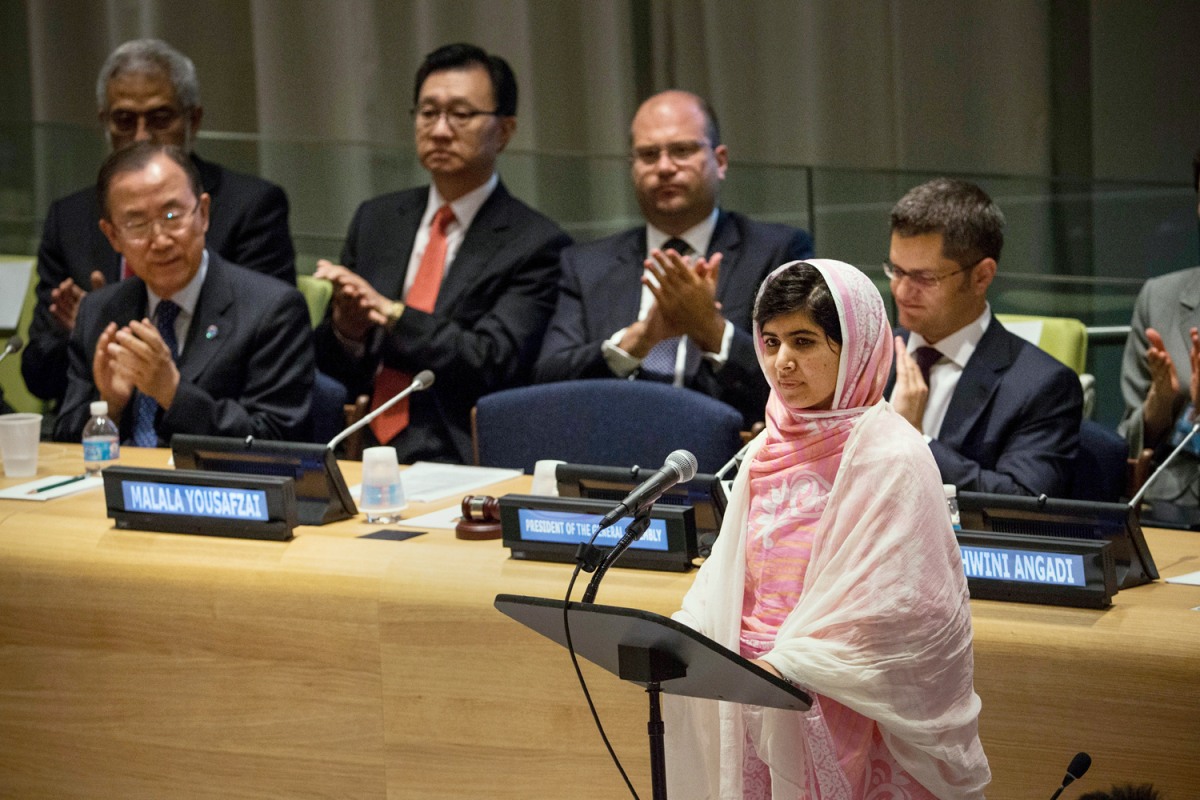
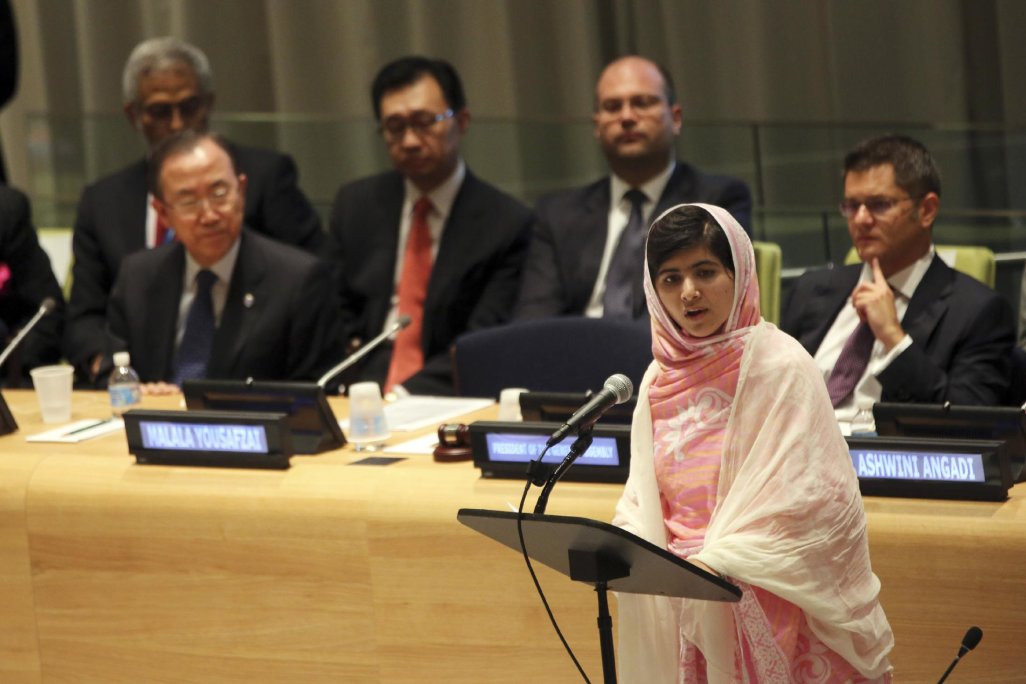
 Pakistani teenager Malala Yousafzai's inspiring speech at the United Nations on every child's right to go to school is just the beginning of a major push on education, former UK Prime Minister Gordon Brown said Saturday.
Yousafzai -- who on Friday gave her first public remarks since she was shot by the Taliban last year for advocating that all girls should go to school -- will return to the United Nations in September to press her point, according to a statement from Brown's A World at School campaign.
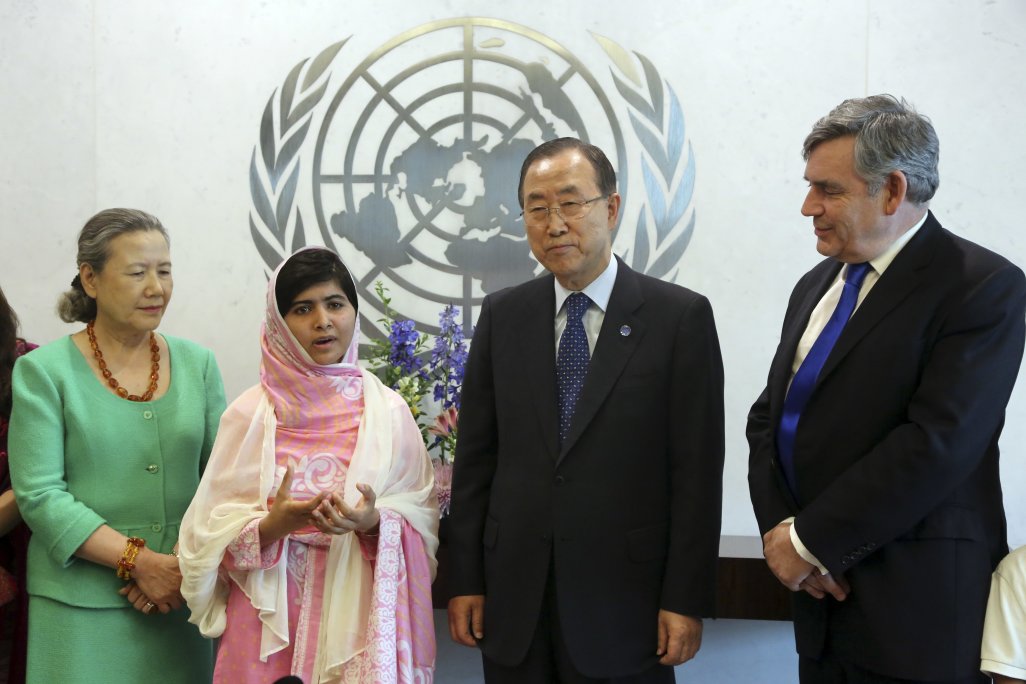
Accompanied by Brown, she will address an education summit of world leaders during the week of the full General Assembly at U.N. headquarters in New York, it said.
There, the 16-year-old will demand action on behalf of 57 million children around the world who have no access to any schooling.Meanwhile, Brown, who's the U.N. special envoy for global education, will travel to Pakistan in July to discuss education issues with the country's new government. He also intends to visit Nigeria, Africa's most populous nation, in the fall.
Between them, Pakistan and Nigeria have 16 million children out of school, the statement said, most of them girls.
Malala's journey from near death to recovery
Brown and Yousafzai met with the United Nations' Pakistan high commissioner on Friday to discuss the plight of more than 5 million children who are out of school in the country, the statement said.
"Malala's speech was just the start of a momentous push for change in the run up to 2015, to deal with the education emergency," Brown said.
The Millennium Development Goal on education set by U.N. member states in 2000 pledged to have every child in school by 2015.
In her speech Friday, Yousafzai said the masked gunmen who shot her in the head in October, who also injured two other girls, had not silenced her ambitions but rather made her stronger.
Gordon Brown: The story of Malala's friend
"They thought that the bullets would silence us, but they failed," she said. "And then, out of that silence came thousands of voices."
She said that she doesn't seek revenge against the Taliban, who have threatened to hunt her down again and end her life, and that she's against no one.
Malala's global voice stronger than ever
"I am here to speak up for the right of education of every child," she said. "I want education for the sons and the daughters of all the extremists, especially the Taliban."
She also reflected on the very real dangers faced by teachers and students in Pakistan.
Earlier this summer, a teacher was gunned down in front of her son as she drove into her all-girl school. A school principal was killed and his students severely injured when a bomb was tossed onto a school playground at a girls' school in Karachi in March.
In January, five teachers were killed near the town of Swabi in the volatile northern Khyber Pakhtunkhwa province, the United Nations says.
And, in June, a suicide bomber blew up a bus carrying 40 schoolgirls as it made its way to a girls' campus in Quetta. Fourteen students were killed.
The speech, given on her 16th birthday, was not about her, Yousafzai added, but rather to give a voice to all the voiceless millions around the world fighting for their rights.
"Let us wage a global struggle against illiteracy, poverty and terrorism, and let us pick up our books and pens. They are our most powerful weapons," she said.
"One child, one teacher, one pen and one book can change the world. Education is the only solution. Education first."
Pakistani teenager Malala Yousafzai's inspiring speech at the United Nations on every child's right to go to school is just the beginning of a major push on education, former UK Prime Minister Gordon Brown said Saturday.
Yousafzai -- who on Friday gave her first public remarks since she was shot by the Taliban last year for advocating that all girls should go to school -- will return to the United Nations in September to press her point, according to a statement from Brown's A World at School campaign.
Accompanied by Brown, she will address an education summit of world leaders during the week of the full General Assembly at U.N. headquarters in New York, it said.
There, the 16-year-old will demand action on behalf of 57 million children around the world who have no access to any schooling.Meanwhile, Brown, who's the U.N. special envoy for global education, will travel to Pakistan in July to discuss education issues with the country's new government. He also intends to visit Nigeria, Africa's most populous nation, in the fall.
Between them, Pakistan and Nigeria have 16 million children out of school, the statement said, most of them girls.
Malala's journey from near death to recovery
Brown and Yousafzai met with the United Nations' Pakistan high commissioner on Friday to discuss the plight of more than 5 million children who are out of school in the country, the statement said.
"Malala's speech was just the start of a momentous push for change in the run up to 2015, to deal with the education emergency," Brown said.
The Millennium Development Goal on education set by U.N. member states in 2000 pledged to have every child in school by 2015.
In her speech Friday, Yousafzai said the masked gunmen who shot her in the head in October, who also injured two other girls, had not silenced her ambitions but rather made her stronger.
Gordon Brown: The story of Malala's friend
"They thought that the bullets would silence us, but they failed," she said. "And then, out of that silence came thousands of voices."
She said that she doesn't seek revenge against the Taliban, who have threatened to hunt her down again and end her life, and that she's against no one.
Malala's global voice stronger than ever
"I am here to speak up for the right of education of every child," she said. "I want education for the sons and the daughters of all the extremists, especially the Taliban."
She also reflected on the very real dangers faced by teachers and students in Pakistan.
Earlier this summer, a teacher was gunned down in front of her son as she drove into her all-girl school. A school principal was killed and his students severely injured when a bomb was tossed onto a school playground at a girls' school in Karachi in March.
In January, five teachers were killed near the town of Swabi in the volatile northern Khyber Pakhtunkhwa province, the United Nations says.
And, in June, a suicide bomber blew up a bus carrying 40 schoolgirls as it made its way to a girls' campus in Quetta. Fourteen students were killed.
The speech, given on her 16th birthday, was not about her, Yousafzai added, but rather to give a voice to all the voiceless millions around the world fighting for their rights.
"Let us wage a global struggle against illiteracy, poverty and terrorism, and let us pick up our books and pens. They are our most powerful weapons," she said.
"One child, one teacher, one pen and one book can change the world. Education is the only solution. Education first."
President Karzai Congratulates Malala Yousafzai- Education Activist on Her 16th Birthday


Saudi princess may have kept four other women as slaves, police say
 Authorities are investigating whether four other women from the Phillippines found living with a woman described as a Saudi princess in Irvine were forced to work as slaves.
The Saudi woman, 42-year-old Meshael Alayban, was charged Wednesday with one count of felony human trafficking after a Kenyan woman managed to leave the Irvine gated community and flee, carrying a suitcase and a U.S. State Department pamphlet on human trafficking, officials said.
Orange County prosecutors allege that Alayban forced the woman to work 16 hours a day, seven days a week, for only $220 a month. Authorities say she was unable to leave because Alayban kept the woman's passport and documents.The law of our nation and California does not tolerate people who deprive or violate the liberty of another and obtain forced labor or services," Orange County Dist. Atty. Tony Rackauckas said. "If any person is being enslaved, he or she should contact law enforcement."
In addition to the Kenyan woman, police said officers found four other workers being held under similar circumstances at Alayban's home. No charges have yet been filed in those cases.
Orange County prosecutors identified Alayban as one of the wives of Saudi Prince Abdulrahman bin Nasser bin Abdulaziz al Saud.
Alayban's attorney, Paul S. Meyer, said there was no physical abuse, no physical restraint and that the complaints were about hours worked and wages paid.
"We intend to fully investigate this matter, and expect that the truth will resolve it," he said.
The servant, whose identity was not released by authorities, began working for the family in Saudi Arabia to help cover her young daughter's medical care, officials said. The woman was contacted through an agency in Kenya to work for Alayban's family in Saudi Arabia in March 2012. She was meant to work for two years and be paid $1,600 a month. She was told she'd work eight hours a day, five days a week and that her pay would rise after three months, authorities said.
Irvine police said that when the woman arrived in Saudi Arabia, Alayban took her passport. She accompanied Alayban and her family when they came to Irvine in May. Police said the servant came with four other women from the Philippines working under similar contracts.
She told detectives she was required to work excessive hours and paid only a fraction of the agreed-upon salary. When the woman complained about the working conditions and asked for her passport back so she could leave, Alayban refused to give it to her, police said.
The servant told authorities she was working for various Alayban family members living in four luxury apartments in a development off Jamboree Road, police said. She claimed she was not allowed to leave the complex without a member of the family present.
"We are gratified to have been able to help this victim find her freedom," Irvine Police Chief David L. Maggard Jr. said.
Authorities are investigating whether four other women from the Phillippines found living with a woman described as a Saudi princess in Irvine were forced to work as slaves.
The Saudi woman, 42-year-old Meshael Alayban, was charged Wednesday with one count of felony human trafficking after a Kenyan woman managed to leave the Irvine gated community and flee, carrying a suitcase and a U.S. State Department pamphlet on human trafficking, officials said.
Orange County prosecutors allege that Alayban forced the woman to work 16 hours a day, seven days a week, for only $220 a month. Authorities say she was unable to leave because Alayban kept the woman's passport and documents.The law of our nation and California does not tolerate people who deprive or violate the liberty of another and obtain forced labor or services," Orange County Dist. Atty. Tony Rackauckas said. "If any person is being enslaved, he or she should contact law enforcement."
In addition to the Kenyan woman, police said officers found four other workers being held under similar circumstances at Alayban's home. No charges have yet been filed in those cases.
Orange County prosecutors identified Alayban as one of the wives of Saudi Prince Abdulrahman bin Nasser bin Abdulaziz al Saud.
Alayban's attorney, Paul S. Meyer, said there was no physical abuse, no physical restraint and that the complaints were about hours worked and wages paid.
"We intend to fully investigate this matter, and expect that the truth will resolve it," he said.
The servant, whose identity was not released by authorities, began working for the family in Saudi Arabia to help cover her young daughter's medical care, officials said. The woman was contacted through an agency in Kenya to work for Alayban's family in Saudi Arabia in March 2012. She was meant to work for two years and be paid $1,600 a month. She was told she'd work eight hours a day, five days a week and that her pay would rise after three months, authorities said.
Irvine police said that when the woman arrived in Saudi Arabia, Alayban took her passport. She accompanied Alayban and her family when they came to Irvine in May. Police said the servant came with four other women from the Philippines working under similar contracts.
She told detectives she was required to work excessive hours and paid only a fraction of the agreed-upon salary. When the woman complained about the working conditions and asked for her passport back so she could leave, Alayban refused to give it to her, police said.
The servant told authorities she was working for various Alayban family members living in four luxury apartments in a development off Jamboree Road, police said. She claimed she was not allowed to leave the complex without a member of the family present.
"We are gratified to have been able to help this victim find her freedom," Irvine Police Chief David L. Maggard Jr. said.
Turkish journalists hit street to denounce police brutality during Gezi protests
 Journalists gathering under the banner of the “Journalists’ Platform” came together at Galatasaray Square at 7 p.m. to protest what they termed the continual violence, pressure and threats they have faced at the hands of the police since the Gezi Park protests began in late May.
The journalists, which included representatives of a number of different media outlets, also protested the arbitrary detentions and arrests, firings and acts censorship and self-censorship that have occurred since the demonstrations began.
Police have arrested journalists even after reporters show their official press cards, private broadcaster IMÇ TV’s Gökhan Biçici said, while others complained of having their equipment seized by authorities. ETHA news agency journalist Arzu Demir also accused the police of sexually harassing her while searching her house during a June 18 raid.
The journalists marched behind a banner of penguins in a direct jibe at CNNTürk, which became the target of widespread ridicule and sarcasm at the beginning of the protests in late May when it chose to air a documentary on penguins rather than cover the demonstrations. CNNTürk’s penguins were subsequently adopted as a symbol of the self-censorship that many news organizations, particularly the mainstream media, demonstrated during the initial stages of the protests.
The group began a sit-down strike after close to 100 police blocked their way toward Taksim Square outside Galatasaray High School with two water cannon, but the group was ultimately not subjected to any police attack.
Before the journalists’ march, activists also gathered in cities around Turkey, including Tünel on Istanbul’s İstiklal Avenue, to commemorate Dora Özer, a transsexual who was found murdered in the Aegean province of Aydın’s Kuşadası district on July 9.
Journalists gathering under the banner of the “Journalists’ Platform” came together at Galatasaray Square at 7 p.m. to protest what they termed the continual violence, pressure and threats they have faced at the hands of the police since the Gezi Park protests began in late May.
The journalists, which included representatives of a number of different media outlets, also protested the arbitrary detentions and arrests, firings and acts censorship and self-censorship that have occurred since the demonstrations began.
Police have arrested journalists even after reporters show their official press cards, private broadcaster IMÇ TV’s Gökhan Biçici said, while others complained of having their equipment seized by authorities. ETHA news agency journalist Arzu Demir also accused the police of sexually harassing her while searching her house during a June 18 raid.
The journalists marched behind a banner of penguins in a direct jibe at CNNTürk, which became the target of widespread ridicule and sarcasm at the beginning of the protests in late May when it chose to air a documentary on penguins rather than cover the demonstrations. CNNTürk’s penguins were subsequently adopted as a symbol of the self-censorship that many news organizations, particularly the mainstream media, demonstrated during the initial stages of the protests.
The group began a sit-down strike after close to 100 police blocked their way toward Taksim Square outside Galatasaray High School with two water cannon, but the group was ultimately not subjected to any police attack.
Before the journalists’ march, activists also gathered in cities around Turkey, including Tünel on Istanbul’s İstiklal Avenue, to commemorate Dora Özer, a transsexual who was found murdered in the Aegean province of Aydın’s Kuşadası district on July 9.
INDIA: 20-year-old private tutor gang-raped, set afire in UP
 A 20-year-old private tutor was allegedly gangraped and then set on fire two days ago in Etawah, the home district of Uttar Pradesh chief minister Akhilesh Yadav, the police said on Friday.
The young woman is battling for life with 90% burn injuries at the Sanjay Gandhi Post Graduate Institute of Medical Sciences at Saifai.
According to the first information report lodged by the woman’s brother, her fiancé Farhan and four of his associates raped her and set her on fire. The complaint also names two women as accused.
Etawah senior superintendent of police Nilabja Choudhury, however, said there were reports the woman had set herself ablaze because a dowry demand of Rs. 5 lakh from Farhan’s family had cast a shadow over their marriage.
The woman is a graduate, while Farhan is a mechanic, said a police official.The police have not been able to make a single arrest in connection with Wednesday’s crime, the latest in a string of such violent attacks on women and children reported from across UP. “Efforts are on to nab the accused,” the SSP said.
A 20-year-old private tutor was allegedly gangraped and then set on fire two days ago in Etawah, the home district of Uttar Pradesh chief minister Akhilesh Yadav, the police said on Friday.
The young woman is battling for life with 90% burn injuries at the Sanjay Gandhi Post Graduate Institute of Medical Sciences at Saifai.
According to the first information report lodged by the woman’s brother, her fiancé Farhan and four of his associates raped her and set her on fire. The complaint also names two women as accused.
Etawah senior superintendent of police Nilabja Choudhury, however, said there were reports the woman had set herself ablaze because a dowry demand of Rs. 5 lakh from Farhan’s family had cast a shadow over their marriage.
The woman is a graduate, while Farhan is a mechanic, said a police official.The police have not been able to make a single arrest in connection with Wednesday’s crime, the latest in a string of such violent attacks on women and children reported from across UP. “Efforts are on to nab the accused,” the SSP said.
Other cases In Pratapgarh, a rape victim was allegedly attacked by the family members of the accused who tried to severe her tongue on Wednesday. The girl was admitted to the hospital with serious injuries. In Lucknow, a four-year-old girl's body was found on Wednesday with multiple wounds. She had allegedly been raped before being killed. Police initially tried to pass off the case as an attack by stray dogs.
Obama speaks with Putin on Snowden, but no sign of movement
Afghanistan: Rise in Female Kunduz Prison Inmates
http://www.tolonews.com/Kunduz province prison officials on Friday said that there has been a twofold increase in the number of female prisoners compared to last year. According to Gen. Shah Mir, the Director of the Kunduz provincial prison, two years ago 20 females were imprisoned, but now the number has increased to nearly 50. Gen. Mir cited illiteracy, poverty and domestic violence as one of the reasons behind the increase in the number of female inmates in Kunduz. "The crime rate is increasing day by day, last year we had 16 female prisoners. Unfortunately, this year the number has risen to 47," said Gen. Mir. Prison officials said that among the 47 female prisoners that are serving jail time, there is a diversity of criminal charges, including, but not limited to, murder and kidnapping. Gen. Mir said that 20 children who have reached seven years of age belonging to the female inmates have been transferred to a special children's home where they are educated and receive vocational training. However, he said many more children below seven are still living with their mothers in the prison. Meanwhile, the female prisoners told reporters that they want to seek pardons for the sake of their children's futures. "I am imprisoned with my children and I request that the President pardon my sentence for the sake of my children," begged one of the female prisoners, imprisoned for murdering her husband. "I have six children and for their future please release me. I committed a crime and I won't do it again," said another prisoner. Emphasising the efforts put in by the provincial authorities to work with the prisoners, officials of Kunduz prison said that professional training is being done so that the female prisoners can earn a livelihood after their release. Officials told reporters that the prisoners are receiving training in tailoring and carpet weaving. Presently, 825 convicts are imprisoned at the Kunduz prison and among them 47 are female prisoners.
US withdrawal from Afghanistan

Pakistan: Power crisis deepens in month of Ramadan
Pakistan's Load Shedding: ‘Govt didn't keep word even in Ramazan’
India's Razia Sultana gets UN education award on Malala Day

National Security Policy — The Baloch Perspective
The Baloch HalBy Sanaullah Baloch Pakistan’s political-cum-civil-military elite are desperately in search of a ready-made recipe for peace to end chronic politico-religious violence. Since we have a habit of being in utter denial about self-created crises, we always look for foreign remedies and fancy plans. The previous PPP regime introduced an unrealistic 3D formula — development, deterrence and dialogue — to curb violence without understanding the difference between complex conflicts and geographically disconnected crises. However, the new PML-N government has recently announced a theoretically more complex policy to deal with endless violence and the worsening law and order challenges. Based on Chinese and Malaysian models, the five layers of the national security policy, prepared by the National Counter-Terrorism Authority are: to dismantle, to contain, to prevent, to educate and to reintegrate. Economically fragile, politically unstable, ethnically divided and strife with sectarian crisis, the ruling elite need to understand before duplicating these that Pakistan is neither equal to economic giant China nor to economically self-reliant Malaysia. And both countries, set as models in the new policy, have never experienced such ethnic discontent, political crises and extreme violence. The current five-pillar policy looks like mixing oranges and apples. The policy doesn’t differentiate between type of crises and violence and doesn’t have the feel of a serious conflict-resolution initiative. It’s a known fact that crises in Fata and Khyber-Pakhtunkhwa (K-P) need a totally different approach and dealing with unrest in Balochistan requires a unique and bold policy. Moreover, managing the sectarian menace requires both domestic and international efforts. In spite of thousands of killings, loss of property and humanitarian crises both in K-P and Balochistan, the civil-military elite in Islamabad are in total denial about the existence of politico-economic conflicts in Balochistan and governance-related conflict in Fata. For conflict-resolution and crisis management, there are three preconditions: acknowledgment, acceptance and adaptability. Bureaucratically-drafted, the national security policy lacks understanding and discounts the existence of conflicts. It would be of no use in addressing the protracted crises. Regarding Balochistan, the government and its politico-military appendage must demonstrate maturity and acknowledge the conflict’s existence, rather than trying to deny it. The politico-military establishment needs flexibility and adaptability. Adaptability requires openness to ideas that could lead to viable solutions. A firm commitment and resolve, with the flexibility to make concessions, will determine how those solutions will be implemented. A national security policy, which begins with the idea of “dismantling”, cannot be considered a wise or constructive approach to deal with national crises. The policy should guide national decision-making and determine the courses of action to be taken in order to attain the state or condition wherein the national interests, the well-being of people, and peace and security are protected and enhanced. The policy must encourage the political-military leadership to acknowledge past mistakes and the existence of multifaceted conflicts — accept the existence of different stakeholders and adapt new ideas and approaches in the conflict-resolution process. Pakistani policymakers must not confuse, and should not avoid the fact that extremism and violence is an offshoot of our politico-military blunders. If we continue to maintain the administrative status quo in Fata for strategic reasons — consider criminals, mafias and extremists as “strategic assets” and political activists as a national threat in Balochistan — peace will have little chance to grow. Adapting a multilayered conflict- resolution model — Pakistan’s national security policy should focus on four key elements namely: 1) governance; 2) delivery of basic services; 3) economic reconstruction and sustainable development; and 4) security sector reform. (Courtesy: Express Tribune)
Terrorist Osama’s Pakistan
The Baloch HalBy Vardha Khalil The U.S. military action in Abbottabad and the eventual killing of Osama bin Laden in the operation not only shocked Pakistan but also compelled public and national circles to raise several question. Two of these questions were most important of all: First, why were the Pakistani authorities unaware of the presence of Bin Laden inside the country? Secondly how the US managed to conduct an attack on the Pakistani soil? In order to ascertain the answers to these critical questions, the Pakistani government formed a commission which recorded statements of 201 persons and finalized an inquiry report. The report contains facts and figures about the Abottabad operation. In the report, the commission has not only highlighted many mistakes at political and military level but also severely criticized Pakistan’s official response to the crisis that damaged country’s reputation at international level and breached public trust in the government and the institutions of national security. Because of its critical nature, the commission expressed concerns over its public disclosure saying that government might keep it secret to bury the truth. Though this concern was well founded the truth could not be hidden as Aljazeera leaked the report earlier this week. According to the report, Bin Laden entered Pakistan through Tora Bora in 2002 and spent some time in South Waziristan and Bajur Agency. Then, he moved to six different places one by one including Swat, Haripur and Abbottabad. He moved with the help of only two of his aides and every time evaded police and other government authorities. During his nine-year presence in Pakistan, he not only built a house but his wife also managed to settle with him in Pakistan after ending her confinement in Iran, his children were also born there. The commission has also pointed out a crucial flaw in Pakistan’s foreign policy. Pakistani government clearly failed to handle the crisis after this operation. The government was confused and ill-informed. It failed to launch a positive response and even it tried to distance itself from this event. The commission has observed that Pakistani government launched an inquiry into the matter on public pressure and not by its own will. This inquiry was initiated reluctantly. The commission says that Pakistani government and its institutions failed at every level of planning, threat assessment and positive response. The report has held the Revenue Department, National Database and Registration Authority, local police, government and military responsible for the presence of Bin Laden in Pakistan for nine years. Report also demands all these institutions to make a public apology for their negligence. The report of Abbottabad commission not only indicates negligence regarding Bin Laden’s presence and US raid but it also portrays a clear picture of the failure in other national matters as well. Corruption and political pressure have damaged Pakistani institutions. These weak institutions failed to locate high value target in Pakistan for nine years. How somebody may hope that they will capture other terrorists who are targeting hundreds of innocent people around Pakistan on daily basis. Aljazeera has also claimed that the page number 157 of this report has been obliterated which contained the statement of former ISI [Inter-Services Intelligence] Director General Ahmad Shujah Pasha. This point should also be noted that Pakistani intelligence apparatus has once again played its role in removing key information from the commission report to hide facts regarding national security. The commission’s observation raises some serious questions about the compatibility of the Pakistani government and its mechanism of response. In addition to the many problems haunting Pakistan’s new government, revising policies and tactics could be more challenging. Because this time negligence might prove fatal in a world where such mistakes are no longer tolerated.
Punjab Govt to dump WIC, Mayo Surgical Tower projects?

Malala Day: Paying tribute to teen icon
The Express Tribune
By Riazul Haq / Maryam Usman
.jpg)


Malala celebrates 16th birthday with UN address


Subscribe to:
Posts (Atom)