DAWN.COM

DAWN.COM

The Express TribuneWith no increment in the wages of government employees, clerical staff has announced a strike starting tomorrow (Friday), reported Express News. Clerks will take to the roads starting tomorrow and have said that the strike will continue till their demands are met. Compared to the increment in commodity prices, the current salaries of government employees do not add up to an affordable level. It is the first time that the democratic government did not increase the salaries of government employees. The government informed them that the current economic situation of the country does not allow an increment in salaries, however government employees have projected that they are not in the situation to live comfortably within the given salary rate. Grade 1 to 16 officers did not see an increment in their heath or housing allowances either. The increase in pension is also not seen as a favourable decision as employees argued that the previous Pakistan Peoples Party (PPP) led government increased salaries and allowances generously. In the first three years of their tenure, they increased salaries by 135% and by 50% in the last two years.
DAWN.COM
Twelve ministers of the Khyber Pakhtunkhwa government took oath at the Governor’s House here on Thursday, whereas no female minister was sworn in. Governor Engineer Shaukatullah administered the oath to the new cabinet. The decision to appoint additional ministers in the provincial government was taken after a meeting, which concluded at midnight on Wednesday. Israrullah Gandapur has been assigned the portfolio of Law and Parliamentary Affairs, Shaukat Yousufzai has Health and Information. Yousuf Ayub has been allotted the portfolio of Communication and Works whereas Shahram Khan Taraki has been handed over Agriculture. Moreover, Inayatullah Khan has been assigned the portfolio of local governance, Bakht Baidar has been given Manpower and Industry, Ibrar Hussan Kamoli has been given Forest and Habibur Rehman has Zakat and USHR. The Public Health portfolio has been assigned to Shah Farman and Ali Amin Gandapur has Revenue. Atif Khan has elementary education and Mehmood Khan has been allotted Higher Education. Jamaat-i-Islami's (JI) Sirajul Haq and Qaumi Watan Party's (QWP) Sikandar Sherpao earlier took oath as senior ministers. Haq has been assigned the portfolio of Finance whereas Sherpao has Energy.
EDITORIAL : Daily TimesThe first raging protests against the massive load shedding plaguing the country were seen in Faisalabad on Tuesday when residents, unable to hold in their anger any longer, ransacked a grid station and the offices of the Faisalabad Electric Supply Company (FESCO). They blocked roads and traffic for more than 10 hours and threw stones at the police deployed to keep the protests in check. However, the police did a lot more than keep the angry citizens in check. With brute force, the police beat back protesters and, when they ran away, the police scaled the walls, broke down doors and entered their homes forcefully, beating and dragging women and children outside brutally, arresting more than 10 people in the process. This is abuse in every sense of the word from breaking and entering to violent treatment of citizens. Faisalabad has remained a hotbed of protests against the debilitating power outages. This is because the city is home to the country’s textile industry, a part of our business sector that has been all but shutdown due to the power cuts. This has left many without jobs and, hence, with enough time to boil over with rage and frustration. Add to this the police brutality that was witnessed and it makes for an explosive combination. People are now angrier and the government has plenty to answer for. The Shahbaz Sharif government has been in power for less than a week and already protests have begun. This just goes to show that the people will not sit back now and listen to the usual rhetoric on the energy situation. The Sharif government has hardly had any time to chalk out any conclusive policies to curtail the power crisis but the people are impatient; they do not want to wait because they want immediate results. It is a well-known fact that the Punjab police is notorious for being a brutal force practicing unrestrained violence. The kind of barbarity that allows unlawful entry into people’s homes is not something Shahbaz Sharif brothers should overlook. He would do well to look at the swelling protests in Turkey that have made global headlines all because of the excessive use of force by the police against protestors. It would be better for the Punjab government to address the public’s woes and not increase them through brutal crowd control tactics by the police.
Daily TimesThe Federal Budget 2013-14 announced by the Federal Finance Minister Ishaq Dar with an outlay of Rs 3.5 trillion on the floor of the National Assembly on Wednesday does not appear to be beneficial for the masses. The budget has failed to present immediate solutions to burning problems faced by masses as majority of pledges and commitment made by the minister relates to prolonged solutions. Making upward revision in sales tax ratio would have a negative impact on all kitchen items and it would only add to the financial miseries of the helpless consumers of the country. Karachi Chamber of Commerce and Industry (KCCI) Adviser Communication Khurrum Saigal in his comments over the salient features of the new budget claimed that it has failed to offer fast-track solution to the burning issues specially ending the scourge of load shedding in the country, which has assumed critical dimension over the period of time. Major part of the speech of the finance minister is related to promises and pledges, which would start assuming solid shape after a long gap of two to three years and until then the general public of the country would have to remain patient.
http://www.mcclatchydc.com/Pakistan’s newly elected government Wednesday unveiled its first budget, which gave the go-ahead for buying two new nuclear power plants from China but made no allocation for a long-proposed natural gas pipeline from Iran that had sparked complaints from the United States. In not budgeting for the Iranian pipeline, agreed to by his predecessor in February, Prime Minister Nawaz Sharif tactfully sidestepped a potential diplomatic clash with the United States, which had warned that the pipeline, if it were ever built, could lead to sanctions on Pakistan. The deal also was criticized as a trap for the new administration by Sharif’s brother and de facto deputy, Shahbaz Sharif, the chief minister of Punjab province. The $35.5 billion budget, which was presented to Parliament by the new minister for finance, Ishaq Dar, suggested that the new government would follow through on Sharif’s plan to resolve the country’s power shortages that Dar said had cut the country’s economic growth by 2 percent in the outgoing fiscal year, which ends June 30. Dar’s budget would switch Pakistan’s power generation plants from expensive imported fuel oil and gas to much cheaper coal sourced partly from undeveloped reserves in Pakistan’s southern Sindh province. The rest probably would come from huge mines in India, Pakistan’s traditional foe, with which it has fought two wars since both gained independence from Britain in 1947. The South Asian neighbors opened talks Tuesday about the planned import of Indian electricity via cross-border cables near the eastern Pakistani city of Lahore. The budget also sets aside about $430 million for new nuclear power plants from China, a project that the United States and India have both objected to at meetings of the Nuclear Supplier Group, one of the international groups that attempts to prevent nuclear proliferation. But Pakistan insists that the plants are unconnected to the country’s nuclear weapons program and are regularly inspected by the International Atomic Energy Agency. Pakistan possesses between 80 and 120 nuclear weapons, according to estimates by Western analysts. A Cabinet minister, speaking to McClatchy on condition of anonymity because he was not authorized to discuss the project with a reporter, said the Iranian gas pipeline hadn’t been altogether dropped, largely because that would invoke a penalty payment to Iran. Instead, he said, Pakistan’s new government would procrastinate by trying to haggle lower prices from Tehran, based on the comparison with coal. Analysts also said Sharif could forgo the Iranian pipeline because of the prime minister’s good relations with Saudi Arabia. Sharif spent six years in exile in the Persian Gulf kingdom as part of a deal for his release from jail in Pakistan negotiated by the Saudi royal family, after he was overthrown in a military coup staged by Gen. Pervez Musharraf in October 1999. Pakistani news outlets have reported that Sharif’s administration has since last month quietly been holding talks with the Saudis for a steady supply of crude oil and refined products on a deferred-payment basis, a step that would considerably ease pressure on the country’s treasury, which registered a record 8.5 percent fiscal deficit in the waning fiscal year. Analysts said the new energy proposals are consistent with Sharif’s plan to stay focused on solving problems at home. They expect him to continue to adopt policies different from those favored by the Pakistani military, which has pursued an ambitious strategy of involvement in Afghanistan. "Sharif is a man who views matters in very simple terms," said Habib Akram, executive editor of Dunya, a popular cable news channel based in Lahore. "He is completely focused on fixing Pakistan’s internal problems, and believes developments in Afghanistan are somebody else’s indigenous problem that doesn’t concern Pakistan as long as the violence there doesn’t spill over its borders," Akram said. Read more here: http://www.mcclatchydc.com/2013/06/12/193732/no-money-in-pakistan-budget-for.html#storylink=cpy




In a remote part of the Himalayan country, women who are menstruating are temporarily banished from home on the belief that they are impure and bring bad luck.
Yahoo! News
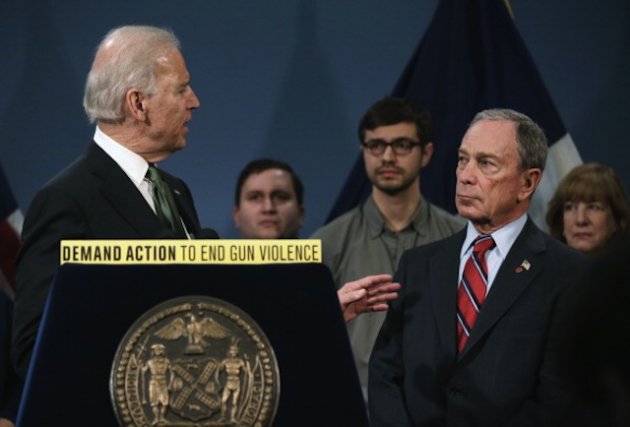 Vice President Joe Biden is renewing his push for gun-control legislation with an event slated for Tuesday, marking the first time the White House has held an event on guns since its legislative push for background checks failed in the Senate in April.
A Biden aide declined to give any details about the event, which was first reported by Politico.
"The commitment of this president and the vice president to taking action to reduce gun violence is as strong today as it was at the beginning of the year and in the wake of Newtown," White House press secretary Jay Carney told reporters on Wednesday.
The failed bipartisan bill—crafted by Sens. Joe Manchin, D-W.Va., and Pat Toomey, R-Pa.—would have extended background checks to all commercial gun purchases, preventing people with criminal records from buying guns online. President Barack Obama called its failure "shameful" and vowed to continue the fight for the legislation; though, since then the White House has remained largely silent on the issue. It's unlikely that the Republican-controlled House would ever support a similar measure.
Meanwhile, the gun-control group backed by New York City Mayor Michael Bloomberg is launching a 100-day bus tour of 25 states on Friday, exactly six months after the shootings that killed 20 children and six educators in Newtown, Conn.
The bus tour, organized by Mayors Against Illegal Guns, kicks off in Newtown and will include family members of the victims from that town as well as from other mass shootings. The tour, called "No More Names: The National Drive to Reduce Gun Violence," will travel to states to thank senators who supported the failed background check bill, as well as to pressure senators who voted against it. For example, it will stop in Maine to thank Republican Sen. Susan Collins for backing the reform, the tour's organizers told reporters on Wednesday.
Bloomberg, the country's most influential gun-control advocate, will also send a personal letter to hundreds of deep-pocketed New York donors on Wednesday to ask them to withhold cash from the four Democratic senators who did not support the background check bill in April, The New York Times reported. Those senators are Max Baucus, Mark Begich, Heidi Heitkamp and Mark Pryor.
Even though their national efforts failed, gun-control advocates have won important state-level legislative victories in Connecticut, Colorado, New York and Nevada in the past six months. Mark Glaze, the executive director of Mayors Against Illegal Guns, said the group has to "rebuild grass roots on this issue" to effectively counter the National Rifle Association's influence.
Some Newtown families have also traveled to the Hill to meet with lawmakers this week about gun legislation.
Vice President Joe Biden is renewing his push for gun-control legislation with an event slated for Tuesday, marking the first time the White House has held an event on guns since its legislative push for background checks failed in the Senate in April.
A Biden aide declined to give any details about the event, which was first reported by Politico.
"The commitment of this president and the vice president to taking action to reduce gun violence is as strong today as it was at the beginning of the year and in the wake of Newtown," White House press secretary Jay Carney told reporters on Wednesday.
The failed bipartisan bill—crafted by Sens. Joe Manchin, D-W.Va., and Pat Toomey, R-Pa.—would have extended background checks to all commercial gun purchases, preventing people with criminal records from buying guns online. President Barack Obama called its failure "shameful" and vowed to continue the fight for the legislation; though, since then the White House has remained largely silent on the issue. It's unlikely that the Republican-controlled House would ever support a similar measure.
Meanwhile, the gun-control group backed by New York City Mayor Michael Bloomberg is launching a 100-day bus tour of 25 states on Friday, exactly six months after the shootings that killed 20 children and six educators in Newtown, Conn.
The bus tour, organized by Mayors Against Illegal Guns, kicks off in Newtown and will include family members of the victims from that town as well as from other mass shootings. The tour, called "No More Names: The National Drive to Reduce Gun Violence," will travel to states to thank senators who supported the failed background check bill, as well as to pressure senators who voted against it. For example, it will stop in Maine to thank Republican Sen. Susan Collins for backing the reform, the tour's organizers told reporters on Wednesday.
Bloomberg, the country's most influential gun-control advocate, will also send a personal letter to hundreds of deep-pocketed New York donors on Wednesday to ask them to withhold cash from the four Democratic senators who did not support the background check bill in April, The New York Times reported. Those senators are Max Baucus, Mark Begich, Heidi Heitkamp and Mark Pryor.
Even though their national efforts failed, gun-control advocates have won important state-level legislative victories in Connecticut, Colorado, New York and Nevada in the past six months. Mark Glaze, the executive director of Mayors Against Illegal Guns, said the group has to "rebuild grass roots on this issue" to effectively counter the National Rifle Association's influence.
Some Newtown families have also traveled to the Hill to meet with lawmakers this week about gun legislation.
Detailed and polite handwritten letter, attached to clothing, explains previous medical care performed on patient in critical conditionA handwritten doctor’s note was found attached to the clothing of a Syrian man brought to Israel in critical condition Tuesday.
http://www.timesofisrael.com/The note explained, in Arabic, previous surgical procedures and medical care the man had received days before in Syria. It asked Israel to save his life because the Syrian doctors could not provide the necessary medical treatment. While Israel has started to treat growing numbers of people wounded in Syrian battles close to the border in recent months, this was the first case of a cross-border “transfer” from a Syrian medical facility.

 Members of the opposition reacted to the new government’s Federal Budget for 2013-14. The opposition termed the budget as not being people friendly.
MQM leader Farooq Sattar spoke to the media following Finance Minister Ishaq Dar’s speech in the National Assembly. Sattar termed the budget as being traditional with no concrete measures to tackle the country’s economic problems. The MQM leader also said there was no mention of how to tackle terrorism in the budget.
Sattar was critical of the increase in sales tax proposed in the budget. He said that this should have been decreased not increased as it impacts the common man. According to Sattar not increasing the salaries of government employees was inexcusable.
Leader of the Opposition in National Assembly Pakistan Peoples Party’s Khursheed Shahcriticized the increase in sales tax and termed the federal government presented budget as not people friendly budget.
Talking to media persons after the announcement of Federal Budget 2013-14 he said that increase in sales tax would affect not only the poor man living in the villages, but also in the cities.
He said that salaries of government employees should have been increased in the budget.
Shah added that the PML-N government should fulfill its election promises and the PPP would also protest against changing the name of Benazir Income Support Programme to Pakistan Income Support Programme.
He said that they would put political pressure and public pressure on the government to not change the name.
PTI leader Shireen Mazari speaking to Hamid Mir on Capital Talk, said the focus of the budget was on indirect taxes which was evident with the increase in sales tax. “This is a businessman’s budget and will increase burden on the ordinary man.”
Members of the opposition reacted to the new government’s Federal Budget for 2013-14. The opposition termed the budget as not being people friendly.
MQM leader Farooq Sattar spoke to the media following Finance Minister Ishaq Dar’s speech in the National Assembly. Sattar termed the budget as being traditional with no concrete measures to tackle the country’s economic problems. The MQM leader also said there was no mention of how to tackle terrorism in the budget.
Sattar was critical of the increase in sales tax proposed in the budget. He said that this should have been decreased not increased as it impacts the common man. According to Sattar not increasing the salaries of government employees was inexcusable.
Leader of the Opposition in National Assembly Pakistan Peoples Party’s Khursheed Shahcriticized the increase in sales tax and termed the federal government presented budget as not people friendly budget.
Talking to media persons after the announcement of Federal Budget 2013-14 he said that increase in sales tax would affect not only the poor man living in the villages, but also in the cities.
He said that salaries of government employees should have been increased in the budget.
Shah added that the PML-N government should fulfill its election promises and the PPP would also protest against changing the name of Benazir Income Support Programme to Pakistan Income Support Programme.
He said that they would put political pressure and public pressure on the government to not change the name.
PTI leader Shireen Mazari speaking to Hamid Mir on Capital Talk, said the focus of the budget was on indirect taxes which was evident with the increase in sales tax. “This is a businessman’s budget and will increase burden on the ordinary man.”

 Nasir Mansoor, Deputy General Secretary of National Trade Union Federation Pakistan (NTUF) has termed the budget ‘IMF-dictated’ to appease the international lenders to get more loans.
In a statement here Wednesday, he said the new government has attacked working people of Pakistan with economic drones loaded with withdrawing of subsidies and increase in electricity tariff which multiply the miseries many fold of already suppressed working class.
“We strongly condemned the anti people intention of new government policy to increase the sales tax and increase the fee on education while award enormous incentives to big businesses and corporate circles by slashing the tax slab for them.”
He said it is a cruel joke with millions of salaried employees who have been facing the ever-growing inflation but didn't get any increase in their salaries.
Nasir Mansoor, Deputy General Secretary of National Trade Union Federation Pakistan (NTUF) has termed the budget ‘IMF-dictated’ to appease the international lenders to get more loans.
In a statement here Wednesday, he said the new government has attacked working people of Pakistan with economic drones loaded with withdrawing of subsidies and increase in electricity tariff which multiply the miseries many fold of already suppressed working class.
“We strongly condemned the anti people intention of new government policy to increase the sales tax and increase the fee on education while award enormous incentives to big businesses and corporate circles by slashing the tax slab for them.”
He said it is a cruel joke with millions of salaried employees who have been facing the ever-growing inflation but didn't get any increase in their salaries.

Published:Jun 8th 2013
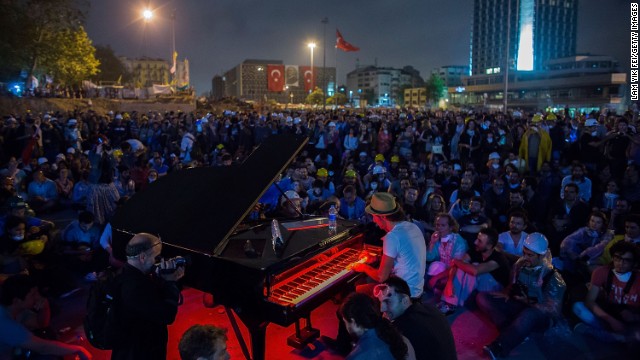
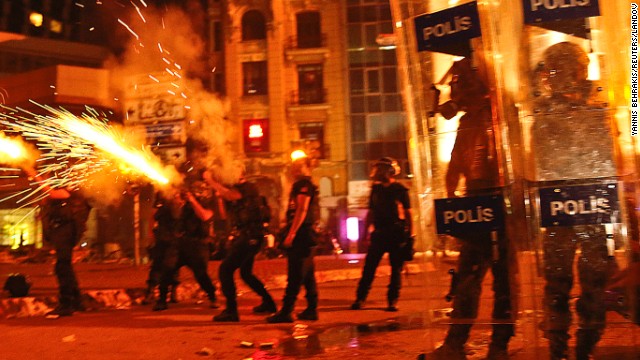
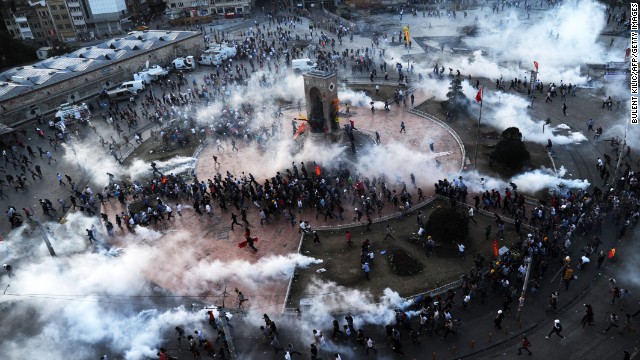
 IT BEGAN with a grove of sycamores. For months environmentalists had been protesting against a government-backed plan to chop the trees down to make room for a shopping and residential complex in Istanbul’s Taksim Square. They organised a peaceful sit-in with tents, singing and dancing. On May 31st riot police staged a pre-dawn raid, dousing the protesters with jets of water and tear gas and setting fire to their encampment. Images of the brutality—showing some protesters bloodied, others blinded by plastic bullets—spread like wildfire across social media.
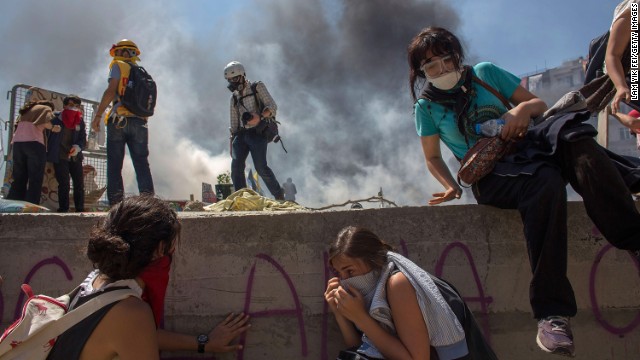
Within hours thousands of outraged citizens were streaming towards Taksim. Police with armoured personnel carriers and water cannon retaliated with even more brutish force. Blasts of pepper spray sent people reeling and gasping for air. Hundreds were arrested and scores injured in the clashes that ensued. Copycat demonstrations soon erupted in Ankara and elsewhere. By June 3rd most of Turkey’s 81 provinces had seen protests. A “tree revolution” had begun.
In fact these protests are not just about trees. Nor is Turkey really on the brink of a revolution. The convulsions are rather an outpouring of the long-stifled resentment felt by those—nearly half of the electorate—who did not vote for the moderately Islamist Justice and Development (AK) party in the election of June 2011 that swept Recep Tayyip Erdogan, Turkey’s combative prime minister, to a third term. The most popular slogan on the streets was “Tayyip Resign”. Millions of housewives joined in, clanging their pans in solidarity and belying government claims that the protests had been pre-planned rather than spontaneous.
Rainbow nation
IT BEGAN with a grove of sycamores. For months environmentalists had been protesting against a government-backed plan to chop the trees down to make room for a shopping and residential complex in Istanbul’s Taksim Square. They organised a peaceful sit-in with tents, singing and dancing. On May 31st riot police staged a pre-dawn raid, dousing the protesters with jets of water and tear gas and setting fire to their encampment. Images of the brutality—showing some protesters bloodied, others blinded by plastic bullets—spread like wildfire across social media.
Within hours thousands of outraged citizens were streaming towards Taksim. Police with armoured personnel carriers and water cannon retaliated with even more brutish force. Blasts of pepper spray sent people reeling and gasping for air. Hundreds were arrested and scores injured in the clashes that ensued. Copycat demonstrations soon erupted in Ankara and elsewhere. By June 3rd most of Turkey’s 81 provinces had seen protests. A “tree revolution” had begun.
In fact these protests are not just about trees. Nor is Turkey really on the brink of a revolution. The convulsions are rather an outpouring of the long-stifled resentment felt by those—nearly half of the electorate—who did not vote for the moderately Islamist Justice and Development (AK) party in the election of June 2011 that swept Recep Tayyip Erdogan, Turkey’s combative prime minister, to a third term. The most popular slogan on the streets was “Tayyip Resign”. Millions of housewives joined in, clanging their pans in solidarity and belying government claims that the protests had been pre-planned rather than spontaneous.
Rainbow nation
http://www.politico.com/President Obama was back in full campaign mode Wednesday, stopping off at a Boston sandwich shop with Senate candidate Ed Markey before heading to a fundraiser for the Massachusetts Democrat. The presidential motorcade wound its way to Charlie's Sandwich Shoppe in the city's South End, where "has rules" according to a sign above the door, and Obama ordered a cheeseburger and fries to go. "I want to make sure you know that there's going to be an election coming up for Congressman Markey to send him to the Senate," he told diner in the cramped shop, according to a pool report. "I want to make sure everybody turns out and votes. Alright? This guy has been fighting for Massachusetts for a very long time and he cares deeply about all the folks here. I know it seems like there's an election every other week, but this one's important." The Markey event was the first of three fundraisers Obama was slated to attend Wednesday. The other two, benefitting the Democratic National Committee, are at private homes in Miami. The Boston Globe's Michael Levenson tweets this pic of the presidential burger order:
Erdogan 's supporters were saying that people had sex and have alcohol party on night of June 2nd and 3rd june in the mosque !! this kind of denigration only comes from Erdogan's fans (because they are disturbed in their head dirty people think dirty !!!!) but the reality was all the people who got hurt were treated by doctors who helped people voluntarily!!Mr.Erdogan needs to watch this clip,so he can find out that there were injured people,victim of his police , who were getting treatment by a group of volunteer doctors,not drinking or having sex.
by Mahpara QalandarOnly four months before the Sharif Brothers of PML-N were inciting people to come out on the roads and streets to protest against load shedding. Interestingly, Shahbaz Sharif despite being the chief minister of Punjab led some of the protests. Although he did not openly support destruction of property, the riots wither led by him or encouraged by him resulted in losses of public and private property worth billions. Shahbaz Sharif always justified the riots by saying that the people were right in agitating for their rights. He blamed the federal government (actually President Zardari and his PPP) for every ill under the sun including the load shedding. Things have not changed. People face the same load shedding scourge. Shahbaz Sharif is still the chief minister of Punjab. But no. I am wrong because things have indeed changed. When on 11 June, the people came out in protesting against load shedding in various towns and cities, they found themselves in for a big shock. Forget Shahbaz Shairf; not even a petty local PML-N demagogue was there to lead them. They found the notorious Punjab police.The protesters were not only brutally beaten up, the police entered their homes and beat up their women who had nothing to do the protests. So much for the much trumpted sanctity of the home for which the PML-N takes so much credit.This is very typical of the Sharif Brothers. When in opposition, they are ‘guided’ by all the golden rules that exist under the sun. But once in the office, these brothers are an ugly image of Nero totally oblivious of the problems of the people. It is the same brothers who were promising deadlines to end load shedding. But now they blatantly and shameless say that no deadlines can be given. Shahbaz Sharif defended people’s right to protest as long as the PPP was ruling. But now it is his own PML-N and his own sweet brother is the prime minister. So the protesters can be taught a lesson for their insolence. So much for the good governance!

Editor’s note: The Media-Judiciary-PML N-Fake Civil Society nexus has played a horrible role in misinforming the public about the crippling power crisis facing Pakistan. In the short-lived PPP government lead by Benazir Bhutto from 1993-96, a number of power projects were initiated with a long term view of providing sufficient power to both private and industrial sectors. Most of these initiatives were deliberately scuttled by the next PML N government which came in after scuttling yet another democratically elected government through the intrigues of traitors like Leghari and sellout journalists like Najam Sethi. Not only did the PML N government hound and jail power sector investors on charges that have now been proven to have been politically motivated, they also scrapped the Keti Bunder project that would have ensured inexpensive coal inputs for maximum power generation. Today, coal prices are at an oil time low but due to deliberate tactics of the 1997-99 PML N government, Pakistan is not in a position to take advantage of this. Last year, PML N hooligans under the direct instigation of Shehbaz Sharif destroyed power infrastructure in Punjab and attacked the homes of PPP and PML Q legislators – even though the Punjab government was under PML N! PML N not only failed to address the power issue, it used a sellout media to lay all the blame on the PPP government. Of course, when it comes to the blame game, the Nawaz Yafta “liberals” (NYLs) who have discovered PML N’s “maturity” and “anti-establishment” poses will continue to blame a dwindled PPP for the faults of the PML N. The Media-Judiciary will continue to hound PPP while giving a free berth to PML N and its ASWJ/LeJ/TTP partners. Perhaps Punjab might still wake up from its Jamaati stupor and appreciate that under PPP, they still can voice grievances. Under PML N, they can forget about it. Perhaps, one day, the alleged rigging that saw the PML steal as many as 70+ seats from the PTI and PPP might eventually be investigated. Until then, the whole country should be ready to see worse.
Protest leaders canceled plans Wednesday to meet with Turkish Prime Minister Recep Tayyip Erdogan, saying the previous night's violence in Istanbul's Taksim Square and Gezi Park showed talks would be fruitless. Riot police used massive amounts of tear gas, water cannons and stun guns to break up protesters' large-scale demonstration Tuesday night. Erdogan was going ahead with meeting some "popularists," including figures from the protests in Gezi Park, the country's semiofficial Anadolu Agency reported. But protest leader Eyup Muhcu said those attending the meeting are friendly with Erdogan's government. Wednesday began quietly, with rain blanketing the ruins of days of rowdy protests.Protesters have faced off with police on the streets of Istanbul for two weeks. What began in late May as a demonstration focused on the environment -- opposition to a plan to build a mall in Gezi Park -- has evolved into a crusade against Erdogan that's spread around the country.Protesters and 'troublemakers' Not all organizers were invited to the talks to begin with, Muhcu said. Erdogan's government discerns between ecologists who started the protests in an attempt to save the park from bulldozers and Marxist extremists, who have lobbed rocks and Molotov cocktails at police, said Ibrahim Kalin, the prime minister's chief adviser, referring to the latter as "troublemakers." "Anywhere in the world, they will not be considered peaceful protesters," Kalin told CNN's Christiane Amanpour on Tuesday. He said some were associated with a group that carried out an attack on the U.S. Embassy in Ankara in February. The police reaction has been no different from that of security forces' methods against similar groups at Occupy Wall Street protests in the United States, he said. "The police obviously have the mandate to establish public order," Kalin said, just like they do in Spain, Sweden and Britain. Protests from urban professionals A heavy hand and rhetoric from Erdogan have left little room for dissent and have long been a thorn in the side of many secular Turks, who voted against the government. These are the protesters, many of them urban professionals, who have crowded into the park and called for an end to Erdogan's 10 years at the government's helm.They say they have had little place at the table in the government, which is supported mainly by rural, religious conservatives. Human rights record Experts and human rights groups agree with this large group of Turks that Erdogan's democratically elected government lags when it comes to human rights and freedom of expression by opponents. "Prosecutors and courts continued to use terrorism laws to prosecute and prolong incarceration of thousands of Kurdish political activists, human rights defenders, students, journalists and trade unionists," Human Rights Watch wrote in a 2013 report on Turkey. Turkish journalists are afraid to write anything critical of the government, and media companies are slapped with huge tax fines for covering uncomfortable topics. According to the Committee to Protect Journalists, Turkish authorities have targeted journalists with detention for covering the protests. Erdogan's dilemma is in how he handles those who did not elect him, said CNN's Fareed Zakaria. "He has come to believe that he speaks for all of Turkey." Why Taksim Square matters to Turks Those who are against him are handled in "too authoritarian" a manner, Zakaria said Tuesday on "Piers Morgan Live." The prime minister has said he will not back down. "They say the prime minister is harsh," Erdogan said Tuesday, referring to his detractors. "I'm sorry," he told a gathering of his own party. "The prime minister is not going to change." Erdogan is tightening his grip on power, adding authority to the office of the presidency, which he hopes to hold in coming years. Former U.S. intelligence chief John Negroponte said he believes the protests could have something to do with Erdogan's ambitions. There may be "forces joining in here, whose aim it is to prevent him from achieving his ambition of becoming the next president of the country," he told Morgan.

 Riot police have forced their way into a building in Soho, central London, as protests were staged against the G8 summit.
 As many as 60 Shia Muslim residents of a Syrian village in east of the country have been massacred by foreign-sponsored militants.
On Tuesday, the militants attacked the village of Hatlah in eastern Deir Ezzor province and took control of it and killed 60 Shia residents, AFP reported.
Nearly a dozen militants were also killed as a group of local residents took up arms to defend their village.
The insurgent attack and the subsequent violence forced the residents of the village to flee their homes.
The Syria crisis began in March 2011, and many people, including large numbers of government forces, have been killed.
Damascus says the chaos is being orchestrated from outside the country, and there are reports that a very large number of the militants are foreign nationals.
The Syrian government says the West and its regional allies, such as Qatar, Saudi Arabia, and Turkey, are supporting the militants.
As many as 60 Shia Muslim residents of a Syrian village in east of the country have been massacred by foreign-sponsored militants.
On Tuesday, the militants attacked the village of Hatlah in eastern Deir Ezzor province and took control of it and killed 60 Shia residents, AFP reported.
Nearly a dozen militants were also killed as a group of local residents took up arms to defend their village.
The insurgent attack and the subsequent violence forced the residents of the village to flee their homes.
The Syria crisis began in March 2011, and many people, including large numbers of government forces, have been killed.
Damascus says the chaos is being orchestrated from outside the country, and there are reports that a very large number of the militants are foreign nationals.
The Syrian government says the West and its regional allies, such as Qatar, Saudi Arabia, and Turkey, are supporting the militants.


http://www.mashaalradio.com/جلال اباد - د افغانستان ننګرهاراچين ولسوالۍ عبدالخېلو سيمه کې په زرګونو تنو شينوارو د وسله والو طالبانو خلاف ولسي پاڅون وکړ او خپله سيمه يې له وسله والو څخه پاکه کړه. د تيرې شبنې په ورځ د ننګرهار ولايت د اچين ولسوالۍ عبدالخېلو سيمه کې هم په زرګونو تنو ولسي وګړو د وسله والو طالبانو پر ضد پاڅون وکړ چې دخلکو په وينا خپله سيمه يې له وسله والو طالبانو څخه پاکه کړې ده. قومي مشر ملک بهاندر مشال راډيو ته وويل چې ولس په سيمه کې د نا امنيو څخه تنګ شوي و نو ځکه يې ولسي پاڅون وکړ: (( زموږ د عبدالخېلو قوم چې شمېر يې شاه و خوا ۱۰ یا ۱۲ زره تنو ته رسېږي، په دې کې ځينې خلک سره لتاړ شوي دي، نو موږ په خپل قوم کې بې امنيتي نه غواړو، خپل قوم کې ګډوډي نه غواړو، خپل قوم کې زور زياتی، ظلم نه غواړو.)) د اچين ولسوالۍ د انکشافي شورا مشر ملک شيرخان وويل: له دې وروسته به هيچاته اجازه ورنه کړي چې په سيمه کې نا امني جوړه کړي: ((ګډوډي ډېره زياته موږ ټول عبدالخېل د خپلې درې امنيت په شريکه نيسو. بس نور په دې کې بيا بې عزتۍ ته ځان نه پرېږدو. او خاص د وطن د حفاظت له پاره دغه کار موږ شروع کړی دی.)) د افغانستان په ختيځ کې د لومړي لمبر سرحدي لوا سرپرست قوماندان محمد ايوب حسين خيل د وسله والو طالبانو په وړاندې ولسي پاڅون ته په ښه نظر ګوري او وايي: (( د هغه چا په مقابل کې چې هغوی زموږ د ولسونو ژوند نا ارامه کوي، نه غواړي چې زموږ زموږ بچي په ارامه فضا کې تعليم او تعلوم ته ادامه ورکړي، او د هغوی په مقابل کې څوک قيام کوي، موږ ورته هرکلی وايو. او دا د هر افغان وجيبه ده چې داسې خلک چې هغوی اختطاف کوي، هغوی تروريستي اعمال کوي، او زموږ د ولسونو آرامه ژوند نا ارامه کوي، بايد ټول ولس موږ سره همکاري وکړي او پاڅېږي، دا خلک له خپلې ساحې نه وباسي.)) د چارو څارونکي سحرګل اميرزي د وسله والو طالبانو په وړاندې ولسي پاڅون د وخت ضرورت وباله. ((د تاريخ په اوږدو کې چې کله هم ولسونه له دولت سره يو ځای شوي، ښه حکومتداري رامنځته شوې، باثباته ژوند رامنځته شوی دی، دغسې پاڅونونه زيات ګټور دي، که ټولې ولسوالۍ په يوه وخت راپورته شي او د وسله والو په خلاف پاڅون وکړي، امنيت راتلای شي.)) په ننګرهار کې اچين يوه سرحدي ولسوالي ده چې خلک يې له تعليمه لرې پاتې شوي او په قومي شخړو اخته دي چې له امله يې په سيمه کې وسله وال طالبان پيدا شوي ول خو اوس د سيمې اوسيدونکي وايي چې سيمه يې له وسله والو طالبانو څخه پاکه کړې ده.

 Three more children died of measles in Lahore on Tuesday, taking the overall death toll in Punjab to 157.
Two children died at Mayo Hospital while the third child succumbed to the disease in Jinnah Hospital.
On the other hand, the Lahore High Court (LHC) has warned that it would initiate action against Chief Minister and Health Minister of Punjab if more children died due to the measles.
Justice Khalid Mahmood said that children are dying on daily basis, but the Health Department is engaged in formalities. He said the court should now be told how many children were saved by the Health Department.
The judge remarked that it is now time for the new government to stop distributing sweets and start work practically.
Three more children died of measles in Lahore on Tuesday, taking the overall death toll in Punjab to 157.
Two children died at Mayo Hospital while the third child succumbed to the disease in Jinnah Hospital.
On the other hand, the Lahore High Court (LHC) has warned that it would initiate action against Chief Minister and Health Minister of Punjab if more children died due to the measles.
Justice Khalid Mahmood said that children are dying on daily basis, but the Health Department is engaged in formalities. He said the court should now be told how many children were saved by the Health Department.
The judge remarked that it is now time for the new government to stop distributing sweets and start work practically.
http://timesofindia.indiatimes.com/The recent Maoist violence in Bastar, which left 28 people dead, is no aberration. The Global Peace Index (GPI) 2013, which was released on Tuesday, has ranked India among the 25 least peaceful nations to live in. The country was placed 141 among 162 nations, having lost more than two lives a day — or a staggering 799 persons — to internal conflicts in 2012. Giving India company at the bottom of the heap are countries like Pakistan, Iraq, South Sudan and Afghanistan, which are traditionally perceived to be more violence-ridden. Iceland emerged as 2012's most peaceful country in the index and the Central African Republic the least. Ironically, India has improved on its 2011 rank by three notches. India's poor ranking in 2012 was attributed to the high number of internal and external conflicts, ease of access to small and medium weapons and the political terror scale, as in the case of conflict-ridden Kashmir, said the report's author Steve Killelea, of the Institute for Economics and Peace, a global think tank which works on the relationship between economics, business and peace. Killelea observed more populous countries were less peaceful and it was possible that conflicts in large countries like India were more difficult to manage. On the positive side, India has reduced its number of deaths from internal conflicts as well as improved the perception of criminality among its citizens, which explains the bettering of its overall rank. "For the first time since 1994, the total number of fatalities linked to conflict within India dropped below four figures, with a notable decline in deaths related to Islamist terrorism, insurgency in J&K and fatalities associated with Maoist insurgency across the Red Belt," stated the report. However, it also refers to border skirmishes between India and its neighbours requiring a large military force and increased defence expenditure, which drags India's overall score down.The world itself has grown less peaceful, with a 5% decline in scores over the last six years. It was found that more countries deteriorated in peace (110) in 2012 as compared to those which grew more peaceful (48) since 2008. "The findings of this year's index support the prevailing trend of the last six years, namely: a continuing shift away from nations taking up arms against one another and towards more organised internal conflicts. A key factor associated with this is that the peace gap between countries under authoritarian regimes and the rest of the world is becoming larger," said Killelea. This is illustrated by the civil war in Syria — which saw the greatest drop in its peacefulness among the nations analyzed — as well as the climate of political instability in the Middle East.
DAWN.COMA large number of people from villages around Khurrianwala town vented their anger against power outages on Tuesday and attacked a grid station and offices of the Faisalabad Electric Supply Company (Fesco). They blocked traffic on the Sheikhupura-Faisalabad road for about 10 hours and pelted police and vehicles with stones, causing injuries to four constables. Police chased the protesters, entered a number of houses by scaling the walls or breaking open the gates and thrashed anyone they found there. Policemen are reported to have abused and dragged women when they objected to their conduct. A number of women and children who had not joined the protests were also mistreated. More than 10 people were arrested from the houses. The industrial city of Faisalabad saw a number of violent protests over outages during the PPP government. At that time, Punjab Chief Minister Shahbaz Sharif had backed their protests, but asked them not to damage public property. PML-N chief Nawaz Sharif had also supported the agitation by industrial workers. Protests were also reported on Tuesday from Dera Ghazi Khan, Sheikhupura and Bahawalpur, but they were largely peaceful. Hundreds of people started gathering in the morning and blocked the Khurrianwala Road. They raised slogans against Fesco and an independent power producer supplying electricity to their villages. The protesters attacked the Fesco sub-divisional office in Bundala, ransacked the building and put it on fire. Police did not intervene because of having been outnumbered by the protesters. They also attacked a grid station near Ada Johal and tried to enter it, but were stopped by police. A mill where police had been deployed also came under attack. Two ambulances remained stuck in the traffic for some time but were later allowed by agitators to proceed. Police used batons and teargas to disperse the protesters but they refused to leave till restoration of power supply. Police chased the protesters in streets and bazaar and also entered some houses to arrest them. The protesters also hurled stones at Faisalabad DCO Najam Shah and CPO Raja Riffat Mukhtar when they tried to negotiate with them. They said both the officers were unable to resolve the issue, adding that the district coordination officer had assured their delegation a couple of days ago that the problem would be solved, but nothing had been done so far. Similar protests had been held on June 3 when demonstrators blocked the Khurrianwala Road for over five hours, damaged some vehicles and pelted police and some buildings with stones. They raised slogans against 10 hours of loadshedding schedule planned by Fesco. Police fired into the air to disperse the protesters and pursued them to the Ada Johal area. The road was later cleared. Our Sheikhupura correspondent adds: A large number of factory workers and residents of Ferozewattwan and adjoining localities gathered on the Faisalabad Road and blocked traffic for about three hours in protest against 20 hours of power outages. KASUR: A demonstration was held by people of Basti Kambovan against up to 20 hours of loadshedding.
Editorial: DAILY TIMESIt has been almost 10 months since the previous PPP government banned popular video sharing website YouTube. The reason it was banned was because a blasphemous low-budget movie was uploaded on the site, sending Muslims in Pakistan on a violent protest spree. The government’s response was to bury its head in the sand instead of proactively solving the matter. It closed down the website, which is used the world over for educational, information and entertainment purposes. Now, the new government is rumoured to be contemplating going one step further. The PML-N’s minister for information technology and telecommunications, Anusha Rahman, has said that the government would work to place mega filters on the internet to sieve out all blasphemous and pornographic content (which is also banned) and if Google did not offer its full support in filtering the blasphemous content from YouTube, not only would the indefinite ban stay but Google could face a ban also. One cannot fathom where these ‘bright’ ideas come from. Google is literally the most visited and comprehensive search engine online and its many affiliated websites and e-mail sharing sites are the backbone of correspondence and communications. To even mention a ban on it hints at a major lack of comprehension on how to exist with the world in the 21st century. The Chief Justice of Pakistan (CJP) iftikhar Mohammad Chaudhry has meanwhile taken suo motu notice of the ‘blasphemous’ content on the internet and has directed the Pakistan Telecommunications Authority (PTA) to submit a report within a week. Is the PTA really expected to scour the entire infinity of the internet and earmark every single link, site and video that may be deemed blasphemous? One would hate to think there is some sort of collective vendetta to isolate the citizens of Pakistan from freedom of information and speech, from exercising their right to access the entire, modern world at their fingertips. Why is it impossible for our representatives to approach this issue maturely and sanely? First and foremost, we citizens should be trusted enough to be able to freely choose what we wish to access or see. If that is ‘blasphemous’ for the authorities to consider then they should look at the matter in a way that does not amount to blanket bans. Other Muslim countries have signed agreements with Google to have blasphemous content removed from YouTube in their countries, so why does Pakistan not do this? Google has agreed to such an arrangement but our governments have been too lazy to move ahead on this proposal. We citizens are in the process being denied, and threatened with more denial, of freedom of information and hence knowledge and enlightenment. All such ideas should be relegated to the dustbin.
Ahmadiyya Times
 A man belonging to Ahmadiyya community was shot dead and his son and a companion were wounded in a targeted attack in Soldier Bazaar locality.
Police said the victims were identified as Hamid Sami, 45, his eighteen-year-old son, Osama and a companion, Salman Zaman, 48. The victims were shot multiple times and were taken to Jinnah Postgraduate Medical Centre where doctors pronounced Sami as dead.
Police said Sami and his companion, Zaman, used to work at a private engineering firm near Tibbat Centre on M.A. Jinnah Road as account consultants and the incident took place when they were returning to their homes in a car in Gulshan-e-Iqbal area.
They changed their way to home as protest was ongoing at M.A. Jinnah road and turned their car towards narrow streets of Soldier Bazaar, where armed men targeted them.
Senior official Masood Ahmad of Ahmadiyya community strongly condemned the incident and demanded arrest of culprits, adding that it seemed the terrorists had now started killings their community members. He urged the government and law enforcers to take strict action to avoid such incidents in future. No case was registered till filling of this report.
A man belonging to Ahmadiyya community was shot dead and his son and a companion were wounded in a targeted attack in Soldier Bazaar locality.
Police said the victims were identified as Hamid Sami, 45, his eighteen-year-old son, Osama and a companion, Salman Zaman, 48. The victims were shot multiple times and were taken to Jinnah Postgraduate Medical Centre where doctors pronounced Sami as dead.
Police said Sami and his companion, Zaman, used to work at a private engineering firm near Tibbat Centre on M.A. Jinnah Road as account consultants and the incident took place when they were returning to their homes in a car in Gulshan-e-Iqbal area.
They changed their way to home as protest was ongoing at M.A. Jinnah road and turned their car towards narrow streets of Soldier Bazaar, where armed men targeted them.
Senior official Masood Ahmad of Ahmadiyya community strongly condemned the incident and demanded arrest of culprits, adding that it seemed the terrorists had now started killings their community members. He urged the government and law enforcers to take strict action to avoid such incidents in future. No case was registered till filling of this report.
 The people held protest demonstrations against the hours' long power outages in Peshawar and Swat districts and demanded of the government to adopt measure to overcome unannounced load-shedding.
In Peshawar's Badabair area, the residents staged protest demonstration and burnt tyres against the hours' long continued load shedding.
The enraged protestors also blocked Peshawar-Kohat road for traffic for sometime in the morning.
The protesters, who were holding banners and placards inscribed with slogans against WAPDA and PESCO, also set tyres on fire.
The speakers said that long hours load shedding has affected industries and business activities and disturbed daily routine life. Later, the protestors peacefully dispersed.
Meanwhile, the residents of Tehsil Matta in Swat also staged protest demonstration against power outages and blocked Mingora Road for traffic, which created problems for school children and government employees in reaching their respective destinations.
They said that power outages had led to serious shortage of water in different localities and people were faced with many problems as they had to fetch water from far-off tube wells.
They argued it was the responsibility of Government and Wapda to provide uninterrupted power supply to consumers as people of Tehsil Matta were regularly paying their electricity bills.
They chanted slogans against Wapda and PESCO and burnt tyres. Later, they peaceful dispersed.
The people held protest demonstrations against the hours' long power outages in Peshawar and Swat districts and demanded of the government to adopt measure to overcome unannounced load-shedding.
In Peshawar's Badabair area, the residents staged protest demonstration and burnt tyres against the hours' long continued load shedding.
The enraged protestors also blocked Peshawar-Kohat road for traffic for sometime in the morning.
The protesters, who were holding banners and placards inscribed with slogans against WAPDA and PESCO, also set tyres on fire.
The speakers said that long hours load shedding has affected industries and business activities and disturbed daily routine life. Later, the protestors peacefully dispersed.
Meanwhile, the residents of Tehsil Matta in Swat also staged protest demonstration against power outages and blocked Mingora Road for traffic, which created problems for school children and government employees in reaching their respective destinations.
They said that power outages had led to serious shortage of water in different localities and people were faced with many problems as they had to fetch water from far-off tube wells.
They argued it was the responsibility of Government and Wapda to provide uninterrupted power supply to consumers as people of Tehsil Matta were regularly paying their electricity bills.
They chanted slogans against Wapda and PESCO and burnt tyres. Later, they peaceful dispersed.
