M WAQAR..... "A man's ethical behavior should be based effectually on sympathy, education, and social ties; no religious basis is necessary.Man would indeed be in a poor way if he had to be restrained by fear of punishment and hope of reward after death." --Albert Einstein !!! NEWS,ARTICLES,EDITORIALS,MUSIC... Ze chi pe mayeen yum da agha pukhtunistan de.....(Liberal,Progressive,Secular World.)''Secularism is not against religion; it is the message of humanity.'' تل ده وی پثتونستآن
Monday, March 4, 2013
Protests over Pakistan bombing turn deadly
To Run, Or Not To Run -- That Is The Question For Baluch Politicians
http://www.rferl.orgAs the buzz begins to build ahead of Pakistan's parliamentary elections, expected sometime in May, politicians in that country's restive Balochistan Province are a divided bunch. What to do when faced with warnings from one side to boycott the polls in a sign of solidarity with the Baluch independence movement, and pressure from the other side to take the opportunity to rejoin the provincial and central governments after a five-year absence? Hasil Bizenjo, vice president of the moderate National Party, is ready to begin campaigning for the elections. He believes the polls will successfully be held province-wide despite threats from hard-core separatists to target Baluch leaders who participate. "When they threaten to sabotage the elections, that is an undemocratic process in itself," Bizenjo says. "If you want the people of Balochistan to boycott the elections, you should convince them through peaceful means. If you are threatening them with violence and murder, it means the people are not with you. Even if the separatists try very hard, they can only stop the elections in a couple of constituencies." Baluchis make up a majority in the southwestern province of 9 million, which has seen sustained violence between government troops and Baluch separatists over the last decade. For many involved in Baluchistan's political scene, however, threats by hard-line separatists are not the main consideration. For them, the military's harsh crackdown on residents of the province is their main reason for boycotting the polls. Naseer Dashti, an exiled Balochi author affiliated with the pro-autonomy Balochistan National Party, says that his party is still debating whether to participate in the elections and that a key question is whether the military will allow free elections or manipulate the vote. The party boycotted the last general elections, in 2008. Many members of the Balochistan National Party have been assassinated since the onset of the current insurgency in 2004. Many more members of the party and hundreds of suspected separatists have disappeared. Human rights watchdogs have alleged that the missing are the victims of "enforced disappearances" carried out by the military and its intelligence services. Dashti says his party could be swayed to participate in the polls if Islamabad withdrew its security forces from main population centers, freed disappeared persons, and offered guarantees of free and fair elections. "The parliament can be a tool for the Baluch people to express their opinions and grievances. But it always depends on the military whether they will allow our people to participate in the elections or whether they are allowed to be successful," Dashti says. "It is a war zone, and the military is entrenched in every fabric of our society. So it is not up to us, it is up to the military establishment." There are those, however, who see no role for Baluchis in Pakistani politics. "I believe parliamentary politics is a failed practice. We have done it in the 1970s, '80s and '90s, and parliamentary politics proved to be a failed practice," says Hamal Haider Baloch, spokesman for the separatist Baluch National Movement. "In Balochistan, if you [contest] elections and go to their institutions, still you will not get anything from the state because the state has adopted the policy to exploit and not to give." The election campaign will formally begin and a date will be set for the polls set after the government and opposition agree on a caretaker government, a process that is expected to culminate in mid-March.
Karachi Blasts: ''Irrelevance of innocence''
http://www.thehindu.com
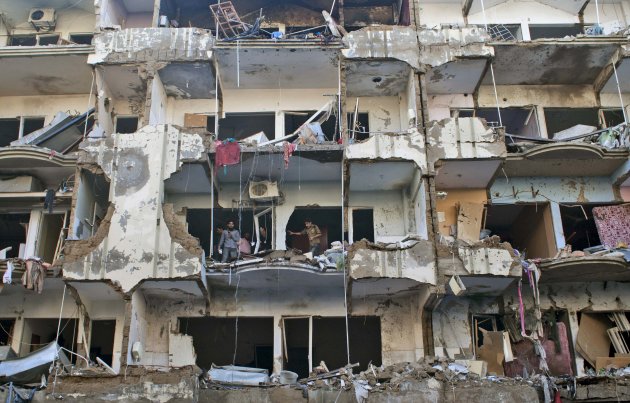
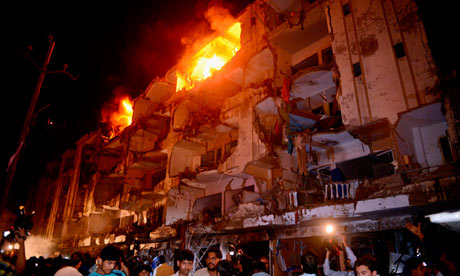
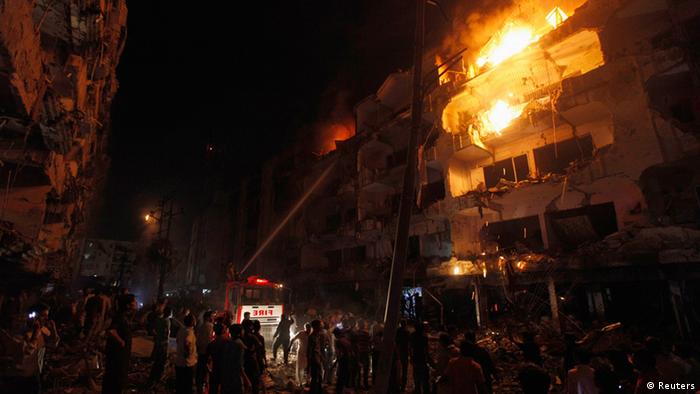
BY: KANAK MANI DIXITAs the attacks on the Shia in Pakistan continue relentlessly, a sense of fatalism is overtaking demands for accountability and justice Rabia Flower is an apartment block in the Abbas Town neighbourhood of Karachi, on the road named “Isphahani” after an associate of Muhammad Ali Jinnah. The twin-blasts that of Sunday, just as the evening prayers were coming to a close in this Shia residential locality, was the result of a “triggered IED.” More than 150 kg of high explosives were detonated as shoppers filled the market below, and families took in the evening sea breeze in the upper storey balconies. Fifty died and many times that were maimed. Water from broken mains mixed with the blood of innocents. Local youth and ambulances swung to the rescue, while the security personnel took their time to arrive. They probably came late because the mass-murderers have taken to setting off explosions in sequence, meant to kill those who respond to the emergency — local youth, journalists, firefighters, police and rangers. Karachi has become an intensified microcosm of the bloodletting in Pakistan, and earlier politico-ethnic rivalries have transmogrified into deeper, cross-cutting complexities. The city today harbours a frightening brew of militancy, involving drug, arms and real estate mafiosi placed on top of additional layers of communal polarisations. Class-based secular politics, for which Sindh and its capital were celebrated, has its back to the wall. Beyond the tension between the political parties representing the Urdu-speaking Mohajir and the Sindhi indigenes, there are now those claiming to represent Punjabi, Baloch and Pashto interests. In terms of sectarian targeting, the sense of vulnerability now goes beyond the Christians, Hindu or Ahmadiya. What has taken Pakistan by deathly storm is the attacks on the Shia, a somewhat larger minority. There has been Shia-targetting in all parts of the country, from Gilgit-Baltistan, Lahore to Quetta in the north, east and west. And now Karachi in the south. For a while, other issues are forgotten as television brings live reports of the hospital emergency intakes, the family members in shock, and excavators digging into the debris. The nervous wait for the upcoming national and provincial elections slated for May, the fears of how the departure of Nato forces will buffet Pakistan, the threat of U.S. sanctions if Islamabad insists on importing desperately needed natural gas from Iran, the debate over the handing over development of Gwadar port to Chinese contractors — all are forgotten momentarily by the opinion-makers as all eyes are glued on the upper storey of Rabiya Flower that continues to burn. CONTINUOUS EXERCISE But, Karachi is a massive city of nearly 20 million, and the regular preoccupations take over as evening turns to night. Other localities, from the violence-prone Lyari township to the humongous “informal settlement” of Orangi, to the posh and secure colonies of Defence and Clifton, go back to their interrupted lives. The wedding reception of up-and-coming Sindh politician Sharmila Farooqi proceeds as planned. Other than in Abbas Town and the nearby Patel and Agha Khan hospitals, the sound of sirens indicates not the arriving ambulance but the ubiquitous signal of “VIP movement.” A well-regarded journalist had told me Sunday afternoon, “The killings in Karachi are now more targeted. Unlike in the past, there are fewer mob killings or random blasts.” By evening he would have changed his mind. The killing of the lay citizenry has become a targeted and continuous exercise, and the sense of fatalism is such that instead of demands for accountability and justice, there is simply the sad wait for the next mayhem. Last month it was Quetta, next month it will be someplace else. Says one IT engineer: “Religion should be a warm cloak, but it has become a shining badge of certitude.” Across the breadth of the subcontinent, in Bangladesh, the perpetrators of 1971 are being brought to book four decades after their crimes. The masterminds of the mayhem at Abbas Town may at least feel threatened if they knew that the sturdy arm of justice will follow them years and decades from now, and hold them accountable for drawing the blood of innocents.
Karachi bomb is unlikely to prompt decisive action against militants
BY:Jon Boone :-Analysts say politicians are hamstrung by fear of confronting Sunni militant groups before elections
Husain Haqqani : ''Democracy only panacea to all ills in Pakistan''
http://paktribune.comFormer ambassador to the United States Husain Haqqani
Pakistan: Renovation: Sarhadi Lutheran Church starts picking up its pieces
The Express Tribune
By Baseer Qalandar
Malala, Clinton cited as Nobel peace candidates hit record
http://www.straitstimes.comPakistani schoolgirl-turned-icon of Taleban resistance Malala Yousafzai, ex-Eastern bloc activists and former US president Bill Clinton are in the running for this year's Nobel Peace Prize, as the Nobel Institute announced a record 259 nominations on Monday.
Punjabi Taliban behind Karachi attack
Pakistan: Government borrowings from banks
Karachi violence claims 4 more lives
http://www.thefrontierpost.comDifferent areas in the metropolis remained in successive grip of violence on Monday when four more persons were ruthlessly gunned down while many others sustained injuries in different incidents of firing and violence. Following the mishaps, the area people preferred it better to remain within the limitations of their homes in the area of Sohrab Goth, Incholi and Indus Plaza. All the roads leading from Rashid Minhas Road to Indus Highway were closed for general traffic while angry people set three buses on fire on National Highway. There is exchange of firing between the angry protestors and Rangers men and both of them are targeting each other intermittently. According to sources, two persons were killed while many others got hurt during exchange of firing. The victims were shifted to hospital where some of them are reportedly suffering from critical situation. On the other hand, Sindh Chief Minister Syed Minister has ordered to impose ban on pillion riding. According to rescue services, at least 16 people got injured by firing near Al-Asif Squire. During riots, angry people set three ambulances on fire. Four members of rescue team are said to have sustained injuries during chaotic situation.
Pak-Iran pipeline project to be formally launched on 11th March
Radio PakistanPresident Asif Ali Zardari says Iran Pakistan gas pipeline project will be formally launched on 11th of this month. He was speaking after inaugurating 3 separate projects in Lahore today (Monday) including Prem Nagar Dry Port project of Railways and Allai Khwar and Jinnah Hydro power projects. The President said Pakistan-Iran pipeline project is aimed at meeting country's growing energy needs and is not against any other country. He said Pakistan is a sovereign country and has every right to pursue projects in national interest and did not intend to offend anyone. He said Pakistan is contributing to world peace and stability. He said pipeline project should be viewed purely in the context of meeting Pakistan's energy needs and hoped that the critics will appreciate the energy requirements of the country. Presidential spokesperson Farhatullah Babar said the President underlined the need for exploiting all available resources to overcome energy shortage. He expressed the confidence that by pursuing people centric policies Pakistan would soon overcome its energy shortages. The President said that addition of dry port at Prem Nagar which was equipped with state-of-the-art facilities will almost double the capacity of existing facility from 4 to 7 million tonnes per annum.
Sunday, March 3, 2013
Bangladesh: '' 'Why I support Shahbagh''
Taslima Nasrin, Hindustan Times
Kim Jong-un wants to talk to Barack Obama about basketball
http://www.telegraph.co.ukSpeaking on his return from North Korea, the unlikely diplomat said: "He loves basketball. ... I said Obama loves basketball. Let's start there" as a way to warm up relations between the US and North Korea.
The families fleeing Pakistan's militant infighting
How Democracy Kills in Indonesia and Pakistan
http://www.bloomberg.com
By Pankaj MishraThe recent slaughter of Shiites in Pakistan is another grisly reminder of the perilous condition of its minorities. Indeed, in Pakistan and Indonesia, the two largest Muslim countries, both of which are in the midst of a fraught experiment with electoral democracy after decades of military rule, murderous assaults on Shiites, Christians and Ahmadis by majoritarian Sunni fanatics have become routine. As a report last week by Human Right Watch claimed, the Indonesian government has shown a “deadly indifference to the growing plight of Indonesia’s religious minorities.” Political leaders in Pakistan, too, are guilty of the same.Successful mass mobilizations against autocratic rule in Indonesia and Pakistan, followed by free elections, raised hopes of a new civil society. So why have both countries witnessed the opposite phenomenon -- the rise of uncivil society? The exponential rise in violence and bigotry is often blamed on the deep -- and very nasty -- state within the two countries: army and intelligence officials who helped set up extremist groups and now use them to wield power. Islam is also held culpable, even though its conservative varieties, denoted superficially by the proliferation of veils and long beards, have long been apparent in both countries, partly as the result of urbanization and the loss of traditionalist Sufi-inflected faiths favored by a majority in the multicultural pasts of both Indonesia and Pakistan. Radical Politics However, the obsession with the deep state’s incurable malignity or Islam’s menacing sociopolitical manifestations, which actually range from Wahhabi blowhards to relatively sagacious televangelists, obscures how elected politicians, in the absence of substantive democracy, cynically deploy radical groups to practice power politics. The government in Pakistan’s Punjab province, which is run by the Pakistan Muslim League (N), one of Pakistan’s two main parties, reportedly paid a monthly stipend to Malik Ishaq, who was just detained in connection with a bombing that killed almost 90 people. PML (N)’s arrangements with Ishaq’s banned Shiite-killing outfit, Lashkar-e-Jhangvi, are in place for the elections due this year; and, as a likely harvester of votes, Ishaq enjoys near-perfect immunity. Mainstream politics in Indonesia, as in Pakistan, were free of murderous Islamic extremists well after independence in the late 1940s. It was an insecure dictator, Suharto, who inaugurated the Islamization of Indonesia, a constitutionally secular state, in an attempt to give himself legitimacy and redirect the growing appeal of political Islam, part of a worldwide trend in the 1980s. But the lifting of restrictions on political activity since Suharto’s fall in 1998 brought other actors on stage, including: the now-suppressed terrorist outfit Jemaah Islamiyah, which was involved in the Bali bombings in 2002; the Islamic Defenders Front, a militia that tries to regulate the morals of Indonesians by attacking massage parlors and nightclubs; and the Justice and Prosperity Party, which won 9 percent of the popular vote in national elections in 2009. Most importantly, many mainstream parties with secular traditions have gone garishly Islamic in a desperate attempt to distract voters. Local governments have enacted harsh sharia laws while the central government turns a blind eye to attacks by thugs on churches. One reason for the growing tolerance of intolerance is political fragmentation in both Indonesia and Pakistan. No party enjoys a broad enough base to govern confidently. All are forced to rely on a variety of formulas and gimmicks, including populist welfare programs, promises of regional autonomy and crooked deals with extremists, in a dash for electoral majorities. Bartering Votes It doesn’t help that political parties are basically patronage-dispensing machines for old and new elites, with the capture of state power as their main aim. Ideologies and principles rarely matter in what is seen as a zero-sum game in which votes are aggressively bartered -- when not literally bought. In this dog-eat-dog world, standing up politically for the Shiites and Ahmadis can be more trouble than it’s worth; and it’s easier to bet on the possibility that the rabid anti- Shiites might just bring in a few votes in places traditionally dominated by Shiite landlords. Illiberal politics pays -- and not just in an Islamic country. A purely formal democracy, one not underpinned by institutions and notions of justice and fairness, can breed monsters anywhere. Indeed, India’s prime minister-in-waiting Narendra Modi, whose alleged complicity in the deaths of almost 2,000 Muslims in his state in 2002 seems to help rather than hinder him, is South Asia’s true master of the brutal calculus of sectarian politics; his perfectly calibrated callousness toward religious minorities and the poor is now matched by brimming business- friendliness that endears him to big Indian conglomerates. Democracy is undermined not so much by Islam, or for that matter Hindu extremism, as by ruthlessly self-interested elites who hijack the political process, using all available means to secure their dominance. Their old axis of violence, cronyism and corruption is susceptible to challenge by a genuinely social-democratic party or movement. But essential ingredients for such a challenge seem to be in short supply in Indonesia and Pakistan. For decades their ruling class systematically destroyed all progressive opposition and even the conception of political life, in which nongovernmental organizations, women’s groups, peasant associations, trade unions or empowered local governments patiently create democracy from below. In their place, the two countries have populist parties and individuals vending miracles, like the Justice and Prosperity Party or Pakistan’s Movement for Justice, led by the famous ex- cricketer Imran Khan, which present themselves as anti- establishment and profess to offer instantly honest and truly Islamic government to both the harried middle class and the militantly disaffected poor. Seeking Recourse They are soon compromised by their apparent proximity to the venal establishment. Nevertheless, there are always enough people who, recoiling from everyday experiences of predatory capitalism, graft-ridden political institutions, harsh poverty and joblessness, seek recourse in the practice of “true” Islam. This would be unremarkable -- Islam will never cease to signify an alternative moral and political order -- if growing rage over a grossly iniquitous system wasn’t channelled so frequently into savage assaults on various infidels. As leaked cables from the U.S. Embassy in Pakistan 2009 pointed out, “poor and underdeveloped regions” in rural Punjab and Sindh are “increasingly the recruiting and training ground for extremism and militancy.” “Unlike in the recent past, the poor and jobless youth are no longer cut off from the outside world”; they can see “the wealth and corruption that exist outside their immediate circles.” One day, this dyad of dupes and extremists may well be regarded as a byproduct of a particularly unstable and grim phase in the evolution of democracy. But that day will come only if democracy amounts to something more than adult franchise and ceases to be a way of further empowering the rich and the powerful. In the meantime, the working relationship between politicians and communities of sectarian hate can only grow stronger.
Indonesia: Religious violence rising
Ahmadiyya TimesIndonesia’s government, security forces and courts must do more to protect religious minorities from growing episodes of intolerance and violence, an international rights group said in a report on Thursday. Human Rights Watch cited a steady increase in brutal attacks over the past few years due to the government’s failure to confront thuggish harassment against Christians, Shia Muslims and the Ahmadiyah, an Islamic sect. It also noted that discriminatory regulations have not only affected those minorities, but also Sunni Muslim communities in some Christian-dominated areas of eastern Indonesia. Indonesia, a secular country, is the world’s most populous Muslim-majority nation. The majority of its 210 million Muslims are Sunni and most practice a moderate form of faith. The New York-based organization called on President Susilo Bambang Yudhoyono to adopt a “zero tolerance” policy for discrimination and violence against religious minorities. The government responded to the report by saying religious harmony remains strong in Indonesia, and it was unfair to generalize all attacks on minorities as being linked to intolerance. The report alleged building permits for houses of worship have been denied; police have failed to stop violent attacks; prosecutors have sought weak punishment; and, in two cases, local authorities refused to honor Supreme Court decisions allowing religious minorities to build places of worship. The 107-page report was based on research between August 2011 and December 2012, interviewing 115 people, including 71 victims in 10 of Indonesia’s 34 provinces. “The Indonesian government’s failure to take decisive action to protect religious minorities from threats and violence is undermining its claims to being a rights-respecting democracy,” said Brad Adams, the group’s Asia director. The watchdog organization also cited reports from the Jakarta-based nonprofit Setara Institute, which recorded 264 attacks last year, up from 244 cases the previous year and 216 in 2010. However, Bahrul Hayat, secretary-general of Indonesia’s Religious Affairs Ministry, said a government survey completed at the end of last year indicated that religious harmony in Indonesia is still very strong. “We noted that a few violations happened, but please don’t generalize that intolerance has increased in Indonesia,” he said, adding that in some cases religion is blamed as the cause of conflicts, when instead some disputes are actually motivated by social, political, economic or even cultural or family issues. He said most religious issues involve the closing or building of places of worship, but it is not an issue unique to minority religions. “Not only churches are having problems in gaining construction approval, but also mosques in some areas,” he said. “If they don’t meet the requirements of a permit to build the house of worship, the government’s permit will not granted.... This should be understood by people of all faiths.” In the Human Rights Watch report, the hardline Islamic People’s Forum and the Islamic Defenders Front were singled out as seeking to justify violence by labeling Ahmadiyahs and Shiites as “blasphemers” and most non-Muslims as “infidels.” The report insisted on the need to enforce national laws and to map out a comprehensive strategy to combat rising religious intolerance. It also criticized the government for not disciplining Cabinet members, including Religious Affairs Minister Suryadharma Ali, who encouraged abuses with discriminatory statements such as calling for the Ahmadiyah to be banned in 2011 and proposing one year later that Shia Muslims convert to Sunni Islam.
Washington : Focus on Effects of Automatic Spending Cuts
http://www.voanews.com
The U.S. government has begun a crash diet of automatic spending cuts in pursuit of better fiscal health. In the days and weeks ahead, politicians in Washington will be monitoring the effects of those cuts and the public’s reaction as federal services are reduced.
Songs, paintings and protest at Dhaka's Shahbagh
http://timesofindia.indiatimes.comThe blood red poster "one nation, one roar, hang the bloody razakars" screams at you much before you reach Shahbagh square. However, even as parts of Bangladesh burn in violence with 22 people being killed in the latest round of clashes, the protesters at Shahbagh remain calm. Much like protests at Jantar Mantar and Ramlila Maidan, young students, executives, men and women sing songs, paint their anguish on walls, and continue to get signatures for their movement. On Sunday afternoon, the protestors went on a rally to oppose the two-day hartal called by Jamaat-e-Islami. Asked why he was spending so much time at Shahbagh, TV actor, MBA student and one of the main organizers Sayeed Zakir Ahmed said it was never planned. "I don't even remember which friend suggested we come to the protest site, it was a message on my Facebook page and I like many others just went. Within 24 hours, the numbers started building up," he said. Ahmed and his friends have not been home for the last 20-odd days after a fellow activist and blogger Ahmed Rajib Mollah was killed by fundamentalists. So far, they have collected 3.5 lakh signatures. Kamreozzaman Sagar, a filmmaker, plans to produce a documentary soon called 'Projonmo 71'. Sagar, whose grandfather and three uncles were killed in the Liberation War, said, "When the first verdict was given ... we went online and before I knew it ... everyone was feeling the same as me." Referring to the protests, President Pranab Mukherjee told a Bangladeshi TV channel in an interview, "I have great respect for the people of Bangladesh and their sense of patriotism, courage and independence. Above all, they have shown their belief in democracy and participative politics. We have recently seen a reawakening of the youth who recall the extraordinary sacrifices that led to the birth of the nation. The youth of this country will determine its future."
Zardari dismisses U.S. opposition to Iran-Pak pipeline project
http://www.thehindu.comNo power in the world can halt the 7.5 billion Iran-Pakistan gas pipeline project, President Asif Ali Zardari has said, dismissing mounting U.S. opposition to the venture that will be formally inaugurated on March 11. “Nobody has the power to halt this project,” Mr. Zardari said during an interaction with senior editors and TV anchors at his private residence in Lahore late last night.
ShiaGenocide in Pakistan: Deobandi militants of ASWJ massacre at least 54 Shia Muslims in Abbas Town Karachi
Suicide blast at Shiite mosque kills scores in Pakistan
http://www.dw.de
The Real Reasons Karzai Wants U.S. Troops Out
http://www.theatlantic.com
Afghan President Hamid Karzai's surprise statement this week kicking U.S. Special Operations forces out of Wardak Province, a strategic region close to Kabul, was a rare burst of headline news from a largely forgotten war. The elite U.S. troops, Karzai said, had been "harassing, annoying, torturing and even murdering innocent people."
Karzai has issued similar demands before, only to quietly back down later. American forces have promised to investigate the situation in Wardak, and it's possible -- and even probable -- that this Karzai edict will last no longer than his previous ones. Karzai, for instance, has repeatedly ordered the U.S. to stop using night raids and airstrikes in civilian areas, but NATO continued to do both.
Still, the contretemps highlights a pair of rarely-discussed dynamics that could shape the American endgame in Afghanistan: Karzai's lingering anger over the role played by elite U.S. forces in the past and his clear desire to sharply limit what they can do in the future.
It's far from a simple political dispute. The Obama administration says it will withdraw the overwhelming majority of U.S. forces from the country by the end of next year. Most of the remaining troops will help train the Afghan Army and National Police.That's not all the U.S. will be doing, though, which is why this week's blowup may prove to be significant. The White House has made clear that sizable numbers of Special Operations forces will remain in Afghanistan for the foreseeable future. The elite troops will have two main missions: mounting targeted raids against suspected terrorists and training local militias to fight the Taliban in remote areas. The problem is that Karzai doesn't want the U.S. to be doing either, and this week's edict could be a harbinger of a long, bitter fight to come. Karzai believes the raids cause significant cvilian casualties and worries the militias could take part in a future Afghan civil war.
Here at home, bearded commandos from units like the Navy SEALs and the Army's Delta Force are celebrated in best-selling books like "American Sniper" and the popular, if controversial, movie "Zero Dark Thirty." Video games featuring the elite troops have collectively grossed billions of dollars. Americans love heroes, and the men (they are always men) who swoop into fortified compounds at night to kill or capture wanted terrorists seem to fit the bill perfectly.
That is not, to put it very mildly, how those troops are seen in Afghanistan, where the commandos are routinely accused of killing or arresting the wrong targets and calling in air strikes which result in significant numbers of civilian deaths.
The night raids the elite units use to catch wanted Afghans while they're asleep are particularly hated. Afghans complain that it's a grave cultural insult for male troops to search women or enter a home uninvited. A night raid earlier this month which killed a pregnant woman has made the missions even more unpopular.
Karzai has been railing against the night raids for years and periodically demanding that the U.S. and its allies forego them entirely. In November 2011, for instance, he said "all night raids and searches of Afghan homes should stop immediately." American commanders ignored him. Night raids, a U.S. spokesman said at the time, were "an essential part of our operations." Indeed, senior American commanders say the raids get their men nearly every time while rarely requiring the troops to fire a single shot.
Wardak is a strategically important province which borders Kabul and is a key route for militants trying to reach the Afghan capital. Karzai said the new edict was prompted by widespread public anger in Wardak over reports that nine local residents disappeared after being taken into custody by "armed individuals named as U.S. special forces" and that the body of a student detained by the Americans was found later with his throat cut and signs he had been tortured. Karzai's allegations are under NATO investigation.
The Obama administration has made some concessions since then - having more Afghans participate in planning some raids and taking Afghan commandos on many missions -- but the U.S. continues to mount hundreds of night raids per year, often unilaterally. When Washington and Kabul signed a highly-touted agreement last spring which seemed to suggest that future raids would require warrants from Afghan courts, the two governments glossed over the fact that the U.S. retained the ability to mount raids and get warrants after the fact, if at all.
The militias the U.S. is working to set up throughout Afghanistan are equally unpopular with Karzai and many ordinary Afghans, who complain that the fighters have so little American oversight that they are free to routinely rob, rape, and sometimes kill civilians. Karzai and many other Afghans note that militias played a bloody role in the country's last civil war and could do so again if renewed strife breaks out when the U.S. leaves. More prosaically, Karzai sees the fighters - who have little to no connection to the Afghan central government - as a potential threat to his own power.
This week's fight will probably blow over, but Karzai is playing with fire. The war is increasingly unpopular among both Democrats and Republicans, and a Karzai overstep could lead the administration to simply pull the plug and withdraw all American forces by the end of 2014. Either way, the U.S. is heading towards the exit. The biggest question going forward is whether Karzai will hold open the door.
Karzai to NATO: Target real terrorists hideouts
Zardari: Democratic government completing tenure for first time
Pakistan: Boycotting the Cable News
Editorial: The Baloch Hal
40 dead in twin Karachi blasts
Pakistan: ''Another voice muted''
EDITORIAL: Daily Times
Mehmood Afridi, a journalist and President Kalat Press Club was killed on Friday. In four years nearly 30 journalists have been killed in Balochistan. This is the third murder of a journalist in a single week. The reason behind the murder has not been revealed as nobody has taken the responsibility yet. But one thing is now obvious that Pakistan is increasingly becoming unsafe for professional journalists. The message the criminals wanted to put across through this murder could be to limit the boundaries for the freedom of expression that they think is appropriate. And since the state has failed to maintain its writ by letting the criminals and the terrorists get off scot-free, they feel emboldened to kill anybody who does not meet their demands. That explains why the United Nations has designated Pakistan the second most dangerous country for journalists in the world. Only last year 12 journalists were killed while performing their duty. Not a single murder has been followed through. In fact in the Wali Babar case, which did reach court, all the ten witnesses were killed one after the other. Such an intimidating atmosphere could prove poisonous for journalism that could only thrive in a free and open atmosphere. It is the responsibility of the government to give protection and safety to the journalists, more so because they put their life in danger to expose the truth and facts. The issue with our system has been that either the guardians become part of the problem or they are removed if they dare to solve it. Unless the culprits are punished, this wave of muting responsible voices would further destroy the quality of our lives that has already gone many points down. This would also affect news quality by opening more room for compromises with the non-state actors. The media is the watchdog of society and one of the factors to effect change in society.
Targeted killing aside, journalists are also getting killed increasingly in terrorist activities such as bomb blasts. Two Pakistani journalists were killed in the January 10 Quetta massacre on Alamdar Road. Many have been disappeared as well. This brings the responsibility of the media houses in question, which have failed to field train reporters in conflict zones so as to avoid injuries, disappearances or death. Awareness to this end is required as well to minimize the intensity of the threat.
Understanding the gravity of the situation it is time now for the government to arrest the growing terrorism and lawlessness in the country, where the criminals kill anyone with impunity.
Pakistan: Targeting journalists
Karachi: 24 dead, dozens hurt in Abbas Town blast
FRONTIER POSTAt least 24 people including women and children were killed and dozens others sustained injuries after a powerful blast ripped through a densely populated area near Abbas Town, Geo News reported.
Bomb kills 20 in southern Pakistan
Associated PressPakistani officials say a bomb blast has killed at least 20 people in a neighborhood dominated by Shiite Muslims in the southern city of Karachi. Police official Azhar Iqbal says the bomb exploded Sunday outside a Shiite mosque as people were leaving evening prayers. He says initial reports suggest the bomb was rigged to a motorcycle, but a survey of the damage indicates there could have been additional explosives planted at the scene. Several buildings nearby caught fire. A top government official Taha Farooqi says 20 people were killed and others are feared dead. He says more than 50 were wounded. No one has claimed responsibility, but Sunni militants linked to al-Qaida and the Taliban have targeted Shiites in the past, claiming they are heretics.
Subscribe to:
Posts (Atom)