THE FRONTIER POSTHanif-ur-Rahman The appointment of Engineer Shaukatullah Khan as governor of Khyber-Pakhtunkhwa is a good omen for the terrorism-stricken people of Tribal Areas. The Pakistan People Party has done an-other favor to its dwellers particularly to Bajaur Agency which is really lagging far behind as compared to the rest of Tribal Agencies. His appointment sent a wave of jubilation in Bajaur which was witnessed in the Ariel firing by the trigger-happy people. The very status of separate Agency was given to it by the PPP government in 1973. Many of the developmental works and infrastructure all over Federally Administered Tribal Areas (FATA) owe its existence to the dynamic policies of Zulfiqar Ali Bhutto. PPP has also got the distinction of amending the century-old British-imposed Frontier Crimes Regulations two year ago. No doubt, the Frontier as it was then known has been holding a key position for the British due to its competition with its nemeses the Tsarist Russia and then the Communists Russia after the Communists Revolution in 1917. The British Government appointed the best of its mind as governors to deal not only with its great rival Russia but also to deal with the unfriendly rulers of Afghanistan and the refractory Pakhtun tribes. Same was done by the imperialists Mughals. During the cold war era the area has been of special concern to the successor of British, the United States. And without any exaggeration Khyber-Pakhtunkhwa played a decisive role in bringing an end to the Cold war polities with heavy losses in every walk of life. The current terrorism has much to do with the past politics. Today once again the area is in the eye of the storm and passing through the worst kind of violence and terrorism. For US it has the potential of carrying another 9/11 like attacks. It has been the nerve-center of Pakistan Tahreek-i-Taliban (TTP) and other Islamic forces with the dreaded Haqqani Network headquartered in North Waziristan. In every aspect of life the successive regimes have not done much for the FATA and that is why the deprivation gathered over years has turned it into a veritable ground for the current wave of militancy. By appointing Engineer Shaukatullah Khan as the Governor of Khyber-Pakhtunkhwa, who is himself a tribesman and has a vast experience of the local politics and knowledge of local customs and traditions, is really a meritorious job by President Zardari. He has been with his father who has not only been twice a Member of the National Assembly but is a skilled and veteran Jargamar (an elder having the skill of conflict resolution). By appointing him as governor at this point of time when the National Awami Party (ANP) and PPP contemplate to hold dialogue with the Taliban to put an end to the decade of violence is step in the right direction. He might be acceptable to all as he has expressly stated his neutral position. He having previously served as Minister of State and Frontier Regions (SAFRON) is well aware of the problems faced by the Tribesmen. The people of FATA are crossed-fingered over his appointment as new Governor. They have pinned down a lot of hopes and expectations on him. It is hoped that he will focus on education and health problems of FATA. Currently there is no State-of-the-art hospital in the whole of FATA, which not only adds to the misery of the local people but also put an extra burden on the hospitals in Peshawar. FATA being a vast area of 2720 sq kilometers has only one university which has very recently announced by his predecessor, Masood Kausar, in the Frontier Region of Darra Adam Khel. It is hoped that he would upgrade colleges in all Tribal Agencies and will do his best to strive for the establishment of new universities. Electricity though is problem of the whole country but it is a rare commodity in FATA. This should also be on his priority list as well. What he does for the poor and militancy-hit Tribal Area is a matter of time. Whether he takes on the challenges head on and comes out successful of these challenges or become part of history? Whether he vindicates the trust reposed on him by the PPP leadership is to be seen in days to come.
Monday, February 18, 2013
KP new governor: A ray of hope for FATA
Billions wasted by Punjab govt
 Deputy Prime Minister Chaudhry Pervez Elahi said on Sunday that billions of rupees belonging to the poor people of Punjab had been frittered away on ‘ill-conceived and useless schemes’ by the Shahbaz Sharif government.
Addressing a big public meeting at the Talagang Government Degree College, the provincial PML-Q chief, who is set to contest election for the National Assembly constituency NA-61 (Chakwal II), mentioned the major development projects launched when he was the chief minister and said he would change the fate of the people of the area after coming into power.
The public meeting, apparently held in an attempt to regain PML-Q’s lost ground in the district and woo the voters for the general election, was attended by local leaders of the party as well as the PPP.
Hurling at the Punjab government allegations of wrongdoing in the affairs of the Metro Bus Service, he said: “Such massive corruption has been done for the first time.”
Mr Elahi said that Rs70 billion from the public exchequer had been squandered on a small, 27km road in Lahore. “Rules and regulations have also been violated in this major scam,” he alleged.
“The chief minister has four bullet-proof vehicles and has appointed a number of police personnel for his own and his family’s security and yet he does not hesitate to describe himself as ‘Khadim-i-Aala’ (the grand servant).”
Referring to the PML-N’s ongoing bid to bring politicians of rival parties into its fold, he said in a comic way that the Sharif brothers could not digest their food “unless they took a few ‘lotay’ (turncoats) at breakfast”.
“The PML-N has turned Punjab into a quagmire of problems,” he said.
He said he had left Rs100bn in the provincial exchequer but now it had been rendered empty because of poor policies and the government was hardly able to pay salary to its employees.
Deputy Prime Minister Chaudhry Pervez Elahi said on Sunday that billions of rupees belonging to the poor people of Punjab had been frittered away on ‘ill-conceived and useless schemes’ by the Shahbaz Sharif government.
Addressing a big public meeting at the Talagang Government Degree College, the provincial PML-Q chief, who is set to contest election for the National Assembly constituency NA-61 (Chakwal II), mentioned the major development projects launched when he was the chief minister and said he would change the fate of the people of the area after coming into power.
The public meeting, apparently held in an attempt to regain PML-Q’s lost ground in the district and woo the voters for the general election, was attended by local leaders of the party as well as the PPP.
Hurling at the Punjab government allegations of wrongdoing in the affairs of the Metro Bus Service, he said: “Such massive corruption has been done for the first time.”
Mr Elahi said that Rs70 billion from the public exchequer had been squandered on a small, 27km road in Lahore. “Rules and regulations have also been violated in this major scam,” he alleged.
“The chief minister has four bullet-proof vehicles and has appointed a number of police personnel for his own and his family’s security and yet he does not hesitate to describe himself as ‘Khadim-i-Aala’ (the grand servant).”
Referring to the PML-N’s ongoing bid to bring politicians of rival parties into its fold, he said in a comic way that the Sharif brothers could not digest their food “unless they took a few ‘lotay’ (turncoats) at breakfast”.
“The PML-N has turned Punjab into a quagmire of problems,” he said.
He said he had left Rs100bn in the provincial exchequer but now it had been rendered empty because of poor policies and the government was hardly able to pay salary to its employees.
Thousands of Shiites protest 89 killed in Pakistan
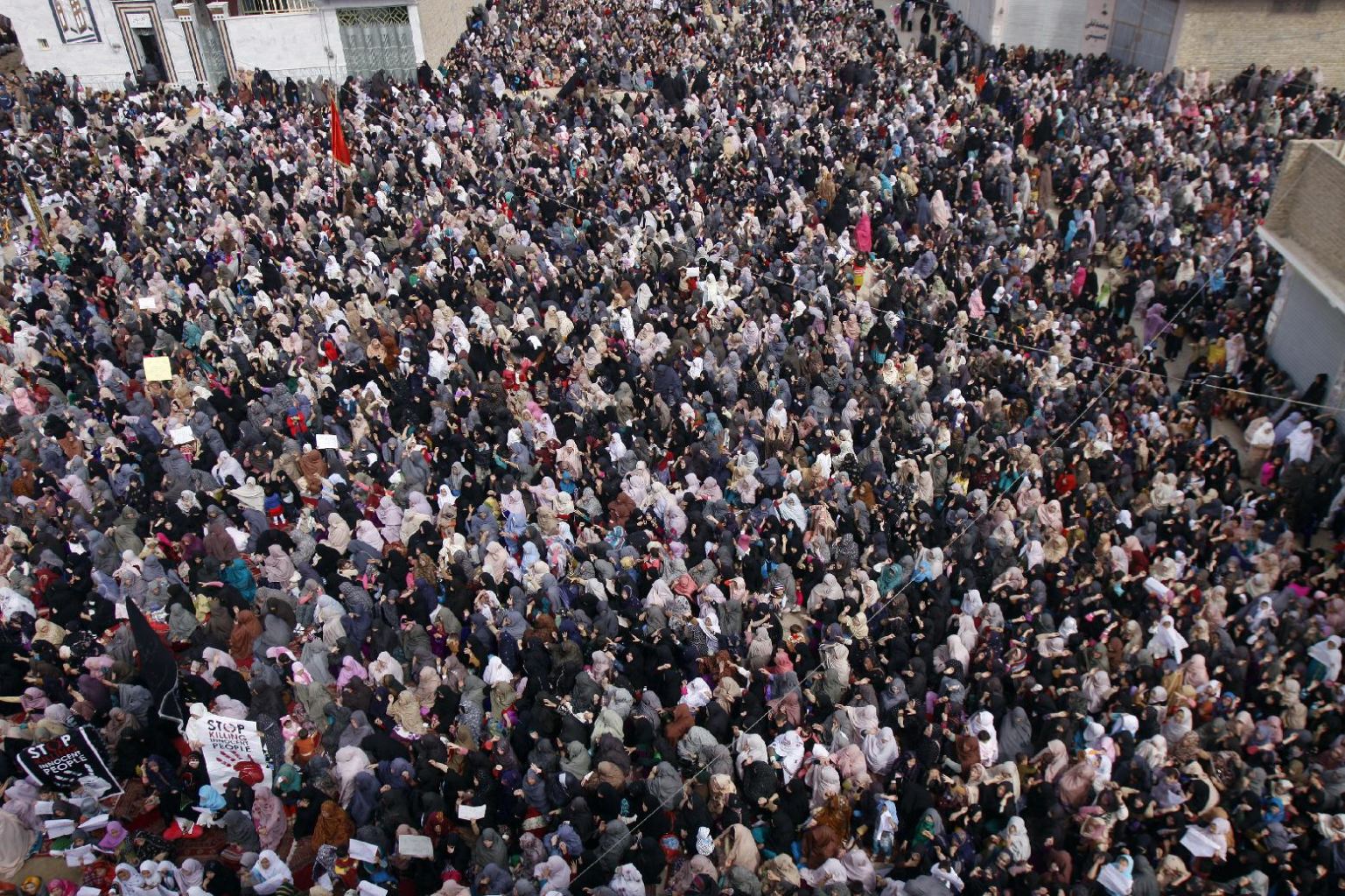
At least 15,000 Shiite Muslims took to the streets in southwest Pakistan on Monday in a second day of protests following a bombing that killed 89 people. Relatives of the victims refused to bury their loved ones until the army takes action against the militants targeting the minority sect. Meanwhile, militants wearing suicide vests and disguised as policemen attacked the office of a senior political official in northwest Pakistan, killing six people, police said.Associated Press
 Pakistan has been besieged by militant attacks in recent years, many of them carried out by the Pakistani Taliban, who have been waging a bloody insurgency against the government. Radical Sunni militant groups have also increasingly targeted the country's Shiites because they do not view them as real Muslims.
Many of these sectarian attacks have occurred in southwest Baluchistan province, which has the largest concentration of Shiites in Pakistan. Many are Hazaras, an ethnic group that migrated from Afghanistan over a century ago.
The bomb that ripped through a produce market Saturday in Baluchistan's provincial capital of Quetta was the second mass-casualty attack targeting Shiites in the city in a little over a month. A double bombing of a billiards hall in January killed 86 people.
The death toll from the most recent blast, which was caused by a bomb hidden in a water tank, rose to 89 on Monday after eight people died of their wounds, said Baluchistan's home secretary, Akbar Hussain Durrani.
Outrage over the attacks has grown in Pakistan, and protests were held in over a half dozen cities Monday in addition to Quetta. But it's unclear whether the demonstrations will spark action that will make the Shiites any safer.
Rights groups have criticized the government for not doing enough to crack down on the attacks. They explain this apathy by pointing to past connections between the country's military and anti-Shiite militants, and also allege the sectarian groups are seen as less of a threat than the Taliban because they are not targeting the state.
Despite this criticism, the Shiites in Quetta see the Pakistani army as their only potential savior and are demanding the generals be given control of the city. They blame the provincial government and police for failing to protect them and want the army to take targeted action against sectarian militant groups like Lashkar-e-Jhangvi, which claimed responsibility for both the recent bombings in the city.
"We will not bury our martyrs until our demands are fulfilled," a top Shiite leader in the country, Amin Shaheedi, told reporters Monday at the site of the protest in Quetta.
Saumbal, the police officer, estimated that the crowd of protesters numbered at least 15,000. Some poured into the streets near the attack site carrying signs and chanting slogans against terrorism. Others remained inside a mosque beside the bodies of their relatives, which were covered with white sheets. One young girl wrote on her face, "Don't kill me. I am Shia."
After the bombing in January that killed 86 people, Shiites camped out in the street for four days alongside the coffins of their loved ones. Eventually the country's prime minister ordered a shake-up in the regional administration, putting the local governor in charge of the whole province. But the governor has expressed frustration, saying the recent bombing was the result of a failure of the provincial security and intelligence services.
Durrani, the home secretary, said the government has no plans to call in the army and will continue to rely on the 3,000 members of the paramilitary Frontier Corps who are deployed in Quetta, as well as the police.
The most significant protests outside Quetta on Monday occurred in Pakistan's largest city, Karachi, located on the country's southern coast. Hundreds of protesting Shiites paralyzed key areas of the city by blocking major roads, including the one that leads to the airport.
Violence in Karachi risked exacerbating sectarian tensions. Gunmen opened fire on a restaurant in the city, killing two people, said police spokesman Imran Shaukat.
A spokesman for a Sunni extremist group, Ahle Sunnat Waljamaat, said two of its activists were killed in the attack. Members of the group clashed with police following the shooting, he said.
In the eastern city of Lahore, gunmen on a motorcycle shot to death a Shiite doctor and his 12-year-old son, but it was unclear whether the attack was sectarian in nature, said senior police officer Malik Ovais.
The target of Monday's attack in the northwestern city of Peshawar was the office of the top political official for the Khyber tribal area, a major militant sanctuary in the country. The militants were disguised in the same type of uniform worn by the tribal policemen who protect the compound.
At least five militants attacked policemen protecting the compound with assault rifles and hand grenades, said Mian Iftikhar Hussain, information minister for surrounding Khyber Pakhtunkhwa province. Some managed to slip inside the compound, and two blew themselves up. Officials are trying to determine what happened to the other attackers, he said.
Six people were killed in the attack, including four tribal policemen and two civilians, said senior police officer Shafqat Malik. Thirteen people were wounded, including some who were inside an office that collapsed from the force of the explosions.
Pakistan has been besieged by militant attacks in recent years, many of them carried out by the Pakistani Taliban, who have been waging a bloody insurgency against the government. Radical Sunni militant groups have also increasingly targeted the country's Shiites because they do not view them as real Muslims.
Many of these sectarian attacks have occurred in southwest Baluchistan province, which has the largest concentration of Shiites in Pakistan. Many are Hazaras, an ethnic group that migrated from Afghanistan over a century ago.
The bomb that ripped through a produce market Saturday in Baluchistan's provincial capital of Quetta was the second mass-casualty attack targeting Shiites in the city in a little over a month. A double bombing of a billiards hall in January killed 86 people.
The death toll from the most recent blast, which was caused by a bomb hidden in a water tank, rose to 89 on Monday after eight people died of their wounds, said Baluchistan's home secretary, Akbar Hussain Durrani.
Outrage over the attacks has grown in Pakistan, and protests were held in over a half dozen cities Monday in addition to Quetta. But it's unclear whether the demonstrations will spark action that will make the Shiites any safer.
Rights groups have criticized the government for not doing enough to crack down on the attacks. They explain this apathy by pointing to past connections between the country's military and anti-Shiite militants, and also allege the sectarian groups are seen as less of a threat than the Taliban because they are not targeting the state.
Despite this criticism, the Shiites in Quetta see the Pakistani army as their only potential savior and are demanding the generals be given control of the city. They blame the provincial government and police for failing to protect them and want the army to take targeted action against sectarian militant groups like Lashkar-e-Jhangvi, which claimed responsibility for both the recent bombings in the city.
"We will not bury our martyrs until our demands are fulfilled," a top Shiite leader in the country, Amin Shaheedi, told reporters Monday at the site of the protest in Quetta.
Saumbal, the police officer, estimated that the crowd of protesters numbered at least 15,000. Some poured into the streets near the attack site carrying signs and chanting slogans against terrorism. Others remained inside a mosque beside the bodies of their relatives, which were covered with white sheets. One young girl wrote on her face, "Don't kill me. I am Shia."
After the bombing in January that killed 86 people, Shiites camped out in the street for four days alongside the coffins of their loved ones. Eventually the country's prime minister ordered a shake-up in the regional administration, putting the local governor in charge of the whole province. But the governor has expressed frustration, saying the recent bombing was the result of a failure of the provincial security and intelligence services.
Durrani, the home secretary, said the government has no plans to call in the army and will continue to rely on the 3,000 members of the paramilitary Frontier Corps who are deployed in Quetta, as well as the police.
The most significant protests outside Quetta on Monday occurred in Pakistan's largest city, Karachi, located on the country's southern coast. Hundreds of protesting Shiites paralyzed key areas of the city by blocking major roads, including the one that leads to the airport.
Violence in Karachi risked exacerbating sectarian tensions. Gunmen opened fire on a restaurant in the city, killing two people, said police spokesman Imran Shaukat.
A spokesman for a Sunni extremist group, Ahle Sunnat Waljamaat, said two of its activists were killed in the attack. Members of the group clashed with police following the shooting, he said.
In the eastern city of Lahore, gunmen on a motorcycle shot to death a Shiite doctor and his 12-year-old son, but it was unclear whether the attack was sectarian in nature, said senior police officer Malik Ovais.
The target of Monday's attack in the northwestern city of Peshawar was the office of the top political official for the Khyber tribal area, a major militant sanctuary in the country. The militants were disguised in the same type of uniform worn by the tribal policemen who protect the compound.
At least five militants attacked policemen protecting the compound with assault rifles and hand grenades, said Mian Iftikhar Hussain, information minister for surrounding Khyber Pakhtunkhwa province. Some managed to slip inside the compound, and two blew themselves up. Officials are trying to determine what happened to the other attackers, he said.
Six people were killed in the attack, including four tribal policemen and two civilians, said senior police officer Shafqat Malik. Thirteen people were wounded, including some who were inside an office that collapsed from the force of the explosions.
To cut Afghan red tape, bribery is the norm
 In a country where Western accusations of corruption have been lobbed at high-ranking officials and public institutions, the malfeasance that drives Afghans against their own government happens every day on a much smaller scale.
Forget special investigations and glossy reports on misspent funds and insider dealings, many Afghans say. Try renewing your driver’s license.
Afghanistan’s traffic department might be the most bloated of the country’s nascent bureaucracies. Want a vehicle registration? You’ll need 27 separate signatures. A new driver’s license? You’ll need about a dozen stamps from ministries, agencies and banks.
Those processes are so painstaking and time-consuming that an entire underworld has emerged to bribe public officials into expediting traffic documents. It’s corruption in $30 or $40 bites — far from the millions allegedly stolen here every year. But those small bribes shape the way many Afghans think about their country’s experiment in democracy.
When complaining about corruption, many Afghans say that despite the horrors of the Taliban regime, there was less graft under its government. At a time when the United States is starting to withdraw tens of thousands of troops, a process President Obama highlighted in last week’s State of the Union speech, some Afghans say the return of Taliban rule would at least yield a more honest crop of government officials.
Munir, a 37-year-old former police officer, stood last week in front of the traffic department, railing against corruption and malfeasance. The Afghan government has never been so paralyzed by greed and crime, he said.
“The system is broken,” he said.
He sounded like thousands of Afghans whose experiences with corrupt officials have left them dispirited. Except Munir, who like many Afghans uses only one name, admitted that he is part of the dysfunction.
Every morning, he takes a pile of clients’ license and registration applications to contacts at the traffic department. He slips the officials between $10 and $20, and a document that could take weeks to obtain is finalized in a fraction of the time. Munir pockets between $20 and $40.
This is how he makes $10,000 a year, twice what he earned as a police officer. But his job comes with the awareness that he is now a part of what is broken.
“It’s painful for me,” he said. “I hate the corruption, and I am a part of the corruption.”
‘Like links in a chain’
Munir is one of the “dealers” who work in ministries across Afghanistan, expediting what can be exasperating bureaucratic processes, such as paying taxes and securing business licenses and other documentation. In a country far more modern than it was 10 years ago — with more drivers and more businesses — there’s also more room for graft.
“Any government document you need, I can get it for you,” said Abdul Hadi, another dealer who works mostly out of the traffic department. When asked about the ethics of his profession, he was blunt: “It is not honorable.”
Last year, according to a report released this month by the United Nations and the Afghan government’s anti-graft agency, half of Afghan adults paid bribes while requesting public services, and together those Afghans handed over a total of $3.9 billion. That figure is twice as large as Afghanistan’s domestic revenue, the report said.
With average annual income in Afghanistan standing at less than $1,000, many cannot afford to pay bribes. At the traffic department, where between 1,000 and 2,000 people come every day, a line of men attempting to renew their licenses and registrations without bribes forms next to the line of dealers. Those in the legitimate line are forced to put up with days or weeks of waiting and watching as dealers slip ahead of them.
“We don’t have the money to pay anyone, so we wait and wait on our own,” said Abdul Basir, who had spent 10 days in line to renew his vehicle registration.
“It’s like links in a chain. One person accepts bribes to make enough money to bribe someone else. This is Afghanistan,” said Sher Mohammed, who waited for more than a week to renew his driver’s license.
At the traffic department, whose red-tape hurdles have earned it a popular reputation as the most bribe-sucking government office, about 200 dealers spend their days greasing officials’ palms. Some clients get dealers’ phone numbers from friends and relatives. Others simply approach them outside the department, hand them forms and cash, and disappear.
The dealers then make their way inside the sprawling department to the offices of their contacts. Many administrative employees in Afghanistan, including at the traffic department, are said to have paid for their positions — an investment that is recouped by accepting dozens of bribes orchestrated largely through dealers.
Munir’s connections were passed down from his uncle, who worked at the traffic department for more than a decade. He learned whom to bribe, how much to pay and how much to charge for the service.
Blame and punishment
Criticism of the Afghan government is often articulated in terms of what people here call “petty corruption.” Accusations of multimillion-dollar graft involving ministers and governors occasionally grab local headlines, but for many, those stories are less personal and less offensive.
“The petty corruption is something tangible. It’s how people see the government in their daily life, and it is a great source of anger,” said Shafiq Hamdam, director of the Afghan Anti-Corruption Network, an independent research organization. “This makes it easier for insurgents to give a bad name to the government.”
President Hamid Karzai has long been a public critic of corruption, despite the many accusations pinned on his government. In recent speeches, he has blamed Western donors for exacerbating the problem by putting money in the wrong hands.
Karzai created the anti-graft government task force, called the High Office of Oversight and Anti-Corruption, in 2008. But its director, Azizullah Ludin, likened his agency last year to a “lion without teeth.”
Even within ministries, views differ on how to deal with the practice of granular corruption — the kind of bribery that corrodes public confidence.
“I’ve made it a top priority to arrest all of the dealers,” said Alhaj Nizamudin Badkhan, the head of the country’s traffic department, who said he has sent 20 dealers to prison.
But in an office just down the hall is Gen. Asadullah, the director of the Kabul traffic department, who said he saw it differently.
“The dealers pose no problem. What they do is legal,” said Asadullah, who uses only one name.
Munir treats his position in Kabul’s illicit economy the same way he did his job in the police force. He works at least five days a week. He prides himself on being effective — in this case, by turning around documents as quickly as he can.
But he knows how he is viewed by many of the people in line, who endure the arduous process of obtaining driver’s licenses and automobile registrations legally.
“When I voted in our elections, I thought our system would improve. But now there is even more disorder,” he said. “Without making bribes, it is impossible to get anything done in this country.”
In a country where Western accusations of corruption have been lobbed at high-ranking officials and public institutions, the malfeasance that drives Afghans against their own government happens every day on a much smaller scale.
Forget special investigations and glossy reports on misspent funds and insider dealings, many Afghans say. Try renewing your driver’s license.
Afghanistan’s traffic department might be the most bloated of the country’s nascent bureaucracies. Want a vehicle registration? You’ll need 27 separate signatures. A new driver’s license? You’ll need about a dozen stamps from ministries, agencies and banks.
Those processes are so painstaking and time-consuming that an entire underworld has emerged to bribe public officials into expediting traffic documents. It’s corruption in $30 or $40 bites — far from the millions allegedly stolen here every year. But those small bribes shape the way many Afghans think about their country’s experiment in democracy.
When complaining about corruption, many Afghans say that despite the horrors of the Taliban regime, there was less graft under its government. At a time when the United States is starting to withdraw tens of thousands of troops, a process President Obama highlighted in last week’s State of the Union speech, some Afghans say the return of Taliban rule would at least yield a more honest crop of government officials.
Munir, a 37-year-old former police officer, stood last week in front of the traffic department, railing against corruption and malfeasance. The Afghan government has never been so paralyzed by greed and crime, he said.
“The system is broken,” he said.
He sounded like thousands of Afghans whose experiences with corrupt officials have left them dispirited. Except Munir, who like many Afghans uses only one name, admitted that he is part of the dysfunction.
Every morning, he takes a pile of clients’ license and registration applications to contacts at the traffic department. He slips the officials between $10 and $20, and a document that could take weeks to obtain is finalized in a fraction of the time. Munir pockets between $20 and $40.
This is how he makes $10,000 a year, twice what he earned as a police officer. But his job comes with the awareness that he is now a part of what is broken.
“It’s painful for me,” he said. “I hate the corruption, and I am a part of the corruption.”
‘Like links in a chain’
Munir is one of the “dealers” who work in ministries across Afghanistan, expediting what can be exasperating bureaucratic processes, such as paying taxes and securing business licenses and other documentation. In a country far more modern than it was 10 years ago — with more drivers and more businesses — there’s also more room for graft.
“Any government document you need, I can get it for you,” said Abdul Hadi, another dealer who works mostly out of the traffic department. When asked about the ethics of his profession, he was blunt: “It is not honorable.”
Last year, according to a report released this month by the United Nations and the Afghan government’s anti-graft agency, half of Afghan adults paid bribes while requesting public services, and together those Afghans handed over a total of $3.9 billion. That figure is twice as large as Afghanistan’s domestic revenue, the report said.
With average annual income in Afghanistan standing at less than $1,000, many cannot afford to pay bribes. At the traffic department, where between 1,000 and 2,000 people come every day, a line of men attempting to renew their licenses and registrations without bribes forms next to the line of dealers. Those in the legitimate line are forced to put up with days or weeks of waiting and watching as dealers slip ahead of them.
“We don’t have the money to pay anyone, so we wait and wait on our own,” said Abdul Basir, who had spent 10 days in line to renew his vehicle registration.
“It’s like links in a chain. One person accepts bribes to make enough money to bribe someone else. This is Afghanistan,” said Sher Mohammed, who waited for more than a week to renew his driver’s license.
At the traffic department, whose red-tape hurdles have earned it a popular reputation as the most bribe-sucking government office, about 200 dealers spend their days greasing officials’ palms. Some clients get dealers’ phone numbers from friends and relatives. Others simply approach them outside the department, hand them forms and cash, and disappear.
The dealers then make their way inside the sprawling department to the offices of their contacts. Many administrative employees in Afghanistan, including at the traffic department, are said to have paid for their positions — an investment that is recouped by accepting dozens of bribes orchestrated largely through dealers.
Munir’s connections were passed down from his uncle, who worked at the traffic department for more than a decade. He learned whom to bribe, how much to pay and how much to charge for the service.
Blame and punishment
Criticism of the Afghan government is often articulated in terms of what people here call “petty corruption.” Accusations of multimillion-dollar graft involving ministers and governors occasionally grab local headlines, but for many, those stories are less personal and less offensive.
“The petty corruption is something tangible. It’s how people see the government in their daily life, and it is a great source of anger,” said Shafiq Hamdam, director of the Afghan Anti-Corruption Network, an independent research organization. “This makes it easier for insurgents to give a bad name to the government.”
President Hamid Karzai has long been a public critic of corruption, despite the many accusations pinned on his government. In recent speeches, he has blamed Western donors for exacerbating the problem by putting money in the wrong hands.
Karzai created the anti-graft government task force, called the High Office of Oversight and Anti-Corruption, in 2008. But its director, Azizullah Ludin, likened his agency last year to a “lion without teeth.”
Even within ministries, views differ on how to deal with the practice of granular corruption — the kind of bribery that corrodes public confidence.
“I’ve made it a top priority to arrest all of the dealers,” said Alhaj Nizamudin Badkhan, the head of the country’s traffic department, who said he has sent 20 dealers to prison.
But in an office just down the hall is Gen. Asadullah, the director of the Kabul traffic department, who said he saw it differently.
“The dealers pose no problem. What they do is legal,” said Asadullah, who uses only one name.
Munir treats his position in Kabul’s illicit economy the same way he did his job in the police force. He works at least five days a week. He prides himself on being effective — in this case, by turning around documents as quickly as he can.
But he knows how he is viewed by many of the people in line, who endure the arduous process of obtaining driver’s licenses and automobile registrations legally.
“When I voted in our elections, I thought our system would improve. But now there is even more disorder,” he said. “Without making bribes, it is impossible to get anything done in this country.”
Pakistan military intelligence under fire for failing to prevent Quetta bombing
 Pakistan's all-powerful military intelligence services have been on the receiving end of unusually harsh public criticism for being "scared to take action" against militant groups in the wake of a bomb attack that killed 85 members of the Hazara ethnic minority.
A senior politician and the country's highest-profile television journalist have lashed out at the military Inter-Services Intelligence spy agency (ISI) after Saturday's mass killings in the troubled city of Quetta, which sparked countrywide protests.
Pakistan's all-powerful military intelligence services have been on the receiving end of unusually harsh public criticism for being "scared to take action" against militant groups in the wake of a bomb attack that killed 85 members of the Hazara ethnic minority.
A senior politician and the country's highest-profile television journalist have lashed out at the military Inter-Services Intelligence spy agency (ISI) after Saturday's mass killings in the troubled city of Quetta, which sparked countrywide protests.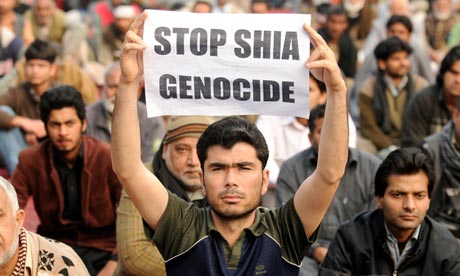 Hamid Mir, who present's Pakistan's most popular news show, said the ISI had ignored a tide of sectarian bloodshed after deliberately creating "private death squads" to fight a war against separatists in the country's troubled Baluchistan province.
Mir's remarks came after the governor of Baluchistan said the huge blast in a crowded market showed a "failure of our intelligence agencies".
The security forces are either "scared or cannot take action against" militant groups, governor Zulfiqar Magsi said.
Human rights groups that have previously dared to make similar claims – usually couched in far more diplomatic language – have been vilified by the army.
Mir spoke out, both to the Guardian and in a column in the country's biggest Urdu language newspaper, amid continued outrage over the bombing, which used nearly a tonne of explosives hidden in a water tanker.
Demonstrations took place across the country on Monday in protest at the attack, which was claimed by the banned Sunni militant group Lashkar-e-Jhangvi. Karachi was almost completely shut down by a one-day strike.
Nadeem Paracha, a columnist for the Dawn newspaper, said a "sense of horror and tragedy is being felt by all Pakistanis … It's very noticeable that this is the first time the people are not just blaming the government, but asking what exactly the intelligence agencies that are paid millions of rupees up to?"
Quetta's Hazara community, which is overwhelmingly drawn from the minority Shia sect of Islam, mounted a powerful protest by ignoring the Islamic burial custom of quickly burying the dead. Community leaders vowed the bodies of 71 victims would remain on public display in a prayer hall until their demands for action were met.
"We want concrete actions," said Abdul Khaliq Hazara, the president of the Hazara Democratic party said. "They are killing our women, our young people and even young children aged three to five."
It was the second time in five weeks that the Hazaras had taken the drastic step. In January, nearly 100 victims of a vicious double bombing at a snooker hall were laid out on the streets. The prime minister responded by flying to Quetta and sacking the provincial government.
But rule by a governor directly appointed by Islamabad has not been able to stop what has been termed a "Shia genocide" in Pakistan. Many Shias are demanding the army take direct control of Baluchistan, something critics of military policy in the province say misses the point.
"The fact is that the military and paramilitary forces have been in control of the province all the time," said Ali Dayan Hasan, Pakistan director of Human Rights Watch.
"When protesters demand army rule in Quetta in effect what they are doing is calling the army's bluff, asking it to take responsibility for what it has in fact been in charge of all along."
But it is criticism from popular journalists like Mir, who was once thought to be close to the army, that will most sting the ISI.
"Some of these people who go by the name of Lashkar-e-Jhangvi are part of the same private death squads created by the security agencies against Baluch militants," Mir told the Guardian hours before he prepared to repeat his claims on his hugely popular programme Capital Talk.
"Yes, sometimes they oblige the security agencies by taking action against the Baluch militants, but on the other hand they quietly organise their own actions against the Shia community.
"Every Pakistani is aware that this is a complete failure by the intelligence agencies. Now we want to know, what action has the governor of the province, or the president, or the army chief, taken against these failed intelligence operators?"
Violence by Sunni fundamentalists against Shias, who they regard as apostates, is a growing problem in Pakistan. There have been attacks in every major city and murderous ambushes of buses carrying Shia passengers in the mountainous north.
The outlook for Quetta's 500,000 Hazaras is especially bleak. As an ethnic group, they have distinctive features that make them easy to target and also speak a dialect of Persian.
Hamid Mir, who present's Pakistan's most popular news show, said the ISI had ignored a tide of sectarian bloodshed after deliberately creating "private death squads" to fight a war against separatists in the country's troubled Baluchistan province.
Mir's remarks came after the governor of Baluchistan said the huge blast in a crowded market showed a "failure of our intelligence agencies".
The security forces are either "scared or cannot take action against" militant groups, governor Zulfiqar Magsi said.
Human rights groups that have previously dared to make similar claims – usually couched in far more diplomatic language – have been vilified by the army.
Mir spoke out, both to the Guardian and in a column in the country's biggest Urdu language newspaper, amid continued outrage over the bombing, which used nearly a tonne of explosives hidden in a water tanker.
Demonstrations took place across the country on Monday in protest at the attack, which was claimed by the banned Sunni militant group Lashkar-e-Jhangvi. Karachi was almost completely shut down by a one-day strike.
Nadeem Paracha, a columnist for the Dawn newspaper, said a "sense of horror and tragedy is being felt by all Pakistanis … It's very noticeable that this is the first time the people are not just blaming the government, but asking what exactly the intelligence agencies that are paid millions of rupees up to?"
Quetta's Hazara community, which is overwhelmingly drawn from the minority Shia sect of Islam, mounted a powerful protest by ignoring the Islamic burial custom of quickly burying the dead. Community leaders vowed the bodies of 71 victims would remain on public display in a prayer hall until their demands for action were met.
"We want concrete actions," said Abdul Khaliq Hazara, the president of the Hazara Democratic party said. "They are killing our women, our young people and even young children aged three to five."
It was the second time in five weeks that the Hazaras had taken the drastic step. In January, nearly 100 victims of a vicious double bombing at a snooker hall were laid out on the streets. The prime minister responded by flying to Quetta and sacking the provincial government.
But rule by a governor directly appointed by Islamabad has not been able to stop what has been termed a "Shia genocide" in Pakistan. Many Shias are demanding the army take direct control of Baluchistan, something critics of military policy in the province say misses the point.
"The fact is that the military and paramilitary forces have been in control of the province all the time," said Ali Dayan Hasan, Pakistan director of Human Rights Watch.
"When protesters demand army rule in Quetta in effect what they are doing is calling the army's bluff, asking it to take responsibility for what it has in fact been in charge of all along."
But it is criticism from popular journalists like Mir, who was once thought to be close to the army, that will most sting the ISI.
"Some of these people who go by the name of Lashkar-e-Jhangvi are part of the same private death squads created by the security agencies against Baluch militants," Mir told the Guardian hours before he prepared to repeat his claims on his hugely popular programme Capital Talk.
"Yes, sometimes they oblige the security agencies by taking action against the Baluch militants, but on the other hand they quietly organise their own actions against the Shia community.
"Every Pakistani is aware that this is a complete failure by the intelligence agencies. Now we want to know, what action has the governor of the province, or the president, or the army chief, taken against these failed intelligence operators?"
Violence by Sunni fundamentalists against Shias, who they regard as apostates, is a growing problem in Pakistan. There have been attacks in every major city and murderous ambushes of buses carrying Shia passengers in the mountainous north.
The outlook for Quetta's 500,000 Hazaras is especially bleak. As an ethnic group, they have distinctive features that make them easy to target and also speak a dialect of Persian.
President Zardari rings Balochistan Governor
 President of Pakistan Asif Ali Zardari telephoned Balochistan Governor Zulfiqar Magsi on Monday and discussed situation prevailing in the province after Quetta tragedy, Geo News reported.
 According to sources, President Zardari inquired about the situation that emerged after Quetta tragedy from the Governor and gets himself aware of steps being taken to arrest the culprits.
The President asked the Governor to take all necessary measures for the security of the Hazara community and personally monitor the relief operation and provide all possible help to the victims and their family.
According to sources, President Zardari inquired about the situation that emerged after Quetta tragedy from the Governor and gets himself aware of steps being taken to arrest the culprits.
The President asked the Governor to take all necessary measures for the security of the Hazara community and personally monitor the relief operation and provide all possible help to the victims and their family.
Loud blast heard near Karachi’s Sharae Faisal
 A loud explosion has been heard near Karachi’s Share Faisal, news reports suggest explosion was heard from far distances as rescue and security services are rushing to the scene, DawnNews reported.
Earlier, eight people lost their lives in different incidents of violence in the restive southern metropolis of Pakistan on Monday.
Enraged mobs took to the streets and blocked roads after setting ablaze several motorcycles when unidentified gunmen killed three people in the city’s Patel Para neighbourhood.
A loud explosion has been heard near Karachi’s Share Faisal, news reports suggest explosion was heard from far distances as rescue and security services are rushing to the scene, DawnNews reported.
Earlier, eight people lost their lives in different incidents of violence in the restive southern metropolis of Pakistan on Monday.
Enraged mobs took to the streets and blocked roads after setting ablaze several motorcycles when unidentified gunmen killed three people in the city’s Patel Para neighbourhood.
More Shiite killings in Pakistan spark outrage
Deutsche WelleLeaders of Pakistan's minority Shiite community hold the government and security agencies responsible for the sectarian killings in the southwestern city of Quetta in which over 80 people lost their lives.
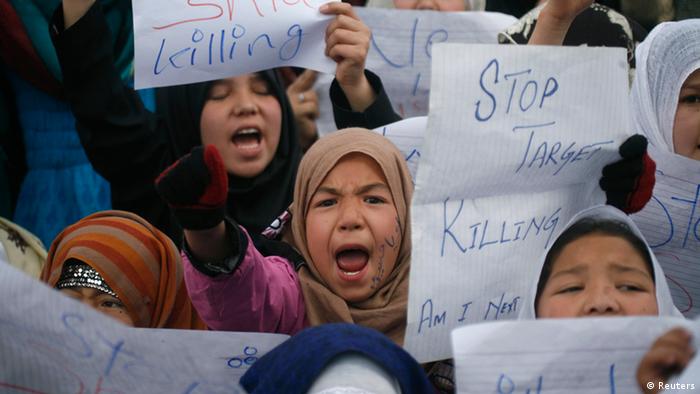 Pakistan's unpopular civilian government is facing criticism over its inaction against the militant Sunni organization Lashkar-e-Jhangvi (LeJ), which has claimed responsibility for the attack on ethnic Hazara Shiites on Saturday, February 16.
Hazara Shiites have begun their protest in Quetta. They say they will not bury the dead until a "decisive" military action is taken against the culprits.
Of late, Pakistan's militant Sunni extremists with links to al Qaeda have intensified their attacks on minority Shiites, whom they do not recognize as Muslims.
Similar attacks on Hazara Shiites in January killed at least 86 people after which Pakistani Prime Minister Raja Pervez Ashraf dismissed the Balochistan government and sacked former Chief Minister Nawab Aslam Raisani. The federal government also imposed governor's rule in the province. Experts say the imposition of governor's rule has not improved the security situation there.On Sunday, February 17, leaders of the Hazara community called on the government to take decisive action against LeJ and other militants organizations.
"The government is responsible for terrorist attacks and killings of the members of the Hazara community because its security forces have not conducted operations against extremist groups," Aziz Hazara, vice president of the Hazara Democratic Party, told the media. "We are giving the government 48 hours to arrest the culprits and after that we will launch protests."
Nawab Zulfiqar Magsi, governor of Balochistan province, also blamed security agencies for the attacks: "The terrorist attack on the Hazara Shiite community in Quetta is a failure of the intelligence and security forces."
'Sectarian cleansing'
2012 was one of the deadliest years for Pakistan's Shiites. Human rights groups say that more than 300 Shiites were killed in Pakistan last year in sectarian conflict.
One of the attacks on an imambargah, a Shiite place of worship, in the garrison city of Rawalpindi near the Pakistani capital, Islamabad, killed at least 23 people and wounded 62 in November. On February 17, a suicide bomber killed 31 Shiites in the restive northwestern Kurram region, one of the seven semi-governed tribal agencies bordering Afghanistan.
Pakistani experts say that although the lives of Shiite Muslims are under threat all over Pakistan, those living in Balochistan and the northwestern Gilgit-Baltistan region face a systematic onslaught by the Taliban and other militant groups. Some experts have gone so far as to call it a "sectarian cleansing" of Shiites.
In August last year, several gunmen, who were in the guise of Pakistani security officials, stopped a bus traveling from Rawalpindi to the northwestern Gilgit region and dragged the passengers off the bus. The gunmen asked the passengers to show their identity cards to ensure they belonged to the minority Shiite community, after which they brutally killed 22 of them at point blank range. The Taliban claimed responsibility for the attack.
Pakistani human rights groups accuse the country's security agencies of backing Sunni militants and failing to protect the minority groups of the country.
No action against terrorists
Shiite and civil society activists had welcomed the imposition of governor's rule in Balochistan, but experts warned that sacking the elected civilian government and calling in the army to control security matters could prove to be a double-edged sword for the insurgency-marred province.
"The imposition of governor's rule is extremely disappointing and despicable," said Malik Siraj Akbar, editor of the liberal "Baloch Hal" online newspaper. "The way a democratic government - although corrupt and incompetent - has been dismissed clearly shows that Islamabad treats Balochistan as a colony where it does not respect the public mandate."
Akbar said governor's rule would not solve any problems until the government went after the militants. However, Sikandar Hayat Janjua, member of the socialist Awami Workers Party, told DW in an interview from Karachi that it would be foolish to expect the government to launch an operation against the Sunni militants.
"Lashkar-e-Jhangvi is a militant wing of the ISI [Inter-Services Intelligence], and no organization would like to act against its own wing," Janjua said.
Failure of the state
Balochistan, which borders Afghanistan and Iran, is facing a protracted separatist movement
Pakistani analysts say that the Quetta killings have again exposed the risks the Pakistani state has been confronting for many years. If the government is seen as losing further control, it may risk disintegration.
Ali Chishti, a security and political analyst in Karachi, argues that the Pakistani state has failed to protect not just the Shiites but most of its citizens. "Pakistan is headed in a completely wrong direction and faces an existential threat due to its policies," Chishti said.
Many Pakistani analysts trace the origins of sectarian violence in Pakistan to the Afghan War of the 1980s. They say that Pakistan's former military dictator Muhammad Zia-ul-Haq made it a state policy to fund and arm extremist Wahhabi groups in the 1980s, using these organizations against the Shiites to kill Iran's support in Pakistan and to increase Pakistan's influence in Afghanistan.
London-based Pakistani journalist and scholar Amin Mughal said that the policy of supporting groups like the Taliban had backfired and that the Pakistani state was no longer in a position to control the situation.
"It is a logical consequence of state policies which are based on religion," Mughal told DW, adding that the only way out of the crisis was for "true secular parties" to come to power and change the course of state affairs.
Pakistan's unpopular civilian government is facing criticism over its inaction against the militant Sunni organization Lashkar-e-Jhangvi (LeJ), which has claimed responsibility for the attack on ethnic Hazara Shiites on Saturday, February 16.
Hazara Shiites have begun their protest in Quetta. They say they will not bury the dead until a "decisive" military action is taken against the culprits.
Of late, Pakistan's militant Sunni extremists with links to al Qaeda have intensified their attacks on minority Shiites, whom they do not recognize as Muslims.
Similar attacks on Hazara Shiites in January killed at least 86 people after which Pakistani Prime Minister Raja Pervez Ashraf dismissed the Balochistan government and sacked former Chief Minister Nawab Aslam Raisani. The federal government also imposed governor's rule in the province. Experts say the imposition of governor's rule has not improved the security situation there.On Sunday, February 17, leaders of the Hazara community called on the government to take decisive action against LeJ and other militants organizations.
"The government is responsible for terrorist attacks and killings of the members of the Hazara community because its security forces have not conducted operations against extremist groups," Aziz Hazara, vice president of the Hazara Democratic Party, told the media. "We are giving the government 48 hours to arrest the culprits and after that we will launch protests."
Nawab Zulfiqar Magsi, governor of Balochistan province, also blamed security agencies for the attacks: "The terrorist attack on the Hazara Shiite community in Quetta is a failure of the intelligence and security forces."
'Sectarian cleansing'
2012 was one of the deadliest years for Pakistan's Shiites. Human rights groups say that more than 300 Shiites were killed in Pakistan last year in sectarian conflict.
One of the attacks on an imambargah, a Shiite place of worship, in the garrison city of Rawalpindi near the Pakistani capital, Islamabad, killed at least 23 people and wounded 62 in November. On February 17, a suicide bomber killed 31 Shiites in the restive northwestern Kurram region, one of the seven semi-governed tribal agencies bordering Afghanistan.
Pakistani experts say that although the lives of Shiite Muslims are under threat all over Pakistan, those living in Balochistan and the northwestern Gilgit-Baltistan region face a systematic onslaught by the Taliban and other militant groups. Some experts have gone so far as to call it a "sectarian cleansing" of Shiites.
In August last year, several gunmen, who were in the guise of Pakistani security officials, stopped a bus traveling from Rawalpindi to the northwestern Gilgit region and dragged the passengers off the bus. The gunmen asked the passengers to show their identity cards to ensure they belonged to the minority Shiite community, after which they brutally killed 22 of them at point blank range. The Taliban claimed responsibility for the attack.
Pakistani human rights groups accuse the country's security agencies of backing Sunni militants and failing to protect the minority groups of the country.
No action against terrorists
Shiite and civil society activists had welcomed the imposition of governor's rule in Balochistan, but experts warned that sacking the elected civilian government and calling in the army to control security matters could prove to be a double-edged sword for the insurgency-marred province.
"The imposition of governor's rule is extremely disappointing and despicable," said Malik Siraj Akbar, editor of the liberal "Baloch Hal" online newspaper. "The way a democratic government - although corrupt and incompetent - has been dismissed clearly shows that Islamabad treats Balochistan as a colony where it does not respect the public mandate."
Akbar said governor's rule would not solve any problems until the government went after the militants. However, Sikandar Hayat Janjua, member of the socialist Awami Workers Party, told DW in an interview from Karachi that it would be foolish to expect the government to launch an operation against the Sunni militants.
"Lashkar-e-Jhangvi is a militant wing of the ISI [Inter-Services Intelligence], and no organization would like to act against its own wing," Janjua said.
Failure of the state
Balochistan, which borders Afghanistan and Iran, is facing a protracted separatist movement
Pakistani analysts say that the Quetta killings have again exposed the risks the Pakistani state has been confronting for many years. If the government is seen as losing further control, it may risk disintegration.
Ali Chishti, a security and political analyst in Karachi, argues that the Pakistani state has failed to protect not just the Shiites but most of its citizens. "Pakistan is headed in a completely wrong direction and faces an existential threat due to its policies," Chishti said.
Many Pakistani analysts trace the origins of sectarian violence in Pakistan to the Afghan War of the 1980s. They say that Pakistan's former military dictator Muhammad Zia-ul-Haq made it a state policy to fund and arm extremist Wahhabi groups in the 1980s, using these organizations against the Shiites to kill Iran's support in Pakistan and to increase Pakistan's influence in Afghanistan.
London-based Pakistani journalist and scholar Amin Mughal said that the policy of supporting groups like the Taliban had backfired and that the Pakistani state was no longer in a position to control the situation.
"It is a logical consequence of state policies which are based on religion," Mughal told DW, adding that the only way out of the crisis was for "true secular parties" to come to power and change the course of state affairs.
Hazara Genocide And Inadequate Baloch Protest
Hours after Saturday’s deadly bomb blast which killed more than 80 people in Quetta city, the Lashkar-e-Jhangvi (LeJ), an underground Sunni extremist group, claimed responsibility for the attack. The LeJ has also issued a fresh warning saying that is currently capable of carrying out at least twenty more attacks similar to the one conducted in Quetta’s Hazara Town on Saturday. The Lashkar also says that it does not fear the governor’s rule or the military control of Quetta city as it says it has “Allah’s full support” in its operations against the Shias. All senior government officials and opposition leaders have strongly condemned the attack on the Hazaras except for the Baloch nationalist leadership. There is not one single leader or political entity that could be described as the sole representative or spokesman of the Baloch nationalists. However, the term “Baloch nationalist” implies to all individuals, political parties or armed groups who either call for Balochistan’s freedom or demand maximum autonomy for the Baloch people. In the midst of countrywide protests and vocal condemnation of the Lashkar operations, the Baloch condemnation is barely audible and this is a matter of serious concern for us. Lack of public protest and condemnation on the part of the Baloch nationalists against the killing of Hazaras is either intentional indifference or a clear lack of political vision. Balochistan is the land of all ethnic, sectarian and religious communities and Baloch nationalists, as the genuine representatives of the majority ethnic group, should play a more active role in speaking up against repeated attacks on Balochistan’s Hazaras. On January 10, 2013, when a major terrorist attack, carried out by a Sunni militant group, struck Quetta killing more than 100 people, we expected the Baloch nationalist leaders such as Sardar Akhtar Mengal, Dr. Abdul Malik Baloch, Hasil Khan Bizenjo (who are relatively moderate as compared to those who ask for freedom and face more security threats inside Pakistan), to go to the Hazara towns and offer condolences. The Baloch leadership, regrettably, took much time to issue a statement of condemnation of the Lashkar’s barbaric act. Even Prime Minister Ashraf and opposition leader Imran Khan played a more significant role in the aftermath of the blast as they visited Quetta to show support for the victims of the tragedy . The Baloch leadership cannot and must not remain indifferent to whatever is happening in Quetta city. They have to follow these developments more closely because, after the Hazaras, they are going to be the next victim of Lashkar’s operations. After all, all religious groups view ethnic nationalism as un-Islamic. The Lashkar has emerged as our version of the Pakistani Taliban. They also have serious problems with educated and democratic people. Also, the attacks on the Shais are going to determine the future of Balochistan. Who knows these attacks would be used by the federal government as a pretext to bring the army in Balochistan. There was insufficient Baloch condemnation of the January 10th blasts and almost no reaction over the imposition of the governor’s rule in the province. The nationalists should know that neither Hazaras are the last on the list of the Lashkar’s hit-list nor is the governor’s rule the final option the federal government is left with. If these attacks continue and the army is called to take control of the province, this is going to have destructive consequences for the Baloch people. The Hazara Democratic Party has always stood by the Baloch people for their rights. It is the time the Baloch leadership also cared for the Hazaras suffering in the hands of the religious extremists. This should not be limited to mere issuing newspaper statements of condemnation. The Baloch leaders should practically go to the Hazara towns and meet their leaders to express unconditional solidarity. Apologists among the nationalists may say that they are already caught up in the middle of their own war with the federal government but that is not an acceptable excuse. It does not require much time and effort to call a press conference or visit the families of those who have been killed in terrorist attacks. It is deeply disappointing that none of the top Baloch leaders addressed a press conference or visited the Hazaras at the time of distress. The ordinary Baloch citizen is deeply outraged over these killings and they are also speaking up angrily on social media. The Baloch youths oppose religious extremism and they know it is simply the time to unconditionally condemn the killing of the Hazaras without necessarily bringing up the Baloch issue at the same time. What is happening in Quetta is not an ethnic or religious problem alone. It is a serious humanitarian crisis and we all have to keep aside our religious, political and ethnic differences while standing by the brave Hazaras who have suffered more than their share of hardship. The Baloch nationalists have to assume a more proactive and responsible role in order to lead the province. They should stop only complaining about their problems. As the leaders of Balochistan, they should speak for the rights of all communities. By doing so, they are going to benefit their own political movement as this will help them draw more national and international attention to the Balochistan situation. The Baloch and the Hazaras raise their fingers toward almost the same elements responsible for the injustices committed to them. Unity among Baloch and Hazaras and other oppressed communities is in everyone’s interest.Editorial: The Baloch Hal
Hazaras hold off mass burial till military acts
 Life remained paralysed in Quetta on Sunday to mourn the loss of 85 Hazaras who became victims of a deadly suicide blast and the authorities’ inaction to nab sectarian killers operating with impunity.
A complete shutterdown strike was observed throughout Quetta on the call of the Malis-e-Wahdat-ul-Muslimeen (MWM) and the Hazara Democratic Party (HDP).
As protests spread to different parts of the country, including Lahore, Islamabad, Hyderabad, Peshawar, Karachi and Multan among other cities, mass graves were dug up in Hazara town for the burial of those killed in the blast. Emotionally drained, the Hazara community however denied to bury their dear ones who were killed in the Saturday’s Kirani Road blast.
Life remained paralysed in Quetta on Sunday to mourn the loss of 85 Hazaras who became victims of a deadly suicide blast and the authorities’ inaction to nab sectarian killers operating with impunity.
A complete shutterdown strike was observed throughout Quetta on the call of the Malis-e-Wahdat-ul-Muslimeen (MWM) and the Hazara Democratic Party (HDP).
As protests spread to different parts of the country, including Lahore, Islamabad, Hyderabad, Peshawar, Karachi and Multan among other cities, mass graves were dug up in Hazara town for the burial of those killed in the blast. Emotionally drained, the Hazara community however denied to bury their dear ones who were killed in the Saturday’s Kirani Road blast.
 Thousands of protesting Hazaras staged a sit-in at Alamdar Road and in Hazara town along with 65 dead bodies in order to urge the government to accept their demands, including a targeted operation, under the supervision of the Army, against the perpetrators.
The death toll from the blast has reached 85 as more than 190 injured were being treated in Quetta, while some had been shifted to Karachi.
Earlier, 65 dead bodies were shifted to Hazara town from different hospitals where they were to be buried and all arrangements were in place.
However, on Sunday night, the MWM said that the deceased would not be buried until the demand of army action is met. The same demand they had made after a double suicide bombing on a snooker club in the city on January 10 had killed at least 92 people. At that time, Balochitan was put under the governor’s rule, while the demand of army action was not met.
MWM’s Syed Hadi said that the dead would not be buried until three demands are accepted; the other two demands being the arrest of two leaders of Ahle Sunnat wal-jamat and provision of security to citizens of Quetta.
Syed Daud Agha said that they had presented ten demands after the Alamdar Road incident but only one demand was met. “Governor rule was imposed. Still 9 demands are yet to be honoured,” he said, adding that they had demanded dismissal of incompetent government because some ministers were involved in murder of the Hazara community. He said that they had no doubt in the sincerity and personality of Balochistan Governor Magsi, though a handful of sincere officers could not ensure peace.
The Hazara Democratic Party (HDP) has given a 48-hour deadline to the Balochistan government to start a ‘targeted operation’ and hunt down the culprits of the deadly Kirani Road blast. Banned religious outfit Lashkar-e-Jhangvi claimed responsibility for the Saturday’s explosion. The same group had claimed double suicide bombing on a snooker club in the city on January 10 that had killed at least 92 people.
The strike was also supported by the other political parties, including Pashtoon Khwa Milli Awami Party, National Party and Awami National Party.
All business centres, shopping malls and markets located on Jinnah Road, Sharha-e-Iqbal, Brewery Road, Abdul Sattar Road, Double Road and Kirani Road remained shut throughout the day. City roads presented a deserted look as most of people preferred to stay home owing to the stressed atmosphere, while the links leading to Kirani Road were closed.
The people from the Hazara community blocked Brewery Road by burning tyres.
The national flag was hoisted at half-mast as the Balochistan government had announced official mourning against the barbaric incident.
Police backed by Frontier Corps were deployed across the city to avert any untoward incidents and mobile teams of law and enforcement agencies kept patrolling throughout the day.
Addressing a news conference, HDP Vice Chairman Azizullah Hazara called upon the Balochistan governor to order an operation “otherwise protest will be held outside the Balochistan High Court on a daily basis”.
He said that the Hazara community is being massacred in a well-planned way and if this didn’t stop they would be vindicated in taking any step. “This terror incident in Quetta would not have taken place had the government unmasked culprits of last month’s killings,” he added.
The HDP leader said that besides Quetta, the HDP would also hold protest demonstrations in other parts of the world, including Europe, America, Australia and Canada; outside Pakistani embassies to register their protest. Also, the Hazara Students Federation (HSF) staged a demonstration outside the Quetta Press Club.
When contacted, Balochista Home Secretary Captain (r) Akbar Hussain Durrani however gave a different toll. He said at least 79 people were killed and 179 sustained injures in the blast. He said that the suicide attacker was driving the water tanker that hit the main bazaar of Hazara town in Kirani Road.
Meanwhile, Balochistan Chief Secretary Babar Yaqoob said that the compensation announced for victims would soon be paid.
Meanwhile, on the call of the Shia Ulema Council, strike would be observed in Karachi on Monday (today). Transports will remain off road while markets would be shut.
Also, Bars across the country, including the Pakistan Bar Council, the Karachi Bar, the Rawalpindi Bar, the Punjab Bar and the Balochistan Bar, have announced boycott of courts.
Punjab will hoist national flag half-mast to observe a day of mourning. Mourning has also been announced in Gilgit Baltistan.
Thousands of protesting Hazaras staged a sit-in at Alamdar Road and in Hazara town along with 65 dead bodies in order to urge the government to accept their demands, including a targeted operation, under the supervision of the Army, against the perpetrators.
The death toll from the blast has reached 85 as more than 190 injured were being treated in Quetta, while some had been shifted to Karachi.
Earlier, 65 dead bodies were shifted to Hazara town from different hospitals where they were to be buried and all arrangements were in place.
However, on Sunday night, the MWM said that the deceased would not be buried until the demand of army action is met. The same demand they had made after a double suicide bombing on a snooker club in the city on January 10 had killed at least 92 people. At that time, Balochitan was put under the governor’s rule, while the demand of army action was not met.
MWM’s Syed Hadi said that the dead would not be buried until three demands are accepted; the other two demands being the arrest of two leaders of Ahle Sunnat wal-jamat and provision of security to citizens of Quetta.
Syed Daud Agha said that they had presented ten demands after the Alamdar Road incident but only one demand was met. “Governor rule was imposed. Still 9 demands are yet to be honoured,” he said, adding that they had demanded dismissal of incompetent government because some ministers were involved in murder of the Hazara community. He said that they had no doubt in the sincerity and personality of Balochistan Governor Magsi, though a handful of sincere officers could not ensure peace.
The Hazara Democratic Party (HDP) has given a 48-hour deadline to the Balochistan government to start a ‘targeted operation’ and hunt down the culprits of the deadly Kirani Road blast. Banned religious outfit Lashkar-e-Jhangvi claimed responsibility for the Saturday’s explosion. The same group had claimed double suicide bombing on a snooker club in the city on January 10 that had killed at least 92 people.
The strike was also supported by the other political parties, including Pashtoon Khwa Milli Awami Party, National Party and Awami National Party.
All business centres, shopping malls and markets located on Jinnah Road, Sharha-e-Iqbal, Brewery Road, Abdul Sattar Road, Double Road and Kirani Road remained shut throughout the day. City roads presented a deserted look as most of people preferred to stay home owing to the stressed atmosphere, while the links leading to Kirani Road were closed.
The people from the Hazara community blocked Brewery Road by burning tyres.
The national flag was hoisted at half-mast as the Balochistan government had announced official mourning against the barbaric incident.
Police backed by Frontier Corps were deployed across the city to avert any untoward incidents and mobile teams of law and enforcement agencies kept patrolling throughout the day.
Addressing a news conference, HDP Vice Chairman Azizullah Hazara called upon the Balochistan governor to order an operation “otherwise protest will be held outside the Balochistan High Court on a daily basis”.
He said that the Hazara community is being massacred in a well-planned way and if this didn’t stop they would be vindicated in taking any step. “This terror incident in Quetta would not have taken place had the government unmasked culprits of last month’s killings,” he added.
The HDP leader said that besides Quetta, the HDP would also hold protest demonstrations in other parts of the world, including Europe, America, Australia and Canada; outside Pakistani embassies to register their protest. Also, the Hazara Students Federation (HSF) staged a demonstration outside the Quetta Press Club.
When contacted, Balochista Home Secretary Captain (r) Akbar Hussain Durrani however gave a different toll. He said at least 79 people were killed and 179 sustained injures in the blast. He said that the suicide attacker was driving the water tanker that hit the main bazaar of Hazara town in Kirani Road.
Meanwhile, Balochistan Chief Secretary Babar Yaqoob said that the compensation announced for victims would soon be paid.
Meanwhile, on the call of the Shia Ulema Council, strike would be observed in Karachi on Monday (today). Transports will remain off road while markets would be shut.
Also, Bars across the country, including the Pakistan Bar Council, the Karachi Bar, the Rawalpindi Bar, the Punjab Bar and the Balochistan Bar, have announced boycott of courts.
Punjab will hoist national flag half-mast to observe a day of mourning. Mourning has also been announced in Gilgit Baltistan.
Peshawar: Gunmen attack political agent’s office, 5 dead
Four levies personnel were among five killed while seven others were injured here on Monday after suicide bombers wearing Levies uniforms raided and opened fire at the office of a political agent, officials said.
One of the suicide bombers was able to enter the office after he opened fire at Levies personnel deployed at the main door. The bomber was injured when Levies forces retaliated and he later detonated the bomb.
An exchange of fire which lasted for twenty minutes took place between the Levies forces and the second suicide bomber. Three Levies personnel were killed during this exchange while another personal of the force and a civilian succumbed to their injuries at the hospital. The suicide bomber detonated himself near the office of the political and assistant political agent.
The roof of the control room collapsed due to the blast in which the political agent of Landi Kotal and seven others were injured and rushed to the Lady Reading Hospital.
According to eyewitnesses, tribal officials and members of political parties had gathered at the office to hold talks at the time of the explosion.
"We were holding a meeting and some others were joining us when firing started inside the political office, and then there was a loud blast, and again heavy firing began," said tribal politician Niaz Ahmad Khan.
Officials said the attackers had come to spring prisoners brought to the political agents office. There was no immediate claim of responsibility for the attack.
Pakistan: Shortfall in tax collections
 Tax collections continue to show sings of stagnating despite a lot of efforts generally claimed by the Federal Board of Revenue (FBR). According to the latest available data, it had collected Rs 1,027 billion during July-January, 2013 as against Rs 974 billion in the same period last year, showing an increase of mere Rs 53 billion or about 5 percent. This means a substantial decline in real terms because of rate of inflation of around 8 percent.
Tax collection effort was also found to be dismal compared to the earlier target of Rs 2,381 billion and subsequent slashed target of Rs 2,190 billion fixed later due to a continuous fall in tax collection during the course of the year. Simply put, FBR has to collect Rs 1,163 billion in the remaining part of 2012-13 even to reach the revised target on a monthly average of Rs 232.6 billion as against the monthly average of only Rs 146.8 billion in the earlier part of the year, which appears to be an extremely difficult, if not an impossible, task. With so much shortfall in revenue collection, it is certain that the tax-to-GDP ratio would be much lower than 10 percent projected in the beginning of the year. Last year, it was only 9.1 percent, much below 15 percent or so which is the norm in comparable economies.
It would be interesting to remember that the FBR usually has a set of excuses for the shortfall and pins its hopes on certain initiatives to accelerate the flow of tax revenue receipts during the remainder part of the year. A "rather convincing" argument could easily be made this year that tax receipts had fallen short of the target because of frequent holidays, law and order situation and a slowdown in manufacturing activity, etc. Of course, economic analysts cannot buy such an argument because nominal GDP would grow by about 12 percent during FY13 despite all these odds which means that it was mainly the lack of proper efforts by the FBR which had contributed to a slowdown in tax revenues.
There is also no shortage of initiatives to pretend that many measures could still be taken and the situation is not out of control, at least as yet. For instance, the FBR is still reported to believe that tax amnesty scheme could be introduced, probably through a presidential ordinance sometime in March, 2013, despite the refusal of the government's two coalition partners to support it. FBR has also evolved "plan B" which includes issuing notices to the large group of non-filers identified for the tax year 2012. Similarly, FBR has worked out other administrative and revenue measures which are expected to increase tax revenues by a substantial margin. These include amendments to Alternate Dispute Resolution Laws and other administrative arrangements. Although, we would very much like the FBR to succeed in its efforts but past experience suggests that such initiatives do not usually yield the desired results and prove a kind of smoke-screen for the prevailing inefficiency in the FBR.
The expected shortfall in tax revenues and that too by a big margin would have very negative consequences for the economy. With rising expenditures in an election year and lower-than-expected external inflows for budgetary support, overall fiscal deficit of the country could reach or even surpass last year's level of 8.5 percent of GDP, which would certainly be unsustainable. Price pressures in the economy would accentuate, PKR would continue to depreciate in the foreign exchange market, external sector would come under renewed pressure, indebtedness of the country would increase to almost unmanageable levels and private sector credit would be further crowded out to accommodate the budgetary requirements of the government sector. Lower tax receipts could also destabilise other areas of the economy. As such, there is an urgent need for broad-based tax regime, removing exemptions etc and deepen the tax net in order to ensure equity and uniformity in the tax system. With such a regime in place, people would be encouraged to pay their due taxes.
While the political leadership should provide the necessary support for such an effort, the FBR needs to remain on its reform course. This involves unwinding of the presumptive tax regime and moving to a regime of determination of tax liability after filing of returns, eliminating exemptions in sales tax and strengthening enforcement and audit of sales tax as well as in withholding tax. Both are significant areas of tax leakage. Refunds and under-invoicing and mis-declaration need to be undertaken by a third party-prescribed automation solutions. Tax compliance has to be improved at all levels through greater use of technology. Capturing expenditures and then examining carefully or at length the citizens to substantiate their lifestyle if not conforming to their returns field lie at the core. Nobody pays taxes willingly. They pay out of fear of being caught - penalised and shamed. While the process of shaming has begun with elected officials - one hopes that penalising them by banning them from participating in elections will follow. Public focus on its leaders is important. However, the needs of the economy requires a tax policy built around the principle of all sources of income be taxed without discrimination. This needs a rethink about constitutional provisions and removing anomalies in the tax structure. Manufacturing sector's contribution is 20 percent of GDP while it pays 66 percent of taxes. Service sector contributes 56 percent of GDP and pays 33 percent of taxes, while agriculture contributes 24 percent towards GDP and pays less than one percent in taxes. Provinces tax collection is only 0.52 percent. Without facing these facts and adopting a corrective course and the political leadership showing a demonstrating effect Pakistan is destined to lag behind in tax collection.
Tax collections continue to show sings of stagnating despite a lot of efforts generally claimed by the Federal Board of Revenue (FBR). According to the latest available data, it had collected Rs 1,027 billion during July-January, 2013 as against Rs 974 billion in the same period last year, showing an increase of mere Rs 53 billion or about 5 percent. This means a substantial decline in real terms because of rate of inflation of around 8 percent.
Tax collection effort was also found to be dismal compared to the earlier target of Rs 2,381 billion and subsequent slashed target of Rs 2,190 billion fixed later due to a continuous fall in tax collection during the course of the year. Simply put, FBR has to collect Rs 1,163 billion in the remaining part of 2012-13 even to reach the revised target on a monthly average of Rs 232.6 billion as against the monthly average of only Rs 146.8 billion in the earlier part of the year, which appears to be an extremely difficult, if not an impossible, task. With so much shortfall in revenue collection, it is certain that the tax-to-GDP ratio would be much lower than 10 percent projected in the beginning of the year. Last year, it was only 9.1 percent, much below 15 percent or so which is the norm in comparable economies.
It would be interesting to remember that the FBR usually has a set of excuses for the shortfall and pins its hopes on certain initiatives to accelerate the flow of tax revenue receipts during the remainder part of the year. A "rather convincing" argument could easily be made this year that tax receipts had fallen short of the target because of frequent holidays, law and order situation and a slowdown in manufacturing activity, etc. Of course, economic analysts cannot buy such an argument because nominal GDP would grow by about 12 percent during FY13 despite all these odds which means that it was mainly the lack of proper efforts by the FBR which had contributed to a slowdown in tax revenues.
There is also no shortage of initiatives to pretend that many measures could still be taken and the situation is not out of control, at least as yet. For instance, the FBR is still reported to believe that tax amnesty scheme could be introduced, probably through a presidential ordinance sometime in March, 2013, despite the refusal of the government's two coalition partners to support it. FBR has also evolved "plan B" which includes issuing notices to the large group of non-filers identified for the tax year 2012. Similarly, FBR has worked out other administrative and revenue measures which are expected to increase tax revenues by a substantial margin. These include amendments to Alternate Dispute Resolution Laws and other administrative arrangements. Although, we would very much like the FBR to succeed in its efforts but past experience suggests that such initiatives do not usually yield the desired results and prove a kind of smoke-screen for the prevailing inefficiency in the FBR.
The expected shortfall in tax revenues and that too by a big margin would have very negative consequences for the economy. With rising expenditures in an election year and lower-than-expected external inflows for budgetary support, overall fiscal deficit of the country could reach or even surpass last year's level of 8.5 percent of GDP, which would certainly be unsustainable. Price pressures in the economy would accentuate, PKR would continue to depreciate in the foreign exchange market, external sector would come under renewed pressure, indebtedness of the country would increase to almost unmanageable levels and private sector credit would be further crowded out to accommodate the budgetary requirements of the government sector. Lower tax receipts could also destabilise other areas of the economy. As such, there is an urgent need for broad-based tax regime, removing exemptions etc and deepen the tax net in order to ensure equity and uniformity in the tax system. With such a regime in place, people would be encouraged to pay their due taxes.
While the political leadership should provide the necessary support for such an effort, the FBR needs to remain on its reform course. This involves unwinding of the presumptive tax regime and moving to a regime of determination of tax liability after filing of returns, eliminating exemptions in sales tax and strengthening enforcement and audit of sales tax as well as in withholding tax. Both are significant areas of tax leakage. Refunds and under-invoicing and mis-declaration need to be undertaken by a third party-prescribed automation solutions. Tax compliance has to be improved at all levels through greater use of technology. Capturing expenditures and then examining carefully or at length the citizens to substantiate their lifestyle if not conforming to their returns field lie at the core. Nobody pays taxes willingly. They pay out of fear of being caught - penalised and shamed. While the process of shaming has begun with elected officials - one hopes that penalising them by banning them from participating in elections will follow. Public focus on its leaders is important. However, the needs of the economy requires a tax policy built around the principle of all sources of income be taxed without discrimination. This needs a rethink about constitutional provisions and removing anomalies in the tax structure. Manufacturing sector's contribution is 20 percent of GDP while it pays 66 percent of taxes. Service sector contributes 56 percent of GDP and pays 33 percent of taxes, while agriculture contributes 24 percent towards GDP and pays less than one percent in taxes. Provinces tax collection is only 0.52 percent. Without facing these facts and adopting a corrective course and the political leadership showing a demonstrating effect Pakistan is destined to lag behind in tax collection.
Total breakdown security in Quetta
EDITORIAL: THE FRONTIER POSTYet another massive bomb explosion on Saturday rips through Quetta, the provincial capital of restive Balochistan. The latest attack has claimed lives of another 83 persons including scores of innocent women and school-going children and left 200 persons injured. Initial investigation suggests that the Improvised Explosive Device (IED), the terrorists planted in a water-tank was armed with around 800-1000 kilograms of high-grade detonable material. The bang of the blast was so heavy that windows of the nearby buildings were broken, and the site of the explosion wore a look of the human slaughter-house having worst massacre. The genocide, though not the first of its kind in the immediate past, is yet another classic example of a total breakdown of administrative control of the rulers. The rulers are supposed to provide security to life and property with the help of a strong network of the security agencies across the country that they have failed to do. It has been said earlier and is being said again here that the rulers are incompetent. There is no doubt about that but the way, religious extremists, militants and terrorists foxed the local administration particularly the police and the intelligence agencies so frequently points fingers at the total incompetence of the police, military and civil intelligence agencies especially of their heads. It will be sufficed to say that the security agencies are now non-existent in that province. The infrastructure of the security has crumbled and the staff working there has taken refuge in their safe havens to save themselves from the terror regime prevailing over the restive Balochistan and Quetta has fallen to the terrorists who have become de facto rulers and the governor has been reduced to a spectator of the federal government witnessing mass murder of his countrymen. The political leadership, no matter good or bad, will step down in a little less than a month. Subsequently their competency and their sincerity to the cause of the masses will be held accountable by the people in the upcoming elections. Contrarily, the security institutions and personnel working in there will hold the ground. Bad performance rather heart-breaking failure of the security agencies to discharge their national duty will come under the scan, threatening their very survival. The surprise is that terrorists roaming around on the streets and roads of the provincial capital with loads of explosive remained unnoticed till their mission of blasting the masses was accomplished. The terrorists have once again shattered the so-called red alert put in place by the government. What a joke it is! The huge blast has made mockery of the security measures of the security agencies raised for safety of the city, already battered and bruised. Ironically, even such a massive bang of the blast cannot awake the intelligence staff from the deep slumber they are in. Pakistan has already witnessed such breakdown of the administration and the intelligence in 1971 when the then East Pakistan was subsequently dismembered- believe it! The situation in Balochistan is not so different today. It warrants immediate attention of the power corridors. Once again, Minority Shia community was targeted by militants of the banned sectarian group Lashker-e-Jhangvi that has claimed the responsibility of the attack. Each and every man working in the intelligence network of Pakistan knows and many of them firmly believe Lashkar-e-Jhangvi, has become a major security threat but the point is who is going to act against the banned outfit. Why political leadership and heads of the security agencies are shamelessly failing short of giving a matching response to the strength and myth of the banned group for a long time. Yet another simple condemnation of the blast comes from the President Zardari. Like him the premier too has issued rhetoric that terrorists will not be able to subdue 'our will through such dastardly acts'. The fact is the will to fight out terror remained a missing link throughout the term of the incumbent rulers hence today Balochistan has become a flashpoint for sectarian violence. Lashkar-e-Jhangvi is banned though but now it seems it is banned only in papers. Practically the banned outfit has outsmarted well-trained and well-equipped army of Pakistan and its intelligence wings, the FC and the police, and is maintaining its strong operational capability to strike any where at will. Fresh explosion is, by all means, Pakistan's worst sectarian bombing that has exposed the country's weakness around the globe. Extremists have become a prime threat to the existence of the people and the country alike. The present rulers are certain to end their regime on a sad note. The civil and military bureaucracy should wake up to uphold the system, showing professionalism, some degree of commitment and sincerity to the national duty before it is too late. Clouds hovering over the survival of the country need to do away with. Pakistan is not a failed state but it for sure carries a failed administration. The rulers have plunged the country into no-hope situation yet they should put an interim setup in place to give the nation a chance to elect sincere leadership.
An agreement regarding Gwadar port signed in Islamabad
Radio PakistanAn agreement regarding Transfer of Concession Rights of Gwadar Port Operations to a Chinese company was signed in Islamabad. Speaking on the occasion‚ President Asif Ali Zardari expressed the confidence that the award of the contract will open new opportunities particularly for the people of Balochistan. He said it will give new impetus to Pakistan-China relations and take a step further our political cooperation into the realm of economic cooperation. The President said handing over of the operation of Gwadar Port to China is manifestation of our growing ties and also shows the trust Pakistan has in the Chinese ability to deliver on our infrastructure projects. He said development of a trade corridor linking Xinjiang to the Middle East through Gwadar Port will enhance trade and commerce not only between the two countries but also in the region. He said the port also has strategic importance for China as around sixty percent of China's crude oil comes from the Gulf countries that are close to Gwadar. Asif Ali Zardari recalled that both Shaheed Zulfikar Ali Bhutto and Shaheed Mohtarma Benazir Bhutto had a great vision for developing Gwadar Port and taking Pak-China relations to new heights. He said Gwadar is now a potential hub of trade and commerce in the region. It also holds the key to bring together the countries of Central Asia. Referring to the tragic bomb blast in Quetta‚ the President said we cannot be terrorized. In his speech on the occasion‚ Ambassador of China Liu Jian said the transfer of Gwadar Port to China will bring tangible benefits to the two countries and contribute to peace‚ stability and development of the region. He said Gwadar Port is part of greater framework of economic cooperation between Pakistan and China.
Sunday, February 17, 2013

کارپوهان وايي پاکستان کې شیعه ګان ډیر وژل کیږي
http://www.mashaalradio.orgپه بلوچستان کې د شیعه کانفرانس مشر اشرف زیدي د اتوار په ورځ مشال راډیو ته ویلي چې دوی به د احتجاج په ډول د تیرې ورځې په چاودنه کې له منځه تللي پنځه اتیا کسان خاورو ته نه سپاري. بل پلو، د بلوچستان ګورنر نواب ذوالفقار علي مګسي هم ویلي چې د کویټې په هزارګانو ترهګر برید د پاکستان د امنیتې ادارو ناکامي ده.نوموړي دا خبري د اتوار په ورځ د کویټې د هزاره ټاون د چاودنې متاثره شوې هزاره ګانو سره د لیدو روستو کړې دي. دسیاسي چارو کارپوهان هم وايي چې بلوچستان کې امنیتي وضع د ورځ په تیریدو سره مخ په خرابیدو ده، کارپوه اسد منیر وایي ، د پاکستان اولس په دوو برخو کې تقسیم شوی ، او زیاتره ډلې د مذهب په نوم خپلې ګټې ترسره کوي او د مذهب څخه په غلطه توګه استعمال کوي. (( په پاکستان کې خلک په دوو حصو کې تقسیم شوي ، مذهبي ډلې چې څه هم کوي څوک ورته هیڅ نه وایي او نه یې څوک پر ضد خبره کولی شي ، پاکستان کې چې کله چاودنه یا څه بله پیښه وشي نو موږ یې تور د نورو هیوادونو په استخباراتې ادارو لګوو ، خو اصل کې دا هر څه زموږ خلک پخپله کوي او تر څو چې زموږ خلک په دې نه وي پوه شوي چې دا ترهګر فعالیتونه نور موږ لپاره خطر دي نو بیا به هله پوځ او نورې امنیتي ادارې د ترهګرۍ پر ضد څه کولی شي. )) بلخوا د پاکستان د بشري حقونو د کمیشن یو مشر غړی شیر محمد خان وایي ، په ټولنه کې له اقلیتونو سره ښه سلوک نه کیږي او حکومت هم ورته پوره حقونه نه دي ورکړي. ((شیعه ګان او سنیان دواړه مسلمانان دي خو موږ ته داسې تاثر راکړل شوی چې د بلې فرقي خلک مسلمانان نه دي ، په نورو هیوادونو کې د ګڼو مدهبونو خلک دي خو هلته خلکو کې برداشت هم وي . بل که ځه سني یم نو دا خو زما د مور پلار د وجې ځه یم ، دغسي شیعه ګانو ته د هغوی مذهب په وراثت کې ملاو شوی ،نو د فرقه واریت په بنیاد د چا وژنه ډیر بد کار دی.)) په پاکستان کې د شیعه لږکیو خلاف په دې وروستیو کې بریدونه زیات شوي دي.
Bangladesh amends law to try largest Islamic party for war crimes
 In an apparent move to try the largest Islamic party which allegedly collaborated with the Pakistani forces in 1971 to prevent an independent Bangladesh, the South Asian country's parliament Sunday adopted amendment to a law.
 This means two war crimes tribunals, set up to try those allegedly commiting war crimes during the country's nine-month liberation war, are now in a position to try and punish an organization for committing crimes against humanity in 1971.
The amendment which was adopted in the absence of ex-Prime Minister Khaleda Zia's Bangladesh Nationalist Party (BNP) also brought some other changes to International Crimes (Tribunals) Act 1973 to pave the way for plaintiffs to appeal to the apex court against verdicts delivered by the tribunals.
Previously the law allowed only the convicts to appeal against any conviction.
In the wake of a mass movement in Dhaka's Shahbagh Square, Prime Minister Sheikh Hasina's government brought the amendment to the act.
The bill got the parliament nod hours after Law Minister Shafique Ahmed said "the government is looking at options" to ban Jamaat-e-Islami Party, one of the key demands of Shahbagh rally.
After visiting house of a slain blogger in Dhaka on Saturday, Hasina said Jamaat and its students wing -- Islami Chhatra Shibir - - have no right to practise politics in Bangladesh as they do not believe in democracy and are engaged with politics of terrorism.
Ahmed Rajib Haidar, an activist of ongoing Shahbagh movement, was stabbed near his house on Friday night.
Since then Shahbagh protesters, who point fingers at Jamaat for killing Rajib, have intensified demand to ban Jamaat, which denied any involvement in the murder.
Jamaat Saturday called hartal on Monday as part of its countrywide protest at what it termed the "government-sponsored" rally at Shahbagh Square.
Adamant on their demands including capital punishment on war criminals, thousands of people thronged Shahbagh Square Sunday, chanting slogans that have reverberated the iconic place of Dhaka since Feb. 5.
Frustrated by a war crimes verdict, scores of youths imbued with the spirit of the country's nine-month liberation war first gathered at Shahbagh Square on Feb. 5 under the banner of " Bloggers and Online Activist Network" hours after the International Crimes Tribunal-2 sentenced Abdul Quader Mollah, assistant secretary general of Jamaat, to life imprisonment for his war crimes.
The demonstration soon transformed into a people's movement which already spread across the country and among Bangladeshis living abroad.
Apart from eight Jamaat high-ups, a few leaders of BNP are also facing trials.
Both BNP and Jamaat had earlier dismissed the courts as a government "show trial" and said it is a domestic set-up without UN oversight.
Jamaat threatened to escalate the armed struggle if Hasina's government does not immediately free its leaders and cancel the tribunals.
Hasina told the parliament Sunday that she would extend all possible support to try war criminals. She also thanked the youths for raising voice against the 1971 war criminals.
Jamaat is a key ally of Khaleda's main opposition alliance which has also announced to gear up its movement demanding restoration of a non-party caretaker government system to oversee next parliament election slated for early 2014.
After returning to power in January 2009, Hasina, the daughter of Bangladesh's independence hero Sheikh Mujibur Rahman, established the first tribunal in March 2010, almost forty years after the 1971 fight for independence from Pakistan.
This means two war crimes tribunals, set up to try those allegedly commiting war crimes during the country's nine-month liberation war, are now in a position to try and punish an organization for committing crimes against humanity in 1971.
The amendment which was adopted in the absence of ex-Prime Minister Khaleda Zia's Bangladesh Nationalist Party (BNP) also brought some other changes to International Crimes (Tribunals) Act 1973 to pave the way for plaintiffs to appeal to the apex court against verdicts delivered by the tribunals.
Previously the law allowed only the convicts to appeal against any conviction.
In the wake of a mass movement in Dhaka's Shahbagh Square, Prime Minister Sheikh Hasina's government brought the amendment to the act.
The bill got the parliament nod hours after Law Minister Shafique Ahmed said "the government is looking at options" to ban Jamaat-e-Islami Party, one of the key demands of Shahbagh rally.
After visiting house of a slain blogger in Dhaka on Saturday, Hasina said Jamaat and its students wing -- Islami Chhatra Shibir - - have no right to practise politics in Bangladesh as they do not believe in democracy and are engaged with politics of terrorism.
Ahmed Rajib Haidar, an activist of ongoing Shahbagh movement, was stabbed near his house on Friday night.
Since then Shahbagh protesters, who point fingers at Jamaat for killing Rajib, have intensified demand to ban Jamaat, which denied any involvement in the murder.
Jamaat Saturday called hartal on Monday as part of its countrywide protest at what it termed the "government-sponsored" rally at Shahbagh Square.
Adamant on their demands including capital punishment on war criminals, thousands of people thronged Shahbagh Square Sunday, chanting slogans that have reverberated the iconic place of Dhaka since Feb. 5.
Frustrated by a war crimes verdict, scores of youths imbued with the spirit of the country's nine-month liberation war first gathered at Shahbagh Square on Feb. 5 under the banner of " Bloggers and Online Activist Network" hours after the International Crimes Tribunal-2 sentenced Abdul Quader Mollah, assistant secretary general of Jamaat, to life imprisonment for his war crimes.
The demonstration soon transformed into a people's movement which already spread across the country and among Bangladeshis living abroad.
Apart from eight Jamaat high-ups, a few leaders of BNP are also facing trials.
Both BNP and Jamaat had earlier dismissed the courts as a government "show trial" and said it is a domestic set-up without UN oversight.
Jamaat threatened to escalate the armed struggle if Hasina's government does not immediately free its leaders and cancel the tribunals.
Hasina told the parliament Sunday that she would extend all possible support to try war criminals. She also thanked the youths for raising voice against the 1971 war criminals.
Jamaat is a key ally of Khaleda's main opposition alliance which has also announced to gear up its movement demanding restoration of a non-party caretaker government system to oversee next parliament election slated for early 2014.
After returning to power in January 2009, Hasina, the daughter of Bangladesh's independence hero Sheikh Mujibur Rahman, established the first tribunal in March 2010, almost forty years after the 1971 fight for independence from Pakistan.
US immigration proposal would offer 'eight-year path to legal residency'
 The White House is planning to tackle illegal immigration by allowing undocumented workers a path to permanent residence within eight years of passing government requirements, according to reports.
A leaked copy of the draft bill, first reported by USA Today, contains provisions that would allow the nation's estimated 11 million undocumented workers to seek a "lawful prospective immigrant" visa that would allow them to live and work freely in the country.
Prospective visa holders would have to pass a criminal background check and submit to biometric tests, according to the document. Eight years after receiving the visa they would be eligible to apply for a green card, which allows permanent residency. Green card holders are able to apply for full US citizenship five years after being granted residency.
The White House declined to comment on the details of the report. But in a statement, White House spokesman Clark Stevens said: "The president has made clear the principles upon which he believes any common-sense immigration reform effort should be based. We continue to work in support of a bipartisan effort, and while the president has made clear he will move forward if Congress fails to act, progress continues to be made and the administration has not prepared a final bill to submit."
The proposal seemed unlikely to win cross-party support despite containing elements from a bipartisan plan now being drawn up by senators including Florida Republican Marco Rubio, seen as a 2016 presidential hopeful.
"Presidents #immigration plan repeats 2 many of mistakes of past. bipartisan plan being developed in Senate will be better,fair & responsible," Rubio said on Twitter.
In a statement his office called the plan "half-baked and seriously flawed" and declared that "if actually proposed, the president's bill would be dead on arrival in Congress".
President Barack Obama addressed immigration reform in his state of the union speech last week. "Real reform means establishing a responsible pathway to earned citizenship – a path that includes passing a background check, paying taxes and a meaningful penalty, learning English, and going to the back of the line behind the folks trying to come here legally," he said.
"And real reform means fixing the legal immigration system to cut waiting periods, reduce bureaucracy, and attract the highly skilled entrepreneurs and engineers that will help create jobs and grow our economy."
Eight senators have been working on a framework for immigration reform and last month released a blueprint that was praised by Obama.
The senators called the proposals "tough but fair". Undocumented workers seeking temporary legal residency would have to pay a fine and undergo background checks. They would not be able to pursue permanent residency until the US border is more secure. The definition of security has Democratic reformers worried that the bill will face long delays.
"If Congress is unable to move forward in a timely fashion, I will send up a bill based on my proposal and insist that they vote on it right away," Obama said in Las Vegas last month.
Speaking Sunday, Denis McDonough, the new White House chief of staff, told ABC's This Week: "We've got a bill, we're doing exactly what the president said we would do last month in Las Vegas, which is we're preparing. We're going to be ready."
Any major bill on immigration reform will be the first since 1986, when president Ronald Reagan legalised nearly 3 million immigrants.
The White House is planning to tackle illegal immigration by allowing undocumented workers a path to permanent residence within eight years of passing government requirements, according to reports.
A leaked copy of the draft bill, first reported by USA Today, contains provisions that would allow the nation's estimated 11 million undocumented workers to seek a "lawful prospective immigrant" visa that would allow them to live and work freely in the country.
Prospective visa holders would have to pass a criminal background check and submit to biometric tests, according to the document. Eight years after receiving the visa they would be eligible to apply for a green card, which allows permanent residency. Green card holders are able to apply for full US citizenship five years after being granted residency.
The White House declined to comment on the details of the report. But in a statement, White House spokesman Clark Stevens said: "The president has made clear the principles upon which he believes any common-sense immigration reform effort should be based. We continue to work in support of a bipartisan effort, and while the president has made clear he will move forward if Congress fails to act, progress continues to be made and the administration has not prepared a final bill to submit."
The proposal seemed unlikely to win cross-party support despite containing elements from a bipartisan plan now being drawn up by senators including Florida Republican Marco Rubio, seen as a 2016 presidential hopeful.
"Presidents #immigration plan repeats 2 many of mistakes of past. bipartisan plan being developed in Senate will be better,fair & responsible," Rubio said on Twitter.
In a statement his office called the plan "half-baked and seriously flawed" and declared that "if actually proposed, the president's bill would be dead on arrival in Congress".
President Barack Obama addressed immigration reform in his state of the union speech last week. "Real reform means establishing a responsible pathway to earned citizenship – a path that includes passing a background check, paying taxes and a meaningful penalty, learning English, and going to the back of the line behind the folks trying to come here legally," he said.
"And real reform means fixing the legal immigration system to cut waiting periods, reduce bureaucracy, and attract the highly skilled entrepreneurs and engineers that will help create jobs and grow our economy."
Eight senators have been working on a framework for immigration reform and last month released a blueprint that was praised by Obama.
The senators called the proposals "tough but fair". Undocumented workers seeking temporary legal residency would have to pay a fine and undergo background checks. They would not be able to pursue permanent residency until the US border is more secure. The definition of security has Democratic reformers worried that the bill will face long delays.
"If Congress is unable to move forward in a timely fashion, I will send up a bill based on my proposal and insist that they vote on it right away," Obama said in Las Vegas last month.
Speaking Sunday, Denis McDonough, the new White House chief of staff, told ABC's This Week: "We've got a bill, we're doing exactly what the president said we would do last month in Las Vegas, which is we're preparing. We're going to be ready."
Any major bill on immigration reform will be the first since 1986, when president Ronald Reagan legalised nearly 3 million immigrants.
Pakistan's Hazara Shias living under siege

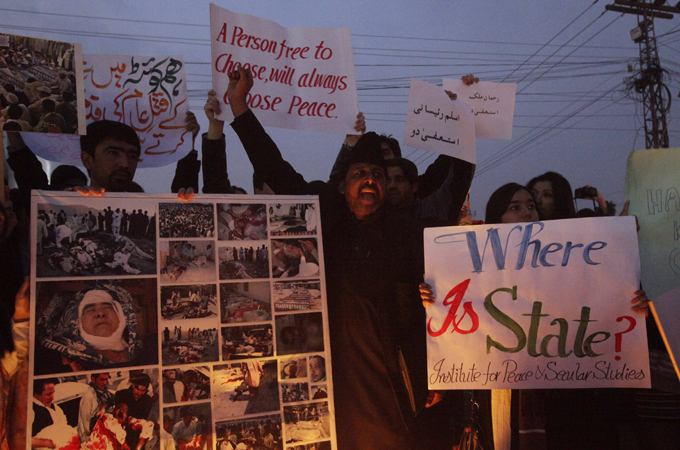
Caught between alleged state incompetence and complicity in attacks, the war against Balochistan's Hazaras has hit home.Despite a sustained, targeted campaign of killings against them, Pakistan's Hazara Shias have been left out in the cold, fending for themselves against an armed group whose fighters were once allied to the Pakistani state, researchers, analysts and members of the Hazara community have told Al Jazeera. On the evening of January 10, a suicide bomber targeted a snooker club frequented by Hazaras in Quetta, the provincial capital of Balochistan. The initial blast killed several people, but, ten minutes later, as people rushed to the aid of those wounded in the attack, a car bomb exploded just outside the club, killing dozens more. When the dust settled, 96 people, mostly Hazara Shias, were dead. The attack was only the latest in two years of sustained gun and bomb attacks against the community, and on that cold January night, Hazara community leaders told Al Jazeera, something snapped. To protest the government's inaction in protecting them, members of the community refused to bury their dead, staging a sit-in on Alamdar Road, the site of the latest attack. "It was very cold - it was -7 degrees Celsius, and there were mostly women, even mothers with one-month old babies. We sat under the open sky on the road: the young, the old, women, even children, for 76 hours," Qayyum Changaizee, the chairman of the Hazara Qaumi Jirga and one of the lead organisers of the protest, told Al Jazeera.The protesters demanded that the provincial government be dismissed, and that security in Quetta be handed over to the army. "I told [government negotiators] that your other choice is that you should just open fire on us. Kill us all, all 150 of us [at the sit-in]. We'll all die together, rather than dying one-by-one, every day," Changaizee said. Even so, the protesters had little expectation that the government would cede to their demands. "No-one felt that the protest would do anything," said Saleem Javed, a 28-year-old Hazara rights activist from the city. "But what else could they do? There is no space left in the graveyards." The Quetta sit-in, however, sparked similar protests in other major Pakistani cities, and in cities around the world. Sit-ins were held in Karachi, Lahore, Islamabad and as far away as Washington DC, Toronto, Stockholm and Melbourne. Protesters refused to end their demonstrations until the voices of the 150 bereaved families on Alamdar Road were heard. Eventually, they were. More than three days after the Hazara brought out their dead, the Pakistani government dismissed the provincial government, appointing the Balochistan governor to run the province for two months, and the Frontier Corps (FC) paramilitary force to formally take over law enforcement responsibilities. A life under siege Quetta's Hazara have been living in a state of siege for years, activists and community members told Al Jazeera. Over the past two years, many have been forced to shut their businesses in non-Hazara parts of the city, confining themselves to two areas: Alamdar Road, where Thursday's attack took place, and Hazara Town. Researchers say that over the past year, Hazara attendance at Balochistan University's Quetta campus dropped by 95 percent, while attendance at private colleges dropped by 83 percent. Numerous business owners in the city's main markets, meanwhile, have been shot dead in their shops. Pilgrims going to Iran by bus have been killed by roadside bombs, while ordinary citizens have been offloaded from local buses and shot dead by the side of the road. "Hazara professors and teachers have now almost all left […] now they're either sitting at home, or some doctors, people who have done PhDs, have migrated to Australia and are working as gardeners there now," said Abdul Khalique Hazara, the chairman of the Hazara Democratic Party, who went on a three-day hunger strike after the latest attack. The situation is so bad, he said, that Hazaras no longer feel safe even buying basic supplies at the city's main vegetable market. "Often we have to get someone else to buy them for us," he said, citing several examples of attacks on the road that leads to the market, where Hazara Shias were shot and killed at point blank range. Javed, the rights activist, says that the Hazaras, who are an ethnically distinct group and easily recognisable by their physical features, are "paralysed", are unable to leave their home districts for fear of being killed. "Anyone who tries to leave these areas and go to other areas, for anything, for jobs, to buy something, to vegetable markets, they try not to go. When they are forced to, they are not sure if they will come back." Javed is well-experienced in living under that kind of intimidation - after receiving a series of death threats for his work as a rights activist and doctor at the city's main hospital, he was forced to flee the country. He is just one of approximately 50,000 Hazaras to have done so since 2001. "When I had to go to my job, until I was back at home, my family was always worried about whether I would return alive. I experienced it myself. Every person I knew had the same situation," he told Al Jazeera from Stockholm, the Swedish capital, where he has been living since July. Today, however, the war has come to Alamdar Road. A year ago, the Lashkar-e-Jhangvi (LeJ), an armed Sunni group, issued a letter threatening all Hazara Shias in Quetta with death, warning them to leave the city by the end of 2012 - or face death."It is our religious duty to kill all Shias, and to cleanse Pakistan of this impure nation... It is our mission in Pakistan that every city, village and other place, every corner be cleansed of the Shia and the Shia Hazara," read the letter. "And, as before, in all of Pakistan, especially Quetta, we will continue our successful jihad against the Shia Hazara and Pakistan will become a graveyard for them." It was no empty threat - throughout the year, an average of three attacks took place each month, with a total of 125 people killed, said Khalique. They were ordinary Hazaras, not political or religious leaders, he told Al Jazeera: students, schoolteachers, small business owners, government servants. "We endured these attacks for 20 years," said Changaizee. "But in this attack, the significance was that it was at our doorsteps… So our fear was: 'What will happen next? Will they now enter into our homes?'" State 'incompetence or complicity' Ali Dayan Hassan, the Karachi-based Pakistan director for Human Rights Watch, told Al Jazeera that there had been a "steady increase" in attacks against Shias in general, and the Hazara in particular, during the past two years. "This violence is one-sided. It is essentially Sunni militant groups, chiefly the Sipah-e-Sahaba (SSP) and the Lashkar-e-Jhangvi, targeting Shias, and they are targeting ordinary Shias going about their daily lives. These are not members of militant groups… it's regular people who are being targeted," he said. In 2012, more than 400 Shias were killed in target killings and bombings, making it "possibly the bloodiest year in living memory for the Shia population of Pakistan". The Hazara, he said, are being specifically targeted as a result of the fact that they are ethnically distinct. Also a factor, despite the fact that most of Quetta's Hazaras migrated to the city in the mid-1800s, is Afghan Hazaras' history of involvement with the Northern Alliance armed group against the Taliban in the 1990s. "The LeJ is an offshoot of the SSP, and the actors that constitute the SSP and LeJ fought in that theatre of operations against the Hazaras and were part of [a massacre in the Afghan city of Mazar-e-Sharif]. And so there is a specific history of massacre and persecution that these groups have engaged in against the Hazara, both in Afghanistan and now in Pakistan," he said. As for how groups such as the LeJ were able to strike at the Hazara with apparent impunity, Hasan pointed to the LeJ fighters' "historical alliance" with Pakistan's military establishment, when they were used as instruments of a policy of supporting the Taliban in neighbouring Afghanistan. Moreover, there is also a lack of capacity to deal with such groups, given the state's continuing war against groups such as the Tehreek-e-Taliban Pakistan (TTP), which are directly targeting it, argued Dr Hasan Askari Rizvi, an Islamabad-based security and policy analyst. "The preference of the Pakistani state is to first go after those groups that challenge the Pakistani state, and just ignore the other groups. And that gives [groups such as the LeJ] enough space," he told Al Jazeera. Moreover, he argued, the "extremist Islamist ideology" has "become so powerful and entrenched, with roots in society", that it is now difficult to eliminate such groups, particularly given the establishment of numerous Islamic madrassas in Balochistan and elsewhere that preach such an ideology. "The kindest explanation [of government inability to curb such attacks]," says HRW's Hasan, "is that the state and its security agencies are criminally incompetent and incapable of providing basic security to their own citizens. "The more cynical explanation is that the state - meaning the security establishment, intelligence agencies and paramilitaries - is complicit." The provincial government denied all allegations of complicity or incompentence before it was dissolved. The problem, said Hasan, is deep-rooted in both society and state policy."The Pakistani military's default reaction has been that, instead of challenging and seeking to curb militancy and extremism, they seek as a matter of policy to appease and accommodate extremists. Also, because these militant groups have been allies of the state, within the security establishment there are large numbers of sympathisers or people who are tolerant of these groups and their activities." In interviews with Hazara activists, allegations of Frontier Corps complicity in the killings were repeatedly made by all who spoke with Al Jazeera. Several cited examples of attacks - including the offloading of Hazaras from buses, to be shot at point-blank range at the side of the city's main international highway - having occurred within metres of FC checkposts. The provincial government had pointed towards casualties among police and security forces inflicted by armed groups in Balochistan as evidence of their resolve. Most of those casualties, however, were linked to a separatist struggle by Baloch nationalists, not to the sectarian LeJ. While the allegations of state complicity, ubiquitous as they are, remain unconfirmed, what is clear is that there has been a failure of the state to prosecute those involved in the killings. "It is a one week job, if the army chooses to do so. They are a handful of people … but we cannot say anything to them, when they are protected and supported by the government. What are our people supposed to do?" asked Khalique, the HDP leader, pointing to cases where those involved in attacks have been caught by Hazaras at the scene of the crime, and have subsequently been released by the authorities. Hasan, the HRW director, holds Pakistan's normally activist judiciary responsible for displaying a lack of will in pursuing those involved in the violence. "Deterrence comes from accountability - and nobody but nobody has been held accountable, either within the security agencies or in the militant groups, by the judiciary," he said. The lack of accountability leads to an "erosion in the writ of the state", he added. "It is time the state started addressing that challenge, and it is time the security agencies understood that appeasing militants, being tolerant towards murder and bigotry and massacres is not an option… Your argument cannot perpetually be that 'we don't have the capacity, so people will die'. "Because that makes the state untenable, if you cannot offer your citizens basic security. If your citizens cannot make themselves believe that you are even trying to protect them." Meanwhile, in Quetta, the paramilitary FC has now taken over law enforcement responsibilities, in a move that is more a formalisation of what has been the reality for several years, according to residents of the city.It remains unclear as to whether, with the nationwide protests and the dismissal of the provincial government, anything will change on the ground. Hazara leaders insist that they will remain peaceful, no matter what the cost. "Our people are educated, we are liberal people," said Khalique. "We will never go towards violence. But our demand is this: 'Tell us what our crime is. Why are you killing us? Why are people coming into our neighbourhoods [and murdering us]?'" What is clear is that the LeJ does not intend to stop its campaign. After making good on its promise of launching attacks within Hazara neighbourhoods if they did not flee the city by the beginning of 2013, they have now vowed to redouble their campaign against them. "If it is the will of God, in 2013 Lashkar-e-Jhangvi will not allow any Shias to remain living in Quetta [...] we will carry out such attacks that the enemy will, with the will of God, not have any escape. [...] Our message to the Shias is simple: be prepared to kill, or be killed," read the statement in which the group took responsibility for the Quetta attack. Regardless of government action, for the Hazaras, the cold reality of impending death continues to loom in 2013.
Pressure mounts on Pakistan over Shia attacks
 Shia Muslims in Pakistan have called on the government to take decisive action after a bombing by a Sunni group killed 84 people in Quetta, even as the country’s interior minister assured better security for the beleaguered minority.
"We want to register our protests. We demand that the Pakistani army and judiciary take notice of the blasts and launch targeted operations against those responsible for such acts of terrorism," Fida Husain Sadiq, a Shia leader, told Al Jazeera on Sunday.
Rahman Malik, Pakistan’s interior minister, told Al Jazeera: "We are taking every possible measure to provide full security to the Shia community."
"We really feel sorry for the victims. Obviously those who are trying to destabilise Pakistan through sectarianism, I think that they have a plan… We have been handling it, and we will handle it further."On Sunday, the government issued a $1m reward for information leading to the attackers.
The latest attack comes barely a month after nearly 95 Hazara Shia community members were killed in a terrorist attack in Quetta, capital of Balochistan province.
The Lashkar-e-Jhangvi, an armed Sunni group, claimed responsibility for both the attacks.
The provincial government was sacked after the January attack, which led relatives of the victims to refuse to bury their dead while they held a 76-hour protest sit-in.
The governor has said the blast was the result of a failure of the provincial security and intelligence agencies.
"Officials and personnel of these institutions are scared [of the terrorists]. Therefore they don't take action against them," Zulfiqar Magsi said in comments that were broadcast on local television.
'Hunt for Lashkar-e-Jhangvi'
But Malik, the interior minister, assured that action was being taken by the government to allay fears in the region.
"I have in fact instructed this afternoon to Frontier Corps [paramilitary force] and the police that they should hunt those Lashkar-e-Jhangvi guys wherever they are."
Aziz Hazara, vice president of the Hazara Democratic Party, said government was responsible for the killing of Hazara community.
"We are giving the government 48 hours to arrest the culprits involved in the killing of our people and after that we will launch strong protests," he said.
The families of some of the victims have said they will not bury their dead until the army steps in to protect Shias, said Hasnain Zaidi, a spokesman for an alliance of Shia groups called Majlis Wahdat al-Muslimeen.
The violence touched a chord among Pakistanis elsewhere in the country, with small-scale protests being held in Islamabad, Karachi and at least 12 other cities.
At the Islamabad rally, hundreds of Shias and various civil rights groups demanded the government crackdown on Lashkar-e-Jhangvi, a group that has been linked to al-Qaeda in the past.
Unpopular government
The unpopular government, gearing up for elections expected within months, faces growing anger for failing to deliver stability.
Al Jazeera's Kamal Hyder, reporting from Quetta, said: "It's after all a government that nobody takes seriously and [an]interior minister that nobody takes seriously, either, because he has been claiming that he would bring the situation under control and then it spirals out of control.
"The situation here in Quetta is once again becoming dangerous."
Last year was the deadliest so far for Pakistan's Shia Muslim community, which accounts for about 20 percent of the population, with more than 400 people dead in targeted killings.
Violence has been especially intense in Balochistan, which has seen more than 200 deaths in the last 35 days.
Shia Muslims in Pakistan have called on the government to take decisive action after a bombing by a Sunni group killed 84 people in Quetta, even as the country’s interior minister assured better security for the beleaguered minority.
"We want to register our protests. We demand that the Pakistani army and judiciary take notice of the blasts and launch targeted operations against those responsible for such acts of terrorism," Fida Husain Sadiq, a Shia leader, told Al Jazeera on Sunday.
Rahman Malik, Pakistan’s interior minister, told Al Jazeera: "We are taking every possible measure to provide full security to the Shia community."
"We really feel sorry for the victims. Obviously those who are trying to destabilise Pakistan through sectarianism, I think that they have a plan… We have been handling it, and we will handle it further."On Sunday, the government issued a $1m reward for information leading to the attackers.
The latest attack comes barely a month after nearly 95 Hazara Shia community members were killed in a terrorist attack in Quetta, capital of Balochistan province.
The Lashkar-e-Jhangvi, an armed Sunni group, claimed responsibility for both the attacks.
The provincial government was sacked after the January attack, which led relatives of the victims to refuse to bury their dead while they held a 76-hour protest sit-in.
The governor has said the blast was the result of a failure of the provincial security and intelligence agencies.
"Officials and personnel of these institutions are scared [of the terrorists]. Therefore they don't take action against them," Zulfiqar Magsi said in comments that were broadcast on local television.
'Hunt for Lashkar-e-Jhangvi'
But Malik, the interior minister, assured that action was being taken by the government to allay fears in the region.
"I have in fact instructed this afternoon to Frontier Corps [paramilitary force] and the police that they should hunt those Lashkar-e-Jhangvi guys wherever they are."
Aziz Hazara, vice president of the Hazara Democratic Party, said government was responsible for the killing of Hazara community.
"We are giving the government 48 hours to arrest the culprits involved in the killing of our people and after that we will launch strong protests," he said.
The families of some of the victims have said they will not bury their dead until the army steps in to protect Shias, said Hasnain Zaidi, a spokesman for an alliance of Shia groups called Majlis Wahdat al-Muslimeen.
The violence touched a chord among Pakistanis elsewhere in the country, with small-scale protests being held in Islamabad, Karachi and at least 12 other cities.
At the Islamabad rally, hundreds of Shias and various civil rights groups demanded the government crackdown on Lashkar-e-Jhangvi, a group that has been linked to al-Qaeda in the past.
Unpopular government
The unpopular government, gearing up for elections expected within months, faces growing anger for failing to deliver stability.
Al Jazeera's Kamal Hyder, reporting from Quetta, said: "It's after all a government that nobody takes seriously and [an]interior minister that nobody takes seriously, either, because he has been claiming that he would bring the situation under control and then it spirals out of control.
"The situation here in Quetta is once again becoming dangerous."
Last year was the deadliest so far for Pakistan's Shia Muslim community, which accounts for about 20 percent of the population, with more than 400 people dead in targeted killings.
Violence has been especially intense in Balochistan, which has seen more than 200 deaths in the last 35 days.
‘Pakistan supports militants’
 As the death toll of Saturday’s bombing in Quetta rose to 80, local Shia Hazara leaders said that the government’s support to militant outfits was resulting in the systematic elimination of the country’s minority religious communities. They also said that the Pakistan army was supporting
such outfits “because it needs them in its operations against India and other countries.”
On Sunday, the Lashkar-e-Jhangvi group, which is closely associated with the Sipah-e-Sahaba Pakistan and the Jaish-e-Muhammad group of Maulana Masood Azhar took responsibility for the attack where a water tanker packed with explosives was detonated in a market area.
Quetta city police chief Zubair Mehmood said the water tanker, which officials said was packed with some 800 kilograms of explosives, was placed near a pillar of a two-storey building, which collapsed in the blast. “We fear that several people have been trapped inside. Rescue work is ongoing but I see very little chance of their survival,” Mehmood told the media.
In January, a similar attack on the Shia Hazara community in which two bombs were detonated killed 92 people. At the time, the community members refused to bury the dead and demanded that army be handed control of Quetta. This did not happen but PM Raja Pervez Ashraf imposed Governor rule in the province.
Governor Zulfiqar Magsi said the attack had resulted because of an intelligence failure. He said as governor he had given a free hand to the security forces but despite this an attack of such a magnitude had taken place.
“The nexus of religious militancy continues to grow in Pakistan,” said a spokesman of the Majlis-e-Wehdat-e-Muslameen, a Shia organisation.
As the death toll of Saturday’s bombing in Quetta rose to 80, local Shia Hazara leaders said that the government’s support to militant outfits was resulting in the systematic elimination of the country’s minority religious communities. They also said that the Pakistan army was supporting
such outfits “because it needs them in its operations against India and other countries.”
On Sunday, the Lashkar-e-Jhangvi group, which is closely associated with the Sipah-e-Sahaba Pakistan and the Jaish-e-Muhammad group of Maulana Masood Azhar took responsibility for the attack where a water tanker packed with explosives was detonated in a market area.
Quetta city police chief Zubair Mehmood said the water tanker, which officials said was packed with some 800 kilograms of explosives, was placed near a pillar of a two-storey building, which collapsed in the blast. “We fear that several people have been trapped inside. Rescue work is ongoing but I see very little chance of their survival,” Mehmood told the media.
In January, a similar attack on the Shia Hazara community in which two bombs were detonated killed 92 people. At the time, the community members refused to bury the dead and demanded that army be handed control of Quetta. This did not happen but PM Raja Pervez Ashraf imposed Governor rule in the province.
Governor Zulfiqar Magsi said the attack had resulted because of an intelligence failure. He said as governor he had given a free hand to the security forces but despite this an attack of such a magnitude had taken place.
“The nexus of religious militancy continues to grow in Pakistan,” said a spokesman of the Majlis-e-Wehdat-e-Muslameen, a Shia organisation.
A poem on Shia genocide in Pakistan – by Asif Zaidi

 SHIA GENOCIDE
 Genocide acts spurred by bigotry
Of sick minds and hatred’s idolatry
So many fine men become martyrs
As Shias face mayhem and slaughter
Genocide it is and no sectarian war
Those who deny the truth we abhor
Apostatizing labels and other slurs
Harden hearts and the reality blurs
This genocide cannot be defeated
Unless majority’s efforts are accreted
To stop misguided souls propelled by delusion
Unite to face this war, it is not an illusion
That sects have been a part of our history
Since Prophet’s demise, is not a mystery
Sunnis, Shias and all did always coexist
The idea of incompatibility is absurdist
Genocide acts spurred by bigotry
Of sick minds and hatred’s idolatry
So many fine men become martyrs
As Shias face mayhem and slaughter
Genocide it is and no sectarian war
Those who deny the truth we abhor
Apostatizing labels and other slurs
Harden hearts and the reality blurs
This genocide cannot be defeated
Unless majority’s efforts are accreted
To stop misguided souls propelled by delusion
Unite to face this war, it is not an illusion
That sects have been a part of our history
Since Prophet’s demise, is not a mystery
Sunnis, Shias and all did always coexist
The idea of incompatibility is absurdist
Shia Genocide in Quetta: List of demands by Pakistan’s Shia Muslims
Shia leaders present their demands as sit-in continues
 After yet another tragedy on 16 Feb 2013 in which 110 Shia Muslims (including 25 non-Hazara Shias and 85 Hazara Shias) were killed in Quetta by Takfiri Deobandi militants of Sipah-e-Sahaba (aka ASWJ-LeJ) and almost five weeks after a similar tragedy (10 January 2013) in Quetta in which over 100 Shias and more than 10 Sunnis were killed by Deobandi militants, Shias of Pakistan are currently staging a sit-in protest for indefinite period in all major cities of Pakistan and also abroad. A big number of women and children are also participating in these protests.
These are unprecedented times and call for unprecedented measures. The following objective and list of demands has been prepared in consultation with Shia Hazaras, non-Hazara Shias, progressive and faith-based Shia groups in Pakistan and abroad.
Objectives:
(1) Stop Shia genocide in Pakistan. Government must acknowledge that the atrocities against Shia Muslims are tantamount to genocide.
(2) Outlaw apostatizing of Shia Muslims (including Kafir Shia slogan) by an Act of Parliament.
(3) Army must take targeted action against Takfiri Deobandi militants of ASWJ-LeJ /Sipah-e-Sahaba.
In order to achieve the above three objectives, it is important to address the following issues:
Army must be made directly responsible and accountable for the law and order situation including safety of all people including Shias in Quetta and other parts of Balochistan.
Full enforcement of the legal ban on Sipah-e-Sahaba which currently is allowed to operate freely under new name ASWJ. Arrest ASWJ leaders (namely Ahmed Ludhianvi, Malik Ishaq, Aurangzeb Farooqi, Qazi Nisar) and punish them for inciting hate speech against Shia Muslims;
Carry out targeted military operation in the notorious areas of the Balochistan province known for being the training camps and hide outs of the Lashkar-e-Jhangvi (Sipah Sahaba – ASWJ) terrorists, most importantly, Saryab Road in Quetta, Kanak and Mastung. All leaders and militants of ASWJ-LeJ must be arrested and awarded exemplary punishment after summary hearings;
Urgently implement death sentence to ASWJ-LeJ militants already sentenced to death by the court including Akram Lahori and other dangerous terrorists;
Outlaw publication of threats to Shia community by the ASWJ-LeJ in local newspapers and TV channels. Stop providing air time to Ahmed Ludhianvi, Malik Ishaq and other ASWJ-LeJ leaders in the media;
Financially compensate all Shia victims (Rs. 1 million per victim), and provide Rs.0.5 million plus free medical facilities to the wounded; all those injured in terrorist attacks be treated on Government expenses in Agha Khan Hospital, Karachi and other reputable and trustworthy hospitals
Provide jobs to a member of of every victim family who lost their guardians or male members;
Release innocent Shia Muslims arrested in false cases;
Provide protection to the Shia businessmen, transporters, vendors, officers, school, college and university students;
Set up security check posts of police in areas where Shias have been regularly targeted. In particular, set up permanent check posts in and around Alamdar Road and Hazara Town;
Provision of free of cost licensed weapons for self defence, X-Ray scanners, training to Shia volunteers to defend their life, property, family. Allow Shia scouts and volunteers to set up private security in Shia areas;
End of apartheid in the Balochistan University and other institutions against the Shia Hazaras, and all Shias;
Resettle the Shia Hazara families who were evicted from Khuzdar and Machh and protect and compensate them;
Chief Justice of the Supreme Court and all High Courts should take suo moto action on Shia genocide and persecution
Full and accurate coverage of Shia genocide by Takfikri Deobandi militants of Sipah Sahaba (ASWJ-LeJ) in the media; provide full protection to media persons from LeJ-ASWJ terrorists; media must not obfuscate as Hazara specific ethnic or Sunni-Shia sectarian violence. Pakistan government, in particular Pakistan Electronic Media Regulatory Authority PEMRA, must take action against those media channels and newspapers which misrepresent Shia genocide as Sunni vs Shia sectarian violence or present it as Hazara specific ethnic violence.
Set up high-level judicial commission, also including members of the UN, HRW, Amnesty and HRCP, to investigate allegations of collusion between militant groups and military intelligence and paramilitary forces.
According to Human Rights Watch (HRW), “The Pakistani government’s persistent failure to protect the Shia Muslim community in Pakistan from sectarian attacks by Sunni [Deobandi] militant groups [Sipah Sahaba Taliban aka LeJ-ASWJ], is reprehensible and amounts to complicity in the barbaric slaughter of Pakistani citizens. The government should immediately hold accountable those responsible for ordering and participating in deadly attacks targeting the Shia across Pakistan and particularly the Hazara Shia in Quetta, the capital of Balochistan province.”
کوئٹہ یکجہتی کونسل کا اعلان
شہر کو فی الفور فوج کے حوالے کیا جائے
فوج دہشتگردوں کے خلاف فی الفور آپریشن کا آغاز کرے
حکومت میں شامل وزراء ، فوج اور آئی ایس آئی کے افسران جو دہشتگردوں سے ملے ہوئے ہیں اور ان کی سرپرستی کر رہے ہیں ان کو فورا” بے نقاب کر کے ان کے خلاف عدالتی ٹرائل شروع کیا جائے۔
مطالبات کی منظوری تک شھداء کی تدفین نہیں ہوگی اور جنازوں کے ساتھ کوئٹہ اور پورے پاکستان میں احتجاجی دھرنا جاری رہے گا
After yet another tragedy on 16 Feb 2013 in which 110 Shia Muslims (including 25 non-Hazara Shias and 85 Hazara Shias) were killed in Quetta by Takfiri Deobandi militants of Sipah-e-Sahaba (aka ASWJ-LeJ) and almost five weeks after a similar tragedy (10 January 2013) in Quetta in which over 100 Shias and more than 10 Sunnis were killed by Deobandi militants, Shias of Pakistan are currently staging a sit-in protest for indefinite period in all major cities of Pakistan and also abroad. A big number of women and children are also participating in these protests.
These are unprecedented times and call for unprecedented measures. The following objective and list of demands has been prepared in consultation with Shia Hazaras, non-Hazara Shias, progressive and faith-based Shia groups in Pakistan and abroad.
Objectives:
(1) Stop Shia genocide in Pakistan. Government must acknowledge that the atrocities against Shia Muslims are tantamount to genocide.
(2) Outlaw apostatizing of Shia Muslims (including Kafir Shia slogan) by an Act of Parliament.
(3) Army must take targeted action against Takfiri Deobandi militants of ASWJ-LeJ /Sipah-e-Sahaba.
In order to achieve the above three objectives, it is important to address the following issues:
Army must be made directly responsible and accountable for the law and order situation including safety of all people including Shias in Quetta and other parts of Balochistan.
Full enforcement of the legal ban on Sipah-e-Sahaba which currently is allowed to operate freely under new name ASWJ. Arrest ASWJ leaders (namely Ahmed Ludhianvi, Malik Ishaq, Aurangzeb Farooqi, Qazi Nisar) and punish them for inciting hate speech against Shia Muslims;
Carry out targeted military operation in the notorious areas of the Balochistan province known for being the training camps and hide outs of the Lashkar-e-Jhangvi (Sipah Sahaba – ASWJ) terrorists, most importantly, Saryab Road in Quetta, Kanak and Mastung. All leaders and militants of ASWJ-LeJ must be arrested and awarded exemplary punishment after summary hearings;
Urgently implement death sentence to ASWJ-LeJ militants already sentenced to death by the court including Akram Lahori and other dangerous terrorists;
Outlaw publication of threats to Shia community by the ASWJ-LeJ in local newspapers and TV channels. Stop providing air time to Ahmed Ludhianvi, Malik Ishaq and other ASWJ-LeJ leaders in the media;
Financially compensate all Shia victims (Rs. 1 million per victim), and provide Rs.0.5 million plus free medical facilities to the wounded; all those injured in terrorist attacks be treated on Government expenses in Agha Khan Hospital, Karachi and other reputable and trustworthy hospitals
Provide jobs to a member of of every victim family who lost their guardians or male members;
Release innocent Shia Muslims arrested in false cases;
Provide protection to the Shia businessmen, transporters, vendors, officers, school, college and university students;
Set up security check posts of police in areas where Shias have been regularly targeted. In particular, set up permanent check posts in and around Alamdar Road and Hazara Town;
Provision of free of cost licensed weapons for self defence, X-Ray scanners, training to Shia volunteers to defend their life, property, family. Allow Shia scouts and volunteers to set up private security in Shia areas;
End of apartheid in the Balochistan University and other institutions against the Shia Hazaras, and all Shias;
Resettle the Shia Hazara families who were evicted from Khuzdar and Machh and protect and compensate them;
Chief Justice of the Supreme Court and all High Courts should take suo moto action on Shia genocide and persecution
Full and accurate coverage of Shia genocide by Takfikri Deobandi militants of Sipah Sahaba (ASWJ-LeJ) in the media; provide full protection to media persons from LeJ-ASWJ terrorists; media must not obfuscate as Hazara specific ethnic or Sunni-Shia sectarian violence. Pakistan government, in particular Pakistan Electronic Media Regulatory Authority PEMRA, must take action against those media channels and newspapers which misrepresent Shia genocide as Sunni vs Shia sectarian violence or present it as Hazara specific ethnic violence.
Set up high-level judicial commission, also including members of the UN, HRW, Amnesty and HRCP, to investigate allegations of collusion between militant groups and military intelligence and paramilitary forces.
According to Human Rights Watch (HRW), “The Pakistani government’s persistent failure to protect the Shia Muslim community in Pakistan from sectarian attacks by Sunni [Deobandi] militant groups [Sipah Sahaba Taliban aka LeJ-ASWJ], is reprehensible and amounts to complicity in the barbaric slaughter of Pakistani citizens. The government should immediately hold accountable those responsible for ordering and participating in deadly attacks targeting the Shia across Pakistan and particularly the Hazara Shia in Quetta, the capital of Balochistan province.”
کوئٹہ یکجہتی کونسل کا اعلان
شہر کو فی الفور فوج کے حوالے کیا جائے
فوج دہشتگردوں کے خلاف فی الفور آپریشن کا آغاز کرے
حکومت میں شامل وزراء ، فوج اور آئی ایس آئی کے افسران جو دہشتگردوں سے ملے ہوئے ہیں اور ان کی سرپرستی کر رہے ہیں ان کو فورا” بے نقاب کر کے ان کے خلاف عدالتی ٹرائل شروع کیا جائے۔
مطالبات کی منظوری تک شھداء کی تدفین نہیں ہوگی اور جنازوں کے ساتھ کوئٹہ اور پورے پاکستان میں احتجاجی دھرنا جاری رہے گا
Another massacre in Quetta
 Pakistan’s restive city of Quetta is in mourning. The minority Hazara community has been targetted once again — and this time it is burying at least 80 more killed in a bomb blast on Saturday.
A similar attack had claimed more than 100 lives a month ago, which led to the dismissal of the provincial government as a retribution. Such daredevil acts of lawlessness have now become a modus operandi across the country, coupled with rise in militancy in the tribal areas bordering Afghanistan. So is the case in the country’s largest metropolitan, Karachi, which is witnessing target killings on a daily basis.
The state machinery is either in a fix or unable to assert itself over unscrupulous elements for reasons beyond comprehension. That is why Balochistan’s Governor Nawab Zulfiqar Magsi was apt when he squarely laid the blame for unrest on the intelligence agencies and law-enforcement machinery, which for long had neither made any inroads in the terror network nor preempted such attacks. The country and, especially, Balochistan is passing through a difficult phase and none seem to have a clue as to what would be the fate. Magsi, who had been empowered by the federal government to take stringent actions against the miscreants, nonetheless, believes that the state doesn’t seem to be effective. Many tend to agree with his synopsis. The reason is that the government of President Asif Ali Zardari owing to its pathetic political compromises with allies and adversaries is in a confused state of mind, and all its synergies are diverted at coalition hobnobbing. The army, which had successfully dealt with militancy in Swat and the tribal areas, has taken a back seat and has been waiting in the wings of political administrations to dispense its duties — as and when ordered. That is evident from the fact that Balochistan administration didn’t call in the army to aid the civil administration for reasons of political exigency. This is an alarming situation. Until and unless vested patronage to disgruntled elements comes to an end and an across the board operation is carried out against militants, things would only get from worse to worst. It’s time for apolitical action in Balochistan and elsewhere.
Pakistan’s restive city of Quetta is in mourning. The minority Hazara community has been targetted once again — and this time it is burying at least 80 more killed in a bomb blast on Saturday.
A similar attack had claimed more than 100 lives a month ago, which led to the dismissal of the provincial government as a retribution. Such daredevil acts of lawlessness have now become a modus operandi across the country, coupled with rise in militancy in the tribal areas bordering Afghanistan. So is the case in the country’s largest metropolitan, Karachi, which is witnessing target killings on a daily basis.
The state machinery is either in a fix or unable to assert itself over unscrupulous elements for reasons beyond comprehension. That is why Balochistan’s Governor Nawab Zulfiqar Magsi was apt when he squarely laid the blame for unrest on the intelligence agencies and law-enforcement machinery, which for long had neither made any inroads in the terror network nor preempted such attacks. The country and, especially, Balochistan is passing through a difficult phase and none seem to have a clue as to what would be the fate. Magsi, who had been empowered by the federal government to take stringent actions against the miscreants, nonetheless, believes that the state doesn’t seem to be effective. Many tend to agree with his synopsis. The reason is that the government of President Asif Ali Zardari owing to its pathetic political compromises with allies and adversaries is in a confused state of mind, and all its synergies are diverted at coalition hobnobbing. The army, which had successfully dealt with militancy in Swat and the tribal areas, has taken a back seat and has been waiting in the wings of political administrations to dispense its duties — as and when ordered. That is evident from the fact that Balochistan administration didn’t call in the army to aid the civil administration for reasons of political exigency. This is an alarming situation. Until and unless vested patronage to disgruntled elements comes to an end and an across the board operation is carried out against militants, things would only get from worse to worst. It’s time for apolitical action in Balochistan and elsewhere.
Subscribe to:
Posts (Atom)