 The killing of at least 84 people of the Hazara community, by the bomb blast on Saturday in Kirani Road in Quetta, which also left 180 injured, represents not just a horrific tragedy, but also a total failure of Governor Zulfiqar Magsi. Governor’s Rule had been imposed on the province on January 13, just over a month ago, after the Alamdar Roads blasts killed 86. The Governor, who was entrusted the government of the province after the dismissal of the Raisani government, was supposed to end the bloodletting of the Hazara community, for whom the Alamdar Road blasts had by no means been the first. Instead of bringing peace to his provincial capital, Nawab Magsi has been forced to say that there had been an intelligence failure. This will not wash, and it is unlikely to find any favour not just with the Hazara community, which had crossed the limits of its endurance with the Alamdar Road blasts, but with the country as a whole, which is deeply concerned about what is happening in the country’s largest province. With the perpetrators confident enough to claim responsibility, there does not seem simply to have been an intelligence failure, but a full-fledged dereliction of duty. Nawab Magsi is responsible to the extent that he failed to detect this. Either he must obtain a free hand in dealing with the problem, or the federal government must find someone who can deliver.
There has not been a revival of the demand voiced after the Alamdar Road blasts, that the Army intervene. That may be repeated, though it does seem that this would not solve matters. Elections are around the corner, but the problem is too urgent to allow any waiting for that election to throw up a government to tackle the problem.
There has been much harm caused, not just to the Hazara or Shia communities, or to Balochistan, but to Pakistan as a whole. This is not the time when Governor Magsi or the intelligence agencies can absolve themselves of blame or responsibility, or attempt to assuage the outrage by only announcing rewards for information or compensation for victims. Instead, he must make clear how he plans to make the province safer for what the victims of Saturday’s blast were doing: going about their everyday lawful occupations. It must not be forgotten that this was what the Balochistan government was sacked for failing to do, and why Nawab Magsi was given the government. If he fails to achieve that purpose, it would not mean that the province has become ungovernable, as much as that the PPP is incapable of governing it. It would appear that the province is ripe for an election, because any permanent solution can only be achieved by a government with a mandate.
The killing of at least 84 people of the Hazara community, by the bomb blast on Saturday in Kirani Road in Quetta, which also left 180 injured, represents not just a horrific tragedy, but also a total failure of Governor Zulfiqar Magsi. Governor’s Rule had been imposed on the province on January 13, just over a month ago, after the Alamdar Roads blasts killed 86. The Governor, who was entrusted the government of the province after the dismissal of the Raisani government, was supposed to end the bloodletting of the Hazara community, for whom the Alamdar Road blasts had by no means been the first. Instead of bringing peace to his provincial capital, Nawab Magsi has been forced to say that there had been an intelligence failure. This will not wash, and it is unlikely to find any favour not just with the Hazara community, which had crossed the limits of its endurance with the Alamdar Road blasts, but with the country as a whole, which is deeply concerned about what is happening in the country’s largest province. With the perpetrators confident enough to claim responsibility, there does not seem simply to have been an intelligence failure, but a full-fledged dereliction of duty. Nawab Magsi is responsible to the extent that he failed to detect this. Either he must obtain a free hand in dealing with the problem, or the federal government must find someone who can deliver.
There has not been a revival of the demand voiced after the Alamdar Road blasts, that the Army intervene. That may be repeated, though it does seem that this would not solve matters. Elections are around the corner, but the problem is too urgent to allow any waiting for that election to throw up a government to tackle the problem.
There has been much harm caused, not just to the Hazara or Shia communities, or to Balochistan, but to Pakistan as a whole. This is not the time when Governor Magsi or the intelligence agencies can absolve themselves of blame or responsibility, or attempt to assuage the outrage by only announcing rewards for information or compensation for victims. Instead, he must make clear how he plans to make the province safer for what the victims of Saturday’s blast were doing: going about their everyday lawful occupations. It must not be forgotten that this was what the Balochistan government was sacked for failing to do, and why Nawab Magsi was given the government. If he fails to achieve that purpose, it would not mean that the province has become ungovernable, as much as that the PPP is incapable of governing it. It would appear that the province is ripe for an election, because any permanent solution can only be achieved by a government with a mandate.
Sunday, February 17, 2013
''Death in Quetta''
The killing of at least 84 people of the Hazara community, by the bomb blast on Saturday in Kirani Road in Quetta, which also left 180 injured, represents not just a horrific tragedy, but also a total failure of Governor Zulfiqar Magsi. Governor’s Rule had been imposed on the province on January 13, just over a month ago, after the Alamdar Roads blasts killed 86. The Governor, who was entrusted the government of the province after the dismissal of the Raisani government, was supposed to end the bloodletting of the Hazara community, for whom the Alamdar Road blasts had by no means been the first. Instead of bringing peace to his provincial capital, Nawab Magsi has been forced to say that there had been an intelligence failure. This will not wash, and it is unlikely to find any favour not just with the Hazara community, which had crossed the limits of its endurance with the Alamdar Road blasts, but with the country as a whole, which is deeply concerned about what is happening in the country’s largest province. With the perpetrators confident enough to claim responsibility, there does not seem simply to have been an intelligence failure, but a full-fledged dereliction of duty. Nawab Magsi is responsible to the extent that he failed to detect this. Either he must obtain a free hand in dealing with the problem, or the federal government must find someone who can deliver.
There has not been a revival of the demand voiced after the Alamdar Road blasts, that the Army intervene. That may be repeated, though it does seem that this would not solve matters. Elections are around the corner, but the problem is too urgent to allow any waiting for that election to throw up a government to tackle the problem.
There has been much harm caused, not just to the Hazara or Shia communities, or to Balochistan, but to Pakistan as a whole. This is not the time when Governor Magsi or the intelligence agencies can absolve themselves of blame or responsibility, or attempt to assuage the outrage by only announcing rewards for information or compensation for victims. Instead, he must make clear how he plans to make the province safer for what the victims of Saturday’s blast were doing: going about their everyday lawful occupations. It must not be forgotten that this was what the Balochistan government was sacked for failing to do, and why Nawab Magsi was given the government. If he fails to achieve that purpose, it would not mean that the province has become ungovernable, as much as that the PPP is incapable of governing it. It would appear that the province is ripe for an election, because any permanent solution can only be achieved by a government with a mandate.
Pakistan: Tough questions on how militants are so resourceful
 The wounds of the attack that killed 93 Hazara Shias, the subsequent four-day sit-in accompanied by the deceased in the dead of winter in Quetta that created nationwide sympathy and blew away the indifferent Balochistan government are still so fresh, so raw. And now the beleaguered community has been made to relive the horror. With 83 dead, people still buried under the debris and the number of critically wounded so high, the death toll is likely to rise. With Governor Magsi at the helm, the government acted with much alacrity, providing prompt succour to the injured to the extent of drafting the C130 military planes to airlift the injured, and a million rupee compensation to the heirs of the dead. But the failure of the law-enforcing and intelligence agencies in preventing the tragedy twice in a month and a bit remains far too pronounced, and raises the oft-asked questions again. Yet again Lashkar-e-Jhangvi has accepted responsibility – as if the gruesome atrocity was a badge of honour.
What emboldens LeJ? The fact that there are many in our polity society who subscribe to the fanatical bent weaned in the infamous Zia years when a certain brand of religion was promoted, giving sanction to all sorts of extremism, including wanton killing. There are groups known to have been created by the deep state in the 1980s (the genesis of LeJ incidentally dates back to 1985), and some consider that this motley collection despite the mayhem they have caused the county and opprobrium that they have earned worldwide still continue to operate under the watchful gaze of the very same sponsors who created them.
The questions indeed are many. Why sectarian outfits continue to play a role in national politics? Why organisations such as the Defence of Pakistan Council and others hold such value to the national political parties for them to act coy in their condemnation? How their influence in local level electoral alliances can be condoned for short term political gain? How and why have the sectarian killers and militants of all hues have access to such vast quantities of explosives with such consummate ease? Why have the extensive state apparatus and the otherwise ubiquitous intelligence agencies remained so unaware of their shenanigans despite such a heavy footprint in Balochistan?
But the question that trumps them all, indeed the most fundamental one that has remained unanswered for so long, relates to the relationship between the deep state and the sectarian groups. What and how can the lack of action against violent sectarian outfits be explained? And why two key members of the LeJ escaped a high security prison in Quetta just before the upturn in attacks on the Hazara Shias? In this backdrop, the most important question haunting every right-minded Pakistani remains: Will the Pakistani state change tract? The world and more importantly the deeply scarred Hazara Shia community are watching.
The wounds of the attack that killed 93 Hazara Shias, the subsequent four-day sit-in accompanied by the deceased in the dead of winter in Quetta that created nationwide sympathy and blew away the indifferent Balochistan government are still so fresh, so raw. And now the beleaguered community has been made to relive the horror. With 83 dead, people still buried under the debris and the number of critically wounded so high, the death toll is likely to rise. With Governor Magsi at the helm, the government acted with much alacrity, providing prompt succour to the injured to the extent of drafting the C130 military planes to airlift the injured, and a million rupee compensation to the heirs of the dead. But the failure of the law-enforcing and intelligence agencies in preventing the tragedy twice in a month and a bit remains far too pronounced, and raises the oft-asked questions again. Yet again Lashkar-e-Jhangvi has accepted responsibility – as if the gruesome atrocity was a badge of honour.
What emboldens LeJ? The fact that there are many in our polity society who subscribe to the fanatical bent weaned in the infamous Zia years when a certain brand of religion was promoted, giving sanction to all sorts of extremism, including wanton killing. There are groups known to have been created by the deep state in the 1980s (the genesis of LeJ incidentally dates back to 1985), and some consider that this motley collection despite the mayhem they have caused the county and opprobrium that they have earned worldwide still continue to operate under the watchful gaze of the very same sponsors who created them.
The questions indeed are many. Why sectarian outfits continue to play a role in national politics? Why organisations such as the Defence of Pakistan Council and others hold such value to the national political parties for them to act coy in their condemnation? How their influence in local level electoral alliances can be condoned for short term political gain? How and why have the sectarian killers and militants of all hues have access to such vast quantities of explosives with such consummate ease? Why have the extensive state apparatus and the otherwise ubiquitous intelligence agencies remained so unaware of their shenanigans despite such a heavy footprint in Balochistan?
But the question that trumps them all, indeed the most fundamental one that has remained unanswered for so long, relates to the relationship between the deep state and the sectarian groups. What and how can the lack of action against violent sectarian outfits be explained? And why two key members of the LeJ escaped a high security prison in Quetta just before the upturn in attacks on the Hazara Shias? In this backdrop, the most important question haunting every right-minded Pakistani remains: Will the Pakistani state change tract? The world and more importantly the deeply scarred Hazara Shia community are watching.
Balochistan Governor Admits Failure of Security Forces in Protecting Citizens
The Governor of Balochistan Nawab Zulfiqar Ali Magsi on Saturday expressed anger and dissatisfaction over the performance of the security forces and hinted at inducting new administrative changes in the wake of Saturday’s deadly attack on Shia Hazaras in Quetta that led to the killing of nearly 70 people. The governor has announced to observe a province-wide day of mourning on Sunday against the incident on Kirani Road for which the Lashkar-e-Jhangvi accepted responsibility. Speaking to the media after visiting the victims of the blast at Combined Military Hospital (C.M.H.), Governor Magsi said the occurance of repeated terrorist attacks indicated the complete failure of various policing organizations in protecting people’s lives and property. The government has given a ‘free hand’ to the security forces after the imposition of the governor’s rule but they have still not been able to perform their duty satisfactorily. The governor urged various departments responsible for maintaining peace in the province to cooperate and coordinate with each other. Because of their failure in intelligence and expertise sharing, he said, the people of Balochistan continued to suffer every day amid massive blasts and terrorist attacks. When asked whether or not more administrative changes would be made in the police force, Governor Magsi said he would do so if such a situation emerged in the future. He enjoined the concerned government departments to immediately release funds for the families of the victims of Saturday’s blast.''IF CAN'T PROTECT INNOCENT CITIZENS,THEN YOU SHOULD RESIGN''

Hazaras Again Refuse to Bury Their Dead Until Military Takes Over
The Baloch HalAs protesters hit the streets of all major towns and cities of the country against Saturday’s bloodbath in Quetta, the Shia Hazara community refused to bury their dead once again until the army took control of the Balochistan capital.
 On Sunday, Quetta mourned the victims of the deadly bomb attack with a shutter-down strike as the death toll soared past 80. Many more, among them women and children, are still fighting for life at the major hospitals of the city.
The Hazara community had staged a four-day protest vigil with bodies of their loved-ones on their side following a vicious twin suicide bomb attacks in the Alamdar Road neighbourhood of Quetta on January 10. They called off the protest and buried the dead after President Asif Ali Zardari imposed governor’s rule in the province in an effort to stem the tide of violence targeted against the Hazara community.
Sunday was also the chehlum of the victims of Alamdar Road bombings. The Hazara community staged separate protest sits-in on Alamdar Road and Hazara Town neighbourhoods.
They demand the army take control of the city and launch a targeted operation against Lashkar-e-Jhangvi, the outlawed sectarian militant group that has claimed responsibility for most violence against the Hazara community.
The community leaders faulted the government for unabated attacks and set a 48-hour deadline for authorities to arrest the perpetrators of the Hazara Town carnage. “We are giving the government 48 hours to arrest the culprits involved in the killings of our people, or else we will launch as massive protest,” Aziz Hazara, the vice president of the Hazara Democratic Party (HDP), told a news conference.
“The government is responsible for terrorist attacks because its security forces have not conducted operations against extremist groups,” he added.
Aziz accused the government of turning a blind eye to what he called genocide of Hazaras. “The government had promised us protection against sectarian killers after the Alamdar Road blasts – it has not followed up on its promise.”
Attacks like Saturday’s could have been averted, had the government cracked down effectively on sectarian terrorists, Aziz said and warned that the spiraling violence could push the country towards “civil war”.
Seventy bodies have been shifted to an Imambargah in Hazara Town to protest the government’s apathy, Idrees Ahmed, a Hazara community member told The Express Tribune.
Arrangements had been finalised for a mass burial on Saturday night. However, it was put off on the call of a Shia representative organisation, Majlis-e-Wahadatul Muslimeen (MWM).
The president of the Balochistan Shia Conference, Daud Agha, claimed the burial was postponed due to the nightfall, but MWM leader Syed Hadi told The Express Tribune that the bodies would not be buried until the community’s demands were met.
Deathh Toll Soars Overnigth
On the other hand, DIG Operations Wazir Khan Nasir confirmed that the death toll from Saturday’s bombing has risen to 84. “Another 180 people are being treated for their wounds at Quetta’s hospitals,” he added.
Another police official feared that the count could go up because nearly two dozen injured have life-threatening wounds.
At the blast site, people continued to sift through the rubble of collapsed buildings on Sunday to search for survivors or casualties.
Relatives of the victims responded to an appeal for blood donations from the city’s hospitals. “The government knows who is behind all this,” said Mohammad Imran, a local trader. “If the government wants (to prevent it), no one can take even a kitchen knife into any market.”
Governor Nawab Zulfiqar Ali Magsi, however, held the intelligence agencies and security forces responsible for the deadly blast. “The terrorist attack on the Hazara community is a failure of the intelligence agencies and security forces,” he said while visiting the victims at a hospital.
On Sunday, Quetta mourned the victims of the deadly bomb attack with a shutter-down strike as the death toll soared past 80. Many more, among them women and children, are still fighting for life at the major hospitals of the city.
The Hazara community had staged a four-day protest vigil with bodies of their loved-ones on their side following a vicious twin suicide bomb attacks in the Alamdar Road neighbourhood of Quetta on January 10. They called off the protest and buried the dead after President Asif Ali Zardari imposed governor’s rule in the province in an effort to stem the tide of violence targeted against the Hazara community.
Sunday was also the chehlum of the victims of Alamdar Road bombings. The Hazara community staged separate protest sits-in on Alamdar Road and Hazara Town neighbourhoods.
They demand the army take control of the city and launch a targeted operation against Lashkar-e-Jhangvi, the outlawed sectarian militant group that has claimed responsibility for most violence against the Hazara community.
The community leaders faulted the government for unabated attacks and set a 48-hour deadline for authorities to arrest the perpetrators of the Hazara Town carnage. “We are giving the government 48 hours to arrest the culprits involved in the killings of our people, or else we will launch as massive protest,” Aziz Hazara, the vice president of the Hazara Democratic Party (HDP), told a news conference.
“The government is responsible for terrorist attacks because its security forces have not conducted operations against extremist groups,” he added.
Aziz accused the government of turning a blind eye to what he called genocide of Hazaras. “The government had promised us protection against sectarian killers after the Alamdar Road blasts – it has not followed up on its promise.”
Attacks like Saturday’s could have been averted, had the government cracked down effectively on sectarian terrorists, Aziz said and warned that the spiraling violence could push the country towards “civil war”.
Seventy bodies have been shifted to an Imambargah in Hazara Town to protest the government’s apathy, Idrees Ahmed, a Hazara community member told The Express Tribune.
Arrangements had been finalised for a mass burial on Saturday night. However, it was put off on the call of a Shia representative organisation, Majlis-e-Wahadatul Muslimeen (MWM).
The president of the Balochistan Shia Conference, Daud Agha, claimed the burial was postponed due to the nightfall, but MWM leader Syed Hadi told The Express Tribune that the bodies would not be buried until the community’s demands were met.
Deathh Toll Soars Overnigth
On the other hand, DIG Operations Wazir Khan Nasir confirmed that the death toll from Saturday’s bombing has risen to 84. “Another 180 people are being treated for their wounds at Quetta’s hospitals,” he added.
Another police official feared that the count could go up because nearly two dozen injured have life-threatening wounds.
At the blast site, people continued to sift through the rubble of collapsed buildings on Sunday to search for survivors or casualties.
Relatives of the victims responded to an appeal for blood donations from the city’s hospitals. “The government knows who is behind all this,” said Mohammad Imran, a local trader. “If the government wants (to prevent it), no one can take even a kitchen knife into any market.”
Governor Nawab Zulfiqar Ali Magsi, however, held the intelligence agencies and security forces responsible for the deadly blast. “The terrorist attack on the Hazara community is a failure of the intelligence agencies and security forces,” he said while visiting the victims at a hospital.
White House will ‘be prepared’ on immigration if bipartisan talks stall,
http://www.washingtonpost.comNewly-minted White House Chief of Staff Denis McDonough on Sunday reiterated that President Obama will be prepared to offer his own immigration reform proposal if a bipartisan effort on Capitol Hill falls short. McDonough’s comments came on the heels of a USA Today report that said the White House is drafting a proposal to allow illegal immigrants to seek permanent legal residency within eight years. “The fact of this report … I think all it says to me is that we are doing exactly what we said we would do,” McDonough said on NBC News’ “Meet The Press.” “Which is we’ll be prepared in the event that the bipartisan talks going on the hill — which by the way we’re very aggressively supporting — if those do not work out, then we’ll have an option that will be ready to put out there.” Some high-profile Republicans expressed immediate concern about the proposal the White House is reportedly drafting. Sen. Marco Rubio (R-Fla.), who is part of a bipartisan Senate group working on immigration reform, said in a statement that “the President’s bill would be dead on arrival in Congress.” Rep. Paul Ryan (R-Wis.) said on ABC News’ “This Week With George Stephanopoulos” that “leaking this out does set things in the wrong direction.” The former vice presidential nominee added that “putting these details out without a guest worker program, without addressing future flow, by giving advantage to those who cut in front of the line for immigrants who came here legally, not dealing with border security adequately, that tells us that he’s looking for a partisan advantage and not a bipartisan solution.” McDonough said on “This Week” that the White House has “not proposed anything to Capitol Hill yet.” He added that the White House has been working with members of Congress, and pressed them to act so that the president does not have to offer his own plan. “We’re going to continue to work with Sen. Rubio and others on this,” McDonough said on ABC News. “But he says it’s dead on arrival if it’s proposed. Well, let’s make sure that it doesn’t have to be proposed. Let’s make sure that that group up there, the gang of eight, makes good progress on these efforts, as much as they say they want to, and that’s exactly what we intend to do, to work with them.”
Outlawed Taliban’s three trusted guarantors in Pakistan
http://www.shiitenews.com
 Pakistani nation has many questions for the three eminent figures who outlawed terrorist group Taliban trusted as guarantors. Can they justify the unjustifiable inhuman and unjust actions and reactions of the notorious Taliban?
First, what Ehsanullah Ehsan, spokesman for notorious takfiri nasbi terrorist group outlawed Tehrik-e-Taliban Pakistan has said in the latest video message? He said that PMLN Chief Nawaz Sharif, JUIF Chief Fazal ur Rehman and JI Chief Munawar Hassan should guarantee on behalf of Pakistan army and government would for future agreement with them.
He has demanded that five Taliban terrorists arrested and jailed in Pakistan should be freed and they would hold parleys on behalf of their notorious outfit. Among them are: Haji Muslim Khan, Molvi Umar and Maulana Mehmood.
Maulvi Umar, a TTP spokesperson and a close associate of Hakimullah’s predecessor Baitullah Mehsud, was captured by security forces in August 2009. Muslim Khan, the spokesman of the infamous Mullah Fazlullah, the TTP chief in Swat, was arrested a month later following a major military operation in the region in September 2009.
These notorious Taliban had publicly called for massacre of families of Pakistan army personnel and they also claimed responsibility for the massacre of people in Taliban’s suicidal attacks.
The holy shrines of Abdullah Shah Ghazi in Karachi, of Shah Abdul Latif alias Bari Sarkar Islamabad, Baba Farid Ganj Shakar in Pak Patan, Rehman Baba in NWFP and shrines of great Islamic saints in Balochistan came under ferocious attacks of Taliban terrorists. Mufti Sarfaraz Naeemi, a Sunni Bralevi scholar, Khuwaja Khan Mohammad, a Deobandi scholar, Allama Saqlain Kazmi and Aftab Haider Jafri, Shia scholars were also murdered by Taliban and their offshoots.
Taliban are responsible for genocide of Shia Muslims across Pakistan and Afghanistan. Suicidal attacks on Shia pilgrims and beheading of Shiites and armed forces personnel are also among the heinous crimes of Taliban and their offshoots. Pakistan army, air force and naval forces have also been attacked by these terrorists.
Ehsanullah Ehsan admitted that Pakistan armed forces are the biggest force in Pakistan but General Headquarters, the most power institution of Pakistani armed forces was also attacked by Taliban.
Nawaz Sharif, Fazal ur Rehman and Munawar Hassan have to clarify their positions on these terrorist attacks of Taliban. When Nawaz Sharif was Prime Minister, Afghan Taliban-trained notorious terrorist Riaz Basra attacked Nawaz Sharif in which a bridge on Raiwind road was damaged. Shahbaz Sharif, then chief minister had on record said that Taliban-trained terrorists were involved in target killings of people in Punjab. He had launched operation against them and police killed them.
Munawar Hassan should not forget what Qazi Hussain Ahmed, his predecessor said about Taliban. They were so rigid that they hit TV sets with tanks to destroy the TV sets.
These are a few examples of the terrorist acts of notorious Taliban. These three Pakistani leaders have also to clarify their position on Abdullah Mehsud and his successors up to Hakeemullah Mehsud who attacked Pakistani interests and worked as proxy for United States in Pakistan. They murdered Chinese Engineers. Abdullah Mehsud was an Afghan national and he committed suicide fearing arrest in Balochistan. He was released from Guantanamo Bay in 2004 and we witnessed why he was released and sent to Pakistan. Haji Muslim Khan lived in Boston, United States.
These merciless terrorists involved in genocide of Pakistani Muslims and attacks on interests of Pakistan and Pakistan’s friendly countries should not be allowed amnesty. They are terrorists and insurgents and they deserve capital and exemplary punishment. Pakistani nation wants guarantee from Nawaz Sharif, Munawar Hassan and Fazal ur Rehman if they would stand shoulder to shoulder to Pakistani nation and back this legitimate demand.
Pakistani nation has many questions for the three eminent figures who outlawed terrorist group Taliban trusted as guarantors. Can they justify the unjustifiable inhuman and unjust actions and reactions of the notorious Taliban?
First, what Ehsanullah Ehsan, spokesman for notorious takfiri nasbi terrorist group outlawed Tehrik-e-Taliban Pakistan has said in the latest video message? He said that PMLN Chief Nawaz Sharif, JUIF Chief Fazal ur Rehman and JI Chief Munawar Hassan should guarantee on behalf of Pakistan army and government would for future agreement with them.
He has demanded that five Taliban terrorists arrested and jailed in Pakistan should be freed and they would hold parleys on behalf of their notorious outfit. Among them are: Haji Muslim Khan, Molvi Umar and Maulana Mehmood.
Maulvi Umar, a TTP spokesperson and a close associate of Hakimullah’s predecessor Baitullah Mehsud, was captured by security forces in August 2009. Muslim Khan, the spokesman of the infamous Mullah Fazlullah, the TTP chief in Swat, was arrested a month later following a major military operation in the region in September 2009.
These notorious Taliban had publicly called for massacre of families of Pakistan army personnel and they also claimed responsibility for the massacre of people in Taliban’s suicidal attacks.
The holy shrines of Abdullah Shah Ghazi in Karachi, of Shah Abdul Latif alias Bari Sarkar Islamabad, Baba Farid Ganj Shakar in Pak Patan, Rehman Baba in NWFP and shrines of great Islamic saints in Balochistan came under ferocious attacks of Taliban terrorists. Mufti Sarfaraz Naeemi, a Sunni Bralevi scholar, Khuwaja Khan Mohammad, a Deobandi scholar, Allama Saqlain Kazmi and Aftab Haider Jafri, Shia scholars were also murdered by Taliban and their offshoots.
Taliban are responsible for genocide of Shia Muslims across Pakistan and Afghanistan. Suicidal attacks on Shia pilgrims and beheading of Shiites and armed forces personnel are also among the heinous crimes of Taliban and their offshoots. Pakistan army, air force and naval forces have also been attacked by these terrorists.
Ehsanullah Ehsan admitted that Pakistan armed forces are the biggest force in Pakistan but General Headquarters, the most power institution of Pakistani armed forces was also attacked by Taliban.
Nawaz Sharif, Fazal ur Rehman and Munawar Hassan have to clarify their positions on these terrorist attacks of Taliban. When Nawaz Sharif was Prime Minister, Afghan Taliban-trained notorious terrorist Riaz Basra attacked Nawaz Sharif in which a bridge on Raiwind road was damaged. Shahbaz Sharif, then chief minister had on record said that Taliban-trained terrorists were involved in target killings of people in Punjab. He had launched operation against them and police killed them.
Munawar Hassan should not forget what Qazi Hussain Ahmed, his predecessor said about Taliban. They were so rigid that they hit TV sets with tanks to destroy the TV sets.
These are a few examples of the terrorist acts of notorious Taliban. These three Pakistani leaders have also to clarify their position on Abdullah Mehsud and his successors up to Hakeemullah Mehsud who attacked Pakistani interests and worked as proxy for United States in Pakistan. They murdered Chinese Engineers. Abdullah Mehsud was an Afghan national and he committed suicide fearing arrest in Balochistan. He was released from Guantanamo Bay in 2004 and we witnessed why he was released and sent to Pakistan. Haji Muslim Khan lived in Boston, United States.
These merciless terrorists involved in genocide of Pakistani Muslims and attacks on interests of Pakistan and Pakistan’s friendly countries should not be allowed amnesty. They are terrorists and insurgents and they deserve capital and exemplary punishment. Pakistani nation wants guarantee from Nawaz Sharif, Munawar Hassan and Fazal ur Rehman if they would stand shoulder to shoulder to Pakistani nation and back this legitimate demand.
‘Pakistan extremists seek Shia genocide’

 An Iranian lawmaker condemns the recent bomb attack targeting Shia Muslims in a market in southwestern Pakistan, blaming extremists for such acts of terror.
On Sunday, member of the Majlis Presiding Board Alireza Monadi Sefidaan expressed regret for the deadly attacks on Pakistan’s Shia communities, and said the promotion of Wahhabi-inspired anti-Shia ideology poses a serious challenge to both the Islamabad government and the Muslim world.
He added that the terrorist group Lashkar-e-Jhangvi has targeted Shia Muslims across Pakistan over the past few years, and is pursuing its long-term goal of exterminating Shias using religious excuses.
Monadi Sefidaan also criticized senior Pakistani officials for their failure to protect Shias from recurring sectarian attacks.
"The negligence of the Pakistani central government in providing security for the Shia in the country has caused these terrorist groups to kill Shias easily and without any concern [as part of efforts] to change the demographic population of Pakistan through the massacre of the Shias," he pointed out.
The Iranian lawmaker criticized the silence of international organizations over attacks against Pakistani Shias, calling on the United Nations and international humanitarian foundations to take effective measures and stop the violence.
Dozens of people were killed in a bomb attack targeting Shia Muslims in the southwestern Pakistani city of Quetta, located 700 kilometers (435 miles) southwest of the capital Islamabad, on Saturday.
According to the police, most of the victims were Hazara Shias. Burnt school bags and books of schoolchildren were scattered everywhere, witnesses said. Nearly 200 people were also wounded in the attack.
According to Human Rights Watch, the Pakistani government has failed to stop violence against Shias, who account for around 20 percent of the 167-million-strong population of the country.
The pro-Taliban militants have been involved in a violent campaign against Shia Muslims in Pakistan over the past years.
An Iranian lawmaker condemns the recent bomb attack targeting Shia Muslims in a market in southwestern Pakistan, blaming extremists for such acts of terror.
On Sunday, member of the Majlis Presiding Board Alireza Monadi Sefidaan expressed regret for the deadly attacks on Pakistan’s Shia communities, and said the promotion of Wahhabi-inspired anti-Shia ideology poses a serious challenge to both the Islamabad government and the Muslim world.
He added that the terrorist group Lashkar-e-Jhangvi has targeted Shia Muslims across Pakistan over the past few years, and is pursuing its long-term goal of exterminating Shias using religious excuses.
Monadi Sefidaan also criticized senior Pakistani officials for their failure to protect Shias from recurring sectarian attacks.
"The negligence of the Pakistani central government in providing security for the Shia in the country has caused these terrorist groups to kill Shias easily and without any concern [as part of efforts] to change the demographic population of Pakistan through the massacre of the Shias," he pointed out.
The Iranian lawmaker criticized the silence of international organizations over attacks against Pakistani Shias, calling on the United Nations and international humanitarian foundations to take effective measures and stop the violence.
Dozens of people were killed in a bomb attack targeting Shia Muslims in the southwestern Pakistani city of Quetta, located 700 kilometers (435 miles) southwest of the capital Islamabad, on Saturday.
According to the police, most of the victims were Hazara Shias. Burnt school bags and books of schoolchildren were scattered everywhere, witnesses said. Nearly 200 people were also wounded in the attack.
According to Human Rights Watch, the Pakistani government has failed to stop violence against Shias, who account for around 20 percent of the 167-million-strong population of the country.
The pro-Taliban militants have been involved in a violent campaign against Shia Muslims in Pakistan over the past years.
Saudi forces arrest female driver in Riyadh
Saudi forces have arrested a young woman in the capital, Riyadh, for driving after her car crashed, local sources reported.
According to Qatif news agency, the driver was a university student and she was accompanied by two other women at the time of the accident.
Saudi Arabia is the only country in the world where women are prohibited from driving. The ban is not enforced by law but is a religious fatwa imposed by the country's Wahhabi clerics.
If women get behind the wheel in the kingdom, they may be arrested, sent to court and even flogged. In 2011, a Saudi woman was jailed after she posted a video of herself driving in the Saudi city of Khobar on YouTube.
Saudi women have mounted several campaigns to try and overturn the ban in recent years.
In June 2012, hundreds of Saudi women petitioned the Kingdom’s ruler King Abdullah to reconsider the ban on women driving and allow them to get behind the wheel.
"We only want to enjoy the right to drive like all women all over the world," said the petition.
They also called on King Abdullah to "establish driving schools for women and (begin) issuing licenses," saying that 5,000 Saudi women have applied for driving licenses in 2012.
The Hazaras die again
EDITORIAL: DAILY TIMESIn what may well be Pakistan’s darkest hour, another sectarian attack has taken place, turning the tide on any hopes there may have been for peace and coexistence. Some 80 people have been killed and scores more injured after a remote controlled bomb went off in Hazara Town, which is a Shia-dominated locality situated on the outskirts of Quetta. The attack was particularly deadly because a huge quantity of explosives were used — 800 kilogrammes packed inside a water tanker near a market place thronging with men, women and children. A building collapsed in the explosion, adding to the toll of people wounded and killed. The extremist sectarian group Lashkar-e-Jhangvi (LeJ) has taken responsibility for this cold-blooded attack. This heinous act comes on the heels of the January 10, 2013 double suicide bombing on Alamdar Road in Quetta in which some 100 people were killed, most of them Hazaras. To say that we are moving steadily and surely towards all out genocide would be a mere stating of the facts; the battle lines have clearly been drawn by fundamentalist militants who are hell-bent upon eliminating a minority group that consists of 20 percent of Pakistan’s population. In response to the attack in January, relatives of those Hazaras who had been brutally wiped out took to the streets with the dead bodies of their loved ones. Their heartbreaking protest was so profound that it resulted in changing the political structure in the province with the dismissal of the Balochistan government and imposition of Governor’s rule. On Sunday, the families of the victims of this latest massacre once again refused to bury their dead. What will the authorities do now? What protest can be bigger or more tragic than the one they have already staged and are again staging? Their lot has not changed and, hence, neither has that of the country. There is dire need for change in the way our intelligence and security agencies are handling the situation. Sectarian war is being waged in the country and the intelligence network has proved itself as inefficient and incompetent when it comes to protecting the citizens, particularly the Hazara community, which has seen too much of its blood spilt recently — from deadly suicide and remote controlled bomb attacks to gunmen routinely gunning down busloads of Hazara passengers. The fact that these attacks continue unabated should have served as an eye-opener to our intelligence agencies a long time ago but we still see gruesome crimes like the one on Saturday. The ‘banned’ LeJ has proudly taken ‘credit’ for the attack, fully endorsing this bloodshed in the name of some warped religious ideology. Then how is it that the leader of LeJ, Malik Ishaq, is still out there, a free man? Why has he not been hauled up when his organisation openly claims responsibility for these atrocities? This is the state of the country we live in. Extremist groups and radical individuals were already targeting the Ahmedi community, Hindus and Christians in Pakistan and now it is time for the Shias to bear the torture of what it means to be a minority in Pakistan. It is high time our security and intelligence agencies cut out the nonsense that disguises itself as strategy, planning and securing the citizens. It is time these agencies atarted working for the good of their people, particularly those who are in a minority in what is fast becoming an extremist society. How many more people have to die before a change is seen?
From Kabul to Oscars red carpet
http://www.nzherald.co.nz
Young street seller and teenage Afghani actor to get Hollywood treatment as stars of nominated film.Fawad Mohammadi has spent half his life peddling maps and dictionaries to foreigners on a street of trinket shops in Kabul. Now the 14-year-old Afghan boy with bright green eyes is getting ready for a trip down the red carpet at the Oscars. It will also be his first time out of the country and his first time on a plane. Mohammadi was plucked from the dingy streets of the Afghan capital to be one of the main stars of Buzkashi Boys, a coming-of-age movie filmed entirely in a war zone and nominated in the best live action short film category. The movie is about two penniless young boys, a street urchin and a blacksmith's son, who are best friends and dream of becoming professional players of buzkashi, a particularly rough and dangerous game that somewhat resembles polo: Horseback riders wrangle to get a headless goat carcass into a circular goal at one end of the field. It is also part of an American director's effort to help revive a film industry devastated by decades of civil war and by the Taleban, an Islamic fundamentalist movement that banned entertainment and burned films and cinemas during its five years in power.Sam French, a Philadelphia native who has lived in Afghanistan for about five years, said his 28-minute movie was initially conceived as a way of training local film industry workers, the first instalment in his non-profit Afghan Film Project. "We never dreamed of having the film come this far and get an Oscar nomination," French, 36, said in Los Angeles where he is preparing for the February 24 Academy Awards and raising money to fly the two young co-stars in for the ceremony. The two boys playing the main characters - Mohammadi and Jawanmard Paiz - can barely contain their excitement about going to the Oscars. "It will be a great honour for me and for Afghanistan to meet the world's most famous actors," said Mohammadi, whose real-life dream is to become a pilot. The farthest Mohammadi has travelled was to the northern Afghan city of Mazar-i-Sharif. Mohammadi's father died a few years ago, leaving him with his mother, five brothers and a sister. He started selling chewing gum when he was about 7 years old and soon expanded his trade to maps and dictionaries. He learned to speak English hustling foreigners on Chicken St, the main tourist area in Kabul with shops selling multi-coloured rugs, lapis bowls and other crafts and souvenirs, and gained a reputation for being polite, helpful and trustworthy. He was even able to enroll in a private school, thanks to the generosity of some other foreigners unrelated to the film project. In the movie Mohammadi plays the blacksmith's son, Rafi, whose father wants him to follow in his footsteps. "His life was so much harder than mine," Mohammadi said. "The blacksmith made him go out on the streets. I came myself here [to Chicken St]. My family didn't make me come. I wanted to make money to feed myself and to feed my family. He didn't have a home. They lived in the blacksmith shop." Ironically it is not Mohammadi but Paiz, the youngest son of a well-known Afghan actor, who plays the homeless boy Ahmad. Paiz, also 14, already was an experienced actor: He has appeared in films since the age of 5 and has gone to the Cannes Film Festival. Paiz and Mohammadi had a lot to learn from each other and became friends. Paiz gave Mohammadi tips for acting and handling himself in interviews, whileMohammadi taught Paiz about life outside his sheltered surroundings. "When I saw Fawad was such a good actor even though he was a street boy and he was so brave in acting, I was very surprised and I said to myself, 'Everybody can achieve what they desire to do'," Paiz said. French, who co-wrote the script and produced Buzkashi Boys with Martin Roe of the Los Angeles-based production company Dirty Robber, launched a fundraising drive that has raised almost US$10,000 ($11,800) so far to help bring the boys to Los Angeles for the ceremony. Any extra money will be placed in a fund to provide for Mohammadi's education and help his family. The boys will travel with an escort and will stay with the extended Afghan family of one of the film's producers, French said.
Pakistan accused of failing Shias
http://www.telegraph.co.ukShia leaders and the governor of the south-western Pakistani province of Baluchistan said not enough had been done to tackle the threat from Sunni terrorists, including Lashkar-e-Jhangvi, which claimed responsibility for the attack in Quetta. More than 160 people were also injured in the blast on Saturday, when a bomb in a water tanker ripped through a busy market in the provincial market. Human rights organisations accused the government and military of turning a blind eye to sectarian violence after a double bombing in the city last month killed 92 people, mostly from the Shia Hazara community. Aziz Hazara, vice president of the Hazara Democratic Party, said on Sunday: "The government is responsible for terrorist attacks and killings in the Hazara community because its security forces have not conducted operations against extremist groups." The two attacks suggest 2013 is going to be every bit as bloody as 2012, when more than 400 Shias were killed.Angry demonstrations in January – when dozens of bodies remained unburied for days in protest at the attacks - saw the provincial government suspended and Islamabad take control through its governor, Nawab Zulfiqar Ali Magsi. "The terrorist attack on the Hazara Shia community in Quetta is a failure of the intelligence and security forces," he said.
Hazara Shias protest with their dead against sectarian violence
 The death toll in Saturday’s bomb blast near Hazara Town in Quetta climbed to 84 and triggered another wave of protest across the country against sectarian violence and the inability of the powers that be to round up the terrorists unleashing such carnage with regular impunity.
Most of the dead were Hazara Shias; a community that has been repeatedly targeted over the past couple of years. The dead included many women and children; some of whom were charred beyond recognition because of the fire that followed the massive explosion heard all over Quetta.
The banned Lashkar-e-Jhangvi (LeJ) claimed responsibility for the attack and said the target was the Shia community of Hazara Town. Along with their dead, members of the Hazara Shia community picketed a thoroughfare of Quetta on Sunday demanding action against LeJ and refusing to bury those killed until those responsible were rounded up.
A similar protest in January – following serial blasts in Quetta targeting the Hazara Shias – saw the federal government dismiss the provincial government and declare Governor’s Rule in Balochistan. Since Governor’s Rule and more powers to the security forces in the province has had little impact on sectarian violence, the Hazara Shias this time round have become more vocal in demanding action against LeJ despite the inherent risks in naming the organisation that wants Shias to be declared infidels in Pakistan.
Even as protests spread to different parts of the country – including Islamabad, Lahore and Karachi – mass graves were dug up in Quetta for the burial of those killed in the blast. Emotionally drained by the unrelenting attack on their community, the Hazara Shias lamented that they now had no burial space for their dead; such is the rate at which they are being killed.
The death toll in Saturday’s bomb blast near Hazara Town in Quetta climbed to 84 and triggered another wave of protest across the country against sectarian violence and the inability of the powers that be to round up the terrorists unleashing such carnage with regular impunity.
Most of the dead were Hazara Shias; a community that has been repeatedly targeted over the past couple of years. The dead included many women and children; some of whom were charred beyond recognition because of the fire that followed the massive explosion heard all over Quetta.
The banned Lashkar-e-Jhangvi (LeJ) claimed responsibility for the attack and said the target was the Shia community of Hazara Town. Along with their dead, members of the Hazara Shia community picketed a thoroughfare of Quetta on Sunday demanding action against LeJ and refusing to bury those killed until those responsible were rounded up.
A similar protest in January – following serial blasts in Quetta targeting the Hazara Shias – saw the federal government dismiss the provincial government and declare Governor’s Rule in Balochistan. Since Governor’s Rule and more powers to the security forces in the province has had little impact on sectarian violence, the Hazara Shias this time round have become more vocal in demanding action against LeJ despite the inherent risks in naming the organisation that wants Shias to be declared infidels in Pakistan.
Even as protests spread to different parts of the country – including Islamabad, Lahore and Karachi – mass graves were dug up in Quetta for the burial of those killed in the blast. Emotionally drained by the unrelenting attack on their community, the Hazara Shias lamented that they now had no burial space for their dead; such is the rate at which they are being killed.
Sindh, Balochistan mourn over Quetta killing
 A day of mourning is being observed in Sindh and Balochistan over the killing of 80 people in Quetta on Saturday, our sources reported.
Mourning day is being observed in both the provinces on government level. The national flag will remain half-mast in Sindh and Balochistan.
Meanwhile, Hazara Democratic Party has appealed for shutter down strike in Quetta against the blast. Political and religious parties have supported it.
Karachi Goods Transporters Association and Oil Tankers Association have also announced to halt supply of goods across the country.
President Asif Ali Zardari telephoned Governor Balochistan Zulfiqar Magsi and directed him to monitor relief operation himself besides providing security to Hazara community.
Meanwhile, announcing compensation for the bereaved families of Quetta blast victims, Governor Balochistan, Zulfikar Magsi, Saturday night pinned the rampant terrorism on the intelligence agencies' failure to do their job, our sources reported.
"Seemingly, the agents are either too scared to go after the terror-mongers or too clueless to even know who they are dealing with", said he talking to media here after visiting Combine Military Hospital (CMH) to inquire after the health of victims,.
They have no idea whatsoever, what's going on, which is alarming, Magsi added.
"It's their job to preempt such attacks. That's what they are paid for. Alas! They failed all these innocent people who died in this catastrophic bomb blast", the governor said further.
Magsi also announced a compensation worth Rs100,000 for the bereaved families of each fatal victim of the Quetta blast.
A day of mourning is being observed in Sindh and Balochistan over the killing of 80 people in Quetta on Saturday, our sources reported.
Mourning day is being observed in both the provinces on government level. The national flag will remain half-mast in Sindh and Balochistan.
Meanwhile, Hazara Democratic Party has appealed for shutter down strike in Quetta against the blast. Political and religious parties have supported it.
Karachi Goods Transporters Association and Oil Tankers Association have also announced to halt supply of goods across the country.
President Asif Ali Zardari telephoned Governor Balochistan Zulfiqar Magsi and directed him to monitor relief operation himself besides providing security to Hazara community.
Meanwhile, announcing compensation for the bereaved families of Quetta blast victims, Governor Balochistan, Zulfikar Magsi, Saturday night pinned the rampant terrorism on the intelligence agencies' failure to do their job, our sources reported.
"Seemingly, the agents are either too scared to go after the terror-mongers or too clueless to even know who they are dealing with", said he talking to media here after visiting Combine Military Hospital (CMH) to inquire after the health of victims,.
They have no idea whatsoever, what's going on, which is alarming, Magsi added.
"It's their job to preempt such attacks. That's what they are paid for. Alas! They failed all these innocent people who died in this catastrophic bomb blast", the governor said further.
Magsi also announced a compensation worth Rs100,000 for the bereaved families of each fatal victim of the Quetta blast.
Shiites lash out after Pakistan bombing kills 81

 Angry residents on Sunday demanded government protection from an onslaught of attacks against Shiite Muslims, a day after 81 people were killed in a massive bombing that a local official said was a sign that security agencies were too scared to do their jobs.
Saturday's blast at a produce market in the city of Quetta also wounded 160 people and underlined the precarious situation for Shiites living in a majority Sunni country where many extremist groups don't consider them real Muslims.
Most of the dead and wounded were Hazaras, an ethnic group that migrated from Afghanistan over a century ago. Shiite Muslims, including Hazaras, have often been targeted by Sunni extremists in the province of Baluchistan where Quetta is the capital, the southern city of Karachi and northwestern Pakistan.
Angry residents on Sunday demanded government protection from an onslaught of attacks against Shiite Muslims, a day after 81 people were killed in a massive bombing that a local official said was a sign that security agencies were too scared to do their jobs.
Saturday's blast at a produce market in the city of Quetta also wounded 160 people and underlined the precarious situation for Shiites living in a majority Sunni country where many extremist groups don't consider them real Muslims.
Most of the dead and wounded were Hazaras, an ethnic group that migrated from Afghanistan over a century ago. Shiite Muslims, including Hazaras, have often been targeted by Sunni extremists in the province of Baluchistan where Quetta is the capital, the southern city of Karachi and northwestern Pakistan.
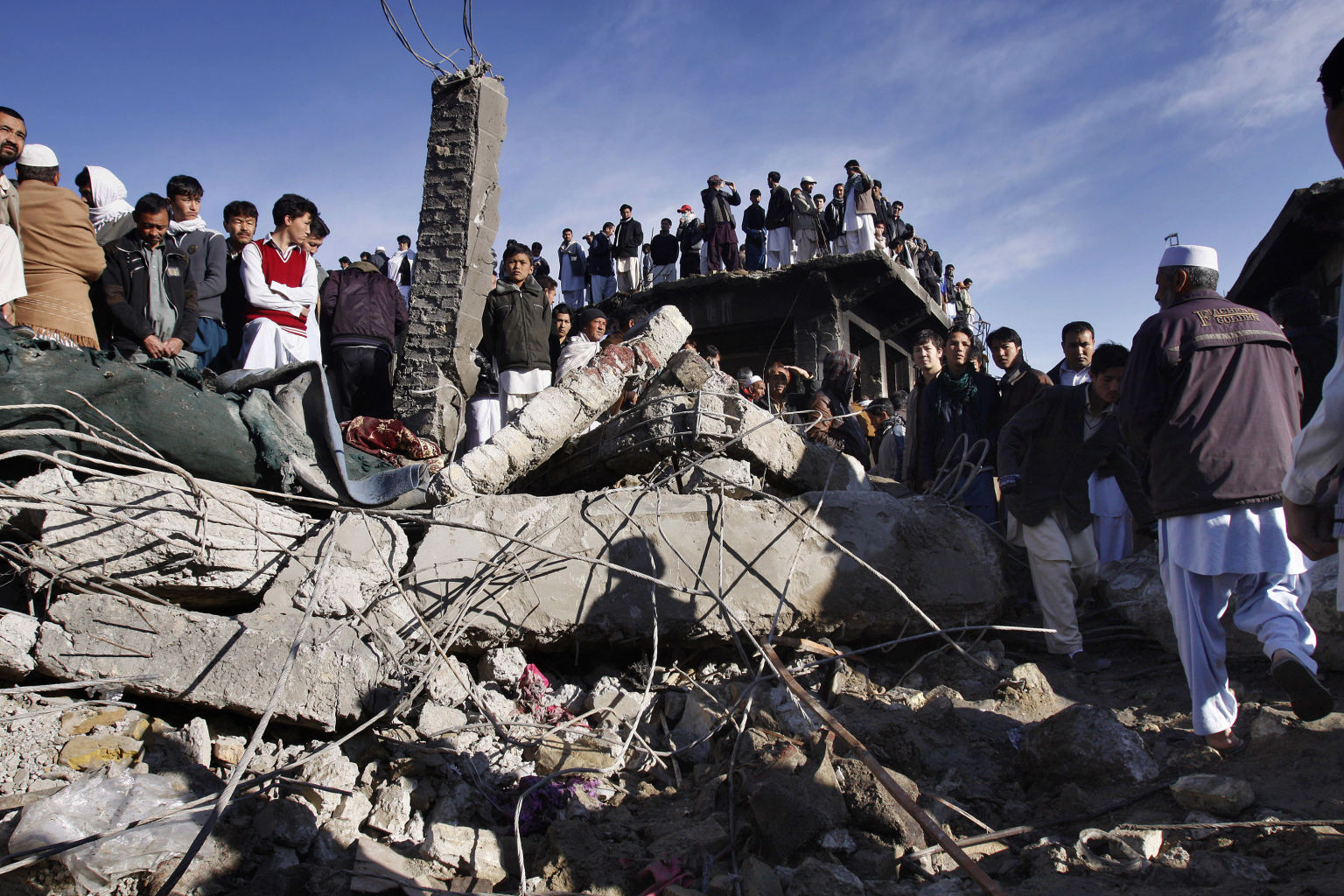
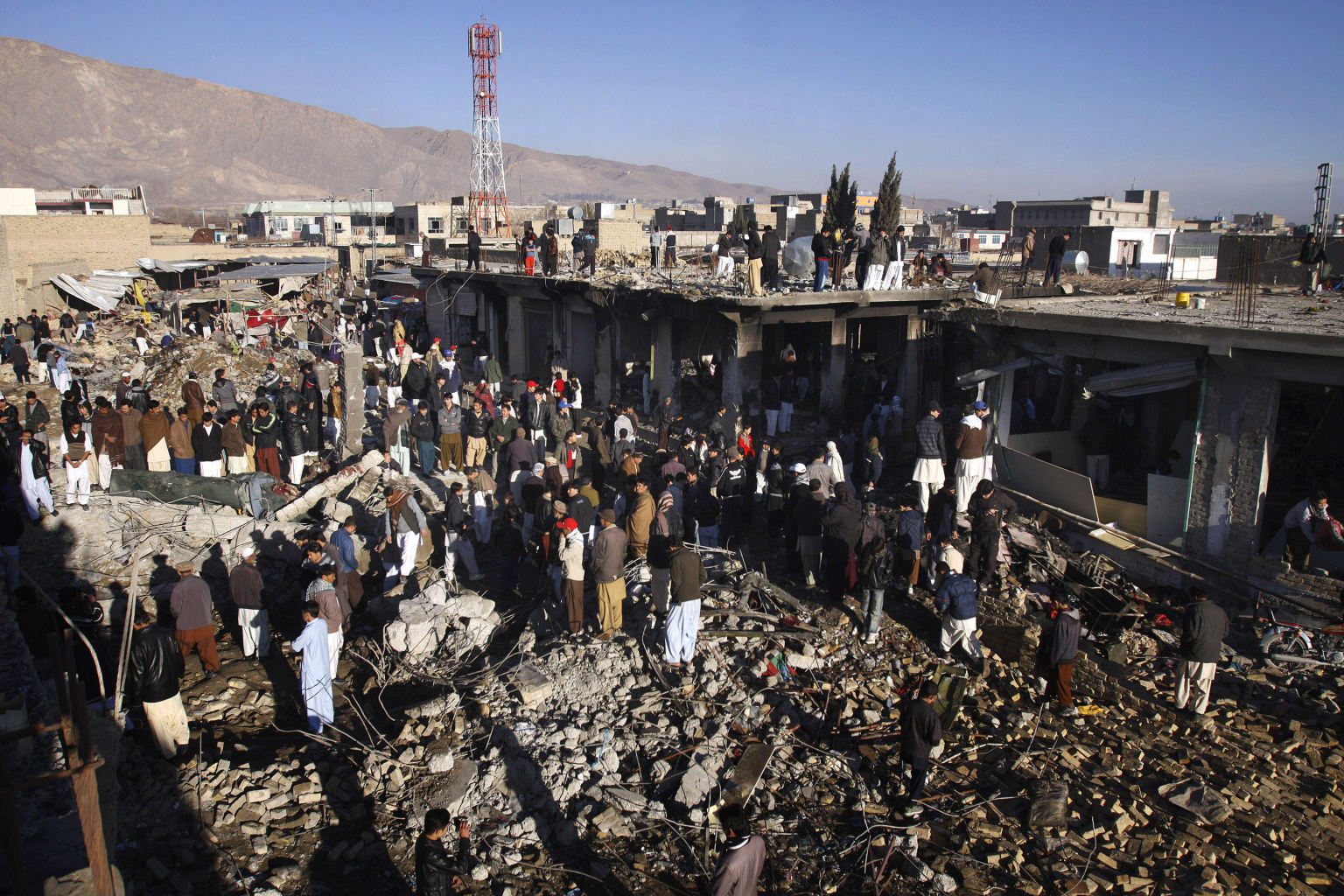 At the blast site, members of the Hazara community helped authorities dig through rubble to find the dead or survivors. Most of their efforts were focused on a two-story building that was completely destroyed. More than 20 shops nearby were also demolished.
Clothing and shoes were scattered through the concrete rubble, broken steel bars and shattered wooden window frames littering the streets.
One of those helping, 40-year-old Qurban Ali, was instructing young people to be patient and careful while removing the rubble, lest they hurt themselves or survivors still buried in the debris. His cousin Abbas was still missing after the blast.
Like many Hazaras, he lashed out at the people who perpetrated the violence.
"Who are these people who made us Hazara so grim and sad? Why are they after us?" he asked. "Not one month or week passes here without the killing of a member of the Hazara community ... Why is the government — both central and provincial — so lethargic in protecting Shiites?"
Near the rubble, a group of more than 50 women were wailing and beating their heads in mourning.
On the road to the neighborhood where the attack occurred, Hazara youth burned tires and chanted for the arrests of the killers. A number of Shiite groups also staged a sit-in and were demanding the immediate removal of the chief secretary of Baluchistan and the top police official, said Rahim Jaffery, who heads a Shiite organization called the Council for the Protection of Mourning.
"We are demanding the city (protection) be handed over to the army so that the killing of Hazara Shiites can be stopped," he said.
Jaffery said a mass funeral for the victims had been planned for Sunday afternoon but all Shiite groups were meeting to decide whether to stage a protest similar to one in January when they refused to bury their dead for four days.
That protest led the prime minister to sack the chief minister of the province and his cabinet and put Governor Zulfiqar Magsi directly in charge of the region — a move that many Shiites thought would help protect their community. But the governor's comments revealed his frustration at a job growing ever more difficult.
Magsi said the blast was the result of a failure of the security and intelligence agencies in the province.
"Officials and personnel of these institutions are scared (of the terrorists). Therefore they don't take action against them," he said in comments that were broadcast on local television.
A militant group called Lashkar-e-Jhangvi called one local television station to claim responsibility for the attack.
Pakistan's intelligence agencies helped nurture Sunni militant groups like Lashkar-e-Jhangvi in the 1980s and 1990s to counter a perceived threat from neighboring Iran, which is mostly Shiite. Pakistan banned Lashkar-e-Jhangvi in 2001, but the group continues to operate fairly freely in their war against Shiites.
Last year was particularly deadly for Shiites in Pakistan. According to Human Rights Watch, more than 400 were killed in targeted attacks across the country. The human rights group said more than 125 were killed in Baluchistan province, most of whom belonged to the Hazara community.
Human rights groups have accused the government of not doing enough to protect Shiites.
At the blast site, members of the Hazara community helped authorities dig through rubble to find the dead or survivors. Most of their efforts were focused on a two-story building that was completely destroyed. More than 20 shops nearby were also demolished.
Clothing and shoes were scattered through the concrete rubble, broken steel bars and shattered wooden window frames littering the streets.
One of those helping, 40-year-old Qurban Ali, was instructing young people to be patient and careful while removing the rubble, lest they hurt themselves or survivors still buried in the debris. His cousin Abbas was still missing after the blast.
Like many Hazaras, he lashed out at the people who perpetrated the violence.
"Who are these people who made us Hazara so grim and sad? Why are they after us?" he asked. "Not one month or week passes here without the killing of a member of the Hazara community ... Why is the government — both central and provincial — so lethargic in protecting Shiites?"
Near the rubble, a group of more than 50 women were wailing and beating their heads in mourning.
On the road to the neighborhood where the attack occurred, Hazara youth burned tires and chanted for the arrests of the killers. A number of Shiite groups also staged a sit-in and were demanding the immediate removal of the chief secretary of Baluchistan and the top police official, said Rahim Jaffery, who heads a Shiite organization called the Council for the Protection of Mourning.
"We are demanding the city (protection) be handed over to the army so that the killing of Hazara Shiites can be stopped," he said.
Jaffery said a mass funeral for the victims had been planned for Sunday afternoon but all Shiite groups were meeting to decide whether to stage a protest similar to one in January when they refused to bury their dead for four days.
That protest led the prime minister to sack the chief minister of the province and his cabinet and put Governor Zulfiqar Magsi directly in charge of the region — a move that many Shiites thought would help protect their community. But the governor's comments revealed his frustration at a job growing ever more difficult.
Magsi said the blast was the result of a failure of the security and intelligence agencies in the province.
"Officials and personnel of these institutions are scared (of the terrorists). Therefore they don't take action against them," he said in comments that were broadcast on local television.
A militant group called Lashkar-e-Jhangvi called one local television station to claim responsibility for the attack.
Pakistan's intelligence agencies helped nurture Sunni militant groups like Lashkar-e-Jhangvi in the 1980s and 1990s to counter a perceived threat from neighboring Iran, which is mostly Shiite. Pakistan banned Lashkar-e-Jhangvi in 2001, but the group continues to operate fairly freely in their war against Shiites.
Last year was particularly deadly for Shiites in Pakistan. According to Human Rights Watch, more than 400 were killed in targeted attacks across the country. The human rights group said more than 125 were killed in Baluchistan province, most of whom belonged to the Hazara community.
Human rights groups have accused the government of not doing enough to protect Shiites.
Pakistan faces growing anger over sectarian bombings
By Reuters/http://tribune.com.pkPakistan’s unpopular government, which is gearing up for elections expected within months, faced growing anger on Sunday for failing to deliver stability after a sectarian bombing in the city of Quetta killed 81 people. The country’s leaders have done little to contain hard-line Sunni Muslim groups which have stepped up a campaign of bombings and assassinations of minority Shias. On Saturday, Lashkar-e-Jhangvi (LeJ), seen as the most ruthless Sunni sectarian group, claimed responsibility for the attack in Quetta, which deepened suspicions among Shias that Pakistan’s intelligence agencies were turning a blind eye to the bloodshed or even supporting extremists. “The terrorist attack on the Hazara Shia community in Quetta is a failure of the intelligence and security forces,” Nawab Zulfiqar Ali Magsi, governor of Balochistan province, said while touring a hospital. Leaders of the ethnic Shia Hazara community called on the government to take decisive action, and Pakistanis warned that sectarian violence was spiraling out of control. “The government is responsible for terrorist attacks and killings in the Hazara community because its security forces have not conducted operations against extremist groups,” said Aziz Hazara, vice president of the Hazara Democratic Party. “We are giving the government 48 hours to arrest the culprits involved in the killing of our people and after that we will launch strong protests.” The death toll from Saturday’s bombing rose overnight, with most of the casualties in the main bazaar of the town, capital of Baluchistan, near the border with Afghanistan. Most of the dead were Hazaras. A senior security official said the figure could rise as 20 people were critically wounded. On Sunday, people searched for survivors under blocks of cement torn off buildings by the blast. A large blood stain could be seen on a wall near the site. Many shops and bazaars were closed. Relatives of the wounded responded for an appeal for blood made by hospitals. “The government knows exactly who is doing what and who is behind all this,” said Mohammad Imran, a local trader. “If the government wants (to prevent it), no one can take even a kitchen knife into any market.” In the capital Islamabad, about 400 people, including some Sunnis, staged a protest demanding the government to stamp out extremism. “There is a law of the jungle, but in this country I think there is not even a law of the jungle,” said Syed Abbas Naqvi, a Shi’ite. “A person who is extremely helpless, vulnerable and powerless is always made the target of barbarity whereas all brutal people like the terrorists, Taliban and others who carry out these merciless acts, roam free all over the country.” Protests were also held in other cities, including the commercial capital Karachi, and in Quetta. Poverty, corruption, power cuts Public anger has been growing over a host of other issues in the run-up to elections, from widespread poverty to power cuts to corruption. But waves of major sectarian attacks have highlighted its poor track record on security. Critics say Pakistan’s intelligence agencies previously supported groups like LeJ to fight against Indian forces in Kashmir and failed subsequently to control them. Now Shias in Quetta and other cities say they are under siege. “We have grown tired of picking up the bodies of our loved ones,” said Nasir Ali, 45, a government employee. “I have lost three family members so far in such blasts.” LeJ has also said it was behind a bombing last month in Quetta which killed nearly 100 people, one of Pakistan’s worst sectarian attacks. After that incident, Shia leaders called on Pakistan’s military to take over security in Quetta and take on the LeJ. Sectarian violence is piling pressure on the US backed administration, which already faces a Taliban insurgency, to ensure stability. “Unless we decide to unite, we will continue to get killed, said Malik Afzal, a Sunni student. “Today they (Shias) have died. Tomorrow we (Sunni Muslims) will die. The next day, others will get killed.” Pakistani intelligence officials say extremist groups, led by LeJ, want to destabilise the nation through sectarian violence and pave the way for a Sunni theocracy. More than 400 Shias were killed in Pakistan last year, many by hitmen or bombs.
Hazaras face yet another pogrom
 At least 72 persons, including women and children, were killed and 177 others wounded in a massive explosion here in Hazara Town at Kirani road on Saturday, police said.
Official sources confirmed the number of casualities, and said the explosives were fitted in the hidden cavities of a water tanker which went off at around 5:30pm.
Police said the blast took place in Aliabad bazaar in Hazara Town when people were busy in their routine shopping. This resulted in the death of as many as 65 people on the spot, most of them from the Hazara Shia community. The other persons died after they were shifted to hospital, sources said.
All the injured, some of them in a precarious condition, were rushed to different hospitals in the city, where an emergency had been declared.
A large number of people also rushed to hospitals to inquire about the victims.
The blast caused suspension of the electricity supply to the area.
It was the second largest bomb attack to have hit the city. The Alamdar road blast of January 10, was the largest ever bomb explosion. Police experts said that more than 800kg explosives were used in the bomb.
Police and law enforcement agencies reached the area, but the angry mob did not allow them to reach the spot. Later, Chief Secretary Balochistan Babar Yaqoob Fateh Muhammad directed Inspector General Police Balochistan Tariq Omer Khitab, Commissioner Quetta Kambar Dashti and Capital City Police Officer (CCPO) Mir Zubair to reach the spot and supervise the rescue operation. The blast created a 10-foot long and four-foot deep crater, said official sources.
Eyewitnesses told The News that a large amount of smoke rose at the site after the big bang of the explosion which forced the people to run for safety. A man injured in the explosion, Shah Hussain, said he saw nothing but darkness. “When I opened my eyes in the hospital I was being treated.”
Balochistan Governor Nawab Zulfiqar Ali Magsi in his condolence message expressed deep concern over the Hazara town bomb explosion which claimed the lives of over 65 people. He directed the law enforcement to enhance the security and safety measures in the city. He directed the shifting of all the seriously injured to Karachi’s hospitals for the best medical treatment.
Meanwhile, the Hazara Democratic Party (HDP), Pakhtunkhwa Milli Awami Party (PkMAP), JUI-F and others strongly condemned the blast. The HDP gave a shutter down strike call for today (Sunday) to protest against the explosion.
Our correspondent/ agencies add: President Asif Ali Zardari and Prime Minister Raja Pervaiz Ashraf have strongly condemned the Quetta blast which resulted in the loss of precious lives and property.
In their separate messages, they directed the concerned authorities to provide the best medical assistance to the injured. They expressed sympathies with the bereaved families and reiterated the resolve of the government to continue its fight against terrorism undeterred till its logical conclusion.
Quaid-e-Millat Jafariya Allama Syed Sajid Ali Naqvi, TNFJ chief Agha Syed Hamid Ali Shah Moosavi and Secretary General Majlis-e-Wahdat-e-Muslimeen (MWM) Allama Nasir Abbas Jaffery also strongly condemned the blast in Quetta and demanded of the government to arrest the culprits behind the brutal act.
In their separate statements, they said the elements behind such acts should be unmasked. The Shia Ulema Council also announced a three-day mourning throughout the country.
At least 72 persons, including women and children, were killed and 177 others wounded in a massive explosion here in Hazara Town at Kirani road on Saturday, police said.
Official sources confirmed the number of casualities, and said the explosives were fitted in the hidden cavities of a water tanker which went off at around 5:30pm.
Police said the blast took place in Aliabad bazaar in Hazara Town when people were busy in their routine shopping. This resulted in the death of as many as 65 people on the spot, most of them from the Hazara Shia community. The other persons died after they were shifted to hospital, sources said.
All the injured, some of them in a precarious condition, were rushed to different hospitals in the city, where an emergency had been declared.
A large number of people also rushed to hospitals to inquire about the victims.
The blast caused suspension of the electricity supply to the area.
It was the second largest bomb attack to have hit the city. The Alamdar road blast of January 10, was the largest ever bomb explosion. Police experts said that more than 800kg explosives were used in the bomb.
Police and law enforcement agencies reached the area, but the angry mob did not allow them to reach the spot. Later, Chief Secretary Balochistan Babar Yaqoob Fateh Muhammad directed Inspector General Police Balochistan Tariq Omer Khitab, Commissioner Quetta Kambar Dashti and Capital City Police Officer (CCPO) Mir Zubair to reach the spot and supervise the rescue operation. The blast created a 10-foot long and four-foot deep crater, said official sources.
Eyewitnesses told The News that a large amount of smoke rose at the site after the big bang of the explosion which forced the people to run for safety. A man injured in the explosion, Shah Hussain, said he saw nothing but darkness. “When I opened my eyes in the hospital I was being treated.”
Balochistan Governor Nawab Zulfiqar Ali Magsi in his condolence message expressed deep concern over the Hazara town bomb explosion which claimed the lives of over 65 people. He directed the law enforcement to enhance the security and safety measures in the city. He directed the shifting of all the seriously injured to Karachi’s hospitals for the best medical treatment.
Meanwhile, the Hazara Democratic Party (HDP), Pakhtunkhwa Milli Awami Party (PkMAP), JUI-F and others strongly condemned the blast. The HDP gave a shutter down strike call for today (Sunday) to protest against the explosion.
Our correspondent/ agencies add: President Asif Ali Zardari and Prime Minister Raja Pervaiz Ashraf have strongly condemned the Quetta blast which resulted in the loss of precious lives and property.
In their separate messages, they directed the concerned authorities to provide the best medical assistance to the injured. They expressed sympathies with the bereaved families and reiterated the resolve of the government to continue its fight against terrorism undeterred till its logical conclusion.
Quaid-e-Millat Jafariya Allama Syed Sajid Ali Naqvi, TNFJ chief Agha Syed Hamid Ali Shah Moosavi and Secretary General Majlis-e-Wahdat-e-Muslimeen (MWM) Allama Nasir Abbas Jaffery also strongly condemned the blast in Quetta and demanded of the government to arrest the culprits behind the brutal act.
In their separate statements, they said the elements behind such acts should be unmasked. The Shia Ulema Council also announced a three-day mourning throughout the country.
The Return of Another Tragedy in Quetta
Editorial:The Baloch HalMore than 60 people, mostly members of the Hazara community or the followers of Shia Islam, were killed on Saturday in Quetta city. Activists linked to the “banned” Sunni-militant organization, the Lashkar-e-Jhangvi, have accepted responsibility for the attack which was carried out in Hazara Town area, an economically poor Hazara-majority neighborhood. Considering the impunity with which the Lashkar carries out these terrorist attacks on innocent civilians, one often sounds incorrect to describe it as a ‘banned’ organization. On the contrary, the so-called banned organization remains in the news more regularly than most other political and religious organizations because it keeps carrying out attacks after attacks. Yesterday’s massive bombing comes only a month after the extraordinary bombings on January 10 which killed more than 100 people, mostly Shias and Hazaras. That said, nothing has changed in the troubled province even after the imposition of the governor’s rule. Since the Balochistan government was sacked because of its failure to establish peace in the province, the government has not made a single public statement against sectarian groups nor has it come forward with a clear policy to grapple with the menace of terrorism employed in the name of religion. People should not be fooled by the mere statements of condemnation from the President, the Prime Minister and other important political figures. Because these statements are already prepared and saved in official computers. The staff of political figures issue these statements to the media with minor changes in the existing template as soon as they come across a breaking news on the television channels. Politicians mean their publicity. When a political leader ‘condemns’ an act of terror, it should only be treated as political rhetoric. Rulers should be trusted only when their actions speak louder than their words. Sometimes, their statements of condemnation are printed or put on air even before they hear about a tragedy. So, let’s stop debating which leader condemned a terrorist attack. What we should be asking as the real question is what the government and these political parties have done to truly address the issue of sectarian attacks. Unfortunately, the answer is ‘nothing’. Since the imposition of the governor’s rule, the government has not detained even a single Lashkar activist which clearly gives credence to the speculations that the religious extremist groups enjoy the support of the Pakistani security establishment. When the Human Rights Watch (H.R.W.), a globally respected human rights watchdog, accused the security forces of having ties with these extremist groups, the Pakistani military reacted furiously and refuted the statement. Instead of taking the H.R.W. statement seriously and reviewing its flawed policies and connections supportive of Islamic extremist groups, the military described the H.R.W. statement as a ‘pack of lies’. By now, we should be clear: The killing of 80 innocent people is not a ‘pack of lies’. It is the sad reality of our times. The country’s security establishment and political leadership should stop their double game. Whatever support is offered to the Lashkar and other religious groups by the security establishment it should not end. We have caused enough damage to our populations by playing politics in the name of religion and the s0-called ‘national interest’ While Saturday’s attacks was more powerful but less deadly as compared to the one that took place on January 10th, the official response has been relatively more positive and encouraging. Unlike Balochistan’s indifferent former chief minister Nawab Raisani, Govenor Nawab Zulfiqar Ali Magsi demonstrated better leadership on Saturday. He has announced a day of official mourning; pledged a reward of Rs. ten million against anyone with information about the terrorists involved in Saturday’s killings and, above all, the governor visited the hospital to speak to the victims of the blast. Governor Magsi’s caring gesture is deeply reassuring for the aggrieved families although much more is expected of him and the government he leads in order to end the cycle of attacks against the Shias, Hazaras. Governor Magsi has held the failure of security agencies and intelligence agencies responsible for Saturday’s carnage. Since Balochistan currently lives under governor’s rule, Mr. Magsi is not separate from the government. As the chief executive of the province, he cannot get away from his responsibilities by only blaming the security apparatus. It is his responsibility to ensure good governance and transparency in the affairs of the government. The threat of the Lashkar has increased significantly in the recent times which has also resulted in the killing of several police officers. That said, the Lashkar, just like the Pakistani Taliban, are rapidly getting out of the government’s control. Within the government, the blame game should stop and authorities should cooperate with each other to make sure that more such attacks do not take place in the future. We need a grand strategy to get rid of these deadly attacks. Besides the government, religious scholars and members of the community should assist with authorities to bring the religious extremists to justice.
Lashkar-e-Jhangvi Issues Fresh Warning to Balochistan’s Shias
The Baloch HalThe banned Lashkar-e-Jhangvi, an underground Sunni militant group that accepted responsibility for Saturyday’s deadly bomb blast in Quetta which killed around 80 people, has said it would continue its anti-Shia operations despite the governor’s rule or even if the military takes control of Balochistan. Abu Bakar Siddiq, a spokesman for the underground organization, told the local media on the telephone that government should not live under any illusions that his organization would stop its activities after the imposition of the governor’s rule. According to him, Saturday’s was a suicide blast carried out by “our friend Omar Farooq”. “We wish to warn the government that the governor’s rule cannot deter us from our obligation [to kill the Shias] and we want to tell the Shias that they should not consider themselves safe under the governor’s rule. Until Islamic rule, as guided by the companions of Prophet Mohammad, is enforced, Shias should not feel safe. We will attack them even if the army is called in Balochistan” The spokesman said it was the second attack his organization had carried out against the Shias this y ear (2013) but they possessed at least twenty more similar “ready trucks” such as the one used in Saturday’s attack on the Shias. All twenty of its “prepared suicide bombers” only await instructions from the top leadership of the organization. “We do not fear the governor rule or the military regime. We love to embrace martyrdom. Inshallah [god willing] we will attack the Shias inside their homes on Alamdar Road, Marri Abad Road and Hazara Town. We urge all the Sunnis to support us. They should attach bombs to their bodies against the Shias and ‘support’ the LeJ. The spokesman said, “either we or the Shias will live in Quetta.” He dispelled the impression that some elements in the government were supporting his organization. “We have never needed anyone’s help nor will we require that. We are solely fighting this war in Allah’s name which will end in making Balochistan a graveyard for the Shias.”
Quetta tragedy: Death toll reaches 80
 The death toll of Kerani Road bombing has reached 80, bringing the number of injured down to 173 as more of the critical victims succumbed to their wounds, Geo News reported.
 DIG Wazir Khan Nasir was reported by a foreign news agency as saying that all the dead belonged to Hazara community and the death toll might rise.
A large number of women and children are among the victims of the mega blast that hit Quetta on Saturday.
CCPO Quetta said the Improvised Explosive Device (IED) the terrorists planted in a watertank was armed with around 800-1000 kilograms of high-grade detonable material.
He said people with critical injuries would be flown to Karachi through military aircraft C-130.
According to reports the explosion demolished several markets in the area.
More casualties were feared as many of the injured were in critical condition.
Adjacent areas reverberated with intense firing following the blast while heavy contingent of police and Frontier Corps (FC) rushed to the spot and cordoned off the area. They were not allowing people including media men to reach the spot.
Rescue sources said plumes of smoke were seen shortly after the huge blast. Many vehicles were also damaged due to the blast.
Enraged people took to the streets and protested the blast, pelting vehicles with stones and blocking roads. Most of the people were busy in shopping as the blast hit market.
Various religious and political parties have announced to mark day of mourning over the tragic incident.
Victims will not be buried until demands are met
The Majlis-e-Wahadat-ul-Muslimeen said Sunday that the sit-in of the Hazara community would continue and victims would not be buried until their demands were met.
The demands include calling in the army to take control of Balochistan and taking action against those involved in such horrific acts.
HDP gives 48 hour ultimatum
Hazara Democratic Party (HDP) has given a 48-hour ultimatum to authorities concerned for the arrest of miscreants involved in Kerani Road carnage.
Addressing a hurriedly called press conference here on Sunday, vice chairman HDP Azizullah Hazara said they had given a 48-hour ultimatum to the authorities for the arrest of elements involved in the Kerani carnage, adding if the culprits were not brought to book, protests would be held outside BHC on daily basis.
Mourning in Sindh, Balochistan
The governments had Sindh and Balochistan observed a day of mourning over the killing of 80 people in Quetta on Saturday.
Meanwhile a shutter down strike on the call of the Hazara Democratic Party was held in Quetta.
Karachi Goods Transporters Association and Oil Tankers Association also announced to halt supply of goods across the country.
DIG Wazir Khan Nasir was reported by a foreign news agency as saying that all the dead belonged to Hazara community and the death toll might rise.
A large number of women and children are among the victims of the mega blast that hit Quetta on Saturday.
CCPO Quetta said the Improvised Explosive Device (IED) the terrorists planted in a watertank was armed with around 800-1000 kilograms of high-grade detonable material.
He said people with critical injuries would be flown to Karachi through military aircraft C-130.
According to reports the explosion demolished several markets in the area.
More casualties were feared as many of the injured were in critical condition.
Adjacent areas reverberated with intense firing following the blast while heavy contingent of police and Frontier Corps (FC) rushed to the spot and cordoned off the area. They were not allowing people including media men to reach the spot.
Rescue sources said plumes of smoke were seen shortly after the huge blast. Many vehicles were also damaged due to the blast.
Enraged people took to the streets and protested the blast, pelting vehicles with stones and blocking roads. Most of the people were busy in shopping as the blast hit market.
Various religious and political parties have announced to mark day of mourning over the tragic incident.
Victims will not be buried until demands are met
The Majlis-e-Wahadat-ul-Muslimeen said Sunday that the sit-in of the Hazara community would continue and victims would not be buried until their demands were met.
The demands include calling in the army to take control of Balochistan and taking action against those involved in such horrific acts.
HDP gives 48 hour ultimatum
Hazara Democratic Party (HDP) has given a 48-hour ultimatum to authorities concerned for the arrest of miscreants involved in Kerani Road carnage.
Addressing a hurriedly called press conference here on Sunday, vice chairman HDP Azizullah Hazara said they had given a 48-hour ultimatum to the authorities for the arrest of elements involved in the Kerani carnage, adding if the culprits were not brought to book, protests would be held outside BHC on daily basis.
Mourning in Sindh, Balochistan
The governments had Sindh and Balochistan observed a day of mourning over the killing of 80 people in Quetta on Saturday.
Meanwhile a shutter down strike on the call of the Hazara Democratic Party was held in Quetta.
Karachi Goods Transporters Association and Oil Tankers Association also announced to halt supply of goods across the country.
Saturday, February 16, 2013
China needs to adhere to NK policy

 The latest nuclear test in North Korea on February 12 has raised concerns about nuclear pollution among residents of North China, with the test site reportedly being less than 100 kilometers from the Jilin border. Fortunately, as yet, Chinese environmental authorities have not found any signs of pollution along the border.
We have to demand that North Korea ensures there is no pollution of Chinese soil or air. This is a red line for North Korea. It is also a guarantee the Chinese government must provide for its own people. If this line is crossed, the Korean Peninsula crisis will turn into China's crisis.
North Korea has been gambling more with each successive nuclear test. The country has been trying to use extreme methods to win a lasting peace, as other countries cannot offer alternative guarantees for strategic security. But this does not mean it will result in North Korea's strategic success.
North Korea is too small to control the strategic risk of owning nuclear weapons. The new arms only put neighboring countries at greater risk and anxiety.
North Korea should not turn itself into a hostage taker, who appears to be safe for now, but is actually the most vulnerable of all in the tricky situation.
As for China, does the test mean a failure of its North Korea policy? Not necessarily. It is unrealistic for some to argue that China has lost the game, saying it should control North Korea and has the power to stop it from developing nuclear weapons.
North Korea has been pursuing an independent diplomatic route for a long time. After the Korean War in the early 1950s, China took a step back, no longer involving itself too deeply in Korean affairs.
China has placed Sino-US relations at a prominent spot since the reform and opening-up policy was launched over three decades ago, while also developing relations with South Korea. China and North Korea still have a special friendship, but it does not equate to an alliance.
All these have resulted in China's limited leverage over North Korea. The Chinese public needs to change its mindset that China is a big brother to North Korea and always has the final say.
China does need to give a stern warning or even punishment to North Korea if it hurts China's interests. But the warning should be one that informs a strategic friend about China's bottom line. China cannot join the camp of the US, South Korea and Japan, by making North Korea China's enemy.
China will adhere to its pursuit of a nuclear-free Korean Peninsula while maintaining its special relationship with North Korea.
The latest nuclear test in North Korea on February 12 has raised concerns about nuclear pollution among residents of North China, with the test site reportedly being less than 100 kilometers from the Jilin border. Fortunately, as yet, Chinese environmental authorities have not found any signs of pollution along the border.
We have to demand that North Korea ensures there is no pollution of Chinese soil or air. This is a red line for North Korea. It is also a guarantee the Chinese government must provide for its own people. If this line is crossed, the Korean Peninsula crisis will turn into China's crisis.
North Korea has been gambling more with each successive nuclear test. The country has been trying to use extreme methods to win a lasting peace, as other countries cannot offer alternative guarantees for strategic security. But this does not mean it will result in North Korea's strategic success.
North Korea is too small to control the strategic risk of owning nuclear weapons. The new arms only put neighboring countries at greater risk and anxiety.
North Korea should not turn itself into a hostage taker, who appears to be safe for now, but is actually the most vulnerable of all in the tricky situation.
As for China, does the test mean a failure of its North Korea policy? Not necessarily. It is unrealistic for some to argue that China has lost the game, saying it should control North Korea and has the power to stop it from developing nuclear weapons.
North Korea has been pursuing an independent diplomatic route for a long time. After the Korean War in the early 1950s, China took a step back, no longer involving itself too deeply in Korean affairs.
China has placed Sino-US relations at a prominent spot since the reform and opening-up policy was launched over three decades ago, while also developing relations with South Korea. China and North Korea still have a special friendship, but it does not equate to an alliance.
All these have resulted in China's limited leverage over North Korea. The Chinese public needs to change its mindset that China is a big brother to North Korea and always has the final say.
China does need to give a stern warning or even punishment to North Korea if it hurts China's interests. But the warning should be one that informs a strategic friend about China's bottom line. China cannot join the camp of the US, South Korea and Japan, by making North Korea China's enemy.
China will adhere to its pursuit of a nuclear-free Korean Peninsula while maintaining its special relationship with North Korea.
Dr. Ayesha Siddiqa: Persona non grata at Karachi Literature Festival #KLF
 Karachi Literature Festival (KLF), an annual international literary festival held in Karachi, starting from February 15 till 17, will be having no anti-army analysts moderating any sessions this year to avoid discomfort for pro-army analysts.
Interestingly, Dr Ayesha Siddiqa, an intellectual, author and op-ed writer, was assigned the status of ‘persona non grata’ by organisers of KLF for creating discomfort for the British, pro-Pakistan Army author Anatol Lieven in last year’s session.
The session was about the book of Anatol Lieven ‘Pakistan a hard country’ which was not received well by some analysts in the country for its military-friendly approach, and could not do well in liberal circles.
Dr Ayesha Siddiqa, who is considered an anti-military analyst and was co-moderator during, last year’s session, asked some pinching questions from Anatol Lieven, which caused discomfort for the British author.
She was not called to moderate any KLF 2013 session and was not invited to participate in the festival despite a request from Lahore University of Management Sciences (LUMS) professor Dr Muhammad Waseem.
“I talked to KLF organisers and they told me that I was awarded the status of persona non grata,” Ayesha Siddiqua told Pakistan Today.
“LUMS Professor Dr Muhammad Waseem called me a few months back and told me that he wished that I should moderate a session at KLF 2013,” Dr Siddiqa said.
“I accepted the offer from Dr Waseem and he sent my name as a co-moderator to KLF organisers but he could not get a response from the management of the literary festival, she said, adding that Dr Waseem called KLF organiser Raheela and Muneeza for sending her the invitation to moderate the session with him.”
“Over this I contacted KLF organisers for their non-serious attitude on Dr Waseem’s request following which they told me that the administration of the festival has granted me the status of persona non grata,” Dr Siddiqa said.
“Last year I had a one-on-one discussion with pro-military British author Anatol Lieven on his book ‘Pakistan: a hard country’ but on arrival, KLF organisers had told me that Mohsin Hamid and Ghazi Salahuddin would also participate in the session with me,” she said.
“Some of my friends in the KLF organising team told me that Mohsin Hamid and Ghazi Salahuddin were added on the request of Anatol Lieven,” she said, adding that they also told her that the British author asked the organisers to remove her name but they added names of two more persons instead, to ease Lieven.
“Failing this, Anatol Lieven was brought to me by one of the KLF organisers for negotiations regarding what I had to put forth into the discussion, but I refused,” Dr Siddiqa added. “In this year’s KLF, the Urdu version of my book Military Inc. would be exhibited with the title ‘Khaki Company’,” she added.
LUMS Professor Muhammad Waseem when approached confirmed he had sent the name of Dr Ayesha Siddiqa for co-moderating a session at KLF 2013.
“I called KLF organisers many times and later I was informed that the literary festival has a very low budget and they cannot afford travelling expenses of Lahore-based defence analysts,” he said. “Now I have two Karachi-based persons in the session,” he added.
KLF DIRECTOR DENIES: KLF Director Ameena Saiyid told Pakistan Today that all decisions regarding speakers are taken by the KLF committee. “No one can force us to invite anyone. We try to get new authors every year for the benefit of the audience or we get authors who have published a new book. Ayesha is not entitled to be invited every year. She is not persona non grata and is welcome to attend KLF…it is free and open to all,” she said.
Karachi Literature Festival (KLF), an annual international literary festival held in Karachi, starting from February 15 till 17, will be having no anti-army analysts moderating any sessions this year to avoid discomfort for pro-army analysts.
Interestingly, Dr Ayesha Siddiqa, an intellectual, author and op-ed writer, was assigned the status of ‘persona non grata’ by organisers of KLF for creating discomfort for the British, pro-Pakistan Army author Anatol Lieven in last year’s session.
The session was about the book of Anatol Lieven ‘Pakistan a hard country’ which was not received well by some analysts in the country for its military-friendly approach, and could not do well in liberal circles.
Dr Ayesha Siddiqa, who is considered an anti-military analyst and was co-moderator during, last year’s session, asked some pinching questions from Anatol Lieven, which caused discomfort for the British author.
She was not called to moderate any KLF 2013 session and was not invited to participate in the festival despite a request from Lahore University of Management Sciences (LUMS) professor Dr Muhammad Waseem.
“I talked to KLF organisers and they told me that I was awarded the status of persona non grata,” Ayesha Siddiqua told Pakistan Today.
“LUMS Professor Dr Muhammad Waseem called me a few months back and told me that he wished that I should moderate a session at KLF 2013,” Dr Siddiqa said.
“I accepted the offer from Dr Waseem and he sent my name as a co-moderator to KLF organisers but he could not get a response from the management of the literary festival, she said, adding that Dr Waseem called KLF organiser Raheela and Muneeza for sending her the invitation to moderate the session with him.”
“Over this I contacted KLF organisers for their non-serious attitude on Dr Waseem’s request following which they told me that the administration of the festival has granted me the status of persona non grata,” Dr Siddiqa said.
“Last year I had a one-on-one discussion with pro-military British author Anatol Lieven on his book ‘Pakistan: a hard country’ but on arrival, KLF organisers had told me that Mohsin Hamid and Ghazi Salahuddin would also participate in the session with me,” she said.
“Some of my friends in the KLF organising team told me that Mohsin Hamid and Ghazi Salahuddin were added on the request of Anatol Lieven,” she said, adding that they also told her that the British author asked the organisers to remove her name but they added names of two more persons instead, to ease Lieven.
“Failing this, Anatol Lieven was brought to me by one of the KLF organisers for negotiations regarding what I had to put forth into the discussion, but I refused,” Dr Siddiqa added. “In this year’s KLF, the Urdu version of my book Military Inc. would be exhibited with the title ‘Khaki Company’,” she added.
LUMS Professor Muhammad Waseem when approached confirmed he had sent the name of Dr Ayesha Siddiqa for co-moderating a session at KLF 2013.
“I called KLF organisers many times and later I was informed that the literary festival has a very low budget and they cannot afford travelling expenses of Lahore-based defence analysts,” he said. “Now I have two Karachi-based persons in the session,” he added.
KLF DIRECTOR DENIES: KLF Director Ameena Saiyid told Pakistan Today that all decisions regarding speakers are taken by the KLF committee. “No one can force us to invite anyone. We try to get new authors every year for the benefit of the audience or we get authors who have published a new book. Ayesha is not entitled to be invited every year. She is not persona non grata and is welcome to attend KLF…it is free and open to all,” she said.
Anti-Islamist blogger killed in Bangladesh violence
indiatimes.comA Bangladeshi blogger who had been critical of the Islamist groups has been killed, prompting the protesters here to continue their round the clock sit-in vigil demanding death penalties for 1971 war criminals. Rajib Haidar, 30, an architect and Shahbagh protest activist, was stabbed to death near his house at Pallabi in the capital last night. "We have launched a massive manhunt for killers of Rajib Haidar... the detective branch and the CID (Criminal Investigation Department) separately took fingerprints to track down the assailants," a police spokesman told. The protestors at Shahbagh accused fundamentalist Jamaat- e-Islami (JI) of killing Haidar with lethal weapons last evening while he was returning home. The killing prompted the protesters to go back to their 24-hour movement instead of seven-hour programme which they had declared hours before the death. Haidar's death came hours after violence at southeastern Cox's Bazar district that left three people dead. The violence broke out after JI activists turned violent following Friday prayers to protest their top leaders' trial for war crimes. JI and their student affiliate Islamic Chhatra Shibir were trying to wage counter protest attacking or torching vehicles and attacking policemen apparently under a hit ad run strategy to halt their stalwarts' ongoing trial. The violence saw deaths of at least 14 people including Haidar, who apparently came under wraths of the Islamists for his internet blog campaign demanding ban on the JI politics and boycott of the health, banking and other services as part of the youngsters "non-political and non-partisan" movement. "We announce from here, we will not go back home until the war criminals are hanged, his (Haidar's) assailants are exposed to justice and politics of Jamaat and Shibir is banned," said a leading organiser of the Shahbagh protest. Meanwhile, JI has called a nationwide general strike on Monday and enforced a localised one in Cox's Bazar today to protest deaths of three of the party's activists yesterday.
Bangladesh’s PM hints at backing ban of Islamic party
 Bangladeshi Prime Minister Sheikh Hasina indicated Saturday she would back a ban on the country’s largest Islamic party, as tens of thousands of people joined the funeral of an anti-Islamist blogger.
Hasina said after a meeting with the mourning relatives of Ahmed Rajib Haider that the Jamaat-e-Islami party, whose members are suspected in the blogger’s murder, had “no right to be in politics in free Bangladesh”.
Demonstrations championed by the country’s online activists have seen thousands take to the streets for the last two weeks demanding the execution of leaders of the Jamaat-e-Islami party who are on trial for war crimes.Rival protests by Islamists demanding a halt to the trials of Jamaat leaders including its chief and deputy chief over their role in the 1971 independence war have turned violent across the country, leaving 13 people dead.
Late on Friday Haider, an organiser of the anti-Islamist protests, was hacked to death with a machete near his Dhaka home.
Police have yet to comment on a possible motive, but his brother said Haider was targeted by Jamaat’s student wing for his online activities. Fellow blogger Shakil Ahmed said a pro-Jamaat website had last week named Haider as a target.
Hasina visited Haider’s home on Saturday and hinted in comments to reporters that she would back a ban for Jamaat.
“Anyone can assume who were behind this,” she said, alluding to Jamaat.
“Many claim they are a democratic political party, a democratic force. Now it is proved that they believe in terrorism not democracy, she said.“We will do to them what is necessary. They have absolutely no right to be in politics in free Bangladesh.”
Thousands of people including war veterans joined the funeral late Saturday at Dhaka’s Shahbag intersection, where protests have been staged against Islamist groups since February 5.
Local police chief Sirajul Islam told AFP at least 50,000 people attended the funeral.
“We touched his coffin and vowed that we won’t leave the protests until the government finds his killers, and bans Jamaat and its student wing Islami Chhatra Shibir,” said blogger and protester Mahbubur Rahman.
Clashes between police and Islamists have intensified since last week after a senior Jamaat leader was sentenced to life imprisonment for mass murder.
Jamaat and the main opposition Bangladesh Nationalist Party have said the trials are based on bogus charges and are part of a wider political vendetta.
The government rejects the accusations and says the trials are needed to heal wounds of the nine-month war in which it says three million people were killed, many by pro-Pakistani militia whose members allegedly included Jamaat officials.
The killing on Friday was the second attack in Dhaka against a blogger critical of Islamist groups in less than a month, after the stabbing of a self-styled online “militant atheist” by three unidentified men.
Bangladeshi Prime Minister Sheikh Hasina indicated Saturday she would back a ban on the country’s largest Islamic party, as tens of thousands of people joined the funeral of an anti-Islamist blogger.
Hasina said after a meeting with the mourning relatives of Ahmed Rajib Haider that the Jamaat-e-Islami party, whose members are suspected in the blogger’s murder, had “no right to be in politics in free Bangladesh”.
Demonstrations championed by the country’s online activists have seen thousands take to the streets for the last two weeks demanding the execution of leaders of the Jamaat-e-Islami party who are on trial for war crimes.Rival protests by Islamists demanding a halt to the trials of Jamaat leaders including its chief and deputy chief over their role in the 1971 independence war have turned violent across the country, leaving 13 people dead.
Late on Friday Haider, an organiser of the anti-Islamist protests, was hacked to death with a machete near his Dhaka home.
Police have yet to comment on a possible motive, but his brother said Haider was targeted by Jamaat’s student wing for his online activities. Fellow blogger Shakil Ahmed said a pro-Jamaat website had last week named Haider as a target.
Hasina visited Haider’s home on Saturday and hinted in comments to reporters that she would back a ban for Jamaat.
“Anyone can assume who were behind this,” she said, alluding to Jamaat.
“Many claim they are a democratic political party, a democratic force. Now it is proved that they believe in terrorism not democracy, she said.“We will do to them what is necessary. They have absolutely no right to be in politics in free Bangladesh.”
Thousands of people including war veterans joined the funeral late Saturday at Dhaka’s Shahbag intersection, where protests have been staged against Islamist groups since February 5.
Local police chief Sirajul Islam told AFP at least 50,000 people attended the funeral.
“We touched his coffin and vowed that we won’t leave the protests until the government finds his killers, and bans Jamaat and its student wing Islami Chhatra Shibir,” said blogger and protester Mahbubur Rahman.
Clashes between police and Islamists have intensified since last week after a senior Jamaat leader was sentenced to life imprisonment for mass murder.
Jamaat and the main opposition Bangladesh Nationalist Party have said the trials are based on bogus charges and are part of a wider political vendetta.
The government rejects the accusations and says the trials are needed to heal wounds of the nine-month war in which it says three million people were killed, many by pro-Pakistani militia whose members allegedly included Jamaat officials.
The killing on Friday was the second attack in Dhaka against a blogger critical of Islamist groups in less than a month, after the stabbing of a self-styled online “militant atheist” by three unidentified men.
Afghans skeptical of Obama troop withdrawal
 AS President Barack Obama plans to withdraw some 34,000 American troops from Afghanistan this year – a little more than half the current number. The Karzai government has welcomed the move as long overdue.
The office of Afghan President Hamid Karzai issued a statement saying it had long been hoping for such an announcement and that the US president's plans would certainly provide added impetus for peace and security in the country.
Zahir Azimi, the spokesman for the Afghan defense ministry, added that "by the end of 2013, the government would take over the security responsibilities for all of Afghanistan." Afghan security forces had the necessary capabilities and strength, he said.
Currently, Afghanistan's own security forces consist of 157,000 soldiers and 190,000 police officers. The total number of personnel is supposed to increase by another 5,000 to 352,000 by 2014. Afghanistan is quick to emphasize that it is already responsible for security in 80 percent of the country.
US support still necessary
Due to a lack of equipment, Afghan troops are still dependent on international forces as far as air support is concerned. The United States has repeatedly denied Afghan requests for equipment for its air force.
Tooryalai Wesa, the governor of Kandahar province, where the Taliban have been traditionally strong, thinks Washington has an obligation to help.
"The US has to depart Afghanistan within the framework of a responsible transition process and provide all assistance possible for strengthening the peace process," he told DW. "They have to help us equip and train our troops."
Afghan military experts, unlike the government, are skeptical about the chances for peace and security in the country. Former general, Atiqullah Barialai, sees domestic political reasons behind President Obama's withdrawal decision. "In Afghanistan, the war continues unabated and the number of attacks by the Taliban is still very high. Furthermore, there are no confidence-building measures for compromises and reconciliation," Barialai told DW.
Political and military vacuum
After international troops leave, will Afghanistan once again slip back into civil war and become a pawn of foreign interest, like it did after the withdrawal of Soviet forces in 1989?
That is exactly what many Afghans fear, such as Mohammad Omar Sati, a member of the Kandahar province peace council. "Unfortunately, we are surrounded by local enemies and hostile neighbors, who are just waiting to lure us into a trap with intrigue."
The Taliban responded to Obama's announcement with the usual demand for an immediate troop withdrawal. Western news agencies quoted Taliban spokesman Zabihullah Mujahid as saying that the problems in the country could only be solved by Afghans themselves after a rapid withdrawal of international forces.
What happens after 2014?
Political observers think that the Taliban are not interested in a peaceful solution and are just waiting for foreign troops to leave to intensify their attacks. Military expert Baralai is one of the pessimists: "The Taliban are planning to expand their attacks and occupy additional territory. Afghan security forces will not be able to contain the insurgents," he said.
In Afghanistan, people are now anxiously awaiting the outcome of the current security negotiations with the US, which will determine the extent of training and equipment for Afghan forces and the size of the US anti-terror units to remain in Afghanistan after 2014.
AS President Barack Obama plans to withdraw some 34,000 American troops from Afghanistan this year – a little more than half the current number. The Karzai government has welcomed the move as long overdue.
The office of Afghan President Hamid Karzai issued a statement saying it had long been hoping for such an announcement and that the US president's plans would certainly provide added impetus for peace and security in the country.
Zahir Azimi, the spokesman for the Afghan defense ministry, added that "by the end of 2013, the government would take over the security responsibilities for all of Afghanistan." Afghan security forces had the necessary capabilities and strength, he said.
Currently, Afghanistan's own security forces consist of 157,000 soldiers and 190,000 police officers. The total number of personnel is supposed to increase by another 5,000 to 352,000 by 2014. Afghanistan is quick to emphasize that it is already responsible for security in 80 percent of the country.
US support still necessary
Due to a lack of equipment, Afghan troops are still dependent on international forces as far as air support is concerned. The United States has repeatedly denied Afghan requests for equipment for its air force.
Tooryalai Wesa, the governor of Kandahar province, where the Taliban have been traditionally strong, thinks Washington has an obligation to help.
"The US has to depart Afghanistan within the framework of a responsible transition process and provide all assistance possible for strengthening the peace process," he told DW. "They have to help us equip and train our troops."
Afghan military experts, unlike the government, are skeptical about the chances for peace and security in the country. Former general, Atiqullah Barialai, sees domestic political reasons behind President Obama's withdrawal decision. "In Afghanistan, the war continues unabated and the number of attacks by the Taliban is still very high. Furthermore, there are no confidence-building measures for compromises and reconciliation," Barialai told DW.
Political and military vacuum
After international troops leave, will Afghanistan once again slip back into civil war and become a pawn of foreign interest, like it did after the withdrawal of Soviet forces in 1989?
That is exactly what many Afghans fear, such as Mohammad Omar Sati, a member of the Kandahar province peace council. "Unfortunately, we are surrounded by local enemies and hostile neighbors, who are just waiting to lure us into a trap with intrigue."
The Taliban responded to Obama's announcement with the usual demand for an immediate troop withdrawal. Western news agencies quoted Taliban spokesman Zabihullah Mujahid as saying that the problems in the country could only be solved by Afghans themselves after a rapid withdrawal of international forces.
What happens after 2014?
Political observers think that the Taliban are not interested in a peaceful solution and are just waiting for foreign troops to leave to intensify their attacks. Military expert Baralai is one of the pessimists: "The Taliban are planning to expand their attacks and occupy additional territory. Afghan security forces will not be able to contain the insurgents," he said.
In Afghanistan, people are now anxiously awaiting the outcome of the current security negotiations with the US, which will determine the extent of training and equipment for Afghan forces and the size of the US anti-terror units to remain in Afghanistan after 2014.
Is Balochistan ready for elections?
EDITORIAL :DAILY TIMES
The three-member bench headed by the Chief Justice of Pakistan has shown concern over the ability of both the federal and the provincial government in conductng the elections in Balochistan. The political situation in the province does not guarantee a peaceful campaign, leave alone polling, whoch generally is considered a D-day for the contesting parties. Balochistan is engulfed in a myriad issues, all so heinous in nature that unless the current repressive policies are reversed, peaceful elections will remain a distant dream. The Frontier Corps (FC), considered the source of all that is wrong in the province, has recently been given unfettered police powers. How should one interpret this decision, when even the Supreme Court (SC) has said there is enough evidence to prove that the FC has been pursuing a policy of kill and dump against dissidents. This can either be considered an act of ignorance by the government or sheer inability to understand the gravity of the situation. Either way, it is the people of the province who are paying the cost. As far as the provincial government is concerned, it has been a failure par excellence, a conglomerate of money minters, considering themselves beyond the power of the law and accountability. The manner in which Aslam Raisani ruled the province for nearly five years, and the way he has been tolerated and allowed to wreak havoc on the lives of the people is indeed no way to handle sectarianism, terrorism, nationalism, kidnapping for ransom and enforced disappearances, all rampant across the province. Even though the Assembly is dysfunctional in the wake of Governor’s rule, peace is still a rare commodity.
The SC, like any serious institution or person in the country, is worried about the ability of the province to hold free and fair elections. Dera Bugti is simmering in crisis. Close to two hundred thousand people of the Bugti tribe are living in camps as IDPs. They are not enrolled as voters. The main worry of the SC is that if the Election Commission of Pakistan is not given a free hand to register all legitimate voters of Balochistan, the holding of the election would be marred. The election is perhaps the only hope for change for the Baloch people. This change will be further enhanced if the true representatives of the province, the leaders hiding in the mountains or abroad are talked to. Their involvement in mainstream politics is all the more imperative to bring about a truly representative government in Balochistan. Unfortunately, there has been no movement toward this end by the ruling political forces of the country. The nationalist guerrillas in the province would keep fighting unless their concerns are addressed, i.e. redressing past grievances and rights for the future. No matter how much we deny it, the truth is that these people have been denied resources and power to choose a path of of their liking. Then we call it a federal state. Balochistan is perhaps a prime example of going against the spirit of federalism.
The SC has reiterated, as it has been doing for ages now, that the missing persons must be produced. Just like any other hearing, this too ended with the law enforcers promising to do the needful. The government has to wake up now. There is no need to reiterate the importance of these elections for Pakistan and its stability. Law and order is the prerequisite for peaceful and credible polling. Will the government put its act together wisely to address such an important issue? An answer to this will tell whether Balochistan is ready for elections or not.
Taliban in Kabul will mean Islamist takeover in Pakistan

 If the Taliban and Al Qaeda were to take power in Afghanistan after American troops withdraw, it would lead to an Islamist takeover of Pakistan, a new book says.
Given the growing demand in the US to end its involvement in Afghanistan, American economic and military aid to Kabul maynot last long after 2014, says the "Endgame in Afghanistan" (Sage).
Author Hiranmay Karlekar warns that if and when that happens, the embattled Hamid Karzai regime in Kabul might not even last as long as the Najibullah government did after the Soviet Union pulled out.
The consequent Taliban-Al Qaeda takeover "may then lead to an Islamist takeover of Pakistan's army and government", says the 353-page book, a comprehensive account of the Afghan conflict.
At the same time, Karlekar argues that Pakistan's present leadership, both civilian and military, "fully realize that they are in no position to dispense with American civilian and military aid.
"Equally, they do not want to destroy the Haqqani (militant) network and the Afghan Taliban which they consider to be their strategic assets..."
The books says the Pakistani state would also not desist from activities that undermine the American position and the Karzai government so as to install a pliant regime in Kabul.
"They are ... inheritors of a skill that their predecessors had turned into an art - taking Americans for a ride.
"They will, therefore, huff and pull on the brink but take care not to leap over."
But the situation in Pakistan would change if Islamists either take over or dominate the army, the author says.
While detailing the "deep-rooted radical tendency in Pakistan's security forces", the book says the possibility of a jehadi takeover of the army cannot be ruled out.
"The Pakistani army, however, is still a disciplined force," it says.
"By all indications, its top brass would not want to have an irreparable breach with the US.
"It is true that officers with liberal backgrounds and warm links with the West are getting increasingly fewer.
"But even the conservative ones may not want a sharp deterioration of ties with the US because that may mean a drastic curtailment, if not complete stoppage, of military aid, which has been considerable."
If the Taliban and Al Qaeda were to take power in Afghanistan after American troops withdraw, it would lead to an Islamist takeover of Pakistan, a new book says.
Given the growing demand in the US to end its involvement in Afghanistan, American economic and military aid to Kabul maynot last long after 2014, says the "Endgame in Afghanistan" (Sage).
Author Hiranmay Karlekar warns that if and when that happens, the embattled Hamid Karzai regime in Kabul might not even last as long as the Najibullah government did after the Soviet Union pulled out.
The consequent Taliban-Al Qaeda takeover "may then lead to an Islamist takeover of Pakistan's army and government", says the 353-page book, a comprehensive account of the Afghan conflict.
At the same time, Karlekar argues that Pakistan's present leadership, both civilian and military, "fully realize that they are in no position to dispense with American civilian and military aid.
"Equally, they do not want to destroy the Haqqani (militant) network and the Afghan Taliban which they consider to be their strategic assets..."
The books says the Pakistani state would also not desist from activities that undermine the American position and the Karzai government so as to install a pliant regime in Kabul.
"They are ... inheritors of a skill that their predecessors had turned into an art - taking Americans for a ride.
"They will, therefore, huff and pull on the brink but take care not to leap over."
But the situation in Pakistan would change if Islamists either take over or dominate the army, the author says.
While detailing the "deep-rooted radical tendency in Pakistan's security forces", the book says the possibility of a jehadi takeover of the army cannot be ruled out.
"The Pakistani army, however, is still a disciplined force," it says.
"By all indications, its top brass would not want to have an irreparable breach with the US.
"It is true that officers with liberal backgrounds and warm links with the West are getting increasingly fewer.
"But even the conservative ones may not want a sharp deterioration of ties with the US because that may mean a drastic curtailment, if not complete stoppage, of military aid, which has been considerable."
Pak asks UK to limit Indian influence in Afghanistan
indiatimes.comWith the UK trying to broker an agreement between Pakistan and Afghanistan on Taliban reconciliation, Islamabad, it is learnt, has asked London to limit Indian activities in war-torn Afghanistan. It is not clear what the UK response has been, but diplomatic sources said Afghan and the British role in a possible Taliban reconciliation deal between Islamabad and Kabul would be high on the agenda, when British PM David Cameron meets Prime Minister Manmohan Singh for talks on Tuesday. Cameron is on a working visit to India. Sources said Pakistan had made this request to Cameron during last week's trilateral meeting with Hamid Karzai at Chequers, the British PM's country home. Cameron had hosted both leaders for the trilateral that is searching for a viable way to bring the Taliban into the mainstream in Afghanistan, get Pakistan to release Taliban leaders, who are in Pakistani custody. Pakistani media reported that after the Chequers meeting that Pakistani President Raja Pervaiz Ashraf asked the UK to give Islamabad the military hardware that they would leave behind after 2014. Pakistan's news daily, The News, reported this week that in response, Cameron was quoted as saying, "Your friends are our friends and your enemies are our enemies." The UK has apparently promised some equipment to Uzbekistan — it is using the Northern Distribution Network to transport its men and materiel out. India will also be holding its own trilateral meeting on Afghanistan on Tuesday. Senior officials from India, Afghanistan and the US will meet to coordinate activities in Afghanistan, an exercise that has assumed more importance, thanks to the impending drawdown of US troops from that country. The first meeting of the trilateral took place on the sidelines of the UNGA last September. It is also predicated on the continuing activities in Afghanistan by India and the US after 2014. In fact, the Afghan government has asked India to intensify its activities inside Afghanistan even after the US withdrawal. There is growing wariness within India about the apparent consonance of interests between UK and Pakistan. India believes that the UK may be helping Pakistan achieve its core interest — of facilitating a Taliban return in Afghanistan and a return to the strategic comfort of the 1990s. Pakistan is not likely to release the Taliban leaders without important concessions to their core interests. Pandering to these could end up seriously destabilizing Afghanistan as well as threatening Indian security interests. Indian officials said they did not seriously believe that the UK would want to undermine India: hence, New Delhi would seek greater clarity from the British leadership regarding their intentions. British officials insist India had been kept in the loop at every step of the way — from a phone call by the British foreign secretary after the trilateral meeting to regular official interaction between the foreign offices.
President Zardari orders Balochistan governor for Hazaras security
Pakistan President Asif Ali Zardari condemned the Saturday's bomb blast targeting Hazara Community in Quetta and ordered Balochistan Governor Zulfiqar Magsi to adopt all necessary measures to ensure provision of security to the Hazaras.
President Zardari telephoned Magsi after the deadly bomb explosion, got himself apprised on the situation and ordered the latter to himself monitor the relief operation.
The President also ordered the law enforcement agencies to provide all possible help to the Hazara Community.
Bomb kills 64 in Pakistan's Quetta

 Sixty-four people including school children died on Saturday in a bomb attack carried out by extremists from Pakistan's Sunni Muslim majority, police said.
A spokesman for Lashkar-e-Jhangvi, a Sunni group, claimed responsibility for the bomb in Quetta, which caused casualties in the town's main bazaar, a school and a computer center. Police said most of the victims were Shi'ites.
Burned school bags and books were strewn around.
"The explosion was caused by an improvised explosive device fitted to a motorcycle," said Wazir Khan Nasir, deputy inspector general of police in Quetta.
"This is a continuation of terrorism against Shi'ites."
"I saw many bodies of women and children," said an eyewitness at a hospital. "At least a dozen people were burned to death by the blast."
Most Western intelligence agencies have regarded the Pakistani Taliban and al Qaeda as the gravest threat to nuclear-armed Pakistan, a strategic U.S. ally.
But Pakistani law enforcement officials say Lashkar-e-Jhangvi has become a formidable force.
Sixty-four people including school children died on Saturday in a bomb attack carried out by extremists from Pakistan's Sunni Muslim majority, police said.
A spokesman for Lashkar-e-Jhangvi, a Sunni group, claimed responsibility for the bomb in Quetta, which caused casualties in the town's main bazaar, a school and a computer center. Police said most of the victims were Shi'ites.
Burned school bags and books were strewn around.
"The explosion was caused by an improvised explosive device fitted to a motorcycle," said Wazir Khan Nasir, deputy inspector general of police in Quetta.
"This is a continuation of terrorism against Shi'ites."
"I saw many bodies of women and children," said an eyewitness at a hospital. "At least a dozen people were burned to death by the blast."
Most Western intelligence agencies have regarded the Pakistani Taliban and al Qaeda as the gravest threat to nuclear-armed Pakistan, a strategic U.S. ally.
But Pakistani law enforcement officials say Lashkar-e-Jhangvi has become a formidable force.
 TENSIONS
Last month the group said it carried out a bombing in Quetta that killed nearly 100 people, one of Pakistan's worst sectarian attacks. Thousands of Shi'ites protested in several cities after that attack.
Pakistani intelligence officials say extremist groups, led by Lashkar-e-Jhangvi, have escalated their bombings and shootings of Shi'ites to trigger violence that would pave the way for a Sunni theocracy in U.S.-allied Pakistan.
More than 400 Shi'ites were killed in Pakistan last year, many by hitmen or bombs, and the perpetrators are almost never caught. Some hardline Shi'ite groups have hit back by killing Sunni clerics.
The growing sectarian violence has hurt the credibility of the government, which has already faced criticism ahead of elections due in May for its inability to tackle corruption and economic stagnation.
The schism between Sunnis and Shi'ites developed after the Prophet Muhammad died in 632 when his followers could not agree on a successor.
Emotions over the issue are highly potent even today, pushing some countries, including Iraq five years ago, to the brink of civil war.
Pakistan is nowhere near that stage but officials worry that Sunni extremist groups have succeeded in dramatically ratcheting up tensions and provoking revenge attacks in their bid to destabilize the country.
TENSIONS
Last month the group said it carried out a bombing in Quetta that killed nearly 100 people, one of Pakistan's worst sectarian attacks. Thousands of Shi'ites protested in several cities after that attack.
Pakistani intelligence officials say extremist groups, led by Lashkar-e-Jhangvi, have escalated their bombings and shootings of Shi'ites to trigger violence that would pave the way for a Sunni theocracy in U.S.-allied Pakistan.
More than 400 Shi'ites were killed in Pakistan last year, many by hitmen or bombs, and the perpetrators are almost never caught. Some hardline Shi'ite groups have hit back by killing Sunni clerics.
The growing sectarian violence has hurt the credibility of the government, which has already faced criticism ahead of elections due in May for its inability to tackle corruption and economic stagnation.
The schism between Sunnis and Shi'ites developed after the Prophet Muhammad died in 632 when his followers could not agree on a successor.
Emotions over the issue are highly potent even today, pushing some countries, including Iraq five years ago, to the brink of civil war.
Pakistan is nowhere near that stage but officials worry that Sunni extremist groups have succeeded in dramatically ratcheting up tensions and provoking revenge attacks in their bid to destabilize the country.
Iran, Pakistan to sign gas pipeline agreement
 Iran and Pakistan are set to sign an agreement on the construction of a multi-billion-dollar natural gas pipeline between the two Asian countries.
Pakistan’s public sector firm Interstate Gas Systems and Tehran-based Tadbir Energy Development Group will sign the contract in Islamabad on Friday, the English-language Pak Tribune reported.
Adviser to the Pakistani Prime Minister on Petroleum and Natural Resources Asim Hussain said on Thursday that the Iranian company would complete the process of constructing the pipeline in 15 months.
Pakistani firms Frontier Works Organization (FWO), Sui Southern Gas Company (SSGC) and Sui Northern Gas Pipelines Limited (SNGPL) will also take part in the construction of the gas pipeline.
Tadbir Energy Development Group will reportedly undertake all engineering procurement and construction work for the first segment of the project, which starts from the Iran-Pakistan border and costs around USD250 million.
The Iranian firm will also carry out the second segment of the project, and extend the financing later to USD500 million.
The remaining amount is expected to be generated through Pakistan’s Gas Infrastructure Development Cess (GIDC).
The Iran-Pakistan gas pipeline, projected to cost USD1.2-1.5 billion, would enable the export of 21.5 million cubic meters of Iranian natural gas to Pakistan on a daily basis.
Iran has already constructed more than 900 kilometers of the pipeline on its soil.
Iran and Pakistan are set to sign an agreement on the construction of a multi-billion-dollar natural gas pipeline between the two Asian countries.
Pakistan’s public sector firm Interstate Gas Systems and Tehran-based Tadbir Energy Development Group will sign the contract in Islamabad on Friday, the English-language Pak Tribune reported.
Adviser to the Pakistani Prime Minister on Petroleum and Natural Resources Asim Hussain said on Thursday that the Iranian company would complete the process of constructing the pipeline in 15 months.
Pakistani firms Frontier Works Organization (FWO), Sui Southern Gas Company (SSGC) and Sui Northern Gas Pipelines Limited (SNGPL) will also take part in the construction of the gas pipeline.
Tadbir Energy Development Group will reportedly undertake all engineering procurement and construction work for the first segment of the project, which starts from the Iran-Pakistan border and costs around USD250 million.
The Iranian firm will also carry out the second segment of the project, and extend the financing later to USD500 million.
The remaining amount is expected to be generated through Pakistan’s Gas Infrastructure Development Cess (GIDC).
The Iran-Pakistan gas pipeline, projected to cost USD1.2-1.5 billion, would enable the export of 21.5 million cubic meters of Iranian natural gas to Pakistan on a daily basis.
Iran has already constructed more than 900 kilometers of the pipeline on its soil.
Pakistan: Religious persecution: Hundreds protest Shia killings
The Express TribuneThe Imamia Coordination Council (ICC) has asked the government to constitute an independent anti-terrorism cell headed by the Peshawar corps commander to take necessary action against terrorist networks. The declaration was passed in a protest on Friday against sectarian killings. It was endorsed by leaders of Shia representative organisations. The ICC rally started from Kucha Risaldar, passed through Qissa Khwani, and then to Khyber Bazaar where it took the shape of a public gathering. Participants carried pictures of victims of target killings and placards inscribed with inter-religious harmony slogans, condemning sectarian attacks in the country. Hundreds of men, women and children from Peshawar took part. The protest aimed to draw the authorities’ attention to the recent spike in killings in the city. According to the Millat-e-Jafria, 90 people belonging to Shia families have been killed over a fortnight. Since January, two prominent doctors and a lawyer have been assassinated in Peshawar, while Additional Sessions Judge Ihtisham Ali survived a targeted attack, which injured him severely. “We ask the government and law enforcement agencies to protect our elders, children and women from being targeted and demand those involved in such heinous crimes be brought to justice,” said Muzafar Ali Akhunzada, a member of the Imamia Jirga at the rally. A meeting of representative Shia organisations will be called in the city soon, Akhunzada told The Express Tribune. At this meeting, a collective decision will be taken on the future course of action in light of escalated violence. Majlis Wahdatul Muslimeen’s Maulana Irshad Khalili, former senator Maulana Syed Muhammad Jawad and Maulana Nazir Hussain also spoke on the occasion. They asked security agencies to plug the flow of funds from foreign states to militant groups which instigate sectarian violence. They demanded compensation for the families of all civilians killed in terrorist incidents – akin to the compensation for families of slain armed forces and police personnel.
World leaders asked to stop atrocities against Hazaras
Daily Times
BY: Dr Saleem Javed
It is alleged that the intelligence services, the Inter-Services Intelligence, sections of which have a history of involvement with extremist forces, have links in some ways to the Lashkar-e-JhangviAt least 271 renowned poets from 89 countries have written an open letter to the United Nations Secretary General Ban Ki-moon, President of the European Commission José Manuel Barroso and President of the United States Barack Obama demanding an end to Hazara genocide in Pakistan and Afghanistan. The signatories are mostly national and international award winners including Austrian Nobel laureate, Elfriede Jelinek, French novelist Nancy Louise Huston, Wikileaks former spokesperson, Birgitta Jonsdottir, Beyond Margins Award winner, Amiri Baraka of USA, New Zeeland national Poet, Vincent O’Sullivan and President of International Poetry Festival, Gaston Bellemare. The letter published on February 07, 2013 reads, “As recently as Thursday, January 10, 2013, more than one hundred Hazara were killed in an organised terrorist attack on the city of Quetta, Pakistan. In the past few years, more than a thousand Hazaras were killed in similar attacks in Pakistan.” The poets have demanded the world leaders to “properly insure the security and safety of the Hazara people and culture” and to exert “diplomatic pressure on both the Afghan and Pakistani governments to immediately cease acts of discrimination against the Hazara.” Although an absolute minority in Pakistan, the Hazaras are the third largest ethnic group in Afghanistan after Pashtuns and Tajiks. However, they have suffered centuries of persecution and prejudice at the hands of Afghan rulers, and recently massacred and apostatised by the Taliban’s Islamic Emirate. “In August 1998, the Taliban killed more than ten thousand Hazaras in the northern city of Mazar-i-Sharif,” the letter elaborates further. Kamran Mir Hazar, a Hazara poet based in Norway, who has crafted the letter, believes that “the stories and the plight of Hazaras become unforgettable once they are embedded in the world literature.” In the poet’s words, “The poets are away from filthy political games and express themselves independently, which gives credibility to the campaign contrary to the political statements.” The letter has been translated in a number of major languages in order to get worldwide attention. “We are committed to raising the voice for the voiceless and persecuted community through literature, which is quite long lasting”, Kamran added. President Asif Ali Zardari’s UK visit this year also coincided with an adjournment debate in the House of Commons about atrocities committed against the Hazaras in Pakistan. While British Prime Minister, David Cameroon was hosting Afghan and Pakistani presidents to talk about peace, a number of British parliamentarians including the Parliamentary Under Secretary of State, Alistair Burt, were holding a debate in the House of Commons on February 04, 2013. MP Labour John Denham in his opening remarks mentioned the British Hazara community’s efforts in organising a lobby of parliament during the Holocaust Memorial Day. “That event asks us all each year to be aware that genocidal persecution on religious and ethnic grounds is not simply an appalling past event but an ever-present danger that we have to be aware of. The persecution of the Hazara community, in Quetta and other parts of Balochistan, is undoubtedly persecution for religious and ethnic reasons — it bears those strong hallmarks — and that is the issue I want to raise today”, he added. Giving an account of the persecution faced by the ethno-sectarian minority in Pakistan John said, “The killings started in 1999. Since then, more than 1,000 Hazaras have been killed in Quetta, 3,000 or more have been injured, and 55,000 or so have been forced to flee to Europe or Australia. All of those came from a population of between 500,000 and 600,000.” While explaining the reasons of expressing specific concerns over this particular issue despite reports of sectarian killings across Pakistan, the MP said, “I understand that the Hazaras of Quetta are 33 times more likely to be killed by political violence than members of the wider Shi’a community in Pakistan. That constitutes a focus on a particular religious and ethnic group.” “Hazara students in Quetta have dropped out of university, following attacks on student transport. Hazara people have also faced difficulty in accessing civil service jobs. As has already been pointed out, however, not a single terrorist has yet been prosecuted. On the rare occasions when individuals have been arrested, they have been released. The provincial governor has been replaced, but little action seems to have been taken as yet”, he further added. John was of the view that the failure of the Pakistan authorities to safeguard the Hazara community is surely beyond doubt, but concerns remain about a much more sinister involvement. It is alleged that the intelligence services, the Inter-Services Intelligence, sections of which have a history of involvement with extremist forces, have links in some ways to the Laskhar-e-Jhangvi. “I want to put it on record that I do not know whether such links are documented or what the strength of the evidence is, but the concerns about those potential connections are widely shared among those I have spoken to”, John claimed. Nodding to Denham’s speech Fiona Mactaggart of the Labour Party demanded a “proper judicial inquiry to expose what is happening and to call the Government of Pakistan to account.” The British parliamentarians asked Parliamentary Under Secretary of State at the Foreign and Commonwealth Office that “the plight of the Hazaras in Quetta should be explicitly raised when the conditions of aid to Pakistan are discussed.” “A decade ago, there were 300 students at the main university in Quetta. After all the death threats and the persecutions, there are not any today. About 80 percent of Hazara businesses have either had to be sold or closed down. There are 3,000 orphans or children living in poverty because the main breadwinner has been killed”, Conservative MP Iain Stewart added. Parliamentary Under Secretary of State, Alistair Burt while responding to the parliamentarians’ demands reminded Pakistan of its founder, Muhammad Ali Jinnah’s promises with quotes from his speech in the first constituent assembly. Jinnah said that there should be “no discrimination between one caste or creed and another” for Pakistan is founded with the “fundamental principle that we are all citizens and equal citizens of one state.” Although Pakistan has yet to fulfil Jinnah’s dream of a nation made up of “equal citizens of one state.” The Minister, however, appreciated President Zardari’s public acknowledgement about the problems faced by Pakistan’s minorities and promises that his government would work to end the discriminations. The minister ended his speech by reminding Pakistan’s Foreign Minister, Hina Rabbani Khar, of her promises made at the universal periodic review of Pakistan in Geneva in October 2012. “As the House has made clear this evening, how the Hazara community and its issues are treated will form part of the judgment on how Pakistan is responding to the challenges it is rightly setting itself.”
Bomb kills 15 in southwest Pakistan
Associated PressPakistani police say a bombing at a vegetable market has killed 15 people and wounded 50 others in the country's southwest. Senior police officer Wazir Khan Nasir said the bomb was detonated by remote control in a Shiite Muslim-dominated residential area of Quetta. Women and children were among the victims, he said, adding that the death toll could rise. Quetta is the capital of Baluchistan province, where the Shiite minority has been attacked several times in recent months. Baluch nationalist groups are fighting an insurgency there to try to gain a greater share of income from the province's gas and mineral resources. Islamic militants and the banned sectarian group Lashker-e-Jhangvi are also active in the province.
Subscribe to:
Posts (Atom)