Saturday, January 5, 2013

Egypt: Opposition calls for 25 January protests

http://dailynewsegypt.com
Opposition groups are calling for nationwide protests against the constitution and President Mohamed Morsy on 25 January, the second anniversary of the revolution. National Salvation Front spokesperson Khaled Dawoud said the front calls on all Egyptians to take to the streets that day. “We are protesting for the correction of this constitution that [Morsy] issued unilaterally,” Dawoud told Daily News Egypt. The NSF is calling for protests to reject the newly adopted constitution and said it refuses to participate in the dialogue the presidency is holding because it is “for show.” Spokesperson Hussein Abdel Ghany said in a press conference last week: “The front calls on the Egyptian people to go out in protest during the second anniversary of the 25 January revolution. The front will remain united as a patriotic entity containing opposition forces that are against tyranny in the name of religion.” He added that the NSF rejects the current Shura Council as unrepresentative and criticised the method of “rewarding supporters” by appointing them to seats in the upper house of parliament. The Kefaya movement is also participating in the protests. They reiterated in a statement that they are not calling for the removal of Morsy, however, and that they are protesting against his policies and the government. The Independence Current will also participate in the scheduled protests. Their official spokesperson Nabil Zaki said in a press conference that neither the constitution nor the Shura Council that has been recently entrusted with legislative power, are representative. He advised the youth participating in the protests to maintain peaceful methods due to the presence of “several groups trying to discredit” them.

Rising Violence Against Egyptian Women Worries Rights Activists

Women played a major role in the revolution that brought down Egypt's old government. But nearly two years on, many say they have seen little reward. In terms of physical security, activists say the plight of women is getting worse. "There have been so many cases of mobbing, of sexual assault and recently also gang rape cases," notes Heba Morayef, the Egypt director of Human Rights Watch. "And the response to that of course has been zero response from the government,” she adds. Activists say efforts to get the government to help women have failed. Psychologist Farah Shash of the Nadim Center in Cairo works with victims of sexual violence. "Whenever we discuss women’s issues in the parliament or public debate, they would say it is not a priority, that we don’t believe that women protection and participation is a priority, with what is going on now with the revolution and the political system and so on,” Shash explains. While women's rights were shaky under the old system, legal experts say the nation's new constitution, passed amid controversy last month, further erodes civil guarantees. "Many of the lines in the constitution -- they didn't try to say things specifically for women to defend their rights,” complains a young woman who was among many to take to the streets to protest out of concern. In addition to passing protective laws, rights groups say it will take an overhaul of an education system that portrays women in subservient roles, an economy that leaves many young people jobless and a society that tends to blame the victim for the assault. Some civic groups are offering women protection at rallies and other vulnerable areas. Psychologist Shash says the trend may help raise awareness, but the thinking behind it is misguided. "Women cannot move with human shields all the time in the Egyptian street," notes Shash. "We need to know that the system is protecting us. We need to know that men do not see us as sexual objects walking on the street.” The growing number of cases where “protectors” have attacked suspects is a worrying development, rights advocates say. "This new license that's been given to private citizens to become involved in violence is an even more dangerous one," Morayef says. "Because you see a weakening of the role of the state and honestly this opens the door to vigilantism moving forward.” While rights groups view the Islamist government with a wary eye, they argue it is in everyone's interests, including the leaders', to take a greater role and step up security for women.

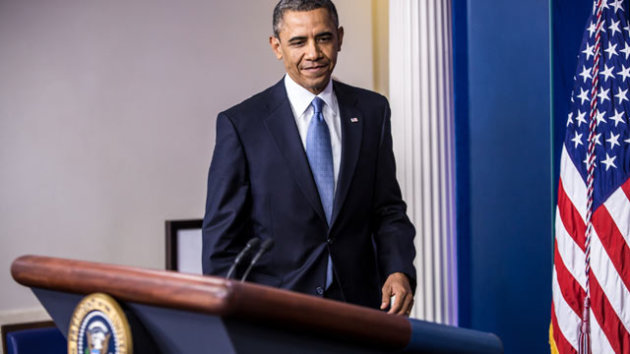
VIDEO:President Obama :Weekly Address...Jan 5, 2013

Once called 'terror network,' Al Jazeera America dares to enter U.S. cable market

When Al Jazeera becomes a major U.S. cable channel, as it plans, some Americans are likely to click past it, recalling the alleged anti-American tone by the pan-Arab network during the Iraq war a decade ago. "My guess is that when people hear about Al Jazeera, they will not be paying attention to the news quality or correspondents," said media analyst Stuart Fischoff, a retired professor at California State University at Los Angeles. "They will just hear Qatar, and say it's an Arab country and it's full of terrorists and ... therefore bias in the news," he said. The Qatari government owns Al Jazeera. Others, however, may find any past political slants overshadowed by a newscast striving toward U.S. standards. Viewers may be curious just to hear Al Jazeera America, which will have access to millions of U.S. homes now that the traditional Arabic-language network this week acquired Current TV, once owned by former U.S. Vice President Al Gore and others. "I think it's a very, very well-done news network," said media expert and former White House correspondent Porter Bibb of Mediatech Capital Partners in New York, where he listens to a related network, Al Jazeera English, now available in a tiny fraction of U.S. markets. Al Jazeera English also is live-streamed at no cost online and provides insight into what the bigger, new Al Jazeera America will look like, he said. The emergence of Al Jazeera as a major U.S. cable network has resurrected debate about past accusations of anti-American bias during the Iraq invasion under President George W. Bush. The Bush administration excoriated the Arab peninsula's network for broadcasting Osama bin Laden videos. Today, evidence of U.S. antipathy at the Arabic network has dissipated significantly, though not entirely, several analysts say. "It has obviously been demonized by our politicians for almost a decade," said Rory O'Connor, a former CBS News producer and a media expert. He noted how an Al Jazeera cameraman was detained for six years at the U.S. Navy prison camp at Guantanamo Bay, Cuba. But Al Jazeera's current English broadcast is "excellent," without the bias alleged by U.S. politicians, said O'Connor, author of the roryoconnor.org blog and a contributor to Al Jazeera's website. He disputed conservatives' portrayal of Al Jazeera as a "terror network" and propaganda outlet. Other analysts, however, say Al Jazeera continues to telecast content that they deem to be anti-American. "Surely they will be careful in the beginning. They will try to prove that they are a professional channel that's objective," said Yigal Carmon, president of the Middle East Media Research Institute, which has gathered several Al Jazeera video clips in recent years that the institute says show anti-American bias. Carmon is a former chief counterterrorism adviser to Israeli Prime Ministers Yitzhak Rabin and Yitzhak Shamir. "It's much less anti-American than in the past, and the English (broadcast) is a soft version" of the Arabic telecast, Carmon continued. "But this is the government of Qatar. It's to discuss the government of Qatar. It's a policy arm of the ruler of Qatar." Spokesmen for Al Jazeera couldn't be reached by CNN for comment. In language that will surely be open for debate once Al Jazeera America enters U.S. homes, Carmon used strong words in describing the Qatari government. "Qatar, after all, is a dictatorship, and in a dictatorship, they use media as an arm of foreign policy, be it Arab or Muslim foreign policy or an international one," he said. The Qatari government's decision to bring Al Jazeera into American homes is a provocative political maneuver -- as well as an emerging business strategy now being pursued by other government-sponsored networks, experts said. "Can I note the unusual nature or essential weirdness of a former vice president of the United States selling his network to an Arab-based network that is owned by a foreign government?" said media expert Howard Kurtz, host of the weekly CNN program "Reliable Sources." Al Jazeera has always been regarded as something of a vanity venture by the wealthy emir of Qatar, which is home to the world's third largest gas reserve and is spending billions of dollars on its public image profile by sponsoring sports events at home and in Europe, experts said. "Al Jazeera has been trying and failing for years to get on television here in the United States," media writer Brian Stelter of New York Times told CNN. "For the most part, Al Jazeera is buying this for the real estate because it's beachfront real estate." Bibb, of Mediatech Capital Partners, referred to how Al Jazeera reportedly paid $500 million to acquire Current TV, whose access to 60 million households is now expected to be largely transferred to Al Jazeera America. "If you have bottomless pockets, it doesn't make any difference what you pay or how you go forward," Bibb said. "I think the assumed price of $500 million is absurd for what they got. On the other hand, it makes no difference to the emir of Qatar because it's chump change to him." But one cable company has balked at carrying Al Jazeera America: Time Warner Cable stopped carrying Current TV upon the announcement of the Al Jazeera deal. A Time Warner Cable spokeswoman said that past bias allegations against Al Jazeera didn't factor into the firm's decision. Analysts agreed, saying the company could be leveraging Al Jazeera America, seeking to get a per-subscriber payment for the cable firm in exchange for carrying the channel. "This has nothing to do with politics. We treat Al Jazeera like any other network," said a Time Warner Cable spokeswoman. "We will look to gauge our customer interest in Al Jazeera America and assess whether it is a good value for our customers." Al Jazeera America isn't an isolated phenomenon. Another government-sponsored media outlet that has ventured into U.S. broadcasting is China's CCTV America, launched last year. "The Chinese have about a similar coverage of the U.S. media market as Al Jazeera does right now," Bibb said. "They are using a soft diplomacy and no one is saying it's a propaganda outlet. Their approach is very thoughtful, but it's all China and that's what people are hungry for." Bibb wondered why Al Jazeera America would plan to produce 60% of its content in the United States, as it has said, when Al Jazeera has increasingly become renowned for its coverage of the Middle East, especially during the recent Arab Spring revolutions. Politics aside, Al Jazeera America will find American audiences to be tough customers. The Arab royal-family-owned network will be entering a tumultuous, fragmented marketplace for news programming where the top-ranked cable news shows garner ratings only in the hundreds of thousands at any one time, not millions, analysts said. Furthermore, access to 60 million homes doesn't guarantee that many people will be watching the program, analysts said. International newscasts in particular can also be a hard sell, experts said. "A lot will depend on how much appetite there is in the American market for international news. A lot of these organizations have cut back on that," Kurtz said. Carriers "are getting hate mail from some viewers who don't want to see it on their cable lineup," the New York TImes' Stelter said about Al Jazeera. "But money can change a lot of these problems and they have a lot of it."

Polio: Virus confirmed in infant from Lakki Marwat

The Express Tribune
The National Institute of Health in Islamabad confirmed a fresh case of polio in an 11-month-old child, increasing the number of cases in the country to 58. The report issued from the Prime Minister’s Polio Monitoring and Coordination Cell said that the virus has been found in an infant, Muhammad Shehzad, resident of Mohallah Michan Khel, union council City-2, Lakki Marwat. This is the third case to be reported in the district. According to the report, the stool sample of the child was collected on November 30, 2012 and the diagnosis made on January 3. Therefore, this case will be recorded in last year’s data and not as the first case of this year. The report further states that the child only received one polio vaccine dose through Short Interval Activities (SIA) as he had missed vaccination during the earlier campaign. SIA is an approach to administer two successive doses within a period of two weeks and is usually carried out later, for children who missed the earlier campaigns. “All the vaccination rounds were conducted using vaccine containing component against type-1 poliovirus” the report says. It adds that Independent Monitoring Board of Global Polio Eradication assessed 95% of the Union Councils as vaccinated; however, evaluation by the local cell records a higher percentage. Technical focal person for Polio Eradication Cell at the Chief Minister Secretariat, Dr Imtiaz Ali Shah told The Express Tribune, “The affected child has received seven doses, not in routine campaigns but in SIAs and the area where he lives is not included in the high-risk councils but there are other reasons of contracting the virus.” He added there was a chance that the child was malnourished, had diarrhoea and low immunity levels and the water in his area is contaminated. “In these conditions the vaccine will not save the child from contracting the crippling disease” Dr Shah said. There are now 58 cases in the country, 27 are from K-P, 20 from FATA, four each in Balochistan and Sindh, two in Punjab and one in Gilgit-Baltistan. KP govt to set up Polio Control Room in PDMA office The Khyber-Pakhtunkhwa government has decided to establish a Chief Secretary Polio Control Room in the Provincial Disaster Management Authority (PDMA) office to provide information and monitor related activities. According to an official notification, Mohammad Zubair will be the designated in-charge of the newly created control room. The office will collect data from all districts during the preparatory phase of polio campaigns and record its activities. The post-campaign assessment result of the entire province will be relayed to the chief secretary and secretary health of K-P.

Multiple explosions rock Karachi

Three explosions struck central locations in the city including a grenade attack on a police van and a remote controlled bomb blast outside the office of a political party leader, Geo News reported on Saturday. According to police, a remote-controlled bomb containing two to three kilograms of explosives was planted outside the office of a political leader in Orangi. Three wheel carts were damaged but no casualties were reported. Another bomb targeted a police van in Mawaach Goth area of Baldia town. According to Deputy Instructor General (DIG) West Asif Ejaz Sheikh, a hand grenade was hurled at a police van that injured two personnel. He further said that the police have arrested two accused possessing two hand grenades and two TT pistols after the blast. Earlier in the morning, unidentified miscreants hurled crackers at a medical store in Metroville area of SITE and fled from the scene. The crackers caused a blast that was also heard in far off areas. The blast completely destroyed medical store and adjacent two shops, and caused a minor crater at the site. The medical store belonged to a local leader of a political party and has been ambushed earlier as well. Police is investigating the incident.

Two Charity Workers Shot Dead In Pakistan

http://www.rferl.org
Reports from northwestern Pakistan say unknown gunmen have shot dead two charity workers involved in an education project in Khyber Pakhtunkhwa Province. Police said Zakir Hussain, head of the education wing of the Al-Khidmat Foundation in Charsadda district, was attacked with his driver Khadim Shah in the Utmanzai area on January 4. The two gunmen escaped on a motorcycle after the attack. The Al-Khidmat Foundation is the welfare wing of the hard-line Jamaat-e Islami party. On January 1, gunmen shot dead seven Pakistani aid workers in the northwestern Swabi district. Those killings were believed to be linked to the recent killings of polio vaccination workers. Pakistan has been battling a homegrown Taliban militancy for years. It also suffers from routine attacks blamed on various hardline Islamist factions. Meanwhile, reports say seven unidentified, bullet-riddled bodies have been found near the village of Sarobi in North Waziristan, one of seven tribal districts and a known base for Al-Qaeda-linked militants. Residents reportedly found the bodies dumped near a highway. Officials were still trying to confirm the reports. This is the second time in a week that bodies have reportedly been dumped in the same district. On December 31, nine bodies were recovered in the Mir Ali area. No one has claimed responsibility for the killings. A spokesman for the Pakistani Taliban claimed those bodies were Taliban fighters who had recently been captured by security forces fighting militants in the area.

Balochistan’s First Female Deputy Speaker

The Baloch Hal
The election of Dr. Fozia Marri as the first ever Deputy Speaker of the Balochistan Assembly is one of the best decisions the current government has made during its five-year term. No matter how much of a cosmetic measure it may look, the appointment of a female member on such an important position holds much significance for a backward province like Balochistan. This is more important for the political empowerment of women given the current composition of the Balochistan Assembly which is dominated by conservative tribal chiefs and orthodox religious leaders. It is remarkable to see the new Speaker from the the Jamiat Ulema-e-Islam (J.U.I.), which has often voiced opposition to women’s participation in politics, work with a female Deputy Speaker. Expecting some immediate change in the state of women’s rights in Balochistan with the appointment of Dr. Marri as the Deputy Speaker is utterly unrealistic. Cynics may describe her election as a mere symbolic action taken by the government to pose as an advocate of women’s rights. Such “symbolic decisions” are not a bad idea as long as they inspire young girls from the backward region to have a dream to hold a high public office in a heavily male-dominated institution, province. Women’s development has not been the top priority of the Pakistan People’s Party-led coalition government in Balochistan. Women in the province enjoy less freedom and fewer opportunities than the women in the rest of Pakistan. Their issues range from access to education, health facilities to more serious challenges such as child marriages, honor killings and barter of girls among rival tribes. It is the government’s responsibility to create a climate in which women feel secure and confident to come out of their homes to attain education and opt for various career paths. This is indeed a very slow and challenging process but it is impossible to achieve equal rights for women until they, not the male members of the society, start defining women’s rights, interests and needs. Few women in Balochistan are blessed to have obtained higher education and found excellent employment opportunities. These women indeed owe a great responsibility to their compatriots elsewhere in the province. They should stand up, even more prominently than the male members of the society, for the rights of the women. It is unfortunate that the seats reserved for women in the Balochistan Assembly are often ‘distributed’ among the spouses or relatives of powerful politicians. Several members of the current assembly also represent that breed of politicians who have come out of a system hit by nepotism and favoritism. More unfortunate is the fact that these women also did not sufficiently play their role to battle for women’s rights. Either the indifferent attitude of the current female members should change or these faces have to be replaced with women who are known for their political sagacity rather than the family they come from. Dr. Marri is left with too little time to serve on his revered position as the next general elections are fast approaching. But whatever time she has to perform her duty, we truly hope that she will remain an example of a confident and committed female legislator of Balochistan. She should end her term with a note that women in Balochistan are capable of delivering on highly demanding positions. Also, with the Balochistan High Court’s rejection of former Speaker Mohammad Aslam Bhootani’s application against his removal, the constitutional crisis seems to be over. Chief Minister Nawab Mohammad Aslam Raisani says he sympathizes with Mr. Bhootani over his failure to oust the provincial government. It is too early to say that Bhootani would let his dismissal go away. He will hopefully move the Supreme Court against the no-trust motion passed against him. A new crisis will emerge only if the Supreme Court opposes the removal of the former Speaker and the appointment of a new one.

India, Pakistan unite to bowl out polio

The Hindu
In an innovative move towards polio eradication, the Indian and Pakistan cricket teams, though fierce rivals on the field, will be united in their mission to “bowl out polio” when they clash for the third One-Day International in New Delhi on Sunday. “We need to ensure a world free of polio paralysis for children. We need to win against polio, to ‘Bowl Out Polio’,” said Pakistani cricket stars Yonous Khan and Imran Farhat, who on Saturday administered polio drops to children in New Delhi and joined the appeal for eradication of the debilitating disease. The two teams will wear ribbons with ‘Bowl Out Polio’ when they play the One Day International on Sunday. The electronic periphery boards at the Ferozshah Kotla grounds will flash the message of “Bowl Out Polio”. A hundred children will also be at the stands wearing yellow jackets with messages against polio. The cards for ‘4s’ and ‘6s’ waved by the crowds will also have the message “Bowl Out Polio”, a Unicef statement said. The Board of Cricket Control in India and the Pakistan Cricket Board have extended full support to the polio eradication messages at the match. While Pakistan is among the remaining three countries in the world still fighting the disease, India’s battle against polio will continue until polio is eradicated globally. The event comes a week ahead of India’s polio milestone anniversary. On January 13, India completes two years without reporting any case of polio, an unprecedented progress for a country which until 2009 contributed majorly to the global polio case count. This is the third time that India and Pakistan teams have got together to advocate for polio eradication. Globally, polio cases have declined to record low levels. In 2012, as on December 26, 215 polio cases were reported compared to 605 cases in the same period 2011. Three countries remain endemic to polio — Afghanistan, Pakistan and Nigeria. Polio is a disease which cripples for life, has no cure, but can be prevented by repeatedly taking oral polio vaccine, said the statement.

The War on Pakistan’s Aid Workers

The murders of charity and aid workers in Pakistan has dealt a devastating blow to a national campaign to wipe out polio and other deadly diseases. On Tuesday, assassins ambushed and killed seven Pakistani teachers and health workers, six of them women, as they returned home from work at a children’s community center in the Swabi district of the northwestern province of Khyber-Pakhtunkhwa. They were affiliated with a private Pakistani aid group, Support With Working Solution, that runs health and education projects in Pakistan’s poor and lawless tribal region. On Wednesday, there were reports that local police had promised extra protection for aid workers who are planning to conduct a polio vaccination campaign on Saturday in Peshawar and other cities in northwest Pakistan. That move is clearly necessary, though far from sufficient. The federal authorities need to make sure that the killers are brought to justice and make clear that murdering health workers is a terrorist act against the nation itself. This week’s slaughter followed a series of attacks across the country last month that killed nine Pakistani health workers involved in a polio vaccination drive. Most of those victims also were women, earning about $2 a day and critical in campaigns to persuade families to participate in immunization programs. No one has claimed responsibility for the most recent attack, but suspicions point to the Pakistani Taliban and other militant groups that have opposed the vaccination drives, calling them a cover for government or international spies, or part of a plot to sterilize Muslim children. Those conspiracy theories intensified when the Central Intelligence Agency used a vaccination team, led by a Pakistani doctor, to visit Osama bin Laden’s house in 2011. The vaccination programs are essential to the protection of Pakistan’s citizens. After a two-decades-long global vaccination campaign, the world is on the verge of eradicating polio. Only in Pakistan, Afghanistan and Nigeria is the disease still endemic. In 2011, Pakistan counted 198 new infections, the highest in the world. Without safety for health workers, this scourge will never be eradicated.

Pakistan police criticised after mob killing

Mutilation and killing of man suspected of burning the Quran raise questions over police's ability to protect detainees. Pakistani police is facing criticism after a man in custody was killed by a mob of vigilantes in Sindh province last month for allegedly desecrating the Quran. The man was dragged out of his prison cell while still in custody at a police station in Sita village. He was then dropped from the second floor of a building before his body was set alight. Seven police officials have been suspended for being unable to protect the man. The officers say the lynch mob overpowered them after storming the police station. People had invited the man, who looked like a traveller, to spend the night in the local mosque. They say they woke to find he had burnt pages of the Quran and that they saw him as he was trying to burn more. There have been similar cases of vigilante justice in the past in other parts of Pakistan. Leading human rights activists have condemned the attacks and the continued failure of authorities to bring people to justice. Zahid Hussain, a journalist and author in Islamabad, blamed the increase in vigilante attacks on "the collapse of our judicial and law enforcement systems as well as a rise in extremism". "There is hardly any training for police and they are not recruited on merit. Instead they are used for political purpose," he told Al Jazeera. "Hardline clerics are also misusing the blasphemy law. We have seen many instances where just on accusation, just on suspicion, people have been killed. Even in some cases, those people who have been acquitted by the court were shot down."

Salman Taseer remembered

The second death anniversary of former Punjab governor Salman Taseer was observed on Friday. Memorial services were held in different cities for the deceased. Taseer was gunned down by his body guard, Mumtaz Qadri, two years ago in Islamabad for his statement regarding the blasphemy law. He was 26th governor of Punjab and was appointed in General (r) Pervez Musharraf era. His son, Shahbaz Taseer, was kidnapped on August 26, 2011 and has still not been recovered. Taseer was remembered as a liberal politician.

Mehmood Achakzai emerges as a strong candidate for caretaker PM

Speaking at Dunya News’ program ‘Qeun’ on Saturday, popular leader Mehmood Achakzai has said that he is ready to accept any office for the supremacy of constitution and consolidation of democracy in the country. Homework for caretaker setup ahead of forthcoming general election is underway while most of the political parties are favouring Milli Awami Party chief Mehmood Khan Achakzai as caretaker prime minister. He said some elements in the government had discussed the issue of caretaker government with him but he did not take it serious. Now he is ready to shoulder any responsibility for the sake of masses and the country, said the cool minded leader. He stressed that he was in favour of such a caretaker government which may be able to consolidate and strengthen the democratic caravan without any interruption. He vowed that the he would turn the entire country into Tehrir Squire if anyone ties to derail the democratic setup.

Shahzeb Khan murder: Police arrest prime suspect Siraj Talpur

The Express Tribune
Police arrested Siraj Talpur – one of the suspects in Shahzeb Khan’s murder case – on Saturday from Naushahro Feroze, Express News reported. The other suspect, Shahrukh Jatoi, is still at large. The car from which Shahzeb was shot at was also recovered. Shahzeb was shot dead near his home in Defence last week. A popular student and son of DSP Aurangzaib, Shahzeb’s murder created an uproar in civil society. Chief Justice Iftikhar Muhammad Chaudhry on January 1 took suo motu notice of the murder and ordered for a report to be presented in court. Background Shahzeb was killed allegedly by Shahrukh Jatoi near Mubarak Masjid in DHA on December 25. The killing resulted from a small argument he had with Talpur, when the latter’s servant verbally harassed his sister. Talpur and his friend, Jatoi, allegedly followed Shahzeb, even after the issue was settled, and shot him dead.

Friday, January 4, 2013

Zulfikar Ali Bhutto! (January 5, 1928-April 4, 1979)

By: Mwaqar
January 5, we celebrate birthday of Z A Bhutto, a leader, politician, revolutionary, who after his execution in Pakistan on April 4, 1979, still lives on in the hearts and minds of millions of Pakistanis, and the party that he founded still possesses the largest permanent voting bank in Pakistan.
The possibility of the secular, democratic Pakistan that he had in mind, like Pakistan 's founder, Jinnah has earned ZAB the title of Quaid-i-Awam . Z. A. Bhutto has still more charisma than any politician in Pakistan. Mr Bhutto was inducted into office as the President of Pakistan in 1971 and was removed in 1977, both events took place around midnight; one in the wake of a war and the other in the shadow of a civil war. In between he gave the country what even his sympathizers and admirers would concede was a 'strong' government, he mobilized his country's first mass-based political party around a socialist ideology and highly independent foreign policy. Pakistan's modernizer Zulfikar Ali Bhutto left deep footprints in the sands of history. To his lasting credit remains the 1973 Constitution of the country, the Shimla Accord of 1972 which brought the longest peace between India and Pakistan, the social reforms to build an egalitarian society, the non-aligned foreign policy, the nuclear programme and the building of the social, economic and military infrastructure of the country. He was a thinker, author and orator. He was deliberate, discreet, and competent; honest, upright and keeper of his covenants. He was a friend of the poor, downtrodden and oppressed. Fearless in his beliefs he refused to bow before any man or power other than the Almighty. His courage was such that he preferred to face death for his beliefs and embraced martyrdom. He had profound faith in freedom and the liberation of humanity. Under his government, Pakistan gave overt and covert support to the African nations than under apartheid and minority rule. He rejected fanaticism. He gave pride to the poor. He gave voice to the voiceless and power to the powerless of the country. He helped them shape their own destiny and the destiny of their country. He was a man of honour who gave honour and raised the honour of his country and his people. He was able to do this because the people of the country from Khyber to the shores of the Arabian sea in Karachi loved him and supported him. Bhutto brought back 90,000 prisoners of war, prevented their war crime trials and also restored the territory lost on the battlefield. As leader of the Third World he spoke boldly against racism, colonialism and imperialism. He fearlessly defended the right of nations to independence. When the 1973 Ramazan war broke out, he sent Pakistan's military to defend the borders of the Muslim countries, including the Golan Heights of Syria. ZAB's short life of 50 years was spent in the service of many international, regional and national causes. The most important and the most enduring legacy of the Quaid-i-Awam was raising the consciousness of the people for democracy. He awakened the masses, making them realise they were the legitimate fountainhead of political power. He enlightened the farmer, the industrial worker, the student, the woman and the rest of the common people of their importance and of their right of franchise, which is the definite means of bringing changes for the betterment of the lives of the common people. Z. A. Bhutto's rule brought a transformation of Pakistan's rules of the game, a new populist style of governance, a new governmentality, he favoured a much more active role of the state in relation to society, he reshaped the economic and political landscape of Pakistan. He reached out to masses, aroused their feelings and disciplined their minds. The role of Bhutto family in the uplifting of the poor is unforgettable. Z A Bhutto is the first person in Pakistan who has given voice to the common people. Z. A. Bhutto remains alive in hearts of millions of Pakistanis. It was a miracle that in less than half a decade a defeated nation had become a significant entity in the comity of nations. Pakistan had friends all around the globe from Africa to the far corner of Asia and from Europe to South America. We were regarded as a nation which had proved itself. Pakistani manpower was exported in the Middle East and the statesmanship of Shaheed Zulfikar Ali Bhutto had started bearing fruit. Under Z A Bhutto's rule, a new vision of Pakistan was born. Within a few years of the defeat in 1971, Pakistan began to see itself not as some beleaguered non-entity in South Asia, as the Indian establishment was prone to see it, but as a strategically located middle-sized power straddling the two worlds of South and West Asia, uniquely poised to take advantage of a host of geopolitical possibilities and enjoying widespread support among the Islamic states. He is one of the few Pakistani leaders that energized the nation and gave it a sense of optimism. Z A Bhutto, saw the future of Pakistan. Like Jinnah he outwitted Indira Gandhi at Shimla
and formed alliances with various world leaders, from Sadaat, to Boumediene to Qaddafi to Faisal. Pakistan survives today because of those alliances that enabled him to build the Nuclear bomb. Zulfikar Ali Bhutto understood the geo-political realities of the region. Zulfikar Ali Bhutto has earned a place in the pantheon of leaders from the Third World who earned everlasting fame in the struggle against colonialism and imperialism. He had the privilege of interacting with many of those leaders who played a great role in the epic struggle for national independence in the 20th century, including Mao Tse Tung, Ahmed Soekarno, Chou-en Lai, Gamal Abdel Nasser and Salvador Allende. During the period between the end of the Second World War and the end of the Cold War, the world was divided into two blocs: The Capitalist West and the Socialist East. All these leaders aspired to aspects of a socialist pattern of economy. Bhutto shared their faith in a leading role for the public sector as an instrument of self-reliance. Bhutto's foundation of the PPP was a setback for the reactionary forces in a country long dominated by the Right. The slogan of "Food, Shelter and Clothing" shifted the focus of Pakistan politics from theological to economic issues. Zulfikar Ali Bhutto had the courage of his conviction to decide to lay down his life rather than compromise or seek appeasement. The last chapter of his life is a glorious example of martyrdom for the cause of resurrection of democracy. At the time of his overthrow, Bhutto was emerging as a spokesman of the World of Islam and the leader of the Third World. The age of Bhutto was an Age of Revolution, he was the architect of the China Policy, Pakistan Steel Mill, Agriculture Reforms. Although his life and career were cruelly terminated, Zulfikar Ali Bhutto will forever shine in history as one of the Great leaders who took part in the liberation of the Third World from the yoke of Imperialism and Neo Colonialism during the Twentieth Century. He could have easily entered into a deal, as others did, at the cost of principles, to save his life and move out. How cruel it strikes to bring down such a sincere leader like Bhutto with rare caliber, competence and integrity, Bhutto never colluded with generals, he confronted them. Mr. Bhutto remains a memorable figure . He commanded the allegiance of millions of people inside Pakistan, across the Muslim world and in the Third World as a hero of the people. His leadership gave pride to his followers, to his Nation and to oppressed people everywhere. He conquered the hearts of a Nation through supreme qualities of leadership, vision, intellectual breadth, charisma, dauntlessness, bravery, boldness and a programme for political redemption of an exploited people, he built the foundations of education and industrialization in the country. He liberated the small farmers and peasants from the repression and cruelty of big landlords and banished the jagirdari and sardari system declaring that all citizens are born equal and must live with equal rights. The Taliban, the terrorist groups and the new war against terror are the direct result of the overthrow of the modernizing government of Z. A. Bhutto and its replacement by a clique of military officers that cynically used the name of religion to promote their own illegal stay in power.
Quaid e Awam was murdered but his memory lives on in the monuments he built. It lives on in his ideas. And it lives on in the hearts of all men and women who believe that humanity can only progress when there is tolerance, freedom, dignity and equal opportunity for all. Pakistan survived due to the leadership of a bold and courageous leader, a people's leader, who had the vision to break the shackles of poverty to emancipate his people and lead them into a new decade of glory, strength and achievement. Quaid e Awam built the most modern schools, colleges, universities, professional colleges, vocational training institutes, including Quaid-e-Azam University, Allama Iqbal Open University, Chandka Medical College and many others. He built hospitals to take care of the sick and poor. He opened the way for the middle classes to develop and prosper in the fields of medicine, engineering , law and other specialist studies. He introduced peaceful nuclear energy to help treat cancer setting up the first cancer treating institutes in the four provinces of Pakistan. He built roads in the tribal areas and the Northern areas knowing how poor and oppressed people in the distant areas of Pakistan were. Internationally, using his experience as Foreign Minister, he hosted the Islamic Summit Conference in Lahore. It was at this conference that the Palestinian Liberation Organization was recognized as the authentic voice of the Muslims. He advocated closer relations with the Muslim countries arguing for a common economic bloc with banking and other financial institutions long before regional blocs became identified as the economic way forward. Bhutto pushed politics out of the posh drawing rooms into real Pakistan - into the muddy lanes and villages of the poor. Bhutto's inspiring leadership filled Pakistanis with hope, energy and strength. There was a sense of purpose and direction in the country in pursuit of peace and prosperity. The economic growth rate increased and money poured in from expatriates who got the universal right to passport. The Muslim countries donated roughly $500 million annually to Pakistan, freeing it of international financial institutions. The people got jobs and opportunities. Women of the country were emancipated entering the police force, Foreign, Civil Service and subordinate judiciary for the first time in the country's history. There is a story that the American President John F. Kennedy was much impressed with the then Foreign Minister Zulfikar Ali Bhutto. When they met, Kennedy walked with him in the Rose Garden and said, "Bhutto, if you were an American, you would be in my Cabinet". To which Zulfikar Ali Bhutto smilingly replied, "No, Mr. President. If I were an American, you would be in my cabinet". Z A Bhutto, was highly skilled negotiator and an international statesman, he secured the agreement between USSR and Pakistan, he signed an agreement with China on demarcation of the Sino-Pak boundary. When he became President, Pakistan had innumerable problems, but he was not a man to be cowed down by knotty problems, he was in fact, a dynamo of inexhaustible and boundless creative energy, he was born to solve problems , he had to tackle the problems of shattered country by a methodical system of fixing priorities. Bhutto the adroit politician and statesman tackled the difficult problems of his country one by one with devotion, determination and patriotic zeal and solved them successfully. Since his assumption of power this great man of vision and destiny, equipped with resolute will, extraordinary intelligence and seething patriotic zeal fought successfully against the landlords, capitalists, industrialists, religious fanatics, corrupt bureaucrats, saboteurs, foreign intriguers and spies, he stood like a rock against all odds and achieved national unity, he worked hard for the emancipation of the exploited working class and illiterate masses. His cruel and barbaric murder by military despots caused revulsion across the globe, Z A Bhutto dedicated his life to remove the sorrows from the hearts of the poor and the oppressed, to remove the tears from the children of his poor nation. He lived consciously to make history and to leave a legacy in the form of the development of his nation, his fight was a fight against the policies of IMF, which serve to perpetuate the backwardness of the developing nations. Bhutto is rightfully credited with saving Pakistan at this dark moment in its history, as French President Giscard d'Estaing said, "he was the man who incarnated Pakistan at a dramatic hour of its history. Tolstoy in the last volume of his War and Peace expressed that history is a movement of ideas in which political leaders play a minor role. Sometimes the movement of ideas is indeed rapid. Yet, at times, the movement of ideas is slower than the melting of the glaciers. The movement of ideas is facilitated in a vibrant political and democratic culture, which gives room for dissent and disagreement. In dictatorial societies, history remains static in a cold freeze. And so it was in Pakistan before Quaid-i-Awam. He was the one who converted that static and decayed dictatorial polity into a vibrant and dynamic democratic society; the cost of which he paid with his own life.
He who gave his blood, and the blood of his sons and daughter, Shaheed Mohtarma Benazir Bhutto, knew that there can be no sacrifice greater than the sacrifice for the people whose respect, honour and dignity is the respect and dignity of the Nation. Quaid e Awam made the people proud of themselves and of their Nation. The 20th century has seen many great leaders, Zulfikar Ali Bhutto is one of them. Due to his glorious achievements, Mr. Bhutto rules the hearts of the Pakistani people from his grave. He was not only the leader of Pakistan, he was the leader of an Islamic world, the leader of Third World. He will forever be remembered by his countrymen as Quaid-e-Awam. As his followers say, "Zinda Hai Bhutto, Zinda Hai"--Bhutto lives, he lives. Indeed he does, in the hearts of all those who dream of a better tomorrow. Long Live Bhuttoism….


Egypt: ''Happy New Year, Infidels! ''

http://dailynewsegypt.com
By: Mahmoud Salem
“Those who speak of Bankruptcy are the Bankrupt ones.” So said Morsy to thundering applause in his speech to the newly-appointed-already-Illegal Shura Council, as he laid out his vision on the state of Egyptian economy. I couldn’t suppress my laughter as I watched him say this from a café in Heliopolis, nor could I suppress my falling on the floor holding my belly from laughter as I heard him talk about how great Tourism is doing, and how, for the first time, our debt is only 87% of our GDP. Only. Morsy is hilarious. It’s an undeniable fact. He is even more hilarious when he gets exposed. That same day, as if on cue, the Central Bank of Egypt issued a statement stating that the financial situation is, to put it mildly, catastrophic. The Tourism Board heads and Hotel Owners flooded the TV Channels, talking about how low the reservations are, and how they are not expecting any new tourists for another quarter. Highly anticipated news reports of untapped wells filled with Tourists in Sharm ElSheikh, Hurghada, and Luxor did not materialize, unfortunately. Wherever those tourists are, they sure are hiding those sneaky bastards, with the help of the lying god-less media, of course. Two days prior, the Central Bank of Egypt issued a Bond Sale that got cancelled because no one bought anything, thanks to the new credit rating for the country that has put it in the same economic league as Greece. That same day, Pakistani President Ali Asif announced that his Party will not allow the implementation of the “Egyptian model” in Pakistan. And yesterday, the Egyptian pound plummeted against the dollar, reaching its lowest official level in Egyptian history, with people not being able to find dollars in exchange offices to replace soon-to-be-worthless Egyptian pounds. But we are the bankrupt ones. Egypt is about to face an economic nuclear winter, a crisis the levels of which are unprecedented and for which the current government is completely and totally unprepared for. Interestingly enough, this is happening just as the Shari’a Constitution has gloriously passed, and Islam has finally strengthened its foothold in the land of the Pharaoh –worshipping infidels. God will surely send manna from heaven at any minute now, given that this depraved atheist country has finally seen the light and the way. After all, our President is a praying President, and one day this country will see the glorious economic stability and advancement of similar non-oil-wealthy Islamic states like Afghanistan, Somalia and Sudan. Praise Allah and hide your dollars. In other news, in a much ignored segment in Khairat Al-Shater’s press conference during the constitutional referendum “Fitna,” the country’s real president said and I quote “Production needs to be resumed, investments revived, and those businessmen who have escaped abroad must reconcile with the government and come back. But how can I do that without legislation? This is why we need the constitutions to be passed, so we can elect a parliament and issue that legislation and start working.” In another interview, a government official stated that they are about to start the “final 5 year development plan” that Mubarak’s regime put in place. When asked why they are using Mubarak’s plan instead of the MB fantastic Renaissance Project, he ignored the Renaissance project and said that the Mubarak plan is a great plan and should be implemented. I guess that the Renaissance project and the 200 billion dollars investments that were coming with it were more phantasmal than fantastic after all. But we are the bankrupt ones. Indeed. Personally, I see no reason why the MB government should reconcile with evil Islam-hating businessmen, not should they hold a national dialogue with the immoral Allah-hating opposition on the economy. I personally recommend the President instead stick to his Islamic economic vision, and hire the next government fully from the Islamist camp. I recommend the appointment of Hazem Abu Ismael as the Minister of Justice, Mohamed Hassan as Minister of Finance, and Yasser Borhamy as the Minister of Tourism. Those are the best people for the job, since they all pray and have beards. Who needs economic policy, or education, or experience, when you have Quran- memorizing men running the country? We will see immediate results. Allah willing. I also recommend that all of you non-islamists to keep your decadent evil ways and not repent at all. I believe you should keep your bankrupt ideas and useless education to yourselves, and maybe go to other God-hating countries to join them in their orgy of sin. Also, please don’t buy from MB owned businesses or hire Islamist leaning employees if you voted no to the constitution; you don’t want to pollute their God-approved payroll with your devil-worshipping money. After all, the unprecedented prosperity that the Islamist rule will bring in any minute now will surely bring stability and will not end in a hunger revolution two months maximum from now. I, being from the bankrupt evil immoral wicked minority, am already jealous and envious of the glorious path ahead of us, and of the unprecedented love and hugs that Morsy will get from people all over this country. Jealous and envious I tell you. Just like those damn Christians and their evil Church.
Happy New Year, Infidels!

Inflation likely to become a major problem in 2013

The world economy will remain complex and variable, and maintain slow growth in 2013. Protectionism will rise in various forms, and the pressure of potential inflation and asset bubbles will expand. The world economy has moved from the fast development period before the global financial crisis into a period of deep transformation, according to China's annual Central Economic Work Conference held in Beijing from Dec. 15 to Dec. 16. Gao Cheng, an associate research fellow at the National Institute of International Strategy under the Chinese Academy of Social Sciences, believes that the world economy will maintain weak growth for some time, and it is difficult to reverse this trend through conventional fiscal and monetary policies. At present, it is imperative to conduct comprehensive, systematic, and deep transformation of the world economy. The accurateness and effectiveness of this transformation will exert a far-reaching impact on the long-term development of the world economy and the competition among various countries. Xie Dongming, an economic analyst at OCBC Bank in Singapore, said that the world economy will remain fraught with uncertainty next year. The U.S. fiscal cliff is still unresolved, and Europe continues to be plagued by the debt crisis despite gradual improvements. The Asian economy enjoys bright prospects, and Southeast Asian countries remain strong in terms of investment and domestic demand, which can offset the decline in external demand to a certain degree. The Asian economy is expected to improve next year, while the world economy will continue to recover slowly. Xiao Lian, director of the Center for U.S. Economic Studies at the Chinese Academy of Social Sciences, said that developed countries have adopted a beggar-my-neighbor policy by taking advantage of the unfair international economic system and order to export their economic crises to other countries. This policy has not only damaged the common interests of all countries, but also affected the recovery and development of developed economies themselves. Xie noted that inflation will be a major potential problem next year. The era of cheap capital continues, and the United States, Europe, and Japan are supporting their economies through ultra-loose monetary policy. Inflationary pressures will increase considerably next year along with world economic recovery. The loose monetary policy of developed countries has a big impact on Asian capital markets. A large amount of capital has flown into Asia's stock and bond markets in pursuit of profits, but this process cannot last long. Asian bond markets have developed robustly this year, and the rate of return has dropped. Once developed countries increase their interest rates or domestic economies worsen, huge capital outflows will deliver a hard blow to Asian capital markets. The Asian countries concerned should prepare for possible risks through prudent macroeconomic policies. Nariman Behravesh, chief economist at IHS Global Insight, said that the "high uncertainty" brought about by the U.S. "fiscal cliff," European debt crisis, and turmoil in the Middle East and North Africa still exists, and two-way fluctuations of international bulk commodity prices will continue. The situation in the Middle East and North Africa is the biggest uncertain factor for the crude oil market. Emerging economies are likely to grow faster next year, and may face greater pressure of capital inflows and currency appreciation. Most developed countries and regions are expected to adopt neutral monetary policy. The United States, eurozone, and Japan will maintain tight fiscal policy, or even tighten it to cope with debt problems.

Indian woman jumps from train to escape rape

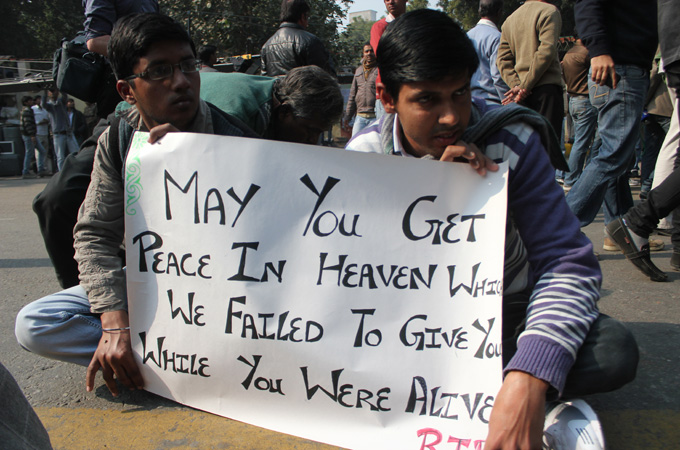
A young woman is in hospital in critical condition after throwing herself off a moving train in an attempt to escape molestation. It’s the latest in a number of incidents that have exposed the vulnerability of women in India.
The 25-year-old woman jumped from the carriage of a moving train after allegedly being molested by a soldier. The attack occurred on Thursday while the train was en route from Darjeeling to Delhi. The man groped her after she had visited the lavatory. After pushing him back, the woman jumped from the Brahmaputra Mail line train. The mother of two is being treated in hospital in the city of Patna. “Her condition continues to be critical. A team of doctors is treating her. She has suffered injuries to her head and legs,” a police official told the IANS news agency. A member of the Assam Rifles paramilitary force has been arrested and charged in connection with the incident. It comes just weeks after a 23-year-old medical student was gang-raped on a bus in Dehli, while her male companion was severely beaten. She later died from her injuries in hospital. The male companion has revealed more details of the tragic event. He recounted that in the immediate aftermath of the rape, no one responded to their cries for help. Police and passersby left the mortally injured female student lying naked and bleeding for almost an hour. “We kept shouting at the police, 'please give us some clothes' but they were busy deciding which police station our case should be registered at,” the Zee News network reported on Friday. Her case has resonated with the population as hundreds of thousands took to the streets to voice their anger over the attack and the lack of police response. The crowd demanded punishment for those responsible, as well as new laws to protect Indian women. The rapists have been arrested. Five of the men detained have been indicted with gang rape and murder, and are likely to face execution. They will face a specially-established fast-track court on Saturday. A sixth male is under 18 and will be judged in a juvenile court, despite the victim's family’s plea for an adult trial, as he is believed to been the most brutal of the attackers. The victim's father has also demanded new legislation on sex crimes to be named in honor of his daughter. In an effort to provide more protection on transport routes and deter gangs operating on trains, India's inspector general said the railway police have stepped up patrols. In 2012, police apprehended nearly 15 gangs and recovered 15 weapons from trains. The problem of sexual violence against women appears to touch all levels of Indian society, as on Thursday the ruling Congress party in Assam state suspended a politician accused of rape. Police claim that Congress leader Bikram Singh Brahma was visiting the village of Santipur when he entered a local house and raped a woman at 2am. The villagers later attacked the politician and captured the footage on tape. New Delhi has an infamous reputation as India’s rape capital, seemingly confirmed by a report in the Hindustan Times that documents more than 20 rape cases in the city since December 16th, the day of the rape and brutal murder of the 23-year-old medical student.

Friend of rape victim blasts Indian police

The man who was with the gang-rape victim at the time of the attack says no one responded to their cries for help.
Police and passers-by left a gang-raped Indian student lying unclothed and bleeding in the street for almost an hour, a male friend who was attacked with her has said in his first public comments on the case that provoked a global outcry. "We kept shouting at the police, 'please give us some clothes' but they were busy deciding which police station our case should be registered at," the friend told the Zee News network on Friday. The 23-year-old student died in hospital two weeks after she was attacked on December 16 in a private bus in New Delhi, a city dubbed India's "rape capital". The man said he and the woman were attacked after they boarded the bus following an evening out watching a film. "The attack was so brutal I can't even tell you ... even animals don't behave like that," he said. They were thrown off the vehicle and left bleeding in the street for 45 minutes before a police van arrived, he said. Officers then spent a long time arguing about where to take them, he added. "There were a few people who had gathered round but nobody helped. Before the police came I screamed for help but the auto rickshaws, cars and others passing by did not stop," he said in a studio interview, a blue metal crutch leaning on his chair. "It took an hour and a half for us to be taken to hospital," he added. The attack prompted street protests across India and promises from the government of tougher punishments for offenders. Neither the woman nor her friend have been named. Five men were charged with her gang rape and murder on Thursday. The sixth is thought to be a juvenile. A hearing in the case is scheduled for Saturday.

Video: Malala walks out of hospital

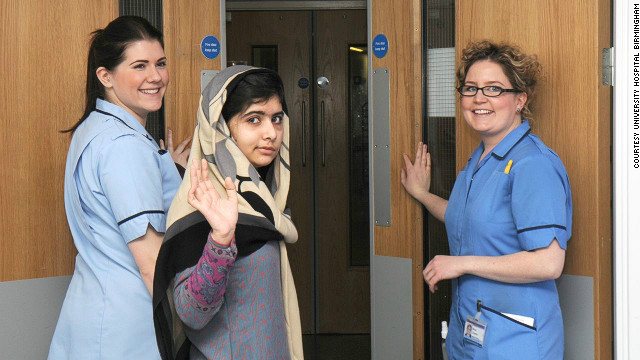
Malala Yousafzai, the Pakistani schoolgirl shot in the head three months ago by the Taliban for advocating the education of girls, has been discharged from a British hospital. Doctors said she had made “excellent progress” and would be staying with her family nearby before returning for further surgery to rebuild her skull in about four weeks. “Following discussions with Malala and her medical team, we decided that she would benefit from being at home with her parents and two brothers,” said Dr. Dave Rosser, the medical director. Video released by Queen Elizabeth Hospital in Birmingham, England, showed Ms. Yousafzai walking slowly out of a ward, wearing a head scarf and accompanied by a nurse.

Europe's elderly face poverty

Footloose and fancy-free as a pensioner? There may be little chance of that in a future Europe. While more people are living longer, birth rates are dropping. And the eurozone crisis is contributing to the pinch.
For countless people living in severe poverty or confronted with political repression in northern Africa, Europe seems to be the promised land. Thousands of them risk their lives illegally crossing the Mediterranean, hoping to reach the European continent. For them, increased discussions about the risks of the elderly in Europe facing poverty may seem rather theoretical. After all, the definition of "poor" could not be more different between a western European and someone from an African country in crisis. Yet Europe is facing a situation that, while far removed from African circumstances, has been a great cause of concern for European Union governments for a while now. Not only are demographic changes causing a strain on the social welfare systems as European citizens live longer and fewer babies are born, the eurozone crisis has also strapped EU governments. In many European countries, the number of people of working age is dwindling, while unemployment is rising. The consequence is that payments from both state and private pension funds are dropping.
Existence at risk
According to the European Commission, the number of people over the age of 60 is increasing by two million each year - twice as high as it was ten years ago. As it is, European Union governments spend ten percent of their gross domestic product on pensions, and that amount is set to grow. Currently, some 120 million retired people live in the EU; that's about 24 percent of the population. Just a few years ago, the notion of a poor retiree in countries like Germany and Great Britain would have been laughable. Nowadays, not only do many people face social exclusion once they retire; they also have to fear for their existence. "We don't have any precise data because poverty information depends on EU income surveys," Michael Dauderstädt, director of the social and political policy department of the Friedrich Ebert Stiftung, a political foundation affliated with Germany's Social Democratic Party, told Deutsche Welle. "But given the way that pensions systems are structured in most European countries, one has to assume that the risk will increase." Currently, Dauderstädt said, Spain, Portugal and of course Greece have relatively high ratees of poverty among the elderly. "We are talking about rates of between 20 and 27 percent," said Dauderstädt, who heads the social and political policy department at the Friedrich Ebert Foundation.
Great Britain at the tail end
According to a study by the foundation, many elderly people are also at risk in Great Britain. State pensions are relatively low there, making private pension schemes all the more important. The latter, however, are extremely vulnerable to crises on capital markets and to poor decisions made by fund managers. The study, on the other hand, showed that the Netherlands, compared to other European countries, boasts good figures. Germany stood somewhere in the middle, with a poverty rate of nearly 15 percent in the group of over-65-year-olds.
Women affected more
Women may be particularly vulnerable. The pay gap between men and women is still a reality, with women in the EU receiving an average of 17 percent less in wages than thier male counterparts. Lower wages mean reduced payments into social security funds and lower pensions. Time off for taking care of children and aging family members further reduces women's pensions. The European Commission began responding to this problematic development last year; 2012 was declared the 'European Year for Active Aging and Solidarity between the Generations.' The Commission suggested that people retire at a later age, and women work just as long as men to help keep Europe's social welfare systems from collapsing. In reforming their pension systems, each member state had to take into account its individual situation, said Laszlo Andor, European Commissioner for Employment, Social Affairs and Inclusion. "But principles remain for the entire EU," he said, such as adjusting the age of retirement to life expectancy.
European want to work longer
"It's important to think about income among the elderly early on, to promote employment and to ensure that more and more people make their contributions for a longer period of time in order to lay a foundation for old age," Andor said. Within the EU, Sweden is often seen as a shining example - coupling, as it does, the age of retirement with life expectancy. Sweden has one of the highest rates of employment of people between the ages of 55 and 64. Retirement security has certainly become more challenging due to the financial crisis, Andor said, "but we can at least suggest measures to help stabilize the situation." One Eurobarometer survey shows Europeans agree with the Commissioner, with 61 percent saying they are happy to continue working after retirement age - all long as the conditions are acceptable.

It's official: Obama, Biden win second term

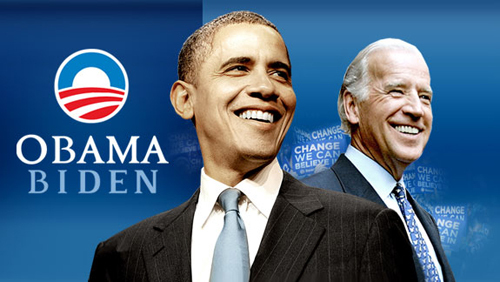
President Obama was declared the winner of the 2012 presidential election Friday in a special joint session of Congress, finally closing the book on the tumultuous and expensive campaign. Vice President Joe Biden, serving as president of the Senate, presided over the counting of Electoral College votes from the 50 states and the District of Columbia in the sparsely attended session. The vote count lacked the history of 2009, when Obama became the first black president, or the controversies of 2001 and 2005, when some lawmakers protested contested votes in Florida and Ohio, respectively. As expected, the Obama-Biden ticket received 332 votes for president and vice president, well in excess of the 270 needed to win. Former Massachusetts Gov. Mitt Romney and Rep. Paul D. Ryan (R-Wis.) received 206 votes. There were no “faithless electors,” or members of the Electoral College who cast votes for a different candidate than the one who had won in his or her state. Friday’s ceremony closed a three-step process that chooses the nation’s president and vice president. It began 59 days ago when polls closed across the country on election day. On Dec. 17, the 538 electors met in state capitals to cast votes based on the state results, and those tallies were then read Friday in the chamber of the House of Representatives. It was only Friday that all 50 states plus the District of Columbia produced certified vote counts, according to Dave Wasserman of the Cook Political Report, who has been tracking the raw vote. After Hawaii became the final state to produce a certified tally, the national popular vote stood at 65,899,557 votes (51.06%) for Obama and 60,931,959 votes (47.21%) for Romney. In the last 200 years, 700 proposals have been introduced in Congress to reform or eliminate the Electoral College, according to the National Archives. But the process has been under increased scrutiny since the controversial 2000 election, when Al Gore won the national popular vote but narrowly lost among electors. Some states with Republican-controlled legislatures and Republican governors are considering doing away with the winner-take-all method of allocating their respective states' electors. A separate effort called National Popular Vote seeks to produce an end run around the Electoral College by creating an interstate compact in which participating states would award electors to the winner of the national popular vote, regardless of the outcome in that state. Obama and Biden will be sworn in for their second terms on Sunday, Jan. 20, in a private ceremony, with a public ceremonial swearing-in following on Jan. 21 at the U.S. Capitol. The Presidential Inaugural Committee announced Friday that Chief Justice John G. Roberts Jr. will administer the presidential oath to Obama, and Justice Sonia Sotomayor will administer the vice presidential oath to Biden. According to the committee, Sotomayor will be the fourth female judge and the first Latino to administer an oath of office.

House approves $9.7 billion in aid for Sandy victims

Obama Poised to Name New Chiefs

ABC OTUS News
With the "fiscal cliff" crisis behind him,
President Obama is poised to name two new key players to his cabinet, with at least one announcement expected early next week. The announcement of who will replace outgoing Defense Secretary Leon Panetta could come as soon as Monday, sources told ABC News. Meanwhile, the president is also eyeing a replacement for outgoing Treasury Secretary Timothy Geithner, the longest-serving member of Obama's first-term economic team and one-time lead negotiator for the administration in the "fiscal cliff" talks. Former Republican Sen. Chuck Hagel is a leading candidate to head the Department of Defense, while current chief of staff Jack Lew is the likely nominee for the top role at Treasury. Geithner plans to depart his post "around the inauguration" Jan. 20, a Treasury spokesperson said Thursday, putting the department in transition just as the administration confronts the next "cliffs" over the automatic spending cuts and nation's debt limit. During an appearance on ABC's "This Week" in April, Geithner said the next Treasury secretary would need to be someone who is "willing to tell [Obama] the truth and, you know, help him do the tough things you need to do." Lew, a former two-time Office of Management and Budget director and trusted Obama confidant who has held the chief of staff role since early 2012, is the front-runner for the job. Meanwhile, Sen. John Kerry -- Obama's nominee to replace outgoing Secretary of State Hillary Clinton -- has begun making more regular appearances at the U.S. State Department before his expected confirmation later this month. His Senate hearings are set to begin shortly after Obama's inauguration, sources say. The administration still expects Clinton to testify about the Sept. 11 Benghazi, Libya, attacks before Kerry is confirmed. But it is the potential nomination of Republican Hagel that has caused the most stir. Critics from across the political spectrum have taken aim at the former senator from Nebraska's record toward Israel and what some have called a lack of experience necessary to lead the sprawling Pentagon bureaucracy or its operations. The controversy has set the stage for what would be a contentious confirmation process. "A lot of Republicans and Democrats are very concerned about Chuck Hagel's position on Iran sanctions, his views toward Israel, Hamas and Hezbollah, and that there is wide and deep concern about his policies," Sen. Lindsey Graham, R-S.C., told "Fox News Sunday." He would not say whether Republicans felt so strongly as to expect a filibuster of the nomination. "I can tell you there would be very little Republican support for his nomination," Graham said. "At the end of the day, they will be very few votes." Still, Hagel, 66, a former businessman and decorated veteran who served in the Vietnam War, has won praise and admiration from current and former diplomats for his work on Obama's Intelligence Advisory Board and Panetta's Policy Advisory Board. "Hagel is a statesman, and America has few of them," former U.S. ambassador to Iraq and Afghanistan Ryan Crocker wrote in a "Wall Street Journal" editorial this week. "He knows the leaders of the world and their issues. At a time when bipartisanship is hard to find in Washington, he personifies it. Above all, he has an unbending focus on U.S. national security, from his service in Vietnam decades ago to his current position on the Intelligence Advisory Council," he said. Obama defended Hagel in an interview last week, calling him a "patriot" who has done "extraordinary work" in public service, although he said he still had not made a final decision on who would head the Pentagon. Other potential nominees for the DOD job include Michele Flournoy, former Under Secretary of Defense for Policy and a senior Obama campaign adviser for national security, and Ashton Carter, the current deputy secretary of defense.

Salmaan Taseer: Remembrance, justice and blasphemy

EDITORIAL : Daily Times
Yesterday, the second death anniversary of Governor Salmaan Taseer was commemorated with prayers and civil society candlelight vigils. The memory and sense of loss of a larger-than-life Taseer has not abated with time. If anything, his absence is even more keenly felt by his family, friends and colleagues. Commemorations are usually occasions for casting a glance back over the life of the departed. In this case, a brief resume is sufficient to point to Salmaan Taseer’s considerable accomplishments. A self-made successful businessman, media entrepreneur, fighter for democracy and a progressive Pakistan, Taseer was murdered in cowardly fashion by his police guard, Mumtaz Qadri in brutal fashion on January 4, 2011 in Islamabad. The cause of his martyrdom was the stand Taseer took on behalf of a poor Christian woman, Aasia bibi, falsely accused of blasphemy to take revenge for a minor altercation with her accusers. Unfortunately, the religious lobby and parts of the media distorted Taseer’s position that the blasphemy law, subject to much abuse over the years, should be revisited to safeguard people against false accusation. This led some overly eager electronic media anchors to paint him as a blasphemer himself. A deranged police guard infected with extremist ideas did the rest. No one in the religious lobby or the guilty media persons have been taken to task for instigation to murder. The murderer was garlanded by those so-called guardians of the law, the lawyers who saw Qadri as a hero rather than the villain he is. The self-confessed murderer was sentenced to death by an anti-terrorism court, but the judge had to flee abroad with this family because of threats to his life. It may be recalled that a judge of the Lahore High Court who acquitted two Christians accused of blasphemy was murdered in the past. Qadri’s case is in appeal before the Islamabad High Court, where the wheels of justice are grinding exceedingly slowly. The crazy mindset that led to Taseer’s horrible murder also took its toll of the Christian federal minister for minorities Shahbaz Bhatti. As though all this were not enough, and while the Taseer family was still reeling from the shock of Salmaan’s assassination, his son Shahbaz Taseer was kidnapped in broad daylight from Lahore in September 2011. Far from any salve for their wounds, this new blow devastated the family, which still waits in anguish for Shahbaz Taseer’s safe return. Taseer’s case still awaits justice and closure. The Islamabad High Court should take sympathetic consideration of the family’s agony and put the case on fast track, especially since the confession by the murderer is a matter of record. Personal or one family’s tragedy aside, the murder of Salmaan Taseer should have focused minds on the lacunae that allow the misuse and abuse of the blasphemy law for revenge, material, or other, vested interest. The thousands of people accused, usually falsely, since the blasphemy law was given its present draconian shape, have been the victims of a travesty of justice. Many have been killed by crazed mobs. Recently two such cases emerged in Punjab and Sindh, where a worked up crowd dragged the accused out of police custody, beat and burnt them to death. Can any society that allows and does not stop such madness qualify to be considered civilised? The ulema’s role in this matter has been disappointing. In their zeal to protect the blasphemy provisions, they have lent the law as it stands blind support instead of addressing its by now well documented abuses. The Rimsha Masih case saw a cleric indulging in false accusation of blasphemy against a challenged 14-year-old Christian girl by doctoring evidence. Neither has the political class covered itself with glory here. Some brave souls in some of the political parties in parliament have attempted to either repeal or revisit the scope for abuse and lack of safeguards against false accusation, which often leads to death at the hands of vigilante mobs, but all too soon buckled under pressure from the religious lobby. The requisite political will and consensus to address an obvious travesty that has led to so many tragedies is conspicuous by its absence. Salmaan Taseer may be gone, but his legacy lives in the continuing struggle for democracy, a progressive society, and returning Pakistan to the destiny envisaged for it by Quaid-e-Azam Mohammad Ali Jinnah. On this cold and gloomy day, this is the only spark of hope left behind by the sorely missed departed. RIP, Salmaan Taseer, we salute you, your sacrifice, your life’s struggle, and hope this serves to inspire new generations of fighters for the people of our crisis-ridden beloved country.

Bomb kills two Pakistanis in Peshawar

A bomb planted at an electricity tower on Friday killed two passers-by in Pakistan's northwestern city of Peshawar, police said. The explosive attached with a time device exploded when the victims were close to the electricity tower in the Badh Bher area of Peshawar, the capital of Khyber Pakhtunkhwa province, which borders Afghanistan. "Two kilograms of explosives were used for the blast which killed two people," Javed Khan, a local police official told AFP. The electricity tower was also damaged as a result of the blast. Peshawar is vulnerable to bomb blasts and Taliban attacks as it runs into the semi-autonomous tribal belt, considered a safe haven for Taliban, Al-Qaeda and other insurgents fighting both in Pakistan and across the border in Afghanistan. Pakistan says 35,000 people have been killed as a result of terrorism since the 9/11 attacks and the 2001 US-led invasion of Afghanistan.

Khyber-Pakhtunkwa: Over 5,000 cases of measles reported last year

The Express Tribune
A total of 5,415 cases of measles were reported in Khyber-Pakhtunkwa in the last 11 months, according to data from the provincial Expanded Programme on Immunisation (EPI). The number of cases increased drastically despite the fact that majority of the children had been vaccinated earlier. Of the cases, 3,998 children had been vaccinated, but still contracted the disease. The remaining 1,417 children had not been vaccinated. Among those vaccinated, 783 were aged between a month and a year, 2,382 were aged between one and four years, while 833 were aged five. Of those not vaccinated against the disease, 359 were between a month and a year old, 779 were aged between one and four and 279 were aged five. According to the data, 1,713 cases were reported in Peshawar, 56 in Abbottabad, 357 in Bannu, 114 in Battagram, 86 in Buner, 121 in Charsadda, 12 in Chitral, 723 in DI Khan, 59 in Lower Dir, 33 in Upper Dir, 14 in Hangu, 42 in Haripur, 51 in Karak, 17 in Kohistan, 26 in Lakki Marwat, 751 in Malakand, 138 in Mansehra, 267 in Mardan, 250 in Nowshera, 2 in Shangla, 136 in Swabi and 447 in Swat. Of the 33 cases in Upper Dir, all the children had been unvaccinated. Officials of the health department are baffled by the upsurge in reported cases saying they had provided vaccinations to all hospitals and Basic Health Units (BHUs) in the province. A health department official requesting anonymity said vaccinations would not save children from contracting measles unless parents provide proper nutrition and clean living conditions. “There is nothing wrong with the vaccinations. But these children grow up in dirty environment and parents cannot afford to feed them a balanced diet, which is necessary to boost immunity,” he said. Provincial EPI Deputy Director Dr Janbaz Afridi said the government provides free vaccinations in all hospitals and BHUs, but many parents do not bring their children for the second dose of the vaccination which is important to prevent measles. Trainee Medical Officer at the children’s ward of Hayatabad Medical Complex, Dr Burhan said parents do not give importance to vaccinating their children and many of them are unaware as to when and where to get them. “The Measles Mumps Rubella (MMR) injection at 14th month of birth increases immunity level against measles and there is a 95% chance that they won’t get it, but parents [only] bring their children for the first injection at the 9th month.” Dr Burhan said once the immunity level develops, it is lifelong, but that there is a possibility that injections administered at healthcare institutions are not effective. Measles are caused by a virus and possible complications include pneumonia. It is a major cause of child deaths in low-income countries and is particularly dangerous in children with vitamin A deficiency. Symptoms include runny nose, cough, red and watery eyes, and small white spots inside the cheeks. A slightly raised rash develops after a few days, usually on the face and upper neck. The rash spreads to the rest of the body over a period of three days. It lasts for five or six days before it fades. The incubation period between exposure to the disease and onset of the rash averages 14 days. General nutritional support and treating dehydration are necessary. Doctors suggest it is important to encourage children with measles to eat and drink. All children diagnosed with measles should receive two doses of Vitamin A supplements, given 24 hours apart. Giving Vitamin A can help prevent eye damage and blindness, and the supplements can reduce chances of death from measles by 50%.

Salman Taseer spoke for the rights of Minorities

Radio Pakistan
Analysts and intellectuals have said that death of Salman Taseer has deprived the society of a liberal and broad-minded personality. Analysts and intellectuals have said that Salman Taseer spoke for the rights of the minorities and his gunning down has deprived the society of a liberal and broad-minded personality. They were expressing their views in interviews with Radio Pakistan was broadcast in the special edition of programme 'Naey Ufaq' at 08.05 p.m on Friday nght. The programme will be devoted to the life and personality of Salman Taseer. Former President of Supreme Court Bar Association Asma Jehangir said Salman Taseer was a liberal and successful person who did not believe in violence. He would have never thought that he would lose his life for supporting a hapless woman. She was of the view that some sections of media too did not play responsible role during the entire episode. Analyst Dr. Mehdi Hassan said normally people do not take vocal stand on important but controversial issues but Salman Taseer made his views known without any fear. He said we need people like Taseer to speak with courage against the negative mindset so that people do not feel scared of the menace. Intellectual and analyst Munnoo Bhai said Salman Taseer believe in democratic principles‚ peace and affection. He said by expressing his views so boldly Salman Taseer has become a symbol of encouragement for minorities. He said there is no room for extremism in any religion and Islam is religion of nature. Senior Journalist and analyst Raza Rumi said Salman Taseer raised voice against a woman who was being wronged. He said the role played by some sections of media was also not helpful and since then the menace of terrorism and extremism has intensified. Daughter of Salman Taseer - Shahrbano and his son Shehryar Taseer shared their memories how they found him as father and family head. They said Salman Taseer was always helpful and supportive in day to day life as well as career planning. Senior Editor Najam Sethi said Salman Taseer believed in freedom of media and he never interfered in his working as Editor of his English daily. He said Salman Taseer championed rights of women and minorities. Senior lawyer Abid Hassan Minto said on the second anniversary of Salman Taseer that we should commit ourselves to eradicate the menace of terrorism and extremism. He said as general elections are approaching‚ all political parties should resolve to wage a joint struggle against terrorism irrespective of who is winner in the elections. Senior Editor Rashid Rehman said Salman Taseer only wanted an end to misuse of blasphemy law by removing lacunae.

Malala discharged from UK hospital

Nearly three months after she was rushed to Britain for life-saving treatment for gunshot injuries, Pakistani schoolgirl Malala Yousafzai has recovered enough strength to be discharged, a hospital said Friday.
Malala, who was admitted to the Queen Elizabeth Hospital in Birmingham on October 15, left the medical facility Thursday to continue her convalescence at her family's temporary home in England's West Midlands region. The 15-year-old became an international symbol of courage after she was shot by Taliban gunmen last fall for her crusade about girls going to school. She had blogged fearlessly about girls' education and accused the Taliban of thriving on ignorance. The Taliban forbid girls in the classroom and have threatened to kill anyone who defies them. Pakistan's Malala: Global symbol, but still just a kid The attack, which left her with gunshot wounds to the head and neck, prompted outrage and wide outpourings of support, both in Pakistan and overseas. Former British Prime Minister Gordon Brown and his wife welcomed the news of her progress Friday, saying via Twitter: "Good news that Malala is well enough to leave hospital. We wish her well as her recovery continues with her family." Malala will continue to receive outpatient care at the hospital, its statement said, and is expected to undergo cranial reconstructive surgery in the next month. "Malala is a strong young woman and has worked hard with the people caring for her to make excellent progress in her recovery, said Dr. Dave Rosser, medical director of the University Hospitals Birmingham. "Following discussions with Malala and her medical team, we decided that she would benefit from being at home with her parents and two brothers." Rosser said Malala had been leaving the hospital for home visits on a regular basis over the past couple of weeks to see if she could cope there. Her father Ziauddin, mother Toorpekai and younger brothers, Khushal and Atul, traveled to England in the fall to be with her as she recovers. Pakistani officials confirmed Thursday that her father has been given a job in a Pakistani consulate in Birmingham. Ziauddin Yousafzai has been appointed education attache and will function as head of the consulate's education section for three years, the Pakistani government said. His job could be extended for two additional years. When he left Pakistan to join his daughter, Ziauddin Yousafzai told reporters he intended to return to his native country as soon as she had recovered. It is not clear whether his appointment will mean the entire family stays long term. At the time of his daughter's shooting, he ran a school in Pakistan's conservative Swat Valley that kept its doors open to girls -- in defiance of the Taliban. Malala was in a school van in the area on October 9 when Taliban gunmen stopped the vehicle and demanded that other girls tell them who was Malala. They identified her. Malala was then shot, as were two other girls who survived the attack with lesser injuries. Malala was left in a critical condition, with her father later describing her survival as a miracle. As public outrage over her shooting intensified, the Taliban issued a statement online saying that if Malala lived, they'd come after her again. Interior Minister Rehman Malik promised government protection if the schoolgirl does return to Pakistan. Pakistani authorities are paying for her medical care in Britain. Since her shooting, Malala has become an international figure. She was selected as runner-up for Time magazine's Person of the Year for 2012. CNN and Time are owned by Time Warner Inc.