Thursday, January 3, 2013

The agony of India’s daughters

The vicious rape and murder of a young woman in New Delhi has highlighted the ingrained mistreatment of women in the country
More than 630 women are known to have been raped in New Delhi last year, but it took the savage gang rape of a 23-year-old trainee physiotherapist on her way home from a cinema with a friend to turn the simmering anger of the capital’s long‑suffering women to boiling rage. Reports of the 634 attacks that preceded December’s rape of the woman who has become known as “India’s daughter” were sketchy – a few brief paragraphs in the local newspapers, nothing more. But in this case the details were too brutal to be overlooked. Here was an ordinary, modern, lower-middle-class girl trying to get a rickshaw home after a Sunday film at one of the city’s growing number of swanky shopping malls. The driver would take her only as far as a market, where she and her friend boarded an unlicensed bus. On it, six men, all drunk, first “eve-teased” her – the local euphemism for the harassment of women – then attacked her so savagely that she later died. Apparently incensed that she was out at night with a man to whom she was not married, they took turns to rape her and beat her friend while the bus cruised the streets of South Delhi, the atrocities inside shielded by curtains and tinted glass. An iron rod was forced inside her, mutilating her genitals and destroying her intestines. She and her friend fell unconscious and were tossed from the bus on a flyover after an ordeal lasting somewhere between 40 minutes and two hours. The woman was eventually taken to hospital, where 95 per cent of her intestines were removed in three operations. She suffered brain injuries, internal infections and had trouble breathing, yet she managed to make two statements to police officers to help arrest her torturers. The capital has rarely if ever read about a rape in such shocking detail and the revelation sparked spontaneous protests in front of Rashtrapati Bhawan, the home of the Indian president and cabinet ministers’ offices. There were clashes with police and protests spread throughout India. The country’s most powerful woman, Congress president Sonia Gandhi, visited the unnamed victim in hospital and spoke of the national shame of violence against its women. Her prime minister, Dr Manmohan Singh, later made a televised address to call for calm and voice his own feelings of revulsion.There have been demands from Right-wing Hindu nationalists for the culprits to be hung, while others have called for chemical castration for rapists. But gradually the chants of young, mainly male protesters have given way to a wider discussion of why so many women in India – the world’s largest democracy and a polity with powerful women leaders – live in fear of violence and under restrictions that would not offend a Taliban mullah in Kandahar. India has seen the number of reported rapes rise from 2,487 in 1971 to 24,206 in 2011. In that year, 35,565 women and girls were kidnapped, 42,968 were molested, 8,570 were sexually harassed and 99,135 suffered cruelty at the hands of their husbands or relatives. There were 8,618 “dowry deaths”, in which brides were murdered by their husbands or in-laws, often because their fathers had failed to meet increasingly extravagant demands for dowry gifts for the honour of landing a sought-after son. Last October, 25-year-old Pravartika Gupta and her 13-month-old daughter were set on fire as they slept, following a dispute with her in-laws who had demanded £15,000 and a Honda City car. Last year, there were 754 arrests for rape in New Delhi, but according to the home ministry only one of those accused has so far been convicted. Campaigners say that these figures barely scratch the surface – fewer than one in 10 rapes are said to be reported because women fear the public shame and the treatment they will receive from the city’s notoriously insensitive and hostile police. An Indian news magazine last year spoke to 30 of New Delhi’s most senior police officers and found that half of them believed that many of the city’s rape victims were either willing victims or prostitutes who complained after not getting paid. Sunil Kumar, a senior officer in Ghazipur, told one of Tehelka’s reporters: “Go to a pub in Greater Kailash, South Delhi, where there’s free entry for girls. You’ll find those who want to do it for a thousand rupees [£12]. They’ll drink and also have sex with you. But the day someone uses force, it’s rape.” Rajpal Yadav, a senior officer in Gurgaon, home to many of the country’s top call centres and their many women staff, told the magazine that “Girls from Darjeeling and Nepal have come here for business purposes. They go with men for money, but if the money isn’t enough, it becomes rape.” Attitudes like these have intensified fears among women that reporting attacks to the police will make matters worse. If they do come forward, many victims are subjected to a demeaning “two-finger” test to assess whether or not they are virgins, and therefore more or less credible witnesses. Delhi Police have now called in leading women’s rights campaigners and policy analysts to “sensitise” them to women’s concerns during rape and sexual assault investigations. Ranjana Kumari of the Centre for Social Research, who is leading the programme, says the growing number of rapes and the low conviction rates have left women feeling unprotected, while many men see themselves as beyond the law: only 28 per cent of rape cases and 20 per cent of cruelty cases against husbands are followed by convictions. “There is no fear of being punished,” she says. “Because of the [police] approach, it is not considered serious crime. That’s why they need a lot more sensitivity, to see it as a serious crime. Women report only one in 10 rapes, not only because of the policing, but also the huge social shame.” They fear they will be identified and their families will be stigmatised; finding a prospective husband in a wedding-obsessed society then becomes almost impossible, and the prospects of the victim’s siblings are similarly blighted. The stark truth is that the chances of a girl living a happy and fulfilled life of her own choosing in India are poor from the outset. A United Nations report last year said India was the world’s most dangerous country in which to be born a girl – almost twice as many girls die between the ages of one and five as boys; 100 girls for every 56 boys. Campaigners say the figures reflect the killing of unwanted girls by families who fear the financial cost of their weddings and neglect girls in favour of brothers. They also believe up to eight million female foetuses have been aborted in the last 10 years by women under pressure from their in-laws to deliver a son. Nilanjana Roy, a widely respected novelist and commentator, says the growing violence against women reflects not only traditional discrimination but also a “punitive” response to the new independence increasingly demanded and enjoyed by women in India’s cities, as new jobs and opportunities emerge. “The reality of what’s happening is that women are doing pretty well in terms of work opportunities, but dreadfully when it comes to sexual violence,” she says. Violence against women is embedded in India’s families, she believes, and there is an indifference to it – 90 per cent of rapes are committed by family members or acquaintances and the remainder by gangs of young men seeking to punish women for leaving their homes and traditional roles. What finally sparked anger over last month’s rape and murder was the intensity of the violence and the fact that so many women were able to identify with the victim – a young woman, training for a good job, out to see a film with a friend with the support of her parents. “This girl was blameless. She was not dancing in a club, she had gone to a movie and was coming back at a reasonable time, and the identification was huge,” says Roy. Brinda Karat, a veteran Communist MP and women’s rights campaigner, agrees that a new generation of women is facing a male backlash for claiming freedoms at work and in their social lives. “The kind of protests we’ve seen show that Indian women are not going to tolerate this kind of violence. There’s an assertion of independent identity and there is a backlash against that. It requires dealing with son preference, the education of boys and understanding masculinity, which is currently in contempt of women,” she says. “India’s daughter”, at just 23, had gone too far for many men, but not nearly far enough for the country’s women. The stage is set for a long confrontation between India’s past and its future.

Pakistan beat India by 85 runs in 2nd ODI

Pakistan remains unbeaten at Eden Gardens against India by winning all four matches played here. Pakistan has lost only one match here against Sri Lanka. Dhoni blames top order batting for defeat. Nasir Jhamshed declared man of the match for scoring century. Pakistani openers once again played successful innings. Misbahul Haq said Umar Gul, Juniad and Ajmal bowled extremely well. Pakistan have won the 3 match series 2-0 and will look to end the tour on a high note in Delhi on Jan 6. Captain Misbah said the team really played well. ‘ The openers gave us the initiative and the bowlers did a great job as well. The way the wicket was playing, 300 was on the cards. Our bowling unit is doing a great job, especially Junaid Khan,” he said. Misbah praised Jamshed who is in great form. Indian Captain Dhoni said his bowlers brought the team back into the game. The spinners bowled well and the fast bowlers also contributed. “We lost too many wickets with the bat. We could get 80 or 90 runs in the last 10 overs but we needed wickets in hand,” he said. Pakistan are yet to lose an ODI against India in Kolkata. They have played 4 matches here and won all 4. Terrific effort this - 250 was not a great score but they proved once again that a superb bowling unit can do wonders in this format. Junaid Khan was the star once again and Umar Gul chipped in with a couple of top-order wickets as well. Ajmal, Hafeez, and even Shoaib Malik gave them good support as India s batsmen just capitulated. Dhoni made a half century and remained not out, but that was more of a message to the dressing room than anything else. Not sure if the message got delivered though.

Pakistan’s Fight Against Polio

http://www.time.com
Twenty-three years after it was eradicated in the United States, polio still stalks Pakistan, one of three countries left in the world where the devastating disease remains endemic. Prevention should be easy – all it takes is two drops of the vaccine, administered three different times, for a child to become immune. For years, polio has hovered on the brink of extinction in Pakistan, thanks in part to a 25-year effort by UNICEF, WHO, the CDC and Rotary International that has established a system of nationwide vaccinations that take place every six weeks. In 1988 there were 350,000 cases of polio in 125 different countries; today, that number is down to 176 cases in Pakistan, Afghanistan and Nigeria. Hopes that polio could be knocked out for good in Pakistan faltered this summer when a pair of militant commanders in the ungoverned tribal areas along the border with Afghanistan banned the program, saying no vaccination teams should come to the area until the drone campaign against militants came to a halt — essentially holding the nation’s children hostage. The militant ban has spread amongst Pakistan’s Pashtun population, reaching as far as Karachi, in the country’s south. There were 48 cases of paralytic polio last year in Pakistan, down from 154 in 2011. And while the cases are concentrated in the Pashtun speaking populations of Khyber Pakhhtunwa Province and the tribal areas, many of them have direct links to Gadap Town, Karachi’s biggest slum. Home to more than 400,000 people, of which 60,000 are children under the age of five, the tightly packed warren of concrete-block low-rise apartment buildings and small family compounds has become something of a black hole for government services. There is only one basic health clinic to serve the entire population, no sanitation services, no water treatment and a high likelihood that waste water is mixed with drinking water. For polio, it is the perfect storm, combining limited access, bad hygiene, low education levels and severe malnutrition: the polio virus has recently been found in water samples collected from the fetid stream that runs through the slum, a popular playground for area children. One polio worker recounts watching young children play tea party there, sipping stream water from the lids of water bottles scavenged among the heaps of rotting refuse lining the banks. Pashtun-speaking migrants from the tribal areas dominate the area, and militant networks have made inroads among the population. Local officials call Gadap town “mini Waziristan,” in reference to an area near the Afghan border that is home to both the Pakistani Taliban and al-Qaeda linked militants. It’s not much of an exaggeration. In Gadap town, women, if they are seen at all, wear the trademark shuttlecock burqa of the Pashtun heartland. A recent survey conducted in Karachi by the World Health Organization noted that Pashtuns account for 75 percent of Pakistan’s polio cases even though they are only 15 percent of the population. Pakistan will never be free of polio, concluded the report, until a way is found to persuade poor Pashtuns to vaccinate their children. The Pakistani government is working with local communities on an education campaign, and making sure that every child on a public bus coming into or out of Karachi gets the drops. Still, some families have had to learn about the value of the vaccine the hard way. Not so long ago, every child in Muhib Banda, a Pashtun village not far from the provincial capital of Peshawar, was vaccinated each time the polio teams came through. Local shopkeeper Saiful Islam says that he made sure his sons were first in line. But in late May, rumors swept through the town, as vicious and quick as a virus. “Some people were saying that the polio vaccine was made of pig urine, or monkey urine,” says Islam. “They said that it was a conspiracy to make Muslim children infertile. I believed them.” When the vaccinators came through a few days later, he refused to answer their knock. He refused again in July. And then his six month-old daughter Sulaim came down with a fever. When she recovered, she could no longer move her legs. It’s likely that she will never be able to walk. “Our ignorance made her paralyzed,” says Islam. He has pledged to join the fight against the disease, praying that Sulaim will be its last victim.

US drone kills senior Pakistan tribal leader

Pakistan: Battling measles and mistrust

The disease has claimed hundreds of lives but aid workers must also fight widespread suspicion and death threats.
A major immunisation programme is underway in Pakistan to combat a large rise in the number of people with measles. The immediate challenge is to vaccinate almost three million people in the worst affected areas. But it is an enormous task - and a dangerous one. Aid workers involved in vaccinations are being threatened, attacked and even shot dead by armed groups who suspect the programmes are meant to harm them. The latest figures from the World Health Organization (WHO) show the number of measles cases in Pakistan has increased from 4,000 in 2011 to 14,000 in 2012. Of those, 306 died last year - up from 64 deaths in 2011. The worst hit area is the southern Sindh province where 210 children have died - almost half of them in December alone. The United Nations Children's Fund (UNICEF), says measles is still a leading cause of death among young children. It is a highly contagious virus, infecting the respiratory system, and passed on by coughing and sneezing and close personal contact. But it can be prevented - vaccination programmes worldwide resulted in a 74 percent drop in measles deaths between 2000 and 2010. In 2000, there were more than half a million deaths. Ten years on, that figures was down to 139,000. However, in Pakistan, some people are suspicious of vaccination programmes. The reason for their suspicion is that, in 2010, the CIA set up a phony vaccination drive against Hepatitis B to help track Osama bin Laden.A Pakistani doctor was recruited to carry out the work in poor villages. His goal was to gain entry to the compound where bin Laden was suspected of hiding and get DNA samples from those living there. The programme apparently failed. And the doctor is now serving 33 years for treason. Some groups say the vaccination programmes are used to sterilise Muslims, or cause them harm. The Taliban has repeatedly threatened health workers involved in vaccination work. And in recent weeks, a number of health workers have been shot dead. It is unclear who is behind the attacks. Gunmen ambushed and shot dead six Pakistani women and a male doctor in northwest Pakistan on January 1. The victims worked for an aid agency involved in health education and vaccinating children against polio. And just two weeks earlier, nine health workers involved in a similar programme were shot dead in a series of attacks in Peshawar and Karachi. Pakistan's parliament passed a resolution denouncing the attacks in December. Raja Pervez Ashraf, Pakistan's prime minister, said: "The polio workers were on their way to administer drops to our children to save them from polio. Should they have been riddled with bullets? Which society, which religion, gives permission for such savagery? I believe, Mr Speaker, that the resolution passed by this House is against those terrorists, against those enemies of humanity, and not against ordinary citizens. This is for the safety of the ordinary citizens, for safeguarding the lives of ordinary Pakistanis. We have passed this for the protection of our children, for getting them out of the clutches of those terrorists who want to send them to the valley of death." On this episode of Inside Story, we discuss Pakistan's fight against measles and the reasons why some do not trust the vaccination programmes to fight the disease. Joining the conversation, with presenter Laura Kyle, are guests: Zaid Hamid, the head of Brasstacks, a security think tank, and Dr Zulfiqar Ahmed Bhutta, the head of the division of women and child health at Aga Khan University.

2nd Death Anniversary of Salman Taseer on Friday

Radio Pakistan
The second death anniversary of former Governor Punjab Salman Taseer is being observed tomorrow. He was gunned down by his body guard two years ago in Islamabad. Quran Khawani will be held for the departed soul of former Punjab Governor. Salman Taseer played an important role in the politics of Pakistan especially Punjab. He spent his life with courage and fearlessness and stood for the weak and underprivileged. He was never afraid of controversies and did not remain silent about his stance on various issues. National Broadcasting Service of Radio Pakistan will air special edition of programme "Naey Ufaq" tomorrow at 08.05 p.m. to pay tributes to Salman Taseer. Relatives and friends of Salman Taseer‚ intellectuals‚ journalists and members of civil society would speak on different aspects of his personality‚ life and politics.Minister for Information and Broadcasting Qamar Zaman Kaira has said that Salman Taseer laid down his life during struggle for survival of Pakistan and improvement of its image. In an exclusive interview with Radio Pakistan‚ he said unfortunately a leader serving the country was gunned down by negative forces. The Information Minister said all segments of the society including political parties and media will have to join hands to defeat this mindset. He pointed out that Salman Taseer was not the only one to have become victim to this mindset as thousands of other people were also targetted. Kaira said the menace of terrorism is not the concern of just one party or organization and we will have to fight it together. The Minister said no one has the right to impose his will on others. Pakistan is a democracy and the only way is to go to the people who have the mandate to elect their leaders for taking decisions about future of our generations. He said the way Salman Taseer fought against the negative mindset is a beacon of light for us.

Peshawar unrest: Afghans seen as main source of trouble

In light of the frequent acts of terrorism, especially suicide bombings, in Qissa Khwani Bazaar and adjoining streets, Peshawar policemen manning the old city areas consider Afghan nationals the main problem for them, saying these foreigners move from one place to another very easily but leave no trace. They are firmly of the opinion that an operation should be carried out in the area from GT Road to City Circular Road without delay to register tenants and catch rogue elements. During a visit by Dawn to these areas on Tuesday, police officials expressed ignorance about directives from their bosses about registration of tenants in rented buildings. They also said they had no record of the occupants of these structures. Police have time and again claimed to launch a campaign for registration of all tenants in the city and force property dealers to avoid provision of rented buildings without proper permission from the local police. Also, they had reportedly decided that only families would be allowed to get houses in the residential population. However, in the main city areas, police have no record of tenants. The people can easily get a building on rent with police knowing nothing about them. “The only solution to overcome the increasing terrorist acts is to carry out a thorough and concentrated operation and register tenants,” police officials said, suggesting that Afghan nationals be stopped from entering the city and renting houses.The police stations located inside the city have no record about the people living in the rented houses, plazas and flats. They said police had to beef up security only during Muharram to avert any eventuality, adding that police had to visit different hotels, plazas to check the suspected people on temporary basis. According to the officials, 18 bomb blasts have taken place in the city areas including Qissa Khwani but till now it could not be ascertained as to who facilitated the suicide bombers and how accurately they stroke their targets. They said besides the minister, several senior police officials, including former CCPO Malik Saad Khan, DSP Khan Raziq, SP Hilal Haider and DSP Gulfat Hussain, many political workers and shopkeepers were also killed in the blasts but police did not arrest the handlers. Former SHO of Khan Raziq police station Gharibullah Khan told Dawn that on former Senior Minister Bashir Ahmed Bilour was very shocking for all but police had no prior information about his arrival at the ANP meeting where he was targeted. “We had adopted security checks only for federal minister Ghulam Ahmed Bilour, who belongs to the city, but in the meantime, his brother and senior provincial minister Bashir Ahmed Bilour also reached the meeting and then left the venue earlier and the suicide bomber got a chance to attack him,” he said. About checking of suspected elements, he said police used to check the lists of the people at hotels every night but reaching the actual man in a busy place like Qissa Khwani was almost impossible due to movement of a large number of people. Another senior official, Bahadur Khan, who is investigating the Bashir Bilour bombing case, said police were trying to get clues about the facilitators of the bomber but the DNA report had yet to appear. He said police couldn’t say anything about the nationality of the bomber. “Militants have reached every corner of the city to attack anyone,” he said. he added that police were thoroughly examining the case but it was consuming lots of time as the picking of people without authentic information would be wrong. When contacted, Khyber Pakhtunkhwa information minister Mian Iftikhar Hussain said police had the duty to check every place, locality and buildings and they did not need any permission from the government for it. “Anyone can facilitate bombers either for money or fear of life,” he said, adding that such elements could easily disappear in the streets due to the rush of the people. He said it was not necessary that bombers reached the city the day of their activity as they could easily find place in markets, plazas, and even houses and shops. “We have ordered police to register all tenants and force property dealers to follow what the police direct them so that public life and property could be secured,” the minister said.

Turning Balochistan Into a Cemetery

The Baloch Hal
By Mohammad Ali Talpur
This is not the first time that a military operation has been carried out by the Frontier Corps (FC), a paramilitary force, in southern Balochistan’s Mashky, Awaran District. The FC launched another operation just two months ago. Unlike the current offensive, this earlier, mid-October operation was denounced from the floor of the provincial assembly by the Balochistan Minister for Agriculture, Asad Baloch. He said that the operation had been carried out without the Government of Balochistan’s consent. Their silence this time around is telling, and has caused many to speculate that they did issue their consent when the FC launched the operation on December 25th. Whether the operation is consensual, however, might not matter. Consensual operations are not really required in Balochistan. The governor, the chief minister, the now ousted speaker, and a gaggle of ministers, are on record claiming that the Frontier Corps (FC) runs a parallel government, which I have written about, here. The FC does whatever it wants, whenever it wants. Political necessity forces it to label its actions as consensual–and at times, like this one, it appears that they are given consent, at least of establishment politicians in the province’s assembly. The FC’s actions, however, indicate that they would carry out the operations irrespective of the stance of establishment politicians. The present provincial government, riven by greed and power struggles (all members of the provincial assembly sit in the cabinet), has never had any real say in the affairs of Balochistan. When the speaker was ousted, the voting members of the provincial assembly had to show their votes to the bureaucrats to prove they weren’t deviating from instructions. “If you cannot catch the fish, you have to drain the sea” Mao once said, “The guerilla must move amongst the people, as a fish swims in the sea.” He knew what he was talking about, and counter-insurgencies conducting operations against the state follow this basic principle. The guerillas of Balochistan, or the sarmachars, as the Baloch call them, are no different. Dr. Allah Nazar, whose village was attacked last week, bases his tactics on the same principle. That is, perhaps, why the Pakistani state uses the same tactic as the Guatemalan government used, when they were fighting leftist guerilla groups supported by indigenous Mayans and poor peasants from the 1960s onwards. In 1982, Guatemalan President Efrain Rios Montt said, “The guerrilla is the fish. The people are the sea. If you cannot catch the fish, you have to drain the sea.” Montt was indicted for genocide and crimes against humanity in January 2012. The present Mashky operation, like other operations carried out by the state in Balochistan, serve the same purpose: to eliminate not only the guerillas, but the base that they thrive on. The FC wants to destroy the social, economic and political base of the Baloch resistence. The FC wants to terrorize the people and drain the sea in which the sarmachar swims. This is an old army tactic, and it is not the first time that it is being applied. In September 1975, the army carried out a massive operation in Balochistan’s Marri areas. The operation was targeted, not only against guerilla fighters, but also against their families. The goal was to neutralize the Baloch resistance. The operation deprived people of their lives, livestock, wheat and even beasts of burden. In his book on Baloch nationalism, political analyst, Selig S. Harrison observes that, in an attempt to destroy the Baloch economy, at least 500 camels, and 50,000 sheep and goats were taken and sold to traders in Punjab. The stored wheat was torched and water skins were slashed because these could all be used by the guerrillas. This was carried out during the 1973-1977 military operations in Balochistan, following the illegal dismissal of Ataullah Mengal’s government in February 1973. Guerrillas live in the mountains, not in townships and villages. That means that the actual targets and victims of the current operation are the people of Mashky. The continued blockade of the area has resulted in shortages of food, medicine, and other essential items. Yet, even the physical hardships may not be the most debilitating aspect of these operations. The atmosphere of terror in the affected population is far worse. Outsiders seem to overlook and disregard this aspect. The constant threat of unbridled force affects lives adversely, especially the lives of the very young and the very old. Children, who do not comprehend the reasons for this ruthlessness, bear the brunt of the attacks. These operations, however, cannot be succesful in destroying the political or economic support of the sarmachars. The simple lives that the Baloch lead in these areas are soon re-established, albeit with a fiercer determination to oppose the state, which is directly responsible for their misery. As hard as the FC, the army, and their collaborators may try, this sea can never, ever be drained, and the fish will continue to live in it. As long as the fish survive, the Baloch can hope that the shackles binding them will break one day.
Pakistani Media’s Apathy
News about Mashky has hardly filtered out into the Pakistani media. Though the physical blockade put up by the army plays a role, the mainstream media’s absolute apathy is also to blame. The media seems oblivious to all that transpires in Balochistan, and this neglect and unofficial blackout increases the resentment of the Baloch against the state. Baloch websites, and those sympathetic to them, are under a blanket ban. Thankfully, news in an age of social media has made it possible for people to get access to information. This information has also allowed people to develop a deeper understanding of the state’s role in Balochistan’s violence. Take the ruthless killing of Hazaras by the state’s ”strategic assets”, namely Lashkar-e-Jhangvi and other anti-Shia Islamists. The horrendous attack against Shia pilgrims in Mastung on December 30th has left at least 19 dead and 25 wounded. This year has seen more than 800 Hazaras killed in such attacks. Many in Balochistan say that the state’s continued tolerance of anti-Shia groups play a key role in the violence against Hazaras. The Pakistani state’s policies in Balochistan seem to be in line with the policies of another Guatemalan president, Carlos Arana Osorio who governed from 1970 to 1974 and declared a state of siege in his first year. An estimated 20,000 Guatemalans died during his rule, and it couldn’t have been otherwise for a vicious tyrant who proudly said, “If it is necessary to turn the country into a cemetery in order to pacify it, I will not hesitate to do so.”


Poor immunisation coverage for measles wreaks havoc on Pakistani children

The outbreak of measles in Sindh, which has killed 210 children (more than half in the last three months of 2012), have prompted calls from health experts to look into the inefficient state vaccination machinery. Calling it an epidemic, with very few under five getting measles shots, paediatrician Dr D.S. Akram, who works extensively in Sindh’s interior through HELP, a non-governmental organisation, said the deaths due to measles was a reflection of the gross “mismanagement” that exists in the government-run routine immunisation for children. “Pakistan’s routine immunisation coverage is close to 65 per cent with only some important cities of Punjab recording a better performance,” said the World Health Orgnaistaion’s representative in Pakistan, Dr Guido Sabatinelli. According to the global health agency, the huge difference in routine immunisation coverage between the provinces, districts and cities was at the root of the current measles outbreak. A contagious respiratory infection, caused by a virus, measles can cause lifelong disabilities and include brain damage and blindness. A small number of unvaccinated children can pose a danger to thousands of children. It was a leading killer of children globally accounting for over 40 per cent of the 4.1 million annual deaths in 2002. But as a result of major national immunisation drives, worldwide measles deaths fell from 871,000 in 1999 to an estimated 454,000 in 2004, a dramatic plunge of 48 per cent. However, in developing countries, it still remains a major killer, though it doesn’t have to be. To ward off the disease all it takes is two doses of an inexpensive, safe and available measles vaccine available since 1960. Akram blamed the low coverage of routine immunisation in northern Sindh for the outbreak and warned that the disease was spreading in the urban metropolis of Karachi as well where routine immunisation coverage was reportedly as low as 55 per cent. In Sindh’s interior it stands at a dismal 22 to 25 per cent. Officially the figure for Sindh is stated to be over 80 per cent, which Dr Zulfiqar Ahmed Bhutta, founding chair of women and child health at the Aga Khan University, Karachi, says is nothing but humbug. “If the coverage had been this high, so many deaths due to measles would not have occurred,” he pointed out. GAVI Alliance has been assisting Pakistan since 2001 in increasing access to and strengthening the routine immunisation system. Bhutta said the government figures were inaccurate as surveys led by several investigators from AKU in Karachi and nationally had given a “completely different picture”, which is now being acknowledged by all concerned. “A national immunisation coverage survey conducted in 2011 and which included not just verbal reports and documentation of immunisation cards but also blood testing (for tetanus and measles) showed that only 50 to 55 per cent of infants were protected using antibodies,” said Bhutta. He warned the dismal vaccination coverage foretells that “an evolving disaster is waiting to happen”. According to Bhutta, a member of the independent expert review group for maternal and child health for the United Nations Secretary-General, countries in South Asia like Bangladesh, Nepal and India have largely eradicated measles. “Even Afghanistan has not seen any major measles outbreaks recently. Are we now to be placed at par with the worst sub-Saharan African countries, as many countries in Africa have dramatically reduced measles mortality?” he wondered aloud. The same was corroborated by Qadir Baksh Abbasi, the focal person for measles in the Expanded Programme on Immunisation. “It is the responsibility of the provinces after the devolution. However, as a parent body, the centre provided the vaccine and all logistical support to Sindh back in 2010 -2011, but the province never bothered to inoculate the children. Did anyone ask where did all the vaccine go? So much money was spent, all to naught!” he said adding: “We can only request them to get their act together by showing them figures and facts; we cannot dictate them or take them to task!” Abbasi, who has been with the EPI for over 25 years is also alarmed by the re-emergence of diphtheria in Khyber Pakhtunkhwa, which should come as a warning for government health practitioners. “That diphtheria had almost been eliminated and its re-surfacing does not portend well” he said with concern. To stop the outbreak, the EPI has already began a measles campaign in eight districts of Sindh including Jacobabad, Kahmore, Shikarpur, Kambhar, Larkana, Khairpur, Gothki and Sukkur where children between the ages of nine months to 10 years will be vaccinated. According to World Health Organisation spokesperson, Maryam Younas, a total of 1,300,000 vaccine doses have been sent to the target population of 2,911,081. In addition, Vitamin A will be provided to all vulnerable children during the vaccination campaign. The outbreak in Sindh, according to Akram can also be attributed to the increased malnourishment that has been observed in children who are more susceptible to measles and the resulting complications like pneumonia and diarrhoea. A survey conducted by the Sindh government in 2010 with support from United Nations Children’s Fund (UNICEF) revealed a grave nutritional crisis among children. With an estimated 90,000 under-five children malnourished, the survey report published in January 2011 showed a global acute malnutrition (GAM) rate of 23.1 per cent in children aged six months to five years old in northern Sindh and 21.2 per cent in southern Sindh. The National Nutrition Survey 2011 carried next confirmed the Sindh government’s survey. The national rate of stunting was found to be 43 per cent with Sindh standing at 70 per cent. Wasting in Sindh was found at 19.4 per cent against the overall national rate of 16.8 per cent. In addition, things are not looking good for newborns, many of whom have not been immunised for BCG “due to ineffective outreach activities” said Akram. Questioning the entire vaccine machinery under the EPI, Akram said: “Either the BCG vaccine is not available, or the field workers were not doing their job.” She also questioned the maintenance of cold chain and the political recruitment of health workers in some instances. Further, there are reports that vaccinators are facing resistance with parents are refusing to get their children vaccinated for measles. “This couldn’t be farthest from the truth,” said Bhutta. “We have undertaken qualitative studies on vaccinations in general all over Pakistan and nowhere have we encountered substantive refusals for injectable vaccines.” He said adding that in most instances people complain of unavailability of vaccines or vaccinators not coming to vaccinate children regularly. However, Akram said the resistance can easily be tackled through training lady health workers to vaccinate and to counsel and educate parents about the side effects. “If there are refusals to vaccinations it is because parents feel the child develops fever; by forewarning parents and giving a Calpol to bring the fever down is all that is needed for the smooth running of routine immunisation,” she said. Many experts have, over the years, said routine immunisation coverage has suffered due to the attention given to one disease – polio. “There should be a balance,” pointed out Abbasi, adding: “There are other debilitating childhood diseases that need equal attention.” Bhutta also agreed with the mismatch between the resources available for the polio programme and routine immunisations. “There is a lot of talk of eradicating polio, but never of strengthening routine immunisation; why can’t the two be given the same importance?” he failed to understand. What is worse, he said, those at the helm of affairs at the finance ministry and the federal planning commission had washed their hands off social sector development issues completely.

Pakistan: Avertible tragedy

The Frontier Post
This brutal slaying of seven aid workers, all except one females, in Swabi by terrorist monsters is a heart-rending tragedy. And the heart goes out in grief and sympathy to the bereaved families in their hour of great loss and sorrow. But couldn't this tragedy be averted? Plainly, the victims were at great risk. The thugs have been picking on especially workers and activists engaged in serving their fellow compatriots and promoting the cause of education. Malala Yousafzai was murderously attacked right in this very Swat region not very long ago because she talked of girl education and human rights. And only recently the polio workers too were assaulted, some even fatally, in Khyber-Pakhtunkhwa for administering polio vaccines to children. Then, why were these unfortunate aid workers left so insecure? Why had they had no security cover? Weren't they the potential target of thugs who take on and take out anybody serving the humanity selflessly? They all were connected with an NGO running a primary school and a health centre for the poor in the area. And they all were mowed down with bullets while returning home after doing their tour of duty. But strange are the ways of the officialdom in this province. It shows itself all concerned about the security of those who luxuriate on the taxpayer's money and warm the ministerial chairs cosily. Even the cronies of those in power enjoy special protection. Several police mobiles are detailed to accompany the motorcades of the ministers riding in bulletproof cars. But not even a police cop is put on duty for the security of the aid workers when it is not unknown that their lives are in great danger. Wasn't it for this reason that the terrorist monsters preyed on the polio workers so blithely? But so uncaring is this officialdom that when for security concerns both the WHO and UNICEF asked for the suspension of the polio campaign in the province, it dismissed their appeal summarily. Surely, playing bravado at the cost of the others' lives comes easy to some. But this Swabi gruesome murder has left a four-year child to mourn his mother's violent demise for life. The time has come for this insouciant officialdom to get out of its flippancy and understand the real worth of life. Worthless are not the lives of aid workers who stick out their necks for public service. Theirs are precious lives. Not the lives of the worthies cocooned in fortress-like residences and offices, with the least truck with the public and the least concern about the people's wellbeing. Despite knowing the tremendous risks to their lives, the aid workers still venture out bravely to ameliorate the lot of their deprived and denied compatriots. Their services to their fellow countrymen need to be recognised appropriately by giving them all the possible protection to do their jobs safely. By no stretch of imagination this officialdom could be construed to be unaware of the enormity and viciousness of terrorism blighting this province, which is bearing the main brunt of this countrywide evil phenomenon. The vile thugs strike whenever they like and wherever they want. Their game plan is evident. They want to strike terror in the hearts of the people to perpetuate their wicked agenda. To this end, aid workers come easily to them for a soft target to spread fear and scare among the people. At least now, the officialdom must make a move to deny them this pleasure any more. It should get in touch with the aid agencies and NGOs, especially those engaged in field work in the province, and know of their security requirements. A system it must then evolve to give the security protection to their workers when they move out into the field to do the jobs of public uplift and welfare. And this should not be much of a burden on the provincial security apparatus. It has only to thin out the abominably phenomenally thick security shield on the ministers and their cronies to spare out hands to undertake this task. After all, for how long are we going to have at out hands sorrowfully the motherless children and orphans with parents done in savagely by wicked thugs with bullets and bomb blasts?

'First' Afghan female rapper seeks reason with rhymes

Sporting a long leather coat and western jeans under a headscarf, Soosan Feroz looks like many modern women in Kabul. But she is a surprising new phenomenon in this conservative Islamic country - she is the nation's first female rapper with a string of local performances already under her belt, including at the US embassy in Kabul. Her lyrics are not unfamiliar for many of her fellow countrywomen though, as she raps of rape, abuse and atrocities that Afghan women have endured during decades of war in a country gripped by poverty. "My raps are about the sufferings of women in my country, the pains of the war that we have endured and the atrocities of the war," Ms Feroz said. Like most fellow Afghans, the 23-year-old said her life is filled with bitterness with memories of war, bombing and life at refugee camps in neighbouring Iran and Pakistan. Told that rap and hip hop had become a way for many artists around the world to express daily hardships in their lives, Ms Feroz said: "If rap singing is a way to tell your miseries, Afghans have a lot to say". "That's why I chose to be a rapper," she said. Feroz's first recorded piece of music, Our neighbours, which recalled her woes at Iranian refugee camps was posted on YouTube and has been viewed nearly 100,000 times. The lyrics, which spoke of becoming "the dirty Afghan", were borne from personal experience. "As a child when I was going to bring bread from our neighbourhood bakery, the Iranians would tell me, 'go back, you dirty Afghan'," Ms Feroz said. "I would be the last one in the line to get my bread." Afghan pop star Farid Rastagar had offered to help the young artist release an album, the first song of which would be released in January. One of the songs is called Naqis-Ul Aql which could be translated as "deficient in mind" - a common belief about women among Afghan men. "In this rap, she sings about the miseries of the women in Afghanistan, about abuses and wrong beliefs that still exists about women," Mr Rastagar said. Afghan women had made some progress since the fall of the Taliban, but many still suffered horrific abuse including so-called "honour killings" for perceived sexual disobedience. Not surprisingly Ms Feroz, who had the support of her parents to sing, has already made enemies not only among conservatives but within her own family. After the release of her first song on the internet some of Ms Feroz's uncles and their families shunned her, accusing her of bringing shame on them. Others, mostly anonymous callers, have threatened to kill her. "I always receive phone calls from unknown men who say I'm a bad girl and they will kill me," she said. But with the strength of her father Abdul Ghafaar Feroz, who says he prides himself on being her "personal secretary", she said she was not deterred. "Somebody had to start this, I did and I don't regret it and I will continue," she said. "I want to be the voice of women in my country."

Wednesday, January 2, 2013

Hamid Karzai's Visit to US

bakhtar news agency.
Hamid Karzai the president of Islamic Republic of Afghanistan is due to travel to US for a series of negotiations. The visit takes place in invitation of Obama the president of US, during which they will discuss on future relations between the two countries and regional issues. BNA commentator writes: The visit of US by President Karzai has scheduled to be taking place next week. The politicians consider the visit important for the future of Afghanistan. The visit takes place in a time Afghanistan and US are talking about signing a security deal and already have signed a strategic cooperation agreement, according to which US considers Afghanistan as its allies countries. The spokesperson of the president has said, Hamid Karzai the president of Islamic Republic of Afghanistan during his visit to Washington will talk to the American president and other high ranking officials of that country on important issues like security cooperation, transition of security responsibilities to Afghan security forces, economic and political issues, equipping and supporting Afghan security forces, decade of evolution (the years after 1014) and donors for the projects of the decade and ways of distributing the financial aids. According to the politicians, security cooperation and remaining a number of American troops in Afghanistan After 2014, economic issues and negotiation with oppositions are at the focus of talks of the parties. The topic of signing a security cooperation agreement between the two countries comes in the agenda while the two sides after a long and controversial talks, signed the strategic partnership deal. This document specifies the stand of US regarding to foreign interferences in domestic affairs of Afghanistan. Unfortunately, so far Afghanistan was unable to use the privileges of the document and as before suffers the problems emanated from foreign interferences. Now it is to Afghanistan using the experiences of the previous security agreements, cautiously pay attention on signing any security deal, to be practical and legal. The politicians praise the move of Mr. Karzai who before going to US, consulted with Jihadi and political figures and got their views on relevant issues. Without doubt during the visit the Afghan authorities discuss the issues with their American counterparts will be in favor of our national interests. One of the issues to be discussed is equipping Afghan security forces which have paid less attention previously. Today there is no a balance between Afghan security forces and those of the region that threaten peace and security not only in our country but in entire region. Also Afghanistan is lack of an air force to defend its territory. The US as a country that made the most assistance to Afghanistan, is committed to equip Afghan security forces and we hope the negotiation in Washington give a motive to equipping Afghan security forces. The other issue of upcoming negotiations is the evolution decade. The NATO leaders in their last session in Chicago have committed to assist Afghanistan in a way to protect the achievements of the last year and to promote the self – sufficiency of Afghanistan in security and economic fields. To achieve the above objectives requires a precise planning and strong international support. Washington negations will focus on the issue and bilateral cooperation to meet the objectives in that end. The visit of US by the president of Islamic Republic of Afghanistan was planned in a time that the country has placed the expansion of its foreign relations at the top of its agenda; and asks the international community to assist our country to find its place among all countries and to fight successfully against terrorism and corruption and to ensure economic development and to strengthen trust between Afghan people and world community.

State Department: Hillary Clinton discharged from NY hospital

INDIA: Sex, violence and punishment

The Hindu
By coming out with a heady combination of concrete proposals and tough actions, Tamil Nadu Chief Minister Jayalalithaa has put herself in the forefront of the national debate on dealing with rape, and the issues of prevention and punishment. Harsher punishment and speedier conviction as modes of deterrence constitute the key features of her 13-point plan for ending sexual violence and securing justice for rape victims. Among the most noteworthy of her points is the decision to set up fast-track Mahila courts in each district to deal with sexual crimes against women. This, coupled with day-to-day trials, could guard against rape cases dragging on indefinitely, sapping the energy of victims, and destroying their will to fight for justice. Too often, the ordeal they undergo as they help in the investigation and participate in the trial prompts victims to give up their fight midway. Enlisting women investigators and prosecutors, as envisaged in the Chief Minister’s plan, could ease some of the psychological trauma of the victims. Ms Jayalalithaa also announced a set of procedures that would enable monitoring of rape cases by senior police officers. For seeing the cases through right until the ends of justice are met, it is important to fix responsibility at the highest levels of officialdom. Likewise, installation of CCTV cameras in public buildings, launch of a helpline for women in distress, and additional security in malls and women’s colleges are all good initiatives. While coming up with these thoughtful measures, it is unfortunate that Ms Jayalalithaa could not resist yielding to the calls for the death penalty and chemical castration of offenders. Rape is sexual violence of the most brutal kind, and those who advocate chemical castration are obviously seeing it as an act of sex rather than as an act of violence. If a criminal is deemed so potentially violent that chemical castration is needed to prevent repeat offences, what is the guarantee that he would not resort to other forms of physical violence against women? As a deterrent too, there is no reason why it should work any better than death penalty, and there is enough evidence that death penalty hardly works as a deterrent. As for amendments to Central laws such as raising the one-time remand period from 15 days to 30 days, these need to be debated thoroughly in the context of their possible misuse by law-enforcing authorities. Also, it remains to be seen whether the inclusion of rape in the Goondas Act, which would result in preventive one-year detention without bail, survives a legal challenge since this too is fraught with the potential for misuse.

Malala wins 2012 Tipperary International Peace Award

http://www.irishcentral.com
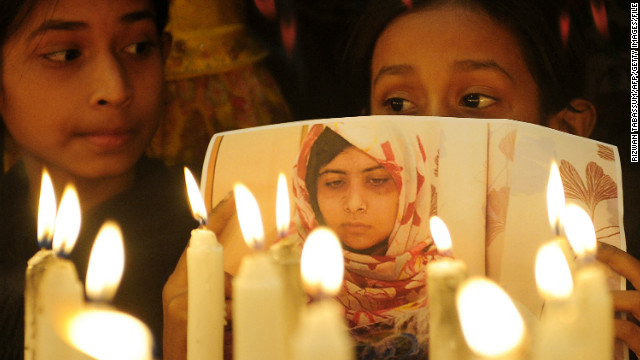
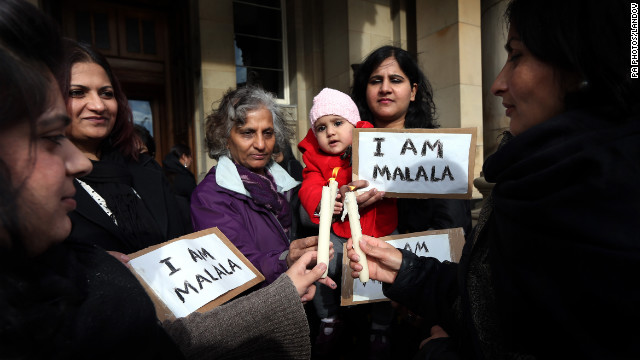
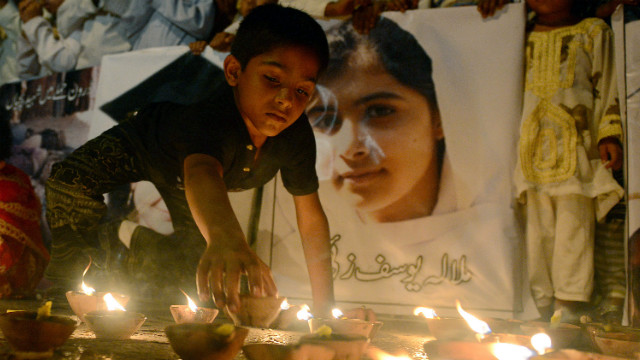
Malala Yousafzai, the 14-year-old schoolgirl who was shot in the head because of her human rights work in Pakistan, has received the 2012 Tipperary International Peace Award.
The Tipperary Peace Convention said they honored Yousafzai because of her courage, determination, and perseverance, along with the impact she has had on so many across the world. In October 2012 Yousafzai was shot in the head by the Taliban because of the public attention she had received while campaigning for girl’s rights in 2009 and writing an online diary. In her diary she wrote about the Taliban militants who had taken over the Swat Valley and banned education for girls. She had received death threats because of the diary. Read more: Former president Mary McAleese and husband win major peace prize The Pakistan Taliban stated that they shot Yousafzai because she was a western-minded girl and secular. The Tipperary Peace Convention said, "Malala's courage has proved to be an inspiration around the globe. "The right to education is denied to 61 million children of primary school age around the world and the hopes of these children are represented by the courage, determination and by the voice of Malala Yousafzai. "The Taliban tried and failed to silence her and have instead amplified her voice." Previous recipients of the award include former South African president Nelson Mandela, former US president Bill Clinton, former prime minister of Pakistan the late Benazir Bhutto, and former President of Ireland Prof Mary McAleese and her husband Senator Martin McAleese.

Bahrain meets 2013 with intensified crackdown on protesters

Popular unrest has reignited with renewed vigor in 2013 in Bahrain as Shiite protesters took to the streets to demand a transition government and the removal of Prime Minister Khalifa, who has been premier for almost 40 years. Bahrain has rung in 2013 with newly invigorated popular unrest, as Shiite protesters took to the streets demanding a new transitional government to replace that of Prime Minister Khalifa, who has ruled the tiny Gulf state for almost 40 years. The violence follows similar clashes earlier in the week when one man suffered a severe head injury when the government used force against protesters in the capital, Manama. Tear gas was deployed by the Saudi-backed state's law enforcement to disperse the protesters, who demanded freedom for all jailed activists. On Monday, several protests were detained across the island nation. The Shiite opposition in the tiny Sunni-ruled kingdom, which is home to the US Navy's fifth fleet, wants a government of technocrats to rule during a transition that would lead to a constitutional monarchy. But the clampdown on the opposition is intensifying, according to Asma Darwish of the European-Bahraini Organisation for Human Rights. “Yesterday was just the beginning of the year, and we could see the excessive use of violence and no actual intention of the authorities to enhance the situation or to have a real political reform on the ground in Bahrain,” Darwish told RT. “Security forces are using a lot of violence and are violating many human rights during the confrontations with pro-democracy protesters.” Since the uprising began in February 2011, at least 80 people have been killed and thousands arrested. A report published by the Bahrain Independent Commission of Inquiry in November 2011 found that political activists, politicians and protesters had been tortured. It also rejected government claims that the uprising was instigated by Iran. A followup unit sent in June 2012 to monitor Bahrain's progress in implementing the report’s recommendations found that human rights activists were still being arrested and harassed - and at increasing rates. “The promise of meaningful reform has been betrayed by the government’s unwillingness to implement key recommendations around accountability,” the group reported, adding that the situation in Bahrain has “markedly deteriorated” and the country “risks sliding into protracted unrest and instability.” Last month the government banned rallies and stripped 31 opposition members of their nationality for what it said were security reasons. Since December, the Financial Times reports that one village was raided by police more than 300 times, with some houses plundered several times a day. Such scenes are becoming an everyday reality for locals, Darwish says, adding that in the village of Sitra, where she lives, “tear gas was excessively used by security forces” as they “ran down the streets and randomly terrorized the houses either by shooting at them with guns or by manually throwing tear gas canisters into the houses.”

Afghanistan: A Russian diplomat's fears

Blackened by smoke and pockmarked by shrapnel, rockets and bullets, the shell of the Soviet trade mission building sits in a corner of what is now the compound of the Russian embassy in the Afghan capital Kabul. It is soon to be rebuilt to accommodate the increasing numbers of staff at the embassy. For now it serves as a handy reminder of what happened the last time a major world power withdrew its forces from Afghanistan. The current ambassador, Andrey Avetisyan, was a junior diplomat here when Soviet President Mikhail Gorbachev announced that USSR soldiers would withdraw from Afghanistan. By February 1989 the last soldier had left crossing the bridge into Uzbekistan. Three years later Afghanistan was engulfed in civil war. "Everything was burnt and semi-destroyed ... rockets were flying above us from both directions," the ambassador says as we survey the trade mission on a freezing snowy winter's morning. The Soviet embassy wasn't specifically targeted. It just happened to be stuck in the middle of the fighting between Afghanistan's warring factions. Now Ambassador Avetisyan fears this country risks being abandoned again. Mandate not fufilled "I think we must try to learn from the past," he tells me. "Whatever circumstances or whatever reasons the Soviet Union or NATO now had or have to withdraw from Afghanistan, [there will be] more problems for the international community in the future, like it happened in the 90s and Afghanistan became a hotbed for terrorists unfortunately." By the end of 2014 all foreign combat troops will have been withdrawn from Afghanistan. According to the latest rumours from Washington DC, President Barack Obama may decide to leave behind just 6,000 soldiers to continue training the Afghan security services. Russia's ambassador thinks NATO is pulling out it troops too soon, before they've fulfilled the mandate given to them by the United Nations. "I think it is premature", he says, "because when NATO and ISAF asked for the mandate from the security council 11 years ago the goal was to fight here against terrorism and to eliminate the terrorist threat emanating from Afghanistan. But unfortunately we see today that it hasn't yet been achieved ..." There are now 352,000 members of the Afghan security forces – police and military. But, according to the US Department of Defense only one of 23 Afghan army brigades can operate without coalition help. For Russia's ambassador this highlights what he sees as the missed opportunities of the last 10 years. "Unfortunately maybe for the past two maybe three years more attention has been paid to training Afghan army and police. If that job had started 10 years ago I think today we would have had a very able Afghan army and police but unfortunately many years were wasted and only recently the efforts have been made to help Afghanistan to strengthen its army and police. This is the right thing to do. Russia supports it and also helps in strengthening Afghan security forces and we will be doing so in the future." Impending job losses Another missed opportunity has been the need to develop Afghanistan's economy away from almost total reliance on military spending and aid money. Over the next 24 months thousands of drivers, cooks, cleaners, administration staff and so on will be laid off as the NATO operation winds down. There are no jobs for these people to go to. "If we take economic development," says Ambassador Avetisyan, "I can't think of a single serious big infrastructure project or factory or agricultural project. Unfortunately until recently it was almost all about fighting and war and only now more attention is paid to the civil part of it, to [the] development part of it." The ambassador wants the UN to play a lead role in co-ordinating the future development of Afghanistan. But the UN is already struggling to come up with enough money to meet current needs. It's raised barely half the money it asked for to fund a series of projects across the country. The UN’s Humanitarian co-ordinator here spoke recently of "donor fatigue" when it comes to Afghanistan. Ambassador Avetisyan knows that the governments of the US and other NATO countries have had enough of the war in Afghanistan. There is no appetite to prolong the foreign presence here. But that attitude brings a warning from the ambassador. "Look, if we decide not to learn of the mistakes of the past made by the international community here then we will find ourselves and Afghanistan in big trouble."

Malala's father gets job in Pakistan's UK consulate near her

The father of Malala Yousafzai, the teenager whom the Taliban tried to kill, has been given a job in a Pakistan consulate in Birmingham, England, where she is recovering from gunshot wounds to her head and neck, Pakistani officials said Wednesday. Ziauddin Yousafzai has been appointed education attache and will function as head of the consulate's education section for three years, the Pakistani government said. His job could be extended two additional years.
At the time of his daughter's shooting, Ziauddin Yousafzai ran a school in Pakistan's conservative Swat Valley that kept its doors open to girls -- in defiance of the Taliban. The Taliban forbid girls in the classroom and have threatened to kill anyone who defies them. Malala was shot by gunmen last fall for her crusade about girls going to school. She had blogged fearlessly about girls' education and accused the Taliban of thriving on ignorance. Her father's employment fulfills a pledge by Pakistan President Asif Ali Zardari, who visited Malala in December and assured her father that the government would meet "all expenses of Malala's treatment and all the needs of the family while in UK," a government statement said Wednesday. "In light of that, the present appointment has been made," the statement said.On October 9, Malala was on a school van in Swat Valley when Taliban gunmen stopped the vehicle and demanded that other girls tell them who was Malala. They identified her. Malala was then shot, as were two other girls who survived the attack.
"We do not tolerate people like Malala speaking against us," a Taliban spokesman said after the shooting. He vowed to come after her if she managed to live. Islamic militants also threatened to kill journalists covering her story. Since her shooting, Malala has become an international figure. She was selected as runner-up for Time magazine's Person of the Year for 2012. CNN and Time are owned by Time Warner Inc. Malala arrived at Queen Elizabeth Hospital Birmingham on October 16. A bullet that hit her left brow didn't penetrate the skull but traveled the side of her head under the skin and into her neck, the hospital said. The shock wave shattered the thinnest bone of her skull, and fragments entered her brain, the hospital said. The teen had been in critical condition, but doctors removed the bullet and she has no major brain or nerve damage. Physicians said she will need reconstructive surgery. Malala is walking, writing and reading again. The Islamic militants behind the Taliban continue to repress women in northwest Pakistan. Last month, Malala asked a graduate school not to name its institution after her.
Girls were afraid that attending the Malala Yousafzai Post Graduate College for Women in the Taliban-dominated Swat Valley would attract the attention of fighters such as the ones who shot Malala and the two other girls, said Kamran Rehman Khan, a top official in the Swat Valley. The Saidu Sharif Post Graduate School briefly changed its name to recognize Malala's brave campaign for girls' education in Pakistan. Several students told Khan that they respect Malala but were concerned about their safety, he said. Khan told CNN that Malala called him last month from her hospital room in England and asked the school to remove her name. But she wished for people to continue to fight for girls to go to school, he said. "I was so impressed that despite having threats against her life, she was talking about girls' education in the region and against militants," Khan said.

Pakistan: ''The threats within''

In a significant shift in its operational priorities for the first time in the 11-year-old war on terror, the Pakistan Army has declared the internal security challenges as major threat and danger to the country’s sovereignty. According to a military doctrine published by the army, the guerilla warfare going on in the Federally Administered Tribal Areas (FATA) and on the western border as well as the terrorist attacks by some militant outfits on individuals and institutions have been dubbed as the biggest threat to Pakistan’s sovereignty. The doctrine is part of a 200-page publication known as Green Book which is published by the army on a regular basis to review its operational preparedness and professional capabilities. In the newly published Green Book, a new chapter has been added with the title, Sub-conventional Warfare. Without naming any militant outfit, the new chapter also talks about the militant intrusion in Pakistani areas from across the border in Afghanistan. It merits mention that India has always been considered as Pakistan’s enemy No 1 by the country’s defence and security circles, but this is the first time that internal security hazards have been dubbed as more serious threat to the country’s sovereignty, which is a significant shift in the army’s doctrine. Seeking anonymity, a senior army official confirmed the contents of the book. However, he said the Pakistan Army was ready to face all conventional and unconventional security challenges. The inclusion of new chapter in the book is meant to prepare the army cadres to face this new warfare and threat as well as to acquire the required public support in this regard. The distribution of the green-colored book is underway among the army officials whereas in future at some proper time, this publication could also be made part of the army’s website for general public. The book says that some organisations and elements are hell-bent on harming the country’s sovereignty and terrorist attacks were being carried out in the tribal and settled areas for this purpose. It says that the terrorist attacks are being planned and executed in a cruel way and to counter them a high-level preparedness and befitting response are needed. A security official said that the notion of absence of any serious threat on the country’s western border and the concentration of almost all defence power on the eastern frontier resulted in the inability of security forces to detect the American helicopters that flew from Afghanistan to Abbottabad on May 2, 2011 to kill Al Qaeda chief Osama bin Laden. He said the lack of defence capabilities of local military commanders in Salala (Mohmand Agency) back in November 2011 to stop and repulse the NATO assault on Pakistani border posts, which killed several soldiers, also led to the creation of the new doctrine.

Hillary Clinton discharged from hospital

Secretary of State Hillary Clinton has been discharged from a New York hospital after spending three days being treated for a blood clot, the State Department announced Wednesday. Secretary Clinton was discharged from the hospital this evening. Her medical team advised her that she is making good progress on all fronts, and they are confident she will make a full recovery. She's eager to get back to the office, and we will keep you updated on her schedule as it becomes clearer in the coming days. Both she and her family would like to express their appreciation for the excellent care she received from the doctors, nurses and staff at NewYork Presbyterian Hospital Columbia University Medical Center.

Chris Christie drops bomb on GOP leaders

Pakistanis bury slain teachers, aid workers

Associated Press
Hundreds of villagers in northwest Pakistan turned out Wednesday to bury five female teachers and two health workers who were gunned down a day earlier by militants in what may have been the latest in a series of attacks targeting anti-polio efforts in the country. The seven had worked at a community center in the town of Swabi that included a primary school and a medical clinic that vaccinated children against polio. Some militants oppose the vaccination campaigns, accusing health workers of acting as spies for the U.S. and alleging the vaccine is intended to make Muslim children sterile. As mourners carried the coffins through the town for burial Wednesday, family and friends expressed horror that such an attack had struck their community. "I told her many times at home 'be careful as we are poor people and take care of yourself all the time,'" said Fazal Dad, whose daughter was among the seven killed. "And always in response she said: 'Father, if I am not guilty, no one can harm me.'" The group was on their way home from the community center where they were employed by a non-governmental organization when their vehicle was attacked Tuesday. The four militants on motorcycles spared the young son of one of the women who was riding in the van, pulling him from the vehicle before spraying it with bullets. The driver survived and was being treated at a Peshawar hospital. There has been no claim of responsibility, and police have not made any arrests. The director of the NGO said he suspected the attack might have been retribution for the group's work helping vaccinate Pakistani children against polio. Javed Akhtar said the community group has suspended its operations throughout the province. Despite the killings, polio vaccination workers will be out in force this Saturday in four areas in the northwest considered at high risk for the disease in an effort to keep it from spreading. Police will give extra protection to the workers taking part in the campaign in Peshawar, Nowshera, Charsadda and Mardan, said the commissioner of Mardan, Adil Khan. Many local residents view the girls' primary school and medical clinic run by the NGO at the community center as saviors for the community's poor. Now many are worried about what will happen if those services are cut off. Gul Afzal Khan, a villager whose children studied at a community center run by the group, said the attack was a big loss. "What is their crime?" he asked. "They were just giving free education and health assistance to our children." The attack also was another reminder of the risks to women educators and aid workers from Islamic militants who oppose their work. Last month, nine people working on an anti-polio vaccination campaign were shot and killed. Four of those shootings were in the northwest where Tuesday's attack took place.

Pakistan in 2013: a happy new year?

By:Dr Mohammad Taqi
The three-pronged Afghan jihadist conglomerate viz. Taliban proper, the Haqqani network and the Hizb-e-Islami (Hekmatyar) is what Pakistan continues to bet on This week will mark the second death anniversary of the founder-owner of this newspaper. Salmaan Taseer was martyred in cold blood for the crime of speaking up for a just cause. Last week was the fifth anniversary of Benazir Bhutto’s martyrdom. Days prior to that, Bashir Bilour was martyred in a suicide bombing. He is the senior most Pashtun nationalist leader this side of the Durand Line to have been assassinated since Khan Shaheed Abdus Samad Khan Achakzai. Glowing tributes were and will continue to be paid to all of them. All these leaders died not just for their words but actions and resolute stand against bigotry and terrorism. Unfortunately, Pakistan and its military and many political leaders commemorate their ultimate sacrifice with inaction and paralysis. After the assassination of the Khyber-Pukhtunkhwa’s senior minister Bashir Bilour, his party the Awami National Party (ANP) did take a very clear stance on confronting the terrorist menace. Last week, the ANP’s consultative committee released a policy statement, which not only recommended clear action but also laments the party being left high and dry by rest of the country. The communiqué notes: “ANP supports negotiations with all those elements that recognise the writ of the state and renounce violence. Those who are not prepared to do it should face effective and meaningful action. ANP is of the considered opinion that all of us should express zero tolerance towards all violations of the country’s sovereignty and integrity. We are opposed to drone strikes and have raised our voice against it. However, we are also opposed to terrorists — individuals and networks — from within the country and from other countries who have carved our sanctuaries on our soil. We are of the view that instead of defending ourselves on our doorsteps and in the streets we should go after terrorists’ sanctuaries. We should evolve a national consensus on a comprehensive strategy for defeating terrorist outfits that are out to destroy our state and society. Pakhtuns in FATA and Pakhtunkhwa are bearing the brunt of the terrorist menace. Why is the rest of the country not effectively joining this struggle? Is it only the struggle of Pakhtuns who are being killed on both sides of the Durand Line?” Of late, the Pakistani military brass has been blaming the civilians for not showing leadership against terrorism. The military and those who echo its thought have castigated the civilians — with some justification — for not visiting the men in the trenches to show support and boost their morale. Did it not behoove the top military leaders to visit and condole with Bashir Bilour’s family and party? Was this not the time to draw a line in sand and bolster a party that has lost hundreds of men in fight against militancy? Was Mr Bilour not one of the handful of civilians who reached every hotspot even when combat was ranging as he did when the Peshawar Air Force base and airport were under terrorist assault? Was he not a symbol of resistance like no other leader that should have been owned by the military and civilians alike? Was the ANP policy statement, which was released to the media, not something that the ISPR should have endorsed and owned? The trigger or should one say keyboard-happy ISPR has never wasted a moment springing into action against the Kerry-Lugar-Berman Act, an elected prime minister and even the judiciary. Why do they have cold feet now? The answer is simple. In 2013, Pakistan’s military establishment continues to look at the domestic terrorism problem through the Afghanistan and, in turn, the India lens. It seems that the key assumptions that the Pakistani security planners have operated under have not changed one bit. They continue to gun for a Pakistan-installed regime in Kabul after the US and NATO withdrawal that starts this year and will complete in 2014. The three-pronged Afghan jihadist conglomerate viz. Taliban proper, the Haqqani network and the Hizb-e-Islami (Hekmatyar) is what Pakistan continues to bet on. These groups, the al Qaeda with its assorted transnational jihadists and the Tehrik-e-Taliban Pakistan (TTP) remained joined at the hip. But Pakistan seems willing to continue tolerating the TTP in the hope that some of its ‘wayward’ leaders can be replaced with more pliable ones and the cadres reoriented towards Afghanistan once the US withdraws. Similarly, the Pakistani state continues to tolerate, if not harbour, the Punjabi Taliban especially the Lashkar-e-Jhangvi and its political wing the Sipah-e-Sahaba Pakistan (SSP) now operating as the Ahle-Sunnat-wal-Jamat (ASWJ) in anticipation of a future role against India. The militancy cannot be eradicated by non-violent means. One cannot offer the cheek to AK-47 and suicide vests. Only the state and its military might has the capacity to fight and subdue terrorists. Private lashkars and militias are a patently horrible idea to fight terror. The army is the only entity capable of putting the jihadist genie, which it has let out in the first place, back in the bottle. Civilian leadership has the desire as indicated by the ANP statement and the courage as shown by Bashir Bilour, Salmaan Taseer and Benazir Bhutto to fight terrorism. But unless the military shows its willingness to take on the whole spectrum of jihadists — not just the ones it thinks are rogue — the civilians will end up backtracking as indicated by Asfandyar Wali Khan’s subsequent watered down statements. The deep state’s obsession with tripping democracy even in the last quarter of an elected government, using a charlatan speaking with forked tongue and twisting the MQM’s arm to join him, leaves little doubt that the security establishment is not about to mend its ways. The gruesome slaughter of the 21 levies personnel near Peshawar and the Mastung car bombing killing 20 Shia pilgrims by Pakistan’s jihadist proxies is virtually business as usual. As the news of these brutal inland attacks poured in the Army Chief was harping on how a strong navy was important for Pakistan! We are all prisoners of hope and one does wish the year 2013 to be a peaceful and prosperous one for Pakistan and its people. But it might just be realistic to qualify the wish with a question mark.
PS: I may have to eat my hat but let me add that the brass will keep dragging its feet on the North Waziristan operation.

Pakistan's 'Patriot Act'

by DINA TEMPLE-RASTON
Earlier this month, Pakistan's powerful Lower House of Parliament passed what analysts have dubbed Pakistan's Patriot Act. Its name here is "Investigation for Fair Trial Bill." It has been presented to the Pakistani people as a way to update existing law and usher the rules for investigation in Pakistan into the 21st century. Among other things, it makes electronic eavesdropping admissible as evidence in court. To American ears, the argument for the new law should sound vaguely familiar. Pakistani officials say that in order to fight the war against terror, they need to be allowed to capture emails, listen in on cellphone calls, and track suspects so they can stay one step ahead of the terrorists. That's the same argument FBI Director Robert Mueller made before members of Congress when the FBI sought changes in the Patriot Act.
Already A Common Practice
The difference is that the Pakistani version has been introduced into an entirely different societal context. To begin with, it is an open secret that security agencies in Pakistan already tape phones and monitor email with impunity. They are supposed to get warrants to do this, but they rarely do. The bill is seen as legal cover for what is already common practice. Another difference: This being Pakistan, the feeling among those who are following the bill is that the investigative powers won't be limited to terrorists. Politicians, they believe, are likely to be the main targets. "There are two sides of the argument. One is that this is a country at war — a war within and war in the region — so you need certain laws to protect people from terrorist activity," says Harris Khaliq, a poet and columnist in Islamabad. "At the same time, Pakistan has a checkered political history and we as citizens are really wary of a situation where these laws or such policies could be actually used to oppress political opponents of whoever is in power." It is common to use criminal charges as a brickbat against powerful politicians. Bribery and corruption charges are routinely filed and then dismissed. Smear campaigns are frequent. Democracy in Pakistan is too fragile to allow these kinds of sweeping powers, says Aasim Sajjad, a professor of political economy at Quaid-e-Azam University in Islamabad. "Frankly, to be honest, it is not as if this act per se would be required for this sort of big-brother apparatus to operate. I think it operates in any case," Sajjad says. "The worry is that the state and the intelligence apparatus here has historically been so powerful and so unaccountable that there is a feeling that we would be totally surrendering every last remaining bit of independence or civil liberties" by passing the law.
Limited Opposition To Date
While Sajjad's concern about civil liberties would be common in the United States, in Pakistan it is unusual. Aside from university professors and the liberal elite, opposition to the bill has been, at best, muted. While its passage in the lower house made the front pages of the English-language papers here, there was barely a whisper about it in the Urdu-language press. "Amongst a fairly limited circle — activists and observers — there has been concern," Sajjad says. "But it hasn't generated or garnered the kind of response that I think would be necessary for some sort of countervailing pushback to prevent something like this from going through. It will pass the Senate and the president will sign it." Mohman Hussein Baluch is a Ph.D. candidate in Pakistani studies at the university, and his reaction is typical of the students there. He says if he isn't doing anything wrong, he has nothing to fear. "I am a peaceful citizen of Pakistan. I bleed in peace, so I am not worried about this," he says. The Senate is more conservative than the Lower House in Pakistan, and it is expected to approve the bill and send it to the president for his signature early in the new year.

Pakistan: NGO suspends work after Swabi killings

The Express Tribune
A Pakistani charity on Wednesday suspended its operations for three days after seven staff were shot dead in the northwest, where aid groups demanded better protection. “The NGO has suspended its activities for three days to mourn the deaths. They will decide after three days whether to start work again or not,” said Abdul Rashid Khan, police chief of Swabi district where the attack took place. The six women and their male colleague were ambushed and shot dead on Tuesday after returning from a local community centre. “All seven victims of the attack have been buried. Police have started to investigate but we are not yet in a position to accuse anyone,” Khan said. The organisation, Support With Working Solution, runs dozens of health and education projects, including polio vaccinations, in Khyber Pakhtunkhwa, where the Taliban and other militants are active. Tuesday’s attack, for which there has been no claim of responsibility, comes days after nine polio vaccination workers were shot dead in a string of incidents in Pakistan. There are growing concerns about a renewed surge of violence in the northwest. On Wednesday, an umbrella organisation of around 200 charities in the northwest held talks on how to secure more protection, said Idrees Kamal, the coordinator of the Pakhtunkhwa Civil Society Network. “We are here to discuss the situation and to chalk out a work strategy for the future because we need better security,” Kamal said. Other charity workers said Tuesday’s attack had heightened fears. “It has created uncertainty. We were already facing problems,” said Imran Takkar, programme manager of the Society for the Protection of the Rights of the Child. “How can a state protect its people if it can’t protect its ministers?” Takkar told AFP, referring to the assassination of Bilour. Yasrab Nazeer, provincial programme coordinator of Rahnuma which works on health projects, said the attacks were alarming. “We are really concerned about such attacks. NGO workers, particularly women workers, feel insecure. The government will have to take steps for our protection,” she said. Imtiaz Iltaf, police chief of Peshawar, said officers were preparing a strategy to protect aid workers. “We are in a state of war. The whole country is facing an insurgency, so we are revising the present security steps and working on a new strategy,” he said. According to Islamabad, more than 35,000 people have been killed as a result of terrorism in the country since the 9/11 attacks on the United States.

The character assassination of Hillary Clinton

By Kathleen Parker
The new year began not with a cannonball off the “fiscal cliff” but with an outbreak of conspiratorial cynicism. This time it’s Secretary of State Hillary Clinton, whose fall and concussion, followed by a blood clot between her brain and skull, has prompted an embarrassment of theories. The gist: That woman will do anything to avoid testifying about Benghazi. Several commentators on the right opined via Twitter and TV, those most deadly hosts for the parasites of rumor and innuendo, that Clinton was faking her concussion to duck out on her appearance before congressional committees investigating the attack on the U.S. diplomatic compound in Libya that killed Ambassador Christopher Stevens and three other Americans. An independent report published last month placed substantial responsibility for the deaths on the State Department. Not only was security at the Benghazi compound weak, relying heavily on local forces with conflicting loyalties, but requests for additional security apparently were ignored or denied. The sentiment that Clinton might not wish to testify on the matter is not without reason. It is hard to imagine the agony of knowing that one’s lack of vigilance may have contributed to four deaths. But the attacks on Clinton during her illness, essentially attacks on her character, have been cruel and unfair. What must the world think of us? Clinton, who fainted as a result of dehydration after a bout of flu, hit her head and suffered a concussion, after which a blood clot was discovered. She had to be hospitalized while blood-thinning medications were administered and monitored. Although her critics backed off once the clot was reported, initial responses ranged from “She’s faking” to demands for proof of her concussion. One writer demanded her medical records. John Bolton, former ambassador to the United Nations, called Clinton’s affliction a “diplomatic illness” to avoid testifying about Benghazi. Later he suggested that details were skimpy in an effort to protect her potential 2016 presidential run. “I think it’s the too-cute-by-half approach that’s reflected in the absence of transparency that’s going to end up damaging her and damaging her credibility,” he said on Fox News. Again, Clinton may well prefer to miss her day before the firing squad, but it is unlikely that doctors or a hospital would assist a secretary of state — or anyone — in concocting a fake affliction. Besides, you can’t have it every which way. Immediately after the Benghazi attacks, Clinton took full responsibility for the events and was accused by Republicans of falling on her sword to protect President Obama. Now that she’s temporarily indisposed and unable to elaborate on her admitted responsibility, those same critics insist she’s trying to avoid taking personal responsibility. The viciousness of the pundit class is disheartening and disgusting. And these days everyone’s a pundit. Got an opinion? Why, step right up to the microphone. If you’re “good TV,” you too can be a “contributor.” Out in the hinterlands, where Americans consume “news” that suits their political proclivities, opinions are formed on the basis of what-he-said. Reputations and lives are ruined on the tines of pitchforks glimmering in the light of torch-bearing mobs. And those are just the “news” shows. One doesn’t have to be a fan of Hillary Clinton, though a Bloomberg poll says that two-thirds of Americans are, to feel tainted by the relish with which she and many others have been attacked — unfairly and disproportionately. Susan Rice, who was Obama’s favorite to replace Clinton as secretary of state, comes to mind. But this isn’t a problem only for women or Democrats. The rush to character assassination seems to be our only bipartisan imperative and is a blight on our political system. In this brooding age of superstition and portent, every misspoken word is a lie, every human error a hanging offense. This is to suggest not that we be naive or credulous but that we seek some balance in our approach to discovery. At the moment, we seem to be ricocheting between hysteria and delusion. Eventually, Clinton will have to step forward and take her medicine. She is slated to appear before the House Foreign Affairs Committee in mid-January, though the date hasn’t been set. The nation clearly needs answers on what happened in Benghazi, and no doubt Clinton will provide them. This is not blind faith in a favored politician but respect for a process that relies on accepted rules of order. We owe our representative to the world — which is to say, ourselves — at least this much.

Obama is back in Hawaii

http://www.usatoday.com
The "fiscal cliff" deal is done, so President Obama is back on his Hawaii vacation. Obama boarded Air Force One at about midnight Tuesday, some 30 minutes after White House remarks saluting the House vote to avert a series of tax hikes and budget cuts known as the fiscal cliff. "Happy New Year everybody,"' Obama told reporters. The president landed in Honolulu shortly after 5 a.m. on Wednesday, 10:00 a.m. ET.Obama and his family began their traditional end-of-the-year vacation on Dec. 21, but the president returned to the White House on Dec. 27 to tend to the fiscal cliff debate. His family stayed back in Hawaii. The president is scheduled to return to Washington over the weekend.

United States avoids calamity in "fiscal cliff" drama

The United States averted economic calamity on Tuesday when lawmakers approved a deal to prevent huge tax hikes and spending cuts that would have pushed the world's largest economy off a "fiscal cliff" and into recession. The agreement hands a clear victory to President Barack Obama, who won re-election on a promise to address budget woes in part by raising taxes on the wealthiest Americans. His Republican antagonists were forced to vote against a core tenet of their anti-tax conservative faith. The deal also resolves, for now, the question of whether Washington can overcome deep ideological differences to avoid harming an economy that is only now beginning to pick up steam after the deepest recession in 80 years. Consumers, businesses and financial markets have been rattled by the months of budget brinkmanship. The crisis ended when dozens of Republicans in the House of Representatives buckled and backed tax hikes approved by the Democratic-controlled Senate. Asian stocks hit a five-month high and the dollar fell as markets welcomed the news. China's state news agency Xinhua took a more severe view, warning the United States must get to grips with a budget deficit that threatened not a "fiscal cliff" but a "fiscal abyss". Most of China's $3.3 trillion foreign exchange reserves are held in dollars. The vote averted immediate pain like tax hikes for almost all U.S. households, but did nothing to resolve other political showdowns on the budget that loom in coming months. Spending cuts of $109 billion in military and domestic programs were only delayed for two months. Obama urged "a little less drama" when the Congress and White House next address thorny fiscal issues like the government's rapidly mounting $16 trillion debt load. There was plenty of drama on the first day of 2013 as lawmakers scrambled to avert the "fiscal cliff" of across-the-board tax hikes and spending cuts that would have punched a $600 billion hole in the economy this year. As the rest of the country celebrated New Year's Day with parties and college football games, the Senate stayed up past 2 a.m. on Tuesday and passed the bill by an overwhelming margin of 89 to 8. When they arrived at the Capitol at noon, House Republicans were forced to decide whether to accept a $620 billion tax hike over 10 years on the wealthiest or shoulder the blame for letting the country slip into budget chaos. The Republicans mounted an effort to add hundreds of billions of dollars in spending cuts to the package and spark a confrontation with the Senate. RELUCTANT REPUBLICANS For a few hours, it looked like Washington would send the country over the fiscal cliff after all, until Republican leaders determined that they did not have the votes for spending cuts. In the end, they reluctantly approved the Senate bill by a bipartisan vote of 257 to 167 and sent it on to Obama to sign into law. "We are ensuring that taxes aren't increased on 99 percent of our fellow Americans," said Republican Representative David Dreier of California. The vote underlined the precarious position of House Speaker John Boehner, who will ask his Republicans to re-elect him speaker on Thursday when a new Congress is sworn in. Boehner backed the bill but most House Republicans, including his top lieutenants, voted against it. The speaker had sought to negotiate a "grand bargain" with Obama to overhaul the U.S. tax code and rein in health and retirement programs that are due to balloon in coming decades as the population ages. But Boehner could not unite his members behind an alternative to Obama's tax measures. Income tax rates will now rise on families earning more than $450,000 per year and the amount of deductions they can take to lower their tax bill will be limited. Low temporary rates that have been in place for the past decade will be made permanent for less-affluent taxpayers, along with a range of targeted tax breaks put in place to fight the 2009 economic downturn. However, workers will see up to $2,000 more taken out of their paychecks annually with the expiration of a temporary payroll tax cut. The non-partisan Congressional Budget Office said the bill will increase budget deficits by nearly $4 trillion over the coming 10 years, compared to the budget savings that would occur if the extreme measures of the cliff were to kick in. But the measure will actually save $650 billion during that time period when measured against the tax and spending policies that were in effect on Monday, according to the Committee for a Responsible Federal Budget, an independent group that has pushed for more aggressive deficit savings.