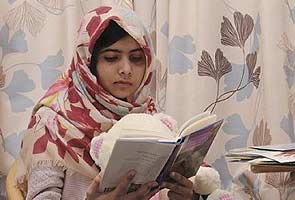
By: Abbas NasirWHEN the state and the political elite of the country cannot be on the same page even on how best to deal with an existential threat to it, is there a point in debating anything else? The Taliban and their various franchised terror groups keep attacking at will, killing innocent, unarmed men, women and children. And we cannot respond because there isn’t a ‘consensus’ on how to. The state of Pakistan continues to resemble a crumbling edifice. Today, it is an assault on an airbase, tomorrow on school-going girls. Then, a girls’ school is blown up, a bus is stopped, with Shia passengers identified, pulled off and executed. Condemnation follows. Both from you and I. And from those whose responsibility it is to safeguard the life and limb of every citizen. But if we cast our eye over the past so many years we see very little beyond words. When it appeared the army may have been prepared to somewhat distance itself from its obsessive belief that the jihadi ideology coupled with nuclear weapons and conventional forces offered the most robust defence of the country, the civilian political elite balked at the prospect of a clean-up. To some action against militancy was an ideological issue so they opposed it, others let anti-Americanism dominate their response while some felt that any such an exercise would jeopardise or at least delay the next general election due in the coming months. Swat’s Malala Yousufzai was shot and wounded in October. The attempt on the life of a teenager for the crime of wanting to go to school was justified by the Taliban ‘because she represented and promoted western culture/values’. The outrage was spontaneous, widespread but to no avail. As November was drawing to a close, 12-year old Mehzar Zehra was gravely wounded in an armed attack when she was being driven to school by her father in Karachi. The ostensible reason for this attack was that they were Shias. And December saw multiple attacks on women in Karachi and Khyber Pakthunkhwa in which a number of them were killed. What did Naseem Akhtar, Kaneez Fatima, Madeeha, Fehmida and others have in common? They were poorly paid (on a daily wage of Rs250) health workers contracted to visit dozens of homes a day to make sure children received their polio vaccine drops. Given the security environment generally and specific threats to polio workers their work was marked by valour. Experts say the exercise involves in excess of 80,000 workers with some 33 million children to be vaccinated. Now the fate of the programme is in limbo. Who’d blame the health workers if not a single one ever agreed to step out of their home for the vaccination programme? Let me declare a personal interest here. I contracted polio when I wasn’t even three. I can walk on my own but have restricted mobility. In the early 1960s the knowledge of the virus and its symptoms was so sketchy that I was ill for a number of weeks before a diagnosis was made. I was fortunate in having devoted, doting parents (and lovely siblings) who spared neither effort nor whatever little material resources they had to ensure my upbringing in an environment free of complexes, sent me to good schools and supported me hugely in early life. The best orthosis was always fitted no matter how they had to cut corners elsewhere to be able to pay for it; the best physiotherapy was made available. The list is endless and I could go on about how blessed I was after my initial misfortune. But that isn’t the point. Even with a middle-class family, its values, resources and an indescribable amount of love behind me, life wasn’t (and isn’t) easy. When you are growing up and all the children around you can run while all you do is watch, imagine the frustration every day. Although I have always believed I am more ‘normal’ than many able-bodied people, it is also a fact that when you go through most physical activity, and I am not talking competitive sport here, at about a sixth or a tenth of the pace of the rest of the world, you are always playing catch up. Boy it gets exhausting. Sometimes you just want to stop. That’s me. Imagine the life of a polio victim in a poverty-stricken environment. With physical disability would inevitably follow challenges in earning a livelihood through manual labour. A begging bowl and reliance on others the next step. Today such dilemmas are easily avoidable but we have created a society where the simplest of issues become the most complicated, with the result that we don’t shy away from putting even our children at risk. The reader, one is certain, must get fed up when all columnists do is write laments, pen elegies and practically little else. I have often wondered if among the handful of readers who still read the op-ed pages of a newspaper there is growing irritation at the subject matter of columns such as these. One so wishes to focus on the positive, but also has to reflect reality which keeps getting direr all the time. One can only ignore that at the risk of appearing delusional. Let me sound positive for a change. A befitting response to the attackers would be for the president, the governors, the prime minister, the chief ministers along with their cabinet members, opposition politicians and the military leaders to go to each attack site and personally administer drops to the children there. Now wouldn’t that be an uplifting, positive sight? But I suspect it can only be a reality when 15-year-old Malala and others like her grow up and assume leadership roles in Pakistan for that sort of courage and conviction is nowhere in evidence right now.
M WAQAR..... "A man's ethical behavior should be based effectually on sympathy, education, and social ties; no religious basis is necessary.Man would indeed be in a poor way if he had to be restrained by fear of punishment and hope of reward after death." --Albert Einstein !!! NEWS,ARTICLES,EDITORIALS,MUSIC... Ze chi pe mayeen yum da agha pukhtunistan de.....(Liberal,Progressive,Secular World.)''Secularism is not against religion; it is the message of humanity.'' تل ده وی پثتونستآن
Saturday, December 22, 2012
Waiting for Malala to grow up
N.R.A. Call to Guard Schools Is Criticized as Too Simplistic
By MOTOKO RICH
The National Rifle Association’s blunt call on Friday to train and place armed guards in every school in the nation as a way to “protect our children right now” has brought a divergence of opinion from school officials, teachers, parents and police officials.
But even those who said they might support some increased police presence on campuses as part of a broader safety strategy pointed out that the group’s proposal was far too simplistic.
“It’s not that they’re simply there if something terrible happens,” said Martin Miller, a math teacher at Hyde Park High School in Chicago, which has three armed police officers assigned to the building. The officers, he explained, are working to diffuse potential conflict within the schools as much as to protect students from outside intruders. One also doubles as a wrestling coach, Mr. Miller said, and the officers spend time with students serving as de facto counselors or social workers.
“In a lot of ways, I feel like our school is safer than a lot of other schools,” Mr. Miller said, adding that the school also had metal detectors at every entrance. “But as a whole, just having a police officer or an armed guard or someone with a gun is not going to stop the violence. I think it’s a lot more complicated than that.”
While about a third of public schools nationwide have armed guards on campus, those who do not say they worry that allowing police officers with guns in schools would be far more destructive to the day-to-day culture of schools than any benefit they might bring in protecting against the worst-case scenario.
“To have an armed guard at every school completely sends the wrong message in so many ways about what schools are about,” said David Fleishman, superintendent of the Newton Public Schools in Massachusetts. He added that in extensive discussions with principals, local police, parents and elected officials over the past week after the tragic shootings at Sandy Hook Elementary in Connecticut, “not a soul” had requested that the schools hire armed security officers.
When the Cleveland school district overhauled its safety program a few years ago, it decided not to arm the 145 security officers stationed in school buildings. David Osher, director of the human and social development program at the American Institutes for Research, who advised the Cleveland district on safety, said that an armed guard does not necessarily make a school safer.
“In theory what the N.R.A. is saying is we want to put someone in so that if somebody breaks in, we’ll shoot him down and everything will be fine and the only person that will be shot is the person breaking in,” he said. “In reality, the problem is you might shoot someone who isn’t in fact breaking in or you might shoot somebody else — a student or a visitor or a teacher or other adult who is doing something else that is inappropriate that is perceived by that person as being threatening.”
And many opponents of the rifle association’s proposal pointed out that a security guard at Columbine High School did not prevent the tragedy there, and that even trained New York City police officers shot and injured nine bystanders in August in their pursuit of a gunman outside the Empire State Building.
As a practical matter, placing trained professional security officers in all of the country’s schools would be costly, and it is not clear that there are enough people who could even do the job.
There are currently about 99,000 public elementary and secondary schools in the United States, along with about 33,000 private schools. According to the Department of Justice, there were 452,000 full-time law enforcement officers across the country in 2009, the latest year for which data is available.
Craig Steckler, president of the International Association of Chiefs of Police, called the rifle association’s proposal unrealistic and probably unwise. Putting at least one officer in each of the nation’s schools could mean hiring as many as 100,000 people, he said, expanding the ranks of state and local officers by one-quarter. Qualified applicants, he said, are already scarce.
“My city has 32 elementary schools, 5 middle schools, 6 high schools, and that doesn’t include private schools,” said Mr. Steckler, the police chief in Fremont, Calif., a city of 214,000 people. “My patrol force is 89 officers on all shifts. Where are we going to get 40-some additional officers?”
“I just don’t believe that putting more guns on the campus is a solution,” he added, saying that chiefs would rather see more resources devoted to mental health care and the control of assault weapons.
Another tier of the rifle assocation’s plan would make use of local volunteers serving in their own communities.
The group proposed that it could train volunteers, like retired police officers or military personnel, to serve as school guards. Others said that even school staff could be trained.
“I have been saying for years that schools should have personnel, whether it is a janitor or a principal, who are armed,” said John DeLoca, a father of a teenager and two other grown children who owns the Seneca Sporting Range in Ridgewood, Queens, and is a licensed gun dealer and an N.R.A. certified firearms instructor. “We have fire extinguishers all over the place and hopefully we never have to use them. In the same way, we need trained armed personnel at schools.”
Joseph Dedam, 16, a junior at Elizabethtown-Lewis Central School in Elizabethtown, N.Y., said the proposal “is proactive. Right now, the best a school can do is have the teachers lock the classroom door and have the kids try to hide in a corner. But this is a situation where you can’t fight fire with water. You need to fight fire with fire.” He added, “you would not want a school official who is scared of a gun or not fully trained to have one.”
But a number of parents objected to the notion of a school staff member or a volunteer carrying a gun anywhere near their children.
“If we’re going to do this — which I don’t know that we necessarily should — they should be paid professionals,” said Dave Lamb, a research physicist in St. Paul, who has two daughters in elementary school.
Other parents regarded the proposal as simply missing the point. Picking up her children from a Washington, D.C., elementary school on Friday, Courtney Carlson, a business consultant, said she felt “so totally outraged when I stepped into the school thinking that was the solution to a totally messed up problem.”
“I think crazy people who get access to high capacity-rifles want to cause mayhem,” added Ms. Carlson, a mother of three whose two eldest attend school. “Someone who has a gun that can shoot 200 rounds in under 10 minutes — you don’t stop that person unless you don’t let the person have that kind of gun.”
Saudi Arabia: Website Editor Facing Death Penalty
http://www.hrw.orgSaudi authorities should immediately drop all charges against the detained editor of a website created to foster debate about religion and religious figures in Saudi Arabia. On December 17, 2012, the Jeddah District Court, which had been hearing the case against the editor, Raif Badawi, referred it to a higher court on a charge of apostasy, which carries the death penalty. The charges against him, based solely to Badawi’s involvement in setting up a website for peaceful discussion about religion and religious figures, violate his right to freedom of expression. “Badawi’s life hangs in the balance because he set up a liberal website that provided a platform for an open and peaceful discussion about religion and religious figures,” said Eric Goldstein, deputy Middle East director at Human Rights Watch. “Saudi Arabia needs to stop treating peaceful debate as a capital offense.” A member of Badawi’s family told Human Rights Watch that during the December 17 hearing, Judge Muhammad al-Marsoom prevented Badawi’s lawyer from representing his client in court and demanded that Badawi “repent to God.” The judge informed Badawi that he could face the death penalty if he did not repent and renounce his liberal beliefs, the family member said. Badawi refused, leading Judge al-Marsoom to refer the case to the Public Court of Jeddah, recommending that it try Badawi for apostasy. Prior to the December 17 hearing, Badawi had been charged with “insulting Islam through electronic channels” and “going beyond the realm of obedience,” neither of which carries the death penalty. A different judge, Abdulrahim al-Muhaydeef, presided over five sessions of the trial but was replaced without explanation for the December 17 hearing by Judge al-Marsoom. Saudi law derives from principles of Islamic Shariah, which are not codified and do not follow a system of precedent. As a result, individual judges are free to interpret the Quran and prophetic traditions – the two agreed-upon sources of Shariah – as they see fit. With the exception of a few crimes – including the capital offense of apostasy – judges essentially can interpret offenses to fit facts rather than assessing whether facts fit a clearly defined offense. Saudi judges also frequently convict people who engage in peaceful criticism of religious or political authorities on vague charges, including “going beyond the realm of obedience.” Security forces arrested Badawi, a 30-year-old from the port city of Jeddah, on June 17. Badawi in 2008 was co-founder of the Free Saudi Liberals website, an online platform for debating religious and political matters in Saudi Arabia. On the website, Badawi and others had declared May 7, 2012, a day for Saudi liberals, hoping to garner interest in open discussion about the differences between “popular” and “politicized” religion, Su’ad al-Shammari, secretary general of the website, told Human Rights Watch. Human Rights Watch had previously called for al-Badawi’s release on the grounds that his arrest violated his right to freedom of expression. Based on a royal decree issued by King Abdullah in April 2011, all crimes related to insulting Islam by electronic means fall under the jurisdiction of a judicial council in the Ministry of Information. The council has the authority to refer cases directly to the king, who may “take measures in the public interest,” including referring cases to court. The judicial process against Badawi has not made clear what words or activities provoked his prosecution. However, international human rights law provides broad protection of the right to freedom of expression. It permits restrictions only in narrowly defined circumstances, such as speech that constitutes incitement to imminent violence. International norms provide protection for speech about religion, including speech that some may find departs from commonly held beliefs or insults a religion or religious group. Saudi authorities have harassed Badawi since he founded the website. In March 2008, prosecutors arrested and detained him for questioning but released him a day later. In 2009, the government barred him from foreign travel and froze his business interests, depriving him of a source of income, a family member told Human Rights Watch. His father and a brother have publicly distanced themselves from him and declared him an unbeliever, and members of his wife’s family also filed a suit in a Jeddah court to have him forcibly divorced from his wife as an apostate. His wife and children are living outside of the country. “Instead of protecting their citizens’ right to freedom of expression, the Saudi government has gone all-out against Badawi, to punish him and intimidate others who dare to debate matters of religion,” Goldstein said. “The authorities should drop the charges against him.”
Pakistan Says Ties With US Improving
Pakistan says its political and military ties with the United States are on the upswing after nearly two years of setbacks and crises. The country’s defense minister tells VOA that bilateral understanding has also improved on how to counter terrorism in Pakistani border regions and promote political reconciliation in neighboring Afghanistan.
Bilateral cooperation has been gradually improving since July when Pakistan unblocked NATO supply lines into Afghanistan.
The latest demonstration of normalizing ties came earlier this month when the Obama administration notified Congress it would reimburse nearly $700 million to Islamabad for the cost of conducting anti-terrorism operations on the Afghan border.
Pakistani Defense Minister Naveed Qamar tells VOA his country hopes the United States will soon unfreeze other promised military aid to keep the momentum going.
“Things have improved to quite an extent and I would venture out to say that we are back to where we were sometime back, where there is a constant cooperation between the two countries at various levels, political, military, intelligence and so on,” says Qamar.
Pakistan had been receiving around $2 billion in annual security assistance from the United States, including the military reimbursements, called coalition support funds.
But these payments had been held up because of diplomatic tensions over the U.S. raid that eliminated Osama bin Laden, and the killing of 24 Pakistani soldiers in a cross border NATO airstrike in November 2011. That incident had provoked Pakistan to block NATO supply lines and halt all anti-terror cooperation with the United States.
For its part, the United States has been critical of Pakistan's refusal to mobilize troops against bases of the Haqqani network in the country's North Waziristan border region, a safe militant haven being used for cross-border insurgent attacks in Afghanistan.
Better understanding in Washington
Defense Minister Qamar says there is now a better understanding in Washington of his country’s reservations about an all-out war against Islamist militants on its soil.
“In terms of when to do what, it is best left to those who are on the ground so that they can make a good judgment of whether a particular operation will be productive or counter-productive. We do see the U.S. moving closer to the Pakistani position but we need to work hand-in-hand to be able to come to the ultimate objective [of weeding out terrorism]” says Qamar.
Pakistani leaders say that a renewed consultative process between Islamabad and Washington on how to promote Afghan political reconciliation also indicates convergence of views on achieving the common objective of ending the Afghan war.
Islamabad is also apprehensive about an abrupt total pull out by foreign troops from Afghanistan without putting in place a stable political process. Qamar articulated those fears.
“What we expect is that once the U.S. forces leave there should be forces left there that would be able to control the situation. It might be an internal compulsion of the United States government to speed up the withdrawal. But speeding up, again, should not result in a collapse.”
Afghan diplomatic sources in Islamabad also agree that there are clear signs Pakistan has stepped forward to help facilitate the political reconciliation process inside the country. These sources believe this readiness appears to be driven by fears of a spillover of the conflict into Pakistan if the political system in Kabul collapsed following the withdrawal of foreign troops.
At the request of the Afghan government, Islamabad has recently released about a dozen Afghan Taliban leaders from its jails to try to speed up the political reconciliation process and has promised to free dozens of remaining prisoners.
Karzai Blames Foreigners For Corruption
Radio Free Europe/Radio LibertyAfghan President Hamid Karzai says foreign governments are to blame for widespread corruption in Afghanistan and are undermining his efforts to establish the rule of law. In a televised speech on December 22, Karzai said that local graft is negligible compared to the hundreds of millions of dollars paid by foreigners in suspicious deals. "The existence of corruption in Afghanistan is a reality; indeed, it is a bitter reality," Karzai said. "[But] the corruption in our governments' institutes, such as bribery, is a small part of the corruption. The biggest part of the corruption in our country, and that involves hundreds of millions dollars, does not belong to us. A huge part of the corruption is imposed on us in order to weaken our government. We are not to be blamed for that. That is not our fault." Speaking at a Kabul meeting marking the country's anticorruption day, Karzai stressed his government has to reform its administrative system and "pay enough salary" to government employees to fight bribery. "So far, I don't see signs of success in fighting graft or making government reforms," he said. "We are still depending on relations with foreign countries. In order to fight graft, we must reform our administrative system and make sure we pay enough salary to our employees and make sure their future is guaranteed. Then, of course, we can eliminate a big part of existing corruption in our country." Karzai accused foreigners of giving contracts to high-ranking Afghan officials or to their relatives in an effort to gain influence over the government, thereby paving the way for corruption. He said the withdrawal of NATO-led troops from Afghanistan in 2014 would help rid the country of corruption. Karzai that when "foreign forces have left Afghanistan…their contracts, their administration will gradually disappear." NATO has around 100,000 troops in Afghanistan fighting an insurgency by Taliban militants, but they are due to withdraw by the end of 2014. International donors have pledged billions of dollars in aid after NATO combat troops withdraw from Afghanistan but have conditioned payment on corruption being brought under control. Donors have said their efforts to stabilize Afghanistan have been hampered by endemic corruption and that the government has been unwilling to prosecute corruption cases involving political allies. Afghanistan is ranked one of the most corrupt countries in the world by Transparency International's Corruption Perception Index, published earlier this month.
Bashir Bilour.....Taliban silence another critic
Daily TimesRegarded a symbol of “anti-Taliban resistance”, Senior Khyber Pakhtunkhwa (KP) Minister Bashir Ahmad Bilour succumbed to wounds minutes after a suicide bomber blew himself up leaving nine dead and 18 injured. “We lost a great leader,” said Awami National Party (ANP) President Asfandyar Wali Khan while paying tribute to the late party leader. The Saturday’s assassination of senior KP minister comes a week after an audacious attack on Pakistan Air Force (PAF) base inside Baacha Khan International Airport in Peshawar was foiled. Bashir Bilour was returning from a party meeting in Dhaki Nalbandi area near historical Qissa Khawani bazaar when he was attacked. He was immediately rushed to nearby Lady Reading Hospital from where his body was transported to home an hour later. Lady Reading Hospital Executive Director Dr Arshad Javed said Bashir Ahmad Bilour was brought to hospital “in critical condition” as he suffered chest and stomach injuries from the blast. The ANP leader was immediately operated upon to save his life. However, efforts of a team of doctors proved futile, leaving the country mourn the death of a fierce opponent of the Taliban. Bomb squad experts said the suicide bomber detonated his explosives when the ANP meeting was at its peak. “The suicide bomber walked into the house where the meeting was taking place and detonated his vest,” Shafqat Malik, chief of the bomb disposal squad, said. Zahidullah, 30, a shopkeeper in the area, said he was standing to Bilour’s rear when the bomber struck. “The meeting was about to finish when I heard a noise and soon afterwards I saw a blue flame and then the blast hit,” he told AFP. Peshawar SSP Khalid Hamdani also told reporters that the suicide bomber walked to join the ANP’s elections-related public meeting. Bashir Bilour had survived at least three such attacks in the past. Among the dead were Kabali Police Station SHO Sattar Khan and the late minister’s personal secretary Noor Muhammad. KP Information Minister Mian Iftikhar Hussain brushed aside impressions that Bashir Bilour was not provided enough security. “This is not true. Our security personnel are among the dead,” he told a private TV channel. The Tehreek-e-Taliban Pakistan (TTP) claimed responsibility for the attack, justifying the attack in the name of “war” against “secular elements” in the country. The TTP said it had targeted Bilour in revenge for the death of one of their elders. “We claim responsibility for killing Bashir Ahmad Bilour. It is revenge for the martyrdom of our elder Sheikh Naseeb Khan,” TTP spokesman Ehsanullah Ehsan told AFP. Expressed his shock and grief over the killing of Bilour, Prime Minister Raja Pervez Ashraf announced one-day mourning across the country today (Sunday). The national flag would fly at half-mast today, he said. The Khyber Pakhtunkhwa government also announced three-day mourning across the province. Bilour’s funeral would be held at 2pm today and he would be buried at Syed Hassan Pirbiri cemetery in Peshawar.
Pakistan PM announces mourning on Bilour killing
Prime Minister Raja Pervez Ashraf has expressed his shock and grief over the Shahadat of Senior Provincial Minister Khyber Pakhtunkhwa Mr Bashir Ahmad Bilour who lost his life in a terrorist attack in Peshawar on Saturday.
Paying rich tributes to the services of Mr Bashir Ahmad Bilour, the Prime Minister said that he was a courageous person and sacrificed his life for his conviction.
In a message of condolence to the family of Mr Bashir Ahmad Bilour, the Prime Minister said that "this is not a loss to his family or Khyber Pakhtunkhwa but a national loss".
The Prime Minister prayed to Almighty Allah to grant his soul a place in Jannat ul Firdous and give fortitude to his family members to bear this immense loss.
Asharaf also announced one-day mourning in the country on the tragic incident which claimed the life of the senior leader of ANP which is one of the allies of the ruling coalition.
Salute To Bashir Bilour: ''How much more?''
The Express TribuneThe death of senior ANP provincial minister Bashir Bilour, along with seven others, in a suicide blast at a party rally in Peshawar underscores yet again just how perilous it is to be a politician in Pakistan. Bilour was a staunchly anti-Taliban figure, one who made it a point to be the first on the scene of an attack. He and his fellow ANP politicians know how hazardous their line of work is and yet they remain the most committed to the fight against the Taliban. It would have been easy for Bilour and his ilk to cower in fear and hide behind hundreds of police escorts. Instead they took the fight to the Taliban and never shied away from their public duties. Bilour has become the latest martyr in our noble quest to defeat the Taliban and he should forever be remembered as a hero who set an example to other less courageous politicians. The ANP as a party has suffered tremendous losses in the war against terror and yet they have realised the follies of appeasement. Provincial information minister Mian Iftikhar was not only targeted by the Taliban but also had to suffer losing his son at the hands of the terrorists. Even pro-appeasement politicians like Maulana Fazlur Rehman, who is a borderline pro-Taliban figure, have figured on militant hit lists. The assassinations of Salmaan Taseer and Shahbaz Bhatti were also inspired by the same murderous mindset. Benazir Bhutto also disregarded the threat to her life and paid the ultimate price for standing up to the militants. Above all, there are the thousands of unnamed civilians who have been killed for no other reason but living in a country where a small minority which claims to speak in the name of religion has shown utter contempt for the tenets of that religion. Despite the murders, both of renowned politicians and the nameless, the military — the only institution capable of defeating the Taliban — has taken a head-in-the-sand approach. They see these thugs as assets to be used to further foreign policy interests in Afghanistan and India. The military’s first priority should be getting rid of this internal threat before it becomes an eternal problem. This means going into North Waziristan and any other safe haven the militants may have. It means securing our cities and protecting our elected representatives. Only then will Bashir Bilour not have died in vain.
Six-year-old girl, victim of a Taliban gunman in Afghanistan, comes to Long Island
Little Marizeh survived a horrific gun attack that killed her father and brother, but thanks to selfless New Yorkers, her face barely carries the scars of that fateful day.A Taliban fighter aims his gun at the face of a 6-year-old Afghan girl, as she hides in her family’s car under the legs of her dead father. The gunman pulls the trigger. A bullet takes out her right eye — the same eye that just watched her father and brother die — before the gunman walks away, believing he added the small girl to his list of kills. Marizeh, who survived that horrific encounter, will never be reunited with her male family members, but thanks to selfless New Yorkers, her face barely carries the scars of that fateful day. Kaveh Alizadeh, a New York-based plastic surgeon, reconstructed her face Friday, three months after hearing about the ambush while visiting Afghanistan. The bullet entered her left cheek and exited her right temple. This completely destroyed her eye and severely impaired her ability to breath through her nose normally. “Half of the bullet had formed a complete scar down her airway and the middle of the face,” Alizadeh told the Daily News. Marizeh was brought to the United States as soon as a visa was secured. Alizadeh performed a surgery to correct the girl’s facial structure at Long Island’s South Nassau Communities Hospital. “We took her into the operating room and cleaned out all the scar,” Alizadeh said. “She actually did very well in the hospital and is going to go home this morning.”Alizadeh works for Mission: Restore, a foundation that provides free medical care and education for people with needs in the developing world. The medical treatment could have cost up to $100,000 otherwise. Marizeh, who was also given a prosthetic eye, is recovering at the foundation’s sister organization, the Global Medical Relief Fund on Staten Island. “They have a house there for kids like this,” said Alizadeh. “So she’s going to stay there to recover for the next two to three weeks.” Then Marizeh will return to her home country but the generous workers still fear for her safety, so they have changed her name and will not disclose the family member with whom she will live from this point forward. “They live in an extremely remote area in Afghanistan, which is pretty much controlled by the Taliban,” Alizadeh said. While in New York, Marizeh has been a cheerful and spirited girl, smiling as she cooperates with the medical staff — a far cry from the torment she endured months ago.
Benazir Bhutto's legacy five years on
The assassination of Benazir Bhutto five years ago sent shockwaves around Pakistan and the world. Her Pakistan People's Party has still not recovered.
Benazir Bhutto, Pakistan's first female prime minister and the head of the Pakistan People's Party founded by her father, belonged to the fortunate few in Pakistan born with a silver spoon in the mouth.
Her assassination on December 27, 2007 shocked the country and the international community. Political pundits and ordinary people drew their own conclusions;conspiracy theories abounded. A UN commission failed to bring about much clarity, and the current PPP government stands accused of not doing enough to solve the case.
"The leadership vacuum created by Benazir's death has not been filled to date," political analyst Brig (Retd) Farooq Hameed Khan told Deutsche Welle.
No novice
Benazir Bhutto was no political novice. Her father Zulfiqar Ali Bhuttto remains one of the most important figures in Pakistani history. His daughter learned important lessons from his life and death.She followed the middle path at home but was not afraid to confront the military dictator Ziaul Haq, criticizing him in her 1988 election campaign. Her brave political stance secured her victory and she was able to strengthen her democratic credentials abroad.
"She had an appeal within her party and outside," Pakistani political analyst Hasan Askari Rizvi told Deutsche Welle. "Her opponents also accepted that. She was Pakistan's identity internationally. No other Pakistani got as much global recognition as Benazir."
However, here lies the dilemma of the political process in Pakistan. Electioneering based on personal charisma, the struggle against military dictatorship and the fact that she was the "daughter of a martyred father" did not suffice.
To deliver on the national stage, Bhutto needed recognition from local power centers, which she was unable to secure during her two terms as head of government from 1988 to 1990 and again from 1993 to 1996.
She was charged with corruption and in 1998 she went into self-imposed exile in Dubai.
Return to Pakistan
Benazir Bhutto returned to Pakistan only in 2007 after former President Pervez Musharraf issued the controversial National Reconciliation Ordinance (NRO) that granted amnesty to politicians and bureaucrats accused of corruption.There was speculation that a grand coalition between the PPP and Nawaz Sharif's Pakistan Muslim League (PML-N) might be formed and that Benazir Bhutto might run for the premiership again although the federal constitution does not allow a third term. However, Bhutto's sudden death changed the whole scenario. There was a wave of sympathy for the PPP which won the election and Benazir Bhutto's widower, Asif Ali Zardari, became president. Rizvi says that her death had two consequences. "The positive impact is that people came to know that extremism was a threat and they should opt for democracy. The negative impact was that her death created a leadership crisis within the party, which isn't over yet." Zardari shares the leadership with his and his late wife's only son, Bilawal Bhutto-Zardari. However, neither of them have been able to build upon Zulfiqar Ali Bhutto's legacy as Benazir was able to. Observers continue to ask today whether Pakistan would be better off today if Benazir had not been assassinated. "She had more foreign policy experience than the present leadership," says Rizvi. "She would have shown effective leadership but other circumstances and players in domestic politics are also very important." "One can only speculate that with Benazir, Pakistani politics would have been a bit different, but not decisively."
MQM declares three-day nationwide mourning in Bashir Bilour’s honour
The Muttahida Qaumi Movement (MQM) has announced three-day nationwide mourning in honour of Pakistan’s provincial minister Bashir Bilour who killed in a suicide blast in Peshawar earlier in the day.
Talking to a local news channel, MQM leader Haider Abbaz Rizvi said his party would continue to fight terrorists and praised Bashir for his courage in the face of terrorism in the country.
“Bashir Bilour’s martyrdom is a national loss and my leader Altaf Hussain and all party members stand by the Awami National Party (ANP) over the incident,” he said.
Bashir and seven other people were killed when suicide bomber struck when the top provincial leadership of the ANP, who gathered at a meeting in the city of Peshawar, the capital of Khyber Pakhtunkhwa province.
Police said around 100 people had gathered for the meeting when the suicide bomber blew himself up.
Mob in Pakistan beats and burns a mentally unstable man accused of setting fire to the Koran
http://www.nydailynews.comA mob in southern Pakistan stormed a police station to seize a mentally unstable Muslim man accused of burning a copy of Islam's holy book, beat him to death, and then set his body afire, police said Saturday. The case is likely to raise further concerns about the country's harsh blasphemy laws, which can result in a death sentence or life in prison to anyone found guilty. Critics say an accusation or investigation alone can lead to deaths, as people take the law into their own hands and kill those accused of violating it. Police stations and even courts have been attacked by mobs. Local police official Bihar-ud-Din said police arrested the man on Friday after being informed by residents that he had burned a Quran inside a mosque where he had been staying for a night. An angry mob of more than 200 people then broke into the police station in the southern town of Dadu and took the accused man, who they say was under questioning. Din said police tried their best to save the man's life but were unable to stop the furious crowd. He said that police had arrested 30 people for suspected involvement in the attack, while the head of the local police station and seven officers had been suspended. Past attempts by governments in predominantly Muslim Pakistan to review these laws have met with violent opposition from hardline Islamist parties.
President Zardari accepts Khosa’s resignation
Punjab Governor Latif Khan Khosa has submitted his resignation to President Asif Ali Zardari, which has been accepted by the later.
Punjab Governor Latif Khan Khosa called on President Asif Ali Zardari in Karachi at Bilawal House on Saturday. Khosa reached at Bilawal house without his usual governor protocol; just five vehicles escorted him during his visit of Karachi
During the meeting‚ both the leaders discussed the ongoing political situation in Punjab and future strategy for the province.
According to media reports Sardar Latif Khan Khosa has submitted his resignation to the President which was accepted by the President.
President Zardari praised the services of Khosa as Punjab Governor
The Federal Law Minister Farooq H. Naik was also present on the occasion.
Later on, Makhdoom Ahmed Mehmood, the expected new Punjab governor called on the president at Bilawal house.
The president had summoned Makhdoom at Bilawal House where both discussed things regarding new Punjab Governor job.
According to sources, PPP’s defeat in the recent by-polls in Punjab has irked the party leadership enough to take the decision.
Yusuf Raza Gilani reportedly briefed President Zardari about Pakistan Muslim League-Nawaz’s victory in the by-polls.
Sources say the former premier held PPP’s lackluster campaign responsible for the rival party’s victory.
They added that in addition to appointing Mehmood as the new Punjab Governor on Gilani’s recommendation, the President also decided to make the former premier responsible for the PPP’s campaign for upcoming elections.
Bashir Ahmad bilour embraced martyrdom
Senior provincial minister Bashir Ahmed Bilour was among eight people killed Saturday after a Pakistani Taliban bomber blew himself up near a meeting of the Awami National Party in Peshawar, the capital of northwestern Khyber Pakhtunkhwa province.
Police and hospital officials confirmed that at least eight other people , including a police SHO and Bilour’s personal secretary, were also killed in the blast in the Dhaki Nalbandi area near the busy Qissa Khwani Bazaar.
Bilour was critically wounded with injuries to the chest and stomach and was being treated in the operation theatre, a senior hospital official had earlier confirmed before senior minister passed away.
According to details, the blast took place when senior leader Bilour and workers of the ANP, which is the largest and the ruling party in Khyber Pakhtunkhwa province, had congregated for a party meeting.
At least 18 people were also wounded in the blast, hospital officials confirmed.
Asfandyar Wali: Demise of Bashir Bilour country's loss
Awami National Party (ANP) Chief, Asfandyar Wali termed the demise of Bashir Ahmed Bilour as the loss of the entire country and nation.
Senior Minister Khyber Pakhtunkhwa Bashir Ahmed Bilour passed away in Peshawar's Lady Reading Hospital after receiving critical wounds in a suicide attack in Peshawar.
Reacting to the assassination of his party's president of Khyber Pakhtunkhwa, Wali vowed to continue the fight against 'the terrorist mindset'.
"ANP is rendering sacrifices for the motherland," Asfandyar Wali said, stressing that all the political forces will have to unite and evolve a joint strategy against terrorism.
He said the terrorists are proudly claiming their involvement in terror activities.
The ANP Chief said: "We should hold talks with the terrorists but if they refuse to participate in the dialogue, we will be left with no other option but to launch a crackdown on them."
(ZOMBIE)Taliban Claim Responsibility for a Bomb Attack That Killed a Pakistani Politician
By ISMAIL KHAN and SALMAN MASOOD
The Pakistani Taliban claimed responsibility on Saturday for a suicide bomb attack that killed a senior politician in northwest Pakistan who was one of the group’s most vocal critics. At least eight other people were killed in the attack and more than 15 others were wounded, senior government officials and doctors at a local hospital said.
The politician, Bashir Ahmad Bilour, was a senior minister in the northwestern Khyber-Pakhtunkhwa Province, where the Taliban have a strong presence. Mr. Bilour was long on the target list of the Tehrik-i-Taliban Pakistan, an umbrella organization of the Pakistani militant groups, for publicly denouncing them and challenging their violent policies.
Mr. Bilour was coming out of a meeting of his Pashtun nationalist Awami National Party in the provincial capital of Peshawar, when the suicide bomber blew himself up, said the secretary of home and tribal affairs, Azam Khan.
Mr. Bilour had been taken to the hospital in critical condition, said Dr. Arshad Javed, chief executive of the city’s Lady Reading Hospital.
Among those killed were Mr. Bilour’s secretary and a police officer, Mr. Khan said.
The provincial information minister, Mian Iftikhar Hussain, called for immediate action against militants in the nearby tribal region of North Waziristan, the safest haven for militants in Pakistan, saying it was time to take action against all militants. “Let there be no difference between good Taliban and bad Taliban,” he said.
A security analyst, Asad Munir, a retired brigadier, said the attack would further complicate campaigning in Khyber-Pakhtunkhwa Province for a national election expected next year. He said that secular, liberal and nationalist parties would have a difficult time because they are on the Taliban hit list, and that, “Religious parties will take advantage of the situation.”
Also on Saturday, police officials in the southern province of Sindh said that a mob had tortured and killed a man accused of burning the Koran, the latest in a series of violent episodes in Pakistan stemming from allegations of blasphemy.
The killing occurred Friday in Seeta, a remote village in the Dadu district in southern Sindh Province. The village’s head cleric, Usman Memon, said charred remnants of the Koran had been found in the mosque that morning, and that the victim had been staying at the mosque alone. It is common for impoverished travelers and religious proselytizers to stay at mosques while traveling.
The man, whose name was not known, was handed over to the police and accused of violating Pakistan’s blasphemy laws, Mr. Memon said.
But as news of the episode spread later on Friday, an angry crowd gathered outside the police station and eventually forced its way in. The man was dragged out, tortured and killed, and his body was set on fire, according to the police.
Usman Ghani, the district’s senior police superintendent, said that he had suspended the official in charge of the police station and filed administrative charges against seven other officers for negligence.
He said that charges had been filed against 1,000 people believed to have participated in the mob action and that 150 people had been arrested.
Little was known about the victim or what motive he was thought to have had for burning the Koran, if he did so. Cases of violence arising from blasphemy accusations appear to be on the rise in Pakistan. Human rights groups have said that most of those victimized are members of religious minorities, particularly Christians, but Muslims are sometimes accused.
In a case similar to Friday’s, a mentally disabled man was beaten and burned to death in Punjab Province in July, also after an angry crowd broke into a police station.
Blasphemy is a capital crime in Pakistan, and it is a highly delicate and emotional issue for the deeply conservative country. Calls for repealing or revising the blasphemy laws have met with strong resistance from religious leaders, who have organized large protests against efforts to amend them. Two prominent advocates of changing the laws were assassinated last year.
Bashir Bilour has been martyred in the suicide attack
RADIO PAKISTANKhyber Pakhtunkhwa Senior Minister Bashir Ahmed Bilour and eight others were martyred in a suicide attack in Qissa Khwani Bazar of Peshawar on Saturday evening. According to reports‚ suicide bomber blew himself up soon after Bashir Bilour came out of the house of an ANP leader after attending the party meeting. Personal Secretary to Bashir Bilour and SHO Kabli Police Station Abdul Sattar Khan are also among the dead. Eighteen people have also been injured in the blast. President Asif Ali Zardari and Prime Minister Raja Pervez Ashraf have expressed his deep sense of sorrow and grief over martyrdom of ANP leader Bashir Ahmad Bilour in a bomb blast in Peshawar. In a statement the President said the sacrifice of Bashir Bilour against terrorism would not go waste. The President said the entire nation is united against terrorism and its resolve would not weaken. He said political services of Bashir Bilour would always be remembered. President Zardari has telephoned ANP Chief Asfandyar Wali and expressed condolence over the death of Bashir Ahmed Bilour. President Zardari has also directed Interior Minister Rehman Malik to reach Khyber Pakhtunkhwa. Prime Minister said that he was a courageous person and sacrificed his life for his conviction. In a message of condolence to the family of Mr Bashir Ahmad Bilour‚ the Prime Minister said that "this is not a loss to his family or Khyber Pakhtunkhwa but a national loss". PPP Chairperson Bilawal Bhutto Zardari has also expressed grief and sorrow over the tragedy. Minister for Information and Broadcasting Qamar Zaman Kaira has said that politicians should follow the footstep of Bashir Bilour who steadfastly stood against terrorism. In an interview he condemned the terrorist attack and said there is need to strengthen unity in our ranks to face the challenge.
Peshawar: Bashir Bilour among seven killed in ANP rally blast
ANP leader and senrior minister Khyber Pakhtoonkhwa Bashir Ahmad Bilour could not surive the injuries after a suicide bomber blew hiself up in an ANP rally in Peshawar. Seven people were killed Saturday night when a powerful bomb exploded during the public meeting of ANP in Qissa Khwani Bazar. SHO Sattar Khan was also killed in the blast. ANP leader Bashir Belour has also been injured and his condition is stated to be critical. Bashir Belour’s personal secretary Noor Muhammad was among the seven people who lost their lives in the blast. According to initial reports, the blast took place at Qissa Khwani Bazar during an ANP public meeting. ANP leader Bashir Bilour has received serious injuries while his personal secretary Noor Muhammad alias Babu also sustained injuries and was rushed to hospital where he succumbed to injuries. Police and rescue teams reached the site of occurrence and shifted the dead bodies and injured people to Lady Redding Hospital. The explosion was so powerful that the windowpanes of the nearby buildings were broken. According to hospital sources 18 injured were brought to Lady Redding Hospital Police sources says it was a suicide attack.
Pakistan mob burns man accused of desecrating Koran alive
A mob broke into a Pakistani police station and burnt a man accused of desecrating the Koran alive, police said Saturday, in the latest violence focusing attention on the country's blasphemy laws.
The man was a traveler and had spent Thursday night at the mosque, said Maulvi Memon, the imam in the southern village of Seeta in Sindh province. The charred remains of the Koran were found the next morning.
"He was alone in the mosque during the night," Memon said. "There was no one else there to do this terrible thing."
Villagers beat the man then handed him over to police. A few hours later, a crowd of around 200 stormed the police station, dragged the man out and set him on fire, said Usman Ghani, the senior superintendent of police in Dadu district.
Ghani said around 30 people had been arrested for the murder and seven police detained for negligence.
At least 53 people have been killed in Pakistan since 1990 after being accused of blasphemy, according to the Center for Research and Security Studies, and accusations are becoming more frequent.
Blasphemy in Pakistan is punishable by death but it is not specifically defined by law. During court cases, lawyers often do not wish to repeat evidence against the accused for fear of being blasphemous themselves.
People have been arrested for just discussing or writing about Islam, making mistakes in homework or not joining protests against a film insulting Islam. In some cases, the accusers have had financial disputes with those who are accused.
Most recently, international attention focused on the case of Rimsha Masih, a Christian teenager accused of having some burnt pages of a child's exercise book quoting the Koran in a bag of rubbish she was carrying.
The case was dismissed last month after a neighbor came forward to say she was framed, possibly to chase Christians out of her neighborhood.
In the past two years, two senior Pakistani officials who suggested reforming the laws have been shot dead, one by his own bodyguard. Lawyers threw rose petals at the killer and the judge who convicted him was forced to flee the country.
Peshawar blast leaves 7 dead‚ several hurt
Khyber Pakhtunkhwa Senior Minister Bashir Bilour is seriously injured in the bomb blast
In Peshawar‚ seven people have been martyred and eighteen others injured in a suicide attack in the area of Qissa Khawani Bazaar on Saturday evening.
Khyber Pakhtunkhwa Senior Minister Bashir Ahmed Bilour has also been seriously injured.
According to reports‚ suicide bomber blew himself up soon after Bashir Ahmed Bilour came out of the house of an ANP leader after attending the party meeting.
A doctor at the Lady Reading Hospital said the condition of Bashir Ahmed Bilour is critical and he is being operated upon.
Personal Secretary to Bashir Ahmed Bilour and SHO Kabli Police Station Abdul Sattar Khan are among the dead.
President Asif Ali Zardari and Prime Minister Raja Pervez Ashraf have strongly condemned Peshawar blast.
They expressed sympathies with the bereaved families.
The President directed the provincial government to provide best medical assistance to the injured.
The Prime Minister said the terrorists would not succeed in their nefarious designs.
Interior Minister Rehman Malik while condemning the attack has sought a report from I.G. Police‚ Khyber Pakhtunkhwa.
Bashir Bilour injured in suicide attack
GEO TVKPK's Senior Minister Bashir Ahmed Bilour has been injured in a suicide attack in Peshawar. According to the hospital sources, Bashir Bilour has received injuries to his chest and stomach and is currently in the operation theatre. According to sources, the explosion took place when Bashir Bilour was exiting the residence along with his personal secretary and SHO Kabuli Police Station. His personal secretary as well as SHO Kabuli Police Station, Sattar Khan were killed in the explosion, while several others sustained injuries. The explosion took place at the house of a local ANP leader where a party workers meeting had taken place. The Tehrik-e-Taliban Pakistan have claimed responsibility for the attack.
Friday, December 21, 2012
Punjab governor: Gilani’s cousin poised to replace Khosa?
The Express TribuneThe meeting between President Asif Ali Zardari and former premier Yousaf Raza Gilani at Bilawal House on Thursday revived speculation that the ruling Pakistan Peoples Party (PPP) has decided to bring about political and administrative changes in Punjab. Reportedly, the PPP leadership decided to remove Punjab Governor Latif Khosa and appoint Makhdoom Syed Ahmed Mehmood – a Pakistan Muslim League-Functional MPA hailing from Rahim Yar Khan and a first cousin of former premier Gilani – in his stead. While no leader from the ruling party confirmed the move, official sources say that Mehmood, who met President Zardari at Bilawal House on Thursday along with Gilani, will take oath tomorrow (Saturday) in Lahore. According to them, PPP’s defeat in the recent by-polls in Punjab has irked the party leadership enough to take the decision. During the meeting, Gilani reportedly briefed President Zardari about Pakistan Muslim League-Nawaz’s victory in the by-polls. Sources say the former premier held PPP’s lackluster campaign responsible for the rival party’s victory. They added that in addition to appointing Mehmood as the new Punjab Governor on Gilani’s recommendation, the President also decided to make the former premier responsible for the PPP’s campaign for upcoming elections. When contacted, the Bilawal House spokesperson claimed he knew nothing about any such decision, adding that he became aware of such reports through the media himself. Despite repeated attempts, Presidential Spokesperson Farhatullah Babar and Political Secretary Rukhsana Bangash could not be contacted for confirmation. If appointed, Mehmood will be the third governor of Punjab appointed during the incumbent government’s tenure. Soon after Salman Taseer’s assassination in 2011, Latif Khosa took over the governor’s office. He was previously the attorney general of Pakistan.
NRA Speech Was PR Disaster
Wayne LaPierre Speech Was A Total Public Relations Disaster, Say PR Experts
Public relations experts who have experience working with the gun industry expressed horror on Friday afternoon at the National Rifle Association's response to the Newtown, Conn., shootings.
The group's executive vice president, Wayne LaPierre, struck a scolding tone on Friday, blaming the video game industry and media for exposing youth to a culture of violence, and calling for armed police or security guards in schools: "The only thing that stops a bad guy with a gun is a good guy with a gun," LaPierre said.
Public relations professionals reached by The Huffington Post said the timing of his message, which broke a week of silence in the wake of the tragic murder of 26 children and adults at Sandy Hook Elementary School, could be an irredeemable mistake for the group.
“It was worse than if the NRA had not spoken at all,” said Gene Grabowski, executive vice president of Levick Strategic Communications, a Washington, D.C.-based issues management firm that has worked with firearms manufacturers. "The same message about the culture in another time and place might have made sense, but in context of tragedy, it seemed mean-spirited, cold and misguided."
Grabowski also said the NRA made a mistake by remaining silent on its social media channels last week. After the Sandy Hook tragedy, the organization stopped activity on all of its Twitter, Facebook and YouTube accounts.
The NRA is under close scrutiny this week as the Sandy Hook shooting renews the political and social debate over gun-control laws. The organization is one of the nation's most powerful lobby groups, but its extreme policy positions don't jibe with all gun owners, many of whom support tighter gun-control laws, according to a survey from a prominent Republican pollster in July.
"They have come out too aggressively," said Jonathan Bernstein, president of Los Angeles-based Bernstein Crisis Management. "[I'm] not even sure they have listened to their own members."
The NRA did not immediately respond to a request for comment.
Melody Queen Noor Jahan to be remembered on 23rd December
The 12th Death Anniversary of Melody Queen Noor Jehan is being observed on 23rd December (Sunday)

Human rights paradox makes the US very helpless
U.S. President Barack Obama came to Newtown, Connecticut on Dec. 16, to participate in the vigil in remembrance for the Sandy Hook Elementary School shootings. In a speech, he expressed the will to use the power in hand in the effort to prevent the recurrence of similar incidents.
Although Obama made the promise of "change", he did not specify how to deal with the gun control. Neither has the White House convened any emergency meeting for this problem.
Since the victims were mostly children six to seven years old, this major shooting tragedy in the United States draws great grief around the world and leads to a new round of debate on gun control. Currently, the United States Constitution guarantees the right of gun ownership, leaving gun control with no rules to follow.
The United States again showed deep perplex and frustration in the face of the grievous murder. The legal basis for gun ownership provided by the Second Amendment of the Constitution of the United States cannot be shaken. Brutal murders under the aegis of the sign of "human rights" are still a very tangled paradox for the American society. The gun owners think that the way to solve gun violence cases is to possess more guns, and that the crucial point in the shooting case is human and not guns. Statistics show that since 1950, except in individual cases, shooting cases with more than three casualties in the United States and Europe all took place in fatalities where guns are forbidden, such as schools. Intriguingly, the murderer Adam Lanza in this shooting case used the gun which his mother Nancy Lanza, a gun enthusiast collected.
Weighed by their political interests, the politicians in Washington do not even dare to debate the issue of gun control any more. Victims in the shooting massacre were mostly children, which greatly shocked the American society. Even so, some plans under consideration are only subtle changes such as to restart a prohibition on the sale of assault rifles expired in 2004 and the prohibition on the sales of high-capacity magazines similar to that the murderer used this time. The eradication of the tragedy is but a wishful thinking.
While groaning for the too many similar events the United States has experienced, the U.S. President made the gesture that "meaningful action must be taken, regardless of political persuasion" and that there must be "changes". Such gesture seems void after all. The argument whether the tragedy is caused by gun or by human will continue, but eventually the matter will be let rest. When the hot discussion gradually calm down, the blood pool drawn by any other burst of gunfire will again set off a round of waves, unable to change the helplessness of the United States.
Hamid Karzai welcomes Britain's Afghan troop withdrawal
http://www.telegraph.co.ukPresident Hamid Karzai has welcomed the announcement that Britain will pull thousands of troops out of Afghanistan next year, saying his country was ready to take over security responsibilities. Prime Minister David Cameron on Wednesday said that he will withdraw almost half of the country's 9,000 troops from Afghanistan next year as Nato hands over to Afghan forces. The announcement comes as Nato prepares for a full security handover at the end of 2014, despite fears that a civil war could follow, and amid a spike in "insider attacks" on foreign troops by Afghans in uniform. Karzai said the decision was "well-timed" and insisted his war-scarred nation was ready to take charge of its own security. "The president ... welcoming the announcement said: 'the Afghan national forces are ready to provide the security and defend their country'," a statement from Karzai's office said. "The decision by Britain is a well-timed decision."Cameron said the withdrawal of around 3,800 British troops by the end of 2013 was possible "because of the success of our forces and the Afghan National Security Forces". There are currently more than 9,000 British troops serving in Afghanistan with the Nato force – the second largest force in the country after the United States. Britain has lost 438 troops in Afghanistan since the operation to topple the Taliban began in October 2001 following the 9/11 attacks. Most British troops are stationed in southern Helmand province, one of the toughest battlegrounds against the Taliban.
Afghanistan remains 'deeply challenged country
http://www.afghanistansun.comBritish Prime Minister David Cameron has said that the country's troops have paid a 'very heavy price' fighting the Taliban, but Afghanistan remains 'a deeply challenged country'. "We have paid a very heavy price but I think the reason for coming here in the first place, which was to stop Afghanistan becoming a haven for terror ... I think it was the right decision," Cameron said. He insisted British and coalition military action had made Afghanistan safer and less able to harbour terrorists. Paying a secret visit to troops in Helmand, where he attended the Royal Marines' carol service, Cameron acknowledged the scale of the task facing Afghans as coalition forces withdraw. On Wednesday, he announced that 3,800 of the 9,000 British troops in Afghanistan would return home by the end of next year. According to the Telegraph, Cameron flew secretly to Afghanistan on Thursday to meet troops at Camp Price, a forward base, 20 miles east of Camp Bastion, Britain's operational HQ. Speaking to reporters during the day, Cameron said he believed Afghan forces were acquiring the 'capability' to control the country. He conceded that Afghanistan was still a "deeply challenged country", adding that it was still "a far better place" than when the campaign began in 2001. The Prime Minister disclosed that he was seeing fewer terrorist threats crossing his desk from the region than in previous years. "Far fewer come from this part of the world than was the case when we first came to Afghanistan," he said. The Afghan forces were doing "better than expected," he said, enabling British troops to come home. "This is withdrawal, this is draw-down based on success, not on failure. We are confident it can be done while making sure Afghanistan does not return to become a haven of terrorism, which is why we came here in the first place," he added.
Afghanistan's Neighbors Prepare For Post-2014
In the coming year, Afghanistan will continue to prepare to take over its security as international combat troops work to complete their pullout, set for 2014. As this happens, China, Iran and Pakistan are increasingly focused on the future of their war-torn neighbor.
The Afghan army has been preparing to take over the country’s security as NATO’s 2014 deadline to withdraw all combat troops moves a year closer.
But even with 300,000 national security forces now hired, Afghanistan still faces a challenge from the Taliban, al-Qaida and Haqqani networks.
Political analyst Imtiaz Gul says Afghanistan’s neighbors, including Pakistan, have launched efforts to create a level of political stability there in the face of shared threats. “I think Pakistan, as well as several other countries, have changed the goal posts, have changed the outlook on Afghanistan," he said. "And they realize they really need to get on board, join hands to fix the situation in Afghanistan as much as possible to avoid instability in their own territory.”
Over the past year, Afghanistan’s allies met in Chicago and elsewhere to pledge at least four billion dollars in aid and lay out a vision of the country through the next decade.
But the outgoing U.S. Special Representative to Afghanistan and Pakistan, Marc Grossman, told VOA pledges are just one step. “It only matters if people are meeting their commitments now and we can really support an Afghanistan - secure, stable, prosperous - inside a secure, stable prosperous region,” he said.
Investor countries like China could exert more diplomatic weight and economic influence in the region as the U.S. pulls out.
Analyst Andrew Smalls of the German Marshall Fund told VOA in Beijing that China's friendly relations with Pakistan are key. “One reason why the Afghans were particularly keen to have the Chinese come in and be investors, is that they are one of the only countries that Pakistan trusts. So what it means in practice is a lot of the different parties, including the Taliban, may be more willing to give Chinese projects a break than most other investors in the country," Smalls stated. "And also, of course, that China may be willing to use its influence over Pakistan, and then Pakistan’s influence over the Taliban, to give those projects a break that other investments in the country may not have.”
Iran, to the west of Afghanistan, has already cultivated strong cultural and commercial ties with its neighbor.
What Iran does with that influence is critical, according to former U.S. Assistant Secretary of State Karl Inderfurth.
“But the question is whether or not Iran can become a part of a group of countries, a regional approach that will work to prevent Afghanistan sliding back to the Taliban era and moving forward to a more democratic progressive approach toward the country and its relations with its neighbors,” Inderfurth added.
How Afghanistan, its neighbors and allies cooperate on all these issues will help determine the future of that country.
AFGHANISTAN: Accelerated ‘lawlessness’ endangers more Afghan women
In Afghanistan, this year’s observance of International Human Rights Day, December 10, began with the murder of a rights advocate. An unknown gunman shot and killed Najia Sediqi, acting head of the Afghan government’s Department of Women’s Affairs in the eastern province of Laghman, as she traveled to work that morning. Sediqi’s murder is appalling, but not surprising.
Sediqi had held her post only a few months following the murder of her predecessor, Hanifa Safi. Safi was killed on July 13, when an improvised explosive device attached to her car was remotely detonated. Safi’s husband and daughter and six other civilians were wounded. No one has claimed responsibility for Safi’s murder, nor for Sediqi’s. There have been no arrests in either case.
The murders of Sediqi and Safi are more than just a measure of Afghanistan’s ongoing slide toward lawlessness and violence that is likely to accelerate as the international community draws down its support in concert with the departure of international combat troops by the end of 2014. They are also highly symbolic attacks on the tentative progress toward women’s rights, embodied by the Department of Women’s Affairs offices, since the U.S. invasion toppled the repressive Taliban regime in 2001.
Each of Afghanistan’s 34 provinces has a Women’s Affairs office. These offices, outposts of the Ministry in Afghanistan’s capital, Kabul, are the front line in the Afghan government’s effort to advance women’s rights – and to fight violence against women. The overall effort by the Afghan government to promote women’s rights has fallen far short of what it should, but no one can question the challenges that the staff of the DoWA office face, working every day to help women in often insecure provinces in a country where many view women’s rights as an affront to Islam and to national sovereignty.
Under these desperately difficult working conditions, some Women’s Affairs officials show exceptional courage and compassion. For example, Human Rights Watch has heard of cases where, in provinces with no shelter for women fleeing violence (there are only 14 such shelters in all of Afghanistan) Women’s Affairs staff members have protected battered women in the staffers’ own homes, at great personal risk.
They have their work cut out for them. The roll call of Afghan women and girls who have been victims of targeted violence just this year is far too long to recount. But a few cases tell the story of many more women and girls: Anisa, 22, was a student and polio vaccination campaign volunteer shot to death in Kapisa Province in December; Giseena, 15, was killed and nearly beheaded in November in Kunduz Province by a rejected suitor and his friend; Mah Gul, 25, was murdered by throat slashing in October in Herat Province, allegedly for refusing her in-laws’ demand to become a prostitute; Sabira, 15, was lashed 101 times in September in Ghazni Province for immorality after reporting that she had been raped; Benafsha, 22, an actress, was murdered in Kabul in August; Najiba, 22, was killed in June by her husband in a public execution in Parwan, which was filmed and watched around the world.
There are many more cases, including some investigated by Human Rights Watch. Friba, 35, who is deaf and mute, was raped in April or May in Parwan Province, and has tried to kill herself repeatedly, while also being threatened with “honor” killing by her family. Rabia was burned to death in Kunar Province in August, in what her in-laws say was an accident but her parents believe was murder. Masoma, a teenager, was executed in September in Herat Province after running away to escape forced marriage; the man she ran away with was also killed.
The Afghanistan Independent Human Rights Commission reports that 4,000 cases of violence against women occurred in April through October of this year, an increase of about 1,000 cases over the same period in 2011. When President Hamid Karzai signed Afghanistan’s Law on Elimination of Violence Against Women in 2009, for the first time, many forms of abuse of women were made a crime. However, enforcement by police and prosecutors has been desperately lacking.
Foreign support for women’s rights in Afghanistan is also on the wane. International engagement in Afghanistan is declining sharply, with cuts in assistance already under way. Foreign aid, including for essential services for women and girls, is likely to decline dramatically in the years ahead. With increasing rates of violence, declining international interest, and a national government unwilling to make protecting women a priority, the reality is sinking in that guarding the slow-but-important gains in women’s rights in Afghanistan will only get harder in the years ahead.
Gains in women’s rights have been an undeniable, if fragile, victory over the last decade. As Afghan women face an increasingly dangerous future, there has never been a more important moment for the United States and other countries that have been so closely engaged in Afghanistan for the last 11 years to lay out solid commitments for how they will support Afghan women in the hard years ahead.
Obama on fiscal cliff talks: "This is not a contest"
The NRA’s insane idea about more guns in schools
Absurd, unbelievable, tragic, obscene — I grope for words to describe the National Rifle Association’s proposal for how the nation should respond to last week’s slaughter in Newtown: More guns in the schools.
The idea is so insane that as far as I’m concerned — and, I hope, as far as a still-grieving nation is concerned — the NRA has forfeited the right to be taken seriously on matters of public policy. Newtown is still burying six-year-olds and Wayne LaPierre, the organization’s chief, wants more freaking guns in the schools. Wow.
LaPierre’s rationale, that “the only thing that stops a bad guy with a gun is a good guy with a gun,” led to his suggestion that there be “armed police officers in every school in this nation.”
Where to begin? Let’s assume, for the moment, that we decide to pay the multi-billion-dollar cost of placing one gun-toting officer in every school. What would the officer’s orders be? Shoot anyone who looks suspicious? If not, the officer would wait until an assailant — someone like Adam Lanza — displayed a gun or started firing. What sort of arsenal, and itchy trigger finger, would the officer need to be certain of shooting the assailant before the assailant shot the officer? How many twitchy, furtive, suspicious-looking UPS deliverymen would be tragically cut down in error?
So I guess there could be multiple officers in each school. For a glimpse of that dystopian future, recall the shooting a few months ago outside the Empire State Building. A gunman began firing, uniformed NYPD officers responded, they tried to take the gunman down — and nine innocent bystanders were wounded, all by police gunfire. Now imagine that sort of thing happening in a school, and think how many children would be killed by errant shots from police officers’ weapons.
Now consider the profile of these mass shooters, such as Adam Lanza. These disturbed young men are meticulous in planning their unspeakable crimes. Does it occur to the NRA that if a would-be shooter knew there would be armed police officers at the school (or movie theater, or grocery store), he might be sure to wear body armor? So will the school cops wear body armor, too? Do we require students to wear uniforms of Kevlar too?
The NRA will never, ever admit that the problem is too many guns, not too few. As Post columnist Fareed Zakaria pointed out so eloquently in his recent column, there is mental illness in all industrialized countries. There are violent video games in all those countries, too. But we’re the only country that makes guns, including military-style assault weapons, available to anyone who wants to buy them. This is not freedom. It is a tyranny of death and destruction — a tyranny of which the National Rifle Association is proud.
This may be the word I’ve been looking for: evil.
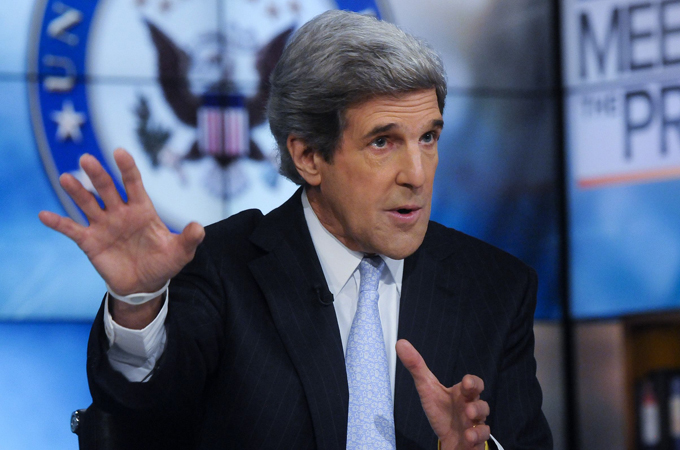
Obama nominates Kerry as secretary of state
US President has named Massachusetts senator as his nominee to succeed Hillary Clinton.US President Barack Obama has nominated Senator John Kerry, a veteran foreign policy hand and former presidential candidate, as his next secretary of state.
Under pressure: Tribes flay restrictions over polio standoff
People of the Wazir and Dawar tribes in North Waziristan on Thursday complained that recent restrictions placed on them had deprived them of their basic rights.
On December 17, North Waziristan’s Political Agent Siraj Ahmad Khan acted upon the directives of Additional Chief Secretary of Fata Tashfeen Khan and asked officials to discontinue all benefits given to both tribes until they agree to vaccinate their children against polio.
Around 0.5 million people are said to have been affected by the decision which was taken after a grand jirga convened by the political administration failed to convince the people to be a part of the immunisation drive. The people belong to Mir Ali, Shawal, Speen Wam, Razmak, Dossali, Garhyo, Miranshah, Data Khel and Ghulam Khan areas.
Security forces are currently engaged in vaccinating and providing treatment to women and children suffering from thalassemia, hepatitis B and C, and cancer. Locals questioned why the government has only placed the curbs over their reservations regarding anti-polio vaccines.
They said their children were confronted with other problems because the political agent has stopped verifying documents for passports and domiciles.
“Our children cannot take admission in schools of Peshawar, DI Khan and other parts of the country after the restrictions,” complained one tribesman. “People intending to travel abroad cannot do so after these restrictions.”
On June 15, a senior Taliban commander in North Waziristan, Hafiz Gul Bahadur, banned anti-polio drives in the agency until drone attacks were stopped. He also said that anyone who did not obey these orders would be “held responsible for their actions.”
On June 25, days after the Taliban announced their ban on polio vaccinations in North Waziristan, the Mullah Nazir group in Wana, South Waziristan also banned polio vaccinations in their agency.
In a pamphlet distributed in Wana, they said Dr Shakil Afridi was the doctor who helped the CIA hunt down Osama bin Laden by conducting a fake polio vaccination programme in Abbottabad and requested parents in the agency to avoid polio vaccinations until drone strikes are stopped.
‘Al-Qaeda involved in deadly Peshawar airport attack, threaten more attacks’
http://www.thenewstribe.com
An al-Qaeda group was involved in one of the most deadly attacks on Peshawar airport, which killed at least 19 people including 10 militants and injured several others, security sources said on Friday. According to the sources, Badar Mansoor group, an al-Qaeda group of Punjabi-origin people, sent 10 fighters to attacks the airport. Qari Hammad of the group planned the attack. Hammad also threatened more attacks on the airport just after the attack concluded. Speaking from the unidentified location, Hammad threatened to send 10 more suicide bombers to launch an assault on the airport again within weeks. “The attack was planned in North Waziristan and Khyber agency,” they said adding that a Corolla car having fake number plate was used in the attack. It is to be mentioned here that on February 10, 2012, US missiles killed the most senior Pakistani in al Qaeda, Badar Mansoor in North Waziristan, an area bordering Pakistan and Afghanistan.
Peshawar on the brink
By Imtiaz GulPeshawar is in the eye of the storm. Regardless of whether the orchestrators belong to Al Qaeda or Taliban, they have demonstrated that the old plan of laying siege around greater Peshawar is still very much in place. Back in early 2009, the Tehrik-e-Taliban Pakistan (TTP) had upstaged the entire security apparatus in and around the provincial capital, triggering fears of an impending siege of the city. "The deadly string of attacks throughout 2009 - on the average a suicide bombing or ambushes every 36 hours - had upset the civilian and the military apparatus to the extent that the ISI and the Peshawar Corps officials had begun playing with the idea of creating a security ring to protect the main town of Peshawar," a former intelligence official had told me then. Recounting one of the meetings attended by all security agencies and the military, the official had expressed his displeasure over what he called the "defeatist mindset" of the military institutions. I asked the proponents of the security ring around Peshawar how they would stop militants if they converged on the city from three sides - ie Khyber, Darra Adamkhel, and Charsadda/Shabqaddar/ Orakzai - in large numbers; and whether we would then wait for them to attack us, he had said. This, said the official, I asked being conscious of the fact that the TTP and other militant outfits have already infiltrated the greater Peshawar region and those "sleeper cells" would in fact provide the social cover in case of a physical invasion of the city. n December 15, we probably witnessed glimpses of such a commando attack - a combination of rockets as a means of distraction, followed by a physical, multi-pronged heavy-armed assault on the premise that houses both the commercial airport and the aviation base of the Pakistan Army. For several hours, city residents shivered in anger, grief and fear, followed next morning with a renewed wave of violence in the form of a shoot-out between police and the five suspects, who it appeared were linked to the raiders of the airport and had managed to slip through the security cordon in the dark of the night. In the end, police and military commandos of the Quick Reaction Force (QRF), which is part of the 11th Corps, put down all ten assailants but not before they had terrorized the entire city, and also exposed the serious preemptive security lacunas that continue to beset responses and question the security establishment's state of preparedness. Military and civilian officials associated with the investigation tell us that the dramatic attacks probably were part of a strategy that would first surprise the security cordons on ground and then activate their assets within the city to mount a rebellion against the state through occupation of strategic locations such as hospitals, airport, and key police stations besides numerous hostage-takings.Officials often dismiss such a scenario, arguing the presence of the entire 11th Corps, backed up by the Frontier Corps, and several thousand police will not allow such an eventuality. Terrorists may disrupt life and security arrangements but cannot hold on for long, they insist. Theoretically this argument holds water. Also, realistically a few hundred terrorists cannot take-over the entire city. But the events between December 15 and 19 - several attacks including the one on the airport, one near the military academy in Risalpur, and several on polio vaccinators in three cities of Khyber Pakhtunkhwa - clearly underscore a stark reality that stares the entire security apparatus in the face. The terrorists are on the loose, many of them nestled inside or around the periphery of Peshawar (where scores of TTP and like-minded terrorists had descended after the Swat and South Waziristan operations in 2009). The airport attack bore the hallmarks of yet another shocking commando raid, reminiscent of the strikes on PNS Mehran Base (May 22, 2011), the GHQ (Oct 20, 2009), the Parade Lane Mosque (Dec 4, 2009), and Kamra airbase (Aug 16, 2012). It left the city of Peshawar in a state of shock and fear, and also raised many questions as to how several layers of preemptive security ie intelligence (both civilian and military) as well as multi-layered physical protective barriers comprising the political administration of tribal regions, Frontier Corps, Frontier Constabulary, and Levies failed in preempting such a brazen raid? Apparently a contingency plan for such an eventuality was missing and hence the chaos on roads leading to and around the areas under attack. People have also begun asking whether the army and the paramilitary are supposed to only protect the Peshawar Cantonment area and whether the police alone can handle a region surrounded by FATA and PATA and the Frontier Regions? Senior police officials believe that the aberrations such as PATA must be abolished. Terrorists, criminals, proclaimed offenders and anti-state elements all use these regions for shelter, training and planning. Strangely, the 2002 Police Order extends to PATA but practically the policing there remains dismal. That is why you find scores of smuggled vehicles and other goods in the PATA areas. Akbar Khan Hoti, the outspoken Khyber Pakhtunkhwa Police chief, believes abolition of PATA regions can hopefully help curtail, if not eliminate, crime and terrorism. We also need additional human and material resources. Currently, the strength of the Khyber Pakhtunkhwa police stands at around 68,000, backed up by some 10,000 contract employees (largely retired army personnel). The second major handicap is the absence of quality training and the equipment required for it. The police, we are told, is acquiring heavy arms to fight the heavily-armed terrorists but training on these weapons is an expensive business. Every single round for a heavy machine gun costs several thousand rupees. The heavy cost-factor essentially limits the training opportunities, say officials. While the authorities may be focusing more on the supply side of the issue ie improving human resources and acquiring modern heavy arms aside, the demand side, ie a comprehensive counter-terror strategy, still remains an elusive goal. Civilian and military officials insist they have a policy but they perhaps confuse training and equipment procurement with a strategy. The response to attacks on several police and strategic installations so far suggests that while the forces manage to kill the attackers, they lack the preemptive capabilities as well as the ability to catch some terrorists alive. How long would the forces need to devise means and develop capabilities to get to the core of terrorists or get them alive when confronting them?

Malala asks Pakistan not to rename college for her
A 15-year-old Pakistani girl who was shot by the Taliban for promoting girls' education has urged Pakistan to reverse a decision to rename a college in her honor to avert militant attacks on students, an official said Friday.
Malala Yousafzai, who became a symbol of youth resistance to the Taliban, made the request after students broke into the school, tore down Malala's pictures and boycotted classes in her home town of Mingora. They said renaming the college endangered their lives.
Senior government official Kamran Rehman said Malala called him from London, where she was being treated for critical wounds from the attack on October 9. The Taliban said it targeted her for promoting education for secular girls.
Malala's case won worldwide recognition for the struggle for women's rights in Pakistan and Taliban have vowed to target her again.
Pakistani Taliban have a strong presence in the country's tribal regions bordering Afghanistan.
A bomb ripped through the office of a local militant commander Maulvi Abbas in Wana, a main town in the South Waziristan tribal region in the northwest, killing him and three of his guards, two intelligence officials said Friday.
Abbas was an associate of Hakimullah Mehsud, the head of Tehrik-e-Taliban Pakistan militant group, they said, speaking on condition of anonymity because they were not authorized to brief reporters.
It was unclear who had planted the bomb. The attack came weeks after a suicide bomber in the same town attacked Maulvi Nazir, a prominent militant commander who is believed to have a nonaggression pact with the army.
Nazir was wounded in the attack, and seven of his men were killed.
Since then there has been tension between followers of Nazir and the Tehrik-e-Taliban Pakistan in the region.
Subscribe to:
Posts (Atom)