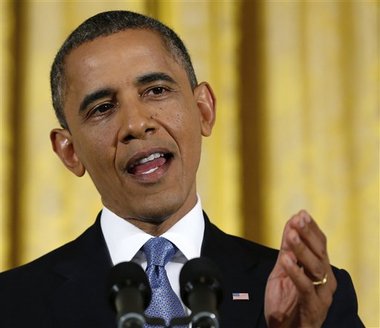
http://worldtribunepakistan.comAmbassador Marc Grossman has said that the US wants to help Pakistan solve its own challenges. While addressing a farewell reception hosted by Pakistan s Ambassador Sherry Rehman, in his honour, at her residence Thursday night, he said “I am sure that the Pakistanis will solve their own challenges in their own way. And the United States of America is proud to support that effort”. He said that the US was willing to establish a broad-based relationship with Pakistani people. “Our attempt to have a relationship with Pakistan is based on people-to-people contact, on business, on Americans and Pakistanis getting together is an extremely important one”, he assured. “When I think about Pakistan and Pakistanis, I think about resilience, I think about a tough people who are very resilient and know very much what they want and want to live in a society of tolerance, and pluralism and democracy, and a society where they can make choices about their own lives”, he remarked. Ambassador Grossman recalled his first posting as a young diplomat in Islamabad from 1977 to 1979 with fondness ad said that the friendships he made then had lasted a lifetime. “When I consider those years in Pakistan, the walks in Margalla hills, the time in Swat, Kaghan, Karachi, Peshawar and Landi Kotal, these were very important parts of my upbringing as a diplomat”, he said while also displaying his limited mastery of Urdu language. He said that his last assignment as the US special representative for Afghanistan and Pakistan had an element of destiny to it. “When Secretary Clinton called me at home two years ago and asked if I would take that responsibility, it kind of completes a circle. There is a certain kismet to this – having started in Pakistan – to come back to Pakistan and Afghanistan”, he maintained. He also paid tributes to Ambassador Sherry Rehman and said that they had “a great relationship to try to reset Pakistan and America ties”. He also appreciated the role played by Ambassador Rehman in the Pakistani society for promoting tolerance, pluralism, and for promoting the rights of women. Thanking her for hosting the reception, he said that “one of the things rightly said about Pakistan is that Pakistanis are known for their legendary hospitality”. He also took the opportunity to thank the people in the US and in Islamabad with whom he worked very closely, including the Pakistani Diaspora in the US. Earlier, in her remarks, Ambassador Sherry Rehman said that Ambassador Grossman has had to deal with an unprecedented crisis in the Pak-US relations. “This bilateral relationship was in a mode of recurring crisis when I came a year ago and weighed down with baggage from 2011. He was quick to agree that the task ahead was challenging but he also agreed that we could navigate it to a zone of steady progress and stability, instead of the cycles of highs and lows. If there is an air of hope and positivity about this critical relationship, a good part of the credit goes to Ambassador Grossman”, she appreciated. Commenting on the Pak-US relationship, she said that both countries were “engaging and hoping that they engage as democracies, sharing not only tangibles of geopolitics that we always do, but the economic and commercial interactions that are so critical to shared values”. “When we say that the future success of core foreign policy agendas are pivoted as much, or more, on investing in societies and people as they are on engaging with states”, she added. “Our task together must be to look to enhancing and broadening our bilateral relationship by creating opportunities for trade and business cooperation, building stronger ties through creative public communication, student exchanges, people-to-people exchanges and by fostering a deeper understanding of the multiple transitions, at least what our society is going through right now”, she said while outlining areas of shared interest. Ambassador Grossman, she said, had shared this vision of relationship as broad-based as well as building on an economic partnership and worked very hard to make it happen. “The five working groups in fact will complete their joint deliberations by the middle of this month. The constant strategic interface on grasping opportunities for a strong and secure Afghanistan and Pakistan, all took a lot of travelling between offices, countries and even continents”, she pointed out. Later, she also presented a Pakistan Embassy memento to Ambassador Grossman as a recognition of his services. Director National Intelligence, James Clapper, Afghan Ambassador, Eklil Hakimi, State Dept officials and other dignitaries also attended. Marc Grossman will spend December 14, 2012 as his last day in office. Deputy special representative, David Pearce, will succeed him.
M WAQAR..... "A man's ethical behavior should be based effectually on sympathy, education, and social ties; no religious basis is necessary.Man would indeed be in a poor way if he had to be restrained by fear of punishment and hope of reward after death." --Albert Einstein !!! NEWS,ARTICLES,EDITORIALS,MUSIC... Ze chi pe mayeen yum da agha pukhtunistan de.....(Liberal,Progressive,Secular World.)''Secularism is not against religion; it is the message of humanity.'' تل ده وی پثتونستآن
Friday, December 7, 2012
‘US wants to help Pakistan solve its challenges’
ElBaradei addresses Egyptians
http://dailynewsegypt.comOfficial Spokesman of the National Salvation Front and Nobel Laureate Mohamed ElBaradei addressed Egyptians on TV Friday night. In his eight-minute speech, ElBaradei said that everyone in Egypt is grieving because of “the current conditions”. He asserted that Egyptians [protesting] on the streets are not moved by an individual or party, but by “their conscience as evident by [January 25 2011] revolution.” He stressed the importance of finding a way “for all to live together” through a “representative constitution and parliament” and this can not be done as “proteste continues” . He explained that one has to understand the reasons behind the anger of the Egyptian people as they feel that the goals of the revolution have not been met. He highlighted the importance of peaceful protesting which he called “the greatness of our revolution” and warned of any group instigating more bloodshed. He asked President Mohamed Morsy to revoke the constitutional declaration “which almost all Egyptians are against”and to delay the constitutional referendum until Egyptians reach a consensual constitution. “I hope Dr. Morsy has listened to the people’s voice in the last two days [and] to ease current tension.” El-Bardei asserted that Egypt encompasses all Egyptians, Muslims, Copts, Nubian and Muslim brotherhood members and all have move forward to “build” the country. “I bet on [Morsy's] patriotism…and if he takes [these two]steps, Egyptians will respond and we can move from this angry phase to a dialogue.” He assured that Egypt had passed some “tough conditions” throughout history , but Egyptians prevailed because they are a great nation. “I am happy and proud to be an Egyptian.”
Egypt Protesters Threaten Presidential Palace
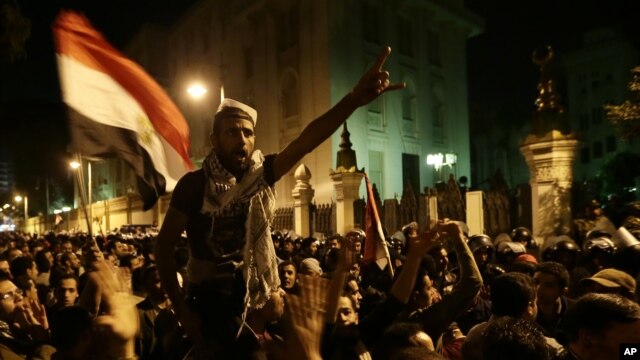
Egyptian President Mohamed Morsi's opponents have broken through barbed-wire cordons around the presidential palace in Cairo, where tens of thousands of protesters have gathered.
It was not immediately clear whether protesters penetrated the main gate of the palace, where army tanks are deployed. Cairo was gripped by protests against Morsi and demonstrations by his supporters throughout the day Friday.
Thousands of Morsi supporters, many of them members of his Muslim Brotherhood, gathered outside the Al-Azhar mosque for the funerals of two men killed in bloody clashes this week.
VOA's Cairo Bureau Chief Elizabeth Arrott, says anti-Morsi protesters gave no indication they plan to end their rallies any time soon. “They say as long as he is planning on going ahead with this controversial draft constitution and referendum on it next week, as well as keeping hold of these extraordinary powers that he’s granted to himself temporarily, there’s no basis for dialogue,” said Arrott.
The head of the National Salvation Front, Mohammed ElBaradei, says the president's refusal to compromise has created what he calls "a disaster."Angry protests
Protesters like Hussein Zayed say they have had enough. "[President Morsi] doesn't know anything, and he described all Egyptians as 'thugs,'" said Zayed. "He is a liar and he said that those who killed the protesters are thugs, but the real thugs are the Muslim Brotherhood.''
Other Cairo residents say it is time for the opposition to play by the rules. One man, named Osama, says the referendum on the constitution should go ahead. Osama asked, "Don't the liberals want democracy? ...Don't they agree with going to the ballot box?"
Osama said that if the referendum on December 15 produces a "yes" vote on the constitution, that will be because Egyptians want "stability." But, he added, "those protesters [over there] don't ever want stability.''
VOA's Arrott says the situation remains dangerous, with plenty of potential for more clashes. “The police and other security on Wednesday were able to put a line between the two [opposing groups] on the main street, but again most of these clashes just moved off onto the side streets and continued on there.”
New protests have also broken out in Alexandria, where hundreds of people massed in the streets called on Morsi to step down.
Opposition leaders said Friday they will not attend Morsi's proposed "comprehensive" dialogue on Saturday. The Egyptian leader has insisted that dialogue is the only solution to the country's constitutional crisis.
Morsi stands firm
Speaking on national television Thursday, Morsi said he will not tolerate killings or sabotage. Morsi said seven people were killed outside the presidential palace and more than 700 others were injured during this week's demonstrations. The president said 80 people were arrested for crimes including the use of firearms, and he claimed so0me of them were "hired for money."
U.S. President Barack Obama spoke with Morsi by telephone Thursday to voice "deep concern" about the protest deaths and injuries. A White House statement said Obama also urged all Egyptian political leaders to make clear to their supporters that violence is unacceptable.
Morsi said he will form a new advisory panel to write a new draft constitution if the referendum next week votes "no" on the proposed charter. Critics say the present draft constitution was drafted solely by Islamists, without input from those who disagree with Morsi.
In articles explicit and vague, Egypt draft constitution allows widespread use of Islamic law
One of Egypt's most prominent ultraconservative Muslim clerics had high praise for the country's draft constitution. Speaking to fellow clerics, he said this was the charter they had long wanted, ensuring that laws and rights would be strictly subordinated to Islamic law.
"This constitution has more complete restraints on rights than ever existed before in any Egyptian constitution," Sheik Yasser Borhami assured the clerics. "This will not be a democracy that can allow what God forbids or forbid what God allows."
The draft constitution that is now at the center of worsening political turmoil would empower Islamists to carry out the most widespread and strictest implementation of Islamic law that modern Egypt has seen. That authority rests on the three articles that explicitly mention Shariah, as well as obscure legal language buried in a number of other articles that few noticed during the charter's drafting but that Islamists insisted on including.
According to both supporters and opponents of the draft, the charter not only makes Muslim clerics the arbiters for many civil rights, it also could give a constitutional basis for citizens to set up Saudi-style "religious police" to monitor morals and enforce segregation of the sexes, imposition of Islamic dress codes and even harsh punishments for adultery and theft — regardless of what laws on the books say.
The spiraling crisis is threatening to turn into an outright fight for the identity of post-revolutionary Egypt, splitting the nation between those who want an Islamic state and those who oppose it, two years after the fall of autocrat Hosni Mubarak.
For Islamists, the constitution is the keystone for their ambitions to bring Islamic rule, a goal they say is justified by their large victory in last winter's parliamentary elections. President Mohammed Morsi, who hails from the Muslim Brotherhood, has rejected opposition demands that he cancel a Dec. 15 nationwide referendum on the draft.
"Egypt is Islamic, it will not be secular, it will not be liberal," thousands of Morsi supporters chanted Friday after the funeral of two men killed in clashes earlier this week. Witnesses say the violence began when Islamists attacked an anti-Morsi protest camp outside the presidential palace.
"Bottom line, this is a struggle between ideologies — the Islamic ideology moving with a clear plan with public support, and the secularists," said pro-Morsi demonstrator Khaled Omar, his head bandaged from Wednesday's fighting. "We are defending Islam, which people want."
The opposition is determined to stop the draft, and thousands marched for a third straight day Friday on the palace.
The Brotherhood is "unleashing its gang chanting jihadi slogans, as if they are in a holy war against the infidels," said businessman Magdi Ashri, who opposes Morsi. "Their agenda is to monopolize power in Egypt, whatever it takes."
Egypt's Islamist-dominated Constituent Assembly debated the draft for months, until most liberal members — and all the Christian ones — walked out to protest what they called hard-liners' railroading of the process.
Islamists rammed through approval of the final draft in an all-night session Nov. 30. Of the 85 members who voted, 80 percent were members of the Muslim Brotherhood or the ultraconservative movement known as Salafis, or their allies.
Some Salafis had been reluctant about the draft because they wanted more explicit commitments to Shariah. But several days before the assembly session, Borhami — who is also an assembly member — assured them that what they sought was there, hidden in subtler language.
He said that by defining Egypt's political system as "democracy and Shura" — the Islamic term for "consultation" — the draft prevents what he called an "American or European" democracy that "gives the power of legislation to people and not to God."
Before liberals and Christians quit the panel, Islamists convinced them to allow a number of crucial clauses that solidified Shariah, either because of bargaining or because they didn't realize the articles' significance, he said.
"They didn't understand it well at first," he told the clerics, according to a full video of his speech posted on YouTube. "They only got it later and that's why they said it was disastrous."
How much some of the Shariah provisions in the constitution come into effect depends on who would be implementing it. And attempts to use some of its provisions would likely bring court battles over what the constitution really allows. But Borhami expressed confidence the courts would be obliged by the charter to allow a widespread implementation of Shariah.
Three articles of the more than 230-article draft mention Shariah directly.
Article 2 states that the "principles of Shariah" are the main source of legislation, the same phrasing as past constitutions. The vague term "principles" previously gave lawmakers so much leeway that they could almost ignore tenets of Islamic law. As a result, Islamic law largely only governed rules on marriage, divorce and inheritance.
But at the insistence of Salafis, Article 219 was added, defining the principles of Shariah for the first time. It says the principles are based on "general evidence, fundamental rules of jurisprudence, and credible sources accepted in Sunni doctrines and by the larger community."
The language is obscure, drawn from the terminology of religious scholars and largely incomprehensible to anyone else.
But "it is like a bombshell," says Mohammed Hassanein Abdel-Al, constitutional law professor at Cairo's Ain Shams University.
The article means that laws passed by parliament must adhere to specific tenets of Shariah that the four main schools of Sunni Islam agree on. That could include banning interest on loans, forbidding mixing of genders, requiring women to wear headscarves and allowing girls to marry when they reach puberty.
"The doors are wide open to restrict individuals' freedoms," Abdel-Al said.
Another new article says clerics from Al-Azhar, Egypt's most prominent Islamic institution, are "to be consulted on any matters related to Shariah," implicitly giving them oversight in legislation.
Other articles give sweeping powers for implementing Shariah, without directly mentioning it, often through subtle additions introduced by Islamists.
Article 10, for example, commits both the state and "society" to protecting "the moral values" of the "true Egyptian family."
The vague language empowers private citizens to enforce Islamic morals, Abdel-Al said. It could even give a constitutional justification for the creation of religious police, known as commissions "for the promotion of virtue and prevention of vice."
"If I'm walking with my wife and her face is not covered or she's not wearing a headscarf, a man can come up and order me to cover her. I can't protest or object because the constitution instructs him to do so," Abdel-Al said.
Borhami pointed to Article 76, which he called "amazing." Originally the text said the only crimes and punishments can be those set by law. But Islamists amended the phase to "by law or by virtue of constitutional text."
As a result, punishments could be implemented based on the constitution's Shariah clauses even if they are not passed into law by parliament, such as bans on adultery and bank interest, Borhami said. Abdel-Al agreed on the article's effect.
The charter includes a section on personal rights, including guarantees of freedom of belief, creative and political expression and the press. The section also bans arrests and searches without court order and explicitly forbids torture for the first time. Many of the rights are more firmly worded than past constitutions under Mubarak and his predecessors.
But the section's final article says those rights cannot be implemented in a way contradicting the charter's articles on Shariah and protection of morals — giving a tool for Islamists to limit the freedoms. "These human rights are now restricted by Article 2," Borhami said.
The charter has a broad clause saying all citizens are equal, but an article specifying women have equal rights to men was dropped amid squabbles over the wording, and the article on children's rights is vague, experts say.
Overall, the draft leaves it unclear who is "the final authority in law and its interpretation — the elected parliament, the senior clerics or the judiciary," economist and former lawmaker Ziad Baha el-Din wrote in the independent El-Shorouk newspaper Wednesday.
The charter also limits the mandate of the Supreme Constitutional Court, which is seen as one of the strongest opponents of Islamists. Islamists also wrote in a last-minute article shrinking the court to 11 judges, from 18, eliminating its younger members.
That removes some of the fiercest anti-Islamist judges on the body, such as the court's only female judge, Tahani el-Gibali.
Youth activist Mahmoud Salem warned in his blog that "if this constitution is passed, Cairo will truly become Kandahar, with the blessing of the Egyptian president and the Muslim Brotherhood" — referring to the home city of Afghanistan's Taliban movement.
Tensions high after thousands march in Cairo
Al Jazeera
Protesters in the Egyptian capital and other cities rally against plans to go ahead with constitutional referendum.Thousands of Egyptians have marched towards the presidential palace in Cairo for another day of demonstrations against the government, while thousands of his backers gathered for a funeral of two men killed in recent clashes. As many as 10,000 protesters who were penned behind a barrier at the palace broke through barricades on Friday evening, climbing onto army tanks and waving flags as they chanted slogans against President Mohamed Morsi. Republican Guard soldiers did not engage with the protesters who broke through the barrier, and protesters, in turn, did not attack them. Morsi was not at the palace. Morsi's supporters, meanwhile, were teargassed when they attempted to storm the studios of private television news channels they deemed to be biased against the president. The protests on Friday came as the country's main opposition groups rejected Morsi's call for a national political dialogue to resolve the political crisis. Rival rallies were also held in Alexandria and Luxor, and some violence was reported from a demonstration outside a Muslim Brotherhood office in the Nile Delta city of Kom Hamada. Protests also took place in Mahallah and Assiut. In an overnight address to the nation, Morsi pledged to forge on with a controversial constitutional referendum process. The president condemned the street violence that has gripped the capital following protests against an earlier decree that put presidential orders beyond judicial review. He called the recent violence "regrettable", and blamed it on "infiltrators" funded by unnamed third parties. Rejecting Morsi's call for dialogue, Ahmed Said, one of the leading members of the opposition coalition, who also heads the liberal Free Egyptians Party, said: "The National Salvation Front [NSF] is not taking part in the dialogue, that is the official stance." Khaled Daood, a spokesperson for the NSF, told Al Jazeera the coalition was demanding that Morsi delay the vote on the draft constitution and rescind his presidential decree granting himself greater powers before any dialogue. Mohamed ElBaradei, a prominent opposition leader whose party is a member of the NSF, also urged political forces to shun the dialogue process. The liberal Wafd party added its voice to that call. Early voting postponed Opposition groups have said they will step up their campaign against the decree and the referendum set for December 15. Early voting in the referendum, however, was postponed, and will now open on Dec 12, rather than Dec 8 as originally planned. Morsi's government said on Friday that the date of the referendum could not be changed by the president, and was decided by the country's High Electoral Commission. The NSF pledged that any anti-Morsi protests would be peaceful. Soldiers and riot police have been deployed outside the palace to prevent protesters from approaching the building. Dozens of tanks and armoured vehicles, as well as barricades of barbed wire, form a ring around the compound. At the funeral held by Morsi's supporters after midday prayers at the al-Azhar mosque, Egypt's most respected Islamic institution, a cleric declared anti-Morsi protesters to be "traitors". Mourners yelled that opposition leaders were "murderers". The president's remarks overnight were his first comments to the public after bloody clashes outside his palace on Wednesday. Thousands of backers of the Muslim Brotherhood, the organisation Morsi resigned from on becoming president, fought with his opponents, resulting in at least six deaths. At least 700 people were also wounded. The speech brought shouts of "the people want to topple the regime!" from the crowd of 30,000 Morsi opponents gathered outside the palace - the same chant heard in the protests that brought down former president Hosni Mubarak in 2011. In response to the speech, ElBaradei held his own televised press conference, saying that Morsi's government showed reluctance in acting to stop Wednesday night's bloodshed outside the palace. He said this failure has eroded the government's legitimacy and made it difficult for his opposition front to negotiate with the president. At least four of Morsi's advisers have resigned over the crisis, and the Cairo stock market has fallen significantly. On Friday, the prosecution released 138 out of 150 people detained during the clashes between pro and anti-Morsi supporters on Wednesday.
President Obama's approval ratings rise since winning re-election
By The Associated PressA month after the bitterly fought election, President Barack Obama has his highest approval ratings since the killing of Osama bin Laden, according to an Associated Press-GfK poll, and more Americans say the nation is heading in the right direction now than at any time since the start of his first term. Obama's approval rating stands at 57 percent, the highest since May 2011, when U.S. Navy SEALs killed the terror leader, and up 5 percentage points from before the election. And 42 percent say the country is on the right track, up from 35 percent in January 2009. A majority think it's likely that the president will be able to improve the economy in his second term. "Compared to the alternative, I'm more optimistic about government and the economy with him in office," said Jack Reinholt, an independent from Bristol, R.I., who backed Obama in 2008 and again in 2012. "I feel he has the better path laid out." Still, four years of partisan conflict in Washington have taken a toll on the president's image. "I'm less enthusiastic about him than the first time he was elected," Reinholt added. Americans are divided on what kind of president Obama has been, with 37 percent saying he's been above average or outstanding and 36 percent describing his tenure as below average or poor. Another quarter say he's been just average. Obama held much stronger numbers on this measure at the start of his first term, with two-thirds expecting an above-average presidency. And the public's take on Obama's relative performance has bounced back and forth over his four years in office, moving higher following the death of bin Laden, after declining in the summer of 2010, a few months before the GOP took back control of the House. Looking ahead to Obama's final four years, most Americans doubt he can reduce the federal budget deficit. But almost 7 in 10 say he will be able to implement the health care law passed in March 2010 and remove most troops from Afghanistan. And most think he'll be able to improve the economy and boost race relations in his final term, though both those figures are down significantly from January 2009. About a quarter say the economy is in good shape in the new poll, similar to pre-election poll results, but optimism about the economy has dipped since before the election. In October, 52 percent of Americans said they expected the economy to get better in the next year; now, that stands at 40 percent. Among Republicans, the share saying the economy will improve in the coming year has dropped sharply since before the election, from 42 percent in October to 16 percent now. "The economy, if left alone, will gradually improve because of our people wanting to better themselves and make more money," said Bobby Jordan, 76, a Romney voter from Green Valley, Ariz. "They're going to be doing things to improve their own position, which will collectively mean the economy will gradually get a little better. But (Obama's) not doing anything to improve the economy." Overall, the public gives Democrats the advantage on handling the economy, 45 percent saying they trust the president's party to do a better job on it, 39 percent favoring Republicans. As Obama took office four years ago, Republicans were mostly optimistic about his chances for improving the economy, with nearly 7 in 10 saying it was likely the new president could improve it in his first four years in office. Now, just 21 percent of Republicans feel the next four years are that promising. Independents, too, have grown skeptical about Obama's ability to turn around the economy. About three-quarters thought he could fix it in 2009; just a third do now. Those sharp partisan divides in expectations are represented in the president's approval ratings. About 9 in 10 Democrats say they approve of the way Obama is handling his job, compared with just 2 in 10 Republicans. That gap approaches the 82-point partisan gap in George W. Bush's approval ratings according to Gallup polling in December 2004. The Associated Press-GfK Poll was conducted Nov. 29-Dec. 3 by GfK Roper Public Affairs and Corporate Communications. It involved landline and cellphone interviews with 1,002 adults nationwide. Results for the full sample have a margin of sampling error of 3.9 percentage points; it is larger for subgroups.
After 10 years of Karzai's rule, has life improved in Afghanistan?

Many Afghans see dark clouds of uncertainty looming over the calendar as the 2014 deadline approaches for most foreign troops to withdraw, and worry that after that the international community will abandon them.
Over the last decade, billions of aid dollars have flowed into Afghanistan, and thousands of foreign soldiers and tens of thousands of civilians have died during the effort to bring peace and a modicum of prosperity to the country. Meanwhile, the government of President Hamid Karzai has passed laws meant to improve the lives of his citizens. Nevertheless, Afghanistan still faces huge problems, such as widespread violence, official corruption, grinding poverty and a booming narcotics trade.“Plagued by factionalism and corruption, Afghanistan is far from ready to assume responsibility for security when U.S. and NATO forces withdraw in 2014,” think tank International Crisis Group said in a recent report.
Visit NBCNews.com for breaking news, world news, and news about the economy
SecurityThe Taliban are regaining land and power lost after they were toppled by U.S.-backed forces in 2001. While there have been more than 2,000 American military casualties during this time, civilians have borne the brunt of the violence. In the first six months of 2012 alone, more than 3,000 civilians were killed or injured, according the United Nations. This number was down 15 percent from a year earlier. Anti-government and coalition insurgents were responsible for 80 percent of the civilian casualties, the U.N. says.More than 300,000 Afghan National Army soldiers and Afghan National Police members have been trained to replace foreign soldiers. Afghan security forces face big challenges, such as attrition, illiteracy and insurgent infiltration. Poverty and corruption Most Afghans are not just living in fear of an insurgent attack or NATO airstrike. They fear hunger and worry that they and their families won’t survive another winter. Afghans are among the poorest people on earth. According to the World Bank, per capita GDP was around $576 in 2011, up from $158 in 2002. More than half of children under the age of five are malnourished, according to the World Food Program. Afghanistan remains largely dependent on foreign aid – the World Bank says that 90 percent of the country’s national budget is still financed by governments and other foreign organizations. Along with the huge inflows of foreign aid and poverty is corruption: the country is tied with Somalia and North Korea at the bottom of Transparency International’s Corruption Perception Index 2012. A 2012 United Nations Office on Drugs and Crime report estimated that Afghans paid $2.5 billion in bribes over 12 months, which is equivalent to almost a quarter of the country’s GDP. Women In 2001, Afghan women were the poster children for the invasion. Promises poured in to help half of the society that was brutalized and banished during the Taliban. Despite the pledges, Afghanistan remains one of the most difficult places in the world to be a woman: it has one of the highest levels of maternal mortality and, according to U.N. estimates, around 90 percent of women suffer from some sort of domestic abuse.
Visit NBCNews.com for breaking news, world news, and news about the economy
Nevertheless, there has been some progress. In 2004, President Karzai signed into law a new constitution granting equality among all its citizens and ensuring women’s rights. And in 2009 the country passed the Elimination of Violence Against Women Law, intended to protect women from abuse, rape, and forced marriages. While the laws were all positive steps such legislation is rarely enforced. The ministry of women’s affairs in Kabul says that from April through July of this year at least 3,600 cases of violence against women were recorded. However, this grim number may be seen as a sign of progress because it means more families and women are learning about their rights and reporting their grievances. Drugs Afghanistan has long-produced about 90 percent of the world's opium, a paste from the poppy plant that is mad into make heroin. At the end of the Taliban’s rule, the government worked with the U.N. to cut production by around 90 percent. In the last decade, opium production increased again. It is now the largest source of export earnings and accounts for half of Afghanistan's GDP, according to humanitarian news site AlertNet. All hope is not lost in Afghanistan, progress has been made in small steps rather than the giant leaps expected when United States-backed forces toppled the Taliban. In 2001, girls were denied an education under the Taliban regime and only 900,000 children were enrolled in school throughout Afghanistan. Today, at least 7 million children are attending classes and 2.5-million are estimated to be girls, according to Amnesty International. In the cities, you see women in the workforce again, doctors, politicians and even business owners. Still, many fear that these delicate gains will disappear as the last foreign combat troops leave Afghanistan on Dec. 31, 2014.Majority Of Afghan Refugees In Pakistan Unwilling To Return
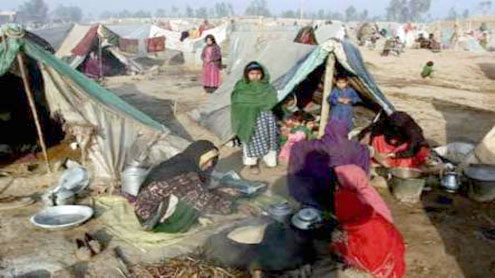
More than 1.6 million Afghan refugees registered in Pakistan are due to be repatriated by the end of the year.
But with just three weeks to go, a recent United Nations survey found that roughly 80 percent have no intention of returning to Afghanistan.
According to the survey, most Afghan families living in Pakistan feel Afghanistan is just not safe enough to go back home. Others cited the inability to earn a living and the lack of anywhere to live in their native country.
Pakistani Minister for States and Frontier Regions Shaukat Ullah acknowledges the challenges involved in convincing refugees to return to their country after decades of living in Pakistan.
"After 32 years if a person is returning from a country where he has been born and he is going to a country like Afghanistan they will think 100 times," Ullah says.
Since the Taliban takeover of Afghanistan in the 1990s, Pakistan has hosted one of the largest refugee populations in the world. Some 3.8 million refugees have crossed back over the border into Afghanistan.
The UNHCR has offered plastic buckets, soap, blankets, cash, and a one-way ticket for those still living in Pakistan, and succeeded in encouraging another 72,000 people to return to Afghanistan this year.
But there are still 1.6 million official Afghan refugees in Pakistan.
UNHCR representative Neill Wright says that organization is waiting to hear what Pakistan has planned for these refugees after the December 31 deadline.
"I know that the government is very actively engaged in considering what its policy will be in terms of the management of Afghan refugees in 2013, and in terms of supporting this continued partnership that we have with Afghanistan over voluntary repatriation, and I look forward to hearing what that strategy will be," Wright says.
Responding to concerns that there will be another wave of refugees from Afghanistan after international combat forces leave the country in 2014, Wright says contingency plans are under consideration.
"This is clearly an issue that I am involved in discussions with many people, senior politicians, people in Afghanistan, members of the international community," Wright says. "Of course, when you do contingency planning, you look at a worst case scenario and you look at a best case scenario, and if you are sensible you will probably look at something in the middle."
He declines to give any further details.
Many Afghan refugees live in very poor conditions in Pakistan.
According to the UNHCR, less than one-quarter of them work, and almost three-quarters of Afghan children are not going to school.
India wants strong and prosperous Pakistan
timesofindiaPrime Minister Manmohan Singh on Friday said India would like to see a "strong, stable and prosperous" Pakistan and that he was happy to see democracy flourish over there as he received a parliamentary delegation from that country. Singh also told the delegation led by chairman of Pakistan's Senate Syed Nayyer Hussain Bokhari that closer relations between parliaments in the two countries was necessary for strengthening bilateral relations. "Welcoming the resumption of dialogue process, Prime Minister said India would like to see a strong, stable and prosperous Pakistan and was happy to see democracy flourish over there," a statement from Pakistan high commission here said. Bokhari felt parliamentary diplomacy would be "more beneficial" in improving ties between the two nation as members of parliament represent the aspirations of the people. "We had a very good meeting. We discussed bilateral issues. It is a positive thing that the two countries are talking so that relations could improve," Bokhari told PTI after a 45-minute meeting with the Prime Minister. Besides the Prime Minister, the delegation, which is here at the invitation of Rajya Sabha chairman Hamid Ansari, also met external affairs minister Salman Khurshid, Lok Sabha Speaker Meira Kumar, leader of the opposition Arun Jaitley and president of Indian Council for Cultural Relations Karan Singh. "We discussed the areas in which there are impediments which should be resolved," he said. The delegation also met President Pranab Mukherjee who expressed satisfaction over the enhanced parliamentary exchanges as well as forward movement in areas such as trade, culture and people-to-people contacts. "The President stressed on the need for the two countries to build on convergences and narrowing divergences," the statement said.
US diplomat writes and sings Pashto song for Malala
Jenaiy from Black Box Sounds on Vimeo.
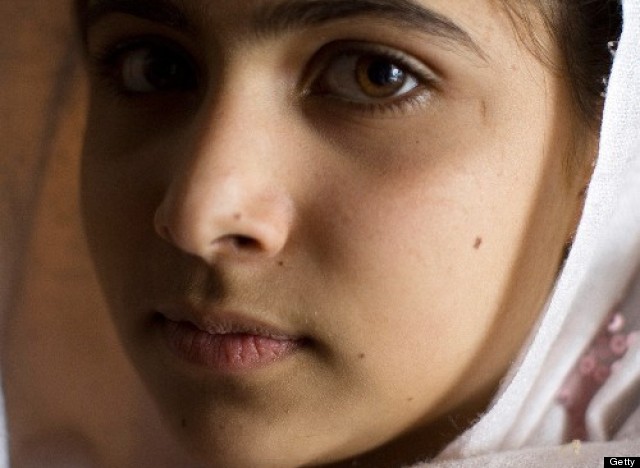
A US diplomacy official has written and sang a Pashto song “Jenaiy”, which means “girl”, as a tribute to Malala Yousufzai, the teenager who was shot in the head by the Taliban for promoting education for girls. She has taken a novel approach to diplomacy in Pakistan – singing in a local language to build bridges, where anti-Americanism runs rampant. Shayla Cram, a public diplomacy officer assigned to Peshawar, the gateway to al Qaeda and Taliban strongholds in the northwestern tribal belt, has not only learnt Pashto but has penned her own Pashto-style song. It features Cram on guitar and vocals and a Pakistani musician, Sarmad Ghafoor, on the rabab — a traditional stringed instrument — and urges girls to have hope for the future and pursue their dreams. “There’s definitely need in Pakistan to encourage young girls and females in their education and leadership, to make them young leaders, and that’s the basic message of my song,” Cram told AFP. Women in Pakistan, particularly in northwestern rural areas, are frequently treated as second-class citizens, subjected to horrific violence in the name of family “honour”, and denied education. Nationwide, fewer than half of women can read and write and militants are violently opposed to girls going to school — as showed by the October attack on Malala, now recovering in Britain. Despite the anti-American feeling, Cram says the song has had a good response so far. She now plans to work with local musicians to record a whole album in other Pakistani languages. “I would say 97 percent has been overwhelmingly positive and the other few people who have said that (given negative reactions), for example on our embassy Facebook page, are always our harshest critics no matter what we do,” she said. Pakistan-US relations are on the rebound from a series of crises in 2011 that saw a CIA operative held for double murder, Osama bin Laden killed by US troops and botched air strikes kill 24 Pakistani soldiers. Peshawar is regularly hit by militant bombings, including a deadly suicide attack on a US government convoy in September — and American diplomats’ movements are tightly controlled due to security worries. Reaching out across the airwaves is a cheap and easy way to get around the frustrations of restrictions to make contact with people, Cram says. “How can you do that for example in Peshawar when you can’t leave the (consulate) gates? How do I reach someone’s heart and let them know who I am and what I’m about as an American when I can’t physically go out?” she said. “One of the most effective ways I think is through music, because it’s something people can connect to and understand in a simple way.” The 29-year-old is no stranger to the musical limelight — she taught herself the guitar while working in west Africa, writing songs about HIV/AIDS and child trafficking that were still played on Togolese radio after she left the country. While the embassy has been supportive, Cram received no financial assistance. “Jenaiy” was recorded in a studio with the help of Pakistani friends in the music industry, and a slick video was shot in someone’s garden on the edge of Islamabad. The track has been sent to radio stations across the northwest. Pashtun culture has a rich and vibrant musical tradition, but critics warn Cram faces a tough task in trying to win over the public. Sher Ali, a music journalist for English-language newspaper The Express Tribune, said success would depend on how much air play the track gets. “The key is to get on the regional networks which connect to people in the grass roots,” he told AFP. “The music is very mainstream and will connect with a certain class of urban listener, but Pakistan is very divided and a lot of the population you want to connect to with this message is working class or in rural areas.” Rasheed Safi, head of news at Buraq Radio, one of the biggest stations in the northwest, welcomed Cram’s efforts but said her accent — picked up from her Afghan teachers in the US — might put listeners off. “This is a good attempt and I appreciate that a US diplomat has learnt Pashto language and then sung a song, but the accent is Afghani which is less attractive for Pakistani Pashto music lovers,” he told AFP.Pakistan: Polio outbreak reveals gaps in vaccination
Pakistan has made this year in wiping out polio. There are signs that one type of poliovirus is gone and transmission of other strains seems to be slowing, according to a report in the NPR. But a recent outbreak of polio there has health officials concerned about the overall effectiveness of the effort to eliminate polio in that country.
The World Health Organisation says 10 cases of so-called were reported in Pakistan between the end of August and the end of October.
What’s that? The oral polio vaccine contains a weakened version of the virus. In very rare instances — and when a population is not well immunised — the weakened virus can circulate in the community, mutate and infect unvaccinated people, causing paralysis. This is known as a vaccine-derived polio.
One of the big problems in the polio eradication campaign is that the cheapest, easiest to use vaccine — the oral polio vaccine — has a small risk of causing polio. An outbreak in a remote area of Pakistan which has health officials appears due to this cause.
Many experts say it is now time, with the numbers of polio cases as low as they’ve ever been, to shift to using only the injectable vaccine. It will cost more and require trained health workers but the success of this campaign to wipe out polio may depend upon it now.
Fully immunised kids are protected against both vaccine-derived and wild polio. So the problem isn’t so much with the vaccine as it is with gaps in immunization.
This is the first time that vaccine-derived polio has been detected in Pakistan. The cases appeared in the north of the province near the Afghan border.
WHO officials say the outbreak, involving a variety of the virus called type 2 polio, illustrates that vaccination campaigns in the area are failing to reach sufficient numbers of people.
Wild strains of type 2 polio were eradicated globally in 1999. However, a new strain of vaccine-derived polio emerged because the vaccine continued to contain the old type 2 viruses and it managed to spread to people who weren’t adequately immunised against it.
Vaccine-derived type 2 polio can spread in the environment in the same way as the more common type 1 or type 3. It has the same paralyzing effects on infected people as other forms of the disease.
Pakistan, Afghanistan and Nigeria are the only countries in the world where polio remains endemic.
The government of Pakistan launched an aggressive campaign this year, in partnership with international health organizations, to and carefully monitor the virus’s spread.
A previously unknown strain of polio found in two districts of Pakistan’s Balochistan province prompted recent requests to launch a polio vaccination campaign within 30 days.
Health officials reported 10 new cases of Sabin-like type 2 poliovirus in the Qilla Abdullah and Pishin districts. The outbreak is made more troubling by the presence of groups in the area that are against the anti-polio movement,
The districts are frequented by people from the troubled areas of Fata,” Zohra Yusuf, the chairperson of the Human Rights Commission of Pakistan, said. “The situation is grim because of refusal by parents to get their children vaccinated against the crippling disease as the areas are under the influence of extremist groups opposed to the anti-polio drive. The extremists belonging to Lashkar-i-Jhangvi and Tehrik-i-Taliban Pakistan have established their cells in Balochistan and warn people against vaccination of their children.”
Yusuf said an HRCP visited the two districts in May and found that people coming from Khyber Pakhtunkhwa and other tribal areas likely brought the virus with them.
Nawaz must be investigated in Asghar Khan case
Pakistan Tehreek-e-Insaf (PTI) Information Secretary Shafqat Mahmood asked the government on Thursday to implement the Supreme Court’s judgement in the Asghar Khan case and direct the Federal Investigation Agency (FIA) to investigate all politicians accused of receiving money for the 1990 poll fraud.
Reacting to the Pakistan Peoples Party’s (PPP) senior leader Khurshid Shah’s admission that the government would not investigate Nawaz Sharif in the case, Shafqat said the cat was out of the bag and the secret alliance between the PPP and the Pakistan Muslim League-Nawaz (PML-N) had been fully exposed.
Khurshid had told media on Wednesday that the government did not plan on holding an inquiry into the allegations that Nawaz had received money from intelligence agencies in 1990, as ordered by the Supreme Court. He also said that the case had now been buried.
Shafqat added that the Supreme Court had issued clear directives that all politicians involved in receiving money from the ISI, to rig the 1990 elections, should be investigated by the FIA.
He said the expose by Khurshid was nothing new for the PTI workers, as Imran Khan had already told people that the leadership of both political parties was hand in glove, and they had no intentions of exposing each other’s misdeeds.
“Both parties have been covering up each other’s misdeeds,” he added.
He said that it was pity that the PPP, who had blamed Nawaz for receiving money from the ISI to rig the 1990 polls, was now covering up PML-N’s malpractices.
The PTI leader said the people would never allow these politicians to scratch another’s backs and if no action was taken against the politicians involved then the PTI would decide its future strategy accordingly.
Malala makes it to Time's 100 list
Malala Yousafzai stands at the 15th slot after securing around 300,000 votes in her favor in the selection of Time Magazine's 100 Most Influential People in The World list for 2012.
Malala Yousufzai is the courageous 15 year-old Pakistani girl who stood up against the Taliban for education for girls. She, along with her two classmates, sustained bullet wounds when Taliban militants attacked her school van in Swat.
The final outcome of the Time Magazine's list will be made public on December 31 while the voting will continue till 12th.
The present position of the vote puts North Korea's leader Kim Jong Un on the top slot who has left other contenders behind by a big margin with 4.3 million votes in his support.
Jon Stewart - an American political satirist, writer, television host and actor - is holding the second position with around 1 million votes.
US Secretary of State, Hillary Clinton has so far bagged nearly 550,000 votes and ranks 9. Egypt president Mohammed Morsi holds 11th while Syrian president Bashar al-Assad is on 14th position.
Balochistan : What is a “Deet Government”?
The Baloch Hal
By: MALIK SIRAJ AKBARIn his most scolding language ever used to describe the abysmal performance of the Balochistan government, the Supreme Court Chief Justice, Iftekhar Mohammad Chaudhary, has billed Nawab Aslam Raisani’s administration as absolutely ‘deet‘ [utterly incompetent]. The top judge looked upset because no amount of criticism and court orders have helped to persuade the Balochistan government to improve its performance. In an earlier verdict in October, the Supreme Court, while hearing a case of the Balochistan Bar Association about the state of law and order in the province, said that the provincial government had lost its ability to rule the province. The judgement initially led to naive speculations that the ruling Pakistan People’s Party would ask Raisani to step down or the court would order his ouster, as was seen in the case of the former prime minister Syed Yousaf Raza Gilani. In addition to its existing problems, the government was immediately caught up in a fresh constitutional crisis when the Speaker of the Balochistan Assembly Muhammad Aslam Bhootani refused to chair further sessions of the Assembly because, in his words, the government’s legal status had become controversial after the apex court ruling. As the tug of war divided the government, Raisani still succeeded in obtaining a vote of confidence from the provincial parliament. The vote of confidence, however, does not in any way suggest the stability and popularity of the Raisani government. The Chief Minister has developed two major opponents: Speaker Bhootani and Saddiq Umrani, the provincial president of the P.P.P. who believes his party is beating a dead horse by supporting an incompetent man like Raisani. On his part, Raisani has avoided responding to hard questions (relating issues of governance) by presenting himself in the public as a joker and a man known for his (sick and dry) humor. Some other reports suggest that Raisani has been planning to avenge Speaker Bhootani by bringing a vote of no-confidence against the king-maker politician. But the C.M. does not have the support from his coalition partners for his initiative. The Jamiat Ulema-e-Islam (J.U.I.), which has closer and older ties with the P.M.L.Q as compared to the P.P.P. in Balochistan, appears least enthusiastic about a vote of no-confidence against the Speaker because the J.U.I. believes such a confrontational move will deepen the ongoing crisis in the province. The constitutional crisis in Balochistan is already very serious; if it gets worse, we may have face the C.M.’s expulsion by President Asif Ali Zardar who will ultimately impose the governor’s rule in the province. While preparing for the next general elections, the P.P.P. is not ready to accept more political losses in return of its support to Nawab Raisani. Ironically, the Balochistan C.M. has outdone President Zardari in unpopularity among the general masses. So, Zardari wonders why he should gamble on his party’s future by standing beside Raisani. One could also see a change in the P.P.P.’s attitude toward Mr. Raisani from the dramatic cancellation of a visit of Interior Minister Rehman Malik to Balochistan where he was expected to address a much-hyped closed-door session of the Balochistan Assembly. Mr. Malik even did not provide any convincing reasons for the cancellation of his trip to Balochistan but Raisani was certainly disgraced by, what he called, Mr. Malik’s ‘immature behavior’. The C.M. told the media that Mr. Malik, who belongs to his own P.P.P., had disrespected the mandate of the Balochistan government by now showing up in the assembly session as promised. However, Raisani’s opponents, such as Mr. Umrani, the provincial president of the P.P.P., appreciate Mr. Malik for his ‘right decision’ to not address the Balochistan Assembly which, he says, “has averted a new life to a government that has lost constitutional legitimacy.” In the midst of this deepening crisis, we still believe that the Supreme Court has not been fair to Mr. Raisani and his government. While the government’s failures and corruption are already known to everyone, the million-dollar question is: where do we go from here? By soley and excessively rebuking the Balochistan government, the S.C. is risking giving a free hand to the Pakistani military for its covertly overt political role in Balochistan and the extra-constitutional activities of the intelligence agencies and the security forces. If the S.C. does not approach the issue from all directions, the status quo will continue in the troubled province. Raisani may not return to his current office but nor will the next general elections lead to significant structural changes in the next dispensation. The Supreme Court is apparently unable to make a ‘deet‘ government work but it can at least put accountable all those, including the intelligence agencies, who have so miserably contributed to the Balochistan unrest. If that is done, we will have some hope for freer and more transparent elections next year. If the current state of fear and corruption continues, popular political parties like the Balochistan National Party, the National Party and the Pakhtunkhawa Milli Awami Party may either be forced to once again stay away from the elections or fail to gain substantial electoral gains under the shadow of the security establishment’s influence.
Meeting to review arrangements of Benazir Bhutto death anniversary
http://www.brecorder.comThe Commissioner Larkana Dr. Saeed Ahmed Mangnejo presided over a high level meeting at Circuit House Larkana on Friday to review the arrangement to observe 5th death anniversary of Shaheed Mohtarma Benazir Bhutto at Garhi Khuda Bux and President House Naudero on December 27. The Commissioner directed the district administration that the people across the country will participate in Larkana,so that all arrangements of basic needs water, electricity, health provision and communication should be ensured at Garhi Khuda Bux and Naudero, he said. He directed the National Highway Authorities (NHA) to complete the road communication and development works before the anniversary. He said that the ongoing work on roads from Larkana to Moen Jo Daro, Larkana to Kamber-Shahdadkot, Saeedu Dero, Garhi Khuda Bux and Waggan road from Karachi should be completed in stipulated time. On the occasion, DIG Larkana, Deputy Commissioner Larkana, SSP Larkana and all departments head were also in the meeting and briefed about the VIP movements as well as preparation for 5th death anniversary of Shaheed Benazir Bhutto. The meeting was attended by the DIG Police Larkana Range Abdul Khaliq Shaikh, Convener Bhutto Shaheed Mazar Committee Ghulamullah Mahotto, Vice President PPP Larkana district Khair Muhammad Shaikh, District General Secretary PPP Larkana Abdul Fateh Bhutto, officers of the various departments.
Pakistan airline sacks pilots over fake qualifications
http://www.telegraph.co.uk
Pakistan's ailing national airline has sacked three of its pilots after discovering they had faked their qualifications.Asif Yasin Malik, the chairman of Pakistan International Airlines (PIA), has also promised to launch an investigation to root out any other staff whose degrees turn out to be forged. "PIA is a bleeding organisation at this juncture and needs some time for recovery before getting rid of fake degree holders and incompetent and corrupt officials," he told a parliamentary committee investigating the airline's performance. The sacked pilots had flown thousands of hours for the airline including time spent flying government officials. One had recorded 25 years service. PIA has lurched from crisis to crisis in recent years as its ageing fleet and bloated workforce haemorrhage cash. A report prepared for a judicial probe – launched after the country's chief justice was delayed – found it had lost almost a billion pounds during the past decade. On Sunday, passengers described seeing smoke billowing from an engine as a PIA 747 jet prepared to leave Karachi bound for Islamabad. Although the airline insisted there was no danger, merely a technical fault, it faced a barrage of criticism from ministers and parliamentarians on board the plane."Smoke billowing out of the burning engine escaped into fuselage after they opened the emergency exit hatch," Maula Bux Chandio, political affairs minister, told a TV news channel. "It was so asphyxiating in there. I saw many passengers, who were not feeling well at all, gasping for air." However, Pakistan's fake degree scandal is nothing compared with India's aviation problems. Last year it emerged that 57 Indian pilots had been caught with excessive alcohol in their blood before taking cockpit controls. And in 2011, 14 pilots were dismissed when it was found they had used forged documents to obtain flying licences.
Christie pitches Obama for more storm recovery aid
xfinity.comcast.netNew Jersey Republican Gov. Chris Christie reunited with President Barack Obama on Thursday for the first time since the pair teamed up in response to Superstorm Sandy. Christie made an unannounced visit to the White House, where he met with Obama to press for $83 billion in extra disaster aid for his state plus New York and Connecticut. Obama is expected to ask Congress for about $50 billion in additional emergency aid for 11 states struck by the late October storm. Christie made a similar pitch to a fellow Republican, House Speaker John Boehner of Ohio, later at the Capitol. He also met with Sen. Mary Landrieu, D-La., who chairs the appropriations subcommittee on homeland security, which oversees aid. New York Gov. Andrew Cuomo and New York City Mayor Michael Bloomberg have made similar trips to Washington recently to press for federal money, and Cuomo spoke with Obama by phone Thursday, the White House said. Christie wouldn't talk to reporters about his meeting with the president. The New Jersey governor could seek the presidency himself in 2016. His warm praise of Obama's handling of the storm just days before the election in November drew fire some fellow Republicans. But the fast friendship Christie and Obama formed as they toured the devastation from Sandy in the final days before the presidential election could pay dividends for a governor eager to rebuild his state and in need of federal dollars. Christie dodged questions from the throng of reporters who trailed him through the corridors of the Capitol. He ran into Sen. Scott Brown, a Massachusetts Republican who lost in November, in a Senate hallway. The pair embraced and Christie promised to call Brown. Christie's White House visit even sparked speculation he might be carrying a private message from the president to Boehner. Obama and the speaker talked by telephone Wednesday about averting the so-called fiscal cliff, a combination of automatic tax increases and spending cuts set to begin in January. A Boehner spokesman declined to say what the speaker and Christie talked about. "Going home, guys," Christie said after emerging from his Boehner meeting, his final stop of the day on Capitol Hill. "I'm not talking, guys." Then he headed to a taping of Comedy Central's "The Daily Show" with Jon Stewart set to air Thursday night. Christie's pitch on federal aid was echoed by other officials at a Senate panel hearing Thursday. Trains, tracks, tunnels, bridges, roads, rail stations and airports damaged from Superstorm Sandy will cost billions of dollars to repair, and even more to make them resilient enough to prevent similar devastation from future storms, lawmakers and transportation officials from New York and New Jersey told the Senate Commerce, Science and Transportation Committee's transportation subcommittee . Transportation infrastructure in New York suffered $7.5 billion in damage, said Sen. Charles Schumer, D-N.Y. The New York Metropolitan Transportation Authority, which operates the city's subway system, pegged its damages at $5 billion. James Weinstein, executive director of NJ Transit, said $100 million is needed to repair or replace storm-damaged equipment, including rolling stock, for New Jersey's transit system. He said it will take another $300 million to fix and replace track, wires, signaling, electrical substations and other equipment, and to cover the cost of supplemental bus and ferry service and lost revenue. Amtrak got off relatively lightly, the train system's CEO, Joseph Boardman, told the Senate Commerce transportation subcommittee. Including lost revenue, the storm's cost to Amtrak is about $60 million, he said. Improvements to tunnels and equipment made with money from Obama's stimulus program mitigated some of the storm's damage, he said. ___ Associated Press writers Joan Lowy and Julie Pace contributed to this report.
Thursday, December 6, 2012
Rich young Kuwaitis challenge old guard government
When the time came, the 30-year-old Kuwaiti did what activists across the Middle East have learned to do throughout the Arab Spring. He grabbed a mobile Internet router and a camera and set off to document the latest anti-government demonstrations.
But this protester, named Aziz, did it in style — in a way that was very Kuwaiti. He set off for the action last week dressed in an Abercrombie & Fitch tracksuit and driving a blue Chevrolet sport utility vehicle.
Aziz, who works for his family’s industrial business, is part of a discreet but growing army of rich young Kuwaitis who, while they profess not to be seeking outright revolution, are pressing for better management and greater accountability from their rulers.
These well-off dissenters are challenging the fundamental social contract under which the Gulf’s autocratic monarchies offer some of the world’s most generous welfare systems in exchange for political apathy and unquestioning allegiance.
“Do you think that pets like to live the way they’re living?” Aziz asked. “We are not after the food or the money — we are after freedom.”
Kuwait’s long-bubbling political crisis led last week to what activists said was the biggest street demonstration in the country’s history, on the eve of parliamentary elections that were boycotted by the opposition after the emir changed the electoral law.
Turnout in the elections fell below 50 percent for the first time in the parliament’s half-century existence, as opponents attacked the government over alleged corruption, the ban on political parties and the monarch’s power to appoint the prime minister regardless of the election result.
Younger Kuwaitis are to be the main driving force behind a diverse opposition coalition that also includes tribal leaders, liberals and Islamists — from both the Muslim Brotherhood and the ultra-conservative Salafi movement.
In Kuwait City’s Laduree cafe, Khaled al-Fadhala, a Kuwaiti youth activist, said: “The youth want change. Whoever will bring that change, the youth want. I don’t care if they’re Islamists, Muslim Brotherhood, Shitte . . . as long as they win in a democratic election.”
Fadhala, who studied in Denver, is one of a large number of Kuwaitis educated overseas on government scholarships. Some have returned with political ideas that have put them at odds with the authorities, who — in a move many Kuwaitis found shocking — used teargas and sound bombs to disperse a mass protest in October.
“We saw what real democracy was like,” Fadhala said.
The authorities have introduced limited social change. They allowed women to vote in 2006, and Kuwaiti society is widely acknowledged to have more space for public debate than exists in any neighboring country.
Even many in the youth movement would agree with Sheikh Mohammad Sabah al-Salem al-Sabah, a former foreign minister, who says the ruling family is generally viewed as an “honest broker.”
But many observers doubt whether Kuwait and other Gulf states are prepared to change by as much as is sought by the army of wealthy activists and other opposition figures.
And while many young Kuwaitis appear financially pampered, plenty are quick to point out that the late Iraqi dictator Saddam Hussein’s 1990 invasion was a feature of their childhoods.
As the excitement of the latest protest waned, Aziz said: “Sometimes I do feel it’s dangerous; sometimes I don’t give a damn. Most of us [have made] one or two sacrifices for the country, and we don’t mind paying the price.”
Pakistan: No more fake degrees for politicians
Public sector universities of the Sindh decided to print graduate’ degree papers from the Pakistan Security Printing Corporation Ltd. (PSPCL) to discourage forger degree mafias as they are known to be on the payrolls of senior politicians.
This is a bad news indeed for those eyeing an MNA or an MPA slot using their fake degrees as ladders. The public sector varsities were in a fix because of political pressure which started mounting as general and local bodies elections drew closer. Election Commission of Pakistan (ECP) sent degrees of politicians for verification to these educational institutes. Those candidates who have applied for government jobs on basis of fake/forged degrees would also be taken to task Pakistan today learnt. The names of graduates’ and their educational degrees would be available in the open market. PT also learnt that many universities were selling degrees against a sum of RS 30000 but when the scribe checked such degrees with the relevant departments of the institutions, the universities had no record of such degrees.
Till date, educational degrees of some 105 politicians were declared fake by the Higher Education Commission (HEC). In the fake degree holders MPA/MNA, of Pakistan Muslim League- Nawaz (PML-N) top the list with 29 fake/forged degrees, ruling-Pakistan Peoples Party (PPP) has 26, ruling-ally Pakistan Muslim League-Quaid-e-Azam (PMLQ) boasts 19, Muttaheda Majlis-e-Amal (MMA) amassed 5, Pakistan Muslim League-Functional (PML-F) has 3, Awami National Party (ANP), Balochistan National Party (BNP), National Peoples Party (NPP) have two and Jamiat Ulema-e-Islam (JUI) and Muttaheda Qaumi Movement (MQM) have one fake degree holder each in their party. Moreover 16 independent candidates also enlisted fake degrees.
Aamir Liaquat Hussain of MQM and a TV host was also making hay with a fake degree. However, he is no longer a member of the party, nor he is the member of the parliament. The degree of Aamir Liaquat Hussain was challenged while he was sitting MNA but MQM forced him to resign to avoid embarrassment.
An agent, who sold graduate degrees of public sector varsities of Karachi against Rs 3000, requesting anonymity told Pakistan Today that he was a student of the Sindh highly-dependable Karachi University that “I have got the master’s degree from the university in 2000 and till that day I am visiting varsity on daily basis, he said, adding that I never applied for job in any public or private sector institution because I earn more by selling varsities degrees in a month. “I have original paper that is used by the city’s public sector universities for awarding graduate degrees to its student, he said, adding that I am in partnership with the writers of varsities who write graduate degrees. Without any political support it is nearly impossible to run this high-revenue generating business and I am a political worker and whenever my party assigned me for providing fake degree to any other party worker for contesting election I obliged.”
Wider Chaos Feared as Syrian Rebels Clash With Kurds
By TIM ARANGO
In plain view of the patrons at an outdoor cafe here in this border town, the convoy of gun trucks waving the flag of the Syrian rebels whizzed through the Syrian village of Ras al-Ain. They had not come to fight their primary enemy, the soldiers of Bashar al-Assad’s government. They had rushed in to battle the ethnic Kurds.
The confrontation spoke not only to the violence that has enveloped Syria, but also to what awaits if the government falls. The fear — already materializing in these hills — is that Syria’s ethnic groups will take up arms against one another in a bloody, post-Assad contest for power.
The Kurdish militias in northern Syria had hoped to stay out of the civil war raging in Syria. They were focused on preparing to secure an autonomous enclave for themselves within Syria should the rebels succeed in toppling the government. But slowly, inexorably, they have been dragged into the fighting and now have one goal in mind, their autonomy, which also means the Balkanization of the state.
“We want to have a Kurdish nation,” said Divly Fadal Ali, 18, who fled the fighting and was recently staying in a local community center here for Kurdish refugees. “We want our own schools, our own hospitals. We want the government to admit our existence. We want recognition of our Kurdish identity.”
These skirmishes between Kurds and Arabs take on a darker meaning for Syria as the rebels appear each day to gain momentum and the government appears less and less able to restore control. The rebels have taken over military bases, laid siege to Damascus and forced the airport to close.
But the rebels are largely Sunni Arabs, and the most effective among them are extremists aligned with Al Qaeda, a prospect that worries not only the West, but the Christians, Shiites, Druze — and Kurds — of Syria.
The fighting in Ras al-Ain, which came after a fierce battle between rebel and government forces last month, demonstrated the complexity of a bloody civil war that has already claimed more than 40,000 lives. Like the sectarian battles in Iraq after the American invasion, the recent violence between Arabs and Kurds in Syria indicates the further unraveling of a society whose mix of sects, identities and traditions were held together by the yoke of a dictator.
Analysts fear this combustible environment could presage a bloody ethnic and sectarian conflict that will resonate far beyond Syria’s borders, especially if it involves the Kurds. There is concern that Iraq’s Kurds, who are already training Syrian Kurds to fight, may jump into the Syria fight to protect their ethnic brethren. That could also pull in Turkey, which fears that an autonomous Kurdish region in Syria would become a haven for Kurdish militants to carry out cross-border attacks in the Kurdish areas in southeastern Turkey.
“The fear that an Arab-Kurdish confrontation has been ignited might lead the Kurds to ask for additional security forces to protect their lands,” said Maria Fantappie, an Iraq analyst at the International Crisis Group, who is helping to prepare a report on the Syrian Kurds.
She said that the Syrian Kurdish fighters being trained in northern Iraq were on standby and could be sent to Syria, which would escalate the situation.
Before the uprising in Syria, the Kurds in Ras al-Ain lived peacefully with their Arab neighbors, they say. But the war has shredded those bonds just as surely as the revolutions in the region have prompted the Kurds to dream of an independent nation uniting the Kurds in Syria, Iraq, Turkey and Iran, and put their own stamp on the great contest for power under way in the Middle East.
“Our time has come after so much suffering and persecution,” said Barham Salih, the former prime minister of Iraq’s regional Kurdish government. “The 20th century was cruel to the Kurds. Our rights, identity and culture were brutally suppressed.”
Amid the fog of war here, there are recriminations. The rebels say the Kurds are cooperating with the government, a common perception among Arabs in Syria. This is partly because the government has withdrawn from Kurdish areas to concentrate on fighting rebel forces, and partly because the Assad government granted new rights like citizenship to the Kurds after the uprising began and issued them official identification cards, which they had long been denied.
At the same time, a powerful Syrian Kurdish militia, the Democratic Union Party, or P.Y.D., is an offshoot of the Kurdish militant group in Turkey known as the Kurdistan Worker’s Party, or P.K.K., which has fought an insurgency within Turkey for nearly 30 years. As Turkey has supported the rebels within Syria, the perception has arisen that Mr. Assad’s government and the P.Y.D., which is viewed suspiciously by other Kurdish factions, have coordinated to face a common enemy in Turkey.
The Kurds say the rebel fighters that came to Ras al-Ain, some of whom they say belonged to an extremist Islamist group, burned and looted their village, inciting a sense among Kurds that if they did not fight now they could be left out of the spoils of power and autonomy in a post-Assad Syria.
A rebel fighter inside the village, who gave his name as Abu Mohammed, said that some Kurdish militants were fighting on the side of the government, but that rebels had no plans to penetrate deeper into Kurdish territory. “The regime is hoping and working hard to spark an Arab-Kurdish conflict,” he said, a black radio in his hand and a sniper rifle slung from his shoulder. “We should save our efforts to fight the Assad forces, not our Kurdish brothers.”
A Kurdish fighter worried that the fighting was just the beginning of a long struggle that would outlast the Assad government. “I am sure that Arabs and Kurds will fight each other for years and years after the Assad regime is finished,” said the fighter, Abu Zaradashit.
Lying in a hospital bed here, a rebel fighter named Haqer Hammed said he was shot in the leg after being ambushed by a group of Kurdish fighters. “The Kurds want their own small nation,” he said. “Arabs don’t mind if they have their own nation, but since they are working hand-in-hand with the regime, there will be fighting.”
Ceylanpinar, a town of wheat and pistachio farmers and cattle breeders, like its sister village across the border, has a sizable Kurdish population, and the clashes have also heightened tensions here because local Kurds regard the Turkish government’s support of the Syrian rebels as a threat. “Of course we are concerned,” said Ismail Arslan, the mayor. Mr. Arslan, a Kurd, said, “There is clear support by the Turkish government for the Arabs, the Free Syrian Army.”
As the mayor spoke recently, a rumor was spreading through town that fighting would resume across the border in a couple of hours. The mayor’s assistant received a call from a source who told him that a cease-fire for funerals would soon expire, and that the fighting would start again at precisely 3:30 p.m.
Sure enough, before a clutch of curious townspeople who had gathered at the cafe to watch, the gun trucks appeared at the appointed hour and the fight resumed. Under dimming skies, the playful shrieks of schoolchildren on one side of the border competed to be heard above the din of explosions and gunfire on the other.
Egypt’s Agony
The revolution in Egypt is in danger of being lost in a spasm of violence, power grabs and bad judgments. The top aides to President Mohamed Morsi of Egypt were in Washington this week to promote their country as a new democratic model for the Arab world. But it was Mr. Morsi’s dictatorial edict placing himself above the law last month that ignited this crisis.
By Thursday, street fighting between Mr. Morsi’s Islamist supporters and their secular opponents left at least six dead and 450 wounded, tanks blocked Cairo’s streets and the special presidential guard took up positions around his palace. Nine officials have resigned from the Morsi administration in protest over the bloodshed and his handling of the turmoil.
On Thursday night, Mr. Morsi further deepened the crisis by accusing some protesters for the opposition of siding with remnants of the old Mubarak regime. He again refused to rescind the decree giving him near absolute powers and insisted on a going forward with a referendum on Dec. 15 on a disputed draft constitution over the objections of the secular opposition and the Coptic Christian Church.
There is little doubt that some of the opposition, which has been divided and feckless, want to restore the old autocratic order. Those elements have been quick to exploit tensions with violence and fear of the Muslim Brotherhood, which Mr. Morsi once helped lead and whose Freedom and Justice Party dominates the government. But other members of the opposition want to build a pluralistic society where freedoms and the voice of all the people are respected.
The draft constitution would fulfill some central demands of the revolution by ending the all-powerful presidency, strengthening Parliament and banning torture and detention without trial. Demands by ultraconservative Salafis for puritanical moral codes were rejected.
But it would give Egypt’s generals much of the power and privilege they had during the Mubarak era. According to Human Rights Watch, constitutional articles that give the state power to protect “the true nature of the Egyptian family” and “ethics and morals and public order” could be interpreted to limit fundamental rights. The charter is weak on women’s rights, omitting any reference to banning discrimination based on sex but permitting the state a role in balancing “a woman’s obligations toward the family and public work” — an area where it should have no right to interfere.
While one article protects freedom of expression, others ban insulting prophets and “the individual person” and may make it hard to reform laws that have allowed the prosecution of government critics, the human rights group said. Another article limits the right to practice religion to Muslims, Christians and Jews, thus discriminating against Shiites, Bahias and others.
There were also very troubling problems with the process of its creation. Secular and Coptic Christian members walked out of the assembly that wrote the constitution, charging that the group was stacked with Islamists. After that, the assembly quickly approved the constitution and Mr. Morsi sped up the referendum date by several months. He said he had to assert far-reaching powers and pre-empt a Mubarak-appointed court from dissolving the assembly and thwarting the democratic transition.
Many Egyptians are deeply skeptical of the Muslim Brotherhood and its vision for the country. Mr. Morsi should have worked much harder to bring opposition figures into his government, ensure the Constitutional Assembly was fully representative and that there was broad consensus for the constitution before the referendum was set.
At this point, the only way forward for dialogue is if Mr. Morsi delays the referendum and rescinds his decree. Neither he nor his opponents can afford to let this dangerous and self-defeating confrontation continue.
US Syria envoy: Extremists obstacle to political solution
Ambassador Robert Ford warns extremists are gaining influence in the Syrian opposition; points to Iraqi al-Qaida affiliate now operating in Syria; says Assad cannot be part of political solution.he top US envoy to Syria warned on Thursday that extremists were gaining influence in the Syrian opposition and that this influence would only increase the longer fighting dragged on in the Levant country.
US Ambassador to Syria Robert Ford, speaking to the Foundation for Defense of Democracies, described extremist groups that had “little by little been gaining influence among the armed opposition.” He pointed particularly to an al-Qaida affiliate in Iraq that is now operating in Syria.Extremist elements, which are still a minority among the opposition, pose “an obstacle to finding the political solution that Syria needs,” he said.
However, he stressed, America sees a political solution as the only way to resolve the violence in Syria – one in which President Bashar Assad plays no role.
To that end, the United States has been working with a newly formed umbrella group, which represents Syrians in the opposition both inside and outside of the country, to forge a political transition in the war-torn nation.
Ford assessed that keeping this group unified was essential to diminishing the chance for outside actors to exploit difference, work one side against another and otherwise exercise influence in a new Syria.
“If we can keep these Syrian leaders united, I think there will be less chance for Iran, Russia, and other pernicious actors – Hezbollah, for example – to intervene in their typically negative way,” he said.He also reiterated the US warning about any use of chemical weapons, amid signs that Assad was making preparations to do so.
“We want to be very clear to the Syrian government: As its situation deteriorates, they must not think about deploying these things. They must not deploy them,” he emphasized, saying such an action would cross red lines for America and the broader international community.
“The use of those weapons is for us a qualitatively different situation, and frankly countries in the region also view it that way, so it will change our calculations in a fundamentally different way,” he warned.
That Assad might be contemplating using chemical weapons is, according to many analysts, a sign of a last-ditch effort on his part to stave off an increasingly certain defeat.
Ford added his assessment that Assad’s days in power were numbered.
“The armed opposition groups... have made substantial gains on the ground over the past weeks,” he said, pointing to their control of eastern parts of the country, the Kurdish areas, and most of the border along Turkey and Iraq.
“It’s very clear that the regime’s forces are being ground down and that they are losing,” he said. “The writing is on the wall.”
But Ford noted that Assad’s forces continued to maintain some cohesion.
“They still have some fight left in them, even though they are losing,” he said. “I’m sorry to say that I expect there will be substantial fighting in the days ahead.”
Afghan gunmen kill polio vaccination worker in latest attack on women
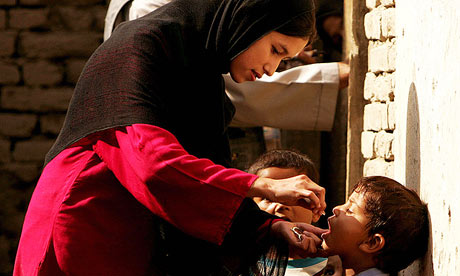
A health worker gives a dose of polio vaccine to a child in Afghanistan, one of just three countries where polio is still endemic. Only two thirds of children in Kapisa are vaccinatedA student and volunteer on a polio vaccination programme has been murdered by gunmen in an eastern Afghan village, leaving many women too frightened to attend work and school, according to a member of parliament for the area. Anisa, who had just finished 10th grade at school, was shot outside her home in Kapisa province on Saturday morning and died later in hospital, with six bullets in her stomach. But although officials, activists and security forces agree she was shot dead, reports differ about who was responsible. The victim had already survived a murder attempt the day before she died, taking shelter in a neighbour's house when gunmen opened fire on her in the street, said Sima Matim, a Kapisa provincial council member, who believes insurgents were behind the killing. "She hadn't realised a group was following her and was very afraid," said Matim, who has herself been threatened for working outside the home, and says she often feels like she is being watched. "Two times these groups called me and told me to stop my job. They told me my address and described my home to me. They said 'we know everything about you and you have to stop your job'. "I worry about when I will be killed and what my destiny will be. My husband always tells me to stop work, but still I am trying to continue." The violent deaths of women often go unreported or unresolved in Afghanistan, a country where senior clerics this year described them as "secondary" to men. Heather Barr, Afghanistan researcher at Human Rights Watch, said: "The small number of cases of prosecution of violence against women speaks to a lack of enthusiasm on the part of police and prosecutors to get to the bottom of these cases." Guidelines issued by the clerics said women were subordinate to men, that they should not mix in work or education, and must always have a male guardian when they travel. The edicts appeared in a statement that also encouraged insurgents to join peace talks, fuelling fears that any successful negotiations would come at a high cost to women. Anisa was an orphan in her early 20s, old for her grade at school in part because she tried to support her family while studying, said Tahera Mojaddidi, a member of parliament and former teacher who knew her. War and poverty means it is not unusual for Afghan children to miss or repeat several years at school. The morning she was murdered, Anisa got a phone call from her killers shortly before she left for work at the clinic where she volunteered on a polio eradication programme, Mojaddidi said. Afghanistan is one of three countries where polio is still endemic, and only two thirds of children in Kapisa are vaccinated, according to United Nations figures. When Anisa stepped outside, six bullets were pumped into her stomach, said the MP, who added that she had discussed the shooting with intelligence officials from her home province. She said she believed the Taliban were behind the killing. "In the village, families are saying that from the time when Anisa was killed up until now, their girls cannot go to schools, women who are working for organisations, they do not dare go out, because they think if they do their destiny would be the same as Anisa's." A Taliban spokesman denied any role in the shooting, and said the group was not against polio vaccines. The Pakistani Taliban this summer in effect banned polio eradication in South Waziristan, one of the most troubled areas of Pakistan. Several Kapisa officials also denied a Taliban role in her killing. The provincial director of women's affairs, Saifoorah Kohistani, said there were no Taliban in Anisa's area and the government was looking into possible motives for the shooting. The provincial governor would say only that an investigation was under way. Police said Anisa was caught in crossfire after a fight escalated in an area where most men carry guns. Mohammad Makhfous Walizada, deputy provincial police chief, said he had testimony from her brother, who carried the dying girl to hospital. Walizada said he had arrested a man, who was now being questioned. He was backed up by another MP, Haji Agha Jan. "Someone told me it was two brothers or two cousins fighting. Everyone has Pakistani pistols there, one of them opened fire, the bullets mistakenly hit the girl and she was killed," said Jan. Mojaddidi said officials were not interested in looking into such attacks; their insistence that the shooting was accidental was just an excuse, she said. "It's all some stories that the officials of Kapisa made up, to cover that there is violence against women."
Subscribe to:
Posts (Atom)