
Wednesday, December 5, 2012

Egypt descends into political turmoil

Supporters and opponents of Egyptian leader Mohammed Morsi fought with rocks, firebombs and sticks outside the presidential palace in Cairo on Wednesday in large-scale clashes that marked the worst violence of a deepening crisis over the disputed constitution. Egypt's Health Ministry said 126 people were wounded in the clashes that were still raging hours after nightfall. Three of Morsi's aides resigned in protest of his handling of the crisis. With two aides who had quit earlier, now five of his panel of 17 advisers have left their jobs since the problems began. Mohamed ElBaradei, a leading opposition advocate of reform and democracy, said Morsi's rule was "no different" from that of former President Hosni Mubarak, whose authoritarian regime was toppled in an uprising nearly two years ago. "In fact, it is perhaps even worse," the Nobel Peace Laureate told a news conference after he accused the president's supporters of a "vicious and deliberate" attack on peaceful demonstrators. The opposition is demanding Morsi rescind decrees giving him nearly unrestricted powers and shelve a disputed draft constitution that the president's Islamist allies passed hurriedly last week. The dueling demonstrations and violence are part of a political crisis that has left the country divided into two camps: Islamists versus an opposition made up of youth groups, liberal parties and large sectors of the public. Both sides have dug in their heels, signaling a protracted standoff. The latest clashes began when thousands of Islamist supporters of Morsi descended on the area around the palace where some 300 of his opponents were staging a sit-in. The Islamists, members of Morsi's Muslim Brotherhood group, chased the protesters away from their base outside the palace's main gate and tore down their tents. The protesters scattered in side streets where they chanted anti-Morsi slogans. After a lull in fighting, hundreds of young Morsi opponents arrived at the scene and immediately began throwing firebombs at the president's backers, who responded with rocks. "I voted for Morsi to get rid of Hosni Mubarak. I now regret it," Nadia el-Shafie yelled at the Brotherhood supporters from a side street. "God is greater than you. Don't think this power or authority will add anything to you. God made this revolution, not you," said the tearful el-Shafie as she was led away from the crowd of Islamists. By nightfall, there were about 10,000 Islamists outside the palace. They set up metal barricades to keep traffic off a stretch of road that runs parallel to the palace in Cairo's upscale Heliopolis district. Some of them appeared to plan staging their own sit-in. "May God protect Egypt and its president," read a banner hoisted on a truck that came with the Islamists. Atop, a man using a loudspeaker recited verses from the Quran. "We came to support the president. We feel there is a legitimacy that someone is trying to rob," said engineer Rabi Mohammed, a Brotherhood supporter. "People are rejecting democratic principles using thuggery." At least 100,000 opposition supporters rallied outside the palace on Tuesday and smaller protests were staged by the opposition elsewhere in Cairo and across much of Egypt. It was the latest of a series of mass protests against the president Buoyed by the massive turnout on Tuesday, the mostly secular opposition held a series of meetings late Tuesday and Wednesday to decide on next steps in the standoff that began Nov. 22 with Morsi's decrees that placed him above oversight of any kind. It escalated after the president's allies who dominated the constitution-writing assembly hurriedly pushed through the draft constitution without participation of representatives of liberals, minority Christians and women. While calling for more mass rallies is the obvious course of action, activists said opposition leaders also were discussing whether to campaign for a "no" vote in a Dec. 15 constitutional referendum or to call for a boycott. Brotherhood leaders have been calling on the opposition to enter a dialogue with the Islamist leader. But the opposition contends that a dialogue is pointless unless the president first rescinds his decrees and shelves the draft charter. Vice President Mahmoud Mekki called for a dialogue between the president and the opposition to reach a "consensus" on the disputed articles of the constitution and put their agreement in a document that would be discussed by the next parliament. But he said the referendum must go ahead and that he was making his "initiative" in a personal capacity not on behalf of Morsi. He put the number of clauses in disputes at 15, out of a total of 234. Speaking to reporters, ElBaradei said there would be no dialogue unless Morsi rescinded his decrees and shelved the constitution draft. Asked to comment on Mekki's offer, he said: "With all due respect, we don't deal with personal initiatives. If there is a genuine desire for dialogue, the offer must come from President Morsi." The charter has been criticized for not protecting the rights of women and minority groups, and many journalists see it as restricting freedom of expression. Critics also say it empowers Islamic religious clerics by giving them a say over legislation, while some articles were seen as tailored to get rid of the Islamists' enemies. If the referendum goes ahead as scheduled and the draft constitution is adopted, elections for parliament's lawmaking lower chamber will be held in February.

Arab Spring nations slip in corruption index

Egypt falls six places and Syria 15 but Libya manages slight improvement in Transparency International's league table.
Egypt has fallen in a global league table of perceived official corruption in the past year, and the Arab Spring revolutions have yet to produce serious anti-corruption action across the region, Transparency International (TI) says. In its annual Corruption Perceptions Index, released on Wednesday, the Berlin-based group said Egypt had fallen six places to 118th out of 176 countries as levels of bribery, abuse of power and secret dealings remain high in the Arab world's most populous nation. The public-sector league table - on which the higher the ranking, the cleaner a country is - produced a mixed picture for nations swept up in last year's unrest. Tunisia slipped two places to 75th while Morocco, which experienced less turmoil, fell eight spots to 88th. Syria, which is engulfed in a civil war, dropped 15 places to 144th but Libya managed an improvement from a very low base, rising to 160th from 168th. Egypt was in a five-way tie with the Dominican Republic, Ecuador, Indonesia and Madagascar with a score of 32. European rankings Greece has scored the worst ranking of all 27 European Union nations, falling below ex-communist Bulgaria as public anger about corruption soars at a time of crisis. The index on state sector corruption also showed other struggling eurozone countries scoring poorly such as Italy which ranked below Romania. Greeks have long complained about corruption but anger has soared, particularly about tax evasion among the rich, as the government has imposed wave after wave of austerity that the country's international lenders have demanded. The EU has kept Bulgaria and Romania out of its Schengen zone, which allows passport-free travel between member states, due to concerns about corruption. A recent study showed Bulgarians gave about 150,000 bribes to civil servants every month last year, more than in 2010. Portugal and Ireland, which like Greece have received eurozone rescues, were placed 33 and 25 respectively in the table. BRIC economies TI said there was a stronger public recognition worldwide, including in big emerging BRIC economies such as China and Brazil, of the costs of corruption and a growing refusal to accept it as an inevitable fact of life. Overall, Denmark, Finland and New Zealand were in a first-place tie with scores of 90 on a new scale where 100 stands for most clean and 0 for most corrupt. Somalia, North Korea and Afghanistan shared last place. Among the major global economies, the US ranked 19, up from 24, Germany was at 13, up from 14, Japan and Britain tied for 17th place and France was at 22, up from 25 last year. China meanwhile saw its ranking slip to 80 from 75 last year.

White House calls for calm in Egypt

http://www.politico.com
As protests continued in Egypt on Wednesday, the White House declined to take sides in the conflict, noting that the United States has an important relationship with Egypt, but called for all sides to refrain from violence. When asked at a White House briefing if President Obama supports Egyptian President Mohamed Morsi, press secretary Jay Carney said, "The president has an important relationship, well, the United States has a very important relationship with Egypt. The president has worked effectively with President Morsi on key issues, including recently the negotiated ceasefire in Gaza. We are monitoring the situation." Carney did not say whether Obama has spoken with Morsi or taken any other action. A White House official later confirmed to POLITICO that the president did stop by a meeting between national security adviser Tom Donilon and Morsi adviser Issam Al-Haddad. The official did not say what they spoke about. Protests in Cairo turned violent for a second day Wednesday, with protestors supporting and opposing Morsi throwing fire bombs and rocks at each other outside the presidential palace, CBS reported. The opposition demonstrators want Morsi to rescind declarations he made exempting himself from judicial oversight and to throw away a draft constitution quickly passed by his allies last week. Carney said the administration thinks dialogue between all Egyptians is "urgently necessary." "It must be a two-way dialogue that includes a respectful exchange of the concerns of the Eyptian people themselves about the constitutional process and the substance of their constitution. The Egyptian people want and deserve a constitutional process that is open, transparaent and fair and does not unduly favor one group over any other," he said. He added that most demonstrations so far have been large but "generally peaceful." " As Egyptians continue to express their views, we look to the government of Egypt to respect freedoms of peaceful expression and assembly and to exercise restraint. We also continue to call on demonstrators and political parties to take all possible measures to avoid confrontation and violence."

VIDEO: Morsi's supporters attack protesters at presidential palace Wednesday afternoon

At least one killed as anti-Mursi protests flare outside Cairo’s presidential palace

First death reported in Egypt as clashes exploded Wednesday night between supporters and foes of President Mohamed Mursi outside the presidential palace.
Stones and Molotov cocktail bombs flew around, and gunshots were heard as supporters of Mursi fought protesters outside the palace in Cairo, according to Al Arabiya’s correspondent. The clashes started escalating even after Egypt’s vice president, speaking at a news conference from inside the palace, proposed a way to end a crisis over a draft constitution that has split the most populous Arab nation. Three members of Mursi’s presidential advisory council announced the resignation over crisis, reported Al Arabiya. The members are Seif Abdel Fattah, Ayman al-Sayyad and Amr al-Leithy. In the same vain, the Grand Imam of Egypt’s powerful al-Azhar Mosque Dr. Ahmed el-Tayyeb urged Egyptians for dialogue after Wednesday’s clashes. Conditions flared up on Wednesday after Mursi’s supporters, who had flocked to the palace in response to a call from the Muslim Brotherhood, scuffled with the president’s opponents, hurling stones and other objects at each other. Two Islamists were hit in the legs by what their friends said were bullets fired during the clashes in streets around the compound in northern Cairo, according to Reuters. One of them was bleeding heavily. Riot police began to deploy between the two sides to try to end the violence which flared after dark despite an attempt by Vice President Mahmoud Mekky to calm the political crisis. He said amendments to disputed articles in the draft constitution could be agreed with the opposition. A written agreement could then be submitted to the next parliament, to be elected after a referendum on the constitution on Dec. 15. “There must be consensus,” he told a news conference, saying opposition demands must be respected to overcome the crisis. Opposition leader Amr Moussa, a former foreign minister and secretary-general of the Arab League, said Mursi should make a formal offer for dialogue if his opponents were to consider seriously Mekky’s ideas for a way out of the political impasse. “We are ready when there is something formal, something expressed in definite terms, we will not ignore it,” Moussa told Reuters during talks with other opposition figures. Opposition leaders have previously urged Mursi to retract a decree widening his powers, defer the plebiscite and agree to revise the constitution, but have not echoed calls from street protesters for his overthrow and the “downfall of the regime."
Under Siege
Mursi had returned to work at his compound a day after it came under siege from protesters furious at his assumption of extraordinary powers via an edict on Nov. 22. The president, narrowly elected by popular vote in June, said he acted to stop courts still full of judges appointed by ousted strongman Hosni Mubarak from derailing a constitution meant to complete a political transition in Egypt, long an ally of Washington and signatory to a 1979 peace deal with Israel. Rival groups skirmished earlier outside the presidential palace on Wednesday. Islamist supporters of Mursi tore down tents erected by leftist foes, who had begun a sit-in there. “They hit us and destroyed our tents. Are you happy, Mursi? Aren’t we Egyptians too?” asked protester Haitham Ahmed. Mohamed Mohy, a pro-Mursi demonstrator who was filming the scene, said: “We are here to support our president and his decisions and save our country from traitors and agents.” Facing the gravest crisis of his six-month-old tenure, Mursi has shown no sign of buckling, confident that Islamists can win the referendum and a parliamentary election to follow. Many Egyptians yearn for an end to political upheaval that has scared off investors and tourists, damaging the economy. Mekky said street mobilization by both sides posed a “real danger” to Egypt. “If we do not put a stop to this phenomenon right away ... where are we headed? We must calm down.” U.S. Secretary of State Hillary Clinton weighed into Egypt’s political debate, saying dialogue was urgently needed on the new constitution, which should “respect the rights of all citizens”. Clinton and Mursi worked together last month to broker a truce between Israel and Hamas Islamists in the Gaza Strip. “It needs to be a two-way dialogue ... among Egyptians themselves about the constitutional process and the substance of the constitution,” Clinton told a news conference in Brussels. Washington is worried about rising Islamist power in Egypt, a staunch U.S. security partner under Mubarak.

Majority of Americans want Hillary Clinton to run in '16

http://www.globalpost.com/
Hillary Clinton's popularity is booming, and the majority of Americans said they would like to see the secretary of state and former first lady make her own run for the White House in 2016. According to an ABC/Washington Post poll, 57 percent of Americans, including 23 percent of Republicans, would support Clinton if she were to run for president in the next election. Clinton earned her most positive ratings among women, with 66 percent saying they would support her in 2016. That number jumps to 75 percent among those under 50 and drops to 54 percent among those aged 50 and up. Forty-nine percent of men back a Clinton bid, regardless of their age, reported the Washington Post. It's not only die-hard Democrats who overwhelmingly favor a Clinton bid. Fifty-nine percent of independents and 65 percent of moderates would vote Clinton into office in 2016. Come January, Clinton will be ducking out of public office when her term as secretary of state ends. She has repeatedly said she plans to take time off and isn't planning any immediate return to politics, reported POLITICO. But according to the New York Daily News, Clinton is hinted at a run by airing what is essentially a campaign video at the Saban Forum for Middle East Policy last Friday. The Daily News said the tribute video "is not about Clinton's accomplishments at the State Department. It's a celebration of her essence, of her supposed strength of conviction, her personality, even her smile."POLITICO also suggests that Clinton is positioning herself for a run by sending letters to a handful of Democratic congressional candidate who lost their races in November. She is also expected to embrace same-sex marriage after leaving the Obama administration. Marc Ambinder at The Week said last month that Clinton would be one of the best qualified candidates in modern history and has "proven she has the fortitude to BE president." "She has been humbled, first by her husband's affair and later by the 2008 primary campaign, and has pulled herself up each time, becoming a better politician and person," Ambinder said. But since President Obama's second term hasn't even started yet, it will certainly be a while before anyone is sure what Clinton's presidential plans are.

Following Malala's footsteps, Pak girls defy Taliban to get educated

Four girls in Lower Dir district of Pakistan's North West Frontier Province are following in the footsteps of 15-year-old education campaigner Malala Yousufzai - who was shot by the Pakistani Taliban - by defying the Taliban to receive proper education. Malala was shot by the Taliban in the head and neck on October 9 while she was returning home from school. She was attacked for speaking up against the terror outfit and advocating girls' right to education. She is now recovering at the Queen Elizabeth Hospital in Birmingham, reports The Sun. Saira, 13, the daughter of a poor farmer who relies on seasonal farming work to feed his family of 13, said her dream to study came alive when a charity called Khwendo Kor built a community school in 2002. The donations from the organization helped her cover her school expenses. Her books and stationery are also paid for by the charity. "Before I started school I couldn't read or write. Now I'm learning new things every day. My favourite subject is English. I want to become a teacher when I graduate because I think teaching is a respectable profession. And I could educate other children in my community. That would be my dream," she said. Another girl, 13-year-old Nazish said: "My mother is an uneducated housewife and my father is a labourer but, luckily, he approves of education for girls. So when we heard about a school that was being built near our home, he saw it as a great opportunity for me. Now I am in grade seven. My parents are so happy with my progress. My dream is to become a teacher in the school that gave me the chance of an education. I also want to work to promote education in my country. Malala has sacrificed so much to tell the world about us. Salma, 12, said her parents have been her greatest role models along with Malala. She termed Malala "a brave and brilliant person". Irum, 17, who lives in a small hut along with nine members of her family works as a teacher. She succeeded in receiving her education after her teachers persuaded her reluctant father to allow her to study. "My education has only been possible because of the courage of my teachers who persuaded my parents to let me carry on with my studies. It also took courage for my parents to agree because girls in my country face many threats for attending school," she said.

Afghanistan: Education attacked

http://www.afghanistantimes.af
Afghanistan has become a country where rhetoric pulls more crowds than reason and rationalism. Our current and as well as coming generations are faced with a bleak and challenging future because in a society where reason, debate culture, and intolerance have gone missing then it is quite difficult to give them a secure and prosperous future. Sectarianism, tribal feuds, militancy, corruption, ethnic tensions, and internal bickering are some of the social evils that have made home here which collectively are pushing back this country into the age of barbarism, intolerance and deadly dormancy, for we have become a nation that doesn’t make efforts on its own to overcome its own problems but ogles for outside support, always. We are quite expert in blaming others for our own blunders and problems but quite blockhead to keep our house in order ourselves. Just ask anyone on a road or in a university that who is responsible for the miseries of this miserable nation and you will get a long list, starting from Israelis, Americans, Pakistanis, Iranians, and Indians but hardly you will hear that we ourselves are responsible for our current plight. Who killed a Kabul University student and injured 28 others in the violent clashes stirred by an attempt by Shiite students to flagellate themselves at the main mosque on the campus during the Ashura rituals? The response is, no Israeli, no American, no Pakistani, and no Indian but Afghans. Then why to blame others? Our illiterates are being killed by NATO, Americans and the Taliban whereas our students are being killed by students. Earlier the children of the nation witnessed a setback over political move when a University name was renamed after the then peace interlocutor, Prof. Burhanuddin Rabbani whereas the anger of the students was not allayed that Kabul universities’ students received another setback. The sectarian clashes in the Kabul University’s hostels have led to the extension of vacation for three months. Though initially the government has declared classes will remain suspended for 10 days but to control the hostile situation that was triggered on the day of Ashura has left a bad mark on the history of our education. The decision has been taken by the government in such a time when university exams were quite near while now they will have to take their exams in February 2013. It was a good decision by the government to pacify the searing anger of the Sunni and Shiite students but the government will have to take two steps, either to impose ban on political and certain other sensitive activities in education institutions that could potentially put the peaceful environment of universities in danger or ensure freedom of speech and act until it is in contrast to law of the land. Moreover the religious minority should keep their rituals away from university when they have other places to perform freely with no hindrance. Why our universities have turned into centers for sordid politics, and that too, a politics of polarization and hatred. Those behind the sectarian violence in the university should be trialed and those found guilty should be sent behind bars. Such like incidents are badly affecting our collective behavior and those students who want to stay aside from politics are reluctantly pushed into the whirl of ethnic politics and the politics of sectarianism. Earlier our education was in danger from the insurgents and now unfortunately education has been endangered by students themselves. What difference is there between the insurgents and those students who have disturbed the environment for education? Both should respond to the nation as the nation asks them why they have been doing it, at whose behest, and for whose advantage.

Central Asia: A Look at Sources of Violence and Instability

http://www.eurasianet.org.
August 7, 2012 There is a general assumption that Afghanistan is a notorious exporter of violence and that the pullout of US and NATO troops in 2014 from the country portends trouble for the neighboring states of Central Asia. Yet this assumption rests on shaky evidence. The recent fighting in Tajikistan reminds us that disorder and violence in Central Asia are homegrown phenomena. Experts in Russia, China, the U.S., and Europe are worried that Afghanistan’s evil twins – drug trafficking and the export of religious extremism – will bring chaos and violence to Central Asia after 2014. To address these threats policy makers agree that security assistance to Central Asian governments needs to be ramped up. Highest on the list of what needs to be done is an expansion of train-and-equip programs for border guards and local security forces. In addition, the United States is considering leaving armored personal carriers and other military equipment in the region after the pull-out from Afghanistan. Russia, meanwhile, is negotiating with Tajikistan to extend a base deal that would permanently station 6,000 Russian troops in the country. While these policies may seem like sound strategy, the problem is that none of them address the causes of instability in Central Asia, and some may even exacerbate existing problems. The basic truth is that security threats in Central Asia develop from within, and are not imported from elsewhere. An example: two weeks ago, as Tajik soldiers were engaged in firefights with gunmen in Khorog, the capital of the autonomous region of Gorno-Badakhshan, I was skyping with a friend in Dushanbe. In reply to my question of what was going on he said: “It’s simple: one gang of drug traffickers is fighting with another gang of drug traffickers over their turf. Both wear official Tajik uniforms.” His explanation resonates with many inside and outside Tajikistan. Even if the Tajik government initially stressed links to Afghan militants and spoke of eight Afghan nationals with possible links to the Taliban, al Qaeda or the Islamic Movement of Uzbekistan that had been detained, little evidence or even logical arguments could be produced to bolster these claims. In fact there is very little to indicate that Afghanistan’s evil twins after 2014 will influence the security situation in Central Asia more than they do already. Take the export of religious extremism: the Tajik civil war in the 1990s did have a religious component, and United Tajik Opposition commanders enjoyed a safe haven in Afghanistan. But the conflict itself arose out of internal political contradictions, rather than being exported from Afghanistan. Similarly, recent flare-ups of violent religious extremism in Kyrgyzstan, Kazakhstan, Tajikistan and Uzbekistan developed within a local context and as a reaction to repression of religious and other fundamental civic and economic rights of Central Asian citizens by their governments. Looking at drug trafficking, opium derivatives such as heroin are generally not smuggled into the region, but cross the border by the truckload on established roads and through official checkpoints. Few seriously contest that the biggest drug traffickers in Central Asia are government officials, or at least individuals or groups closely connected to the governments in the region. If one considers instances of violence in Central Asia over the past two decades – including the riots in Uzgen and Osh in 1990, the Tajik civil war in the mid-1990s, the events in Andijan in 2005, the violent revolutions in Kyrgyzstan in 2005 and 2010, the clashes in Osh in June 2010, the riots in western Kazakhstan in 2011 or the fighting in Tajikistan in 2010 and 2012 – Afghanistan really isn’t a factor. A multitude of local factors were behind these outbursts of violence, including the political dynamics inherent in non-democratic states, conflicts over resources and the inability of states and societies to manage conflicts. Traditional security assistance to Central Asian governments as currently conceived in Brussels, Washington, Moscow or Beijing does little to address these problems. Given some evidence that governments in the region are more part of the problem than they are of the solution current assistance programs are counterintuitive. Even initiatives that specifically include an element aimed at professionalizing relations between uniformed officials and civilians such as western-funded police training or border management assistance programs generally fail to deliver results in these areas. The stated aim of foreign security assistance in Central Asia is to promote stability in the region itself. The first step towards providing such assistance should be to stop assuming that Afghanistan is the biggest threat to regional stability and to acknowledge the homegrown nature of the threat. Editor's note: Cornelius Graubner is a Central Asian policy expert affiliated with the Central Eurasia Project of the Open Society Foundations (OSF) in New York. EurasiaNet publishes under OSF’s auspices.

RUNA LAILA .... benjamin sisters

White House to Ask for $50 Billion in Hurricane Relief Aid

By PETER BAKER and RAYMOND HERNANDEZ
President Obama plans to ask Congress for about $50 billion in emergency spending to help rebuild the states ravaged by Hurricane Sandy, according to administration and Congressional officials briefed on the discussions. The White House is assembling a spending request to send to Capitol Hill as early as this week, and while the final sum is still in flux, it should fall between $45 billion and $55 billion. That represents an enormous sum at a time when Mr. Obama is locked in a titanic struggle with Republicans over the federal deficit, but is significantly less than the states sought. Unless an austerity-minded Congress adds to the president’s plan, state leaders would have to figure out other ways to finance tens of billions of dollars of storm-related expenses or do without them. New York, New Jersey and Connecticut were seeking a combined $82 billion in federal help both to clean up and restore damage from Hurricane Sandy as well as to upgrade and harden infrastructure to prepare for future storms. Administration officials would not say which specific spending items were being excluded, but other officials monitoring the issue identified several that the White House seemed cool to. New York, for instance, sought reimbursement for business owners for money lost while they were closed as well as for privately held utilities like Consolidated Edison. Another proposal that may not make the cut was fully reimbursing homeowners for the costs they incur bringing damaged and destroyed homes to their condition prior to the storm; typically, the federal government covers the cost of bringing homes to a lower “livable” standard after natural disasters like Hurricane Sandy. The administration request appears likely to come in even below the $60 billion that Senator Harry Reid of Nevada, the Democratic majority leader, said on Tuesday that he expected it to include. Yet even a spending request in the neighborhood of $50 billion would strain the current political system in Washington coming just weeks before a series of deep spending cuts and tax increases are set to take effect automatically, unless the president and Congress agree on a plan to avert them. Supporters of the disaster-relief request are proposing that the money not have to be offset, or paid for through spending cuts elsewhere. The administration request is unlikely to propose a way to pay for the aid and Mr. Reid said he did not believe it should require savings elsewhere, but House Speaker John A. Boehner of Ohio is reserving judgment. If it is not offset, then it would be financed through additional federal debt. The White House is trying to frame its storm-spending request so as not to conflict with its showdown with Republicans in Congress over broader budget issues, hoping to present it as a separate issue that has little to do with the long-term health of the treasury. Storm relief, once completed, would not be a recurring expenditure like Medicare or military spending. But officials privately acknowledge the timing is problematic. “We expect to discuss the ongoing support that the federal government continues to provide for affected communities and our state and local partners,” said Jay Carney, the White House press secretary. “The administration has already obligated more than $2.1 billion to support response and recovery efforts.” Craig Fugate, administrator of the Federal Emergency Management Agency, and Shaun Donovan, the secretary of housing and urban development, are scheduled to testify before a Senate panel on Wednesday morning, although officials do not expect them to detail what may be in the forthcoming administration spending request. Republicans eager to preserve what they see as the high ground on spending in their struggle with Mr. Obama may try to avoid approving all of the storm aid right away. Representative Hal Rogers of Kentucky, the Republican chairman of the powerful House Appropriations Committee, has privately suggested taking up the aid request in two phases: emergency needs during the current lame-duck session and longer-term recovery requests next year. “It might be difficult to get a large aid package through Congress in a lame duck” session, said a senior Republican committee official, who declined to be identified as speaking for the committee members. But lawmakers from New York and other storm-damaged states are urging Congress to act now, largely because they fear the sense of urgency will almost certainly diminish if the matter is pushed into next year. They have an ally in Senator Mary L. Landrieu of Louisiana, the Democratic chairwoman of a Senate Appropriations subcommittee that oversees disaster funding. Ms. Landrieu, a veteran of fights for recovery money after Hurricane Katrina devastated her home region, rejected the idea of leaving much of the storm recovery money until next year, arguing that breaking it into parts creates an atmosphere of uncertainty that makes it difficult for local officials to plan and implement long-term recovery projects. “I would suggest we do as large a package as soon as possible,” she said. “You should do a lot now and a little bit later.” “Nibbling around the edges,” she added, “is not going to help.” While she and others tried to keep the storm question separate from the larger fiscal debate now roiling Washington, it may be impossible to disentangle the two. A 10-year deficit reduction plan presented by the Obama administration to Congressional leaders last week included $50 billion for short-term economic stimulus, generating fierce criticism from Republicans. Some Congressional officials said that could be dropped and replaced with disaster relief in roughly the same amount. “That looks like a possible outcome,” said one Congressional official who declined to be identified. “I can see how the disaster funding gets rolled into a year-end fiscal cliff bill.” Mr. Obama’s pending request would leave the states with difficult choices to make. Gov. Andrew M. Cuomo of New York has asked for $33 billion to repair the city’s subway system, hospitals and other facilities wracked by the storm, plus another $9 billion to upgrade infrastructure to protect against future storms, for a total of $42 billion. Gov. Chris Christie of New Jersey has requested $29.5 billion to repair schools, roads, bridges, businesses, homes and other facilities in his state, plus $7.4 billion for mitigation and prevention of future storms, for a total of $36.9 billion. Gov. Dannel P. Malloy of Connecticut has asked for $3.2 billion, the bulk of it to bury power lines, upgrade transmission systems, build sewage treatment plants and other projects to guard against future storms.

U.S. reducing plans for large civilian force in post-2014 Afghanistan

The Obama administration has ordered significant cutbacks in initial plans for a robust U.S. civilian presence in Afghanistan after U.S. combat troops withdraw two years from now, according to U.S. officials. Learning from Iraq, where postwar ambitions proved unsustainable, the White House and top State Department officials are confronting whether the United States needs — and can protect — a large diplomatic compound in Kabul, four consulates around the country and other civilian outposts to oversee aid projects and monitor Afghanistan’s political pulse. Planners were recently told to reduce personnel proposals by at least 20 percent, a senior administration official said. Projects once considered crucial are being divided into lists of those considered sustainable and those that will not be continued. “As we saw in the Iraq exercise, you need to be very tough on the numbers going in,” the official said. “We need to have enough civilians to achieve the goals we’ve laid out,” within “a finite amount of money we have to spend.” Officials declined to specify specific projects that might end. But the inevitable decrease in eyes and ears across Afghanistan could threaten a range of long-term U.S. investments and priorities, such as women’s rights, education, health care and infrastructure. The challenge of balancing the American civilian presence of what are now about 1,000 officials and thousands of contractors with reasonable resources goes beyond pocketbook and personnel issues, according to several senior officials, who discussed the planning on condition of anonymity because it is at an early stage. On one side of the simmering internal debate are fiscal constraints, diminished hopes for progress and national weariness with the Afghanistan effort. On the other side are formal U.S. pledges of development support, moral and political commitments to a country where nearly 2,200 U.S. troops have died and $590 billion has been spent, and fears Afghanistan could again become a terrorist haven. Looming over the debate is the determination to avoid a repeat of the September attack on a poorly defended U.S. diplomatic post in Benghazi, Libya, that killed a U.S. ambassador and three other Americans. Last month, the administration began what is likely to be a year-long negotiation with the Afghan government over how many troops the U.S. military will leave behind when combat ends in 2014. A key sticking point is whether remaining troops will be subject to Afghan law, which doomed similar talks with Iraq last year. Even if the negotiations succeed and a sizable American force remains, the U.S. military is certain to curtail or stop the security and other services it provides U.S. government civilians in Afghanistan. “How do you do security? How do you do mobility? These are expensive propositions when State has to do it all itself,” Ryan Crocker, who served as U.S. ambassador to Afghanistan until last summer, said in an interview. Those concerns were echoed by Sarah Chayes, who has spent years in Afghanistan and was an adviser to the U.S. military command there. “There is a significant risk that the conditions in Afghanistan are going to be too hostile for an influx of civilians to be able to function,” she said.
The mega-embassy problem
The mega-embassy concept was born in Iraq as the State Department tried to hold its own with a U.S. military whose counterinsurgency strategy included development and governance tasks once reserved for diplomats and civilians. When the military withdrew, the diplomats tried to continue the noncombat work without the military’s massive budget or the protection provided by up to 150,000 troops. As the State Department assumed many of the military’s tasks, including training Iraq’s national police, the diplomatic mission grew to nearly 20 support personnel for each official, including more than 6,000 contract security guards. With a $6 billion budget, the department set up its own domestic Iraqi air service and staffed three hospital facilities. The rolls of civilians and contractors topped 20,000. Today, the world’s biggest diplomatic mission employs about 13,000 government and contract workers, but the goal is to reach fewer than 8,000, officials said. The police program, originally planned with 350 U.S. trainers at 22 sites, has been reduced to about 40 trainers at two sites. Plans to build seven consulates have shrunk to two. As hard as Iraq has been, Afghanistan poses far more difficult security and logistical problems. There is little optimism that the war against the Taliban will be over before U.S. combat troops leave or that Afghan security forces will prove an able substitute. “The problem with Afghanistan is, it’s not going to look like success,” James F. Jeffrey, who until September was U.S. ambassador to Iraq, said in an interview. “It’s still going to be backward and totally corrupt, with not enough government infrastructure and a huge burning insurgency. This is terribly complicated and hard stuff under the best of circumstances, and these are the worst.” U.S. diplomats and other civilian officials outside Kabul are housed at military at bases large and small. They depend on the military to protect and transport them, and provide medical care. They consume imported food and water brought in massive military convoys. The bases are disappearing, and plans for the Afghans to provide security leave many Americans nervous. Where Iraq has been kept afloat by oil revenue, Afghanistan depends on handouts. International donors have promised a post-2014 annual supplement of $4 billion for Afghan security forces and an equal amount in development and economic assistance. More than half of the $8 billion will come from the United States. U. S. Agency for International Development officials say that every development project started in recent years has been approved only if the Afghans can eventually sustain it without U.S. help. “We want to have an appropriate [civilian] footprint,” the senior official said. “We just have to be smart about it.” The official declined to specify a final number of civilians but said there had already been “lots of cutting” and it would be well below the current level. Some worry that the zeal to cut may get out of hand. “There’s a point at which it would be too small, a point at which the message to Afghans would be that we actually didn’t learn the lesson in 1989-90,” said a second senior official, referring to the abrupt withdrawal of support after U.S.-backed Afghan guerrilla forces ended a decade of Soviet occupation. Left to its own devices, Afghanistan sank into a civil war that opened the door to the Taliban, who ruled much of the country, and hosted al-Qaeda, until U.S. forces helped overthrow them in 2001.
Preliminary plans
Firm decisions on civilian numbers and locations cannot be made “until we resolve exactly what the military follow-on numbers are going to be,” one official said. “That will determine . . . where we locate, what kind of security, medical and other support we might be able to get.” At its headquarters in Kabul, the U.S.-led International Security Assistance Force is preparing recommendations for Obama on how fast to withdraw the 68,000 remaining U.S. combat troops in Afghanistan. Plans for the follow-on military presence are being formulated in the Pentagon, where the largest of several preliminary options calls for about 10,000 troops, with several other NATO governments penciled in for several hundred each. According to these preliminary plans, ISAF’s successor would be based in Kabul, officials said, with most U.S. training and counterterrorism troops probably stationed in Kandahar and at the air base at Bagram. Both locations are to be converted to Afghan ownership. Smaller counterterrorism units of the Joint Special Operations Command would be positioned primarily in the eastern part of the country, where most of their activities take place. Italy, in charge of the ISAF mission in Herat in western Afghanistan, would remain there to train Afghans. Germany would do the same in Mazar-e Sharif in the north. It is unclear what would happen at Camp Bastion, the British headquarters in Helmand province. Officials say the NATO allies are waiting to see what sort of agreement is reached between the Americans and the Afghans, and how many U.S. troops will remain. Although the Afghan government has agreed to a long-term foreign military presence in principle, negotiations over the size and terms have just begun. The main sticking point is likely to be the issue that led to the breakdown with Iraq — whether U.S. forces are immune from Afghan legal jurisdiction. The size of the U.S. military will help determine the size of the civilian footprint. “If there’s no military medical capacity or medevac capability, then it’s going to be pretty pricey,” Crocker said. “That may mean downsizing. I hope it doesn’t mean eliminating any of the four posts” designated as U.S. consulates. The fate of the consulates is a topic of debate between the U.S. Embassy in Kabul and planners in Washington. Crocker and others contend that the United States must be present in all four corners of Afghanistan. Last June, the first consulate was opened in Herat, which is relatively peaceful. A location in Mazar-e Sharif was abandoned when it was determined to be insecure — after the State Department had signed a 10-year lease and spent $80 million. For now, the other two facilities, in Kandahar and Jalalabad, remain on the drawing board.

Obama Takes Fiscal Plan to Business Leaders

The "fiscal cliff" will remain an outside game Wednesday, as President Obama makes his case to business leaders while House Speaker John Boehner, R-Ohio, holds a news conference on Capitol Hill. Mr. Obama is scheduled to deliver morning remarks at the quarterly meeting of the Business Roundtable in Washington, where, according to a White House official, "he will reiterate that he will not accept a deal that doesn't include higher rates on the wealthiest individuals." The president will also ask the leaders "for their help in supporting an approach that resolves the debt limit without drama or delay," added the official. Wednesday's appearance by Mr. Obama comes a day after he talked with Bloomberg TV in his first interview since winning re-election, again rejecting the proposal offered by House Republicans on Monday as "out of balance."

Watch Obama Says No Deal Without Tax Rate Increase on the Rich on PBS. See more from PBS NewsHour.

The president warned that if Republicans want to preserve lower tax rates for the top 2 percent of wage earners, then it would mean painful cuts elsewhere. "It's not me being stubborn. It's not me being partisan. It's just a matter of math," Mr. Obama said. "You know, there's been a lot of talk that somehow we can raise $800 billion or $1 trillion worth of revenue just by closing loopholes and deductions, but a lot of your viewers understand that the only way to do that would be if you completely eliminated, for example, charitable deductions. Well, if you eliminated charitable deductions, that means every hospital and university and not-for-profit agency across the country would suddenly find themselves on the verge of collapse. So that's not a realistic option." Bloomberg's Julianna Goldman asked when he and Boehner would sit down again for another round of face-to-face negotiations. "I don't think that the issue right now has to do with sitting in a room," Mr. Obama said. "The issue right now that's relevant is the acknowledgment that if we're going to raise revenues that are sufficient to balance with the very tough cuts that we've already made and the further reforms in entitlements that I'm prepared to make, that we're going to have to see the rates on the top 2 percent go up. And we're not going to be able to get a deal without it." Boehner, meantime, said that for an agreement to happen, the president needs to put forward a serious counter-offer to the plan submitted by Republicans. "If the president really wants to avoid sending the economy over the fiscal cliff, he has done nothing to demonstrate it," Boehner said in a statement. "With our latest offer we have demonstrated there is a middle ground solution that can cut spending and bring in revenue without hurting American small businesses. The president now has an obligation to respond with a proposal that does the same and can pass both chambers of Congress. We're ready and eager to talk with the president about such a proposal." Behind the scenes, House Republicans are weighing their options, including a measure to extend only the tax rates on families making less than $250,000 annually, reports Jonathan Weisman of The New York Times: Senior Republican leadership aides say they are contemplating a fallback position since a standoff over expiring tax rates will be portrayed by Democrats as evidence that the opposition is willing to allow taxes to rise on the middle class to keep taxes from rising on the rich -- and their intransigence could mean taxes go up on rich, poor and middle class alike. The leadership officials now say that if no deal can be struck to avert the automatic expiration of all the Bush-era tax cuts and the onset of deep, across-the-board spending cuts, they could foresee taking up and passing legislation this month to extend the tax cuts for the middle class and then resume the bitter fight over spending and taxes as the nation approaches the next hard deadline: its statutory borrowing limit, which could be reached in late January or February. Politico's Manu Raju and Jake Sherman, meanwhile, look at the intra-party fight brewing among Republicans over the issue of revenue increases: Speaker John Boehner's pitch of $800 billion in new tax revenues already has tea party-backed conservatives accusing GOP leaders of peddling a plan that would destroy job growth. Conservative outside groups are urging their party's rank and file to rebel and reject any new taxes. Senate Minority Leader Mitch McConnell and his leadership team pointedly declined to endorse the proposal. All told, it points to a party still struggling to find a way out that doesn't destroy its reputation with the activist base or take the nation over the fiscal cliff. The question remains: Does it hold firm by its party's small government principles and reject any new taxes -- no matter the cost? Or does it try to stake a middle ground and cut a bipartisan deal to end the partisan gridlock, even if it means latching on to a deal that would force the conservative base to recoil? Amid the public posturing and internal squabbling, a poll released Tuesday by the Pew Research Center and The Washington Post found that Americans by nearly a two-to-one margin would lay most of the blame for going over the fiscal cliff on House Republicans. Fifty-three percent of respondents said the GOP would be most at fault, compared with 27 percent who chose Mr. Obama. Twelve percent of those polled said the two sides would share in the blame equally. On Tuesday's NewsHour, congressional correspondent Kwame Holman updated the state of play from Capitol Hill.

Fiscal Cliff: What Republicans, Democrats Agree on So Far

Attack on an Ahmadi graveyard: Chilling act

EVEN in a country where unspeakable violence is inflicted on the living as a matter of course, the visceral hatred evident in Monday’s attack on an Ahmadi graveyard in Lahore is chilling. Shortly after midnight some 10 to 15 masked men scaled the walls of the burial ground. Armed with weapons and excavation tools, they either destroyed or pulled off the headstones of over 100 graves. Half an hour later, the last abode for those meant to rest in peace had been rendered a wreckage of broken stone and tile. The message sent out could not have been starker, signalling the extreme hatred shown by certain sections — perhaps not too many numerically but inclined always to employ violent means — towards a persecuted community. The latter’s scars from the May 2010 massacre of scores in twin attacks on Ahmadi places of worship in the same city have not yet healed. That Monday’s attack occurred in the Model Town locality and a stone’s throw from the family home of the Sharif brothers is a matter of deep shame. In the context of Monday’s vandalism, the police have said that an FIR will be registered and an investigation launched. Tellingly, however, they say that it will not be possible to deploy policemen outside such graveyards. While the desecration must be condemned in no uncertain terms, criticism must also be reserved for this attitude — which is far from restricted to police ranks. The Ahmadi community has long faced serious levels of persecution from various quarters, not least the state. Hostile legislation has been passed, people have been targeted and there are other instances of burial grounds being desecrated. The state needs to step up to its commitment to protect all citizens. Resources have to be found to protect members of the Ahmadi community and their properties.

Swedish Aid Worker Shot In Pakistan, In Critical Condition
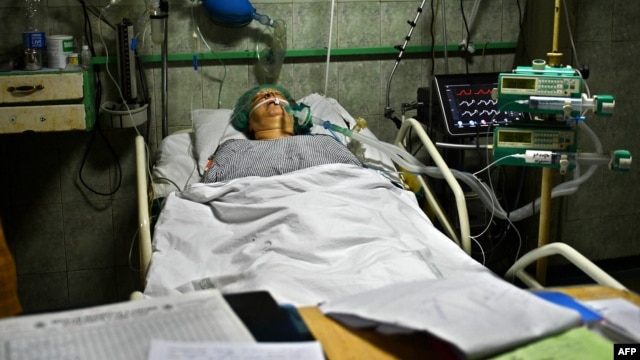
An elderly Swedish aid worker is fighting for her life in eastern Pakistan after being shot earlier this week. Officials from her Full Gospel Assembly charity said Bargeeta Almby is still unconscious after surgery on December 3 for gunshot wounds to the chest. The 72-year-old was attacked by unknown assailants on December 3 as she drove back to her home in the eastern city of Lahore. Police say no one has claimed responsibility for the attack. Almby has lived in Pakistan for 38 years and her Christian charity runs an orphanage and adult-literacy projects in the city. She is the second Western aid worker targeted in Lahore in recent years. Warren Weinstein, a 71-year-old American, was kidnapped in Lahore in August 2011 and is still missing.

Pakistan unsafe for Western charity workers

Pakistani experts have said that Bargeeta Almby - a Christian charity worker from Sweden who was shot in Lahore on Monday - was a victim of growing intolerance and anti-West sentiment in Pakistan. Bargeeta Almby, a 72-year-old Swedish charity worker, was returning from work on Monday when she was attacked by unknown gunmen in the eastern Pakistani city of Lahore. Doctors said Almby was hit in the chest and is still unconscious in hospital. "A bullet hit her in the chest. We have treated her and she is improving now," Ali Usman, a doctor at the hospital, told AFP. The latest reports, however, say that Almby is still in a critical condition. The Pakistani police believe the attack on Almby was not a "street crime" as the gunmen did not try to steal anything from her. "Our initial investigations point out to the fact that it was not an attack to snatch money or other valuables from her," Owais Malik, a senior police official, told DW, adding that the police had not been able to find the assailants.This is not the first time a Western citizen has been targeted in Pakistan. In August last year, a 71-year-old US development worker Warren Weinstein was kidnapped from his Lahore residence and is still missing. In April, a British Muslim Red Cross worker was kidnapped in the southwestern city of Quetta and later beheaded. Pakistani authorities blame the operatives of al Qaeda and banned Islamist organizations for attacks on Western charity and development workers. Charities restrict their work Almby is the managing director of the Full Gospel Assemblies in Pakistan, a Christian charity organization founded in the US. The organization runs services in Pakistan including a technical training institute, adult literacy center and orphanage. Almby is a teacher by profession and has been living in Pakistan for 38 years. She also speaks fluent Urdu. "Almby has no enemies," Liaquat Qaiser, spokesperson of the Full Gospel Assemblies, told DW. "Apparently, the attack on her is a result of increasing intolerance and extremism in Pakistan. Almby's only ‘fault' was that she was white skinned, and in Pakistan she could be seen as an enemy." Peter Jacob, executive director of the National Commission for Justice and Peace of the Catholic Church in Pakistan, told DW that the attacks on foreign charity workers could discourage them from coming and working in Pakistan. "A number of charity organizations have either closed their operations in Pakistan or have restricted their services," Jacob said. "This is only going to isolate Pakistan among the international community." Anti-West sentiment Anti-West sentiment, particularly the anti-US sentiment, runs high in the Islamic Republic of Pakistan. Generally, the people do not differentiate between US nationals and citizens of other Western countries. For Islamic extremists, all westerners are "kafirs" (infidels), conspiring against Islam and Pakistan, say liberal analysts. "The extremists do not understand that not all Westerners support US policies. We should at least know who is serving Pakistan and who is working against it," said Zohra Yusuf, chairperson of the Human Rights Commission of Pakistan, in an interview with DW. Yusuf said that the number of attacks on foreigners had increased in the central Punjab province of Pakistan as that was the area where most international NGOs and charity organizations had offices. She told DW that the Pakistani government had prohibited foreign nationals from living or traveling to the restive northwestern Khyber Pakhtunkhwa province, bordering Afghanistan, for security reasons. She demanded that the Pakistani government secure the safety of foreigners working in Pakistan.

Afghan bank scandal shows extent of corruption
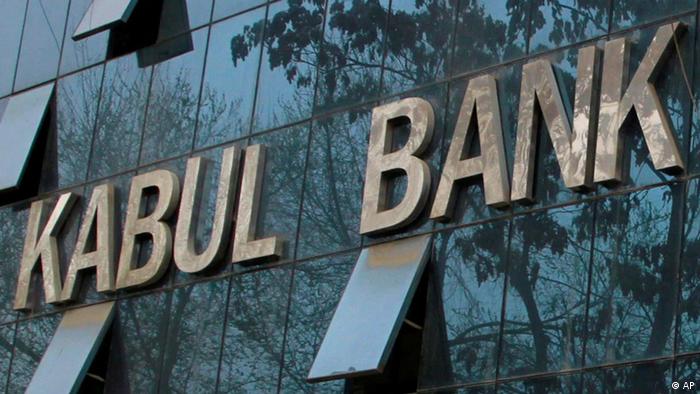
Once again, Transparency International has ranked Afghanistan quite low on its corruption index just after a scandal came to light surrounding the country's former largest bank and high-ranking officials.
The extent of corruption in Afghanistan has become evident in the recently uncovered scandal surrounding the country's former largest bank. A recently-launched investigative inquiry has even implicated connections to President Hamid Karzai's 2009 re-election campaignand scams engineered by stockholders and employees of Kabul Bank. Over 900 million dollars were fraudulently dispersed to over 10 individuals and seven companies in what has become the country's largest baking scandal and one of the largest bank failures worldwide; the bank collapse and government bailouts together make up around five percent of Afghanistan's total GDP.The investigation found that some of the money had been hidden in serving carts and food packaging and transported out of the country via the now-defunct Pamir Airways, which was owned by shareholders related to the bank. In November, 22 people appeared before a special tribunal to try those allegedly involved, including President Karzai's brother. Customers' desperation vs. government's hope "The Afghan people - the people who brought their money to the bank - are the ones who will suffer from this," said Suleiman in Kabul. He is one of the bank's many enraged customers. "The Kabul Bank used to have a good name. It was a trustworthy institution. But now, it is best to keep your money at home. People can hardly sleep since the scandal broke - they don't know what will happen to their savings. It is difficult enough to earn any money at all." Despite the negative headlines, the Afghan government is optimistic. The president's spokesman, Aimal Faizi, told DW that Afghan authorities had made progress in the bank scandal: "Both the ministry of finance and the central bank have been working to ensure that the money is safe. Both institutions are fighting to get the bank back on its feet."He added that the public prosecutor's office was investigating the case, and that progress had already been made. Furthermore, Kabul was fighting to get the former director of the bank, who had fled to the US, back to Afghanistan and put him on trial. Deeply rooted corruption But for many, this bank scandal brings to light just how deeply rooted corruption is in Afghan society. According to the Afghan NGO Integrity Watch Afghanistan, one in seven people pay bribes to authorities. The sums of the bribes can sometimes be as much as one third of the average monthly wage – which is around 35 US dollars. The organization named further traces of rampant corruption: a government-dependent justice system, rigged elections and arbitrary arrests. Once again, Afghanistan is very low on this year's Transparency International (TI) corruption index. The index was released December 5 and ranked Afghanistan number 174 out of 176 countries and territories. The Kabul Bank scandal was only the tip of the iceberg, according to Srirak Plipat, regional director of TI's Asia Pacific Department. "It shows that the country is in a crisis in terms of corruption. The state anti-corruption agencies are relatively weak and the growing amount of fraud is proof that the authorities cannot manage to maintain a functioning system." "Great loss to society" Srirak Plipat said he regretted, in particular, that the large amount of money lost meant that the Afghan people would lose out on social and economic development. "Over 10 percent of the government's budget is invested in the Kabul Bank. The money would be much better invested in the health or education sectors. It is a great loss for Afghan society." All efforts - even those of the international community - to curb corruption in Afghanistan have so far been in vain. Foreign aid money was merely squandered, Srirak Plipat pointed out. The anti-corruption expert suggests enforcing benchmark measures to keep the government inline. And he calls on international donors to make their flow of money into the country more transparent and to strengthen Afghanistan's anti-corruption agencies.

Clinton: NATO must 'step up' for Afghanistan

US secretary of state tells alliance meeting in Brussels it is "crucial" for donor nations to fulfill pledges of $4.1bn.

Hillary Clinton, the US secretary of state, has called on NATO allies to stand by their funding commitments to Afghanistan following the December 2014 international troop withdrawal. Speaking at a meeting of NATO foreign ministers in Brussels on Wednesday, Clinton reminded austerity-hit European nations of their commitments to the $4.1bn pledged annually to the Central Asian nation after foreign forces end their combat role. "It will be crucial for every nation to follow through on their commitments, and for those who haven't yet committed any funding to do so," Clinton said at the meeting of countries contributing to the NATO-led military mission in Afghanistan. With 35 per cent unemployment and an impending April 2014 presidential election, Clinton also stressed the importance of economic and political transition in Afghanistan. Thus far, donor nations have pledged $16bn to support the political transition and stabilising the economy.Clinton went on to say that regional support will be important to a successful transition in Afghanistan. "Every nation in the region has a stake in Afghanistan's future and a responsibility to step up and help secure it," she said. The Afghan government has often blamed neighbouring nations, particularly Pakistan and Iran, for security and political stumbles.
'Investment'
Guido Westerwelle, German foreign minister, said even struggling European nations must follow through on their promises to the Kabul leadership. "Of course that is not easy during times of tightening purse strings," he said. "But it is in the interest of European citizens. That is why I am making sure that the commitments made are kept." Janan Mosazai, Afghan foreign ministry spokesman, said though Kabul understands the financial strain these pledges may place on donor nations, it will be "an investment". "In our view, that is an efficient, a cost-effective investment in the long-term security that the people of Afghanistan and the people of the wider region and the international community share with each other and we will count on the continued full support of the international community on those pledges," he said. The calls for further financial commitments come on the same day as a report by the Corruption Perceptions Index ranked Afghanistan as the most corrupt nation on earth. The annual report from the Berlin-based group saw Afghanistan tie with Somalia and North Korea for last place.

NATO Claims Progress in Afghanistan

http://www.voanews.com
NATO is claiming significant progress on security in Afghanistan, based on a report its commanding general there made Wednesday via video link to alliance foreign ministers meeting in Brussels. NATO Secretary General Anders Fogh Rasmussen says statistics presented during the briefing “clearly prove” NATO's strategy is on track to hand over full security responsibility to Afghan forces in two years. He said the briefing from U.S. Marine Corps General John Allen indicates there has been a “significant decrease” in violence in parts of Afghanistan that have already been handed over to Afghan forces, which include areas where 70 percent of the Afghan people live. “It proves that we are pursuing the right strategy," said Rasmussen. "We hand over in a gradual process lead responsibility to the Afghans. The Afghan security forces are quite capable to take on that responsibility.” The secretary general's optimistic comments came even though officials acknowledge that Taliban insurgents remain capable of launching significant attacks, and NATO plans to keep a significant number of combat troops in Afghanistan as the transition to Afghan control continues. NATO plans to move to an advise-and-train mission at the end of 2014. As the foreign ministers' meeting ended Wednesday, U.S. Secretary of State Hillary Clinton repeated the U.S. commitment to continue to help Afghanistan beyond that time. And she said a political settlement must be part of the country's long-term plan for stability. “We also continue to support an Afghan-led, Afghan-owned reconciliation process," she said. "Ultimately, we believe there has to be a political resolution to the ongoing disputes among Afghans themselves.” Clinton said the United States would like to see “all Afghans” denounce violence and join the political process and help move the country toward stability and respect for human rights. The Washington Post reported that the U.S. government is launching a new effort to get the Afghan reconciliation process moving, and that Secretary Clinton discussed the issue on Tuesday with Pakistan's foreign minister. Secretary Clinton noted that this was likely her last NATO meeting. She plans to step down early next year. She claimed “impressive” progress at NATO during the last four years, including an improved situation in Afghanistan, a successful military mission over Libya, better relations with Russia, the addition of Croatia and Albania and movement toward having Georgia join the alliance, and the development of a missile defense shield for Europe. She said NATO is critical, and is needed “more than ever.” And she called on her fellow officials to make clear to their often skeptical populations that the alliance is well worth the investment of money and effort.

Suicide bombers kill 3 soldiers in Pakistan

Associated Press
A pair of suicide bombers rammed their truck filled with explosives into the gate of an army camp in northwestern Pakistan on Wednesday, killing three soldiers and wounding more than 20, intelligence officials said. Many were wounded when the blast caused the roof of a military hospital at the camp to collapse, said intelligence officials, speaking on condition of anonymity because they were not authorized to talk to the media. Some of the soldiers were critically wounded, and officials warned the death toll could rise. The attack occurred in Wana, the main town in the South Waziristan tribal area, which was the most important sanctuary for the Pakistani Taliban until the army launched a major ground offensive in 2009. The army says it has made great progress in flushing the militants out of the area, but attacks still occur periodically.

India ranked 94th in Corruption Perception Index ratings

India's image on tackling corruption has not improved with Transparency International's Corruption Perception Index (CPI) placing it at 94th rank out of 176 nations this year.
Though India was ranked at 95th position last year, the international watchdog said it has started evaluating the positions through a different formula beginning this year and hence this cannot be compared to last year's ranking. However, the last year's rank of 95 would be 96 if it is calculated using the new methodology which implies there was a "slight improvement" in the index. This year, India has a score of 36 out of 100 on a scale from 0 (highly corrupt) to 100 (very clean) which is a result of an average of 10 studies including World Bank's Country Performance and Institutional Assessment and Global Insight Country Risk Ratings. India was ranked 72 among 180 countries for the first time in 2007 and since then the country's rankings have been showing a decline. While India was placed at 87 in 2010, the position was 95 in 2011. This year, India is ranked below neighbouring countries like Sri Lanka and China, while Afghanistan, Iran, Nepal, Pakistan and Bangladesh fared much worse than India when it came to corruption in public sector undertakings. Sri Lanka, which is slowly limping back to normalcy after a three-decade civil war, is ranked at 79 while China is ranked at 80. Denmark is placed at the top spot with a score of 90 while Finland and New Zealand follow very closely. Countries that occupy the bottom ranks in the index are Myanmar, Sudan Afghanistan, Somalia and North Korea."Corruption is a hydra-headed monster and governments have to make efforts to tackle it from all sides. This can only happen if all stakeholders work together," said P S Bawa, Chair of Transparency International India. Anupama Jha, Executive Director of Transparency International India, listed the efforts being taken by the watchdog to create awareness about corruption among people and steps being implemented to curb the menace. According to the 2012 CPI, majority of the 183 countries scores less than 50 -- a clear indication that corruption is perceived to be rampant world wide. S K Agarwal, Co-chair of Transparency International India, hoped that the "Supreme Court will soon deliver its verdict on a PIL on debarring criminals from contesting elections". This year, the Transparency International has updated its CPI methodology allowing for year-over-year comparisons for all editions published from this year.

Finding a Win-Win Solution to Doctors’ Strike in Balochistan

The Baloch Hal
By: Malik Siraj Akbar
At least 12 patients, all in critical conditions, have died in Balochistan for not receiving immediate medical treatment because of the ongoing protest initiated by disillusioned doctors. More injured and sick people are destined to die in a similar indifferent fashion as the strike shows no signs of coming to an end in the near future. Uncompromising positions taken by the Balochistan government and the doctors has hindered a quick settlement of the standoff so that people in the province, who have access to the poorest health facilities in Pakistan, once again receive whatever medical treatment is available. For more than six months, doctors have been on the roads protesting for one or the other reason. Earlier in the year, the Young Doctors Association protested, and also clashed with the local authorities, while demanding an increase in salaries. They demanded packages equal to what their counterparts received in the Punjab province. The ongoing strike, which began 49 days ago, draws attention to a more important and genuine concern: The issue of deadly attacks on doctors and their kidnapping for ransom. These are very pressing concerns the doctors have raised and they have every reason to be upset with the government for utter inaction against those involved in unchecked crimes. Doctors were forced to go on a strike when, on July 22nd, 2012, Bolan Medical College (B.M.C.) surgeon Dr. Din Muhammad Bangulzai was kidnapped from Mastung district on his way to Quetta. The Pakistan Medical Association (P.M.A.) played a wonderful role in mobilizing the doctors to stand up for their rights. However, when the government could not do anything to release Dr. Bangulzai, his family had to pay Rs. 8 million (against the earlier demand of Rs.50 million) to the kidnappers as ransom to secure his safe release. While Dr. Bangulzai safely returned home on July 30, another prominent doctor and educator at Balochistan’s lone medical college, Dr Ghulam Rasool, a psychiatrist, was kidnapped on August 1, by armed men who intercepted his car and took him away. After remaining in the custody of his kidnappers for more than two weeks, Dr. Rasool was eventually freed on August 17 presumably after his family too paid ransom to the kidnappers. This did not end the cycle of violence against the doctors. Because the government’s failures further emboldened the kidnappers. Hence, on October 16, Dr. Saeed Khan, an eye specialist affiliated with the Layton Rahmatullah Benevolent Trust-run hospital in Quetta as its Superintendent, was also kidnapped for ransom. The kidnappers helped Dr. Khan for nearly 42 days before releasing him on November 28. According to Dawn, Dr. Khan’s family had to pay “heavy ransom” (approximately Rs. 8 million) for his release. While endeavoring to press the government to ensure Dr. Khan’s release, the doctors encountered stiff government resistance. Embarrassed over its failures, the government, on November 19, arrested at least 70 doctors who had taken out a rally on Zarghoon Raod, where the official residences of the Governor and the Chief Minister are located, in support of kidnapped Dr. Khan. Furthermore, the government gave a 24-hour ultimatum to the doctors to end their strike or face termination. On November 25, Balochistan’s Health Secretary announced at a press conference that the government had officially suspended at least 73 protesting doctors, stopped their salaries and ordered them to evacuate the their official residences. The government said it reprimanded the doctors because they had entered the ‘red zone’ of the city where they were not allowed to demonstrate. The doctors, on their part, defied the official warnings, tightened their protest by deciding not to attend even emergency duty during the hypersensitive month of Muharram when the government had warned of possible terrorist attacks from Sunni militant groups against the Shias. In order to grapple with the uncontrolled frenzy, the Balochistan government requested the Pakistan army to send military doctors to the province. Despite the safe release of Dr. Khan, the P.M.A. refuses to call off its strike. It has put forward a list of demands to the government. The organization says now it has given the government an ultimatum of at least seven days to meet their demands. The P.M.A. has warned of a nation-wide strike on the lines of what is being currently observed in Quetta if the government does not comply with its demands. Firstly, the P.M.A. wants the Balochistan government to pay back the amount the doctors have had to pay to the kidnappers because, they rightly argue, it is the government’s job to protect the citizens and bring them back safely if and when they are kidnapped by the criminals. The doctors also want the government to withdraw all the cases registered against the protesting physicians and and reinstate those who were suspended from their jobs. While we fully support all demands tabled by the doctors, we would also like to implore their top leadership to immediately find a way to end this strike in the greater interest of the ailing patients. People’s sufferings are increasing day by day in Balochistan because of this prolonged strike. The doctors should understand that they are not the only victims of bad governance and rampant lawlessness that has engulfed the province. Almost everyone in Balochistan lives in a constant state of fear of being killed, kidnapped, tortured or robbed. The best thing the doctors can and should do is to tell their patients and fellow citizens that they, unlike the government, do care for them.

Pakistan: Targeting terrorism: Only 4% of terror suspects convicted

Despite concrete evidence gathered against those involved in terrorist acts, conviction rates in Khyber-Pakhtunkhwa (K-P) hover at a measly 4%. Accrued evidence include camera footage and confiscated suicide vests which could count as ‘ample proof’ in court, K-P Information Minister Mian Iftikhar Hussain said at the Officer’s Mess following the 153rd cabinet meeting of the K-P government on Tuesday. Home Secretary Muhammad Azam Khan told the cabinet that the 4% conviction rate of terrorists was surprisingly low. Hussain said a large number of those arrested have been 13 or 14-year-old boys who benefit from being classified as minors under the law. He proposed not treating the minors involved in terrorist activities under the same law. He reiterated that the concerned departments were reviewing the situation to ascertain why terrorists were “escaping” due punishment. Linking the terror activities to Afghan influence, Hussain said the withdrawal of foreign forces from Afghanistan does not necessarily guarantee peace and normalcy in the Pakhtun region. “Peace will remain elusive till terrorist groups are present in the country. We need to pay attention to how we can seriously eliminate them so we do not become the next Afghanistan.” Hussain reiterated that it was not just the job of law enforcement agencies to fight terrorism, and that all government departments need to “tidy up” and provide good governance across the country. This, he said, will lead to coordinated efforts to effectively tackle militancy.Speaking about the Malakand division, inclusive of Swat and Dir, the cabinet meeting heard how it is still a hot bed for militancy. “Keeping in mind cross-border attacks from Kunar and Nuristan in Afghanistan, there is still the need for an army presence in these areas,” said Hussain. Currently, the army is not present in the entire Malakand division. It has withdrawn from the Shangla, Buner, Kalam and Behrain regions by handing over law and order responsibilities to the police. K-P Police Inspector General (IG) told the cabinet that although there has been an increase in terrorist acts this year, their effectiveness ratio has dwindled as compared to incidents since 2009. “However, incidents targeting police and politicians have increased overall,” said Hussain. The IG also said that due to increased planning and a more effective strategy in 2012, the number of police deaths at the hands of terrorists has decreased by 49% and civilian killings by 47%.The ratio of suicide attacks has decreased by 37%, while the ratio of foiling suicide attacks by law enforcement agencies improved by 29%, he added. In total, 73 police personnel have been killed and 218 civilians (108 in Peshawar) died of terrorist acts from January 1 this year till November 31.

Lahore: Victims of red tape, ambulances going waste in LGH’s basement

Forced to hire expensive private ambulances, the poor patients at Lahore General Hospital (LGH) are being asked to comply to a complicated chain of command to get government ambulances, Pakistan Today has learned. The hospital has a fleet of 10 highly equipped emergency vehicles that remain parked in the basement of the emergency ward. However, due to red tape, the attendants are forced to hire private ambulances. “We want to shift our patient to another hospital and need a government ambulance, but the staff here has asked for money. What’s the use of getting a government ambulance if we still have to pay,” Muhammad Ishtiaq, an attendant at the hospital told Pakistan Today. A deputy medical superintendent asking not to be named maintained that running these ambulances need CNG and petrol and added that ambulances could not run on water. The LGH is one of the city’s major public health establishments catering to hundreds of patients on a daily basis. Per the official emergency registration counter, around 1,500 patients visit the emergency ward, while the figure is 2,000 for the outpatient department (OPD) everyday. “From amongst such a huge numbers, many need an ambulance to shift patients in critical condition to another health facility,” a nurse said. Another official in-charge of the ambulances dispelled the impression, saying the ambulances were meant for shifting only those patients who were recommended by the medical superintendent. “The ambulance service is free-of-cost, as the government pays of Rs 2.5 million per annum for the POL of vehicles and the hospital generators,” he added. However, 9 of these 10 ambulances were still parked in the basement, with the official explanation being they had just returned after dropping off patients to their destinations. Scores of private ambulances parked in the hospital parking were witnessed around the hospital, while drivers were offering their service to attendants pulling their patient on a stretcher out of the emergency. LGH Medical Superintendent Dr Hassan, however, denied the impression saying that, “The ambulance service is free-of-cost for patients recommended by me during the day, while the additional medical superintendent grants permission during the night shift”.

Pakistan: Wheat support price raise

THE FRONTIER POST
The Economic Coordination Committee (ECC) on November 22 rightly increased the support price of wheat by Rs 150 per 40 kilogramme allowing the farming community to sell their commodity at Rs1200 instead of the existing price of Rs1050. Some may think the raise has been given to woo farmers in the lead-up to the coming parliamentary election but the fact is that such hikes are a routine matter to make agriculture an attractive and profitable activity as the farming community has been lamenting over the escalating costs of various inputs and every year this cost is going higher and higher. What actually made the ECC to take the decision was to formalise a barter trade deal with Iran for which the committee session was held earlier than the schedule. This meeting was scheduled for November 26 but the government rescheduled it for November 22 seizing the opportunity of the presence of Iranian President Mahmoud Ahmadinejad in Islamabad to participate in the D-8 summit conference. Tehran had earlier showed reservation over buying Pakistani wheat at $300 per ton but later changed its mind when international prices started going beyond $350 per ton. Pakistani wheat is cheaper than the international price because of low transportation charges. Thus, when the Iranian president arrived here for D-8 moot, he informed Pakistani authorities that his country would push the barter trade deal with Islamabad. Iran will purchase one million tons of wheat and 500,000 tons of rice. In return, it will sell oil, raw iron ore and fertilizers to Pakistan. What is, however, is matter of concern is that the cost of agricultural produce has gone higher but the per acre yield is on the decline. Its consumption of fertilizer per hectare is approximately 133 kg whereas the yield is substantially low. Agriculture is the mainstay of Pakistan's economy, contributing 24 per cent of the GDP, employs 48 per cent of the country's labour force and contributes about 60 per cent to export earnings. That is why the farming community thinks it is no longer a sustainable productivity which depends on a whole-system approach with an overall objective of preserving the health of the land and people. This activity warrants a long term solutions instead of short term treatment. A host of problems are contributing to lower than potential productivity and soil degradation, depletion of water resources, mismanagement of irrigation systems, age-old and poor farming practices, and, above all, unjust distribution of land holdings, are some them. And shortage of energy makes the issue further complex. The use of farm inputs, particularly of fertilizers, is inadequate and inefficient and land energy use is low. Besides, the availability of quality seed is limited. Agricultural research is lagging behind new challenges. Agricultural extension services are not tuned to modern technology. Likewise, the flow of information from research to farmers is inadequate and coordination between policy, research and extension is not keeping pace with the world. The government extends more thanRs50 billion every year in agricultural loans to farmers but this amount seems on the lower side of the requirement and that, too, is not reaching small farmers. In nutshell, the governments at the center and in provinces do not seem to be giving importance to agriculture which it should have given as the national lifeline activity. These governments should have set up united networks on agricultural extension and the use of fertilizers with experts' cooperation; a programme to give on-the-soil training of the use of fertilizers should have been initiated; agro-ecological zones should have been established for a long term plan on testing soils in different regions for nutrient supplying capacity with a focus on various crops; and examine the environmental impacts of fertilizers, especially that of fertilizers on soil fertility and agricultural product quality. However, what surprises is how and why agriculture has lagged behind in the overall national activity when landlords have been holding political sway over all governments in the past and also at present. What, however, stand is being ignored in the whole milieu is the tiller of the land who still hardly keeps body and soul together. How can farming be profitable when the peasantry is deprived of its genuine rights? Will mere raising the support price of one commodity make any difference in the overall scenario?

Malala's Friends: KP Govt decides to shift Kainat to Peshawar

The Government of Khyber Pakhtunkhwa has taken the decision after the girl injured along with Malala Yousafzai namely Kainat was hit by unidentified miscreants at her home. Sources said the provincial government is making efforts to tighten security of Kainat and Shazia Ramzan. On Wednesday, extremists blew up the house located in the neighbourhood of Kainat’s residence. After this, the provincial government decided to arrange proper accommodation for the two girls in Peshawar. Sources further said that Kainat’s family members have shown consent to move to Peshawar or Islamabad.

Corruption in Pakistan on the rise: TIP

Transparency International Pakistan (TIP) on Wednesday issued its annual report over corruption in 2012, raising Pakistan's rank from 42 to 33. The 2012 index ranks 176 countries by their perceived levels of public sector corruption. The index assigns scores of between one and 100, 1 being highly corrupt and 100 clean. The global civil society organization has expressed concern over the growing corruption in the country saying that the corruption of Rs12600 billion was reported in different sectors of Pakistan during the last five years. The organization reported that the corruption has reached its peak during the last year. Meanwhile, Somalia, North Korea, Afghanistan has been declared as the most corrupt countries across the globe while Denmark, Finland and New Zealand tied for first place out of 176 countries – meaning they were perceived to have the lowest levels of state sector corruption.

Zardari will not lead election campaign

Federal Minister for Religious Affairs, Khursheed Shah said Wednesday that President Asif Ali Zardari would not lead the election campaign. Speaking to the media in Islamabad, Shah praised Nawaz Sharif for playing his role in maintaining a democratic system in the country. He said the Asghar Khan case had been buried and did not want the PML-N president to be dragged into the issue by the DG FIA. Shah also called for delimitation of constituencies to be held across the country not just in Karachi.

President Lee Meets with Visiting Pakistani President Asif Ali Zardari

President Lee Myung-bak met with visiting Pakistani President Asif Ali Zardari Tuesday morning, to discuss ways to enhance cooperation in various fields, including economic affairs, trade and infrastructure and development projects. The two countries also signed a Memorandum of Understanding on railway development in Pakistan, and an agreement in which Korea would provide aid to the Islamic country. The Korean government passed the agreement -- under which Korea would send experts, volunteer workers and necessary goods to Pakistan -- at a Cabinet meeting late last month. During his three-day stay here, President Zardari will also meet with Korean business leaders as part of efforts to increase trade and investment between the two nations.