Sunday, November 18, 2012

U.S. drone missions may be secretive, but the results are worthwhile

By:Dave Sherman
America’s manned military presence in Afghanistan is winding down, at the direction of President Barack Obama, and troops are coming home. They still remain in danger, though, from both our nation’s enemies and some of the very troops we are trying to train, as defenders of their homeland. One way to protect our troops is by using unmanned aerial vehicles, or drones. At fewer than 30 feet in length, drones were primarily developed as reconnaissance vehicles. They can soar over unsafe territory for the best type of intelligence-gathering missions: those that would give our troops a better chance of success. Published information said that drones can travel up to 400 miles, scout a site for 14 hours and return to their base. In recent years, armed drones have been employed, by virtue of their stealth and speed, to take out leading al-Qaeda figures. Unfortunately, civilian deaths have occurred, as well. Unarmed drones have positive uses along the U.S. border with Mexico, as well. According to The Washington Post, the U.S. Office of Customs and Border Protection is planning on having as many as 24 Predator drones, that can be deployed within three hours, anywhere in the country. Detractors rose up, earlier this month, when an unarmed U.S. drone was fired upon, by Iranian fighters. American officials stated that the craft was flying over international waters at the time and was not damaged, in the engagement. The objection to the use of drones by the U.S. military apparently stems from a fear that these weapons can be used away from the spotlight more commonly afforded to troops on the ground. A secret mission to spy on and possibly kill anyone we suspect of terrorist activity – or who would plot attacks on our troops – may stay secret forever. This is a reality that may accompany wartime strategy, for decades to come. An opinion column recently written by Rosa Brooks, a former senior adviser at the U.S. State Department, blasted the secrecy surrounding the use of drone missions. “This amounts, in practice, to a claim that the executive branch has the unreviewable power to kill anyone, anywhere, at any time, based on secret criteria and secret information, discussed in a secret process, by largely anonymous individuals,” she wrote. “‘Trust us’ is a pretty shaky foundation for the rule of law.” Perhaps Brooks would like her own chair in the Situation Room. Only a handful of individuals knew about the mission that would result in the death of Osama bin Laden. Secrecy was paramount to its success. Does the average American really need to know if, and when, drones flew over his compound to set the stage for the mission? I think not. We would all like to think we can trust our military. As the commander in chief, the president is ultimately in control. There is one other advantage to having drones handle high-risk missions in hostile territory. If they are lost in combat, they don’t leave grieving families behind.

D8 summit: Bangladesh, Malaysia PMs bow out

Bangladesh’s Prime Minister Sheikh Haseena Wajid has informed the government of her non-participation in a key summit on developing countries to be held in Pakistan later this month, sources said. Earlier reports suggested that the Bangladesh would be represented at the conference by Foreign Minister Dipu Moni, however, sources said his attendance also seems unlikely now. According to foreign ministry officials, Bangladesh Foreign Secretary Mohamed Mijarul Quayes, or one of the advisers to the Bangladeshi premier, will now represent Bangladesh in the summit. Sources told The Express Tribune that the Bangladesh premier and foreign minister handed over a list of demands to Foreign Minister Hina Rabbani Khar during her visit. The demands included putting on trial former military and political personalities allegedly involved in the fall of Dhaka. Furthermore, Bangladesh sought an official apology from Pakistan for war crimes allegedly committed during the 1971 war. Pakistan has said it has regretted the war crimes in different forms in the past and that “it was time to move forward.” Meanwhile, the Malaysian prime minister also excused himself from attending the conference due to prior engagements. However, the reason for his absence could not be confirmed. According to reports, the Malaysian deputy prime minister would lead his delegation in Islamabad. The D-8 Summit is scheduled to be held on November 22 in Islamabad.

Saturday, November 17, 2012

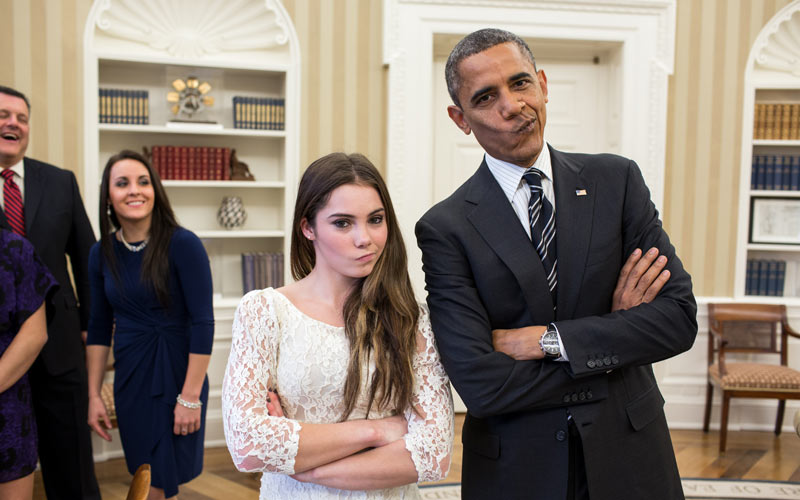
Photo: Obama Is Not Impressed

President Obama proves, once again, that he’s as cool as can be. In a photo op with the U.S. Olympic Gymnastics team, Obama and McKayla Maroney did a joint impression of her famously “not impressed” face after she received a silver instead of gold medal in the vault during the London Games 2012. “Did I just do the Not Impressed face with the President … ?” Maroney tweeted along with the picture, which, just like her original picture from this summer, quickly went viral.

Bhagat Singh Chowk: LHC dashes hope of immediate name change

Two months after the announcement to rename Shadman Chowk after the revolutionary hero Bhagat Singh came from the City District Government Lahore (CDGL), supporters of this change in name commemorating his role in the struggle for independence against the British colonial rule faced yet another disappointment as the Lahore High Court on Friday stopped CDGL from issuing a notification of renaming Shadman Chowk after Bhagat Singh. This stay order adds to the disappointing saga of renaming Shadman Chowk because ever since CDGL announced the decision in late September to make the name change, opposition groups have been proactively seeking to block the decision. This opposition bore fruit when a single bench comprising Justice Nasir Saeed Sheikh passed the order on a petition filed by Tehreek-e-Hurmat e Rasool (PBUH) challenging the decision to name Shadman Chowk after Bhagat Singh. The court also sought a reply from CDGL till November 28. The petitioner’s counsel Aftab Ahmad Bajwa argued before the court that it was previously believed that the chowk would be named after Chaudhry Rehmat Ali, the iconic figure who suggested the name of Pakistan during the independence movement. He accused human rights organisations of pressuring the CDGL into renaming it after Bhagat Singh instead. He further argued that CDGL had established Dil Kash committee to take suggestions of the citizens for this purpose, but had went on to rename the chowk after Bhagat Singh despite severe opposition to the idea. He maintained that the renaming of Shadman Chowk is not only illegal but goes against the principles of the Freedom Movement. The court after hearing the arguments barred the CDGL from issuing a notification till November 28 and sought a reply. The Tehreek e Hurmat e Rasool has been among the biggest voices of opposition to this renaming. Last week, they put up plaques across the chowk, demanding the name change to be stopped immediately. The announcement in September was welcomed not only by citizens but also by groups who had been demanding this name change for many years. This renaming is important to such groups because it was at this place that the iconic leader, as a young man, was hanged for his role in the resistance against the British rule. When the announcement came from CDGL, opposition groups moved to block the change, because of which CDGL established the Dilkash Lahore Committee to seek the recommendations of citizens. While initially the Dilkash Lahore Committee received more recommendations against the move than in favor, over the past few weeks, citizens actively wrote to the committee head Salima Hashmi demanding that the name change was justified as Bhagat Singh was an inspirational figure in the independence movement whose sacrifices and struggles should be honored. Opposition groups, including Tehreek-e-Hurmat-e-Rasool, to the contrary, have argued that this renaming is an attempt to appease the pro-Indian elements of Pakistan and is an insult to the ideology of Pakistan. They further argued Pakistan was a Muslim country hence its major roads and squares should be named after Muslims, not Hindus or Sikhs. They had also threatened to protest against the decision. Reacting to the LHC stay order, one citizen told Pakistan Today, “The Lahore administration’s decision to accept this demand of progressive activists to re-name the chowk in the name of a revolutionary hero brought great joy to myself and members of the Bhagat Singh Memorial Committee. It is disappointing that this name change was then considered to be against the ideology of Pakistan when Jinnah, Pakistan’s founding father himself reiterated secularism and wanted to keep state and religion apart. He himself had appreciated the struggles of each and every individual who had sacrificed for freedom.” Another citizen, Sana, said, “LHC just sounds like a bearer of bad news sometimes. I do not see why this particular chowk should not be renamed after Bhagat Singh. He died here, hung by the colonial powers he was fighting against. How can we not honor that? It is shameful enough that he is not mentioned in our history books. They had to spit on his name like this too?” Rizwan, another concerned citizen, said that it was appalling how a chowk that had been neglected for decades became suddenly became the object of a struggle between two opposing forces just because Bhagat Singh’s name became involved. “This just goes to show how determined we are to teach our children we want to stay ignorant, and we don’t want to give them inspirational heroes, just more and more bitterness.”

Afghanistan says Pakistan will help in peace talks

Associated Press
A top Afghan peace mediator hailed Pakistan's recent decision to free nine members of the Taliban who favor negotiations, saying Saturday it was a sign Islamabad is willing to help bring the militant group to the table and end Afghanistan's 11-year-old war. The cooperation of Pakistan, which has longstanding ties to the Taliban, is seen as key to jumpstarting the stalled Afghan peace process. The Afghan and U.S. governments accuse Islamabad of backing insurgents — an allegation Pakistan denies — and say many militant leaders are hiding in the country. Afghanistan needs Pakistan's help in reaching out to top Taliban leaders, but still insists that peace talks be led by Afghans, saying it will fight those who try to interfere. Salahuddin Rabbani, the head of the High Peace Council who led a delegation to Islamabad this week, said Pakistan's prisoner release marked a shift in the neighboring country's policy. In the past, the Pakistanis have arrested Taliban figures interested in peace talks with the Afghan government, he said, but now the government is releasing them and pledging to give them safe passage to negotiations. "It seems that Pakistani officials have realized that a close cooperation between Afghanistan and Pakistan can be effective for the peace initiative," Rabbani said. "Of course, this is a vision we have been insisting on for a long time." Rabbani, whose delegation spent four days in Islamabad this week meeting with high-ranking government, political and religious leaders, said Pakistan has pledged to release additional Taliban prisoners who will be allowed to stay in Pakistan, return to Afghanistan or seek residence in a third country. While nothing can guarantee they won't rejoin Taliban fighters, Rabbani said he was confident that they would continue to cooperate with the peace council. "We will be in contact with those released," he said. Some members of the peace council suggested that Pakistan's religious and political leadership might be having a change of heart — in part because of violence committed by Pakistan's branch of the Taliban movement. "This is the first time that we really saw some changing of the minds while we were speaking," said Qayumuddin Kashaf, a member of peace council and head of the top religious council in Afghanistan. He said that in the past, Pakistani religious leaders insisted that insurgents were waging a holy war in Afghanistan. "Now we see some changing of the mindset because the security situation in Pakistan is very bad if not worse than Afghanistan." Others in Kabul believe, however, that Pakistan may simply be playing a waiting game, trying to appease Afghanistan with small gestures until international troops leave Afghanistan and the Taliban can try to mount a comeback. Despite the prisoner release, the peace process still has little traction and has experienced many setbacks, including the assassination of Rabbani's father in September 2011. Burhanuddin Rabbani, a former Afghan president and the first leader of the peace council, was killed in his Kabul home by a suicide bomber posing as an emissary from the Taliban. It's unclear whether the Taliban are interested in negotiating peace, but the insurgent group welcomed the release of the prisoners. "Without a doubt, releasing prisoners fosters confidence between two neighboring countries and their nations," Taliban spokesman Zabihullah Mujahid said in a statement issued Friday. During the delegation's trip, both countries appealed to the Taliban to join the peace process and sever ties with al-Qaida and other international terror networks. They said Pakistan, Afghanistan and the United States would provide safe passage to members of the Taliban who want to talk with negotiators. They agreed to work with the international community to remove prospective Taliban negotiators from the U.N. sanctions list so they can participate in any peace talks. The sanctions include a travel ban, arms embargo and assets freeze. Afghanistan and Pakistan also agreed to hold a conference of religious leaders and scholars from Islamic countries to address violence in the name of Islam, council members said. The peace council did not identify the prisoners who were freed, but an Afghan official familiar with the peace process gave The Associated Press a list of eight. They were: —Nooruddin Turabi, former Taliban justice minister. —Jahangirwal, a special assistant to Taliban leader, Mullah Omar. —Qutub, a Taliban leader. —Abdul Salaam, former Taliban governor of Baghlan province. —Maulvi Matiullah, the Taliban's director of the customs house in Kabul. —Mahamad, the Taliban's former governor of Kunduz province. —Sayed Saduddin Agha, a former Taliban commander. —Allah Dad, the Taliban's former deputy minister of communication. The ninth prisoner released was Anwarul Haq Mujahid, the son of the late Mohammad Yunus Khalis, who fought against the Soviets in Afghanistan in the 1980s. He has joined his family in the northwestern Pakistani city of Peshawar, according to a cousin and family friend who spoke on condition of anonymity because they were not authorized to talk to the media. Afghan officials are still hoping for the release of the Taliban's former deputy leader, Mullah Abdul Ghani Baradar, who was captured in Pakistan in 2010. Baradar was reportedly conducting talks with the Afghan government that were kept secret from the Pakistanis.

Pakistani lawyer beaten after taking on army chief

http://www.sunherald.com
A Pakistani lawyer accused the military of sending thugs to beat him up after he challenged the army chief in court. Inam Ur Raheem, a retired military lawyer, said three vehicles surrounded his taxi Wednesday night in the garrison city of Rawalpindi. Several unidentified men jumped out and attacked him with sticks, leaving him with cuts and bruises. He claimed they said they were there to teach him a lesson. The attack came a day after Raheem filed a petition in the Islamabad High Court challenging the validity of a three-year extension given to army chief Gen. Ashfaq Parvez Kayani in 2010. The army denied any role in the attack Friday, calling Raheem's allegations baseless. Read more here: http://www.sunherald.com/2012/11/16/4307906/pakistani-lawyer-beaten-after.html#storylink=cpy

Pashto writer Prof Azam passes away

Noted Pashto writer and poet Professor Mohammad Azam Azam breathed his last at the age of 72. He will be laid to rest at his ancestral town of Rajar in Charsadda district today (Saturday). Professor Azam’s friends and colleagues in literary circles have offered condolences on loss of a learned educationist, playwright and poet who have been rewarded Tamghaa-i-Imtiaz, a civil award, for his performance. “Professor Azam led a full life. Sittings with him always increased my knowledge,” said Pashto Academy Director Dr Salma Shaheen. Ms Shaheen, who is also famous Pashto poet, said Professor Azam had command of Pashto literary techniques and proverbs and was famous for ghazals, which had symbols and rhythm. “He was a man of knowledge and like any creative person always remained restless,” she said. Professor Azam left behind a widow, three daughters and a son. Born on December 21, 1940 in Rajar village, he did his PhD in Pashto Literature and began career as a lecturer in historic Islamia College, Peshawar in 1963. He also served as the chairman of Pashto Department at University of Peshawar and Dean of Faculty of Oriental Languages. After retirement from University of Peshawar in 2000, he joined Academy of Letters as the regional director of Peshawar in August 2006. Professor Azam, author of 11 books, had rendered meritorious services to Pashto language and literature for 45 years. He was a writer known for unique style and for having introduced and contributed to modern literary trends both in subjects and style in Pashto prose and poetry. Among his books are Pashto Afsana, Tahqeeq Auo Tanqeed, Pashto Adab Ke Kerdarnigaaree, Lashey, Rehman Baba Da Ulas Shair, Pukhtanee Romanoonah, Da Aqidat Guloona, and Andazoonah. Radio Pakistan, Peshawar and PTV, Peshawar Centre aired more than 500 songs and ghazals of Professor Azam. They are still popular with the people. Professor Azam is considered a trendsetter in Pashto drama on both radio and television. He is known for his Pashto plays that portrayed a true picture of Pashtun culture and society. At the start of PTV, Peshawar Centre in 1974, he wrote the first-ever Pashto TV serial ‘Rukey Laarey’ (The lost paths). Another popular play ‘Namoos’ (Honour) in both its Pashto and Urdu versions are also very popular. As for his poetry, Professor Azam claimed to be inspired by the Progressive Writers’ Movement.

Pakistan Takes Step, Not Leap, Toward Afghan Peace

In a move intended to encourage the Taliban to join stalled peace negotiations with the Afghan government, Pakistan this week released at least eight jailed members of that militant group.
The releases, granted by Islamabad after repeated requests, is seen by some as a sign that Pakistan is finally prepared to play a constructive role in jump-starting reconciliation efforts that have yielded little since they began several years ago. Skeptics -- including the Afghan government -- say that while it is a positive step, Islamabad must do much more to prove its commitment to the Kabul-led peace process. The Afghan government and its Western allies have stepped up efforts to find a political solution to the ongoing battle against Taliban militants. There are fears that the country could descend into civil war or face another Taliban takeover if militants are not brought into a serious peace process before 2014, when the majority of U.S. and NATO-led ISAF troops will leave. Releases Welcomed Islamabad is seen as a crucial player in the process. Pakistan's ties to the Taliban date back to the 1990s, when it provided arms, training, and intelligence to the militants. Islamabad was one of only three countries to recognize the Taliban government after it took power in Afghanistan in 1996. After the regime's fall in 2001, following the U.S.-led invasion of Afghanistan, many Taliban leaders took shelter inside Pakistan. Pakistan's release of the prisoners, who were reportedly freed late on November 15, has been met with widespread praise -- from the Afghan government to the Taliban to U.S. officials in Kabul. According to media reports, among the released prisoners are three prominent Taliban: Mullah Nuruddin Turbai, a former justice minister; Allahdad Tabib, former deputy minister of communications; and Mullah Jahangirwal, a special adviser to Taliban leader Mullah Omar. Also reportedly released were former Baghlan Province Governor Abdul Salam; former Konduz Province Governor Mowlawi Muhammad; two former government officials, Haji Qutub and Mowlawi Matiullah; and a former senior commander and deputy minister, Sayed Saduddin Agha. Michael Kugelman, South Asia associate at the Woodrow Wilson International Center for Scholars, says that although Pakistan's action is a positive step, the release is only "a single goodwill measure and nothing else." Kugelman says Pakistan needs to develop a clear policy before it can be said that it has changed course and is willing to play a positive, constructive role in ending the war in neighboring Afghanistan. "If there's one thing we can say about the Pakistani government, it is that it really doesn't have a clearly defined or strategic policy in terms of how it wants to proceed toward an Afghanistan endgame," Kugelman says. "On the one hand, there's been a lot of talk about having a key role at the negotiating table, but on the other hand there have been mixed messages coming from Islamabad for a number of months and years. It's still unclear what Pakistan wants from all of this." Taliban Cracks? Kugelman adds that the Taliban itself is sharply divided on the issue of peace talks. The Taliban, which he describes as a "very diffuse and complex" group, disagrees on how it should proceed with the peace process, with some hard-line Taliban protesting vehemently against participating in negotiations of any kind. David H. Young, a Washington-based conflict-resolution expert and adjunct fellow at the American Security Project, says Pakistan is unlikely to abandon its policy of maintaining strategic influence in Afghanistan via the Taliban. Young, who was a civilian adviser to the U.S. Army in eastern Afghanistan, says the prisoner deal is in keeping with Pakistani interests but is unlikely to help the peace process. Referring to Pakistani intelligence's long-rumored support for the Taliban, Young says that if the country really wants to encourage reconciliation in Afghanistan it should stop the Inter-Services Intelligence (ISI) from financing and arming the Afghan Taliban. Another step, Young says, would be for Islamabad to release Mullah Abdul Ghani Baradar, the Taliban's former deputy leader who was arrested in Pakistan's southern city of Karachi in February 2010. Baradar was reportedly at the top of the 40-man wish list of prisoners Kabul wanted Pakistani authorities to release. Young says the fact that Islamabad has neither released nor transferred Baradar for the past two years indicates how reluctant it is to hand over the one figure who is likely to facilitate reconciliation efforts. Baradar was reportedly arrested for facilitating secret talks between Kabul and the Taliban leadership. Young predicts that Pakistan will drag out the peace process until the Taliban is in a stronger bargaining position, namely after 2014 when international troops leave. For now, he says, small gestures like the release of Taliban prisoners strike a good balance for Pakistan between securing its own interests in Afghanistan, where it seeks a more Islamist government in Kabul, and appearing agreeable to facilitating the peace process. Mixed Signals Assuming that Pakistan wants to play an active role in the peace talks, Young says the country will only accept a political settlement in Afghanistan that gives it strategic influence in Kabul and minimizes the role of archrival India. "[A policy] that involves high-level Taliban involvement in the government, guaranteed number of officials in the various ministries, and something that enables them to save face and say that we have overthrown the [Afghan President] Karzai government or instilled a more fair and stable government," Young says. "A government that is more reflective, in part, of Taliban values in order to keep Pakistan's buffer in southwest and southeast Afghanistan." The release of the Taliban prisoners in Pakistan came after Salahuddin Rabbani, leader of the Afghan High Peace Council, the presidentially appointed body tasked with negotiating with the Taliban, held talks with senior Pakistani government officials. Afghanistan's ambassador to Pakistan, Omar Daudzai, has welcomed the release of Taliban prisoners and announced on November 16 that Islamabad has agreed in principle to release even more. The Taliban has likewise hailed the freeing of its members. "We consider this as a good step and welcome it," Taliban spokesman Zabihullah Mujahid was quoted as saying. "We wish to have more prisoners released. This will undoubtedly increase trust between two countries and people." The release of Taliban prisoners comes after a string of setbacks. In March, the Taliban said they were suspending talks with the United States only weeks after they opened a political office in the Gulf state of Qatar. Kabul objected to the Qatar talks on the basis that they were not Afghan-led. The Taliban said in a statement that the U.S. approach was "erratic and shaky" and accused Washington of going against their word.

Quetta: Doctors strike enters 32nd day

According to reports, the doctors in Balochistan including Quetta boycotted work at OPDs of government hospitals for the 32nd consecutive day for the recovery of their abducted colleague Dr Saeed Ahmed Khan. The general operation theaters were also shut.The strike is being observed on the call of the Pakistan Medical Association (Balochistan) and other organizations of doctors. According to the PMA, the strike will continue until Dr. Saeed is recovered.The provincial government has failed in making any headway in recovering Dr Saeed Ahmed Khan, an eye specialist and head of LRBT Hospital, who was kidnapped on October 16 from Saryab Road in the provincial capital

Pakistan: ‘Banned organisations involved in target killings more than Taliban’

http://tribune.com.pk
Members of banned organisations are involved in incidents of bank robberies and other crimes in Karachi, more than the Taliban, said CID Functional Crime Unit head Raja Umar Khitab. Speaking to Roznama Express, SSP Khitab said there was no proof of Taliban’s presence in the Old City area or Lyari, however, reports have been received regarding the presence of banned Lashkar-e-Jhangvi (LeJ). On the issue of rising extortion cases, the SSP explained that summoning information regarding extortionists’ hideouts takes up to one week and till that time, the suspects have already shifted to another place. Members of banned organisations team up with Lyari gangwar suspects and distribute chits among businessmen and traders. The chits have their numbers on them, which are used by police and other agencies to locate them, he detailed. Locating the extortionists takes up to 5-7 days and within that time, people have already paid extortion after coming under immense pressure and the same happens in kidnapping cases, the SSP said. The kidnappers take ransom within a week and release the kidnapped person, while most of the families do not even register kidnapping cases. The SSP lamented that the technology available to the law enforcement agencies is not up to the mark and a great deal of crimes can be curbed in the city if the technology if upgraded.

Pakistan: Release of Taliban prisoners

EDITORIAL : Daily Times
Afghanistan’s High Peace Council (HPC) delegation led by chairman Salahuddin Rabbani has returned to Kabul with a partial success in getting some middle level Taliban prisoners released from Pakistan’s custody. Differences on the list of prisoners were reported during the HPC’s sojourn in Islamabad. The HPC was desirous of more senior Taliban prisoners being handed over, considering this a necessary condition for pushing the potential peace process with the Taliban forward. Of particular interest to the Afghans was the release of Mullah Abdul Ghani Baradar, Mulla Omar’s one time second-in-command, and Mullah Toorabi and two other insurgent commanders. However, despite Islamabad not acceding to this request, the door has been left open for their later release should the initial process yield positive results. The responses to the development have been fairly predictable. The Afghan government has welcomed it, while the Taliban have dismissed it out of hand, saying the released prisoners are no longer part of the Taliban and therefore their release will make no difference. Besides, the Taliban spokesman reiterated, they still stand by their position that the Karzai government is a puppet and they will only negotiate with the US. Deputy Chief of the US Mission in Pakistan Richard Hoagland too has welcomed the release while carefully distancing Washington from any hint of a role in the outcome. Hoagland was at pains to stress that this was a bilateral mater between Pakistan and Afghanistan, but expressed the hope that it may open the door to meaningful negotiations. It may be recalled that the US efforts in the past to open a channel of communication to the Taliban foundered because, in the case of Mullah Baradar, our ISI did not deem it fit to allow unfettered access to the Americans and reportedly sat in on the meeting, while the Qatar initiative for talks proved abortive when the US dragged its feet on the release of five Taliban prisoners held in Guantanamo Bay. The 12-point joint statement at the end of the HPC’s visit, while it failed to reveal the names of the released prisoners, emphasised the long standing demand of the Afghan government that the Taliban sever links with al Qaeda and other international terror networks. The proposal has been mooted that in order to facilitate the process of contacts, the Taliban negotiators’ names could be removed from the UN sanctions list, which inhibits their ability to travel. As the Qatar initiative’s failure demonstrated, it is not clear what the Obama administration’s policy on this issue is. Mulla Omar’s still being on the wanted list of the US is considered one obstacle, while the recent designation of the Haqqani network, a group closely allied to the Taliban, as a terrorist organisation by both the US and the UN could prove another stumbling block. There is little doubt that all parties to the conflict have their eye on the looming withdrawal of ISAF forces from Afghanistan by 2014, with any residual US military presence in the country still far from a settled matter. Clearly, the apprehension that Afghanistan might well spiral downwards into more chaos and conflict after 2014 has all regional and international players worried. If the partial acceptance of the HPC’s request for prisoner releases by Islamabad is any guide, it may be that these apprehensions are finding expression in the willingness of the Pakistani military establishment to explore the possibility of a different, negotiated course rather than continued reliance on proxy actors to ensure an outcome favourable to Pakistan’s interests. The proxies strategy is by now clearly yielding diminishing returns in the shape of the home grown Taliban movement in Pakistan, with a nexus and support from at least the Haqqani network. When the openly declared enemies of the Pakistani state are being helped and supported by the one time protégés of the military establishment (the Haqqanis), there could not be a more cogent argument for a rethink in the interests of peace and stability in Afghanistan, which cannot but help something similar emerging in Pakistan too.

Pakistan: Tax amnesty scheme

Editorial:The Frontier Post
If state institutions that are supposed to ensure rule of law and socio-economic justice are themselves involved in legalizing corruption, this will lead to institutionalizing fraud and irregularities to inculcate the worst dishonesty that would strengthen corrupt practices as a culture to further destabilize Pakistan. The question arises out of a the Federal Board of Revenue scheme to allow tax evaders to whiten their black money and assets at home and abroad within three months against a nominal one-time charge. The federal cabinet astonishingly approved the damaging scheme the other day and also granted blanket exemptions to tax dodgers from investigation by the National Accountability Bureau and the Federal Investigation Agency. The schemes will now be presented to parliament through a bill probably hopefully next week. FBR believes that the schemes will bring 3.1 million more people into the tax net, including frequent travelers, owners of multiple bank accounts and those living in posh areas but not figuring on the tax roll. These corrupt people will be able to benefit from the Tax Registration Enforcement Initiative and the Investment Tax Scheme, 2012, within three months. Black money will be whitened if a tax evader pays Rs40,000 to legitimize assets worth up to Rs5million in the first month. Those availing the offer in the second month will have to pay Rs50,000 and in the third month Rs70,000. The scheme is the brainchild of the new FBR chief Ali Arshad Hakeem who probably thinks that one corrupt practice can be fought with another. But as two wrongs cannot make one right, his novel plan cannot work, at least in a society which is now embracing the norms of democracy and institutional supremacy to move to a civilized culture. The FBR should have been worried about affluent Pakistanis paying one of the lowest tax in the world. Pakistan is a home of around 180 million people and only 260,000 of them have paid tax consecutively for the last three years. Their overall contribution has been a paltry 9.1 per cent of GDP last year, among the lowest in the world because the country has one of the least effective fiscal regimes across the globe. The government should, instead, have cracked down on tax-evaders, not letting them off the hook particularly when the FBR chairperson says that he is in possession of the entire data of tax evaders including politicians, businessmen, cricketers and showbiz people. But he has preferred to wait for the parliamentary approval of the new scheme that, according to him, would create an environment where it would not be difficult to hit them. If the data of all tax evaders is already available, the government should publish a tax directory and shame the evaders instead of bringing out this scheme that is bound to destroy an already fragile tax system that is afraid of the big and the powerful. And who can be sure of the parliamentary approval of the plan when influential people are there to frustrate the passage of any law hitting their vested interests. This seems difficult also because the next parliamentary elections are not far away and the country’s elite club would have a great leverage in its hands. Nevertheless, the whole legal edifice of the scheme is tilted in the favour of a particular class and, therefore, unfair to those who pay tax. It is also discriminatory in favour of cheaters and evaders and certainly falls within the mischief of the violation of the constitution. The International Monetary Fund bailed Pakistan out with an $11.3 billion loan package in 2008, but the deal was ended last November after Islamabad rejected strict reform demands, largely over tax. The IMF has repeatedly warned Pakistan that it needs to make urgent structural reforms to boost growth, currently scraping along at around three per cent, enough to absorb its rapidly growing population into the workforce. It also told Pakistan to introduce general sales tax, which it says could generate another three per cent of GDP in revenue and introduce property taxes. A shortsighted government is currently focusing only on meeting its target of collecting 2.37 trillion rupees in tax this year, 10.1 per cent of GDP, up from 1.33 trillion in 2008-9 for which the highly controversial amnesty scheme no matter how dangerous it would be in future.

Bilawal Bhutto greets new CPC head Xi Jinping

Radio Pakistan
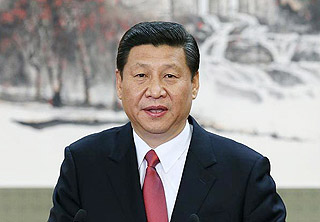
Chairman Pakistan People's Party Bilawal Bhutto Zardari has felicitated the newly-appointed Secretary General of the Communist Party of China Xi Jinping.Bilawal Bhutto Zardari expressed the hope that the Sino-Pak bilateral ties will continue to grow under the new Chinese leadership. In his message of felicitation‚ he said PPP will continue to strive to strengthen the ties with Communist Party of China. He said the PPP believes in peaceful transition of power and political leadership and derives immense satisfaction from the smooth transition of leadership in Communist Party of China during the recently held 18th National Congress. Bilawal Bhutto expressed the hope that the new leadership headed by Xi Jinping would lead his great nation to greater glories and successes.

Friday, November 16, 2012

Jordanians call for king's ouster during rally

Associated Press
Calls for the ouster of Jordan's King Abdullah II grew Friday, as thousands of protesters packed the streets of the capital. Larger groups have demonstrated in Amman since the unrest sparked by fuel price hikes started three days ago, but Friday's march constituted the biggest single bloc yet to call for the end of the U.S.-backed monarch's regime. The crowd of some 2,500 also chanted slogans reminiscent of last year's uprisings in the region. Similar rallies turned unusually violent earlier this week, with one person killed and 75 others, including 58 policemen, injured. Overall turnout on Friday was smaller than in past days, however, in Amman and elsewhere, with crowds varying from about 150 people in the southern town of Tafila to 3,000 in the northern city of Irbid. The protesters, frustrated over a sharp increase in fuel and gas prices, were led by a hodgepodge of activists that included the largely secular Hirak youth movement, the powerful Muslim Brotherhood, and various nationalist and left-wing groups. Jordan is plagued by poverty, unemployment and high inflation. "I already can barely feed my 4 children with my monthly wage of $500, how can I afford this price increase?" asked Thaer Mashaqbeh, 47, a civil servant protesting in central Amman, as the crowd chanted: "The people want to topple the regime," and "Abdullah, you either reform or you go." The government has defended the price rise, saying it was necessary to reduce a massive budget deficit and foreign debt, part of Jordan's efforts to secure a badly needed $2 billion loan from the International Monetary Fund to shore up the kingdom's shaky finances. Despite the appearance of counter protesters, authorities reported no clashes in the 10 protests that took place across the country. Thousands of pro-government loyalists took to the streets nationwide on Friday to support the king, waving batons and threatening his critics. "Abdullah is our king and God is our witness," they chanted. The unrest began late on Tuesday after the government raised prices for cooking and heating gas by 54 percent and some oil derivatives by up to 28 percent. In response, thousands of Jordanians poured into the streets, pelting riot police with stones and torching police cars, government offices and private banks in the largest and most sustained protests to hit the country since the start of the region's uprisings nearly two years ago. Police say "outlaws" with criminal records took advantage of the disorder to rob banks and homes, attack police stations, courts and other government buildings and carry out carjackings. At least 157 people have been arrested since Tuesday. Jordan has been hit by frequent, but small, anti-government protests over the past 23 months, but this week's demonstrations have shifted the focus from the government squarely to the king. So far, Abdullah has largely maintained control, partly by relinquishing some of his powers to parliament and amending several laws guaranteeing wider public freedoms. But his opponents say the reforms are insufficient, and the violent protests Tuesday and Wednesday indicated many in Jordan are growing frustrated with the government's inability to address a host of trouble, mainly unemployment and poverty. Jordanian government officials have accused the Muslim Brotherhood of inciting the unrest to score political points ahead of parliamentary elections in January. The fundamentalist group is boycotting the polls over disagreement with the government on an election law that it says favors pro-king loyalists. Brotherhood spokesman Jamil Abu-Bakr, however, said his group "isn't against the king." "Our followers in the protests did not call on his downfall," he said. "But we want him to seriously introduce real reforms to ease the popular agitation that may lead to an explosion in the street."

CHINA: Smooth transition paves way for change

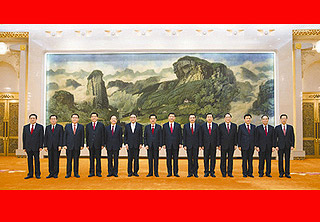
Xi Jinping was elected general secretary of the Communist Party of China (CPC) Central Committee at the first plenary session of the 18th CPC Central Committee, realizing a peaceful, orderly and institutionalized transition of power. It marks an achievement in the political reform that began with China's reform and opening-up. Members of the Standing Committee of the Political Bureau of the 18th CPC Central Committee, who were elected at the first plenary session of the 18th CPC Central Committee, met both Chinese and foreign journalists in the Great Hall of the People Thursday. In the first three decades since the founding of the PRC, the CPC witnessed several significant political struggles within the top leadership, especially during the Cultural Revolution (1966-76), which led to social turbulence.
The reasons were complicated, but the fundamental one was the existence of lifelong tenure, which was closely entangled with intra-Party unification, basic political order and the authority of CPC's top leadership. It was in 1980 that then Chinese leader Deng Xiaoping raised discussions about the reform of the CPC leadership succession system, proposing that no leader should hold lifelong tenure. In 1989, Deng resigned as chairman of the Central Military Commission, ending the lifelong tenure system of China's top leadership that had lasted for 40 years. Deng could be compared to George Washington, one of the founding fathers of the US, who refused to run for a third term, establishing the customary policy of a maximum of two terms for a US president. Deng's move provided possibility for establishing a system with fixed terms of office and a smooth transition of top leadership within the framework of democracy and rule of law. The third generation of Chinese leadership, led by Jiang Zemin, further carried out Deng's path, and systemized and standardized the tenure of China's top leadership. As intra-Party democracy proceeded, the third generation of leadership passed on power to the fourth generation led by Hu Jintao, including the highest positions in the Party, government and military, namely general secretary of the CPC Central Committee, China's president and chairman of the Central Military Commission, in three consecutive years of 2002, 2003 and 2004. This is the first peaceful and institutionalized political succession since the history of the CPC and the foundation of the PRC. In 2008, Xi Jinping was elected vice president of China by the National People's Congress. In the fifth plenary session of the 17th CPC Central Committee in 2010, Xi was appointed vice chairman of the Central Military Commission. During the first plenary session of the 18th CPC Central Committee Thursday, he was just elected as general secretary of the CPC Central Committee. This marks a systemized political succession from Hu's fourth generation of leadership to Xi's fifth generation. Such systemization, together with the promotion of intra-Party democracy and reform of officials' selection system, paves the way for the stability and development of China's political system. The factions that used to emerge in the Party and political infighting are rarely seen. The systemization has a number of significant points. The authority of an individual leader does not play a dominant role in the interests of the Party and the country. He has no necessity to take extreme measures to maintain his absolute power. This will make other top leaders hold a tolerant view toward differing opinions, thus eventually realizing democracy. Moreover, the power transitions within the Party, government and military within the next few years will constrain and supervise the supreme power to some extent, and avoid interest entanglement and low efficiency. A systemized leadership transition can help the Party to adjust public policies. It creates possibilities that multiple parties can take turns to carry out public policies to meet public demands. Meanwhile, it avoids potential social disturbances caused by party elections and the rotation of ruling parties in developing countries which lack a democratic tradition.

Pakistan: Around 79% water supply schemes supplying unsafe water

Pakistan Council of Research in Water Resources (PCRWR) revealed on Thursday that water from 79 percent of sources of the functional Water Supply Schemes (WSS) in Punjab was unsafe for drinking purposes. Around 40 percent of these schemes were unsafe due to microbiological contamination, while about 23 percent contained major pollutants like total dissolved solids, chloride, sodium, iron, arsenic and fluoride, which caused diseases like diarrhoea, dysentery etc. According to a report titled ‘Technical Assessment of WSS’ by PCRWR, 31 percent of the schemes in Punjab were over 25 years old, 23 percent were between 20-25 years old, 16 percent were 15-20 years old while 30 percent schemes were 10-15 years old. Spokesperson PCRWR Lubna Naheed told APP that most of the schemes had used G1 and AC pipes for their distribution system, the useful life of which were less than 20 years. She said that WSS should be properly planned, constructed and maintained so that pollution in the system could not occur. “The performance of water treatment should also be checked periodically by the management team and concerned authorities,” said Lubna. The survey showed that awareness regarding safe water was very limited in the general public as well as among managers of supply schemes. Lubna said that measures were required to improve management of schemes and revenue collection procedures to increase income and make the scheme financially sustainable. “Water theft and wastage through leakages should be properly monitored and remedial actions are required to minimize leakages and wastage of water in timely manner,” she said.

Malala status updates 16 November 2012

Malala Yousufzai remains stable and comfortable at the Queen Elizabeth Hospital Birmingham. A total of £9,982.13 has now been donated to a dedicated fund within the QEHB Charity. The fund was set up soon after Malala arrived in Birmingham on 15 October, in response to the outpouring of concern from around the world and people wanting to make a donation to show their support. The QEHB Charity is independent to the hospital. It provides funding for facilities and equipment not normally available on the NHS, such as patient and family welfare, educational projects and research. Once Malala is well enough, the charity will ask her how she would like the money to be spent.

Banned at home, Pakistan brewery seizes Hollywood moment

What have Demi Moore, Bruce Willis, underage drinking and Pakistan's only beer maker got in common? It was the arrest of the Hollywood stars' daughter in New York with a can of Murree Brewery's beer last June that propelled the company out of obscurity and into the spotlight. Inundated with emails asking about its beer, Murree Brewery seized on the free publicity to launch expansion plans outside the Muslim nation, where alcohol is banned and those that do drink can become targets of Taliban militants and other Islamist fundamentalists. Five months since the arrest, the 150-year-old company says it has lined up distributors that could see its flagship beer arrive on liquor store shelves in the United States and Dubai as early as the first quarter of next year. "Demi Moore and Bruce Willis' daughter gave us multi-million dollars worth of publicity by default. We plan to go to the United States and make a queue to hug both the daughter and the mother," Sabih ur Rehman, special assistant to the chief executive, joked with Reuters. Murree Brewery, established in 1860 by British colonial rulers to supply beer to their troops, is desperately looking for business overseas to hedge against its uncertain domestic market. Prohibition was imposed in Pakistan in 1977, and non-Muslims and foreigners must obtain a government permit to purchase alcohol at designated retailers, mainly upscale hotels.
It also produces a line of juices and non-alcoholic drinks, but is prohibited from advertising its beer, whisky, gin and other liquor products. Relying on word of mouth and an influx of thirsty diplomats and foreign investors, annual alcohol sales have grown an average of 20 percent over the past five years, reaching $26.8 million in the 2012 financial year. The company's stock is up 175 percent so far this year, trading at 160 rupees on November 13, far outpacing the 42 percent rise in the Karachi Stock Exchange benchmark 100-share index. Despite its strong sales, the company's net profit after taxes rose a mere 1 percent year-on-year to 525 million Pakistan rupees ($5.48 million) for the year ended June 30, due to an increase in alcohol taxes and rising labour costs. LIVING IN FEAR Murree Brewery's chief executive, Isphanyar Bhandara, lives in constant fear that authorities will shut down alcohol production at any moment as Pakistan drifts towards a more conservative interpretation of Islam. "Pakistan is moving more and more to the right. That is not good for Pakistan and not good for us," said the 39-year-old executive at his office in Rawalpindi, a military city just outside the capital, Islamabad "Each day we are allowed to survive, that is a blessing." The brewery, which employs 1,100 people, is located within the headquarters of the Pakistani Army and across the street from the residences of the country's top military commanders, making it arguably the most protected brewery in the world. To ensure survival, it has turned to a European brewery to produce its beer for overseas consumption due to a government ban on alcohol exports, which was eased just recently. The Pakistani brewery said it has reached an agreement with the Czech Republic's Zatec Brewery initially to produce at least 5,000 cases, each containing 24 bottles of Murree Beer, annually from next year. That amount will double in 2015, Rehman said. However, the managing director of Zatec Brewery, Martin Kec, said he knew nothing of this arrangement and his firm had only produced a very small amount of Murree Beer in the past. Murree Brewery also said it has lined up distributors in Texas, Dubai and Denmark to market and sell its lager under franchise agreements, and is looking for partners in Britain and other European countries. "We are virgins and we are looking for husbands," said Bhandara, whose family is from the country's non-Muslim Parsi minority. But Murree Beer faces a difficult road as a new player in the crowded U.S. and European markets, dominated by the industry's "big four" -- Anheuser-Busch InBev, SABMiller, Heineken and Carlsberg. The company's last attempt to break into Western markets failed after it was forced to end its partnership with an Austrian brewery due to high costs and logistical problems. Analysts say a few tabloid headlines will not be enough to be successful and Murree will also need a multi-million-dollar promotional campaign. It is also unclear the type of consumer they are trying to sell their beer to, since most Pakistanis living abroad are Muslim and unlikely to drink alcohol. "They are never going to be anything but a very niche player. It's unlikely they will be able to push as hard as major brewers with their own niche lagers," said a London-based stock analyst, who asked not to be identified because he did not cover Murree Brewery. But company officials are hopeful, particularly for the U.S. market. "Americans will drink anything. They are like fish," Rehman said.

Rabbani offers ideas for Karachi peace

Pakistan People’s Party leader and senior politician Senator Raza Rabbani on Thursday came up with some suggestions to heal the wounds of Karachi. Speaking in the Senate, the upper house of the parliament, the veteran politician called for action against terrorists after evolving consensus amongst political and religious parties in Karachi, which has long faced wave of violence, ranging from sectarian and ethnic to political. He said coordination among the state agencies needed to be increased. The senator said committees should be formed on province level to maintain peace, adding that suspected terrorists should not be freed from lockups. He said that the detainees should be given their legal rights. Rabbani said that SHOs should not be appointed at the behest of others while law enforces should be provided with the phone tracking system facility. He said that efforts were continuing to pit state institution against each other. Raza Rabbani warned that measures taken on country’s situation might prove ineffective. Rabbani said that the parliament and the judiciary were attacked to scandalize the institutions.

Who will save Karachi from burning?

By:AHMAD ZIA TULLA
"Nero fiddled while Rome burned" is an old adage but in Pakistan, in reality, we can claim that this is happening. While Karachi and Balochistan are burning, our government and its different parts are sitting calmly giving TV interviews and suggestions and slanders about the culprit or culprits. But the question is who is looking out for Pakistan? The people are burning in the fire of misery, of devastation and continuous bombings. Others are burning in the furnace of prejudices, hatred and apartheid. Whether it is news channels showing 'breaking news' or the front page of daily newspapers, both speaks at length about Karachi situation. This situation is nothing new but of grave concern. So many questions and no answers, and whenever asked a direct question, our politicians start spinning a web of deceit or a yarn or fairy tales such as "Once upon a time there was Musharraf…" We all would like to know who are the ruthless killers? Where do they plan such unholy actions? What is their motive behind such callous acts? How they are able to escape despite police and civilians around? Why is the government and concerned agencies showing apathy towards the situation? And most importantly when will this violence be over and we could all go back to a normal life? The states foremost responsibility is the security of life and property of its subjects, whether it is a house, a school or a business. More than eighty people have been killed in the last ten days, and there is no hope of any improvement in the coming days. We need a collective effort on the part of political parties, Ulemas, civil society, government, judiciary and all other concerned authorities to join hands to overcome this catastrophe. We as public should become vigilantes and point out any criminal we see among us. We should be on high alert.

Pakistani Man Sentenced To Death For Blasphemy

Radio Free Europe
A Pakistani court has sentenced a man to death for blasphemy.
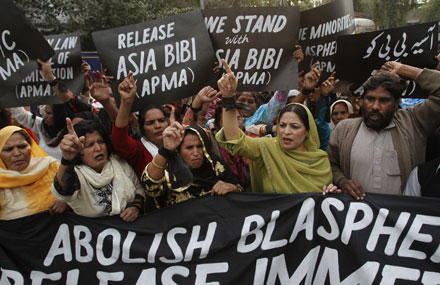
Police identified the man as Hazrat Ali Shah, who was reported as being in his mid-20s. He was convicted on November 15 after a trial in the remote northwestern district of Chitral. Amir Khan, a local police official, says Shah was arrested in March 2011 for profanity against the Prophet Mohammad. It is the first death sentence in a blasphemy case after a Christian woman, Asia Bibi, was given a death sentence in 2010. She has not been executed yet. Her case brought international criticism of Pakistan's blasphemy laws, which were introduced in the 1980s by former military dictator Zaiul Haq.

Zardari: Karachi violence isn’t govt’s failure

President Asif Ali Zardari has said that deteriorating law and order situation in Karachi is not government’s failure but a plot by terrorists to distract the government from its mission. Addressing an Eid Milan party in Mandi Bahauddin on Wednesday, President Zardari said terrorists were aggravating situation in Karachi to undermine efforts of the state in the war against terror. He resolved that the government would never let the enemies weaken the country. The president announced that free and fair general elections would be held on time, adding that rigging could not be done on current electoral rolls.“We intend to stabilise Pakistan through resources wherever we found them. We cannot follow philosophy of 5 years, we have to look beyond,” the president said. He called for joint efforts to serve the country, adding that government’s rivals also conceded that the parliament was going to complete its tenure.“We didn’t work for a single party; instead we worked for Pakistan, we will prosper if Pakistan will, we will drown if Pakistan sinks,” he added.The president, while addressing in Punjabi, recalled that he spent his youth days in the jails of Punjab where he learnt the language. He said that several parties decided to boycott the 2008 election under Musharraf but it was Benazir Bhutto Shaheed who opted to go for elections and persuaded other parties to do so. “The history will decide who was right, but at this point in time we stand successful. Even our rivals accept that we have strengthened the parliament and transferred powers to it,” Zardari claimed. He said that politics is a noble practice and nurturing enmity in it is dangerous for the nation. The president said: “We are fighting for our future generations and will successfully lead Pakistan into the 21st century.” He said that the government wanted all parties to sit and think about the better future of Pakistan. Talking about the foreign policy, he said that the government tried to strengthen relationship with China, Turkey and other countries to make Pakistan better for the coming generations. Zardari said that conspiracies against the government and the country were being hatched but “if anyone thinks they can weaken us, they are mistaken.”He said that security, prosperity and stability of the country depended on democracy and his party was trying hard to promote democratic values. He said that even a patwari would not be willing to share his powers but he had given executive powers to the prime minster. He said that the government believed in providing equal educational opportunities to the under-privileged and talented youth of Punjab with an aim to bring them at par with the privileged. A rally was to be held earlier but postponed due to the busy schedule of the president.

Peshawar: Govt urged to establish writ, rebuild schools

Participants of a dialogue on ‘Female Education and Government’s Responsibilities’ on Thursday urged the government to establish its writ in the province, rebuild the schools blown up by militants, stop interference in transfer and posting of teachers and take tangible steps for higher literacy rate. The event was organised by the provincial Information Department at Peshawar Press Club in collaboration with Khyber Union of Journalists. Provincial Information Minister Mian Iftikhar Hussain, who was the chief guest on the occasion, said the government was committed to promoting education, especially female education, in the province but necessary changes in syllabus was a must for it.“We tried to replace the old syllabus but some people raised a hue and cry over it and as a result, we couldn’t do it,” he said. The minister, however, said steps were being taken to improve literacy rate in the province. Women rights activist Rakhshanda Naz called for pro-female education policies in the province and said primary education should be assigned to female teachers, who could manage it in a befitting manner. She said women should be given due share in all sectors for national progress. Ms Naz also demanded that the government address the mobility issue affecting female teachers. Religious scholar Maulana Ihsanullah explained the significance of female education in Islam. He said education was compulsory for both men and women and that there was no restriction in Islam on female education. Mr Ihsanullah said the perception that ulema were opposed to female education was false and misleading. Arshad Haroon of SPO demanded introduction of uniform education system in the country. He regretted that the education situation was dismal in the country, especially in Khyber Pakhtunkhwa. Sadia Marwat of Aurat Foundation said Pakistan was unlikely to fulfill international obligations on education under Millennium Development Goals. She said the government’s performance on education was a big letdown. Religious scholar Rohullah Madni called for better allocation of funds for seminaries in the budget and said the government should promote both modern and religious education in the province.

President Zardari’s promise

Editorial: Daily Times
In his address at an ‘Eid Milan Party’ the other day, President Asif Ali Zardari ranged over a wide exposition on the present state of democracy and politics. The main points elucidated by the president included an assurance that there would be no delay in the elections since steps had already been taken, including updated voters’ lists, to hold fair, free and transparent elections on the scheduled date. This appeared to be the president’s answer to some conspiracy theory reports in the media that the government may be contemplating postponing the elections on one pretext or the other. The president underlined the PPP’s perception that democracy was the only way forward. He offered an olive branch to the estranged PML-N by arguing that although the two mainstream parties had parted ways, this did not mean that they were enemies. Differences should not be stretched too far, he argued, and tolerance and accommodation should be the operative watchwords. Zardari admitted our nascent democracy still had many shortcomings, but said he would welcome inputs from all the political forces to overcome these and frame a 25-year or even 50-year plan as traditional five-year plans could not steer the country out of the current situation. Political parties needed to be strengthened to consolidate democracy. The PPP, he asserted, was working to turn Pakistan into a state that can meet the challenges of the 21st century. In a reiteration of his presidency’s achievements, he reminded his audience that he had delegated his inherited powers to parliament, before which now every power was bowing (although some would argue to the contrary!). The Asghar Khan case verdict had vindicated the late Benazir Bhutto’s accusation at the time that the 1990 election was snatched from her. Today, the president asserted, conspiracies against democracy would not succeed. He celebrated the fact that for the first time since the 1970s, parliament was about to complete its five-year term. Turning to Karachi, the president refuted the argument that the state had failed in the city, countering by pointing to the elements under attack in the war on terror, who were attempting to destabilise Karachi to distract the government’s attention from the ongoing campaign against them. Last but not least, President Zardari positioned himself squarely as carrying forward the ideology of Zulfikar Ali Bhutto (ZAB) and the mission of Benazir Bhutto. While there is much that is of value and unassailable in the president’s remarks, some areas of concern remain. It is heartening to note, despite our litany of discontent at the shortcomings of the democratic system ushered in in 2008, that despite political rivalries and differences, there are hardly any takers in the country for authoritarian or dictatorial dispensations. In this regard, the main opposition leader, Mian Nawaz Sharif, has shown a maturity that is all too rare in our polity and refused to go along with any scheme to upset the democratic system through any extra-constitutional intervention. Despite his complaints and critique of the PPP, this statesmanlike attitude has lent stability and longevity to the democratic system and is a reminder of the continuing influence of the ideas enshrined in the Charter of Democracy. A country that is a stranger to peaceful transfer of power through the ballot stands poised on the brink of the first such transition in our history. Surely the import of this turn cannot escape anyone familiar with the chequered history of Pakistan. While the president and co-chairperson of the PPP has adhered to the reconciliation philosophy Benazir Bhutto left behind as a legacy, it must also be admitted that he has not always lived up to the promise of carrying all political forces along. Nevertheless, this being often an intrinsic part of political rivalry, we should be grateful for the not so small mercies of the record of the last five years: no political prisoners, freedoms across the board that have allowed virtually every group in society to peacefully agitate its demands, and haltingly but surely, a political culture groping its way towards civilised conduct in public life. This is not to say all is hunky dory, only to mark whatever progress is visible. President Zardari spoke in the same breath of the ideology of Zulfikar Ali Bhutto and his own desire to see a just society in which the child of a poor person would be on an equal footing with a child of the rich and powerful. With the greatest respect, the PPP is widely seen now as detached from its early socialist moorings and merely paying lip service to the founding ideas of the party. This is not just the president’s doing. It is something he has inherited from the trajectory of the party after ZAB’s hanging. The PPP retreated after that tragedy into a mode resembling nothing more than appeasing the powerful state and non-state forces inherently hostile to the party because precisely of its earlier élan. Whether that has worked as a strategy or brought the party closer to the goal of a more just society must be left open as a question and await the verdict of history.

Pakistan: Fertilizer sector faces 2.7mn ton loss in 2012

http://www.brecorder.com
Fertilizer manufacturers in Pakistan faced over 2.7 million tons urea production loss in 2012 mainly due to gas curtailment, as they could only produce 4.2 million tons of urea against a total production capacity of over 6.9 million tons per annum. Industry sources told Business Recorder on Thursday that during last five year fertilizer industry invested $2.3 billion in the country based on the government approved policy designed to encourage investment in the sector. However, unprecedented gas curtailment to fertilizer plants, in violation of existing supply contract of 12 months a year, has caused significant loss to the manufacturers during the year 2012. They informed that so far the industry had suffered a production loss of over 2.7 million tons in 2012. The domestic fertilizer plants produced only 4.2 million tons of urea against a total production capacity of over 6.9 million tons per annum. Decline in domestic production of urea also compelled the government to import huge quantity of urea to meet farmers’ demand, they said and added “to meet this production loss government imported over 1.23 million tons of urea spending 566 million dollars and also paid over 24 billion rupees subsidy to keep the imported urea’s prices at par with locally produced urea.” On the other hand, sources said, cash strapped Ministry of Finance is not very happy over this situation as Pakistan has all the required production facility to meet the domestic demand and even Pakistan can export over one million ton of urea to earn hundreds of millions of dollars every year if domestic fertilizer plants are provided with uninterrupted gas. The country’s overall urea production capacity is about 6.9 million tons annually, as against the demand of some 5.8 million tons, providing an opportunity to export some one million ton of urea annually. Industry sources said that despite all the pressing problems, domestic urea price is still Rs 1331 per bag below international urea price, which is six times larger than feed gas subsidy of Rs.216 per bag. “The current domestic urea price is Rs 1,659 per bag, including company price Rs 1,422 per bag and Rs 237 per bag General Sales Tax and advanced tax, as against average international urea price of Rs 2,990 per bag inclusive of GST during 2012,” they informed. The encouragement of fertilizer industry by the government was meant to pass on benefit of domestic manufacturing to the farmer. This is evident from the fact that during 2012 domestic urea sold at $311 per ton while it received gas at $3.8 per MMBTU. In comparison Middle Eastern producers sold urea at $470 per ton while paying approximately $0.7 per MMBTU for gas. They said that over the last five years the farmers have received benefit of Rs 500 billion, of this Rs 140 billion was contributed by the government in form of feed gas subsidy and Rs 360 billion was contributed by the fertilizer manufactures by keeping urea prices significantly lower than the international prices. Sources claimed that SNGPL-based plants were facing the worst-ever crisis of their history as such gas curtailment was never witnessed before 2012. They said that the sector despite making an investment of $2.3 billion in last 4-5 years on new production capacity, making Pakistan world’s 7th largest urea manufacturer country, is sitting on an idle urea capacity of over 2.5 million tons. They also claimed that if the same gas curtailment continues during 2013, the SNGPL-based fertilizer plants may force to shut down permanently resulting in lay off of highly skilled manpower, increase in bad debts and huge burden on national exchequer, to import urea to meet the urea shortfall. A fertilizer sector official commented that it’s not just fertilizer plants that would face the burnt, the whole farmers’ community as well as the government would be the ultimate losers if fertilizer plants with over 2 million tons of capacity were shutdown due to unavailability of gas. They said that government needs to support fertilizer industry to ensure inexpensive local urea to farmers and import fuel for the power sector and the industry which is more cost effective.

Peace in Afghanistan

Pakistani authorities on Wednesday freed eight to 10 Afghan Taliban prisoners at the request of peace negotiators to help boost the troubled peace and reconciliation process in war-torn Afghanistan. All junior cadres of the Taliban, they were freed on a request by Afghan High Peace Council chief Salahuddin Rabbani, who arrived in Islamabad at the head of a delegation on Monday for talks with Pakistan's top civil and military leadership as Islamabad showed its determination to play a positive role in the reconciliation process that made little headway since it began almost four years ago. A joint statement issued at the conclusion of Rabbani's visit said a number of Taliban detainees are being released in support of the reconciliation process. The two sides also argued with the Taliban and other armed groups that they should sever all links with al Qaeda and other international terror networks. The Taliban's former deputy leader, Mullah Abdul Ghani Baradar, captured by Pakistani security forces in Karachi in 2010, was not among the released prisoners because he initiated peace talks without informing Pakistani authorities. The joint statement said that Pakistan and Afghanistan would work closely with international partners to remove the names of potential negotiators amongst the Taliban and other groups from the United Nations sanctions list to enable them to participate in talks to ease out the transition in Afghanistan in the run-up to the withdrawal of most of the US and foreign troops from Afghanistan by the end of 2014. The Afghanistan side has been pleading that the release of Taliban prisoners will benefit Afghanistan and Taliban are supposed to divorce their bloody past to begin a normal life and reintegrate into Afghan society. Their release came after substantial progress in the talks between the Afghan council and Pakistani leaders, particularly on confidence building measures between the two countries which have often shown their interest in the peace process degenerating in the past. Taliban are now being billed as a potential political and electoral force for the 2014 Afghan polls by Kabul and Washington and this position was taken by Islamabad in not so distant a past only to be spurned by both Afghanistan and the US. The AHPC now admits that Kabul can depend on Pakistan's commitment, as held out by top Pakistani leaders that Islamabad would go to the last extent of restoring a sustainable peace by extending all out cooperation and coordination to realize the goal. Such notions also came from the former Taliban Minister, Maulvi Arsala Rahmani, now a member of Afghanistan's High Peace Council, who has said that Taliban have now decided to soften up their stance for a peace in Afghanistan. Today, they are ready to make comprises on some of the aspects which one could never thought of earlier. Rahmani also pointed out to a new role of Taliban with a categorical assurance that "Taliban are not back to govern the same way as the old Islamic Emirate of Afghanistan. When they are back, they will be back as (other) Afghans." With the opening of a Taliban office in Qatar, one could see this change in the attitude of the Taliban leadership. On its part, United States is also negotiating with Taliban considering them as a legal entity. The US official stance a few months earlier was that they would never talk with Al-Qaeda and Taliban. Then there came a change of stance and its officials said that, US is willing to talk to "good" Taliban. However, now that US officials have met with the people of Mullah Omar whom they were accounting for as "bad" Taliban, there is a visible flexibility on the US side, which is no longer insisting either that the Taliban accept the existing constitution as a pre-condition or disarm them, before the talks. Now that all actors of the Afghanistan peace process have softened their hitherto inflexible conduct, there is a strong message from all sides that they wanted business. The scenario also sends a signal that Kabul and Washington have now accepted Islamabad's view that peace without Taliban, who hail from Pashtuns who form about half of the landlocked country's population, will be a mere delusion. It is also a stark reality that there can no peace in Afghanistan without Pakistan's active participation.

A concert and a fashion show take place in Peshawar

The Express Tribune
The tense and entertainment-starved youth of Khyber-Pakhtunkhwa (K-P) recently witnessed a concert and a fashion show at Neshtar Hall, which was arranged by the Directorate of Culture. The event was aimed to be a distraction for the young people for whom security concerns have narrowed entertainment options. The event management company Globoss said that the aim was to provide entertainment and create awareness about fashion trends in the city. Globoss claims that the event was called off many times, and the situation remained uncertain until the culture directorate intervened.
A variety of artists performed their songs; Waheed Achekzai performed his latest numbers including “Zwanano Pasai Inqilab Rawal” followed by some romantic songs which got the crowd moving. However, the performances became repetitive and boring and left the audience no choice but to boo the singer off stage. To add variation, there was a modelling session showcasing different designers from the city. Designers flaunted their clothing lines with male and female models walking down the ramp in full-sleeved shirts in A-line cuts. “The display of different fashion designers will educate people about new fashion trends and new designers, as there are many upcoming in the city,” said Ambreen, a female presenter. “However, the crowd that came to the hall was more interested in a stage performance rather than the fashion show.” Well known singer Shafqat Mehmood took the stage after the fashion show, where he covered the popular fast Pashto number “A zma Yara, Zma Dildar” by the Afghanistan-based singer Najeeb Haqarast. He proceeded to cover more songs, including one by Khyal Mohmmad but left the crowd largely unimpressed. “The crowds in Peshawar are more interested in watching stage performances rather than concerts,” said Zeeshan Khan, the media co-ordinator for Globoss, explaining that people are more accustomed to dance performances than musical evenings.“The objective of this show was to entertain and give an opportunity to the youth to show their potential, because the city is still conservative and the atmosphere is strained,” he added. Even though the ticket prices were high, the hall was flooded with young people. Unfortunately, during the fashion show, the crowd thinned considerably as uninterested young people strolled out. “We came to the hall expecting famous Pashto singers like Humayoun Khan and Gul Panra to be performing,” said Amir, a young attendee. “Sadly, only fashion designers occupied the hall.” Event manager Zeeshan Khan clarified that those singers will perform later. “Those singers will perform on the second day of the event, but another ticket will have to be purchased on that day.”

Thursday, November 15, 2012

Pakistan hands over Taliban prisoners to Afghans

Deutsche Welle
Pakistan has released several Afghan Taliban prisoners to "facilitate the peace process" in Afghanistan. However, experts say this should not be mistaken for a change in Islamabad's Afghanistan policy. Pakistani officials said on Wednesday that the government had decided to free several Afghan Taliban prisoners in order to bolster peace efforts in neighboring Afghanistan. "A group of Afghan Taliban has been released and they are accessible to anyone who wants to contact them," a Pakistani foreign ministry official told the German news agency, dpa. The news was confirmed on Thursday after a series of meetings in Islamabad between Afghan peace mediators Pakistan's top leaders and religious figures. A joint statement issued said the negotiating parties had agreed to cooperate to allow safe passage for "potential negotiators amongst Taliban" to attend future talks. Dozens of mid-level and senior Taliban commanders - who fled to Pakistan after the NATO forces attacked Afghanistan and toppled the Taliban regime in 2001 - are being held in Pakistani jails. The decision to release Taliban prisoners came during the meetings between Afghanistan's High Peace Council delegation - led by Salahauddin Rabbani - and Pakistani authorities in Islamabad. The Afghan peace delegation - which arrived in Islamabad on Monday on a three-day visit - met with Pakistan's civilian and military leadership to discuss ways to persuade the Taliban militants to end the decade-long insurgency in Afghanistan. Reconciliation efforts The Afghan Taliban spokesman Zabiullah Mujahid told dpa that it was "too soon to comment" on Islamabad's decision. "The Islamic Emirates (the Taliban's name for Afghanistan) will announce its reaction soon after the decision of the leadership meeting."The number of freed Taliban leaders is said to be less than a dozen and it does not include Mullah Abdul Ghani Baradar, the Taliban's former deputy leader. Baradar was arrested in the southern Pakistani city of Karachi in February 2010. The Afghan government believes that Baradar can influence the Taliban to join the Afghan government-led peace talks. So far, the Taliban have rejected the negotiation offers. "We aren't too certain whether they (the released Taliban leaders) can play an important role in peace negotiations but it is a positive gesture from Pakistan in helping peace efforts," an Afghan official told the Reuters news agency. The Afghan government and the US are trying to hold separate peace talks with the Afghan Taliban in the hopes of finding a peaceful solution to the decade-long war. The US is winding up its operations in Afghanistan against Islamist militants and NATO troops are scheduled to withdraw from the war-torn country in 2014. Bargaining chip Afghanistan has long criticized Pakistan for not giving it access to imprisoned members of the Taliban leadership. The Afghan government and the US accuse Pakistan's Inter-Services Intelligence agency (ISI) of supporting its favorite Taliban factions to use them as a bargaining chip while dealing with Kabul and Washington. Experts say that, despite the fact that Islamabad has agreed to hand over some Taliban leaders to Afghan authorities, it is unlikely that it is going to abandon its policy of maintaining strategic influence in Afghanistan through the Taliban.Dr. Naeem Ahmed, professor of International Relations at Karachi University, told DW that Pakistan wanted "to see a bigger role for the Taliban in Afghanistan." "Washington and Kabul also want to take the Taliban on board, and they are already conducting secret talks with some of their factions, but they want to exclude Pakistan from these negotiations," he added. "That is not going down well with Islamabad." Islamabad-based defense analyst Tahir Khan told DW that there were several unresolved issues between the two uneasy neighbors. "The Afghan government demands that Pakistan must give access to detained Taliban leaders so that its officials could talk to them directly," Khan said, adding that the Afghan government had always accused Pakistan of assassinating the Taliban leaders that were willing to negotiate with Afghanistan. A U-turn? Dr. Moonis Ahmar, professor of International Relations at Karachi University, told DW that peace efforts in Afghanistan were in Pakistan's own interest. He said that Pakistan did not want to see a civil war in Afghanistan after the withdrawal of NATO troops from the country in 2014. For that reason, Ahmar said, Pakistani authorities had been trying to use their influence on some "moderate Taliban leaders" to engage in talks with the Afghan government and the US. "It is not clear on what terms and conditions these Taliban leaders are being released," Ahmar said. "The Afghan government has clearly said that it will only talk to the Taliban if they agree to certain rules and abandon the use of violence. I am not sure that those who are being freed have agreed to these terms." Ahmar also told DW that Saudi Arabia had been playing a big role in the Afghan reconciliation efforts at the behest of the US government, suggesting that the deal between Kabul and Islamabad for the prisoners' release could be facilitated by Riyadh.Experts, however, say that Pakistan would not favor any government in Kabul which did not protect its interests. They say that, despite its willingness to set some Taliban leaders free, it will still bargain with the US and Afghanistan through leaders like Baradar. "India is becoming a major player in Afghan politics," Ahmar said, referring to several economic and strategic pacts between Kabul and New Delhi during Afghan President Hamid Karzai's recent Indian visit. Experts say that the US and other NATO countries have to find a way in which Pakistan, particularly its powerful military generals, feels that its interests are not compromised. Ahmar concluded that the lasting solution of the Afghan conflict depended on how India and Pakistan came to an agreement about their respective roles in the post 2014 Afghanistan.

Over 70.1m people suffer from diabetes in Pakistan, moot told

Daily Times
Diabetes disease depends on family history but now this scenario has also become common that diabetes hits kids before striking parents, and it is necessary for every person to go for check-up at least once in a year so that person can tackle disease from the beginning. These views were expressed by the Pakistan Endocrine Society (PES) General Secretary and AKUH Assistant Professor Dr Kamar Masood while addressing a press conference on ‘Protect our future’, featuring diabetes preventions and precautions, which should be implemented by diabetes patients in their lives, held here at the Karachi Press Club (KPC) on Wednesday. On the occasion, PES Executive Members Prof Zaman Khan, Dr Zaqir Alvi, Dr Khalid Imam and Dr Khurram Shahid were also present. Dr Masood further said, “It is necessary for a diabetic patient to manage blood pressure below 80-130, AIC should be maintained at 7 percent and cholesterol should not be more than 100.” He further said that every person should also go for medical test of eyes, feet, lungs and liver once in a year. He further said that pre-diabetes was a stage before diabetes, in which person could not be called normal or diabetes patient, but from this stage he/she could deal and control with disease easily. Dr Masood further expressed that multiple physical activities such as sports, exercise, walk and others could be every helpful in diabetes. “Diabetes has become common disease among people, it is impossible to get rid of this disease but it can be controlled and a patient of diabetes can spend normal life without complications,” Dr Masood added. Talking about causes in raising diabetes patients, Dr Masood said that the real cause behind the number of increase in diabetes patients was new era life style, where people prefer vehicle rather than walk. Speaking on the occasion, Dr Khurram Shahid said, “Diabetes is the most expensive disease, as every year almost Rs 31 billion are spent on it and misconception among people is that patient of diabetes can not enjoy taste of delicious food items.” They could eat every kind of food in limit but without compromising on food quality, he said. “It is also a false conception among general public that insulin is a harmful medicine.” Dr Shahid said. He said that insulin could be given to a patient from the beginning of disease and there was no risk in it. People also believed that sugar medicine also affected lungs and liver, which was also another misunderstandings as this was not true, he said. Dr Shahid further said that diabetes was a disease, which could not be eliminated from the patient’s body but control over it was very easy. He said: “The need of the hour is to eliminate fear of diabetes from people as diabetes patient can also live like a normal person.” Prof Zaman Sheikh said that debates could be controlled by medicine and exercise, however, patient could also take insulin as there was no harm in it. He added: “It is a disease which can cause blindness, failure of lungs, feet disability, hearts and brain disease.” He said that proper and timely treatment of diabetes was very necessary. Talking about IDF report, Sheikh said that in a recent IDF report, Pakistan expenditure on one diabetes patient was US$24, which was very less as compared to other countries. He said that in importing stick of blood glucose test, government takes three kinds of tax, which also increased the price of stick. He urged government to come forward in order to control the disease. He further said that in Pakistan, present figure of diabetes patients was 7.01 million, which indicates that number of patients could increase to a figure of 11.04 million in 2030. Dr Alvi and Dr Imam also spoke.

Pakistan: A lost civilisation: 3,000-year-old cemetery discovered in Swat

The Express Tribune
Archaeologists have caught another glimpse of Swat’s glorious past — revealing secrets of a civilisation that have been buried in the earth for over 3,000 years. The Italian Archaeological Mission on Wednesday discovered an ancient cemetery dating back thousands of years at Odigram, Swat — a site experts believe was built between 1500 BC to 500 BC. The site was home to unique ancient graves, pottery, ornaments made of bronze and copper, spindles and hairpins — a discovery made under the framework of the Archaeology Community Tourism (ACT) project. A total of 23 graves have been excavated at the site that seems to be an ancient cemetery, indicating that they belonged to the pre-Buddhist era. The newly-discovered vessels symbolise simple but competent craft — ranging from copper pins used to fix hair to small perfume bottles which might have been used by women during that time period. Personal ornaments including bronze earrings and spindles made out of ivory were also unearthed from the site, which indicates the type of role woman played back then. “In some graves, we found two skeletons, one in a primary position and one in a secondary position. The structures of the graves are also unique. Some have small walls, some have been dug in clay while others are made up of clay benches,” Roberto Micheli, an expert of the Italian Ministry of Cultural Heritage, told The Express Tribune. ACT specialists working on the site told The Express Tribune that this particular cemetery was not the only one that could have existed during that time; in fact, there could have been hundreds of such in Swat. “It clearly indicates that Swat Valley was thickly populated at that time. Most probably they were the Dards (a group of people defined by linguistic similarities and not a common ethnic origin, predominantly found in Eastern Afghanistan) and in my view these Dards were somehow linked culturally to the people presently living in Kohistan and Kalash valleys,” revealed Massimo Vidale, a professor of Archaeology at University of Padua. “They probably spoke the Indo-European languages. We can say that the present culture of Kalash and Kohistan in Chitral valley can be linked with the ancient culture of Swat,” Vidale explained. “What we can understand from the graves is that they were a very powerful civilisation. They were socially well organised and apparently very peaceful because no weapons were found from the site, unlike most civilisations,” Vidale said. The professor was of the view that the people of this civilisation had very complex rituals since the excavated graves revealed that one grave contained two bodies placed strategically such that they face each other. “They might be relatives: Father and son, mother and daughter, brother and sister or wife and husband. This signifies the emphasis they placed on the strong bonds of familial ties.” The ancient remains were discovered at Odigram, which was the capital of Swat during the Hindu Shahi period between the 8th and 10th century. The region was identified as Ora by Aurel Stein, the city where Alexander the Great fought one of his battles. Ruins of Raja Gira’s Fort and the Mahmood Ghaznvi Mosque were also excavated by Italians here.