M WAQAR..... "A man's ethical behavior should be based effectually on sympathy, education, and social ties; no religious basis is necessary.Man would indeed be in a poor way if he had to be restrained by fear of punishment and hope of reward after death." --Albert Einstein !!! NEWS,ARTICLES,EDITORIALS,MUSIC... Ze chi pe mayeen yum da agha pukhtunistan de.....(Liberal,Progressive,Secular World.)''Secularism is not against religion; it is the message of humanity.'' تل ده وی پثتونستآن
Sunday, November 11, 2012
Pakistan urges all Afghan insurgents to pursue peace
Pakistan hopes to persuade Afghan insurgent groups, including the Haqqani network, to pursue peace but worries resistance from political factions opposed to the Taliban could undermine reconciliation efforts, Islamabad’s ambassador to Kabul said.
Mohammad Sadiq, speaking in an interview, also suggested US efforts would be better directed at engaging insurgent groups – rather than attempting to defeat them by launching military strikes against their leaders.
Sadiq was speaking just ahead of an expected visit to Pakistan by an Afghan peace council due to give Islamabad a road map of how it wants its influential neighbour to help end the war with the Afghan Taliban, now in its 11th year.
“Afghans are much more united in wanting to join the reconciliation process than they were two years ago,” he said.
“But still there are very important people who fought against the Taliban and are not still ready to talk and negotiate with the Taliban. And we are working with them.”
Sadiq was referring to former members of the Northern Alliance, which toppled the Afghan Taliban in 2001 with US backing.
Some now occupy government positions or are in the opposition.
President Hamid Karzai set up a High Peace Council comprised of members of diverse Afghan ethnic and political groups to try to ease mistrust between the Taliban and its traditional enemies and forge a peace deal.
The task has gained urgency as most Nato combat troops prepare to withdraw at the end of 2014 and hand over security to Afghan government forces.
Lack of progress has fuelled fears of a civil war and some Afghans worry the Taliban will try and seize power again if no comprehensive political settlement is reached before then.
Pakistan’s appeal to ‘entire Afghan armed opposition’
Afghanistan’s government has failed to secure direct talks with the Taliban and no significant progress is expected before 2014, a senior Afghan official closely involved with reconciliation efforts told Reuters on Friday.
Afghan officials have often seen Pakistan as a reluctant partner in attempts to broker talks, saying Islamabad is long on promises and short on action.
Kabul accuses Pakistan’s spy agency of using groups like the Haqqani network as proxies to counter the influence of rival India in Afghanistan. Islamabad denies the allegations.
“The prime minister of Pakistan had appealed to all insurgent groups to engage in negotiations,” said Sadiq.
“We will encourage all insurgents. We will encourage the entire armed opposition of Afghanistan to participate in peace negotiations with the Afghan government.”
The Haqqani faction, allied with the Taliban, is seen by the US as the most dangerous Afghan militant group, blamed for high-profile attacks in Kabul and other cities.
Afghanistan said in August it believed a top commander of the group, Badruddin Haqqani, had been killed in a US drone strike in Pakistan.
Pakistan has argued that negotiations stand a better chance of delivering stability.
“I think normally with insurgents one thing is very clear – that deaths have not weakened them because they replace commanders very quickly. They’re able to replace them in a day or so,” said Sadiq, suggesting the Americans should have learned from the Russian experience in Afghanistan in the 1980s.
“They have people. By killing their people you cannot weaken them. The Soviets killed 1 million, 2 million people. It didn’t weaken the insurgency against them.”
Afghanistan is known to want access to Taliban leaders belonging to the so-called Quetta Shura, or council, named after the Pakistani city where they are said to be based, an issue the peace council is likely to raise. Pakistan denies giving sanctuary to insurgents and says no Taliban leaders are in Quetta.
An official with the council said it would also be pushing Islamabad to repatriate Mullah Abdul Ghani Baradar, the Taliban’s former second in command, in detention in Pakistan.
Afghan officials believe Baradar could serve as an effective conduit for negotiations with Taliban leaders if sent to Kabul.
An Afghan official told Reuters that Pakistan had promised to hand over Baradar in September.
Asked what Pakistan would be willing to do to push the struggling reconciliation process forward, Sadiq said:
“Expectations should be reasonable about what we can do because Pakistan and Taliban are not one party. We don’t control them, we don’t give them weapons, we do not give money to them.”
Sadiq said Afghanistan should strive to make sure any government that runs the country should include all ethnic groups and parties to preclude any repeat of past turmoil.
“A representative government will automatically help in reducing the insurgency, reducing the tension among ethnicities, it will go a long way in preventing a civil war.”
PML-N follows Talibans school of thought

Information Minister Qamar Zaman Kaira Saturday said PML-N followed the Talibans school of thought.
On the other hand, Malala Yousufzai was symbolic of the school of thought followed by Zulfikar Ali Bhutto and Benazir Bhutto, adding that, said federal information minister.
Speaking at a press conference in Karachi, Kaira said PML-N chief Nawaz Sharif had also been accused of taking funds from Osama bin Laden.The minister added that in the wake of the Supreme Court’s verdict in the Asghar Khan case, the government elected as a result of the 1990 elections had lost its legal standing.He said both governments headed by Benazir Bhutto were overthrown through bogus mandate.
Kaira added that advertising campaigns using fake names had also been run against the PPP.The minister added that Ghulam Mustafa Jatoi was used during the campaign for the creation of the Islami Jamhoori Ittehad (IJI) and was later discarded in order to bring in Nawaz Sharif as the prime minister.
In solidarity with Malala
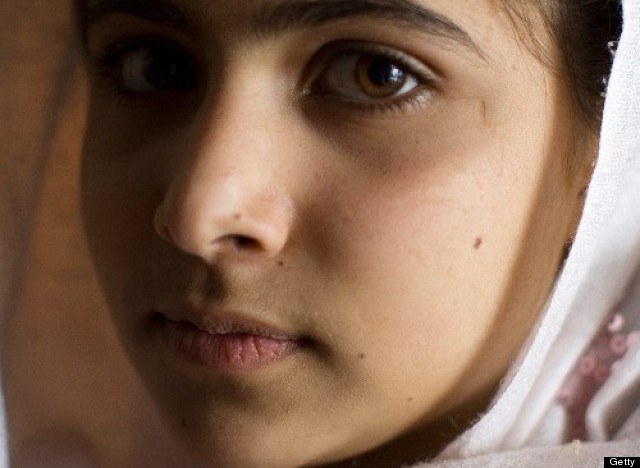
EDITORIAL: DAILY TIMESExactly one month after the Pakistani Taliban showed the whole world just how brutal they could be by shooting a 15-year-old girl for the crime of wanting to obtain an education, the United Nations declared November 10 as ‘Malala Day’ — a mark of global solidarity for the girl who stood up against monsters when adults were too scared to. The UN has taken this wonderful step to let the world — and especially Pakistan — know that Malala’s efforts have not been in vain, and that her spirit and cause should be championed by the world at large. Former British Prime Minister Gordon Brown, who is also the UN ambassador for global education, has presented the Pakistani government with a petition signed by one million people to show their support for Malala Yousafzai. Mr Brown has also informed the Pakistani government that a foundation, named the Malala Foundation, has been set up to honour the young girl and to campaign for the 32 million girls around the world who are deprived of education — what Malala wanted to do before she was cruelly shot in the head. In addition to all these heart-warming accolades, campaigners in the UK are pushing to have Malala nominated for the Nobel Peace Prize — so far, 100,000 people have signed the petition and the momentum is only increasing. This is not just support; it is across-the-board solidarity for Malala Yousafzai who has become a universal symbol of resistance against Taliban ideology. While the world rejoiced to celebrate this young warrior, schoolgirls in Malala’s hometown of Mingora, Swat were unable to pay tribute in public because of fears related to Taliban retaliation. Due to looming threats, Malala’s class fellows could not hold any special service for their injured champion — instead they held a candlelight vigil and prayed for her safety. The two young girls who were injured during the attempted murder of Malala Yousafzai still look over their shoulder in fear as they do not feel safe. They may be haunted by the memory of the shooting but they have not backed down from wanting an education and risking their lives to get it. No matter where in the world, Malala has been honoured and prayed for on November 10 by everyone who has a heart. If there is one thing sure to make the militants see red, it must be the fact that they have made a hero out of their innocent target. To completely realise the uphill task Malala was trying to tackle one only needs to see the statistics. UNESCO’s Education For All Global Monitoring Report (EFAGMR) has ranked Pakistan as being in the bottom 10 countries, the world over, when it comes to female education. According to the report 62 percent of girls in Pakistan, between the ages of seven and 15, have never seen the inside of a school. These are appalling figures and only serve to further elaborate Malala’s struggle. The fact that Malala is now in the spotlight must be used to further the cause of female education and emancipation in this country. The nation must wake up from its slumber and actually see how young girls are being denied their fundamental right to education and enlightenment. It is paramount that the government join hands with all those nations that support Malala’s cause by concentrating on the education of this country’s youth. While the president has announced that a cash stipend will be provided to three million families (with aid from the World Bank) to ensure their children are educated, one hopes to see this fervour remain after the Malala affair tones down. The Taliban are counting on us forgetting this young angel soon — let us not grant them that wish.
Fears blight ‘Malala Day’ in schoolgirl’s hometown
Pakistan marked “Malala Day” Saturday on a global day of support for the teenager shot by the Taliban for promoting girls’ education, but in her home town security fears meant her schoolmates could not honour her in public.
Taliban hitmen shot Malala Yousufzai on her school bus a month ago in Mingora in Pakistan’s northwestern Swat Valley, in a cold-blooded murder attempt for the “crime” of campaigning for girls’ rights to go to school.
Miraculously the 15-year-old survived and her courage has won the hearts of millions around the world, prompting the United Nations to declare Saturday a “global day of action” for her.
People around the world held vigils and demonstrations honouring Malala and calling for the 32 million girls worldwide who are denied education to be allowed to go to school.
Demonstrations backing Malala took place in Islamabad, Karachi, the eastern city of Lahore and Muzaffarabad in Pakistan-administered Kashmir, and Prime Minister Raja Pervez Ashraf saluted Malala’s courage.
But in Mingora, the threat of further Taliban reprisals cast a fearful shadow, and students at Malala’s Khushal Public School were forced to honour her in private.
“We held a special prayer for Malala today in our school assembly and also lit candles,” school principal Mariam Khalid told AFP.
“We did not organise any open event because our school and its students still face a security threat.”
Though their bid to kill Malala failed, the Taliban have said they will attack any woman who stands against them. Fears are so great that Khalid said even speaking to the media could put students’ lives in danger.
Two of Malala’s friends were wounded in the attempt on her life and one, 16-year-old Kainaat Riaz, said she was still haunted by memories of the attack.
“I am still terrified. I still get tears in my eyes whenever I think of that incident. I saw Malala in the pool of blood in front of me with my eyes,”she told AFP.
Shazia Ramzan, 13, spent a month in hospital after being shot in the shoulder during the attack, but she said it had made her even more determined to go to school.
“The shooting tried to stop us from getting an education, it was our test and we must pass it,” she told AFP.
Malala rose to prominence with a blog for the BBC charting life in Swat under the Taliban, whose bloody two-year reign of terror supposedly came to an end with an army operation in 2009.
Despite the dangers, some children in Mingora were determined to speak out and pledged to follow Malala’s example.
“Malala is a good friend of mine. She is brave and has honour and whoever attacked her did a terrible thing,” Asma Khan, 12, a student in Saroosh Academy, close to Malala’s school, told AFP.
“After the attack on her and her injuries, we have now more courage to study and now we will fulfil her mission to spread education everywhere.”Khan’s schoolmate Gul Para, 12, added: “Malala is the daughter of the nation and we are proud of her.
“She has stood by us and for our education up to now and now it is time that we should stand by her and complete her mission.”
On Saturday Afghan President Hamid Karzai promised to search for Malala’s attackers and accused Islamabad of having armed and trained the teenager’s assailants.
“Afghanistan will hunt for Malala’s attackers,” he said in an interview with India’s CNN-IBN television network, broadcast as he began a four-day visit to the South Asian nation.
“Terrorism is a snake and when you train a snake, you can’t expect it will only go in the neighbour’s house. When the attack on Malala happened, this proved our point,” he added.
“The earlier they (the Pakistanis) accept it and fight radicalism, the better for us, the better for Pakistan and the better for India.”
Nearly 100,000 people have signed an online petition calling for Malala to be nominated for the Nobel Peace Prize and on Friday UN special education envoy Gordon Brown handed a separate million-strong petition in support of Malala to Pakistani President Asif Ali Zardari.
Zardari on Friday announced a scheme funded with help from international donors to give poor families cash incentives to send their children to school in a bid to get three million more youngsters into education.
“As long as there are girls out of school anywhere in the world, Malala will be their beacon of hope,” Brown said on Saturday.
President Zardari takes notice of Karachi unrest
Radio PakistanPresident Asif Ali Zardari has directed for effective measures to improve law and order situation in Sindh. He gave these directions to Sindh Chief Minister Syed Qaim Ali Shah on telephone at Saturday night. Meanwhile‚ taking notice of the killing of several people in terrorist incidents in Karachi‚ the Sindh Governor Ishratul Ibad talked to Sindh Chief Minister on the situation in the city. They also discussed measures to curb terrorist incidents. The Governor also directed DG Rangers‚ IG Police and other concerned authorities to take effective measures to protect the life and property of the people.
Karachi: Upsurge in violence: PM orders strict action as Karachi bleeds anew
An upsurge of sectarian and political violence swept through Karachi on Saturday, despite the prime minister’s presence in the city, as 20 people, including seven people belonging to the Deobandi school of thought, became the latest victims of targeted killings.
Six students of the Jamia Arabia Ahsanul Uloom seminary were shot dead in Gulshan-e-Iqbal by at least four men on two motorcycles. The armed men drove up to a teashop where the seminary students had gathered and sprayed them with bullets.
The killings caused the law and order situation in Gulshan-e-Iqbal to soon deteriorate as people took to the streets to protest against the incident. This was the second attack on seminary students within a month.
In a separate incident on Saturday, a 28-year-old man was gunned down in the North Nazimabad neighbourhood. He also belonged to the Deobandi school of thought and was the information secretary of Ahle Sunnat wal Jamaat’s North Nazimabad unit. Twelve other people were killed in separate incidents in different parts of the city.
Saturday’s killings come less than a week after the Supreme Court directed the police and law enforcement agencies to ensure peace in Karachi. There has not been any significant change regarding Karachi’s frequent killing sprees despite the apex court’s suo motu notice regarding Karachi’s deteriorating law and order situation.
The city’s descent into violence coincided with the visit of Prime Minister Raja Pervaiz Ashraf, who expressed his anger at the way the police and other security agencies were dealing with criminals.
There seemed to be no writ of security forces, as police and Rangers were missing from the scene, while many youngsters, brandishing automatic guns, were seen roaming the roads and resorting to aerial firing.
During a meeting with Sindh Chief Minister Syed Qaim Ali and Sindh Governor Dr Ishtraul Ebad Khan, Prime Minister Ashraf directed the two top officials of the province to take strict action again those responsible for the incidents, and provide security to the citizens.
The city also witnessed similar violence four days ago, when the prime minister had convened a meeting at the Governor House. During the meeting, the chief minister, citing intelligence reports, briefed the prime minister about the looming threats before Muharram. After the briefing, the premier ordered the Sindh government to take targeted action against suspects but no tangible result has come out, so far.
Earlier, while briefing the media after inaugurating the Al-Haj Faw Motors Automobile Assembly plant at Port Bin Qasim in Karachi, Prime Minister Ashraf said he had directed the Sindh government to stop the slide in Karachi’s law and order situation and take action against the suspects involved.
“All political parties should give up disparity and join hands against criminals elements, terrorism and extremism,” he said. He added that the government would implement Supreme Court orders and urged all political parties to dispel criminal elements from their rank and file.
The prime minister pointed out that more than 400,000 people had already been killed in terrorist attacks across Pakistan, while the government has spent billions of rupees on the war against terrorism. “The government will not let criminals kill innocent people. I have asked the provincial government to start a surgical operation and eliminate criminals,” he said.
President Asif Ali Zardari meanwhile contacted the Sindh chief minister late Saturday night regarding the day’s violence.
No confrontation, PM reiterates
During the brief media chat, the prime minister once again ruled out the existence of any confrontation between institutions in the country, reiterating that all institutions were working within their domain.
“Please try to understand, and avoid likening confrontation to a difference of opinion,” he said. Whereas divergence of opinion is a good omen for any democratic setup, he said, a confrontation is always deadly because it undermines governance.
Saturday, November 10, 2012
Obama wins Florida.
President Barack Obama was declared the winner of Florida's 29 electoral votes Saturday, ending a four-day count with a razor-thin margin that narrowly avoided an automatic recount that would have brought back memories of 2000.
No matter the outcome, Obama had already clinched re-election and now has 332 electoral votes to Romney's 206.
The Florida Secretary of State's Office said that with almost 100 percent of the vote counted, Obama led Republican challenger Mitt Romney 50 percent to 49.1 percent, a difference of about 74,000 votes. That was over the half-percent margin where a computer recount would have been automatically ordered unless Romney had waived it.
There is a Nov. 16 deadline for overseas and military ballots, but under Florida law, recounts are based on Saturday's results. Only a handful of overseas and military ballots are believed to remain outstanding.
It's normal for election supervisors in Florida and other states to spend days after any election counting absentee, provisional, military and overseas ballots. Usually, though, the election has already been called on election night or soon after because the winner's margin is beyond reach.
"Florida has spoken loudly in support of moving our nation forward," Ashley Walker, the Obama campaign's director for Florida, said in a news release. She added that the win was a testament to the campaign's volunteers and staff.
When reached by phone Saturday, Mitt Romney's communications director Gail Gitcho said the campaign had no comment.
Obama's win came in part from heavy support from black, Hispanic and younger voters. Exit polls conducted for The Associated Press showed Obama was favored by more than 9 of 10 black voters and 3 of 5 Hispanic voters in Florida. The president also was the choice of two-thirds of voters under age 30.
Republican challenger Mitt Romney led among both white and older voters.
In the end, the facts of who voted for which candidate in Florida faded into memory as voting issues emerged election night.
On election night this year, it was difficult for officials - and the media - to call the presidential race here, in part because the margin was so close and the voting stretched into the evening.
In Miami-Dade, for instance, so many people were in line at 7 p.m. in certain precincts that some people didn't vote until after midnight.
The hours-long wait at the polls in some areas, a lengthy ballot and the fact that Gov. Rick Scott refused to extend early voting hours has led some to criticize Florida's voting process. Some officials have vowed to investigate why there were problems at the polls and how that led to a lengthy vote count.
If there had been a recount, it would not be as difficult as the lengthy one in 2000. The state no longer uses punch-card ballots, which became known for their hanging chads. All 67 counties now use optical scan ballots where voters mark their selections manually.
Republican George W. Bush won the 2000 contest after the Supreme Court declared him the winner over Democrat Al Gore by a scant 537 votes.
The win gave Obama victories in eight of the nine swing states, losing only North Carolina. In addition to Florida, he won Ohio, Iowa, New Hampshire, Wisconsin, Virginia, Colorado and Nevada.
Read more here: http://www.miamiherald.com/2012/11/10/3091017/obama-wins-fla-topping-romney.html#storylink=cpy
Malala has become symbol of peace, education
Chief Minister Khyber Pakhtunkhwa Amir Haider Khan Hoti has said that Malala Yusfazai has become symbol of peace and education all over the world who through her determination and will power frustrated designs of the forces wanting to push back the Pukhtoon nation into era of ignorance and darkness.
The mission of Malala would be taken forward at every cost who is symbol of pride and honor of Pukhtoon nation around the globe. The present government he said was determined to equip every girl child with ornament of education.
In a message on the eve of Malala Day observed on November 10 on the call of United National all over the world, he said the entire nation was proud of Malala's struggle who kept enlightened the light of education in a very difficult period, injustice and barbarism. The armed attack on Malala and her colleagues Shazia and Kainat depicts the low mentality of the terrorists.
The mindset of extremism could only be defeated through education, he said adding, the present KPK government allocated maximum resources at the disposal of girl's education which could be gauged from the fact that out of 72 colleges setup in last four years, 52 were girls' colleges.
He said that monthly scholarships to the girls students at primary level and allocation of Rs.400 million for the parents who will get enrolled their girls students in the schools in backward Torghar district were few steps taken by his government towards this end.
The parents of the girl students from class-1 to class-5 would be paid Rs.1500 monthly by the government and Rs.2000 for the parents of girls' students from Class-6 to class -10 under the government scheme.
The Chief Minister also prayed for early recovery of Malala Yusafzai and appealed to the people to arrange special events for offering prayers across the province.
Sasha Obama's Friendly Reminder To Her Father On Election Night (VIDEO)
Malala's journey from near death to recovery

It began with a ride home from school on Tuesday, October 9.
Gunmen halted the van ferrying Malala Yousufzai through her native Swat Valley, one of the most conservative regions in Pakistan. They demanded that other girls on the vehicle identify her. Malala had faced frequent death threats in the past.
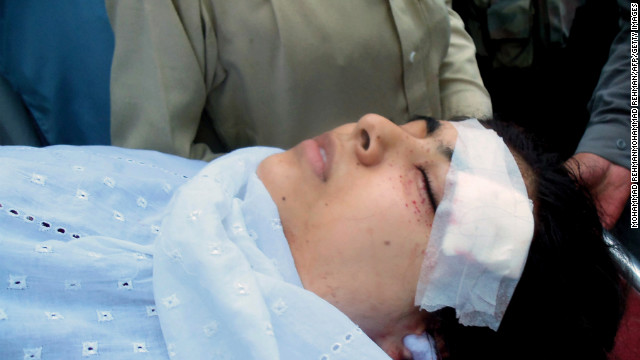
Some of the girls pointed her out. At least one gunman opened fire, wounding three girls. Two sustained non-life-threatening injuries, but bullets struck Malala in the head and neck.
The bus driver hit the gas. The assailants got away.
Malala was left in critical condition. An uncle described her as having excruciating pain and being unable to stop moving her arms and legs.Doctors fought to save her life, then her condition took a dip. They operated to remove a bullet from her neck. After surgery, she was unresponsive for three days.Now, a month later, it is nothing short of a miracle that the teen blogger, who fights for the right of girls to get an education, is still alive and even more astounding that she suffered no major brain or nerve damage.
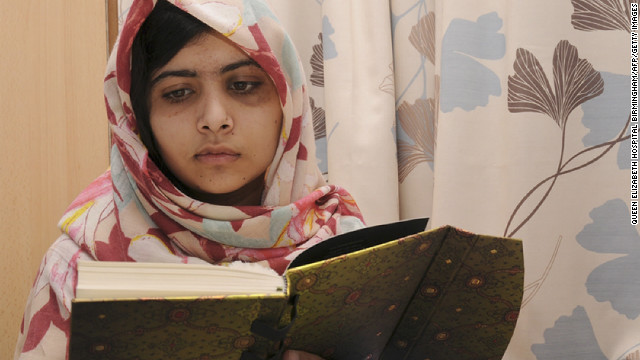
In hardly more than four weeks, she has gone from an intensive care unit in Pakistan, showing no signs of consciousness to walking, writing, reading -- and smiling -- again in a hospital in the UK.
And outside her hospital room, a world sympathetic with her ordeal has transformed her into a global symbol for the fight to allow girls everywhere access to an education.
The United Nations has declared Saturday, November 10, Malala Day as a day of action to focus on "Malala and the 32 million girls like Malala not at school."Malala has encouraged girls and their families to resist the Pakistani Taliban, who pushed girls from classrooms, since she was 11.
In January 2009, the militants issued an edict ordering that no school should educate girls. Malala wrote in her online diary about intimidation tactics the Taliban used in her native Swat Valley in northwest Pakistan to coerce girls into not going school.
They included house raids to search for books, and Malala had to hide hers under her bed.
The extremists took issue with her writings and threatened to kill her.
"I was scared of being beheaded by the Taliban because of my passion for education," she told CNN last year.
Right after her shooting her family kept a low profile, for fear they could be next. The militants vowed that if Malala survived, they'd go after her again.
"We will certainly kill her," a spokesman for the Pakistani Taliban said.The bloodletting sparked outrage inside Pakistan against the radical Islamist group that continues to wield influence in parts of Pakistan. Around the world, the young blogger has become a poster child for a widespread need to permit girls to get an education.
Initially supporters in Pakistan gathered for small vigils to pray for Malala's recovery. Government officials in Peshawar, the main city in the northwestern region where Malala is from, observed a minute of silence in her honor.
Public support snowballed, and thousands of people in Pakistan and elsewhere attended rallies honoring her courage.
Protesters in Karachi carried posters and banners reading: "Malala, our prayers are with you" and "Shame on you, Taliban."
The airwaves filled with leaders and commentators who publicly got behind her, and journalists closely followed her story, drawing death threats from the Taliban for their coverage.
Army Chief Gen. Ashfaq Parvez Kayani, took a stand from Malala's hospital, declaring: "We refuse to bow before terror."
Pakistan's first female foreign minister, Hina Rabbani Khar, decried the attempted assassination as "a wake-up call (to) a clear-and-present danger."
Interior Minister Rehman Malik dubbed Malala "the pride of Pakistan," and announced that her local school will be renamed for her, changing from "Khushal Public School" to "Malala Public High School."
Authorities in Swat renamed a college after her.
The United Nations launched a campaign for girls' education named "I am Malala." Secretary General Ban Ki-Moon condemned the attack and praised Malala's cause.
U.S. Secretary of State Hillary Clinton commended the blogger's bravery; Angelina Jolie donated $50,000 to a charity in Malala's name. And singer Madonna shouted her name from a stage, dedicating a song to her.
Malik proclaimed that two girls injured in the attack on Malala - Kainat Riaz Ahmed and Shazia Ramzan - will be honored with the third-highest military award, the Star of Courage. It is not normally given to civilians.Gordon Brown and Malala galvanize action?
"Pakistan has a new heroine and a new cause -- a girl's right to education," former British prime minister Gordon Brown wrote in an opinion piece published by CNN Friday.
Brown, who heads up the "I am Malala" campaign in his new roll as United Nations Special Envoy on Global Education, is touring Pakistan over the weekend to boost education with international funding and local initiatives. It was his office that declared Saturday Malala Day.
In the wake of Malala's shooting, Brown is visiting schools, including one in Swat to be renamed for her. He is talking education for three days with Pakistan's president, Cabinet ministers, educational NGOs, donors and a covey of U.N. charities.
"We now must deliver," Brown writes. "But a more active, more engaged and more determined Pakistani people can ensure that education for all is no longer a slogan but a reality."Malala's path from near mortal wound to recovery
In addition to removing the bullet, doctors extracted a piece of skull to relieve pressure on her brain due to swelling. Malala was taken by chopper from one military hospital in Pakistan to another, where doctors placed her in a medically induced coma, so an air ambulance could fly her to Great Britain for treatment.
"She is lucky to be alive," Dr. Dave Rosser, the medical director of University Hospitals in Birmingham, UK, told reporters after her arrival.
Then came the light at the end of the tunnel. Examinations revealed that Malala suffered no major neurological damage.
Over a week after being shot a world away, Malala got back on her feet again, able to stand when leaning on a nurse's arm at the Queen Elizabeth Hospital. Eager to communicate, she wrote sentences on paper - she couldn't talk due to a tracheotomy.
"We have no reason to believe she won't be able to talk when the tube is out," Rosser said.
Chasing the perpetrators
Malik quickly placed a $1 million bounty on the head of the Pakistani Taliban spokesman Ehsanullah Ehsan, after he claimed responsibility for Malala's attack on behalf of the group.
Police immediately took the van driver and the school guard into custody for questioning and rounded up dozens in the course of the investigation.They have identified the shooters as two boys, but their main suspect is an adult, who the police say drove the youths to the scene -- Attah Ullah Khan, 23. All three were at large.
In an exclusive interview with CNN last week, Khan's sister apologized to the Malala for his alleged involvement.
"What he did was intolerable," Haleem said. "I don't consider Atta Ullah my brother anymore."
She called Malala her sister.
What's next for Malala?
Malala will have to endure some more surgery, once she regains enough strength. Doctors at the Queen Elizabeth hospital in Birmingham will replace the piece of skull extracted in Pakistan, and she also might need some work on her jaw.
She should not have to remain hospitalized for more than a few more weeks, before facing her new-found international fame.
She is no stranger to notoriety.With her nation's and the world's leaders and media speaking on her behalf, and schools, T-shirts, petitions, headlines and hashtags bearing her name, the level of public attention has taken a quantum leap forward.
From her hospital room in the UK, Malala has been asking for her school books, so she can study for exams she wants to take when she arrives back home in Pakistan.
She is all about education.
Obama to win Florida
President Obama will win Florida when all votes are counted, judging from the makeup of the ballots still outstanding from heavily Democratic counties.Though votes are still being tallied, President Obama is all but assured a victory in Florida because the lion’s share of the outstanding ballots come from Democratic-heavy counties. Obama leads Republican Mitt Romney by 58,055 votes — or 49.92 percent to 49.22 — but there just aren’t enough votes from Republican areas to allow the challenger to catch up. Romney’s Florida campaign has acknowledged their candidate lost in Florida as well. Romney already conceded the national race after he lost the other battleground states. “The numbers in Florida show this was winnable,” Brett Doster, Florida advisor for Romney, said in a statement to The Miami Herald. “We thought based on our polling and range of organization that we had done what we needed to win. Obviously, we didn’t, and for that I and every other operative in Florida has a sick feeling that we left something on the table. I can assure you this won’t happen again.” With Florida’s 29 Electoral College votes, Obama will have 332 votes to Romney’s 206. “We feel we will be the official winner in Florida later [Thursday],” Obama campaign manager Jim Messina said. Preliminary results are due from the counties to the state by noon Saturday. The final results are to be certified Nov. 20. The numbers in Florida look unlikely to change in Romney’s favor. Miami-Dade finished tallying a backlog of 54,000 absentee ballots Thursday and it marginally increased Obama’s lead. Still outstanding: • Broward County. It has about 8,000 absentee ballots outstanding. Obama won Broward 67-32 percent. If those numbers hold, it would give Obama 2,800 more votes. • Palm Beach County. It could have as many as 8,000 votes yet to add to its tally. Obama won that county 58-41 percent. If those numbers hold, Obama would pick up another 1,360 more votes. • Duval County. The only non-South Florida County, Duval has about 3,600 absentee ballots to be counted. Romney won it narrowly, 51-48 percent. At that rate, Romney would pick up only 108 more votes. Even if the estimates from South Florida were reversed and Obama’s extra projected votes were handed to Romney, the Republican would come nowhere near to winning. The wild card: Provisional ballots. These are cast by voters whose status is in doubt. Often they’re rejected, in part because people vote in the wrong precinct. Most studies show, however, that provisional ballots are more likely to be cast by Democrats than Republicans. Meanwhile, Thursday night The White House released a video of Obama tearing-up as he thanked young supporters in Chicago after his victory. "I am absolutely confident that all of you are going to do amazing things in your lives," Obama says in the video, which was posted on his campaign's official Youtube page. Read more here: http://www.miamiherald.com/2012/11/08/3087995/romney-campaign-we-lost-florida.html#storylink=cpy
Activists want Malala to win Nobel Peace Prize
Pakistani and international rights activists have launched a campaign to get Malala Yousufzai, a young Pakistani activist who was shot by the Taliban, nominated for the Nobel Peace Prize. But does she really deserve it?
The 15-year-old Malala Yousufzai is recuperating at a hospital in the English city of Birmingham. Yousufzai - a blogger and activist - was shot by armed men last month along with three other girls in the restive northwestern Pakistani Swat Valley. Taliban militants claimed responsibility for the attack and said in a statement that Yousufzai had been attacked because she was promoting "secularism" in Swat.
Yousufzai had been campaigning for girls' right to education in Swat and was a vocal critic of the Taliban. She won international acclaim for writing about Islamist atrocities in Swat in a BBC Urdu service blog. Last year, she was awarded Pakistan's first National Peace Award. She was also nominated for the KidsRights Foundation's International Children's Peace Prize.
Former British Prime Minister Gordon Brown - also the United Nations’ special envoy for global education - is on a three-day visit to Pakistan to attend a program for "Malala Day" on Saturday, November 10. The UN has created the November 10 holiday to honor Yousufzai.
Signature campaign
On Friday, tens of thousands of people in the UK called on Prime Minister David Cameron to nominate Yousufzai for the prestigious Nobel Peace Prize for standing up against the Taliban and promoting girls' education in Pakistan.
The Nobel Committee's rules only allow prominent figures such government officials and members of national parliaments to make nominations.The Nobel Committee's rules only allow prominent figures such government officials and members of national parliaments to make nominations.Yousufzai has received international praise for standing up to the Taliban. Activists in Pakistan are also campaigning to get Yousufzai nominated for the award.
Shahida Choudhary, a Pakistani-British campaigner, is one of the many who urged British PM Cameron and other officials of the British government on Friday to nominate Yousufzai for the prize. "Malala doesn't just represent one young woman, she speaks out for all those who are denied an education purely on the basis of their gender," Choudhary said in a statement.
The campaigners say that more than 60,000 people have signed a petition worldwide to lobby for Yousufzai's nomination.
'Undeserving'
But many in Pakistan believe that the local and international media is unnecessarily creating hype around Yousufzai. Right-wing parties in Pakistan say that the Yousufzai incident is a conspiracy to "defame Islam and Pakistan." They claim that the campaign to nominate Yousufzai for the peace prize is proof that there is an "international lobby" behind the whole issue.
"I don't think that Malala deserves to be nominated for the Nobel Peace Prize. I think there are more deserving people in Pakistan who should be nominated for the award," Karachi-based Shiite activist Syed Ali Mujtaba Zaidi told DW. "Just because you (Malala) got shot by the Taliban does not make you worthy of the nomination or the award."Zaidi was of the view that there were thousands of Pakistanis who had suffered at the hands of the Taliban and the media never highlighted their misery and struggle.
Social media in Pakistan is full of comments and pictures claiming that the Yousufzai incident was a fabricated "conspiracy." Some Internet users have posted photoshopped pictures of Yousufzai and her father, who were shown with US government officials at a meeting. The pictures of the dead bodies of young girls, allegedly killed in US drone strikes, were posted with captions such as: "Do they not deserve our sympathy?" or "Are the victims of US drone strikes not humans?"
Symbol of resistance
There are also many people in Pakistan for whom Yousufzai's name has become synonymous with the fight against extremism and the Taliban. Pakistani civil society and rights activists have condemned the girl's shooting unequivocally and have organized several country-wide demonstrations in support of Yousufzai and the education of girls.
"Malala is no more simply the name of an individual; her name symbolizes the movement for girls' education in Pakistan," Mahnaz Rahman, a veteran rights activist and Resident Director of the women's rights organization, Aurat Foundation, told DW.Rahman said that international recognition for Yousufzai was important because it would strengthen the progressive forces in Pakistan. She said that Yousufzai deserved the Nobel Peace Prize more than many other people who had won it in the past.
Ghazala Naqvi, a Karachi-based writer, told DW she believed that although national and international lobbies played a big role in nominations for international awards, Yousufzai's nomination would project the soft and liberal image of Pakistan to the rest of the world.
Boy to hand in Malala petition
A schoolboy will present a petition in support of the injured Pakistani schoolgirl Malala Yousafzai on a global day of action for girls' education.
David Crone, 17, will hand in the document, which calls for every child to have the right to go to school, to the Pakistan High Commission in London as part of a drive led by former prime minister Gordon Brown.
David, of Sunderland, Tyne and Wear, a UN and Plan UK youth representative, said:
"This is a really important cause - all young people are entitled to the same level of education and no young person should be excluded because of threats or their gender. If girls are to receive a good level of education they also need the solidarity of men and boys around the world to achieve it."
Saturday, which has been labelled "Malala and the 32 million girls day", marks exactly one month since the 15-year-old girls' education campaigner was shot in the head by a Taliban gunman as she travelled home from school with two classmates in north-west Pakistan.
Malala is recovering at a hospital in Birmingham after being brought to the UK for treatment a week after the shooting.
Youth representatives worldwide are handing in the "I am Malala" petition, which has already attracted more than one million signatures.
Mr Brown, UN Special Envoy for Global Education, has presented a petition to Pakistan president Asif Ali Zardari, along with one million signatures from Pakistan demanding free and compulsory education.
Mr Brown said: "The president of Pakistan has agreed to work with the United Nations to ensure urgent delivery of education for all and to get Pakistan's five million out-of-school children into education for the first time.
"No bombs, bullets, threats or intimidation can deter the international community, working in partnership with Pakistan, to ensure we build the schools, train teachers, provide learning materials, and ensure that there is no discrimination against girls."
Malala, who was attacked after promoting the education of girls and criticising Taliban militants, is recovering in Queen Elizabeth Hospital in Birmingham.
World observes Malala Day today
‘Malala Day’ is being observed throughout the world on Saturday (today) on the call of the United Nations (UN).
UN Secretary-General Ban Ki-moon has announced that November 10 will be observed as ‘Malala Day’ the world over, honouring her struggle for the cause of girls’ education. He said that this would “build on the momentum of UN’s Education First initiative”.
The Day is being observed across the globe to show solidarity with the brave daughter of Pakistan who stood up for education of girls and refused to bow down despite the threats of militants.
UN’s Special Envoy on Education and former UK Prime Minister Gordon Brown is in Pakistan and who called on President Asif Ali Zardari.
On the Day, he will ask President Zardari to lead governmental changes in policy to ensure girls’ education in Pakistan.
Petitions will also be handed to the United Nations to ensure international support for the push for girls’ education.
President Asif Ali Zardari has given the following message on “Malala Day”:
“‘Malala Day’ is being observed today all over the world to show solidarity with the brave daughter of Pakistan, Malala Yousufzai, who stood defiantly to the militants to pursue her education and refused to bow to their threats and faced bullets, instead of giving up. Malala stands tall today as a symbol of girls’ education and a symbol of defiance against those who wish to impose their obscurantist agenda behind the façade of religion.
“On this occasion it is worth repeating what I said at an international conference recently about our daughter, Malala.
“Malala represents the resilience of our girls and women. Terrorists shot Malala…Her attackers aren’t just trying to kill the Daughter of Pakistan. They are trying to kill Pakistan. They didn’t stop at Afghanistan. They won’t stop at Pakistan. Attack on her is an attack on every child in our region…We cannot sit idly as our children are attacked. We must act urgently.
“The observance of the Malala Day today by the international community…demonstrates the commitment…that no matter what the odds, together we will fights the militants and not let them succeed in their agenda. Malala has transcended from an individual to an idea and the observance today shows that the idea lives on.
“On this occasion I wish to compliment the UN Secretary General Ban Ki-Moon for urging the international community to observe Malala Day today. I wish to congratulate Malala Yousafzai, her parents, and all those who fight for the cause for which Malala stood. I wish Malala early and complete recovery and thank the doctors…who took care of her.
“The Mission of Malala is fated to succeed.”
Zardari : Malala’s attackers trying to kill Pakistan
President Asif Ali Zardari
issued a message on the International Malala Day on Friday, announcing that the young peace icon “is a symbol of all that is good about us.”
“Malala Yousafzai is fifteen years old. Since she was eleven, she has been an advocate of education for girls. Malala is a symbol of all that is good about us,” he said in statement released on Friday.
“Malala represents the resilience of our girls and women. Her attackers aren’t just trying to kill the Daughter of Pakistan. They are trying to kill Pakistan,” the president said, while urging everyone to act urgently.
“We cannot sit idly by as our children are attacked. We must act. Urgently.”
Furthermore, President Zardari said that to reinforce the idea what Malala represents, the government launched a special “Waseela-e-Taleem” initiative to give free education to children, particularly girls, of poor families in Pakistan. “The more the militants strike, the more we will rebound with determination, defiance and courage. Let there be no doubt or mistake about it,” he said.
The president also expressed gratitude towards UN Secretary General Ban Ki-moon for urging the international community to observe the International Malala Day.
“The observance of the Malala Day today by the international community is a demonstration of the realisation that the attackers of Malala would not stop at Pakistan and threaten the whole world. It demonstrates the commitment by the world community that no matter what the odds, together we will fight the militants and not let them succeed in their agenda. Malala has transcended from an individual to an idea and the observance today shows that the idea lives on,” he stated.
“I wish to congratulate Malala Yousafzai, her parents, and all those who fight for the cause for which Malala stood,” President Zardari said while hoping for Malala’s early and complete recovery.
“The mission of Malala is fated to succeed,” he concluded.
Pakistan welcomes voices of solidarity with Malala
Pakistan has welcomed the voices of solidarity with Malala Yousufzai and video message of the UN Secretary General Ban Ki-moon in her support and education of girls.
Foreign Office Spokesman in Islamabad said Pakistan firmly believes that education promotes the values of tolerance and paves the way for progress and prosperity.
He said the tragic attack on Malala has further strengthened the resolve of the people of Pakistan to fight extremism and terrorism.
The spokesman said the government is committed to make utmost efforts to bring perpetrators of the heinous attack on Malala to justice.
Nobel calls for Malala, Million-name petition
President Asif Ali Zardari Friday launched an education programme aiming at providing financial assistance to over 3 million children of the poor families of the country for enrolling them in primary schools in next four years.
‘Waseela-e-Taleem’ initiative – under the umbrella of Benazir Income Support Programme (BISP) – comes after a four-year slumber when the ongoing term of the PPP-led government is about to complete.
Addressing a special ceremony to launch this initiative at the Aiwan-e-Sadr, the president claimed that “government was according high priority to the promotion of education” as no country can make any progress without investing in its human capital.
He asserted that they firmly believe that ignorance and poverty go hand in hand, adding that poverty combined with ignorance fuels militancy and extremism. “We must fight against ignorance to fight poverty and militancy,” he said.
United Nations’ Special Envoy on Global Education Gordon Brown also attended the ceremony. He presented a petition with more than a million signatures in support of shot schoolgirl education campaigner Malala Yousafzai to the Pakistan government.
Former British prime minister Brown is visiting Pakistan to call for education for all children and to mark Malala Day - Saturday - a global ‘day of action’ in support of Malala and girls’ education. He said the international community was ready to support Pakistan in its efforts to tackle poverty and ensure all children could go to school.
“Malala and her family believe that there are many many more courageous and brave girls and families in your country who want to stand up for the right of every child, in particular girls, to have the education that they deserve,” he said.
Education in Pakistan is under attack from militants opposed to secular schooling but also suffers from chronic underfunding: the country spends less than 2.5 per cent of GNP on education, according to UN children’s agency UNICEF.
Some 32 million girls around the world are denied access to education, according to UN figures, more than five million of them in Pakistan.
The ‘Waseela-e-Taleem’ ceremony was also attended by the president and prime minister of AJK, Gilgit-Baltistan governor, federal ministers, parliamentarians, representative of the donor organisations and beneficiaries of BISP.
President Zardari in his address said that this education initiative lays solid foundation for brighter future of the poor children of the country. He reiterated country’s commitment to achieve the goal of Universal Primary Education and said that a result of a constitutional amendment it was now included in the fundamental rights.
The president called upon the provincial governments to extend all possible support to BISP as their support was critical in successful implementation of the programme. He urged the provincial governments to become partners in ensuring that each and every child was enrolled in the school and said that failure was not an option.
Appreciating the BISP, President Zardari also thanked the international community especially DFID, World Bank and international development partners including UK, China and Turkey for their support in promoting education in Pakistan.
He said that BISP was the flagship programme of the present government for poverty alleviation and women empowerment and expressed satisfaction that it was developing into a comprehensive social safety net. He said the BISP was not merely a cash grant programme but was enabling the poorest of the poor to stand on their own feet.
President Zardari, Special Envoy of UN Secretary General on Global Education Gordon Brown and BISP Chairperson Ms Farzana Raja also distributed School Enrolment Certificate among children from BISP beneficiary families belonging to various parts of the country.
Addressing the gathering Gordon Brown thanked the president for inviting him to Pakistan and also lauded his leadership and vision for the promotion of education.
He said that today’s launch of a special programme that targets children education was a measure of determination of the government. When he presented Malala solidarity petition to the president, he also signed it.
BISP Chairperson Farzana said that launch of ‘Waseela-e-Taleem’, was a landmark in the history of the country. She said that this was the first ever and the largest initiative for primary education, and it was one of the most significant components of BISP aiming at promoting education, empowerment and emancipation of children as per the MDGs of new millennium.
Earlier, the president also had a separate meeting with Gordon Brown and told him that Pakistan would greatly welcome UN and donors’ technical and financial support in Technical and Vocational Education, use of Information and Communications Technologies (ICTs), and skill-based training of youth besides improving the curricula to enrich skills and competencies.
Brown briefed the president about the objectives of UN initiative “Education First” that aims at helping the member countries in promoting education and said that his mission in Pakistan was aiming at ensuring greater enrolment, provision of quality education, training of the teachers and promotion of education technology in Pakistan.
This meeting was followed by a briefing by the management of BISP on Waseela-e-Taleem initiative which was attended by Dr Ishrat Hussain, Shaukat Tareen, Ijaz Nabi and others.
Agencies add:
Also on Friday, tens of thousands of Britons called on their government to nominate Malala Yousafzai for the Nobel Peace Prize. A campaign led by a Pakistani-British woman urged Prime Minister David Cameron and other senior government officials to nominate Yousafzai for the Nobel Peace Prize.
“Malala doesn’t just represent one young woman, she speaks out for all those who are denied an education purely on the basis of their gender,” campaign leader Shahida Choudhary said in a statement issued by global petition platform Change.org.
More than 30,000 people have signed the petition in Britain as part of a global push by women’s rights advocates to nominate her for the prize. Similar campaigns have sprung up in Canada, France and Spain. Under the Nobel Committee’s rules, only prominent figures such as members of national assemblies and governments are able to make nominations.
One month on from the brutal attack, Malala on Friday thanked people around the world for their support on Friday in a message from hospital passed on by her father. “She wants me to tell everyone how grateful she is and is amazed that men, women and children from across the world are interested in her well-being,” said her father Ziauddin Yousafzai, on behalf of the 15-year-old.
“We deeply feel the heart-touching good wishes of the people across the world of all caste, colour and creed,” he said in a statement issued by the Queen Elizabeth Hospital in Birmingham, where Malala is being treated. Her father added: “I am awfully thankful to all the peace-loving well-wishers who strongly condemn the assassination attempt on Malala, who pray for her health and support the grand cause of peace, education, freedom of thought and freedom of expression.”
Million-name petition, Nobel calls for Malala
Pakistan: Primary literacy plan launched for 3m poor children
The government launched on Friday a four-year literacy programme under which more than three million children of poor families, especially girls, will get free education.
The programme ‘Waseela-i-Taleem’ was launched by President Asif Ali Zardari under the umbrella of the Benazir Income Support Programme (BISP) to enrol children of poor families in primary schools.
UN’s Special Envoy for Global Education and former British prime minister Gordon Brown attended the ceremony. The programme was launched in connection with the Global Action Day for Malala Yousufzai being observed on Saturday (today) on a call given by UN Secretary General Ban Ki-moon.
Mr Brown presented to the president a petition carrying one million signatures of people across the world to express solidarity with Malala.
The president also signed the petition.
“On the eve of Malala Day the government launches the special Waseela-i-Taleem initiative to give free education to children, particularly female children, of the poorest of the poor families in the country,” the president said.
He said: “The government accords high priority to the promotion of education as no country can make any progress without investing in its human capital. We firmly believe that ignorance and poverty go hand in hand as poverty combined with ignorance fuels militancy and extremism. We must fight against ignorance to fight poverty and militancy.”
The president said: “The more the militants strike the more we will rebound with determination, defiance and courage. Let there be no doubt or mistake about it.”
The Malala Day is being observed all over the world to demonstrate solidarity with the brave daughter of Pakistan who stood defiantly to the militants to pursue her education and refused to bow to their threats and faced the bullets instead of giving up.“Malala stands tall today as a symbol of girl education and a symbol of defiance against those who wish to impose their obscurantist agenda behind the façade of religion,” the president said.He said Malala symbolised resilience of Pakistani girls and women and, therefore, the attack on her was an attack on every child in the region.
“It is an attack on the future of our region. We cannot sit idly as our children are attacked. We must act urgently,” the president said.
President Zardari said that observance of the Malala Day by the international community was a demonstration of realisation that the attackers of Malala would not stop at Pakistan and threatened the whole world.
“It demonstrates the commitment by the world community that no matter what the odds, together we will fights the militants and not let them succeed in their agenda,” he said.
“On this occasion I wish to compliment UN Secretary General Ban Ki-moon for urging the international community to observe Malala Day,” he said. The president said it would lay a solid foundation for a bright future of the poor children of the country.
He thanked the international community especially the DFID, World Bank and international development partners, including the UK, China and Turkey, for their support in promoting education in the country.
The BISP, he said, was the flagship programme of the government for poverty alleviation and women empowerment and expressed satisfaction that it was developing into a comprehensive social safety net.
President Zardari called upon the provincial governments to fully support the BISP because their support was critical for the successful implementation of the programme.
He urged the provincial governments to become partners and ensure that each and every child was enrolled in school and said failure was not an option.
The best way to pay homage to the spirit of Benazir Bhutto, he said, was to join hands and work together for the welfare and uplift of the poor segments of the society.
Gordon Brown thanked the president for inviting him to Pakistan and also lauded his vision for the promotion of education in the country.
He said he would continue to assist the government in the promotion of education.
AFP adds: At the meeting with the president, Mr Brown said the international community was ready to support Pakistan in its efforts to tackle poverty and ensure all children could go to school.
“Malala and her family believe that there are many many more courageous and brave girls and families in your country who want to stand up for the right of every child, in particular girls, to have the education that they deserve,” he said.
Asghar Khan case detailed judgement
The Supreme Court (SC) has issued its detailed
judgement in the Asghar Khan case. Such a major pronouncement with implications not only for the past misdemeanours identified in the course of the proceedings but also for the future cannot be done justice to in this space in one go. However, the main findings of the judgement offer food for thought. The court has found that former president Ghulam Ishaq Khan, former COAS General Aslam Beg, and former ISI chief General Asad Durrani had rigged the 1990 elections against the PPP. All three were held to have violated the constitution. This pronouncement by the SC does not automatically or in and by itself imply that the three top officials named have been found ‘guilty’ in the sense of being punishable under the law. The conclusion is more in the nature of an indicative instruction to the government to proceed to try these individuals to determine their guilt through due process and beyond a shadow of doubt, with appropriate punishment to follow. That constitutes a severe test of will and political judgement for the incumbent government. One of the protagonists is no longer in this world (Ghulam Ishaq Khan) and the other two have been high military officials. For the late president, a trial in the ordinary meaning of the word is not possible, but were the other two to be put in the dock, it would perhaps result in strictures against the ex-president that would mar his legacy and repute. The trial of the two generals could bring Article 6 into play, with the reaction or response of the military establishment a matter of conjecture at this stage. Even more interesting, the SC has declared that an illegal order cannot be obeyed nor made a justification for patently illegal acts. It is ironic that about six decades after the Nuremberg trials that declared the plea of Nazis accused of atrocities that they were simply obeying orders unacceptable as a defence, our jurisprudence has found the opportunity to reiterate this by now well established principle of law. The detailed judgement underlines the finding of the SC’s short order of October 19 that the president’s office must be above, and refrain from, politics. The judgement also makes a surprising declaration that the office of president is in the service of Pakistan, implying that anyone occupying such office would have to wait two years after leaving office before they could stand for elective office. Strange that an office that is itself elected should be placed in this category while elected officials such as Speakers, ministers and sundry others are excluded from this rule. It is entirely possible that this declaration will face a legal challenge. Any political cell in the presidency has been declared illegal. The list of alleged recipients of funds from the ISI includes many past and current political heavyweights. The SC has recommended that proceedings be initiated against them and the banker Yunus Habib, and the money received, if proved, be recovered along with interest. The matter of the alleged Rs 270 million doled out from IB funds to topple the Punjab government in 2008-09 has been delinked from the main body of the Asghar Khan case and notices issued separately to media and the Attorney General among others for two weeks from now.
A more detailed assessment of the judgement and its implications and fallout will have to wait for a more careful reading of the text of the judgement. But in passing it is noteworthy that in an unprecedented move, the Registrar of the SC briefed the media on the detailed judgement, which has raised eyebrows. The justification presented for this ‘new’ role for the Registrar is that it was meant to avoid ambiguity or misunderstandings regarding the judgement. Fine, but is it the Registrar’s job to ensure a SC judgement is properly understood by all and sundry? Care should be taken not to set precedents that could give rise to unexpected embarrassments in future.
Pakistan: Tilted foreign policy edifice
When the first prime minister of Pakistan, Khan Liaquat Ali Khan, paid his maiden state visit to the United States in May 1950 violating the state agenda of a tour of the former Soviet Union, an edifice of Pakistan’s foreign policy was raised on an uneven foundation. No subsequent efforts were made to change its contour in accordance with the objective conditions in the region and even in the serving of the greater national interest. It later transpired that the United States embassy in Tehran maneuvered the visit of the “First World” US instead of the “Second World” Soviet Union and the later never forgot the slur that ultimately caused the dismemberment of Pakistan in 1971, about two decades of the first wrong step that was followed by Pakistan becoming a member of Cento and SEATO to make the Second World more jittery. It was not until the late Zulfikar Ali Bhutto who, the same year, divorced the two pro-America blocs to mould the opinion in Moscow that the defunct Soviet Union came to Pakistan’s help in building a huge steel mills at Karachi and later removed the disequilibrium in relations with Islamabad. The late Bhutto was also the architect of friendship with China that proved to be an all-weather bond between the two countries that is based on sincerity of the objective and mutual understanding still surviving to raise the relation to new heights touching the sky.
Learning no lessons from the past follies, the Foreign Office, whose bureaucracy is brought up with a particular pro-West mindset, on Thursday committed itself that working with the new Obama administration would not be difficult because the two sides understood each other’s position on drone attacks, the bone of contention, and talks were in progress to reach a mutually agreed view. The Foreign Office conveniently forgot that “mutual understanding” is possible only between tow equals and where the situation of the lone superpower and a Third World country is confronted, such notions hardly exist albeit diplomatic jargon. Pakistan is under the obligation of its own national interest to come in closer contact with the countries and regions that are prepared to work on mutual respect and equality, a goal which cannot be achieved when a boss like state of the US is on the other end.
The Foreign Office’s assertion also by-passed the new thrust of the Pakistan People’s Party-led government of raising anew the external policy around the East instead of looking towards the West. The first country President Asif Ali Zardari paid a state visit after assuming the office was China where he has been for eight more times ever since. Besides, Islamabad is trying hard to raise the status of its representation to the China-sponsored Economic Cooperation Organization (ECO), from an associate member to a full member like Central Asian Republics and an assurance to this status exists.
Time has come for Pakistan’s bureaucrats to understand what the country’s larger interest commands. This does not, however, mean that Islamabad should altogether ignore other regions and countries. We have, of course, to take along the entire world with us but must also show to the international community that we have no alignments and are a non-aligned state in strict diplomatic terms. ECO is certainly a forum Pakistan should be interested more in than depending on states that take Islamabad for granted. This forum has a great future as the representative of one-sixth of humanity. ECO’s secretariat and cultural department are located in Tehran, its economic bureau is in Turkey and its scientific bureau is situated in Pakistan. Its charter encompasses among others economic development of member states, promoting trade, integration of the economies of member states with the world economy, mobilization and utilization of region’s material resources and cooperation for drug abuse control, ecological and environmental protection and strengthening of historical and cultural ties among the peoples of the region. Thus ECO seems to be the only political and economic bloc with which the future holds a big promise. Even on domestic front, an overwhelming majority of the people detest America and the same number of population has a special fondness for China with which Pakistan’s future is guaranteed. Let’s bring a paradigm shift in the foreign policy with a meaningful twist not sitting high on mere illusion.
Transgender Pakistanis face society's scorn
Associated PressDressed up in elaborate, feminine outfits and artfully applied makeup, they are showered with money while dancing at all-male wedding parties. But the lives of transgender people in Pakistan are also marked by harassment, rejection and poverty. Transgender people live in a tenuous position in conservative Pakistan, where the roles of the sexes are traditionally starkly drawn. Families often push them out of the home when they're young, forcing many to prostitute themselves to earn a living. One role where they are tolerated is as dancers at weddings and other celebrations at which men and women are strictly segregated. In between the dancing and showers of rupee notes, they must fend off groping from drunken guests. "I don't understand why people feel it is their duty to tease and taunt us," said one transgender Pakistani who goes by the name Symbal. Many in the transgender community pick a name for themselves and do not use their last name to protect their family. Others beg on the streets or earn money by blessing newborn babies. The blessings reflect a widespread belief in Pakistan and other South Asian nations that God answers the prayers of someone who was born underprivileged, said Iqbal Hussain, a Pakistani researcher who has studied the transgender community. But he cautioned that didn't mean people were ready to give them equal rights. In recent years the community has gained some government protection. A Supreme Court ruling in 2011 allowed them to get national identity cards recognizing them as a separate identity — neither male or female — and allowing them to vote. In neighboring India, the election commission ruled in 2009 that transgender people could register to vote as "other," rather than male or female. In other parts of the region and Muslim world, the attitude toward transgenders is also complex. In Thailand, the community is very visible and broadly tolerated. Transgender people are regularly seen on TV soap operas, working at department store cosmetics counters or popular restaurants and walking the runways in numerous transgender beauty pageants. Many transgender Indonesians publicly wear women's clothes and makeup and work as singers. But societal disdain still runs deep. They have taken a much lower profile in recent years, following a series of attacks by Muslim hard-liners. In Malaysia, Muslim men who wear women's clothes can be prosecuted in Islamic courts. In the Arab world, there is little opportunity for transgender people to openly show their identity in public. In 2007, Kuwait made "imitating members of the opposite sex" a crime, leading to the arrest of hundreds of transgender women, Human Rights Watch said. In Iraq, extremists have targeted and killed people perceived of being gay or effeminate.
Friday, November 9, 2012
World observes ‘Malala Day’ today
The world will commemorate November 10 as ‘Malala Day’ in the honour of Pakistani child activist Malala Yousafzai, from this year as the United Nations Secretary-General Ban Ki-Moon announced this move on Friday. Events are expected to take place around the world on Saturday to mark one month since Malala was shot. The date November 10 has been chosen to celebrate Malala Day as it marks the 30-day anniversary of the Taliban attack on the 15-year-old education campaigner from Pakistan. The Express Tribune quoted Ban Ki-moon, as saying that Malala Yousafzai is an inspiration for girls’ education the world over. Ban Ki-moon hoped that observing Malala day will build on the momentum of UN's Education First initiative and show that education is a right of everyone, and not a privilege for a few. He also said citizens from across the globe are speaking out for Yousafzai and on behalf of the 61 million children who do not go to school.
Malala spurs school-for-all vow, now deliver
By Gordon Brown, Special for CNN
Gordon Brown served as Britain's prime minister between 2007 and 2010 after a decade as the country's finance minister, or chancellor of the Exchequer. In July this year he was appointed as a United Nations Special Envoy on Global Education by Secretary General Ban Ki-moon.Pakistan has a new heroine and a new cause -- a girl's right to education -- and after Friday's announcements from the Pakistani government that they will adopt new measures to get every child into school by end 2015, that cause has a timetable and a deadline for delivery. Everywhere you go in Pakistan you find people talking animatedly about the 15-year-old girl, Malala Yousafzai, who was shot by the Taliban last month.A rickshaw touring the streets of Islamabad has a slogan posted on it: "Malala for education and peace." Go to the local girls' school and every girl seems to have written either a poem or a song, a letter or a card to Malala. Listen to the politicians and every speech is laced with references to the courage of Malala. Meet civil society organizations and they will tell you that the audience for their educational demands has risen markedly over the last few weeks. It seems that Malala's courage has awoken Pakistan's silent majority who are no longer prepared to tolerate the threats and intimidations of the Pakistan Taliban. Can Pakistan convert its momentary desire to speak out in support of Malala into a long term commitment to getting its three million girls and five million children into school? Can the politicians, long-criticized for a failure to deliver, find the teachers, the classrooms and the reading materials to give millions of children a basic education? This is what I talked about with Pakistan's leaders. Meeting President Asif Ali Zardari, and in front of a 500-strong audience, many of them from the Swat Valley where Malala was shot, I presented petitions already signed by more than one million people in the international community in honor of Malala and her cause. These signatures were complemented with another one million signatures collected by Pakistani civil society's One Million Signature Campaign to demand free and compulsory education. Another 100,000 signatures from out-of-school Pakistani children are the start of yet another one million-strong petition, this time from the children themselves demanding their right to school.Can Pakistan convert its momentary desire to speak out in support of Malala into a long term commitment to getting its three million girls and five million children into school? Can the politicians, long-criticized for a failure to deliver, find the teachers, the classrooms and the reading materials to give millions of children a basic education? This is what I talked about with Pakistan's leaders. Meeting President Asif Ali Zardari, and in front of a 500-strong audience, many of them from the Swat Valley where Malala was shot, I presented petitions already signed by more than one million people in the international community in honor of Malala and her cause. These signatures were complemented with another one million signatures collected by Pakistani civil society's One Million Signature Campaign to demand free and compulsory education. Another 100,000 signatures from out-of-school Pakistani children are the start of yet another one million-strong petition, this time from the children themselves demanding their right to school.The president and I agreed on a series of deadlines in a plan to ensure all of Pakistan's five million out-of-school children have the opportunity to go to school. Pakistan on Friday asked to join the Accelerated Millennium Development Goal Framework process that will allow the country to assess its current education plans, strategies and obstacles to delivery in consultation with international organizations and then work together to contribute to Pakistan's dream of education for all. A deadline for the final draft of this accelerated plan is set for April 2013 when the United Nations Secretary-General Ban Ki-moon, President of the World Bank Jim Kim and myself, alongside the heads of major international agencies such as UNESCO, UNICEF, UNDP, UNFPA and the Global Partnership for Education, will meet in Washington with the Ministers of Education and Finance of Pakistan. The aim is to match international and domestic support for realizing the 2015 goal.Five months of intensive in-country work with the Pakistan government, civil authorities and foundations, as well as international organizations, lie ahead to ensure a detailed, budgeted plan. I have suggested to the president that he consider involving all educational groups from civil society interested in achieving the universal goal in the processes. Today there is new hope for the three million girls denied their right to schooling and a new chance to ensure the right to education for all. Pakistan and the international community are united in their goals. We now must deliver. But a more active, more engaged and more determined Pakistani people can ensure that education for all is no longer a slogan but a reality.
Bangladesh asks Pakistan to apologise for 1971 genocide

Bangladesh on Friday demanded a formal apology from Pakistan for the genocide committed by its troops during the 1971 liberation war, but Islamabad said it's time to carry forward ties "burying the past".
During a meeting with her Pakistani counterpart Hina Rabbani Khar, Foreign Minister Dipu Moni said "Bangladesh expects an apology from Pakistan for the genocide carried out by their troops in 1971".
He said Moni also underscored the need for resolving the other outstanding issues with Pakistan, foreign secretary Mijarul Quayes quoted the minister as saying.
In response, Quayes said, the Pakistani foreign minister said since 1974 Islamabad "at different times and different manners expressed its regret for the 1971 incidents".
"She (Khar) said it is now the time to proceed forward burying the past."
Quayes's comments came as Moni told a private news agency yesterday that Pakistan must apologise for the mass killings.
Khar, the first Pakistani minister to visit Dhaka since the ruling Awami League assumed office three years ago, arrived here on a five-hour tour to invite Prime Minister Sheikh Hasina to attend the Developing-8 Summit to be held in Islamabad on November 22.
Khar later called on Hasina and handed over an invitation letter from Pakistan president Asif Ali Zardari at her Ganabhaban official residence.
She is also expected to meet main opposition Bangladesh Nationalist Party (BNP) chief and ex-premier Khaleda Zia ahead of her departure.
Bangladesh was the eastern wing of Pakistan until 1971 when it won its independence after a nine-month long liberation war against Pakistani troops.
The incumbent government has been demanding Islamabad's official apology for the Pakistani troops' atrocities during the liberation war.
Nobel Peace prize petition for shot Pakistani schoolgirl
Thousands of people joined a campaign on Friday calling for 15-year-old Taliban shooting victim Malala Yousufzai to be nominated for the Nobel Peace Prize. The schoolgirl thanked her supporters as she recovers in a British hospital.
A campaign calling for the 15-year-old Pakistani girl shot in the head by the Taliban to be nominated for the Nobel Peace Prize garnered support from thousands of people on Friday.
More than 30,000 people have signed a petition in Britain as part of a global push by women's rights advocates calling for the government to nominate Malala Yousufzai her for the prestigious prize.
The 15-year-old, who thanked well wishers for their support on Friday, is receiving specialist treatment in the English city of Birmingham after gunmen shot her on October 9th for standing up to the Taliban and openly advocating education for women.
The attack drew widespread international condemnation, and Yousufzai has subsequently become a powerful symbol of resistance to the Taliban’s attempts to suppress women’s rights.
On Friday, a campaign led by Pakistani-Britain Shahida Choudhary urged Prime Minister David Cameron and other senior government officials to nominate Yousufzai for the prestigious prize.
“Malala doesn’t just represent one young woman, she speaks out for all those who are denied an education purely on the basis of their gender,” campaign leader Choudhary said in a statement issued by global petition platform Change.org.
Global campaign of support
Similar campaigns have sprung up in Canada, France and Spain.
Under the Nobel Committee’s rules, only prominent figures such as members of national assemblies and governments are able to make nominations.
Yousufzai was unconscious and fighting for her life when she was flown to Britain a month ago, but the hospital in Birmingham where she is being treated now report that she is recovering well.
Malala’s father thanked her supporters from around the world on Friday, just one month on from the shocking attack.
"She wants me to tell everyone how grateful she is and is amazed that men, women and children from across the world are interested in her well-being," her father Ziauddin Yousafzai said on behalf of the 15-year-old.
"We deeply feel the heart-touching good wishes of the people across the world of all caste, colour and creed," he said in a statement issued by the Queen Elizabeth Hospital in Birmingham, where Malala is being treated.
Her father added: "I am awfully thankful to all the peace-loving well-wishers who strongly condemn the assassination attempt on Malala, who pray for her health and support the grand cause of peace, education, freedom of thought and freedom of expression."
The hospital on Friday published photos of Malala sitting and reading a book, while others showed her poring over get-well cards.
ThePashto.com: An English-Pashto online dictionary
Here’s a treat for all those you have been yearning to learn the Pashto language: ThePashto.com, an online dictionary which helps you translate from Pashto to English and English to Pashto.
According to a report by ProPakistani, the dictionary currently has more than 15,000 words along with grammatical descriptions of the words, and has the option of users registering themselves to help add more words. When typing a word in the search bar, a dropbox appears giving suggestions of words closer to the one you are typing.
After translating a word from Pashto to English, a bar appears at the bottom giving more similar words to search for. On clicking a word in Pashto after the translation is done, it presents users with more meanings of the word.
The website is lightweight and quick to use, and does not require users to download the Pashto font as it uses a phonetic keyboard.
What the website can possible add is pronunciations of the words as well as their use in sentences and a virtual keyboard that can assist in typing Pashto words.
Subscribe to:
Posts (Atom)