Sunday, October 28, 2012

No Solution to Bahrain's Crisis as long as al-Khalifa Remains in Power

Member of Bahrain's Islamic Action Society Rashid al-Rashid said the critical conditions in his country would continue as long as the al-Khalifa rulers remain in power, noting the siege of the al-Akr town as an instance of aggravating conditions in Bahrain. Speaking to FNA on Sunday, al-Rashid said the siege of al-Akr and the brutal collective punishment of Bahrain's people by the al-Khalifa regime have made it impossible to settle the current crisis as long as the regime is in power. He described the siege of the town as a milestone in Bahrain Revolution and a dangerous development in the country. The Bahraini political activist also said that the current situation sends the signal that "talks between the nation and the al-Khalifa regime is impossible". The Al-Khalifa regime sponsored by the US and Persian Gulf neighboring states is struggling to force people to accept its legitimacy and has refused to take any step for a political solution, he added. Al-Akr, South of Manama, has been under siege for 10 days as the government is adopting collective punishment against the residents of the town and using bombs and poisonous gas against citizens passing along the streets. Bahrain's police and security forces have surrounded al-Akr and cut the roads and transfer of food supplies to the town after a bomb attack on October 18 allegedly killed one policeman and injured another one following clashes between protesters and the Saudi-backed security services. Bahrain's al-Vafa al-Islami stream has condemned the al-Akr siege, and underlined, "The Bahraini regime's story about the killing of a policeman in al-Akr village is an excuse to assume the extensive deracination of people as permitted." Anti-government protesters have been holding peaceful demonstrations across Bahrain since mid-February 2011, calling for an end to the al-Khalifa dynasty. Violence against the defenseless people escalated after a Saudi-led conglomerate of police, security and military forces from the Persian Gulf Cooperation Council (PGCC) member states - Saudi Arabia, Kuwait, the United Arab Emirates, Oman and Qatar - were dispatched to the tiny Persian Gulf kingdom on March 13, 2011, to help Manama crack down on peaceful protestors. Tens of protesters have been killed by the al-Khalifa's security forces, hundreds have gone missing and thousands of others have been injured since the start of the Islamic Awakening in the tiny Persian Gulf country.

Saudi Arabia must stop prosecuting protesters: HRW

Human Right Watch (HRW) has urged Saudi Arabia to stop prosecuting protesters, saying the Saudi government has punished the peaceful demonstrators instead of addressing their concerns.
Deputy Middle East director at HRW, Joe Stork, said on Sunday that the Saudi government uses the judicial systems against the protesters. “The sentences handed to these men are part of a wider effort to target and harass activists across the country,” Joe Stork said. HRW called on Saudi Arabia to end the Specialized Criminal Court, saying the lack of clear and predictable criminal law violates international human rights principles prohibiting arbitrary arrest and guaranteeing fair trials. “Saudi authorities detain and punish individuals for doing nothing more than peacefully expressing legitimate grievances,” Stork said. “The Saudi government should stop using the judicial system to punish peaceful dissidents, and recognize that peaceful assembly is not a crime.” Earlier Amnesty International had called on Saudi authorities to stop excessive use of force against anti-regime protesters in the country. “The Saudi authorities must end their repeated moves to stifle people’s attempts to protest against the widespread use of arbitrary detention in the country,” Amnesty International’s Middle East and North Africa Director Philip Luther said on October 16. “The right of people to peaceful protest must be respected and the security forces must refrain from detaining or using excessive force against people who exercise it.” On October 11, the Saudi Interior Ministry warned people against staging demonstrations in the kingdom in support of the prisoners and pledged to deal “firmly” with those participating in such protest rallies. Saudi authorities are facing a rise in protests against arbitrary detentions and widespread demands for the release of political prisoners. According to the Saudi Civil and Political Rights Association, there are about 30,000 political prisoners in the kingdom. Since February 2011, protesters have held demonstrations on an almost regular basis in Saudi Arabia, mainly in the Qatif region and the town of Awamiyah in Eastern Province, primarily calling for the release of all political prisoners, freedom of expression and assembly, and an end to widespread discrimination. However, the demonstrations have turned into protests against the repressive Al Saud regime, especially since November 2011 when Saudi security forces killed five protesters and injured many others in the province.

Presidential debate: Romney endorses Obama

EDITORIAL
Monday's presidential debate, the third and last between President Obama and Gov. Mitt Romney, featured a forceful and articulate defense of Obama's foreign policy. That was no surprise. What was surprising was that it came from Romney.
That seemed to annoy the president — who was prepared to rebut his opponent's previous, more bellicose pronouncements. But the ever-shifting Republican nominee tacked even closer to the moderate middle than he did in the debate devoted to economic policy. Once Romney intimated that he might keep U.S. troops in Afghanistan past NATO's 2014 deadline. No more. Now he agrees with Obama that it is feasible to transfer combat responsibilities to the Afghans by that point. On Iran, Romney emphasized economic sanctions rather than the threat of a military attack, effectively endorsing Obama's approach. On Syria, Romney disappointed some of his neoconservative supporters by forswearing direct U.S. military intervention or the establishment of a no-fly zone. There was no call for returning U.S. forces to Iraq, though Romney continued to accuse Obama of bungling negotiations aimed at keeping a small residual force there.Yes, there were nuances of difference. Obama says the U.S. won't allow Iran to develop a nuclear weapon, while Romney continued to describe the red line as "nuclear capability." And Romney didn't discard his more sweeping indictments of Obama's foreign policy. He dusted off his canard that the president had conducted an "apology tour" through the Middle East. To be clear: Obama has not apologized for American influence; every time Romney says otherwise, he reinforces the many reasons to distrust his honesty. Even Romney's rhetoric was less blustery in the debate than it has been on the campaign trail. A viewer who hadn't tuned into the campaign before Monday night might have wondered what all the shouting was about. Both candidates support withdrawal from Afghanistan, a careful courtship of Syrian opposition forces, the continued targeting of suspected terrorists by drones, and the leveraging of military aid to induce Egypt and other nations where Islamists are ascendant to respect the rights of women and religious minorities. Both want to engage China in trade, but press it to play fair. If Romney believes in a thoughtful and centrist foreign policy, which he hadn't until Monday night, it would argue for his candidacy. But if that vision is attractive — and it is — why not stick with the president who is already pursuing it?

PRESIDENT OBAMA: Weekly Address: Protecting the American People with New Wall Street Reforms

Huge Hurricane Sandy bears down on East Coast

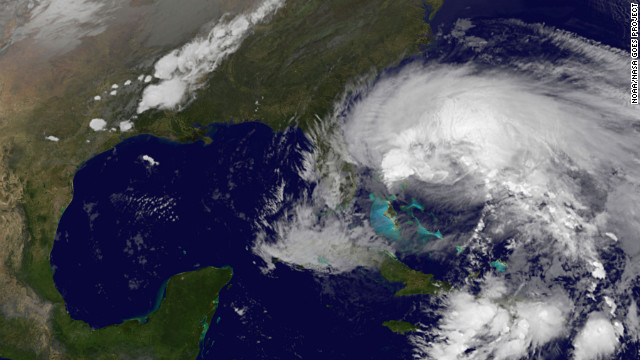
Hurricane Sandy could be the biggest storm to hit the United States mainland when it comes ashore on Monday night, bringing strong winds and dangerous flooding to the East Coast from the mid-Atlantic states to New England, forecasters said on Sunday. Sandy could have a brutal impact on major cities in the target zone like Boston, New York, Washington, Baltimore, Philadelphia, one of the most densely populated regions of the country and home to tens of millions of people. "The size of this alone, affecting a heavily populated area, is going to be history making," said Jeff Masters, a hurricane specialist who writes a blog posted on the Weather Underground (www.wunderground.com).
Forecasters said Sandy was a rare, hybrid "super storm" created by an Arctic jet stream wrapping itself around a tropical storm, possibly causing up to 12 inches of rain in some areas, as well as heavy snowfall inland. Government officials in several states in Sandy's path faced tough decisions on emergency plans, including mandatory evacuations in vulnerable coastal areas, and residents scrambled to buy supplies before the storm comes ashore on Monday night. New Jersey Governor Chris Christie ordered the state's casinos to close by 4 p.m. and began preparations in case the state had to shut down its bus and rail systems. On its current projected track, Sandy is most likely to make landfall between in the New York/New Jersey area and head inland to Philadelphia and Pennsylvania, forecasters said. EXCEPTIONALLY WIDE STORM Forecasters at the National Hurricane Center in Miami said it was too early to predict precisely where the storm would make landfall but the impact would be felt far from the center. While Sandy's 75 mph winds were not overwhelming for a hurricane, its width made it exceptional. Hurricane-force winds extended 175 miles from its center while its lesser tropical storm-force winds spanned 1,040 miles in diameter. It was not expected to strengthen but was expected to broaden. In New York City, officials discussed whether to shut the subway system on Sunday in advance of the storm, which could bring the country's financial nerve center to a standstill. At high tide, the storm could bring a surge of seawater up to 11 feet above normal levels to Long Island Sound and New York Harbor. "Given the large wind field associated with Sandy, elevated water levels could span multiple tide cycles, resulting in repeated and extended periods of coastal and bayside flooding," the forecasters said. The storm could cause the worst flooding Connecticut has seen in more than 70 years, said the state's governor, Dannel P. Malloy. Sandy was centered about 260 miles southeast of Cape Hatteras, North Carolina, early on Sunday, the hurricane center said. The storm was moving over the Atlantic parallel to the U.S. coast at 10 mph, but was forecast to make a tight westward turn toward the U.S. coast on Sunday night. Tropical storm conditions were spreading across the coast of North Carolina on Sunday morning and gale-force winds are forecast to begin affecting Washington, New York and southern New England by Monday. In Brussels, European air traffic control agency Eurocontrol warned of disruption to flights to and from Europe from Sunday evening. RECORD BREAKER Sandy could be the largest storm to hit the United States, according to the National Oceanic and Atmospheric Administration's (NOAA) website. Sandy killed at least 66 people as it made its way through the Caribbean islands, including 51 in Haiti, mostly from flash flooding and mudslides, according to authorities. The approaching storm forced a change of plans for both presidential candidates ahead of the November 6 election. The White House said President Barack Obama canceled a campaign appearance in Virginia on Monday and another stop in Colorado on Tuesday, and will instead monitor the storm from Washington. Republican challenger Mitt Romney rescheduled campaign events planned for Virginia on Sunday and was flying to Ohio instead. All along the U.S. coast, worried residents packed stores, buying generators, candles, food and other supplies in anticipation of power outages. Some local governments announced schools would be closed on Monday and Tuesday. "They're freaking out," said Joe Dautel, a clerk at a hardware store in Glenside, Pennsylvania. "I'm selling people four, five, six packs of batteries - when I had them."

Pakistan: Writers, artists must help end human rights violations: HRCP

The Express Tribune
Human Rights Commission of Pakistan (HRCP) Secretary General IA Rehman has said that the writers and artists will have to play their role in efforts to end the human rights violations and to promote the philosophy of non-violence in the country. Addressing a seminar organised by the HRCP on Wednesday, Rehman said HRCP will host meetings on developing opinions on policies for safeguarding human rights, adding that the commission will engage writers and journalists in policy discussions on human rights situation in the country. He said that the planned conventions will see writers and media persons of divergent views engaged in dialogue on the parameters of human rights, as difference of opinion helps grow positive thinking.

Human Rights commission of Pakistan demands immediate release of Down’s syndrome child

http://www.brecorder.com
The Human Rights commission of Pakistan demands immediate release and protection of 11-year old Christian girl who was accused of blasphemy. According to the some reports, the girl was carrying a shopping bag to dispose of used pages when she was stopped by someone who asked her to show what she was carrying. Burnt pages of Holy Quran were allegedly found in the bag. Local clerics alerted and soon a charged mob gathered outside the Rimsha’s house. The 11-year old girl who is suffering from Down’s syndrome is held in jail in Rawalpindi. Blasphemy laws have been misused against religious minorities and unfounded allegations have led to violent attacks against the minorities. This act will not only affect the safety of the minorities living in Pakistan but also create the great fear and panic in different religious sectors. The Human Rights commission appeal to take all the measures to provide security to the little girl who is seriously ill and to the minorities so that they feel secure living in a so-called independent country.

Magnitude 5.2 earthquake jolts parts of Pakistan

An earthquake of magnitude 5.2 on the Richter scale struck a number of areas across Pakistan including most of Khyber Pakhtunkhwa, Northwestern tribal region, and Punjab, Geo News reported Sunday. According to reports, the seismic activity shook the areas around 5:00 PM in the evening, spreading panic among the people, however no loss of life or property was reported. Meteorology Department said the epicenter was somewhere in the rugged mountains of Afghanistan-Tajikistan border area 300 kilometer from Gilgit Baltistan. The tremors were felt in the federal capital Islamabad, Rawalpindi, Sargodah, Chiniot, Mirpur Azad Kashmir, Hangu, Battagram, Rawalakot, Balakot, Khyber Agency, Dera Ismail Khan, Peshawar, Mardan, Lower Dir, North Waziristan, Nowshera, Charsadda, Swat and Hazara division.

Malala Yousafzai status updates

The medical team caring for Malala Yousufzai say they are pleased with her progress, almost two weeks after she arrived at the Queen Elizabeth Hospital Birmingham. Malala is being looked after by staff from the Queen Elizabeth and Birmingham Children’s hospitals and remains in a stable condition.

Karachi factory fire intensifies

A fire that broke out in the chemical warehouse of a plastic bag manufacturing factory in Karachi’s Gulbai area engulfed the entire factory on Sunday as the intensity of blaze increased , DawnNews reported. Fire tenders reached the spot from across the city. Fire tenders of the Air force and Army had also been deployed and were making efforts to put the fire out. The fire that begun late on Saturday rendered the structure of the building hollow causing large portions of the five-story building to collapse and had spread to an adjoining factory in the vicinity. Two production units along with chemicals and other raw materials worth millions were reduced to ashes as a result of the fire. Fire brigade officials declared the fire as a third-degree hazard. Citizens Police Liaison Committee chief Ahmed Chinoy said that it was difficult to immediately bring the fire under control as there was a lack of equipment and resources, as the nature of fire was not normal. He added that water was not useful in extinguishing the fire and that additional fire retardant foam had been sought. Chinoy further said that the firemen were trying their best to contain the fire and to stop it from spreading to other areas. Rescue and fire teams were concerned about the fire spreading to the basement of the factory which contained drums of inflammable and explosive chemicals and were instructed to maintain a distance from the fire site keeping in view the fear of an explosion. Smoke billowing from the fire was visible from miles away. Some fire experts suggested that attempting to put out the fire with water was useless as chemical fires can only be extinguished using a special kind of a fire retardant foam. A large number of people had gathered to spectate the site of fire. In another unrelated incident a warehouse storing wooded goods caught fire in Orangi Town area of Karachi. Fire tenders were dispatched to the location to put out the fire.

Major fire in Karachi chemical factory

A major fire broke out at a chemical factory in Pakistan's port city of Karachi late Saturday night and was yet to be brought under control till Sunday afternoon, Geo News reported. Smoke billowing from the fire was visible from miles away. Over 15 fire tenders were pressed into service after the inferno was reported in the city's Gulbai area. The fire also engulfed two adjacent buildings. Many blasts were reported intermittently in the five-storey building due to storage of chemical while several parts of it were collapsed. Teams of Pakistan Air Force and Army have also been deployed to douse the fire, Dawn reported Sunday. No loss of life was reported in the incident till afternoon. Some fire experts suggested attempting to put out the fire with water was useless as chemical fires could only be extinguished using a special kind of a fire retardant foam.

Nowshera shrine blast kills at least 5

Emergency has been declared in District Headquarter Hospital of Nowshera. Five people killed while sixteen injured in an explosion outside a shrine of Ziarat Kaka Sahib located in district Nowshera. The injured people have been shifted to District Headquarter Hospital of Nowshera where emergency has been declared. According to Dunya TV, several injured people who were in critical condition were shifted to lady reading hospital of Peshawar. The SHO Nowshera Kalan said that it was a remote control bomb which was planted at about 30 feet away from the main gate of the shrine. Meanwhile, it is learnt that proper security arrangements were not made at Ziarat Kaka Sahib. The area was cordonned off soon after the incident and an investigation has been started.

Obama Cancels Some Campaigning to Monitor Storms

ABC OTUS News
The White House has announced President Obama is cancelling some of his campaign travel Monday as Hurricane Sandy is expected to veer on to the East Coast. The president is getting out of Washington, D.C., Sunday, earlier than planned, to beat the disruptions expected in air travel. He is scheduled to speak at rallies in Orlando, Florida, and Youngstown, Ohio, two places outside the region braced for the impact. The White House says a Monday evening rally in Northern Virginia near Dulles airport is being cancelled. That area is expecting high winds and heavy rains. The President has also dropped Tuesday morning travel to Colorado Springs. Spokesmen for the White House and for the Obama campaign say campaigning is appropriate despite the approaching storm, but they said his roles as president and as commander in chief come first. President Obama has instructed federal emergency planners to offer assistance to states and local governments, but the White House emphasizes that during natural disasters, all decisions about preparedness and evacuations are made by local officials, not by the federal government.

Superstorm could impact 60 million people in US

Forget distinctions like tropical storm or hurricane. Don't get fixated on a particular track. Wherever it hits, the rare behemoth storm inexorably gathering in the eastern U.S. will afflict a third of the country with sheets of rain, high winds and heavy snow, say officials who warned millions in coastal areas to get out of the way. "We're looking at impact of greater than 50 to 60 million people," said Louis Uccellini, head of environmental prediction for the National Oceanic and Atmospheric Administration.
As Hurricane Sandy barrelled north from the Caribbean — where it left nearly five dozen dead — to meet two other powerful winter storms, experts said it didn't matter how strong the storm was when it hit land: The rare hybrid storm that follows will cause havoc over 800 miles from the East Coast to the Great Lakes. "This is not a coastal threat alone," said Craig Fugate, director of the Federal Emergency Management Agency. "This is a very large area." President Barack Obama was monitoring the storm and working with state and locals governments to make sure they get the resources needed to prepare, administration officials said. New Jersey Gov. Chris Christie declared a state of emergency Saturday as hundreds of coastal residents started moving inland and the state was set to close its casinos. New York's governor was considering shutting down the subways to avoid flooding and half a dozen states warned residents to prepare for several days of lost power. Sandy weakened briefly to a tropical storm Saturday but was soon back up to Category 1 strength, packing 75 mph winds. It was about 275 miles south-southeast of Cape Hatteras, N.C., and moving northeast at 14 mph as of 2 a.m. Sunday. Forecasters said the storm was spreading tropical storm conditions across the coastline of North Carolina, and they were expected to move up the mid-Atlantic coastline late Sunday. Experts said the storm was most likely to hit the southern New Jersey coastline by late Monday or early Tuesday. Governors from North Carolina, where heavy rain was expected Sunday, to Connecticut declared states of emergency. Delaware ordered mandatory evacuations for coastal communities by 8 p.m. Sunday. Christie, who was widely criticized for not interrupting a family vacation in Florida while a snowstorm pummeled the state in 2010, broke off campaigning for Republican presidential nominee Mitt Romney in North Carolina on Friday to return home. "I can be as cynical as anyone," Christie said in a bit of understatement Saturday. "But when the storm comes, if it's as bad as they're predicting, you're going to wish you weren't as cynical as you otherwise might have been." The storm forced the presidential campaign to juggle schedules. Romney scrapped plans to campaign Sunday in the swing state of Virginia and switched his schedule for the day to Ohio. First lady Michelle Obama cancelled an appearance in New Hampshire for Tuesday, and Obama moved a planned Monday departure for Florida to Sunday night to beat the storm. He cancelled appearances in Northern Virginia on Monday and Colorado on Tuesday. In Ship Bottom, just north of Atlantic City, Alice and Giovanni Stockton-Rossini spent Saturday packing clothing in the backyard of their home, a few hundred yards from the ocean on Long Beach Island. Their neighbourhood was under a voluntary evacuation order, but they didn't need to be forced. "It's really frightening," Alice Stockton-Rossi said. "But you know how many times they tell you, 'This is it, it's really coming and it's really the big one' and then it turns out not to be? I'm afraid people will tune it out because of all the false alarms before ... (but) this one might be the one." A few blocks away, Russ Linke was taking no chances. He and his wife secured the patio furniture, packed the bicycles into the pickup truck, and headed off the island. What makes the storm so dangerous and unusual is that it is coming at the tail end of hurricane season and the beginning of winter storm season, "so it's kind of taking something from both," said Jeff Masters, director of the private service Weather Underground. Masters said the storm could be bigger than the worst East Coast storm on record — the 1938 New England hurricane known as the Long Island Express, which killed nearly 800 people. "Part hurricane, part nor'easter — all trouble," he said. Experts said to expect high winds over 800 miles and up to 2 feet of snow as far inland as West Virginia. And the storm was so big, and the convergence of the three storms so rare, that "we just can't pinpoint who is going to get the worst of it," said Rick Knabb, director of the National Hurricane Center in Miami. Officials are particularly worried about the possibility of subway flooding in New York City, said Uccellini. New York Gov. Andrew Cuomo told the Metropolitan Transportation Authority to prepare to shut the city's subways, buses and suburban trains by Sunday, but delayed making a final decision. The city shut the subways down before last year's Hurricane Irene, and a Columbia University study predicted that an Irene surge just 1 foot higher would have paralyzed lower Manhattan. Up and down the Eastern Seaboard and far inland, officials urged residents and businesses to prepare in big ways and little. On Saturday evening, Amtrak began cancelling train service to parts of the East Coast, including between Washington, D.C., and New York. Airlines started moving planes out of East Coast airports to avoid damage and adding flights out of New York and Washington on Sunday in preparation for flight cancellations on Monday. The Virginia National Guard was authorized to call up to 500 troops to active duty for debris removal and road-clearing, while homeowners stacked sandbags at their front doors in coastal towns. At a Home Depot in Virginia Beach, employee Dave Jusino said the store was swamped with customers. "We have organized chaos, is what I call it," Jusino said. "We organize a group of 10 associates, give them certain responsibilities and we just separate the lines, organize four customers at a time, load up their cars and get them out the door and then take the next customers." Utility officials warned rains could saturate the ground, causing trees to topple into power lines, and told residents to prepare for several days at home without power. "We're facing a very real possibility of widespread, prolonged power outages," said Ruth Miller, spokeswoman for the Pennsylvania Emergency Management Agency. Warren Ellis, who was on an annual fishing pilgrimage on North Carolina's Outer Banks, didn't act fast enough to get home. Ellis' 73-year-old father managed to get off uninhabited Portsmouth Island near Cape Hatteras by ferry Friday. But the son and his camper got stranded when high winds and surf forced the ferry service to suspend operations Saturday. "We might not get off here until Tuesday or Wednesday, which doesn't hurt my feelings that much," said Ellis, 44, of Amissville, Va. "Because the fishing's going to be really good after this storm." Last year, Hurricane Irene poked a new inlet through the island, cutting the only road off Hatteras Island for about 4,000. In Connecticut, the Naval Submarine Base in Groton prepared to install flood gates and pile up sandbags to protect against flooding while its five submarines remain in port through the storm. Lobsterman Greg Griffen in Maine wasn't taking any chances; he moved 100 of his traps to deep water, where they are less vulnerable to shifting and damage in a storm. "Some of my competitors have been pulling their traps and taking them right home," said Griffen. The dire forecast "sort of encouraged them to pull the plug on the season." In Muncy Valley in northern Pennsylvania, Rich Fry learned his lesson from last year, when Tropical Storm Lee inundated his Katie's Country Store. In between helping customers picking up necessities Saturday, Fry was moving materials above the flood line. Fry said he was still trying to recover from the losses of last year's storm, when he estimates he lost $35,000 in merchandise. "It will take a lot of years to cover that," he said. Christie's emergency declaration will force the shutdown of Atlantic City's 12 casinos for only the fourth time in the 34-year history of legalized gambling here. The approach of Hurricane Irene shut down the casinos for three days last August. Atlantic City officials said they would begin evacuating the gambling hub's 30,000 residents at noon Sunday, busing them to mainland shelters and schools. Tom Foley, Atlantic City's emergency management director, recalled the March 1962 storm when the ocean and the bay met in the centre of the city. "This is predicted to get that bad," he said. Eighty-five-year-old former sailor Ray Leonard said if he had loved ones living in the projected landfall area, he would tell them to leave. Leonard knows to heed the warnings. He and two crewmates in his 32-foot sailboat, Satori, rode out 1991's infamous "perfect storm," made famous by the Sebastian Junger bestseller of the same name, before being plucked from the Atlantic off Martha's Vineyard, Mass., by a Coast Guard helicopter. "Don't be rash," Leonard said in a telephone interview Saturday from his home in Fort Myers, Fla. "Because if this does hit, you're going to lose all those little things you've spent the last 20 years feeling good about."

Hawaii in path of tsunami after 7.7 earthquake strikes western Canada

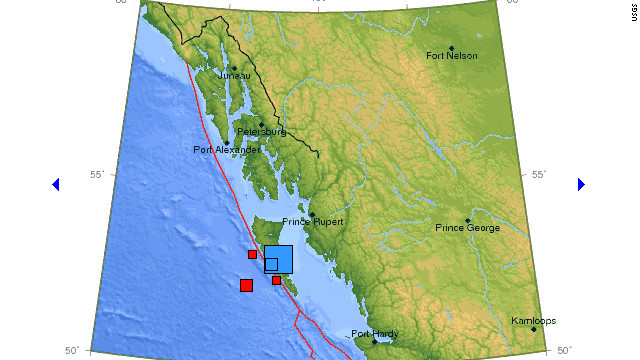
Sirens blaring across parts of Hawaii urged residents to seek higher ground, as a tsunami -- triggered by a sizable 7.7-magnitude earthquake in western Canada -- headed toward them. Waves between 3 and 7 feet are expected to lash the islands, beginning about 10:28 p.m. local time Saturday (4:28 a.m. Sunday ET), the Pacific Tsunami Warning Center said. "Basically this tsunami is pointed right at us," said Gerard Fryer, senior geophysicist at the center. The impact could last for hours. "It's not just one wave, it's a succession of waves," Fryer said. "We are recommending coastal evacuation."But he noted that the tsunami will not be as significant as the devastating quake and tsunami that killed thousands in Japan in March 2011.The tsunami was spawned by an earthquake in western British Columbia, prompting a local tsunami warning and sending some residents toward higher ground. "A (magnitude) 7.7 is a big, hefty earthquake -- not something you can ignore," Fryer said. "It definitely would have done some damage if it had been under a city." Instead, the quake struck about 139 kilometers (86 miles) south of Masset on British Columbia's Queen Charlotte Islands. No major damage was reported. The Alaska Tsunami Warning Center issued a warning for western British Columbia from Vancouver to the southern panhandle of Alaska. Canadians as far as Prince Rupert on mainland British Columbia felt the quake. Tanya Simonds said she felt like her house was "sliding back and forth on mud," but didn't see any damage from the tremor. Shawn Martin was at a movie theater when the quake struck. "It just felt like the seats were moving. It felt like someone was kicking your seat," he said. Martin said more than hundred cars headed toward a popular intersection in the city known for its higher ground. Fryer said he expects Hawaiians to also seek higher ground due to the expected "significant flooding." "The rest of the Pacific does not have to worry, but Hawaii does," he said.

Saturday, October 27, 2012

Punjab govt has links with terrorists, claims KP Governor

GEO TV
Khyber Paktunkhwa Governor Barrister Masood Kausar Saturday claimed that the Punjab government has connections with terrorists. Talking to media after a ceremony held here at Governor House, Barrister Masood said that the Punjab is a large province and it should help the Khyber Pakhtunkwa while acknowledging the issues prevailing in the province. He said that it is unfortunate that various Madrasah in Punjab are scaling up terrorism, adding that Punjab government have links with terrorists. The governor said that Supreme Court in Asghar Khan Case verdict has shown mirror to many people.

Pakistan: No terror attacks on Eid a success for govt: Malik

Interior Minister Rehman Malik said the fact that no terrorism related incidents occurred in the country on Eidul Azha, was a success on the part of the government, DawnNews reported. Speaking to the media, he apologised for the inconvenience to the general public due to the closure of mobile phone services. The interior minister also said that the closure of mobile services today helped prevent terrorists from carrying out attacks. During his talk to the media, Malik also said that if Youtube barred access on its website to anti-Islamic material, then there is a possibility of the site being reopened.

Malala: Medical status updates Saturday 27 October

Malala Yousufzai’s condition today was described as stable following another comfortable night at the Queen Elizabeth Hospital Birmingham, under the care of her medical team from the Queen Elizabeth and Birmingham Children’s hospitals.

Romney, Obama could split popular and electoral college vote, polls suggest

Most polls at this moment suggest GOP nominee Mitt Romney is in the lead nationally, but surveys in the nine or so swing states are registering a narrow advantage for President Obama. So here’s a prospect worth contemplating: What if Romney carries the popular vote, but Obama regains the presidency by winning 270 votes or more in the electoral college? “I think it’s a 50/50 possibility — or more,” said Mark McKinnon, who was a political strategist for former president George W. Bush. “If the election were held tomorrow, it wouldn’t just be a possibility, it would be actual,” added William A. Galston, a senior fellow at the Brookings Institution, who also served as a policy adviser to former president Bill Clinton. That kind of split decision between the electorate and the electoral college would mark the fifth time in American history — and the second time in a dozen years — that the person who occupies the White House was not the one who got the most votes on Election Day. What has never happened before is an incumbent president being returned to office after the majority of the electorate voted to throw him out. Every modern president to be re-elected — Dwight D. Eisenhower, Richard M. Nixon, Ronald Reagan, Clinton, George W. Bush — has gotten a bigger share of the vote in their second bid for office than their first, and with it, a chance to claim a mandate. A win in the electoral college that is not accompanied by one in the popular vote casts a shadow over the president and his ability to govern. If Obama is re-elected that way, “the Republican base will be screaming that Romney should be president, and Obama doesn’t represent the country,” McKinnon predicted. “It’s going to encourage more hyperpartisanship.” Veterans of the Bush White House understand that problem well. Bush was never able to shake the accusations of some Democrats that he had “stolen” the 2000 election in a recount of Florida votes that required a U.S. Supreme Court decision to determine the winner. Then-Vice President Al Gore had won the popular vote that year by 500,000 votes. “A close election is a polarizing event, and a discrepancy between the popular outcome and the electoral vote only adds to the polarization,” said Karen Hughes, who served as a counselor to Bush. “It rubs a raw nerve even rawer.” And that kind of split decision may well happen more often in the future, if the nation’s political system remains both deeply and closely divided. Polarization amplifies the quirkiness of the electoral college system by encouraging the candidates to ignore the nation’s biggest population centers, except for fundraising purposes, and to devote their energies to winning over that narrow slice of voters who live in states where the Election Day outcome is in doubt. The electoral college is an artifact of an era when the lack of organized political parties and the difficulties of travel and communication prevented candidates from waging a national campaign. Given those impediments, the Founding Fathers were leery of a direct popular vote as a means of gauging the popular will. But they also did not want to give Congress the power to select a president. So they set up a process by which each state would be allocated a number of electors, equal to the total of its House members and senators. If that system yet again produces a president who does not also win the popular vote, it will raise new questions about whether the electoral college should be abolished — something that would require a constitutional amendment. For now, however, both campaigns are so fixated on winning the battleground states that they are not giving much thought to the prospect of an electoral college victory that is not accompanied by a popular-vote mandate. Obama’s strategists, for instance, say they have not conducted a single national poll and have had no conversations about how to deal with the political fallout from a split decision. However, the Obama campaign this week began airing an ad in the battleground states reminding voters of the trauma of the 2000 Florida recount that awarded its electoral votes — and the presidency — to Bush. Ironically, Gore’s campaign had actually been bracing for the opposite outcome that year, recalled Tad Devine, who was a top strategist for the Gore campaign. Bush had such a huge lead in his home state of Texas that Gore’s team figured that state alone would add a percentage point to his popular vote — and potentially put him over the top in the popular vote without giving him the electoral college. That might also have been the case four years later, had Democratic nominee John F. Kerry succeeded in carrying Ohio, a state that is once again at the center of electoral college calculations. In either instance, Devine said, “we would have claimed victory and said, ‘This is the Constitution.’ We wouldn’t have hesitated a second.” Hughes recalled that Bush spent much of his early presidency trying to bind the wounds of the disputed 2000 election. After the Supreme Court declared him the president-elect, the then-governor of Texas made his first speech from the Democratic-controlled chamber of the state House in Austin. Once in Washington, Bush made a point of inviting Democrats such as the late Sen. Edward M. Kennedy (D-Mass.) to the White House for movie nights, and he celebrated the 100th day of his presidency by throwing a picnic on the White House lawn for members of Congress. One of his first big legislative initiatives was the No Child Left Behind education law, which won bipartisan support. “We made those decisions very deliberately, as a sign of healing and to bring the country together,” Hughes said. If one candidate carries the popular vote, but the other wins the electoral college tally, the prospects for a drawn-out recount are high in swing states where the results are close. But an even bigger problem would arise after that, as the new president — whoever he is — tries to govern and forge consensus on how to tackle a host of major problems. An election in which the popular will is thwarted is “the worst of all possible outcomes,” Galston said. “We are in a situation now where the government of the United States needs to regain its capacity to act after this election. We are facing some risks that are both serious and imminent.”

Obama earns Powell backing

US President Barack Obama headed to the polls Thursday to cast an early ballot ahead of elections on Nov. 6. Obama was also given a boost in his bid to keep the White House when former Secretary of State Colin Powell gave the president his support.President Barack Obama cast his ballot for the Nov. 6 election on Thursday in his hometown of Chicago and encouraged others who could vote before Election Day to follow his example. Obama, who was a U.S. senator from Illinois before becoming president, went to an early-voting facility to show his driver’s license before making his pick for president. “I’m just glad I renewed my driver’s license,” the president said after a poll worker asked to see his photo ID. When he handed it over, she studied it closely.“For all of you who have not yet voted early, I just want everybody to see what an incredibly efficient process this was,” he said to journalists afterward. It was the first time a U.S. president had cast his vote early. Scenes of presidential candidates and their spouses voting on Election Day are typically a ritual that ends a long campaign season. First lady Michelle Obama has already cast her vote. The president has said, with mock relief, that she voted for him. Both Obama and Republican rival Mitt Romney are stressing early voting more than ever, encouraging their backers to take advantage of opportunities in many states as a means of increasing turnout. But Obama’s team says statistics show he is benefiting the most from early turnout. Obama campaign spokeswoman Jen Psaki said the campaign’s early-voting margins were ahead of where they were in 2008 and beating Romney. The president was winning the early vote in the battleground states of Iowa, Ohio and Wisconsin, and had a 15- to 35-point lead among those who have already cast their votes. “This is a major part of our on-the-ground program and focus, and we hope that having the president do this today will send a message to people across the country, in states where early vote is an option, that this is something they should do, too,” Psaki told reporters on Air Force One. “He has a busy life; many American people have busy lives - picking up their kids, taking their kids to soccer, working double shifts. And this is a great option to participate in the process,” she added. Obama’s stop in Illinois - which he is expected to win easily - was part of a two-day, eight-state marathon campaign trip that included Iowa, Colorado, California, Nevada, Florida, Virginia and Ohio. The president encouraged people at rallies throughout the trip to vote early if they could.

Obama plans immigration reform while issue remains divisive

When President Barack Obama’s interview with the Des Moines Register editorial board was published on Wednesday, it made headlines not just because of a brief controversy over whether it should be on or off the record — the president ultimately allowed the entire conversation to be on the record — but also because of Obama’s unexpected focus on immigration. Obama told the editorial board that he was confident he could pass immigration reform in 2013 if he wins reelection. Yet he has not emphasized this issue on the campaign trail, and Reuters/Ipsos polling may explain why: It’s an issue that evokes strong and largely negative responses from the broad population of likely voters. Since July, 58 percent have said they thought American immigration policy is headed in the wrong direction. At the same time, support for comprehensive immigration reform is a top issue for one of the president’s key support groups, Hispanic voters. “Since this is off the record, I will just be very blunt,” the president told the newspaper. “Should I win a second term, a big reason I will win a second term is because the Republican nominee and the Republican Party have so alienated the fastest-growing demographic group in the country, the Latino community.” Obama said he would press for immigration reform in his second term because “it’s the right thing to do and I’ve cared about this ever since I ran back in 2008.” After several failed attempts to get the DREAM Act through Congress, Obama in mid-June took executive action that allows hundreds of thousands of undocumented immigrants who were brought into the United States as children to remain in the country. This policy was included in proposed versions of the DREAM Act. According to Reuters/Ipsos polling since then, 63 percent of likely voters have said most undocumented immigrants should be deported, with a few exceptions, versus 29 percent who believe they should be allowed to stay, with some exceptions. Fifty-three percent of likely voters believe the federal government should design immigration laws. Paradoxically, in a related question, 62 percent agreed that states “have the right to make laws governing immigration within their borders.” Arizona and Alabama are among the states that have enacted stringent laws, and such measures have support among likely voters: During the summer, almost three-quarters of respondents favored criminal penalties if an undocumented immigrant should “apply for, solicit, or otherwise perform work in the United States,” while 71 percent favored “state laws requiring law enforcement officers to check the immigration status of any person they suspect is in the United States illegally.” Meanwhile, 64 percent supported state laws permitting officers to arrest those who cannot produce immigration documentation.

Ohio Poll: Obama 49%, Romney 47%

A new poll taken after the final presidential debate indicates President Barack Obama has a slight edge over Republican challenger Mitt Romney in Ohio. Forty-nine percent of likely voters in the state back Obama, compared to 47% who support Romney, according to the American Research Group survey released Friday. The margin falls well within the sampling error, meaning the race is statistically tied in the Buckeye State, a crucial battleground in the 2012 presidential race. Also in the poll, one percent of respondents said they prefer another candidate, while three percent said they are undecided. ARG surveyed 600 likely voters in Ohio between October 23 and October 25. The poll has a sampling error of plus or minus eight percentage points.

Worst storm in 100 years: East Coast waits in terror for Frankenstorm

Some Americans may have to think twice about going trick-or-treating this year. A massive storm is expected to hit the East Coast during the days leading up to Halloween, which meteorologists anticipate will cost at least $1 billion in damages. The “Frankenstorm” may bring high winds, heavy rain, extreme tides and even snow to some states. The storm will evolve from a collision between Hurricane Sandy, which has already swept through Haiti and Cuba and is now heading north, and a winter storm coming from the west. Government forecasters say there is a 90 percent chance that the hurricane will make landfall on the East Coast. The two weather systems are predicted to collide in New York or New Jersey Tuesday morning, bringing those states about 5 inches of rain and winds close to 40 mph. Forecasters say it could be the worst US storm in 100 years. Chuck Watso, director of research and development at Kinetic Analysis Corp., announced Thursday that it may cost more than $5 billion in damages. “It’s pretty much the worst case scenario with the potential for historic coastal flooding, copious amounts of rain, and damaging winds,” Jason Samenow of the Capital Weather Gang wrote in the Washington Post. “It’s definitely something that everyone should be watching,” Nelson Vaz, a meteorologist with the National Weather Service, told the Wall Street Journal. “A storm that maintains its strength, coming in to central New Jersey would focus the storm surge in the New York harbor area.” Forecasters have compared the predicted weather system to the 1991 Perfect Storm, also known as the Halloween Nor’easter, which had winds blowing at 75 mph and cost more than $200 million in damages. This year’s storm will fall during a full moon, which will cause the tides to rise 20 percent higher than normal even without the storm surge. Utility companies are preparing for the worst. In the Washington area, Pepco is gathering help from power companies in other parts of the US to gain additional assistance in the case of fallen power lines or power outages. Other companies are canceling their employees’ days off to have them available for help. Baltimore Gas and Electric spokesman Robert Gould told the Post that he expects to see “a couple hundred thousand outages or more” when the Frankenstorm makes its appearance. Amtrak has expressed concern that fallen trees and debris could make it difficult for trains to keep running between Washington and Boston. As power companies, airports, rail lines and supermarkets are undergoing emergency preparations for a potentially record-breaking storm, residents of the Northeast may have to forego their Halloween plans. “It’s looking like a very serious storm that could be historic,” Jeff Masters, meteorology director of the forecasting service Weather Underground, told the Associated Press. “Mother Nature is not saying, ‘Trick or treat.’ It’s just going to give tricks.”

"Super storm" Sandy heads toward U.S. northeast coast

http://www.reuters.com
Hurricane Sandy was downgraded on Saturday morning but remained highly menacing as it pulled away from the Bahamas, making a slow path toward the U.S. northeast coast where it threatens to become one of the worst storms in decades. The late-season storm has been dubbed "Frankenstorm" by some weather watchers because it will combine elements of a tropical cyclone and a winter storm and is forecast to reach the U.S. coast close to Halloween. Forecast models show it will have all the ingredients to morph into a so-called "super storm", stirring memories of the 1993 'Storm of the Century', whose impact in the United States was particularly destructive. Governors in states along the U.S. East Coast declared emergencies on Friday, with officials urging residents to stock up on food, water and batteries. The U.S. Navy ordered all ships in the Norfolk, Virginia, area, including a nuclear-powered aircraft carrier, out to sea to ride out the approaching storm. "We're expecting a large, large storm," said Louis Uccellini, director of the National Oceanic and Atmospheric Administration's Center for Environmental Prediction. "The circulation of this storm as it approaches the coast could cover about the eastern third of the United States." Sandy battered the Bahamas southeast of Florida on Friday after causing widespread destruction in eastern Cuba a day earlier. The storm was expected to crawl northward on Saturday and Sunday and then turn toward the U.S. coast. On its current projected track, Sandy could make landfall on Monday night or Tuesday somewhere between North Carolina and southern New England, forecasters said. The storm has the potential to cause widespread power outages and to unleash flooding and even dump snow as far inland as Ohio. It also threatens to disrupt air travel along the U.S. East Coast. Early Saturday morning, Sandy was about 350 miles southeast of Charleston, South Carolina, packing sustained winds of 70 miles per hour (110 km per hour), just below hurricane strength according to the Saffir-Simpson scale of storm intensity. It had picked up a little speed overnight but was still moving slowly over the Atlantic at 10 mph, the U.S. National Hurricane Center said. PRESIDENTIAL ELECTION Sandy was forecast to speed up over the weekend as it moved parallel to the U.S. coast, possibly strengthening into a Category 1 hurricane again on Sunday. Despite being downgraded, the storm continued to grow in size with tropical force winds extending 450 from its center, forecasters said. Coming in the final weeks before the U.S. presidential election on November 6, the storm was presenting a challenge to the campaigns of U.S. President Barack Obama and his Republican challenger Mitt Romney. Romney canceled a rally scheduled for Sunday evening in Virginia Beach, Virginia, while President Obama's re-election campaign announced that Vice President Joe Biden had also canceled a Saturday trip to Virginia Beach. Ahead of the election, millions of Americans are taking advantage of early voting arrangements to cast their ballots. State officials said they had put in place contingency plans in case Sandy caused extended power outages or other problems that could disrupt voting. In New York City, officials were considering shutting down the country's largest mass transit system because they were worried the storm's impact could cause flooding or high winds that might endanger subways and buses. Much of Florida's northeast coast was under a tropical storm warning and storm watches extended up the coast through South Carolina. Along North Carolina's Outer Banks, which jut out into the Atlantic, vacationers in large camper trailers and motor homes streamed off the barrier islands. Many forecasters are warning that Sandy could be more destructive than last year's Hurricane Irene, which caused billions of dollars in damage across the U.S. Northeast. Sandy's powerful winds and rains were blamed for 41 deaths in several Caribbean countries, including 11 in Cuba. Most were killed by falling trees and building collapses. In eastern Cuba, the authorities continued clearing streets in the historic city of Santiago which was struck on Thursday by 110-mile-per-hour winds.

Japan's heavy input in Diaoyu Islands futile

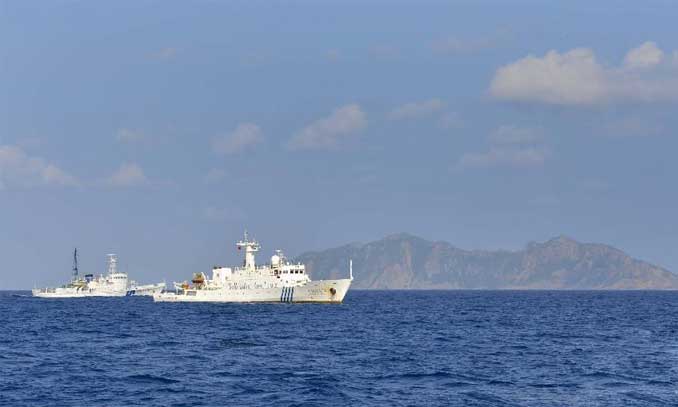
Japan decided on Friday to urgently purchase additional hardware, including 1,000-ton patrol vessels and helicopters that can fly in rough weather, in light of the normalization of patrol and law enforcement missions by Chinese ships in waters around the Diaoyu Islands. The procurement signals that maritime confrontation between the two countries could continue to escalate. But China won't be frightened. Japan's provocative moves, including "nationalizing" the Diaoyu Islands, have shaken up the situation. China is bound to deal with Japan's provocation with a brand-new attitude that won't be changed, regardless of how high Japan raises the stakes. If the two countries engage in a confrontation based on strength over the island issue, Japan is destined to lose; Chinese society is confident on this. Japan's ludicrous "nationalization" move stirred up unprecedented counterstrikes by China. If Japan becomes more aggressive over the Diaoyu Islands issue, the countermeasures from China will only grow stronger. The normalization of Chinese law enforcement and patrol missions near the Diaoyu Islands has changed the political reality of this issue. Chinese maritime surveillance ships have entered the 12-nautical-mile zone around the Diaoyu Islands, which has already broken down Japan's so-called control of the islands. Japan must behave more cautiously in the future. The increase of Japanese forces in this area will inevitably lead to greater input from the Chinese side. If Japanese dare land on the islands at will, they need to prepare for further action by China. Chinese law enforcement personnel may land and catch those infringing on Chinese territory. Japan should not think such a day is far away. It's not that China wants a war with Japan over the Diaoyu Islands. The Chinese still hold a peaceful attitude, but do not dare fight with Japan over the island issue. Today, the Chinese are confident they have adequate capacity to check Japan whenever necessary. Japan needs to learn a valuable lesson to thoroughly rid its arrogance toward China that has lasted for over a century, and give up its misunderstanding that China can infinitely tolerate its provocation. The Diaoyu Islands issue presents a window of opportunity for China to bring about change. Japan has already lost the moral ground and momentum over the island issue. It's naïve that Japan thinks it can reverse the dynamics by buying several larger patrol vessels, as such expenditure will prove futile due to Japan's declining forces. China is gradually consolidating its stance over the Diaoyu Islands issue, which has proven successful and should be firmly continued. Only by facing a resolute, powerful neighbor will Japan watch its manner.

China says no concession on territorial sovereignty

China says it will take forceful measures in response to any moves that challenge the country’s bottom-line on sovereignty. Chinese Vice Foreign Minister Zhang Zhijun issued the warning at a press briefing he gave to Chinese and foreign journalists in Beijing on Friday. He called on Japan to face historical facts on the issue of the Diaoyu Islands. Chinese Vice Foreign Minister Zhang Zhijun began with a statement saying the Diaoyu Islands are China’s inherent territory historically and legally. He said the Diaoyu Islands had not been an issue and there had been no dispute overr the sovereignty over Diaoyu Islands in the first place. It was only because Japan illegally seized and occupied the islands in 1895 that the current dispute came into being. With regards to Japan’s so-called "purchase" of the islands, Zhang responded by saying no transaction is allowed over the sale of even one inch of the territory or anything on it. Zhang also warned that if Japan cannot face up to history, it will never stand up morally or psychologically. He underlined that in contact and consultations at all levels, the Chinese government has stated its solemn position on the issue and strong determination to safeguard territorial integrity. China has urged Japan to have a correct reading of the situation, abandon any illusion and face up to reality. Japan should correct its mistake with credible steps and make real efforts so that the current problem will be handled properly. Vice foreign minister Zhang Zhijun told the journalists that China has to uphold principles and bottom line in handling its relationships with Japan. China will never make any concession on issues regarding territorial sovereignty. He said should anyone want to challenge China’s bottom line on the issue of sovereignty, China will have no alternative but to respond forcefully so as to remove disturbance and obstacles and move steadily on the path of peaceful development.

U.S. economy picks up steam before Election Day

U.S. economic growth gained momentum to a moderate pace in the third quarter of this year, triggering starkly opposite responses from the Obama administration and the Republican presidential campaign. U.S. gross domestic product (GDP) grew at an annual rate of 2 percent in the third quarter, a welcome acceleration from 1.3 percent in the second quarter and was the thirteenth straight quarter of economic growth, said U.S. Commerce Department in a report Friday. The latest rate was slightly better than market expectations, but far from robust enough to make a significant dent in the high unemployment rate hovering at 7.8 percent. The increase of the nation's real GDP in the third quarter primarily reflected positive contributions from personal consumption expenditures (PCE), federal government spending, and residential fixed investment, the department said in its last such report before the Nov. 6 presidential election day. Real personal consumption expenditures rose 2 percent in the third quarter, compared with an increase of 1.5 percent in the second quarter, reported the department. Personal consumption accounted for about 70 percent of the total economic activity in the world's largest economy. Real residential fixed investment gained 14.4 percent in the third quarter, compared with an increase of 8.5 percent in the second quarter. Real federal government consumption expenditures and gross investment rose 9.6 percent in the third quarter, in contrast to a decrease of 0.2 percent in the second quarter, noted the report. The key economic numbers came less than two weeks before the election day across the nation, and Democratic and Republican campaigns were interpreting the data in their favor. The latest economic numbers were "discouraging" news, said Republican presidential nominee Mitt Romney at a campaign event in the Midwestern U.S. state of Iowa Friday, adding that U.S. President Barack Obama had promised that U.S. economic growth rate would have reached 4 percent by now. "Slow economic growth means slow job growth and declining take- home pay," said Romney. Romney restated his five-point jobs plan to create 12 million new jobs in the coming four years through measures such as cutting taxes, reducing government regulations, and boosting oil and gas exploration and development. Together with other economic indicators, this report provided further evidence that the economy was moving in the right direction, Alan Krueger, chairman of the White House Council of Economic Advisers, on Friday said in a blog article after the release of the data. To strengthen economic growth and spur job creation, Obama has proposed to Congress a plan to help state and local governments retain and hire teachers and first responders, bolster the construction sector, modernize the nation's infrastructure, and give small businesses tax cuts to encourage hiring, stressed Krueger, Obama's top economic advisor.

Why China-bashing dominates U.S. presidential elections

For many years, China has always been a heatedly-discussed topic in U.S. presidential elections. The three rounds of presidential debates between Obama and Romney made no exceptions. In the first debate, Romney referred to China for three times in regard to domestic economy and trade, advocating that the United States should bash China in trade and not balance expenses and deficits through Chinese loans. In the second debate, Obama asserted that the U.S. could not fall behind China in development of new energy, accusing Romney of investing the company which produces the equipment for China to monitor Americans. In the final debate, how to cope with challenges brought by China’s rise has become a separate topic. All presidential candidates have debated over China and took a tough stance in the past 30 years. However, no matter how tough they are, the China-bashing remarks in the elections are “irresponsible”. No matter who wins the election, every U.S. president unexceptionally attaches great importance to the China-U.S. relations. In other words, China-bashing is nothing but a topic which aims to attract the public attention. Recurrence of the topic indicates the dramatic elements of foreign relations in the U.S. presidential election. Therefore, analysts believe that instead of taking too seriously what candidates say during the election about China, we should pay more attention to how they cope with the China-U.S. relations after the election. It is against the background of universal concern for livelihood and economy among the voter that the candidates pay close attention to China and its influence on the U.S., demonstrating that China has an increasing impact on the U.S. politics and economy. According to the opinion poll by a U.S. organization, two-thirds of the U.S. citizens believe that the U.S. and China maintain good relations and 55 percent advocates that the United States should establish strong and stable relations with China. Therefore, given the importance of China-U.S. relations, whoever becomes the U.S. president cannot execute negative China policies and the complexity of bilateral relations determines that the U.S. will never be too close to China.

AFGHANISTAN: Winter planning aims to save lives

After last year’s Afghan winter - the harshest in 15 years - killed dozens of displaced children in urban settlements, government and aid agencies in Afghanistan are preparing themselves for the coming winter. As of 30 September 2012, the UN Refugee Agency (UNHCR) reported 445,856 persons internally displaced due to conflict. Many of these live in informal settlements in and around Kabul, but their numbers can be hard to track. The UN Office for Coordination of Humanitarian Affairs (OCHA) is compiling data on the size of the settlements, where the deaths occurred, to scale up its winter assistance stocks accordingly, the deputy head of the Afghanistan office, Arnhild Spence, told IRIN. The Afghan National Disaster Management Authority is in the process of collecting and consolidating data on preparedness measures which the various line ministries are undertaking in the provinces. Natural hazards (from floods, to droughts to avalanches) are recurrent in Afghanistan, making the poorest Afghans - not only residents of informal urban settlements, but also those in mountainous, avalanche-prone areas of the northeast, central highlands and east - even more vulnerable. The government has transferred 90 million Afghanis (US$1.6 million) to each of the country’s 34 provinces to deal with the possible emergency situation during the winter, according to Afghanistan Humanitarian Country Team winterization preparedness status update on 22 October 2012. The UN Refugee Agency (UNHCR), in coordination with the Afghan authorities and other aid agencies, is planning to distribute blankets, plastic sheets, charcoal, and warm clothes to 240,000 people in less-accessible rural areas where internally displaced persons (IDPs) and refugees who have returned from Pakistan and Iran are living in difficult conditions in isolated remote communities, according to spokesperson Mohammad Nader Farhad. The Afghan Red Crescent Society is establishing four disaster response units, with about 3,300 volunteers assigned, to provide assistance during winter emergencies. As the 2012-13 cold season begins, OCHA says 13 provinces are at a high or very high risk of an extreme winter. Still, Spence said, “we are expecting a slightly less harsh winter than last year in Afghanistan, which was exceptionally cold.” “Preventable tragedy” In an open letter on 18 October, a coalition of 30 NGOs, including Amnesty International, the Norwegian Refugee Council, and the Agency Coordinating Body for Afghan Relief called for urgent assistance for vulnerable displaced people, pointing to the death last year of at least 100 people - mostly children - in Kabul’s settlements alone. “What happened last year was a preventable tragedy, and should act as a sharp reminder that emergency assistance must be provided immediately, before the winter arrives,” said Polly Truscott, deputy director of Amnesty International’s Asia-Pacific Programme.On 22 October, the national IDP task force, which brings together government and aid partners, met in Kabul to discuss among other things preparations for winter assistance for the displaced. Another coordination forum, the Kabul Informal Settlement Task Force, has agreed to meet every month from now throughout the winter to better respond to the needs of the displaced. Thanks to increasing acceptance by donors that a response is needed to the plight of urban IDPs, and thanks also to the work of aid agencies, the condition of IDPs has slightly improved compared to two years ago, Nassim Majidi, co-director of Samuel Hall Consulting, a research and consulting organization based in Kabul, told IRIN. But she said their housing - mud homes and tents - was still not adapted to Kabul’s harsh winter conditions. Accusations that community leaders are not distributing relief items properly have not helped, she added. “Families are naturally very worried about the upcoming winter.” The Ministry of Refugees and Repatriations is drafting a national IDP policy, planned to be released in March 2013. Aid agencies say it is an important step in acknowledging the scope of the IDP problem and expanding attention beyond Kabul and its informal urban settlements to the needs of IDPs nationwide. Amnesty says what is needed now is urgent action. “We urge the Government of Afghanistan, international donors and relevant humanitarian organisations to immediately launch a winter assistance campaign to help ensure adequate planning and preparedness to safeguard the lives of hundreds of thousands of IDPs across Afghanistan over the next few critical months,” the open letter said.

Afghans: Taliban kill 5 civilians grabbed off bus

Associated Press
Police say Taliban militants have pulled five Afghan civilians off a bus in eastern Afghanistan and shot them dead. Ghazni province Deputy Police Chief Mohammad Hussain says the insurgents stopped the bus Friday as it was driving in Andar district on the main road headed south to Kandahar city. He says they pulled out five people and killed them on the spot. Police recovered the bodies Saturday from the roadside. Hussain says it is not yet clear if the victims were specifically targeted by the insurgents.

Afghan President Condemns Mosque Attack

http://www.rferl.org
Afghan President Hamid Karzai said those responsible for a suicide bomb attack outside a mosque in the north of the county were "enemies of Islam and humanity." Forty one people died and more than 50 were wounded in the attack on October 26 in Maymana, capital of northern Faryab Province. Many of the casualties were senior regional officials, celebrating a major Muslim holiday. No one claimed responsibility. The NATO-led coalition's commander, U.S. General John Allen, also condemned the attack. The attack was the latest in a series of deadly strikes in recent weeks against Afghan army, police, and government officials. Earlier, Karzai repeated his call for the Taliban to join the government in an address to mark Eid al-Adha. Elsewhere, the Taliban claimed responsibility for the deaths of two U.S. service members in southern Oruzgan Province the day before.

Kabul Cards: there's life beyond Taliban

Afghanistan is usually associated with suicide bombers and large-scale violence. But in an attempt to showcase the multi-faceted civilian life largely ignored by the international media, three young women, Sahar Fetrat (16), Sadaf Fetrat (20) and Nargis Azaryun (19)
carried hand-held cameras to document their daily life in Kabul and made a film, Kabul Cards, that was screened at the Mumbai Film festival. “We want to explain to the world that Kabul, Afghanistan, is a very normal place to live in,” says Nargis. “All the things written and said about Afghanistan in the international media are about explosions and the Taliban. That’s not the whole reality. There’s a big civilian life over there and we feel that should be reflected too.” She adds, “Whenever we’ve spoken to any foreigner about Afghanistan, they say, ‘Oh, the terror place. The Taliban.’ All documentaries usually made in and about Afghanistan focus only on one issue — terrorism and women. But problems exist all over the world. Why can’t they show the happier side of Afghanistan? A coin has two sides.”Saher adds that Afghanis have a very active and normal daily life. “With this film we want to show that there are people in Afghanistan who are fighting to reduce challenges and problems,” she says. “Street harassment of women is a big issue in Kabul, but there are organisations helping us.” Says Sadaf, “It’s not bad living there. The international media is horrible about Afghanistan. People study there, there are universities and I don’t think we’ve missed out on anything. There’s a rich culture back home.” It wasn’t as difficult as you might believe for three young women in Kabul to make a film and then travel abroad to promote it. “Our parents aren’t educated, but they understand us and our initiative,” says Sadaf. “They’re glad we’re doing this.” Nargis adds, “My father is a doctor and my mother is a working woman. They encouraged me to pursue this dream.”

Nawaz Sharif only paid Rs 51,318 in Income Tax

Reacting to a statement by Nawaz Sharif that his family had paid Rs 92 crore as taxes in the year 1990, Chairman PTI said that this is a deliberate attempt at misleading the people. Talking to Shafqat Mahmood, Secretary Information PTI, from New York, where he is on a visit, Khan said that as per FBR records the declared income of Nawaz Sharif for the year 1990-91 was only two lacs forty nine thousand five hundred and thirty seven (Rs 249,537). On this income he paid Rs fifty one thousand three hundred and eighteen (51,318) as income tax. Shahbaz Sharif in the same year 1990-91 said Imran Khan had an income of Rs 271,638 on which he paid Rs 53,482 as income tax. Thus, both brothers in total paid Rs One lac four thousand and eight rupees as income tax in the year they took money from Younas Habib. Where has the figure of ninety two crores that Nawaz Sharif family have supposed to paid as tax come from, asked Imran Khan? There are two notable features of the misleading statement by Nawaz Sharif, according to Chairman PTI. First he is mixing together Sales Tax, Central excise duty or other corporate taxes that companies pay. They are not paid by individuals but by corporations. There is no way of verifying whether Sharif family companies paid this amount of corporate tax or not. What is equally mystifying said Imran Khan is that if indeed the Sharif companies had paid Rs 92 crores as corporate taxes, why are the incomes of Nawaz Sharif and Shahbaz Sharif so meagre. They have both declared approximately Rs five lacs as their combined income for the financial year 1990-91. If their family owned companies were paying such heavy amounts in corporate taxes, where has the income gone? Chairman PTI Imran Khan said that after flip-flopping on the issue of investigation by FIA with Ch Nisar criticising the Supreme Court, Sharif is now ready for investigation by it. This is a good development but it is important that FIA’s terms of reference be wide enough to allow a thorough probe into irregularities in the Mehrangate Scandal. While Nawaz Sharif is calling Younas Habib a criminal, was it not the first Sharif government that gave him a licence to launch Mehran Bank, asked Mr. Khan? It also needs be investigated that did Mehran Bank soon after its inception give Rs 20 crore to the house of Sharif that is still unpaid?.

Youth pressure Malik to open YouTube in Pakistan

http://www.thenewstribe.com
Federal Interior Adviser Abdul Rehman Malik has hinted at opening of YouTube in Pakistan saying ‘there is an immense pressure on me’. “There is an immense pressure on him to resume YouTube,” he said while talking with media. “When I open my Twitter, there is a flood of messages to resume YouTube in Pakistan,” the adviser. YouTube was closed over a month ago after release of a derogatory video about Prophet Muhammad. He viewed that if there was a filthy book in a library then only book is removed from the library as it’s not appropriate to close down the whole library. “If there is any anti-Islamic content then it should be removed.”

ANP fears: Judge’s remark can harm federation

Strongly reacting to the Lahore High Court chief justice’s remarks about construction of controversial Kalabagh Dam, Awami National Party has said that the observations could jeopardise harmony among the federating units. “Does the high court want to convey message of Takht-i-Lahore to three smaller provinces by passing remarks in support of Kalabagh Dam,” said ANP provincial chief Senator Afrasiab Khattak while speaking at a press conference here on Friday. Flanked by provincial ministers and party MPAs, Mr Khattak termed Kalabagh Dam a dead issue and said that assemblies of three federating units had already rejected this contentious project. “I request the high court to stop hearing the case because this is not a legal or constitutional issue,” he maintained. He said that Kalabagh Dam was a technical and political issue and one province wanted to take away smaller provinces share from Indus River. He said that ANP had rendered sacrifices for the independence and supremacy of judiciary and still supported free judiciary. However, remarks of LHC in favour of Kalabagh Dam had created unrest. At least LHC should not hear this case, he added. Media quoted Chief Justice LHC Justice Umar Ata Bandial as saying that objections of Khyber Pakhtunkhwa and Sindh to the dam’s construction were mere political. Senator Khattak said that observations of the chief justice would trigger controversies among the federating units. “Kalabagh is a matter of life and death for us and we will not allow anybody or institution to sink our civilisation, lands and drown people of the province,” he said. He recalled that devastating floods which caused widespread damages to Khyber Pakhtunkhwa in 2010 was an eye opener for the nation and after that nobody should talk in favour of Kalabagh Dam. He urged the government to execute work on non-controversial power generation projects like Diamer Bhasha and Katzara dams. He opined that Khyber Pakhtunkhwa had a potential to generate up to 40,000MW electricity offering the federal government and Wapda to build small dams in northern parts of the province to overcome power crisis in the country. When asked whether ANP would take Kalabagh issue to the Council of Common Interests (CCI), Senator Khattak replied that three elected assemblies had rejected this project and there was no need to take it to CCI. He dispelled the impression that Kalabagh was only an issue among the political parties not provinces. He said that incumbent Prime Minister Raja Pervez Ashraf when he was minister for water and power had stated that Kalabagh project had been buried forever. He claimed that technical experts had also raised reservations about the project because it was not suitable for power generation.

Asghar Khan case: Clash of the titans

BY:
Lal Khan
The mushrooming of madrassas and centres of fanatical indoctrination created a large segment of youth who are trained and envenomed to kill and maim in the name of religion
The ruling of the Supreme Court in the Asghar Khan case has laid bare the burgeoning intrinsic conflicts between and within the most vital institutions of the state, the titans, the political executive, military establishment and the judiciary. The judgement reprimands the ISI for doling out millions to the rightwing and religious politicians and parties to forge the Islamic Jamhoori Ittehad (IJI) to defeat the PPP in the 1990 elections. The verdict names Generals heading the army and the ISI as perpetrators of this act. This is unprecedented in the country’s history and shows the process of internal dissent, organic decay and erosion of the state due to the crumbling economy and disintegrating society due to the crisis of Pakistani capitalism. The state that is trying to impose it is now itself being afflicted by the ramifications of this diseased system. With a pathetic growth rate of less than two percent and record deficits from the budget to trade, the state of the official or the formal economy is a looming disaster. According to a latest study of the FBR, “The informal economy has already gone beyond $ 100 billion, which is more than half of the total economy...this black economy has been growing at the rate of nine percent from 1977 to 2000. It grows along with growth in corruption, speed money, smuggling, narcotics, government contracts and tax evasion.” The growth of the black economy in the subsequent years in all probability would be much higher. The Economic Survey of Pakistan, 2011-2012 says the following: “The informal economy plays an important and sometimes controversial role. It provides jobs but in many cases, they are low paid. This economy employs 73.8 percent of Pakistan’s total labour force and hence is the largest employer in the country.” While the bulk of the economy is unauthenticated, non-documented and unaccounted for, the formal economy is afflicted by spiralling imperialist debt servicing, the military and the state apparatus. Less than 10 percent of the GDP is for health, education, infrastructure, running of the government, etc. Even if the black economy is not in the state’s control, it does play a crucial role in the policies of the state and the politics of the ruling classes. In a situation of social stagnation, this black money decides party manifestos and policies. It buys political power and status, popularity through the media, cosy posts in the state apparatus, lucrative contracts and deals, loyalties and affiliations, law and justice through astronomical fees of the top lawyers and what not. Without its eradication, a healthy bourgeois democratic society cannot materialise. But the reality is that the nascent Pakistani bourgeoisie was historically so belated and in such economic and financial underdevelopment that it neither had the means nor the will to complete the national democratic revolution. The rates of profit they yearned for could not be achieved under a normal capitalist regime through manufacturing, mechanised agriculture or even the services sector. Hence, the intrusion of criminality and plunder of the state resources in businesses was a necessity for the debilitated Pakistani capitalism to sustain the privileges and profits of the corrupt and intransigent ruling classes. In other words, these illicit methods of generating black money were inevitable in the evolutionary patterns and methods of capitalism in the country. But now the reality is that the ‘informal’ economy has become a malignant tumour in the body politic of Pakistan. It has metastasised to such an extent that it is enmeshed with the capitalist system itself and cannot be bifurcated from it. Although the economic catastrophe is the most crucial factor in the decline of society, the social decay is nauseatingly conspicuous in the degeneration of art, culture, ethics, morality, attitudes, behaviour, manners and social relations of our tragic society. One of the most lucrative beneficiaries of the black money is the mullah aristocracy and the fundamentalist outfits. They are also the most ardent defenders of the parasitic economic edifice. Even the official figures reveal that it was the late 1970s when the tumour began to rapidly grow. However, the Dr Frankenstein of the monster was none other than US imperialism. The Afghan jihad was financed by the narcotics trade and other criminal acts designed in its strategy by the CIA. The ISI was merely its executioner that later became the possessor of the dirty money that has now permeated the country’s economy and society. The social and political implications have been devastating. The neo-Islamic fundamentalism evolved around the dollar jihad of black money. The mushrooming of madrassas and centres of fanatical indoctrination created a large segment of youth who are trained and envenomed to kill and maim in the name of religion. The social life of not just women and minorities has been traumatised but the entire society is suffering from the suffocation of religious subjugation. The reality is that the social hegemony of reactionary obscurantism is fragile and has very little mass support. They are in a tiny minority of the 190 million inhabitants of this land. The social existence of the tiny minority is only due to the rotten economic and social policies of the liberal and secular political elite, which is voted in by the masses for a change but once in power, carries on with the devastating capitalist policies that further pummel the lives of the already impoverished masses. When weakened, they revert to religion without the slightest hesitation. The despair and dread that ensues retards the class struggle and a vacuum evolves where these mercenaries of black capital wreak havoc on the lives of ordinary people. However, the vicious cycle is now convulsing the state with intrinsic conflicts exploding and dragging society into a downward spiral. The socio-economic conditions will only deteriorate in the perspective of a worsening crisis of capitalism. But the conflicts within the state apparatus can also converge on to class lines as the contradictions on this basis in its edifice are sharper than ever before. Nevertheless, the class revolt in the state will only erupt when the class struggle in society reaches a stage where a revolutionary victory becomes a real possibility. Fredrick Engels said more than a hundred years ago that after a century, mankind will be faced by clear choices: socialism or barbarism. The working classes have no other option but to fight to overthrow this system for their salvation and the survival of civilisation.

SC verdict in Asghar Khan Case proves Nawaz Sharif became PM by stealing polls

RADIO PAKISTAN
Former Prime Minister Syed Yousuf Raza Gilani has said that the Supreme Court verdict in Asghar Khan Case has proved that Nawaz Sharif became prime minister in 1990 by stealing the general elections. Talking to newsmen after offering prayers in Multan‚ he said there exists no political cell in the Aiwan-e-Sadr as was working in 1990. Gilani said there is no reason to postpone the general elections‚ which will be held on time.

President Zardari asks nation to pledge for country's progress

http://www.brecorder.com
President Asif Ali Zardari has asked the nation to work unitedly for the progress and prosperity of the country with adopting the true spirit of sacrifice, brotherhood, religious tolerance and renouncing hatred and prejudice. "We should remember on this auspicious occasion of Eid ul Azha, the sacrifices of the people rendered in the war against terrorism to defend the country," said the President in his message on the occasion of Eid ul Azha being celebrated in the country on Saturday. The President said the country today is facing the challenges of terrorism, extremism, sectarianism and target killing and there is a need to inculcate unity, brotherhood, will for sacrifice, religious tolerance, and high qualities to face these challenges. He said on the blessed occasion of Eid-al-Azha, "I want to congratulate my countrymen, pray for their security, safety, for their happiness and prosperity." The President said, "Eid-al-Azha reminds us of the great sacrifice, completely following the orders of Almighty Allah, and unprecedented acceptance of Hazrat Ibrahim (AS) and Hazrat Ismail (AS) that has established such an everlasting example of submission to the will of God." The President said the sacrifice inculcates spirit of giving everything in the name of Allah to seek His blessing. He said sacrificing animals to follow the Sunnah of Hazrat Ibrahim (AS) is infact a pledge to give away everything in the name of the Lord and it has become a base to follow the fear of God that is the real aim of living a life. He said, "On this auspicious day we pledge that we will prefer obeying the commands of God over the dearest and nearest worldly belongings and will not hesitate to render any sacrifice in order to please Him". President Zardari further said, "I pray to Almighty Allah that He protects us and give Pakistan peace, tranquility, progress and prosperity." The President said, "We should also remember in our Eid celebration all those brothers and sisters, who are suffering due to natural calamities and living a life without basic needs of life." He said, "May Allah give us the strength to include the real spirit of sacrifice in our daily lives''.