Wednesday, October 24, 2012

Pakistan's threat within - the Sunni-Shia divide

About 20 men dressed as Pakistani soldiers boarded a bus bound for a Muslim festival outside this mountain town and checked the identification cards of the passengers. They singled out 19 Shi'ites, drew weapons and slaughtered them, most with a bullet to the head. The shooters weren't soldiers. They were a hit squad linked to the Sunni Muslim extremist group Lashkar-e-Jhangvi, or LeJ. They had trekked in along a high Himalayan pass that hot August morning to waylay a convoy of pilgrims. Here and across Pakistan, violent Sunni radicals are on the march against the nation's Shi'ite minority. With a few hundred hard-core cadres, the highly secretive LeJ aims to trigger sectarian violence that would pave the way for a Sunni theocracy in U.S.-allied Pakistan, say Pakistan police and intelligence officials. Its immediate goal, they say, is to stoke the intense Sunni-Shi'ite violence that has pushed countries like Iraq close to civil war. More than 300 Shi'ites have been killed in Pakistan so far this year in sectarian conflict, according to human rights groups. The campaign is gathering pace in rural as well as urban areas such as Karachi, Pakistan's biggest city. The Shi'ites are a big target, accounting for up to 20 percent of this nation of 180 million. In January, LeJ claimed responsibility for a homemade bomb that exploded in a crowd of Shi'ites in Punjab province, killing 18 and wounding 30. LeJ's reach extends beyond Pakistan: Late last year, LeJ claimed responsibility for bombings in Afghanistan that killed 59 people, the worst sectarian attacks since the fall of the Taliban government in 2001. "No doubt - (LeJ) are the most dangerous group," said Chaudhry Aslam, a top counter-terrorism police commando based in Karachi, whose house was blown up by the LeJ. "We will fight them until the last drop of blood." For an outlawed group accused of fomenting such mayhem, the leader of LeJ is surprisingly easy to find. Malik Ishaq spent 14 years in jail in connection with dozens of murder and terrorism cases. He was released after the charges could not be proved - partly because of witness intimidation, officials say - and showered with rose petals by hundreds of supporters when he left prison in July 2011. Although Ishaq is one of Pakistan's most feared militants, he enjoys the protection of followers clutching AK-47 assault rifles in the narrow lane outside his home. There, in the town of Rahim Yar Khan in southern Punjab province, Reuters visited him for an interview. "The state should declare Shi'ites as non-Muslims on the basis of their beliefs," said Ishaq, calling them the "greatest infidels on earth." Young supporters with shoulder-length hair in imitation of the Prophet Mohammad hung on every word. FOLLOWING THE TRAIL To assess the LeJ threat, Reuters followed the group's trail across Pakistan - from Ishaq's compound, to Gilgit in the foothills of the Himalayas, recruiting grounds in central Punjab, and the backstreets of Karachi on the Arabian Sea coast. In interviews, police, intelligence officials, clerics and LeJ members described a group that has grown more robust and appears to be operating across a much wider area in Pakistan than just a few years ago. But it had a head start. The LeJ once enjoyed the open support of the powerful spy agency, the Directorate for Inter-Services Intelligence. The ISI used such groups as military proxies in India and Afghanistan and to counter Shi'ite militant groups. Since being outlawed after the attacks of September 11, 2001, LeJ has worked with Sunni radical groups al Qaeda and the Pakistani Taliban in several high-profile strikes. Among them were assaults in 2009 on Pakistan's military headquarters and on Sri Lanka's visiting cricket team. Washington says LeJ was involved in the killing of Wall Street Journal correspondent Daniel Pearl in 2002. Now it is gathering strength anew. The risks are heightened by Pakistan's long-standing role as a battlefield in a proxy war between Sunni Saudi Arabia and Shi'ite Iran, which have been competing for influence in Asia and the Middle East since the 1979 Iranian revolution. That competition has heated up since the United States toppled secularist dictator Saddam Hussein in Iraq and left the country under the control of an Iranian-influenced Shi'ite government. Intelligence officials say the LeJ is drawing financial support from Saudi donors and other Sunni sources. "Unfortunately, the state for strategic reasons turned a blind eye to the LeJ for a long time," said a retired army general. "Now we have a situation where it has become Pakistan's Frankenstein." Interior Minister Rehman Malik, who is in charge of internal security, told Reuters that "we always take action" against the LeJ when the group is suspected of murder or terrorism. "We track people and arrest them." When asked why those arrested are often freed, he said: "Look, my job is to arrest people, not to let them go. We all know who lets them off the hook and why," he said, referring to local politicians and elements of the military who turn a blind eye to their activities or even support them in some cases. SACRED CALLING Lashkar-e-Jhangvi, whose name means Soldiers of Jhangvi (after its founder, Haq Maulana Nawab Jhangvi), isn't the only lethal militant group that once enjoyed patronage from the spy agency. One is Lashkar-e-Taiba (Soldiers of the Pure), which fights against Indian control in disputed Kashmir. It is blamed for several deadly attacks on Indian soil, including the November 2008 attacks in Mumbai, and an audacious raid on India's parliament in December 2001 with another Kashmiri militant group, Jaishi-e-Mohammad (Army of Mohammad). That raid brought India and Pakistan to the brink of war. Another is the Pakistani Taliban. Its attack this month on 14-year-old Malala Yousafzai in Swat was only the most recent in a long list of strikes on civilian and military targets, mainly in the unruly tribal area along the Afghan border. What makes LeJ particularly dangerous, however, is that the group is based in Pakistan's Punjab heartland. And it is not just attacking targets in Pakistan's neighbors, but has also targeted the state, including the 2009 attack on Pakistan's military headquarters. LeJ was established as an offshoot of another anti-Shi'ite organization called Sipah-e-Sahaba (Soldiers of Mohammad's Companions). LeJ believes it has a sacred calling - to protect the legacy of the companions of the Prophet Mohammad - and it sees Shi'ites as the main threat. Mahmood Baber, educated in a madrassa, was drawn by LeJ's call to holy war against Shi'ite infidels. His 16-year career in the movement ended in October, when he and other LeJ members were arrested. Handcuffed and with a cloth thrown over his head at a Karachi police station, Baber described for Reuters the "great satisfaction" he felt killing 14 Shi'ite "terrorists" over the years. His voice choked with emotion when he said that for 1,400 years Shi'ites had insulted the companions of the Prophet. "Get rid of Shi'ites. That is our goal. May God help us," he said, before intelligence agents led him away for a fresh round of interrogation. The schism between Sunnis and Shi'ites developed after the Prophet Muhammad died in 632 when his followers could not agree on a successor. Sunnis recognize the first four caliphs as his rightful successors; the Shi'ites believe the prophet named his son-in-law Ali. Emotions over the issue have boiled through modern times and even pushed some countries, including Iraq five years ago, to the brink of civil war. DEMONISING IRAN The LeJ's leader, Ishaq, lives in a house whose gate bears a sign inviting residents of the town to debate whether Shi'ites are infidels. These days Ishaq calls himself a leader of Sipah-e-Sahaba, the LeJ parent group. Pakistani officials say he still runs, or at least inspires, LeJ. Ishaq denies any wrongdoing, repeatedly saying: "I've been acquitted." He has indeed been acquitted 34 times on charges of culpable homicide and terrorism. He does not hide his feelings about Shi'ites, his voice growing strident as he opened a plastic folder filled with printouts from what he describes as Shi'ite Internet sites. One contained a photo of a pig, an animal considered by Muslims to be dirty, and is accompanied by an insult to Sunnis. Another alleges the Prophet Mohammad's wife committed adultery - all proof, he says, that Shi'ites are blasphemous, and deserve punishment. "Whoever insults the companions of the Holy Prophet should be given a death sentence," Ishaq declares. Ishaq and other hardline Sunnis believe that Iran is trying to foment revolution in Pakistan to turn it into a Shi'ite state, though no evidence for that is offered. THE SAUDI CONNECTION In the Punjab town of Jhang, LeJ's birthplace, SSP leader Maulana Mohammad Ahmed Ludhianvi describes what he says are Tehran's grand designs. Iranian consular offices and cultural centers, he alleges, are actually a front for its intelligence agencies. "If Iranian interference continues it will destroy this country," said Ludhianvi in an interview in his home. The state provides him with armed guards, fearful any harm done to him could trigger sectarian bloodletting. The Iranian embassy in Islamabad, asked for a response to that allegation, issued a statement denouncing sectarian violence. "What is happening today in the name of sectarianism has nothing to do with Muslims and their ideologies," it said. Ludhianvi insisted he was just a politician. "I would like to tell you that I am not a murderer, I am not a killer, I am not a terrorist. We are a political party." After a meal of chicken, curry and spinach, Ludhianvi and his aides stood up to warmly welcome a visitor: Saudi Arabia-based cleric Malik Abdul Haq al-Meqqi. A Pakistani cleric knowledgeable about Sunni groups described Meqqi as a middleman between Saudi donors and intelligence agencies and the LeJ, the SSP and other groups. "Of course, Saudi Arabia supports these groups. They want to keep Iranian influence in check in Pakistan, so they pay," the Pakistani cleric said. His account squared with that of a Pakistani intelligence agent, who said jailed militants had confessed that LeJ received Saudi funding. Saudi cleric Meqqi denied that, and SSP leader Ludhianvi concurred: "We have not taken a penny from the Saudi government," he told Reuters. Saudi Arabia's alleged financing of Sunni militant groups has been a sore point in Washington. U.S. Secretary of State Hillary Clinton warned in a December 2009 classified diplomatic cable that charities and donors in Saudi Arabia were the "most significant source of funding to Sunni terrorist groups worldwide." In the cable, released by Wikileaks, Clinton said it was "an ongoing challenge" to persuade Saudi officials to treat such activity as a strategic priority. She said the groups funded included al-Qaeda, the Taliban and Lashkar-e-Taiba. The Saudi embassy in Islamabad and officials in Saudi Arabia were unavailable for comment. SHI'ITE REVENGE Some Shia groups do look to Iran's clerical establishment for spiritual leadership, but insist they have no aims beyond protecting members from Sunni attacks. In the offices of a Shi'ite organization in Karachi, images of the late Iranian leader Ayatollah Ruhollah Khomeini are featured on a wall clock. There, a Pakistani Shi'ite woman named Shafqat Batool described what happened to her son, a judge, when he left for work on August 30. Minutes after Sayid Zulfiqar stepped out of the family home in Quetta, she said, witnesses told the family three men on a motorcycle opened fire with Kalashnikov rifles. One of the assailants then grabbed a weapon from Zulfiqar's bleeding driver and pumped more bullets into her son. It prompted Zulfiqar's family to move to Karachi. "We are not safe anywhere in the country," his mother said. "People are horrified, people can't sleep." The fear is palpable in Quetta, the mountainous provincial capital of southwestern Baluchistan. LeJ has unleashed an escalating campaign there of suicide bombings and assassinations against ethnic Hazaras - Persian-speaking Shi'ites who mostly emigrated from Afghanistan and are a small minority of the Shi'ite population in Pakistan. At least 100 Hazaras have been killed this year, according to Human Rights Watch, leaving some 500,000 Hazaras fearful of venturing out of their enclaves. "We are under siege; we can't move anywhere," said Khaliq Hazara, chairman of the Hazara Democratic Party. "Hazaras are being killed and there is nobody to take any action. In Quetta and Karachi, Shi'ite leaders say they are urging young men to exercise restraint and buy weapons only for self-defense. "We are controlling our youth and stopping them from reacting," said Syed Sadiq Raza Taqvi, a Karachi cleric, seated beside a calendar with images of Iranian Revolutionary Guards. But with each killing, the temptation to take revenge grows. Shi'ite extremists have not adopted the kind of attacks favored by LeJ. But they have hunted down members of the SSP. One such case was an attack survived by Sohaib Nadeem, 27, son of an SSP member. Men he described as "Shi'ite terrorists backed by Iran" opened fire on the Nadeem family in their car. Nadeem survived nine gunshot wounds but his father and brothers were killed. "The Shi'ites are our enemies," Nadeem said. CONFEDERATION OF MILITANTS When the Taliban and al Qaeda want to reach targets outside their strongholds on the Afghan border, they turn to LeJ to provide intelligence, safe houses or young volunteers eager for martyrdom, police and intelligence officials said. "Lashkar-e-Jhangvi is the detonator of terrorism in Pakistan," said Karachi Police Superintendent Raja Umer Khattab, who has interrogated more than 100 members. "The Taliban needs Lashkar-e-Jhangvi. Al Qaeda needs Lashkar-e-Jhangvi. They are involved in most terrorism cases." The massacre of Shi'ite bus passengers outside Gilgit has had a profound impact on this mountaineering hub in the Himalayan foothills. Never before had Sunni extremists asked for identification to single out Shi'ites and then kill them on such a large scale. Sunnis and Shi'ites, who had lived in harmony for decades, now cope with sectarian no-go zones. "Sunnis can't go to some areas and Shi'ites can't go to others," lamented Gilgit shopkeeper Muneer Hussain Shah, a Shi'ite whose brother was killed in a grenade attack. When violence erupts, text messages circulate rallying one sect or the other. Shops and schools close. Authorities have banned motorcycles to stop drive-by shootings. Law enforcement itself is a victim of sectarianism in Gilgit, said police chief Usman Zakria. Shi'ite officers are reluctant to investigate crimes committed by Shi'ites, and the same is true of Sunnis. "They are in disarray," said Zakria. "None of this has happened before."

Over 3,000 women harrassed in Punjab in six months!

Majority of the women harrassed in the streets was married - A total of 3,153 incidents of violence against women were reported from Punjab in the period January – June, which was nearly 69 percent of the total number of such incidents reported from the country. Statistics showed that 42 percent of women who suffered from violence were unmarried. Around 1,309 unmarried women were victims of violence, while 1,262 married women faced violence in Punjab. Around 38 percent victims were divorced while 71 percent were reported to have been widowed. There was inconclusive information regarding 15 percent of the victims. Ages of most victims was uncertain, however 455 victims were below 18 years of age, 173 were 19 to 36 years old and 63 victims were over the age of 36 years. If statistics from all other provinces were combined, the number of incidents of violence in other provinces was less than the number reported in Punjab. The high number of incidents was an indication of increased access, for women, to media and law enforcement. It might however be possible that incidents of violence in Punjab were really more frequent. Abduction and kidnapping remained the most frequent forms of violence against women in Punjab, with 29 percent cases of abduction reported. Murder, rape and gang rape were the second and third most frequently reported categories of violence, with 471 murders and 366 rape and gang rape incidents reported. Suicide, honor killing, miscellaneous injuries and torture, domestic violence and suicide attempts were also frequently reported from Punjab. Around 165 incidents of honor killing were also reported from Punjab, 107 incidents of attempted rape and 13 incidents of sexual assault were also reported. FIRs had been registered for 76 percent of the reported cases from Punjab. FIRs of 4 percent of the cases did not get registered while there was no information regarding the FIR status of the remaining 20 percent cases. Nighat Khan from Asar told Pakistan today that Lahore is provincial capital of Punjab and it is also known as the city of education. Despite that, acid throwing is one of the most shameful acts which we have not seen in other provinces except Punjab. CM Punjab should take such actions to stop this violence against women, she added. Categories of VAW in Punjab Types of violence Total crimes Percentage Abduction/Kidnapping 911 29% Acid throwing 44 1% Burning 24 1% DV Injury 64 2% DV Torture 51 2% Honor Killing 165 5% Attempt to kidnap 53 2% Attempt to Murder 78 2% Attempt to Rape 107 3% Attempt to suicide 80 3% Early Marriage 6 0% Forced Marriage 4 0% Harassment 34 1% Illegal Custody 15 0% Incest 8 0% Misc Injury 200 6% Karo Kari 7 0% Trafficking 24 1% Threat to Life 31 1% Misc Torture 138 4% Vani 20 1% Watta Satta 0 0% Murder 471 15% Rape/Gang Rape 366 12% Sexual Assault 13 0% Suicide 239 8% Total 3153 100% 10 worst districts in Punjab S.No District Name Total number of crimes Percentage of Total against women 1 Lahore 272 9% 2 Okara 262 8% 3 Sargodha 223 7% 4 Faisalabad 185 6% 5 Rawalpindi 143 5% 6 Sialkot 135 4% 7 Gujrat 130 4% 8 DG Khan 125 4% 9 Pakpattan 110 3% 10 Muzaffargarh 105 3% Marital Status Total Crimes Percentage Un Married 1309 42% Married 1262 40% Divorced 38 1% Widowed 71 2% No information 473 15%

Govt rejects PML-N stance on FIA probe

Ruling PPP’s Qamar Zaman Kaira, the minister for information and broadcasting, on Tuesday called on the PML-N to apologise to the public and the President of Pakistan for the ‘ugly role’ it played in stealing the public mandate in the 1990 general elections.
“The history has divulged the truth that the people’s mandate had been stolen. But on the other side, the ‘sinners’ are branding it as propaganda,” Kaira said referring to PML-N chief Nawaz Sharif’s Monday statement in which he had said the people would not be influenced by the propaganda against his party. Addressing a press conference at the PPP Central Secretariat here, an emotional Kaira said that PPP’s opponents always came to power through conspiracies, but their efforts to erase it from the hearts of the masses proved futile altogether. According to the minister, the 1988 elections were also rigged (by the agencies), but the PPP still managed to win majority of seats. He remarked that everybody knew how General Gilani made Nawaz Sharif chief minister. Kaira tapped into the history, recalling that the Islami Jamhoori Ittehad (IJI) was founded in 1986, when Benazir Bhutto touched down in Pakistan. “It (the IJT) was an attempt to gather like-minded people by an Army-led cell and was formally launched by General Hameed Gul after the death of Ziaul Haq.” “The apex court verdict (in the Asghar Khan case) has exposed how Chaudhry Nisar’s cronies rigged elections in the past,” Kaira said. “What has been depicted from the ruling is just a small chapter of a condemnable propaganda, as various other characters and their wrongdoings are yet to be exposed.” He said, “Although the verdict has proved the robbery of people’s mandate, the status of the government formed on the basis of that rigging is yet to be decided.” The minister told the media that some people were demanding a UN investigation, while others were not ready to accept an investigation through the FIA. “It is the court, not the government, which wants to put the FIA in charge of the investigation.” “Today, the doors for poll rigging have been closed and no one can win elections on the basis of false propaganda and support from the agencies.” Kaira claimed that N-League’s historic triumph of the 1996 elections was also due to rigging, and promised to come up with proofs to expose PML-N’s mandate in 1996. He also recalled that the agencies had threatened Benazir Bhutto that her jailed husband would be killed if she refused to accept the then government. The minister said the court verdict had vindicated Benazir Bhutto in her grave as all her statements, including the formation of a government by stealing the public mandate, had proven true today. He asserted that while political adversaries came to power using propaganda and unconstitutional tactics, the PPP always banked on the people’s mandate despite all conspiracies. Kaira further said Ishaq Khan had toppled the Benazir government and his action was ratified by the then Lahore High Court chief justice Rafiq Tarrar, who in return was later made the country’s president. The minister quoted news items of the 1990s containing BB’s statements on the establishment of a cell in the Presidency to rig the polls and IJI’s victory on 105 seats, several of them with 100 per cent turnout, proved that fact. Kaira mentioned a white paper issued by Benazir Bhutto regarding the tactics used for rigging the polls, and clarified that the PPP had nothing to do with Asghar Khan’s petition as it was moved after the elections were lost. In 1990, some bogus outfits, such as Tehrik-e-Naujawanan-e-Pakistan, Tehrik-e-Islah-i-Muaashra, Pakistan Voters Forum and Tehrik-e-Istihkam-e-Pakistan, were formed to help rig the elections. The PPP, the minister said, had tendered an apology to the people for the mistakes it did not commit. “We apologised to the people of Balochistan for the mistakes of others.” The minister expressed surprise over the statement of PML-N leader Nawaz Sharif and others demanding establishment of a commission or investigations by the United Nations. To a question, he said that action against elements involved in misusing the public money would be taken according to the Constitution and law. About Younis Habib, he said that Nawaz Sharif had granted him a licence of Mehran Bank as a gift to hatch a conspiracy against the PPP. He regretted that the government, formed as a consequence of the rigged elections, instituted cases against BB and Asif Ali Zardari. Kaira, to another query, replied that the president was neutral and it was not fair to expect him to be a completely non-political entity. “The president is a part of Parliament, which is the product of political and democratic process,” he said, and advised the PML-N to respect the office of president. Kaira also said that even the PPP prime minister was also neutral in his approach, as the government released funds to opposition MPs on an equal basis, besides giving them full respect.

Adeel asks US to do needful against militant hideouts in Afghanistan

Pakistan and the United States should continue to work together for peace in the region and the world at large, said Chairman of the Senate Standing Committee on Foreign Relations, Kashmir Affairs and Gilgit-Baltistan Haji Adeel on Tuesday. Talking to acting Political consular Rick Waters and Brooks, Haji Adeel said that the reconciliation process should continue for lasting peace in Pakistan and Afghanistan. The US officials said that the US considered Pakistan a very important element and its role was critical to attain lasting stability and peace in the region and world. They condemned the attack on Malala Yousufzai and offered allout support in this regard. Senator Haji Adeel told the US officials that such attack could not deter Pakistan's resolve to root out militancy and extremism. He said that there were safe havens of militants in Afghanistan and the US and NATO forces should stop them from acting against Pakistan. He said that Pakistan was being given a meager military assistance to fight the militants whereas the US was spending billions of dollars in Afghanistan without desired results. He said that the FC personnel lacked fighting gadgets and needed helicopters to fight terrorism. The US officials invited Senator Haji Adeel to visit the United States after elections there.

Peshawar: Violence against women high

Peshawar is among 14 districts in the country with high incidence of violence against women over the first six months of the current year, according to an Aurat Foundation report. Other districts are Lahore, Okara, Sargodha, Faisalabad, Rawalpindi, Sialkot, Gujrat, DG Khan, Pakpattan, Muzaffargarh, Sahiwal, Mirpurkhas, Sheikhupura and Ghotiki, said the ‘Violence Against Women In Pakistan Monitor (Jan-June 2012) report released here on Tuesday. According to the report, women in Khyber Pakhtunkhwa are at a high risk of subjugation but culture and societal norms in the province make it harder for women to report violence against them. During January and June this year, 283 VAW cases were reported in Khyber Pakhtunkhwa but the number is six per cent of the countrywide incidence of such crimes. Around 55 per cent of VAW incidents reported in Khyber Pakhtunkhwa in six months were of murder totaling 157, while the province registered nine cases of abduction and kidnapping during the period. Overall, 32 cases of domestic violence, 23 of honour killing and 30 of suicide were reported in the province between Jan and June 2012. In Khyber Pakhtunkhwa, the prevalence of sexual violence was reportedly low as seven cases of rape or gang rape were reported in six months. The rate of the registration of first information report for VAW was reportedly high in the province as FIRs of 65 per cent of the cases were reported during the first six months of the year. According to the report, FIRs were registered for 184 VAW cases but no FIR was registered for 82 cases. There is no information about the status of FIR for 17 cases in Khyber Pakhtunkhwa. Statistics show 60 per cent of women who were subjected to violence in Khyber Pakhtunkhwa were married. “A total of 1,170 married and 62 unmarried women were victims of violence of women in the province during the Jan-June 2012 period. There is no information available about the marital status of 51 victims of violence against women,” it said. The report said there was no information about the age of 69 per cent of VAW victims from Khyber Pakhtunkhwa. It added that 47 women subjected to violence were aged below 18 years, 33 between 19 and 36 years and seven over 36 years. According to the report, during the Jan-June 2012 period, the country reported 1,086 cases of women’s abduction and kidnapping, 792 of women’s murder, 435 of women’s rape or gang rape, 349 of suicide by women, 346 of honour killings, 298 of domestic violence against women, 50 of sexual assault against women, 46 of throwing acid on women, 32 of burning women and 1,160 of other kinds of VAW. It said the VAW numbers are based on media reports and the actual incidence of VAW is much higher. “All issues related to women are still considered a very private matter and are not frequently reported. Women are either forced to or prefer to suffer in silence,” it said.

Global literacy rate: Pakistan ranks 113th among 120 nations

Pakistan ranks 113th among 120 countries regarding literacy rate, which is projected to reach 60 percent till 2015 from the existing 55 percent. United Nations Educational, Scientific and Cultural Organisation (Unesco) in collaboration with Unicef and International Labor Organization (ILO) organised an event here on Tuesday titled ‘Girls’ Right to Education’.
United Nations Resident Coordinator in Pakistan Timo Pakkala, Unesco’s Director Kozue Kay Nagata, ILO’s Country Director Francesco d’Ovidio, Unido’s Country Director Shadia Yousif Bakhait, Unicef’s National Gender Specialist Sadaf Zulfiqar and Unesco’s National Education Specialist Arshad Saeed Khan were among participants of the event. Timo Pakkala said: “Education is one of the key priority areas of the government of Pakistan, but to increase the overall literacy rate of the country, it is essential to change the mind set of the communities especially in this patriarchal society.” “Pakistan is lagging behind in the achievement of MDGs, while a lot of work is to be done in education sector to achieve MDGs especially in remote areas and Fata where the female literacy rate is just three percent,” Timo Pakkala said. He said that the devolution of Ministry of Education to the provinces is a unanimous political decision and the provinces would have to make efforts to cope with this heavy responsibility of improving and developing the education sector of Pakistan. According to him, empowering girls and women through quality education is the smartest investment for breaking the poverty cycle and achieving social justice. Arshad Saeed Khan said that the United Nations’ Girls’ Education Initiative (UNGEI) was a flagship for girls’ education. It served as a principal movement to narrow the gender gap in primary and secondary education and to ensure the right to education and gender equality for all children, girls and boys alike, he said. Arshad said that Pakistan was spending just 2.3 percent of its GNP and 9.9 percent of overall government budget on education, India 4.5 percent of GNP and 12.7 % of government budget, while Bangladesh was spending 2.1 percent of GNP and 14.1 percent of total government budget on education. Pakistan’s literacy rate was projected to reach 60 percent, India’s 71 percent, while Bangladesh was estimated to have 61 percent literacy rate by 2015. Youth (between age 15-24) female literacy rate in Pakistan is 61% against 79% for males. However, youth female literacy rate is projected to be 72% (against 82% for males) by year 2015, whereas adult female literacy rate of older age group (15+) is projected to be 47%. Other participants emphasised that economic progress was not possible when 50 percent human resources were uneducated. Armed conflicts in society and among groups could be avoided when women had equal access to education and participate in decision-making. Some key donors were not only reducing their overall aid budgets, but might also be assigning education a lower priority. Participants said that literacy was crucial for adults’ social and economic well-being and that of their children. Yet progress on this goal had been very limited, largely as a result of government and donor indifference, while there were still 775 million adults across the world who could not read or write.

Pakistan: Political football

It is so disgusting that a monumental judicial verdict like the Supreme Court’s ruling on Asghar Khan’s case should become a subject of political polemics. And what is to be decided through judicial and investigative processes is being sought to be sorted out in political forums and media talk shows. The apex court had not just handed down its judgment. It had even laid down the roadmap for its execution to carry it to its logical conclusion. All the propriety thus demanded that full respect be accorded to the honourable court’s order. Yet certain segments of the political class, opinion leaders and the commentariat are raking up one controversy or the other, with some even interpreting it self-servingly. The most queerly behaving is the PML (N), though. It says it respects the verdict. But then in the same breath it says it doesn’t accept the investigation of the politicians allegedly involved in the IJI project by the FIA, as ordered by the apex court. This hence could only be a strange kind of acceptance, which if analysed critically simply boils down to the PML (N) saying perplexingly that it accepts the verdict but that it doesn’t accept the verdict. Not irrelevantly, this very party was always very censorious of its political rivals if they would express some reservations for one reason or the other about the apex court’s judgment in cases they were involved in. It always was insistent that they should obey the court verdict as it was without any whimper or whine. The same commitment to the dignity, honour and respect to the court the PML (N) should show this time round. If it feels uncomfortable about some part of the verdict, the way out is not issuing press statements, holding press conferences and talking to the anchorpersons of the talk shows. It should seek redress to its grouse through legal means which are all available to it. The honourable court has put no curb on that option. And it is up to the PML (N) to explore that option and utilise it. Crying in the media is just no option in the instant case too. That could only be mere skullduggery of the most odious kind. The PPP too should hold its horses. The party is, of course, enjoying the discomfiture of the PML (N) as the latter would invariably be gloating over its own in the past. But this verdict of the honourable court is too serious to be a plaything. It is an epoch-making ruling to keep politics from praetorian meddling and adventurism. The PPP leadership must remember that the involvement of politicians in the IJI project is not yet a given. The facts are still to be established, responsibilities to be fixed, charges to be brought up and proved. And yet it has already pronounced the Sharif Brothers guilty. This is all politics. And this intrinsically is wrong legally, morally and ethically. It must wait until the investigative processes are complete and the wrongdoing is established beyond a shred of doubt. The media, commentariat and the chattering classes too must hold their peace. They have run away with the verdict spiritedly as if it is a piece of parchment to show up their talking and writing skills. Noisy talk shows are being held with quarreling panelists filling the studios with their shrill. Patently partisan analyses and commentaries are being penned down volubly. The ruling indeed has been made a hot subject of gossips of all sorts. All this is fundamentally wrong. This is a stupendous verdict. A hash of it should not be made with irresponsible partisanship and self-serving rhetoric. The disgruntled could knock at the doors of the court for relief. But a political football of this historic judgment should not become in any event.

UN donates 175 laptops to Peshawar University

FRONTIER POST
United Nations High Commissioner for Refugees (UNHCR) donated 175 mini-laptops to University of Peshawar which are to be distributed among various departments and two affiliated schools of UoP where Afghan students are enrolled. The Laptops were donated as a goodwill gesture and recognition of the services of University of Peshawar with regard to Afghan students over the past three decades. The handing over of laptops took place at the UNHCR site office (warehouse) in Pabbi where Program officer UNHCR Nasir Azam Sahibzada handed over the Laptops to Prof Dr Babar Shah, of Department of Regional Study, who was nominated by the vice chancellor to attend the ceremony. In his address, the program officer said that Pakistan was still host to approx. 1.7 million registered Afghan refugees and a number of Afghan students were still studying in Pakistani educational institutions. UNHCR together with government was trying to find a durable solution to the problem of Afghans refugees and their repatriation, he added. The official apprised that a number of initiatives had been taken by UNHCR, including provision of DAFI (Albert Einstein German Scholarship) to Afghan students studying in Pakistani institutions to help rebuild their country. The year 2012 marked the 20th year of DAFI scholarship worldwide, as a recognition to rebuild Afghan`s lives, he said. Prof Dr Babar Shah said that a number of Afghan students who had studied in the University of Peshawar were serving their own country ranging from government functionaries to educational experts, thereby contributing a great deal to the economy and rebuilding of Afghanistan. Vice Chancellor University of Peshawar Prof. Dr. Qibla Ayaz thanked the UNHCR office for the generous donation and lauded the efforts of Prof. Dr. Babar Shah for materializing the contribution being done by the UN agency.

Tuesday, October 23, 2012

PML-N should apologise to nation and President

Addressing a press conference in Islamabad, Information Minister Qamar Zaman Kaira Tuesday said history cannot be changed by empty rhetoric and behind lame excuses. Expressing wonder ‘over’ naïve explanations by Opposition leader Ch Nisar he said it is simple and clear that PML-N leadership indulged in political dishonesty and came to power three times through conspiracy with agencies. “You people robbed the mandate of people, history has proven it and court has established it”. He advised the PML-N leadership to tender unconditional apology to the nation and co-chairperson of PPP. “Sinners instead of answering the questions are asking questions to others,” he said. He said Rafiq Tarrar, the then chief justice Lahore High Court, endorsed the steps of Ghulam Ishaq Khan and later PML-N leadership awarded Tartar by making him president of Pakistan. Kaira said it was sheer hypocrisy that PML-N leaders are accepting to SC verdict but are not ready to follow its orders of investigation by FIA. “Now they want a probe by United Nations,” he said laughingly. Giving an historical perspective he said General retired Hamid Gul laid foundation of IJI and promoted Mian brothers. “1988 and 1990 elections were manipulated by ISI and a political cell was established at the President House after the return of BB in 1986 to keep PPP away from the power corridors. The case in Supreme Court was not filed by the PPP but by Asghar Khan, he said. “PML-N was even now planning to rob people’s mandate and grab power with the help of ‘forces’ as it has been doing in the past.” “Chaudhry Nisar is asking very naive question as to what the PML-N leadership had done, the answer is simple and plain: Your party formed government as result of rigged elections,” he said. Responding to Ch Nisar’s remarks that why all guns are directed towards PML-N, Kaira said: “Because PML-N was the main beneficiary of the conspiracy as it formed governments in the Center and provinces. He said elections of 1998, 1993 and 1997 were rigged and manipulated. “It is not a minor issue; it is a major conspiracy against people’s mandate which has been exposed”. He asked Mian Shahbaz not to incite hatred among provinces and raise slogans like “Jaag Punjabi Jaag, adding a person living in a palace has no right to sing poems of Habib Jalib. “Everybody knows that General Gilani promoted Nawaz family in politics and Nawaz was spiritual son of Ziaul Haq.” He said fake organistaions like Tehreek Tahafuz -e-Pakistan, Tehreek-e-Naojawan Pakistan and Istehkam-e-Pakistan Tehreek were used for propaganda by the vested interests. To a question Qamar Zaman Kaira said Mian Nawaz Sharif issued license of Mehran Bank to Younus Habib.

Obama fixes Romney with bayonet

http://www.smh.com.au
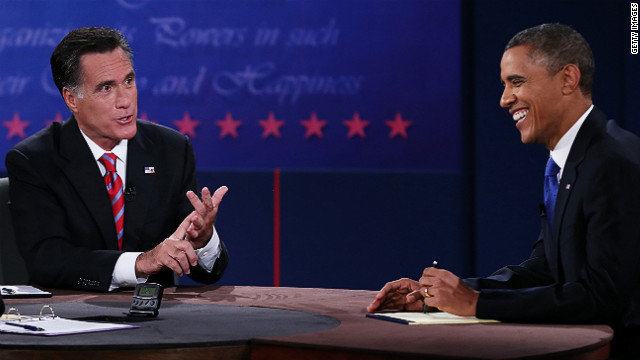
BARACK Obama dominated the third and final presidential debate in Florida, aggressively deploying detail and sarcasm to portray Mitt Romney as inconsistent on foreign policy. It is unclear whether his apparent victory in the debate will translate into votes in a fortnight in an election that polls show remains deadlocked. The two concentrated on terrorism and its causes and issues of concern to constituencies in the two swing states that could decide the election. Those issues include the Iranian nuclear threat, which resonates among Jewish voters in Florida, and China's alleged currency manipulation, which is crucial to employment in Ohio.Both men constantly turned to domestic policy, with Mr Romney restating his claim to have a plan to create 12 million jobs and Mr Obama accusing him of wanting to return to failed policies of previous administrations. Advertisement The Asia-Pacific region came up only in a passing reference by Mr Obama to the ''pivot'' of American attention towards the region. Though Russia was discussed, Europe was barely considered, aside from references to its failed economies. Climate change did not rate a mention.Mr Obama went in hard early, telling Mr Romney: ''I know you haven't been in a position to actually execute foreign policy - but every time you've offered an opinion, you've been wrong.'' Challenging Mr Romney's claim that he had allowed the US naval fleet to decline dangerously, Mr Obama said: ''We also have fewer horses and bayonets, because the nature of our military's changed. We have these things called aircraft carriers, where planes land on them. We have these ships that go underwater, nuclear submarines.'' When Mr Romney suggested Mr Obama had strained relations with Israel by visiting its Arab neighbours early in his presidency, the President said: ''When I went to Israel as a candidate, I didn't take donors. I didn't attend fund-raisers. I went to Yad Vashem.'' Mr Obama said Mr Romney's claim that he had been on a global ''apology'' tour was ''probably the biggest whopper that's been told during the course of this campaign''. Mr Romney presented himself as a moderate and sober alternative, often agreeing with the substance of US policy. Many of his positions were so similar to Mr Obama's that commentators used boxing metaphors to describe him not only as ducking and weaving, but of hugging the President. Some of Mr Romney's positions might startle the right of the Republican Party. He said that in the battle against Islamist extremism, ''we cannot kill our way out of this mess'', before offering his support for foreign aid. ''We have to help these nations create civil societies.'' Mr Romney also said he supported the troop ''surge'' in Afghanistan and the drawdown timetable for US troops, both policies he criticised in the past. Given the opportunity, he chose not to attack Mr Obama for the response to the murder of US diplomats in Libya. And early on, he congratulated Mr Obama for the killing of Osama bin Laden, expressing support for the use of drones. Mr Romney's key criticism was that the administration had failed to introduce a strategy to draw people away from extremism, that it had presented the US as weak and irresolute and that pending defence cuts would exacerbate that weakness. National polls had the two men in a dead heat last night, with Mr Obama enjoying a slight advantage in key states. But the polling trend remains in Mr Romney's favour. Any slight advantage carved out in the debate could prove to be crucial.

Obama Won Final Presidential Debate: CNN Poll

http://www.businessweek.com
President Barack Obama won last night’s debate on foreign policy with Republican challenger Mitt Romney, according to a CNN/ORC International poll of 448 registered voters who watched the nationally televised event. Forty-eight percent of those surveyed said Obama fared better in the final campaign encounter compared with 40 percent for Romney, according to results aired on CNN. The poll found 51 percent thought Obama seemed to be a stronger leader compared with 46 percent for Romney. Half of those surveyed by CNN said the debate wouldn’t affect how they planned to vote, while 25 percent said they planned to vote for Romney and 24 percent for Obama. The poll had an error margin of plus or minus 4.5 percentage points. Last night’s showdown at Lynn University in Boca Raton, Florida, took place amid a tightening presidential race. Romney’s performance in the candidates’ first meeting on Oct. 3 in Denver gave him a boost in national polls. Obama rebounded in their second debate on Oct. 16, though viewers surveyed afterward gave him a less-resounding victory than Romney claimed in the first encounter. A CBS News/GfK poll of uncommitted voters last night found that 53 percent thought Obama won compared with 23 percent for Romney and 24 percent who considered it a draw. Seventy-one percent said they thought Obama could be trusted to handle an international crisis compared with 49 percent for Romney. The CBS poll of 521 uncommitted voters had an error margin of plus or minus four percentage points. National Poll Nationally, Obama and Romney were tied at 47 percent in a national NBC News/Wall Street Journal poll of likely voters released Oct. 21. The survey of 816 likely voters had a margin of error of plus or minus 3.4 percentage points. Surveys over the past week have shown Romney narrowing Obama’s lead in several swing states, those with a history of supporting either party’s presidential candidate. Six of the nine most-closely contested states -- including Iowa, Ohio, Nevada and North Carolina -- had early, in-person voting under way as of yesterday. In Florida, the biggest prize among the swing states, the candidates were virtually even in an Oct. 17-18 CNN/ORC International poll of likely voters, with 49 percent backing Romney and 48 percent supporting Obama. The president’s earlier advantage on foreign policy has slipped in some recent voter surveys. An ABC News/Washington Post poll released yesterday found that 49 percent of likely voters said they trusted Obama more to handle international affairs compared with 46 percent for Romney. Obama had led on the question by seven percentage points earlier this month. Losing Edge The Obama administration’s handling of international affairs has been criticized by Romney and fellow Republicans, particularly since last month’s attack on a U.S. diplomatic compound in Benghazi, Libya, in which Ambassador Chris Stevens and three other Americans died. Last night’s debate, moderated by Bob Schieffer of CBS News, was dominated by questions about U.S. policy in the Middle East and in combatting terrorism. Romney faulted Obama for what he described as growing threats in Syria, Libya and Iran. While congratulating Obama for the May 2011 raid that killed Osama bin Laden, the former Massachusetts governor called for the U.S. to have a “comprehensive strategy” to stamp out extremism. Obama touted his credentials as commander in chief and accused Romney of lacking a coherent foreign policy vision and instead pressing strategies that are “all over the map.” First Debates After the first presidential debate almost three weeks ago in Denver, 67 percent of those surveyed by CNN said Romney fared better compared with 25 percent for Obama, according to results aired by the cable channel afterward. The CNN post-debate poll on Oct. 3 interviewed 430 Americans and had a margin of error of plus or minus 4.5 percentage points. The second debate, a town-hall style event, at Hofstra University in Hempstead, New York, featured questions from undecided voters. Forty-six percent of registered voters surveyed afterward said Obama fared better compared with 39 percent for Romney, according to a CNN poll. The poll of 457 registered voters who watched the event had an error margin of plus or minus 4.5 percentage points.

Was Obama too relentless with Romney?

The third and final Obama-Romney debate may not change many minds, but as a study in competing strategies, it is certain to ignite strong opinions all around. Although the two candidates sat side by side, like guests at a dinner party, each man was playing an entirely different game. Mitt Romney came ready to float like a butterfly, while Barack Obama came ready to sting like a bee. Romney, the less experienced contender in a debate devoted to international affairs, faced the challenge going in of establishing parity with the president of the United States. Every non-incumbent debater confronts this hurdle when appearing alongside a sitting commander-in-chief: How to demonstrate knowledge and authority in front of tens of millions of voters on issues that your opponent deals with all the time? Romney's solution, at least in part, was to project an aura of unflappability. Up until the final 10 minutes or so, the Republican nominee maintained an air of regal detachment, largely ignoring the volley of attacks being launched against him by his rival. "Attacking me is not an agenda," Romney said, reworking a line that Bill Clinton first used in a 1996 debate with Bob Dole, but that was about the extent of his counterpunching.omney's approach made a certain amount of sense, especially from the standpoint of visuals. He wanted voters to envision him as too lofty and presidential to be bothered by petty slings and arrows, and for much of the debate he accomplished his mission.
Those inclined to favor Romney will applaud their candidate for taking the high road, especially in contrast with the more belligerent Obama. To others, however, it will appear that Romney got rolled. Refusing to get down in the mud meant, among other things, that Romney forfeited his chance to press the president on the killing of America's ambassador to Libya, a point of contention that nearly every pundit had predicted would be a major theme in this debate. And Libya was not the only topic on which Romney gave the president a pass. Apparently, Obama had a few things to get off his chest left over from the town hall at Hofstra. Or he may still have felt some lingering regret over his passive performance in the first showdown back in Denver. Whatever the case, Obama strode onstage raring to grapple with the governor, which he did in his very first answer of the night. The president's attacks had two objectives: to run a yellow highlighter over Romney's lack of foreign policy chops and to undermine his credibility. On both counts Obama was relentless.Perhaps too relentless? Just as there will be division over whether Romney's studied placidity was statesmanlike or lethargic, there will be disagreement about whether Obama crossed the line into inappropriate aggression. In his worst moments Obama sounded downright condescending, as when he prefaced a criticism of Romney with the words, "I know you haven't been in a position to execute foreign policy..." Still, the president needed to assure voters that he is hungry to be re-elected and willing to put up his dukes and fight for another chance. Obama's energized performance in these past two debates has gone a long way toward healing the wounds he inflicted on himself back in the opening round. Beyond matters of tone, Obama did a couple of other things right in this debate. More effectively than Romney, he used his response time to riff on topics only tangentially connected to foreign policy, repeatedly shifting the focus back to domestic issues favorable to the Obama cause -- education, taxes, veterans' benefits, and the like. And he told stories, something that does not always come easy to this cerebral man. Of most significance, by the end of the debate Obama had made Romney lose his cool and revert to his old "I'm still talking!" persona. Which meant that the governor's carefully crafted Mount Rushmore strategy never quite reached its final destination. Whether this debate affects the trajectory of the election remains to be seen. Upon first reading, however, it appears that Obama did better for Obama than Romney did for Romney.

Pakistan: Abandoned and angry: Flood villagers’ story

It appears that the flood victims are still in shock - They tell us that it feels as if they are still living in the midst of an ongoing disaster. “Nothing has changed in the months since you were last here, except that the winter came,” says Allah Ditta while talking to BBC. “We were dying of cold in our tent,” he says. “Nobody gave us blankets or quilts, nobody asked us if we needed anything or even if we were ok.” Indeed, his small tent, shared by the 10 members of his family, looks very much as it did in September - erected on an island in the mud, created by laying down the bricks Ditta managed to salvage from his house. Beside it is the same small pile of the doors and wooden beams he also saved. “Instead of things getting better, I am now also in debt because I had to pay for all the medical treatment my family needed. They all got infections and diseases from drinking the floodwater.” LOW EXPECTATIONS:
Certainly, walking through the destroyed village, things do not appear very different to the way they did on our last visit. Then, the waters were just receding after having cut off the village for a whole month. During that time, people had been trapped on roofs or small pockets of higher ground. Most buildings and belongings had been swept away. There was acute desperation, but people were finally able to set up tents - or at least screens made of sticks and cloth. While they felt forgotten, they hoped help would eventually arrive. But most here are still living in tents, and have very few possessions. Expectations that they will get assistance are low. If there are some small signs of progress, people say it is through their own determination. Farmers showed us that wheat has been replanted in some of the areas that were destroyed. But even then, they talk of huge problems. “Not only were our crops destroyed, but also all of the water channels and infrastructure,” says Ghulam Mustafa. “We have had to start from scratch and do everything ourselves,” he says. “In the newspapers, the government makes promises to help, but on the ground they are in fact putting more pressure on us.” He tells us that he and many other farmers had taken government loans, which they usually pay back once their crops are sold. This year, of course, their crops were lost. “The government announced that flood-affected farmers would not have to pay back the loans. The banks say they were never told that, and that the interest is rising. We feel the government could come and drag us away by the collar at any time.” He said he had also had electricity bills for the time his area had been under water and that the power company had cut off his supply when he couldn’t pay. “It’s so stressful. We can’t rest or eat.” MUHAMMAD’S STORY: Undoubtedly, in many parts of the country, there has been a large mobilisation of aid. However, there have also been persistent complaints of corruption and favouritism in its distribution. While the Pakistani government acknowledges that there have been some problems, ministers say they are generally pleased with the way the country has coped with such a huge disaster. It is not what the people of Paka Ghalwa are telling us. When we were last here, we could not help but be moved by the words of Muhammed Nasrullah. He had broken down several times as he told how he had gone from being someone with a house and a job, to one who had to beg for food for his family. He described how he had stood on the main road for days waiting for aid trucks to pass but that they had not visited his village. Then how he had walked for miles when he heard rumours of food distributions in neighbouring areas, only to leave empty-handed after being beaten by police in the crush of desperate people. We meet him again. “In the end, one aid agency did come here to give out food, and we were grateful,” he says. “But it only happened once. “Of course we heard that so many countries gave money and help after the floods, and they did. But look around you, does it look like any of it came here? We haven’t seen it yet. We don’t know where it went. “Mentally we are weak because we worry about how to rebuild houses for our families and schools for our children. Physically we are suffering too because of lack of food and clean water and medicines. “Before the floods people here were prosperous, now we have all lost hope. Our difficulties just keep increasing,” Nasrullah says.

Malala attack strengthened resolve of Pakistanis

The US believes that attack on Malala has strengthened resolve of Pakistanis against terrorism.
While answering a quetion about the 14-year old child activist, who was shot in Swat almost a fortnight ago and is now under treatment in a UK hospital, the deputy spokesperson of the US State Department, Mark Toner said Monday that the terrorists wanted to send a message to Pakistani people through this attack. "When you’re talking about the right of young girls to receive an education and the fact that these individuals, these terrorists, are looking to wipe out or stop these girls from access to education, access to their very basic rights. I think it was a clear message to the Pakistani people, one that’s clearly resonated with them, and I think it strengthened their resolve", he opined. When asked if aybody from the US side had any conversation after the shooting with any Pakistani officials, the deputy spokesperson conceded that it was the case. "Ambassador Grossman was in Pakistan over the weekend, so I’m certain that that was a topic of conversation", he said. On the question whether Pakistan had shared the Abbottabad Commission report wit the US, he said that the US was interested in the findings of this report. "We’ve just seen reports in the Pakistani press about the Abbottabad Commission report. As we’ve stated previously, we obviously share with the Government of Pakistan a profound interest in finding out what kinds of support networks bin Ladin might have had", he said. "We believe such a report, when it does finally get finalized and published, that it’s important for the American people and the Pakistani people to know", he stated while referring to the Commission that was put in place by the Pakistan government after the May 2nd raid last year. He also didn t answer the question about the portion of the report that said nobody in Pakistani higher command was aware of OBL s presence in Abbottabad. "We’ve not yet seen the report itself, so you’re asking me to comment on press reports about the report’s contents. So let’s wait until we have the report and then we’ll be happy to comment on it", he maintained. He, however, was unsure whether the US had provided any assistance to Pakistan in the completion of this report. "It is different. I ll have to find out", he said when asked in this regard. - Contributed by Awais Saleem, Dunya News correspondent in Washington, DC

Malala: Why 14-year-old girl is important for Pakistan

Mazhar Iqbal
Malala, 14,
is the new face of Pakistan- a country that has persistently been pushed as the hotbed of militant Islam. She is not only the latest victim of an extremely criticised brand of Muslim faith that supports the totalitarian interpretation of Islamic law, but also a new hope for a whole generation of moderate and tolerant Pakistanis. A segment of local Pakistani and international media has reported that this teenage blogger was attacked for being vocal on women education in a primitive society that does not support women's equal role in society as compared to men. Yet, the Taliban, who attacked Malala has clearly stated that she was targeted because of her pioneer role in preaching secularism and moderation in Muslim society. They have also mentioned that whosoever will commit so in the future he will be targeted . The latest media reports say they have threated the injured girl's parents to kill them. The Taliban were described as eliminated from this area after the massive clean-up operation by Pakistani security agencies. But, this incident has proved that they were still operating in heavily guarded zone and Pakistan's security apparatus was not fully aware of the situation on the ground. Over the years, it has been the favourite issue for global media that the Taliban has a popular support among local masses, particularly in Northern Pakistan. Now, some of the media pandits claim that this attack seems to be launched to check the popularity of the Taliban movement in these areas. In fact, if they were hoping for more populist division in Pakistan with the attack on an innocent girl, they appear to have underestimated. During last two days, world has witnessed a large-scale protest and anger by all Pakistanis including political parties, civil society and media that shows a different story. Even those who have been vocal and deeply involved in creating confusion about extremely debated blasphemy laws have denounced this appalling incident. Such a popular and collective sympathy for Malala has slapped on the faces of those who were sceptical about this country's existence as a tolerant society. Now, Pakistan people are confident to ask questions about totalitarian approach in defining political and ambitious aspects of Muslim faith. They are wondering whether it is enough to change deep-seated and orthodox sentiments about the role religion must play in running the affairs of a modern state. Some of the political faces on the helm of affairs in Pakistan are still endorsing the views that banning women from education, publicly executing those who do not practice Islam in their daily life and killing innocents have something inherent to Islam. It's so encouraging that mainstream media in Pakistan has applauded Malala's side of the story. It has also been reported that some of the media houses have been put on hit-lists of the Taliban for exceedingly advocating the Malala cause. It is now clear that why the Taliban attempted to silence the voice of 14-year-girl. It was fear, not faith, which drove them to attack this gallant girl. After all, she was writing a blog for BBC about her life under the Taliban and was the recipient of the national peace prize in 2011. Some of the critics of media have raised objection on not highlighting the critical and sad plight of other girls who were injured with Malala. Yes, they need to be given the best possible care and treatment from the state and they also rightly deserve the prayers and well wishes of millions of Pakistanis as they keep for Malala. They could be as important as Malala. It is not Malala who climbed heights of national pride and international applaud after a cowardly attack on her life; it is her message that is gaining popularity and showing the accurate face of Pakistan. They all are on streets, on TV screens, newspaper pages and everywhere; all saying Malala, you are not alone. Millions of voices of fellow Pakistanis are with you. They have a shared stance that in the war against terrorism they are not with the Taliban.

Malala Yousafzai status updates ,Tuesday 23 October 2012

Malala remains in a stable condition at the Queen Elizabeth Hospital Birmingham. On Monday (22 October), Mian Iftikhar Hussain, the Information Minister of Khyber-Pakhtunkhwa province in Pakistan, visited the hospital to meet with Dr Dave Rosser, Medical Director. In a private meeting, Dr Rosser gave a clinical progress report on Malala's treatment and condition. He reiterated the detail given at a media briefing last week (see video below). The Minister also brought get-well cards and flowers for the 15-year-old, although he was not able to visit her personally. He sincerely thanked the nurses, doctors and support staff involved in her care. He said she was receiving the “best care in the world” as the hospital could provide the most appropriate expertise and experience to treat the injured teenager. At this time, Malala’s family remain in Pakistan.

Hand over 'brain' behind Malala attack

indiatimes.com
Pakistan has asked the US to use its influence on Afghanistan to extradite Maulana Fazlullah, a wanted Pakistani Taliban commander whom it says was involved in planning the recent attack on teen rights activist Malala Yousufzai. The diplomatic sources here said that the demand was made by Pakistan foreign minister Hina Rabbani Khar during her meeting with US special envoy to Pakistan and Afghanistan, Mark Grossman, The Express Tribune reported. Grossman was told that Fazlullah was involved in the attack on Malala Yousafzai and that the US should employ its influence towards the extradition of Fazlullah. Fazlullah along with his men is hiding in Kunar province of Afghanistan, the Pak-Afghan especial envoy was told. Pakistan had, on many occasions in the past, informed the ISAF and Afghan authorities about Fazlullah's activities, the paper said. According to sources, Fazlullah has executed as many as 15 cross border attacks in Pakistan over the past one year. Fazlullah is also known as 'Mullah Radio' for his fiery radio broadcasts in Swat Valley. Earlier, it was reported that Fazlullah had sent a hit squad to kill 14-year-old Malala for being a proponent of girls' education in the valley.

NATO Chief 'Impressed' By Afghan Security Forces

http://www.rferl.org
A few days after his visit to Kabul last week, NATO Secretary-General Anders Fogh Rasmussen spoke with RFE/RL Radio Free Afghanistan correspondent Sultan Sarwar about the challenges facing Afghanistan after 2014 and how the NATO alliance is helping prepare Hamid Karzai for the departure of foreign troops. RFE/RL:
During your recent trip to Kabul, you delivered a strong message of long-term military support to the Afghan government. Will such support include air-defense systems and aircraft? Anders Fogh Rasmussen:
The whole NATO Council and some of our partner countries visited Afghanistan to show our strong commitment to Afghanistan, also after 2014. We aim at making the Afghan security forces fully capable of taking full responsibility for security all over Afghanistan by the end of 2014. And in that respect, individual allies are also providing the Afghan security forces with some military equipment. RFE/RL:
Many Afghans are concerned that the Taliban will recapture Afghanistan from their sanctuaries in Pakistan after NATO troops leave in 2014. What are you doing to address the long-standing issue of extremist safe havens in Pakistan? Rasmussen:
First of all, I would like to stress that when our ISAF [International Security Assistance Force] combat mission ends by the end of 2014, we will have built up a very strong Afghan security force of 352,000 Afghan soldiers and police. And this very strong Afghan security force will be able to take full responsibility for security all over Afghanistan. That is the first thing. Secondly, I agree that it is a matter of concern that terrorists have safe havens in Pakistan, in the border region between Pakistan and Afghanistan, and we urge the Pakistani government and the Pakistani military to step up their fight against terrorists and extremists in the border region. RFE/RL: There are reports that Afghan security forces are plagued by desertions and low morale. What are you doing to ensure that Afghan forces sustain themselves after NATO leaves? Rasmussen: I don't agree that there is low morale within the Afghan security forces. On the contrary, I have visited Afghan military units and spoken with Afghan military commanders and they are strongly determined to take full responsibility for security in Afghanistan. We continue the training and education of Afghan security forces and gradually we hand over lead responsibility for security, province by province. And we will continue these training activities after 2014. Last time I visited Afghanistan, I had an opportunity to observe Afghan security forces in action and I was very impressed by what I saw. We have seen Afghan security forces taking the lead of a majority of security operations. Actually, 80 percent of security operations in Afghanistan are led by Afghan security forces. That is quite remarkable. So I am confident that the Afghan security forces will be fully capable to take full responsibility by the end of 2014. RFE/RL: In your estimation, how big a threat does the Al-Qaeda leadership in Pakistan pose to global security? Rasmussen: We know that the Al-Qaeda leadership has been significantly weakened during recent years. There is still a threat of international terrorism; there are still terrorist cells. But the Al-Qaeda network, as such, has been significantly weakened during recent years. RFE/RL: As NATO secretary-general, during the past three years, have you ever been approached by the Taliban for peace talks? Rasmussen: No, and it is not for NATO to engage in such political talks. We have made clear right from the outset that a political process, a reconciliation process, must be led by the Afghans themselves. In other words, it has to be the Afghan government that is in the driver's seat. I think a political process makes sense if certain conditions are fulfilled: firstly, that the process is led by the Afghans; secondly, that groups and individuals involved in that reconciliation process abide by and fully respect the Afghan Constitution, including human rights -- and, of course, that also includes women's rights -- and finally, such groups must denounce violence and cut links with terrorist groups. If these conditions are fulfilled, I think it's a good idea to see if a political process could lead to a constructive result." RFE/RL: Let me ask you about current events in the broader region. NATO played a crucial role in bringing down the Qaddafi regime in Libya last year. Why is the alliance now reluctant to play a similar role in Syria, where civilians are apparently suffering on a much larger scale? Rasmussen: There is a clear difference between Libya and Syria. In Libya, we took action based on a clear United Nations mandate to protect the civilian population and we got clear and active support from countries in the region. None of these conditions is fulfilled as regards Syria, and there is no international call or no regional call on NATO to take action in Syria, and we have no intention to intervene militarily in Syria. Having said that, we strongly condemn the security forces' crackdown on the civilian population in Syria and we urge the Syrian leadership to accommodate the legitimate aspirations of the Syrian people. RFE/RL: What are the main objectives you wish to achieve in a post-2014 Afghanistan? Rasmussen: First and foremost, it's important that Afghan security forces maintain a capacity to take full responsibility for the security all over Afghanistan, with the aim of preventing the country from once again becoming a safe haven for terrorists. That is, of course, the first and most important goal. Secondly -- but that's not part of our mission -- I have a very strong desire to see improved governance in Afghanistan. I think it's of utmost importance to fight corruption; it's of utmost importance that the national and regional authorities provide the Afghan people with basic services. So, these are my main goals.

POLIO: Refusal cases still high in Pakistan

The World Health Organisation (WHO), United Nations Children’s Funds (UNICEF) and the Prime Minister’s Polio Cell Monday stated that polio teams across the country have recorded a major decline in the number of families refusing polio drops during the recently held national door-to-door polio campaign. According to data jointly released by polio partners, the number of refusing families has declined from 80,330 during the first national polio round held in January 2012 to 45,122 in October 2012, implying thereby that 35,208 families that had previously refused polio immunisation for their children have now been covered. As against 34,966 families refusing polio drops in KPK during the January 2012 polio round, only 15,663 families in KPK refused polio drops during the October polio campaign. Similarly the number of refusals in Punjab declined from 6,233 in January to 1,702 in October. Balochistan, Sindh and FATA also recorded a sharp decline in the number of refusing families where 10,100, 17,100 and 455 children were missed the October polio round against 12,813, 23,244 and 3014 children missed due to refusals during January. Pakistan has reported a total of 47 polio cases during the current year as against 113 cases during the corresponding period last year. The success achieved notwithstanding, every unvaccinated child constitutes a major challenge. “It is a cause of grave concern that polio teams across the country have still missed 4,84,344 children during the last polio round,” stated the Senior Coordinator for Polio Eradication at the WHO, Dr. Elias Durry, and expressed concern over polio teams persistently missing the same children that have remained unvaccinated for the last many campaigns. According to Dr. Durry, the biggest hurdle that prevents Pakistan from attaining polio-free status is the number of children who are persistently being missed during the polio campaigns. “It took countries like Saudi Arabia and Iran very few rounds to eradicate polio because their secret ingredient was the ability to vaccine each and every child,” he said, further quoting the example of Iran, which achieved polio-free status after conducting only four national door-to-door polio campaigns. “Where officials and polio teams across the country deserve due credit and appreciation for converting families that previously refused polio drops, we need to take adequate steps to ensure that the number of children missed for reasons other than refusals is also brought down,” Special Assistant to the Prime Minster Shahnaz Wazir Ali stated while praising polio team members. Commenting on the final results of the polio campaign, UNICEF’s Chief of Polio Dennis King is of the view that work is to be done before Pakistan stands in the proud row of polio free nations. “There is still work to be done on remaining refusals and especially on those kids who are consistently missed and have never been reached by vaccinators.

What does Osama bin Laden have to do with polio?

Polio is a crippling and potentially fatal infectious disease. Since 1985 global incidents of polio have dramatically declined. So effective has the fight against polio been that, according to the nonprofit organization End Polio Now, the world is 99 percent of the way to eradicating the illness completely. Only three countries continue to have cases of polio: Pakistan, Afghanistan and Nigeria. A January 2012 CBS report noted that in 2011, 198 cases of polio were reported in Pakistan. That is a 15-year high, and the largest number of cases recorded anywhere in the world, according to the Global Polio Eradication Initiative, a joint program to eradicate polio led by the World Health Organization, United Nations Children’s Fund and Rotary International. In Pakistan, UNICEF has recruited what it calls "social mobilizers" to go into the slums to try to educate the people about the polio virus and promote vaccinations for it. Typically these slums have no government offices, no public schools, no medical facilities. The children are filthy because of lack of education about hygiene. Donkeys and stray dogs roam the streets and water supply is contaminated with sewage. These, according to a report from NPR, are the perfect conditions for the polio virus to breed. But Pakistanis are reluctant to line their children up for vaccinations. In-country health officials report that efforts to vaccinate children have been frustrated by the CIA’s use of a fake vaccination program last year to gather intelligence on Osama bin Laden. In a letter to CIA director General David Petraeus in February, InterAction, which represents nearly 200 U.S.-based non-government organizations, expressed “deep concern” about the fake campaign. “Among other factors, international public health officials point to the distrust of vaccines and immunization campaigns as contributing to the lack of progress in eradicating the disease in Pakistan,” it said.

Anti-polio campaign in Pakistan ends amid espionage doubts ‎

The months long anti-polio campaign in Pakistan has finally concluded. But this time around, the campaign left many children un-vaccinated primarily because of growing perception that the West through UN agencies and NGOs is spying on Pakistan particular in the northwest of the country. What built up the negative perception about the UN staff and NGOs as spies for American CIA , is the killing of Osama Bin Laden in May 2011 by the US commando. Months before, the US commando action, American CIA launched anti Hepatitis-B campaign to take the DNA tests of Bin Laden’s family to help Pentagon verify his whereabouts at a hideout in Abbotabad in northwest of the country. Since then, Shakil Afridi, a Pakistani doctor is in jail after security forces confirmed that he launched a fake hepatitis-B campaign to help Americans. Nonetheless the WHO staff, managed to vaccinate around 31 million children but at cost of Pro-Taliban militant attacks on its staff that left many killed and injured. Pakistan is one of only three countries in the world where polio remains endemic. Just a few years back, Pakistan was on the verge of polio eradication. However, the number of polio cases have now increased dramatically to a 15 year record high. This is primarily because of strong perception that WHO officials and Pakistani paramedic staff, are US spies, something that deprived more 300,000, children from anti- polo vaccination, alone in country’s tribal region.

Now Is the Time to Eradicate Polio

TheHuffingtonPost.com
Few pediatricians in the U.S. are old enough to have experienced the fear of the polio epidemics of the 1940s and 1950s. Without the ability to protect our children, society was defenseless in the face of this terrifying disease. Today, thanks to groundbreaking scientific discoveries, we've broken away from the grip of polio. Armed with effective vaccines, pediatricians, partner organizations and front-line workers around the globe have eliminated 99 percent of all new polio cases. Last month, UN Secretary-General Ban Ki-moon convened a group of global leaders, including Bill Gates and heads of state of polio-affected countries to renew the commitment to eliminate polio. This show of solidarity reminds us that the fight is not finished. In several parts of the world, the devastating effects of polio continue to be a reality for children, families and doctors. We can't afford to lose sight of this remaining 1 percent of polio cases. With only three countries where transmission has never been stopped -- Afghanistan, Pakistan and Nigeria -- polio is facing defeat. There are fewer cases in fewer districts of fewer countries than at any previous time. This is a once-in-a-generation opportunity to change history, and we must act now. The International Pediatric Association, and our national members, including the American Academy of Pediatrics, work on a range of priorities that affect child survival in developing countries, including HIV/AIDS, malaria, pneumonia, and diarrhea. While polio no longer affects as many children as it used to, we have not forgotten the urgent need to eliminate this disease while we have the chance. The effort has major implications for children's health and mortality: it's proof positive that critical health services can safeguard children living in even the hardest-to-reach places. Pediatricians have witnessed how these efforts help bring primary care service within reach of nearly every single child on the planet -- not just with polio vaccines, but with other preventive interventions such as measles, rotavirus and pneumococcal vaccines, Vitamin A supplements and bed nets. We see the long-term successes of polio eradication efforts across the globe. In September, more than 32,000 children in Pakistan's conflict-affected Khyber Pakhtunkhwa area received polio vaccines for the first time since 2009, and measles and pentavalent vaccines for the first time ever. In 2011, India -- once considered one of the most challenging places in the world to eradicate polio -- was declared polio-free. In India, the polio eradication program helped establish systems to identify and vaccinate every newborn and strengthened other preventive health services. But these programs need funding. Tragically, funding gaps have led to cancelled and scaled-back vaccination campaigns in 24 countries, leaving children vulnerable and threatening progress. The polio virus, by its nature, is extremely difficult to contain; unless the polio eradication program is fully funded and the disease eradicated, polio will return to countries that are now polio-free. Recognizing the benefits of success and the risks of failure, the global community has united around a Polio Global Emergency Action Plan to improve vaccination campaign quality, protect every last child and ensure accountability. We must all ensure that the solidarity demonstrated at the UN leads to the political will and financial support needed to put this plan into action. At this crucial juncture, leaders at home and elsewhere must invest in the long-term resources to bring about polio eradication. It can be done. American pediatricians and families are fortunate to have made polio history in our country. Let's remind our leaders that we must do what we can so that our colleagues around the world will never again have to treat a child with polio.

Afghan man killed wife for wanting job

Associated Press
A man in a western Afghan city has confessed to stabbing his wife to death to prevent her from taking a job outside the home, police said Monday. Mohammad Anwar, who was arrested in the provincial capital for the murder, said he killed his wife during an argument over whether she should work at private company in the city, Herat province police spokesman Noor Khan Nekzad said. The woman's relatives disputed the account, saying her husband was a drug addict who killed his wife because she refused to give him money. The killing comes less than two weeks after a woman was beheaded in the same city for refusing alleged demands by her in-laws to engage in prostitution. Human rights activists say they are worried such incidents will become more common as Western forces who helped women gain rights in the conservative country draw down. Under Taliban rule, women were banned from leaving the home unless they had a male relative as an escort and wore a burqa robe that covered their faces and bodies. Despite guaranteed rights and progressive new laws, the U.N. still ranks Afghanistan as one of the world's worst countries when it comes to women's rights. The Taliban's treatment of women has been thrust back into the headlines this month with the shooting of a 15-year-old schoolgirl in neighboring Pakistan. The militants said they targeted the girl because she was an outspoken opponent of the group and promoted "Western thinking," such as girls' education. Girls' schools have flourished in Afghanistan in particular in the years since the 2001 ouster of the Taliban, primarily funded by the U.S. and other Western donors. There were conflicting accounts of what led to the fight between Mohammad Anwar and his wife Gulsom. Gulsom's brother, Ghulam Sarwar, said his sister's husband had just returned from Iran and was pressing her to hand over money that she had earned weaving carpets and which she needed to support their two children. Sarwar said the two got into an argument and she fled the house. He followed her to her parents' house and then went after her with a knife. The couple's two children — an 11-year-old daughter and a 7-year-old boy — have been taken in by Gulsom's parents, Sarwar said. The victim's mother was shown on Afghan television crying and accusing her son-in-law of trying to sell her daughter's children for drug money. She witnessed the murder but said she had no way of stopping it. "My daughter was killed in front of my eyes," said the sobbing Zahra, who family members said only went by one name. Women's rights activists have already been up in arms in Herat after the Oct. 9 killing of a young woman named Mah Gul who was allegedly being forced into prostitution. Police arrested Mah Gul's mother-in-law Pari Gul and her 18-year old cousin Najib, after the murder. Mabuba Jamshidi, head of the provincial women's affairs department, said that Najib had confessed to beheading the victim after she refused to perform "immoral acts."

CM Amir Hoti has brush with death

A roadside bomb targeting Chief Minister Amir Haider Hoti’s motorcade went off just movements after the CM convoy passed the site on Monday. According to police the explosive device fixed to a motorcycle exploded movements after the chief minister’s motorcade passed through Mallara area on Swabi-Jehangira road. It merits a mention here that Chief Minister, Amir Haider Hoti was on an official visit of Swabi district on Monday to inaugurate Topi-Swabi and Swabi-Jehangira road. Police said the chief minister reached Swabi via helicopter and while being driven to the site to inaugurate the road and on way the CM’s motorcade was targeted at Mallara area. When the chief minister was informed about the blast he refused to change his programme and inaugurated the road as scheduled. He later also addressed a public gathering in the area. After the incident, security forces cordoned off the area and started search operation. Police said at least four suspects were arrested during the search operation. Meanwhile, four hours after the first blast, a bomb attached to bicycle exploded in Shewa Adda chowk in Swabi district, leaving eight policemen injured. The injured include seven constables and an inspector, who were rushed to Kalu Khan hospital for emergency treatment and later they were shifted to Mardan for further treatment. The injured were identified as inspector Murad Khan, constables Waris Khan, Shad Ali, Khurshid, Iqbal Hussain, Rashid Bahadar, Yasin and Sadiq.

President Zardari on militancy

Addressing a conference on media, militancy and fair elections organised by the South Asia Free Media Association (Safma) at the Presidency on Sunday, President Asif Zardari dealt with several issues, almost all pertaining to one of Pakistan’s central concerns i.e. the curse of terrorism. And in this context, the most significant part of his utterance was that unless there was a nationwide consensus, there would be no military operation in North Waziristan. In addition to that, there was need to “analyse our capability to deal with their retaliatory moves”, keeping in mind also the fact that the seminaries, which are in no small number in the country, would quickly react and unite in opposition to any such action. The President went on to underline the frightening position on the ground and cited the instance of Punjab Governor Salman Taseer, who was murdered in broad daylight by a religious bigot, but no lawyer was willing to fight his case; however a former Chief Justice volunteered to defend the murderer. It was a manifestation of the society’s state of polarisation on this vital issue of tackling militancy. Mr Zardari also pointed out that as the general elections were approaching fast, political parties were not inclined to annoy the religious right; they, in fact, wanted to be in their good books. About the common question why Malala Yousafzai had not been provided security when she was so outspoken about the girls’ right to seek education and known for her anti-militant views, he said that the offer was, indeed, made, but her father declined. The President added, however, that the environment was such that no security could have been adequate enough to have protected her against the barbaric attack. Mr Zardari committed to continue opposing the drone strikes. Indeed, the picture of the situation in the country drawn by Mr Zardari conforms pretty close to reality, but it is also evident at the same time that during the past four years and a half that the PPP-led government has been in power, it has done nothing to lead the country out of the worrying variety of crises we are faced with. The only possible explanation is the government’s reluctance to reach a conclusion about the best means of beating the scourge out of Pakistan and a reluctance to take the lead in forging a consensus. There seems to be no planning, short term, medium term or long term, about rooting out terrorism either through fighting out the immediate threat or changing the mindset of the strayed population by means of education in the long term. It was significant that the President called China the only country that had sincerely helped Pakistan in fighting terrorism. We must reiterate here that there is urgent need to get closer to Beijing in this hour of crisis. China has proved more than once that it is, beyond doubt, a genuine friend with no axe to grind.

Begum Nusrat Bhutto: A GREAT WOMAN OF COURAGE

1st death anniversary of Madar-e-Jamhooriat Begum Nusrat Bhutto today

RADIO PAKISTAN
First death anniversary of Madar-e-Jamhooriat Begum Nusrat Bhutto is being observed on Tuesday with renewed commitment to continue struggle for protecting democracy qur'an Khawani on her shrine at Garhi Khuda Bux is in progress. Radio Pakistan Larkana representative Altaf Pirzado reports PPP leaders and workers are attending the ceremony. Later in the day they will throw light on life and struggle of Begum Nusrat Bhutto. Pakistan Peoples Party has chalked out various programmes to mark the Day. Radio Pakistan will broadcast special programmes to pay homage to Madar-e-Jamhooriat Begum Nusrat Bhutto. ====== President Asif Ali Zardari in his message on the occasion has said that the best way to pay homage to Madar-e-Jamhooriat is to protect democracy and parliament from new forms of onslaughts. The President said rights of women‚ minorities and vulnerable sections of society must also be protected. He urged the democratic forces to rededicate themselves to the principles for which Begum Nusrat Bhutto struggled all her life.

VIDEO: Third Presidential Debate on Foreign Policy 2012: Barack Obama vs. Mitt Romney Oct 22, 2012

Obama wins final debate

A forceful President Barack Obama put Republican challenger Mitt Romney on the defensive on foreign policy Monday night, with analysts and an immediate poll giving him the victory in their final debate just 15 days before the November 6 vote. Obama displayed the experience of a commander-in-chief in explaining U.S. policy under his leadership and attacking the views and proposals of Romney, a former Massachusetts governor with less experience on international issues.
Romney ended up supporting most of the Obama administration's steps involving hotspots, such as the civil war in Syria, and preventing Iran from getting a nuclear weapon, giving the president the advantage in a debate in which his GOP rival needed to question foreign policy of the past four years.Analysts agreed that Obama won the debate on points, but questioned if the result would have a big impact on voters and the race as a whole ahead of Election Day."There's no question debate coaches would score this one for the president," said CNN Chief National Correspondent John King, while CNN Senior Political Analyst David Gergen said Obama "dominated the middle of the debate" and emerged as the winner. Both King and Gergen agreed that Romney avoided sounding like an overzealous advocate of military action -- which is how Obama and Democrats seek to portray him. Alex Castellanos, a Republican strategist and CNN contributor, conceded Obama "won tonight on points, no doubt about it," but added that Romney showed the cool and calm leadership style of a commander-in-chief to show that making a change in leadership now would be safe. A CNN/ORC International poll of people who watched the debate showed 48% favored Obama compared to 40% for Romney, a result considered statistically even under the margin of error of plus-or-minus 4.5%. Another poll by CBS scored it a clear victory for Obama. However, the CNN/ORC poll showed viewers thought Romney established credibility as a leader, which former White House Press Secretary Ari Fleischer, a Republican strategist and CNN contributor, said was very important. "This isn't going to change the trajectory of the result," Fleischer said. The third and final face-to-face showdown occurred with the candidates running even in national polls and the race hinging on a handful of battleground states -- particularly Ohio, Florida and Virginia. According to the latest polls, Obama has a slight lead in Ohio. Romney is ahead in Florida, and Virginia is a dead heat. Obama more than once sought to highlight Romney's lack of foreign policy experience, while Romney said Obama's foreign affairs policies have made the United States less respected and more vulnerable. Romney also repeatedly tried to shift the discussion to his strongest issue -- the continued high unemployment and slow economic recovery under Obama -- arguing that a strong foreign policy and national defense depends on a strong economy. The president's policies undercut the military, leaving the Navy and Air Force at their weakest levels in decades, Romney said. "Our Navy is smaller now than at any time since 1917," the Republican nominee said, also noting that "our Air Force is older and smaller than at any time since it was founded in 1947." Obama fired back with perhaps his strongest response of the night, saying Romney "maybe hasn't spent enough time looking at how our military works." "You mentioned the Navy, for example, and that we have fewer ships than we did in 1916," Obama said. "Well, governor, we also have fewer horses and bayonets, because the nature of our military' has changed." Sarcastically noting that the Navy now has "these things called aircraft carriers, where planes land on them." as well as "ships that go underwater, nuclear submarines," Obama concluded that "the question is not a game of Battleship, where we're counting ships -- it's what are our capabilities."Romney applauded Obama's efforts to kill Osama bin Laden and other al Qaeda leaders but insisted that "we can't kill our way of this mess." Rather, he pushed for "a comprehensive strategy" to curb violent extremism in the Middle East. "The key is the pathway is to get the Muslim world to reject extremism on its own," Romney said, proposing U.S. policies to promote economic development, better education, gender equity and to help create institutions. However, he was unable to express any significant policy difference with Obama on how that would happen. Obama responded by criticizing his opponent on a host of foreign policy issues -- claiming Romney had favored positions that would have hurt the United States or offered sometimes contradictory views. "What we need to do with respect to the Middle East is strong, steady leadership -- not wrong and reckless leadership that is all over the map," the president said.Romney's economic plan seeks trillions in tax cuts while increasing defense spending, which would increase the deficit, Obama said. For his part, Romney repeatedly shifted back to his stump speech criticism of the nation's sluggish economic recovery under Obama's policies, which he says have hindered growth through high taxes and onerous regulations. The candidates were at odds as well about how Washington should ultimately respond to the continuing violence in Syria.Talking about the need to provide those fighting Syrian President Bashar al-Assad's forces with arms, Romney said the Democratic incumbent has not enough to curb violence that has left tens of thousands of people dead and also destabilized the region. "We should be playing the leadership role," Romney said. That precipitated a quick response from Obama, who pointed to American efforts to organize international efforts to address the issue as well as its support for opposition factions. "We are making sure that those we help will be our friends (in the future)," he said. A strong performance by Romney against a lackluster Obama in the first debate October 3 in Denver helped the GOP challenger tighten the race and even pass the president in some polls.The president fought back to win the second debate last week in New York, according to polls and pundits, setting up the Monday's night showdown at Lynn University in Boca Raton, Florida, moderated by CBS News Chief Washington Correspondent Bob Schieffer. Until recently, polls showed Obama ahead of the former governor on foreign relations issues, and the Romney campaign has mounted pointed attacks in an attempt to narrow the president's advantage. Other issues discussed in the debate included Iran's nuclear ambitions, China and the war in Afghanistan. Both candidates pledged to support Israel if the Jewish state comes under attack, and Romney backed the 2014 date set by Obama and NATO for withdrawing combat troops from Afghanistan. Romney has landed blows thus far in the campaign by arguing that continued high unemployment and sluggish growth showed failed policies under the president, while promoting his own business background. CNN/Google Campaign Explorer: Ads, money and travel In a major foreign policy address on October 8, Romney promoted a traditional U.S. foreign policy dating back decades, based on exerting global influence through military and economic power. While the speech sought to distinguish himself from Obama on foreign policy, specific proposals he cited then were similar to what the administration is doing. Obama's campaign has accused Romney of shifting positions on foreign policy matters and mishandling a trip to England, Israel and Poland this summer when he publicly questioned London's preparedness to host the Olympic Games and cited cultural differences as a reason for economic disparities between Israelis and Palestinians. Defense: $2 trillion divides Obama and Romney