Tuesday, October 23, 2012

POLIO: Refusal cases still high in Pakistan

The World Health Organisation (WHO), United Nations Children’s Funds (UNICEF) and the Prime Minister’s Polio Cell Monday stated that polio teams across the country have recorded a major decline in the number of families refusing polio drops during the recently held national door-to-door polio campaign. According to data jointly released by polio partners, the number of refusing families has declined from 80,330 during the first national polio round held in January 2012 to 45,122 in October 2012, implying thereby that 35,208 families that had previously refused polio immunisation for their children have now been covered. As against 34,966 families refusing polio drops in KPK during the January 2012 polio round, only 15,663 families in KPK refused polio drops during the October polio campaign. Similarly the number of refusals in Punjab declined from 6,233 in January to 1,702 in October. Balochistan, Sindh and FATA also recorded a sharp decline in the number of refusing families where 10,100, 17,100 and 455 children were missed the October polio round against 12,813, 23,244 and 3014 children missed due to refusals during January. Pakistan has reported a total of 47 polio cases during the current year as against 113 cases during the corresponding period last year. The success achieved notwithstanding, every unvaccinated child constitutes a major challenge. “It is a cause of grave concern that polio teams across the country have still missed 4,84,344 children during the last polio round,” stated the Senior Coordinator for Polio Eradication at the WHO, Dr. Elias Durry, and expressed concern over polio teams persistently missing the same children that have remained unvaccinated for the last many campaigns. According to Dr. Durry, the biggest hurdle that prevents Pakistan from attaining polio-free status is the number of children who are persistently being missed during the polio campaigns. “It took countries like Saudi Arabia and Iran very few rounds to eradicate polio because their secret ingredient was the ability to vaccine each and every child,” he said, further quoting the example of Iran, which achieved polio-free status after conducting only four national door-to-door polio campaigns. “Where officials and polio teams across the country deserve due credit and appreciation for converting families that previously refused polio drops, we need to take adequate steps to ensure that the number of children missed for reasons other than refusals is also brought down,” Special Assistant to the Prime Minster Shahnaz Wazir Ali stated while praising polio team members. Commenting on the final results of the polio campaign, UNICEF’s Chief of Polio Dennis King is of the view that work is to be done before Pakistan stands in the proud row of polio free nations. “There is still work to be done on remaining refusals and especially on those kids who are consistently missed and have never been reached by vaccinators.

What does Osama bin Laden have to do with polio?

Polio is a crippling and potentially fatal infectious disease. Since 1985 global incidents of polio have dramatically declined. So effective has the fight against polio been that, according to the nonprofit organization End Polio Now, the world is 99 percent of the way to eradicating the illness completely. Only three countries continue to have cases of polio: Pakistan, Afghanistan and Nigeria. A January 2012 CBS report noted that in 2011, 198 cases of polio were reported in Pakistan. That is a 15-year high, and the largest number of cases recorded anywhere in the world, according to the Global Polio Eradication Initiative, a joint program to eradicate polio led by the World Health Organization, United Nations Children’s Fund and Rotary International. In Pakistan, UNICEF has recruited what it calls "social mobilizers" to go into the slums to try to educate the people about the polio virus and promote vaccinations for it. Typically these slums have no government offices, no public schools, no medical facilities. The children are filthy because of lack of education about hygiene. Donkeys and stray dogs roam the streets and water supply is contaminated with sewage. These, according to a report from NPR, are the perfect conditions for the polio virus to breed. But Pakistanis are reluctant to line their children up for vaccinations. In-country health officials report that efforts to vaccinate children have been frustrated by the CIA’s use of a fake vaccination program last year to gather intelligence on Osama bin Laden. In a letter to CIA director General David Petraeus in February, InterAction, which represents nearly 200 U.S.-based non-government organizations, expressed “deep concern” about the fake campaign. “Among other factors, international public health officials point to the distrust of vaccines and immunization campaigns as contributing to the lack of progress in eradicating the disease in Pakistan,” it said.

Anti-polio campaign in Pakistan ends amid espionage doubts ‎

The months long anti-polio campaign in Pakistan has finally concluded. But this time around, the campaign left many children un-vaccinated primarily because of growing perception that the West through UN agencies and NGOs is spying on Pakistan particular in the northwest of the country. What built up the negative perception about the UN staff and NGOs as spies for American CIA , is the killing of Osama Bin Laden in May 2011 by the US commando. Months before, the US commando action, American CIA launched anti Hepatitis-B campaign to take the DNA tests of Bin Laden’s family to help Pentagon verify his whereabouts at a hideout in Abbotabad in northwest of the country. Since then, Shakil Afridi, a Pakistani doctor is in jail after security forces confirmed that he launched a fake hepatitis-B campaign to help Americans. Nonetheless the WHO staff, managed to vaccinate around 31 million children but at cost of Pro-Taliban militant attacks on its staff that left many killed and injured. Pakistan is one of only three countries in the world where polio remains endemic. Just a few years back, Pakistan was on the verge of polio eradication. However, the number of polio cases have now increased dramatically to a 15 year record high. This is primarily because of strong perception that WHO officials and Pakistani paramedic staff, are US spies, something that deprived more 300,000, children from anti- polo vaccination, alone in country’s tribal region.

Now Is the Time to Eradicate Polio

TheHuffingtonPost.com
Few pediatricians in the U.S. are old enough to have experienced the fear of the polio epidemics of the 1940s and 1950s. Without the ability to protect our children, society was defenseless in the face of this terrifying disease. Today, thanks to groundbreaking scientific discoveries, we've broken away from the grip of polio. Armed with effective vaccines, pediatricians, partner organizations and front-line workers around the globe have eliminated 99 percent of all new polio cases. Last month, UN Secretary-General Ban Ki-moon convened a group of global leaders, including Bill Gates and heads of state of polio-affected countries to renew the commitment to eliminate polio. This show of solidarity reminds us that the fight is not finished. In several parts of the world, the devastating effects of polio continue to be a reality for children, families and doctors. We can't afford to lose sight of this remaining 1 percent of polio cases. With only three countries where transmission has never been stopped -- Afghanistan, Pakistan and Nigeria -- polio is facing defeat. There are fewer cases in fewer districts of fewer countries than at any previous time. This is a once-in-a-generation opportunity to change history, and we must act now. The International Pediatric Association, and our national members, including the American Academy of Pediatrics, work on a range of priorities that affect child survival in developing countries, including HIV/AIDS, malaria, pneumonia, and diarrhea. While polio no longer affects as many children as it used to, we have not forgotten the urgent need to eliminate this disease while we have the chance. The effort has major implications for children's health and mortality: it's proof positive that critical health services can safeguard children living in even the hardest-to-reach places. Pediatricians have witnessed how these efforts help bring primary care service within reach of nearly every single child on the planet -- not just with polio vaccines, but with other preventive interventions such as measles, rotavirus and pneumococcal vaccines, Vitamin A supplements and bed nets. We see the long-term successes of polio eradication efforts across the globe. In September, more than 32,000 children in Pakistan's conflict-affected Khyber Pakhtunkhwa area received polio vaccines for the first time since 2009, and measles and pentavalent vaccines for the first time ever. In 2011, India -- once considered one of the most challenging places in the world to eradicate polio -- was declared polio-free. In India, the polio eradication program helped establish systems to identify and vaccinate every newborn and strengthened other preventive health services. But these programs need funding. Tragically, funding gaps have led to cancelled and scaled-back vaccination campaigns in 24 countries, leaving children vulnerable and threatening progress. The polio virus, by its nature, is extremely difficult to contain; unless the polio eradication program is fully funded and the disease eradicated, polio will return to countries that are now polio-free. Recognizing the benefits of success and the risks of failure, the global community has united around a Polio Global Emergency Action Plan to improve vaccination campaign quality, protect every last child and ensure accountability. We must all ensure that the solidarity demonstrated at the UN leads to the political will and financial support needed to put this plan into action. At this crucial juncture, leaders at home and elsewhere must invest in the long-term resources to bring about polio eradication. It can be done. American pediatricians and families are fortunate to have made polio history in our country. Let's remind our leaders that we must do what we can so that our colleagues around the world will never again have to treat a child with polio.

Afghan man killed wife for wanting job

Associated Press
A man in a western Afghan city has confessed to stabbing his wife to death to prevent her from taking a job outside the home, police said Monday. Mohammad Anwar, who was arrested in the provincial capital for the murder, said he killed his wife during an argument over whether she should work at private company in the city, Herat province police spokesman Noor Khan Nekzad said. The woman's relatives disputed the account, saying her husband was a drug addict who killed his wife because she refused to give him money. The killing comes less than two weeks after a woman was beheaded in the same city for refusing alleged demands by her in-laws to engage in prostitution. Human rights activists say they are worried such incidents will become more common as Western forces who helped women gain rights in the conservative country draw down. Under Taliban rule, women were banned from leaving the home unless they had a male relative as an escort and wore a burqa robe that covered their faces and bodies. Despite guaranteed rights and progressive new laws, the U.N. still ranks Afghanistan as one of the world's worst countries when it comes to women's rights. The Taliban's treatment of women has been thrust back into the headlines this month with the shooting of a 15-year-old schoolgirl in neighboring Pakistan. The militants said they targeted the girl because she was an outspoken opponent of the group and promoted "Western thinking," such as girls' education. Girls' schools have flourished in Afghanistan in particular in the years since the 2001 ouster of the Taliban, primarily funded by the U.S. and other Western donors. There were conflicting accounts of what led to the fight between Mohammad Anwar and his wife Gulsom. Gulsom's brother, Ghulam Sarwar, said his sister's husband had just returned from Iran and was pressing her to hand over money that she had earned weaving carpets and which she needed to support their two children. Sarwar said the two got into an argument and she fled the house. He followed her to her parents' house and then went after her with a knife. The couple's two children — an 11-year-old daughter and a 7-year-old boy — have been taken in by Gulsom's parents, Sarwar said. The victim's mother was shown on Afghan television crying and accusing her son-in-law of trying to sell her daughter's children for drug money. She witnessed the murder but said she had no way of stopping it. "My daughter was killed in front of my eyes," said the sobbing Zahra, who family members said only went by one name. Women's rights activists have already been up in arms in Herat after the Oct. 9 killing of a young woman named Mah Gul who was allegedly being forced into prostitution. Police arrested Mah Gul's mother-in-law Pari Gul and her 18-year old cousin Najib, after the murder. Mabuba Jamshidi, head of the provincial women's affairs department, said that Najib had confessed to beheading the victim after she refused to perform "immoral acts."

CM Amir Hoti has brush with death

A roadside bomb targeting Chief Minister Amir Haider Hoti’s motorcade went off just movements after the CM convoy passed the site on Monday. According to police the explosive device fixed to a motorcycle exploded movements after the chief minister’s motorcade passed through Mallara area on Swabi-Jehangira road. It merits a mention here that Chief Minister, Amir Haider Hoti was on an official visit of Swabi district on Monday to inaugurate Topi-Swabi and Swabi-Jehangira road. Police said the chief minister reached Swabi via helicopter and while being driven to the site to inaugurate the road and on way the CM’s motorcade was targeted at Mallara area. When the chief minister was informed about the blast he refused to change his programme and inaugurated the road as scheduled. He later also addressed a public gathering in the area. After the incident, security forces cordoned off the area and started search operation. Police said at least four suspects were arrested during the search operation. Meanwhile, four hours after the first blast, a bomb attached to bicycle exploded in Shewa Adda chowk in Swabi district, leaving eight policemen injured. The injured include seven constables and an inspector, who were rushed to Kalu Khan hospital for emergency treatment and later they were shifted to Mardan for further treatment. The injured were identified as inspector Murad Khan, constables Waris Khan, Shad Ali, Khurshid, Iqbal Hussain, Rashid Bahadar, Yasin and Sadiq.

President Zardari on militancy

Addressing a conference on media, militancy and fair elections organised by the South Asia Free Media Association (Safma) at the Presidency on Sunday, President Asif Zardari dealt with several issues, almost all pertaining to one of Pakistan’s central concerns i.e. the curse of terrorism. And in this context, the most significant part of his utterance was that unless there was a nationwide consensus, there would be no military operation in North Waziristan. In addition to that, there was need to “analyse our capability to deal with their retaliatory moves”, keeping in mind also the fact that the seminaries, which are in no small number in the country, would quickly react and unite in opposition to any such action. The President went on to underline the frightening position on the ground and cited the instance of Punjab Governor Salman Taseer, who was murdered in broad daylight by a religious bigot, but no lawyer was willing to fight his case; however a former Chief Justice volunteered to defend the murderer. It was a manifestation of the society’s state of polarisation on this vital issue of tackling militancy. Mr Zardari also pointed out that as the general elections were approaching fast, political parties were not inclined to annoy the religious right; they, in fact, wanted to be in their good books. About the common question why Malala Yousafzai had not been provided security when she was so outspoken about the girls’ right to seek education and known for her anti-militant views, he said that the offer was, indeed, made, but her father declined. The President added, however, that the environment was such that no security could have been adequate enough to have protected her against the barbaric attack. Mr Zardari committed to continue opposing the drone strikes. Indeed, the picture of the situation in the country drawn by Mr Zardari conforms pretty close to reality, but it is also evident at the same time that during the past four years and a half that the PPP-led government has been in power, it has done nothing to lead the country out of the worrying variety of crises we are faced with. The only possible explanation is the government’s reluctance to reach a conclusion about the best means of beating the scourge out of Pakistan and a reluctance to take the lead in forging a consensus. There seems to be no planning, short term, medium term or long term, about rooting out terrorism either through fighting out the immediate threat or changing the mindset of the strayed population by means of education in the long term. It was significant that the President called China the only country that had sincerely helped Pakistan in fighting terrorism. We must reiterate here that there is urgent need to get closer to Beijing in this hour of crisis. China has proved more than once that it is, beyond doubt, a genuine friend with no axe to grind.

Begum Nusrat Bhutto: A GREAT WOMAN OF COURAGE

1st death anniversary of Madar-e-Jamhooriat Begum Nusrat Bhutto today

RADIO PAKISTAN
First death anniversary of Madar-e-Jamhooriat Begum Nusrat Bhutto is being observed on Tuesday with renewed commitment to continue struggle for protecting democracy qur'an Khawani on her shrine at Garhi Khuda Bux is in progress. Radio Pakistan Larkana representative Altaf Pirzado reports PPP leaders and workers are attending the ceremony. Later in the day they will throw light on life and struggle of Begum Nusrat Bhutto. Pakistan Peoples Party has chalked out various programmes to mark the Day. Radio Pakistan will broadcast special programmes to pay homage to Madar-e-Jamhooriat Begum Nusrat Bhutto. ====== President Asif Ali Zardari in his message on the occasion has said that the best way to pay homage to Madar-e-Jamhooriat is to protect democracy and parliament from new forms of onslaughts. The President said rights of women‚ minorities and vulnerable sections of society must also be protected. He urged the democratic forces to rededicate themselves to the principles for which Begum Nusrat Bhutto struggled all her life.

VIDEO: Third Presidential Debate on Foreign Policy 2012: Barack Obama vs. Mitt Romney Oct 22, 2012

Obama wins final debate

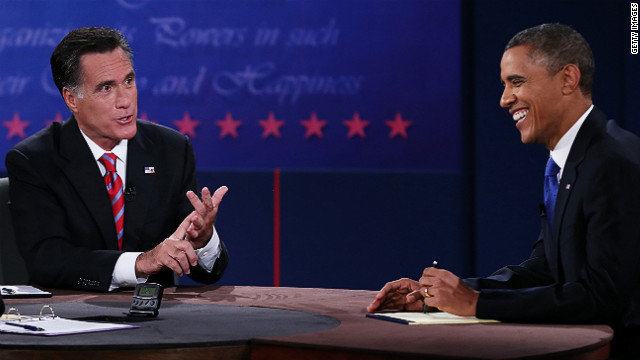
A forceful President Barack Obama put Republican challenger Mitt Romney on the defensive on foreign policy Monday night, with analysts and an immediate poll giving him the victory in their final debate just 15 days before the November 6 vote. Obama displayed the experience of a commander-in-chief in explaining U.S. policy under his leadership and attacking the views and proposals of Romney, a former Massachusetts governor with less experience on international issues.
Romney ended up supporting most of the Obama administration's steps involving hotspots, such as the civil war in Syria, and preventing Iran from getting a nuclear weapon, giving the president the advantage in a debate in which his GOP rival needed to question foreign policy of the past four years.Analysts agreed that Obama won the debate on points, but questioned if the result would have a big impact on voters and the race as a whole ahead of Election Day."There's no question debate coaches would score this one for the president," said CNN Chief National Correspondent John King, while CNN Senior Political Analyst David Gergen said Obama "dominated the middle of the debate" and emerged as the winner. Both King and Gergen agreed that Romney avoided sounding like an overzealous advocate of military action -- which is how Obama and Democrats seek to portray him. Alex Castellanos, a Republican strategist and CNN contributor, conceded Obama "won tonight on points, no doubt about it," but added that Romney showed the cool and calm leadership style of a commander-in-chief to show that making a change in leadership now would be safe. A CNN/ORC International poll of people who watched the debate showed 48% favored Obama compared to 40% for Romney, a result considered statistically even under the margin of error of plus-or-minus 4.5%. Another poll by CBS scored it a clear victory for Obama. However, the CNN/ORC poll showed viewers thought Romney established credibility as a leader, which former White House Press Secretary Ari Fleischer, a Republican strategist and CNN contributor, said was very important. "This isn't going to change the trajectory of the result," Fleischer said. The third and final face-to-face showdown occurred with the candidates running even in national polls and the race hinging on a handful of battleground states -- particularly Ohio, Florida and Virginia. According to the latest polls, Obama has a slight lead in Ohio. Romney is ahead in Florida, and Virginia is a dead heat. Obama more than once sought to highlight Romney's lack of foreign policy experience, while Romney said Obama's foreign affairs policies have made the United States less respected and more vulnerable. Romney also repeatedly tried to shift the discussion to his strongest issue -- the continued high unemployment and slow economic recovery under Obama -- arguing that a strong foreign policy and national defense depends on a strong economy. The president's policies undercut the military, leaving the Navy and Air Force at their weakest levels in decades, Romney said. "Our Navy is smaller now than at any time since 1917," the Republican nominee said, also noting that "our Air Force is older and smaller than at any time since it was founded in 1947." Obama fired back with perhaps his strongest response of the night, saying Romney "maybe hasn't spent enough time looking at how our military works." "You mentioned the Navy, for example, and that we have fewer ships than we did in 1916," Obama said. "Well, governor, we also have fewer horses and bayonets, because the nature of our military' has changed." Sarcastically noting that the Navy now has "these things called aircraft carriers, where planes land on them." as well as "ships that go underwater, nuclear submarines," Obama concluded that "the question is not a game of Battleship, where we're counting ships -- it's what are our capabilities."Romney applauded Obama's efforts to kill Osama bin Laden and other al Qaeda leaders but insisted that "we can't kill our way of this mess." Rather, he pushed for "a comprehensive strategy" to curb violent extremism in the Middle East. "The key is the pathway is to get the Muslim world to reject extremism on its own," Romney said, proposing U.S. policies to promote economic development, better education, gender equity and to help create institutions. However, he was unable to express any significant policy difference with Obama on how that would happen. Obama responded by criticizing his opponent on a host of foreign policy issues -- claiming Romney had favored positions that would have hurt the United States or offered sometimes contradictory views. "What we need to do with respect to the Middle East is strong, steady leadership -- not wrong and reckless leadership that is all over the map," the president said.Romney's economic plan seeks trillions in tax cuts while increasing defense spending, which would increase the deficit, Obama said. For his part, Romney repeatedly shifted back to his stump speech criticism of the nation's sluggish economic recovery under Obama's policies, which he says have hindered growth through high taxes and onerous regulations. The candidates were at odds as well about how Washington should ultimately respond to the continuing violence in Syria.Talking about the need to provide those fighting Syrian President Bashar al-Assad's forces with arms, Romney said the Democratic incumbent has not enough to curb violence that has left tens of thousands of people dead and also destabilized the region. "We should be playing the leadership role," Romney said. That precipitated a quick response from Obama, who pointed to American efforts to organize international efforts to address the issue as well as its support for opposition factions. "We are making sure that those we help will be our friends (in the future)," he said. A strong performance by Romney against a lackluster Obama in the first debate October 3 in Denver helped the GOP challenger tighten the race and even pass the president in some polls.The president fought back to win the second debate last week in New York, according to polls and pundits, setting up the Monday's night showdown at Lynn University in Boca Raton, Florida, moderated by CBS News Chief Washington Correspondent Bob Schieffer. Until recently, polls showed Obama ahead of the former governor on foreign relations issues, and the Romney campaign has mounted pointed attacks in an attempt to narrow the president's advantage. Other issues discussed in the debate included Iran's nuclear ambitions, China and the war in Afghanistan. Both candidates pledged to support Israel if the Jewish state comes under attack, and Romney backed the 2014 date set by Obama and NATO for withdrawing combat troops from Afghanistan. Romney has landed blows thus far in the campaign by arguing that continued high unemployment and sluggish growth showed failed policies under the president, while promoting his own business background. CNN/Google Campaign Explorer: Ads, money and travel In a major foreign policy address on October 8, Romney promoted a traditional U.S. foreign policy dating back decades, based on exerting global influence through military and economic power. While the speech sought to distinguish himself from Obama on foreign policy, specific proposals he cited then were similar to what the administration is doing. Obama's campaign has accused Romney of shifting positions on foreign policy matters and mishandling a trip to England, Israel and Poland this summer when he publicly questioned London's preparedness to host the Olympic Games and cited cultural differences as a reason for economic disparities between Israelis and Palestinians. Defense: $2 trillion divides Obama and Romney

Monday, October 22, 2012

Bahrain security forces fire tear gas to keep protesters out of tense village

http://www.washingtonpost.com
Authorities in Bahrain have fired tear gas to disperse more than 200 protesters trying to enter a village under a security clampdown following a bombing last week that killed a policeman. Monday’s confrontation marks the second consecutive day that demonstrators have tried to enter Eker, about 20 kilometers (12 miles) south of the capital Manama. Authorities say a policeman died in Eker from wounds after a homemade explosive was detonated late Thursday.An Associated Press photographer says the marchers fled when the tear gas was fired. On Sunday, police outside Eker detained three activists, including the daughter of jailed opposition figure Abdulhadi al-Khawaja. Authorities say seven suspects are held for last week’s blast. A government statement says checkpoints have been set up in the search for other possible suspects.

Saudi's turn to Twitter for 'revolution'

It is not exactly the Arab Spring that many countries in the middle east have experienced over the last couple of years, but a form of revolution is growing in popularity as Saudi's turn to Twitter to voice their criticism of the royal family. Open criticism of the government and the royal family has long since been considered taboo in Saudi Arabia. Over the last several months however, criticism of the royal family and other topics has become commonplace. According to an Economic Times report, the king has come under attack and prominent lawyers and judges are posting fierce criticisms about social neglect and large-scale corruption within the government. Clerics are also posting their views, as are Saudi women upset with the cleric's who "limit their freedoms". An anonymous Twitter account user known as @mujtahidd has been posting information regarding the "internal workings and private scandals" of the Saudi royal family for the past year. An Albawaba report calls the postings "the Saudi Arabian WikiLeaks". There are approximately 2.9 million twitter users in Saudi Arabia according to a New York Times report, and @mujtahidd has nearly 700,000 followers. On Oct 13th, he made several tweets outlining the thought processes and various succession plans made by senior royal family members for when King Abdullah bin Abdul-Aziz al-Saud leaves the throne. The question of who will succeed the king has been on the mind of Saudi's and the international community because of the role the country plays in the region. Twitter allows @mujtahidd and other Saudi's to cross social boundaries and discuss subjects in that were once off limits, collectively and in real time. Saudi authorities seem to have become resigned to the fact that not much can be done about the growing trend, thus allowing Twitter users to post under their real names. According to the Economic Times report, Faisal Abdullah, a 31 year-old lawyer, stated: "Twitter for us is like a parliament, but not the kind of parliament that exists in this region,. It's a true parliament, where people from all political sides meet and speak freely." Cleric Salman al-Awda, who was jailed for several years in the 1990s for his attacks on the government, said: "Twitter has revealed a great frustration and a popular refusal of the current situation. There is a complete gap between the rulers and the ruled. Even those who are in charge of security do not know what the people really think, and this is not good." An AFP report earlier this month says Twitter is even being used as a platform for Saudi's to express their displeasure over the rising price of poultry in the country. "Let it Rot" and "Poultry Boycott" are two of the the campaigns that sprang up on Twitter after the price of chicken began to rise. Both campaigns urged Saudis to stop buying chicken. Since protests are banned in Saudi Arabia, Twitter appears to be a logical alternative for Saudi citizens to voice their opinions, and have those opinions heard by Saudi authorities. The New York Times quotes Abdullah as saying: “This is increasing the culture of rights here. And it matters. Yesterday, I wrote a tweet about the court system, accusing the judges of arrogance. The judiciary minister himself called me to talk about it. So you see, they read it.” Read more: http://www.digitaljournal.com/article/335231#ixzz2A3URCas3 Read more: http://www.digitaljournal.com/article/335231#ixzz2A3UKHuJN

Syrian Conflict Part of Mideast 'Geopolitical Game' – Lavrov

Some countries are apparently interested in fueling violence in Syria as part of a “geopolitical remapping” of the Middle East, Russian Foreign Minister Sergei Lavrov said. “It appears that every time the hope for progress in the Syrian situation arises, somebody attempts to prevent it from calming down and deliberately fuels the continuation of the bloodshed and civil war in Syria,” Lavrov said in an interview with Rossiiskaya Gazeta on Monday. Lavrov cited some unspecified opposition groups as telling Russia that Western countries urge them to continue the resistance, “to fight for their rights with arms until [President Bashar al-Assad’s] regime falls.” The minister was especially critical of the terrorist tactics used by the opposition as a wave of attacks targeting senior government officials and pro-Assad forces had recently swept through the country. The Syrian conflict has claimed up to 30,000 lives since March 2011, according to latest US estimates. The West and some Arab countries are pushing for Assad’s ouster while Russia and China are trying to prevent outside interference in Syria, saying that the Assad regime and the opposition are both to blame for the bloodshed. According to Lavrov, the Syrian conflict is “part of geopolitical remapping of the Middle East, where various players attempt to safeguard their interests.” Assad, who is widely viewed as a close ally of Iran, has been unfairly made “a scapegoat” in this “big geopolitical game,” Lavrov said. He defended Assad by calling him “a guarantor of the security of national minorities, among them Christians, who have been living in Syria for centuries.” "By the most conservative estimates our Western partners quote in confidential contacts, he still enjoys support of at least a third of citizens as a man who vowed to prevent Syria's transformation into a state where minorities will be simply unable to live and exist," the Russian minister said. Lavrov reiterated that foreign “recipes” would never provide a long-lasting and reliable solution to the Syrian conflict, and expressed hope that the visit of UN peace envoy Lakhdar Brahimi to Russia next week would help outline steps toward dialogue between warring parties in Syria. Brahimi, who held talks with Assad in Damascus on Sunday, has urged the Syrian government and the opposition to cease fire for the duration of the Eid al-Adha holiday, which starts on Friday.

U.S. presidential debate finale expected to draw wide attention

In a few hours, U.S. President Barack Obama and his Republican rival Mitt Romney are due to start their third and last presidential debate at Lynn University in Boca Raton, Florida, which will be focused on the U. S. foreign policy. Analysts expected the debate finale to draw wide attention from both the American voters and the media, given the neck-to-neck presidential race right now. FINALE OF PRESIDENTIAL DEBATE In the first presidential debate on Oct. 3, Obama's lame performance shocked most people, in sharp contrast with Romney's commanding delivery. The rather surprising development wiped away Obama's once comfortable lead in the presidential race and shifted the momentum to the side of Romney. In a bid to alter the dynamics, Obama, in the second debate, took to the combat mode, launching aggressive attacks on Romney. The strategy seemed to have worked, with most observers agreeing that Obama, more or less, outperformed his rival. According to a Wall Street Journal/NBC News poll released Sunday, Obama is now tied with his challenger Romney on public support, as they will head into the third and final presidential debate. Among likely voters, the candidates are now tied at 47 percent for both in a race that appears on track to be one of the closest in U.S. history, said the Wall Street Journal. Traditionally, foreign policy is low on Americans' list of concerns. However, given the dead-heat presidential race, both candidates are under enormous pressure to secure a triumph in the debate finale. Kevin Ross, president of the debate host Lynn University, told Xinhua in an interview that because this debate will be the last face-to-face exchange between the two candidates before the Nov. 6 election, it is bound to draw unprecedented attention. The students of his university are "thrilled" to watch the debate on Monday night, he said. Indeed, every presidential debate has also been a media war, and this time is surely no exception. A team of Xinhua reporters immediately felt the air of tension after arriving in Lynn University on Sunday. In the news filing center, hundreds of seats have been neatly set up for reporters, while Romney and Obama campaigns were busying installing their respective media spin room designed for their strategists to opine after the debate. Max Rose, a media official of the debate's organizing committee, told Xinhua that there are about 3,500 credentialed members of media to cover the third debate, with nearly 800 foreign reporters. Both numbers are the biggest of the three debate. FOCUS OF FOREIGN POLICY DEBATE The moderator of the debate is Bob Schieffer, the 75-year-old veteran anchor of CBS News. He has outlined a number of topics: America's role in the world, the war in Afghanistan, the changing Middle East, the Iranian nuclear crisis, and how to deal with the rise of China. Undoubtedly, the two candidates will spar again on the attacks on the American consulate in Benghazi, which killed U.S. ambassador to Libya Chris Stevens and three other Americans. Romney is expected to continue his relentless attack on Obama for his controversial response to the assault. It will be interesting to watch how Obama rebutted his opponent's accusations. Foreign policy is generally considered a strong area for Obama, given his first-hand experience in policy-making and his achievements including the killing of al-Qaida leader Osama bin Laden. However, Romney who is reportedly under intense preparation with his foreign policy advisors, also should not be under- estimated. Despite the common prediction that the debate will see some fierce clashing, many analysts argued that the foreign policy agendas put forward by Obama and Romney are not that different in essence. Of course, Romney as the presidential challenger with few strings attached, is generally considered and also be able to be more hard-line on foreign policy. But the incumbent Obama has to be reasonably more cautious as he needs to take into consideration of the potential consequences of his campaign rhetoric on the real world. Furthermore, some experts believed the more important thing for both candidates is scoring points with viewers on presentation, rather than the substances of their foreign policy.

Video: Malala thanks supporters,able to stand, write

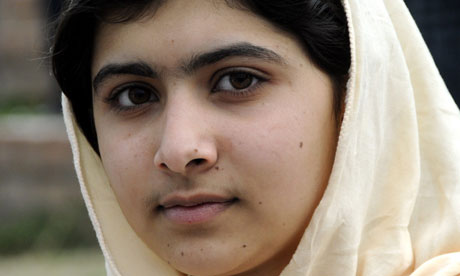
Fourteen-year-old Malala Yousafzai continues to recover in the UK. Doctors say that the young activist is now able to stand up with help and can communicate by writing. Malala was shot in the head and shoulder earlier this month by the Taliban in Pakistan for speaking out against them. Malala was flown to the UK last Monday to receive specialized medical care and protection from further attacks.

“Another school girl from Swat threatened by Taliban”

Following the deadly attack on activist Malala Yousafzai a few weeks ago, another schoolgirl from Swat, Hina Khan who was a pioneer in raising her voice publicly against Taliban atrocities in the Malakand Valley, is now also claiming to be on the Taliban’s hit list. What has been further worrisome for her family is that despite repeated requests for security, they claim no steps have been taken to provide protection to them after they fled from Swat and moved to Islamabad.

Deteriorating human rights situation in Pakistan

Pakistan Director of Human Rights Watch, Ali Dayan Hasan spoke to The Express Tribune on the state's appeasement of sectarian violence, lack of transparency in military's involvement in alleged extrajudicial killings and crisis of criminal justice system in the country.

Thousands of girls named after Malala

Thousands of newborn girls during the last 10 days were named after Malala in Lahore and other parts of Punjab. According to an official of Lady Atichison Hospital and sources in other hospitals, Malala was the most popular name for baby girls born at hospitals across Punjab. “Malala has become a symbol of courage, an icon for promotion of education and other leadership qualities due to which parents are naming their girls after her,” the source said.

Malala Yousafzai status updates Monday 22 October 2012

Malala continues to make steady progress and is in a stable condition at the Queen Elizabeth Hospital Birmingham. She has now been in the hospital for one week, under the care of a specialist team from both the Queen Elizabeth and Birmingham Children’s hospitals.

Malala Of Swat Becomes Malala Of Pakistan And The Wider World

So where do all the security measures and the claims of victory against the Taliban in Swat stand following the attack on Malala Yousafzai? Is the attack, triumphantly claimed by the Tehrik-e Taliban Pakistan (TTP), a slap in the face for the civilian and military leadership? And how might religious apologists tailor their statements vis-a-vis Taliban attacks on innocent civilians? The answers are clear. Calm has been returned to Swat, but that's a far cry from peace. The country's powerful military establishment still appears to be pinning its hopes on so-called strategic assets, and it seems confused about the good and the bad among the Taliban. And religious apologists are campaigning for general elections and hence less likely to offend the Taliban. So innocent Pakistani civilians -- particularly those who want Pakistan a modern, developing and peaceful country -- are the victims. Fourteen-year-old Malala is one of them. While the Taliban boldly claimed responsibility for the attack on Malala and warned of another if she survives, religious apologists either stayed silent or issued face-saving statements. After much foot-dragging, bland generalizations like "we condemn terrorism" and "whoever is responsible for the attack must be punished" were issued by leaders and officials of political and religious parties like Pakistan Tehrik-e-Insaaf (PTI), Jamat-e-Islami (JI), Jamiat Ulema-e-Islam (JUI), and various factions of the Pakistan Muslim League (PML). Hardly two days before the attack on Malala, cricketer-turned-politician Imran Khan led a rally of his party workers and activists toward Waziristan to drum up sentiment against drone strikes targeting Al-Qaeda and Taliban targets and demanded an end to military operations. There, at the periphery of Waziristan in the district of Tank, Khan called for talks with the Taliban. "But how can we hold talks with people who are out to kill even our children and boldly claim responsibility for such attacks?" Bashir Ahmad Bilour, a minister in Khyber-Pakhtunkhwa province, demanded to know hours after Malala was shot. Bashir Bilour's question casts a pall over the Pakistani government's past negotiations and peace deals with Taliban in Swat, Waziristan, and Khyber. All of those deals fell apart within few months and, in the eyes of their most strident critics, further emboldened and strengthened the militants, leading to more bloodshed in those areas. Accounts from locals in Swat suggest that the military has a vast network of informers across the valley and that even once-powerful men -- khans or landlords -- can't so much as cough without the security forces' knowledge. How Taliban militants enter Swat and carry out occasional attacks like the one on Malala raises major questions for the people of Swat, Khyber Pakhtunkhwa, and the rest of Pakistan. While prayers are being directed and praise poured on Malala and her father, Ziauddin, both of whom were on the Taliban hit-list as a result of their battle to ensure girls' education, young Malala has revived the history of Malalai of Mewand, popularly known as Malalai Anna, who rallied Pashtuns against the British during the second Anglo-Afghan war in 1880 at Maiwand, in Afghanistan. While the Malalai of Maiwand played a heroic role in winning the battle by tending the injured Pashtuns and supplying water and weapons, the Malala of Swat fought with her pen and tongue to encourage her countrymen to send their children to school despite threats from the Taliban. Born in 1998, Malala was only 11 years old when she started her jihad (holy war) against ignorance and oppression. The power of her unarmed jihad instilled so much fear among the so-called armed jihadists that they tried to kill her, an act both forbidden in Islam and considered a shameful and dishonorable act in Pashtun culture and tradition. Malala's attackers perhaps did not know that the attempt to silence her would produce such a serious repercussion. Malala's rallying cry has proven stronger and more lasting than the gunshots from her would-be assassin and is resounding in every corner of Pakistan, inspiring her countrymen to stand up and emancipate themselves from the thugs who are out to steal the future of coming generations and snatch their individual and collective freedoms. Yesterday's Malala of Swat has become the Malala of Pakistan and the Malala of the wider civilized world.

Afghan Roadside Bombs Claiming More Civilian Victims

http://www.rferl.org
The UN says that civilian casualties from roadside bombs in Afghanistan have increased by almost a third in the first nine months of this year. The United Nations Assistance Mission in Afghanistan (UNAMA) said in a statement on October 20 that improvised explosive devices (IEDs) "killed 340 civilians and injured a further 599 over the past nine months, an increase of almost 30 per cent compared to the same period last year." It added that "IEDs are by far the biggest killer of civilians in Afghanistan's armed conflict." The agency called on the Taliban leadership "to publicly reiterate a ban on these weapons and to stop their use."

Karzai Meets With U.S. Envoy About Pakistan Visit

http://www.rferl.org
Afghan President Hamid Karzai has met in Kabul with U.S. President Barack Obama’s special envoy for Afghanistan and Pakistan, Marc Grossman.
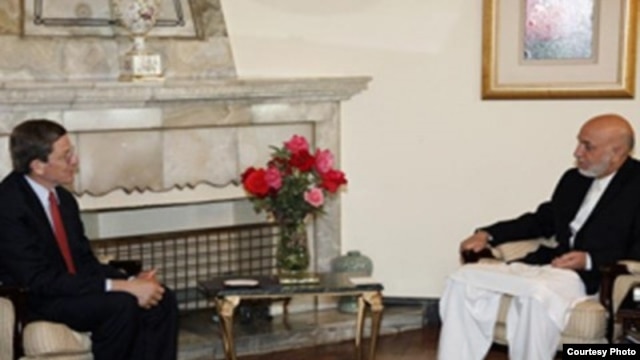
Karzai’s office said in a statement that during the October 21 meeting Grossman spoke to Karzai about his recent visit to Pakistan and talks with Pakistani officials about the Afghan peace process and moves to counter terrorism and extremism. Officials say Taliban and Al-Qaeda militants use Pakistan’s northwest tribal region as a base to prepare for attacks on U.S., Afghan, and allied forces in Afghanistan. The Afghan presidential statement said the meeting was also attended by Douglas Lute, U.S. deputy national security adviser; U.S. General John Allen, the commander of NATO and U.S. forces in Afghanistan; and James Cunningham, the U.S. ambassador to Afghanistan.

EU to provide 80m euros for restoration of infrastructure in Malakand Division

PESHAWAR: Minister for Finance and PPP Provincial General Secretary, Engr Humayun Khan said Sunday that European Union (EU) will provide 80 million euros for restoration/repair of infrastructure in militancy affected Malakand division and capacity building of health and education institutions. "In this regard, an agreement between Khyber Pakhtunkhwa Government and EU would hopefully be reached this month," he told APP during an interview. He said the confidence of EU and other donors have been enhanced on the Khyber Pakhtunkhwa Government referring to the assistance received in the past comprises 84 percent loan and only 16 percent grant while at present it is more than 80 percent grant. This reflects the confidence of the donor agencies in our growth oriented policies, relief programms and good performance, he added. He said the government has constructed and repaired schools, additional class rooms besides providing medicines and machines to hospitals in DI Khan and Buner districts by utilising the conditional funds received from donors. This year, he said, development work would be carried out in six districts of the province under the conditional fund and later would be expended to others districts of Khyber Pakhtunkhwa. The minister said the donor agencies and friends of Pakistan during Donors Conference held in Islamabad under the aegis of KP Government, had hinted investment in relief, reconstruction and rehabilitation projects in Khyber Pakhtunkhwa which is welcome and good omen. He highly commended the assistance and support of international donor's organisations and expressed optimism that they would honour their aid pledges and will continue assistance for socio-economic emancipation of people affected by militancy and terrorism. Humayun said that financial position of KP Government is strong and stable and a record three percent increase has been made in the total outlay of Annual Development Programme 2012-13 of the province. Despite the grave challenges of terrorism and militancy, he said the total ADP outlay of KP Government that was only Rs. 33 billion in first year has jumped to record Rs. 97billion. He said increasing the share of province from 43 percent to 57.5 percent in federal divisible pool was highly commendable effort of the present government and a major step towards provincial autonomy. He said the government has presented growth oriented and friendly budget for current fiscal year with no new tax which was appreciated by opponents as well. He said relief is being provided to people affected by terrorism and militancy referring to Bacha Khan Alleviation Programme, waving of small loans in Malakand Division, stars of Khyber Pakthunkhwa programme etc. He said that annual installment of capped amount of Rs. 6 billion under the net hydel profits of Rs. 110 billion is being regularly received while negotiation with the provincial and federal governments are underway for increasing the annual profit under electricity head to KP government and the people would soon hear good news, adding interest of the province would be protected at all cost. Regarding load-shedding, the minister said work on several hydropower projects including Darar Khwar, Khan Khwar and Mataltan have been started to address this issue are permanent basis and increase the province income. He said development and peace are interlinked and the government was spending maximum amount for improving law and order and strengthening of law enforcement agency. He said law and order situation in Khyber Pakhtunkhwa in general and Malakand in particular improved.

Asghar Khan case verdict: Governor Khosa takes a swipe at PML-N

The Express Tribune
If the Asghar Khan case is pursued to its logical end, the Pakistan Muslim League-Nawaz (PML-N) leadership will vanish from politics, claims Punjab Governor Sardar Latif Khosa. Addressing a ceremony at Chand Rai village near Chongi Amar Sidhu on Sunday, Khosa said that the distributers and recipients of cash handouts have committed treason. He was referring to the then-ISI and army chiefs and the politicians who formed the Islami Jamhoori Ittehad (IJI) at their behest in the run-up to the 1990 general elections. Khosa added that those who “usurped the rights of the people” should be tried for treason under Article 6 of the Constitution. In a veiled reference to the PML-N chief, Khosa alleged that some politicians were groomed during [Gen Ziaul Haq] martial law and rose to power through undemocratic means. “Such politicians have been unmasked – they are not interested in the democratic process,” he alleged. In an indirect criticism of the judiciary, Khosa said while the apex court decided cases involving the Pakistan Peoples Party (PPP) it should also ensure a speedy trial of the case against Shahbaz Sharif who “took over the province unconstitutionally, four years back”. Khosa urged the Supreme Court to decide the judicial murder of Zulfikar Ali Bhutto (ZAB) so that “character assassination of the creator of the country’s Constitution” could be stopped once and for all. For the PPP, politics is like a religious obligation (ibaadat),” Khosa said. “It is a party of martyrs like Zulfikar Ali Bhutto and his daughter Benazir Bhutto.” Later, Governor Khosa also visited the residence of late advocate Shakir Ali Rizvi to offer condolences to his family. Rizvi was shot dead by unidentified gunmen last week in Lahore.

PPP demands compensation for 1990 election victims

The Pakistan People’s Party (PPP) General Secretary Senator Jahangir Badr has said that his party was fully satisfied and also appreciates the Supreme Court’s (SC) short decision in the Asghar Khan case. Addressing a press conference at the Lahore Press Club on Sunday, Badr termed the SC decision as historical, saying it would give a new direction to make things better. Badr said that the PPP-led coalition government would not intervene in the court matter in the Asghar Khan case. However, he appealed to the court that it should not only uncover the names of responsible persons in its detailed decision but also order them to return with interest the actual amount they received as bribe. The PPP leader also asked the SC to impose fines on those who took money and ask them to compensate the direct victims of the (IJI) case. Explaining the compensation for politicians who faced defeat due to manipulation in the 1990 elections, he said that these “defeated-cum-victimised politicians” of PPP should be declared winners along with some monetary compensation.

A significant verdict by Pakistan Supreme Court

http://gulfnews.com
By ruling against an Army-ISI-Nawaz Sharif nexus in 1990, the pitch has been raised for greater political transparency
A landmark verdict by Pakistan’s Supreme Court on Friday may have cleared a historical grey area, but has not left the country’s present-day ruling structure unscathed. The ruling in question relates to allegations surrounding Pakistan’s elections in 1990, suggesting that general Aslam Beg, the army’s chief-of-staff at the time, along with lieutenant general Asad Durrani, head of the Inter-Services Intelligence (ISI), had teamed up with a group of politicians. As a result of this partnership, the parliamentary elections were allegedly rigged. Those elections had brought former prime minister Nawaz Sharif to power in Islamabad for the first time, while conclusively defeating former prime minister Benazir Bhutto, just months after her government’s dismissal on allegations of corruption. More than two decades later, Pakistan has fortunately reconciled itself with one of the many dark chapters in its political history. Though belatedly for the late Benazir, the Supreme Court’s verdict marks a much needed vindication of her oft-repeated claim that she had been unjustly dismissed from office, just 20 months after becoming the Muslim world’s first woman to head a government. The verdict now also sets the pace for a more restrained role in politics by the army and/or intelligence services. Not unexpectedly, the verdict has been widely hailed by leaders of the ruling Pakistan People’s Party (PPP), now led by President Asif Ali Zardari, Benazir’s widower. However, the verdict also sets in motion a series of challenging questions for Pakistan’s ruling class. On the one hand, there are profoundly difficult questions for Sharif who, according to Supreme Court documents, received a hefty sum of money as leader of his ‘Islami Jamhoori Ittehad’ or Islamic Democratic Alliance. He went on to replace Benazir as the prime minister and now continues as the leader of Pakistan’s main opposition party, the Pakistan Muslim League – Nawaz (PML-N). Aspiring to become Pakistan’s prime minister for a third time, following his two terms of office in the 1990s, Sharif must be confronted with extremely uneasy questions over his past conduct. The Supreme Court ruling sets in motion some difficult and challenging questions for Sharif’s ability to continue claiming a high moral ground unless he can first clear his own past. While Pakistan’s main federal investigation body, known as the Federal Investigation Agency or FIA, has been assigned to investigate the matter, the issue is more political than legal. Going forward, the outcome of this investigation will only underscore a vital point which is essentially that Pakistan’s democracy deserves to progress freely without any curbs. At the same time, the verdict must also be an important eye-opener for the way Pakistan’s politics seems to be progressing under President Zardari. His decision to carry on as the head-of-state, while also effectively running the PPP from the well-protected environment of Islamabad’s presidential high palace, needs to be scrutinised aggressively. For years, critics have argued that Zardari’s position as Pakistan’s head-of-state — a neutral office — has been badly compromised through his choice of turning his official residence into effectively the highest office of the PPP. At the heart of the Supreme Court’s verdict lies the powerfully argued case against the use of the highest office for partisan purposes and thereby compromising its integrity and neutrality. Going forward, while the FIA investigates individuals named in the Supreme Court’s ruling, the move must also underscore the degree to which there needs to be an aggressive scrutiny too of the use of Pakistan’s presidency for political purposes. While a historical wrong may have been rectified by the Supreme Court’s verdict, the matter will fail to rest there conclusively unless it is immediately related to Pakistan’s present-day environment. Following the Supreme Court’s verdict, it is now essential for Pakistan’s PPP led ruling structure to work aggressively towards reviewing a full range of vital political questions. A new page must be turned in Pakistan’s politics, where the Supreme Court has indeed allowed the opportunity for the first vital step to be taken. However, to ensure that a sorry tale in Pakistan’s past politics must never be repeated, there is an urgent need to ensure that political choices for the future are devoid of controversy. Though the PPP and Zardari in the first instance may have celebrated the Supreme Court’s verdict, the burden of responsibility falls as much on their shoulders as on other players across the board, in overseeing a badly needed maturity in Pakistan’s politics.

'Why Nawaz Sharif not accepting court verdict'

Addressing a reception arranged in honour of visiting Indian lawyers in Islamabad, Interior Minister Rehman Malik said that Pakistani judicial commission not allowed to cross examine accused involved in Mumbai attacks. He once again said that Pakistan was not behind these attacks. Talking to media after the reception, Rahman Malik came hard on Nawaz Sharif and asked him to respect court’s verdict. He said that why the PML-N leader not accepting court verdictHe also challenged opposition leader in the National Assembly for a debate on Asghar Khan case. He said that Chaudhry Nisar Ali Khan has committed court contempt by expressing no trust in FIA.

Pakistan: Immature politics

THE Supreme Court dropped the bombshell, now the political parties are fighting over the fallout. The open secret that the presidency and the security establishment colluded to rig the 1990 elections received an official imprimatur last week — predictably leading to all manner of political attacks and counter-attacks in present-day Pakistan, where a general election is around the corner. Rather than say mea culpa and focus on its more recent record of robustly supporting the democratic process, the PML-N has tried to dredge up allegations of electoral manipulation and partisanship in 1993. For its part, the PPP is enjoying the discomfiture of the PML-N and taking liberal pot shots at its rival for national power. None of it is edifying or becoming of a mature political process. Of course, with elections on the horizon in a fractured polity, few will be thinking about the long-term interests of the democratic project. Survival is the name of the game at the moment. However, this is precisely the kind of political moment in which leadership can make a difference. President Asif Ali Zardari and former prime minister Nawaz Sharif carry a heavy burden today, much like the one Benazir Bhutto and Mr Sharif tried to shoulder in the 1990s but failed. The burden is to carry the democratic project forward and away from the interference and interventions of the army. Slanging matches and throwing fistfuls of mud at one another is not the way forward. Yes, Nawaz Sharif benefited from the patronage and tutelage of the security establishment. But since his return from exile, he has steadfastly and very believably maintained that the army’s influence in politics must be pushed back against. And for all the PPP’s schadenfreude at the moment, those with longer memories will remember that the PPP’s founder cut his political teeth in the country’s first military government. The central challenge, then, is the same for all political parties: to strengthen the democratic project against military intervention. The PPP, the PML-N, indeed all political parties, will benefit from rolling back the army’s internal predominance. But how to do it? A truth and reconciliation commission, occasionally mentioned by the PML-N, would be a good idea. So was the Charter of Democracy, and a reincarnation of that platform today would be helpful too. Ultimately, though, the political class will only truly be able to exert control if it learns to govern better and challenge the army’s formulation of the national interest and national security in a more intelligent manner. But will self-interest prevail over the common interest?

Supreme Court verdict: historical change is like an avalanche

The apex court's landmark verdict on Asghar Khan's 16-year-old petition against abuse of constitutional high offices has finally come, and as it comes it brings in its train not only possibility of ushering in Pakistan a new political culture but also poses serious challenges to political actors now on the national stage. It's a broad, inclusive verdict on how the so-called Establishment had been subverting the people's will expressed through the ballot, earning over time a bad name for the country and impeding growth of truly democratic culture and forces. Had the predecessors of the present Supreme Court acted courageously in defence of the laws and constitution of the day, by now Pakistan would have a strong vibrant democracy, envy of others in the region and beyond. But the apex court judges can do only as much; it's for others in government, politics, civil society and general public to see that this historic judgement is implemented in letter and in spirit. This certainly was the noble mission of a noble air marshal. What looked like a shot in the dark by a lonely man tends to turn the page on the lingering saga of palace intrigues, misuse of authority and power of money in politics. How this verdict will play out we would know in the light of the detailed judgement that is expected anytime soon because without that in the field, a follow-up action cannot be initiated in earnest. What an irony of time that president Ghulam Ishaq Khan, one man who had earned the reputation of being a man of the book and a constitutional stickler to forbidding limits, has been declared a violator of his oath of office by the Supreme Court. He dismissed two successive governments because he had no other choice after he concluded they violated Article 58 2(b), then an integral but highly controversial part of the constitution. He 'played' into the hands of military top brass, perhaps he had no choice as he had been ushered into the high office at their behest. What constituted national security is always a preserve of the GHQ. To think he could have refused to go along it would be a crass naivety; after all how often others who followed him in elected offices had succeeded in putting across and implementing their contrasting security perspectives, one would like to know. Had Ghulam Ishaq Khan been really enthused by the touted good of military take-overs and generals' peccadilloes he would not have pre-empted General Beg's political ambitions by nominating the next army chief well ahead of expected time. The undeniable fact is that the civilian outfits including the apex courts of the day had always condoned military interventions, sometimes under the dubious cover of doctrine of necessity. That the Supreme Court has put its foot down, saying no more misuse of high military offices in pursuance of crooked objectives is indeed a great moment in our history. But that was in the past, and history cannot be rewritten. Looking to the future, the court verdict poses two critical challenges, one each to civilian and military set-ups. For the government the challenge is to ensure that President Asif Ali Zardari stays clear of his political activities, as envisaged under Article 41 of the constitution. The court expects of him to quit the political office as PPP co-chairman - which he may not, given the Attorney General's insistence that the apex court is 'not mandated to regulate political functions which the president as of right can pursue', a position drawing substance from 18th Constitutional Amendment which permits the president to remain party head. For the military set-up the challenge is trial of its former army chief and ex-MI-ISI bosses. May be the detailed judgement offers some guidance on both these challenges, but we do not see anything really happening given the recent track records of both the setups. Then, the Chief Executive, Prime Minister Raja Pervez Ashraf, too is not very clear on how to go about the implementation of the court order. Of course, in his welcoming speech he was quite categorical about bring the rigging culprits to book, but is there any organisation under him which can do it. The political opposition has already questioned the integrity and competence of the FIA, entrusted by the court to investigate and fix responsibility. But that said, the fact cannot be denied that a historical wrong has been righted, vindicating the PPP's longstanding stance on the 1990 election. And in larger context the court has set a crucial precedent by declaring military intervention in civilian affairs illegal, unconstitutional and high treason, a heroic performance and a huge step towards obtaining ambience of rule of law in Pakistan. Last but not least. A leaf out of acclaimed European historian Norman Davies (an excerpt from his talk with Financial Times carried by it on October 19, 2012): "Historical change is like an avalanche. The starting point is snow-covered mountainside that looks solid. All the changes take place under the surface and are rather invisible. But something is coming. What is impossible is to say when."

Imran urges Zardari to act against Sharifs

Pakistan Tehreek-e-Insaf (PTI) Chairman Imran Khan said on Sunday that after the decision of Supreme Court (SC) in Asghar Khan case, the president has the “opportunity to take strict action against the Sharif brothers who had taken money to establish IJI”. “In light of SC’s verdict, neutral investigation should be launched against those who had taken money from secret agencies so that malign, corrupted elements could be eliminated,” Imran said in a statement. The PTI chief said that it has been proved that money was given to establish IJI and it is also “clear that so-called politicians had received the amount”. He said that the government should implement decision of the SC “at once” and disqualify those people who had received money. “Today, corruption is common in all over the country. Punjab has become defaulter because of corruption and worst performance of its leaders,” Imran said. “Zardari should take strict action against these people so that no body could dare to change the decision of public in the future,” he said. “Corrupt Sharif brothers should not only be disqualified, they should also be held accountable,” the PTI chief said.

Asghar Khan case fallout

DAILY TIMES
The Supreme Court’s (SC’s) long delayed verdict in the Asghar Khan case has put the cat among the pigeons in terms of its fallout for the politics of the country, now and in the future. The former COAS General (retd) Aslam Beg, former head of ISI Lieutenant-General (retd) Asad Durrani, some prominent politicians alleged to have received funds from the Rs 60 million out of the Rs 140 million given by former Habib Bank and Mehran Bank head Younis Habib, have all been put in the dock by the verdict. Although the detailed judgement is to follow, the short order of the SC has directed the government to take action against the generals and the politicians, as also Younis Habib for manipulating the 1990 elections through the formation of the Islami Jamhoori Ittehad (IJI) with the help of these secretly distributed funds, which were also aimed at helping anti-PPP politicians and parties to win the 1990 elections. Late president Ghulam Ishaq Khan has been found to be the main culprit in this shoddy business. An election cell operating within his presidency ordered the COAS and ISI chief to distribute these funds, facilitate the formation of the anti-PPP IJI and ensure the mandate of the electorate did not go in favour of the PPP, then led by Benazir Bhutto. Certain questions have arisen in the wake of the court judgement, a judgement that cannot be considered anything but historic, given the history of manipulated elections in the country, and arguably a game-changer, provided the investigations ordered by the court are conducted thoroughly and no one, no matter how prominent, spared the long arm of the law. As far as the errant generals are concerned, the question of what law or legal regime to try them under remains unresolved. One view is that they should be court martialled. Recently, in a case of embezzlement of funds, retired generals have been ‘reinstated’ in order to be court martialled. Although that has set a new precedent, it is not clear whether the present military leadership would be wiling to extend this precedent to two such prominent past generals. The other view is that the two have attracted the provisions of Article 6 of the constitution, dealing with treason and violations of the constitution. That would be an explosive departure, given the continuing dominance of the military in national affairs and the high profile of the two accused generals. This could prove a ticklish matter for both the army high command as well as the government. As far as the politicians named as beneficiaries of the ‘largesse’ of the ISI/military establishment in General Durrani’s affidavit in the SC are concerned, the court has ordered the FIA to investigate the charges and take legal action against all those found guilty of accepting these ‘gifts’. How long such an investigation might take is another concern. The FIA thinks it can complete it within two months, Federal Information Minister Qamar Zaman Kaira thinks it can be done fairly quickly and before the caretaker setup takes over to conduct the general elections after the PPP-led government’s tenure expires on March 18, 2013. It certainly looks, despite these confident assertions, that this might be a race against time. If the investigation is not completed before the present government departs, it would remain a matter of conjecture what might transpire in the tenure of the caretaker government: continuation without break of the investigation, or its getting lost in a cloud of uncertainty amidst the political changes taking place then. Another cloud of uncertainty kicked up by the verdict are the strictures in the verdict against the president’s office transcending its constitutional role to intervene in politics, that too in a malign manner. The SC has ordered all election cells in the presidency and the intelligence agencies abolished, and reiterated the politically neutral role of the presidency according to the constitutional construct. That inevitably has implications for the present incumbent, who is both president and co-chairperson of the ruling PPP. Mr Qaira has manfully risen to the defence of the president’s political role, arguing that the president’s office is inherently political, part of parliament, and therefore inherently allowed to conduct politics, albeit in a neutral manner. This is a questionable line of argument, if measured against the conventions of parliamentary democracy in mature democracies. The head of state in a parliamentary democracy is by convention supposed to abjure involvement in politics, except at moments when after elections governments are to be formed, and then too, he or she is supposed to exercise their minds by reference to guidance from the party claiming a majority in parliament. Only if no party enjoys a clear majority does the president ask the party enjoying a plurality or the next largest party in parliament whether it is in a position to form the government in coalition with other parties. Other than that, parliamentary conventions enjoin the president to refrain from intervention in politics. Pakistan’s peculiar history of dictatorial or autocratic regimes, with intermittent and weak bouts of ‘democracy’ has meant that such well established parliamentary democratic norms and conventions have not taken root. An added complication is the co-chairpersonship of President Zardari. How these two roles are to be reconciled in the light of the SC verdict (and the case in the Lahore High Court on this very issue) will test the political acumen of the ruling party in days to come. Those politicians named as beneficiaries of the illegal funds in the SC’s verdict, particularly the leaders of the PML-N, are trying to kick up as much dust as possible to obfuscate the implications of the judgement. If a transparent and thorough investigation is undertaken by the FIA on a war footing, time being short, no amount of ‘dust storms’ can obscure the fact that past misdemeanours have to be accounted for (including the generals) and a clean break made with this sordid past, that continued up to and including the rigged 2002 elections under Musharraf. This is a test of political will, one that will determine for years to come the shape and character of the democratic system and help roll back the malign influence of any person or institution interfering in the genuine exercise of the people’s will to elect the representatives they want, not GHQ, ISI, or an overbearing president, as happened in the past all too often. This could be a genuine turning point in the political history of the country, provided the thrust of the SC judgement is implemented in its true sprit and without shrinking in the face of the admitted difficulties in its path.

Shahbaz’s funny mendacity

Editorial: THE FRONTIER POST
Shahbaz Sharif, the chief minister of Punjab, says that education in the province on his watch has acquired international standards. Really? We didn’t know. But do those standards include state-run schools functioning in graveyards and on city streets, as in Punjab? And do they also have schools in the countryside in Britain that have no buildings at all and where classes are held under the shade of trees and students sit on the bare ground? Do they have schools in France, too, with not even a boundary wall? Do they have schools also in Italy where separate teachers take two or three classes simultaneously in a single room with not even a dividing screen? And in Germany do they too have schools where there is no teacher to teach science and no science laboratory for the students for practical exercises? Do they have schools in the Scandinavian countries as well with no toilets, not even drinking-water facility? In Norway, do they also have schools where the teachers in battalions do not turn up to teach? And in the United States, do they have colleges that function in vacated jails where classes are held in the prisoners’ cells and the students throng on the doors and the corridors to attend the lectures, as in Punjab? And which banana republic as it where not even a single secondary board could produce undisputed results as in Punjab? What kind of mendacity indeed is it that this chief minister has so funnily blurted out? So exasperating it is. And so untruthful too. It only demonstrates that he is absolutely ignorant of the stinking thick rot the state-run schooling is in Punjab. Nor does he seem to know in what a dismal shape is the college education in his domain on his watch. By building a clutch of daanish schools, he appears thinking he has done an education miracle to Punjab, which in reality it is not. With this ostentatious adventure, he may have enlivened the hope for the better of a few thousands of “talented” poor students. But by letting the vast network of state-run schools to rot, he has darkened the future of millions of poor students, many innately talented, on the rolls of this system which alone is accessible to the deprived and denied classes of the citizenry in his province too. With his populist laptop contrivance, he may have added a bit of fat to his vote-bank and may even garner a few votes in the other province where too he now plans to distribute laptops. But he has done a great disservice to the cause of education in the province by taking to this patently politically-motivated but prohibitively exorbitant trick. The precious billions of the taxpayer’s money he has squandered on this political venture so recklessly, he could have utilised for promotion of science education in the state-run schools, particularly in the countryside. And that predictably would have been quite profitable to him politically as well. An indebted public for his uplift of the rotting sate-run school system would have possibly returned the compliment by rallying behind him in strength at the ballot box. But such things could hardly come to him, so swayed is he by his populist daanish schools and laptops forays. He wouldn’t even know that the people in Punjab would do without the international standards and be quite content if what they already have is built up into a delivering system where the state-run schools are run competently and professionally. Where the schools have their proper buildings with boundary walls, adequate furniture and electric fittings, and amenities like toilets and drinking water. Where the teachers turn up regularly and punctually to teach. Where the facilities for science teaching, including teachers and laboratories, are all available readily. Where the inspectors visit the schools regularly as well as in surprise to inspect their upkeep and keep an eye on their educational standards. Where the secondary education boards produce correct and credible results. And where the colleges maintain full teaching faculties and ask not the students to hire out a private tuition in the subject they have no lecturer on payrolls to teach and they would send up their admission forms to the university for examination in the subject. Shahbaz must know that Punjab too suffers from deficiencies in almost every department of education, which instead of diminishing have only increased on his watch. And the people of the province are crying for no education miracles. They are screaming for an education system fit enough for their children to send to for learning and education. This he has spectacularly failed to give them.

PML-N should leave dual standards

RADIO PAKISTAN
Interior Minsiter says PML-N should accept the Supreme Court verdict in Asghar Khan case. Minister for Interior Rehman Malik has said Pakistan Muslim League-N should give up hypocritical attitude and accept the Supreme Court verdict in Asghar Khan case instead of terming the verdict as "injustice". Talking to newsmen in Islamabad at a dinner he hosted for the visitng delegation of Indian Supreme Court Bar Association‚ he said whenever there is a court decision against Pakistan Peoples Party‚ PML-N leaders praise and talk about independence of judiciary‚ but they do not accept any decision if it is against them. While commenting on the statement of PML-N leader Chaudhry Nisar Ali Khan‚ Rehman Malik said it exposes the double standards being pursued by the PML-N. He expressed the hope that the Supreme Court would take sou moto notice and issue contempt notice to Ch. Nisar Ali Khan. Earlier‚ addressing the dinner‚ he said basic problem of both India and Pakistan is poverty and called for more efforts from both sides to ensure development and prosperity of the two peoples. The Minister said at the same time that the other core issues such as Kashmir and water should also be addressed to establish a lasting friendship between the two South Asian neighbours.
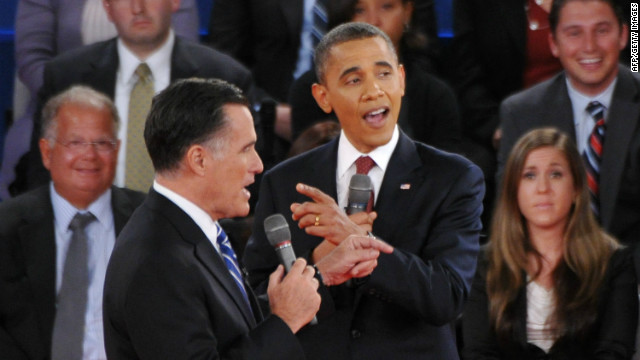
World looks different from Oval Office

Bill Clinton, while on the campaign trail in 1992, attacked the George H.W. Bush administration for collaborating with "the butchers of Beijing." If he won the White House, Clinton promised, he would put human rights first when dealing with the People's Republic of China. But six months after assuming the Oval Office, Clinton tossed those promises out the window, and dealing with China returned to "business as usual," according to William Galston, a former Clinton policy adviser. Clinton isn't alone. Candidates, once elected, usually struggle to live up to their rhetoric on foreign policy. The reason is simple, according to a cadre of international affairs experts: The view from inside the Oval Office is much different from the view from outside. "It is very difficult for presidential candidates to know even a fraction of the facts and the texture of diplomatic relations between the United States and other countries," said Galston. "Once you get inside the White House, the world looks very different." With foreign policy about to take center stage on Monday during the last presidential debate of the 2012 cycle, experts say Republican challenger Mitt Romney should be cautious about over-promising. But some say he already has. In Romney's October 8 foreign policy address, the Republican candidate promised to increase sanctions on Iran, help arm Syrian rebels who "share our values," and close the "daylight" between Israel and the United States. Robert Pastor, a professor of international relations at American University and a former national security adviser to President Jimmy Carter, said Romney joins a long line of candidates who promise too much."He will have to wake up if he were elected," Pastor said. "It would be irresponsible for him to implement" some of those promises, and "I suspect his new secretary of state would tell him that." If Romney wants proof of the pitfalls of foreign policy promises, all he has to do is look across the table at Monday's debate at the man he is trying to unseat. During the 2008 campaign, then-candidate Barack Obama advocated for regional conferences with Syria and Iran, said his administration would enter diplomatic talks with governments that his predecessor, President George W. Bush, would not, and pledged to eliminate North Korea's nuclear weapons program. Syria has fallen into a long civil war, Iran continues to be a provocateur in the Middle East, and North Korea is still developing its nuclear program. Possibly Obama's biggest broken promise is the one to close the prison at Guantanamo Bay, Cuba. "I have said repeatedly that I intend to close Guantanamo, and I will follow through on that," Obama told CBS News' Steve Kroft in 2008. Guantanamo remains open, even though Obama signed an executive order to have it closed two days after he took office in 2009. The issue has largely been put on the back burner in light of issues on the economy. Governing on foreign policy is more difficult than talking tough on it, Galston said, because it hinges on the instability of the globe and can change in the blink of an eye. "I think this is the reality of political campaigns," Galston said. "You can say things (on the campaign trail) in good faith, based on consulting with experts -- and it is rarely the case that candidates say things about foreign policy that they know not to be the case. The issue is once you get inside the White House, the world looks very different." Pastor, the former Carter adviser, says these unmet foreign policy promises can be broken up into three distinct groups. There are the promises that are sincere but difficult -- or impossible -- to meet because they require action from other governments. "Secondly, there are promises that are sincere but cannot be implemented because the political opposition makes it impossible," Pastor said. Lastly, according to Pastor, are promises that are made because they are political expedient but prove irresponsible once the ramifications are understood. Presidential history is littered with promises that fall into these categories. During the 2000 campaign, then-Texas Gov. George W. Bush promised to move the U.S. Embassy in Israel to Jerusalem, a promise that many of his predecessors had also made. The embassy, however, to this day remains in Tel Aviv. Upon assuming office in 1981, Ronald Reagan promised to get tough and stop the Sandinistas, a left-wing Nicaraguan political party that swept across Central America. The Sandinistas were still around when Reagan left office in 1989 and to this day continue to hold political power in Nicaragua. In 1960, then-Sen. John F. Kennedy used soaring foreign policy rhetoric to help catapult him to the White House at the young age of 43. According to the State Department's Office of the Historian, Kennedy failed to live up to his rhetoric on international affairs. "The execution of Kennedy's foreign policy did not quite live up to the stirring rhetoric of his inaugural speech. ... In fact, his foreign policy was marred by a string of failures," reads the State Department website. In April of 1961, Kennedy had only been in office for a short three months when he called for a meeting with Dwight D. Eisenhower, his predecessor in the office. The Bay of Pigs invasion, a carryover from the Eisenhower administration, had been a massive failure that month and an early blunder by the Kennedy presidency -- even though many attributed the failure to Eisenhower. The Kennedy-Eisenhower relationship had been frosty, at best, after the young senator defeated the former general's vice president, Richard Nixon, in the 1960 campaign. Even though Eisenhower had long viewed Kennedy as naive -- he referred to Kennedy as "Little Boy Blue" -- the two put their chilly relationship aside and the sitting president invited the former general to Camp David to review the mistakes in Cuba. According to Eisenhower's notes from the meeting and a number of media reports, the conversation between the new and former president previewed the pitfalls of foreign policy campaign promises: Kennedy: "No one knows how tough this job is until he's been in it a few months." Eisenhower: "Mr. President. If you will forgive me, I think I mentioned that to you three months ago."

How the Obama-Romney foreign policy debate could determine the election

YAHOO NEWS
With turmoil increasing in world hot spots, foreign policy and national security have become major presidential campaign issues. From China to Israel, Iran to Syria, stateless terrorists to struggling alliances, Mitt Romney and Barack Obama will have plenty to debate Monday night.
How important is Monday night’s foreign policy debate between Barack Obama and Mitt Romney? The way things stand right now, it could determine the outcome on Election Day. Nobody would have predicted that just a few weeks ago. But with Mr. Romney’s late-in-the-day insurgency in the polls, the race has become dead even. And momentum – what George H. W. Bush called “the Big Mo” – seems to be on Romney’s side. Two main reasons: First, Romney clearly won the first debate against President Obama, who even jokes now about “the nice long nap I had in the first debate.” In their second set-to, Obama was much more engaged, even animated. But aside from Romney’s gaffe about “binders full of women,” the challenger pretty much held his own against the incumbent president. Second, most voting Americans may worry about the economy first, but foreign policy and national security have become much more important as well. Israel’s security, Iran’s nuclear program, China’s currency, violent revolution in Syria, and certainly Libya since the US ambassador was killed in a terrorist attack there – all have become major campaign issues and therefore debating points. Also, while Romney and his running mate Rep. Paul Ryan have no foreign policy experience, and that can be seen as a weakness in the GOP ticket, Obama has a mixed record to defend. Think you know the Middle East? Take our geography quiz. You can be sure Romney will try to paint that as adding up to weakness and indecision – “leading from behind” is sure to be brought up – not to mention what he claims is a certain distancing from Israel. “Unfortunately, this president’s policies have not been equal to our best examples of world leadership. And nowhere is this more evident than in the Middle East,” Romney said in his speech at the Virginia Military Institute earlier this month. “When we look at the Middle East today, with Iran closer than ever to nuclear weapons capability, with the conflict in Syria threatening to destabilize the region and with violent extremists on the march, and with an American ambassador and three others dead – likely at the hands of al-Qaida affiliates – it’s clear that the risk of conflict in the region is higher now than when the president took office.” The terrorist attack on the US consulate in Benghazi, Libya – which came on the anniversary of 9/11 at a time when much of the region was in turmoil over a crude anti-Islam YouTube video made in the United States – is particularly troublesome for Obama. Washington Post foreign affairs columnist David Ignatius reports that initial CIA “talking points,” provided by a senior US intelligence official, supported UN Ambassador Susan Rice’s early contention that the attack in Benghazi was tied to protests against the YouTube video. But Republicans in Congress (and Romney) have jumped all over the Obama administration’s subsequent remarks on the episode, particularly statements regarding “terrorism” and “terrorists.” It’s all of a piece, Romney charges. “Our country seems to be at the mercy of events rather than shaping them,” he wrote in a Wall Street Journal op-ed column. Still, Obama can rightly claim to have decimated Al Qaeda’s leadership, including Osama bin Laden. And it’s unlikely that Romney as president – despite his buddy-buddy relationship with Israeli Prime Minister Benjamin Netanyahu – could do any more than Obama has done to tighten the economic screws on Iran. Meanwhile, the debate over who’s toughest on Iran took a new twist when the New York Times (citing “administration officials”) reported Saturday that the United States and Iran “have agreed in principle for the first time to one-on-one negotiations over Iran’s nuclear program … setting the stage for what could be a last-ditch diplomatic effort to avert a military strike on Iran.” Was this some sort of “October surprise?” Not so, insisted administration officials, who denied the report. But the Romney camp was quick to label it “another example of a national security leak from the White House,” as Sen. Rob Portman, who played Obama in Romney's debate preparations, did Sunday on NBC’s “Meet the Press.” Obama spokesmen were just as quick to defend administration policy on Iran. "For two years, the president traveled the world putting together a withering international coalition. And now the sanctions that they agreed on are bringing the Iranian economy to its knees," said David Axelrod, a senior Obama adviser, also speaking on NBC. "They're feeling the heat. And that's what the sanctions were meant to do." Both Obama and Romney are preparing to the hilt for Monday night’s encounter. The last thing either wants to do is have the post-debate discussion focus on a “binders” kind of gaffe – the kind that helped deny Gerald Ford re-election in 1976 when he declared in a debate with Jimmy Carter, “There is no Soviet domination of Eastern Europe.” "I think the stakes are pretty high for both candidates," Wall Street Journal columnist Peggy Noonan said on CBS’s “Face the Nation” Sunday. "If we are lucky, we, the voters, we will come out of it at the end thinking, 'I actually know something of Mitt Romney's philosophy as he looks at the world and America's place in it. I understand better what President Obama wants to do and how he sees things.'"