Monday, October 22, 2012
Malala Of Swat Becomes Malala Of Pakistan And The Wider World
Afghan Roadside Bombs Claiming More Civilian Victims
http://www.rferl.orgThe UN says that civilian casualties from roadside bombs in Afghanistan have increased by almost a third in the first nine months of this year. The United Nations Assistance Mission in Afghanistan (UNAMA) said in a statement on October 20 that improvised explosive devices (IEDs) "killed 340 civilians and injured a further 599 over the past nine months, an increase of almost 30 per cent compared to the same period last year." It added that "IEDs are by far the biggest killer of civilians in Afghanistan's armed conflict." The agency called on the Taliban leadership "to publicly reiterate a ban on these weapons and to stop their use."
Karzai Meets With U.S. Envoy About Pakistan Visit
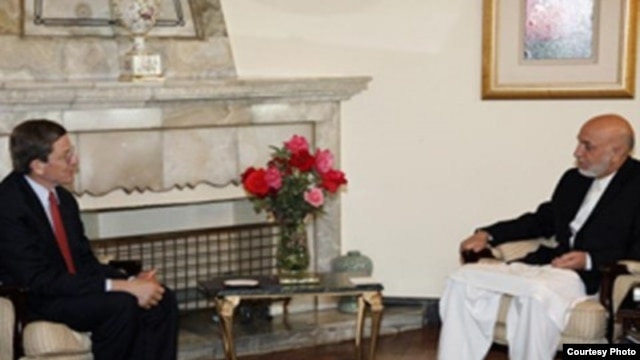
http://www.rferl.orgAfghan President Hamid Karzai has met in Kabul with U.S. President Barack Obama’s special envoy for Afghanistan and Pakistan, Marc Grossman.
EU to provide 80m euros for restoration of infrastructure in Malakand Division
PESHAWAR: Minister for Finance and PPP Provincial General Secretary, Engr Humayun Khan said Sunday that European Union (EU) will provide 80 million euros for restoration/repair of infrastructure in militancy affected Malakand division and capacity building of health and education institutions.
"In this regard, an agreement between Khyber Pakhtunkhwa Government and EU would hopefully be reached this month," he told APP during an interview.
He said the confidence of EU and other donors have been enhanced on the Khyber Pakhtunkhwa Government referring to the assistance received in the past comprises 84 percent loan and only 16 percent grant while at present it is more than 80 percent grant.
This reflects the confidence of the donor agencies in our growth oriented policies, relief programms and good performance, he added.
He said the government has constructed and repaired schools, additional class rooms besides providing medicines and machines to hospitals in DI Khan and Buner districts by utilising the conditional funds received from donors.
This year, he said, development work would be carried out in six districts of the province under the conditional fund and later would be expended to others districts of Khyber Pakhtunkhwa.
The minister said the donor agencies and friends of Pakistan during Donors Conference held in Islamabad under the aegis of KP Government, had hinted investment in relief, reconstruction and rehabilitation projects in Khyber Pakhtunkhwa which is welcome and good omen.
He highly commended the assistance and support of international donor's organisations and expressed optimism that they would honour their aid pledges and will continue assistance for socio-economic emancipation of people affected by militancy and terrorism.
Humayun said that financial position of KP Government is strong and stable and a record three percent increase has been made in the total outlay of Annual Development Programme 2012-13 of the province.
Despite the grave challenges of terrorism and militancy, he said the total ADP outlay of KP Government that was only Rs. 33 billion in first year has jumped to record Rs. 97billion.
He said increasing the share of province from 43 percent to 57.5 percent in federal divisible pool was highly commendable effort of the present government and a major step towards provincial autonomy.
He said the government has presented growth oriented and friendly budget for current fiscal year with no new tax which was appreciated by opponents as well.
He said relief is being provided to people affected by terrorism and militancy referring to Bacha Khan Alleviation Programme, waving of small loans in Malakand Division, stars of Khyber Pakthunkhwa programme etc.
He said that annual installment of capped amount of Rs. 6 billion under the net hydel profits of Rs. 110 billion is being regularly received while negotiation with the provincial and federal governments are underway for increasing the annual profit under electricity head to KP government and the people would soon hear good news, adding interest of the province would be protected at all cost.
Regarding load-shedding, the minister said work on several hydropower projects including Darar Khwar, Khan Khwar and Mataltan have been started to address this issue are permanent basis and increase the province income.
He said development and peace are interlinked and the government was spending maximum amount for improving law and order and strengthening of law enforcement agency. He said law and order situation in Khyber Pakhtunkhwa in general and Malakand in particular improved.
Asghar Khan case verdict: Governor Khosa takes a swipe at PML-N
The Express TribuneIf the Asghar Khan case is pursued to its logical end, the Pakistan Muslim League-Nawaz (PML-N) leadership will vanish from politics, claims Punjab Governor Sardar Latif Khosa. Addressing a ceremony at Chand Rai village near Chongi Amar Sidhu on Sunday, Khosa said that the distributers and recipients of cash handouts have committed treason. He was referring to the then-ISI and army chiefs and the politicians who formed the Islami Jamhoori Ittehad (IJI) at their behest in the run-up to the 1990 general elections. Khosa added that those who “usurped the rights of the people” should be tried for treason under Article 6 of the Constitution. In a veiled reference to the PML-N chief, Khosa alleged that some politicians were groomed during [Gen Ziaul Haq] martial law and rose to power through undemocratic means. “Such politicians have been unmasked – they are not interested in the democratic process,” he alleged. In an indirect criticism of the judiciary, Khosa said while the apex court decided cases involving the Pakistan Peoples Party (PPP) it should also ensure a speedy trial of the case against Shahbaz Sharif who “took over the province unconstitutionally, four years back”. Khosa urged the Supreme Court to decide the judicial murder of Zulfikar Ali Bhutto (ZAB) so that “character assassination of the creator of the country’s Constitution” could be stopped once and for all. For the PPP, politics is like a religious obligation (ibaadat),” Khosa said. “It is a party of martyrs like Zulfikar Ali Bhutto and his daughter Benazir Bhutto.” Later, Governor Khosa also visited the residence of late advocate Shakir Ali Rizvi to offer condolences to his family. Rizvi was shot dead by unidentified gunmen last week in Lahore.
PPP demands compensation for 1990 election victims
The Pakistan People’s Party (PPP) General Secretary Senator Jahangir Badr has said that his party was fully satisfied and also appreciates the Supreme Court’s (SC) short decision in the Asghar Khan case. Addressing a press conference at the Lahore Press Club on Sunday, Badr termed the SC decision as historical, saying it would give a new direction to make things better. Badr said that the PPP-led coalition government would not intervene in the court matter in the Asghar Khan case. However, he appealed to the court that it should not only uncover the names of responsible persons in its detailed decision but also order them to return with interest the actual amount they received as bribe. The PPP leader also asked the SC to impose fines on those who took money and ask them to compensate the direct victims of the (IJI) case. Explaining the compensation for politicians who faced defeat due to manipulation in the 1990 elections, he said that these “defeated-cum-victimised politicians” of PPP should be declared winners along with some monetary compensation.
A significant verdict by Pakistan Supreme Court
http://gulfnews.com
By ruling against an Army-ISI-Nawaz Sharif nexus in 1990, the pitch has been raised for greater political transparencyA landmark verdict by Pakistan’s Supreme Court on Friday may have cleared a historical grey area, but has not left the country’s present-day ruling structure unscathed. The ruling in question relates to allegations surrounding Pakistan’s elections in 1990, suggesting that general Aslam Beg, the army’s chief-of-staff at the time, along with lieutenant general Asad Durrani, head of the Inter-Services Intelligence (ISI), had teamed up with a group of politicians. As a result of this partnership, the parliamentary elections were allegedly rigged. Those elections had brought former prime minister Nawaz Sharif to power in Islamabad for the first time, while conclusively defeating former prime minister Benazir Bhutto, just months after her government’s dismissal on allegations of corruption. More than two decades later, Pakistan has fortunately reconciled itself with one of the many dark chapters in its political history. Though belatedly for the late Benazir, the Supreme Court’s verdict marks a much needed vindication of her oft-repeated claim that she had been unjustly dismissed from office, just 20 months after becoming the Muslim world’s first woman to head a government. The verdict now also sets the pace for a more restrained role in politics by the army and/or intelligence services. Not unexpectedly, the verdict has been widely hailed by leaders of the ruling Pakistan People’s Party (PPP), now led by President Asif Ali Zardari, Benazir’s widower. However, the verdict also sets in motion a series of challenging questions for Pakistan’s ruling class. On the one hand, there are profoundly difficult questions for Sharif who, according to Supreme Court documents, received a hefty sum of money as leader of his ‘Islami Jamhoori Ittehad’ or Islamic Democratic Alliance. He went on to replace Benazir as the prime minister and now continues as the leader of Pakistan’s main opposition party, the Pakistan Muslim League – Nawaz (PML-N). Aspiring to become Pakistan’s prime minister for a third time, following his two terms of office in the 1990s, Sharif must be confronted with extremely uneasy questions over his past conduct. The Supreme Court ruling sets in motion some difficult and challenging questions for Sharif’s ability to continue claiming a high moral ground unless he can first clear his own past. While Pakistan’s main federal investigation body, known as the Federal Investigation Agency or FIA, has been assigned to investigate the matter, the issue is more political than legal. Going forward, the outcome of this investigation will only underscore a vital point which is essentially that Pakistan’s democracy deserves to progress freely without any curbs. At the same time, the verdict must also be an important eye-opener for the way Pakistan’s politics seems to be progressing under President Zardari. His decision to carry on as the head-of-state, while also effectively running the PPP from the well-protected environment of Islamabad’s presidential high palace, needs to be scrutinised aggressively. For years, critics have argued that Zardari’s position as Pakistan’s head-of-state — a neutral office — has been badly compromised through his choice of turning his official residence into effectively the highest office of the PPP. At the heart of the Supreme Court’s verdict lies the powerfully argued case against the use of the highest office for partisan purposes and thereby compromising its integrity and neutrality. Going forward, while the FIA investigates individuals named in the Supreme Court’s ruling, the move must also underscore the degree to which there needs to be an aggressive scrutiny too of the use of Pakistan’s presidency for political purposes. While a historical wrong may have been rectified by the Supreme Court’s verdict, the matter will fail to rest there conclusively unless it is immediately related to Pakistan’s present-day environment. Following the Supreme Court’s verdict, it is now essential for Pakistan’s PPP led ruling structure to work aggressively towards reviewing a full range of vital political questions. A new page must be turned in Pakistan’s politics, where the Supreme Court has indeed allowed the opportunity for the first vital step to be taken. However, to ensure that a sorry tale in Pakistan’s past politics must never be repeated, there is an urgent need to ensure that political choices for the future are devoid of controversy. Though the PPP and Zardari in the first instance may have celebrated the Supreme Court’s verdict, the burden of responsibility falls as much on their shoulders as on other players across the board, in overseeing a badly needed maturity in Pakistan’s politics.
'Why Nawaz Sharif not accepting court verdict'
Addressing a reception arranged in honour of visiting Indian lawyers in Islamabad, Interior Minister Rehman Malik said that Pakistani judicial commission not allowed to cross examine accused involved in Mumbai attacks. He once again said that Pakistan was not behind these attacks.
Talking to media after the reception, Rahman Malik came hard on Nawaz Sharif and asked him to respect court’s verdict. He said that why the PML-N leader not accepting court verdictHe also challenged opposition leader in the National Assembly for a debate on Asghar Khan case. He said that Chaudhry Nisar Ali Khan has committed court contempt by expressing no trust in FIA.
Pakistan: Immature politics

Supreme Court verdict: historical change is like an avalanche
The apex court's landmark verdict on Asghar Khan's 16-year-old petition against abuse of constitutional high offices has finally come, and as it comes it brings in its train not only possibility of ushering in Pakistan a new political culture but also poses serious challenges to political actors now on the national stage.
It's a broad, inclusive verdict on how the so-called Establishment had been subverting the people's will expressed through the ballot, earning over time a bad name for the country and impeding growth of truly democratic culture and forces. Had the predecessors of the present Supreme Court acted courageously in defence of the laws and constitution of the day, by now Pakistan would have a strong vibrant democracy, envy of others in the region and beyond.
But the apex court judges can do only as much; it's for others in government, politics, civil society and general public to see that this historic judgement is implemented in letter and in spirit. This certainly was the noble mission of a noble air marshal. What looked like a shot in the dark by a lonely man tends to turn the page on the lingering saga of palace intrigues, misuse of authority and power of money in politics. How this verdict will play out we would know in the light of the detailed judgement that is expected anytime soon because without that in the field, a follow-up action cannot be initiated in earnest.
What an irony of time that president Ghulam Ishaq Khan, one man who had earned the reputation of being a man of the book and a constitutional stickler to forbidding limits, has been declared a violator of his oath of office by the Supreme Court. He dismissed two successive governments because he had no other choice after he concluded they violated Article 58 2(b), then an integral but highly controversial part of the constitution. He 'played' into the hands of military top brass, perhaps he had no choice as he had been ushered into the high office at their behest. What constituted national security is always a preserve of the GHQ.
To think he could have refused to go along it would be a crass naivety; after all how often others who followed him in elected offices had succeeded in putting across and implementing their contrasting security perspectives, one would like to know. Had Ghulam Ishaq Khan been really enthused by the touted good of military take-overs and generals' peccadilloes he would not have pre-empted General Beg's political ambitions by nominating the next army chief well ahead of expected time. The undeniable fact is that the civilian outfits including the apex courts of the day had always condoned military interventions, sometimes under the dubious cover of doctrine of necessity. That the Supreme Court has put its foot down, saying no more misuse of high military offices in pursuance of crooked objectives is indeed a great moment in our history.
But that was in the past, and history cannot be rewritten. Looking to the future, the court verdict poses two critical challenges, one each to civilian and military set-ups. For the government the challenge is to ensure that President Asif Ali Zardari stays clear of his political activities, as envisaged under Article 41 of the constitution. The court expects of him to quit the political office as PPP co-chairman - which he may not, given the Attorney General's insistence that the apex court is 'not mandated to regulate political functions which the president as of right can pursue', a position drawing substance from 18th Constitutional Amendment which permits the president to remain party head. For the military set-up the challenge is trial of its former army chief and ex-MI-ISI bosses. May be the detailed judgement offers some guidance on both these challenges, but we do not see anything really happening given the recent track records of both the setups. Then, the Chief Executive, Prime Minister Raja Pervez Ashraf, too is not very clear on how to go about the implementation of the court order. Of course, in his welcoming speech he was quite categorical about bring the rigging culprits to book, but is there any organisation under him which can do it.
The political opposition has already questioned the integrity and competence of the FIA, entrusted by the court to investigate and fix responsibility. But that said, the fact cannot be denied that a historical wrong has been righted, vindicating the PPP's longstanding stance on the 1990 election. And in larger context the court has set a crucial precedent by declaring military intervention in civilian affairs illegal, unconstitutional and high treason, a heroic performance and a huge step towards obtaining ambience of rule of law in Pakistan. Last but not least. A leaf out of acclaimed European historian Norman Davies (an excerpt from his talk with Financial Times carried by it on October 19, 2012): "Historical change is like an avalanche. The starting point is snow-covered mountainside that looks solid. All the changes take place under the surface and are rather invisible. But something is coming. What is impossible is to say when."
Imran urges Zardari to act against Sharifs
Pakistan Tehreek-e-Insaf (PTI) Chairman Imran Khan said on Sunday that after the decision of Supreme Court (SC) in Asghar Khan case, the president has the “opportunity to take strict action against the Sharif brothers who had taken money to establish IJI”.
“In light of SC’s verdict, neutral investigation should be launched against those who had taken money from secret agencies so that malign, corrupted elements could be eliminated,” Imran said in a statement.
The PTI chief said that it has been proved that money was given to establish IJI and it is also “clear that so-called politicians had received the amount”.
He said that the government should implement decision of the SC “at once” and disqualify those people who had received money.
“Today, corruption is common in all over the country. Punjab has become defaulter because of corruption and worst performance of its leaders,” Imran said.
“Zardari should take strict action against these people so that no body could dare to change the decision of public in the future,” he said. “Corrupt Sharif brothers should not only be disqualified, they should also be held accountable,” the PTI chief said.
Asghar Khan case fallout
DAILY TIMESThe Supreme Court’s (SC’s) long delayed verdict in the Asghar Khan case has put the cat among the pigeons in terms of its fallout for the politics of the country, now and in the future. The former COAS General (retd) Aslam Beg, former head of ISI Lieutenant-General (retd) Asad Durrani, some prominent politicians alleged to have received funds from the Rs 60 million out of the Rs 140 million given by former Habib Bank and Mehran Bank head Younis Habib, have all been put in the dock by the verdict. Although the detailed judgement is to follow, the short order of the SC has directed the government to take action against the generals and the politicians, as also Younis Habib for manipulating the 1990 elections through the formation of the Islami Jamhoori Ittehad (IJI) with the help of these secretly distributed funds, which were also aimed at helping anti-PPP politicians and parties to win the 1990 elections. Late president Ghulam Ishaq Khan has been found to be the main culprit in this shoddy business. An election cell operating within his presidency ordered the COAS and ISI chief to distribute these funds, facilitate the formation of the anti-PPP IJI and ensure the mandate of the electorate did not go in favour of the PPP, then led by Benazir Bhutto. Certain questions have arisen in the wake of the court judgement, a judgement that cannot be considered anything but historic, given the history of manipulated elections in the country, and arguably a game-changer, provided the investigations ordered by the court are conducted thoroughly and no one, no matter how prominent, spared the long arm of the law. As far as the errant generals are concerned, the question of what law or legal regime to try them under remains unresolved. One view is that they should be court martialled. Recently, in a case of embezzlement of funds, retired generals have been ‘reinstated’ in order to be court martialled. Although that has set a new precedent, it is not clear whether the present military leadership would be wiling to extend this precedent to two such prominent past generals. The other view is that the two have attracted the provisions of Article 6 of the constitution, dealing with treason and violations of the constitution. That would be an explosive departure, given the continuing dominance of the military in national affairs and the high profile of the two accused generals. This could prove a ticklish matter for both the army high command as well as the government. As far as the politicians named as beneficiaries of the ‘largesse’ of the ISI/military establishment in General Durrani’s affidavit in the SC are concerned, the court has ordered the FIA to investigate the charges and take legal action against all those found guilty of accepting these ‘gifts’. How long such an investigation might take is another concern. The FIA thinks it can complete it within two months, Federal Information Minister Qamar Zaman Kaira thinks it can be done fairly quickly and before the caretaker setup takes over to conduct the general elections after the PPP-led government’s tenure expires on March 18, 2013. It certainly looks, despite these confident assertions, that this might be a race against time. If the investigation is not completed before the present government departs, it would remain a matter of conjecture what might transpire in the tenure of the caretaker government: continuation without break of the investigation, or its getting lost in a cloud of uncertainty amidst the political changes taking place then. Another cloud of uncertainty kicked up by the verdict are the strictures in the verdict against the president’s office transcending its constitutional role to intervene in politics, that too in a malign manner. The SC has ordered all election cells in the presidency and the intelligence agencies abolished, and reiterated the politically neutral role of the presidency according to the constitutional construct. That inevitably has implications for the present incumbent, who is both president and co-chairperson of the ruling PPP. Mr Qaira has manfully risen to the defence of the president’s political role, arguing that the president’s office is inherently political, part of parliament, and therefore inherently allowed to conduct politics, albeit in a neutral manner. This is a questionable line of argument, if measured against the conventions of parliamentary democracy in mature democracies. The head of state in a parliamentary democracy is by convention supposed to abjure involvement in politics, except at moments when after elections governments are to be formed, and then too, he or she is supposed to exercise their minds by reference to guidance from the party claiming a majority in parliament. Only if no party enjoys a clear majority does the president ask the party enjoying a plurality or the next largest party in parliament whether it is in a position to form the government in coalition with other parties. Other than that, parliamentary conventions enjoin the president to refrain from intervention in politics. Pakistan’s peculiar history of dictatorial or autocratic regimes, with intermittent and weak bouts of ‘democracy’ has meant that such well established parliamentary democratic norms and conventions have not taken root. An added complication is the co-chairpersonship of President Zardari. How these two roles are to be reconciled in the light of the SC verdict (and the case in the Lahore High Court on this very issue) will test the political acumen of the ruling party in days to come. Those politicians named as beneficiaries of the illegal funds in the SC’s verdict, particularly the leaders of the PML-N, are trying to kick up as much dust as possible to obfuscate the implications of the judgement. If a transparent and thorough investigation is undertaken by the FIA on a war footing, time being short, no amount of ‘dust storms’ can obscure the fact that past misdemeanours have to be accounted for (including the generals) and a clean break made with this sordid past, that continued up to and including the rigged 2002 elections under Musharraf. This is a test of political will, one that will determine for years to come the shape and character of the democratic system and help roll back the malign influence of any person or institution interfering in the genuine exercise of the people’s will to elect the representatives they want, not GHQ, ISI, or an overbearing president, as happened in the past all too often. This could be a genuine turning point in the political history of the country, provided the thrust of the SC judgement is implemented in its true sprit and without shrinking in the face of the admitted difficulties in its path.
Shahbaz’s funny mendacity
Editorial: THE FRONTIER POSTShahbaz Sharif, the chief minister of Punjab, says that education in the province on his watch has acquired international standards. Really? We didn’t know. But do those standards include state-run schools functioning in graveyards and on city streets, as in Punjab? And do they also have schools in the countryside in Britain that have no buildings at all and where classes are held under the shade of trees and students sit on the bare ground? Do they have schools in France, too, with not even a boundary wall? Do they have schools also in Italy where separate teachers take two or three classes simultaneously in a single room with not even a dividing screen? And in Germany do they too have schools where there is no teacher to teach science and no science laboratory for the students for practical exercises? Do they have schools in the Scandinavian countries as well with no toilets, not even drinking-water facility? In Norway, do they also have schools where the teachers in battalions do not turn up to teach? And in the United States, do they have colleges that function in vacated jails where classes are held in the prisoners’ cells and the students throng on the doors and the corridors to attend the lectures, as in Punjab? And which banana republic as it where not even a single secondary board could produce undisputed results as in Punjab? What kind of mendacity indeed is it that this chief minister has so funnily blurted out? So exasperating it is. And so untruthful too. It only demonstrates that he is absolutely ignorant of the stinking thick rot the state-run schooling is in Punjab. Nor does he seem to know in what a dismal shape is the college education in his domain on his watch. By building a clutch of daanish schools, he appears thinking he has done an education miracle to Punjab, which in reality it is not. With this ostentatious adventure, he may have enlivened the hope for the better of a few thousands of “talented” poor students. But by letting the vast network of state-run schools to rot, he has darkened the future of millions of poor students, many innately talented, on the rolls of this system which alone is accessible to the deprived and denied classes of the citizenry in his province too. With his populist laptop contrivance, he may have added a bit of fat to his vote-bank and may even garner a few votes in the other province where too he now plans to distribute laptops. But he has done a great disservice to the cause of education in the province by taking to this patently politically-motivated but prohibitively exorbitant trick. The precious billions of the taxpayer’s money he has squandered on this political venture so recklessly, he could have utilised for promotion of science education in the state-run schools, particularly in the countryside. And that predictably would have been quite profitable to him politically as well. An indebted public for his uplift of the rotting sate-run school system would have possibly returned the compliment by rallying behind him in strength at the ballot box. But such things could hardly come to him, so swayed is he by his populist daanish schools and laptops forays. He wouldn’t even know that the people in Punjab would do without the international standards and be quite content if what they already have is built up into a delivering system where the state-run schools are run competently and professionally. Where the schools have their proper buildings with boundary walls, adequate furniture and electric fittings, and amenities like toilets and drinking water. Where the teachers turn up regularly and punctually to teach. Where the facilities for science teaching, including teachers and laboratories, are all available readily. Where the inspectors visit the schools regularly as well as in surprise to inspect their upkeep and keep an eye on their educational standards. Where the secondary education boards produce correct and credible results. And where the colleges maintain full teaching faculties and ask not the students to hire out a private tuition in the subject they have no lecturer on payrolls to teach and they would send up their admission forms to the university for examination in the subject. Shahbaz must know that Punjab too suffers from deficiencies in almost every department of education, which instead of diminishing have only increased on his watch. And the people of the province are crying for no education miracles. They are screaming for an education system fit enough for their children to send to for learning and education. This he has spectacularly failed to give them.
PML-N should leave dual standards
RADIO PAKISTANInterior Minsiter says PML-N should accept the Supreme Court verdict in Asghar Khan case. Minister for Interior Rehman Malik has said Pakistan Muslim League-N should give up hypocritical attitude and accept the Supreme Court verdict in Asghar Khan case instead of terming the verdict as "injustice". Talking to newsmen in Islamabad at a dinner he hosted for the visitng delegation of Indian Supreme Court Bar Association‚ he said whenever there is a court decision against Pakistan Peoples Party‚ PML-N leaders praise and talk about independence of judiciary‚ but they do not accept any decision if it is against them. While commenting on the statement of PML-N leader Chaudhry Nisar Ali Khan‚ Rehman Malik said it exposes the double standards being pursued by the PML-N. He expressed the hope that the Supreme Court would take sou moto notice and issue contempt notice to Ch. Nisar Ali Khan. Earlier‚ addressing the dinner‚ he said basic problem of both India and Pakistan is poverty and called for more efforts from both sides to ensure development and prosperity of the two peoples. The Minister said at the same time that the other core issues such as Kashmir and water should also be addressed to establish a lasting friendship between the two South Asian neighbours.
World looks different from Oval Office

How the Obama-Romney foreign policy debate could determine the election
YAHOO NEWS
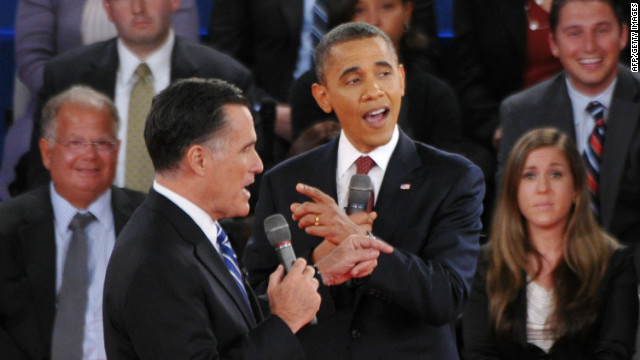
With turmoil increasing in world hot spots, foreign policy and national security have become major presidential campaign issues. From China to Israel, Iran to Syria, stateless terrorists to struggling alliances, Mitt Romney and Barack Obama will have plenty to debate Monday night.How important is Monday night’s foreign policy debate between Barack Obama and Mitt Romney? The way things stand right now, it could determine the outcome on Election Day. Nobody would have predicted that just a few weeks ago. But with Mr. Romney’s late-in-the-day insurgency in the polls, the race has become dead even. And momentum – what George H. W. Bush called “the Big Mo” – seems to be on Romney’s side. Two main reasons: First, Romney clearly won the first debate against President Obama, who even jokes now about “the nice long nap I had in the first debate.” In their second set-to, Obama was much more engaged, even animated. But aside from Romney’s gaffe about “binders full of women,” the challenger pretty much held his own against the incumbent president. Second, most voting Americans may worry about the economy first, but foreign policy and national security have become much more important as well. Israel’s security, Iran’s nuclear program, China’s currency, violent revolution in Syria, and certainly Libya since the US ambassador was killed in a terrorist attack there – all have become major campaign issues and therefore debating points. Also, while Romney and his running mate Rep. Paul Ryan have no foreign policy experience, and that can be seen as a weakness in the GOP ticket, Obama has a mixed record to defend. Think you know the Middle East? Take our geography quiz. You can be sure Romney will try to paint that as adding up to weakness and indecision – “leading from behind” is sure to be brought up – not to mention what he claims is a certain distancing from Israel. “Unfortunately, this president’s policies have not been equal to our best examples of world leadership. And nowhere is this more evident than in the Middle East,” Romney said in his speech at the Virginia Military Institute earlier this month. “When we look at the Middle East today, with Iran closer than ever to nuclear weapons capability, with the conflict in Syria threatening to destabilize the region and with violent extremists on the march, and with an American ambassador and three others dead – likely at the hands of al-Qaida affiliates – it’s clear that the risk of conflict in the region is higher now than when the president took office.” The terrorist attack on the US consulate in Benghazi, Libya – which came on the anniversary of 9/11 at a time when much of the region was in turmoil over a crude anti-Islam YouTube video made in the United States – is particularly troublesome for Obama. Washington Post foreign affairs columnist David Ignatius reports that initial CIA “talking points,” provided by a senior US intelligence official, supported UN Ambassador Susan Rice’s early contention that the attack in Benghazi was tied to protests against the YouTube video. But Republicans in Congress (and Romney) have jumped all over the Obama administration’s subsequent remarks on the episode, particularly statements regarding “terrorism” and “terrorists.” It’s all of a piece, Romney charges. “Our country seems to be at the mercy of events rather than shaping them,” he wrote in a Wall Street Journal op-ed column. Still, Obama can rightly claim to have decimated Al Qaeda’s leadership, including Osama bin Laden. And it’s unlikely that Romney as president – despite his buddy-buddy relationship with Israeli Prime Minister Benjamin Netanyahu – could do any more than Obama has done to tighten the economic screws on Iran. Meanwhile, the debate over who’s toughest on Iran took a new twist when the New York Times (citing “administration officials”) reported Saturday that the United States and Iran “have agreed in principle for the first time to one-on-one negotiations over Iran’s nuclear program … setting the stage for what could be a last-ditch diplomatic effort to avert a military strike on Iran.” Was this some sort of “October surprise?” Not so, insisted administration officials, who denied the report. But the Romney camp was quick to label it “another example of a national security leak from the White House,” as Sen. Rob Portman, who played Obama in Romney's debate preparations, did Sunday on NBC’s “Meet the Press.” Obama spokesmen were just as quick to defend administration policy on Iran. "For two years, the president traveled the world putting together a withering international coalition. And now the sanctions that they agreed on are bringing the Iranian economy to its knees," said David Axelrod, a senior Obama adviser, also speaking on NBC. "They're feeling the heat. And that's what the sanctions were meant to do." Both Obama and Romney are preparing to the hilt for Monday night’s encounter. The last thing either wants to do is have the post-debate discussion focus on a “binders” kind of gaffe – the kind that helped deny Gerald Ford re-election in 1976 when he declared in a debate with Jimmy Carter, “There is no Soviet domination of Eastern Europe.” "I think the stakes are pretty high for both candidates," Wall Street Journal columnist Peggy Noonan said on CBS’s “Face the Nation” Sunday. "If we are lucky, we, the voters, we will come out of it at the end thinking, 'I actually know something of Mitt Romney's philosophy as he looks at the world and America's place in it. I understand better what President Obama wants to do and how he sees things.'"
Sunday, October 21, 2012
Doctors in Balochistan Continue Strike Against Colleagues’ Killings
The Baloch HalThe strike in the government hospitals of Balochistan continued on Thursday to protest against the incidents of killing and abduction of the doctors.

Malala makes it !!!
EDITORIAL: THE NEWS

K-Pakhtunkhwa faces controversy over buying 5,000 pistols for police
Political and diplomatic pressure is reportedly being applied on the Khyber Pakhtunkhwa Police to buy a Middle Eastern country-made Caracal pistol that was rejected by the police technical committee in place of the Austrian Glock already approved for purchase as it is not only trusted but also had the lowest bid in the tender.
The KP Police chief Muhammad Akbar Hoti said he had no intention of changing the decision despite intense pressure from different quarters. “I am accepting no pressure. We have got the best deal as Glock pistols were offered to us at the lowest price in the international tender along with spare parts free of cost for 10 years. The pistol we are buying is better in quality and is also the cheapest,” he argued while talking to The News.
The KP Police had placed an order with the firm, Messrs International, for the purchase of 5,000 Glock pistols and the consignment was to be delivered in December this year. The police force is also buying other weapons and bullets, but those purchases through separate tenders didn’t generate any controversy and are also scheduled for delivery in December.
According to IG Police Akbar Hoti, the Glock pistol was offered to his force at $349 each (Rs31,000). The total deal stood at Rs 155 million. He said Additional Inspector General of Police (Headquarters) Khalid Masood headed the committee that evaluated the bids presented by seven firms, including those offering to supply the Italian pistol Beretta and the Caracal. He said it selected Glock due to its competitive price, lowest bid and better after sale terms. He said a technical committee of the police also evaluated the pistols and selected Glock.
Apart from Khalid Masood, other police officers who remained members of the general and technical committees included Additional Inspector General Rehmat Khan Mehsud, AIG Finance Quresh Khan, ATO and Bomb Disposal Unit head Shafqat Malik, Elite Training School Principal Col (R) Waqar Burhan, Deputy Commandant Elite Force Mohammad Iqbal Khan, Deputy Commandant Frontier Reserve Police Gul Wali Mohmand and his predecessor Mohammad Riaz and DSP Operations Shahnawaz Khan.
The Middle Eastern group subsequently complained about the procedure for the purchase of pistols for KP Police and alleged that favour was shown to the firm bidding to sell the “outdated” Glock pistol. Complaints were made to the president, prime minister, chief minister, Supreme Court, Peshawar High Court and the National Accountability Bureau (NAB).
Transparency International’s Pakistan chapter also became involved in the issue. The NAB Khyber Pakhtunkhwa also probed the matter and reportedly didn’t find any irregularity in the award of the tender to Messrs International for the supply of Glock pistols. The ANP-led provincial government later constituted a committee led by the senior member Board of Revenue and having the deputy secretary Home and special secretary Finance as members to conduct inquiry into the issue. It may be mentioned that many political elites of Pakistan, particularly those in power presently at the centre and in the provinces including KP, have bought properties and are doing business in the Middle Eastern state.
Surprisingly, the Pakistani ambassador in the country also recommended to the relevant people in Pakistan for purchasing the Glock pistol for the KP Police. It was strange that one of his arguments was that diplomatic relations with the country would be affected if this deal fell through even though the manufacturer of the Caracal pistol is a private rather than a state-owned firm.
The relatively new Caracal pistol too is high quality and has been praised by internationally known arms experts. The manufacturers had hired the services of Wilhelm Bubits, an Austrian handgun designer who earlier worked at Glock and then another pistol manufacturer, Steyr, in Austria, as head of the Caracal design and development wing. However, the KP Police selected Glock as it was being offered at a lower price with better after sale services and was already in use of the provincial police force.
There is growing concern that delay in making the Glock pistol purchases as required under the terms of the international tender and finalisation of its agreement with the KP Police could result in a legal battle and also cause the lapsing of the funds meant for buying the pistols.
According to Additional Inspector General of Police Khalid Masood, it wasn’t possible to override the report of the police technical committee which included experts such as Shafqat Malik, head of the Bomb Disposal Unit, and Col (R) Waqar Burhan who is a retired officer of the Pakistan Army’s Special Services Group (SSG).
He conceded that the international tender notice placed by the KP Police had specifically mentioned Glock pistol or its equivalent while inviting bids. However, he argued that never had the Glock pistol been offered for sale at such a low price of $349 a piece. “Sometimes, the manufacturers and the suppliers don’t want to lose a market and are willing to offer a competitive price. The same Glock pistol was bought at a higher price in the past,” he asserted.
“Glock is priced at around Rs300,000 in the market. We would get it at Rs70,000 to Rs80,000 a piece (Rs 350 million to Rs 400 million) after paying 100 percent taxes. The KP Police would get the pistols on FOB basis as required under the law at the Karachi seaport and would pay the freight charges, taxes and duties,” Khalid Masood explained.
Police sources said that the KP Police in 2007-2008 purchased 322 Glock pistols at the rate of Rs59,000 per piece. Another purchase was made in 2008-2009 when 750 Glock pistols were bought for Rs81,900 each. Another advertisement was placed in 2009-2010 for purchase of Glock pistols and the rate of Rs107,000 a piece was approved, but the process got delayed and the supply order could not be issued due to the closure of the financial year. The latest bid to buy the pistols was advertised in 2011-2012 and the process initiated but it has become mired in controversy due to efforts on the part of vested interest groups to block the purchase of the Glock pistols.
Senior cops opined that one major reason for the opposition to the purchase of Glock pistol at a lower rate is the fear among those who purchased it at a higher price some years ago when it should have been priced low as the value of the US dollar was less at the time.
The verdict
EDIORIAL: FRONTIER POSTIt is a tremendous ruling that the Supreme Court has handed down in the famous Asghar Khan case, a verdict indeed of the century. An epoch-making ruling it is in every manner and fully eventful it must become by carrying it to its logical conclusion in line with the roadmap the apex court has laid down in its order for its execution. No laxity is admissible on this count. Bonapartism and praetorian political adventurism have indeed been the bane of this nation ever since its inception. That should be put paid to now for good. A landmark in the attainment of that sublime objective would certainly be this monumental judgment of the apex court, when executed in letter and spirit, which it must be in any event and at every cost.The military or the agencies have no business whatsoever to meddle in politics. The constitution forbids them from it, and so does the law. But it is equally important that the politicians too should not become part of their political engineering works. Imagine for a moment would there have been an IJI, had no politicians fallen to the bait of the generals engaged in the cobbling up of this entity to influence the 1990 election against the PPP? Indisputably, it would have not been. The IJI came into being simply because some politicians were out there ready to board this gravy train. Nobody put guns to their heads and bullied them into this adventurist contrivance of the establishment. They hopped on to the IJI bandwagon willingly and volitionally. If indeed a politician is so weak-willed as to easily succumb to any coercive pressures, he verily is not fit to be a leader. He unarguably doesn't have the credentials of being a leader. And if he gets tempted or enticed by the allurements of pelf and power, he is bereft of even the probity and integrity that are the essentials of a true leader. But if our chaquered history is replete with Bonapartist and praetorial adventurisms, isn't it blemished with the ignoble falls of the politicians as well? How often have they joined hands with the incoming military rulers to give a civilian face to their repressive regimes? And how often have they celebrated joyously when their political adversaries' governments were sacked by the authoritative presidents? All that is on record, shamefully. Even now it is not uncommon to hear the taunts being hurled self-servingly to the garrisons as to why are they sitting idly by while the country "is going to the dogs". It isn't rare either that those abusing and vilifying the military in the sunshine of the day have felt no qualms in meeting the people in the garrisons in the thick darkness of night. So how will Bonapartism or praetorial adventurism come to an end if some malleable personages are always out there to sell their souls for the shine of lucre and office? So disgusting it really is that some of the eminences allegedly involved in the IJI project and took money were no paupers. Quite a lot of them were filthy rich. Indeed, so rich that they could easily buy half of a town with just a part of their fabulous riches. Yet they stooped so low that they even took nickels variously from their handlers to do their biddings.Anyway, now that the apex court has shown the light, it should not be allowed to be dimmed in any manner. The people at large must watch out, as the political echelons, civil society groups and chattering classes cannot be trusted. They already are deflecting the focus in their own lights. While the faulting two generals and their collusive banker must be proceeded against strictly as directed by the apex court, the FIA must prove true to the trust the honourable court has reposed in it by conducting an honest, transparent and credible investigation against the politicians who allegedly took money from the IJI founders. Indeed, those still alive from amongst them, if they still have some sense of shame, must abdicate from politics until they get their names cleared in the probe. An exemplary action and punishment to both the erring generals and politicians in the IJI saga alone could possibly shut the door on Bonapartism and praetorian political adventurism once and for all. If any of them goes scot-free, the door will certainly remain open partly.
President Zardari stabilized democratic system
RADIO PAKISTANInformation Minister Qamar Zaman Kaira has said that President Asif Ali Zardari has stabilized the democratic system by transferring power to the parliament. Talking to journalists in Lahore on Saturday‚ he said that the president is the emblem of the federation and part of the parliament. The Minister said that President Zardari has been elected democratically and politically but his role should be impartial. He said we have come to power through politics and our role should also be political. Qamar Zaman Kaira said that the Supreme Court verdict in Asghar Khan Case has unmasked the faces of many political parties and also supported the stand of the PPP. He said that conspiracies have been hatched against the PPP in every period and many political parities have deprived the masses of their mandate by acting as stooges of secret agencies. The said that the PPP-led government has taken many coordinated steps for boosting the economy accelerating tax recovery. He said the government has restored the national institutions and achieved considerable achievement in anti-terror combat. ============= Information Minister Qamar Zaman Kaira has said that Supreme Court's verdict in Asghar Khan case has validated and vindicated PPP's stance that general elections in 1990 were rigged. In an interview he said no institution or individual is above the law and investigation would be initiated irrespective of the political status or affiliation. To a question‚ he expressed the optimism that an independent Election Commission would ensure transparent and fair general elections in the country. The Minister reiterated that the PPP believed in the politics of reconciliation as the country cannot afford political confrontation. Talking to a delegation of Desk Editors Forum in Lahore on Saturday the Information Minister said that the government is taking measures for the welfare of the journalists. He said Pakistan Peoples Party has always supported the cause of the journalists.
Saturday, October 20, 2012
US envoy arrives in Islamabad for bilateral talks
The US Special representative for Afghanistan and Pakistan, Marc Grossman, Saturday arrived in Islamabad on a two-day visit for talks on variety of bilateral issues and peace process in Afghanistan, officials and diplomats said.
The Pakistani Foreign Ministry says that the visit is part of the ongoing engagements between the two countries and that the two sides will discuss all issues of mutual interest as well as concern.
The visit comes at a time when diplomatic efforts for solution of the longstanding Afghan problems are gaining momentum as the endgame approaches.
Pakistan, Afghanistan and the United States have also an exclusive group to explore ways to push for the reconciliation process in Afghanistan ahead of the 2014 withdrawal of foreign troops.
His trip builds on recent engagements, including Secretary Clinton's meetings with Foreign Minister Khar in Washington and President Zardari in New York, as well as the recent US-Pakistan Law Enforcement and Counterterrorism Working Group convened in Washington, earlier this month.
Before his arrival, Ambassador Grossman attended a meeting of the International Contact Group (ICG) for Afghanistan in Ankara on Friday, which agreed to further support Afghan progress on establishing the parameters of an inclusive and transparent election process, and noted continued strong international support for Afghan-led reconciliation.
The ICG members reiterated the international community's commitment to support inclusive, open and transparent political and security transition in Afghanistan.
Punjab PPP demands arrest, disqualification of Sharifs

Tens of thousands protest gov't austerity measures in London



Lashkar-e-Taiba claims Indian Kashmir hotel attack: Report
The Times of IndiaPakistan-based militant group Lashkar-e-Taiba (LeT) has claimed responsibility for an attack outside a popular hotel in Indian Kashmir that killed a bellboy, media reports said Saturday. The banned outfit said four of its attackers "lobbed grenades and opened fire" at an Indian army convoy as it passed through the highway where the Silver Star hotel is located, the Urdu language Kashmir Uzma newspaper said. "Four of our fidayeen (suicide attackers) attacked the army convoy in which one of the army vehicles was badly damaged," the daily quoted LeT spokesman Abdullah Gaznavi as saying over the telephone. The attackers "reached their hideouts safely", Gaznavi added. Heavily-armed gunmen stormed the Silver Star hotel on Friday after an abortive attempt to attack the army convoy, killing a bellboy and injuring two others, the Indian police said. Gaznavi, however, blamed "retaliatory firing" by the Indian armed forces for the death of the hotel staff member. The attack, the first in Srinagar since May, occurred on a day when several senior officials from the army, police, intelligence agencies and government met to review the security situation in the state. In the May attack, two motorcyclists fired on a group of army officers, injuring seven. The LeT has been blamed by India for the November 2008 Mumbai attacks that killed 166 people. It has denied any role in the attacks. Separatist violence that has wrecked the tourism industry in the Muslim-majority region has been at its lowest ebb since the insurgency began in 1989.
The gun and the press in Pakistan
Al Jazeera
When teenager Malala Yousafzai was shot by the Taliban, Pakistan's media was warned to curb its coverage of the story.When news broke from Pakistan that a 14-year-old girl had been shot by members of the Taliban just for promoting female education on her blog, news organisations around the world jumped on the story. In Pakistan, however, they had to treat the subject with care. The Taliban warned local media to curb their reporting, or deal with the consequences. This is not just a story about one attack - it is a tale of how the journalistic environment in Pakistan has grown so dangerous. According to media watchdog groups, at least 20 journalists have been murdered since 2010 and not one of those cases has resulted in a conviction.
Brahimi arrives in Damascus to push ceasefire
UN and Arab League envoy meets Syrian officials to ask for a brief halt to hostilities over Eid al-Adha holiday.
Malala Yousafzai status updates ,11:30, Saturday 20 October 2012


Lauding Obama, Clinton cites 'impatient' Americans
Former President Bill Clinton
 said Friday that President Barack Obama is facing a tough re-election race because ‘‘impatient’’ Americans haven’t fully recognized an economy on the mend.
Campaigning for Obama in Green Bay, Wis., Clinton urged voters to stay the course as more signs of a recovery sink in. Clinton said voters should judge Obama on the past three years, in which private sector job growth has made up for lost ground.
‘‘This shouldn’t be a race,’’ Clinton said. ‘‘The only reason it is, is because Americans are impatient on things not made before yesterday and they don’t understand why the economy is not totally hunky-dory again.’’
The former president said Obama’s difficulty in his race with Republican challenger Mitt Romney is that ‘‘people don’t feel it yet’’ even as the unemployment rate ticks down and the manufacturing sector perks up. Clinton said Obama deserves credit for stabilizing a situation that saw the country hemorrhage jobs well into his first year.
‘‘Gov. Romney acts like from the minute the president took his hand off the Bible he was responsible for every lost job,’’ Clinton said.
Everywhere he goes, Romney argues that the tepid recovery is grounds for a change. The shape of the economy consistently tops lists of voter concerns.
A local police official said 2,200 turned out to hear Clinton at a college fieldhouse. Clinton won Wisconsin in both of his presidential campaigns.
Republicans think they can flip the state, which hasn’t gone to them since 1984. Wisconsin Rep. Paul Ryan is on Romney’s ticket and has campaigned heavily in the state in the past few months.
Obama heads to Camp David to prepare for crucial final debate

Hillary Clinton launches tirade against 'whining' women
http://www.telegraph.co.ukDespite a lifetime advocating women's rights, the US Secretary of State showed little patience with other mothers who struggle to juggle the dual roles demanded by modern life. 'I can't stand whining," she told Marie Claire magazine. "I can't stand the kind of paralysis that some people fall into because they're not happy with the choices they've made.

How could Japan steal Diaoyu Islands with propaganda campaign ?

Karzai warns on foreign troops immunity
http://www.nation.com.pkAfghan President Hamid Karzai has warned there could be problems ahead over the crucial issue of immunity from prosecution for any American or Nato soldiers deployed in the country after 2014. The US-led Nato force of more than 100,000 troops is due to end combat operations against Taliban insurgents at the end of that year, but thousands of soldiers are expected to remain in Afghanistan to train and assist Afghan forces. The immunity issue, if Karzai’s warning is meant seriously and is not simply a tactical move, could be a deal breaker. In Iraq, Washington pulled out all its troops, leaving no residual force, after failing to get Baghdad to grant its soldiers protection from prosecution in local courts. In Afghanistan, the question is likely to come down to that needs the other most. The US wants a hand in preventing the country once more becoming a haven for Al Qaeda, and Kabul needs US help in the fight against the Taliban. Karzai said in a statement that he had told visiting Nato Secretary General Anders Fogh Rasmussen during talks in Kabul Thursday that the Afghan people might “not permit their government to grant immunity”. This would happen “if the war and insecurities continue in Afghanistan, Afghan borders are not protected, and the immunity for foreign forces comes on top of these issues”, he said. Karzai knows he has a bargaining chip in this negotiation, and his statement could be seen as a bid for even more cash and support from the United States and Nato countries after 2014 than has already been pledged.
Afghanistan: Imran Khan Has No Right To Issue Fatwa
http://www.bakhtarnews.com.afAfghan Ulema or religious scholars and prayers leaders in their sermons on Friday congregations said that since Pakistani cricket-turn politician has no knowledge about Islam he has no right to issue Fatwa, saying the former cricketer had issued the Fatwa for Jihad against Afghans with the support of Pakistani intelligence agency ISI. The Ulema pointed out that Afghanistan as a sovereign state is a Mujahid nation which defeated the former Soviet Union by Jehid and paved the way for the independence of central Asian countries. The Ulema or religious leaders have also unanimously termed Imran Khan’s Fatwa as satanic, enmity and strongly condemned it.
Malala shooting shows challenge to girls education
A teenage activist recently shot and critically wounded by the Taliban risked her life to attend school, but the threat from the militant group is just one of many obstacles Pakistani girls face in getting an education.
Others include rampant poverty, harassment and the government's failure to make education spending a priority. Both sexes have suffered from the lack of funding, but girls, who have somewhat lower rates of literacy and school attendance, are in a particularly perilous position.
The Oct. 9 attack on 15-year-old Malala Yousufzai, who is hospitalized in Britain, showed that the barriers to girls' education are highest in Pakistan's northwest, where the Taliban are strongest. The militants have blown up hundreds of schools and kidnapped and shot education activists like Malala.
The need for education is stark:
— Only 40 percent of Pakistani girls 15 or younger are literate, according to the United Nations.
— Roughly 50 percent of girls are enrolled in school, according to a report by the Society for the Protection of the Rights of the Child.
— Only one in five students is female in the semiautonomous tribal region along the Afghan border, the Taliban's main sanctuary in the country, according to the U.N.
The Taliban and their allies are opposed to education that isn't rooted in their hardline interpretation of Islam and object to women working outside the home or traveling without a male escort.
Militants destroyed or damaged at least 943 schools in the tribal region and Khyber Pakhtunkhwa province from 2009 to 2011, according to Pakistani government figures.
Some were targeted because they were used by the military, but many of the attacks were motivated by the Taliban's opposition to girls' education and schooling that doesn't follow their strict interpretation of Islam.
"The Taliban have scared people," said Hamid Ullah Khan, a teacher from Lower Dir in Khyber Pakhtunkhwa. "This is also one of the main reasons that women are not studying at schools in good number."
The government has worked with the international community to rebuild some of the schools targeted by the Taliban. But the attacks dealt a blow to an education system that was already in shambles across the country, in part because of the low level of government spending.
The education crisis is apparent in the schools' infrastructure. Only 39 percent of schools have electricity, and only 62 percent have bathrooms, according to the Society for the Protection of the Rights of the Child.
Many Pakistani families are struggling to make ends meet, and if they have money for books, school uniforms or private school tuition, they often prefer to spend it on education for one of their male children.
Bismillah Jan, a teacher from Mir Ali town in the North Waziristan tribal area, said most parents were happy to send their daughters to school, but many had large families and simply couldn't afford to send everyone.
Many families in conservative areas of the northwest and elsewhere in the country worry about sending their daughters to school because they might be harassed on the way or when they arrive. Many also oppose their daughters having male teachers. The lack of bathrooms, especially separate facilities for girls, deters many parents who don't want their daughters to have to relieve themselves in a field.
Groups that have had success in educating girls say they have focused on those parental concerns.
The Karachi-based Citizens' Foundation is a non-profit institution that has built 838 private schools across Pakistan, including more than 100 in Khyber Pakhtunkhwa and southwest Baluchistan province, both conservative areas of the country with generally low female enrollment. About 50 percent of their students are women, according to statistics on their website.
A former vice president for the organization, Ahson Rabbani, said the organization builds schools close to the community so students don't have to travel far to get there and constructs separate toilets for girls, boys and teachers. The schools are surrounded by a wall with a guard out front, and all the teachers are women from the same community as the students.
Girls who get an education are more likely to send their own daughters to school when they grow up and have children, said Ghulam Zakia, principal at a government girls' school in the city of Rawalpindi, near the capital, Islamabad.
When Zakia became principal 33 years ago, she had to actively lobby parents to send their daughters to the school, which has focused on building ties with the local community and hiring good female teachers. Now the school is so popular that even parents of some boys push to send their children there, forgoing the nearby government boys' school.
Subscribe to:
Posts (Atom)