The Times of IndiaRavichandran Ashwin and Yuvraj Singh set it up with a superb display of spin bowling before Virat Kohli took centrestage with an unbeaten 78 as an inspired India thrashed arch-rivals Pakistan by eight wickets to keep their title hopes alive in the ICC World Twenty20 on Sunday. Scorecard | Match in Pics Ashwin (2/16) and Yuvraj (2/16) snapped up four wickets between themselves as Pakistan were shot out for a meagre 128 in 19.4 overs. Lakshmipathy Balaji also complemented the 'spin twins' with impressive figures of 3/22 in 3.4 overs. Kohli, who has been Pakistan's nemesis in the past, hit a scintillating unbeaten 78 off 61 balls as India won with three overs to spare. The Delhi lad hit nine boundaries and two sixes to take the team home in the high-voltage contest watched by a capacity crowd. However, Pakistan are still ahead in terms of net run rate of -0.426 which is shade better than India's -0.452. Had India won with 20 balls to spare, they would have been No. 2 in the group. India will now have to defeat South Africa in their last group-2 match on Tuesday to make it to the semifinals. India's unbeaten record against Pakistan in ICC World Cups has thus been kept intact having beaten them five times in the 50-over version and thrice in the T20 format. Kohli started with a thickish outside edge off Raza Hasan for a boundary but then played some lovely strokes. A backfoot cover drive off Saeed Ajmal and lovely cover drive off Yasir Arafat were glorious strokes. He also lofted Shahid Afridi over long-off for a six. Whether driving on the up or playing off his hips, Kohli was a treat to watch. Virender Sehwag, on the other hand, was happy to play the second fiddle during the 74-run partnership for the second wicket but did play a lovely lofted shot off Umar Gul's bowling. Pakistan captain Mohammed Hafeez's decision to bat first on a slow Premadasa track failed to produce the desired result as Ashwin and Yuvraj frustrated the opposition batsmen by maintaining superb line and length. Ashwin, who operated from round the wicket, had superb figures of two for 16 from four overs while Yuvraj also had identical figures but from three overs. The duo snapped four Pakistan wickets for only 32 runs in seven overs and it was the reason why Hafeez and Co could not reach a respectable total. Lakshmipathy Balaji also complemented the 'spin twins' with impressive figures of 3/22 in 3.4 overs. The only notable partnership was of 47 runs between Shoaib Malik and Umar Akmal. Malik was the top scorer with 28 before he gave an easy catch to Rohit Sharma. Last match's hero Umar Akmal played a pull shot off an Ashwin delivery but couldn't clear Suresh Raina in the deep. India versus Pakistan matches are never short of drama and this match was also not an exception. Zaheer Khan's first over saw him bowl three wide deliveries and then being square driven by Imran Nazir for a boundary before Virender Sehwag dropped the opener at first slip. Irfan Pathan started off the collapse by removing Nazir who had shuffled a long way but the umpire thought that left-arm seamer's incoming delivery would have hit the stumps. Nazir stood his ground for a while before leaving. To everyone's disbelief, Shahid Afridi walked in at No 3 and smashed the first delivery from Pathan over his head and then another boundary off the bowler through the cover region. However, with the former Pakistan captain, opposition teams always fancy a chance and Balaji bowled a short one which Afridi tried to pull it over mid-wicket boundary but was caught by Suresh Raina at the boundary ropes. Afridi made only 14. Yuvraj then got into the act as he removed left-hander Nasir Jamshed and wicketkeeper-batsman Kamran Akmal in quick succession to reduce Pakistan to 49 for four. Both hurried onto their shots. Jamshed tried to play a slog-sweep which was smartly taken by Dhoni while Kamran tried an expansive cover drive of an arm ball only to give the Indian captain his second catch. Pakistan captain Hafeez scratched around for 28 balls for his 15 before he dragged one onto his stumps off part-timer Virat Kohli's bowling. Umar and Malik then got together to conjure a partnership but Ashwin dismissed both of them in quick succession to end Pakistan's chances of a big score.
Sunday, September 30, 2012
Ind vs Pak: India crush Pakistan by 8 wickets
Bahrain Faces Riots After Boy Dies in Protest

Bangladesh Muslims torch Buddhist shrines

US and Afghan forces clash, leaving 5 dead
Associated PressA firefight broke out between U.S. forces and their Afghan army allies in eastern Afghanistan Sunday, killing two Americans and three Afghan soldiers and pushing the number of U.S. troops killed in the long-running war 2,000. The fighting started Saturday when what is believed to have been a mortar fired by insurgents struck a checkpoint set up by U.S. forces in Wardak province, said Shahidullah Shahid, a provincial government spokesman. He said the Americans thought they were under attack from a nearby Afghan army checkpoint and fired on it, prompting the Afghan soldiers to return fire. The Afghan Defense Ministry said the gunbattle was the result of a "misunderstanding" between international forces and Afghan soldiers manning a checkpoint in the Sayd Abad district. NATO's International Security Assistance Force, commonly referred to as ISAF, provided a different account. "After a short conversation took place between (Afghan army) and ISAF personnel firing occurred which resulted in the fatal wounding of an ISAF soldier and the death of his civilian colleague," the coalition said in a statement. It said the three Afghan soldiers died "in an ensuing exchange of fire." NATO did not say whether it considered this an "insider" attack on foreign forces by Afghan allies. There has been rising tide of such attacks in which Afghan soldiers or police assault their international allies. The killings pose one of the greatest threats to NATO's mission in the country, endangering a partnership key to training up Afghan security forces and withdrawing international troops. While it may be days before it becomes clear who fired on whom first, the incident illustrates how tense relations have become between international troops and their Afghan allies. Officials on both sides went into damage control mode, arguing that Saturday's violence did not mark a new low in Afghan-U.S. relations and urging patience while investigators tried to figure out exactly what had happened. The deputy commander of NATO's military force in Afghanistan, British Lt. Gen. Adrian Bradshaw, called a last-minute news conference in Kabul to address the incident, even though he had few details to give. He said the initial report of an insider attack should be amended to note that the incident "is now understood possibly to have involved insurgent fire," and tried to stress that relations between international troops and their Afghan allies "are very strong and very effective." A spokesman for the Afghan Defense Ministry, Gen. Zahir Azimi, also sought to downplay the incident. "In a misunderstanding shooting broke out between Afghan army and ISAF forces. As a result of the shooting, three army soldiers were killed, three other soldiers were wounded and number of ISAF forces were killed and wounded," Azimi said in a statement. One U.S. official confirmed that the service member killed was American, while another confirmed that the civilian was also American. The officials spoke on condition of anonymity because the nationality of the dead had not yet been formally announced. The number of American military dead reflects an Associated Press count of those members of the armed services killed inside Afghanistan since the U.S.-led invasion on Oct. 7, 2001. In the south meanwhile, three Afghan police officers were killed when insurgents attacked a checkpoint in Helmand province Sunday morning, provincial police spokesman Fareed Ahmad said.
PML-N made Punjab bankrupt

The Problem With Mengal’s Six Points
The Baloch HalSoon after his much-hyped return to Pakistan, Sardar Akhtar Mengal, Balochistan’s former chief minister and the president of the Balochistan National Party (B.N.P.), has submitted six points before the Supreme Court as a minimum Baloch demand for deescalating tensions in his native province. Mengal has dramatized the situation by emulating Shiek Mujib-ur-Rehman, the founder of Bangladesh, whose Six Points eventually culminated in Pakistan’s dismemberment in 1971. Before we analyze Mengal’s six-point demands, the sad news is that the Pakistani security establishment categorically rejected Mengal’s proposal within 24 hours of his submission and the country’s Interior Minister, Rehman Malik, has warned Mengal not to speak against Pakistan or “defame our country’s armed forces”. The intelligence agencies told the Supreme Court that they did not run or sponsor any death squads, as pointed out by the former chief minister, nor was any missing person in their custody. A joint response submitted by Chief Secretary Balochistan at the Supreme Court on behalf of the civil and military authorities also argued, contrary to Mengal’s statement, that all political parties in Balochistan enjoyed ‘full freedom’ and did not face any kind of official restrictions. Here is what Mengal has proposed in his six points. 1. All covert and overt military operations against the Baloch should immediately be suspended. 2. All missing persons should be procured before a court of law. 3. All proxy death squads operating under the supervision of Inter Services Intelligence (ISI) and Military Intelligence (MI) should be disbanded. 4. Baloch political parties should be allowed to function and resume their political activities without any interference from intelligence agencies. 5. Persons responsible for inhuman torture, killing and dumping of dead bodies of the Baloch political leaders and activists should be brought to justice. 6. Measures should be taken for the rehabilitation of thousands of displaced Baloch living in appalling condition. Almost all of the above-mentioned demands have been repeatedly made by Baloch nationalists, human rights groups such as the Amnesty International, Human Rights Watch, and local and international media in order to build peace in Balochistan. In fact, B.N.P. had made some of these demands as early as 2005 in front of the Parliamentary Committee on Balochistan. Even the Pakistan People’s Party-led government, without consulting the B.N.P. and other Baloch nationalists, promised in the text of the Aghaz-e-Haqoo-e-Balochistan Package in November 2009 to resurface and release the missing persons. The promise was never kept. There has never been a dearth of recommendations on Balochistan nor will there ever be. What has hindered conflict resolution is the lack of political will on the part of the Pakistani security establishment, the federal and provincial governments. That situation has not changed and we do not see an atmosphere where such idealistic demands could willingly be implemented. Two of Pakistan’s top opposition leaders, former Prime Minister Nawaz Sharif of the Pakistan Muslim League and Imran Khan of the Pakistan Justice Movement, have publicly endorsed Mengal’s six points. Mr. Sharif and Mr. Khan have both spoken in support of Mengal’s demand not because they passionately feel for the rights of the Baloch people but because they are both staunch rivals and getting ready for upcoming general elections. We have been urging Mr. Sharif and Mr. Khan not to confine their love and concern for the Baloch people to mere media statements. They should practically launch long-marches in Punjab, as was done for the restoration of Chief Justice in 2008, to coax the army to halt its kill and dump operations in Balochistan. Only Mr. Sharif can pressurize the Pakistan army because the bulk of the army comes from the Punjab province. Likewise, Mr. Khan has passionately campaigned against drone strikes but hardly bothered to take out a march to Dera Bugti or Gwadar in support of thousands of Balochs who have been killed or disappeared during the current conflict. Mengal treats the Supreme Court as the ‘last hope’ for the Baloch people. This is a false expectation. The Supreme Court cannot resolve a dispute that requires basic constitutional changes and parliamentary protection. Pakistan’s Supreme Court has become very controversial and is believed to be a tool in the hands of the country’s army to destabilize the democratic government. Thus, a very strong Supreme Court is as dangerous for the Baloch as a strong Pakistani army. For instance, can one imagine a scenario if controversial judges like Justice (Javid Iqbal or Justice Sharif (who have respectively presented wrong statistics about the number of missing persons or settlers killed in Balochistan) are in position to hear Balochistan’s case? Given the past experiences, we do not think that Islamabad’s policies will change in near future. After all, what will convince the Chief Justice to punish security personnel responsible for whisking away young Baloch boys and killing them if video footage and testimony by members of the Balochistan Assembly and senior police officers fail to convince him? At the end, he can’t do much for himself or for Mengal because both of them do not wear a military uniform.
Mengal’s Political Blunder
Editorial:The Baloch HalThe unilateral decision of former Balochistan Chief Minister Sardar Akhtar Mengal to return to Pakistan to support the country’s Supreme Court will hurt Baloch interests. Sardar Mengal, who heads the Balochistan National Party (BNP), certainly has a democratic right to make his own decisions but his actions will tarnish the international image of the Baloch nationalist movement. At a time when the United Nations sent a Working Group in Balochistan to investigate the cases of enforced disappearances and also come up with recommendations criticizing the Pakistani military, this was not the right step for a senior Baloch leader to express faith in the Pakistani Supreme Court. Balochs have reached some steps away from a next U.N. intervention or decision on Balochistan but Sardar Mengal’s return will provide the United Nations a reason to step aside and treat Balochistan as Pakistan’s “internal issue”. At this point, the Baloch interest lies in internationalizing the issue so that more international human rights groups and representatives of the media observe transparency in resolving the Balochistan conflict according to the wishes of the Baloch people. With such a dramatic decision, one is compelled to doubt the depth and clarity of B.N.P.’s political vision for Balochistan. The B.N.P. had previously asked for provincial autonomy for Balochistan but subsequently hardened its stance and began to ask for the right to self-determination. People seek the right to self-determination when they fully lose confidence in a state. Expression of trust in the Pakistani Supreme Court completely disqualifies B.N.P.’s plea for international intervention in Balochistan. 2012 was a glorious year in Balochistan’s history when the nationalist movement made extraordinary achievements. In February, the United States Congress held a hearing on Balochistan and members of the U.S. Congress, both from the Democratic Party and the Republican Party, supported the Baloch right to self-determination. On March 27th, these congressional friends of Balochistan addressed a press conference in Washington DC’s National Press Club to once again reiterate their support for the Baloch people’s right to self-determination. As the Baloch issue gained more international attention, the United Nations also sent a Working Group to probe the cases of missing persons. With his return, Sardar Mengal has made Islamabad’s job easier: to shut down all doors for future U.N. interventions in Balochistan. Because, as understood from Sardar Mengal’s decision, Pakistani institutions can internally manage the Balochistan imbroglio. We agree with the Baloch Students Organization (BSO-Azad) that Sardar Mengal’s action amounts to joining hands with those who are responsible for killing the Baloch people. The Supreme Court has been bluffing with the Baloch people. While this court has remained in place for ages, the first disappearances (in the ongoing insurgency) began in early 2000. A decade after the initial disappearances, this Supreme Court has not been able to punish a single official for their illegal action. There is an enormous wealth of evidence that proves the security establishment’s involvement in brutal actions against the Balochs. The Chief Justice has been using the Baloch missing persons as a political card but failed to deliver. It does not make much sense when Mr. Mengal says that the Supreme Court is last hope for the Balochs. How can one trust the Pakistanis when their executive and legislative branches of government have made no confidence building measures to appease the Baloch? While the issue of the missing persons is the most sensitive and critical one, it is not the sole bone of contention between Balochistan and Islamabad. Balochistan’s problem is not as narrow as the issue of human rights. Balochistan’s is a much more complicated political vendetta which cannot be resolved only by addressing human rights issues. However, if Islamabad genuinely addresses the issue of human rights then it should be considered as a confidence building measure to start dialogue on other outstanding political issues. Balochs have been receiving bullet-riddled dead bodies even during the visit of the working group. The so-called Pakistani liberal politicians like Senator Raza Rabbani have gone public to express their anti-Baloch intentions by brazenly announcing that the United Nations would not be allowed next time to send another mission on Balochistan. When Pakistani politicians and opinion makers unite against the Baloch people, our leadership must also learn the art of putting forward Baloch demands without mincing words. We do not fully know the details of Sardar Mengal’s understanding with the Pakistani government that culminated in ending his four-year self-imposed exile. We consider it a political blunder by B.N.P. which may offer it some temporary benefits but any contacts with Pakistan at this point will harm the broader Baloch interest. While some Baloch parties criticized Sardar Mengal in 2006 for not consulting them while quitting parliamentary seats in protest against Nawab Bugti’s killing, he now deserves his share of criticism for making another decision without consulting other key stakeholders. B.N.P. is going to isolate itself and end up getting itself recognized among soft pro-Establishment parties like the National Party or the Jamori Watan Party.
Bilawal Bhutto: EC a great achievement of Govt
THE NEWS

‘Pakistan may lose major share in textile export this year’
http://www.brecorder.comPakistan may lose its major share in textile exports and suffer negative growth during the current fiscal year, as about 20-25 industries face closures or are being diverted to neighbouring countries such as India, Turkey, Bangladesh and Sri Lanka. Sources said on Saturday that because of sky-rocketing prices of inputs, limited availability of basic inputs of textile units such electricity and gas, inconsistent government textile policies and worsening law and order situation had forced many textile mill owners to either to close down their units or to shift their businesses to nearby countries where the cost of doing business was comparatively less than Pakistan. “During the past fiscal year, 15 percent of the total number of textile units of Pakistan shut down completely, while during 2012-13, 20-25 percent of the rest of textile mills are likely to divert to the other South Asian countries”, sources added. “You can well imagine the rapidity at which the situation is worsening…just during the past month and a half, six hosiery processing factories have shut down in Karachi while some mill owners from the Faisalabad region also shut down their factories mainly because of the energy crisis”, sources disclosed. “Unfortunately, most of the times untimely delivery of our textile products to buyers abroad due to power crisis has resulted in considerable reduction in overall textile exports. Even our old clients are now hesitant to place orders for our textile products due to delays in delivery and comparatively high costs”, sources lamented. During the last fiscal year, the textile sector added $ 12.35 billion to the national exchequer against the export target of $ 16 billion while the target set for 2012-13 is $ 12-13 billion. Chairman All Pakistan Textile Mills Association (APTMA), Mohsin Aziz, while talking to the Business Recorder, said that prolonged electricity load-shedding and shortage of gas are key factors in the decline of overall productivity of textile sector , adding that the government has failed to resolve the crisis. “The Indian government’s decision to allow Pakistani investment on its soil would also trigger capital flight from Pakistan because of deteriorating law and order and energy crisis,” the APTMA chief argued. The decision by India to relax the ban on investments from Pakistan was made in April 2012 while Pakistan had never imposed restrictions on investments by Indians.
Bhagat Singh’s revolutionary legacy
DAILY TIMES: BY LAL KHANBhagat was a fervent torchbearer of the proletarian struggle. He rejected the prejudices of caste, creed, nationality, race, gender, and, of course, religion This September 28 marked the 105th birth anniversary of one of South Asia’s iconic revolutionaries, Bhagat Singh. His heroic struggle for a revolutionary change and overthrow of the British Raj through a militant struggle has been a source of inspiration for generations. Bhagat was executed by the imperialist despots in the wee hours of March 23, 1931 at the tender age of 23, but he had left a mark in the annals of history of the class struggle in the region. His urge to understand Marxist theory and passionately educate his comrades in prison and during intense activities to develop as revolutionary cadres is a hallmark of his relentless struggle. Although he has been dubbed as a nationalist and anarchist by historians and analysts of the elite and the reformists, Bhagat was none of that at the end of his short but eventful life. Even when he was called from his death cell for the gallows, he was reading Lenin’s State and Revolution. The sort of independence that was achieved after a bloody partition, in which 2.7 million innocent souls perished, would have repulsed Bhagat Singh. The independence sought by him and his comrades of the Hindustan Socialist Republican Association (HSRA) was spelt out in one of his epic speeches during the peak of their struggle. It has been portrayed superbly in Raj Kumar Santoshi’s brilliant film, The Legend of Bhagat Singh. He says, “We don’t want independence! We don’t want independence where the English rulers are replaced by the local elites. We don’t want freedom where this wretched system of exploitation and slavery continues. We are striving for an independence that would transform the whole system thorough revolutionary socialism.” Bhagat Singh, who was initially a diehard follower of Mohandas Gandhi, had revolted against him when the latter had called off agitation against the British after the killing of some policemen in a clash with a procession of youth and workers demanding the eviction of the imperialist rulers from India. Bhagat was deeply influenced by the Bolshevik revolution of 1917 in the Soviet Union and he diligently studied the works of Marxism and contemporary revolutionaries. Through his experience, he came to the conclusion that Gandhi’s politics was to preserve the system imposed by the British colonialists rather than its overthrow. He had also read The Programme of the Communist International, which was adopted at the second congress and published in September 1920. On the Indian situation the Programme stated, “Tendencies like Gandhi’s in India, thoroughly imbued with religious conceptions, idealise the most backward and economically most reactionary forms of social life. They see the solution of the social problem not in proletarian socialism, but in a reversion to these backward forms, preaching passivity and repudiating the class struggle, and in the process of the development of the revolution, they become transformed into an openly reactionary force. Gandhi’s, more and more, is becoming an ideology directed against mass revolution. It must be strongly combated by communism.” Gandhi later came out in his true colours, revealing on the side of which class he really was. On January 15, 1948, he stressed the ownership of the capitalists and the landlords: “I will never be a participant in snatching away the properties from their owners and you should know that I will use all my influence and authority against the class war.” Bhagat, on the other hand, was a fervent torchbearer of the proletarian struggle. He rejected the prejudices of caste, creed, nationality, race, gender, and, of course, religion. One of his most celebrated works is his pamphlet: Why I am an atheist. There is an intense and controversial debate going on, especially in India, on Gandhi’s role in the conviction and execution of Bhagat Singh along with his comrades Raj Guru and Sukhdev. However, on Bhagat’s execution, Gandhi remarked in his characteristic hypocrisy, “The government certainly had the right to hang these men. However, there are some rights which do credit to those who possess them only if they are enjoyed in name only.” Gandhi and the British viceroy Lord Irwin signed the Gandhi-Irwin Pact on March 5, 1931, and yet the executions were carried out just weeks after the signing of the pact. There was immense anger and sorrow throughout the subcontinent at these executions. Just after this brutality, the annual convention of the Congress at Karachi resulted in Subhash Chandra Bose and the left taking over the leadership of the Congress despite Gandhi’s efforts. There were violent demonstrations against Gandhi at the convention. The New York Times reported at the time, “A reign of terror in the city of Cawnpore in the United Provinces and an attack on Gandhi by the youth outside Karachi was amongst the answers of the Indian extremists today to the hanging of Bhagat Singh and two fellow assassins.” Revolutionaries are always pronounced by the imperialist media as extremists and assassins. But Bhagat Singh was extremely popular in the subcontinent. Sir Horace Williamson, Director of the Intelligence Bureau, wrote about Bhagat’s popularity years after the executions, “His photograph was on sale in every city and township and for a time (Bhagat Singh) rivalled in popularity of Mr Gandhi himself.” Although the aims, objective, ideology and ideals of his struggle have been distorted, tarnished and caricatured by the intelligentsia of the capitalist status quo, the truth cannot be concealed forever. At a seminar organised by the Punjabi University Research Scholars Association (PURSA) at the Patiala University on September 25, 2012, the main speaker, Professor Balkar Singh said, “Bhagat Singh sacrificed everything for socialist revolution...His thinking was relevant today as it was during his lifetime and he qualified to be placed among people like Lenin and Che Guevara.” After 65 years of so-called independence, the masses of the subcontinent are worse off. There is excruciating misery and deprivation through which the vast majority of the population is made to suffer by capitalist exploitation and repression. The system the British Raj imposed is very much there. Without its overthrow the emancipation of the oppressed massed can never be achieved. Bhagat Singh’s revolutionary legacy is a beacon of light for the revolutionary workers and youth of the region in struggle today. This revolutionary mission can ultimately be accomplished by the creation of a voluntary socialist federation of South Asia. The writer is the editor of Asian Marxist Review and International Secretary of Pakistan Trade Union Defence Campaign.
Pakistan: Putin’s visit
THE FRONTIER POST

Pakistan: 15th polio case surfaces

Saturday, September 29, 2012
Pakistan’s nuclear programme fully secure
http://www.sananews.netForeign Minister Hina Rabbani khar
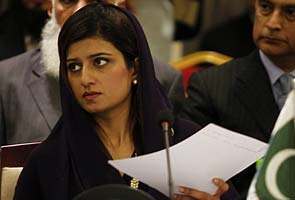
Hina Rabbani Khar denies Bilawal Bhutto affair
http://www.telegraph.co.uk
Pakistan’s foreign minister has been forced to deny she is having an affair with Bilawal Bhutto-Zardari, the son of President Asif Ali Zardari.Claims of an affair between Hina Rabbani Khar,

Pakistan: Monsoon rains, flooding kill 422 people
Associated PressMonsoon rains and flooding killed more than 400 people across Pakistan during the rainy season this year, authorities said Friday. Pakistan suffers every year from flooding caused by massive monsoon rains that sweep across the country late in the summer and cause rivers and streams to overflow. The National Disaster Management Authority said 422 people have been killed and nearly 3,000 have been injured during the season of heavy rains. About five million people have been affected by the resulting floods, according to statistics that were posted on the authority's website. Sindh province in southeastern Pakistan was the hardest hit with 239 deaths. An official with the authority, Maj. Iftikhar Ahmed, told The Associated Press that the rainfall this year was significantly less than in 2010, when catastrophic floods put one-fifth of the country under water and killed 1,985 people. Last year 443 people were killed in flood-related incidents. Pakistan has in recent years struggled to cope with the chaos, caused by the rains and flooding around the country. Authorities have often relied on international help to provide those affected by the floods with food, water and housing. UNICEF called on international donors to provide $15.4 million to help protect people affected by the flooding over the next three to six months. In a statement Friday, the UN agency said it has been helping with supplies of drinking water to people affected by floods in the provinces of Balochistan, Punjab and Sindh. "Some of the affected children are living in areas that are experiencing devastating flooding for the second or third time over the past three years, and these new floods have disrupted their recovery," said UNICEF Pakistan Deputy Representative, Karen Allen. As Pakistan struggles with another natural disaster, the country is also trying to suppress a violent insurgency in the northwest. A senior police officer died Friday while defusing a roadside bomb in Peshawar, a city that is considered the gateway to Pakistan's volatile tribal regions, from which violence often spills over into its streets. Hakam Khan rushed to the city's Matni neighborhood after being alerted that insurgents had planted two bombs near a road, which is used by security convoys, traveling to the Khyber tribal region, said senior police officer Fazal Mola Dad. Khan successfully defused one bomb, but while he was working on the second one, it exploded. Khan had played a key role in battling militants and defused dozens of bombs in recent years, Dad said. __
Pakistan to be a horrid place for children and minorities

Pakistan: Rumours of pigs and plots dog polio fight in Khyber-Pakhtunkhwa
Pakistan: Putin’s visit setback
EDITORIAL:DAILY TIMESIt had taken 65 years for any Russian President to decide to visit Pakistan. However, for ostensibly some pressing issues at home, President Vladimir Putin wrote to President Zardari that he could not attend the quadrilateral summit scheduled to be held in Pakistan amongst Russia, Afghanistan, Tajikistan and Pakistan on October 2-3. That the summit to discuss Afghanistan in the backdrop of the US’s withdrawal by 2014 stands cancelled has set off an array of speculations about the actual reasons that may have made the Russian President change his mind. Soon after independence, Pakistan allied itself with the US-led west, leading to the visit to the then Union of Soviet Socialist Republics (USSR) of Liaquat Ali Khan, the first Prime Minister of Pakistan, being cancelled. This preference to the west’s friendship over the USSR soured relations between the two countries over time, especially when India and the USSR closed ranks and the latter was on the receiving end of the decade-long resistance to the Soviet occupation of Afghanistan. Things have changed radically since the end of the Cold War. The retreat of the US-led west from this region is increasingly persuading regional countries to look to each other for handling problems and enhancing economic, political and security cooperation as can be seen in the developing SCO bloc. President Zardari has taken relations between Russia and Pakistan forward. Realising that Pakistan’s energy requirements can be addressed with the assistance of Russia, which is one of the largest producers of oil and gas in the world, Pakistan reached out to its giant northern neighbour, with the result that Russia has shown interest in projects like the Iran-Pakistan (IP) gas pipeline and the Turkmenistan-Afghanistan-Pakistan-India (TAPI) gas pipeline, apart from involvement in the project to export electricity from Tajikistan to Pakistan. The IP gas pipeline is still subject to delay due to US hostility towards Iran. However, Russia is undeterred and is ready to offer financial and technical support to the project. Russia’s only caveat is that it be awarded the contract without international tendering. Russia is also willing to assist Pakistan in oil and gas exploration and the modernisation and expansion of the Steel Mills originally set up by the USSR. It is being speculated that Putin might have decided to postpone his visit to let the issue of the blasphemous film run out of steam. Some believe that Putin wants Mr Zardari to first visit Russia in order to clarify that it is not Russia but Pakistan that is seeking economic cooperation between the two. Whatever the cause of the visit’s cancellation, in the aftermath of US forces withdrawing from Afghanistan, the region’s countries are groping their way to a new closeness to effectively tackle common problems such as terrorism, poverty alleviation through mutual economic cooperation, and maintaining peace after the scars of the conflicts afflicting the region heal. Though Putin’s visit would have been a game changer in the region vis-à-vis Pakistan’s image, one setback should not discourage Islamabad from continuing to pursue a new and beneficial architecture of cooperation with Russia and the region as a whole.
Pakistan: DISCOs fail to recover Rs 232.78b

Alarming debts of Pakistan
Nawaz Sharif corruption references
THE FRONTIER POSTThe application filed by the National Accountability Bureau calls for the reopening of three corruption references relating to Hudabiya Paper Mills, Ittefaq Foundries and Raiwind assets in which members of the Sharif family are allegedly involved. Today’s proceedings over the NAB chief’s application were carried out in the accountability court of judge Chaudhry Abdul Haq. During the proceedings, an assistant of Khawaja Harris Ahmed, a senior counsel for Pakistan Muslim League – Nawaz (PML-N) chief Nawaz Sharif, apprised the court that a hearing over the quashing of an FIR over the references was to be held at the LHC’s Rawalpindi bench on Oct 1. The counsel’s assistant requested the judge to postpone the hearing until the said date. The judge subsequently adjourned the case’s hearing to Oct 10. Earlier on Sept 15, the same court had stopped its proceedings on the corruption references after the Sharifs’ counsel submitted a restraining order of the Lahore High Court to it. Barrister Maqsooma Bokhari, representing the Sharif family, had informed the court that a division bench of the LHC had in its order restrained the accountability court from proceeding till the matter was adjudicated by it. In October last year, the LHC acting on a petition by the Sharifs had stopped the federal government from going ahead with the matter. The order, however, had not issued any such directive for the accountability court at the time. NAB references against Sharifs The NAB had prepared the references during the Musharraf regime in the year 2000 when the Sharif brothers were detained in the Attock Fort. On April 4, 2001, the references were adjourned sine die. On Aug 8, 2007, the NAB filed an application for revival of the references. But the court did not proceed with the matter which was again adjourned sine die in Aug 2008 because it was not routed through the NAB chairman. Another application filed by the NAB in Feb 2010 was rejected on the same grounds. In its references, the NAB accused the Sharifs of committing Rs642.743 million worth of corruption in the Paper Mills case. The second reference – the state versus Nawaz Sharif, etc. – relates to the Raiwind assets. The main allegation is that the accused had acquired vast tracts of land upon which palatial houses and mansions were built with resources which appeared to be grossly disproportionate to their known sources of income. Apart from Nawaz Sharif, his mother is an accused in this case. In the state versus Ittefaq Foundries case, Nawaz Sharif, Abbas Sharif and Kamal Qureshi are accused of committing corruption of Rs1,063 million. The main allegation in the case is that Ittefaq Foundries Ltd obtained cash finance from the National Bank. According to the NAB, the company wilfully defaulted on the amount in 1994.
Friday, September 28, 2012
Afghan troops get a lesson in American cultural ignorance

Bashar Al-Asad: "Turkey dreams of a new Ottoman Empire"


Aitzaz sees SC in ‘blind alley’

Pakistan: Internet users cross 25m mark
PakTribune.ComInternet users in Pakistan have increased to more than 25 million due to its online accessibility through mobile phone services on affordable rates. According to Internet Service Providers Association of Pakistan (ISPAK), the estimated Internet users are on the rise with its increasing trend of utility via mobile phones reaching the figure of up to 15 million. The mobile phone subscribers go online through different Internet services including, EDGE, GPRS and Blackberry Internet Services (BIS). The cellular phone companies have been working aggressively on the promotion of Internet services for last two years mainly for earning extra revenues besides voice calls and text messages. These companies introduced different bundle packages of Internet services in their youth brands to promote Internet services as an essential for young customers for education and entertainment purposes. The trend of using Internet is increasing rapidly with the arrival of smartphones of different handset makers though low-cost handsets are available in the market having options of online connectivity. It was further given impetus through providing easy connectivity to users for using Facebook and Twitter. Mobile phone companies and handset makers alike have provided easy connectivity of Facebook and Twitter Internet users that gave further impetus to Internet usage among the customers. Officials of the mobile phone companies said the Internet consumption of their subscribers varies due to different needs of individuals in their daily life. They said the customers having postpaid connection are large users of Internet services due to their business and professional demands. Besides youngsters usage of Internet is limited on mobile phone as they usually avail Internet services for social networking sites, informative webs and browsing. Cellphone operators have created demand of Internet usage among customers through different tools like applications of education, infotainment and entertainment by their own portals. The excessive branding and marketing campaigns of mobile phone companies are generating positive results on their business in fact creating awareness among the customers before the launch of high data service—3G technology. The Internet users having demand of high-speed services are also increasing particularly through broadband. As per industry estimate, there are more than five million broadband users in the country through 2 million connections. The Internet users mainly do connect with one IP connection and consume Internet services through sharing at home, office and educational institutions. There are 50 Internet services providers in which 10 are broadband companies exploring untapped market in big cities.
Zardari: Education helps fight militant mindset

President Zardari said that education holds the key to socio-economic development. President Asif Zardari while talking to UN Special Envoy for Global Education‚ Gordon Brown said that education is the most effective tool to fight militant mindset and to lead the nation on the path to socio-economic development and upward mobility. Gordon Brown briefed the President about the objectives of UN initiative "Education First". Brown said that he will visit Islamabad soon and his mission aims at ensuring greater enrollment‚ provision of quality education‚ training of the teachers and promotion of education technology in Pakistan.
Pakistan rejects U.S. media report on drone strikes

Experts fear a 'Talibanization' of Afghan justice
Zardari’s finest hour at the UN

By:Wajid Shamsul HasanPresident Zardari did the nation and Muslim Ummah proud at the UN General Assembly session when he stood tall amidst world leaders to forthrightly present Pakistan’s case in its correct perspective as well as resonate worldwide condemnation of the blatant act of incitement of hate against Prophet Muhammad (PBUH) in the comity of nations. I watched his speech on television and I saw in him a different man in a mood that is true manifestation of how hurt a Muslim feels inside on the horrendous act of blasphemy. While not condoning violence, he forcefully urged the international community not to remain a silent witness to criminalisation of the freedom of expression, which endangers the global peace and security. As the sole spokesman of the brave and courageous people of Pakistan, Zardari underlined the enormous challenges faced by his resilient nation. He recounted the sacrifices in blood to fulfill its enormous commitment to provide better future not only to itself but to entire world moving from one crisis to another in what has come to be a century of terror. Zardari asserted Pakistan’s image as a lead player determined to bridge interfaith and cultural harmony across the globe in opposition to Samuel Huntington’s “Clash of Civilisations” by fostering equality irrespective of caste, creed, colour or gender for eliminating poverty through equitable distribution of wealth and empowerment of all classes of people. Zardari nailed squarely the constant media diatribe against Pakistan aimed at blackmailing it with the objective of forcing it into a corner to make it dance to the tunes played by various vested interests with varied geo-strategic ambitions. He was absolutely right in asserting that the sinister design behind the anti-Islam film was to provoke protests and violence in the Muslim world to weaken them internally and externally. Zardari did not lose his statesmanlike cool while conveying to the comity of nations the grievously injured feelings of the Muslims across the globe. Indeed, as he put it, in Islam the best revenge is compassion and the world at this critical juncture needed to follow the martyred leader Mohtarma Benazir Bhutto’s legacy of reconciliation and tolerance. He made an impassionate appeal to the world leaders to get down to bridging the ever-increasing widening of gulf so that God’s little earth is not plunged into a quagmire of violent polarisation from which there would be no pulling back. The president highlighted the inbuilt mechanism of compassion, mercy and forgiveness in Islam. He stressed what could be the panacea for resolving the issues emanating from increasing outrageous blasphemous acts. To pull the world back from the suicidal brink he pleaded for organising and mobilising saner, civilised and universally effective response for nipping in the bud all those conspiratorial elements who seek to make fortunes by sowing seeds of discord among communities and religions. A united approach is needed to combat this other “form of terrorism”. It can only be vanquished by pulling the rug from under the feet of fly-by-night carpet beggars who believe in making hay by dividing people and nations. Besides, President Zardari did not forget to raise his voice in support of the right of self-determination for the people of Palestine and the people of Jammu & Kashmir. He strongly conveyed his profound concerns to wake up the sleeping conscience of the international community to the never-ending plight of the people of Palestine and Kashmir – two of the oldest issues lying unattended in the UN morgue. He pleaded with the world leaders to fulfill the aspirations of the Palestinian and Kashmiri people who have given blood in hundreds and thousand for the much promised right of self-determination. President Zardari harkened the world about the most counter-productive drone strikes in total contempt to enormous sacrifices rendered by the people and armed forces of Pakistan as a frontline state in the war against terror. In putting Pakistan’s case straight, President Zardari highlighted it by telling the world leaders, “I am not here to answer questions about Pakistan but to tell how much wronged Pakistan has come to be.” His words like that of Shaheed Zulfikar Ali Bhutto’s in 1971 will resonate in the Hall of the United Nations for many decades to come. He said, “The people of Pakistan have already answered them. The politicians of Pakistan have answered them. The soldiers of Pakistan have answered them. We have lost over seven thousand Pakistani soldiers and policemen, and over 37,000 civilians. We have lost our Minister for Minority Affairs, Shahbaz Bhatti and my friend Salmaan Taseer, the governor of our most populous province of Punjab, to the mindset of extremism. And I need not remind my friends here today, that I bear a personal scar. On December 27, 2007, knowing her life was under threat from the mindset she had warned the world against, Pakistan’s first elected woman leader and my wife Shaheed Mohtarma Benazir Bhutto was martyred through the bullets and bombs of terrorists.” “Terrorism and extremism have destroyed human lives, torn social fabric, and devastated the economy. Our economy, our lives, our ability to live in the shadow of our Sufi saints and our freedom-loving forefathers have been challenged. We have responded. Our soldiers have responded. So I am not here to answer questions about Pakistan. To those who say we have not done enough, I say in all humility, please do not insult the memory of our dead, and the pain of our living. Do not ask of my people, what no one has ever asked of any other peoples. Do not demonise the innocent women, and children of Pakistan. And please, stop this refrain to do more,” the president said. These painful words coming from a man whose brave spouse gave her life for freedom and empowerment of the people moved every one in the UNGA. It was not just forceful expression of a man hurt deep inside. His conclusion, indeed, must have left indelible imprint on all those present. Zardari’s humility in his speech must have left enormous food for thought for the global leaders. They must have noted that though hurt yet he was not arrogantly defiant. His sincere pleading for “global cooperation, connectivity, and mutual respect” as “stake holders in each other’s futures” is the need of the hour. It is a question of now or never. By pursuing goals of peaceful co-existence sans discrimination, sans double standards and no preference to expediency over principles can guarantee a better, brighter, prosperous, progressive and peaceful future for this world.
Zardari meets Karzai, discusses bilateral ties and regional situation
http://www.brecorder.com

Pakistan: INTERIM SET UP OPPOSED

Dr Najeeb was follower of Bacha Khan: Iftikhar
ANP observes death anniversary of late Afghan president
ANP observes death anniversary of late Afghan presidentAwami National Party (ANP) Thursday observed the death anniversary of former Afghan President Shaheed Dr. Najibullah with great reverence here at Bacha Khan Centre. Provincial Minister for Information and Broadcasting Mian Iftikhar Hussain and other party workers including MPAs attended the event and paid rich tribute to Shaheed Dr. Najibullah. Speaking on the occasion, Mian Iftikhar Hussain said that Dr. Najibullah was follower of Bacha Khan's teaching and rendered his life for establishment of peace in the area, adding that he left the leadership of the country for peace in Afghanistan. He lamented that United Nations could not protect Dr. Najibullah from terrorists' attack. Despite passage of 30 years not a single leader in Afghanistan could succeed to establish peace in the country, he noted. Mian Iftikhar said that the war on terror has deteriorated the situation in Afghanistan and Pakistan as well but the followers of Bach Khan did not bow to terrorists and sacrificed their lives for peace. He said peace in Pakistan could only be maintained if there is peace in Afghanistan and it needs pragmatic and sincere measures against the terrorists and miscreants by the two governments. He said terrorists have no religion rather they are exploiting innocent people for their ulterior motives and killing people in Mosques, Imam Barghas and other religious places to fan sectarianism and terrorism. He said USA and European countries should have to play their role positively for peace in Afghanistan and Pakistan.
Abidi stands by charges against CJP
Subscribe to:
Posts (Atom)