statesman.comAdditional Chief Secretary (ACS) FATA Dr. Tashfeen Khan said FATA Secretariat was intending to develop energy policy for FATA which would be based on utilising alternate sources like solar penals and wind mills etc. He said this while approving scheme of installation of solar street lights in Khar, Bajaur Agency under TARUCCI project. ACS FATA also approved the scheme to revamp existing Government Technical Institutes in FATA. He emphasised the need for synchronising projects/schemes with master plans and strategies; which ought to be developed for every major and wide-ranging infrastructural initiative such as revamping of institutes. In addition to ACS FATA Dr. Tashfeen Khan, Deputy Secretary SAFRON Zahid Naeem Saddiqi, Chief Devolution & Area Development P&D Syed Farooq Ahmad, Secretary L&O FATA Secretariat Nasir Jamal, Secretary AI&C FATA Secretariat Munir Azam, Secretary FIFA Arshid Munir, Secretarity Social Sector Dr. Aftab Akbar Durrani, Secretary Production Farrukh Sair, Chief Economist Yousaf Rahim, DG Monitoring Sajjad Ahmad and Directors of the FATA directorates/departments were also present in the meeting. Development schemes amounting to Rs3085.997 million were approved with advice for few schemes to review the costs. Schemes fulfilling anti-polio initiatives of FATA Secretariat; previously pledged and committed to be materialised, were given a go-ahead. These approved schemes would ensure salary to 174 field officers (rationing anti-polio drops) and purchase of 100 solar refrigerators (for storing vaccines) in addition to other necessities. Consent was also granted to infrastructure schemes in South Waziristan Agency, valuing Rs.1022.3 million, constituting widening & improvement of subsections of Wana Shakai, Makeen Road, SWA FATA and construction of flood protection bund and new irrigation channels (600 meters). Similarly, schemes to widen & improve sub sections of Bannu-Miramshah, Ghulam Khan Road, NWA FATA, with the cost of Rs1255.4 million, was endorsed for implementation. On the occasion, Secretary FIFA Arshid Munir briefed ACS FATA about the natural resources available in FATA and the need for developing a legal and financial institutional framework for the people of FATA to utilise and benefit from these resources. A proposal for the establishment of Regional Investment Bank in FATA was approved by the ACS FATA.
M WAQAR..... "A man's ethical behavior should be based effectually on sympathy, education, and social ties; no religious basis is necessary.Man would indeed be in a poor way if he had to be restrained by fear of punishment and hope of reward after death." --Albert Einstein !!! NEWS,ARTICLES,EDITORIALS,MUSIC... Ze chi pe mayeen yum da agha pukhtunistan de.....(Liberal,Progressive,Secular World.)''Secularism is not against religion; it is the message of humanity.'' تل ده وی پثتونستآن
Thursday, September 20, 2012
FATA Secretariat to develop energy policy
UAE visa restrictions
EDITORIAL:Daily TimesThe UAE has announced that visitors from South Asian countries that export labour to the country will from now on require a university degree to get a tourist visa. The UAE has imposed this restriction in order to fight an illegal influx of people who arrive on tourist visas and then stay on to seek employment. Categories of blue-collar workers from Pakistan, India, Bangladesh, Sri Lanka and the Philippines affected by the new rule include electricians, pipe fitters, masons, farmers, drivers, tailors and cleaners. These categories comprise the core of labour immigration into the Gulf state. A UAE official explained that the measure would reduce the risk that individuals engaged in organised crime or the trafficking of persons could gain entry to the country. Tourist visas are usually arranged through hotels, airlines or travel agents. Tourism has grown rapidly in the UAE, especially the shopping paradise called Dubai, where the number of tourists increased to 9.3 million in 2011, up 10 percent on the previous year, despite the economic woes that the Gulf states suffered along with much of the rest of the world as a result of the global economic recession. Tourism aside, the UAE hosts millions of foreign workers, mostly from South Asian countries. Western expatriates on the other hand have dwindled in the aftermath of the recession. Nevertheless, the expatriate population dominates the UAE, comprising 8.2 million or 88.53 percent of the total population in 2010. When the UAE first emerged onto the world stage in the 1970s, the building boom drew in millions of construction and ancillary trades workers. Service providers followed in their wake. Zulfikar Ali Bhutto initiated the policy of loosening the procedure for obtaining a passport and finding employment in the booming Gulf. While the UAE benefitted from this influx of workers, Pakistan soon found itself short on skilled tradesmen. The expatriate workers’ remittances bolstered Pakistan’s balance of payments and brought relative prosperity to millions of families back home. Of course those good times are long gone, but even the residual opportunities in the Gulf are a tempting prize for Pakistani and South Asian workers. The availability of work visas naturally decreased as the economic boom slowed and then went into decline, if not crisis. The UAE’s latest announcement indicates a growing problem of those seeking employment gaining entry on tourist visas and then staying on illegally to search for jobs. With the latest restrictions, the apprehension is that just as happened with so many elected representatives when Musharraf’s regime imposed the condition of a graduate degree to run for elections, and which gave rise to a veritable industry churning out fake degrees, this roadblock to entry to the UAE may be circumvented by some unscrupulous elements through fake degrees. If the UAE’s checks reveal any such occurrence, it will sully the name of Pakistan and bring further ignominy on our heads.
Karachi: A new target
KARACHI was already on edge before Tuesday’s twin bombings struck a predominantly Dawoodi Bohra neighbourhood in the North Nazimabad area. The city was in the grip of protests against an anti-Islam film and targeted killings continued unabated. Elsewhere, in Balochistan’s Mastung district — the same area where pilgrims were pulled out of a bus and killed last year — a car bomb targeted a bus carrying Shia pilgrims returning from Iran. However, in the Karachi killing, the perpetrators targeted, perhaps for the first time, the Bohras, a peaceful, industrious, mercantile community. The perpetrators knew what they were doing: the site of the blasts is close to the city’s main Bohra mosque, while community members usually gather in the bustling commercial-cum-residential area after evening prayers, which is when the bombings occurred. The blasts came only a day after Mufaddal Bhaisaheb, son and designated successor of the current Bohra leader, was in the metropolis. Last month, a bomb had been discovered and defused in the same spot.
The bombings add a new dimension to the bloodshed, pulling the apolitical Bohra community into the vortex of violence. The
authorities still need to confirm whether the attack was purely sectarian in nature, or if it was motivated by the desire to extract protection money from the community. All angles need to be examined. Nevertheless, what the blasts prove beyond any doubt is that nobody is safe in Karachi: if a peaceful community such as the Bohras can be targeted, anyone is vulnerable. Aside from
spreading fear, such attacks also undermine the city’s economy. The Bohras constitute one of the city’s oldest and more financially stable business communities. But if people’s lives, properties and businesses are not safe from terrorist violence, who will want to invest in Karachi?
Even as other motivations for the killing are investigated, police have pointed to the possible involvement of a faction of Lashkar-i-Jhangvi believed to be one of the most active militant groups in Karachi, while its acts of terror in Balochistan are already established. Hence, instead of making half-hearted claims about investigating the attacks, the state needs to crush Lashkar-i-Jhangvi, as the outfit is fast becoming the primary source of terrorism in this country. Such action is needed against all terrorist groups as there are reports that members of smaller sects within Islam in Karachi are also being threatened. By not taking decisive steps to curb militancy so far, the security establishment has only facilitated the killers. Until the extremists’ infrastructure is dismantled and their operatives and planners tried and punished, there is little chance of the bloodshed abating.
Pakistan: Belated but objective decision
EDITORIAL: FRONTIER POSTAlthough the decision Prime Minister Raja Pervez Ashraf announced before the Supreme Court on Tuesday is belated, the commitment given to the country’s apex court that the government will write the letter to Swiss authorities is a welcome move. This letter would revoke the previous letter in which the government had rescinded its claim on money in some Swiss bank accounts. The common belief is that the letter can cause the authorities in that country to re-open the money laundering case against President Asif Ali Zardari. It appears to be the best course, the government could take to avoid a host of complexities, including a conflict between state institutions. As Raja assured the SC that his government would withdraw the letter which the former attorney-general Malik Mohammad Qayyum had written to Switzerland judicial authorities in 2007 about the fall-out of the National Reconciliation Order (NRO) that gave blanket immunity to the commission of offences by some 8,000 persons, including President Zardrari, other politicians, bureaucrats and well-to-do individuals, it means that Swiss courts can now take up the case involving the president. As a consequence of the assurance, the SC adjourned the case of show-cause notice issued against the prime minister on contempt of court charges till Sept 25th with the concession that prime minister is exempted from personal appearance. The PM nominated Law Minister Farooq.H.Naek to appear on his behalf in the court and submit the draft of the much talked about letter. Whether the draft meets the approval of the Court is yet to be seen, but the government has succeeded in buying time that it wanted. The stalemate between the government and court was jamming the activities of other institutions in the country. Some call the government move a tactical retreat and some say the Raja government has taken a U-turn from its earlier stance. Both the notions seem well-founded but the former seems more plausible. However, the government delayed the decision to write the letter by several months and as a result the former Prime Minister Syed Yousuf Raza Galani stood disqualified and had to go home. He not only lost the office of the country’s chief executive but also faces a bleak political future after his disqualification for 5 years. Most probably the government gave an afterthought to its earlier stance with next parliamentary elections in sight. It did not want to enter the electioneering process with the stigma of being a party of contemnors; the opposition would have had an opportunity to exploit the situation. The government also appears mindful of the fact that the SC case may linger on for months and the caretaker administration, that seems would be put in place, at the most, by the end of this year, might not stick to the PPP government’s stance of not writing to Swiss authorities. Nevertheless, the government’s allies in the coalition may receive the new development as a sorry affair only because they were not taken on board. But the Awami National Party may be angrier with the government than the other allies, including the PML-Q and the Muttahida Qaumi Movement, which have so far remained unclear in their mind, as to what the government’s response to the SC insistence should be like. Even otherwise, prima facie on the political horizon, most of the coalition allies may not for sure carry on with the Pakistan People’s Party when the next general elections are held. No doubt, Tuesday’s development is a step forward and the government must be thinking in terms of utilizing the time it has bought to concentrate on problems facing the nation and try to solve these so that it can face the voters with a cleaner slate. For example, the government has to give its attention to the worsening economic situation by minimizing the impact of power load-shedding and reforming the tax structure to rope in all who have the ability to pay taxes. Above all, this is a rare opportunity. Our first democratically elected government is just a stone throw away from handing over the reigns of the government to another democratically elected administration. This is the tradition which we have to set, and have been unable to, since the creation of this country. In fact the PPP government must be eying this opportunity which can be a momentous distinction any political party could achieve in the present circumstances.
Zardari pays tribute to Mir Murtaza Bhutto
President and Co-Chairman of the Pakistan People’s Party (PPP) Asif Ali Zardari Wednesday said that Mir Murtaza Bhutto
Shaheed endured the rigors of exile, the assassination of his father and the tribulations of life but never gave up his opposition to the dictatorship.
President said this in a message on the 16th death anniversary of Mir Murtaza Bhutto on Thursday. “The PPP has always believed that Mir Murtaza was gunned down on September 20 in 1996 in a conspiracy to overthrow the PPP government. Mir Murtaza was a man of courage who lived a turbulent life and would be remembered for tenaciously fighting dictatorship”, he said in his message.
He also prayed for eternal rest to the soul of Mir Murtaza and a high place in heaven for his and the souls of those killed with him. “May Allah grant patience to their heirs to bear this heavy loss”, he maintained.He said that the killers of Mir Murtaza would never escape retribution and will be punished.
Wednesday, September 19, 2012
Pakistan: Infected Australian sheep
The Express TribuneA lot of people should lose their jobs for allowing over 21,000 Australian sheep infected with salmonella and actinomyces to be imported into Pakistan, even though the sheep were previously rejected by Bahrain for being diseased. The first person to go should be the Sindh livestock and fisheries secretary, who lashed out at the media for printing test reports which showed that the sheep were infected. The executive director of the company which imported the sheep should also be shamed into resignation, not only because he was willing to release the animals into the market but also because he denounced the media for indulging in “fake” propaganda. Punishment must also be accompanied by introspection. This incident was a clear case of Pakistan willing to let itself be used as a dumping ground for products that would be outright rejected by rich countries. As strongly as we should protest to Australia for assuming it could unload the animals in our country, the government also needs to avoid instantly taking a defensive posture when such public health scandals are brought to light. Now that the sheep have been confirmed as infectious, the government needs to ensure that they are culled in a safe and speedy manner and that there is no possibility of a single sheep making its way to our market. Pakistan also needs to set safety standards for imports that match those that other countries have placed on us. Countries such as the US, Japan, South Korea and Jordan all banned the import of Pakistani mangoes for over a decade until we recently changed our vapour treatment of mangoes to mandate hot water treatment. It is time for us to be similarly careful about what food items and animals we allow into our country. Doing any differently would confirm that our government is hungry only for the almighty dollar. There is no way we should countenance boosting our foreign exchange reserves on the back of our health and safety.
US, Pak to discuss 'full range of issues' during upcoming meeting
U.S. Secretary of State Hillary Clinton and Pakistan Foreign Minister Hina Rabbani Khar will cover the entire range of issues concerning the two countries, and will look to build upon the recent high-level contacts between both countries during their upcoming meet on Friday, the State Department has said.
"I am expecting that the full range of issues we have with Pakistan, bilateral and regional, will be covered including our continuing effort to get our counterterrorism activities back up and running fully," The Express Tribune quoted State Department spokesperson Victoria Nuland, as saying. The Friday meeting between the two diplomats will be their fourth, having previously met in Pakistan, Tokyo and on the sidelines of the UN General Assembly session in New York last year.
"They have a working relationship together. They have both rolled up their sleeves to try to stabilise and strengthen the relationship. I think this is going to be a good opportunity for them to take stock of where we are, and continue to try to move forward," Nuland said.
Pakistani accused by film protesters of blasphemy
Associated PressDemonstrators angry over an anti-Islam film accused a local businessman in southern Pakistan of blasphemy, forcing the police to open a case and driving him and his family into hiding, following an argument that broke out when he refused to join their protest, officials said Wednesday. The incident demonstrates the potential for abuse of the country's strict blasphemy laws as well as the intense feelings the film, which denigrates Islam's Prophet Muhammed, has unleashed in Pakistan. At least two people have died in protests against the film, which has generated widespread animosity across the Muslim world. The incident in the city of Hyderabad began when hundreds of protesters rallied Saturday. Some protesters demanded that businessman Haji Nasrullah Khan shut his roughly 120 shops in solidarity, said police officer Munir Abbasi. When Khan refused, one of his tenants said his decision supported the film, the officer said. The protesters claimed Khan insulted the Prophet while arguing with them, said city police chief Fareed Jan. But he said there was no evidence to suggest the insults really occurred and that police only opened a blasphemy case because they were pressured by the mob. Opening such a case doesn't mean the person is necessarily charged with the crime but that police are investigating him or her. Protesters ransacked Khan's house, and surrounded a police station, refusing to go away until officials opened a blasphemy case, Abbasi said. The situation became even more inflamed when religious leaders from one of the biggest mosques in the city issued an edict calling for Khan's death and announced from the mosque's loudspeakers that he should be killed, Abbasi said. The police officer said Khan and his family members had gone into hiding in fear for their lives. Under Pakistan's blasphemy laws, anyone found guilty of defiling the holy book, or Quran, or insulting Islam's Prophet Muhammad can face life in prison or death. Critics say the laws are often abused to harass non-Muslims or to settle personal rivalries. Radical Islamist groups have also been behind some of the blasphemy accusations. In this case, Abbasi said, police suspect some of the complaints against Khan by other shopkeepers may have been sparked more by his desire to evict some of them for late payment as opposed to any actual insults. Abbasi said a prominent pro-Taliban religious party, Jamiat-e-Ulema Pakistan, and an al-Qaida linked militant group, Sipah-e-Sahaba, had been advocating against the shopkeeper. Despite the potential for abuse, efforts to amend or repeal the blasphemy laws have failed in the past. Last year, a minister and a governor were assassinated when they spoke out about misuse of the laws and suggested changing them. The governor was shot and killed by his own guard. Rights activists and critics of the laws had hoped that the recent case of a 14-year-old girl charged with insulting the Quran would help bring about changes in the laws, or at least help curb abuse. The case gained widespread attention and sympathy both in Pakistan and internationally due to her young age and questions about her mental capacity. She was granted bail after a religious cleric was accused of planting evidence to incriminate her, and her lawyers have said they will move to throw the case out entirely. But a blasphemy accusation, even an unproven one, can be a death sentence in Pakistan. A report by the Islamabad-based Center for Research and Security Studies said that since 1990, 52 people have been killed by vigilantes after being implicated in blasphemy cases. Earlier this summer a mob in one Pakistani city dragged an accused blasphemer from a police building, beat him to death and burned the body. ___
3 in 4 Americans feel little or no personal connection to Romney
YAHOO NEWSThree in four Americans feel they have little or nothing in common with Mitt Romney, while nearly 60 percent feel the same way about President Barack Obama, according to an Esquire/Yahoo! News poll. In the wake of Romney's remarks dismissing nearly half of Americans as self-identified victims who are dependent on government—videotaped at a donor event earlier this year and posted online this week by Mother Jones magazine—these new numbers are more bad news for a candidate struggling to connect with ordinary Americans. The margin of error for the survey, conducted shortly after the two national political conventions, is plus or minus 4 percentage points. Further complicating the Republican ticket's image problem is that a Romney presidency is viewed as significantly more beneficial to wealthy Americans than a second Obama term would be. Sixty-two percent of those surveyed said the wealthy would be better off under Romney than Obama. That split reverses when Americans were asked who would benefit the poor: 57 percent say Obama, 30 say Romney.
President Zardari appeases Zulfiqar Mirza
President Asif Zardari met Dr Zulfiqar Mirza in Karachi and removed all the feeling of resentment. According to Dunya News, the president is on his two-day visit to Karachi. Suddenly, he came out of the back door of Balawal House and met Dr Zulfiqar Miraza and his wife Speaker National Assembly Dr Fahmida Mirza at their residence at Defence-phase 5 and exchanged ideas on current issues for half an hour. The sources also claimed that the president had gone there in order to look after Dr Fehmida Mirza.
Pakistan: Corrupt & biased Supreme Court
Corrupt & biased SC has kept the whole nation focused on a non-issue. There are no 60 million dollars and they are not coming. There are many issues which we need to sort out. During Restoration of Judiciary Movement, we were told that an independent judiciary which delivers justice is the key to all our national problems. Unfortunately, what we got is a highly politicized, vindictive and biased judiciary. Judges and their families are busy enjoying perks at the cost of tax payers' money great foreign vacations paid for by litigants in the most expensive hotels of most expensive cities. In such circumstances, what will happen to the dream of justice for the common man?
The SC has neither taken account of presidential immunity under Article 248, nor, except in passing remarks about those seeking immunity having to apply to the court for it, attempted an interpretation of this Article. The government side has seemingly been reluctant to be drawn into an argument over Article 248, probably because it is its perception that it will not receive a sympathetic hearing from the SC, rather the reverse. The court’s insistence has begun to invite criticism of its approach, not the least from former Supreme Court Bar Association (SCBA) president Ms Asma Jahangir, whose words reflect the mounting anger against the judiciary in some legal circles. She has squarely accused the judiciary of delivering political rather than judicial verdicts. Her statement is lent at least partial support by the present SCBA president Yasin Azad, who has suggested to the court that perhaps the best solution to the conundrum is for the court to set up a commission to write the by now infamous letter. He has also pointed to the political and economic instability being caused by the air of uncertainty this standoff is producing in and around the country. Perhaps the middle way is not only the best, but also the only way out of this impasse.CJ is playing politics and hell bent to destroy PPP. But, let me assure you Mr. Chief Justice, you do not know ABC of politics. Zardari is a shrewd politician and he knows what George Bernard Shaw had quoted in Arms and the Man:
“Soldiering, dear madam, is an art to remain safe when the opponent is strong and attack mercilessly when the opponent is weak”.
Mr. Zardari is playing a safe game until any future time, when you lose the Establishment support, and your right hand (PML-N) and left hand (PTI) are gone weak due to their hornlocks. Zardari is waiting for that time.It seems so evident that the judiciary is lined up with the religious parties and Defense of Pakistan council of Gen (R) Hameed Gul. The parliament has all the right to amend constitution and make laws, judges cannot make laws. Not a single terrorist is hanged or punished but the judiciary continues to maneuver the political government. The chief justice, Iftiqar Choudry continues to make public statements and acts as if he is a political leader. This is unprecedented in the recent history of the world. The politicians must join hands in the parliament and impeach these radical judges. Say NO to judicial activism, NO to judicial political party, NO to judicial dictatorship. People say justice is blind, but in Pakistan the justice is ‘Kani’ (one eyed justice) meaning unfair, politically motivated.
Peshawar: 12 killed in Kohat Road blast
Twelve people have been killed and 22 injured in a bomb blast near Scheme Chowk at Kohat Road. According to sources a PAF van was targeted by the terrorists.The van was completely destroyed and three PAF staffers were shifted to CMH. Women and children were among the injured. A passenger coach and six shops were also damaged by the blast. Police say the explosive material was planted in a car already parked at the site of blast. Police officials, bomb disposal squad and rescue workers reached the site and injured were shifted to Lady Redding Hospital.
Pakistan blasphemy laws face scrutiny
Pakistan's blasphemy laws are facing scrutiny after the recent arrest of a young Christian girl accused of burning pages from the Quran.
The laws, which were first formalised in 1860 during the British rule, carry a death sentence for anyone convicted of insulting Islam.
Critics say they are being exploited to target religious minorities.
Al Jazeera's Imtiaz Tyab looks at the harsh effects of the law in this report from Islamabad.
Pakistan has received 1.4 bln dollars under Coalition Support Fund
RADIO PAKDefence Minister Syed Naveed Qamar has said that Pakistan has received one point four Billion dollars under the Coalition Support Fund. Talking to media in Islamabad he said that we have to receive two billion dollars more. He demanded that the damages caused to Pakistan in the war on terrorism should be fulfilled. He said we are near to have drone technology. He said Pakistan would be able to overcome on the food shortage problem and we are improving the agriculture and irrigation system. He said government wants to promote space technology in future.
Lawyers in Pakistan rally against anti-Islam film
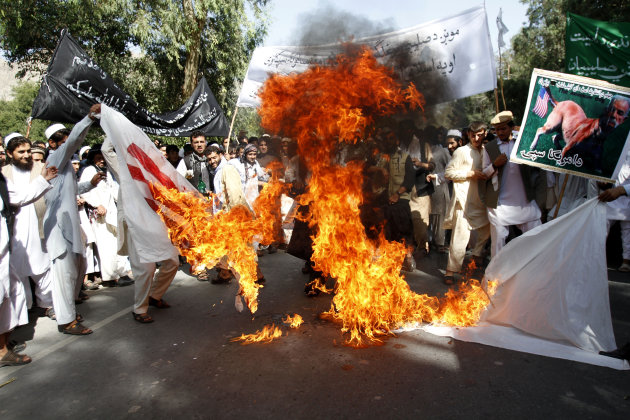
Associated PressSeveral hundred lawyers protesting an anti-Islam video forced their way into an area in Pakistan's capital that houses the U.S. Embassy and other foreign missions on Wednesday, and the United States temporarily closed its consulate in an Indonesian city because of similar demonstrations. The lawyers who protested in Islamabad shouted anti-U.S. slogans and burned an American flag after they pushed through a gate, gaining access to the diplomatic enclave before police stopped them. They called for the U.S. ambassador to be expelled from the country, and then peacefully dispersed. The demonstration followed three days of violent protests against the film in Pakistan in which two people were killed. At least 28 other people have died in violence linked to the film in seven countries, including U.S. Ambassador Christopher Stevens and three other Americans killed in a Sept. 11 attack on the U.S. Consulate in Benghazi, Libya. Much of the anger over the film, which denigrates Islam's Prophet Muhammad, has been directed at the U.S. government even though the film was privately produced in the United States and American officials have criticized it. The U.S. Embassy in Indonesia sent a text message to U.S. citizens saying that the consulate in Medan, the country's third-largest city, has been closed temporarily because of demonstrations over the film, "Innocence of Muslims." About 300 members of Hizbut Tahrir Indonesia, a pan-Islamic movement, rallied peacefully on Wednesday in front of the consulate in Medan, the capital of North Sumatra province. Later, about 50 Muslim students also protested there. Both groups called on Washington to punish the makers of the film. It was the third consecutive day of protests in Medan. On Monday, protesters hurled rocks and Molotov cocktails outside the embassy in Jakarta, the capital. In France, the government has barred a planned protest by people angry over the anti-Islam film, but defended a newspaper's right to publish caricatures of the prophet. France's foreign minister said security is being stepped up at some French embassies amid tensions in France and elsewhere around the film. French authorities and Muslim leaders urged calm in the country, which has the largest Muslim population in western Europe. Riot police took up positions outside the Paris offices of a satirical French weekly that published crude caricatures of the Prophet Muhammad on Wednesday that ridicule the film and the furor surrounding it. The provocative weekly, Charlie Hebdo, was firebombed last year after it released a special edition that portrayed the Prophet Muhammad as a "guest editor" and took aim at radical Islam. The investigation into that attack is still under way. Prime Minister Jean-Marc Ayrault of France said organizers of a planned demonstration Saturday against the film won't receive police authorization. Ayrault told French radio RTL that "there's no reason for us to let a conflict that doesn't concern France come into our country. We are a republic that has no intention of being intimidated by anyone." On Tuesday, Islamic militants sought to capitalize on anger over the film, saying a suicide bombing that killed 12 people in Afghanistan was revenge for the video and calling for attacks on U.S. diplomats and facilities in North Africa.
Chief justice should appear as witness in Malik Riaz case
Attorney general said he will only write what constitution allows in the Swiss letter.
Addressing media outside Supreme Court, Attorney General Irfan Qadir said that the Supreme Court has accepted the immunity being enjoyed by president Zardari under constitution, adding that it would be mentioned in the letter too.
In response to question regarding the earlier comments of Irfan Qadir calling the Swiss letter an illegal act, he defended himself by saying that the letter would be written in light of the constitution of Pakistan.
Referring to Malik Riaz case, Irfan Qadir said that chief justice of Pakistan should appear before the bench as a witness, adding that a judge of Indian Supreme Court also appeared in the court of a magistrate.
Lashkar-i-Jhangvi’s faction involved in Karachi blast
DAWN.COMInitial investigations of Tuesday’s North Nazimabad blast revealed that around five to eight kilograms of explosive material was used in the blast, Federal Investigation Agency’s (FIA) special unit claimed. At least seven people, including a three-month-old baby, a 12-year-old girl and a woman, were killed and 22 others injured — the victims predominantly belonging to the Dawoodi Bohra community — when twin blasts rocked a neighbourhood in North Nazimabad on Tuesday evening. “The explosive material contained around 500-800 ball bearing,” FIA’s investigation unit added. Police detained two brothers of one of the suspects involved in the blast. According to police’s initial investigation, Laskar-i-Jhangvi’s (LeJ) Shuja Haider group was involved in the attack. Police claimed that LeJ’s members Mohammad Shaqib Farooqi, Murtaza alias Shakil,Arab Miskeen, Murad Shah and several others were involved in Tuesday’s blast in North Nazimabad. The suspected LeJ members were also involved in three blasts in 2009, the blast Orangi town blast on Muharram 8, Paposh Nagar Chandni chowk blast on Muharram 9 and Light House blast on Muharram 10. The suspects were arrested from Maripur road in 2010 but they escaped from the city courts afterwards attacking the police with hand grenades. Talking to media representatives, Deputy Inspector General (DIG) Karachi West Naeem Akram said that Tuesday’s North Nazimabad blast had similarities with the Chinese Consulate blast on July 23, 2012. The blasts came a day after the visit of Syedi Mufaddal Bhaisaheb Saifuddin, designated successor of Syedna Mohammad Burhanuddin. An improvised explosive device (IED) weighing around 25kg had been found at the same place on Aug 13 and defused by police.
MUSHARRAF—AN IRRELEVANT MAN IN PAKISTANI POLITICS
TV anchor persons are always hunting people for their programme and former President of Pakistan, General ® Pervez Musharraf, was one of them who are readily available to remain on the political scene though he had no views and vision on political and constitutional issues. If he was competent, he would not have been removed from the post of COAS and later on as President of Pakistan. He was removed merely because he had become irrelevant in politics and running the affairs of the country. For this specific reason, he was given a proper send off with dignity and honour so that he should not return back to Pakistan. Since he is a naïve man and unable to understand that a warm send off with due protocol meant that he should dare to come back and face the cases against him. When he became sure that he will be arrested on his return home, he cancelled his scheduled return to Pakistan. He may not return in foreseeable future for political reasons.
During his TV interviews off and on, Musharraf saying novel things which did not fit-in Pakistani politics. He has no supporters, no followers and most of his trusted people are joining other parties for better political prospects. In case of Balochistan, he is a wanted man in the Nawab Bugti Murder Case and Government had approached the Interpol for his arrest and repatriation back to Pakistan to murder trial. In Shaheed Benazir Bhutto case, he is also wanted and a court of law had already attached his personal property for not appearing before the court.
Pakistan: Dashed dreams: Turkey was to sends old, left-hand drive buses
The much-awaited gift of a 100 buses announced by the Mayor of Istanbul, Dr Kadir Tobpas, for the Bus Rapid Transit System (BRTS) early this year, will only remain a dream, as the Punjab government found out that the buses are outdated and left-hand-drive, Pakistan Today has learnt.
Sources on good authority revealed that not only are the buses of the 1990 model, left-hand drive, but also that the Turkish government has asked the Punjab government to bear the alteration cost before bringing them here.
Dr Tobpas had announced a gift of 100 buses during a luncheon held by the Chief Minister Shahbaz Sharif in honour of the Turkish delegation in March this year. The mayor had reportedly promised not only buses, but also after sales service and spare parts facility for the citizens of Lahore as well. The chief minister had arranged a series of functions to welcome the Turks, while ‘unprecedented’ protocol was extended by the Punjab government to the delegation. A round-about was also named after the mayor, arrangements for cultural festivals were made and an honorary degree was given to him.
A senior official, on conditions of anonymity, said, “The government had sent two senior officers to receive him [Tobpas] at the Karachi Airport followed by exemplary hospitality. The mayor was so overwhelmed that he held a meeting with his delegation and announced a gift of buses to return the hospitality.”
This was considered a high-time in friendly ties between the Punjab and Turkish governments while Lahore and Istanbul were declared twin cities. Another senior official who wishes to remain anonymous said that it was all fanfare which is over now. “They have demonstrated that there are no free lunches anywhere in the world. The governments responsible to the people cannot materialize such whimsical decisions and keep public interest in mind,” he said, adding that the government has now signed another pact with another private Turkish firm for buses for the BRTS. Higher-ups have kept mum over the issue after it transpired the buses are outdated and the Turks have asked them to bear the alteration cost for shifting them to right-hand transmission.
Talking to Pakistan Today, advisor to CM Khwaja Hassan said that the buses announced by Dr Tobpas were not meant for the BRTS. “The BRTS requires articulated buses which are purpose built,” he said. To a question, he said it is against the dignity of the government higher-ups to inquire of the Turkish government about a ‘gift’. The fact should be appreciated that our Turkish friends are bringing in foreign investment when none of our local businessmen showed any interest in the project.
Australia exported 21,000 sick sheep to Pakistan
Editorial:THE FRONTIER POST
Import of sick sheepWho could have imagined that a first world country like Australia would export some 21,000 sick sheep to Pakistan? True that Australians private sector is free in trading its commodities and its government does not interfere in its activity, but what about a host of laws that govern its foreign trade? Why the whole legal regime in fair business did not apply on sending defaulted consignments to the third world countries like Pakistan? This seems a deliberate attempt of fraud because Australians have also tried to export sick livestock to other countries. International media reports suggest that Bahrain imported 22,000 sheep from this Australian company, the Wellard Rural Exports. But after feeling suspicion that the sheep were afflicted by a lethal disease like skim mouth, Bahrain did not allow to offload those sheep at its port. Later, the Australian company tried to sell those sheep to many other countries including Kuwait but none bought them. Finally those sheep were imported by a private Pakistani firm, the PK Livestock and Meat Company and kept the herd at its farm at Razzaqabad, Malir, Karachi. About a month ago, another Pakistani company imported over 20 thousand Australian cows and it was later known that the animals were sick when the world media, including that of Australia, reported facts about the diseased livestock. Ironically, the Sindh Livestock Department collected samples of imported sheep and sent to the National Veterinary Laboratory for examination and the premier veterinary institute gave the local firm and its herd a clean bill of health although it was later found that the sheep were suffering from foot-and-mouth disease and were also inflicted by some dangerous virus as well. During this waiting period, rumors continued airing that Australian sheep were not healthy. But the importing firm, after the media cry, was still caught in two minds in deciding whether the stock should be sent back or stealthily sold in the local market. The Australian High Commission in Pakistan said that the sheep were disease-free but the international media exposed its claim that animals were suffering from a lethal disease. After the scandal became known the world over and Sindh government had also ordered the culling of the sick sheep, Prime Minister Raja Pervez Ashraf has also ordered an inquiry into the import of thousands of diseased sheep with a direction to the Sindh government to hold an inquiry into the whole affair seeking report within one week to identify those responsible for the illegal act. Simultaneously, the importing company and government functionaries started the culling process at the Sindh Vaccine Poultry Centre and Tando Jam Central Veterinary Diagnostic Laboratory and the latest report says some 700 of the sheep have so far been slaughtered and their waste disposed off. Holding an inquiry should be welcomed but such investigation by the government will not be above suspicion particularly after Sindh Livestock Department giving clearance to the consignment soon after its arrival from Australia and before media pointed out its accusing finger on the fishy deal. If a genuine report is required and the government really wants truth to emerge, a judicial investigation is a must. This process will have a popular acknowledgment, too. The inquiry should not only be held about the whole scandalous affair of involving the livestock importing company but also drag in the Sindh Livestock Department and the National Veterinary Laboratory for giving their declaration of the diseased animals as healthy. It is also pertinent to expose the Australian company in the fray, the Australian government and its high commission in Pakistan. The world should know that the state that claims clean administration, rule of the law and fair trade, has been engaged in illegal and unhealthy practices, not only now but also in the past. For this examples of Bahrain and Kuwait seem sufficient. Perhaps, the so-called economically developed countries think they have the right to hoodwink and deceive countries which have fewer industrial development.
Pakistan: Govt controls deficit, thanks to CSF payments
The Express TribuneThe government appears to have consolidated its fiscal position during the first two months of the current fiscal year, having brought down the national budget deficit to 0.8% – or Rs191 billion. The gap between national income and expenditures during the July-August period is Rs36.3 billion – or 0.2% of Gross Domestic Product (GDP) – lower than the corresponding period of the last fiscal year, according to finance ministry officials. The provisional results seem somewhat encouraging, especially after the Pakistan Peoples Party-led coalition government closed the last fiscal year with a highest-ever budget deficit of Rs1.77 trillion, or nearly 8.53% of GDP. “Net federal revenues, excluding provinces’ share, were Rs182 billion against total expenditures of Rs419 billion: a shortfall of Rs237 billion, or 1% of GDP,” said Rana Assad Amin, advisor to the finance ministry. “The federal government transferred an amount of Rs 186 billion to the four provinces under the divisible pool, out of which the federating units saved a sum of Rs46 billion,” he added. “The provincial savings led to the overall budget deficit coming down to 0.8% of GDP,” said Amin. However, a detailed review of income and expenditures shows that the US’ decision to reimburse $1.19 billion under the Coalition Support Fund (CSF) in one tranche helped economic managers save some face. The release of funds covered a shortfall which had surfaced due to a decline in tax revenues. A finance ministry official said the Federal Board of Revenue (FBR) has bagged Rs216 billion during the first two months of fiscal 2013. The figure is Rs16.8 billion, or 7.2%, less than revenues generated in the same period during the previous fiscal year. Non-tax collection, including CSF reimbursements, remained at Rs152 billion. FBR sources say that the appointment of FBR Chairman Ali Arshad Hakeem, and re-employment of Member Inland Revenue-Policy Asrar Raouf on a one-year contract, has created ripples in the FBR bureaucracy. They added that there was resentment within the machinery, and that Raouf’s allegedly dubious past has sent wrong signals to field formations. The government must overhaul the FBR bureaucracy to avoid disaster, they added. The fiscal consolidation is likely to help economic managers during the first round of dialogues with the International Monetary Fund, scheduled to start in Dubai from next Tuesday. Bumpy road ahead While the provisional results for the first two months are in line with the annual overall budget deficit target of 4.7%, sustaining the trend seems to be a daunting task. The government has barely managed to keep the budget deficit below 1% of GDP on the back of the CSF reimbursements and the provincial surplus of Rs46 billion. The government has now received in one tranche whatever it had expected to receive from the CSF for the whole fiscal year. Sources said there is a strong probability that the FBR will miss the annual target of Rs2.38 trillion by a wide margin. Although the provinces have saved Rs46 billion in just two months, which is a commendable 58% of the annual projection of Rs80 billion, the trend is unlikely to continue. Provincial governments are likely to jack up spending due to the upcoming elections, which will strain their budgets. The biggest drain on resources over the past three years has been power subsidies. The Water and Power Ministry has not been able to crack down on corruption and pilferage in the sector, and the government may end up paying electricity subsidies more than the budgeted amount. Meanwhile, Finance Secretary Wajid Rana is struggling to limit subsidies only to the extent of the price differential, while refusing to pay for less recoveries and line losses.
No clean hands in clash between Pakistan’s government, court
BY JONATHAN MANTHORPE, VANCOUVER SUNA clash between Pakistan’s government and the Supreme Court, which has threatened the country’s political stability for seven years, is heading for a compromise. But at the heart of the deal is an acknowledgment that as both central figures in the confrontation — President Asif Ali Zardari on one side and Chief Justice of the Supreme Court Iftikhar Muhammad Chaudry on the other — are tainted by corruption allegations, it is better to close the book and move on. So there is now the hope that, after years of strident activism by Chaudry’s court, a proper relationship will be restored between political and judicial authorities ahead of elections that must be held by April next year. Chaudry began challenging political authority and establishing his court as an alternative centre of power in Pakistan soon after he was appointed Chief Justice in 2005. In a move that quickly established him as a champion of the people, Chaudry confronted then-president Pervez Musharraf, the head of the army who had seized power in a 1999 coup. Chaudry ruled it unconstitutional for Musharraf to be both president and head of the army. In March 2007, Musharraf responded by removing Chaudry from the Supreme Court and placing him under house arrest. But this led to weeks of mass protest in which 27 people were killed. It also led to a cascade of events which saw elections in December 2007, Musharraf hounded from office, and his escape into exile in Britain in August 2008. The elections brought Zardari — the husband of assassinated leader of the Pakistan People’s Party Benazir Bhutto — to the presidency. But Zardari did not like or trust Chaudry, and Chaudry appears to have reciprocated the sentiments. Zardari did not want to reappoint Chaudry as Chief Justice. As part of a deal between Musharraf and Bhutto to prepare for the 2007 elections and a return to civilian rule — a deal demanded by Britain and the United States — Zardari was released from prison where he was being held on corruption charges. Zardari feared that if he reinstated Chaudry as Chief Justice, one of his first acts would be to rule illegal the new president’s release from prison. But the pressure from all sides to reinstate Chaudry was unstoppable and in March 2009, Zardari relented. His fears about Chaudry’s activism, however, were well-founded. Back on the bench and with the veneration of large numbers of Pakistanis sustaining him, Chaudry took on all comers. His first victim was former prime minister and head of the opposition Muslim League, Nawaz Sharif. In 2009, Chaudry disqualified Sharif from holding public office. Then in late 2011, he turned his attention to the much-feared military secret police, the Inter-Services Intelligence Directorate (ISI). Chaudry’s court ordered the ISI to produce seven suspected militants it had been holding without charge since 2010 and to explain the deaths of four people while in custody. Chaudry then moved on to confront Zardari. When Bhutto was prime minister in the late 1980s, Zardari became known as “Mister Ten Percent” for his alleged demand for payoffs to fix government contracts. His reputation for corruption led to the fall of Bhutto’s government, and Zardari was imprisoned on kidnapping and extortion charges. When Bhutto was re-elected in 1993, Zardari, now free, is alleged to have upped his price for fixing contracts and became known as “Mister Thirty Percent.” About $12 million in alleged kickbacks involved Swiss companies, and these transactions were being investigated by the Swiss authorities. But in 2008, the Pakistan government of then-Prime Minister Yousaf Raza Gillani wrote a letter to the Swiss authorities asking them to halt the investigation because Zardari, as president, was immune from prosecution. Chaudry took aim at this letter, and early this year demanded that Gillani write to the Swiss government rescinding the 2008 request and, in effect, reopen the case against Zardari. Gillani refused and in April Chaudry’s court found the prime minister guilty of contempt. In June, Chaudry ruled that as a convicted felon Gillani was ineligible to be prime minister, and he was forced to resign. On Tuesday, the new prime minister, Raja Pervez Ashraf, appeared in the Supreme Court to face the same demand that he write to the Swiss government to rescind the 2008 letter. To the surprise of some, Ashraf agreed. But things have changed since June. After a recent visit to Switzerland by a senior Pakistani legal official, there are reports that the chances of the Swiss pursuing the allegations against Zardari are slim. And Chaudry’s reputation has suffered greatly. He is no longer the champion of the underdog who controls the moral high ground. A real estate developer, Malik Riaz Hussain, alleges that he paid Chaudry’s son, Arsalan Iftikhar, $3.6 million in cash and provided lavish holidays in return for favourable court judgments. He has produced bundles of receipts. The Supreme Court’s response has been to charge Hussain with contempt. Read more: http://www.vancouversun.com/news/Manthorpe+clean+hands+clash+between+Pakistan+government+court/7262949/story.html#ixzz26tVTkBWh
NRO implementation case: solution, finally?
editorial: daily timesThe NRO implementation case before the Supreme Court (SC) has held the country in thrall for months now. Every hearing arouses intense speculation, expectations, drama. Yesterday’s hearing, at which Prime Minister (PM) Raja Pervez Ashraf appeared, however, probably could be considered a top contender for a prize. What happened in court came as a complete surprise to just about everyone. All the reports and analyses in the media preceding the hearing regarding the likely course to be adopted by the government turned out to be misplaced. Most of these centred round the strong opinion within the PPP’s top ranks of not writing the letter to the Swiss authorities, in line with the stance adopted by former PM Yousaf Raza Gilani, which led to his departure from office. As it turned out however, the government agreed before the court to write a letter to the Swiss Attorney General (AG) withdrawing the withdrawal letter written by then Pakistan’s AG Justice (retd) Malik Abdul Qayyum. This surprising turn of events perhaps owes a great deal to the change towards flexibility and finding a way out of the impasse by both the court as well as the government at the last hearing or two. PM Raja Pervez Ashraf’s request to the court for one month’s time for consultations was denied by the court on the ground that enough ‘consultation’ had already taken place and it was now time to implement the court’s judgement. The SC ordered Federal Law Minister Farooq Naek to draft the letter and submit it to the court. The hearing was postponed till September 25. The SC exempted the PM from further appearances. The head of the SC bench, Justice Asif Saeed Khosa, underlined that the court was not inclined to dictate the wording of the letter and was at the same time cognizant of the respect of the country and its sitting president. The question in everyone’s mind obviously is that if this was to be the eventual denouement, why did the government drag the affair for so long and in the process sacrifice its unanimously elected PM who still enjoyed a majority in parliament? The dismissal of an incumbent PM by the judiciary on a charge of contempt of court was in itself a first for our jurisprudence, or arguably jurisprudence anywhere. So what were the considerations of the government for this seeming u-turn? Without letting the imagination run away, what seems reasonable is as follows. The government wanted to end the air of uncertainty destabilising the polity (with negative effects on the economy and all else) in the run up to the coming elections. It wanted to deliver a telling blow to all those forces hoping to see the back of the government by using the judiciary as a battering ram. This was reiterated in Federal Information Minister Qamar Zaman Kaira’s remarks to the media after the hearing. Part of the government’s calculations may also have relied on the case becoming time-barred under Swiss law, as has been speculated in our media over time, although some legal luminaries do not agree with this contention, arguing that there is no such statute of limitations in a case of this kind under Swiss law. Before the present turn of events, one argument doing the rounds was that the Swiss judicial authorities had said on record that under international, Swiss and Pakistani law, a sitting president enjoys immunity so long as he holds office. Second, that without substantive new evidence, it was unlikely the Swiss authorities would reopen the case. Of course these arguments and considerations will now have to be weighed in the light of the government’s concession to writing a letter. Depending on what it says, including the possibility that the president’s immunity may be part of its wording, the ball then would squarely lie in the court of the Swiss AG and judicial authorities. Whatever happens in Switzerland after the letter is written, there is little doubt that those who were extremely concerned about the deleterious effects of the stand-off between the government and judiciary and its possible impact on our future, would have heaved a sigh of relief. How permanent that feeling of relief may be remains to be seen. For the moment at least, a debilitating confrontation between two pillars of the state has been seemingly defused, an outcome welcomed by all who hold the interests of the country paramount.
Pakistani Government Relents in Judicial Standoff Over Zardari Corruption Case
After months of legal battles, Pakistan’s government relented on Tuesday to judicial demands that it agree to write a letter to the authorities in Switzerland regarding corruption charges against President Asif Ali Zardari.
The decision, announced in court by Prime Minister Raja Pervez Ashraf, appeared to offer a potential way out of a bruising standoff with the Supreme Court that has threatened to upset Pakistan’s fragile democratic order.
Mr. Ashraf said the law minister was in principle ready to draft a letter to the Swiss authorities that could theoretically revive corruption cases against Mr. Zardari in Switzerland dating back to the 1990s.
After deliberations among fellow judges, Justice Asif Saeed Khosa, who led the five-member bench, gave Mr. Ashraf until Sept. 25 to make good on his promise. If he follows through, the letter would effectively mean that Pakistan would no longer refuse to participate in the Swiss cases.
The move represented a reversal for Mr. Zardari’s government, which had previously rebuffed court orders to write the Swiss letter, as it has become known, citing presidential immunity from prosecution.
But analysts cautioned that the controversy would be resolved only after both sides agreed to the wording of the letter — a potentially fraught process that could reopen divisions.
Even if the letter is written, it does not necessarily mean that Mr. Zardari will face prosecution anytime soon. Swiss officials have given little indication of whether they intend to reopen the issue, which relates to at least $12 million in kickbacks.
Swiss legal experts say that for a variety of reasons, including the recent expiration of a statute of limitation on the charges in Switzerland and Mr. Zardari’s presidential immunity, the chances of a new prosecution are slim, at least while Mr. Zardari remains in office.
One Pakistani newspaper recently reported that the law minister, Farooq H. Naek, visited Switzerland, ostensibly with a view to exploring the implications for Mr. Zardari of acceding to the court’s demands.
Tuesday’s court hearing proceeded in a conciliatory tone, contrasting with the tense, impatient mood of earlier hearings. For almost two years, the Supreme Court has ordered the government to write the letter in a continuing confrontation that culminated in the dismissal of the previous prime minister, Yousaf Raza Gilani, in June.
The court, headed by Mr. Zardari’s rival, Justice Iftikhar Muhammad Chaudhry, argued that nobody in Pakistan should be above the law. The government accused Justice Chaudhry of abusing judicial powers to engage in a political grudge match.
The tenor of the courtroom tussle sharpened dramatically this year, alarming senior lawyers and politicians. In January, it even excited rumors of a possible military coup.
But over the past month, both sides have adopted a more diplomatic approach. After the hearing on Tuesday, Justice Khosa joked that he hoped the prime minister’s court appearance would be as successful as his recent visit to China.
Later, Mr. Ashraf said that he was seeking a resolution of the controversy that “upholds the honor and sanctity of the court but also the honor of the office of the president.”
The developments surprised the local news media, which had widely predicted in Tuesday’s newspapers that the government would stick to its guns. At the very least, it has saved Mr. Ashraf from the threat of the contempt charges that led to his predecessor’s dismissal and bought his government more time to deal with the problem.
On Tuesday, the court excused Mr. Ashraf from further appearances in court on the issue.
Speaking to reporters outside the court, Qamar Zaman Kaira, the information minister, said Mr. Naek, the law minister, would draft the letter.
“We do not want any confrontation between institutions. We do not want to fight with the court. We have tried to find a way to resolve the issue,” Mr. Kaira said. “The air of uncertainty will now end.”
Political considerations most likely played a major role in the latest effort to end the crisis. As Mr. Zardari’s coalition government nears the end of its five-year term in March, it has become clear that, regardless of the corruption cases, it is likely to stumble on.
Analysts said the prospect of the Supreme Court dismissing a second prime minister for failing to follow its orders in the case could have badly damaged its authority among the public.
Mr. Kaira said that general elections would take place as scheduled after March 2013 and “not earlier.”
In a separate development, bombs tore through a market in Karachi, killing at least six people in a city with a history of violent attacks, news agencies reported.
Tuesday, September 18, 2012
NATO order changes way it will fight Afghan war
NATO's decision to restrict operations with small Afghan forces to mitigate the threat of insider attacks means fewer boots on patrols and a shift in how the U.S.-led coalition will fight the war in Afghanistan.
It's unclear whether the coalition's exit strategy can succeed with less partnering with Afghan policemen and soldiers, who are slated to take over for foreign combat troops by the end of 2014, just 27 months from now. What is clear is that the mantra that Afghans and coalition forces are fighting the Taliban "shoulder to shoulder" is looking more and more like they're standing at arm's length.
Earlier this year, the U.S. military stopped training about 1,000 members of the Afghan Local Police, a controversial network of village-defense units. U.S. commanders have assigned some troops to be "guardian angels" who watch over their comrades in interactions with Afghan forces and even as they sleep. U.S. officials also recently ordered American troops to carry loaded weapons at all times in Afghanistan, even when they are on their bases.
Until now, coalition troops routinely conducted operations such as patrolling or manning outposts with small units of their Afghan counterparts. Under the new rules issued on Sunday, such operations with small-sized units are considered no longer routine and require the approval of the regional commander.
NATO's decision reflected escalating worries about the insider attacks, coupled with the widespread tensions over an anti-Islam video that has prompted protests around the world, including Afghanistan.
Early Tuesday, a suicide bomber rammed a car packed with explosives into a minibus carrying foreign aviation workers to the airport in the Afghan capital, killing at least 12 people including nine foreigners — eight South Africans, a Kyrgyzstani and three Afghans.
Haroon Zarghoon, a spokesman for the Islamist militant group Hizb-i-Islami, claimed responsibility, saying it was carried out by a 22-year-old woman named Fatima and was meant to avenge the anti-Islam film that ridicules the Prophet Muhammad.
But the underlying reason for the new directive that curbs contact between Afghan and international forces is the spike in insider attacks.
So far this year, 51 international service members have died at the hands of Afghan forces or militants wearing their uniforms. That is more than 18 percent of the 279 international troops who have been killed in Afghanistan since the beginning of the year, according to figures compiled by The Associated Press.
U.S. Defense Secretary Leon Panetta argued that the attacks do not mean the Taliban are getting stronger. "I think what it indicates is that they are resorting to efforts that try to strike at our forces, try to create chaos but do not in any way result in their regaining territory that has been lost," he told reporters during a press conference in Beijing.
Still, critics pointed out that insider attacks — which have continued despite efforts to vet all 352,000 members of Afghanistan's army and police forces — were undermining the international mission in Afghanistan.
In London, lawmakers criticized the new restrictions on partnered operations as potentially undermining the strategy of training local forces to provide security once U.S. and NATO forces leave Afghanistan at the end of 2014.
"It does appear to be a really significant change in the relationship between (coalition) and Afghan forces," said opposition Labour Party lawmaker Jim Murphy.
British Defense Secretary Philip Hammond told lawmakers that troops would "return to normal operations" as soon as the tension eased.
The coalition also downplayed the impact of the directive, saying international forces had not stopped partnering and advising Afghan forces. Coalition officials said the new restrictions were made at the recommendation of — and in conjunction with —key Afghan leaders.
Companies remain partnered with Afghan units, but have changed the way they conduct their daily partnering operations with units smaller than a battalion, according to the coalition.
Battalions — or kandaks as they are called in Afghanistan — differ in size, but typically have about 300 to 500 service members. In Afghanistan, however, most of the fighting occurs with tens not hundreds of troops.
"We see this as temporary," said Col. Thomas Collins, the coalition's spokesman. "If you went out to the battlefield today, you would see partnered operations at the company and platoon level just as we've had in the past," he said. "Only now, we require the regional commander to approve operations below the battalion level."
On Tuesday, NATO Secretary-General Anders Fogh Rasmussen said plans for a gradual transition to Afghan responsibility for security by the end of 2014 would continue despite the new restrictions, which he described as "prudent and temporary."
The Afghan Ministry of Defense also downplayed the directive.
"For a long time, small units of Afghan forces have carried out independent operations and patrols," said ministry spokesman Gen. Zahir Azimi. "This is for units smaller than the kandak level and we have already been doing that."
Noor ul-Haq Holomi, a former general in the Afghan army, disagreed, saying the Afghan security forces need more training and equipment.
"This kind of decision will have a negative impact on the security situation, on the morale of the Afghan security forces and will benefit the enemy and armed opposition groups," he said. "So far, Afghan security forces are not able to stand on their feet. Is doing this directive under the current poor security situation to the benefit of the international community? Of course not."
Other military analysts describe the new order as a fundamental shift in the fight.
"The insider attacks are a hammer blow to NATO's strategy of handing over security to reliable Afghan security forces in 2014," said David Cortright, director of policy studies at the Kroc Institute for International Peace Studies at the University of Notre Dame.
"The mission of training and equipping Afghan forces who might turn their guns against us has become absurd. Commanders assert that the policy remains the same — that they will continue to fight the Taliban alongside their supposed Afghan allies — but in reality that policy is being torn to shreds by these insider attacks."
Mark Moyar, author of a counterinsurgency book that is used in training Afghan forces, said the directive "clearly represents a major change in the coalition strategy in Afghanistan."
He said some within the U.S. military argue that partnering for too long makes Afghans dependent on international troops while others say long-term mentoring is needed for them to become self-sufficient, or they'll be easy prey for the resilient insurgents.
"There has been, and remains, much uncertainty about how many Afghan forces can conduct tactical operations independently," he said. "This shift will eliminate much of that uncertainty. But some uncertainty will remain, because the Americans will know much less about Afghan security force activities when they do not go outside the wire with them."
He wonders what the order means for the timing of future U.S. troop withdrawals.
The U.S. will complete its drawdown of 33,000 American troops that President Barack Obama ordered out of Afghanistan by Sept. 30, leaving 68,000 U.S. service members in the country.
"The reduction in U.S. participation could make it easier to accelerate troop withdrawals, but if the security situation deteriorates sharply, it could have the opposite effect," Moyar said.
In other violence reported on Tuesday, 11 Afghan soldiers were killed and eight others were wounded in three roadside bombings across the country. The defense ministry said five died in Herat province in the west; five died in Logar province in the east; and one was killed in Kandahar province in the south. In Helmand province, one Afghan soldier and a civilian were killed when a suicide bomber detonated his car laden with explosives at a checkpoint in Gereskh district, the Afghan army said.
Beijing demonstrators damage US ambassador's car
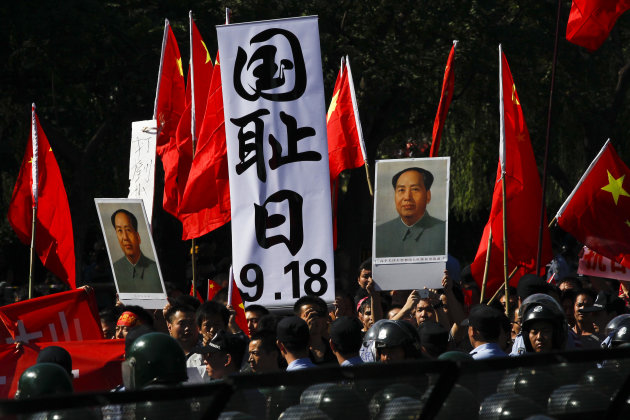
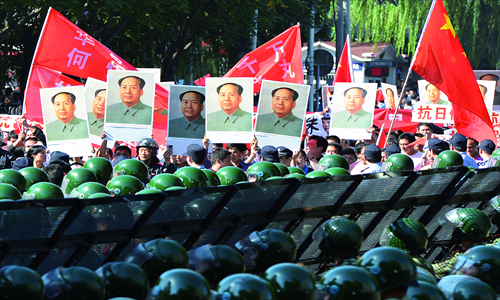
Associated PressA car carrying the U.S. ambassador to China was mildly damaged after becoming the target of boisterous anti-Japan demonstrators who were expressing outrage over a territorial dispute and marking the 81st anniversary of Japan's invasion of China. The State Department said in a statement Wednesday that Ambassador Gary Locke was unhurt in Tuesday's incident, and that diplomats have expressed concerns to the Chinese Foreign Ministry. The statement said around 50 protesters surrounded Locke's car as he tried to enter the embassy and were eventually removed by Chinese security personnel. The incident comes amid heightened vigilance for American diplomats following violent attacks on U.S. embassies in Libya, Yemen and Egypt. The statement said embassy officials have asked the Chinese government to do everything possible to protect American facilities and personnel. People across China have engaged in days of furious protests over some East China Sea islands, claimed by Beijing and Tokyo, that Japan purchased last week from a private owner. The U.S., a close ally of Japan, has said it is staying out of the dispute, but it also been the target of Chinese anger. On Tuesday the dispute mixed with remembrances of a 1931 incident that Japan used as a pretext to invade Manchuria, setting off a brutal occupation of China that ended only at the close of World War II. China marks every Sept. 18 by blowing sirens, but demonstrations such as those seen Tuesday are not routine. Thousands of protesters marched in front of the Japanese Embassy, with some burning Japanese flags and throwing apples, water bottles and eggs. The daylong demonstration periodically spilled over to the nearby U.S. Embassy. The islands are tiny rock outcroppings that have been a sore point between China and Japan for decades. Japan has claimed the islands since 1895. The U.S. took jurisdiction after World War II and turned them over to Japan in 1972. The disagreement escalated last week when the Japanese government said it was purchasing some of the islands from their private owner. Japan considers it an attempt to thwart a potentially more inflammatory move by the governor of Tokyo, who had wanted not only to buy the islands but develop them. But Beijing sees Japan's purchase as an affront to its claims and its past calls for negotiations. Beijing has sent patrol ships inside Japanese-claimed waters around the islands, and some state media have urged Chinese to show their patriotism by boycotting Japanese goods and canceling travel to Japan.
CHINA : Landings fan protest flames
China made representations to Japan over the "illegal landing" of Japanese right-wing activists on the Diaoyu Islands on Tuesday, saying that it is a serious provocation that infringes on China's territorial sovereignty. This Tuesday was also the 81st anniversary of Japan's invasion of China, making the day especially sensitive.
Two Japanese activists arrived on the Diaoyu Islands in a small boat Tuesday morning and swam to the island, and they returned to their boat shortly afterward, according to reports.
The foreign ministry demanded Japan explain its endorsement of right-wing activities, and urged Tokyo to take effective measures and stop any acts that may intensify tensions over the islets.
Liu Jiangyong, a vice dean of the Institute of Modern International Relations at Tsinghua University, told the Global Times that by choosing to land on the Diaoyu Islands on Tuesday, the Japanese activists may have been trying to irritate Chinese people's sentiments.
In many cities across the country, people took to the street to voice their opposition against the Japanese government's "purchase" of the Diaoyu Islands from a "private owner."
Outside the Japanese embassy in Beijing, more than 1,000 protesters faced off against riot police six rows deep. Some threw eggs and plastic bottles at the building and a few scuffles broke out with officers at the gate of the compound.
Japan-based news portal ribenxinwen.com reported that three arrests had been made, but the Beijing Municipal Public Security Bureau did not reply to the Global Times inquiry as of press time.
In Shanghai hundreds of riot police blocked off roads leading to the Japanese consulate, while around 3,000 protesters rallied outside the building. Meanwhile, police authorities in Guangzhou said on their Weibo account that a few people behaved aggressively during the demonstrations.
The protests have prompted Japanese firms including Toyota, Honda and Canon to halt part of their operations in China, after demonstrations in some parts of the country turned violent over the past weekend.
Hong told a press briefing that Chinese people in many areas spontaneously took to the street to protest on Tuesday, which displayed Chinese people's justified position and patriotism.
"Long gone are the days when the Chinese nation was subject to bullying and humiliation from others," said Hong, adding that the Chinese government and its 1.3 billion people wouldn't idly stand by during the encroachment on China's territorial sovereignty.
On the same day, China's Defense Minister Liang Guanglie expressed the hope that the Diaoyu Islands issue with Japan will be peacefully resolved but he warned of "further actions," the Xinhua News Agency reported.
Liang made the remarks after holding talks with visiting US Defense Secretary Leon Panetta in Beijing, noting that Japan is to be blamed for "heating up" the Diaoyu Islands issue as the Japanese government decided to "purchase" the islands.
The Japan Coast Guard (JCG) told the Global Times Tuesday afternoon that 10 Chinese ships were spotted in waters near the Diaoyu Islands.
Early on Tuesday morning, a Chinese fishery management vessel was sighted 42 kilometers away from the Diaoyu Islands, but left the area five hours later, AFP quoted the JCG as saying.
NHK reported later Tuesday that at least two of the 11 Chinese marine surveillance ships and fishery law enforcement vessels entered waters within 12 nautical miles around the islets.
Japanese media also said that some fishing boats marked with Chinese characters were spotted in waters near the Diaoyu Islands. Japan has mobilized its patrol ships in the wake of reports that about 1,000 Chinese fishing ships would head to the area.
Zha Daojiong, a professor with the School of International Studies under Peking University, told the Global Times that it is normal for Chinese law enforcement vessels to patrol in areas where China claims sovereignty. "We shouldn't fear any disputes that may arise."
Six Chinese marine patrol ships entered waters around the islets on Friday to assert China's sovereignty.
Liu said such law enforcement missions have been the most concrete countermeasure taken by the Chinese side, which could put the area under Chinese practical control.
"The government should continue such missions, which have changed the status quo. And the landing of Japanese nationals on the islets would be meaningless for asserting sovereignty in the context of international law," said Liu.
Following Japan's nationalization of the islets, the Chinese government announced maritime baselines of the Diaoyu Islands, sent surveillance fleets to waters around the islands and submitted the outer limits of the continental shelf.
"All these measures have effectively offset the legal consequences of Japan's illegal purchase of the Diaoyu Islands," Hong said Tuesday.
Agencies contributed to this story
Ripples from island dispute
Players pulled from Yonex Open
Amid rising tensions, China has withdrawn players from the six-day Yonex Open badminton tournament that started in Tokyo on Tuesday, The Kyodo News reported.
China had several entries in the tournament being held at Tokyo's Yoyogi National Gymnasium, including the men's pair Cai Yun and Fu Haifeng, who won gold at the London Olympics, according to the agency.
China issues topographical map of Diaoyu Islands
China issued a topographical map of Diaoyu Island and its affiliated islands on Tuesday, in a move seen as another concrete measure to enhance its administration over the islands.
The State Oceanic Administration had earlier released a string of geographic coordinates of the islands, including the exact longitude and latitude of the Diaoyu Island and 70 of its affiliated islands.
U.S. introduces travel curbs for citizens in Pakistan
The United States has imposed travel restrictions for its employees throughout Pakistan following angry protest demonstrations against the anti-Islam film, the U.S. embassy said Tuesday.
The restrictions have been introduced as anti-U.S. demonstrations continued across Pakistan on Tuesday and more are planned in the coming days.
One person was killed and dozens others were injured in a protest outside the U.S. consulate in Karachi on Sunday. The demonstrators had crossed police barriers and reached the consulate, removed American flag and also stoned the building.
Activists of religious and political parties clashed with the police near the U.S. consulate in the northwestern city of Peshawar on Tuesday. The police fired in the air, used tear gas shells and resorted to baton charge to disperse the demonstrators. They also burnt a U.S. flag. At least one protester was injured.
"This security message informs U.S. citizens living in Pakistan that the U.S. government has instituted travel restrictions for its employees throughout the country," the U.S. embassy said in a statement posted on its website.
The alert says that the U.S. government employees can now undertake essential travel only, including within the cities of the capital Islamabad and three provincial capitals -- Karachi, Lahore, and Peshawar, due to possible demonstrations moving along major routes. The U.S. has consulates in the three cities.
"We remind U.S. citizens that demonstrations and protests in Pakistan are often spontaneous and can occur with little advance notice".
The message urged U.S. citizens to avoid all protests and demonstrations and maintain a low profile.
The U.S. citizens have also been asked to monitor the local news and maintain contact with the nearest U.S. embassy or consulate by monitoring their websites for updates on the security situation in Pakistan.
Pakistan: Pro-Taliban militants slaughter Shia
At least five Shia Muslim pilgrims have been killed in an attack against their bus in southwestern Pakistan’s Balochistan Province, Press TV reports.
The incident took place on Tuesday, in Mastung district south of Balochistan’s capital Quetta.
Officials say the bus, on its way towards Tuftan, caught on fire after it was targeted by a roadside bomb.
Every year millions of Muslim pilgrims visit the holy shrines in the Iranian cities of Mashhad and Qom.
The bus had been carrying nearly 40 passengers.
Pakistan's pro-Taliban militants have launched a violent campaign against Shia Muslims over the past years. According to local sources, militants affiliated to Taliban and al-Qaeda terrorist groups have killed hundreds of Shia Muslims in the region since the start of the campaign.
The country’s Shia leaders have called on the government to form a judicial commission to investigate the bloodshed.
The killing of Shias in Pakistan has caused international outrage, with rights groups and regional countries, including Iran, expressing concern over the ongoing deadly violence.
Bahraini regime forces attack houses of opposition leaders
Bahraini forces have stormed the houses of two opposition leaders, Shula and Bazzaz, as the Saudi-backed Al Khalifa regime continues its heavy-handed handling of critics.
Scores of people have been killed and hundreds more injured in the regime crackdown on a popular revolt that started in February 2011. Many others, including opposition leaders and human rights activists, have been also given long jail terms as part of the crackdown.
A report published by the Bahrain Independent Commission of Inquiry in November said regime forces "resorted to the use of unnecessary and excessive force, terror-inspiring behavior and unnecessary damage to property," during popular protests in the country.
Pakistan: US suspends diplomatic missions
DUNYA TVThe US has closed its embassy and consulates in Pakistan to general public for indefinite period. Amid anti-film protests US Tuesday halted public dealing in all its diplomatic missions in Pakistan. According to statement issued by US embassy in Islamabad, all diplomatic missions in the country would be closed for public as security concerns. Meanwhile, US diplomatic personnel were shifted to unclosed location from Karachi consulate as angry protesters advancing to the diplomatic building in red zone of the largest and port city of Pakistan. Clashes between police and mob continued as protesters trying to reach consulate building. Police using tear gas, firing in air and water guns to stop people. Following the violent protests across Pakistan against anti-Islam film, the security has been tightened by the authorities in Peshawar. Fearing the security risk and creating traffic problems, the authorities have blocked a road towards the US consulate as the protests are continued in the city against the release of anti-Islam film. The heavy contingent of police have been placed out on entry and exit points of the consulate while the police are also alert in other parts of the city. US consulate in Lahore was also vacated by US officials who have been shifted to other safe places, local media reports said. Authorities have blocked all roadsgoing towards US diplomatic building in Lahore.
Obama is president of 'all the people'
usatoday.com
President Obama's spokesman responded to the Mitt Romney video today by saying that Obama is president of all the people. "When you're president of the United States, you are president of all the people -- not just the people who voted for you," said White House spokesman Jay Carney. Meanwhile, Obama's Twitter feed said: "We can't afford a president who says 'my job is not to worry about' 47% of the American people." Carney said he hasn't asked Obama if he has seen the video. As reported in our On Politics blog, the newly disclosed videotape of a Romney fundraiser shows the GOP candidate saying that President Obama automatically gets 47% of the vote because of people who are "dependent on the government" and "pay no income tax." The tape has roiled the presidential race with only seven weeks to go. During the White House press briefing, Carney said that Obama did not worry about whether workers or executives voted for him when he sough the auto bailout; the same outlook applied to the health care bill, Carney said. "He's fighting for every American," Carney said. As for Romney's comment that too many Americans see themselves as victims, Carney said: "The president certainly doesn't think that men and women on Social Security are irresponsible or victims; that students aren't responsible or victims ... He certainly doesn't think that middle class families are paying too little in taxes." Romney has stood by his comments, telling reporters last night in California that "the president believes in what I've described as a government-centered society, where government plays a larger and larger role, provides for more and more of the needs of the individuals. "I happen to believe instead in a free enterprise, free individual society where people pursuing their dreams are able to employ one another, build enterprises, build the strongest economy in the world," Romney said. Obama himself may get asked about the comments later today when he appears with talk show host David Letterman. The president's campaign manager, Jim Messina, issued a statement on the Romney tape: "It's shocking that a candidate for President of the United States would go behind closed doors and declare to a group of wealthy donors that half the American people view themselves as â??victims,' entitled to handouts, and are unwilling to take â??personal responsibility' for their lives. It's hard to serve as president for all Americans when you've disdainfully written off half the nation."
Romney says 47 percent of America hooked on government
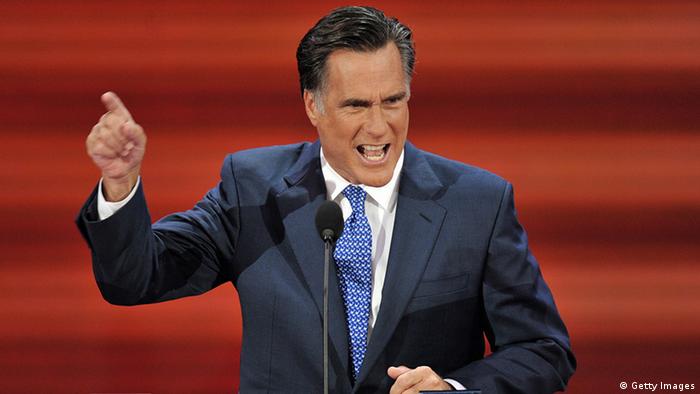
Mitt Romney has stirred up controversy with a video in which he says Obama supporters consider themselves "victims" owed by the government. The Republican candidate trails the incumbent in polls.
On Monday, the magazine Mother Jones posted comments made by Mitt Romney at a private fundraiser in May and taped without the candidate's knowledge.
In the clip, Romney says 47 percent of Americans "will vote for the president no matter what." He calls this group people "dependent upon government, who believe that they are victims, who believe the government has responsibility to care for them, who believe that they are entitled to health care, to food, to housing, to you name it."
"My job is not to worry about those people," Romney says, adding that he has focused on the dwindling independent and undecided voters.
Romney quickly called a news conference on Monday night to say that his words were "not elegantly stated." However, he added that Obama's approach is "attractive to people who are not paying taxes."
'Depressingly inept'
Obama campaign manager Jim Messina responded in a statement to Romney's remarks: "It's hard to serve as president for all Americans when you've disdainfully written off half the nation."he Obama campaign, often enough using Romney's own words, has proved effective at painting the Republican millionaire as out of touch with the needs of everyday Americans. A recent New York Times/CBS poll found that Obama holds a 21-point advantage over Romney with voters in households with annual incomes under $50,000 (38,000 euros). Romney, on the other hand, has a 16-point advantage in households with incomes higher than $100,000.
"As a description of America today, Romney's comment is a country-club fantasy," the conservative New York Times columnist David Brooks wrote in a Tuesday opinion piece responding to the candidate's remarks. "It's what self-satisfied millionaires say to each other. It reinforces every negative view people have about Romney. … He's running a depressingly inept presidential campaign."
Romney had already taken a political hit for his comments last week in the wake of embassy attacks in the Egypt and Libya sparked by an offensive anti-Islam video in the United States. Then, both Democrats and Republicans accused of him of being opportunistic and using poor judgment by accusing Obama of sympathizing with Muslim protests even after the US ambassador was killed in Libya. On Monday, just before the video's release, Romney announced that his campaign would refocus on the economy, seen by many as one of his strengths.
Romney has lost his advantage in that area, however, according to a recent New York Times/CBS poll that found that 47 percent of voters now trust Obama with the economy, versus 46 percent for Romney. That same poll found that 60 percent of voters feel that Obama understands the needs of people like them, with only 40 percent saying that abut Romney.
Pakistan’s pro-Taliban & anti-democracy judiciary
Let Us Build Pakistan
During his 20 minute stint (from 16:18 to 36:32) on the Rana Mubasher show (September 11, 2012) , Senator Faisal Raza Abidi (Pakistan Peoples Party) made some crucial observations regarding the current judiciary’s predisposition towards Takfiri terrorists. While Pakistan’s Taliban apologist media chose to ignore it, Senator Abidi highlighted the important developments of how the Supreme Court is bent upon freeing mass murdering terrorists like Malik Ishaq – leader of Pakistan’s primary Al Qaeda affiliate, the Lashkar-e-Jhangvi.The Supreme Court has a history of supporting the Islamofascist militant brigades of Lal Masjid. It has once again released the chief cleric of Lal Masjid inspite of the latter’s incitement to violence against the very State and Constitution of Pakistan. Pakistan’s civil society has been damningly silent in being critical of this PCO Judiciary. This is because they were instrumental in aligning themselves in a discredited movement to restore disgraced and compromised bureaucrats like Iftikhar Chaudhry and his crony judges. While Pakistan’s civil society is always ready to heap abuse and slander on the martyred leaders of the Pakistan People’s Party, they conveniently paper over their own substantial role in spreading religious extremism in Pakistan. During his brief time on the show, Senator Faisal Raza Abidi reiterated the corruption, bias and prejudice of Pakistan’s anti-democracy and pro-Taliban judiciary. He was even critical of his own party for their lack of courage in resisting judicial tyranny. As Pakistan’s PCO Judiciary gears up to dismiss another elected Prime Minister on an Un-Constitutional basis while going out of its way to thwart the efforts of the Law Enforcement authorities in nabbing Islamist terrorists, one should pay heed to Senator Abidi’s bold critique. We disagree with his unnecessary and insensitive remarks against Ahmadi muslims during one such segment. However, his exposure of this pro-Taliban judiciary and its various biases is the need of the hour.
FM Khar to arrive in Washington today
Foreign Minister Hina Rabbani Khar
will arrive here Tuesday for talks with US Secretary of State Hillary Clinton and other senior officials on bilateral relationship, crucial to the outcome of Afghan conflict.
The two top diplomats are expected to discuss wide-ranging issues including ways to enhance economic and trade cooperation, counterterrorism work along the Durrand Line, peace and security efforts in Afghanistan and regional issues of common interest.
Besides holding formal talks with Clinton, the Pakistani foreign minister will meet with US National Security Advisor Tom Donilon and US Trade Representative Ron Kirk.
Subscribe to:
Posts (Atom)