farsnews.comThe Bahraini and Saudi people are due to stage concurrent rallies in different parts of Bahrain and the Eastern Saudi Qatif region on Sunday to show their outrage at their tyrannical rulers and call for the freedom of political prisoners. The Sunday protests are due to be held under the title of "The Nation Will never Compromise" in the Saudi Qatif region and 50 regions across Bahrain. The organizers of the rallies have announced that the main goal behind the demonstrations is supporting and announcing solidarity with the Bahraini and Saudi dissident leaders who are experiencing harsh pressures and tortures in prison. Anti-government protesters have been holding peaceful demonstrations across Bahrain since mid-February 2011, calling for an end to the Al Khalifa dynasty's over-40-year rule. Violence against the defenseless people escalated after a Saudi-led conglomerate of police, security and military forces from the Persian Gulf Cooperation Council (PGCC) member states - Saudi Arabia, Kuwait, the United Arab Emirates, Oman and Qatar - were dispatched to the tiny Persian Gulf kingdom on March 13, 2011, to help Manama crack down on peaceful protestors. So far, more than 69 people have been killed, hundreds have gone missing and thousands of others have been injured. Also, since February 2011, Saudi protesters have held demonstrations on an almost regular basis in Eastern Provinces, mainly in the Qatif region and the town of Awamiyah, calling for the release of all political prisoners, freedom of expression and assembly, and an end to widespread discrimination. However, the demonstrations have turned into protests against the Al Saud regime, especially since November 2011, when Saudi security forces killed five protesters and injured many others. The Saudi interior ministry issued a statement on March 5, 2011, prohibiting "all forms of demonstrations, marches or protests, and calls for them, because that contradicts the principles of the Islamic Sharia, the values and traditions of Saudi society, and results in disturbing public order and harming public and private interests." In June, Saudi King Abdullah bin Abdulaziz Al Saud ordered the country's security forces to go on a state of high alert due to what he called a "turbulent situation" in the region. According to Human Rights Watch, the Saudi regime "routinely represses expression critical of the government".
Saturday, August 4, 2012
Bahraini, Saudi People to Stage Concurrent Rallies on Sunday
Bahrain: Arrest and Ill-treatment of Human Rights Defender Zainab Al-Khawaja

Pak-Iran Border and Baloch Traders’ Woes
The Baloch Hal
By Muhammad Akbar NotezaiThe Pak-Iran trade gate, Zero-Point, is Pakistan’s only single official legal border crossing into Iran. It is 600 kilometers from the provincial capital, Quetta, situated in Taftan, a town in district Chaghi District. Besides, the Zero-Point trade gate, Iran built a 10-feet high concrete thick wall reinforced with steel rods along its own shared border with the Balochistan province which is stretching from Taftan to Mand in Turbat district. According to Iranian authorities, the fence is built to prevent illegal border crossings, drug trafficking, terror attacks and unlawful transportation into Iran . It is true that largely opium, hashish, heroin and morphine etc. is all smuggled into Iran but, on the other hand, Iranian fuel is also abundantly smuggled into Pakistan. Across the border the Baloch people are densely populated. After the construction of the fence, Iran has divided the Baloch people economically, politically, culturally and socially. That is why the Balochs in Pakistan and Iran are fully cut off from each other although they have a fundamental right to interact and mingle with each other. Kachkol Ali Baloch, the former leader of the opposition in Balochistan Assembly, raised voice against the construction of the said fence, saying that Balochs on both sides of the border were not taken into confidence while constructing the wall. It was, he rightly argued, made against the will of the Baloch people. He had also tabled a resolution in the provincial assembly but no one in the federal government paid head to his legislative move. Since 2003, the Iranian authorities have shut down the Zero-Point on at least four different occasions. Iran justifies its moves by citing terror attacks, bomb explosions and suicide attacks in its Balochistan province. Jundullah, a Sunni militant group led by Abdul Malik Regi, was allegedly responsible for these attacks who, according to Iranian authorities, had sanctuaries in Pakistan’s Balochistan province. Therefore, they kept closing the Zero-Point gate each time for six to seven months, depriving the local traders and populations of their livelihood. Incredibly, Zero-Point remained closed after the execution of Abdul Malik Regi in Iran. Traders are in utter confusion regarding the closure of Zero-Point. Ali Raza Rind, a senior local journalist of district Chaghi, said, “Iranian authorities unilaterally decide whether to open or close the border. Neither they consult Pakistan nor do they negotiate with the local Baloch tribal chiefs while making such important decisions about the Zero-Point. Sadly, local traders are in trouble from both sides because the Frontier Corps (F.C.) personnel also compel the traders to bribe them. Consequently, the problems of local traders and people are compounding instead of decreaseing. While in the past goods from Iran were imported in large quantities, the supply has recently declined. The Iranians have enforced very stringent regulations on the border although goods are still being exported in a large quantity in Iran from the Pakistani side of the border. It is beyond understanding why Pakistani authorities are silent on this key issue and playing the role of a silent spectator? They should pay immediate attention to this serious issue. As this writer spoke to an old trader at Taftan border, he said angrily, “We have been enduring harsh and strict treatment from both sides of the border authorities. Sometimes, they physically assault us without any reason. The Zero-Point gets closed due to violence inside Iran but we frequently have to bear the brunt of it over here. There is no one to seriously address this issue. ” The residents of Taftan, on their part, are deprived of basic necessities of life. They are so poor that they often send their children to work on the border. Mega projects like Saindak and Reko Diq, are situated a few kilometers from Taftan but these projects barely offer any benefits to the people of Balochistan. Labors in Taftan are compelled to work all the day under the sun in return of low very wages. The labors face same hardships as the local traders and the other citizens do in Taftan border area. It is the government’s responsibility to resolve the problems of traders and local people on priority basis so that they continue earning a livelihood without much stress.
Pakistan to be among top 30 research conducting countries by 2018
PPIAn international forecast for research output has shown that Pakistan will be among top 30 countries of the world. Scimago, an independent research organization and an international evaluation and ranking platform, has projected in its recent publication how the world will perform in research by 2018 based on their past performance. The top 50 countries are included in the forecast, says a press release received from HEC on Thursday. China, as expected, becomes the number one country in the world by 2018 in terms of research output, however three countries which stand out and show the most drastic increase in numbers and rankings are Iran, Malaysia and Pakistan. Iran moves ahead from number 19 to number 4, Malaysia from 30 to 13, and Pakistan from 43 to 27. The expected output of research in Pakistan moving up 16 notches, which is the second highest increase worldwide, is primarily due to the innovative higher education policies and reforms taking place in Pakistan under the Higher Education Commission (HEC). During the last few years, in addition to quality reforms, there has been a strong resurgence of research and innovation. In particular, there is a significant growth in the number of PhDs awarded out of Pakistani universities. The numbers speak for themselves. In the first 55 years since Pakistan’s independence, a total of 3281 PhDs were awarded at Pakistani universities. However, since the establishment of the HEC in 2002, over 4000 PhDs have been awarded to-date, which is more than what was awarded in the previous 55 years. There is a renewed focus on engineering and technology, agriculture, biological sciences, business education and social sciences, which are relevant subjects important for the socio-economic development of Pakistan. There is a zero tolerance policy on plagiarism, where every research paper, thesis and dissertation must be scrutinised by anti-plagiarism software before submission. All thesis and dissertation must be evaluated by at least two foreign referees in academically advanced countries in the relevant area of research. Despite having very limited funds, HEC supports many research initiatives through different types of grants, including split PhDs, post-doctoral fellowships, foreign faculty programmes, hosting conferences and to present papers anywhere in the world, to name only a few.
Central Punjab too slipping out of PML-N’s hands?
daily timesThe recent Pakistan Muslim League-Nawaz’s (PML-N) tirade against Pakistan Tehreek-e-Insaf (PTI) Chairman Imran Khan is a renewed attempt to settle the score for damaging the former’s image in its stronghold – the central Punjab. Although, the veracity of allegations levelled by PML-N hawks Khawaja Asif and Nisar Ali Khan is yet to be confirmed, the party has declared the PTI its archrival, at least for the next general elections. In the central Punjab, as many as 100 National Assembly seats (including reserved seats for minorities and women) and over 200 Punjab Assembly seats are at stake. The PML-N which had been accused of playing Punjab card since early 90s in national politics had in fact reduced to the central Punjab. The party bitterly failed in the southern Punjab and managed to hold power riots under the patronage of the Punjab government in Faisalabad, Lahore, Gujranwala and Rawalpindi, the most populous urban centres with millions of people involved in cottage industry and which were the ultimate source of electoral strength for the party since 90s. The worries of the party multiplied when the PTI managed to stage a successful rally in Lahore in October last year while the PML-N could gather only couple of thousand people in its ‘Go Zaradri, Go’ rally in Gowalmandi – the constituency of PML-N President Nawaz Sharif. The Lahore show, which was culmination of PTI mass-contact campaign during those days in districts surrounding provincial metropolis put the last nail in the coffin of PML-N. The Lahore show shook the PML-N badly, particularly after seeing a dull response to its organised rally at Bhaati Gate, yet the hawks in the party appeared to have seen no reasons and instead of addressing skyrocketing prices, black marketing, profiteering and hoarding. Its policy to blame the PPP-led federal government for all ills proved futile. The PTI, on the other hand, kept the PML-N its prime target, seeking appeal for its slogans against the Sharifs and other leaders of the PML-N working in urban centers of the province. A PML-N leadership visibly irked over the PTI’s making it the ultimate choice of political targeting got annoyed with it yet failed to get out of Imran Khan’s target list. The PML-N tried in the recent past to come to terms with the PTI as it contacted the party for consultation over the nomination of the new chief election commissioner and promised to take it on board at the time of the formation of the caretaker government. But the PTI continued chasing the PML-N like a shadow and brought the latter to a point of unprecedented mud slinging which is likely to blacken its face too because it had many skeletons in its cupboard too. On condition of anonymity, a senior PML-N leader from Rawalpindi believed that the party’s politics of using the shoulders of judiciary to further its politics seemed to have lost the steam the day when the Supreme Court on the call of PTI chief decided to hear the Mehran Gate scandal. He said the PML-N had realised that banking heavily on the judiciary had not just weakened the PPP, but also harmed the party’s political interest too. The PML-N leader said the party had almost shun the politics of using the judiciary for political gains against the advice of hawks in the party. According to him, doves in the PML-N argued that sailing with the PPP for democratic transition would be the only choice left since the PTI had gained much political ground against it than any other political party in Punjab and Khyber Pakhtunkhwa. Another PML-N leader from Lahore conceded that the power riots in urban centres were based on exploitation of general sentiments of the masses and was not the handiwork of party’s organisations. He said that the hawkish policy of the party had been ruining its hard- earned image of saviour of democratic system in the country. With general elections around the corner, the party needed to address the problems that fall in its domain rather than accusing the PPP of all the evils, he added.
PTI-PML(N) ‘Test series’ continues
PTI chief says Nawaz involved in $417 million corruption * Throws Nawaz challenge for a one-on-one debateThe blame game between Pakistan Muslim League-Nawaz (PML-N) and Pakistan Tehreek-e-Insaf (PTI) continued on Friday with PTI chief Imran Khan claiming that PML-N chief Nawaz Sharif was involved in $417 million corruption and challenging him to answer his 11 questions on TV. The questions, which he put forward in a press conference, pertained to Nawaz and his family’s alleged corruption. He said the PML-N chief owed Pakistani nation satisfactory answers to the questions he had raised. He asked why Sharif had not filed a lawsuit against author Raymond Decker, who in his book had held him responsible for a corruption of $417 million. Questioning Sharif over “negligible” tax payments while having property worth billions of rupees in the United Kingdom and Raiwind, he accused the PML-N chief of defaulting on bank loans worth Rs 6 billion. “Sharif family borrowed this money and never returned it,” he claimed. How much national exchequer was spent on Raiwind's palatial infrastructure, he asked. “Where did Sharif get money to purchase apartments in Mayfair area of the Great Britain?” Khan asked, adding that the property was estimated at Rs 6 billion. “Where did you get funds to build your Raiwind empire, worth billions of rupees?” he continued. He also raised questions about the funds Nawaz had got to launch Jeddah Steel Mills in Saudi Arabia while in exile.
Pakistan: Discarded Jalozai IDPs
EDITORIAL: THE FRONTIER POSTOne thought that at least the Peshawar High Court’s order would drill a bit of humanity in the stony hearts of the FATA officialdom and soften them up somewhat for the woebegone internally displaced tribal families, living miserably in the Jalozai camp amid official neglect and indifference. The venerable court had directed that electric fans must be provided to the IDPs in the Jalozai and other camps to alleviate their suffering in this severe summer heat. But according to the media reports, the Jalozai residents still stay bereft of this amenity. Indeed, not even power line has been laid for running the fans. Why really is the FATA hierarchy so callous to these unfortunate IDPs? What sin is it that they have committed that this hierarchy is so vengefully out to punish them so heartlessly? Or, is it that this hierarchy thinks they are the children of a lesser god, who need the treatment of perishable worms, not of human beings? Why indeed has it discarded them so shabbily and so cruelly? Has nobody in the hierarchy any time at all for them? Is the KP governor too preoccupied with receiving and giving protocols to take out some time for them, who in reality are his sole charge in every manner? Not once has he visited them, even for form’s sake. He in fact is still to imbibe that his primary job is not to grace prize-giving ceremonies but to be with his people in adversity. And his subordinate bureaucrats seem believing that their job is only to ride sleek SUVs and pass time in their plush air-conditioned offices and comfortably-fitted homes, not to visit the distressed IDPs. Indeed, they mince no words in proclaiming impudently that these grief-stricken human beings are none of their responsibility, as they are living in camps located not in the tribal territory but in settled area of Khyber-Pakhtunkhwa province. Of course, they could get away with such loathsome baloney when their chief, the KP governor, himself is so unmindful of these literally discarded IDPs. But has any of those dudes an idea of how with their inhuman behaviour they are losing on potential ambassadors of goodwill in droves? For an effective fight against militancy and insurgency, a sympathetic public on the side of the state security forces is unarguably an indispensable must. But when these inhumanly-treated IDPs return to their homes, will they not be carrying with them sentiments of bitterness, hostility and scorn against the state? And will this poison they not inject in the minds and hearts of their kith and kin at home? Verily, this could only be the worst thing to happen at this point in time when the military is still engaged in the pacification operations in various parts of the tribal areas. The military has certainly cleared many an area of the militants. But remnants of militancy still persist even in the cleared areas and remain to be tackled to pacify the still-troubled spot, as also to bring security, peace and normality to the region. This entails that a favorable tribal public must be solidly on the side of the state security forces to take on the militant rumps triumphantly. For this, the FATA hierarchy should have been in the forefront in consolidating the military gains by launching into massive rehabilitation and development works in the cleared areas to win the local populace’s hearts and minds and thereby marginalise and isolate the militants. But this inept and incompetent hierarchy has taken a backseat on this count on the obscene excuse that the military has itself sidelined it from the rehabilitation and reconstruction effort. But which military is it that has stopped this stupid hierarchy from looking the IDPs of tribal areas in Jalozai and other camps in KP? Some heads must roll. But who will set the ball rolling when the KP governor himself is so indifferent to these distressed IDPs? Whatever it is, the FATA hierarchy from top to bottom is not playing truants to the IDPs alone, they are in effect playing with the nation’s solidarity and integrity. By the way, where is the FATA secretariat spending the billions of rupees that it has got in the budget for the development of the tribal areas and the progress and wellbeing of its residents?
Baluchistan-TARGETING DOCTORS FOR RANSOM MONEY

Friday, August 3, 2012
Pakistani parents in 'honor' murder
Shafilea Ahmed's parents are found guilty of what has been described as her 'honor murder.' CNN's Atika Shubert reports.
Imran throws 11 flaming questions at Nawaz

Balochistan poetess, lecturer receives life threats
The Express Tribune NewsRenowned Balochistan poetess and lecturer at Sardar Bhadur Khan Women University, Nusheen Qambrani, came under attack by unknown armed men on Qambrani Road late last night who threatened to kidnap and kill her daughter, the police confirmed. Qambrani told the media that for the last four days, unknown men in a car bearing no number plate had been visiting her house when she was present. “They threatened my domestic workers and my family, and said that they wanted to kill me,” Qambrani said, adding that she does not know who the men were or what they wanted. She claimed that the same people have threatened her several times in the past, and was confused as to who would be unhappy with her since she was only a lecturer. Qambrani appealed to the government to take notice of the threats. Meanwhile, a large number of women staged a protest outside the Quetta Press Club on Wednesday condemning the attack on Qambrani. The protesting women were carrying placards, banners and chanted slogans against the government. They urged the judiciary to take a suo motu notice and hold a high-level investigation to identify the culprits. Qambrani is the daughter of famous Baloch intellectual, late Prof Nadir Qambrani, who had spent his youth years in self-exile in Afghanistan. On his return, he had joined the Balochistan University as a lecturer till his retirement. Last year Balochistan University’s Prof. Saba Dashtiyari was killed by unknown men.
Asfandyar Wali calls on President
President of Awami National Party Asfandyar Wali Khan
 called on President Asif Ali Zardari at presidency on Thursday and discussed matters of mutual interest.
He remained with the President for some time and also discussed current situation in the country as well as coalition matters.
called on President Asif Ali Zardari at presidency on Thursday and discussed matters of mutual interest.
He remained with the President for some time and also discussed current situation in the country as well as coalition matters.

Dr Arsalan used CJP House’s address for commercial deals
Daily TimesAccording to reliable sources, Dr Arsalan Iftikhar Chaudhry was using the official address of Chief Justice House, Islamabad, for commercial purposes. He was even using this address for his company with the name and style F.E.A. (Pvt) Ltd. Huge amounts, reportedly over Rs 300 million, were deposited in the account of this company owned by Arsalan Iftikhar with the correspondence address of Chief Justice House. It is a matter of concern that how an account could be opened in the name of a private limited company with the address of Chief Justice House. This is a clear violation of Know Your Customers (KYC) instructions of the State Bank of Pakistan, which are required to be religiously followed by all banks and financial institutions of the country. Legally and morally, it cannot be comprehended as to how the official residence of the Chief Justice of Pakistan can be used for commercial deals. The huge amounts which reportedly were credited as a matter of routine since 2009 in the accounts of Arsalan Iftikhar also raises the question as to why not a single Suspicious Transaction Report (STR) was ever generated. Bankers are under a legal obligation to report all unusual or large transactions to NAB as well as Financial Monitoring Unit (FMU) of the State Bank of Pakistan, which deal with anti-money laundering matters. Under ordinary circumstances, it is the normal practice for the banks to immediately report to the State Bank of Pakistan any transaction that is not commensurate with the financial status of the account holder. In the Arsalan Iftikhar case, it has been widely reported that the present net worth of the Chief Justice’s son is Rs 900 million. It is however relevant to note that until 2007, he was merely a Grade-17 government officer who was totally dependent on his salary or his father. However, no report was ever sent to the State Bank of Pakistan about the sudden surge and accretion in Arsalan Iftikhar’s accounts. This was indeed a phenomenal growth and extremely rare. This non-reporting can either be considered as a great favour to Arsalan by the bankers or they were afraid because the address given for these accounts was the official residence of the Chief Justice of the Islamic Republic of Pakistan. Against this backdrop, a new case is likely to emerge under the Anti-Money Laundering Act 2010 unless the State Bank, FIA, NAB and other agencies opt to keep their eyes shut for obvious reasons. Whether or not the Supreme Court of Pakistan will take suo motu notice of such acts of Arsalan will be seen in the coming days, especially when the criminal inquiry against him has come to a grinding halt on the orders of the apex court. The bankers nevertheless have violated anti-money laundering laws and may now face penal consequences for ignoring Arsalan’s accounts. Will anyone touch Arsalan? Only the Supreme Court can tell.
Kohat tunnel not repaired since 2008

Thursday, August 2, 2012
Bacha Zarin Jan: A melody queen forgotten
The Express Tribune News Network.

Tax evasion charges against Imran Khan

Major Differences Persist for Pakistan, US
VOA.COMThe commander of U.S. and NATO forces in Afghanistan, General John Allen, met Thursday with Pakistan's top military commander General Ashfaq Parvez Kayani. The two countries continue to disagree about how to deal with militants based along the Afghanistan-Pakistan border. The meeting was aimed at building cooperation between the two countries about how to best fight militants who operate in the porous border region between northwest Pakistan and Afghanistan. NATO spokeswoman Major Lori Hodge said from Kabul that improved collaboration is essential. “The future security and stability in the region rests in large part on the strength of the partnership these discussions are forging,” said Hodge. International combat forces are due to leave Afghanistan by the end of 2014. But many fear that militant action by groups such as the Taliban or Haqqani network could quickly destabilize the region.While relations between the United States and Pakistan have improved since Islamabad recently re-opened NATO supply routes into Afghanistan, the two countries remain at odds about how to fight extremist groups. The United States feels Pakistan is not doing enough to combat the militant networks. Pakistan, for its part, says most of the fighters are based in Afghanistan and that international forces have failed to neutralize them. Retired Pakistani Lieutenant General Talat Masood said the military has consistently pushed against the militants in the tribal northwest region. He said the feeling in Pakistan, however, is that a major operation against them now could galvanize all the various militant groups to join forces. "... [it] will create hell for Pakistan, including not only giving resistance in these areas in the tribal belt, but also creating a wave of terrorist attacks in the country," said Masood. "So there is this genuine fear in Pakistan, that is why they don’t want to touch the hornets’ nest.” The talks between Allen and Kayani are aimed at trying to resolve these major differences. Allen’s meeting in Islamabad Thursday coincided with talks in Washington between the head of Pakistan’s intelligence services, Lieutenant General Zahirul Islam, and CIA chief David Petraeus. Masood said the Afghan Taliban, the Pakistani Taliban and the Haqqani network have taken full advantage of the rocky relationship between the allies. “It is a complete failure of all the three countries, the U.S., Pakistan and Afghanistan. Because of their lack of cooperation, their lack of confidence has given rise to the strength of the militants and they have exploited it very intelligently,” said Masood. He said the latest talks signal an improvement, but until the countries agree on how to deal with the militant groups, it is difficult to see how they will move forward.
Bahrain authorities 'weaponising' tear ga


Intel captured in Kabul raid points to Haqqanis

Pakistan refuses to own its 'heretic' scientist
http://www.dw.de
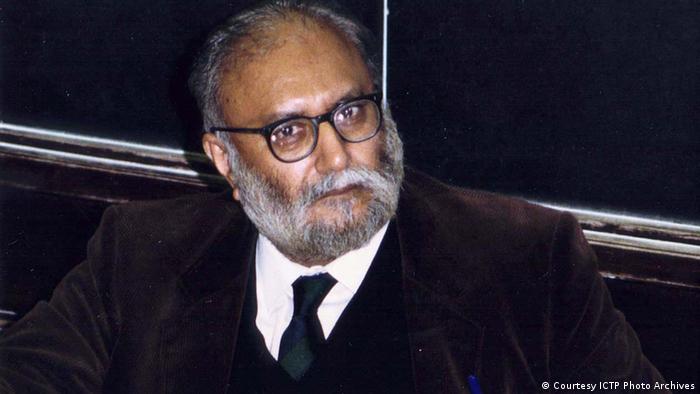
SALUTE TO Prof:Abdus SalamPakistan remains silent about its only Nobel Laureate Abdus Salam and his contribution to the recent discovery of the

Constitutional discriminationThe Islamization of Pakistan, which began during former Prime Minister Zulfiqar Ali Bhutto's government in the 1970s, culminated in the 1980s under the former military dictator General Zia-ul-Haq's Islamist regime. It was during Haq's oppressive rule when Ahmadiyyas (also known as Qadianis in Pakistan) were banned from calling themselves Muslim and building their mosques in the Islamic Republic. Their places of worship were shut down or desecrated by hard-line Islamists with the support of the state. Ahmadiyyas, who believe the messiah Ghulam Ahmed lived after the Prophet Muhammad, insist they are Muslim and demand as much right to practice their faith in Pakistan as other people.Baseer Naveed, senior researcher at the Asian Human Rights Commission in Hong Kong, told DW that the Pakistani state did not want to upset the fundamentalist sections of society by associating itself with an Ahmadiyya scientist. "It is to appease Muslim fundamentalists and right wing parties. More so, it is to appease Saudi Arabia. The Pakistani state is more interested in carrying on with its policy of hatred rather than taking pride in Abdus Salam's contributions," said Naveed. However, Mughal believes the issue is more political than religious. "Until recently, Ahmadis were a relatively strong group within the Pakistani establishment. The dominant Sunni groups felt threatened by them and axed them out of the state affairs," said Mughal. 'The Islamic bomb' Naveed pointed out that it seemed impossible for academics, scientists, writers and researchers to be declared national heroes in Pakistan. "Only warriors and usurpers are glorified," said Naveed. Pakistan's "science hero" happens to be the infamous Dr. Abdul Qadeer Khan, the father of Pakistan's atomic bomb - referred to by Pakistani right-wing groups as the "Islamic bomb." In 2004, Khan publicly confessed that he transferred the nuclear technology to countries like Iran and North Korea. Though the notorious scientist was put under house arrest by former military dictator Pervez Musharraf, Khan is still hailed by the many in Pakistan as country's 'savior.' Pakistan's liberal scholars say that the state takes more pride in and invests more money in developing missiles and nuclear warheads than in promoting actual scientific research. "Research in scientific development has almost stopped in the country," said Naveed, adding that only jihadist ideas and teachings are flourishing in Pakistan. "Most researchers from minority religious sects have already left the country, and those who are still in Pakistan are worried about their lives," he said.
HIGHWAYS IN BALOCHISTAN UNSAFE FOR TRAVEL
India set to launch Mars mission in 2013

Bangladesh tells international charities to stop aiding Rohingyas

'Lashkar-e-Jhangvi responsible for Balochistan law and order situation'
The Express Tribune News Network.Rehman Malik, while briefing the Senate said that banned outfit Lashkar-e-Jhangvi (LeJ) was responsible for the deteriorating law and order situation in Balochistan, Express News reported on Thursday. He said that powers destabilising Pakistan have made a road map, adding that Taliban presence in Balochistan could not be denied. “LeJ and Baloch Liberation Army (BLA) have connections with each other,” said Malik, adding that BLA takes responsibility for most incidents of murder. “Baramdagh Bugti is involved in the abduction and killing of many people,” he said. Asks chairman to summon ISI, FO Senator Rehman Malik requested the Senate chairman to decide a date for summoning the Inter-Services Intelligence (ISI), Foreign Office, Interior Ministry and himself before him. Malik said he would not play the “blame game” but would bring facts and would do so with full responsibility and transparency. “There are many things I will tell you on record and there are many that I will not be able to divulge in open house,” said Malik while briefing the chairman. “The political situation of this region, the security situation of the region, the game of this world power” were some of the things Malik hinted at talking about in his briefing, adding that “we cannot separate Balochistan.” “So when I give that briefing on camera, you will understand what is happening with us and to what extent it can be compared with East Pakistan,” he said. “I will give you some details,” said Malik, adding that if it was not enough for the chairman, he would come tomorrow again to brief them. “I want to give briefing on camera so we can answer questions, tell you what is happening with us in Balochistan.”
Jobless Chitral youths joining Afghan army
Imran Khan gambled with Shaukat Khanum donations
DAILY TIMESResponding to Pakistan Tehreek-e-Insaf’s (PTI) frequent attacks, Pakistan Muslim League-Nawaz (PML-N) on Wednesday hit back by accusing PTI chief Imran Khan of using and losing the donations for the Shaukat Khanum Memorial Hospital (SKMH) in speculative real estate business abroad. PML-N stalwart Khawaja Asif, flanked by Pervez Rasheed, Mushahidullah Khan and Asim Khan, all three from the information wing of the party, at a press conference issued a fact sheet of the SKMH and hurled serious allegations at Khan, challenging him to prove the facts wrong in a court of the law. Asif alleged that Khan had transferred Rs 4.5 billion out of the country from SKMH accounts, which were donated by people in charity to the hospital, to invest in speculative real estate business in Masqat and Dubai and incurred huge losses on those investments. He pointed out that the company through which Shaukat Khanum Trust and Khan invested their money, had declared 64 losses. Asif accused Khan of money laundering and said that not only he put the donations in gambling but also lost the money. He claimed that he had documents to establish the facts and said that money collected from zakat and fitrana was invested in separate businesses. He told the media that the PTI chief had invested the money in unnamed offshore companies and that his front man, Imtiaz Haideri, had transferred the amount.
Isaf Commander departs Pakistan after productive meetings: ISPR
General John R. Allen,
 Commander of International Security Assistance Force Thursday visited GHQ in Rawalpindi and called on General Ashfaq Parvez Kayani, Chief of Army Staff.
This meeting was another in a series of opportunities for the Commanders to continue building upon growing operational cooperation between the Afghanistan National Security Force, Pakistan military and Isaf, ISPR press release said.
All three parties have many shared interests - including their respective commitments to expanding opportunities for coordinated action against terrorists on respective sides of the border who threaten Afghanistan, Pakistan, and the region and supporting Afghanistan's security, stability, and efforts towards reconciliation. They also share a responsibility for protecting the brave Afghan and Pakistani soldiers working in the border region.
The future security and stability of the region rests in large part on the strength of partnership these discussions are forging. The talks also recognized the importance of future opportunities for key ANSF, Pakistani military and Isaf senior leaders to meet, explore means to expand the partnership, and continue this vital work.
General Ashfaq Parvez Kayani during meeting said that Pak-US relationship should be based on mutual trust, respect and transparency. He said current meeting has helped towards improving strategic and operational understanding between Pakistan Military and Nato Forces, press release said.
General John R. Allen during the meeting said "I look forward to these visits and am pleased with the upward spiral in our relationship they represent. We are making significant progress toward building a partnership that is enduring, strategic, carefully defined, and that enhances the security and prosperity of the region."
Commander of International Security Assistance Force Thursday visited GHQ in Rawalpindi and called on General Ashfaq Parvez Kayani, Chief of Army Staff.
This meeting was another in a series of opportunities for the Commanders to continue building upon growing operational cooperation between the Afghanistan National Security Force, Pakistan military and Isaf, ISPR press release said.
All three parties have many shared interests - including their respective commitments to expanding opportunities for coordinated action against terrorists on respective sides of the border who threaten Afghanistan, Pakistan, and the region and supporting Afghanistan's security, stability, and efforts towards reconciliation. They also share a responsibility for protecting the brave Afghan and Pakistani soldiers working in the border region.
The future security and stability of the region rests in large part on the strength of partnership these discussions are forging. The talks also recognized the importance of future opportunities for key ANSF, Pakistani military and Isaf senior leaders to meet, explore means to expand the partnership, and continue this vital work.
General Ashfaq Parvez Kayani during meeting said that Pak-US relationship should be based on mutual trust, respect and transparency. He said current meeting has helped towards improving strategic and operational understanding between Pakistan Military and Nato Forces, press release said.
General John R. Allen during the meeting said "I look forward to these visits and am pleased with the upward spiral in our relationship they represent. We are making significant progress toward building a partnership that is enduring, strategic, carefully defined, and that enhances the security and prosperity of the region."

ISAF Commander meets General Kayani
Wednesday, August 1, 2012
Balochistan spending: Government unaware how its Rs170bn were spent

AAJ TV REPORTING

Are Pakistanis extremists?

BY:Zubeida MustafaTHERE are two ways of effecting a change in a society: from top to bottom or from bottom to top. Conventionally, it has been believed — and development and political strategies are based on this notion — that changes at the top and the trickle-down effect will create an impact at the bottom, where it is needed. Unfortunately, this approach has failed in our case for two reasons. First, in the absence of statesmanship in the leadership and its corruption, the vested interests at the top support the status quo. Hence they obstruct changes in the system or their policies for the benefit of the majority. Second, there is no pressure or demand from below to force those at the helm to reform themselves and the system they administer. Most human rights activists fighting for change adopt the top-down approach. This means that any change in mindset comes about in a small class which the leaders can afford to ignore. Hence my scepticism of this approach, which includes advocacy as has been practised in Pakistan. This was my reaction when I received a lovely book from the Human Rights Commission of Pakistan, Inteha Pasandi sey Nijaat Mumkin hai. The optimistic tone of the title at least forces one to read it in the hope of finding solutions. Experts such as I.A. Rehman, Dr Mubarak Ali, Dr Pervez Hoodbhoy, Dr Mehdi Hasan, etc, give an excellent analysis of the extremism and militancy that plague this country today. Will those who need to be convinced read this book? Or will this be another attempt to preach to the already converted? If the idea is to get the authorities to accept the enlightened suggestions put forward in the book, it is doubtful if these words of wisdom will actually change anything. Policymakers are the ones who are supposed to act when you demand a new social contract, revision of our textbooks or the introduction of economic justice by reforming our social and political structures. Will they? Not without public pressure from below. Only when the masses feel the need for change will they create the demand that will force the government to act. In the absence of this demand the powers that be get away with all their anti-people shenanigans. This demand also has to be mobilised and channelised. Change has been slow in coming to our society because we do not have leaders of public opinion to create a progressive mindset and give a focus to opinion at the grass roots. This is basically the function of political parties. They have, however, failed to play this role because our democracy — even in the phases when it has existed — has been a sham. The political representatives have not felt the need to gather their constituents behind them as they have devised other ways of winning votes. Only activists with a liberal agenda working on the ground at the grass roots have managed to mobilise the people and effect some changes in their lives. But they have not made an impact nationally because their reach and resources are limited. As a result, our society displays a dichotomy that is mind-boggling. The visible layer that is organised, educated and affluent — but is in a minority — demonstrates a growing trend towards religiosity and extremism. Some sections even tend to be militant. For the masses that live below the poverty line, religion is limited to going to the mosque, fasting in Ramazan and observing the ‘Islamic’ dress code. Their opinions cannot even be defined as being extremist, intolerant or militant in the way some opinion surveys project them to be. As for disrupting law and order, that is beyond them. Parveen Rahman, director of the Orangi Pilot Programme Research Training Institute, who has been working at the grass roots in the low-income localities of Karachi and rural Sindh and Punjab, says she is surprised by the patience and lack of aggression shown by people in the face of extreme hardship created by the collapse of the state. Apart from the terrorism unleashed by Islamist militants who are driven by their political goal of seizing power, the violence that is tearing our society apart is related to issues not of a religious nature. The media, academia and the middle class have been penetrated by organised groups — be they the Islami Jamiat Talaba, the Jamaat-i-Islami, Al Huda — or parties that continue to play their proselytising role concertedly. They also provide welfare services through organised networks whose presence cannot be ignored. They win the confidence of the students and the mosque-going and TV-watching middle classes. Parveen Rahman confirms that only by interacting with the people, identifying with them and ensuring that some benefits accrue to them can you win their trust and mobilise them. In his insightful book, Pakistan: Social and Cultural Transformation in a Muslim Nation, Prof Mohammad Qadeer, a professor emeritus from Queen’s University, Canada, points out that developments in Pakistan have “widened the chasm between private and public spaces” with public interest being trumped by private commitments. This is reflected in pervasive corruption and inefficiency. This has left people feeling isolated and insecure. The religious parties are scrambling to fill the vacuum so created, while liberal and secular opinion lags behind as it lacks adequate structures to counteract the religious thrust. This is the area that needs to be addressed by liberals if the country is to be saved from the scourge of religious extremism. The poor are no problem.
AIDS-free generation in Pakistan
THE FRONTIER POST
BY:Waqas BanooriThe stigmatization of HIV/AIDS has been made so much in our society that it has resulted in the hatred and disgust of any infected individual. It has reached to a point that an infectee would never come out to speak that he has been infected with the disease. Caring less that it is just a disease, similar to cancer, tuberculosis, hepatitis or any other epidemic that is life taking; we have developed a behavior that secludes the affectees from the normal life. At present, Pakistan has few testing centers and a total of fifteen treatment centers all over the country. The prevalence is low; however the number of cases is growing. According to the statistics of National AIDS Control Programme, around 4,000 HIV positive people are receiving care at their treatment and care centers. Yet, the number of affected people is unknown due to the general stigmatization, lesser inclination towards testing and the foremost being an unaware society. Let us be clear that no country can possibly know the strength of any epidemic without proper testing system. HIV is an epidemic, and we are unaware of the number of people who are infected with the virus, and who need to be taken care of. The testing system is easy to use, and the advanced research allows a person to test it privately in one’s privacy also. However, it’s better to go for the testing centers to get authentic result. The most common testing systems are the saliva based tests and a series of blood tests to identify if someone is positive or negative. The statistics show that everyday 7,000 new HIV infections occur in the non-affected people. Moreover, the HIV is constantly changing its make-up, and it has not one but millions of viruses-and that is the very reason that the medical research could not find a lead to its cure as yet. However, the scientists believe that there are some promising leads, and they would one day be able to find a cure; yet the promotion of preventive measures is the best way to fight the menace at present. We have to be clear that it is a virus which can be attained only through bodily fluids, and it can pass through the semen or blood, and that all the preventive measures should be ensured at personal and governmental level to stop the spreading of the epidemic. As soon as the virus enters a body, it forms antibodies; and here it is that it can be verified if a person is positive or not. However, some people show the infection immediately, and some may show a little later. Once the infection occurs, the virus causes CD4 count to get lower. The normal count of CD4 in an unaffected person can vary from 700 to 1400, but the person infected with HIV has relatively a lower count. Researchers believe that CD4 count at 350 must be treated, and proper healthcare along with usage of drugs should be followed. For instance, if a person has a CD4 count at 350 and he doesn’t use therapy, it would result in developing other allied diseases. It would also cause further lowering of the count, taking things to worst. However, if a person starts drug therapy at the same count, the CD4 count is expected to reach to 500 at average, which is pretty normal. Let us put another instance where the CD4 count is 200 and this is the point where one contracts AIDS; it brings in various AIDS defining illnesses which include lung diseases, pneumonias, TB and other viral diseases. If a person gets into this stage, the life span is left for 6 to 8 months. Even yet, if a person starts therapy at this stage, the chances are that one can live for up to another 10 years. It brings in chances of reasonably healthy life for a good number of years. Let me put up that the scientists have found people with a CD4 count of zero, and even then those people came back in life using the drug therapy. What matters is the treatment; if the treatment begins at the CD4 count of 350, one can expect a very normal life. It adds that the pain also disappears with time. The drug therapy normally achieves a count of 500; however there are instances where people have been able to take the count back to 700 or higher even. It surely confirms that country like Pakistan is very much able to control the disease at its early stages, and that it can employ resources which can ensure the barring of the epidemic at this very stage; and impede any situation which is worse in the future. As much as HIV infected people are concerned, we have to consider their bodies as machines which are infected by a virus. So, if one takes antivirus to stop the assault of virus on the machine; the virus shall be unable to harm the machine. Similarly, if HIV infected people use the drug therapy, and lead a healthy lifestyle, they can surely force the virus of HIV not to harm them. Now let us understand, the drug therapy helps in prevention only and it is not a cure; however the drug prevents virus to be made in the body. The point is that HIV exists in the body, and that it cannot produce virus while using the therapy. It makes the virus non-infectious. With time, the virus gets fully suppressed and it takes almost 6 months for a virus to be fully suppressed with proper drug therapy and a healthy lifestyle. Coming to the point, HIV testing is the first part of the subject if someone needs therapy. We have to turn the tide against the epidemic, and fight along with the world to handle any unforeseen troubles in the future; for Pakistan is already fighting a number of epidemics. For this, we have to bring in general acceptance to the infected individuals. We have to accept that HIV/AIDS is a disease, and we have to fight it, rather than to stigmatize it. We have to take steps to ensure that the people are tested, the infected ones are dealt with the therapy, and that full suppression of the virus has to be attained to ensure an AIDS-free generation.
Pakistan: Religious freedom and blasphemy
EDITORIAL: DAILY TIMESThe US State Department’s Religious Freedoms Report for 2011 makes an interesting study of minorities’ position in Muslim countries (and beyond), particularly with regard to political changes brought about by the Arab Spring. Despite what the western press, public and polity have embraced as positive advances, particularly in Egypt, Tunisia and Libya, there are growing concerns among religious and ethnic minorities in these countries about freedoms generally, and religious freedoms in particular, under increasingly rightist and Islamist setups. These are not the easiest of these societies’ features for the wider world to understand at a glance, yet the report rightly notes their significance for the months and years to come. As regards Pakistan, our controversial blasphemy law seems to have touched a raw nerve, and rightly so. Few arguments, if any, can be seriously circulated that disprove its misuse, if not abuse, for purposes as far removed from its original elan as it is possible to imagine. It was unfortunate, to say the least, that civil society watched dumbfounded when former governor (late) Salman Taseer’s bold stand for a poor Christan female victim of the law earned him a fanatical assassin’s bullets. And the tragedy degenerated into a bigger travesty of justice when the deranged murderer was lauded, even lionised by people whose minds can only be described as warped. It bears noting that conspiracy theorists tracing the genesis of Islamic radicalism to the west’s need for a ‘replacement’ global enemy after the fall of communism miss the real thrust of the problem. It is more an unintended consequence of relying on extremist elements to achieve overtly political gains, particularly the Soviet defeat in Afghanistan, a leg of the Great Game of which we were an integral part. That since then these militias mutated into well-knit fighting machines, thronging to wherever there is the slightest chance of conflict, is by now more or less widely accepted. And once their global jihad ideology began attracting extremists from across Central Asia, the Middle East, Europe and even mainland America, they developed dynamics of their own that have had the world’s best military and intelligence agencies behind the curve for some time now. The west’s xenophobic reaction, particularly in France and Belgium, also finds few adherents save extremists of another kind. Such policy, though a product of economic, social as well as religious tendencies, is counterproductive, and needs checking. In our own neck of the woods, there is an urgent need to reinvent the secular, tolerant, multi-religious, multi-ethnic Pakistan of the Quaid’s vision, a country that favours coexistence, not confrontation, internally or externally. A Pakistan at peace with itself and the world was what the Quaid envisaged. We have long been critiqued for the influence we export. Perhaps a return to a more rational political equilibrium will merit similar attention, and import.
US warns of Lashkar-e-Taiba threat
Subscribe to:
Posts (Atom)