Saturday, June 23, 2012

Yousuf Raza Gilani's sacking is bad news for Pakistan

BY:Mohammed Hanif
Pakistan's judiciary is starting to care less for the rule of law than the sound of its own sermonising voice. Which suits the military
In the past, Pakistan's supreme court has hanged an elected prime minister on trumped-up charges, sentenced another to life imprisonment and forced several career politicians into exile. So the disqualification of the prime minister, Yousuf Raza Gilani, on contempt-of-court charges should be seen as a step forward. Nobody died, right? The Pakistan Peoples' party and its coalition partners now have another prime minister in the shape of Raja Pervez Ashraf. Pakistan's supreme court will thump its chest and say we have proved that the law is the same for a commoner and a king. Pakistan's all-powerful army will say: look, no hands. So why are Pakistan's human rights activists calling it a judicial coup and warning us that the whole democratic facade is about to be pulled down? Political decisions used to be made in the Pakistani army's HQ. But the action has shifted to court one of the supreme court, in full view of the public, with judgments framed and delivered like soundbites for the primetime news. Since being restored to his job after being sacked by President Musharraf in 2009, the chief justice, Iftikhar Chaudhry, has been betraying an evangelical streak in his pronouncements. Maybe he feels that, with a country full of self-righteous zealots, he needs to adapt their tone. Or perhaps he is one. He doesn't wait for the petitioners to come to the court, he watches TV and acts on his own cognizance. Even the half of Pakistan that can't read or write will tell you what a suo motu is. We have already been quoted Khalil Jibran and the Persian poet Hafiz, and, it seems, a verse from the Qur'an or a hadith is only ever a suo motu notice away. When the chief justice took suo motu notice of allegations of his own son's corruption he turned up in court waving a copy of the Qur'an and insinuating comparisons with himself and the second caliph, Umar. Last year the chief justice took suo motu notice against the country's most famous television actress for possessing a bottle of wine. Elsewhere, one of his sidekicks wondered aloud that if one day Pakistan's parliament were to legalise gay marriages, would the supreme court sit quietly and watch? This court is not as much in love with the rule of law as with the sound of its own sermonising voice. It has also mastered the art of selective justice. The same supreme court that has been sitting on an ISI corruption case for 15 years, the same judiciary that can't look a retired general in the eye or force a serving colonel to appear in court, feels it perfectly constitutional to send a unanimously elected prime minister home. There are not many tears being shed over Gilani. Looking at his record, many would say that he should have stayed home in the first place. But what is the point of clamouring for democracy if we can't elect imperfect people – slightly less competent and way more corrupt than our average traffic cop – to lead us? There are many ways of getting rid of a prime minister (though the old-fashioned way of voting them out has never been tried in Pakistan) but no simple way of telling the country's highest judge, restored to his job as a result of a popular movement, that he has begun to sound like that dictator who sent him home. In Pakistan, generals often confuse access to private golf courses with the country's security. Senior bureaucrats consider it their right to name roads and villages after their grandfathers. Mullahs always fall back on God to justify their greed. Political leaders believe that democracy makes it mandatory to groom sons and daughters to take over their political parties. It's not surprising that senior judges have started to believe that respect for them is the same thing as respect for the rule of law. Pakistanis are being forced to choose between Gilani's right to rule without doing a thing for his people, and a supreme court judge's right to send him home. And people are refusing to choose. For a few days the country lacked a prime minister and a cabinet. And nobody really missed them. The alarm being raised by pro-democracy people in Pakistan is that the whole system is about to be derailed. The supreme court's reckless pursuit of government politicians could pave the way for a caretaker setup that will suit the military establishment. The military, indeed, sulking after a series of humiliations at home and abroad, is watching from the sidelines. Some would say it's even gloating at the prospect of civilian institutions cutting each other down to size, traditionally its job. There was a time in Pakistan when people joked: why hire a lawyer when you can buy a judge? Now you can't buy them because they are too busy shopping for a place in history

Pakistan's new prime minister faces formidable challenges

Pakistan's new prime minister, Raja Pervez Ashraf , formally assumed office on Saturday and is facing countless and tough challenges ahead, with the most formidable ones being the energy crisis, corruption, dealing with independent judiciary, aggressive opposition groups and the revival of normal relationship with the United States. Ashraf took over three days after the country's Supreme Court ruled that his predecessor, Yusuf Raza Gilani, is disqualified from holding office. He was convicted of contempt of court for refusing to re-open corruption cases against President Asif Ali Zardari. The new prime minister in his maiden speech to parliament Friday evening offered talks with the opposition to deal with the country's difficult problems, but opposition leaders dismissed any possibility of reconciliation and called for fresh parliamentary polls. Ashraf faces internal and external problems and the most challenging issue remains corruption cases that he himself and several key leaders of his ruling Pakistan Peoples Party (PPP) are presently facing. Shortly before his election as new prime minister, Pervez Ashraf received a strong message from the Supreme Court that it is set to resume next week hearing of a controversial amnesty law, which has been the major reason for Gilani's exit. The apex court scrapped the National Reconciliation Ordinance in 2009 and reopened all corruption cases including those against President Asif Ali Zardari and nearly 8,000 people, mostly politicians. The Supreme Court pressed Gilani to reopen cases against President Zardari, but he refused to accept the court's repeated orders. Gilani's refusal to write to Swiss authorities for reopening of corruption cases against President Zardari showed him the door and now the new prime minister will have to receive the same court's orders. A petition, seeking orders to be issued to the new prime minister to write to Swiss authorities, was filed in a Pakistan court on Saturday. But President Zardari has categorically said no PPP prime minister would write to Swiss authorities, which means Ashraf's refusal will also deprive him of his prime ministerial position. Ashraf himself is facing charges of receiving kickbacks in a rental power project and is currently defending himself in the Supreme Court of Pakistan. He has also been accused of buying foreign property with illegal money. The Supreme Court declared him involved in the rental power project scam and asked the anti-corruption department to start investigation against him. He would now be a soft target for the judiciary, media and the opposition because of corruption charges against him. The opposition, the Pakistan Muslim League N, the second largest political party of the country after the PPP, has already announced to move court against the new premier. The fast growing corruption in government departments, unemployment and price hikes are other alarming challenges for the new prime minister. To the new premier, the energy crisis might be the most formidable challenge as the country is facing a power shortfall of thousands of megawatts, which has recently caused violent riots. When Ashraf was minister for water and power (2008-2011), he had promised to end power outage, but he had never been successful and the shortage was recorded at nearly 8,000 mw this month. The new prime minister mentioned power crisis in his maiden speech in the National Assembly Friday evening. But he did not offer any immediate solution, which means the problem will haunt him. As there is no immediate solution in the offing, the electricity crisis may worsen as demand would increase in the coming two months in summer. The new prime minister also faces the problem of armed militants, terror attacks and sectarian terrorism. Sensing the problem, Prime Minister Ashraf appealed to the militants to lay down arms and join the national mainstream of society, but the militants have rejected similar appeals from the former prime minister. The militants have stepped up attacks in recent weeks, which clearly show their mood. So there is no immediate solution to the problem. Now defense analysts are advising the government to establish writ in border regions, especially in North Waziristan, ahead of the withdrawal of foreign troops from Afghanistan. The United States has welcomed the new Pakistani prime minister and vowed to work with him at a time when relationship is at its lowest ebb in years. All efforts to normalize relations between the two close allies have not yet produced any results. The main hurdle is seen as the U.S. refused to apologize for the killing of 24 Pakistani soldiers in a NATO air strike in November last year. The fresh refusal came from the U.S. Secretary Defense Leon Panetta on Friday when he said that Washington will not tender apology. At the same time a U.S. report suggests that American diplomats in Pakistan are being harassed. Pakistan denied the charges. On the other hand, Pakistan is unwilling to reopen the supply line for NATO forces in Afghanistan unless the U.S. accepts its demands including the U.S. apology and payment of tax on NATO trucks. The new Pakistani prime minister in his Friday parliament speech briefly mentioned Pakistan's wish to have dignified relations with the United States. The much needed peace and reconciliation in neighboring Afghanistan is key to Pakistan's stability and the U.S. and Kabul seek Islamabad's active role to facilitate the process by convincing the Afghan Taliban to join the peace process. Pakistan on a number of occasions have promised to help in the peace process, but President Hamid Karzai's administration now wants Pakistan takes practical steps as the Afghan endgame is set to be started. Realizing Pakistan's role, Ashraf touched on Afghanistan in his maiden parliament address. Although Pakistan and India are talking to resolve long- standing disputes, the new prime minister will face the challenge as how to restore the trust of India to make the dialogue process fruitful. Ashraf vowed good relationship with India and said Pakistan will continue talks with India, a positive sign sent across the border. In foreign relations, the prime minister referred exclusively to Pakistan's historic and time-tested relations with China and praised Beijing for siding with Islamabad in all difficult times. Ashraf's comments on China received applause in parliament at a time when Islamabad is struggling to put on track its relations with the United States.

U.S. :Negotiators closing in on student loan deal

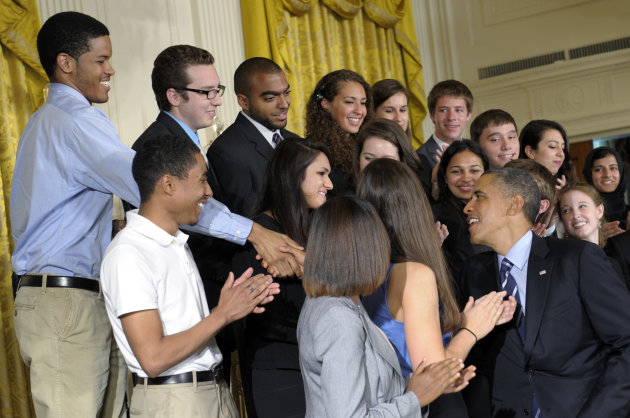
Congressional bargainers appeared to be closing in on a compromise that would head off a July 1 doubling of interest rates on federal loans to 7.4 million college students and end an election-year battle between President Barack Obama and Congress. Senate aides from both parties said Friday the two sides were moving toward a deal on how to pay the measure's $6 billion price tag, the chief source of partisan conflict. The goal is to push legislation through Congress next week so the current 3.4 percent interest rate on subsidized Stafford loans can be preserved for another year. A 2007 law gradually reduced interest rates on the loans but required them to balloon back to 6.8 percent this July 1 in a cost-saving maneuver. On another front, the two sides were also close to an agreement to overhaul federal transportation programs, according to House and Senate aides from both parties. Negotiations were expected to continue through the weekend, with votes expected next week on either a major transportation bill or an extension of current programs, said the aides, who spoke on condition of anonymity to discuss details of the talks. Obama said Saturday in his weekly radio and Internet address there was "no excuse for inaction." "Right now, we are seven days away from thousands of American workers having to walk off the job because Congress hasn't passed a transportation bill. We are eight days away from nearly seven and a half million students seeing their loan rates double because Congress hasn't acted to stop it," Obama said. "This makes no sense." For weeks, Obama has ridiculed Republicans for not moving quickly to prevent student loan interest rates from doubling, a stance that Democrats have hoped will boost his support among young voters who broadly backed him in the 2008 election. With college costs and student debt growing steadily, the issue ties directly into concerns about the economy and jobs that polls show dominate voters' worries. Though some rank-and-file GOP lawmakers have opposed letting the government set the rates, Republican presidential challenger Mitt Romney and GOP congressional leaders have backed the one-year extension. The remaining dispute has been over how to pay for it. Republicans have accused Obama of creating a phony issue and drawing out the battle in an attempt to reap political points. In late May, they proposed several options to pay for the measure, all of which were culled from budget savings Obama himself had proposed in the past, but they said the White House was ignoring them. "Even though the White House refuses to respond to our bipartisan approach, Senate Democrats are finally working with us, and a solution is within reach — despite the president's failure to act," said Don Stewart, spokesman for Senate Minority Leader Mitch McConnell, R-Ky. The talks have involved aides to McConnell and Senate Majority Leader Harry Reid, D-Nev. Democrats said the White House has been kept abreast of the talks, while Republicans said House Speaker John Boehner, R-Ohio, has been kept informed but hasn't participated in the negotiations. According to Democratic aides, negotiators are approaching a deal to cover the bill's costs by charging companies more to insure pensions and changing rules so companies take fewer tax deductions for their pension contributions. Reid proposed both of those ideas this month. They said additional money would come from a list of options McConnell has offered, probably one to limit federal subsidies of undergraduates' loans to six years. The government does not begin charging interest on Stafford loans until after students graduate, which can take longer than six years. "While we're not there, we're well down the road. I think we can get something done," Reid told reporters Thursday. He said McConnell and Boehner "are compromising just as we are and hope we can get something done." If allowed to double, the higher 6.8 percent rate would apply only to new subsidized Stafford loans for undergraduates approved starting on July 1 and would not affect existing loans. According to the Education Department, 7.4 million students are expected to get new Stafford loans in the year beginning July 1, with each borrowing an average $4,226. A doubling of interest rates would add about $1,000 to the costs of the average loan, which students typically pay off over 10 or more years. The Federal Reserve Bank of New York said last month that student loan debt grew this year to $904 billion, even as other types of consumer debt were falling. ___

Bahrain opposition leader injured in protest

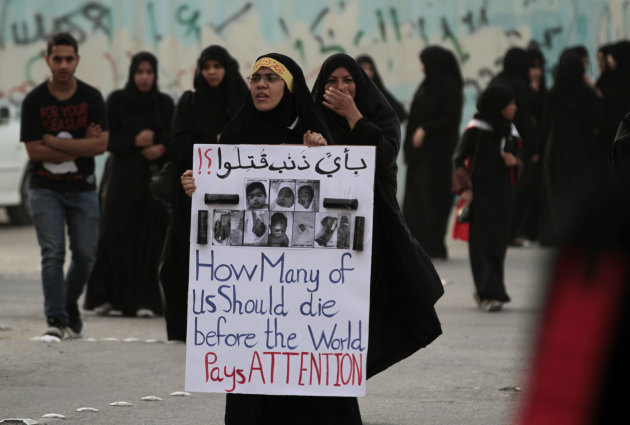
Bahraini riot police fired tear gas, stun grenades and rubber bullets Friday, injuring the head of the Shiite majority's main political bloc while trying to break up protests in the country's capital, the opposition said. Al Wefaq's secretary-general Sheik Ali Salman told The Associated Press he was hit in the shoulder and back by either a tear gas canister or stun grenade during demonstrations in Manama, which are common following Friday prayers. He had red welts on his skin but seemed otherwise in good health. Al Wefaq had earlier said that rubber bullets had caused the injury. He said he was leading about 40 protesters on the way to a march when they encountered police who ordered them to disperse and then started firing into the crowd. Hassan al-Marzooq, another opposition leader, was hit in the neck by a rubber bullet, an Al Wefaq statement said. He has since been taken to a private hospital in the capital for treatment. Salman said the leaders had been intentionally targeted, the first time that the Bahrain security forces had done so. "More violations will complicate our efforts for reconciliation and a meaningful dialogue," he said. "We continue our democratic demands and call for universal human rights principles through peaceful assemblies. It is the people's right." Bahrain has experienced near daily protests for 16 months caused by an uprising by the kingdom's Shiite majority seeking greater political rights from the Western-backed Sunni monarchy. The country's rulers have crucial support from neighboring Saudi Arabia, but are under pressure from their U.S. allies to reopen dialogue with Shiite opposition factions. A new government initiative for talks is expected to be announced soon. But main Shiite groups have already signaled that negotiations are futile unless the ruling dynasty agrees to give up its near total control of government affairs in the strategic island, which is home to the U.S. Navy's 5th Fleet. Opposition groups had requested a permit to hold Friday's protest but said they were denied one by authorities. They attempted to march anyway to the site of a historic Shiite mosque, sparking several hours of clashes with riot police. Along with the protest leaders, Al Wefaq said scores were injured from inhaling tear gas during several hours of clashes. Security forces closed roads leading to the protest site and protesters responded by lighting fires along the roadside.

Twenty dead in Taliban siege of Afghan hotel; NATO blames Haqqanis

Elite Afghan police backed by NATO forces ended a 12-hour siege on Friday at a popular lakeside hotel outside Kabul, leaving at least 20 dead after Taliban gunmen stormed the lakeside building, bursting into a party and seizing dozens of hostages. The night-time assault on the hotel with rocket-propelled grenades, suicide vests and machine guns again proved how potent the Islamist insurgency remains after a decade of war. The commander of NATO forces in Afghanistan said the attack bore the signature of the Taliban-linked Haqqani group that he said continued to operate from Pakistan, a charge that could further escalate tensions with Islamabad. General John Allen's comments come days after U.S. Defense Secretary Leon Panetta said Washington was at the limits of its patience with Pakistan over the existence of militant networks including the Haqqanis. Pakistan says it is doing everything it can to fight militants on its side of the border and accuses Afghanistan of trying to shift the blame for its failure to combat the insurgency. At the hotel, terrified guests jumped into the lake in the darkness to escape the carnage, Afghan officials and residents said. Up to 300 people had been inside the hotel when the attack began. Afghan interior ministry spokesman Sediq Sediqqi said 12 to 15 civilians, two hotel guards and a policeman were killed in the gunbattle at the Spozhmai hotel, overlooking Qargha Lake. Five attackers were also killed. The attack, quickly claimed by the Afghan Taliban, again showed the ability of insurgents to stage high-profile raids even as NATO nations prepare to withdraw most of their combat troops by the end of 2014 and leave Afghans to lead the fight. "Afghan National Security Forces and coalition military sources acknowledge that this attack bears the signature of the Haqqani network, which continues to target and kill innocent Afghans and blatantly violate Afghan sovereignty from the safety of Pakistan," General Allen said in a statement. Blood was splattered over the hotel floor and the crumpled body of a man lay in the garden. Women and children were among the wounded. "We heard a heavy explosion from a rocket-propelled grenade. We tried to escape, but we were surrounded by suicide bombers. We hid ourselves behind a tree until morning. God protected us," said Abdullah Samadi, 24. The gunmen, Samadi said, had been closely watching their prisoners and searching for illegal stocks of wine. "Around dawn they came closer to us and we had to jump in the water. We were there until 9 a.m. and then the situation got better and we slowly, slowly swam toward security forces," he said. Sediqqi said the Taliban were using civilians as human shields to defend themselves and held about 50 people hostage late into Friday morning. Elite Afghan quick-response police backed by NATO troops freed at least 35 hostages in an operation that only began in earnest after sunrise to help security forces avoid civilian deaths in night-time confusion. The Taliban complained wealthy Afghans and foreigners used the hotel, about 10 km (6 miles) from the center of Kabul, for "prostitution" and "wild parties" ahead of the Friday religious day holiday. Launching their annual offensive this spring, the Taliban threatened to attack more government officials and rich Afghans, but the hotel assault was one of few in which multiple hostages were taken since the start of the war, now in its 11th year. President Hamid Karzai said attacking a place where people went for picnics was a sign of defeat for the enemies of Afghanistan. "This is a crime against humanity because they targeted children, women and civilians picnicking at the lake. There wasn't even a single soldier around there," said General Mohammad Zahir, head of the Kabul police investigation unit. Television pictures showed several people wading out of the lake onto a balcony and clambering over a wall to safety. NATO attack helicopters could be seen over the single-storey hotel building and a balcony popular with guests for its sunset views, while a pall of smoke rose into the air. NEW FACE OF INSURGENCY? Soldiers and police fanned out around the hotel at dawn, arriving in cars and armored Humvee vehicles and taking cover behind trees flanking the lake and a nearby golf course. Qargha Lake is one of Kabul's few options for weekend getaways. Restaurants and hotels that dot the shore are popular with Afghan government officials and businessmen, particularly on Thursday nights. Guests at the Spozhmai must pass through security checks before entering the hotel, where tables with umbrellas overlook the water, but security is relatively light for a city vulnerable to militant attacks. Violence across Afghanistan has surged in recent days, with three U.S. soldiers and more than a dozen civilians killed in successive attacks, mostly in the country's east, where NATO-led forces have focused their efforts during the summer fighting months. NATO commanders, halfway into the process of transferring security responsibility to Afghan forces, are racing through training for the Afghan army and police, including holding basic literacy classes for recruits. Well-planned assaults in Kabul in the past year have raised questions about whether the Taliban and their al Qaeda-linked Haqqani network allies have shifted tactics to embrace attacks on landmarks, foreigners and Afghanistan's elite, extending a guerrilla war once primarily waged in the countryside.

Balochistan: Attack on BUITEMS Bus

EDITORIAL: The Baloch Hal
In yet another tragic act of terrorism in Quetta on Monday, June 18, at least five students of the Balochistan University of Information Technology, Engineering and Management Sciences (BUITEMS) were killed while around 60 people were injured. The attack was caused by a remote-controlled bomb which was fixed in a car parked on the roadside. Until the writing of this editorial, no group has accepted responsibility for the attack. The local police say they are investigating the tragic episode. Considering the police department’s failure in the past to probe such unfortunate assaults, it is very unlikely to come across reliable findings regarding Monday’s blast from the police department. Authorities in Balochistan find it easy to get away from responsibility by simply blaming ‘outside forces’ for causing instability in the province. That is a shortcut to find exemption from one’s responsibilities but not an appropriate response to questions raised in the aftermath of such attacks. We believe the enemy lies within us but such blatant denial amounts to encouraging and patronizing enemies of humanity. According to reports, all of the dead students belong to the Hazara ethnic community. This then takes us back to the ongoing cycle of the gruesome violence directed at the Hazaras for several years now. There has been an extraordinary upsurge in violence from the Sunni militant groups against the largely peaceful Hazara community in the past few months. The perpetrators are hard to catch because of their nastily creative skills. Each attack on the Hazaras is designed in a new and unique way by making it hard for the local police to act on the basis of learnt lessons from previous incidents. Although there have been a few serious attacks on buses carrying Hazara pilgrims to Iran, killing dozens of innocent people, an attack on a student bus is unprecedented. The killing of students triggered protests in front of the Quetta Press Club from students who called upon the government to punish the elements responsible for this dark episode. There is an urgent need for the government to fulfill its responsibility of protecting people’s lives. Sunni militant groups which have been attacking Hazaras have a clear strategy and a clearly defined goal. Not only do they want to terrify the Hazaras by such brutal assaults, but they want to make sure that the Hazaras remained tightly confined to their towns. They want to restrict the Hazara men from going to markets and attending schools. We have said it a number of times before that the State should play its role in protecting people’s right to religious and political freedom and also the right to assemble. At micro-level, the intention of the blast may have been to punish the Hazara students, such attacks set an extremely dangerous trend in our society. Irrespective of nature and demands of the ongoing conflicts in Balochistan, we strongly urge all stakeholders to refrain from attacking our educational institutions and students in their conflicts. The state of education has abysmally declined in the recent times in Balochistan for a number of reasons. Yet, we sincerely hope that issues like religion and politics do not perturb students’ academic years. The government must act swiftly to bring justice to the families of those students who were killed in Monday’s attack.

POLIO: Call for help: Going beyond the limitations of polio and social norms

Published In The Express Tribune
Though he walks with crutches, Taimur Sajid’s ideals stand tall. He was diagnosed with polio at the tender age of one but chose to fight the odds keeping him from following his goals. Currently pursuing an Economics degree at Jahanzeb College in Swat, the 22-year-old wants to lead a dignified life. For this reason, he has appealed to the president of Pakistan and humanitarian organisations to assist him in getting treatment. Besides the financial resources, he lacks a social support system to help overcome the crippling disease. To his dismay, some conservative groups in his native Faizabad village consider polio vaccination “an anti-Muslim tactic to control and decrease the Muslim population”. However, Taimur hopes to eradicate the polio virus by steering clear of such myths. “To consider vaccination anti-Islamic is just absurd,” he said. Back when his parents found out about his disease, the concept of polio inoculation was unheard of. Even his grandmother was not in the favour of vaccination. “My grandmother openly rejected the idea. She also discouraged my parents from getting me vaccinated,” he said. However, his parents now repent over their decision that has left him crippled in one leg, he said. Despite disability, he wants to further his education and harness his sporty side. “I love cricket and can bat well. Though several times, I’ve had difficulty in carrying out my routine activities but I never let it upset me. I will complete my education and will get masters degree in my field,” he said, his eyes brightening up as he talked about his future plans. “I hate to be dependent on others and want to stand on my own feet finishing my studies. I aim to bust the myths floating around about polio immunisation,” he said. Taimur has consulted a physiotherapist in the Orthopedic Medical Centre in Lahore, who reinforced his hope of returning to a normal life. After conducting a detailed checkup, the doctor told him that his disability was curable with two surgeries. “But I can’t afford the sugeries, which cost about Rs300,000.” He added, “If the government of Pakistan or any humanitarian organisation help me by sponsoring my surgeries, I will walk like normal people .and realise my dream of getting rid of crutches.”

PAKISTANI ESTABLISHMENT & THE PPP GOVERNMENTS

It had been proved beyond doubt that the Pakistani establishment has zero tolerance for any PPP Government at any stage of Pakistani history. The recent and past decisions of the Supreme Court of Pakistan and off and on remarks of the judges during the proceedings of various cases confirmed this belief. In any case, the PPP is the most popular party of the people of Pakistan whether the establishment likes it or not. The Pakistani establishment will have to live with it permanently developing a durable tolerance to any PPP rule. Similar zero tolerance is for the Awami National Party with its political base in KPK and the Balochistan National Party with its base in Balochistan and both the parties are treated at par with the PPP at the Centre and Sindh. To be precise, the PPP, ANP and BNP are truly Pakistani nationalist parties and believed in Pakistani patriotism which the establishment refuses to accept to this date. In Sindh, the MQM is promoted, financed and supported by the establishment to remain a check and counterweight to the PPP, mainly in the urban centres. The MQM had been allowed to retain guns and bully all its constituents when elections are held so that it should emerge as the second largest of most powerful gun wielding party in Karachi. Almost all the Supreme Court decisions against the PPP Government and officials were deplorable as it proved to be a destabilizing factor in politics at this crucial juncture when the country is facing challenges from all corners and the PPP is the only hope to provide a smooth sail. Other political parties in the Opposition are Jihadis and disliked by the world community for obvious link with the Jihadi elements undermining international order, peace and security. It will be a complete disaster for Pakistan if the establishment tried to impose the Jihadi parties, led by PML-N, and in the next elections as the world may not tolerate such elements in power in Pakistan in the backdrop of perennial conflicts with Afghanistan and India. Presumably, the Establishment is losing patience in facing hostile attitude from the US Administration which is increasing pressure on Pakistan to surrender to its terms in Afghanistan, support the US strategy in Afghanistan and surrender its own design making it backyard of the security of Pakistan in the shape of strategic depth. It is the main cause of conflict between Pakistan and the US and Washington is rallying round other countries, mainly India and inducting India into the new Afghan strategy keeping Pakistan out in the game for ever. The dispute with Pakistan had forced the US to keep its military presence till 2024. Naïve political and military leaders thought that US will again abandon Afghanistan on the pattern of 1989 when Soviets withdrew the Red Army Contingents. They had mistaken and now it is clear that the US forces are here in the region on permanent basis dealing with both Pakistan and Iran, the two neighbouring countries US believed are hostile to US interests in the region. The massive US naval presence on Baloch gulf should be an eye opener for all naïve people who claimed that the US stood defeated in Afghanistan and the US forces are on the run. We have to accept the ground realities and develop or repair our relations with US keeping in view the interests of the people of Pakistan. The US stand is ground tough with every passing day and any adventure on the part of the Pakistani establishment, through its proxies, can be disastrous for the country and its security. Before the situation goes out of hand, we must make efforts to repair our relations with the US and also with all neighbouring assuring sovereign equality in international relations in the interest of regional peace and security.

LOHAR CHIEF MINISTER JOINS STREET PROTESTS!

EDITORIAL:CHIEF MINISTER JOINS STREET PROTESTS!
The PML had ruled Punjab for five times in recent decades and still the Chief Executive of the Province is behaving irresponsibly not only by encouraging street violence rather joining personally the street protests and more than once. It is unusual that how a Provincial Government can main order, protect lives and property of the citizens when the disorderly crowd resort to rampage attacking public property and destroying houses of the elected members of the National Assembly. It is happened in our country only, particularly in the Province of Punjab where democratic traditions had never taken roots, and such a situation is unheard in any other part of the world that the provincial chief executive is joining street agitation instead of calming down the enraged and unruly crowd preventing them from unruly behaviour. Interestingly, there is no forum in our country to make the Chief Minister accountable. The superior courts are hostile to the Federal Government and friendly to the Punjab Government for unknown reasons. Strong remarks had been passed against the Governments in KPK and Balochistan by the superior courts and not against the Punjab Government. We have to change this culture of strong likes and dislikes and treat all concerned at par and without any discrimination. Pakistan is facing serious challenges and stood completely isolated in the world community at the moment and even our close allies are reluctant to back us in this crucial stage of our history. There is a need to treat all people of Pakistan at par and there should be no discrimination against any one. At the same time, Pakistan is facing the worst economic crisis and the US sanctions are about to come on one pretext or the other making situation more grim and dangerous. The constant economic downturn had made the thing worst for the Government and the people forcing prolonged load shedding. The load shedding is not confined to Punjab and the textile city of Faisalabad where protest is strong because multi-billionaires are not making enough money because of load shedding. We in Balochistan are also facing 22 hours of load shedding and hardly there is hue and cry from Balochistan. The tycoons demand power and gas without any interruption so that they should continue to earn billions at the cost of the poor people of Pakistan. They are patronizing the street agitation, violence on the streets with the support and patronage of the Punjab Chief Minister. The move is to topple down the Government and forced early elections as conspirators from behind the scene wanted it and they want to dislodge the PPP Government before it completes the constitutional tenure. The removal of Prime Minister from the office and disqualifying him for five long years is part of the game. Even the next Prime Minister Makhdoom Shahabuddin will not be allowed to rule for months and he too will face the demand to write a letter to Swiss authorities against the sitting President of Pakistan and bring him to disrepute the world over. We hope that the forces out to destabilize the Government will stop their game as it will destabilize Pakistan itself at this crucial stage when it is stood completely isolated in the world community. Unstable Pakistan is not in the interest of the people and it will serve the purpose of enemies of Pakistan, to say the least. It should be an eye opener to all concerned that the US had inducted India in its Afghanistan strategy asking Indians to train the Afghan security forces and play a greater replacing the past role of Pakistan in helping Afghanistan. The recent move to repair ties with India may not work properly because of the US interests in the region and Washington may not permit India to repair its relations with Pakistan for strategic reasons.

US ‘mulls’ new covert raids in Pakistan

Frustrated with frequent attacks on Americans in Afghanistan, the US military and intelligence officials are considering launching secret joint US-Afghan commando raids into Pakistan to hunt down the militants. According to media reports, the idea has been consistently rejected because the White House believes the chance of successfully rooting out the deadly Haqqani network would not be worth the intense diplomatic blowback from Pakistan that inevitably would ensue. Members of the Haqqani tribe have been targeted by pilotless US drone aircraft, but sending American and Afghan troops into Pakistan would be a serious escalation of the hunt for terrorists and potentially the final straw for Pakistan, already angered over what it sees as US violations of its sovereignty. The latest round of debate over whether to launch clandestine special operations raids into Pakistan against the Haqqanis came after the June 1 car bombing of Forward Operating Base Salerno in eastern Afghanistan that injured up to 100 US and Afghan soldiers, according to three current and two former US officials who were briefed on the discussions. The officials spoke on condition of anonymity to describe the still-evolving debates. The officials told the Associated Press that recent discussions of clandestine ground attacks have included General John Allen, the senior US commander in Afghanistan, as well as top CIA and special operations officials. Allen’s spokesman, Navy Cmdr. Brook DeWalt, said Allen “has not and does not intend to push for a cross-border operation.” The White House and the CIA declined to comment for this story. Pentagon spokesman George Little said the US was still focused on US-Pakistan cooperation. “The key is to work together with Pakistan to find ways of fighting terrorists who threaten both the United States and Pakistan, including along the Afghan-Pakistan border, where extremists continue to plot attacks against coalition forces and innocent civilians,” he said. The officials say Allen expressed frustration that militants would attack and then flee across the border in Pakistan, immediately taking shelter in urban areas where attacking them by missile fire could kill civilians. The officials say options that have been prepared for President Barack Obama’s review included raids that could be carried out by US special operations forces together with Afghan commandos, ranging from air assaults that drop raiders deep inside the tribal areas to hit top leaders to shorter dashes only a few miles into Pakistan territory. The shorter raids would not necessarily be covert, as they could be carried out following the US military principle known as “hot pursuit” that military officials say entitles their forces to pursue a target that attacks them in Afghanistan up to 10 kilometers (6.2 miles) inside a neighboring country’s territory.

Poem: A tribute to judicial system of Pakistan

By:Kanwal Zaidi

Pakistan officials 'hindering' US diplomats

Rising obstruction of US envoys by officials in Pakistan is "significantly impairing" the work of US personnel there, a state department report says. The findings said interference by Pakistani officials reached "new levels of intensity" in 2011. The US raid on Osama Bin Laden's compound and a Nato air strike that killed 24 Pakistani soldiers were identified as turning points. Recent months have seen a marked deterioration of US-Pakistan relations. Pakistan withdrew military co-operation in the wake of the deadly November air strike, and correspondents say it marked a change in relations between the two countries. The report, by the state department's inspector general, acknowledged that the Pakistani government had previously interfered with US officials on its soil.However, it said the problem had become much worse and recommended that the issue should be taken up by the US with Pakistan at the highest levels of government. "Official Pakistani obstructionism and harassment, an endemic problem in Pakistan, has increased to the point where it is significantly impairing mission operations and program implementation," the state department review said. It described the harassment as "deliberate, wilful and systematic" and said examples of the obstruction included delays in getting visas, holding up shipments for construction projects and aid programmes, and surveillance of employees. The report also claimed US officials were being singled out more than other international diplomats. "While other diplomatic missions have experienced similar treatment, the United States is clearly the principal target," the report said.The report was based on visits to the US missions in the Pakistani cities of Islamabad, Karachi, Peshawar, and Lahore. It describes the raid on Bin Laden's compound as a double embarrassment for the government, saying it was evidence of "both Pakistani government incompetence and its inability to detect or defend against a military intervention". "Events of the past year have rocked the US-Pakistani relationship and fundamentally altered the assumptions on which US engagement with Pakistan has been based since 2009," it added.

Pakistan: Elections but then what?

EDITORIAL: THE FRONTIER POST
As the nation has fallen into political straits, calls are coming out from certain quarters for snap general elections. But what for? None of the callers is explaining this. Certainly, not a single heart would weep on the street if the entire gaggle of incumbent rulers, both at the centre and in the provinces, goes packing, so inept, so incompetent and so ineffective has it demonstrated it to be. But if the snap poll is merely for a change of faces, then what is the point in having it at all? It would be a sheer meaningless expensive venture without which the polity indeed would be quite well off. But if it is for a change in substance, then nothing like it. Nonetheless, that is where lies the rub. None of the callers gives the sense if this is what has actually prompted his call. And none tells the masses what it would be after the snap polls. They all remain focused on recounting the collapses, foibles and failures of the incumbents. But of this the masses need no telling at all when they are the ones who actually are bearing all the brunt of the incumbents' betrayal of the electorate. On this count, the masses are indeed far more informed than are the callers of snap polls because of their personal experiences and observations of their daily lives. What the masses need to know is what would be on offer for them if the snap elections throw up new faces. Do the callers have some firmed up plans in their bags to tackle their problems of bread and butter that the incumbents have so spectacularly failed to handle any gratifyingly? And on that score they find the slate of each and every caller all empty. None of them shows even the slightest inkling if at all he has done any homework in this regard. It is only rhetorical chants and vague promises that they all dish out on this plane. No concrete plan or idea they speak out. Indeed, Nawaz Sharif, for one, stays stuck in the past primarily, with the future attracting him only to throw up some empty slogans here and there. And even about past he is blatantly untruthful. He would have his listeners believe that his rules were a golden era, forgetting that he cannot befool the people as that generation, most of it still in the prime of life, that lived through his atrocious rules is yet alive. And it knows what his rules actually were. Those were no lesser the times of horrible assailments on judiciary, sidelining of the parliament, emasculating of the ministerial cabinet, ruling the country through a kitchen cabinet, and the mad pursuit of stinking practice of filthy cronyism, favouritism and nepotism. Corruption in high places too was having the heady days in those times. Nawaz indeed has much explaining to do for his past. In the popular eye, he is no saint he is painting himself to be. His fawning party acolytes and a fondling section of properly palmed-off media may be projecting him as a political giant. But in the popular estimation, he is just a dwarf, a mere mediocre politico, no icon at all. Yet if he wants to impress the masses as a reinvented democrat and a reinvented reformer, he must leave his past behind and talk of the future specifically in terms of concrete plans and ideas for the country's economic rejuvenation, the amelioration of the people's lot and tackling of their nagging woes, the uplift of the nation's dignity and stature in the world community. No slogans would do. And Imran Khan must understand that Pakistan is not just judiciary but many more things. It is a country peopled with 180 million citizens with varied hopes, aspirations and expectations, all with varied needs, wants and demands, and all wanting urgently the means to live fuller human lives meaningfully. And corruption alone is not their problem, particularly when it has seeped down in the veins of the country's body politic so incisively as to have become part and parcel of the national life. The people's problems are not only multifarious but in multitudes. They go much beyond corruption, which is just a part of the huge malaise that afflicts our polity so hurtfully. Khan must comprehend the mind-boggling complexities and intricacies of the afflictions blighting this country's masses horrendously, think out the ways and means to address those ailments, and speak out the specific cures in detail. His current discourse shows not insight; it shows only mere superficiality. Indeed if the protagonists of snap polls do no homework, they too would be caught unprepared for the ticklish job of governing this now-difficult country as have been the incumbents. This holds good as much for Khan as for Nawaz; indeed, for that matter, for the whole lot of those grandees squatting in the opposition camp, crying "Snap Elections".

Khyber Pakhtunkhwa gears up for education reforms

DAILY TIMES
All political parties were unanimous on Friday in discussing the steps to improve literacy rate in Khyber Pakhtunkhwa, where three million children, including two million girls, never admitted to any school. Half of the children who go to primary schools drop out in the initial years, said a press release issued by the British high commissioner, who “united” the political forces in Islamabad to get support for educational reforms. The event in Islamabad on Friday was hosted by British High Commissioner Adam Thomson. Delegates were briefed on the ambitious “Khyber Pakhtunkhwa Education Reform Roadmap” by Sir Michael Barber, a world-renowned education expert and the UK Department for International Development’s Special Representative for Education in Pakistan. The roadmap is a partnership between the UK’s Department for International Development and the government of Khyber Pakhtunkhwa. “It aims to ensure every child in the province goes to school and receives a good quality education.” Speaking at the cross-party briefing in Islamabad, Thomson said: “Despite all the challenges, Khyber Pakhtunkhwa has proved to be an excellent partner. “Today our focus is on education. I would like to urge you all here today to think about what more you can do to make universal primary education a reality in Khyber Pakhtunkhwa and support the Education Reform Roadmap. All of us here today must pledge to continue to make education a top priority,” he said. Sir Michael met with Khyber Pakhtunkhwa Chief Minister Ameer Haider Khan Hoti in Peshawar on Thursday to review progress on the Education Reform Roadmap.

Coup fears return to Pakistan

Always on the boil, the melting pot of conspiracy theories that is Pakistan is now boiling over. Suspicion that “hidden hands” were at work in ousting Syed Yusuf Raza Gilani from office — reportedly voiced by none other than the former Prime Minister at a closed-door meeting — has given way to fears that the democratically elected government is being encircled. When an arrest warrant was issued against Makhdoom Shahabuddin, the first choice for replacing Mr. Gilani, coup talk returned to Pakistan full steam. Many found the timing of the warrant suspect. The case had been pending for sometime. To add to this, the Anti-Narcotics Force (ANF) — which is investigating this case — is headed by a serving Army officer. For a country all too familiar with military takeovers under one pretext or the other, it was enough to set alarm bells ringing. Television anchorperson, Farrukh Pitafi, reflected the exasperation of many when he tweeted: “Bhai, takeover kar lo (you might as well take over)”. The ingredients were all there, raising the spectre of the 1990s when politicians sparred often enough and so bitterly that it was easy to play one against the other, the revolving door change of governments ending with Pervez Musharraf’s takeover that lasted a decade. Despite the iconic aura it has gained since 2007 and the harsh words it has used against the military in a couple of cases, the superior judiciary’s past has not been forgotten. Every military intervention was validated by the judiciary and the present pantheon includes judges who had validated Gen. Musharraf’s coup. That has only added to the apprehensions of a nation several times bitten. The Dawn’s editorial articulated these fears about the arrest warrant: “Given the uncanny timing of yesterday’s developments, we cannot rule out the possibility that there are forces working behind the scenes to prevent Pakistan’s fledgling democracy from weathering the current crisis.” Since the new PM-designate, Raja Pervez Ashraf, also has a fair share of cases against him, the joke in town was that efforts were on to dig up dirt onQamar Zaman Kaira, the “cover candidate” introduced into the fray by the Pakistan People’s Party (PPP). In any case, no one expects the new premier to have an easy run. As the search for candidates for premiership was on, the bottom line was that only those willing to be disqualified for five years need apply. It is amply clear that the PPP is determined not to write to the Swiss authorities to reopen graft cases against President Asif Ali Zardari. Among the first tasks awaiting the new man in would be the Supreme Court order asking that the letter be sent. Or go the Gilani way. Halo fades But the PPP too is determined to hang in for the remainder of its term, which ends in March 2013, despite calls from political opponents to call it quits. Ironically, the man who selects the new Prime Minister is the same person as the court’s real target in the government-judiciary standoff – President Zardari. So, expect more of the same in coming months The two have been eyeball to eyeball since the President dragged his feet over the reinstatement of Justice Chaudhry from 2008 to 2009. Mr. Gilani got caught in the crossfire, as the judiciary stood tall over an inefficient government bogged down by controversies. Some of the halo around the judiciary – that harks back to the lawyers’ movement for the reinstatement of judges removed by Gen. Musharraf — has faded in recent weeks with the Chief Justice’s son, Arsalan Chaudhry, being accused of taking millions from a property tycoon for influencing cases. More than the accusations, the manner in which the Court handled that case has dented its image. Writing in The News, lawyer Babar Sattar said the judiciary had “squandered a vital opportunity to salvage its reputation as a neutral arbiter of the law” with its judgment in the case. The court’s decision to disqualify Mr. Gilani has also drawn its fair share of criticism, not out of any love or appreciation for the PPP-led dispensation but because of what it portends for Pakistan’s fledgling democracy. Expressing disappointment, The Dawn editorial said: “Legally there might have been a case against the Prime Minister, but it was best for the supreme judiciary not to have waded so deep into such obviously political waters.” Questioning the decision to ask the Election Commission to notify Mr. Gilani’s disqualification instead of just referring the matter to it, The Dawn noted: “By doing so, it has both disrupted an existing democratic set-up and set a worrying precedent for the future.” Ever critical of the judiciary for turning a blind eye to the plight of Ahmadis and extremism, Lahore-based lawyer Yasser Latif Hamdani wrote in his blog: “We are increasingly descending into a state which resembles the dystopia of Judge Dredd. It is now important to acknowledge that we are no longer a democracy but a judocracy, where the whim and will of an unelected presiding officer of the apex court has more power than 180 million people. Perhaps it is time to dispense with the pretence of parliament, prime minister and president and constitutionally empower the Chief Justice to act as all three….” Earlier, Hamdani, who had participated in the movement for the Chief Justice’s restoration, had written an open letter to him urging him to step down given the allegations levelled against his son, saying “Ceaser’s wife is no longer above suspicion.” He is not alone. Many leading lights of the movement including Asma Jehangir and Munir Akram have spoken out even earlier about the manner in which Justice Chaudhry took up cases that were more about politics than contested points of law. To many an analyst, the superior judiciary is now attempting to do what traditionally the military — again a non-elected state institution — assigned for itself: clean up Pakistani politics and society. But, according to political analyst Hasan Askari Rizvi, “if the expanded role of non-elected institutions offered a credible solution, Pakistan’s politics should have been very organised and systematic after four periods of direct and indirect military rule.” For now, the coup talk may be just that — talk — but as all institutions continue to jockey for space and power in what is essentially the nascent phase of an evolving democracy, any attempt to upset the apple cart will arouse suspicion. On this count at least, Pakistan cannot be accused of crying wolf too often. And, the military and the judiciary do not have history on their side.

Friday, June 22, 2012

PAKISTAN'S NEW PRIME MINISTER...Raja Pervez Ashraf

Raja Pervez Ashraf has been declared the new prime minister of Pakistan after 211 members of the National Assembly convened to vote for the new premier on Friday. Raja Pervez Ashraf’s competing candidate Sardar Mehtab Abbasi, from Pakistan Muslim League – Nawaz (PML-N) lost with 89 votes. Jamiat Ulema-e-Islam’s (JUI-F) Fazlur Rehman was the third candidate, but he withdrew his nomination as soon as the National Assembly session began. According to sources, Ashraf is expected to take oath as the prime minister later tonight, and the new cabinet will consist of the same members as the previous one. He was elected twice from NA-51, Gujjar Khan and also appointed federal minister for water and power after the 2008 elections. The newly premier was again appointed a minister in the recently-dissolved cabinet. Raja Pervez Ashraf also faced corruption allegation for receiving kickbacks in rental power projects and buying properties in London. The Supreme Court also directed NAB to take action against Ashraf for his alleged involvement in rental power case. The session of National Assembly started with the recitation of the Holy Quran, after which Speaker Fehmida Mirza opened the session. Maulana Fazlur Rehman requested the speaker to postpone the election for some time. However, his request was declined by the speaker, after which Moulana Fazl announced that his party would remain neutral in the election and not vote for any candidate. Later, the speaker told the members to go the polling booths made for the purpose and the process of voting started. The House was divided in two parts. The voters of Sardar Mehtab were assigned the left side of the lobby while voters of Raja Ashraf were asked to gather on the right side. Faisal Saleh Heyat also voted in favor of Raja Ashraf. Earlier in a statement Faisal had said that he would not vote for Ashraf. It must be recalled that it was Fiasal Saleh who took the rental power corruption case to Supreme Court.

Pakistan's ruinous political farce

The political pantomime played out in Pakistan over the past few years is degenerating into farce. On Tuesday, the Supreme Court terminated the career of Prime Minister Yousuf Raza Gilani - disqualifying him from office on the basis of a contempt of court conviction linked to his refusal to reopen corruption cases against President Zardari. Two days later, a lower court issued a warrant for the arrest of Makhdoom Shahabuddin, a member of Mr Gilani's party, just hours after he was nominated as his possible successor. Uncanny timing, some might say. While Mr Shahabuddin was still a free man come Friday morning, the ruling alliance named a new man as its candidate for PM, Raja Pervaiz Ashraf. But he too faces controversy, denying allegations that he took bribes when water and power minister. Nobody will be surprised if the courts choose to turn up the heat should he become PM, and few expect the judges to drop their pursuit of Mr Zardari. Many in Pakistan see these developments as signs that the skirmishes between the judiciary, the military and the civilian government are now erupting into all-out war. Many in Pakistan see these developments as signs that the skirmishes between the judiciary, the military and the civilian government are now erupting into all-out war. Most ordinary Pakistanis are fed up with power cuts and the price of fuel This is all happening at a time when the country can least afford it - relations with the West are at an all-time low, the economy is heading for disaster and people are battling severe power and fuel shortages. To compound matters, nuclear-armed Pakistan - which is known to have promoted armed militant groups over the past two decades - has steadily been losing territory to these groups in recent years. That's a major issue for its neighbours and the wider world. But instead of dealing with the big problems, Pakistan's power elite have other fish to fry. Military role A major part of the problem lies in the traditional domination of the military in Pakistan, and the fact that the judiciary has supported successive attempts by the generals to cut the politicians down to size. The civilians have rarely held the reins of power, and when they have, they have always had the military establishment to contend with. Accusations of corruption are a time-tested tool to beat the civilians with, and corruption cases lodged against them during the country's 64-year history literally run into the hundreds. Few of those cases have ever been resolved. But they have been successfully used to bring every single civilian government down well before the end of its constitutional five-year term. The present administration is the longest-serving civilian government Pakistan has ever had - it is just over six months short of reaching the finish line. If it does, it will set a new precedent - and this is an unsavoury proposition for the establishment for two reasons. First, prolonged civilian rule is likely to permanently dent the political influence of the military, and thereby the massive business and real estate empires it has acquired. Second, while Pakistan's military and civil bureaucracy are dominated by Punjab province, the country's largest vote-bank, the ruling Pakistan People's Party has its roots in the southern province of Sindh, the country's main source of revenue and home to a distinct linguistic group that detests Punjab's domination. So while the establishment is generally sceptical of politicians, it has been almost intolerant towards the PPP. 'Judicial activism' The military is widely accused by Western powers of playing a double game in Afghanistan and lost credit in the eyes of many Pakistanis when US forces killed Osama Bin Laden in a secret raid on Pakistan's soil. But its diminishing ability to openly control Pakistan's politicians has been more than offset by what some analysts describe as the judiciary's increased ability to encroach on the administrative sphere. This has led to a number of fierce battles between state institutions in recent years which are a distraction from the main challenges. Since 2009, when judges sacked by the Musharraf regime were reinstated by the present government, they have shown an appetite for pursuing long-standing corruption cases against President Zardari. Mr Zardari spent eight years in jail because of them, without being convicted in a single case. That led to the Supreme Court's dogged pursuit of Prime Minister Gilani and his conviction in April. The Supreme Court also responded with alacrity late last year in investigating a controversial memo which invited the US to help avert a possible coup in Pakistan after Bin Laden's death. The "memogate" affair had the potential to drag in President Zardari but has led only to the dismissal of Pakistan's then ambassador to the US, Husain Haqqani. Top military leaders showed a keen interest in the case and participated in initial hearings, but gradually pulled out when questions were raised over their own political role. Most recently, the country was stunned to find its bulwark against corruption - Chief Justice Iftikhar Chaudhry himself - implicated in allegations of bribe-taking levelled against his son. They both deny any wrongdoing and an investigation has been ordered. Conspiracy theorists see the government's hand in the case somehow - but no one's got any evidence. The government has distanced itself from the whole affair. Time running out Throughout the endless drama, the government has stood its ground with one single goal in mind - to complete its term. PPP leaders say there's no other way to make sure democracy takes root in Pakistan. But the events of the past couple of years have blurred the rules by which a state should be run, and muddled up the laws that govern the powers of various state institutions. What is happening now is a battle of wits, being fought almost according to the laws of the jungle, some observers say. And time is ticking away for all the important things that the government, the judiciary and the military ought to be doing to rid the country of poverty, shortages, obscurantism and militancy. Meanwhile, what happens in the next 24 hours and who wins the unenviable job of PM is anyone's guess.

PPP picks Raja Pervaiz Ashraf for premiership

PPP leader says parliament elections will be held this year, earlier than expected. The ruling Pakistan People’s Party (PPP) on Friday named Raja Pervaiz Ashraf as its nominee for prime minister. The government allies also agreed to the name of Raja Pervaiz Ashraf who was earlier selected as covering candidate for Makhdoom Shahabuddin. On Thursday, an anti-narcotics court took the unusual step of issuing an arrest warrant for former textiles minister Makhdoom Shahabuddin over a drugs scandal. Shahabuddin had been President Asif Ali Zardari`s first choice to succeed Gilani. "Raja Pervez Ashraf is our candidate," senior party official Syed Khurshid Shah told a news conference, hinting that the government could call an election before its mandate expires early next year. "This is election year and we are going towards elections," Shah said. "If we have committed some mistakes or did not fulfill our manifesto, then the decision should be left to the people of Pakistan." Ashraf has been dogged by allegations of corruption and controversy from his tenure as water and power minister. He served as information technology minister until the Supreme Court dismissed prime minister Yousuf Raza Gilani on Tuesday. Election of the new Prime Minister will be held at a special session of the National Assembly in Islamabad today. Other nominees for premiership are PPP’s Qamar Zaman Kaira‚ PML-N’s Sardar Mehtab Ahmad Khan Abbasi and JUI-f’s Maulana Fazal-ur-Rehman. Newly elected Leader of the House after taking oath as next Prime Minister will seek Vote of Confidence from the National Assembly within sixty days. Office of the Prime Minister fell vacant after disqualification of Yousuf Raza Gilani by the Supreme Court in a contempt of court case.

Thursday, June 21, 2012

Five killed, 24 injured in Peshawar blast

At least five persons were killed and 24 others including seven children and 11 women were injured when a power bomb exploded in Hazar Khawani area of Peshawar on Thursday. Rescue sources said the pressure cooker bomb was planted in a handcart which was parked near Panj Pirano Ziarat. At the time of blast, a large numbers of male and female devotees were present near the graves of old Sufi saints. The blast resulted in killing of five persons and injuring 24 others. The powerful blast also damaged the boundary wall of the graveyard. The blast caused fear and panic among the residents as its sound was echoed in the surrounding localities. Soon after the blast Edhi ambulances and rescue 1122 squad rushed to the blast site and shifted the injured persons to Lady Reading Hospital Peshawar for emergency medical treatment. Some of the injured were stated to be in critical condition. Those who were killed were identified as Zahir Shah, Muzammil Shah and Kamil Shah and two others while those who were injured included Basit Haider, Tofail,Syed Shah Bahar Shah, Fatima, Azmat Shah, Farooq, Rani, Naila, Ajmal, Zeeshan, Kashif, Atiq, Haider Ali, Sombal Noman and Mukhtiar. Police and Bomb Disposal Squad rushed to the blast site and cordoned off the area. SSP Operations Tahir Ayub said that that main target of the blast was the gathering of people. According to Bomb Disposal Squad around 10 kilograms of explosives materials were used in the attack. They said that the bomb was placed in pressure cooker which blew up with a huge blast. It is worth mentioning here that earlier to this Rahman Baba mausoleum was targeted in the same graveyard when unknown persons planted explosives material.

Asif Ali Zardari targeted, Yousuf Raza Gilani exits: Who'll be the next to go?

The targeting of Pakistan President Asif Ali Zardari by elements of the country's establishment continues apace with the unseating of his prime minister, Yousuf Raza Gilani, by the Pakistan Supreme Court last Tuesday. At a constitutional level, the judgement represents a direct face-off between the executive and parliament, on the one hand, and the judiciary, on the other hand. The initial issue, of whether or not the president enjoys immunity in office under Article 248 of the Constitution, snowballed into a confrontation over the powers of the Speaker to decide on Gilani's eligibility to continue in office despite his conviction for contempt of court on April 26, 2012. The fallout of the Supreme Court's judgement by Chief Justice Iftikhar Muhammad Chaudhry, himself recently beleaguered by questions of personal integrity, also has political implications, which will play out in coming days and months. Immediate issues of governance and constitutionalism stem from the order having ante-dated effect, thus invalidating all prime ministerial decisions since April 26. The wider context concerns the direction in which the Pakistan state is headed, the institutional and political face-offs involved and continued uncertainties in an innately unstable, even volatile, situation. Who gains? Who is vulnerable? And who is dispensable? NRO and the memo to the US Two narratives, involving the National Reconciliation Ordinance (NRO) of October 5, 2007, and the memo to the Americans after the killing of Osama bin Laden in May 2011, have intertwined to draw in the army, political parties (notably PPP) the executive and the judiciary. The NRO was promulgated by General Pervez Musharraf as president, to facilitate the return of Benazir Bhutto to Pakistan and its politics at a time when he was involved in a confrontation with Chief Justice Chaudhry. The Ordinance provided selective amnesty for cases instituted for offences between January 1, 1986, and October 12, 1999, i.e., during the civilian interregnum between years of military rule. The NRO represented a deal between the military establishment under Musharraf and its major civilian opposition. But even before Benazir Bhutto could capitalise on it, she was assassinated; fingers pointed in several directions, including the military establishment itself, known to be adept at playing a two-faced game as with the Americans after 9/11. Meanwhile, the changes that Pakistan had seen in increased civil society activism and the face-off between Musharraf and the judiciary led to the military-sponsored NRO becoming a football between the executive under both Musharraf and PPP, and the judiciary. The life of the NRO is indicative: Promulgated on October 5, 2007, by Musharraf Suspended by Chief Justice Chaudhry on October 12, 2007 Revived by Chief Justice Abdul Hameed Dogar on February 27, 2008 Struck down by Chief Justice Chaudhry on December 16, 2009 Subsequent developments led to the Pakistan Supreme Court ordering the prime minister to write to the Swiss authorities to reopen cases against Zardari, Gilani's refusal to do so, his conviction for contempt on April 26, 2012, the Speaker's ruling in Gilani's favour, PILs against the ruling by opposition parties and Gilani's eventual dismissal.

International Pashto Language . د پښتو ژبی نړیواله ورځ

۲۰۱۲ میلادی کال د جون میاشتی یوویشتمه چی د۱۳۹۱ شمسی کال د چنګاښ د میاشتی اولې نیټې سره دمون خوري د پښتو نړیواله ورځ ټاکل شوی چی دا ورځ به د نړی په مختلفو سیمو کی لمامځل کیږي. ژبه چی د یو قوم هویت څرګندوي، هر قوم ته ډیر ګرانه وي. ځکه چی د قوم ژوند د خپلی ژبي سره تړلی یي، که د قوم ژبه وی ؛ قوم هم ژوندې وي، خو چه ژبه ترې هېره شوه نو قومیت هم ترې ولاړ. د پښتو ژبې نړیوالی ورځ په مناسبت د افغان یون اداره د افغانستان حکومت باندی غږ کوی تر څو د پښتو ژبی ته د افغانستان په تعلیمی، اداری، قانونی سیستم، کلتوری او بلاخره رسنیو کی د افغانستان رسمی ژبی په څیر مساویانه ونډه ورکړي او په خپلو ورځنیزو چارو کی یی وکاروی. د افغان یون اداره نه یواځی دا د دولت مکلیفیت ګني بلکه د مسلکی ادارو، جوړښتونو، تعلیمی ادارو او مسلکی اشخاصو څخه هیله کوی تر څو د پښتو ژبی په وده او عام کولو کی خپل رغنده رول ولوبوی. راخی چی پښتو د خپل ورځنیزو خبرو، لیکلو او کارونو کی وکاروو

Pakistan: Looming judicial tyranny

EDITORIAL:Daily Times
Yousaf Raza Gilani is gone. The incumbent PPP is discussing his replacement. Whoever succeeds Gilani still runs the risk of being subjected to the same pressures from the judiciary as Gilani faced, and which eventually ended in his ignominious departure, not at the hands of the people or their elected representatives, which is the norm in all parliamentary democracies, but at the hands of an activist judiciary that has opened itself up in the process to grave criticism. For the benefit of our readers, let us retrace some of the steps and developments that led to this denouement. The National Reconciliation Ordinance (NRO) was essentially a political deal between Musharraf and the PPP led at that time by the late Benazir Bhutto. It gave relief to over 8,000 people affected by charges of corruption and other misdemeanours, of whom only about 80 were politicians. While the Supreme Court (SC) struck it down on the strict constitutional/legal criterion of being discriminatory, and ordered all closed cases of the beneficiaries to be reopened, its subsequent focus seemed to be on just one of those beneficiaries: President Asif Ali Zardari. Gilani took his stand on the basis of Article 248 of the constitution, which lays down that the president enjoys immunity so long as he is in office. This is a principle that is the bedrock of every constitution known to man. Take the example of French former president Sarkozy. After losing the presidential election, his immunity extended one month after leaving office, according to the French constitution. As soon as that grace period expired, Sarkozy is being hauled over the coals in various cases, including the murky Agosta submarine affair that involves a Pakistan angle. The SC saw fit in its wisdom to ignore all this constitutional edifice despite the argument being presented that President Zardari could be acted against in the Cotecna case after he leaves office. Instead, the SC suggested that if ‘someone’ claimed immunity, he must apply for it to the court (while Article 248 leaves no or little room for ambiguity). The government appeared reluctant to subject itself to an ‘interpretation’ of Article 248 that could open new cans of worms for it, hence its reluctance to pursue the immunity matter in all the proceedings. The SC ordered the chief executive, then Prime Minister Gilani, to reopen the Swiss case despite presidential immunity and the reluctance of the Swiss judicial authorities themselves to reopen the case in the absence of fresh substantive evidence, those being their judicial rules. The insistence despite all these facts by the SC indicated to some circles that some extraneous factor may have crept into these judicial proceedings. Be that as it may, the first casualty of this jurisprudence is a unanimously elected prime minister at the hands of the judiciary. And there is no telling whether he will be the last. It may be noticed in passing that the reluctance of Gilani to file an appeal against his contempt conviction suggests a lack of confidence in the impartiality of the court. This is a serious development with implications for the future. The separation of powers enshrined in the constitution is a reflection of the best practice and constitutional structure from world experience. The framers of the US constitution were clear that individuals or groups could not be relied upon to exercise restraint on the basis of good intentions, therefore checks and balances and the separation of powers was necessary. Every institution therefore is enjoined by this schema to remain within its boundaries and not encroach on other institutions’ turf. Unfortunately, the restored superior judiciary’s activism, unrestrained in some instances by the time honoured principle of judicial restraint, is deleterious for the respect and dignity of the judiciary itself since it opens up the judiciary to debate and controversy. The SC’s overruling the Speaker of the National Assembly can be considered a weakening of the principle that parliament is supreme. In fact, the essence of the verdict against the Speaker’s finding is to declare, at least in the sphere of the issues raised by the case, that parliament’s supremacy is subject to the will, not of the people, but of the judiciary. This is a dangerous chink in the wall of separation of powers construct. Since there is no higher judicial forum than the SC, its verdicts acquire permanence (we may recall the shelf life of the doctrine of necessity to illustrate the point). The US Supreme Court declared: “We are not final because we are infallible. We are infallible because we are final.” Hidden in that message is the thought that if the judiciary does not judiciously impose restraint on itself, the direction in which things may head would alarmingly resemble judicial tyranny.

Karachi home to 71,000 registered Afghan refugees, says UNHCR

For the thousands of Afghan children living in refugee camps on the outskirts of Karachi, June 20, which is observed around the world as International Refugees Day, was no different from any other day. The hunger, homelessness and feeling of desperation that these children and their families had tried to leave behind in their war-torn homeland of Afghanistan have followed them to their new home. This was stated by Rashid Khan, a former official of the BEFAR (Basic Education for Afghan Refugees), an NGO working to improve and contribute towards better standards of living for displaced and underprivileged communities. “International Refugees Day is observed to honour the courage, strength and determination of the women, men and children who have been forced to flee their homeland under threat of persecution, conflict and violence,” Khan said. Though there are some 25,000 Afghan refugees living in the Afghan and Jadeed camps located near the Super Highway, there is not a single school, college, or hospital that the refugees can visit. For those living in these camps, the lack of basic facilities is compounded by a feeling of alienation and persecution. Sujjad Gul believes that the camp is the only secure place for his people. “If we go outside of this camp, we are assaulted. The local police are reluctant to interfere when we are attacked. I once went to the police after being attacked. I was still bleeding from the head, and all they had to say was that I should defend myself if I am attacked.” Gul believes that it is pointless to ‘fight the system’, as this will only make things worse and will probably result in him being thrown in prison. “I don’t think fighting back is worth being separated from my family,” he said. Two young Afghani refugees Fawad Khan and Dawood Shah said that we are selling homemade items to survive. Both the brothers said that each member of a family must work to earn some money for their family. When asked if they plan to attend school, Shan said that the street was their school now. Syed Bilal Agha, Senior Field Assistant at UNHCR (United Nations High Commissioner for Refugees), told The News that the state of Pakistan has hosted countless Afghan refugees in the last 30 years. “In 2006, we issued registration cards to about 120,000 Afghan refugees. There were already hundreds of undocumented refugees in the country who did not have the financial means to settle anywhere. Many of the Afghan refugees have now left Pakistan voluntarily, but there are still some 71,000 registered Afghans in Karachi.” He stated that under a tripartite agreement between the UNHCR and the governments of Pakistan and Afghanistan, Afghan refugees in Pakistan have a deadline of 31 December 2012 to voluntarily register for repatriation. Those who return to their homeland will be supported by the UNHCR.

Benazir Bhutto's 59th birthday today

Benazir Bhutto's 59th birthday is going to be celebrated Thursday (today) with full fervour. Party workers would give blood in order to pay tribute to their great leader. Benazir Bhutto was born on June 21, 1953: she was an embodiment of extraordinary personality. She was of 29 year old when she led the party after tragic death of her father Zulfiqar Ali Bhutto. In the Muslim World, she was the first woman who came to power at the age of 35. The PPP leaders and workers are of the view that she was lady of character who not only tried her best to empower women but also sacrificed for uplift of democracy and people. The PPP Member National Assembly Mir Temur Talpur said that he passed three years along with her when she was studying in London. Minister for the Minorities Mohan Lal said that Benazir Bhutto continued her endeavours for rights of minorities throughout her life.

Wednesday, June 20, 2012

Ghazala Javed: A nightingale plunged into silence

When Pashto singer Ghazala Javed walked onto any stage in Khyber Pakhtunkhwa, it was always to the whistling of adolescent boys. The girls were also admirers, as they dreamed to dress and sing like her. The K-P belt swooned when she hummed songs of love and passion. Sadly, this feeling of romantic indulgence came to a screeching halt when the news of her death spread. Javed, a combination of beauty and brilliance, was shot dead on Monday by unidentified gunmen outside a beauty parlour in Peshawar. “Her death is a great loss to Pashto music. She was an inspiration for the fresh batch of singers coming into the Pashto music industry,” a well-known Pashto singer, Bakhtiar Khattak, tells The Express Tribune. He adds that her tragic murder will serve as a warning sign to younger artists from the region, who will now be reluctant to enter into the local music industry; family pressure and security concerns will overshadow talent and the Pashto music industry will eventually suffer. Female musicians are so deeply affected by the threats received from conservative groups, that they refused to comment on the news of Javed’s death, for fear of a backlash. Javed hailed from the Banrr village in Swat, which was considered the hub of musicians before the wave of militancy hit the province. “Ghazala Javed was a complete package. She had a beautiful voice and an equally charming personality. I’m shocked to hear about her murder,” says Rahim Khan, a prominent Pashto singer. “Ghazala was a gifted person and we should have honoured her for contributing immensely to the Pashto music industry,” he adds. The mystery hangs in the air Although the reason behind her murder is still unclear, like other musicians of that area, Khan blames conservative groups that condemn the profession of art and culture for Javed’s demise. He supports his accusation by citing the murder of yet another versatile female singer, Aiman Udas, who was shot dead in 2009 by unknown assailants. “The new generation will hardly dare to come into this field now, because all they see is death waiting for them with open arms. The actors, singers and musicians should be provided security and protection if we want our Pashto culture to flourish,” says Khan. Remembering Javed A true promoter of modern Pashto music, Javed’s voice resonated from Peshawar to Ningerhar. She was something of a national sweetheart and having a picture of her in your mobile phone was not uncommon for young men of that area. Javed’s sad end reminds one of the brief yet impactful career of Nazia Hassan who, just like the Pashto singer, departed at a very young age leaving her admirer mourning her death. In the short span of eight years, Javed had managed to release six albums, all of which were a hit in the market. She has performed 10 international concerts in cities like Dubai, Kabul and Kuala Lumpur. Like most female celebs, she lost a major chunk of followers in April 2010, when she tied the knot with Peshawar-based businessman Jahangir Khan. She remained disconnected with the local music scene for two years until her marriage was on the rocks. After her divorce was finalised, she returned to music, her first love. “She gave stalwarts like Nazia Iqbal tough competition,” the owner of Musafir CD house told The Express Tribune. “She was the one who kept song alive even when K-P was going through its darkest period,” he said. According to him, her albums sold like hot cakes, and it wasn’t just because she was a pretty face garnering popularity because of her looks. A proud winner of the Khyber Award amongst many others accolades, Javed was a true artist at heart and gave her life in the line of duty. She was heading out for a show from the parlour when unidentified gunmen opened fire on her. The same evening she had recorded her latest song, titled “A zamung kali ta rasha, za ba zan darta pagal kram, tol jehan ba rata gori, za qadamona ba di khqul kram” (The news of your arrival is driving me crazy, the whole village will witness me bow down and kiss your feet). Now, the city mourns Javed’s death, and will bury with her any dreams of watching her perform again.


Ghazala Javed: Police conducting raids to arrest killers

Ghazala Javed recorded four songs for her new album and was planning to sing two duets with Rahim Shah after returning from beauty parlour when she was ambushed by armed men in Dabgari, said the family of the slain popular singer who was shot dead along with her father on Monday night. The police are conducting raids at various places after lodging the first information report (FIR) against her former husband of Ghazala Javed, Jehangir Khan, and his two accomplices Naseer Khan and Salam Khan. The popular artiste and her father, Javed, were laid to rest at Tahirabad, Mingora in Swat. Thousands of fans of Ghazala Javed, in her 20s, are still in shock. They were anxiously waiting for her new album but they got the news of her sudden death at the hands of the killers.The social media forums, Facebook and Twitter, are abuzz with condolence messages for the singer, who has recently emerged on the music screen and had earned extraordinary popularity in a short span of time. “I have four sons and as many daughters but I would not allow any of my daughters to sing anymore,” said the mother of the slain singer.The mother said Ghazala just recorded four songs for her new album, the first one after her re-entry into the world of music, and was planning for two more songs when she was targetted. “She requested her father to allow her to stay for two more days in Peshawar as she was so much attached to the city,” recalled her mother while sitting with the body of her spouse and daughter. Farhat, the younger sister of Ghazala, remained unharmed as armed men opened fire at the good-looking vocalist in Dabgari, once a popular market for musicians. “She told me that she is feeling suffocated after quitting singing. Her former spouse was after our family and used to threaten us,” said Farhat. Ghazala Javed, belonging to Swat, shot to fame when she shifted along with her family to Peshawar at a time when militancy was at peak in her district. Once an ordinary dancer, she got a sudden boost due to her pretty looks when she appeared on different television channels in Peshawar. Later a local from Peshawar Jehangir Khan tied the knot with Ghazala Javed but the wedding didn’t prove successful. She was allegedly forced by her in-laws not to sing. However, Ghazala and her father were more interested in the field of music. In April 2009, another popular female singer Ayman Udas was killed allegedly by her family on the Dilazak Road. The family was not happy with her singing career. In November 2009, a popular Pashto singer from Quetta, Yasmin Gul, was found dead inside her house in a mysterious condition. A dancer, Naheed, was killed by robbers while returning from a concert a couple of years ago.

Asian immigrants to U.S. surpass Hispanics for first time

http://news.yahoo.com
Asians have surpassed Hispanics as the largest group of new immigrants to the United States, according to a new study from the Pew Research Center. The study, called "The Rise of Asian Americans" and released on Tuesday, reveals that Asian-Americans also have the highest income, are the best educated and are the fastest-growing racial group in America. About 430,000 Asians—or 36 percent of all new immigrants—arrived in the United States in 2010, according to U.S. census data. About 370,000, or 31 percent, were Hispanic.The wave of incoming Asians pushed the total number of Asian-Americans to a record 18.2 million, or 5.8 percent of the total U.S. population, according to census data. By comparison, non-Hispanic whites (197.5 million) account for 63.3 of the U.S. population, while Hispanics (52 million) and non-Hispanic blacks (38.3 million) account for 16.7 percent and 12.3 percent, respectively. The influx of Asians reflects "a slowdown in illegal immigration while American employers increase their demand for high-skilled workers," the Associated Press said."The educational credentials of these recent [Asian] arrivals are striking," the report said. Sixty-one percent of 25-to-64-year-old Asian immigrants come with at least a bachelor's degree—more than double non-Asian immigrants, making the recent Asian arrivals "the most highly educated cohort of immigrants in U.S. history."The study also found that Asian-Americans are "more satisfied than the general public with their lives, finances and the direction of the country, and they place a greater value on marriage, parenthood, hard work and career success." Last month, data released by the U.S. Census Bureau showed that there were more minority children born in the United States than whites for the first time in history—signaling what the Washington Post called "the dawn of an era in which whites no longer will be in the majority." According to the census report, 50.4 percent of children born in a 12-month period that ended July 2011 were Hispanic, black, Asian-American or from other minority groups, while non-Hispanic whites accounted for 49.6 percent of all births in that span. In 2010, minority babies accounted for 49.5 percent of all births.

Pakistan ranks 13th in failed states index

THE NATION
Pakistan has been ranked 13th in the latest ranking of failed states. The unique ranking compiled by the prestigious Foreign Policy magazine is topped by African countries Somalia , Congo, Sudan, Chad and Zimbabwe. Afghanistan with 106 points is ranked at number 6, followed by Haiti, Yemen, Iraq and Central African Republic. Pakistan with 101.6 points, the magazine said, is ranked 13, a slight improvement from the previous two years. In 2011 it was ranked 12th in the list of failed states, while in 2010 and 2009 it was ranked 10th. “The absence of the state makes for 20-hour daily electricity blackouts and an almost non-existent education system in many areas”.