Wednesday, May 2, 2012

Canadian Naser Al-Raas who says he was tortured in Bahrain

http://news.nationalpost.com
A Canadian man, who says he was jailed and tortured in Bahrain for taking part in pro-democracy protests, has arrived in Montreal, his wife told Postmedia News late Tuesday evening. “I have talked to two of Naser’s sisters [who] confirmed that Naser has arrived home. I didn’t talk to him yet. He is out now. I’m waiting for his call,” Zainab Ahmed said in an email. Naser Al-Raas was freed in February after lobbying from the Canadian Consulate and various international rights agencies. The Kuwaiti-born Canadian citizen says he was then stranded in the country after Bahraini authorities refused to return any of his ID or belongings and the company charged with delivering a new passport to him lost it. He left Egypt on Sunday and flew out of Amsterdam early Tuesday morning.Al-Raas had been convicted of breaking Bahrain’s illegal-assembly laws after taking part in pro-democracy protests and was facing a five-year prison sentence. His detention began on March 20, 2011, when Bahraini authorities arrested him at the airport. Al-Raas, 29, described his detention as a “continuous horror dream, where you cannot wake up.” “I was electrocuted six or seven times, but I was beaten every day. … Those were the worst days of my life,’” he told Postmedia News in a previous interview. Al-Raas also has an underlying heart condition — a chronic pulmonary embolism — according to a report from his doctor. His case drew international attention, with supporters using social media and online campaigns to call for his release. Amnesty International also took up his cause. Ahmed, who married Al-Raas after he was released from prison on Feb. 6, said she and Al-Raas are trying to keep their attitude positive, but are distraught that Ahmed had to remain in Egypt because the couple doesn’t have a marriage certificate. “My situation is complicated. I am in Egypt now and Naser will be in Canada in hours,” Ahmed said in an email earlier in the day. “I can’t go back to Bahrain; it’s too dangerous for me now and I can’t enter Canada. It will take a long time before I can join my husband,” Ahmed said. “I feel like all the doors are closed in my face. Our last hope was to have a marriage certificate from Egypt, but the Bahraini Embassy refused to give me the permission to marry Naser. So, we couldn’t make it. Wherever I go, I will need that permission from them. I feel like I’m restricted. I can’t do anything.” Still, Ahmed said, she’s hoping for the best, and will remain in Egypt until she’s able to come to Canada to be with Al-Raas.

Egypt deploys army to quell deadly clashes

Clashes have erupted between assailants and supporters of Egypt's Islamist political parties who had gathered near the defence ministry in Cairo, leaving 11 people dead and nearly 50 wounded, security and hospital officials said. The violence on Wednesday is the latest episode in more than a year of turmoil in Egypt following the toppling of longtime ruler Hosni Mubarak and will likely fuel more tensions just three weeks ahead of presidential elections. The military generals who took over from Mubarak in February last year have promised to hand over power to a civilian administration by July 1, but that has not stopped rallies demanding the generals leave immediately. The security officials said the clashes broke out at dawn when the assailants set upon several hundred protesters who had camped out in the area since early Saturday to press their demand for the military to go. Hospital officials said nine of the 11 died of gunshot wounds to the head while two people were stabbed to death. The health ministry only confirmed nine were killed and 49 were injured.

Child labor in sugar harvest

Afghanistan:A Visit Well Timed to Future Uncertainties in Afghanistan

By ALISSA J. RUBIN
The moment that President Obama chose to visit Afghanistan for the first time in 17 months was a rare chance for him to make the most of a brief window when relations between the two governments are improving after months of crisis, and when the likely fallout of the coming NATO withdrawal is still months away. In the background, however, lurk a host of concerns about how things could go once the bulk of American troops leave and the pipeline of foreign aid slows to a trickle, which is expected to happen by the end of 2014. Both will increase the country’s already deep sense of precariousness. And there is concern, too, about whether what once were cornerstone American goals in Afghanistan — establishing reliable security forces, hobbling the insurgency, curbing endemic corruption, securing enduring rights for women and minorities — are now unrealistic given the looming deadline. “None of the tensions between the United States and the Karzai government have gone away,” said Anthony H. Cordesman, a strategic analyst at the Center for Strategic and International Studies in Washington, in an essay published Tuesday on the center’s Web site. “The broader problems with Afghan governance and corruption are not diminishing. Progress in creating effective Afghan forces is increasingly questionable, the insurgents are clearly committed to going on with the fight, and relations with Pakistan seem to take two steps backward for every apparent step forward.” Mr. Cordesman continued, “As for American domestic politics, there seems to be growing, tacit, bipartisan agreement to drift toward an exit strategy without really admitting it.” Even now, months before any substantial drawdown, there are growing concerns about whether the Haqqani militant network, fresh off a blitz of attacks that paralyzed the capital for a day last month, poses a growing long-term threat. And mainstream Taliban leaders have yet to embrace talks, seemingly willing to bet that they can secure both influence and territory on their own terms. The American military drawdown is scheduled to come as Afghanistan turns to electing a new president, compounding fears that there will not be a peaceful transition of power. In its absence, there could be “a political meltdown,” wrote Haroun Mir, the director of Afghanistan’s Center for Research and Policy Studies, in a recent Op-Ed article in The New York Times. On at least one front, however, the trip communicated something of vital importance to the Afghans: reassurance that the United States is not in an all-out scramble to get away. Trust has been in short supply between the countries this year, reeling from crises including the burning of Korans at Bagram Air Base in February and the murder of 16 men, women and children purportedly by an American sergeant in southern Afghanistan in March. Meanwhile, the number of killings of Westerners by rogue Afghan security forces and Taliban infiltrators is rising sharply, now accounting for 20 percent of all NATO casualties this year. So it was not a minor point for the Afghans that Mr. Obama came here to celebrate the completion of a 10-year Strategic Partnership Agreement between the two countries, which guaranteed America’s continued economic and development aid as well as the promise of a future security arrangement. “His trip shows that the United States will stay in the region and will not repeat the mistake that the Americans made after communist regime was toppled in Afghanistan,” said Mirdad Nejrab, the chairman of the Afghan Parliament’s Internal Security Committee. “It is a good answer to our neighbors and regional countries, which thought that the Americans were leaving the region.” The moment was one when President Hamid Karzai, often a harsh critic of the United States, was feeling generous, having reached three agreements with the Americans that he could present to his country as the re-emergence of a sovereign Afghanistan. The two other deals recently signed by the countries gave the Afghan government authority over detentions and transferred primary authority over special operations raids, including the night raids that have outraged both Mr. Karzai and the Afghan public. “It’s a very good time for him to come here, there’s not too much controversial news right now and he can project some level of stability and smoothness in the relations,” said Waheed Omar, a former spokesman for Mr. Karzai, adding that the visit allows Mr. Obama to go to the May 20 NATO meeting in Chicago on Afghanistan in a strong position. That narrative could be far harder to sustain six months from now as 23,000 American troops withdraw. The jury is out on whether Afghan forces will be able stave off the Taliban, keep warlords and their militias under control and play a neutral role as political forces struggle for power in the next election.

Obama: US Remains Committed to Afghanistan as War Winds Down

VOA NEWS
U.S. President Barack Obama
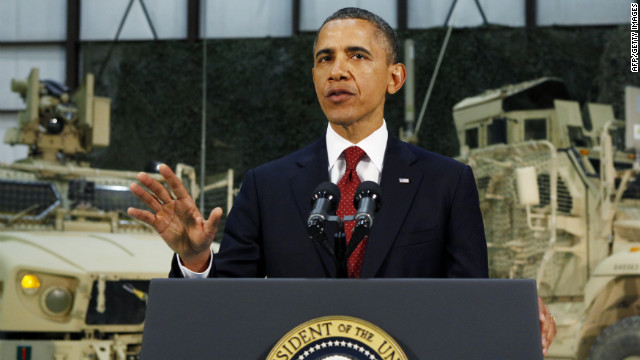
has marked the one year anniversary of al-Qaida leader Osama bin Laden's death with a quick trip to Afghanistan, signing a strategic pact with Kabul and delivering an election-year message to the American people that the Afghan war is winding down. In televised remarks broadcast to Americans late Tuesday from Bagram Airbase, Mr. Obama reaffirmed the transition in Afghanistan — with U.S. combat troops completing their withdrawal and Afghans taking full security control of their country by 2014. The president said the United States will continue to support counterterrorism and training efforts in Afghanistan, but “will not build permanent bases” in the country. Hours earlier, Mr. Obama and Afghan President Hamid Karzai signed a strategic partnership agreement outlining the U.S. role in Afghanistan beyond 2014. In his speech Tuesday, President Obama made clear, “our goal is not to build a country in America's image, or to eradicate every vestige of the Taliban,” objectives that would “require many more years, many more dollars and many more American lives.” The U.S. leader said the goal is to destroy al-Qaida. The U.S.-Afghan strategic agreement does not commit the United States to any specific troop presence but pledges American aid for Afghanistan for at least a decade after the withdrawal of the last U.S. troops. Around 90,000 U.S. troops currently serve in Afghanistan. Some 33,000 American forces will have pulled out of Afghanistan by September of this year, with Afghans in control of Senior U.S. officials told VOA the pact is part of a larger strategy to stabilize Afghanistan and defeat extremist forces in the region. They said the plan includes transitioning to an Afghan-led security force expected to peak at 352,000 Afghan troops this year. Another key element of the strategy involves Afghan-led reconciliation with the Taliban, which the officials said can move forward if the group breaks its ties with al-Qaida. President Obama for the first time publicly acknowledged that his administration has been in direct discussions with the Taliban in pursuit of a “negotiated peace.” He said many insurgent leaders and fighters have shown an interest in reconciliation, but that they must cut ties with al-Qaida, renounce violence, and abide by Afghan laws in order to take part in the peace process. Nearly 3,000 U.S. and NATO soldiers have died during the Afghan war since the U.S.-led invasion in 2001 and the ousting of the Taliban-led government. The Taliban at the time had refused to handover Osama bin Laden, who had been living in Afghanistan. After years evading capture, bin Laden was found to be living in the Pakistani city of Abbottabad, where he was killed one year ago by U.S. special forces in a raid authorized by President Obama. Scholar Nazif Shahrani of Indiana University-Bloomington tells VOA Mr. Obama has not dealt with Afghanistan's need for honest government. He says instituting political reform in the next two years will make the difference between peace and continued war.

Obama, Karzai sign U.S.-Afghan strategic pact

Suicide bombers kill 7 after Obama leaves Afghan capital

Suicide bombers attacked a compound housing Westerners in Kabul on Wednesday hours after U.S. President Barack Obama signed a security pact during a short visit to a city that remains vulnerable to a resilient insurgency. The Taliban claimed responsibility for the attack which involved a car bomb and insurgents disguised as women on the eastern outskirts of the capital, killing seven people, a Gurkha guard and six passers-by, and wounding 17. The Taliban said it was in response to Obama's visit and to the strategic partnership deal he signed with Afghan President Hamid Karzai, a pact that sets out a long-term U.S. role after most foreign combat troops leave by the end of 2014. The insurgency also claimed their spring offensive, which began two weeks ago with attacks in Kabul, would be renewed on Thursday, despite a security clamp-down in the capital. Obama's visit came a year after U.S. special forces troops killed al Qaeda leader Osama bin Laden, the architect of the September 11, 2001, attacks, in a raid in neighboring Pakistan. In a televised address to the American people from a base north of Kabul, he said the war in Afghanistan was winding down. "As we emerge from a decade of conflict abroad and economic crisis at home, it's time to renew America," Obama said, speaking against a backdrop of armored vehicles and a U.S. flag. "This time of war began in Afghanistan, and this is where it will end. Nearly 3,000 U.S. and NATO soldiers have been killed in Afghanistan since the Taliban rulers were ousted in 2001. The Taliban, overthrown by U.S.-backed Afghan forces for harboring bin Laden and other militants, were quick to take credit for Wednesday's attack at Green Village, one of several compounds for Westerners on a main road out of the capital. "This attack was to make clear our reaction to Obama's trip to Afghanistan. The message was that instead of signing a strategic partnership deal with Afghanistan, he should think about taking his troops out from Afghanistan and leave it to Afghans to rebuild their country," Taliban spokesman Zabihullah Mujahid told Reuters by telephone from an undisclosed location. But America's Kabul ambassador, Ryan Crocker, said involvement of the Haqqani network - which Washington believes is based in Pakistan's North Waziristan region and which it blames for high-profile attacks in Kabul in April - could not be ruled out. On the anniversary of bin Laden's killing, Crocker said he did not believe there would be a sole turning point in the war. "Al Qaeda is still there. We do feel we are prevailing in this with our Afghan partners," he said. "We cannot be in a position of taking on ourselves bringing perfection to Afghanistan. That has to be left to Afghans." But Crocker said there would be no repeat of the 1990s when a withdrawal of Western backers in the wake of the Soviet withdrawal unleashed a vicious civil war out of which the Taliban and al Qaeda support bases arose. BLOOD STAINS Hundreds of police and intelligence agency troops surrounded the area around Green Village after the attack. Ruined cars were seen in front of the compound gates but officials said no attackers made it inside the heavily-guarded complex. "I was going to the office when the car in front of me blew up. I got on my bicycle and fled," 40-year-old Farid Ahmad Mohammad told Reuters near the scene of the explosion. A worker at the compound, Jamrod, said at a hospital where the wounded had been taken that he had been showing his identity card at the compound's main gate when the vehicle exploded. "I heard a bang and then I slammed into the wall," Jamrod, still clad in blood-stained jeans, told Reuters. Wednesday's attack was the latest in a recent surge of violence after the Taliban announced they had begun their usual "spring offensive", and since they suspended tentative steps towards peace talks with the United States. Such incidents raise troubling questions about the readiness of Afghan forces to take over when militants remain able to stage high-profile attacks, even when already tight security had been beefed up even further for Obama's visit. Insurgents staged coordinated attacks in Kabul last month, paralyzing the city's centre and diplomatic area for 18 hours. The Taliban also claimed responsibility for those attacks, but U.S. and Afghan officials blamed the militant, al Qaeda-linked Haqqani network. ELECTION YEAR Obama's visit was clearly an election-year event. He spoke to U.S. troops during a stay in Afghanistan of roughly six hours and emphasized bin Laden's demise, an event his re-election campaign has touted as one of his most important achievements in office. "Not only were we able to drive al Qaeda out of Afghanistan, but slowly and systematically we have been able to decimate the ranks of al Qaeda, and a year ago we were able to finally bring Osama bin Laden to justice," Obama said to cheers. But even as he asserted in his speech that there was a "clear path" to fulfilling the U.S. mission in Afghanistan and made his strongest claim yet that the defeat of al Qaeda was "within reach", he warned of further hardship ahead. "I recognize that many Americans are tired of war ... But we must finish the job we started in Afghanistan and end this war responsibly," he said at Bagram airbase, where only months ago thousands of Afghans rioted after U.S. troops accidentally burned copies of the Koran, the Muslim holy book. That incident, and the killing of 17 Afghan civilians by a rogue U.S. soldier weeks later, plunged already tense relations to their lowest point in years. While speaking in broad terms of "difficult days ahead", Obama did not address some of the thorniest challenges. These include corruption in Karzai's government, the unsteadiness of Afghan forces in the face of a resilient Taliban insurgency, and Washington's strained ties with Pakistan, where U.S. officials see selective cooperation in cracking down on militants fuelling cross-border violence. Earlier, Obama met Karzai at his walled garden palace in Kabul, where they signed the Strategic Partnership Agreement. "By signing this document, we close the last 10 years and open a new season of equal relations," Karzai said after the meeting. The agreement does not specify whether a reduced number of U.S. troops, possibly special forces, and advisers will remain after NATO's 2014 withdrawal deadline. That will be dealt with in a separate status-of-forces agreement still being worked out.

May Day in KP, FATA observed with pledge to protect rights of working class

Like other parts of the country, the Labour Day was observed in Khyber Pakhtunkhwa and FATA with full enthusiasm on Tuesday where labourers paid tribute to the martyrs of Chicago and vowed to protect rights of working class through enhanced working relationships for achievement of desired objectives. The day dawned with special prayers in mosque for progress and prosperity of Pakistan, liberation of occupied Muslims territories, martyrs and well being of labour community. Different labour unions and organization have organized special programmes and taken out rallies to highlight the significance of the day. In this connection, Pakistan Workers Federation Khyber Pakhtunkhwa Chapter has also organized a special programme that was addressed by PML-Q President Senator Chaudhry Shujaat Hussain as chief guest here at Nishtar Hall. Speaking on the occasion, he said that May Day reminds us the supreme sacrifices of the Martyrs of Chicago, who sacrificed their lives for fundamental rights of their fellow workers. He said the government has taken a number of steps for the benefits of the workers and their families through the Ministry of Human Resources Development including setting up of the Shahara Insurance Company, which is providing group insurance facilities to the overseas Pakistanis. Shujat Hussain announced to give one month basic salary to all EOBI employees on the basis of their performance. On behalf of the Federal Minister for Human Resource Development, Ch Shujat Hussain announced an increase of 20 percent in the pension of more than 300,000 pensioners of the EOBI, free insurance and other monetary benefits retrospectively from January 2012. He also assured full cooperation in construction of Labour Hall in Peshawar. In his message, the Khyber Pakhtunkhwa Governor Barrister Masood Kausar has appealed to the labourers and the entrepreneurs to be more conscious towards ensuring best utilization of the available resources as well as maintain unity and amicable working relationships in making the output of the work of the working class and the investments of the desired standards. Likewise, Pakistan Workers Federation Khyber Pakhtunkhwa Chapter, Peoples Labour Forum, Rickshaws Association, Pakistan Railways Workers Union, different trade organizations and unions took out peaceful labour rallies and demanded better social security and wages for workers, restoration of labour laws, and end to privatization. The rally taken out from different areas of the City gathered at Press Club and chanted slogans in favour of their demands and expressed solidarity with Chicago victims. The speakers said that like all over the world, labours and working class are united in Pakistan for their rights. They called on the government to take further steps for implementation of labours laws and to solve problems of daily-wages workers. They also demanded to increase minimum salary level of workers according to inflation. The speakers also appreciated Prime Minister Syed Yusuf Raza Gilani's announcement for an increase in minimum wages of labourers to Rs 8000 and 20 percent increase in their pension. They said PPP Government had restored thousands of workers on their jobs and regularized thousands of workers of different national building departments, while it also fixed job quota for disabled in various departments besides increasing minimum wages to Rs.8000 that was highly praised worthy. Speakers at seminar said capitalism has failed as compared to socialism, they urged the labors and workers to get united to snatch their rights from the capitalists. Speaking at a seminar titled “Blood of Chicago laborers in 1886 will bring fruits” in connection with World Labor Day, arranged by National Party-Pakhtunkhwa Wahdat (NP-PW) here at press club on Tuesday, they said unless the failed system of capitalism was ended, lives of the labourers will never become better. Those spoke on the occasion including Mukhtar Bacha, provincial president of NP-PW, Nazeef Khan General Secretary, information secretary Idrees Kamal, Gul Rahman president Muttahida Labour Federation (MLF) and vice president of the party, Gohar Taj president Pakistan Wapda Electric Centre Labor Union, Ahsan and Hashim Raza Advocate. Paying rich tribute to the Chicago labors, they said dictators had been occupying the reign of the country while politicians were least bothered about the rights of the workers. They said though Pakistan is like a paradise bestowed with natural resources yet unfortunately the poor becoming the poorest while the rich accumulating wealth with their both hands and becoming richer day by day. The labors, they said had been kept unaware about their rights, which were deliberately being usurped but those who raised voice for the rights were forced to gage. “Military dictators are the main hurdles in improvement of the workers,” they claimed. Later, the speakers demanded that minimum salaries should be raised to 1,5000 rupees, pension should be raised 1,000, reopen all the closed factories in the country and the province and Khyber Pakhtunkhwa be declared industrial zone, compensation must be paid to the children of those laborers who were killed in a wave of terrorism.

India, Pakistan use 'trade diplomacy' to improve ties

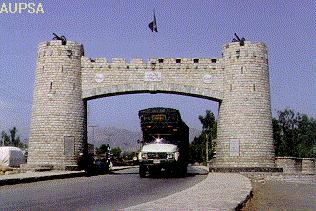
India and Pakistan, still at loggerheads on Kashmir and no closer to a full peace deal, are channelling their efforts into increasing trade in the hope that business can bring them together. Thirty-one-year-old Karachi food trader Kashif Gul Memom is among those eager to seize the opportunities offered by easier links between the estranged neighbours, which have fought three wars since independence in 1947. "This is a change for the good. It's an exciting time," said Memom, one of the generation born after the painful partition of the subcontinent that gave birth to India and the Islamic republic of Pakistan. "My generation of business people is putting the past behind us. We're looking to the future, India is such a huge market for us," Memom told AFP while at the largest ever Pakistani trade fair held in India. The improved relations between the nuclear-armed rivals stem from Pakistan's decision to grant India "Most Favoured Nation (MFN)" status by year end, meaning Indian exports will be treated the same as those from other nations. In further progress, the neighbours opened a second trading gate in April along their heavily militarised border, boosting the number of trucks able to cross daily to 600 from 150. India now also says it is ready to end a ban on investment from Pakistan and the countries are planning to allow multiple-entry business visas to spur exchanges -- a key demand by company executives. The warming commercial ties underline the new relevance of the private sector in the peace process, with prospects still low for any swift settlement of the "core issue" of the nations' competing claims to Kashmir. The divided Himalayan territory has been the trigger of two of their three wars since independence. Indian and Pakistani officials have been looking at the so-called "China option" as a model, with deepening economic engagement seen by experts as crucial to establishing lasting peace in the troubled region. Beijing and New Delhi have been pursuing stronger economic ties while resolving outstanding political issues, such as a festering border dispute that erupted into a brief, bloody war in the 1960s. "There is no other option but economic partnership between India and Pakistan -- this leads on to other partnerships," Indian Commerce Minister Anand Sharma said at the April trade fair in Delhi, a follow-on to a similar venture in Lahore earlier in the year. "We have to recognise our true trade potential and leave our children with a legacy that ensures prosperity, harmony and peace." Some Pakistani businesses have protested against the trade opening, fearing they may be swamped by cheaper Indian goods, especially in drugs, auto parts and consumer goods. But others eye the possibilities India's market offers. "India with 1.2 billion people gives us great potential," Mian Ahad, one of Pakistan's leading furniture designers, told AFP. Indian businessmen are equally enthusiastic, saying there is an opportunity for trade in areas from agriculture, information technology, pharmaceuticals, engineering to chemicals. Official bilateral trade between India and Pakistan is just $2.7 billion and heavily tilted in New Delhi's favour. But Indian business chamber Assocham estimates up to $10 billion worth of goods are routed illicitly -- carried by donkeys through Afghanistan or shipped by container from Singapore and the Gulf. Indian commerce secretary Rahul Khullar told AFP that Pakistan's decision to grant India MFN status by the end of the year was "the game-changer." MFN status will mean India can export 6,800 items to Pakistan, up from around 2,000 at present, and the countries aim to boost bilateral trade to $6 billion within three years. "I'm cautiously optimistic. Commerce is an excellent way to bring countries together," Indian strategic analyst Uday Bhaskar told AFP. "Once you institutionalise trade, it becomes hard to slow the momentum for cross-border exchanges. People say if there are onions or cement or sugar available next door, why can't I have them? And why can't I travel there too?"

BIASED MEDIA AND LYARI POLICE OPERATIONS

Editorial
For the last five days, the biased media dominated by the corporate media, had been distorting the facts about Lyari and its people and claiming that the operations going on against criminals and gang war personalities and not the law abiding citizens of this country. It is a fact that it was not targeted the criminals. Police is firing at the residences of the local people. Round the clock, TV reporters are distorting the facts and condemning the police force for not making any advance in any locality or killing all the political dissidents of the Government of the day. Almost every channel and TV network is toeing the same line that the criminals are resisting the police onslaught and they have no human and constitutional right to resist or to save their lives and protect from state terrorism that is supported by the powerful section of the ruling elite. On the day one, two persons were killed in police custody. Police claimed that they were criminals. Agonies of the local residents had been ignored and more emphasis is laid why the police are unable to eliminate the resistance from some parts of Lyari. The people are under complete siege. Police had blocked all entry and exit points of Lyari. There is water and food shortage. There is no electricity for the past one week and the media is not asking the authorities concerned to ensure availability of the basic amenities and services to the local residents trapped in exchange of fire. The biased media is also surprised over the strong reaction on Lyari operations all over Pakistan, mainly in interior parts of Sindh and Balochistan. Yet another aspect is that from where the local residents had brought weapons resisting the police force and why they are objecting to violation of sanctity of homes of the Pakistani citizens. It is the most ridiculous assertion on the part of Corporate Media. One of the former PPP leaders told a TV interviewer that they got weapons from the PPP Government and they were given licences to keep weapons for self-defence. We are using in our self-defence. Israel or any other enemy country had not provided them weapons, it is simple, he claimed. It should be added that the weapons is available and thanks to Army Generals of Zia Era who sold the weapons of Afghan Jihad in the cities and townships of Pakistan. Gun running is the biggest and lucrative business and the gunrunners must be enjoying the patronage and support of the power sections of the society simply to earn quick billions. Why they had not raised the same question to the MQM who it was holding entire Karachi hostage and at gunpoint by amassing weapons that had no example in our history. Dozens of truck laden with ammunition took rounds of the city and provided ammunition to MQM people. There were reports in the media that the Americans had provided many containers of US weapons to MQM and those containers in hundreds are missing from the Karachi Port and the MQM Minister for Ports and Shipping is said to be involved in the racket. The people had not forgotten the May 12 incidents in which MQM gunmen fired millions of rounds of ammunition in each and every streets of Karachi just to bar the Chief Justice of Pakistan making a visit to Karachi. It is on record and from where millions of rounds were fired and trucks carrying ammunition seen was on stand by providing ammunition to MQM gangsters. It is the MQM that is accused of killing tens of thousands of innocent people, all passers-by, during the Karachi troubles for the past quarter of a century. Each and every terrorist caught by the law enforcing agencies had confessed that each of them killed more than 100 innocent people. More than 90 percent target killers and terrorists caught by the security agencies and police had strong and close affiliations with the MQM and its top leadership. The share of rest of population is less than 10 percent. There is no other option for the Sindh Government to stop the Lyari Operation that it had started just to appease the MQM. The police force should be withdrawn immediately and people are allowed free movement. There should be no restrictions on supplying food and other essential commodities of daily use. It is the right of the people to choose their party for support and the people should not be intimidated by the State, its organs and the other fascist groups. PPP had lost its political constituency of Lyari by committing blunders and playing at the hands of MQM for petty political interest. No other person or group should be blamed for it.

Peshawar losing its lustre

FRONTIER POST
Once the capital of great land of Gandhara, Peshawar was known as 'city of artisans' because of its geographical importance and housing various arts and artisans, but now it is fast losing its glory as majority of arts for which the city was famous are either dying or vanished due to various reasons. The word 'Peshawar' is derived from the word 'Peh Shawar' meaning 'City of artisans or skilled men' because the city provided livelihood to the artisans of different arts. In olden times, professionals from different countries used to visit Peshawar - the gateway to South Asia and present their products at 'Melas' (exhibitions), a regular feature of the city at that time.
Arts and artisans were in so abundance in Peshawar that majority of the bazaars of the ancient city are named after different skills like Misgran (copper Bazaar), Reti bazaar (Ironsmith), Bazgaran (Steel utensils), Bazaar-e-Kalan, Sarafa Bazaar (Goldsmith), Battair Bazan (Birds market) etc. The historic Qissa Khawani bazaar, the commercial hub of the city, was not only famous for story-telling to the 'Qehwa' (green tea) sipping travellers, who arrived from different regions for trade, but also for availability of all kind of handmade daily use utensils.
The visit of almost every foreigner, even the dignitary, to the' Peshawar Pottery' in Shah Wali Qatal area was part of their itinerary to Peshawar for purchasing brilliantly tinted decoration pieces of baked special white clay. But a drop in their visits to the region in the wake of September 11 incident in the US ensued in closure of Peshawar pottery, thus resulting in death of 150-year old art passing through three generations. Gone are the days when people, while passing through the historic Misgaran bazaar, heard rhythmical hammering strokes because of copper engraving, an ancient art of decorating copper or brass utensils. The centuries old Bazaar-e-Misgran (Coppersmith Bazaar) no more looks like a market of copper and brass merchants as most of the craftsmen have switched over to other businesses due to falling sales. "The art of copper engraving is vanishing rapidly due to change in people's lifestyle," observed Khawaja Safar Ali, an engraver who inherited the profession from his forefathers . "Our family has been engaged in copper engraving profession for the last four generations. But my children are reluctant to carry on with this art due to economic hardships in the business," said Khawaja Safar Ali Safar, the younger brother of Khawaja Akhtar Ali, the winner of civil Awards in 1980 and 1986 for his unique work in copper engraving. About causes of plummeting business, Khawaja Safar Ali said people had started avoiding use of copper pans due to high price. Earlier, people used to give copper crockery to their daughters in dowry, but now they have stopped buying this expensive metal. "Another reason behind the change in choice of people is that copper pots are now considered as outdated and old-fashioned," he opined.

Pakistan: Nation's saddest times

EDITORIAL:THE FRONTIER POST
What great sin is it that the 180 million, mostly deprived, denied and downtrodden, people of this unfortunate nation have committed that their miniscule motley crowd of fat bellies and nouveaux riches posing to be their political leaders are so insanely out to punish them for so vengefully? What indeed is the harm that these wretched people have done them that they are so madly hell-bent on throwing them on the saddest times of their lives? Couldn't the prime minister spare them a constitutional crisis when his watch has been such an era of endless turbulence and turmoil for them? Instead of hairsplitting, he could have exercised high moral choice, stood down and sought legal remedies to his court conviction on contempt. That indeed would have lent him a bit of respectability to his otherwise deeply tarnished repute. Yet he preferred hanging on to his job, even as his incumbency had become so compellingly untenable, morally if not legally. But what glorious track record for respect to judiciary does Mian Nawaz Sharif carry that he is striking such strident postures of piety, accosting Yousuf Raza Gilani either to quit or face the fury of his street agitation? Although till now he has deluded himself into believing, no lesser helped in this self-centred conceit by the coteries of fawning party acolytes and fondling media lackeys, that it was his long march that had resulted into the dysfunctional judiciary's restoration, the bland fact is that he has been living on borrowed laurels. That feat had actually come about from the dysfunctional judges' own unflinching steadfastness and the unrelenting campaign of the corps of Black Coats. Together, the judges and the lawyers had braved, unbendingly, the atrocious strike of a haughty willful despot, determined to cow down an independent judiciary and subjugate it into his handmaiden. They won; he lost. And MNS was nowhere on the scene when the lawyers and the judges threw the challenge to the despot. He was then cooling his heels in the cool climes of his London redoubt, cobbling up such contrivances as the All Parties Democratic Movement (APDM) with other politicians like him in political wilderness, all of whom he later betrayed remorselessly, ditching them to participate in the 2008 election under the dictator, contrary to the vow of his own London-convened conclave. He had only conveniently hopped on to the bandwagon of the campaigning true champions of independent judiciary. This was, anyway, when he was not in power. The real test for his new professions of being an ardent reinvented believer in the independence of judiciary is still to come. For, when in power he had had the singular honour of commandeering a squad of party storm-troopers to invade and ransack the nation's highest seat of judicial power, the Supreme Court of Pakistan, to set a record which one fervently hopes and prays would go unbroken in all times to come. But both Gilani and Nawaz can do a favour to the deeply-distressed nation and mercifully save it the atrocity of a confrontation that it would do without. Already, it is going through the worst-ever harrowing times of its lifetime. With a sagging economy showing no sign of reviving and throwing no jobs, no opportunities and no livelihoods over these past four years, they have virtually been consigned to a perpetual state of abject poverty and penury, utter want and squalor, and rampant hunger and malnutrition. Terribly, the bulk of the 180 million people stay wholly deprived of basic needs like healthcare, education, drinking waters, sanitation and public services, unrelievedly. And living amid unremittingly-prowling extremism, terrorism and criminality, they have lost all their sense of safety and security. Worse, the nation's cohesion, solidarity and unity are under the dire battering assailments of a variety of vicious inimical forces. Yet none of this is coming perturbedly to Gilani or Nawaz; indeed, for that matter, to any of the eminences strutting on the nation's political landscape, flaunting themselves up as its political leaders. Undistracted, they stay engrossed in their self-centred petty politics. Indeed, the way things are going on in the country is coming gleefully to this nation's inveterate enemies. They are gloating that their sinister job is being done very well for them by these insane politicos. And this nation's well-wishers are horrified with creeping fears that with their shenanigans these senseless politicos are dragging the country on to a perilous precipice dangerously. Yet those who should be deeply concerned over this are least pushed about it: our politicos across the spectrum. Coming uppermost to them is not the nation's and the country's well being but their own dirty politics. At least now, both Gilani and Nawaz must take mercy on the nation and spare it from their stridencies. Pull back they must. Gilani must bow down humbly to the apex court's verdict. And Nawaz must put off his pretences of love for judiciary for some better times. The nation would be well off without their stupid battles. After all, this country is nobody's political battlefield; and its people are not the playthings of anybody.

Khyber Pakhtunkhwa: Police accused of extorting money from IDPs

Political and social organisations of Bara tehsil of Khyber Agency have taken strong exception to unlawful detention of internally displaced families of Bara by Peshawar police for extortion and warned of a protest demonstration in front of the Chief Minister’s Secretariat in Peshawar if the practice is not stopped. In separate statements of condemnation, the Khyber Agency chapter of Jamaat-i-Islami, Khyber Union and Kamarkhel Khidmat-i-Khalq Committee accused the Peshawar police deputed at Sarband ploice station of unlawfully detaining innocent displaced persons and later releasing them on payment of bribes. Shah Faisal Afridi, Bara JI amir, claimed in his statement that innocent residents were implicated in false cases when they refused to pay bribe to Sarband police. He alleged that migrating women, children and elderly people were forced to wait on road for hours when they could not pay the illegal money to police officials. Haris Afridi, Khyber Union president, said that a deliberate attempt was being made by Peshawar police to provoke the innocent Bara residents into violence and then apprehend them on false charges. He said that the matter had been brought repeatedly into the notice of Peshawar police high-ups, but no action was taken against the corrupt officials. Khayal Matshah Afridi, chairman of the Khidmat-i-Khalq Committee, accused the Awami National Party’s top leadership of hatching a conspiracy against the law-abiding tribesmen and punishing them in the name of fight against terrorism.

Shabnam:Lahore’s sleepy studios sadden Shabnam

Legendary film actress Shabnam and her musician husband Robin Ghosh are visiting Lahore after 12 years or so. The once-a-hub-of-film industry city has impressed the duo because of its improved road infrastructure and lush green sideways. At the same time, the duo is dejected at the closure of film studios and production houses where Shabnam ruled for almost three decades (1960 to 1990). “I am really sad to know that the most of the film studios in Lahore now wear a deserted look and even one of them is now a godown,” said Shabnam during an interview to Dawn at the Deplix in Defence on Tuesday. “During my stay in Lahore, I will definitely visit the studios. I have many memories attached to the complex.” The couple will remain in Lahore for a week. Shabnam, who reigned supreme the Pakistani silver screen in the past, also appealed to the Pakistanis to pray for her health. Shabnam is visiting Pakistan on the invitation of the Pakistan Television (PTV) Network. The PTV held a classical tribute evening for the couple at the Governor’s House on Saturday in which Prime Minister Yousaf Raza Gilani gave the Lifetime Achievement Award to both Shabnam and Ghosh for their contribution to the film industry. She was moved by the reception the PTV held for her and warm welcome by the public wherever she went in Karachi and Lahore. She thanked the PTV, her fans, media and people of Pakistan for the love they extended to the couple. She said her friend Mussarat Misbah was the moving spirit behind her visit. “Misbah contacted and informed me that the PTV wanted to hold a tribute evening for us. In fact she has a great contribution in making this visit possible,” said Shabnam. About the measures to improve the situation of Pakistan film industry, Shabnam said a coordinated effort by both the film industry and the government could revive it. “In Bangladesh, the government has been very supportive of the film industry. When asked would she accept any offer if floated from Pakistan film directors to act in any film, the actress said it would largely depend on the script, director and producer. She, however, said that she had quit the industry and was leading more a life of a housewife than that of an actress. She opposed the screening of Indian films in Pakistan, saying that the measure would further add to the woes of the industry already going through a slump. She said that recently in Bangladesh a move was made to screen Indian movies but the entire film industry vehemently opposed the idea and took out demonstrations against it. “Pakistan has great talent in film making but things have to be streamlined from both the film industry and the government,” she said. Mr Ghosh said Pakistan had a lot of good singers but the musicians needed to improve. He said he was hopeful the Lollywood would again rise and blossom. Ghosh, who has composed several timeless songs, says he was inspired by music composer Nushad. He said some film producers had asked him to compose their film music. “I would love to work with them but film making is a team work; it’s a collage of a good writer, director, producer and so many other things.”

Pakistan: Petition against PM’s removal dismissed as withdrawn

The Islamabad High Court (IHC) on Wednesday dismissed a petition seeking removal of Prime Minister Syed Yusuf Raza Gilani from his office as chief executive of the country and dissolution of the federal cabinet in the wake of Supreme Court’s order of April 26 in contempt issue.The single-Judge bench of Justice Shaukat Aziz Siddiqui in its order observed that the petition was premature as it could not proceed without a detailed judgment of the Supreme Court. “The petition is premature, wait for the detailed verdict,” observed Justice Siddiqui.During proceedings, advocate GM Chaudhry contended that under the provisions of Section (g) of clause (1) of Article 63 of the constitution, the PM stood disqualified from being a member of the National Assembly after the apex Court’s orders in the contempt issue.

PML-N no more reliable: Imran

Pakistan Tehreek-e-Insaf (PTI) Chairman Imran Khan on Tuesday said the Pakistan Muslim League-Nawaz (PML-N) was not a reliable party as Nawaz Sharif cheated the nation three times in the past. Addressing a press conference, Imran said that Nawaz also betrayed the PTI on several occasions and backed off from the All Parties Democratic Movement's stance not to contest general elections 2008. Bringing flexibility to his stance, he said the PTI would walk with the PML-N only if its members resigned from assemblies. Imran urged the government to announce general elections immediately. He also said only free and fair polls could bring the country out of the present crisis. He said the PTI did not consider Yousaf Raza Gilani as the prime minister after the Supreme Court convicted him in contempt of court case. Imran, however, acknowledged that Gilani had the right to appeal against the court's verdict, adding that the PTI would respond once all legal process was completed against the premier. "We will wait until the Election Commission of Pakistan (ECP) completes the process of Gilani's disqualification," Imran hinted. Flanked by Shah Mahmood Qureshi, Makhdoom Javed Hashmi, Hamid Ali Khan and Javed Iqbal, the PTI chairman said the party would organise a march on May 6 in Islamabad to express solidarity with the SC, adding that a protest march would also be held if the premier failed in implementing the court's orders. Imran also asked the Pakistan Muslim League-Nawaz (PML-N) to resign from assemblies to hold dialogue with his party for alliance against the PPP-led government. The party's doors were open only for those who were not sitting on treasury benches, he added. Imran announced that a three-member committee, consisting of PTI Vice Chairman Shah Mahmood Qureshi, President Javed Hashmi and Secretary-General Dr Arif Alvi, has been formed to hold talks with political parties regarding future course of action against the government. The PTI chairman said that the Pakistan People's Party was trying to destroy the SC in the name of democracy. "The drama is being created to hide corruption," he added. To a question, he said the party would launch Pakistan's largest protest against Gilani if he refused to accept his disqualification. Separately, the PTI decided to file a reference in the Supreme Court against Prime Minister Yousaf Raza Gilani's eligibility, PTI sources said on Tuesday. The decision was taken during a meeting of the PTI Central Working Committee. Imran Khan chaired the meeting. On Monday, Nawaz Sharif while announcing his party's protest movement against the government said he was willing to join hands with the PTI and other opposition parties.

No clash with judiciary

Prime Minister Gilani has met with the Army Chief Ashfaq Pervez Kayani on Wednesday. According to sources, PM Gilani discussed the political situation after the ruling of Supreme Court against him with the army chief.The PM assured that his party will not clash with judiciary. However, the government will appeal against the verdict of Supreme Court.The meeting also discussed the regional security situation along with the issues of mutual interest.

Tuesday, May 1, 2012

Worldwide unemployment rate rising, says ILO

The International Labour Organisation said Monday that austerity measures were driving up jobless figures around the world and predicted global unemployment would hit 202 million people in 2012. By News Wires (text) AFP - The International Labour Organisation warned Monday that austerity measures are hurting job markets worldwide and predicted global unemployment of 202 million people in 2012, up six million from last year. The ILO's World of Work Report 2012 said fiscal austerity and labour market reforms had had "devastating consequences" for employment while mostly failing to cut deficits, and warned that governments risked fueling unrest unless they combined tighter spending with job creation. "The austerity and regulation strategy was expected to lead to more growth, which is not happening," Raymond Torres, director of the ILO's Institute for International Labour Studies, told journalists in Geneva. "The strategy of austerity actually has been counterproductive from the point of view of its very objective of supporting confidence and supporting the reduction of budget deficits." The report said some 50 million jobs had disappeared since the 2008 financial crisis. It predicted a global unemployment rate of 6.1 percent in 2012 – 202 million people, up three percent from the provisional estimate of 196 million for 2011. It forecast a rise to 6.2 percent in 2013 as another five million people become unemployed. "It is unlikely that the world economy will grow at a sufficient pace over the next couple of years to both close the existing jobs deficit and provide employment for the over 80 million people expected to enter the labour market," the report said. It warned that trends were especially worrying in Europe, where nearly two-thirds of countries had seen unemployment go up since 2010. It said labour market recovery had also stalled in major economies such as Japan and the United States. A growing and better-educated workforce was meanwhile struggling to find enough good jobs in places such as China, while workers still faced acute job shortfalls in the Arab world and Africa, it added. Torres, the report's lead author, came down hard on Europe, accusing it of "ill-conceived fiscal austerity". "For example in Spain, the deficit was reduced from a little over nine percent of gross domestic product in 2010 to 8.5 percent of GDP in 2011, a very small reduction after a drastic austerity programme," he said. "The narrow focus of many eurozone countries on fiscal austerity is deepening the jobs crisis and could even lead to another recession in Europe." He meanwhile singled out Latin America for praise, saying the region had seen an employment recovery and, in some cases, rising job quality. The report found the risk of social unrest had gone down on average in Latin America as job prospects improved. But worldwide, the risk of unrest had increased in most countries, it said. "This is not surprising given that good jobs remain scarce and income inequality is rising," Torres said. "There is a growing sense that those most affected by the crisis are not receiving adequate policy attention." The ILO blamed austerity policies for reducing small business' access to loans, and urged governments to restore credit to small firms, strengthen labour market safety nets and adopt measures to help young workers and other vulnerable groups.

Obama: No permanent Afghan bases

President Obama, speaking early Wednesday in Afghanistan, said the U.S. will stick to the 2014 deadline to turn over security fully to the Afghan government.

Nawaz is getting irritated by the twig in his own beard: Marri

AAJ TV
Sindh Information Minister, Shazia Marri,
addressed a press conference on Monday. The press conference was yet another series of heated words being spoken amongst the two premier parties of Pakistan, PPP and PML Ms. Marri referred to Nawaz Sharif as a thief by stating, “Nawaz Sharif is that particular thief who is getting irritated by the twig in his own beard”. She said that Nawaz Sharif is portraying the character of Zia-ul-Haq and is urging the nation for the long march, just for his own interest. She informed Nawaz Sharif by quoting that Bar Councils within Sindh had rejected Nawaz’s plea for the long march. “Nawaz, who ran away from this country to save his life, would never understand about democracy. If he was so loyal to the Pakistani population, he should have stayed here and faced the judicial system of the country”, she further stated.

Lyari Operation-01 May 2012

Thousands march in London to support workers’ rights

It’s been a year of high-profile anti-capitalist struggle across the western world with sit-ins, occupations, strikes and demonstrations grabbing the headlines. And to commemorate Labor Day, around 2,000 people marched through central London in solidarity with workers across the world. This year’s Labor Day comes at a very relevant time as the UK government is enacting harsh austerity measures which many feel are targeting the poor and ordinary workers. So the message from the marchers today is “no” to austerity and “no” to the coalition government. At a rally in Trafalgar Square, union leaders told the crowd that the government is ruling on behalf of rich elites at the expense of the poor. Just last week it was confirmed that Britain has slipped into a double-dip recession. The government says spending cuts are necessary to address the huge budget deficit and national debt, but critics say they’re just choking growth. Next week tens of thousands of civil servants, lecturers, health workers and other employees will take industrial action over the government's controversial public sector reforms. With the economy showing no signs of improving, Britain looks set for a prolonged period of industrial dispute.

US embassy in a quandary over Chen

News that Chen Guangcheng, the blind activist from Shandong Province, has entered the US embassy in Beijing and may seek asylum has made the rounds among US and European media. The question was even raised during a press conference with US President Obama and Japanese Prime Minister Yoshihiko Noda in Washington, though Obama declined to comment on this specific case. In the Western media, Chen is a hot potato for Chinese authorities. Now he is making Washington uncomfortable. Chen, unlike other dissidents who made abstract human rights goals in China, has many detailed complaints about the country's grass-roots governance. He travelled to the US embassy from Linyi, Shandong, and now these problems have entered the US sphere of import. All countries are plagued by various public complaints. Chinese petitioners are motivated by various incentives. If petitioners' requests are not met by domestic authorities and turn to the US embassy, this is not only embarrassing to China but also puts the US in an awkward position. The US embassy would have no interest in turning itself into a petition office receiving Chinese complaints. It is easier just preaching universal values to the Chinese public, and occasionally, helping a few exemplary cases that best illustrate US intentions. It is never willing to involve itself in too many detailed disputes in Chinese society. The Western media has portrayed Chen as a blind activist hero, and some Chinese have echoed this view. These have given Chen a wrong impression of his importance to the US and his individual influence in China. His self-judgment has been ruined by exaggerated media reports. Chen Guangcheng incident will not affect Sino-US relations. The upcoming China-US Strategic & Economic Dialogue is unlikely to dwell on him. Quite a few out of favor Chinese people have sought to exaggerate their influence by relying on overseas powers. But this is a poor idea. The time when foreign governments could guide Chinese authorities in making policy is long gone. In recent decades, hundreds of Chinese ran to the West seeking to put pressure over China, but none of them gained the prominence they wished. The progress of human rights needs the support of comprehensive social development. The West has brought this idea to China, which is not against human rights. Conflicts are often the exaggeration of some specific problems. The sustaining support of human rights can only come from within China. The West has no ability to provide much detailed help in this regard. They are frustrated more by their own human rights issues now. The West has put all the blame on Chinese authorities for the Chen Guangcheng issue. Now he is reportedly in US embassy, which has proven to be a dramatic twist. Let us see how the US government can satisfy both Western media and Chen himself.

Pakistan: 'N' govt longmarch tantamount to treason

Prime Minister Syed Yusuf Raza Gilani
Tuesday said no province could launch a long-march against the federal government because it it would be tantamount to be treason. He was speaking in a Pakistan Television (PTV) programme “Prime Minister Online”. Replying to a question regarding the long-march announced by the Punjab government, the Prime Minister said such act could be considered as “treason” as it would be a step of the provincial government against the federal government. “It is totally unacceptable,” he added. Earlier, Pakistan Muslim League Nawaz (PML-N) President Mian Nawaz Sharif had said that Gilani was no longer the prime minister of Pakistan anymore since his conviction and vowed that every option including a long-march would be launched to honor the verdicts of the SC.

May Day protests marred by vandalism in San Francisco

10 protesters arrested at LA Intl. Airport on May Day
May Day demonstrations were marred by vandalism in San Francisco,
while other demonstrations in California were largely peaceful. Protesters were converging on downtown Los Angeles for a march and rally this afternoon near City Hall. The march is expected to jam the afternoon commute, with numerous streets scheduled to be blocked off until at least 7 p.m. Hundreds of demonstrators from the Coalition for Humane Immigrant Rights of Los Angeles, the Party of Socialism and Liberation and the Latino health activist group Bienestar gathered at the intersection of Olympic Boulevard and Broadway about 1 p.m. to rally and begin marching to Pershing Square, where a larger rally was planned.
Thousands of protesters were expected to participate in May Day rallies across Los Angeles to register their views on a variety of issues, including fair labor practices, immigration and income inequality.Police said the group at Olympic and Broadway had not caused any problems. “It’s festive,” LAPD Officer Sara Faden said over salsa music blasting from a truck. In a sign that the ideals of the Occupy movement still resonate, in Oakland about 400 people gathered at City Hall plaza at midday to reiterate their commitment to confronting social inequality and police aggression. Some demonstrators wore face coverings and carried shields crafted from plastic garbage cans. Others identified themselves as medics, with crosses of red tape, in the event of clashes with police. A small skirmish broke out between some protesters and riot-gear-clad officers. About 12:40 p.m., at least one protester threw bottles and at least one metal paint can at officers who formed a line to hold back the crowd. One officer, who asked not to be named, was splashed with yellow paint and kicked in the ribs as he sought to arrest a protester who officers said had rushed the police line. Separately, CBS reporter Doug Souvern tweeted that protesters attacked and dismantled one of his station's news vans. In San Francisco, May Day protests began early, as a demonstration that started peacefully in Dolores Park on Monday night ended with widespread vandalism. More than 100 masked protesters -- dressed in black and gray and wielding crowbars and paintball guns -- descended on a busy restaurant and retail stretch in the city’s Mission district. Vandals smashed windows, defaced cars and attacked the neighborhood police station. On Tuesday, a glass crew was parked outside of the Mission district police station, and Jeffrey Garcia was inside filing a police report about damage to his two vehicles. His Volkswagen Passat and Chevrolet pickup had been parked on Valencia Street while he had dinner at a nearby restaurant. “I heard the noise, and the next thing I know, I come out and bang!” said Garcia, who provides battery service for a towing company. Vandals had slashed all four tires on his Passat, keyed the shiny black car and sprayed it with red paint. His pickup was also keyed. He was at a loss to explain the vandalism and the protesters. “We work 20 hours a day, and they have nothing to do,” he said. “I don’t know. It’s just crazy.” Brittney Nicolulis, manager at a home furnishing boutique on Valencia Street called Therapy Home, said she and her colleagues heard a rumbling about 9 p.m. Monday and looked out the window to investigate. “Our first assumption was peace marchers,” said Nicolulis. “We get those all the time. We ran to the door and heard smashing and gunshots and sounds that were not about peace.” Nicolulis, who was with her colleagues at Therapy’s clothing store next door, took shelter behind the cash register as vandals smashed windows at both stores. “They came really fast and left really fast,” she said, “like a hurricane. It was really scary. It felt apocalyptic and primal. We keep hearing this was Occupy Wall Street and against the corporations. But this is a locally owned business. You’re not putting any corporation out. We’re the little guys. Everyone I talk to, nobody gets it.” A police source said there was one arrest. Tuesday saw wider disruption in San Francisco but far less damage. In advance of a threatened strike by union workers, the Golden Gate Bridge, Highway & Transportation District decided to shut down ferry service for the Tuesday morning commute. Service resumed as normal in the afternoon. Hundreds of demonstrators snarled traffic on busy Market Street during a lunchtime demonstration, chanting union slogans and “We are the 99,” performing street theater and painting an outsized yellow and red “Rise up 99%” sign on Montgomery Street in the middle of the Financial district. Ismael Lara, a Financial district janitor, joined the protest Tuesday because his contract is slated to expire in July and his company is asking for deep concessions from its workers. “Hopefully we’ll get a little bit of money, and benefits will stay the same,” said Lara, who marched with his wife. “They want us to pay for some of our health insurance.” By the time the demonstration began to dissipate and move west on Market Street just before 2 p.m., police said there had been no arrests.

Anti-austerity anger sweeps Europe on May Day

U.S. 2012 'May Day' Protests From Coast to Coast

Stinging gas has caused 'May Day' protesters to flee downtown Oakland and police detained at least six people in New York as Occupy demonstrators and labor and immigration activists participated in "May Day" protests across the country on Tuesday. video platformvideo managementvideo solutionsvideo player Protest organizers said they intended to show the "1 percent" what life without the "99 percent" would look like, as they encouraged workers and students to take a day off in solidarity against income inequality and "unjust" corporate practices. Police in Oakland took at least four people into custody on Tuesday though it is unclear if police fired the gas as several hundred protesters blocked traffic near Oakland City Hall, the Associated Press reported. ABC New York affiliate, WABC, reported that four protesters were detained during the march across Williamsburg Bridge, connecting Brooklyn to Manhattan, and at least two protesters were detained in Midtown Manhattan.
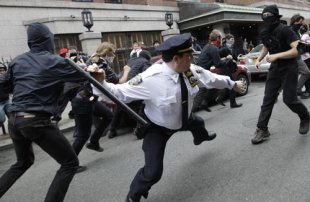
An estimated 200 protesters are in Madison Square Park in New York City, while another 500 people are in Bryant Park. In Chicago, an estimated 1,000 people have gathered in a section of Union Park despite occasional rain, the Chicago Tribune reported. There have been an unknown number of arrests in Philadelphia and Los Angeles International Airport related to the protests. As letters containing white powder, later determined to be non-toxic, arrived in mail rooms of Manhattan banks and New York's City Hall, a wide range of protesters gathered around the buildings of corporations and city centers across the country. The FBI announced on Tuesday that that they arrested a group of anarchists who allegedly plotted to use explosives to blow up a bridge near Cleveland, Ohio and attack this summer's Republican National Convention in Florida. The FBI's criminal complaint does not state the attacks were planned as part of the May Day protests. http://www.latimes.com/videogallery/69693893/News/VIDEO-May-Day-Protests-Spread-Across-Los-Angeles-Team-Coverage Pete Dutro, an Occupy organizer from Brooklyn, N.Y., said the date of the nationwide strike is related to the Haymarket massacre in Chicago. Demonstrators were protesting on May 4, 1886 in favor of an eight-hour workday when a bomb was thrown, killing both police and workers. Some labor groups recognize May 1 as "International Workers' Day.""Without labor, we do not produce things. That's kind of why this started," Dutro, 37, said. "The labor conditions were not good back then, people were being exploited and you had a huge disparity in income. And that's what we're facing right now." Dutro, a part-time tattoo artist and former grad student studying finance, said he became involved early on in the Occupy Wall Street movement because of his personal experience as a business owner and his struggle to pay for health care. Diagnosed with testicular cancer in 2004 and not able to afford health insurance, Dutro said he had to close his two businesses, a tattoo shop and web design company. He said they together employed 25 people. "I was a real job creator, but at that point in my life I could not afford health insurance and the cost of living and running a business was outrageous," he said. Dutro and the other Occupy Wall Street protesters were cleared out of Zuccotti Park in November, two months after they began their encampment, and protesters have since been forcibly removed in cities across the country.
Andy Thayer, a Chicago Occupy member and the spokesperson for the Coalition Against NATO/G-8, called this year's strike "a national phenomenon" with immigration rights advocates partnering with the Occupy movement. "There's a good buzz about it -- the kind of display not been seen in many decades: a demonstration of solidarity on immigrant rights, but also about labor's winning back rights or winning rights anew," Thayer said. Events are taking place at all hours of the day, from Los Angeles to Chicago to New York. In New York, community groups, unions and Occupy Wall Street protesters converged at a number of locations starting at 8 a.m., including the Chase Building, New York Times Building, Sotheby's, and a U.S. post office. Protesters planned to march over the Williamsburg Bridge from Brooklyn to Manhattan after meeting in Continental Army Plaza at 10:30 a.m. Dutro said some events are taking place without a permit, like a guitar workshop in Bryant Park, which he expects will attract attention from the police. "Everything's been really crazy," Dutro said, in reference to the planning leading up to May 1. "People are coming back to town, asking what's going on." Dutro said he received 200 emails on Monday about the events. "It's a nightmare," he said. Dutro said he has been coordinating with protesters in other cities, including Los Angeles. There, a strike at Los Angeles International Airport is scheduled for 6 A.M. in conjunction with some members of the Service Employees International Union and United Service Workers West. Another protest event in Los Angeles, dubbed, "Let Them Eat Cupcakes," is planned for tony shopping area, Rodeo Drive, around noon. In Chicago, gatherings include a protest at noon in Union Park, followed by a march downtown at 1 p.m. Thayer said there is "special urgency" in Chicago related to Chicago's NATO summit on May 20 to 21. Later in May, Thayer said there will be a mass march led by veterans against war who will be turning in their medals in Grant Park. The Federal Protective Service, which guards federal buildings, announced last week that there will be protective "Red Zone" around Chicago's downtown federal buildings this week in advance of the summit. The Chicago Tribune reported that the officers will carry non-lethal weapons. Thayer called the security plan "totally over the top," and said it reminded him of the security detail for the "Trans Atlantic Business Dialog" which took place in 2002."They looked like Ninja Turtles. It was such an offensive display of hardware it was frightening to kids," Thayer said, adding that 'the latest display by the Feds" will "give people a taste of what life is like in other countries on a regular basis -- troops in the streets for weeks at a time. It breeds real resentment. Chicagoans are p.o.'d that this is taking place in conjunction with the May Day march."When asked if the nationwide protests, which are aiming to disrupt the work day and commuting, risk alienating workers who are not participating in the day's events, Dutro said he would sympathize with their frustration.But, "by complaining, I would say you further help others that maintain the status quo, and what is clear is the status quo is not working," he said. "Yes, they have families and have to work and all these other things. But in the greater scheme of things, if we don't solve these problems now there will be less and less work to go to." ABC News' Richard Esposito contributed to this report.

Moutai tops China's liquor brand list

Moutai: China's top liquor brand and considered the national spirit of China. Its history can be traced back to the Han dynasty. Made by China Kweichow Moutai Distiller Co Ltd. Wuliangye: Considered the second-best liquor brand following Moutai and has a history of more than 600 years. Made by Wuliangye Group Co Ltd in Yibin, Sichuan province. Yue-Sai: A cosmetic brand established in 1992 by Yue-Sai Kan - a former TV program host. The brand was purchased by L'Oreal Group, one of the world's largest cosmetic and beauty companies, in 2004. Zhonghua: A cigarette brand established in 1951 and supplied only to political leaders during its first 20 years. Made by Shanghai Tobacco (Group) Corp. Lan: A jewelry brand founded by Yang Lan, a famous Chinese TV host, and singer Celine Dion in 2009. NE-TIGER: A clothing brand established in 1992 which concentrates on high-end dresses and uses unique Chinese clothing techniques, including embroidery. Zhuyeqing: A type of green tea produced in Emei Mountain, Sichuan province. Its products cost between 500 yuan ($79.30) and 5,000 yuan per 500 grams. The brand is owned by Sichuan Emeishan Zhuyeqing Tea Industry Co Ltd. Langjiu: A liquor made using the same source of water as its rival Moutai and has more than 100 years of history. The brand is registered by Sichuan Langjiu Group Co Ltd. Shanghai Tang: A clothing brand that was founded in 1994 in Hong Kong and is famous for its modern qipao and Chinese-style clothing. The brand was sold to Richemont Group in 2000. Shanghai Vive: A cosmetic brand established in Shanghai in 1903. The product was popular among Chinese women and was well-known internationally in the 1930s. Shanghai Jahwa United Company Ltd relaunched the brand in 2010. Source: Research Center for Luxury Goods and Services at University of International Business and Economics

Occupy Wall Street resurgence a dud

Occupy Wall Street hoped to use May Day to shift back into high gear, but a poor turnout suggests the movement may not be able to regain its former glory.

Kimmel's theory: Anderson is 'high'

Obama hails troops, signs agreement on surprise Afghanistan trip

President Barack Obama thanked U.S. troops for their service and signed an agreement on cooperating with Afghanistan on an unannounced trip there Tuesday, the first anniversary of the U.S. raid that killed Osama bin Laden in neighboring Pakistan. "Afghanistan has a friend and a partner in the United States," Obama said before he and Afghan President Hamid Karzai signed the Strategic Partnership Agreement outlining cooperation between their countries once the U.S.-led international force withdraws in 2014. On his third trip to Afghanistan since taking office, Obama also addressed troops at Bagram Air Field and will make a televised address at 7:30 p.m. ET. At the signing ceremony, Obama said neither country asked for the war that began more than a decade earlier, but now they would work in partnership for a peaceful future."There will be difficult days ahead, but as we move forward in our transition, I'm confident that Afghan forces will grow stronger, the Afghan people will take control of their future," Obama said. Addressing a concern in Afghanistan that the United States will abandon the country once its troops leave, Obama said: "With this agreement, I am confident that the Afghan people will understand that the United States will stand by them." He later added that the United States "did not come here to claim resources or to claim territory -- we came here with a very clear mission to destroy al Qaeda," referring to the terrorist organization responsible for the September 11, 2001, attacks. Karzai offered his thanks to the American people for helping Afghanistan, and the presidents shook hands after signing the document in the atrium of the King's Residence, part of the Presidential Palace in Kabul. Obama warned the Afghan people and, later, the U.S. troops he met with of difficult days ahead. In his remarks at the Bagram base, Obama sounded emotional as he specified that soldiers could see friends get hurt or killed as the mission winds down. However, he said the end was in sight, and he promised his support as president for U.S. forces and their families, both now and when they return home. The security risks in Afghanistan were evident from the secretive nature and timing of the trip. Obama landed in Afghanistan in the cover of darkness, and the signing ceremony occurred in the late evening.The Strategic Partnership Agreement provides a framework for the U.S.-Afghanistan partnership for the decade following the U.S. and allied troop withdrawal, according to senior administration officials who briefed reporters on the flight. Specific levels of U.S. forces and funding are not set in the agreement and will be determined by the United States in consultation with allies, the officials said on condition of not being identified. Noting the anniversary of the bin Laden mission, the officials called it a resonant day for the Afghan and American people. More than 130,000 troops from 50 countries serve in Afghanistan, according to the NATO-led International Security and Assistance Force. The United States is the biggest contributor, providing around 90,000 troops, followed by the United Kingdom (9,500), Germany (4,800) and France (3,600). The war that began in 2001 is increasingly unpopular in the United States, with the latest CNN/ORC International poll in late March showing 25% of respondents supporting it and 72% opposing it. More than 2,700 troops from the United States and its partners have died in the war, the majority of them American. In 2011, the United States outlined its plan to withdraw its troops from Afghanistan by the end of 2014. The move was followed by withdrawal announcements by most of the NATO nations. Last week, Afghan National Security Adviser Rangin Daftar Spanta and U.S. Ambassador Ryan Crocker initialed a text that outlined the kind of relationship the two countries want in the decade following the NATO withdrawal. The deal had been long expected after Washington and Kabul found compromises over the thorny issues of "night raids" by U.S. forces on Afghan homes and the transfer of U.S. detainees to Afghan custody. It seeks to create an enduring partnership that prevents the Taliban from waiting until the U.S. withdrawal to try to regain power, the senior administration officials said. Obama previously visited Afghanistan in March 2010 and returned in December of the same year. He also visited Afghanistan in 2008 as a presidential candidate. A report issued Tuesday by the Pentagon said that sanctuaries for insurgents in neighboring Pakistan continue to be a problem for the coalition forces and Afghan government. "The Taliban-led insurgency and its al Qaeda affiliates still operate with impunity from sanctuaries in Pakistan," the semiannual report said, adding that "the insurgency's safe haven in Pakistan, as well as the limited capacity of the Afghan government, remain the biggest risks to the process of turning security gains into a durable and sustainable Afghanistan."While the coalition is on track to turn security fully over to Afghan control, the insurgency "remains a resilient and determined enemy and will likely attempt to regain lost ground and influence this spring and summer through assassinations, intimidation, high-profile attacks and emplacement of improvised explosive devices," according to the report. The report covers security developments in Afghanistan from October through March. It noted several "significant shocks" during that period, including the release of a video of U.S. Marines urinating on corpses, the inadvertent burning of religious materials by U.S. personnel, several "green on blue" incidents in which coalition forces were killed or wounded by Afghan troops and the alleged killing of 17 civilians by a lone U.S. soldier. However, the report also said that the insurgency has been "severely degraded" by Afghan and NATO combat operations, noting that the "most significant security-related development" during the reporting period was the continuing decline in violence. After five consecutive years in which enemy attacks had increased, they decreased by 9% in 2011 and are down by 16% so far in 2012. The report attributed the improvement to the expansion and improved training of Afghan security forces. Afghans partner with coalition forces on 90% of coalition operations, taking the lead on about 40% of them, according to the military. Along with the insurgent sanctuaries in Pakistan, the report noted that Iran is trying to ensure a "dominant, long-term role" for itself in Afghanistan along with the permanent withdrawal of foreign forces. While much of Iran's activity involves openly reaching out with economic and cultural support, the report said there also is "covert support, including the provision of weapons and training for various insurgent and political opposition groups," including the Taliban.

REALITY OF SHABAZ SHARIF'S LAPTOP SCANDAL