Thursday, February 9, 2012

Bahrain Uncovered: Regime Importing Sunni Muslims


By:Anissa Haddadi
Almost a year after pro-reform protests started in Bahrain it is still facing demonstrations and public discontent.


The tiny island kingdom 30 miles off the coast of Saudi Arabia in the Persian Gulf has a history of relatively small uprisings and the Arab Spring in Egypt and Tunisia brought activists back to the forefront of the political scene.

One of the main problems however remains the country's division along sectarian lines.

With a Sunni monarchy, relying on a largely Sunni power base, the majority Shia population has for years been disfranchised and left on the margin of the country's political life.

The government has mainly depicted the protests as Shia-led and based on sectarian demands. While opposition groups and activists have repeatedly insisted their main aim is to press for political reforms, the regime has been accused of relying on the divide and rule strategy to keep its power base loyal while ostracising the rest of the population, 70 percent of which is Shia.

In an effort to get beneath the issues, IBTimes UK meets Ali Alaswad, a member of the al-Wefaq opposition and former Bahraini MP Ali Alaswad, to discuss the situation in depth.

The Shia/Sunni Divide: State-led Discrimination?

According to the World Bank, in 2010 Bahrain had a population of 1,261,835. Just under half of the kingdom's population are Bahraini nationals and the rest are foreigners. In the last 10 years the country has seen a rapid population growth and almost doubled in size from 650,000.

Given the island's limited space and natural resources, that increase has put a huge strain on the native population and its workforce.

While historically the Bahraini Shia population has been the most active in pressing for political reforms, sectarian tensions have been increased following the regime's slow pace at implementing promised political reforms.

One of the main accusations laid against the regime is the institutionalisation of discrimination.

Unbalanced Representation

One of the most tangible examples is the gerrymandering of parliamentary electoral districts to secure Sunni representation over the Shia majority.

"One of the main demands of the protesters is to have a fairer and more balanced district representation," Ali Alaswad said.

The Bahraini National Assembly is made up of the Council of Representatives of 40 elected members and of the Consultative Council, which has 40 members who are royally appointed.

As a result of the disproportionate district representation, the 2010 elections saw 22 Sunni parliamentarians elected against 18 Shia.

Political Naturalisation:

The government has also been accused of actively pursuing policies to change the country's demographic balance by granting citizenship to non-Bahrainis - mainly Sunnis originating from Syria, Yemen and Jordan - to reduce the size of the Shia majority.

"It seems that the regime is using foreign nationals to consolidate its power base. By providing them with better living conditions than in their home country it on the other hand expects them to remain loyal," said Alaswad.

The regime has also naturalised many migrant workers from Asia and South Asia, leading to further tensions. With an official unemployment level at 16.5 percent and an unofficial level closer to 30 percent, the regime's policies have increased anger and incomprehension among the public.

"One of the main problems is that with such a high level of unemployment it is difficult to understand why Bahraini nationals, whether Sunni or Shia, are not given the priority when it comes to jobs. Both Shia and Sunni are suffering from the consequences of the political naturalisation," Alaswad said.

Public Sector

Most Shia Bahraini struggle to find employment in the public sector. High-ranked positions within the state-controlled public sector are often out of reach of the Shia, with the Crisis Group, an independent, non-profit, non-governmental organisation committed to preventing and resolving deadly conflicts, noting that the Bahrain defence forces and the interior ministry are particularly affected by discrimination among Shia.

Alaswad said: "I was an engineer in the Ministry of Force. My superior once complimented me on my work, saying I was an outstanding engineer. He said he wanted to promote me but could not. I was a Shia and an active member of the opposition group al-Wefaq, and that did not fit in well with the regime.

"Even Shia who are not actively taking part in opposition groups or movements are discriminated against and that also covers the educational field. Scholarships, for example, are more easily distributed to the Sunni than the Shia," he added.

Economic Problems

The majority of the native population suffers from under-employment and low wages.

"Social justice in Bahrain is non-existent. The majority of the jobless are Shia," Aswad said.

In the absence of effective state-provided insurance and poor local health facilities, the poorest face tough living conditions. And while housing costs have increased, low wages have left many aspiring Bahrainis unable to afford decent accommodation.

With a country so deeply divided, it is no surprise that the uprising is seen through the prism of sectarianism.

Use drones to kill’ the Taliban in Pakistan

The Washington Times

A longtime adviser to U.S. commanders in Afghanistan says now is the time for President Obama to change strategy and target Taliban leaders ensconced in Pakistan, using drones and other tactics employed to kill al Qaeda operatives over the past 10 years.


"We kill them. We use drones to kill them, just like we did al Qaeda," said retired Army Gen. Jack Keane, just back from a two-week tour of the battlefield and consultations with U.S. commanders. "The president has to change the policy and issue a 'finding' that this is a covert operation under the province of the Central Intelligence Agency."

A White House spokesman declined to comment Wednesday.

Gen. Keane pointed out one of the great ironies of the long war in Afghanistan: The main U.S. foe is the Taliban, but senior Taliban leaders have untouchable safe havens in Quetta and Peshawar.

Taliban leaders in Pakistan work out of command centers and conduct conferences, or shuras, with lower-level commanders on tactics for killing NATO troops and bringing down the elected government of Afghan President Hamid Karzai.

"A lot of these guys command from the rear, if you will, telling their guys by orders what to do and what not to do," a U.S. briefer said to visiting officers last year.

Until now, the U.S. has not targeted senior Taliban leaders for fear of alienating Pakistan, whose intelligence service helped put the Taliban in power in Afghanistan in the 1990s. Pakistan will not target them because of tribal loyalties and fears that such action could destabilize the country via a militant uprising.

What Gen. Keane is recommending is a war campaign in which the intelligence community, principally the CIA and the National Security Agency, focus spies, communications intercepts and satellites on Taliban commanders inside Pakistan. Once a commander is located, a Predator drone would be sent to kill him with a Hellfire missile.

"If we don't start targeting the Taliban leadership now ... the risk is much too high in terms of our ability to sustain the successes that we've had. We cannot let that Afghan Taliban leadership that lives in Pakistan continue to preside over this war and recruit and provide resources," Gen. Keane said.

"We've got to get involved in disrupting those functions. We have to target them like we have done al Qaeda. We would not have to conduct on-ground operations, but we have to change their behavior by targeting them."

'A persistent campaign'

He added: "Once you turn all of our intel systems on a priority target, we start to get a considerable amount of information, and the people who run these operations know how best to deal with it.

"We're talking about a persistent campaign that puts the Taliban leadership at risk, which would change their behavior, and as a result of this, they would no longer be able to control operations effectively in Afghanistan.

"For 10 years, we have been unwilling to do this because we have believed this would destabilize Pakistan. The result is, we are destabilizing Afghanistan, and that is really tragic."

One of those who would be targeted presumably is a Taliban leader whom the U.S. once held at the military detention center at U.S. Naval Base Guantanamo Bay, Cuba. Qayyum Zakir returned to Afghanistan after his release in 2008 and eventually became the underboss for Taliban supreme leader Mullah Mohammed Omar.

A Predator drone campaign inside Pakistan seems unlikely.

Some Pakistani officials have pressed Washington to stop missile attacks in the tribal areas where al Qaeda and its allies are targeted. The Obama administration is engaged in behind-the-scenes peace talks to persuade the Taliban to join the Afghan government in Kabul.

As a good-faith gesture, it is discussing releasing Taliban leaders at Guantanamo into Afghan custody. Vice President Joseph R. Biden has declared: "Look, the Taliban per se is not our enemy. That's critical."

As for Taliban talks, Gen. Keane said killing the leaders would increase pressure on the Taliban to hold real discussions, not to manipulate the U.S.

"The Taliban has not, in my judgment, in any significant way changed their fundamental goal and objective, which is to take over Afghanistan and return to running that country," he said. "It doesn't mean that we shouldn't have negotiation talks with them. I think we should. But we've got to be clear-eyed about it."

Now is one of the war's most pivotal times. U.S. troops are on a stepped-up schedule to end Taliban control in various villages and turn over security to the Afghan National Army. The bulk of American troops are scheduled to leave the country by the end of 2014.

'Show stopper'

Defense Secretary Leon E. Panetta last week squeezed the timeline by saying U.S. troops would shift to an advisory role in mid-2013 instead of fighting alongside the Afghan army as planned.

Gen. Keane has criticized that schedule as premature. He called it a "show stopper" if U.S. troops exit in 2014 but leave the Taliban leadership untouched in Pakistan.

A former Army vice chief, Gen. Keane is one of the nation's most influential retired four-star generals. He worked in 2006 to persuade the George W. Bush administration to change strategy in Iraq and shift to a troop surge.

He has made four tours of Afghanistan since Mr. Obama ordered a surge of troops in 2009, bringing the American presence to more than 100,000 military personnel.

His latest trip was at the behest of U.S. Central Command. He told The Times that he first wanted to see whether 2011 gains made against the Taliban in its birthplace city of Kandahar and in Helmand province still stood.

"I went back in, and I wanted to verify the Taliban was not able during [the] 2011 fighting season, spring, summer and fall, to take back any of the territory we had taken from them or to regain any control or influence over the population," he said. "The fact of the matter is there is not a single place where they have been able to do that."

The other crucial region is the border area with Pakistan, east of Kabul. The U.S. shifted forces there last year to stop Taliban infiltration.

"The momentum has shifted to our favor," Gen. Keane said, "much as it did in [the] south and southwest — in other words, Kandahar and Helmand province — as result of the surge forces. We are now able to generate the appropriate level of combat forces."

Negative assessments

Gen. Keane's assessment contrasts with a NATO report, widely quoted in the British press, that says the Taliban is poised to retake Kabul.

Much press attention also has focused on a scathing insider's article in the Armed Forces Journal, an independent publication. Army Lt. Col. Daniel L. Davis accuses senior commanders of lying to the American people about purported progress in Afghanistan.

"What I saw bore no resemblance to rosy official statements by U.S. military leaders about conditions on the ground," wrote Col. Davis, who spent last year in-country as part of a rapid equipping force. "Instead, I witnessed the absence of success on virtually every level."

He added: "How many more men must die in support of a mission that is not succeeding and behind an array of more than seven years of optimistic statements by U.S. senior leaders in Afghanistan? No one expects our leaders to always have a successful plan. But we do expect — and the men who do the living, fighting and dying deserve — to have our leaders tell us the truth about what's going on."

Gen. Keane dismisses Col. Davis' assessment.

"He doesn't know what he is talking about," the general said. "It is absolute rubbish. I don't know what his agenda is or where he's coming from.

"We have some of the best guys we've ever had in our military running this thing. This is my fourth assessment. In February of last year, we had already changed the momentum in the south and southwest. I went back in July and looked at it again. We had some of the fiercest fighting we've ever been involved in. And I looked at it again now. We have consolidated those gains."

Gen. Keane said the big worry among officers and civilian officials is Mr. Panetta's accelerated pace for ending the fight for U.S. forces.

"We can't pull our forces out and at the same time degrade the support for the Afghan National Security Forces," he said. "If we do that, that would be a slipshod exercise. It would be detrimental."

Citing Libya example, Russia rejects US-backed ‘friends of Syria’ group

tribune.com

Russia said on Thursday that it took a cautious view of US-backed attempts to forge a “friends of Syria” coalition that may soon meet in Turkey to coordinate humanitarian assistance for the embattled opposition.

The Russian foreign ministry’s chief spokesman said the idea appeared similar to the grouping of like-minded nations that Washington forged in advance of an air campaign on Libya that Russia strongly opposed.

“We take a generally cautious view of formats that we do not believe are legitimate for dealing with specific international disputes,” foreign ministry spokesman Alexander Lukashevich told a weekly briefing.

“We have had very a bad experience working in such formats, and take a cautious attitude to various contact groups and groups of friends,” said Lukashevich. “As you remember, we had such unsuccessful experience in Libya.”

He added that Russia remained opposed to any coalitions whose job was to “introduce foreign intervention” in another nation’s internal affairs.

US Secretary of State Hillary Clinton this week said she backed the coalition idea as the death toll spirals from Syrian President Bashar alAssad’s domestic crackdown.

Turkey on Wednesday said it planned to hold a meeting “as soon as possible” to forge a common approach between regional players and world powers towards the crisis. A US State Department official said the proposed Turkish meeting was “part and parcel” of efforts to form the “friends of Syria” group.

Germany expels four Syrian embassy members

Meanwhile, German Foreign Minister Guido Westerwelle said on Thursday that Germany was expelling four diplomats from the Syrian embassy in Berlin after the arrest of two men suspected of spying on regime opponents.

“After the arrest of two people suspected of spying for Syria, I have decided to expel four members of the Syrian embassy in Berlin,” Westerwelle said in a statement. “The Syrian ambassador has been informed of this decision,” added the minister.

According to diplomatic sources, there were “clear indications” that the four had carried out “acts not in accordance with diplomatic law”.

The diplomats and their families now have three days to leave the country, the sources added.

Further steps against Syrian embassy staff could not be ruled out if it emerged that the Damascus regime was continuing to interfere with opposition figures and Syrian people in Germany, added the sources.

Two men, identified only as 47-year-old German-Lebanese citizen Mahmoud El A. and 34-year-old Syrian national Akram O., were arrested in Berlin on Tuesday.

Westerwelle summoned Syria’s ambassador following the arrests. “The position of the federal government was made unmistakably clear at this meeting that the possible action against the Syrian opposition in Germany will not be tolerated,” the ministry said.

In late December, a Berlin local politician active in the Syrian opposition was attacked by two men in his home in a case the German foreign ministry said it was following closely. The man’s party, the Greens, said it suspected the Syrian secret services were behind the assault. No suspects have been identified in the case.

China meets Syria opposition in Beijing

China said that it had held talks with a key Syrian opposition group this week, amid fierce criticism of its decision to block a UN resolution condemning a bloody crackdown in the Middle East country.

China and Russia drew international ire for blocking the UN Security Council resolution on Saturday, with Washington calling their rejection a “travesty” and another Syrian opposition group saying they had handed President Bashar alAssad’s regime a “licence to kill”.

Chinese foreign ministry spokesman Liu Weimin said the visit by the National Coordination Body for Democratic Change (NCB) had “long been scheduled” and was not linked to China’s controversial veto.

NCB representatives told Chinese officials they would like Beijing “to play a bigger role for an early resolution to the Syrian crisis,” Liu said.

But the NCB, one of the main opposition factions in Syria, staunchly opposes foreign military intervention in the conflict – which is in line with China’s long-standing policy of non-interference in other nations’ internal affairs.

The other main opposition group, the Syrian National Council (SNC), is widely regarded as the most inclusive of Syria’s opposition alliances and has previously called for foreign military intervention.

The SNC blasted China and Russia over their double veto and said they had given a “licence for the Syrian regime to kill without being held accountable”.

Liu said Vice Foreign Minister Zhang Zhijun met members of the NCB to discuss “the situation” in Syria. He urged both sides of the conflict to “cease all violence … and avoid casualties among civilians”.

Liu reiterated that China was “the friend of all Syrian people” and did not “seek its own interests on the Syrian issue”.

The NCB was in Beijing from February 6 to 9 at the invitation of the Chinese People’s Institute of Foreign Affairs, a government-backed foreign policy organisation.

China said Tuesday it was considering sending envoys to the Middle East to help resolve the conflict, after Russia sent its top diplomat Sergei Lavrov to Damascus.

Thirteen countries voted for the UN Security Council resolution, which aimed to give strong backing to the Arab League’s plan to end a deadly government crackdown on protesters. More than 6,000 people have died in nearly a year of upheaval in Syria, as Assad’s hardline regime seeks to snuff out a revolt that began with peaceful protests in March 2011 amid the Arab Spring.

Shabaz Sharif false’ assurance of presence in the House

Opposition Leader in Punjab Assembly (PA) Raja Riaz Ahmad moved a privilege motion against Provincial Law Minister Rana Sanaullah for his ‘false’ assurance of chief minister’s (CM) presence in the House on Monday.

During the PA session last Wednesday, Sanaullah had assured the legislators of CM’s presence in House, saying he (CM) would personally attend the assembly proceedings on coming Monday to take the House into confidence over the drug issue and Punjab Institute of Cardiology’s (PIC) role in it. He had maintained that Shahbaz Sharif, who held portfolio of the health ministry along with 14 other ministries, would himself conclude the general debate on the PIC issue and brief the House about the causes of the deaths.

However, the CM did not attend the session, for reasons unknown. Eventually, the session was prorogued for indefinite period without concluding the debate on deaths from contaminated medicines. The joint opposition of PPP and PML-Q, during the last session, also staged a walkout from the House protesting CM’s absence from assembly since the last budget session in June 2011. Thereafter, Raja Riaz submitted a privilege motion in the PA Secretariat Notice Branch against Rana Sanaullah, accusing him of “misleading” the House.

ANP ignores Begum Naseem Wali

The Awami National Party (ANP) has announced tickets to its members for Senate elections on the 12 seats of Khyber Pakhtunkhwa, while denying candidature to Begum Naseem Wali Khan, wife of former party chief Wali Khan. A party spokesman said that Senator Ilyas Ahmed Bilour will enjoy another term on the technocrat seat, while former federal minister Azam Khan Hoti, ANP Sindh President Shahi Syed and former provincial minister Baz Muhammad Khan would be the party’s nominees on general seats. Zahida Khan would contest election on the special seat for women, and Amarjeet would be ANP’s candidate from the minorities. The spokesman said a meeting of the ANP Parliamentary Board held under Senator Afrasiab Khattak discussed and appreciated the services of all the applicants. However, the spokesman avoided to explain why Begum Naseem Wali Khan was ignored while awarding Senate election tickets. Sources told Pakistan Today that Begum Naseem Wali’s request for election ticket was turned down due to her age and health.

LHC seeks reply from Punjab govt in drug reaction case

The Lahore High Court (LHC) on Thursday sought reply from the Punjab government over not compensating the victim families of drugs reaction deaths on February 13.
The LHC Justice Umar Atta Bandiyal heard a petition filed by Sughra Bibi, sister of a person who died from spurious medicines reaction, against the Punjab government which has not paid compensation amount to the victim families.
During the hearing, the petitioner appeared before the court and told the justice that the Punjab government had announced to provide Rs 500,000 each as compensation amount to victim families whose dear ones died from spurious medicines but this amount was not provided yet. On this, the court sought reply from the Punjab government on February 13.

Khyber Pakhtunkhwa: 15% children out of schools

15 per cent children are out of schools in Khyber Pakhtunkhwa as 85 per cent children of age 6-16 years are enrolled in public and private sector schools in the province, said Annual Status of Education Report (ASER) 2011 launched ere on Wednesday.

The report was launched in a ceremony held here in Peshawar Press Club (PPC), with Minister for Information, Mian Iftikhar Hussain as chief guest on the occasion.

Those present on the occasion included Director, ASER, Dr. Baila Raza Jameel, Director PITE, Khyber Pakhtunkhwa, Sarwat Jehan and others.

The survey has been conducted by the South Asia Forum for Education Development (SAFED) managed by Idara-e-Taleem-o-Agahi (ITA) in collaboration with the Foundation Open Society Institute (FOSI), Department for International Development (DFID), National Commission for Human Development (NCHD) and Oxfam/Novib.

The survey said that enrollment for children aged 6-16 years stands at 85 per cent-35 per cent for girls and 65 per cent for boys while percentage for out-of-school children stood at 15 per cent including five per cent dropout rate.

They survey showed that 10.5 per cent children were never enrolled in any education facility. Among the out-of-school children 58.7 per cent have been found be girls.

The survey has found that around 72 per cent children are enrolled in government schools, and 28 per cent children in non-state educational facilities and only one per cent in madrassas in sampled districts.

Annual Status of Education Report (ASER) 2011, a citizen-led large-scale household survey in Khyber Pakhtunkhwa that assessed learning outcomes of school going (5-16 years) age children in 14 rural districts has found that almost 60 per cent children cannot even read a sentence in Urdu or in their mother tongue.

According to the report, the learning outcomes of the children in arithmetic were also abysmally low pathetic.

The results of the survey show that almost 58 per cent children cannot do two-digit subtraction sums whereas almost 77 per cent of 5-16 years age children cannot do three-digit division sums.

The ASER Survey has been conducted in 14 districts in Khyber Pakhtunkhwa including Upper Dir, Swat, Battagram, Swabi, Mansehra, Abbottabad, Haripur, Charsadda, Mardan, Peshawar, Attock, Karak, Bannu, Tank and D.I. Khan.

The ASER's specially trained volunteer teams have surveyed 8,274 households in 419 villages and collected detailed information on 3-16 years age group 24,039 children (60% male and 40% female) while, 5-16 years age group children were tested for language and arithmetic competencies.

The survey also collected information on 668 schools - 412 government schools and 256 private schools. The survey also assessed literacy levels of 8,867 mothers. -

Dilip’s house becomes national heritage Khyber Pakhtunkhwa bought it for Rs30m


The Khyber Pakhtunkhwa government has given the status of national heritage to the house of Indian film industry legend Dilip Kumar (Yousaf Khan) after purchasing it from a local person on sum of Rs.30million.Official sources in Khyber Pakthunkhwa Culture Department told APP that the six-room house of the legendary actor at Mohallah Khudadad, Qissa Khwani bazaar, Peshawar was purchased from a local person on sum of Rs.30million and declared it national heritage to pay respect to the celebrated Indian Cinema star of Pakistani soil.”The repair and reconstruction work on the dilapidated house would be completed in few weeks and later be opened for tourists and arts lovers,” he added.Dilip Kumar had left his house in 1942 before migration to India and his relatives later sold it on Rs.5.6million.The Khyber Pakthunkhwa government took this principal decision after Minister for Culture and Information, Mian Iftikahr Hussain along with a high delegation including Provincial Secretary Culture Azmat Hanif Orakzai, director culture Pervez Khan and prominent artist and head of Hunarkada College Islamabad Jamal Shah, has recently visited to the residence of Dilip Kumar.The Minister directed the officials concerned to strike a deal for its purchase in order to preserve it on modern lines for coming generations besides giving it national heritage’s status.Speaking on the occasion, the Minister said work of the legends of Pakistan, no matter wherever they were in the world, would be preserved and their deeds would be converted into documentaries for information and guidance of future generation. He said Pakistan had produced prominent personalities in various fields including film industry that ruled over the heats of millions fans in world over.Dilip Kumar (Yusuf Khan) is the son of Peshawar who has won the hearts of the millions of the movie lovers in Pakistan and Indian.The soil of the Khyber Pakhtunkhwa especially of Peshawar is very fertile that had produced great personalities in the field of performing arts like Dilip Kumar, Raj Kapoor, Shah Rukh Khan, Badar Munir, Firdous Jamal and Qavi Khan who ruled over hearts of millions of people through their professional skills and work.

Dunya News anchorperson Mubashar Luqman given life threats by Punjab Govt


Senior anchorperson Mubashar Luqman has been given threats by sleuths of Punjab Govt.
Mubashar said that he has been warned of dire consequences for exposing the true face of Punjab Government earlier in his talk with Dunya News. He however expressed determination that neither him nor any staff member of Dunya News would succumb to pressure tactics of the dictatorial rulers of Punjab. He said he would continue to uphold truth as per motto of Dunya News and its management and would continue to raise voice for the rights of the people.
Revealing the extent of threats, Mubashar Luqman had earlier told Dunya News said that anchors and staff have been warned that their whereabouts and addresses had been listed and anything could happen if ruffling truth about Punjab government’s performance was reported further. He said that the callers would even say that they knew the exact addresses of the schools the kids of Dunya News management go to.

Punjab Govt threatens Dunya News for PIC scoop


Punjab Government has started threatening Dunya News management for revealing PIC medicines scandal.


Dunya News broke and highlighted the tragic story about wrong medicines that were being given by the Punjab Institute of Cardiology (PIC).
As a result of these contaminated drugs, more than 137 poor heart patients have lost lives and an uncounted number is still suffering life-threatening allergies.
However, the Punjab government, instead of putting its house in order, has started threatening Dunya News with dire consequences for projecting the cause of the poor people.
Senior anchors and management of Dunya News have been given direct threats.
Journalists and human rights organisations have expressed great concern and resentment over the dictatorial attitude of the Punjab government, and called such steps as attack on free media. Pervez Shaukat, President Federal Union of Journalist, said that any regime s days get numbered when it embarks on such dictatorial steps. He said the Federal Union of Journalist would stage a protest to condemn the threats and to express solidarity with Dunya News.
Similarly, Lahore Press Club President Sarmad Bashir expressed regret over the Punjab government s attitude, saying the media has its duty to expose wrongdoings of the government. Sarmad said the LPC would stage a protest tomorrow on the call of the Federal Union of Journalist.
Revealing the extent of threats, senior anchoperson Mubashar Luqman said that anchors and staff have been warned that their wherabouts and addresses had been listed and anything could happen if ruffling truth about Punjab goverbnment s performance was reported further. He said that the callers would even say that they knew the exact addresses of the schools the kids of Dunya News management go to.
Mubashar Luqman also said while the news of the threats is being aired, certain cable operators have reported that they have been pressurised by the Punjab government to cut off Dunya News transmissions.
He said that Punjab government has also been trying to cover the news of bird flu virus in the province because some PML-N stalwarts have huge stakes in the poultry industry.It is confirmed separately that Dunya News tranmissions in some areas of Rawalpindi have been cut off.
Meanwhile, Azam Chaudhry, Secretary General Lahore Press Club, said that a fabricated case, invoking section 302, has been registered against Dunya News Chief Executive Mian Amir Mehmood in the Gulberg police station.

Balochistan to the fore

EDITORIAL:Daily Times

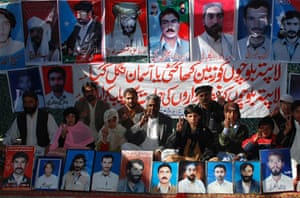
Balochistan has an unfortunate history of denial of rights and repression against those who demand them. It is doubly unfortunate because it has been largely ignored by the political forces as well as the media, barring untoward incidents such as the murder of Nawab Akbar Bugti. Daily Times is proud to have consistently led in this regard. Our persistence in reporting and commenting on a critical issue may finally be bearing fruit in bringing the issue into the mainstream political discourse as well as gathering the belated attention of the media. One example of the former is the heated debate in the National Assembly (NA) the other day, related to the killing in Karachi of the wife and daughter of Balochistan MPA Mir Bakhtiyar Domki, which expanded to a discussion of the regime of extra-judicial killings that are the norm in that benighted province. Parliamentarians bemoaned the fact that the committee set up to look into the troubled situation in the province has failed to report. The demand now for a special committee for the same purpose misses the point. Neither the federal nor the provincial Balochistan government are in charge of policy in the province. The ‘kill and dump’ policy is being pursued by the FC, obviously under the orders of the military establishment. The FC has once again sprinkled salt on the wounds of the Baloch by killing protestors against the Domki family murders. No political force has so far been able to prevail upon the military authorities to revisit their policy and desist from what more and more people are characterising as a disastrous course.

In today’s world, it is no longer possible to carry on blithely with this kind of slow genocide without the world taking notice, sooner or later. This is what explains the US Congress’ decision to hold a hearing on the Balochistan situation. While some may see this development as a triumph for the lobbying of exiled Baloch nationalists in the US, it sits uncomfortably with both Islamabad and the Obama administration for their own discrete reasons. Pakistan’s foreign office sees the hearing as an unjustified interference in a purely internal affair of Pakistan, while the US administration, engaged in fence mending with Islamabad after the relations between the two countries went into deep freeze following the Salala attack, views the hearing and its timing as deeply embarrassing in its efforts to woo Pakistan back into a friendlier posture. Our foreign office seems woefully out of touch with the way the world works at present. Interconnectedness has ensured that no major development, let alone one involving a deliberate policy of decapitating the small intelligentsia of a still largely tribal society (albeit evolving haltingly into modernity), can stay off the radar forever. Washington is despatching General James Mattis, the head of the US’s Central Command, to Pakistan for talks with the Pakistani military top brass regarding the new terms of engagement desired by Islamabad and under discussion in Pakistan’s parliament currently. In fact those deliberations resulted in the cancellation of US Special Representative for Pakistan and Afghanistan Marc Grossman’s visit recently, and has led to General Mattis’ visit being postponed by at least a week. Apart from the general tenor of the relationship going forward, the US and NATO desire a reopening of the supply route for their forces in Afghanistan that stays blocked since the Salala incident. To persuade Islamabad, the US administration is said to be contemplating reversing its initial reluctance to offer an apology for the deaths of Pakistani soldiers at the hands of the US and allied forces in Salala. The US Congress hearing at this precise moment could, in the administration’s view, cause further embarrassment in its relationship-healing thrust. The hearing itself will reveal its contours today, but the contentious issue of some nationalists’ demand for independence for Balochistan, implying the balkanisation of Pakistan, is considered too sensitive even to be commented on by the US State Department.

As an example of Baloch grievances, the issue of its natural resources and control/benefit for the local population has once again been highlighted by the case of the Tethyan copper project at Reko Diq. The Baloch are still smarting from the outcome of an earlier copper project, Saindak, which eventually ended up with a Chinese company with little or no benefit to locals or the province. Historical resentment over the use of Sui gas all over the country while depriving Balochistan of its benefits for many years still simmers despite the partial supply of gas to some urban areas since some years. The constitutional construct of Pakistan makes it very difficult for provinces to claim their just rights over their natural resources. That is an area which, if revisited, could go some way towards mitigating resentment in Balochistan. But the real issue is the attempt by the military to resolve the political/economic conundrum of Balochistan through unfettered force and repression. The times have changed. Force and repression will only reap the whirlwind of greater resistance by the Baloch people, now encouraged by the increasing attention being paid to their issues by local and international opinion.

Songs of peace from Khyber-Pakhtunkhwa

The Express Tribune Great song,Thanks ”Express Tribune” for reporting this News,Hats Off… Pukhtunks are liberal and secular minded,they need better, modern Education. Pakhtuns are not fanatic Muslims. They are conservative but in tribal sense not in religious sense. All the retrogressive religious influences like Militant Islam, Political Islam, and Terrorist Islam have been injected into Pashtun body-socials from across the Attock.
Pashtuns are broad-minded tolerant people and their social system is founded on secular credentials.Mwaqar


Khyber-Pakhtunkhwa (K-P) is perceived by many as a land which hosts an endless supply of militants, but is once again gaining recognition as a hub for the creative arts. The younger generation of K-P is passionate and concerned about the stereotypes associated with Pakhtuns, which is why musicians like Zeb and Haniya, Sajid and Zeeshan and now Naseer Afridi and Shahab Qamar are using the medium of poetry and music to dismiss preconceived notions.

Telling a tale

Qamar, an engineer in Brisbane, and Afridi, a student in Bahria University, first interacted through Facebook and despite never having been met, managed to release a thought-provoking song on YouTube. The song “Za Pukhtoon Yam”, which translates to “I’m a Pakhtun”, hums promises of change and restoration.

The video begins with a couplet of well-known Pashto poet Ameer Hamza Shinwari which says that, “The enemy brands it as the language of hell, to heaven I will go with Pushto”.

Qamar, the 25-year-old producer, thinks that Pakhtuns are going through a tough phase and labels such as terrorists should only make them work harder for change. “The song reminds us Pakhtuns what our true values are. It asks us to stay put and support each other,” says Qamar. According to the producer, the song sends out a message to everyone outside the Pakhtun community that even Pakhtuns are keen promoters of peace and that they don’t wish to be alienated from the rest of Pakistan. Afridi, who has a small role in Bilal Lashari’s upcoming film Waar, believes that there is a preconceived notion about the Pakhtuns which is untrue. “Everyone likes a joke at a Pathan’s expense. Whether one is buying cheap sunglasses or sending out an SMS joke, a Pathan reference makes everything funnier for some odd reason,” laughs 20-year-old Afridi. “I agree that sometimes these jokes can be hilarious, but at times it hits a sensitive spot.”

Persistance pays off

Naseer and Shahab came to the music scene as a progressive rock band in 2011. Even though their first song “Rise On Your Broken Knees” was not very well received by the listeners, Naseer and Shahab didn’t lose hope and soon came up with the idea of making a Pashto rock song.

Their efforts paid off as the response to “Za Pukhtoon Yam” has been huge with more than 20,000 hits on their official YouTube video. The track managed to strike a chord with non-Pakhtuns as well, which came as a shock to the duo who thought that the song didn’t really have a commercial flavour to it. “The most exciting part is the non-Pakhtuns coming in and expressed their genuine feelings and I think that is our biggest achievement to date,” beams Qamar.

The duo tried to summarise the essence of K-P in their latest song. Afridi, who penned the lyrics explains, “I have tried my best to put the true Pashto identity in a compressed form in these verses. We have had so many peace loving people in our cultural history but sadly we never promote them. People aren’t even aware of the fact that musician Haroon Bacha was threatened by conservative parties that he would be banished from Pakistan if doesn’t stop making music in K-P.”

The duo believes that artists like Ghani Khan, Haroon Bacha and Sardar Ali Takkar are the people who represented the true spirit of Pakhtuns and spread the message of peace and tranquility throughout K-P accordingly.“People like these stalwarts represent us and not terrorists,” Afridi adds.

The message in ‘Za Pukhtoon Yam’

If you hit me with stones

Place a gun to my head

I’ll greet you with a flower in return

I am a Pukhtoon

A hat on my head

Fond of honour

I am the music and dance

I am the tune of love

I am cherished by all

I am a Pukhtoon

I am a couplet of Ghani


Correction: An earlier version of the article said that Qamar belongs to Sydney instead of Brisbane. Also, the word ‘couplet’ was misspelled as ‘couple’. The corrections have been made.

Senators suspect agencies’ role in Domki murders


The senators on Wednesday cautiously pointed the finger towards the intelligence agencies of the country as they condemned the murder of the wife and daughter of Mir Bakhtiar Domki as brutal, inhumane and contrary to Baloch traditions, with two of them arguing whether the debate in the US Congress committee on the Balochistan issue was justified under the prevailing circumstances in the restive province.
Senator Haji Adeel linked the Balochistan situation to that in Palestine and Kashmir and justified the debate in the US Congress Committee on the Balochistan issue under the prevailing circumstances in the province, saying if the world discussed Palestine, Kashmir, Iraq and Syria, why should it not discuss the Balochistan issue when the province was plagued by human rights violations. He said the establishment had taken the same path that had led to the creation of Bangladesh.
However, Senator Haroon Akhtar said: “How dare they (US) have a meeting on the Balochistan issue and talk about an independent Balochistan?” He said some foreign powers were active in Balochistan and added that no intelligence agency or individual could commit this inhumane and shocking crime. He suggested that as the US was reportedly on the brink of disintegration, the Foreign Relations Committee of parliament should hold a meeting and discuss the possible US disintegration.
It was Senator Shahid Bughti who first put the ‘facts’ before the House as he heard from the sole survivor of the incident, the 15-year-old maid, and rejected the ‘conclusion’ that deaths were the result of an enmity. Senator Shahid Bugti demanded that Prime Minister Yousaf Raza Gilani clear his position: either the gruesome incident took place on his wish or he was unable to prevent such incidents. He said some government officials tried to twist the facts and labelled the incident an outcome of an enmity. The killers, he said, had used silenced guns. “It is totally wrong that the killings were the outcome of an enmity… killing of women in even the worst kind of Baloch enmity is out of the question, as society gives respect to the females of the rivals,” he said.
Without mentioning names, Bugti said same elements were involved in the killing of the Domki family members which were also involved in kidnappings in Balochistan.

“Just to cover up, they are now giving another colour to the incident and declaring it the result of an enmity,” he added. He said the incident was a message to specific people.
As Bugti announced a walkout from the House against the killings, the treasury and opposition members joined him but the Pakistan People’s Party (PPP) members were in a state of ‘to be or not to be’ when Senate Chairman Farooq Naek sensibly adjourned the proceedings for prayers.
Senator Abdul Ghafoor Haideri said if some powers had already decided to separate Balochistan and Khyber-Pakhtunkhwa from the rest of the country, they must let (the other people) know and take them into confidence about their plan. “Is there any law in Balochistan? Are these people above the law? Are they out of the judiciary’s reach?” he asked the government.
Senator Abdul Nabi Bangash said such acts of ‘adventurism’ would lead to further hatred (against the State) amongst Baloch people. “The people who are acting as a state-within-a-state are not friends of the country, they are enemies. The regular army lost half of the country, Kashmir, Siachen and Kargil. These people are snakes in the grass but disguised as defenders of the country,” he said.
Senator Abdul Rahim Mandokhel demanded the government rein in all those involved in such incidents. Senator Hasil Bazinjo said the point to ponder was that what message had been sent through this incident. She was not only the wife of Bakhtiar Domki but also the sister of Brahamdagh Bugti.
Senator Prof Ibrahim said the US should not be allowed to exploit the Balochistan issue as a political tool. About the killing, he said that there was not even a slight difference in the unrest in Balochistan under a democratically elected from former president Pervez Musharraf’s regime. Senator Zahid Khan said East Pakistan separated because of neglect and abuse on the part of West Pakistan and the current situation in Balochistan was not too different.
Senator Mushahidullah Khan said elements of ‘revenge’ seemed to be dominating the incident. He asked the government to extend its reconciliation policy to Balochistan just like it did to other political parties to extend its rule.
Leader of the House Syed Nayyar Bukhari condemned the incident and said the Parliamentary Committee on National Security should examine the incident and discuss the forces that wanted to destabilise the country.

Politicians rap PML-N, journalists call nationwide strike


Politicians from across political spectrum have expressed solidarity with Dunya News.
And journalist organisations have called a nationwide strike on Thursday.
Talking to Dunya News, Federal Information Minister Firdous Ashiq Awan condemned the threats given to Dunya News management by the Punjab government.
Pervez Shaukat, President Federal Union of Journalist, said that any regime’s days get numbered when it embarks on such dictatorial steps. He said the Federal Union of Journalist calls a nationwide protest to condemn the PML-N government’s attitude and to express solidarity with Dunya News.
Lahore Press Club President Sarmad Bashir also expressed regret over the Punjab government’s attitude. He said the media has its duty to expose wrongdoings of the government. Sarmad said the LPC would stage a protest tomorrow on the call of the Federal Union of Journalist.
Meanwhile, PTI chief Imran Khan warned the Punjab government of mending its ways, else his party would stage a rally in support of freedom of expression and media.
Similarly, Ch Pervaiz Elahi, the former CM Punjab and leader of the PML-Q, said that the government should puts its house in order and back off from confrontation with free media. He said the Punjab government should have appointed a health minister if it were to avoid the PIC scam. Harassing mediamen could a no solution to covering failed governance, he added.
Lashkari Raisani, PPP leader, said that it is sad to note that Mian Amir Mehmood, who id former nazim of Lahore and enjoys unblemished reputation, has been implicated in a wrong, fabricated case.
Shazia Marri, another PPP leader, said threats by PML-N government to Dunya News are highly deplorable.

Long history of PML-N’s revenge tactics against media

There is a long history of Pakistan Muslim League-Nawaz’s (PML-L) revenge tactics against print and electronic media.
Sanctins, arrests and registration of cases against mediamen is trademark of PML-N leaders Nawaz Sharif and Shahbaz Sharif.
State machinery, including Income Tax Department, FIA, Police and National Accountability Bureau, was used to suppress the voice of a newspaper when PML-N chief Nawaz Sharif was prime minister. But all these revenge tactics failed.
A renowned journalist was also abducted from his house during Nawaz Sharif tenure as PM but once again he failed in his bid against freedom of the press.
PML moved a resolution in the Punjab Assembly against journalists when Shahbaz Sharif was chief minister. The journalist community across the country condemned this resolution and staged countrywide protests forcing PML-N chief Nawaz Sharif to take back this resolution.
The revenge tactics of Punjab government under PML-N continues and this time they have targeted Dunya News but they will fail again in their nefarious designs.

Wednesday, February 8, 2012

Balochistan: Pakistan's other war

Source:


In the rugged mountains of southwest Pakistan lies the country's largest province of Balochistan. Far from the bustling cities of Lahore, Karachi and Islamabad, this remote region has been the battleground for a 60-year-long insurgency by the Baloch ethnic minority.The ongoing conflict is often called Pakistan's dirty war, because of the rising numbers of people who have disappeared or have been killed on both sides.

But the uprising against Pakistan's government has received little attention worldwide, in part because most eyes have been focused on the fight against the Taliban and al-Qaeda in other areas of Pakistan.

Bordering Iran and Afghanistan, Balochistan remains notorious for cross-border smuggling and has more recently been infiltrated by former members of the Taliban and al-Qaeda operatives. Few outsiders gain access or permission to travel in the region.


Al Jazeera's Ahmad Zaidan travelled to Balochistan to meet with key Balochi politicians who explain the history and current circumstances of the region and to get an exclusive interview with the leader of the Balochistan rebel movement seeking secession from Pakistan.


This film offers a glimpse into a region which, in 2010, had the highest number of militant, insurgent and sectarian attacks of any province in Pakistan. It is a region torn apart with separatist organisations attacking the state, sectarian and ethnic attacks, and crime, including kidnapping for ransom.

Argentina to take Falklands case to UN


Buenos Aires plans protest as President Kirchner accuses UK of "militarising the south Atlantic" in islands dispute.

Argentina plans to present a formal complaint in the United Nations over Britain's "militarisation" of the situation in the Falkland Islands, known as Las Malvinas in Argentina.

"We will present a complaint to the UN Security Council and the UN General Assembly, as this militarisation poses a grave danger to international security," President Cristina Kirchner told a group of politicians and Argentine veterans of the 1982 Falklands war on Tuesday.

Referring to the British navy's deployment of a state-of-the-art warship to the region last week, Kirchner said that the UK was "once again in the process of militarising the south Atlantic".

"We cannot interpret in any other way the deployment of an ultra-modern destroyer accompanying the heir to the throne, who we would prefer to see in civilian attire," she added, referring to Prince William, second in line to the British throne, who is currently serving as a search-and-rescue helicopter pilot on the islands.

Hundreds of protesters rallied near the government palace where Kirchner was speaking, waving Argentine flags and shouting: "Malvinas! They belong to us!"

Israeli President Peres sends message of peace to Iranians


President Shimon Peres sent a message of peace to Iranians from the podium of Israel’s parliament on Wednesday, saying there was no need for the two peoples to be foes.

“We were not born enemies and there is no need for us to live as enemies,” Peres said in a speech marking the 63rd anniversary of the Knesset’s founding.

“Do not allow the flags of hostility to cast a dark shadow on your historic heritage,” he said. “Your people are a sensitive people who aspire for friendship and peace, and not for conflict and wars.”

In a televised address on Friday, Iran’s supreme leader Ayatollah Ali Khamenei described Israel as “a cancerous tumor that must be cut out, and God willing it will be.”

“From now on we will support any group that will fight the Zionist regime,” said the all-powerful Iranian leader.

Speculation has risen in recent weeks, driven in part by comments made by officials in the Jewish state, about the possibility of an Israeli military strike on Iran.

Israel and much of the international community believe that Iran’s nuclear program masks a covert weapons drive, a charge Tehran denies.

Widely believed to be the Middle East’s only albeit undeclared nuclear power, Israel has supported tough sanctions against Iran but also insists on retaining the military option to halt its nuclear activities.

Before the 1979 Islamic revolution which brought the late Ayatollah Ruhollah Khomeini to power, Israel and the shah’s Iran had warm relations.

Violence in Bahrain escalates ahead of February 14 anniversary


The funeral march for Mohammed Yaacoub had barely ended last week when police and protesters faced off in the town of Sitra, an impoverished district of Bahrain that has borne the brunt of a year of unrest.

Teenagers using scarves to mask their faces went on a rampage wielding iron bars and petrol bombs, and riot police in their prim blue uniforms and white helmets fired off teargas rounds and stormed down alleyways in their trademark jeeps.

"People have no alternative -- all we have is tires to burn and Molotovs to throw," one activist said. "As long as the government is not ready to respond, anything is possible."

The Bahrain government's security tactics and offer of concessions appear to have failed in calming the streets; if anything the conflict with opposition activists pushing for democratic reforms has become more violent in recent weeks.

Thousands of pro-democracy protesters took to Bahrain's streets last February and March, occupying a central roundabout in Manama, following revolts in Egypt and Tunisia.

As talks on political reforms stalled and some demands shifted to ditching the ruling Al Khalifa family, hardliners in the government brought in Saudi troops and imposed martial law in a bid to quash a movement that was feared to be large enough to pose a real threat to the existing order.

By the time martial law was lifted in June, 35 people had died, including four in police custody and several security personnel.

But the tensions have not gone away. Police continue to clash with disaffected youth in underdeveloped neighborhoods populated by the island state's majority Shi'ite Muslim population, who complain of political and economic marginalization by the ruling elite of Al Khalifa and allied families.

Activists say at least 25 people have died since June, in some cases after exposure to teargas or in incidents as police in cars storm down alleyways in pursuit of teenagers.

At least ten of these deaths occurred in the last two months, after a commission of international legal scholars charged with investigating claims of widespread rights abuses during the period of martial law at the end of November delivered a damning report revealing torture of detainees and flawed military trials.

Now both government and opposition are preparing for a tense month as the February 14 anniversary of the first pro-democracy protests approaches.

The stakes could not be higher. Sunni-ruled states in the Gulf fear reforms making Bahrain the first real Gulf democracy would raise the bar in their own countries. Saudi Arabia's Shi'ite minority is already involved in similar clashes with security forces.

They also fear that a Bahrain with empowered Shi'ites would naturally develop closer ties with Iran. The United States, whose Fifth Fleet is based in Manama, shares concerns about Iranian influence and see Bahrain as a key ally in their stand-off with Tehran over its nuclear energy program.

"HOOLIGANS" ESCALATE

The government says it is dealing with hooligans whose violent behavior would not be tolerated in any country.

It says the protesters' own political leaders have failed them by rejecting offers of dialogue over the year and making unrealistic demands such as that the government stand down over the rights report.

"We definitely see an escalation from the radical elements of the protesters. We see their use of homemade weapons that have hurt our policemen in a bad way," said Sheikh Abdul-Aziz bin Mubarak al-Khalifa, a senior adviser at the Information Affairs Authority and former ambassador to London.

"The door is still open... but don't give me preconditions and don't give me that the government has to resign."

The interior ministry says it wants legislation meting out 15-year sentences to those who attack police -- a police car was destroyed in a petrol bomb attack last week, though no policeman has died in the clashes since March.

Columnists in pro-government papers go further, accusing opposition leaders and Shi'ite clerics of coordinating with Shi'ite state Iran to inflame the streets -- familiar charges that make the opposition roll their eyes.

"We've been hearing this rhetoric for many years. Whenever there's a movement with political demands they play this song," said Farida Ismail, a senior member of the Waad party.

Media have also pointed to the rhetoric of the most influential cleric in Bahrain, Sheikh Issa Qassim, who recently called on worshippers to "crush" those who aggress against women -- a response to reports of mistreatment of women protesters.

Qassim's phrase -- "Ishaquh!" (Crush them) -- has appeared as graffiti in Shi'ite districts all over the country.

Pro-government groups, including many Sunnis, fear that Shi'ite clerics and Islamist politicians will dominate the country, as in Iraq, if the government makes any compromises.

DIVERSIFIED OPPOSITION

Broadly speaking, protest organizers fall into three groups: the opposition parties led by Shi'ite Islamist party Wefaq who try to coordinate their activities with the government, street activists calling themselves the 'February 14 Youth Coalition' and individuals such as leading rights activist Nabeel Rajab whose marches usually end in teargas.

February 14 is a shadowy group that issues statements in the name of disaffected youth. The authorities have not identified any leaders, but as one activist at a Rajab protest in Manama's old city said with a smirk last week: "We're all February 14."

Their rhetoric has become more radical.

February 14 Youth issued a "charter" this week saying the government had gone too far in its crackdown. "The aim of this revolution has become to bring down the regime and decide our own fate after it became clear that trying to live with it and reform it has become impossible," it said.

One Western diplomat suggested protesters bore more responsibility for the recent escalation and pinned hopes on King Hamad and the Crown Prince's promises of reform, though analysts say hardliners in government have the upper hand.

"February 14 are using increasingly lethal tactics with police, they are spoiling for a fight," the diplomat said, estimating that police tactics had improved since the publication of the Bahrain Independent Commission on Inquiry (BICI) report.

One of the government's responses was to hire John Timoney, a former Miami police chief with a record of handling urban protest, to help reform law enforcement procedures.

The diplomat felt that was leading to an improvement, though Timoney's hiring was met with derision by many: "The fact that they brought in someone with his experience speaks to a level of seriousness... Police have been told to use a hands-off approach. In their view, tear gas is the least bad option. That said, it's indiscriminate."

ACTIVISTS BLAME POLICE

Researchers and activists on the ground say these views do not reflect the reality on the ground.

Mohammed al-Maskati, head of the Bahrain Youth Society for Human Rights, says his team of 20 researchers have documented 60 deaths since February 14 and that the hardline approach used by police has stiffened in the past two months.

He said that rather than take youths to police stations, a pattern has developed of beating them on the spot or holding them for short periods in informal detention centers where they are beaten up before release. He cited three such buildings.

"We had more than 100 testimonies concerning people taken to those three places since the end of November," he said.

What feeds protesters' anger further is their conviction that Pakistanis and Arab nationals have been hired by the police to man the front lines under Bahraini officers.

At least three people have died in suspicious circumstances over the past month in apparent police custody.

One case was that of Mohammed Yaacoub, a 19-year-old from Sitra who died in police custody last month from what they said were complications resulting from sickle cell disease.

One resident, who gave her name as Umm Fadhel, told Reuters she witnessed riot police stamping on him and beating him with batons. Activists say his body showed bruising, abrasions and a cut, but there were no obvious signs of abuse.

The lawyer of one teenager from Sitra said he was molested outside the police station. "He told the prosecutor that riot police tried to sexually abuse him but the Bahraini officer in charge stopped him," said Fatima al-Khudair. The youth remains in detention on charges of taking part in an illegal gathering.

The brother of a teenager from Dimistan said he was struck by a police car at high speed after clashes last week, but they took him to a private clinic for fear of arrest or mistreatment in a government-run hospital.

The government says it has begun prosecution so far of 48 officers over death and injuries through torture and mistreatment and that the public should be patient.

Sheikh Abdul-Aziz defended policing and said Yaacoub's case was under investigation.

"There is an investigation... We are confident that the ministry of interior has engaged with the best people," he said. "There are many untruths of what is happening but if there are any ethical or unethical conduct by police force by all means we ask them to bring it forward."

Vladimir Putin warns against Syria meddling

www.ottawacitizen.com

Russia on Wednesday warned against outside interference in Syria, as Britain and France expressed strong doubt Damascus would live up to promises to end its violent repression of dissidents.

Meanwhile, UN rights chief Navi Pillay called for urgent action to protect Syrian civilians caught in 11 months of civil strife while the European Union made contingency plans in case it needed to evacuate its citizens from Syria.

Russian Prime Minister Vladimir Putin warned the West against behaving "like a bull in a china shop," saying Syrians themselves should be allowed to decide their own fate.

"Of course we condemn violence from whichever side it comes, but we must not behave like a bull in a china shop. We need to allow people to decide their own fate independently," Russian news agencies quoted him as saying.

Moscow sparked Western anger last week by joining Beijing in using its veto at the Security Council to block UN action against the Damascus regime following its latest military offensive on protestors in the city of Homs.

Russian Foreign Minister Sergei Lavrov Wednesday pointedly sidestepped a question from a reporter who asked him whether Russia had asked Bashar al-Assad to go in his talks with the Syrian president the day before.

He too said the Syrian people themselves must decide their fate, while calling for Syrian opposition forces to enter into negotiations with Assad's government to reach a solution to the conflict acceptable to all.

Turkey has offered to hold an international conference "as soon as possible" with regional players and world powers to solve the crisis, its foreign minister said on Wednesday.

The conference could take place in Turkey or in another country but it must certainly be "in the region" and "as soon as possible", Ahmet Davutoglu said in a televised interview.

In Paris, French Foreign Minister Alain Juppe dismissed promises made to Lavrov by Assad to end the bloodshed, terming them "manipulation".

"I absolutely do not believe in the commitments made by the Syrian regime," he told a radio program jointly run by AFP. "This is a manipulation which we are not going to fall for."

In London, British Prime Minister David Cameron also dismissed Assad's promises.

"I think we have very little confidence in that," Cameron told parliament.

Britain will now press for stronger EU sanctions and will increase support for opposition groups inside and outside the country, Cameron said.

Britain, France, Italy, Spain and Belgium have all recalled their ambassadors to Syria for consultations, while Germany decided to leave the vacant post empty for now.

Australian Foreign Minister Kevin Rudd on Wednesday summoned the Syrian envoy to convey his "grave concerns" about the worsening crisis, his spokeswoman said.

In Geneva, Pillay, the United Nation's High Commissioner for Human Rights, condemned the Syrian army's continuing shelling of the city of Homs, a centre of protest in the country.

"I am appalled by the Syrian government's wilful assault on Homs, and its use of artillery and other heavy weaponry in what appear to be indiscriminate attacks on civilian areas in the city," she said in a statement.

"The failure of the Security Council to agree on firm collective action appears to have fuelled the Syrian government's readiness to massacre its own people in an effort to crush dissent," she added.

And she stressed the "extreme urgency for the international community to cut through the politics and take effective action to protect the Syrian population" more than 6,000 of whom have died since the start of the upheaval that began with protests in March 2011 amid the Arab Spring.

European Union officials in Brussels said they were making contingency plans in case EU citizens had to be rapidly evacuated from Syria, while mulling a ban on flights in and out of that country.

"We're trying to make things change," a senior EU official said on condition of anonymity, voicing concern that the violence could last a long time. "We're facing a wall, and we have to find a way of climbing over that wall and moving ahead."

The 27-state bloc is also discussing whether to ban the import of phosphates from Syria, freeze the assets of the Syrian central bank and suspend trade in gold and other gems in order to dry up the regime's funds, diplomats said.

Gulf foreign ministers said they would meet Sunday in Cairo, rather than Saturday in Riyadh, to discuss the crisis, a Gulf Cooperation Council official said on Wednesday.

Hayat Sherpao’s death anniversary today

The PPP-Sherpao on Tuesday completed all arrangements for peaceful observance of the 37th death anniversary of then NWFP former Governor,

Hayat Muhammad Khan Sherpao with great respect and reverence on Wednesday.Khyber Pakthunkhwa President PPP-Sherpao, Sikandar Hayat Khan Sherpao MPA told APP that all arrangements have been completed to observe the death anniversary of Shaheed e Watan with great reverence and respect.Chairman PPP-S and former Interior Minister, Aftab Ahmad Khan Sherpao and others party leaders will address a big public gathering at village Sherpao in Charsadda district on Wednesday.”The sweet memories of the charismatic leader, Hayat Muhammad Khan Sherpao who attained the distinction of the co founders of PPP, Shaheed Watan and Lion of Sarhad, still are alive in the hearts and minds of people of Khyber Pakhtunkhwa and Fata who remember him as their only savior for socio-economic emancipation and peace,” he argued. The people of the province and tribal regions are all set to observe the death anniversary of their beloved leader, who was assassinated on February 16, 1975 in a bomb explosion on the campus of University of Peshawar that left the entire nation in an endless mourning and deep shock.Sherpao said Pakhtuns strongly believes that he was martyred under a well though out plan to keep the land of Pukhtuns backward, illiterate and deprived of their rights.”Hayat Sherpao alive today, the destiny of the Pakhtun nation would have definitely been changed as he was earnestly working for social economic uplift of people and Pakthun who had special attachment with them,” he said. He said he always raised voices for Pakthun rights and poor segments of the society and it is a day to make a pledge to carry forward his mission to next generation and termed his thoughts were beacon light for people and politicians.Hayat Sherpao was born in 1943 at the residence of Khan Bahadar Ghulam Haider Khan Sherpao, who was a leader of Pakistan Movement. A Muhammadzai by tribe, he was one of the co-founders of the Pakistan Peoples Party. Zulfikar Ali Bhutto Shaheed had made him the party head in then North-West Frontier Province when he formed the PPP in 1967. He became Governor of NWFP now called Khyber Pakthunkhwa shortly after Bhutto had become President of Pakistan.He also remained a Federal Minister in Zulfikar Ali Bhutto’s cabinet and a Senior Minister in NWFP cabinet.

Pakistan wants to foster strong ties with Russia


Addressing a joint news conference in Moscow after a meeting with her Russian counterpart, Foreign Minister Hina Rabbani Khar said that Pakistan wants to foster strong relations with Russia in different fields.
She said there is an intensive collaborative road map for cooperation and inter actions between the two countries. She said we are looking forward for the energy group to be meeting within the first half of this year.
The Foreign Minister described her meeting as very good and said it would give way to have clarity in the inter actions and institutional framework that we have been able to develop. Hina said that Pakistan takes pride in developing good relations with Russian.
She said Pakistan has been working to find solution to Afghanistan s problems having Afghan owned‚ Afghan led dialogue and what the Afghan people decide.
The Foreign Minister said Pakistan will welcome Russian investment in the Pakistan Steel Mills.

Remembering Ajmal Khattak: Story of a legend

Frontier Post

Ajmal Khattak was born in the house of Hikmat Khan Khattak on 15th September 1925 at Akora Khattak. His family traced back to Kushkhal Khan Khattak in 10th generation. Ajmal Khattak was the only son of Hikmat Khan. Beside Ajmal he had four daughters. In 1936, Ajmal Khattak was just eleven when his father was died. After the death of his father his family faces livelihood problems. In such a critical situation his mother and sisters worked by carving the decoration designs and sewing cloths. They worked hard to earn money and educated Ajmal Khattak.Ajmal Khattak was naturally talented. He received his early education from the village mosque. He studied Gulistan, Bostan, Khulasa and Munya from Mulana Abdul Qayyum. He learnt Holy Quran with translation, Bukhari Sharief, Mashqat, Mukhtasar-ul-Maghani from Maulana Abdul Haq Sahib, Maulana Qazi Aminul Haq and his uncle Maulana Mohammad Umer Sahib. He was admitted in class 2 in Akora Khattak Middle School. When Ajmal passed 4th, his relatives wished that he should stop his education and start helping his mother and sisters in earning money for livelihood. His brilliance in education played an important role in continuing his education. He passed 4th with outstanding marks. A scholarship of Rs. 2 was given to him. His mother stressed on continuing his education. He got first position in the province in class 8th and his scholarship rose to Rs. 8/. That scholarship was not only enough for his education but for his home expenses as well. That’s why he continues his education. After completion his education at Akora Khattak, he took admission in Govt. High School Peshawar in 1942. In that school he was the class mate of famous Indian actor Raj Kapur. Beside brilliance in study he was fond of games as well. He was all rounder in badminton, volleyball and particularly the champion of football. After completion of his early education, Ajmal couldn’t continue his further education due to one or other reason. One of the reasons was his involvement in politics and the other was the beginning of World War II. The most important one is the family poorness and his involvement in politics. During his service as a teacher he got master degrees in Persian, Pashto, and Urdu. In the absence of his father and the only male member of the family, Ajmal Khattak starts his career as a teacher in 1943 when he was just 18. First he was appointed as a teacher at Katozai School Charsadda. Later on he was transferred to Ziarat Kaka Sahib. From 1946-47 he worked as a teacher in different schools like Badrashi, Pirpai, Akora and Pabbi. In 1952, Ajmal Khattak married his cousin Jamshed Begum when he was just 27. From Jamshed Begum, Ajmal Khattak had three sons and two daughters. Ajmal Khattak versatility not confined to a specific field. He was a versatile in every field of life whether it was teaching, politics or literature. Journalism was another field in which he also got fame. He is known to be a brilliant journalist. After the creation of Pakistan, he was suspended from teaching by the government due to his involvement in politics. He was introduced to Radio Pakistan by Samandar Khan Samndar, the famous Pashto writer and poet on 1st April 1948. He started working in radio Pakistan as a script writer till 1953. After that he started his journalistic career. In this context he along with Pir Muhammad Salik started a monthly journal Addal which play a key role in his journalistic life. He worked in the Urdu daily newspaper, Jhang. He became an editor of Urdu daily newspaper Anjam in 1956, which is called now-a-days Mashriq Peshawar. He remains editor of Urdu daily Bang-e- Harram and Shahbaz. Political Life Ajmal Kahttak starts his political career as a Khudai Khidmatgar, when he was in class 9th at Govt. High School Peshawar. He became a formal member of that movement at the age of 17. He was greatly impressed by Baacha Khan. In his early childhood when Baacha Khan visited Nowshehra, he placed his hand on his head and told him that; ‘I am struggling for you.’ Ajmal Khattak also met Subash Chandar Bose. Those two personalities played key role in his political life. During his stay in radio Pakistan he wrote many revolutionary poems. A poem title ‘Bedar Nojawan ka Geet’ in Urdu was the famous one. In March 1952, in an inauguration ceremony of the Akbar Memorial College Mardan (presently Government Postgraduate College Mardan), Ajmal Khattak sang the same poem in front of the then Chief Minister of NWFP, Qayyum Khan and his Cabinet, who was the Chief Guest of the inauguration ceremony. Trans. “Don’t show me the lavish picture of life because I want to serve my nation at all cost.”Resultantly, the gathering came to an end in hurry and he was arrested after a few days of the ceremony and was send to jail for 18 months without any interrogation. To aware Pakhtuns, he established a league with the name ‘Pakhtun League’. On this the then Muslim league government of Pakistan arrested him again in April 1953. He was imprisoned in Pabbi and Nowshera jails. He was in and out from jail till 1964. Ajmal Khattak participated in 1970 elections as a NAP-Wali candidate from NA-IV Peshawar but lost his seat to Maulana Abdul Haq of JUI. After Liaqat Bagh massacre, he fled to Afghanistan and stayed there for 16 years. After consultation with party leaders in order to avoid arrest and possible torture he ended his exile life. In his 16 years exile period he kept himself aloof from Pakistan politics. His exile life in Afghanistan ended on 27th January 1989 when he came back to Pakistan. One year after his exile period he became the member of National Assembly from NA-IV (Peshawar-Nowshehra). On 19th January 1991 Ajmal Khattak became the Central President of ANP replacing Wali Khan. In 1993 elections Ajmal Khattak lost his seat to PPP candidate Major Gen (R) Naseer Ullah Khan Baber but elected as a Senator in March 1993. In Senate, he remained a member of the Senate standing committee of Foreign affairs, Kashmir affair and Northern Areas, Interior, Narcotics Control, State and Frontier Regions, Information and Broadcasting. He was also a member of the Functional committee of the Senate on Government assurances. He was elected Central President of ANP for the second term in 1994 till 1997. His (Ajmal Khattak) two terms as President of the Awami National Party were noted primarily for the close alliance with former opponents, the Muslim League, after the alliance collapsed in January 1998 over the renaming of NWFP to Pakthunkhwa and Khattak role in leading the Awami National Party briefly into joining an alliance known as Pakistan Oppressed Nations Movement (PONM). On 3rd October 1998, he was elected as General Secretary of the PONM. The decision to join PONM was made despite strong pressure from party critics who preferred the ANP to ally themselves with a party like the Peoples Party. Eventually, Khattak succumbed to party pressure and the Awami National Party left PONM joining the Grand Democratic Alliance which included the PPP. In 1999, he met General Pervez Musharaf. In the meeting he discussed the country situation both internal and external. He advised Musharraf that through dialogue and his personal service he could bring out the country of such a critical situation. After meeting with Musharraf, Ajmal Khattak met with Khan Abdul Wali Khan, the part’s Rehbar-e-Tehreek next day. Begum Naseem and Asfandyar Wali Khan were also present. He told them in detail that Musharaf wants to change the entire system of the country. He narrated him all the detail of General Pervez Musharaf meeting. Khan Abdul Wali Khan replied that; ‘I also wanted so which was adopted by the General Musharaf.’ As a consequence, he received a show cause notice from the central President of ANP, Asfandyar Wali Khan, on 17th May 2000, in which he demanded from Ajmal Khattak to clarify his position that why did he meet with General Musharaf without the prior approval of the party? In reply to show cause notice, Ajmal Khattak sang his emotional poem which he sang earlier in front of Qayyum Khan. He narrated that poem in a gathering of Urdu Science Board Peshawar, in his Presidential address. As a result his party membership was suspended. On 20th May, 2000, he was expelled from party after the approval of central committee on 22nd May, 2000. After separation from ANP he laid the foundation of Pakistan National Awami Party (PNAP) on 23rd and 24th November 2000 in the Hujra of Arbab Muhammad Ayub Jan at Nasirpur. Ajmal Khattak was elected its President. He revived PNAP after separating from ANP for the achievement of Pakhyuns rights. In 2002 elections PNAP couldn’t secure a single seat while ANP secured 10. At that time he was near to retire from active politics and live at his native village Akora Khattak. On the request of Wali Khan he remerge PNAP into ANP. Literal AchievementsAjmal Khattak has natural inclination towards fact. One day he visits to the tomb of his great grandfather Khuskhal Khan Khattak. He saw that the tomb of that legend was in miserable condition. He felt that and concluded that in a few verses. Trans: “The grave of my grandfather Khushkhal Khan Khattak has lost its original shape. His grandsons were too rich but they never knew about their grandfather tomb which was in miserable condition.”On the death of his father Hikmat Khan, Ajmal Khattak wrote some emotional verses. In 1937 he narrates that poem in a Mushaira on the tomb of Khushkhal Khan. The starting lines of the pomes areTrans: “O, People, in the ashes I see the pearl/diamond of Badkhshan (province of Afghanistan) this is why, here I see the gathering of Poets of NWFP.”After that Mushaira, Ajmal Kahttak became a renowned poet and participation in poetic gathering became his routine. He is not only a good prose writer but he is a nice revolutionary poet as well. He wrote fourteen books nine of them were Pashto poetry. One Urdu Ghazliyat, two of them were Pashto prose, one drama type and one is his autobiography. Those are Da Ghairat Chegha, Batoor, Da Wakht Chegha, Guloona Takaloona, Gul Parhar, Jond au Khwand, Da Za Pagal Wom, Zond au Fun, Jalawatan ki Shairi,Sray Ghunchay, Qisa zama da Adabi Zond and etc. The collection Da Ghairat Chegha was banned in both Pakistan and Afghanistan. His first poem was published in 1944 in Pashto magazine “Pakhtun” started by Baacha Khan. The legendry poet, politician and pakhtun leader died on 7th February 2010 night 8:30 PM at his home. His funeral prayer was asked on 8th February in his home town Akora Khattak and buried there.

Lahore : 50% children across Punjab province unable to read

The Annual Status of Education Report (ASER) 2011 has revealed that approximately 50 percent children across Punjab cannot read a sentence in Urdu or in their mother tongue, while at least 66 percent children cannot read a sentence of grade two level English.

The report was revealed during a ceremony held at the Children’s Library Complex on Tuesday. Idara Taleem-o-Agahi (ITA) Programme Director Baela Raza Jamil, Adviser to Chief Minister Begum Zakia Shahnawaz, former finance minister Syed Babar Ali, Justice Nasira Iqbal, Punjab Schools Secretary Aslam Kamboh, Standing Committee for Education Chairman Chaudhry Javed Ahmed, Literacy Secretary Pervaiz Malik, EDOs of various districts and a large number of educationists were present on the occasion.

The survey was conducted by the South Asia Forum for Education Development (SAFED) and managed by ITA in collaboration with the Foundation Open Society Institute (FOSI), Department for International Development (DFID), National Commission for Human Development (NCHD) and Oxfam/Novib.

The ASER survey was conducted in 28 districts across Punjab. Specially trained volunteer teams surveyed 16,618 households in 839 villages and collected detailed information about 44,586 children (56% male and 44% female) belonging to the age group of 3-16 years. Children aged between 5-16 were tested for language and arithmetic competencies. The survey also collected information on 1,379 schools - 835 government and 544 private - while also assessing literacy level of 16,050 mothers.

Test results showed that only 51.4 percent children were able to read a sentence in Urdu or their mother tongue, while 15.6 percent were unable to read letters and were categorised as beginners. The English reading and comprehension test reported that 33.5 percent children could read sentences, 20.4 percent could read words, while 19.1 percent children were unable to recognise alphabets and were categorised as beginners.

The arithmetic learning level of children going to private schools was reported to be slightly better but far from being satisfactory. Of 1,379 schools assessed – 835 government and 544 private – the ASER survey identified that overall, the students’ attendance in government schools stood at 84.7 percent according to the attendance registers and 80.9 percent according to the headcount on the day of school visit. In private schools, these percentages stood at 89.2 percent and 86.6 percent, respectively. The teachers’ attendance level in government and private schools was recorded at 85.4 percent and 89.6 percent, respectively.

Balochistan: the ISI and the media

Daily Times

By:Dr Qaisar Rashid

Gradually, the relationship between the media and the ISI turned symbiotic and some quarters of the media took upon themselves the job of defending publicly every act of the ISI

Perhaps the world would have been a better place to dwell in if military solutions to political issues had been successful. In that case, there would have been no need of long-drawn political dialogues and negotiations since they consume time. If the Pakistan Army had solved the Bangladesh problem, its standing on Balochistan would have been valued.

The Arab Spring put a point across effectively that no arm of the state can muffle the voice of the people by coercion — even if the voices were of dissent. The fall of President Hosni Mubarak of Egypt was big news for Pakistan, as his era kept on inspiring the military commanders in Pakistan to take over the civil setup and introduce a controlled parliament. General Pervez Musharraf aped Hosni Mubarak in the political sphere by installing a puppet parliament — though Musharraf also tried to replicate the Turkish model in the social sphere. Anyway, having been ravaged by the Arab Spring, no Arab country is now ready to support — whether politically or economically — a military takeover in Pakistan. Democracy reigns supreme!

A question that irks many Pakistanis is: if a bicycle is stolen from the streets of Bhai Pheru, the news of the theft is broadcast on the national electronic media as breaking news; TV talk shows invite experts to speak on the cause and effect of the theft; judicial activism is called for; national interests are felt threatened; rumours of the tumbling of the government consequently may make the rounds; so why is the media (both print and electronic) silent on the situation in Balochistan?

The decade of the Afghan war (1979-89) might have yielded numerous fruit to Pakistan but it infused one major factor into the socio-political sphere of Pakistan: the overwhelming role of Pakistan’s spy agency, the ISI. The post-1991 era witnessed the ISI poking its nose into every socio-political affair. The role of the ISI during the Afghan war might have made Pakistanis revere it but its role in the post-1991 era has instilled fear in the hearts of Pakistanis. The legal option of ‘preventive detention’ has been successfully — and disgracefully — exploited by the intelligence agencies, including the ISI.

It was not only the socio-political domain that was swept by the ‘ISI-wave’ but also the media. Reporters of several dailies had to rely on the ISI for obtaining new information. The fear of the ISI also helped intensify that reliance. Some, if not many, reporters and editors could not afford infuriating the ISI by publishing news disapproved by it. Gradually, the relationship between the media and the ISI turned symbiotic and some quarters of the media took upon themselves the job of defending publicly every act of the ISI. Some critics think that the flow of funds from the ISI bags to the pockets of certain media people also played its due role. The term ‘lifafa’ (envelope) journalism was also coined. Perceivably, to be on the payroll of an intelligence agency such as the ISI may be a big achievement as the consequent status offers a guarantee of protection, career advancement, economic prosperity and whatnot to the beneficiary. Then why die for a cause such as Balochistan: avoid speaking and writing on such issues and live a long, happy and prosperous life.

Later on, the symbiotic relationship also infested the electronic media. Perceivably, the popularity rating of several reporters, editors and anchorpersons now depend on the information supplied by the intelligence agencies, especially the ISI. The beneficiaries reciprocate by defending all acts of the ISI. One can surmise that the carrot-and-stick policy of the ISI is controlling the media. Against that background, do the Baloch now understand why the issues related to them are not highlighted in (some sections of) the (print and electronic) media?

Another problem is that neither any national daily (Urdu or English) nor any national electronic channel has its head office in Quetta. Consequently, the voice of the Baloch cannot be heard across Pakistan. Otherwise, Pakistanis generally are not so callous as to not pay any heed to the voice of the Baloch.

The word ‘controlled’ is the bane of Pakistan. Certainly, if someone is not ready to be ‘controlled’, he or she can be ‘silenced’. Nevertheless, if journalists and writers are fearful of being ‘silenced’ in case they write and speak the truth, Pakistan cannot be changed. The truth is that the media is compromised on the issue of Balochistan owing to the ISI factor. By the way, what is the worth of this compromised media: just to sell biscuits and burgers? A street hawker can do that and in a better way.

Criticising the role of the ISI does not mean ISI-bashing as propagated by retired army generals appearing as defence analysts on various national TV talk shows. Instead, the point is the job of an intelligence agency — and there are several around, including the ISI — cannot be to construct a ‘controlled Pakistan’; if such is the case, that role should be condemned and resisted by all. In a country where the general trend in the media is to be a chamcha (bootlicker) of the security forces and intelligence agencies, what issue including that of the missing persons can be raised and decided? The sickness called ‘chamchaism’ has frustrated the dream of an independent media.

The obverse side of the argument is that if you exorcise the fear of the intelligence agencies from the heart of the media people, see how the media makes its presence felt in every nook and corner of Balochistan. The media, which is doctored by the intelligence agencies, cannot be considered independent. A Pakistan where a Pakistani has to be scared of the ISI or other intelligence agencies is not worth living in. The grievances piled up in Balochistan have attained a size and importance higher than that of the ISI. Secondly, the life and honour of one Baloch is preferable to the life and honour of the whole of the ISI.