Daily Times
BY:By Sharmila Faruqui
Shaheed Zulfikar Ali Bhutto’s visionary leadership shaped the events of the contemporary age according to the needs of the time. His vision was futuristic. His policies became the guiding principles for all times to come. The way he coped with most difficult circumstances and insurmountable difficulties and solved the trying problems of his country, made him a legend. His history offers us two approaches to study the theory of great men: First, history makes great men and the second, great men make history. Similarly, a renowned historian once alluded that history is the mere biography of great men. Thus, a concise look at the history of Pakistan suggests that if Quaid-e-Azam, Muhammad Ali Jinnah was the maker of Pakistan, then Quaid-e-Awam, Shaheed Zulfikar Ali Bhutto was the architect of Pakistan. Post-independent Pakistan’s history was taken hostage by the feudal autocrats and military-bureaucratic despots which led to the tragic disintegration of the country in 1971. And it was Quaid-e-Awam who lifted the forlorn Pakistan and made it stand on its feet. Soon after the fall of Dhaka, the first elected prime minister of Pakistan, Zulfikar Ali Bhutto, appeared on national TV and promised to build a new Pakistan; a Pakistan free of exploitation and social injustices, and history stands witness to the fact that he built a new Pakistan as envisaged by its founders: towards a welfare Islamic Republic.
Shaheed Zulfikar Ali Bhutto’s visionary leadership shaped the events of the contemporary age according to the needs of the time. His policies became the guiding principles for all times to come. The way he coped with most difficult circumstances and insurmountable difficulties and solved the trying problems of his country, made him a legend in his life time, not only in his own country but also in the world. He changed the course of history in South Asia in the sense that his courageous actions and overwhelming influence saved his country from further disintegration and united it with the binding force of Islamic Socialism and wide ranging social, political, economic, industrial, labour, educational, administrative reforms.
But the chairman of the Pakistan People’s Party (PPP), Zulfikar Ali Bhutto was born to accomplish great deeds. He inspired his nation with a new hope and proved his worth by immediately launching courageous and revolutionary political, economic, agrarian, educational, industrial, labour, administrative and social reforms and saved his war-weary and famished country from total collapse and utter ruination. Pakistan, politically shattered and economically doomed, entered 1972, under the wise and dynamic leadership of president Bhutto, with much of the self-confidence restored and was ready to gain equilibrium. The frustrated and the defeated nation of the 1971 war with India, now under the guidance of an energetic, intelligent, brave, industrious, patriotic and able leader was slowly gaining momentum, power and prestige. The dawn of the new era was dimly visible and the new Pakistan of president Bhutto’s conception was slowly-emerging from the ashes of the old feudal, discredited and dismembered Pakistan and was taking concrete shape.
Shaheed Zulfikar Ali Bhutto has earned a place in the pantheon of Islamic Leaders who earned everlasting fame in the struggle against colonialism and imperialism. The politics of Pakistan revolves round his name who set the guiding principles for political, social and economic spheres. Born on January, 5, 1928 in Larkana, Bhutto went on to become a legend in the politics of Pakistan. Bhutto’s foundation of PPP in 1967 was a set back for the reactionary forces in a country long dominated by the Right. The slogan of ‘Roti, Kapra Aur Makan’ shifted the focus of Pakistan politics from theological to economic issues. This focus has never shifted back. He was the voice of the voiceless and the guiding light of the oppressed and marginalised peasants, workers, women and the youth of Pakistan. Bhutto nationalised the commanding heights of the economy and transferred resources towards the dominant rural economy by setting higher prices for agricultural products and by introducing the land reforms of 1972.
Bhutto’s finest hour came in the reconstruction of Pakistan after the traumatic dismemberment of Pakistan upon the fall of Dacca on December 16, 1971. He successfully put the derailed nation back on the track by rebuilding national institutions. He raised the morale of a demoralised nation, recovered 5000 sq miles of territory and brought back 90,000 prisoners of war. Bhutto’s contribution in fortifying the prosperity, integrity and security of Pakistan has been phenomenal. He established the Pakistan
Steel Mill, Heavy Mechanical Complex Taxila, Port Qasim Authority, Pakistan Ordnance Factory, the Karakoram Highway and the Kamra Aeronautical Complex. Bhutto paved the road not only for the industrial progress in Pakistan but also set benchmarks for educational, literary and cultural progress. The establishment of National Council of Arts, Academy of Letters, Pakistan Lok Versa, National Book Foundation, Quaid-e-Azam and Alama Iqbal Open University improved the image of Pakistan in the World. It was due to his efforts that the issue of Aid to the poorest Islamic Countries was raised in the OIC Summit at Lahore in 1974.
The Constitution of 1973, passed unanimously, is yet another lasting legacy of Zulfikar Ali Bhutto Shaheed. Time has shown that it cannot be replaced. The Senate of Pakistan was created in which the provinces had equal representation, in order to redress the balance of power issue. The creation of Council of Common Interest also gave the provinces a greater weight in the federal dispensation. It was Bhutto who established Azad Kashmir as an autonomous area and gave Balochistan provincial status.
Bhutto was the founder of Pakistan’s nuclear program. He developed Pakistan into a unique Muslim State with a nuclear capability for which he paid with his life. In his book “If I am assassinated” written from the death cell, Bhutto revealed how Kissinger had said, “We will make an example of you”. His mission was to develop Pakistan as a modern, democratic nation free from exploitation and dogmatism. He helped the people of Pakistan in shaping their own destiny.
The age of Bhutto was an age of revolution. Although his life and career were cruelly terminated, he set a glorious example of martyrdom for the cause of resurrection of democracy. He had the courage to lay down his life rather than compromise or seek appeasement. He was not only a spokesman of the Islamic world but also the leading light of the third world countries. Today, on his 84th birthday we pay homage to a legendary son of Pakistan who was brutally and judicially murdered for his conviction of principles and ideals in his struggle to rebuild Pakistan as a federal, democratic and egalitarian state. Let us join our hands together to carry forward the mission of Quaid-e-Awam Shaheed Zulfikar Ali Bhutto to defeat all anti democratic forces, the menace of extremism and terrorism which is gnawing the very roots of our great nation.
Thursday, January 5, 2012
Zulfikar Bhutto created political, social awareness among masses
Prime Minister Syed Yusuf Raza Gilani has said the dynamic and inspiring leadership of Zulfikar Ali Bhutto created political and social awareness among the masses that paved the way for better conditions for the poor and common people in Pakistan.In a message on 84th birth anniversary of Shaheed Zulfikar Ali Bhutto falling on January 5, the Prime Minister congratulated the the nation and workers of Pakistan Peoples Party on the birth anniversary of the leader.The day marks the birthday of a great leader in history of Sub-continent, who is known as a symbol of struggle against the forces of exploitation, injustice and oppression, he added.
He said Shaheed Zulfikar Bhutto chose to sacrifice his life for the sake of principles and became immortal, while his tormentors stand condemned in the annals of history.
He said Zulfikar Ali Bhutto is not the name of a personality but that of a movement and ideology, which would continue to inspire and motivate people to struggle against exploitation and oppression.
After Quaid-e-Azam Muhammad Ali Jinnah, Shaheed Zulfikar Ali Bhutto was a true leader who had deep roots among the masses and the way he managed the affairs of Pakistan after the Fall of Dhaka by reviving the confidence of the people does not have any parallel in the world history, he noted.
The Prime Minister said he created among the broken nation a new hope and a desire to look forward and infused a sense of self-confidence and self-esteem among them.
“Shaheed Zulfikar Ali Bhutto was a great leader of the poor. He was a kind-hearted leader and a great statesman of his times and the vagaries of time will not extinguish the fire of his memories. He changed the course of history at a time when oppression and exploitation held sway in the country,” he added.
Gilani said Bhutto gave the poor their voice and a hope to live. He was a man of iron-like determination and did not cave in to ruthless dictatorship of General Zia-ul-Haq.
Shaheed Zulfikar Ali Bhutto took many steps of historic significance for the stability of democracy and security of the country, he continued.
He said the continuity of democracy in Pakistan today owes itself largely to the vision and courageous leadership of Shaheed Bhutto. His historic initiatives included the Constitution of 1973, the holding of the Islamic Summit, the launching of Pakistan’s atomic programme, establishment of RCD comprising Pakistan, Iran and Turkey, Pakistan Steels Mills, agricultural, industrial and administrative reforms, neutral foreign policy and Pakistan-China Boundary Agreement.
He said the biggest contribution of Shaheed Zulfikar Ali Bhutto was to create political awareness about the importance of vote, so critical for longevity of democracy in the country.
The present democratic government represents a continuation of the shining struggle of Shaheed Zulfikar Ali Bhutto for democracy, he added.
The Prime Minister said, “the ideals of Shaheed Bhutto are beacon of light for us and we would make Pakistan a moderate Islamic welfare state in accordance with his vision.”
“We want to give this message to the world on this occasion that the people of Pakistan are peace-loving and democratic nation. We do not entertain any aggressive designs against anyone in the light of Shaheed Bhutto’s concept of foreign policy.”
“We want to have friendly relations with all the countries. We want to remind the world that Pakistan is ready to play its constructive role for establishment of peace in the world to make it a worth living place for all the people living on this planet,” he added.
He said Shaheed Zulfikar Bhutto chose to sacrifice his life for the sake of principles and became immortal, while his tormentors stand condemned in the annals of history.
He said Zulfikar Ali Bhutto is not the name of a personality but that of a movement and ideology, which would continue to inspire and motivate people to struggle against exploitation and oppression.
After Quaid-e-Azam Muhammad Ali Jinnah, Shaheed Zulfikar Ali Bhutto was a true leader who had deep roots among the masses and the way he managed the affairs of Pakistan after the Fall of Dhaka by reviving the confidence of the people does not have any parallel in the world history, he noted.
The Prime Minister said he created among the broken nation a new hope and a desire to look forward and infused a sense of self-confidence and self-esteem among them.
“Shaheed Zulfikar Ali Bhutto was a great leader of the poor. He was a kind-hearted leader and a great statesman of his times and the vagaries of time will not extinguish the fire of his memories. He changed the course of history at a time when oppression and exploitation held sway in the country,” he added.
Gilani said Bhutto gave the poor their voice and a hope to live. He was a man of iron-like determination and did not cave in to ruthless dictatorship of General Zia-ul-Haq.
Shaheed Zulfikar Ali Bhutto took many steps of historic significance for the stability of democracy and security of the country, he continued.
He said the continuity of democracy in Pakistan today owes itself largely to the vision and courageous leadership of Shaheed Bhutto. His historic initiatives included the Constitution of 1973, the holding of the Islamic Summit, the launching of Pakistan’s atomic programme, establishment of RCD comprising Pakistan, Iran and Turkey, Pakistan Steels Mills, agricultural, industrial and administrative reforms, neutral foreign policy and Pakistan-China Boundary Agreement.
He said the biggest contribution of Shaheed Zulfikar Ali Bhutto was to create political awareness about the importance of vote, so critical for longevity of democracy in the country.
The present democratic government represents a continuation of the shining struggle of Shaheed Zulfikar Ali Bhutto for democracy, he added.
The Prime Minister said, “the ideals of Shaheed Bhutto are beacon of light for us and we would make Pakistan a moderate Islamic welfare state in accordance with his vision.”
“We want to give this message to the world on this occasion that the people of Pakistan are peace-loving and democratic nation. We do not entertain any aggressive designs against anyone in the light of Shaheed Bhutto’s concept of foreign policy.”
“We want to have friendly relations with all the countries. We want to remind the world that Pakistan is ready to play its constructive role for establishment of peace in the world to make it a worth living place for all the people living on this planet,” he added.
Wednesday, January 4, 2012
Zulfikar Ali Bhutto! (January 5, 1928-April 4, 1979)
BY:M Waqar

January 5, we celebrate birthday of Z A Bhutto, a leader, politician, revolutionary, who after his execution in Pakistan on April 4, 1979, still lives on in the hearts and minds of millions of Pakistanis, and the party that he founded still possesses the largest permanent voting bank in Pakistan. The possibility of the secular, democratic Pakistan that he had in mind, like Pakistan 's founder, Jinnah has earned ZAB the title of Quaid-i-Awam . Z. A. Bhutto has still more charisma than any politician in Pakistan. Mr Bhutto was inducted into office as the President of Pakistan in 1971 and was removed in 1977, both events took place around midnight; one in the wake of a war and the other in the shadow of a civil war. In between he gave the country what even his sympathizers and admirers would concede was a 'strong' government, he mobilized his country's first mass-based political party around a socialist ideology and highly independent foreign policy. Pakistan's modernizer Zulfikar Ali Bhutto left deep footprints in the sands of history. To his lasting credit remains the 1973 Constitution of the country, the
Shimla Accord of 1972 which brought the longest peace between India and Pakistan, the social reforms to build an egalitarian society, the non-aligned foreign policy, the nuclear programme and the building of the social, economic and military infrastructure of the country. He was a thinker, author and orator. He was deliberate, discreet, and competent; honest, upright and keeper of his covenants. He was a friend of the poor, downtrodden and oppressed. Fearless in his beliefs he refused to bow before any man or power other than the Almighty. His courage was such that he preferred to face death for his beliefs and embraced martyrdom. He had profound faith in freedom and the liberation of humanity. Under his government, Pakistan gave overt and covert support to the African nations than under apartheid and minority rule. He rejected fanaticism. He gave pride to the poor.
He gave voice to the voiceless and power to the powerless of the country. He helped them shape their own destiny and the destiny of their country. He was a man of honour who gave honour and raised the honour of his country and his people. He was able to do this because the people of the country from Khyber to the shores of the Arabian sea in Karachi loved him and supported him. Bhutto brought back 90,000 prisoners of war, prevented their war crime trials and also restored the territory lost on the battlefield. As leader of the Third World he spoke boldly against racism, colonialism and imperialism. He fearlessly defended the right of nations to independence. When the 1973 Ramazan war broke out, he sent Pakistan's military to defend the borders of the Muslim countries, including the Golan Heights of Syria. ZAB's short life of 50 years was spent in the service of many international, regional and national causes. The most important and the most enduring legacy of the Quaid-i-Awam was raising the consciousness of the people for democracy. He awakened the masses, making them realise they were the legitimate fountainhead of political power. He enlightened the farmer, the industrial worker, the student, the woman and the rest of the common people of their importance and of their right of franchise, which is the definite means of bringing changes for the betterment of the lives of the common people. Z. A. Bhutto's rule brought a transformation of Pakistan's rules of the game, a new populist style of governance, a new governmentality, he favoured a much more active role of the state in relation to society, he reshaped the economic and political landscape of Pakistan. He reached out to masses, aroused their feelings and disciplined their minds. The role of Bhutto family in the uplifting of the poor is unforgettable. Z A Bhutto is the first person in Pakistan who has given voice to the common people. Z. A. Bhutto remains alive in hearts of millions of Pakistanis. It was a miracle that in less than half a decade a defeated nation had become a significant entity in the comity of nations. Pakistan had friends all around the globe from Africa to the far corner of Asia and from Europe to South America. We were regarded as a nation which had proved itself. Pakistani manpower was exported in the Middle East and the statesmanship of Shaheed Zulfikar Ali Bhutto had started bearing fruit. Under Z A Bhutto's rule, a new vision of Pakistan was born. Within a few years of the defeat in 1971, Pakistan began to see itself not as some beleaguered non-entity in South Asia, as the Indian establishment was prone to see it, but as a strategically located middle-sized power straddling the two worlds of South and West Asia, uniquely poised to take advantage of a host of geopolitical possibilities and enjoying widespread support among the Islamic states. He is one of the few Pakistani leaders that energized the nation and gave it a sense of optimism. Z A Bhutto, saw the future of Pakistan. Like Jinnah he outwitted Indira Gandhi at Shimla and formed alliances with various world leaders, from Sadaat, to Boumediene to Qaddafi to Faisal. Pakistan survives today because of those alliances that enabled him to build the Nuclear bomb. Zulfikar Ali Bhutto understood the geo-political realities of the region. Zulfikar Ali Bhutto has earned a place in the pantheon of leaders from the Third World who earned everlasting fame in the struggle against colonialism and imperialism. He had the privilege of interacting with many of those leaders who played a great role in the epic struggle for national independence in the 20th century, including Mao Tse Tung, Ahmed Soekarno, Chou-en Lai, Gamal Abdel Nasser and Salvador Allende. During the period between the end of the Second World War and the end of the Cold War, the world was divided into two blocs: The Capitalist West and the Socialist East. All these leaders aspired to aspects of a socialist pattern of economy. Bhutto shared their faith in a leading role for the public sector as an instrument of self-reliance. Bhutto's foundation of the PPP was a setback for the reactionary forces in a country long dominated by the Right. The slogan of "Food, Shelter and Clothing" shifted the focus of Pakistan politics from theological to economic issues. Zulfikar Ali Bhutto had the courage of his conviction to decide to lay down his life rather than compromise or seek appeasement. The last chapter of his life is a glorious example of martyrdom for the cause of resurrection of democracy. At the time of his overthrow, Bhutto was emerging as a spokesman of the World of Islam and the leader of the Third World. The age of Bhutto was an Age of Revolution, he was the architect of the China Policy, Pakistan Steel Mill, Agriculture Reforms. Although his life and career were cruelly terminated, Zulfikar Ali Bhutto will forever shine in history as one of the Great leaders who took part in the liberation of the Third World from the yoke of Imperialism and Neo Colonialism during the Twentieth Century. He could have easily entered into a deal, as others did, at the cost of principles, to save his life and move out. How cruel it strikes to bring down such a sincere leader like Bhutto with rare caliber, competence and integrity, Bhutto never colluded with generals, he confronted them. Mr. Bhutto remains a memorable figure . He commanded the allegiance of millions of people inside Pakistan, across the Muslim world and in the Third World as a hero of the people. His leadership gave pride to his followers, to his Nation and to oppressed people everywhere. He conquered the hearts of a Nation through supreme qualities of leadership, vision, intellectual breadth, charisma, dauntlessness, bravery, boldness and a programme for political redemption of an exploited people, he built the foundations of education and industrialization in the country. He liberated the small farmers and peasants from the repression and cruelty of big landlords and banished the jagirdari and sardari system declaring that all citizens are born equal and must live with equal rights. The Taliban, the terrorist groups and the new war against terror are the direct result of the overthrow of the modernizing government of Z. A. Bhutto and its replacement by a clique of military officers that cynically used the name of religion to promote their own illegal stay in power. Quaid e Awam was murdered but his memory lives on in the monuments he built. It lives on in his ideas. And it lives on in the hearts of all men and women who believe that humanity can only progress when there is tolerance, freedom, dignity and equal opportunity for all. Pakistan survived due to the leadership of a bold and courageous leader, a people's leader, who had the vision to break the shackles of poverty to emancipate his people and lead them into a new decade of glory, strength and achievement. Quaid e Awam built the most modern schools, colleges, universities, professional colleges, vocational training institutes, including Quaid-e-Azam University, Allama Iqbal Open University, Chandka Medical College and many others. He built hospitals to take care of the sick and poor. He opened the way for the middle classes to develop and prosper in the fields of medicine, engineering , law and other specialist studies. He introduced peaceful nuclear energy to help treat cancer setting up the first cancer treating institutes in the four provinces of Pakistan. He built roads in the tribal areas and the Northern areas knowing how poor and oppressed people in the distant areas of Pakistan were. Internationally, using his experience as Foreign Minister, he hosted the Islamic Summit Conference in Lahore. It was at this conference that the Palestinian Liberation Organization was recognized as the authentic voice of the Muslims. He advocated closer relations with the Muslim countries arguing for a common economic bloc with banking and other financial institutions long before regional blocs became identified as the economic way forward. Bhutto pushed politics out of the posh drawing rooms into real Pakistan - into the muddy lanes and villages of the poor. Bhutto's inspiring leadership filled Pakistanis with hope, energy and strength. There was a sense of purpose and direction in the country in pursuit of peace and prosperity. The economic growth rate increased and money poured in from expatriates who got the universal right to passport. The Muslim countries donated roughly $500 million annually to Pakistan, freeing it of international financial institutions. The people got jobs and opportunities. Women of the country were emancipated entering the police force, Foreign, Civil Service and subordinate judiciary for the first time in the country's history. There is a story that the American President John F. Kennedy was much impressed with the then Foreign Minister Zulfikar Ali Bhutto. When they met, Kennedy walked with him in the Rose Garden and said, "Bhutto, if you were an American, you would be in my Cabinet". To which Zulfikar Ali Bhutto smilingly replied, "No, Mr. President. If I were an American, you would be in my cabinet". Z A Bhutto, was highly skilled negotiator and an international statesman, he secured the agreement between USSR and Pakistan, he signed an agreement with China on demarcation of the Sino-Pak boundary. When he became President, Pakistan had innumerable problems, but he was not a man to be cowed down by knotty problems, he was in fact, a dynamo of inexhaustible and boundless creative energy, he was born to solve problems , he had to tackle the problems of shattered country by a methodical system of fixing priorities. Bhutto the adroit politician and statesman tackled the difficult problems of his country one by one with devotion, determination and patriotic zeal and solved them successfully. Since his assumption of power this great man of vision and destiny, equipped with resolute will, extraordinary intelligence and seething patriotic zeal fought successfully against the landlords, capitalists, industrialists, religious fanatics, corrupt bureaucrats, saboteurs, foreign intriguers and spies, he stood like a rock against all odds and achieved national unity, he worked hard for the emancipation of the exploited working class and illiterate masses. His cruel and barbaric murder by military despots caused revulsion across the globe, Z A Bhutto dedicated his life to remove the sorrows from the hearts of the poor and the oppressed, to remove the tears from the children of his poor nation. He lived consciously to make history and to leave a legacy in the form of the development of his nation, his fight was a fight against the policies of IMF, which serve to perpetuate the backwardness of the developing nations. Bhutto is rightfully credited with saving Pakistan at this dark moment in its history, as French President Giscard d'Estaing said, "he was the man who incarnated Pakistan at a dramatic hour of its history. Tolstoy in the last volume of his War and Peace expressed that history is a movement of ideas in which political leaders play a minor role. Sometimes the movement of ideas is indeed rapid. Yet, at times, the movement of ideas is slower than the melting of the glaciers. The movement of ideas is facilitated in a vibrant political and democratic culture, which gives room for dissent and disagreement. In dictatorial societies, history remains static in a cold freeze. And so it was in Pakistan before Quaid-i-Awam. He was the one who converted that static and decayed dictatorial polity into a vibrant and dynamic democratic society; the cost of which he paid with his own life. He who gave his blood, and the blood of his sons and daughter, Shaheed Mohtarma Benazir Bhutto, knew that there can be no sacrifice greater than the sacrifice for the people whose respect, honour and dignity is the respect and dignity of the Nation. Quaid e Awam made the people proud of themselves and of their Nation. The 20th century has seen many great leaders, Zulfikar Ali Bhutto is one of them. Due to his glorious achievements, Mr. Bhutto rules the hearts of the Pakistani people from his grave. He was not only the leader of Pakistan, he was the leader of an Islamic world, the leader of Third World. He will forever be remembered by his countrymen as Quaid-e-Awam. As his followers say, "Zinda Hai Bhutto, Zinda Hai"--Bhutto lives, he lives. Indeed he does, in the hearts of all those who dream of a better tomorrow. Long Live Bhuttoism….
January 5, we celebrate birthday of Z A Bhutto, a leader, politician, revolutionary, who after his execution in Pakistan on April 4, 1979, still lives on in the hearts and minds of millions of Pakistanis, and the party that he founded still possesses the largest permanent voting bank in Pakistan. The possibility of the secular, democratic Pakistan that he had in mind, like Pakistan 's founder, Jinnah has earned ZAB the title of Quaid-i-Awam . Z. A. Bhutto has still more charisma than any politician in Pakistan. Mr Bhutto was inducted into office as the President of Pakistan in 1971 and was removed in 1977, both events took place around midnight; one in the wake of a war and the other in the shadow of a civil war. In between he gave the country what even his sympathizers and admirers would concede was a 'strong' government, he mobilized his country's first mass-based political party around a socialist ideology and highly independent foreign policy. Pakistan's modernizer Zulfikar Ali Bhutto left deep footprints in the sands of history. To his lasting credit remains the 1973 Constitution of the country, the
Shimla Accord of 1972 which brought the longest peace between India and Pakistan, the social reforms to build an egalitarian society, the non-aligned foreign policy, the nuclear programme and the building of the social, economic and military infrastructure of the country. He was a thinker, author and orator. He was deliberate, discreet, and competent; honest, upright and keeper of his covenants. He was a friend of the poor, downtrodden and oppressed. Fearless in his beliefs he refused to bow before any man or power other than the Almighty. His courage was such that he preferred to face death for his beliefs and embraced martyrdom. He had profound faith in freedom and the liberation of humanity. Under his government, Pakistan gave overt and covert support to the African nations than under apartheid and minority rule. He rejected fanaticism. He gave pride to the poor.
He gave voice to the voiceless and power to the powerless of the country. He helped them shape their own destiny and the destiny of their country. He was a man of honour who gave honour and raised the honour of his country and his people. He was able to do this because the people of the country from Khyber to the shores of the Arabian sea in Karachi loved him and supported him. Bhutto brought back 90,000 prisoners of war, prevented their war crime trials and also restored the territory lost on the battlefield. As leader of the Third World he spoke boldly against racism, colonialism and imperialism. He fearlessly defended the right of nations to independence. When the 1973 Ramazan war broke out, he sent Pakistan's military to defend the borders of the Muslim countries, including the Golan Heights of Syria. ZAB's short life of 50 years was spent in the service of many international, regional and national causes. The most important and the most enduring legacy of the Quaid-i-Awam was raising the consciousness of the people for democracy. He awakened the masses, making them realise they were the legitimate fountainhead of political power. He enlightened the farmer, the industrial worker, the student, the woman and the rest of the common people of their importance and of their right of franchise, which is the definite means of bringing changes for the betterment of the lives of the common people. Z. A. Bhutto's rule brought a transformation of Pakistan's rules of the game, a new populist style of governance, a new governmentality, he favoured a much more active role of the state in relation to society, he reshaped the economic and political landscape of Pakistan. He reached out to masses, aroused their feelings and disciplined their minds. The role of Bhutto family in the uplifting of the poor is unforgettable. Z A Bhutto is the first person in Pakistan who has given voice to the common people. Z. A. Bhutto remains alive in hearts of millions of Pakistanis. It was a miracle that in less than half a decade a defeated nation had become a significant entity in the comity of nations. Pakistan had friends all around the globe from Africa to the far corner of Asia and from Europe to South America. We were regarded as a nation which had proved itself. Pakistani manpower was exported in the Middle East and the statesmanship of Shaheed Zulfikar Ali Bhutto had started bearing fruit. Under Z A Bhutto's rule, a new vision of Pakistan was born. Within a few years of the defeat in 1971, Pakistan began to see itself not as some beleaguered non-entity in South Asia, as the Indian establishment was prone to see it, but as a strategically located middle-sized power straddling the two worlds of South and West Asia, uniquely poised to take advantage of a host of geopolitical possibilities and enjoying widespread support among the Islamic states. He is one of the few Pakistani leaders that energized the nation and gave it a sense of optimism. Z A Bhutto, saw the future of Pakistan. Like Jinnah he outwitted Indira Gandhi at Shimla and formed alliances with various world leaders, from Sadaat, to Boumediene to Qaddafi to Faisal. Pakistan survives today because of those alliances that enabled him to build the Nuclear bomb. Zulfikar Ali Bhutto understood the geo-political realities of the region. Zulfikar Ali Bhutto has earned a place in the pantheon of leaders from the Third World who earned everlasting fame in the struggle against colonialism and imperialism. He had the privilege of interacting with many of those leaders who played a great role in the epic struggle for national independence in the 20th century, including Mao Tse Tung, Ahmed Soekarno, Chou-en Lai, Gamal Abdel Nasser and Salvador Allende. During the period between the end of the Second World War and the end of the Cold War, the world was divided into two blocs: The Capitalist West and the Socialist East. All these leaders aspired to aspects of a socialist pattern of economy. Bhutto shared their faith in a leading role for the public sector as an instrument of self-reliance. Bhutto's foundation of the PPP was a setback for the reactionary forces in a country long dominated by the Right. The slogan of "Food, Shelter and Clothing" shifted the focus of Pakistan politics from theological to economic issues. Zulfikar Ali Bhutto had the courage of his conviction to decide to lay down his life rather than compromise or seek appeasement. The last chapter of his life is a glorious example of martyrdom for the cause of resurrection of democracy. At the time of his overthrow, Bhutto was emerging as a spokesman of the World of Islam and the leader of the Third World. The age of Bhutto was an Age of Revolution, he was the architect of the China Policy, Pakistan Steel Mill, Agriculture Reforms. Although his life and career were cruelly terminated, Zulfikar Ali Bhutto will forever shine in history as one of the Great leaders who took part in the liberation of the Third World from the yoke of Imperialism and Neo Colonialism during the Twentieth Century. He could have easily entered into a deal, as others did, at the cost of principles, to save his life and move out. How cruel it strikes to bring down such a sincere leader like Bhutto with rare caliber, competence and integrity, Bhutto never colluded with generals, he confronted them. Mr. Bhutto remains a memorable figure . He commanded the allegiance of millions of people inside Pakistan, across the Muslim world and in the Third World as a hero of the people. His leadership gave pride to his followers, to his Nation and to oppressed people everywhere. He conquered the hearts of a Nation through supreme qualities of leadership, vision, intellectual breadth, charisma, dauntlessness, bravery, boldness and a programme for political redemption of an exploited people, he built the foundations of education and industrialization in the country. He liberated the small farmers and peasants from the repression and cruelty of big landlords and banished the jagirdari and sardari system declaring that all citizens are born equal and must live with equal rights. The Taliban, the terrorist groups and the new war against terror are the direct result of the overthrow of the modernizing government of Z. A. Bhutto and its replacement by a clique of military officers that cynically used the name of religion to promote their own illegal stay in power. Quaid e Awam was murdered but his memory lives on in the monuments he built. It lives on in his ideas. And it lives on in the hearts of all men and women who believe that humanity can only progress when there is tolerance, freedom, dignity and equal opportunity for all. Pakistan survived due to the leadership of a bold and courageous leader, a people's leader, who had the vision to break the shackles of poverty to emancipate his people and lead them into a new decade of glory, strength and achievement. Quaid e Awam built the most modern schools, colleges, universities, professional colleges, vocational training institutes, including Quaid-e-Azam University, Allama Iqbal Open University, Chandka Medical College and many others. He built hospitals to take care of the sick and poor. He opened the way for the middle classes to develop and prosper in the fields of medicine, engineering , law and other specialist studies. He introduced peaceful nuclear energy to help treat cancer setting up the first cancer treating institutes in the four provinces of Pakistan. He built roads in the tribal areas and the Northern areas knowing how poor and oppressed people in the distant areas of Pakistan were. Internationally, using his experience as Foreign Minister, he hosted the Islamic Summit Conference in Lahore. It was at this conference that the Palestinian Liberation Organization was recognized as the authentic voice of the Muslims. He advocated closer relations with the Muslim countries arguing for a common economic bloc with banking and other financial institutions long before regional blocs became identified as the economic way forward. Bhutto pushed politics out of the posh drawing rooms into real Pakistan - into the muddy lanes and villages of the poor. Bhutto's inspiring leadership filled Pakistanis with hope, energy and strength. There was a sense of purpose and direction in the country in pursuit of peace and prosperity. The economic growth rate increased and money poured in from expatriates who got the universal right to passport. The Muslim countries donated roughly $500 million annually to Pakistan, freeing it of international financial institutions. The people got jobs and opportunities. Women of the country were emancipated entering the police force, Foreign, Civil Service and subordinate judiciary for the first time in the country's history. There is a story that the American President John F. Kennedy was much impressed with the then Foreign Minister Zulfikar Ali Bhutto. When they met, Kennedy walked with him in the Rose Garden and said, "Bhutto, if you were an American, you would be in my Cabinet". To which Zulfikar Ali Bhutto smilingly replied, "No, Mr. President. If I were an American, you would be in my cabinet". Z A Bhutto, was highly skilled negotiator and an international statesman, he secured the agreement between USSR and Pakistan, he signed an agreement with China on demarcation of the Sino-Pak boundary. When he became President, Pakistan had innumerable problems, but he was not a man to be cowed down by knotty problems, he was in fact, a dynamo of inexhaustible and boundless creative energy, he was born to solve problems , he had to tackle the problems of shattered country by a methodical system of fixing priorities. Bhutto the adroit politician and statesman tackled the difficult problems of his country one by one with devotion, determination and patriotic zeal and solved them successfully. Since his assumption of power this great man of vision and destiny, equipped with resolute will, extraordinary intelligence and seething patriotic zeal fought successfully against the landlords, capitalists, industrialists, religious fanatics, corrupt bureaucrats, saboteurs, foreign intriguers and spies, he stood like a rock against all odds and achieved national unity, he worked hard for the emancipation of the exploited working class and illiterate masses. His cruel and barbaric murder by military despots caused revulsion across the globe, Z A Bhutto dedicated his life to remove the sorrows from the hearts of the poor and the oppressed, to remove the tears from the children of his poor nation. He lived consciously to make history and to leave a legacy in the form of the development of his nation, his fight was a fight against the policies of IMF, which serve to perpetuate the backwardness of the developing nations. Bhutto is rightfully credited with saving Pakistan at this dark moment in its history, as French President Giscard d'Estaing said, "he was the man who incarnated Pakistan at a dramatic hour of its history. Tolstoy in the last volume of his War and Peace expressed that history is a movement of ideas in which political leaders play a minor role. Sometimes the movement of ideas is indeed rapid. Yet, at times, the movement of ideas is slower than the melting of the glaciers. The movement of ideas is facilitated in a vibrant political and democratic culture, which gives room for dissent and disagreement. In dictatorial societies, history remains static in a cold freeze. And so it was in Pakistan before Quaid-i-Awam. He was the one who converted that static and decayed dictatorial polity into a vibrant and dynamic democratic society; the cost of which he paid with his own life. He who gave his blood, and the blood of his sons and daughter, Shaheed Mohtarma Benazir Bhutto, knew that there can be no sacrifice greater than the sacrifice for the people whose respect, honour and dignity is the respect and dignity of the Nation. Quaid e Awam made the people proud of themselves and of their Nation. The 20th century has seen many great leaders, Zulfikar Ali Bhutto is one of them. Due to his glorious achievements, Mr. Bhutto rules the hearts of the Pakistani people from his grave. He was not only the leader of Pakistan, he was the leader of an Islamic world, the leader of Third World. He will forever be remembered by his countrymen as Quaid-e-Awam. As his followers say, "Zinda Hai Bhutto, Zinda Hai"--Bhutto lives, he lives. Indeed he does, in the hearts of all those who dream of a better tomorrow. Long Live Bhuttoism….
Nawaz Sharif's prank
Editoria:Frontier Post

Is it mere hypocrisy, skullduggery, petty politicking or just a sheer puerility, this prank of the head honcho of his own PML faction, Mian Nawaz Sharif? He says if his PML (N) returns to power in the next election, he would set up yet again military courts in Sindh to rid the province of what he termed the dacoit rule. But these military courts were declared unconstitutional by the nation’s highest court, the Supreme Court of Pakistan, he surely would know. Then how does this erstwhile conqueror of the Supreme Court and Amirul Momineen-aspirant square up his fancy of military courts with his new clothing of a reinvented democrat wholly devoted to noninterference of military in the civilian affairs and whole-heartedly committed to the independence of judiciary? Of course, time will test the new-acquired credentials of this intrinsically a dwarf who by a conspiracy of circumstances has been catapulted to a position of eminence in the national politics, although the portents have never been any cheery, notwithstanding the flattering chirpings of the shoal of his acolytes, sidekicks and hangers-on. His track record is, verily, not any inspiring. If for sheer opportunism he could ditch his pals of the All Parties Democratic Movement (APDM),
which incidentally he himself had cobbled up, and fling into the electoral ring under the military dictator without a prick of conscience, what guarantee is there he would not kick out a democratic norm he would find inconvenient and rebuff a judicial verdict found uncomfortable or hard? But is it written in some scriptures that he has to put on display his intellectual shallowness and innate irrationality again and again? Courts come later; first come the nabbing of criminals. After all, you cannot put the cart before the horse. What then has he thought of catching criminals? That is crucial to know but he is just blank on that score. But if practice tells a man, not his vow, Nawaz
certainly fares very poorly on that critical scale. For chasing and nabbing criminals and law-breakers, you necessarily have to have the full police force out on public duty, not on VIP duty. But right under his own nose in his bastion of Punjab, the bulk of police force and police assets are deployed on VIP security, not the people’s protection, under the watch of his own younger sibling. And if media reports are to be believed, he himself is savouring that privileged protection to the fill.So if that is to be the practice, which in all probability it would be, if he does make to the guddi yet again, then where will be a police force to catch criminals and bring them up to his touted military courts for trial and punishment? Surely, the dacoit raj of his perception would keep ruling the roost. It is as simple as that. But, for a change, this self-professed reinvented democrat could afford to give a pause to a distraught and weary people and not play pranks on their nagging distresses and woes. Fighting out criminality and criminals, he must know, is a very serious business. It is not just establishment of military courts. It is more policies, strategies and action plans. He has not shown as yet if he has anything in his mind on this score. Had he had it, Punjab definitely would not have been in the lap of mounting criminality as is it in veritably. He would have guided his younger sibling in ridding their Punjab bastion of the vile scourge. Obviously, his mind is bereft of any ideas or plans. Indeed, had the two brothers purged Punjab of crime, Nawaz would have come across a credible preacher and campaigner to the people of Sindh to free them from the wickedness of criminals. But since in the sea of criminality Punjab is sailing as badly, if not worse, as Sindh, his listeners in Sindh must be laughing in their hearts that if military courts are such a silver bullet in mowing down the thugs, why have the brothers not used it in their own domain. Of course, one can understand the nervousness that a rising political star has driven the brothers into unbearably by storming into their long-held barns. But petty politicking couldn’t be unbounded. One has to refrain from playing politics on a people’s distress and grief and not add insult to their injury. Certainly, the people of Sindh would do without his joke of military courts. Those, in any case, were not as popular with them as has he mistakenly given himself to the belief. Those were very controversial, despite his blatant use of the then state-controlled electronic media to put a very charming contour on them. Perhaps, he doesn’t know this.

Is it mere hypocrisy, skullduggery, petty politicking or just a sheer puerility, this prank of the head honcho of his own PML faction, Mian Nawaz Sharif? He says if his PML (N) returns to power in the next election, he would set up yet again military courts in Sindh to rid the province of what he termed the dacoit rule. But these military courts were declared unconstitutional by the nation’s highest court, the Supreme Court of Pakistan, he surely would know. Then how does this erstwhile conqueror of the Supreme Court and Amirul Momineen-aspirant square up his fancy of military courts with his new clothing of a reinvented democrat wholly devoted to noninterference of military in the civilian affairs and whole-heartedly committed to the independence of judiciary? Of course, time will test the new-acquired credentials of this intrinsically a dwarf who by a conspiracy of circumstances has been catapulted to a position of eminence in the national politics, although the portents have never been any cheery, notwithstanding the flattering chirpings of the shoal of his acolytes, sidekicks and hangers-on. His track record is, verily, not any inspiring. If for sheer opportunism he could ditch his pals of the All Parties Democratic Movement (APDM),

which incidentally he himself had cobbled up, and fling into the electoral ring under the military dictator without a prick of conscience, what guarantee is there he would not kick out a democratic norm he would find inconvenient and rebuff a judicial verdict found uncomfortable or hard? But is it written in some scriptures that he has to put on display his intellectual shallowness and innate irrationality again and again? Courts come later; first come the nabbing of criminals. After all, you cannot put the cart before the horse. What then has he thought of catching criminals? That is crucial to know but he is just blank on that score. But if practice tells a man, not his vow, Nawaz
certainly fares very poorly on that critical scale. For chasing and nabbing criminals and law-breakers, you necessarily have to have the full police force out on public duty, not on VIP duty. But right under his own nose in his bastion of Punjab, the bulk of police force and police assets are deployed on VIP security, not the people’s protection, under the watch of his own younger sibling. And if media reports are to be believed, he himself is savouring that privileged protection to the fill.So if that is to be the practice, which in all probability it would be, if he does make to the guddi yet again, then where will be a police force to catch criminals and bring them up to his touted military courts for trial and punishment? Surely, the dacoit raj of his perception would keep ruling the roost. It is as simple as that. But, for a change, this self-professed reinvented democrat could afford to give a pause to a distraught and weary people and not play pranks on their nagging distresses and woes. Fighting out criminality and criminals, he must know, is a very serious business. It is not just establishment of military courts. It is more policies, strategies and action plans. He has not shown as yet if he has anything in his mind on this score. Had he had it, Punjab definitely would not have been in the lap of mounting criminality as is it in veritably. He would have guided his younger sibling in ridding their Punjab bastion of the vile scourge. Obviously, his mind is bereft of any ideas or plans. Indeed, had the two brothers purged Punjab of crime, Nawaz would have come across a credible preacher and campaigner to the people of Sindh to free them from the wickedness of criminals. But since in the sea of criminality Punjab is sailing as badly, if not worse, as Sindh, his listeners in Sindh must be laughing in their hearts that if military courts are such a silver bullet in mowing down the thugs, why have the brothers not used it in their own domain. Of course, one can understand the nervousness that a rising political star has driven the brothers into unbearably by storming into their long-held barns. But petty politicking couldn’t be unbounded. One has to refrain from playing politics on a people’s distress and grief and not add insult to their injury. Certainly, the people of Sindh would do without his joke of military courts. Those, in any case, were not as popular with them as has he mistakenly given himself to the belief. Those were very controversial, despite his blatant use of the then state-controlled electronic media to put a very charming contour on them. Perhaps, he doesn’t know this.
Dacoits’ raj begins in Punjab at sunset
Opposition members in the Punjab Assembly staged a walk out from the House on Tuesday for being not allowed to speak on the deteriorating law and order situation in the province.While raising the slogans of “Shame Shame”, the opposition members said the situation in the province has gone from bad to worse but no one was ready to listen to the views of the elected representatives. They said no body from the provincial government was ready to respond to the opposition demands and in their place speaker starts giving his opinion.Leader of the Opposition, Raja Riaz said that as night falls in Punjab, dacoits become active and start ruling the entire province.Speaking on a point of order, he said that the provincial chief minister was absent in this situation and taunted that perhaps he has gone to Turkey. Raja Riaz said there is no government worth its name and police have failed.He said 14 people were killed in Gujranwala during broad day light while seven others were murdered in Lalamusa. He opined that bribe rate at police stations has increased ten times.At this Law Minister Raana Sanaullah stood up and said they would tell the opposition where the corruption has increased by 10% and 110%. He said those who plundered the national wealth were disturbing the atmosphere in the house to divert people’s attention from their own corruption.When Raja Riaz again tried to speak, the speaker did not give him the floor. This infuriated the opposition and some of the PPP and PML-Q members walked out of the house. However, opposition seemed divided over the walkout issue as some of their colleagues remained sitting and raising slogans against the behaviour of the treasury benches.While Speaker Rana Mohammad Iqbal in a louder voice asked the opposition to return to their seats, Law Minister Rana Sanaullah held the speaker responsible for the situation by not allowing the opposition to speak.
Salmaan Taseer: a year later...
EDITORIAL: Daily Times
Today marks the first death anniversary of late Governor Punjab and founder-publisher of Daily Times Salmaan Taseer. Mr Taseer was gunned down by one of his bodyguards on January 4, 2011. His self-confessed murderer, Mumtaz Qadri, was a fanatic who took it upon himself to silence a voice of reason because some elements in our society cannot tolerate reforms. Mr Taseer was not just a successful businessman or an ordinary politician; he was a man with a vision. He was a strong proponent of a democratic and progressive Pakistan where human rights would be safeguarded and where the minorities would be treated as equal citizens. His vision espoused what the founding fathers of Pakistan envisioned for our country. Today, we have done everything humanly possible in complete opposition to what Mr Jinnah stood for and what he wanted to see in this country.
Salmaan Taseer lost his life because he stood up for the rights of a Christian woman who was charged with alleged blasphemy. His stance was not just about Aasia Bibi — it was about hundreds of others, a majority of them Muslims — who are languishing in Pakistani prisons over frivolous charges due to the much-abused blasphemy laws. It was also about those who have been victims of vigilante (in)justice at the hands of the obscurantist forces. Neither military nor civilian governments have been able to do anything to reverse the changes in the blasphemy laws ever since General Ziaul Haq and his protégés made draconian amendments to the original blasphemy laws introduced by the British in the Indian subcontinent. When a debate on these flawed laws came to the fore during the present Pakistan People’s Party (PPP) government, there were only a few who supported any amendment or repeal of the blasphemy laws. With the brutal assassination of Mr Taseer, arguably by a lone fanatic, the debate slowly but surely died. Federal Minister for Minorities Shahbaz Bhatti tried to keep the debate alive but his murder on March 2, 2011, was a clear signal that any debate on this issue should end right there and then. It is indeed a tragedy that two politicians lost their lives at the hands of extremists but their mission of a pluralistic Pakistan could not be carried forward despite their sacrifices. It seems as if the Pakistani state and society have abandoned all notions of what is right and wrong.
There are grave implications for Pakistan in abandoning the road to a democratic, secular and progressive Pakistan. Regressive forces are not just united in their fight against this notion but also out to silence saner elements by hook or by crook. Unfortunately, our media has played into their hands. The media played a dark role in Mr Taseer’s murder by vilifying him at every possible opportunity. Optimists could be forgiven for thinking the media would have learnt its lesson after Mr Taseer’s death but it seems that some sections of the media are still engaging in defamation and playing a part in incitement to violence and murder of those who talk about reforming the system in defence of the minorities and human rights. This is not just highly irresponsible but criminal. It is time to stop this madness. The government and society at large is not prepared to do what is necessary to put a stop to all this. If we want to move forward in the comity of nations, we will have to stand together and fight extremism.
Today marks the first death anniversary of late Governor Punjab and founder-publisher of Daily Times Salmaan Taseer. Mr Taseer was gunned down by one of his bodyguards on January 4, 2011. His self-confessed murderer, Mumtaz Qadri, was a fanatic who took it upon himself to silence a voice of reason because some elements in our society cannot tolerate reforms. Mr Taseer was not just a successful businessman or an ordinary politician; he was a man with a vision. He was a strong proponent of a democratic and progressive Pakistan where human rights would be safeguarded and where the minorities would be treated as equal citizens. His vision espoused what the founding fathers of Pakistan envisioned for our country. Today, we have done everything humanly possible in complete opposition to what Mr Jinnah stood for and what he wanted to see in this country.
Salmaan Taseer lost his life because he stood up for the rights of a Christian woman who was charged with alleged blasphemy. His stance was not just about Aasia Bibi — it was about hundreds of others, a majority of them Muslims — who are languishing in Pakistani prisons over frivolous charges due to the much-abused blasphemy laws. It was also about those who have been victims of vigilante (in)justice at the hands of the obscurantist forces. Neither military nor civilian governments have been able to do anything to reverse the changes in the blasphemy laws ever since General Ziaul Haq and his protégés made draconian amendments to the original blasphemy laws introduced by the British in the Indian subcontinent. When a debate on these flawed laws came to the fore during the present Pakistan People’s Party (PPP) government, there were only a few who supported any amendment or repeal of the blasphemy laws. With the brutal assassination of Mr Taseer, arguably by a lone fanatic, the debate slowly but surely died. Federal Minister for Minorities Shahbaz Bhatti tried to keep the debate alive but his murder on March 2, 2011, was a clear signal that any debate on this issue should end right there and then. It is indeed a tragedy that two politicians lost their lives at the hands of extremists but their mission of a pluralistic Pakistan could not be carried forward despite their sacrifices. It seems as if the Pakistani state and society have abandoned all notions of what is right and wrong.
There are grave implications for Pakistan in abandoning the road to a democratic, secular and progressive Pakistan. Regressive forces are not just united in their fight against this notion but also out to silence saner elements by hook or by crook. Unfortunately, our media has played into their hands. The media played a dark role in Mr Taseer’s murder by vilifying him at every possible opportunity. Optimists could be forgiven for thinking the media would have learnt its lesson after Mr Taseer’s death but it seems that some sections of the media are still engaging in defamation and playing a part in incitement to violence and murder of those who talk about reforming the system in defence of the minorities and human rights. This is not just highly irresponsible but criminal. It is time to stop this madness. The government and society at large is not prepared to do what is necessary to put a stop to all this. If we want to move forward in the comity of nations, we will have to stand together and fight extremism.
Zulfikar Ali Bhutto’s 84th birth anniversary on 5th
Sindh PPP president and Chief Minister Syed Qaim Ali Shah said on Sunday that 84th birth anniversary ceremonies of founder chairman of party and first elected prime minister of Pakistan Shaheed Zulfikar Ali Bhutto would be held across the province on Jan 5. He said in a statement that all the divisional and district chapters of party have been directed to organise ceremonies in a befitting manner and after cutting the cakes, young generation be informed about life, philosophy and struggle of Shaheed Bhutto. The birthday ceremonies would also be held at taluka, city areas and union council and ward level
Zulfikar Ali Bhutto to be remembered as architect of democracy
Pakistan Observer

The first democratically elected Prime Minister of Pakistan Shaheed Zulfikar Ali Bhutto will be remembered forever for his contribution to democratic norms, giving nation a unanimous 1973 constitution and providing respect and honour to the commonman. The nation will celebrate 84th birth anniversary of founder Chairman of Pakistan Peoples Party and former Prime Minister on January 5, with a renewed pledge to work for solidarity and strengthening democratic institutions. Bhutto was born on January 5, 1928.
Zulfikar Ali Bhutto laid the foundation-stone of democratic process in the county with the formation of Pakistan Peoples Party on November 30, 1967.
Besides giving the nation a consensus Constitution, passed unanimously by the National Assembly on April 12, 1973, it was the credit of Shaheed Zulfikar Ali Bhutto to make the defence of the country invincible through initiating nuclear programme.
Shaheed Zulfikar Ali Bhutto will also be remembered for his struggle for the rights of poor masses as he gave the conscious to the common man to raise voice for his rights including the right to vote.
Zulfikar Ali Bhutto was the only son of Sir Shah Nawaz Bhutto. He completed his early education from Bombay’s Cathedral High School and in 1947, he joined the University of Southern California, and later the University of California at Berkeley in June 1949.
After completing his degree with honors in Political Science at Berkeley in June 1950, he got admission in Oxford University.
Bhutto married to Nusrat Isphahani on September 8, 1951 and his first child, was former Prime Minister of Pakistan Benazir Bhutto, the first women prime minister of the Muslim World.
Zulfikar Ali Bhutto launched Pakistan Peoples Party and in the general elections held in December 1970, the party won with vast majority in West Pakistan. Following the 1971 war and the separation of East Pakistan, Yahya Khan resigned and Bhutto took over as President on December 20, 1971. He took many practical measures to revive the honour, dignity and respect of commonman in the country.
After the National Assembly passed the 1973 Constitution, Bhutto was sworn-in as the Prime Minister on August 14, 1973
Besides starting major development projects, Shaheed Zulfikar Ali Bhutto made sincere efforts to host second Islamic Summit in Lahore on February 22, 1974.
General elections were held on March 7, 1977. The PPP emerged as the victorious but at the behest of General Ziaul Haq, Pakistan National Alliance, a political alliance of rightist forces accused government of so-called rigging in the elections.
Negotiations with PNA resumed and an Agreement was reached on June 8, 1977 for holding fresh elections on October 8, 1977. But on July 5, 1977 Chief of Army Staff General Ziaul Haq imposed Martial Law, dissolved the National Assembly, the Senate and provincial assemblies and held Constitution in abeyance.
Following a political crisis created by some elements for their vested interest, Zulfikar Bhutto was imprisoned by General Zia-ul-Haq.
On April 04, 1979, former Prime Minister Zulfikar Ali Bhutto was hanged, after the Supreme Court upheld the death sentence passed by the Lahore High Court.
Besides taking reforms in different fields, Shaheed Zulfikar Ali Bhutto had many achievements to his credit including lifting of Martial Law on April 21, 1972, inauguration of Pakistan’s first Nuclear Power Plant at Karachi on November 28, 1972, establishment of Port Qasim Authority on June 27, 1973, starting of identity Cards for Citizens on July 28, 1973, agreement for repatriation of 93,000 prisoners of war from India on August 28, 1973, foundation Stone laying of Pakistan Steel Mill on December 30, 1973, establishment of Allama Iqbal Open University on May 21, 1974 and holding Pakistan’s first Seerat Conference on March 03, 1976.
The first democratically elected Prime Minister of Pakistan Shaheed Zulfikar Ali Bhutto will be remembered forever for his contribution to democratic norms, giving nation a unanimous 1973 constitution and providing respect and honour to the commonman. The nation will celebrate 84th birth anniversary of founder Chairman of Pakistan Peoples Party and former Prime Minister on January 5, with a renewed pledge to work for solidarity and strengthening democratic institutions. Bhutto was born on January 5, 1928.
Zulfikar Ali Bhutto laid the foundation-stone of democratic process in the county with the formation of Pakistan Peoples Party on November 30, 1967.
Besides giving the nation a consensus Constitution, passed unanimously by the National Assembly on April 12, 1973, it was the credit of Shaheed Zulfikar Ali Bhutto to make the defence of the country invincible through initiating nuclear programme.
Shaheed Zulfikar Ali Bhutto will also be remembered for his struggle for the rights of poor masses as he gave the conscious to the common man to raise voice for his rights including the right to vote.
Zulfikar Ali Bhutto was the only son of Sir Shah Nawaz Bhutto. He completed his early education from Bombay’s Cathedral High School and in 1947, he joined the University of Southern California, and later the University of California at Berkeley in June 1949.
After completing his degree with honors in Political Science at Berkeley in June 1950, he got admission in Oxford University.
Bhutto married to Nusrat Isphahani on September 8, 1951 and his first child, was former Prime Minister of Pakistan Benazir Bhutto, the first women prime minister of the Muslim World.
Zulfikar Ali Bhutto launched Pakistan Peoples Party and in the general elections held in December 1970, the party won with vast majority in West Pakistan. Following the 1971 war and the separation of East Pakistan, Yahya Khan resigned and Bhutto took over as President on December 20, 1971. He took many practical measures to revive the honour, dignity and respect of commonman in the country.
After the National Assembly passed the 1973 Constitution, Bhutto was sworn-in as the Prime Minister on August 14, 1973
Besides starting major development projects, Shaheed Zulfikar Ali Bhutto made sincere efforts to host second Islamic Summit in Lahore on February 22, 1974.
General elections were held on March 7, 1977. The PPP emerged as the victorious but at the behest of General Ziaul Haq, Pakistan National Alliance, a political alliance of rightist forces accused government of so-called rigging in the elections.
Negotiations with PNA resumed and an Agreement was reached on June 8, 1977 for holding fresh elections on October 8, 1977. But on July 5, 1977 Chief of Army Staff General Ziaul Haq imposed Martial Law, dissolved the National Assembly, the Senate and provincial assemblies and held Constitution in abeyance.
Following a political crisis created by some elements for their vested interest, Zulfikar Bhutto was imprisoned by General Zia-ul-Haq.
On April 04, 1979, former Prime Minister Zulfikar Ali Bhutto was hanged, after the Supreme Court upheld the death sentence passed by the Lahore High Court.
Besides taking reforms in different fields, Shaheed Zulfikar Ali Bhutto had many achievements to his credit including lifting of Martial Law on April 21, 1972, inauguration of Pakistan’s first Nuclear Power Plant at Karachi on November 28, 1972, establishment of Port Qasim Authority on June 27, 1973, starting of identity Cards for Citizens on July 28, 1973, agreement for repatriation of 93,000 prisoners of war from India on August 28, 1973, foundation Stone laying of Pakistan Steel Mill on December 30, 1973, establishment of Allama Iqbal Open University on May 21, 1974 and holding Pakistan’s first Seerat Conference on March 03, 1976.
Tuesday, January 3, 2012
Afghan Girl Tortured
NEW YORK TIMES
The Afghan girl’s nails had been pulled out, her skin on her ear and nose had been twisted with pliers, and she had been kept in a dark, filthy basement bathroom without proper food or water for five months by her husband’s family for refusing to go into prostitution, Afghan government officials said.
But she was finally released by the local police in Baghlan Province, in northeastern Afghanistan, last week and will be sent to India for further medical treatment, the Afghan Interior Ministry said on Monday.
The case of the young girl, Sahar Gul, 15, has caused something of a sensation in Afghanistan, underscoring the unfinished business of advancing women’s rights here.
Her mother-in-law and her sister-in-law were arrested last week, officials said. Her father-in-law was arrested on Monday evening, according to Rahima Zarifi, the provincial director of women’s affairs in Baghlan.
The police are still searching for her husband, Ghulam Sakhi, 30, a soldier in the Afghan National Army who served in Helmand Province, the Interior Ministry said. He had fled, officials said.
President Hamid Karzai spoke out about the girl’s plight in a statement on Sunday, saying that the case had to be pursued and that the people responsible should be arrested. The swift official response may show a new willingness to help the plight of young women in this poor country, but it also highlights the suffering that officials say is still common.
Her mistreatment began after she was married six months ago, when she was 14. The girl, from Badakhshan Province, and her husband did not know each other well, Ms. Zarifi said.
When her new in-laws tried to force her into prostitution, she refused, and they locked her in a downstairs bathroom in their home in Dahiney Ghuri in Pul-i-Kumri, the capital of Baghlan Province, Interior Ministry and provincial officials said. They would not let her call her family, and denied her food. They also beat her with a rod, officials said.
She was released after her mother traveled to Baghlan and her uncle alerted the local police, who forced open the door to the room where she was being kept.
Munshi Abdul Majid, governor of Baghlan, said the search was continuing for the husband and for others responsible for the girl’s abuse. “This is an un-Islamic and inhuman act,” he said.
The Afghan girl’s nails had been pulled out, her skin on her ear and nose had been twisted with pliers, and she had been kept in a dark, filthy basement bathroom without proper food or water for five months by her husband’s family for refusing to go into prostitution, Afghan government officials said.
But she was finally released by the local police in Baghlan Province, in northeastern Afghanistan, last week and will be sent to India for further medical treatment, the Afghan Interior Ministry said on Monday.
The case of the young girl, Sahar Gul, 15, has caused something of a sensation in Afghanistan, underscoring the unfinished business of advancing women’s rights here.
Her mother-in-law and her sister-in-law were arrested last week, officials said. Her father-in-law was arrested on Monday evening, according to Rahima Zarifi, the provincial director of women’s affairs in Baghlan.
The police are still searching for her husband, Ghulam Sakhi, 30, a soldier in the Afghan National Army who served in Helmand Province, the Interior Ministry said. He had fled, officials said.
President Hamid Karzai spoke out about the girl’s plight in a statement on Sunday, saying that the case had to be pursued and that the people responsible should be arrested. The swift official response may show a new willingness to help the plight of young women in this poor country, but it also highlights the suffering that officials say is still common.
Her mistreatment began after she was married six months ago, when she was 14. The girl, from Badakhshan Province, and her husband did not know each other well, Ms. Zarifi said.
When her new in-laws tried to force her into prostitution, she refused, and they locked her in a downstairs bathroom in their home in Dahiney Ghuri in Pul-i-Kumri, the capital of Baghlan Province, Interior Ministry and provincial officials said. They would not let her call her family, and denied her food. They also beat her with a rod, officials said.
She was released after her mother traveled to Baghlan and her uncle alerted the local police, who forced open the door to the room where she was being kept.
Munshi Abdul Majid, governor of Baghlan, said the search was continuing for the husband and for others responsible for the girl’s abuse. “This is an un-Islamic and inhuman act,” he said.
Sunday, January 1, 2012
World rings in New Year in blaze of fireworks
The world rang in the New Year on Sunday with a string of spectacular firework displays watched by millions, a moment to overlook what the global economic crisis might have in store in 2012.
Turning the page on 2011, a year which saw nations battered by the financial downturn, uprisings across the Arab world, devastation in Japan and the end of terror chief Osama bin Laden, revellers looked to the skies as they welcomed in the New Year.
Sydney and Hong Kong set the standard with glittering extravaganzas. The mood was more sombre in Tokyo but Dubai led the way in the Middle East and Europe spared no expense on the pyrotechnics.
London hosts the 2012 Olympics and its firework display kicked off with a recording of the moment the capital learned it would host the Games.
An estimated 250,000 people lining the banks of the River Thames then saw the London Eye observation wheel explode into an 11-minute extravaganza, with firework rings in the Olympic colours launched into the sky.
Fireworks shot out of parliament's famous clock tower with each chime of the Big Ben bell.
Simon Masson, a 47-year-old property developer, told AFP: "Personally, I'd like good health and happiness for my family, and nationally, I'd like the British economy to pick up a little bit and for things to be a bit better in Great Britain."
Further north, an estimated 80,000 party-goers descended on Scotland's capital Edinburgh to attend its Hogmanay street party, erupting into a mass rendition of "Auld Lang Syne".
But in other European cities the eurozone crisis loomed large despite the pyrotechnics.
In a New Year's address, Italian President Giorgio Napolitano delivered a stark message calling on the nation to make sacrifices to "prevent the financial collapse of Italy".
In Madrid, many wanted to ignore their country's financial woes for the night, gathering in the Puerta del Sol -- the square that became a focal point for the "indignant" protest movement.
"Today is a day to forget the crisis," said Luis Zorrilla, a 46-year-old teacher as he celebrated, adding that in the New Year state employees like him and his wife would have to "cope with a difficult situation".
In Berlin another spectacular display lit up the night sky with partying at the Brandenburg Gate while in Paris, some 360,000 people flocked to the Champs-Elysees.
In the heart of Vienna the New Year was rung in by the great bell of Saint Stephen's Cathedral, followed by the strains of the Blue Danube Waltz.
In Amsterdam, revellers watched the first "kiss" between two giant inflatable puppets representing a Dutch boy and girl, which "walked" towards each other as the seconds ticked down to 2012.
Across the Atlantic in Rio de Janeiro, two million white-clad party-goers -- Brazilians and foreign tourists -- were expected to ring in the New Year on Copacabana beach, watching a spectacular "green" fireworks extravaganza.
And more than a million revellers were expected to flock to New York's Times Square where pop diva Lady Gaga and tenor Placido Domingo are among the star-studded lineup, and the traditional crystal ball drops at the stroke of midnight.
While remote Pacific islands were the first to welcome in the New Year -- including Samoa for the first time, having wiped Friday off the calendar by jumping west across the international dateline -- Sydney really got the party started.
Its harbour exploded in a blaze of colour and light that drew more than 1.5 million people to crowded foreshores and city landmarks.
Shapes of clouds and hearts floated above Australia's biggest city, while glittering lights cascaded off the Sydney Harbour Bridge and fireworks launched from barges and rooftops exploded overhead.
"Every year we make sure our celebrations are bigger and better than the one before," Sydney Lord Mayor Clover Moore said.
Two hours later there were celebrations in Tokyo as balloons and fireworks filled the sky, with the Tokyo Tower turning blue.
Japan is still suffering the effects of the March 11 earthquake and tsunami that triggered a massive radiation leak from a nuclear power plant.
Evacuees said they had little to celebrate after being relocated far from home and loved ones.
"I can't say happy New Year as I don't feel happiness," said Yuji Takahashi, one of about 1,000 refugees living in a 36-storey Tokyo tower block.
It was then Hong Kong's turn, with the city's harbour lit up by a barrage of fireworks fired from several of its iconic buildings, delighting partygoers crammed on to the waterfront and in pleasure boats.
Russia's far eastern regions entered 2012 eight hours ahead of Moscow.
Thousands gathered in the capital's Red Square for another massive firework display that sent rockets 140 metres (400 feet) into the midnight sky.
But the sale of all alcohol was banned in a bid to prevent the streets getting out of hand.
And the mood was less festive in Russia's second city of Saint Petersburg.
"I expect that things will be worse next year, especially from the economic point of view. I fear that the next year is going to be very hard," said last-minute gift-shopper Galina Fedorchenko, 59.
As the clock moved through the timezones, celebrations in Dubai centred on the Burj Khalifa skyscraper, the world's tallest man-made structure, with a pyrotechnics display even more extravagant than 12 months ago.
Turning the page on 2011, a year which saw nations battered by the financial downturn, uprisings across the Arab world, devastation in Japan and the end of terror chief Osama bin Laden, revellers looked to the skies as they welcomed in the New Year.
Sydney and Hong Kong set the standard with glittering extravaganzas. The mood was more sombre in Tokyo but Dubai led the way in the Middle East and Europe spared no expense on the pyrotechnics.
London hosts the 2012 Olympics and its firework display kicked off with a recording of the moment the capital learned it would host the Games.
An estimated 250,000 people lining the banks of the River Thames then saw the London Eye observation wheel explode into an 11-minute extravaganza, with firework rings in the Olympic colours launched into the sky.
Fireworks shot out of parliament's famous clock tower with each chime of the Big Ben bell.
Simon Masson, a 47-year-old property developer, told AFP: "Personally, I'd like good health and happiness for my family, and nationally, I'd like the British economy to pick up a little bit and for things to be a bit better in Great Britain."
Further north, an estimated 80,000 party-goers descended on Scotland's capital Edinburgh to attend its Hogmanay street party, erupting into a mass rendition of "Auld Lang Syne".
But in other European cities the eurozone crisis loomed large despite the pyrotechnics.
In a New Year's address, Italian President Giorgio Napolitano delivered a stark message calling on the nation to make sacrifices to "prevent the financial collapse of Italy".
In Madrid, many wanted to ignore their country's financial woes for the night, gathering in the Puerta del Sol -- the square that became a focal point for the "indignant" protest movement.
"Today is a day to forget the crisis," said Luis Zorrilla, a 46-year-old teacher as he celebrated, adding that in the New Year state employees like him and his wife would have to "cope with a difficult situation".
In Berlin another spectacular display lit up the night sky with partying at the Brandenburg Gate while in Paris, some 360,000 people flocked to the Champs-Elysees.
In the heart of Vienna the New Year was rung in by the great bell of Saint Stephen's Cathedral, followed by the strains of the Blue Danube Waltz.
In Amsterdam, revellers watched the first "kiss" between two giant inflatable puppets representing a Dutch boy and girl, which "walked" towards each other as the seconds ticked down to 2012.
Across the Atlantic in Rio de Janeiro, two million white-clad party-goers -- Brazilians and foreign tourists -- were expected to ring in the New Year on Copacabana beach, watching a spectacular "green" fireworks extravaganza.
And more than a million revellers were expected to flock to New York's Times Square where pop diva Lady Gaga and tenor Placido Domingo are among the star-studded lineup, and the traditional crystal ball drops at the stroke of midnight.
While remote Pacific islands were the first to welcome in the New Year -- including Samoa for the first time, having wiped Friday off the calendar by jumping west across the international dateline -- Sydney really got the party started.
Its harbour exploded in a blaze of colour and light that drew more than 1.5 million people to crowded foreshores and city landmarks.
Shapes of clouds and hearts floated above Australia's biggest city, while glittering lights cascaded off the Sydney Harbour Bridge and fireworks launched from barges and rooftops exploded overhead.
"Every year we make sure our celebrations are bigger and better than the one before," Sydney Lord Mayor Clover Moore said.
Two hours later there were celebrations in Tokyo as balloons and fireworks filled the sky, with the Tokyo Tower turning blue.
Japan is still suffering the effects of the March 11 earthquake and tsunami that triggered a massive radiation leak from a nuclear power plant.
Evacuees said they had little to celebrate after being relocated far from home and loved ones.
"I can't say happy New Year as I don't feel happiness," said Yuji Takahashi, one of about 1,000 refugees living in a 36-storey Tokyo tower block.
It was then Hong Kong's turn, with the city's harbour lit up by a barrage of fireworks fired from several of its iconic buildings, delighting partygoers crammed on to the waterfront and in pleasure boats.
Russia's far eastern regions entered 2012 eight hours ahead of Moscow.
Thousands gathered in the capital's Red Square for another massive firework display that sent rockets 140 metres (400 feet) into the midnight sky.
But the sale of all alcohol was banned in a bid to prevent the streets getting out of hand.
And the mood was less festive in Russia's second city of Saint Petersburg.
"I expect that things will be worse next year, especially from the economic point of view. I fear that the next year is going to be very hard," said last-minute gift-shopper Galina Fedorchenko, 59.
As the clock moved through the timezones, celebrations in Dubai centred on the Burj Khalifa skyscraper, the world's tallest man-made structure, with a pyrotechnics display even more extravagant than 12 months ago.
Saturday, December 31, 2011

Saturday, December 24, 2011
Javed Hashmi joins PTI
Pakistan Muslim League-Nawaz (PML-N) firebrand leader Makhdoom Javed Hashmi has reached the Multan airport and announced that he is joining Pakistan Tehreek-eInsaf (PTI), a private TV reported Saturday.
According to the report, PML-N workers blocked the road outside his house to prevent him reaching the airport. Workers were chanting slogans and expressed their solidarity with the party and the senior leader.
However, Hashmi was successful in reaching the airport to catch his flight for Karachi where PTI chief Imran Khan is likely to receive him at the Karachi airport. PML-N failed in its last effort to stop Makhdom Javed Hashmi from joining PTI.
According to the report, PML-N workers blocked the road outside his house to prevent him reaching the airport. Workers were chanting slogans and expressed their solidarity with the party and the senior leader.
However, Hashmi was successful in reaching the airport to catch his flight for Karachi where PTI chief Imran Khan is likely to receive him at the Karachi airport. PML-N failed in its last effort to stop Makhdom Javed Hashmi from joining PTI.
Friday, December 23, 2011

China says top diplomat visits Pakistan
DAWN.COM
China’s senior diplomat Dai Bingguo arrived in Pakistan on Friday for talks with the country whose relations with key backer, the United States, have gone from bad to worse, state news agency Xinhua said.
Dai will meet Prime Minister Yousuf Raza Gilani and President Asif Ali Zardari, Chinese Foreign Ministry spokesman Liu Weimin told a daily briefing.
Dai is a state councillor who steers foreign policy for China’s top leaders. He outranks Foreign Minister Yang Jiechi, who answers to Dai.
The visit is meant to mark 60 years of diplomatic ties and will “take relations to a new high”, Liu said.
Both sides will use this visit to “discuss the future development of practical cooperation and exchange views on other issues of mutual concern,” Liu said, without elaborating.
“China is satisfied with the present course of bilateral relations and has total confidence in prospects for future cooperation the future,” Liu added.
Liu did not give other details on Dai’s trip.
Beijing has voiced support for Islamabad during months of worsening Pakistani American relations, which were shaken by the US incursion in May that killed al-Qaeda leader Osama bin Laden near a Pakistani military base, and a cross-border attack by US forces that mistakenly killed 24 Pakistani soldiers last month.
Pakistan has been trying to move closer to Asian powerhouse China as ties with the United States have suffered.
China and Pakistan call each other “all-weather friends” and their close ties have been underpinned by long-standing wariness of their common neighbour, India, and a desire to counter-balance US influence across the region.
China invested more than $200 million to help build the deep-sea Gwadar port on Pakistan’s Arabian Sea coast, partly with a view to opening an energy and trade corridor from the Gulf, across Pakistan to western China.
China also helped Pakistan build its main nuclear power generation facility at Chashma in Punjab province.
Two reactors are in operation and two more are planned. Analysts say China agreed to expand the Chashma complex to counter a 2008 nuclear energy deal between India and the United States.
China’s senior diplomat Dai Bingguo arrived in Pakistan on Friday for talks with the country whose relations with key backer, the United States, have gone from bad to worse, state news agency Xinhua said.
Dai will meet Prime Minister Yousuf Raza Gilani and President Asif Ali Zardari, Chinese Foreign Ministry spokesman Liu Weimin told a daily briefing.
Dai is a state councillor who steers foreign policy for China’s top leaders. He outranks Foreign Minister Yang Jiechi, who answers to Dai.
The visit is meant to mark 60 years of diplomatic ties and will “take relations to a new high”, Liu said.
Both sides will use this visit to “discuss the future development of practical cooperation and exchange views on other issues of mutual concern,” Liu said, without elaborating.
“China is satisfied with the present course of bilateral relations and has total confidence in prospects for future cooperation the future,” Liu added.
Liu did not give other details on Dai’s trip.
Beijing has voiced support for Islamabad during months of worsening Pakistani American relations, which were shaken by the US incursion in May that killed al-Qaeda leader Osama bin Laden near a Pakistani military base, and a cross-border attack by US forces that mistakenly killed 24 Pakistani soldiers last month.
Pakistan has been trying to move closer to Asian powerhouse China as ties with the United States have suffered.
China and Pakistan call each other “all-weather friends” and their close ties have been underpinned by long-standing wariness of their common neighbour, India, and a desire to counter-balance US influence across the region.
China invested more than $200 million to help build the deep-sea Gwadar port on Pakistan’s Arabian Sea coast, partly with a view to opening an energy and trade corridor from the Gulf, across Pakistan to western China.
China also helped Pakistan build its main nuclear power generation facility at Chashma in Punjab province.
Two reactors are in operation and two more are planned. Analysts say China agreed to expand the Chashma complex to counter a 2008 nuclear energy deal between India and the United States.
PPP sees PML-N in love with establishment

The Pakistan People`s Party, which appears to be in confrontation mood with the military establishment, believes the PML-N in an effort to maintain its position in the face of growing popularity of Imran Khan`s PTI will not support it (PPP) to save democracy.
“The PML-N is trying to get closer to the establishment to anticipate PTI`s popularity in Punjab and for this reason it is playing in latter`s hands,” says president`s assistant political secretary Fauzia Wahab.
She told Dawn on Thursday that the PPP was in no delusion that the PML-N would go with it to save democracy. “We do not believe in recent statements of Nawaz Sharif that his party was anti-establishment and will not support any move to wrap up the democratic system,” she said, adding the PML-N chief filed the petition in the Supreme Court with regard to the memo controversy in an attempt to dispel the impression that it was the PML-N, not the PTI, that had establishment`s support.
The former PPP information secretary said Mr Sharif`s demand for early elections was not feasible because no situation under the Constitution had arisen to go for it. “Mr Sharif should learn a lesson from the past and instead of indulging in the 1990s politics he should lend his support to strengthen democracy in the country,” she said.
GOVERNOR: Governor Latif Khosa said all institutions, including the army, were under the control of the democratic government according to the Constitution.
Talking to reporters at a function organised in connection with Christmas at Governor`s House on Thursday, the governor denied that there had been any rift between the army and the civilian leadership. “There is no truth in these rumours,” he said.
Mr Khosa said the parliament could even undo court decisions through legislation.
Payroll tax deal passes Congress in rare win for Obama
BBC.COM
The US Congress has approved a short-term renewal of a payroll tax cut, a day after House Republicans caved in to overwhelming pressure on the issue.
The bill extends the tax cut as well as unemployment insurance for two-months.
Lawmakers held voice votes on the deal, requiring only a few members to be present.
A joint conference committee will work on a year-long deal, after the holiday recess. The bill now goes to President Barack Obama to sign into law.The deal keeps in place a tax cut that saves about $1,000 (£638) each year for an average US income, and prevents almost two million unemployed people from losing jobless benefits of about $300 a week.
Senate and House Democrat leaders named their own appointees on Friday to a conference committee tasked with extending the compromise to a full-year version.
On Thursday, Republican House Speaker John Boehner told members of his party about his U-turn in a muted conference call, where they could not ask questions.
A similar call last weekend prompted a revolt from Tea Party-backed opponents of the bipartisan deal, prompting this week's political showdown.
Thursday's about-turn was a rare retreat for Republicans, who since gaining control of the House in 2010's mid-term elections have wrung a string of concessions from the White House.
Conservatives were initially sceptical about extending the payroll tax break, which economists say would aid US economic recovery.But as Republicans demurred over the $120bn (£76bn) cost of the plan, Democrats had accused them of backing tax cuts only for the wealthiest Americans.
Correspondents say Mr Boehner's back-pedalling reflects a realisation in his party that it would have faced blame for an effective tax rise on US workers in a general election year.
After the Senate vote, Democratic Majority Leader Harry Reid told reporters he wanted the new year to be turning point for Congress.
"I hope this Congress has had a had very good learning experience, especially the newer members," Mr Reid said in a press conference. "The American people need this institution to work effectively," he added.
The US Congress has approved a short-term renewal of a payroll tax cut, a day after House Republicans caved in to overwhelming pressure on the issue.
The bill extends the tax cut as well as unemployment insurance for two-months.
Lawmakers held voice votes on the deal, requiring only a few members to be present.
A joint conference committee will work on a year-long deal, after the holiday recess. The bill now goes to President Barack Obama to sign into law.The deal keeps in place a tax cut that saves about $1,000 (£638) each year for an average US income, and prevents almost two million unemployed people from losing jobless benefits of about $300 a week.
Senate and House Democrat leaders named their own appointees on Friday to a conference committee tasked with extending the compromise to a full-year version.
On Thursday, Republican House Speaker John Boehner told members of his party about his U-turn in a muted conference call, where they could not ask questions.
A similar call last weekend prompted a revolt from Tea Party-backed opponents of the bipartisan deal, prompting this week's political showdown.
Thursday's about-turn was a rare retreat for Republicans, who since gaining control of the House in 2010's mid-term elections have wrung a string of concessions from the White House.
Conservatives were initially sceptical about extending the payroll tax break, which economists say would aid US economic recovery.But as Republicans demurred over the $120bn (£76bn) cost of the plan, Democrats had accused them of backing tax cuts only for the wealthiest Americans.
Correspondents say Mr Boehner's back-pedalling reflects a realisation in his party that it would have faced blame for an effective tax rise on US workers in a general election year.
After the Senate vote, Democratic Majority Leader Harry Reid told reporters he wanted the new year to be turning point for Congress.
"I hope this Congress has had a had very good learning experience, especially the newer members," Mr Reid said in a press conference. "The American people need this institution to work effectively," he added.
Israel's treatment of women is hardly that of a democracy

Rachel Shabi
A 'dignified' dress code and gender segregation show Israel is fast becoming bigoted about dissent and difference
While we've been distracted by alarmism over newly elected Islamist leaders enforcing hijabs and bikini bans in the Arab world, Israel is already embroiled in attempts to rein in this unruly matter of female "immodesty".

Last week, Israel's Haaretz newspaper reported on businesses in the southern town of Sderot signing up to a "dignified" dress code – whereby female employees must be "modestly" clothed. So far 20 stores have adopted this long-sleeves directive, initiated by a religious group which says it did not actively threaten to boycott non-signatory shops – but which, nonetheless, has considerable buying power. Not surprisingly, the women subjected to this new code have described it as religious coercion.
This is on top of some other instances of an apparent increase in ultra-religious modesty decrees. There have been recent religious pronouncements that men should walk out of army ceremonies where women are singing (immodestly, of course); along with attempts to erase women's faces from billboard advertising and increased attempts to impose gender-segregated queuing in stores.
Last week, religiously imposed gender segregation of buses prompted a stand-off, as a female passenger simply refused to move to the back – despite requests to do so from the bus driver and a police officer called in to sort out the dispute. Dozens of public bus lines used by Israel's ultra-Orthodox (or Haredi) sector have been gender-segregated for years. Israel's supreme court tried to reverse this practice a year ago, but balked at actually banning the "women at the back" policy – making it more a voluntary issue.
The woman who stood up to it all sparked a round of indignation at these religious dictates in the Israeli media – and from Israeli leaders, including prime minister Binyamin Netanyahu, who issued some generic outrage premised on those favourite politico buzzwords: unity and coexistence.
Netanyahu is in a coalition that includes dominant religious parties – a support base he isn't likely to antagonise. Israeli governments are adept at making the right noises over religious enforcements in public spaces, but meanwhile doing nothing to seriously tackle the flourish. Underpinning this is the matter that, while Israel might be secular on the streets, it has never been secular as a state – with fundamentals from birth to death managed in some way by rabbis.
But this vocal protest premised on liberal, secular values is an easy run for Israel's leaders. Gender rights is one of the cornerstones of Israel's self-image as "the only democracy in the Middle East". Officials championing the subject can rely on solid support from mainstream Israelis – still a non-Orthodox majority – who worry that the Haredi sector's influence over public norms is getting out of hand. Part of the public fight-back includes a plan, on New Year's Day, for a mass boarding of gender-segregated buses to challenge this arrangement.
Pointedly, there is a big difference when it comes to defending another component of Israel's "only democracy" calling card: freedom of expression. In that frame, the Israeli government is currently trying to pass a series of laws that salute the spirit of McCarthy, while large sections of the public seem to have approved the line that any criticism of the country is basically treason.
But it seems unlikely that these trends are unrelated. Israel is increasingly becoming a place that's bigoted about dissent and difference. If the landscape as a whole is more aggressively intolerant, why shouldn't that include the Haredi sector, too?
Bahrain police attack Shiite opposition
www.washingtonpost.com
Security forces firing rubber bullets and tear gas attacked the headquarters of Bahrain’s main Shiite opposition party in the capital on Friday after the group challenged a new government ban on its weekly protests. Police also used tear gas to disperse hundreds of opposition supporters attempting to protest elsewhere in the capital.
“I was really shocked to see tear gas and rubber bullets hit our offices,” said vice president of the Al Wefaq party, Sheik Hussain Al Daihi. He said he was inside the building with foreign journalists when the security forces attacked and that a 13-year-old girl among those hurt had a serious injury to her thigh.Friday’s clampdown was the latest episode in 10 months of unrest between Bahrain’s Sunni monarchy and an opposition movement led by the country’s majority Shiites, who have long complained of discrimination.
“We are a people that won’t be broken. All this repression and brutality is the source of our strength and determination to continue the struggle and defend our national rights,” Al Daihi said later in a statement.
Authorities banned the weekly Friday protests for the first time since emergency laws were lifted in June. The Interior Ministry “gave silly excuses” to ban the event, including that it would block traffic and endanger others in the area, Al Daihi said.
Defying government orders, Shiite clerics on Friday also held prayer services on the rubble of mosques that had been bulldozed by authorities earlier this year. It was the first time that Shiite clerics have actively taken part in the protest movement, openly defying the government.
The Shiite clerics say at least 38 mosques used by their congregations were destroyed since the protests began in February.
“We will start a campaign to defend our religious sites and the first such activity starts with a protest at the end of the prayer at Diraz grand mosque,” senior Shiite cleric Sheik Isa Qassim said during his Friday sermon. Diraz is an opposition stronghold northwest of the capital.
“We demand democracy for one people, Sunni and Shiite, and we understand the approach of the government that aims to divide our people. We are the ones who insist on unity, and because of this we are targeted by the government,” he said.
Qassim called on international allies of Bahrain to exert pressure on the government because of what he said was it lack of will to reform.
Bahrain is a key U.S. ally in the Gulf and is home to the U.S. Navy’s 5th Fleet.
Since February, at least 40 people have been killed.
Hundreds of activists have been detained and brought to trial on anti-state charges in a special security court set up after authorities imposed marital law and invited a Saudi-led Gulf military force into the country to help deal with dissent in the tiny island kingdom.
Bahrain lifted emergency rule in June. Since then, government opponents have clashed with police almost every night.
Security forces firing rubber bullets and tear gas attacked the headquarters of Bahrain’s main Shiite opposition party in the capital on Friday after the group challenged a new government ban on its weekly protests. Police also used tear gas to disperse hundreds of opposition supporters attempting to protest elsewhere in the capital.
“I was really shocked to see tear gas and rubber bullets hit our offices,” said vice president of the Al Wefaq party, Sheik Hussain Al Daihi. He said he was inside the building with foreign journalists when the security forces attacked and that a 13-year-old girl among those hurt had a serious injury to her thigh.Friday’s clampdown was the latest episode in 10 months of unrest between Bahrain’s Sunni monarchy and an opposition movement led by the country’s majority Shiites, who have long complained of discrimination.
“We are a people that won’t be broken. All this repression and brutality is the source of our strength and determination to continue the struggle and defend our national rights,” Al Daihi said later in a statement.
Authorities banned the weekly Friday protests for the first time since emergency laws were lifted in June. The Interior Ministry “gave silly excuses” to ban the event, including that it would block traffic and endanger others in the area, Al Daihi said.
Defying government orders, Shiite clerics on Friday also held prayer services on the rubble of mosques that had been bulldozed by authorities earlier this year. It was the first time that Shiite clerics have actively taken part in the protest movement, openly defying the government.
The Shiite clerics say at least 38 mosques used by their congregations were destroyed since the protests began in February.
“We will start a campaign to defend our religious sites and the first such activity starts with a protest at the end of the prayer at Diraz grand mosque,” senior Shiite cleric Sheik Isa Qassim said during his Friday sermon. Diraz is an opposition stronghold northwest of the capital.
“We demand democracy for one people, Sunni and Shiite, and we understand the approach of the government that aims to divide our people. We are the ones who insist on unity, and because of this we are targeted by the government,” he said.
Qassim called on international allies of Bahrain to exert pressure on the government because of what he said was it lack of will to reform.
Bahrain is a key U.S. ally in the Gulf and is home to the U.S. Navy’s 5th Fleet.
Since February, at least 40 people have been killed.
Hundreds of activists have been detained and brought to trial on anti-state charges in a special security court set up after authorities imposed marital law and invited a Saudi-led Gulf military force into the country to help deal with dissent in the tiny island kingdom.
Bahrain lifted emergency rule in June. Since then, government opponents have clashed with police almost every night.
All state institutions have to work in ambit of Constituion

A meeting of the PPP core committee was held at Aiwan-e-Sadr which was chaired by Co-Chairman PPP President Asif Ali Zardari and Prime Minister Syed Yousaf Raza Gilani.
The president’s spokesman Farhatullah Babar said the meeting which lasted for two hours reviewed the overall political situation in the country with special reference to recent developments. The prime minister gave a comprehensive briefing on the overall situation.
The meeting reiterated its unswerving commitment to the principles of parliamentary sovereignty, constitutionalism and rule of law and said the party and the government would uphold these principles under all circumstances.
The meeting also reiterated that all institutions of the state have to work within the ambit of the Constitution without trespassing into domain of others.
Babar said that the meeting reposed full confidence in the leadership of Co-Chairman President Asif Ali Zardari and Chief Executive Prime Minister Syed Yousaf Raza Gilani.
He said that the meeting also discussed arrangements for the proposed rally in Garhi Khuda Baksh on December 27 to mark the 4th martyrdom anniversary of Shaheed Mohtarma Benazir Bhutto.
Malika-e-Tarannum Noor Jehan remembered
Legendary singer Malika-e-Tarannum Noor Jehan was remembered on her death anniversary, here on Friday.
Renowned as one of the greatest and most influential singers of her time in South Asia, Noor Jehan and was given the honorific title of Malika-e-Tarannum for a career spanning seven decades.
Born in a Punjabi family of musicians, Noor Jehan was pushed by her parents to follow in their musical footsteps and become a singer but she was more interested in acting in films and graced the earliest Pakistani films with her performances. She holds a remarkable record of 10,000 songs to her singing credits in various languages of India and Pakistan including Urdu, Hindi, Punjabi and Sindhi languages. Along with Ahmed Rushdi, she holds the highest record of film songs in the history of Pakistani cinema. She is also considered to be the first female Pakistani film director.
Noor Jehan was born September 21, 1926 in Kasur, Punjab and was one of the eleven children of professional musicians Madad Ali and Fateh Bibi. She made her film debut in 1935 as a child artist in K.D. Mehra directed Pind di Kuri. In 1939, Ghulam Haider composed songs for Jehan which led to her early popularity. She then recorded her first song Shala Jawaniyan Mane for Dalsukh M. Pancholi's movie Gul Bakavli. In 1942, she played the main lead opposite Pran in the film Khandaan.
In 1945, she achieved a milestone, when she sung a Qawwali with Zohrabai Ambalewali and Amirbai Karnataki which was "Aahen Na Bhareen Shikave Na Kiye". This was the first ever Qawwali recorded in female voices in South Asian films.
After the creation of Pakistan in 1947, Jehan decided to move to Pakistan along with her husband Shaukat Hussain Rizvi. She left Bombay and settled in Karachi with her family.
Three years after settling in Pakistan, Noor Jehan starred in her first film in Pakistan, Chan wey (1951), opposite Santosh Kumar, which was also her first Punjabi film as a heroine. Shaukat and Noor Jehan directed this film together making Noor Jehan Pakistan's first female director. Noor Jehan's second film in Pakistan was Dopatta (1952) which turned out to be an even bigger success than Chan wey (1951).
Her penultimate film as an actress/singer was Mirza Ghalib (1961). This contributed to the strengthening of her iconic stature. She gained another audience for herself. Her rendition of Faiz Ahmed Faiz's Mujh se pehli si mohabbat mere mehboob naj maang is a unique example of tarranum, reciting poetry as a song. Noor Jehan last starred in Baaji in 1963, though not in a leading role. Noor Jehan bade farewell to acting in 1963 after a career of 33 years (1930 to 1963). The pressure of being a mother of six children and the demanding wife of a hero (Ejaz Durrani) forced her to give up her career. Noor Jehan made 14 films in Pakistan, ten in Urdu, four in Punjabi.
After quitting acting she took up playback singing. She made her debut as a playback singer in 1960 with the film Salma. Her first initial playback for a Pakistani film was for Jan-e-Bahar (1958), in which she sang the song Kaisa Naseeb Layi Thi, picturised on Musarrat Nazir.
She received many awards, including the highest Pakistani honour in entertainment, Tamgha-e-Imtiaz (The Pride of Performance) in 1966, Pakistan's top civil award. She sang a large number of duets with Ahmed Rushdi, Mehdi Hassan, Masood Rana and Mujeeb Aalam.
In 1986, on a tour of North America, Jehan suffered from chest pains and was diagnosed with angina pectoris after which she underwent a surgery to install a pacemaker. In 2000, Jehan was hospitalised in Karachi and suffered a heart attack. On Saturday afternoon, December 23, 2000, Noor Jehan breathed her last, as a result of heart failure.
Outspoken Afghan Rights Official Ousted

There have been few causes that Ahmad Nader Nadery, the prominent Afghan human rights activist, shied away from over the past decade: he spoke out on the killings of civilians by NATO and Taliban forces, on election fraud by President Hamid Karzai’s supporters, even on land grabs by rich and well-connected Afghans whose houses now dominate central Kabul’s broken streets.
But this week, Mr. Karzai and his closest aides seemed to have had enough of Mr. Nadery. He was effectively forced out of the leadership of a national human rights commission, according to Afghan rights activists and Western officials. The decision appeared final, although there remained a slight chance it could be reversed, they said.
Mr. Nadery, 36, has long been an irritant to Afghanistan’s elite. But the final straw for the Karzai administration appeared to be a report that he has championed, which exhaustively details atrocities committed here over three decades of war, the officials and activists said. The officials asked not to be identified because they are lobbying the Karzai administration to be more open about its decision — and to reconsider it. The activists also said they were worried that speaking out publicly could jeopardize their safety.
Mr. Nadery’s ouster from the C, which is appointed by the government but acts independently, raised fresh questions about the Karzai administration’s commitment to human rights, which have been a major focus of the international effort here for the past decade. In that time, a small but vocal community of activists has grown up, and Mr. Nadery was at their forefront.
Lately, though, the activists have found themselves under increasing pressure on two flanks. On one side is a government dominated by former warlords whom Mr. Karzai cannot afford to alienate; on the other, the Taliban and their allies, with their own checkered history on human rights. As the United States starts to cut back its forces and financing and pushes the government to negotiate with the Taliban, hard-won rights for women and minorities face an uncertain future.
The people named as offenders in the report — which Mr. Nadery described on Thursday as his “most important work” — include Taliban commanders and powerful politicians. Many were leaders of the mujahedeen resistance to the Soviet occupation in the 1980s and then played major roles in the civil war of the mid-1990s, the officials and activists said; some are now senior figures in the government.
Mr. Karzai’s spokesman did not respond to repeated requests for comment.
Mr. Nadery, whose five-year term ran out on Dec. 16, said he was not formally told that his tenure would not be renewed. The terms of two other members of the nine-member commission also may not have been renewed, the officials said.
“This sends a very disturbing message to the people of Afghanistan that if you speak out about human rights, if you demand justice, you will be silenced,” said Dallas Mazoori, a former colleague of Mr. Nadery’s who remains involved in human rights issues in Afghanistan. She called him “the face of human rights in Afghanistan.”
Western officials said they were dismayed that the Karzai administration had made the decision this week at a private meeting of Mr. Karzai and some senior officials and aides whom Mr. Nadery has criticized.
Mr. Nadery’s replacement is an associate of the first vice president, Marshal Muhammad Qasim Fahim, activists and officials said; one Western official called the choice “exactly the wrong sign.”
Mr. Nadery declined on Thursday to discuss the details of the atrocities report, which has been in the works for about three years. It was not clear when it would be released. In an earlier interview, he had said the report documented “more than 180 mass graves, some with large numbers.” As for who was responsible, he said: “Unfortunately, it belongs to all sides in different stages of the conflict. The majority of people killed, a lot of them were P.O.W.’s or civilians.”
Mr. Nadery, who grew up in Kabul, was briefly imprisoned by the Taliban in the late 1990s, along with other Kabul University students, for writing reports advocating peace and dropping them anonymously at the United Nations office in the city. “We didn’t know where to send them,” he said.
After the fall of the Taliban, he became a prominent rights activist and was named to the commission in 2004; his five-year term formally began in December 2006.
Mr. Nadery also runs the Free and Fair Election Foundation of Afghanistan and said he expected to stay on there. But he will lose his government security detail when the decree announcing his departure is released, a step expected on Saturday.
“I’ve received death threats,” Mr. Nadery said in an interview. “I am worried about my life, and my wife and our small daughter and my parents, who live with me.” Still, he said, he did not plan to leave the country.
PML-N’s help sought to down government
While its leader has gone out of his way to openly reject any military intervention, the Pakistan Muslim League-Nawaz (PML-N) has been approached by elements within the security establishment, which is seeking help in dislodging the government, The Express Tribune has learnt.
The PML-N remains non-committal, however.
According to well-placed sources, the PML-N leadership is willing to get onboard only after concrete guarantees and on certain terms of conditions.
In the aftermath of the Memogate issue, officials of the country’s premier intelligence agency have been shuttling back and forth to take the PML-N on board, sources say.
A brigadier of the intelligence agency held detailed sessions with three key leaders of the PML-N’s second-tier leadership, days before hearing on Memogate scandal started in the Supreme Court on December 1st. Later meetings were held with the party’s top leadership, sources add.
These meetings took place on the nights between November 27 and 28, and November 28 and 29; the first one in Islamabad, the second one in Murree.
Sources say the opposition party was given blueprints of a possible scenario sans President Zardari – a 2007-like, ‘emergency plus’ situation, with a pledge of holding fresh polls within three months.
The same official, according to some sources – other sources say it was a different official of the same rank – held a meeting with a top judicial officer during the same period.
No guarantees, no decision
Of the limited choices available to oust an adamant president, a ‘quasi-judicial-military coup’ appeared to be the top option.
For the PML-N though, making unconditional, solemn commitments was not viable, especially when there were no guarantees that the promise of new polls within the given time frame will be met.
The indecisiveness was later evident from the mixed signals coming through different quarters in the party.
A party MNA from Potohar, on National Assembly floor, termed the alleged memo a ‘mere piece of paper’. A senator, and a relative of Sharifs, who had been one of the three interlocutors at the late November meetings, rebutted the MNA’s claim, and called it his ‘personal point of view’.
The PML-N remains non-committal, however.
According to well-placed sources, the PML-N leadership is willing to get onboard only after concrete guarantees and on certain terms of conditions.
In the aftermath of the Memogate issue, officials of the country’s premier intelligence agency have been shuttling back and forth to take the PML-N on board, sources say.
A brigadier of the intelligence agency held detailed sessions with three key leaders of the PML-N’s second-tier leadership, days before hearing on Memogate scandal started in the Supreme Court on December 1st. Later meetings were held with the party’s top leadership, sources add.
These meetings took place on the nights between November 27 and 28, and November 28 and 29; the first one in Islamabad, the second one in Murree.
Sources say the opposition party was given blueprints of a possible scenario sans President Zardari – a 2007-like, ‘emergency plus’ situation, with a pledge of holding fresh polls within three months.
The same official, according to some sources – other sources say it was a different official of the same rank – held a meeting with a top judicial officer during the same period.
No guarantees, no decision
Of the limited choices available to oust an adamant president, a ‘quasi-judicial-military coup’ appeared to be the top option.
For the PML-N though, making unconditional, solemn commitments was not viable, especially when there were no guarantees that the promise of new polls within the given time frame will be met.
The indecisiveness was later evident from the mixed signals coming through different quarters in the party.
A party MNA from Potohar, on National Assembly floor, termed the alleged memo a ‘mere piece of paper’. A senator, and a relative of Sharifs, who had been one of the three interlocutors at the late November meetings, rebutted the MNA’s claim, and called it his ‘personal point of view’.
NY protests offer warning to Chinese rich

By Rong Xiaoqing
There aren't many Chinese camping in Zuccotti Park, the home of the ongoing Occupy Wall Street movement. Not a surprise. Chinese immigrants have long been known for being silent and invisible at political events, especially one like this that was started mainly by young white hipsters.
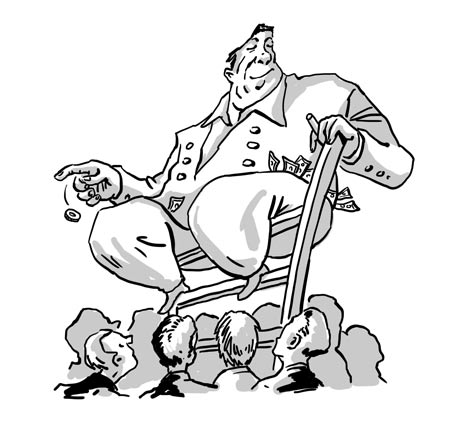
But it doesn't mean there aren't Chinese at the scene. These days tourists from China coming to visit the site of the destroyed World Trade Center and the newly opened 9/11 Memorial seem to have added Zuccotti Park, which is only a couple of blocks away from Ground Zero, as a must-see.
The Chinese tourists won't usually walk into the protesting crowd. They like to walk around the edges of the park, taking some pictures and making some comments within their own groups. The middle aged man I met the other afternoon was a typical example. He exaggeratedly waved his fist to the crowd and shouted jokingly, "We Chinese people support you guys!" before he was pulled away by his laughing wife and daughter.
The curiosity is understandable. Protesting is nothing new in American history and marching and protesting have almost become street fixtures in New York since the 2008 financial meltdown. But for many Chinese tourists, who have only just started to come to the US in large numbers, Occupy Wall Street may be the first major American demonstration that they have witnessed in person, thanks to the long lasting nature, the convenient location of the protest and the lavish coverage in the Chinese media.
But if the Chinese tourists, who presumably belong to the wealthy class in their own country, simply take what's happening in Zuccotti Park as an exotic street drama without thinking about how it reflects on themselves, they may have cause for regret.
Resentment against the rich, which is a major engine of the movement, exists in both the US, where wealth has been flowing for a long time and China, where wealth has been accumulating rapidly. But the American rich, who are the target of the Wall Street protesters and the Chinese rich, who are mainly amused gawkers here, couldn't be more different.
In the US, the rich have a tradition of giving back to society. The donation from robber barons in the 19th century blessed New York with many gifts, such as the renowned Carnegie Hall and the Rockefeller Plaza.
The foundations of George Soros and Bill Gates are pushing earthshaking changes in the nation and in the world. Even Zuccotti Park was built and maintained by the real estate firm Brookfield Properties for the public as part of a planning deal with the authorities. In China, philanthropy is still an infant idea that scares many rich people away.
In the US, the rich often try to avoid flaunting their wealth in public, especially when the economy is weak. Billionaires like Warren Buffet and the late Steve Jobs have been known for dressing simply. New York Mayor Michael Bloomberg may often fly on his private jet to Bermuda for vacations, but he is also known for wearing the same pair of shoes for 10 years. Since the economy started to nosedive, shops on Fifth Avenue started to use logo-less shopping bags to cater to the need of their customers who want to be anonymous when buying luxuries.
To be sure, the American rich are not Santa Clauses. They still hold an ever-increasing amount of national wealth and use their money to fight political efforts to make them pay more, and that's what ignited Occupy Wall Street. But even when they become the target, multi-millionaires from Blackrock's Laurence Fink to Citigroup's Vikram Pandit still manage to publicly indicate that they are sympathetic and understanding of their attackers.
Much of this is merely self serving – a way of heading off criticism or worse. But it seems to be working. At least, the protesters only want to push the rich to give back more rather than having them beheaded.
The newly rich in China are still on a learning curve. One thing they may want to be aware of is that being rich is not only about knowing how to drink wine, collect art, golf or ride horses.
Sometimes, it is not about how much money you have and how generous you are. It is the sophistication of getting more by taking less and showing people you care about wider society that has yet to become part of Chinese behavior.
The author is a New York-based journalist. rong_xiaoqing@hotmail.com
Egyptians to stage anti-junta rally
Egyptian activists have called for a major rally in the capital Cairo to protest the ruling junta's management of Egypt's domestic affairs and the military's delay in transferring power to a civilian rule.

Egypt's opposition activists called on their compatriots to join Friday's protest and take to the streets in a march in the capital.
"The current predicament we have reached is a result of the army council's reluctance to play its role, its intentional foot-dragging, breaking its obligations and failing over the economy and security, putting the whole country on the edge of a huge crisis," said a statement signed by two dozen parties including the youth movements and others calling for the protest.
Egypt's Revolution Youth Movement, which played a lead role in massive demonstrations that brought down the US-sponsored Mubarak regime in February, said the army's handling of the latest street protests showed it was seeking to "protect the previous regime.”
At least, one hundred people have been killed in clashes between protesters and security forces as well as sectarian violence since the military took power.
The deaths, coupled with the brutality shown by army troops against protesters that included women, have prompted some activists to consider suing the ruling generals in local courts or have them put on trial before the International Criminal Court in The Hague, Netherlands.
Activists and political groups have become increasingly critical of military rulers' management of Egypt's transitional period, which the junta had promised would be a six-month span.
They have also widely rebuked the head of the ruling military council, Field Marshal Hussein Tantawi, for his reluctance to implement sweeping changes and dismantle elements of the former regime.
The military rulers have yet to give a clear timetable for their plan to step down and hand over power.
They have instead proposed holding a presidential election by late next year.

Egypt's opposition activists called on their compatriots to join Friday's protest and take to the streets in a march in the capital.
"The current predicament we have reached is a result of the army council's reluctance to play its role, its intentional foot-dragging, breaking its obligations and failing over the economy and security, putting the whole country on the edge of a huge crisis," said a statement signed by two dozen parties including the youth movements and others calling for the protest.
Egypt's Revolution Youth Movement, which played a lead role in massive demonstrations that brought down the US-sponsored Mubarak regime in February, said the army's handling of the latest street protests showed it was seeking to "protect the previous regime.”
At least, one hundred people have been killed in clashes between protesters and security forces as well as sectarian violence since the military took power.
The deaths, coupled with the brutality shown by army troops against protesters that included women, have prompted some activists to consider suing the ruling generals in local courts or have them put on trial before the International Criminal Court in The Hague, Netherlands.
Activists and political groups have become increasingly critical of military rulers' management of Egypt's transitional period, which the junta had promised would be a six-month span.
They have also widely rebuked the head of the ruling military council, Field Marshal Hussein Tantawi, for his reluctance to implement sweeping changes and dismantle elements of the former regime.
The military rulers have yet to give a clear timetable for their plan to step down and hand over power.
They have instead proposed holding a presidential election by late next year.
Saudis could still flog woman who dared to drive car .

A SAUDI woman sentenced to ten lashes for flouting the country's ban on women driving has not been officially pardoned, despite reports to the contrary - and her sentence may still be carried out at any time.
Shaima Jastaniya, 34, was given the draconian sentence by a court in Jedda in September after she persistently ignored the ban, which is not enshrined in law but handed down in fatwas by Muslim clerics, making Saudi Arabia the only country in the world where women are not allowed to drive.
Then 87-year-old King Adbullah, who has overseen a gentle thawing of his hardline rule in recent years, announced he had pardoned Jastaniya – a move much reported in the world's media.
Now The Times reports that the increasingly powerful – and conservative – Crown Prince Nayef bin Abdulaziz has exerted his influence to make sure Abdullah’s pardon has no real force.
Jastaniya's father was summoned to the Interior Ministry last week, the paper reports, to be told that his daughter was pardoned. However, when he asked for written guarantees that she would not be flogged, his request was refused.
The newspaper says it has learned that the original punishment could still be carried out at any time – and the verdict has not been overturned. Activist Mohammed al-Qahtani told the paper: "They will keep this hanging over her in case she does anything else."
Jastaniya has become the focal point for a campaign of civil disobedience by women drivers which culminated in a 'mass drive' where 50 women flouted the ban in convoy, writing about it later on social networking sights.
Aware that it was the focus of world attention, the authorities let the protest go ahead unhindered. It seemed like a watershed moment, but there has been a quiet crackdown since.
One woman activist in Riyadh told the Times anonymously: "The campaign is dying right now. People are afraid. They have seen what happened to Shaima and the others." ·
Read more: http://www.theweek.co.uk/world-news/43850/saudis-could-still-flog-woman-who-dared-drive-car#ixzz1hLXczDg0
'Blue bra girl' rallies Egypt's women vs. oppression

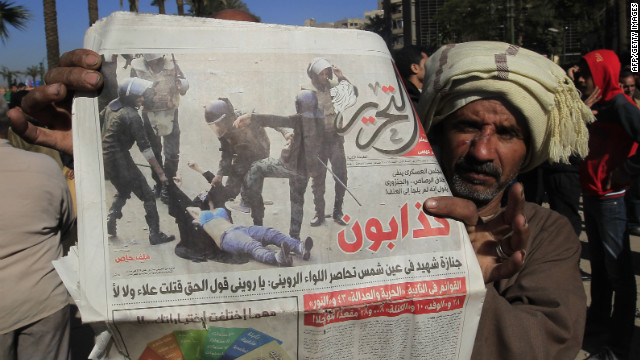
The Egyptian revolution has a new, and shocking, image: It's the Egyptian flag, but the eagle in the middle has been replaced by a simple blue bra. The image refers to the recent, savage beating of an abaya-clad female protester by Egyptian military forces.
Graphic videos of the beating, captured on phones and uploaded to YouTube and Facebook, have quickly proliferated. They show a limp woman being dragged by her arms along the street. Her abaya is ripped open, exposing her naked torso and blue bra. Security forces surround her, many wielding batons. As the beating progresses, the guards hit her and one even stomps on her. Photos of the man bringing his heavy boot down on her bare stomach made the front page of newspapers around the world.
In response, thousands of women -- and men -- marched Tuesday in Cairo's Tahrir Square. Observers say it was the largest demonstration of women in Egypt in decades. Not since 1919, when women mobilized under the leadership of feminist Hoda Sha'rawi in anti-colonial demonstrations against the British have so many Egyptian women taken to the streets. (After representing Egyptian women at the International Women Suffrage Alliance in Rome in 1923, Sha'rawi returned to Cairo and very publicly removed her veil.)Women have played an important role in Egypt's modern revolution but have struggled to translate their activism into a political role in the new, emerging system. They have been excluded from important decision-making bodies, and the military leadership declined to continue a Mubarak-era quota for women that ensured them at least 64 seats in parliament. Based on early election results, it appears that few women will win a place in the new government.
Nevertheless, one intrepid woman, Bothaina Kamel, is breaking ground with her candidacy for president. The campaign of Kamel, a well-known television presenter, at first was shocking, and certainly quixotic, with polls indicating her support is less than 1%. But her persistence has gained her credibility. While she has little chance of winning, she is helping to normalize the idea of women in politics -- an idea that is deeply contested in Egyptian society. Leaders of Salafi parties, which gained a surprising 20% of the vote in the first rounds of elections, have spoken out against women running for office.The recent women's protest may breathe life into a movement that desperately needs new energy. In the early weeks of the revolution, women activists tried to bring attention to women's issues but never succeeded in getting the masses behind them.
A women's march in Tahrir Square to mark International Women's Day on March 8 ended badly. Only a few hundred women showed up, and they were soon harassed by a mob of angry men who shouted at them to go home and warned that their demands for rights were against Islam.
Around the same time, the Egyptian military rounded up scores of women demonstrators, and in a show of raw intimidation, subjected many of them to "virginity tests." Military leaders at first denied the accusations, and later defended their abuse by claiming the women "were not like your daughter or mine."
In a remarkable show of courage, one of the victims, Samira Ibrahim, is pursuing a criminal case against the military for her ordeal. The only one of the 17 victims willing to take her case to court, Ibrahim is challenging not only the heavy-handed tactics of the military but also the social stigma associated with her issue.
The woman attacked by the military in the recent protests has declined to come forward, so for now she is only known as "blue bra girl." But her mistreatment seems to be a galvanizing force. Thousands of people joined the march through Cairo on Tuesday, many of them taking to the streets for the first time in outrage. Organizers of the march used the hashtag #BlueBra on Twitter to encourage people to join them.
Some of the protesters held giant posters of the blue bra/flag icon. Others carried photographs of the beating. Men formed a cordon around the women, chanting "The women of Egypt are the red line." Still, many Egyptians were not supportive.
Bloggers and tweeters offered negative comments on the blue bra girl -- criticizing her for being out in public protesting in the first place and accusing her of being provocative for not wearing more clothes under her abaya.
It remains to be seen whether these new humiliations for Egyptian women will lead to significant changes. But given the country's deep-seated patriarchy, women in Egypt should not take their rights for granted.
Pakistan deadliest for journalists for 2nd year
Pakistan is the world's deadliest country to work in for journalists, a dubious distinction it has earned for the second year in a row, the Committee to Protect Journalists said in its annual report.
Of the 43 journalists killed worldwide in direct relation to their work in 2011, seven died in Pakistan, the non-profit organization said on its website Tuesday. Eight journalists were killed in Pakistan in 2010, the group said.
Umar Cheema, a senior Pakistani journalist who was abducted and beaten last year, told CNN that the news was "alarming and unfortunate" and meant that "we are not out of the woods yet."
"Forces against the freedom of speech are against us and this is evidence that the establishment allows such forces to thrive within a culture of impunity," Cheema said.
The journalists killed in Pakistan in 2011 included Saleem Shahzad, a reporter for Asia Times Online, who exposed links between al Qaeda and the Pakistani navy in his book published after his death.
The CPJ report also said that Pakistan was the worst country in the world for finding justice for journalist deaths.
Another group, Reporters without Borders, documented 10 journalists killed in Pakistan in 2011, the highest number on its annual press freedom barometer.
The CPJ statement said it was still investigating another 35 journalist deaths worldwide to determine if they were work-related.
Of the 43 journalists killed worldwide in direct relation to their work in 2011, seven died in Pakistan, the non-profit organization said on its website Tuesday. Eight journalists were killed in Pakistan in 2010, the group said.
Umar Cheema, a senior Pakistani journalist who was abducted and beaten last year, told CNN that the news was "alarming and unfortunate" and meant that "we are not out of the woods yet."
"Forces against the freedom of speech are against us and this is evidence that the establishment allows such forces to thrive within a culture of impunity," Cheema said.
The journalists killed in Pakistan in 2011 included Saleem Shahzad, a reporter for Asia Times Online, who exposed links between al Qaeda and the Pakistani navy in his book published after his death.
The CPJ report also said that Pakistan was the worst country in the world for finding justice for journalist deaths.
Another group, Reporters without Borders, documented 10 journalists killed in Pakistan in 2011, the highest number on its annual press freedom barometer.
The CPJ statement said it was still investigating another 35 journalist deaths worldwide to determine if they were work-related.
President Zardari signs two women’s rights bills into law
pakistantoday.com
On his first working day after suffering from an ailment that took him to Dubai for treatment, President Asif Ali Zardari on Thursday gave assent to two bills aimed at provisions for enhanced punishment to several offences against women.
The first bill was the Criminal Law (Third Amendment) Bill of 2011, which was passed by the National Assembly on November 15 and by the Senate on December 12.
Presidential Spokesman Farhatullah Babar said in a statement that the president signed both bills to coincide with the National Day for Working Women to highlight the government’s commitment to protecting women from abuse by raising the bar for crimes against them.
While signing the bills, the president said that in line with the vision of former prime minister Benazir Bhutto, the government would continue to empower women and the signing of the bills into law was a manifestation of this policy. He said the signing of the new laws was an auspicious occasion as December 22 marked the National Working Women’s Day.
The new law seeks to punish offences against women such as giving them in marriage in ‘Badal-e-sulah’, wanni or swara, depriving them from inheritance, forced marriage and marriage to the Holy Quran.
A new chapter (XXA) containing three clauses has also been inserted in the code seeking to prohibit three offences against women. The offences punishable with various terms of imprisonment and fine include depriving women from inheriting property, forced marriage and marriage to the Holy Quran.
The presidential spokesman said the other bill that the president assented to was the Criminal Law (Second Amendment) Bill of 2011. This bill, he said, sought to provide punishment of 14 years to life imprisonment for crimes of disfiguring and defacing of human organs or body by a corrosive substance.
On his first working day after suffering from an ailment that took him to Dubai for treatment, President Asif Ali Zardari on Thursday gave assent to two bills aimed at provisions for enhanced punishment to several offences against women.
The first bill was the Criminal Law (Third Amendment) Bill of 2011, which was passed by the National Assembly on November 15 and by the Senate on December 12.
Presidential Spokesman Farhatullah Babar said in a statement that the president signed both bills to coincide with the National Day for Working Women to highlight the government’s commitment to protecting women from abuse by raising the bar for crimes against them.
While signing the bills, the president said that in line with the vision of former prime minister Benazir Bhutto, the government would continue to empower women and the signing of the bills into law was a manifestation of this policy. He said the signing of the new laws was an auspicious occasion as December 22 marked the National Working Women’s Day.
The new law seeks to punish offences against women such as giving them in marriage in ‘Badal-e-sulah’, wanni or swara, depriving them from inheritance, forced marriage and marriage to the Holy Quran.
A new chapter (XXA) containing three clauses has also been inserted in the code seeking to prohibit three offences against women. The offences punishable with various terms of imprisonment and fine include depriving women from inheriting property, forced marriage and marriage to the Holy Quran.
The presidential spokesman said the other bill that the president assented to was the Criminal Law (Second Amendment) Bill of 2011. This bill, he said, sought to provide punishment of 14 years to life imprisonment for crimes of disfiguring and defacing of human organs or body by a corrosive substance.
Subscribe to:
Posts (Atom)