Source:LetsbuildPakistan
The biggest threat to democracy is now to come from democrats themselves
The PML-N which has in the last few years dwindled between being written off due to confrontation with the military to supporting democratic process through Charter of Democracy to supporting terrorists of Lal Masjid, Taliban etc to demanding “revolutions” to calling to the military to intervene, has decided to show its true colors by instigating civil disobedience against the power outages in the country. Without doubt, power outages is a major problem, however, destroying state property through violent protests is not the solution at all.
In the last 48 hours, there have been numerous protests targeted towards the state institutions. Police stations have been targeted and dangerous criminals have been freed. Power transformers have been set on fire. Regional electricity offices were burnt along with billing records. Police parties have been targeted. Without doubt, people are frustrated but why is this happening only in Central Punjab? This is mainly because, PML-N which rules Punjab and has its power base in Central Punjab has instigated these protests.
According to Dawn, “Hamza Shahbaz, son of Punjab Chief Minister Shahbaz Sharif, is reported to have organised and led some rallies”. As per Express Tribune, “Police from Gujranwala faced the brunt of the protesters’ fury, where over two dozen protests took place after 20 hours of load-shedding in the last two days. Mobs burned down police posts, injuring 30 people – including 14 police officials. The scene of anarchy was exacerbated when the protesters also stopped a train heading from Rawalpindi to Karachi and smashed its windows. Six other people were injured as the rioters stormed the Gujranwala Electric Power Company offices and set them on fire.
In Sialkot, the target of the angry crowds was Water and Power Development Authority (Wapda) offices, leading to several Wapda officials getting injured. Protesters ranging from traders to political party members to ordinary citizens continued violent demonstrations throughout the city, while police decided to remain at a safe distance from the chaos.
In Lahore, close to 200 protesters were arrested while others blocked roads, burned tyres and trucks and caused massive traffic jams across the city. Pakistan Muslim League-Nawaz activists joined with protesters in various locations around Lahore, swelling the number of the rioters.”
One wonders if the activist Judiciary has taken notice of this vandalism and destruction of property?
One can easily see that these cities are controlled by the PML-N and this is an attempt to create a law and order situation and then demand military intervention. It is also surprising that his has happened immediately after All Parties Conference, which the ghairat brigade was expecting to change the foreign policy outlook and use it as an opportunity to bring the government into troubled waters with both the Military and the USA. Having failed to have an impact, power outages were used as a pretext for rallies which turned ugly.
If only power crisis could be eliminated through street protests and civil disobedience, then we should have protests everyday! Unfortunately, this will only complicate the issue which will be used to create further law and order problems and create image issues for the country and the government.
It is important to see the sinister motive of the PML-N. Ever since, OBL was killed in Pakistan, PML-N in no uncertain terms has wanted the PPP government to be sent packing. The reason for their frustration and desperation is because Senate elections are just six months away. Having senate elections as per schedule will mean a deadly blow to the opposition, which if it comes into power after next general elections, will be a difficult task to maneuver.
It is also sad to see Mian Nawaz Sharif playing a role which is not healthy for himself and his party. If Pakistan was to slide back to the politics of 1990’s, then in the future, Mian Nawaz Sharif will himself be the biggest sufferer.
The government has to resolve the power crisis, there are no two thoughts about it. It has to resolve the circular debt issue which is easily causing 25% of the power crisis. The government also must realize that people like Mian Mansha (beneficiaries of Nawaz Sharif in the past) are very active in the power sector (with three power plants operated by his companies), can use their clout to accentuate the power crisis on the pretext of non payments. Point is who will suffer? It is the people and the state!
Thursday, October 6, 2011
Bad blood between US, Pakistan to harm Pakhtuns
Khyber Pakhtunkhwa Minister for Information & Public Relations, Mian Iftikhar Hussain has said that Pakistan was not a slave but a sovereign state and wants good relations with the whole world including America on the basis of equality. Provocative statements of the USA were intolerable as it instead of bringing improvement, could lead the situation towards confrontation, he added.This, he said, while talking to a delegation of Shangla Press Club led by its President Nasir Mehmood Nasir at Peshawar on Wednesday. General Secretary of the Press Club Mian Raza Shah while highlighting the problems and demands of the local journalists’ community demanded special grant for press club, establishment of media colony and financial aid of the IDPs journalists.The Information Minister, while referring to the rapidly emerging critical situation, said that the government policy regarding terrorism was crystal clear as being a frontline state; Pakistan had given more sacrifices than any other countries in the war against terror. He added that we love peace, hate war and condemn terrorism exists in any shape and in any part of the world including Pakistan.Mian Iftikhar on this occasion expressed the fear; if the present situation leads towards confrontation, it would have unbelievable devastation and would badly affect the Pakhtun Belt as it was situated in a very sensitive area. He furthered, the today’s Pakhtun nation was the product of history. Unfortunately, through a pre-planned international conspiracy, it was once again pushing towards the stone-era but the Pakhtun nation was well aware of the conspiracy and would face it generously, he continued.The minister while referring to the demands, presented in the welcome address, said that the provincial government had a standard policy in this regard and all the districts would be given its due share in line with the policy. He added that the provincial government has, in the first phase, already constructed building for the Shangla Press Club at a cost of Rs.7.3 million while formal announcement for the fulfillment of their remaining demands would be made in his upcoming visit to Shangla Press Club.
Bilawal Bhutto to stay low profile in politics
Political activities of Pakistan People’s Party (PPP) Chairman Bilawal Bhutto Zardari,
son of President Asif Ali Zardari, will remain low profile and slow paced for a couple of years till a few months before he turns 25 to qualify for contesting a National Assembly seat.
“Bilawal’s formal debut in politics took place last month when he undertook a visit to China, accompanied by senior PPP leaders including Jehangir Badr,” a presidential aide told The News. He said this was very important symbolically as Bilawal followed the footsteps of his mother and grandfather, who had embarked on similar trips at the start of their political careers.
The aide said Bilawal’s involvement in political activities would not be too visible in the immediate future. He plans to do his Masters from Britain and would then engage himself in politics in a full-fledged way.
Bilawal became 23 on Sep 21 and celebrated his birthday quietly mainly due to massive devastation caused by rains and floods in Sindh.The presidential advisor said Bilawal would not rush to heighten his political activities, as he was required to learn a lot first. Bilawal would qualify to contest election in Sep 2013. By that time, the next parliamentary polls would be held if all goes well.
When Zardari announced to a party gathering at the presidency a few months back that Bilawal would start his political career in September this year, it was stated by PPP leaders that the Young man was all set to be fully active politically. Later, the president stated on July 26 that the PPP chairman would contest election from Lyari, Karachi, the traditional stronghold of the PPP.
The presidential aide said that when Bilawal would attain the qualifying age to fight election, he would have several options to be a candidate.
However, by announcing that Bilawal would contest from Lyari, President Zardari made it clear that the Naudero constituency of Larkana, which was traditionally fought by Bhuttos since 1970, would now be in the control of Zardaris. Zulfikar Ali Bhutto was twice elected to the National Assembly from this seat while Benazir Bhutto always won from here with a thumping majority. She had filed her nomination papers for this very seat, NA-207 Larkana, when she was assassinated in December 2007 just before the parliamentary polls. After her murder, President Zardari’s sister, Faryal Talpur contested and won this seat. It was the first time that a non-Bhutto returned from here.
The president plans to groom and acclimatize Bilawal to the domestic political environment before the young man effectively assumes the political responsibility and party mantle. “He needs to learn the works of Bulleh Shah etc.,” Zardari said recently. Bilawal still has two years to go to contest a National Assembly seat and subsequently become prime minister if his party wins.
A US Embassy Islamabad cable released by WikiLeaks said that: “Within the party rank and file, there continues to be considerable doubt over Zardari’s right or capability to be PPP leader. This lack of confidence formed Zardari’s shrewd decision to name Benazir Bhutto’s son Bilawal (a direct descendant of party founder Zulfikar Ali Bhutto) as PPP Co-Chair, whom Zardari is now grooming politically”. “Zardari has three children with his late wife: Bilawal, Bakhtawar, and Asifa. Family friends say that the children were closer to Benazir until her death, but Zardari has since become interested in grooming Bilawal for public life.”

son of President Asif Ali Zardari, will remain low profile and slow paced for a couple of years till a few months before he turns 25 to qualify for contesting a National Assembly seat.
“Bilawal’s formal debut in politics took place last month when he undertook a visit to China, accompanied by senior PPP leaders including Jehangir Badr,” a presidential aide told The News. He said this was very important symbolically as Bilawal followed the footsteps of his mother and grandfather, who had embarked on similar trips at the start of their political careers.
The aide said Bilawal’s involvement in political activities would not be too visible in the immediate future. He plans to do his Masters from Britain and would then engage himself in politics in a full-fledged way.
Bilawal became 23 on Sep 21 and celebrated his birthday quietly mainly due to massive devastation caused by rains and floods in Sindh.The presidential advisor said Bilawal would not rush to heighten his political activities, as he was required to learn a lot first. Bilawal would qualify to contest election in Sep 2013. By that time, the next parliamentary polls would be held if all goes well.
When Zardari announced to a party gathering at the presidency a few months back that Bilawal would start his political career in September this year, it was stated by PPP leaders that the Young man was all set to be fully active politically. Later, the president stated on July 26 that the PPP chairman would contest election from Lyari, Karachi, the traditional stronghold of the PPP.
The presidential aide said that when Bilawal would attain the qualifying age to fight election, he would have several options to be a candidate.
However, by announcing that Bilawal would contest from Lyari, President Zardari made it clear that the Naudero constituency of Larkana, which was traditionally fought by Bhuttos since 1970, would now be in the control of Zardaris. Zulfikar Ali Bhutto was twice elected to the National Assembly from this seat while Benazir Bhutto always won from here with a thumping majority. She had filed her nomination papers for this very seat, NA-207 Larkana, when she was assassinated in December 2007 just before the parliamentary polls. After her murder, President Zardari’s sister, Faryal Talpur contested and won this seat. It was the first time that a non-Bhutto returned from here.
The president plans to groom and acclimatize Bilawal to the domestic political environment before the young man effectively assumes the political responsibility and party mantle. “He needs to learn the works of Bulleh Shah etc.,” Zardari said recently. Bilawal still has two years to go to contest a National Assembly seat and subsequently become prime minister if his party wins.
A US Embassy Islamabad cable released by WikiLeaks said that: “Within the party rank and file, there continues to be considerable doubt over Zardari’s right or capability to be PPP leader. This lack of confidence formed Zardari’s shrewd decision to name Benazir Bhutto’s son Bilawal (a direct descendant of party founder Zulfikar Ali Bhutto) as PPP Co-Chair, whom Zardari is now grooming politically”. “Zardari has three children with his late wife: Bilawal, Bakhtawar, and Asifa. Family friends say that the children were closer to Benazir until her death, but Zardari has since become interested in grooming Bilawal for public life.”
Afghan ambassador meets Kayani, Bashir
Afghanistan Ambassador in Pakistan Mohammad Umer Daudzai held separate meetings with Chief of Army Staff General Ashfaq Pervaiz Kayani and Foreign Secretary Salman Bashir on Tuesday, Geo News reported Thursday.

Reliable sources said that the Ambassador left for Kabul shortly after the meeting.
According to sources, the meeting was an effort to do away with misunderstandings leading to a blame game in the region. The sources underlined the importance of the meeting that fell in the backdrop of Afghan President Hamid Karzai’s visit to New Delhi and signing of strategic partnership agreement with India.
In his meeting with the afghan envoy, Chief of Army Staff General Ashfaq Kayani cautioned the Afghan government against continuation of baseless allegations against the ISI of supporting terrorists in Afghanistan, who recently killed former Afghan president Burhanuddin Rabbani and said it would have a deep negative impact on relations between Islamabad and Kabul. He also made known Pakistan’s concerns over the recently concluded ‘Afghanistan-India Strategic Partnership Pact’ to the Afghan ambassador.
The Afghan ambassador in his meeting with Foreign Secretary Salman Bashir told that the strategic partnership with India is not against Pakistan interests and termed Pak-Afghan relationship as historic.

Reliable sources said that the Ambassador left for Kabul shortly after the meeting.
According to sources, the meeting was an effort to do away with misunderstandings leading to a blame game in the region. The sources underlined the importance of the meeting that fell in the backdrop of Afghan President Hamid Karzai’s visit to New Delhi and signing of strategic partnership agreement with India.
In his meeting with the afghan envoy, Chief of Army Staff General Ashfaq Kayani cautioned the Afghan government against continuation of baseless allegations against the ISI of supporting terrorists in Afghanistan, who recently killed former Afghan president Burhanuddin Rabbani and said it would have a deep negative impact on relations between Islamabad and Kabul. He also made known Pakistan’s concerns over the recently concluded ‘Afghanistan-India Strategic Partnership Pact’ to the Afghan ambassador.
The Afghan ambassador in his meeting with Foreign Secretary Salman Bashir told that the strategic partnership with India is not against Pakistan interests and termed Pak-Afghan relationship as historic.
President Hamid Karzai’s trip to New Delhi............The eye of the storm
http://www.khaleejtimes.com
Afghan President Hamid Karzai’s recent trip to New Delhi and the forging of a new ‘strategic pact’ was bound to escalate tensions with Pakistan.
In fact, the India trip was thought by many to give an obvious signal of the strategic alternatives Kabul was looking at in lieu of its deteriorating relations with Islamabad. However, roping in India in a larger role in the future may also cause further instability in Afghanistan, given Pakistan’s significant influence in ongoing negotiations with insurgents and in the political process following the withdrawal of the Coalition forces. This is why President Karzai has hastened to reassure Pakistan that relations will not be affected despite the new dimension in ties with India. While Karzai’s words may have stemmed from the need to calm the political storm blowing across the region following Afghan peace envoy Barhanuddin Rabbani’s assassination, the only signal Islamabad is likely to read at this juncture is a reshaping of strategic alliances with New Delhi.
Kabul has clearly chosen to strengthen relations with India, that too on the strategic front and this is likely to have a significant impact in moulding a changed security and political dynamic in South Asia. Pakistan has long held Afghanistan as a key state in line with its strategic depth doctrine and has supported regimes more partial towards Islamabad. Likewise for India, that has extended support to other Afghan groups such as the Northern Alliance to neutralise Pakistan’s influence. The rules of realpolitick naturally dictated forging alliances and consolidating influences. With Pakistan out of favour with both Washington and Kabul at present over its alleged sponsorship of the Haqqani network and possible involvement in Rabbani’s assassination — a charge vehemently denied and demanded evidence for, by Islamabad — India will naturally make inroads in widening its ‘development’ role into a far significant presence.
Who Kabul chooses to tango with is however important. Any strategic decisions taken in the midst of conflict might backfire especially when Karzai has stressed on a political solution for the insurgency. Alienating Pakistan is not the answer. Actually, the mistrust shared between the three states is the crux of the problem. While Prime Minister Manmohan Singh has said that a stable Pakistan is in India’s favour, more needs to be done in terms of confidence building between the two states. Kabul should also pursue diplomacy and present Pakistan with proof for any charges. It must bear in mind that peace and stability is not achievable in an environment where allegations and proxy fights thrive.
Afghan President Hamid Karzai’s recent trip to New Delhi and the forging of a new ‘strategic pact’ was bound to escalate tensions with Pakistan.
In fact, the India trip was thought by many to give an obvious signal of the strategic alternatives Kabul was looking at in lieu of its deteriorating relations with Islamabad. However, roping in India in a larger role in the future may also cause further instability in Afghanistan, given Pakistan’s significant influence in ongoing negotiations with insurgents and in the political process following the withdrawal of the Coalition forces. This is why President Karzai has hastened to reassure Pakistan that relations will not be affected despite the new dimension in ties with India. While Karzai’s words may have stemmed from the need to calm the political storm blowing across the region following Afghan peace envoy Barhanuddin Rabbani’s assassination, the only signal Islamabad is likely to read at this juncture is a reshaping of strategic alliances with New Delhi.
Kabul has clearly chosen to strengthen relations with India, that too on the strategic front and this is likely to have a significant impact in moulding a changed security and political dynamic in South Asia. Pakistan has long held Afghanistan as a key state in line with its strategic depth doctrine and has supported regimes more partial towards Islamabad. Likewise for India, that has extended support to other Afghan groups such as the Northern Alliance to neutralise Pakistan’s influence. The rules of realpolitick naturally dictated forging alliances and consolidating influences. With Pakistan out of favour with both Washington and Kabul at present over its alleged sponsorship of the Haqqani network and possible involvement in Rabbani’s assassination — a charge vehemently denied and demanded evidence for, by Islamabad — India will naturally make inroads in widening its ‘development’ role into a far significant presence.
Who Kabul chooses to tango with is however important. Any strategic decisions taken in the midst of conflict might backfire especially when Karzai has stressed on a political solution for the insurgency. Alienating Pakistan is not the answer. Actually, the mistrust shared between the three states is the crux of the problem. While Prime Minister Manmohan Singh has said that a stable Pakistan is in India’s favour, more needs to be done in terms of confidence building between the two states. Kabul should also pursue diplomacy and present Pakistan with proof for any charges. It must bear in mind that peace and stability is not achievable in an environment where allegations and proxy fights thrive.
Pakistan squeezed by Afghan-India pact


The new Afghan-Indian security pact could inflame Pakistan's proxy war against India and threatens Islamabad's regional ambitions in South Asia as its ties with Kabul and Washington hit rock bottom.
Pakistan has been on the defensive as Afghanistan has cosied up to India. Kabul claims the recent murder of its peace envoy Burhanuddin Rabbani was plotted in Pakistan, and has accused Islamabad of hindering the investigation.
Pakistan has been terse about the burgeoning India-Afghanistan alliance. "Both are sovereign countries and they have the right to do whatever they want to," Prime Minister Yousuf Raza Gilani said in brief response.
But the alliance undermines Pakistan's policy of courting Afghanistan to offset the regional superpower status of India, with which it has fought three wars since independence in 1947, including two over Kashmir.
Fearful of encirclement by its wealthier neighbour, Pakistan has long focussed on Afghanistan -- arming Islamist warlords against the Soviets in the 1980s, backing the Taliban in the 1990s and hedging its bets in the 2000s.
But the new strategic partnership sealed Tuesday, which will see India take a bigger role in training Afghan security forces after already dishing out more than $2 billion in aid, threatens to isolate Pakistan further.
Right-wing newspaper The Nation said the "very disturbing" pact would "create further misunderstandings" that would help neither Pakistan nor Afghanistan "if he (Karzai) wants his country to progress and prosper".
Pakistani military affairs analyst Ayesha Siddiqa went further.
"This pact will definitely lead to a more intense proxy war between India and Pakistan in Afghanistan, because India will be training the Afghan military and Pakistan does not consider this in its interest," she told AFP.
When US-led forces invaded Afghanistan in October 2001 after the 9/11 attacks, Pakistan formally sided with the United States, but has been long accused of playing a double game with its old warlord and Taliban friends.
Those accusations reached fever pitch after the US embassy in Kabul was subject to a 19-hour siege on September 13 and Rabbani was assassinated on September 20.
Those incidents came after the US killing of Al-Qaeda leader Osama bin Laden on the doorstep of Pakistan's top military academy in May.
The United States launched a concerted campaign last month, accusing Pakistani intelligence of involvement in the embassy attack and demanding the state cut all ties with the Haqqani network, an Afghan Taliban faction.
And although Prime Minister Gilani declared a "victory" in facing down US pressure on the Haqqanis, officials behind the scenes paint a less rosy picture of relations.
"Every time I think we've hit rock bottom, I find both countries have shovel in their hand and are digging further down trying to find a new bottom," one Pakistani security official told AFP on condition of anonymity.
US options for action are limited. Pakistan, which says nearly half the US war effort in Afghanistan is routed through its territory, stonewalled the Haqqani accusations and last week the pressure began to ease off.
Some say Karzai's visit to India was an opportunity to take up where the United States had left off with its accusations -- and strike a chord in India, which blamed the horrific 2008 Mumbai attacks on Pakistani militants.
Yet despite the distrust, Kabul recognises that there can be no resolution to the 10-year Afghan conflict without at least acquiescence from Islamabad.
Karzai on Wednesday sought to ease Pakistan's discomfort, describing it as Afghanistan's "twin brother" -- although "brother" is also a word he uses for the Taliban -- and India as a "great friend".
Nevertheless, analysts say, the Kabul-Delhi partnership may force Pakistan into reappraising its approach to militancy.
"There has to be less obvious support for insurgents in order to prevent much obvious isolation," said A.H. Nayyar, a physics professor and political analyst at Lahore University of Management Sciences.
Obama hails Jobs as brave, bold and talented
CNN
President Barack Obama, who has enjoyed Apple's products along with millions of other Americans, Wednesday night hailed Steve Jobs as one of America's greatest innovators, a man "brave enough to think differently, bold enough to believe he could change the world, and talented enough to do it."
"The world has lost a visionary. And there may be no greater tribute to Steve's success than the fact that much of the world learned of his passing on a device he invented," the president said in a statement.
Praising Jobs' breadth and the impact of his work from personal computers to iPhones to movie production, the president added, "Steve was fond of saying that he lived every day like it was his last. Because he did, he transformed our lives, redefined entire industries, and achieved one of the rarest feats in human history: He changed the way each of us sees the world."
This week, Obama, known for his affection for the BlackBerry, revealed he actually was a recipient of an advanced copy of the iPad 2 directly from Jobs.
"Steve Jobs actually gave it to me, a little bit early," he told ABC's George Stephanopoulos. "Yeah, it was cool. I got it directly from him."In March, CNN photographed the president holding an iPad.
The president and Jobs met several times, including at a dinner in San Francisco in February with Silicon Valley executives and last year when they discussed issues revolving around technology and the economy.
Many politicians also praised Jobs as the truest example of the American dream, an icon.
House Speaker Rep. John Boehner, who also uses an iPad, tweeted: "Steve Jobs changed the world for the better w/his innovations and genius."
House Majority Leader Rep. Eric Cantor, R-Virginia, tweeted, "There is not a day that goes by, and often not an hour, that a Steve Jobs invention does not better my family's life. Thank you Steve."
Fellow Californian Rep. Nancy Pelosi, the House minority leader, called Jobs "a visionary who changed the way we live, an innovator whose products brought joy to millions, a risk-taker who wasn't afraid to challenge the status quo," and also said in a statement, "His sage advice was respected by policymakers on both sides of the aisle. His courageous fight against cancer brought strength to many."
President Barack Obama, who has enjoyed Apple's products along with millions of other Americans, Wednesday night hailed Steve Jobs as one of America's greatest innovators, a man "brave enough to think differently, bold enough to believe he could change the world, and talented enough to do it."
"The world has lost a visionary. And there may be no greater tribute to Steve's success than the fact that much of the world learned of his passing on a device he invented," the president said in a statement.
Praising Jobs' breadth and the impact of his work from personal computers to iPhones to movie production, the president added, "Steve was fond of saying that he lived every day like it was his last. Because he did, he transformed our lives, redefined entire industries, and achieved one of the rarest feats in human history: He changed the way each of us sees the world."
This week, Obama, known for his affection for the BlackBerry, revealed he actually was a recipient of an advanced copy of the iPad 2 directly from Jobs.
"Steve Jobs actually gave it to me, a little bit early," he told ABC's George Stephanopoulos. "Yeah, it was cool. I got it directly from him."In March, CNN photographed the president holding an iPad.
The president and Jobs met several times, including at a dinner in San Francisco in February with Silicon Valley executives and last year when they discussed issues revolving around technology and the economy.
Many politicians also praised Jobs as the truest example of the American dream, an icon.
House Speaker Rep. John Boehner, who also uses an iPad, tweeted: "Steve Jobs changed the world for the better w/his innovations and genius."
House Majority Leader Rep. Eric Cantor, R-Virginia, tweeted, "There is not a day that goes by, and often not an hour, that a Steve Jobs invention does not better my family's life. Thank you Steve."
Fellow Californian Rep. Nancy Pelosi, the House minority leader, called Jobs "a visionary who changed the way we live, an innovator whose products brought joy to millions, a risk-taker who wasn't afraid to challenge the status quo," and also said in a statement, "His sage advice was respected by policymakers on both sides of the aisle. His courageous fight against cancer brought strength to many."
Steve Jobs, tech pioneer, dies at 56

The brilliant, mercurial co-founder of Apple introduced simple, elegantly designed computers for people who are more interested in what technology could do rather than how it was done.
Steve Jobs, a co-founder of Apple Inc., who introduced simple, well-designed computers for people who were more interested in what technology could do than in how it was done, died Wednesday at age 56.
In a brief statement, Apple announced the death but did not say where he died. Mr. Jobs, who suffered from a rare form of pancreatic cancer and had a liver transplant in 2009, stepped down as Apple’s chief executive on Aug. 24.
An original thinker who helped create the Macintosh, one of the world’s most influential computers, Mr. Jobs also reinvented the portable music player with the iPod, launched the first successful legal method of selling music online with iTunes and reordered the cellphone market with the iPhone. The introduction of the iPad also jump-started the electronic-tablet market, and it now dominates the field.
Calculating that people would be willing to pay a premium price for products that signaled creativity, Mr. Jobs had a genius for understanding the needs of consumers before they did.
He knew best of all how to market: “Mac or PC?” became one of the defining questions of the late 20th century, and although Apple sold a mere 5 percent of all computers during that era, Mac users became rabid partisans.
Mr. Jobs was the first crossover technology star, turning Silicon Valley renown into Main Street recognition and paving the way for the rise of the nerds, such as Yahoo founders Jerry Yang and David Filo, and Google founders Larry Page and Sergey Brin.
And by changing the way people interacted with technology, Jobs and Microsoft founder Bill Gates transformed their era in much the same way Henry Ford and John D. Rockefeller revolutionized theirs with the mass-produced automobile and the creation of Standard Oil.
As a 21-year-old college dropout in 1976, Mr. Jobs founded Apple with his friend Steve Wozniak. He led the company to multimillion-dollar success within five years but was forced out by the time he was 30.
Mr. Jobs started another computer firm, Next, whose technology was used to create the World Wide Web. He later took over a foundering computer animation company and turned it into the Academy Award-winning Pixar, maker of “Toy Story” and “Finding Nemo.”
Returning to Apple in his 40s, Mr. Jobs restored the company to profitability by paring down the product line and being a leader in innovation.
Known for his complex and combative temperament, Mr. Jobs was a private man. But in a June 2005 commencement address at Stanford University, he talked openly about his pancreatic cancer, diagnosed in 2004, in a video that became an Internet sensation. He later became furious about speculation over his health in mid-2008, when he appeared in public looking gaunt. Later that year, he took a leave of absence from the company to have a liver transplant.
In January, he took another medical leave. On Aug. 24 he stepped down as Apple’s chief executive, becoming chairman of the board. Apple’s share price immediately dropped 5 percent on the news, but it rebounded the next day. “Steve Jobs running the company from jail would be better for the stock price than Steve Jobs not being CEO,” one stock analyst told Fortune magazine in early 2011.
His innovations led Business 2.0 to call him “easily the greatest marketer since P.T. Barnum.” One of his employees, noting that Mr. Jobs was able to persuade people to believe almost anything, coined the phrase “reality distortion field” to describe his ability to warp an audience’s sense of proportion. Mr. Jobs described the Macintosh computer, for example, as “insanely great.”
Maybe it was. It was designed for the home and creative professional user, not the computer-science student or the bottom-line-oriented businessman. During a famous 1979 visit to Xerox Parc, the hotbed of innovation where the computer mouse, networking and graphical user interface were invented, Mr. Jobs and Wozniak learned that computer users did not have to type in a series of commands to make the computer perform; they could simply point their mouse at a picture of a file and click it to get the file to open.
That recognition sparked a flurry of innovation unmatched in technology until the designers of Microsoft’s operating software mimicked the look and feel of their competitors with Windows 95.
Years later, discussing computer design in another context, Mr. Jobs said: “Most people make the mistake of thinking design is what it looks like. People think it’s this veneer, that the designers are handed this box and told, ‘Make it look good!’ That’s not what we think design is. It’s not just what it looks like and feels like. Design is how it works.”
He could control how it works because Apple “makes the whole widget,” as Mr. Jobs repeatedly said — software and hardware. The company introduced monitors with color screens long before others. Locked out of many retail chains because of its small market share, Apple responded with its own distinctively branded stores, to which users flock like pilgrims. The Mac, Mr. Jobs saw, could become the hub of a digital lifestyle.
Not everything worked out. A 1983 computer, Lisa, failed miserably. Even the “insanely great” Macintosh, sold without a letter-quality printer and incompatible with other computers, had a difficult start, even though it launched the desktop publishing revolution. But that wasn’t the first rough start in Mr. Jobs’s life.
Steven Paul Jobs was born Feb. 24, 1955, in San Francisco to unwed parents, University of Wisconsin graduate student Joanne Carole Schieble and Syrian exchange student Abdulfattah Jandali. Paul and Clara Jobs adopted him shortly after his birth.
Mr. Jobs grew up in Northern California and showed an early interest in electronics. While working on a project as an eighth-grader, he saw he was missing a part. Undaunted, he called William Hewlett, co-founder and president of Hewlett-Packard, who prepared a bag of parts for him — and offered him a summer internship.
Mr. Jobs attended Reed College in Portland, Ore., in 1972. He dropped out after a semester because of financial issues but continued to audit classes at the liberal arts school for 18 months. He then worked part time at Atari to raise money for a trip to India in the summer of 1974, studying meditation and shaving his head. He also lived in a commune for a short time.
In 1975, he began associating with a group of computer aficionados known as the Homebrew Computer Club. Wozniak, a technical whiz, was trying to build a small computer, and Mr. Jobs became fascinated with its potential. In 1976, he and Wozniak introduced the Apple I, the first low-cost microcomputing system, for $666, and sold about 200 units. They followed that up in 1977 with the Apple II, a redesigned model that had impressive sales of $2.7 million in its first year. The company’s sales grew to $600 million by 1981 and created a market of personal computer users.
The Macintosh was introduced in 1984 with a commercial during the third quarter of the Super Bowl. The advertisement, designed by ad agency Chiat/Day and directed by Ridley Scott, fresh off his classic science-fiction film “Blade Runner,” ran just once, but it was named by Advertising Age as the commercial of the decade.
As controversial as he was creative, Mr. Jobs enforced a culture of secrecy at Apple’s Cupertino, Calif., headquarters. Mr. Jobs, who grew up idolizing the Hewlett-Packard ideal of an egalitarian workplace where employees were valued, was known in his younger years for playing pranks on underlings, reversing direction without acknowledging that he had changed his mind and yelling at company directors. He also refused to acknowledge paternity or pay child support for his first daughter for years. He threatened to sue teens who published Apple gossip on their Web sites.
In 1985, after tangling with John Sculley, the Pepsi executive he brought in to run the company, Mr. Jobs sold $20 million worth of stock and resigned from Apple. He and Wozniak had just received the National Medal of Technology from President Ronald Reagan. “I didn’t see it then, but it turned out that getting fired from Apple was the best thing that could have ever happened to me,” he said in his 2005 address at Stanford. “The heaviness of being successful was replaced by the lightness of being a beginner again, less sure about everything. It freed me to enter one of the most creative periods of my life.”
After several months, Mr. Jobs hired some of his former employees to begin a new computer company, called Next.
During that period, Mr. Jobs paid filmmaker George Lucas $10 million for a small computer animation firm and, over the next six years, he poured another $40 million of his own money into the company as it set out to make the first computer-animated feature film, “Toy Story.”
In late 1996, Apple bought Next for more than $400 million. Within months, Mr. Jobs was back at Apple as an adviser and quickly became chief executive again.
He stunned the faithful at a Macworld conference in August 1997 when he announced a partnership with Microsoft, accepting a $150 million investment in exchange for preloading Microsoft’s Internet Explorer browser on Apple computers. An unprecedented alliance between rivals, the deal ultimately saved the company by reassuring customers that they could use Microsoft’s ubiquitous Office software on Macs. “We want to let go of this notion that for Apple to win, Microsoft has to lose,” Mr. Jobs said, to shouts of dismay from his normally adoring audience. “Madman at the wheel, eh?” he added, laughing, as he walked off the stage.
That was just the start of his revival of the company. The “Think Different” advertising campaign got the world’s attention again, followed by the 1998 introduction of the colorful iMac desktop computer, which sold 1 million in a year. In 1999, the iBook appeared, a brightly colored, clam-shaped laptop that enabled wireless Web surfing.
Consumer releases came out in a rush. An overlooked technology called FireWire, a tool for quickly moving large amounts of data between digital devices, allowed the creation of iMovie, software that encouraged non-experts to make home videos. The iPod, an MP3-like player with room for thousands of songs, was introduced in October 2001 and has sold hundreds of millions of units. The iTunes application, which allowed consumers to legally buy and download music, started in April 2003 and revolutionized the digital music industry — more than 6 billion songs have been sold.
Mr. Jobs and Apple were suddenly cool again. The iPhone’s debut in 2007 generated a huge buzz, and it soon rolled over the competition from Palm Computing and BlackBerry, despite its higher cost. The iPad, a tablet-based computer introduced in January 2010, sold more than 10 million units its first year.
Although Mr. Jobs’s salary was $1 per year, his stock options made him rich. His fortune was estimated to be $5.4 billion by Forbes magazine in its 2008 survey of the richest people in the world.
But nothing came without controversy. Even as Apple’s stock was booming and its business thriving, Mr. Jobs faced scrutiny in a scandal about Apple’s backdating of stock options. Like many companies, Apple had given out stock options with effective dates chosen later, after it was known that the price was low on those dates, making the stock more valuable once it was sold. Mr. Jobs wasn’t the only employee who benefited, but the company said his options were approved at a special board meeting that never took place. The company was forced to restate its earnings, but a special company investigation concluded that Mr. Jobs had done nothing wrong.
Survivors include his wife since 1991, Laurene Powell; a daughter from a previous relationship, Lisa Brennan-Jobs; three children from his marriage, Eve Jobs, Erin Sienna Jobs and Reed Paul Jobs; and two sisters, Mona Simpson and Patti Jobs.
Seeking Energy, Unions Join Protest Against Wall Street

Stuart Appelbaum, an influential union leader in New York City, was in Tunisia last month, advising the fledgling labor movement there, when he received a flurry of phone calls and e-mails alerting him to the rumblings of something back home. Protesters united under a provocative name, Occupy Wall Street, were gathering in a Lower Manhattan park and raising issues long dear to organized labor.
And gaining attention for it.
Mr. Appelbaum recalled asking a colleague over the phone to find out who was behind Occupy Wall Street — a bunch of hippies or perhaps troublemakers? — and whether the movement might quickly fade.
So far, at least, it has not, and on Wednesday, several prominent unions, struggling to gain traction on their own, made their first effort to join forces with Occupy Wall Street. Thousands of union members marched with the protesters from Foley Square to their encampment in nearby Zuccotti Park.

“The labor movement needs to tap into the energy and learn from them,” Mr. Appelbaum, president of the Retail, Wholesale and Department Store Union, said. “They are reaching a lot of people and exciting a lot of people that the labor movement has been struggling to reach for years.”

In fact, the unexpected success of Occupy Wall Street in leveling criticism of corporate America has stirred some soul-searching among labor leaders. They have noted with envy that the new movement has done a far better job, not only of capturing interest, but also of attracting young people. Protests have spread to dozens of cities, including Boston, Chicago and Los Angeles.
Several union leaders complained that their own protests over the past two years had received little attention, though they had put far more people on the streets than Occupy Wall Street has. A labor rally in Washington last October drew more than 100,000 people, with little news media coverage.
Behind the scenes in recent days, union leaders have debated how to respond to Occupy Wall Street. In internal discussions, some voiced worries that if labor were perceived as trying to co-opt the movement, it might alienate the protesters and touch off a backlash.
Others said they were wary of being embarrassed by the far-left activists in the group who have repeatedly denounced the United States government.
Those concerns may be renewed after a disturbance about 8 p.m. Wednesday as the march was breaking up. The police said they arrested eight protesters around the intersection of Broadway and Wall Street, after people rushed barriers and began spilling into the street. While a couple of witnesses said that officers used pepper spray to clear the streets, Paul J. Browne, the Police Department’s chief spokesman, said that one officer “possibly” used it. Several protesters were also arrested at State and Bridge Streets at 9:30 p.m.; the police said one protester was charged with assault after an officer was knocked off his scooter.
Despite questions about the protesters’ hostility to the authorities, many union leaders have decided to embrace Occupy Wall Street. On Wednesday, for example, members of the A.F.L.-C.I.O.’s executive council had a conference call in which they expressed unanimous support for the protest. One A.F.L.-C.I.O. official said leaders had heard from local union members wondering why organized labor was absent.
The two movements may be markedly different, but union leaders maintain that they can help each other — the weakened labor movement can tap into Occupy Wall Street’s vitality, while the protesters can benefit from labor’s money, its millions of members and its stature.
The labor leaders said they hoped Occupy Wall Street would serve as a counterweight to the Tea Party and help pressure President Obama and Congress to focus on job creation and other concerns important to unions.
“This is very much a crystallizing moment,” said Denise Mitchell, the A.F.L.-C.I.O.’s communications director. “We have to look for sparks wherever they are. It could be an opportunity to talk about what’s wrong with the system and how to make it better.”
Still, it may not be easy for organized labor to mesh with this new movement. Labor unions generally represent older workers, while the Occupy Wall Street protesters are younger. Unions are hierarchical, while the Occupy Wall Street protesters are more loosely knit and like to see themselves as highly democratic.
Unions invariably have a long and specific list of demands, while Occupy Wall Street has not articulated formal ones. Union leaders often like the limelight, while Occupy Wall Street is largely leaderless.
“Labor’s needed a way to excite younger people with their message,” Michael Kazin, a historian at Georgetown University, said. “And to the extent that Occupy Wall Street’s ‘99 percent versus 1 percent’ theme goes along with what labor has been saying for a while, it’s a natural fit.”
“But obviously,” said Professor Kazin, who has written several books on populist and progressive movements, “demographically, there may be some problems here. The protests haven’t gotten much institutional presence, and if labor can help give them institutional presence, that can really help them.”
Several major labor groups — including the Transport Workers Union, the Service Employees International Union, the United Federation of Teachers and the United Auto Workers — took part in the march on Wednesday. Some more traditionally conservative ones, like those in the construction trades, stayed away.
George White, 60, a retired union member who lives in Marine Park, Brooklyn, said it was up to the young protesters to champion bread-and-butter issues in the future. “Unions are on the way out,” he said. “These are the children of mothers and fathers who have worked hard all their lives and now can’t put food on the tables. These are the children who can’t pay off their loans, who have nowhere to go and no opportunities.”
Julie Fry, 32, a lawyer who is a member of the union at the Legal Aid Society, said labor’s backing of the protest was momentous, and born out of frustration.
“We’re so fed up and getting nowhere through the old political structures that there needs to be old-fashioned rage in the streets,” she said.
Before the march, protesters at the Occupy Wall Street encampment’s welcome table said that while the unions were welcome, they would be only one more base of support.
“The idea that the unions will take over the crowd, that’s not going to happen,” said Jeff Smith, 41, a freelancer in advertising who has been on the welcome committee since the protests began. “We are not a group looking for a leader.”
Others expressed frustration with the unions. Chris Cicala, 26, from Staten Island, said his father, a union painter, had been laid off, leaving his family without health insurance. “I don’t get where the unions have been for the past 10 years,” Mr. Cicala said.
Anti-Wall Street Protests Spread From New York to San Francisco
http://www.bloomberg.com/
Demonstrators from New York City to San Francisco took to the streets yesterday to protest what they call a growing wealth disparity between large U.S. corporations and average citizens in the wake of the financial crisis.
Picketers marched as part of the Occupy Wall Street movement that began three weeks ago in Lower Manhattan and has spread across the U.S. The New York crowd was estimated at 10,000, according to Patrick Bruner, a spokesman for the effort.
“There’s power in numbers, and we outnumber the people we’re trying to hold accountable,” said Henry Liedtka, a 27- year-old pharmacy worker from New Jersey who said he’s protested since Oct. 2. “We should be bailing out the American public -- not corporations -- by raising the minimum wage, bringing jobs back from overseas and improving labor conditions.”
Protesters criticized the government for propping up hobbled financial giants, including Citigroup Inc. and Bank of America Corp., with a $700 billion taxpayer-funded bailout in 2008, while leaving Americans to struggle with unemployment, depressed wages, soaring foreclosure rates and slashed retirement savings.
“We bailed them out and they are not lending the money,” JoAnn Herr, 60, a retired sheet-metal worker from Oakland, California, said in an interview yesterday outside the Federal Reserve Bank of San Francisco, where a march through downtown formed. “They are just holding onto it, giving themselves bigger bonuses and not paying their fair share of taxes.”
Union Support
U.S. labor unions will support the Occupy Wall Street demonstrations with rallies next week because the protests have tapped into the anger of unemployed Americans, AFL-CIO President Richard Trumka said yesterday.
“We’re not going to try to usurp them,” Trumka, leader of the nation’s largest labor federation, said on a conference call with reporters. “We’ll support them around the country and we’ll continue to work collectively with one another.”
In New York, members of National Nurses United, the profession’s largest U.S. union; Transport Workers Union Local 100, the biggest labor organization in the Metropolitan Transportation Authority, and the Working Families Party, a coalition of community organizations, marched to Wall Street from Foley Square, north of City Hall.
The Transport union “applauds the courage of the young people on Wall Street,” the union said on its website. “Workers and ordinary citizens are putting up all the sacrifice, and the financiers who imploded our economy are getting away scot-free.”
‘People Losing Hope’
Laurence Fink, the chief executive officer of BlackRock Inc., the world’s largest asset manager, said he understands the concerns of the protesters.
“These are not lazy people sitting around looking for something to do,” Fink, 58, said yesterday during an event in Toronto. “We have people losing hope and they’re going into the street, whether it’s justified or not.”
Not everyone watching the march near Wall Street yesterday supported the protesters.
“They’re just a bunch of wacko leftists trying to get on TV,” said Onel Delorb, 33, an unemployed office worker from the Bronx. “It’s my fault that I’m not doing anything for work. It’s not government’s fault.”
He said the demonstrators undermined their credibility by carrying iPhones and iPads made by Apple Inc., which is valued at $350 billion.
Sea of Tarps
Since Sept. 17, thousands of protesters have transformed New York’s Zuccotti Park, near the site of the World Trade Center, into a sea of blue tarps, sleeping bags and tables offering free medical care, food and library books. Their signs and slogans oppose everything from bank bailouts and corporate influence in politics to the wars in Iraq and Afghanistan and insufficient job prospects.
The protesters had a permit to demonstrate, said Paul Browne, deputy commissioner of the Police Department. Brian Sessa, a police spokesman, said 12 were arrested last night, including one accused of assaulting a police officer.
Last weekend, police halted a march over the Brooklyn Bridge and took about 700 activists into custody.
In San Francisco, demonstrators set up a camp of tents on a half-block stretch of Market Street outside the Federal Reserve building, where some have been meditating and playing guitars.
Mark Schwetz, 36, a carpenter from Berkeley who lost his home in Petaluma, California, to foreclosure in 2009, held a sign reading, “We’re not leaving!”
“I’ve been waiting for this moment, for this day for a long time now,” Schwetz said. “I worked really hard for my whole life for my home and it was just taken away from me.”
Movement Spreads
According to an Occupation Status Board at Zuccotti Park, the movement has spread to 147 cities in the U.S. and 28 overseas, netted $35,000 in donations and led to the arrest of 805 people. The website www.occupytogether.org listed events planned in more than 45 states and in cities including Boston, Chicago, Denver and Seattle.
The Occupy Wall Street coalition has the potential to become the “Tea Party of the Left” if the protesters can transform their disparate list of grievances into targeted policy prescriptions, said Brayden King, who’s written on social and political movements at Northwestern University.
Tea Party
“They have to figure out what it is they are about, in order to become the force of change in the Democratic Party, like the Tea Party has been in the Republican Party,” King, an assistant professor of management at the Kellogg School of Management, said by telephone from Evanston, Illinois.
The Tea Party, a loosely organized movement opposed to the growing size of government and rising federal spending. Sixty of the 435 members of the U.S. House of Representatives now identify themselves as Tea Party supporters.
“You’re seeing possibly the roots of what may turn into a political party or at least a political movement that has a voice,” Eric Nielson, 34, a self-described healer, said in an interview yesterday during the march toward San Francisco’s Civic Center.
The protesters stopped at an office building in the Financial District whose tenants include Bank of America, Goldman Sachs Group Inc. and Morgan Stanley, to chant, “We are the 99 percent!” and “This is what democracy looks like!”
Anonymous, a group of self-styled hacker-activists behind attacks on corporate and government websites, vowed to support the protests by erasing the New York Stock Exchange “from the Internet” on Oct. 10.
Stock Exchange Threat
The group posted a video message on YouTube declaring war on the stock exchange in retaliation for the arrests of Wall Street protesters. The message didn’t elaborate on the threat or whether it referred only to an attack on the Big Board website, which would have no effect on trading.
Occupy DC, which has an encampment in Washington’s McPherson Square, a few blocks north of the White House, is planning a rally today, according to its Twitter feed.
Celebrity supporters include activist and filmmaker Michael Moore, Nobel Prize-winning economist Joseph Stiglitz, hip-hop mogul Russell Simmons and musician Peter Yarrow of the 1960s-era folk group Peter Paul and Mary.
Sit-ins are planned in at least four cities in Colorado in the coming weeks, according to an Occupy Denver organizer. The group, which hopes to attract 1,000 people for a march Oct. 8, started camping out in front of the state Capitol 11 days ago. Discussion topics among the crowd gathered in Denver last weekend included currency devaluation and the 1913 Federal Reserve Act.
Demonstrators from New York City to San Francisco took to the streets yesterday to protest what they call a growing wealth disparity between large U.S. corporations and average citizens in the wake of the financial crisis.
Picketers marched as part of the Occupy Wall Street movement that began three weeks ago in Lower Manhattan and has spread across the U.S. The New York crowd was estimated at 10,000, according to Patrick Bruner, a spokesman for the effort.

“There’s power in numbers, and we outnumber the people we’re trying to hold accountable,” said Henry Liedtka, a 27- year-old pharmacy worker from New Jersey who said he’s protested since Oct. 2. “We should be bailing out the American public -- not corporations -- by raising the minimum wage, bringing jobs back from overseas and improving labor conditions.”
Protesters criticized the government for propping up hobbled financial giants, including Citigroup Inc. and Bank of America Corp., with a $700 billion taxpayer-funded bailout in 2008, while leaving Americans to struggle with unemployment, depressed wages, soaring foreclosure rates and slashed retirement savings.
“We bailed them out and they are not lending the money,” JoAnn Herr, 60, a retired sheet-metal worker from Oakland, California, said in an interview yesterday outside the Federal Reserve Bank of San Francisco, where a march through downtown formed. “They are just holding onto it, giving themselves bigger bonuses and not paying their fair share of taxes.”
Union Support
U.S. labor unions will support the Occupy Wall Street demonstrations with rallies next week because the protests have tapped into the anger of unemployed Americans, AFL-CIO President Richard Trumka said yesterday.
“We’re not going to try to usurp them,” Trumka, leader of the nation’s largest labor federation, said on a conference call with reporters. “We’ll support them around the country and we’ll continue to work collectively with one another.”
In New York, members of National Nurses United, the profession’s largest U.S. union; Transport Workers Union Local 100, the biggest labor organization in the Metropolitan Transportation Authority, and the Working Families Party, a coalition of community organizations, marched to Wall Street from Foley Square, north of City Hall.
The Transport union “applauds the courage of the young people on Wall Street,” the union said on its website. “Workers and ordinary citizens are putting up all the sacrifice, and the financiers who imploded our economy are getting away scot-free.”
‘People Losing Hope’
Laurence Fink, the chief executive officer of BlackRock Inc., the world’s largest asset manager, said he understands the concerns of the protesters.
“These are not lazy people sitting around looking for something to do,” Fink, 58, said yesterday during an event in Toronto. “We have people losing hope and they’re going into the street, whether it’s justified or not.”
Not everyone watching the march near Wall Street yesterday supported the protesters.
“They’re just a bunch of wacko leftists trying to get on TV,” said Onel Delorb, 33, an unemployed office worker from the Bronx. “It’s my fault that I’m not doing anything for work. It’s not government’s fault.”
He said the demonstrators undermined their credibility by carrying iPhones and iPads made by Apple Inc., which is valued at $350 billion.
Sea of Tarps
Since Sept. 17, thousands of protesters have transformed New York’s Zuccotti Park, near the site of the World Trade Center, into a sea of blue tarps, sleeping bags and tables offering free medical care, food and library books. Their signs and slogans oppose everything from bank bailouts and corporate influence in politics to the wars in Iraq and Afghanistan and insufficient job prospects.
The protesters had a permit to demonstrate, said Paul Browne, deputy commissioner of the Police Department. Brian Sessa, a police spokesman, said 12 were arrested last night, including one accused of assaulting a police officer.
Last weekend, police halted a march over the Brooklyn Bridge and took about 700 activists into custody.
In San Francisco, demonstrators set up a camp of tents on a half-block stretch of Market Street outside the Federal Reserve building, where some have been meditating and playing guitars.
Mark Schwetz, 36, a carpenter from Berkeley who lost his home in Petaluma, California, to foreclosure in 2009, held a sign reading, “We’re not leaving!”
“I’ve been waiting for this moment, for this day for a long time now,” Schwetz said. “I worked really hard for my whole life for my home and it was just taken away from me.”
Movement Spreads
According to an Occupation Status Board at Zuccotti Park, the movement has spread to 147 cities in the U.S. and 28 overseas, netted $35,000 in donations and led to the arrest of 805 people. The website www.occupytogether.org listed events planned in more than 45 states and in cities including Boston, Chicago, Denver and Seattle.
The Occupy Wall Street coalition has the potential to become the “Tea Party of the Left” if the protesters can transform their disparate list of grievances into targeted policy prescriptions, said Brayden King, who’s written on social and political movements at Northwestern University.
Tea Party
“They have to figure out what it is they are about, in order to become the force of change in the Democratic Party, like the Tea Party has been in the Republican Party,” King, an assistant professor of management at the Kellogg School of Management, said by telephone from Evanston, Illinois.
The Tea Party, a loosely organized movement opposed to the growing size of government and rising federal spending. Sixty of the 435 members of the U.S. House of Representatives now identify themselves as Tea Party supporters.
“You’re seeing possibly the roots of what may turn into a political party or at least a political movement that has a voice,” Eric Nielson, 34, a self-described healer, said in an interview yesterday during the march toward San Francisco’s Civic Center.
The protesters stopped at an office building in the Financial District whose tenants include Bank of America, Goldman Sachs Group Inc. and Morgan Stanley, to chant, “We are the 99 percent!” and “This is what democracy looks like!”
Anonymous, a group of self-styled hacker-activists behind attacks on corporate and government websites, vowed to support the protests by erasing the New York Stock Exchange “from the Internet” on Oct. 10.
Stock Exchange Threat
The group posted a video message on YouTube declaring war on the stock exchange in retaliation for the arrests of Wall Street protesters. The message didn’t elaborate on the threat or whether it referred only to an attack on the Big Board website, which would have no effect on trading.
Occupy DC, which has an encampment in Washington’s McPherson Square, a few blocks north of the White House, is planning a rally today, according to its Twitter feed.
Celebrity supporters include activist and filmmaker Michael Moore, Nobel Prize-winning economist Joseph Stiglitz, hip-hop mogul Russell Simmons and musician Peter Yarrow of the 1960s-era folk group Peter Paul and Mary.
Sit-ins are planned in at least four cities in Colorado in the coming weeks, according to an Occupy Denver organizer. The group, which hopes to attract 1,000 people for a march Oct. 8, started camping out in front of the state Capitol 11 days ago. Discussion topics among the crowd gathered in Denver last weekend included currency devaluation and the 1913 Federal Reserve Act.
Wednesday, October 5, 2011
Load shedding...The crisis deepens
Editorial:Daily Times
The violent protests rocking the country, with Punjab as their epicentre, against prolonged scheduled and unscheduled load shedding has added the latest nail in the coffin of the present dispensation. The protestors vented their frustration and anger at electricity deprivation for long hours of the day and night by attacking electricity distribution companies’ offices, vehicles and other government property. Some collateral damage to private property also occurred, especially when charged up crowds were subjected to ruthless police action involving water cannon, tear gas, firing and the ubiquitous lathi (baton). The country was roiled by the violent protests and the police’s violent response almost throughout its length and breadth. It was inevitable then that these events should find an echo in the proceedings of the National Assembly. Turning roundly on the government, opposition parties led by the PML-N lambasted the treasury benches for caring not a fig for the misery of the people. Households’ inconvenience has been added to by the impact on industry and commerce, with closures and inability to do business fully producing lay offs and further unemployment. Without means to purchase high priced food, and suffering the unwanted attentions of the dengue mosquito in darkened communities, is it any surprise that the citizen has said ‘Enough!’ This is not to justify the violence on display, only to point to the reasons for such seething anger that can no longer be mollified by sugarcoated assurances. The police’s harsh methods may have succeeded partially in rolling back what threatened to become a countrywide tide of fury and destruction, but unless things improve, this could well be just a lull before fresh storms.
Unfortunately, our political class is unable to rise above itself even in moments of such momentous national crisis. The tired old mutual blame game is predictably on display again. While the government is on the defensive, some at least in the opposition may see this as a heaven sent opportunity to rock the ruling party back on its heels. Nawaz Sharif’s PML-N seems to have decided to jump into the load shedding fray and lead what it hopes will transform into a political movement to unseat the present incumbents. It must be admitted that the latter have not done their cause much good. It is being put about that the present unprecedented energy deficit is first and foremost due to the circular debt, secondarily (and temporarily) due to reduced irrigation discharges from the dams that lead to reduced hydel power, and last but not the least, breakdowns in the nuclear power plants at Chashma. The first at least has been in public knowledge ever since this government came to power. It took the unprecedented breakout of virtually countrywide riots to induce this government to announce that it was releasing Rs 11 billion to the energy sector to re-enervate the at a standstill KAPCO and HUBCO, which will add 2,000 MW to the system. It boggles the mind why the government could not have done this earlier and staved off the crisis. Compared to the reported figure of Rs 300 billion circular debt, this is a mere drop in the ocean. In addition, the government has decided to institute conservation measures such as two weekly off days and shutting down markets by 8:00 pm. Although this is estimated to save 1,000 MW, it is not certain if the provinces will go along, especially since the chief ministers absented themselves from the energy conference chaired by the prime minister. In addition, the government proposes a 12-16 percent electricity tariff increase, sale of government paper to the banks, and a loan from then ADB to address the circular debt. The first proposal promises more protests. The other two may be more feasible. Let us not overlook the fact that traders and businessmen in various parts of the country are threatening to withhold their electricity bills unless the present situation improves markedly.
As if the woes of KESC’s customers are not an object lesson, the government proposes the privatisation of nine more generation plants, a move critiqued by Transparency International on precisely these grounds. The government had better get its priorities right. First and foremost, it has to address the present miseries of the citizen and business by ensuring an improvement in power generation as quickly as possible. All other ideas will have to wait until this is achieved. Otherwise the hopes of the opposition to use this crisis for political gains in the shape of a generalised movement against the government may well turn out to be a self-fulfilling prophecy.
The violent protests rocking the country, with Punjab as their epicentre, against prolonged scheduled and unscheduled load shedding has added the latest nail in the coffin of the present dispensation. The protestors vented their frustration and anger at electricity deprivation for long hours of the day and night by attacking electricity distribution companies’ offices, vehicles and other government property. Some collateral damage to private property also occurred, especially when charged up crowds were subjected to ruthless police action involving water cannon, tear gas, firing and the ubiquitous lathi (baton). The country was roiled by the violent protests and the police’s violent response almost throughout its length and breadth. It was inevitable then that these events should find an echo in the proceedings of the National Assembly. Turning roundly on the government, opposition parties led by the PML-N lambasted the treasury benches for caring not a fig for the misery of the people. Households’ inconvenience has been added to by the impact on industry and commerce, with closures and inability to do business fully producing lay offs and further unemployment. Without means to purchase high priced food, and suffering the unwanted attentions of the dengue mosquito in darkened communities, is it any surprise that the citizen has said ‘Enough!’ This is not to justify the violence on display, only to point to the reasons for such seething anger that can no longer be mollified by sugarcoated assurances. The police’s harsh methods may have succeeded partially in rolling back what threatened to become a countrywide tide of fury and destruction, but unless things improve, this could well be just a lull before fresh storms.
Unfortunately, our political class is unable to rise above itself even in moments of such momentous national crisis. The tired old mutual blame game is predictably on display again. While the government is on the defensive, some at least in the opposition may see this as a heaven sent opportunity to rock the ruling party back on its heels. Nawaz Sharif’s PML-N seems to have decided to jump into the load shedding fray and lead what it hopes will transform into a political movement to unseat the present incumbents. It must be admitted that the latter have not done their cause much good. It is being put about that the present unprecedented energy deficit is first and foremost due to the circular debt, secondarily (and temporarily) due to reduced irrigation discharges from the dams that lead to reduced hydel power, and last but not the least, breakdowns in the nuclear power plants at Chashma. The first at least has been in public knowledge ever since this government came to power. It took the unprecedented breakout of virtually countrywide riots to induce this government to announce that it was releasing Rs 11 billion to the energy sector to re-enervate the at a standstill KAPCO and HUBCO, which will add 2,000 MW to the system. It boggles the mind why the government could not have done this earlier and staved off the crisis. Compared to the reported figure of Rs 300 billion circular debt, this is a mere drop in the ocean. In addition, the government has decided to institute conservation measures such as two weekly off days and shutting down markets by 8:00 pm. Although this is estimated to save 1,000 MW, it is not certain if the provinces will go along, especially since the chief ministers absented themselves from the energy conference chaired by the prime minister. In addition, the government proposes a 12-16 percent electricity tariff increase, sale of government paper to the banks, and a loan from then ADB to address the circular debt. The first proposal promises more protests. The other two may be more feasible. Let us not overlook the fact that traders and businessmen in various parts of the country are threatening to withhold their electricity bills unless the present situation improves markedly.
As if the woes of KESC’s customers are not an object lesson, the government proposes the privatisation of nine more generation plants, a move critiqued by Transparency International on precisely these grounds. The government had better get its priorities right. First and foremost, it has to address the present miseries of the citizen and business by ensuring an improvement in power generation as quickly as possible. All other ideas will have to wait until this is achieved. Otherwise the hopes of the opposition to use this crisis for political gains in the shape of a generalised movement against the government may well turn out to be a self-fulfilling prophecy.
Occupy Wall Street protests...Unions endorse, will join
CNN

As the Occupy Wall Street protesters rally for a third week, social media sites such as Twitter seem to be spurring similar protests in other cities.
A Twitter account called Occupy Boston mentions a city-wide college walkout there Wednesday.
Meantime, the Massachusetts Nurses Association says "hundreds" of the city's nurses will rally with the Occupy Boston protesters on Wednesday. The Nurses Association says the protest will be part of the opening day activities for a national nursing convention in Boston.
In New York City, several unions endorsed the Occupy Wall Street movement and plan to join the protesters' street theater on Wednesday, labor leaders said.
"It's really simple. These young people on Wall Street are giving voice to many of the problems that working people in America have been confronting over the last several years," said Larry Hanley, international president of the Amalgamated Transit Union, which has 20,000 members in the New York area.
"These young people are speaking for the vast majority of Americans who are frustrated by the bankers and brokers who have profited on the backs of hard-working people," Hanley added in a statement. "While we battle it out day after day, month after month, the millionaires and billionaires on Wall Street sit by -- untouched -- and lecture us on the level of our sacrifice."
Transport Workers Union Local 100 spokesman Jim Gannon said the Occupy Wall Street movement, which denounces social inequities in the financial system and draws inspiration from the Arab Spring revolutions in Africa and the Middle East, has advanced issues that unions typically support.
"Their goals are our goals," Gannon said. "They brought a spotlight on issues that we've believed in for quite some time now ... Wall Street caused the implosion in the first place and is getting away Scot-free while workers, transit workers, everybody, is forced to pay for their excesses.
"These young folks have brought a pretty bright spotlight," Gannon added. "It's kind of a natural alliance."
President Michael Mulgrew of the United Federation of Teachers, the sole bargaining agent for most nonsupervisory New York City public teachers with 200,000 members, said he was "proud" to support the Occupy demonstrators, who have been camping out in New York and elsewhere across the nation."The way our society is now headed it does not work for 99% of people, so when Occupy Wall Street started ... they kept to it and they've been able to create a national conversation that we think should have been going on for years," Mulgrew said.
The labor officials couldn't provide a projection on how many of their members will take the day off from work Wednesday and join the protests.
The demonstrators have bivouacked in the park in New York's Financial District, calling for 20,000 people to flood the area for a "few months."
The protest campaign -- which uses the hashtag #occupywallstreet on the microblogging site Twitter -- began in July with the launch of a simple campaign website calling for a march and a sit-in at the New York Stock Exchange.
Over the past two weeks, demonstrations have addressed various issues, including police brutality, union busting and the economy, the group said.
Occupy Wall Street is a leaderless movement made largely of twentysomethings upset with the state of the economy, the state of the war in Afghanistan, the state of the environment, and the state of America and the world in general.
In less than three weeks, the movement has become a magnet for countless disaffected Americans at a time when an overwhelming majority of U.S. adults say the country's on the wrong track.
Occupy protests have been held in Chicago, Los Angeles, Seattle and Boston.
Occupy Wall Street and its offshoots have clear strains of liberal economic populism -- a powerful force in U.S. history during various times characterized by growing economic stress. That said, it could be a mistake to label or tie the movement to a specific agenda, said Susan Olzak, a Stanford University sociology professor.
"It's difficult to classify a social protest movement early on in its history," Olzak told CNN. "Clearer goals could eventually emerge, but there's no guarantee."
"Many movements fizzle out. Others become more organized," she said. But "I think we run a risk (by) taking a snapshot at any one point in time, and trying to categorize the movement in any one way based on that snapshot. The only way to study these protest movements is to follow them over time."

As the Occupy Wall Street protesters rally for a third week, social media sites such as Twitter seem to be spurring similar protests in other cities.
A Twitter account called Occupy Boston mentions a city-wide college walkout there Wednesday.
Meantime, the Massachusetts Nurses Association says "hundreds" of the city's nurses will rally with the Occupy Boston protesters on Wednesday. The Nurses Association says the protest will be part of the opening day activities for a national nursing convention in Boston.
In New York City, several unions endorsed the Occupy Wall Street movement and plan to join the protesters' street theater on Wednesday, labor leaders said.
"It's really simple. These young people on Wall Street are giving voice to many of the problems that working people in America have been confronting over the last several years," said Larry Hanley, international president of the Amalgamated Transit Union, which has 20,000 members in the New York area.
"These young people are speaking for the vast majority of Americans who are frustrated by the bankers and brokers who have profited on the backs of hard-working people," Hanley added in a statement. "While we battle it out day after day, month after month, the millionaires and billionaires on Wall Street sit by -- untouched -- and lecture us on the level of our sacrifice."
Transport Workers Union Local 100 spokesman Jim Gannon said the Occupy Wall Street movement, which denounces social inequities in the financial system and draws inspiration from the Arab Spring revolutions in Africa and the Middle East, has advanced issues that unions typically support.
"Their goals are our goals," Gannon said. "They brought a spotlight on issues that we've believed in for quite some time now ... Wall Street caused the implosion in the first place and is getting away Scot-free while workers, transit workers, everybody, is forced to pay for their excesses.
"These young folks have brought a pretty bright spotlight," Gannon added. "It's kind of a natural alliance."
President Michael Mulgrew of the United Federation of Teachers, the sole bargaining agent for most nonsupervisory New York City public teachers with 200,000 members, said he was "proud" to support the Occupy demonstrators, who have been camping out in New York and elsewhere across the nation."The way our society is now headed it does not work for 99% of people, so when Occupy Wall Street started ... they kept to it and they've been able to create a national conversation that we think should have been going on for years," Mulgrew said.
The labor officials couldn't provide a projection on how many of their members will take the day off from work Wednesday and join the protests.
The demonstrators have bivouacked in the park in New York's Financial District, calling for 20,000 people to flood the area for a "few months."
The protest campaign -- which uses the hashtag #occupywallstreet on the microblogging site Twitter -- began in July with the launch of a simple campaign website calling for a march and a sit-in at the New York Stock Exchange.
Over the past two weeks, demonstrations have addressed various issues, including police brutality, union busting and the economy, the group said.
Occupy Wall Street is a leaderless movement made largely of twentysomethings upset with the state of the economy, the state of the war in Afghanistan, the state of the environment, and the state of America and the world in general.
In less than three weeks, the movement has become a magnet for countless disaffected Americans at a time when an overwhelming majority of U.S. adults say the country's on the wrong track.
Occupy protests have been held in Chicago, Los Angeles, Seattle and Boston.
Occupy Wall Street and its offshoots have clear strains of liberal economic populism -- a powerful force in U.S. history during various times characterized by growing economic stress. That said, it could be a mistake to label or tie the movement to a specific agenda, said Susan Olzak, a Stanford University sociology professor.
"It's difficult to classify a social protest movement early on in its history," Olzak told CNN. "Clearer goals could eventually emerge, but there's no guarantee."
"Many movements fizzle out. Others become more organized," she said. But "I think we run a risk (by) taking a snapshot at any one point in time, and trying to categorize the movement in any one way based on that snapshot. The only way to study these protest movements is to follow them over time."
Tuesday, October 4, 2011
Khyber Pakhtunkhwa Dengue situation


Death tolls from dengue fever in Khyber Pakhtunkhwa till date remained at 5 on Monday.
The updated report issued by the Directorate General Health Services, Khyber Pakhtunkhwa here today showed that so far 470 suspected cases of dengue fever were reported in various hospitals throughout the province out of which 205 were confirmed while 378 patients discharged and 78 still admitted.
Bushra Gohar : Politics As Unusual For A Pakistani Woman Amid The Taliban
RadioFreeEurope/RadioLiberty

With her short blond hair, penchant for driving her own car, and outspoken views, Bushra Gohar has always stood out in a crowd.
This is especially the case considering her upbringing -- she hails from Jhandha, a village nestled in Pakistan's Pashtun heartland in the northwestern province of Khyber-Pakhtunkhwa Province -- and her occupation.
The 50-year-old Gohar is a member of Pakistan's parliament, which is not groundbreaking on its own considering that by law at least 20 percent of the legislature is made up of women. But Gohar stands out because of her humble beginnings and the high-ranking position she has attained as a deputy of the Pashtun secular-nationalist Awami National Party (ANP).
Her choice of career was certainly unorthodox for a woman in the region's male-dominated conservative society. But Gohar always dreamed of promoting women's rights in all aspects, from their role inside the family to their participation in the highest levels of political decision-making, and that eventually led her to public office.
She made her dreams come true by getting a university education in the United States before returning home to set up her own women's NGO. In 2008 she took the next step by running for a seat in Pakistan's parliament, which she won and still holds today.

The Pashtun politician's road to success has been fraught with danger, however. The Taliban's influence in Khyber-Pakhtunkhwa Province has risen significantly in recent years, presenting a formidable obstacle to her meeting with constituents.
Taliban militants' attacks on everything secular -- from music stores to public schools and government offices -- have become a bitter everyday reality in much of western Pakistan.
Nonetheless, women remain the most vulnerable to the Taliban's hard-line rule.
Hundreds of girls' schools have been destroyed and or burned down by the militants. Working women have been forced to leave their jobs and wear the hijab.
"I received a written threat from the Taliban demanding that I leave politics," Gohar says.
The militants usually carry out their threats. At least three high-ranking politicians have been assassinated by the Taliban in the province since 2008. Two others narrowly escaped suicide attacks.
This is cause for most women to think twice before venturing outside the home to get a job, let alone a public position. But Gohar is adamant that she will continue her career in politics in defiance of Taliban threats.
"I have no intention of leaving politics because of the death threats I get," she says. "We all die one day, with or without the Taliban attacking us."
Humble Background
Residents of the village of Swabi say Gohar won their respect for helping the region get government funds for the construction of roads and much-needed electricity power lines.
Gohar's main focus, however, remains women's issues, especially the education of girls.
Gohar says neither the warnings from the militants nor other societal pressures should inhibit Pasthun women's participation in public life, including going to school or getting a job.
"During my election campaign in rural communities in Swabi district, I was surprised how housewives were interested in politics and they knew so much more about politics than many men," Gohar says of her 2008 campaign. "They would tell me they wanted opportunities to improve their lives."
Years on, Gohar continues to try to meet those expectations, most recently by convincing local authorities to build a women's sports center in Khyber Pakhtunkhwa.
Unlike many women politicians in Pakistan, Gohar does not belong to any political family or dynasty. The youngest daughter of a retired army colonel, Gohar is the only one in her family to pursue a career in politics.
"Gohar has always been different to any other girl in the rural area where she grew up, and that difference wasn't only in her sense of style or haircut," says Sadia Qasim, a journalist from Swabi District.
"Even long before entering politics, Gohar was a constant fixture at protest rallies demanding greater rights for women," Qasim says. "In 2005 she was among outspoken critics of a bill aimed to introduce Shari'a laws in Khyber Pakhtunkhwa province."
Gohar's political plans now go beyond her native province. The girl from the remote Jhandha wants to change the way women's roles are perceived in Pakistani politics.
"Apart from the ANP, all political parties in our country have so-called women's wings. They give women a quota, which is not a bad thing in promoting women's participation," Gohar says of the 20-percent mandate.
"But I don't see the quotas as a privilege for women. We should work toward building a society that recognizes people on their merit, regardless of their gender. To achieve that goal we need to give women equal opportunities."
High-Flying Women
Gohar welcomed the recent appointment of several women from the ruling Pakistan People's Party to "more serious top jobs" such as that of finance, foreign affairs, and justice ministers.
"Previously, women would only get appointed to the social welfare department," Gohar says. "Now, the speaker of parliament is a woman, and several important parliamentary committees are chaired by women."
According to Qasim, women from Khyber-Pakhtunkhwa Province want to see Gohar do more.
Female politicians such as Gohar are in a unique position to highlight the numerous problems faced by women, says the journalist from Swabi.
Qasim does have some criticism for Gohar, however, saying she focuses too much on "development issues, such as renovation of roads or gas and electricity shortages."
Qasim suggests Gohar should focus more on local practices affecting women's lives, such as honor killings, domestic violence and the tradition of handing over a woman to an "enemy's family to settle feuds."
"There are many similar practices and customs, which female lawmakers should [fight by engaging] in lawmaking and changing laws so that women's situation as a whole could change."
For her part, Gohar says she joined politics so she could help bring changes to people's lives, and is content with the life and the career she has chosen.
But that doesn't mean it has not come at a personal cost; she has never married and has no children.
"In my line of work, I found it simply impossible to find a balance between family life and a career in politics," she says.
With her short blond hair, penchant for driving her own car, and outspoken views, Bushra Gohar has always stood out in a crowd.
This is especially the case considering her upbringing -- she hails from Jhandha, a village nestled in Pakistan's Pashtun heartland in the northwestern province of Khyber-Pakhtunkhwa Province -- and her occupation.
The 50-year-old Gohar is a member of Pakistan's parliament, which is not groundbreaking on its own considering that by law at least 20 percent of the legislature is made up of women. But Gohar stands out because of her humble beginnings and the high-ranking position she has attained as a deputy of the Pashtun secular-nationalist Awami National Party (ANP).
Her choice of career was certainly unorthodox for a woman in the region's male-dominated conservative society. But Gohar always dreamed of promoting women's rights in all aspects, from their role inside the family to their participation in the highest levels of political decision-making, and that eventually led her to public office.
She made her dreams come true by getting a university education in the United States before returning home to set up her own women's NGO. In 2008 she took the next step by running for a seat in Pakistan's parliament, which she won and still holds today.
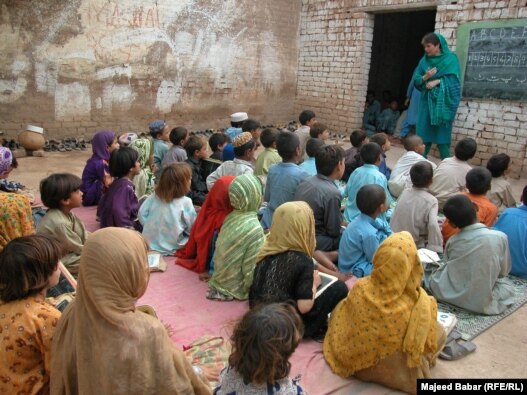
The Pashtun politician's road to success has been fraught with danger, however. The Taliban's influence in Khyber-Pakhtunkhwa Province has risen significantly in recent years, presenting a formidable obstacle to her meeting with constituents.
Taliban militants' attacks on everything secular -- from music stores to public schools and government offices -- have become a bitter everyday reality in much of western Pakistan.
Nonetheless, women remain the most vulnerable to the Taliban's hard-line rule.
Hundreds of girls' schools have been destroyed and or burned down by the militants. Working women have been forced to leave their jobs and wear the hijab.
"I received a written threat from the Taliban demanding that I leave politics," Gohar says.
The militants usually carry out their threats. At least three high-ranking politicians have been assassinated by the Taliban in the province since 2008. Two others narrowly escaped suicide attacks.
This is cause for most women to think twice before venturing outside the home to get a job, let alone a public position. But Gohar is adamant that she will continue her career in politics in defiance of Taliban threats.
"I have no intention of leaving politics because of the death threats I get," she says. "We all die one day, with or without the Taliban attacking us."
Humble Background
Residents of the village of Swabi say Gohar won their respect for helping the region get government funds for the construction of roads and much-needed electricity power lines.
Gohar's main focus, however, remains women's issues, especially the education of girls.
Gohar says neither the warnings from the militants nor other societal pressures should inhibit Pasthun women's participation in public life, including going to school or getting a job.
"During my election campaign in rural communities in Swabi district, I was surprised how housewives were interested in politics and they knew so much more about politics than many men," Gohar says of her 2008 campaign. "They would tell me they wanted opportunities to improve their lives."
Years on, Gohar continues to try to meet those expectations, most recently by convincing local authorities to build a women's sports center in Khyber Pakhtunkhwa.
Unlike many women politicians in Pakistan, Gohar does not belong to any political family or dynasty. The youngest daughter of a retired army colonel, Gohar is the only one in her family to pursue a career in politics.
"Gohar has always been different to any other girl in the rural area where she grew up, and that difference wasn't only in her sense of style or haircut," says Sadia Qasim, a journalist from Swabi District.
"Even long before entering politics, Gohar was a constant fixture at protest rallies demanding greater rights for women," Qasim says. "In 2005 she was among outspoken critics of a bill aimed to introduce Shari'a laws in Khyber Pakhtunkhwa province."
Gohar's political plans now go beyond her native province. The girl from the remote Jhandha wants to change the way women's roles are perceived in Pakistani politics.
"Apart from the ANP, all political parties in our country have so-called women's wings. They give women a quota, which is not a bad thing in promoting women's participation," Gohar says of the 20-percent mandate.
"But I don't see the quotas as a privilege for women. We should work toward building a society that recognizes people on their merit, regardless of their gender. To achieve that goal we need to give women equal opportunities."
High-Flying Women
Gohar welcomed the recent appointment of several women from the ruling Pakistan People's Party to "more serious top jobs" such as that of finance, foreign affairs, and justice ministers.
"Previously, women would only get appointed to the social welfare department," Gohar says. "Now, the speaker of parliament is a woman, and several important parliamentary committees are chaired by women."
According to Qasim, women from Khyber-Pakhtunkhwa Province want to see Gohar do more.
Female politicians such as Gohar are in a unique position to highlight the numerous problems faced by women, says the journalist from Swabi.
Qasim does have some criticism for Gohar, however, saying she focuses too much on "development issues, such as renovation of roads or gas and electricity shortages."
Qasim suggests Gohar should focus more on local practices affecting women's lives, such as honor killings, domestic violence and the tradition of handing over a woman to an "enemy's family to settle feuds."
"There are many similar practices and customs, which female lawmakers should [fight by engaging] in lawmaking and changing laws so that women's situation as a whole could change."
For her part, Gohar says she joined politics so she could help bring changes to people's lives, and is content with the life and the career she has chosen.
But that doesn't mean it has not come at a personal cost; she has never married and has no children.
"In my line of work, I found it simply impossible to find a balance between family life and a career in politics," she says.
Saudis hold protest rally in Qatif
Saudi Arabian protesters have held a rally in the city of Qatif, in Eastern Province, despite the heavy presence of police.

Protesters called for the immediate release of thousands of political prisoners and demanded the resignation of the Qatif governor.
Activists say several buses loaded with regime forces arrived near the site of the protest.
The protest rally comes less than one day after a similar protest in the city in which gunshots were heard throughout the night.
Hundreds of Saudis took to the streets in Qatif on Sunday to protest against the detention of two senior citizens. Saudi security forces took the two men hostage in a bid to force their sons, who are wanted by Saudi authorities for participating in anti-government protests, surrender themselves to authorities.
Witnesses say hundreds of Saudis gathered outside the police headquarters in Qatif, demanding their immediate release, but security forces dispersed the crowd using force. Many activists are reported to be injured in the violence.
According to the activists, most of the detained political thinkers are being held by the government without trial or legitimate charges and were arrested for merely looking suspicious.
Some of the detainees are reported to be held without trial for more than 16 years.
Attempting to incite the public against the government and allegiance to foreign entities are usually the ready-made charges brought against political dissidents.
Families of political prisoners have repeatedly pleaded with the ruling monarchy to at least give their loved ones a fair trial. But for years now, the families say, the king has ignored their calls.
Human Rights Watch says more than 160 dissidents have been arrested since February as part of the Saudi government crackdown on protesters.
According to the Saudi-based Human Rights First Society (HRFS), the detainees were subject to both physical and mental torture.

Protesters called for the immediate release of thousands of political prisoners and demanded the resignation of the Qatif governor.
Activists say several buses loaded with regime forces arrived near the site of the protest.
The protest rally comes less than one day after a similar protest in the city in which gunshots were heard throughout the night.
Hundreds of Saudis took to the streets in Qatif on Sunday to protest against the detention of two senior citizens. Saudi security forces took the two men hostage in a bid to force their sons, who are wanted by Saudi authorities for participating in anti-government protests, surrender themselves to authorities.
Witnesses say hundreds of Saudis gathered outside the police headquarters in Qatif, demanding their immediate release, but security forces dispersed the crowd using force. Many activists are reported to be injured in the violence.
According to the activists, most of the detained political thinkers are being held by the government without trial or legitimate charges and were arrested for merely looking suspicious.
Some of the detainees are reported to be held without trial for more than 16 years.
Attempting to incite the public against the government and allegiance to foreign entities are usually the ready-made charges brought against political dissidents.
Families of political prisoners have repeatedly pleaded with the ruling monarchy to at least give their loved ones a fair trial. But for years now, the families say, the king has ignored their calls.
Human Rights Watch says more than 160 dissidents have been arrested since February as part of the Saudi government crackdown on protesters.
According to the Saudi-based Human Rights First Society (HRFS), the detainees were subject to both physical and mental torture.
Immune system discoveries win 2011 medicine Nobel

Three scientists who uncovered key secrets of how the bodys immune system works have won the 2011 Nobel prize for medicine or physiology, the prize-awarding institute said on Monday.
Swedens Karolinska Institute said in a statement that the prize went to U.S. scientist Bruce Beutler, Luxembourg-born Jules Hoffmann, based in France, and Canadian-born Ralph Steinman, based in the United States.
“This years Nobel Laureates have revolutionized our understanding of the immune system by discovering key principles for its activation,” the institute said.
Beutler and Hoffmann shared one half of the prize of 10 million Swedish crowns ($1.46 million). Steinman died last Friday, the prize-giving committee and the university where he worked said on Monday. It appears the committee was unaware of his death at the time the award was announced.
An official at the Nobel committee of the Karolinska Institute, Anna Dumanski, said, "I can confirm that Professor Steinman has passed away," she said. She could not give any more details.
Rockefeller University said in a statement that Steinman, 68, died on Friday, September 30.
"He was diagnosed with pancreatic cancer four years ago, and his life was extended using a dendritic-cell based immunotherapy of his own design," the New York-based university said in a statement posted on its website.
The work of the three scientists has been pivotal to the development of improved types of vaccines against infectious diseases and novel approaches to fighting cancer. The research has helped lay the foundations for a new wave of so-called “therapeutic vaccines” that stimulate the immune system to attack tumors.
Better understanding of the complexities of the bodys immune system has also provided clues for treating inflammatory diseases, such as rheumatoid arthritis, where the components of the self-defense system end up attacking the bodys own tissues.
Medicine is traditionally the first of the Nobel prizes awarded each year. Prizes for achievements in science, literature and peace were first awarded in 1901 accordance with the will of dynamite inventor and businessman Alfred Nobel.
The award citation said scientists had long been researching the immune response by which man and other animals defend themselves against attack by bacteria and other microorganisms.
Beutler and Hoffmann discovered receptor proteins that can recognize microorganisms attacking the body and which activate “innate immunity”, the first step in the bodys immune response, the statement said.
“Ralph Steinman discovered the dendritic cells of the immune system and their unique capacity to activate and regulate adaptive immunity, the later stage of the immune response during which microorganisms are cleared from the body,” it added.
Pakistan Should Stop Its Intervention In Afghan Affairs: US Ambassador
The US Ambassador had a meeting with the Balkh Governor Atta Mohammad Noor and assured of continued assistance of his country to Afghanistan.
The US Ambassador had a meeting with the Balkh Governor Atta Mohammad Noor and assured of continued assistance of his country to Afghanistan. After the meeting Atta Mohammad Noor told a press conference that the US ambassador emphasized on the US commitments towards Afghanistan and reiterated on his country’s assistance in ensuring security, reconstruction, training and increment of forces and promised that an industrial park will be constructed with the US assistance in Balkh province. At this press conference the US ambassador asked Pakistan to stop interference in domestic affairs of Afghanistan and should observe the treaty of good neighborliness with its neighbors. He added that the US policy towards Afghanistan is that policy which US president Obama wants it. He stressed that we are closing towards concluding of strategic treaty with Afghanistan. He asked the international community and those interfering in Afghanistan’s domestic affairs and is involved in murders, terror and insurgency should stop these destructive acts.
The US Ambassador had a meeting with the Balkh Governor Atta Mohammad Noor and assured of continued assistance of his country to Afghanistan. After the meeting Atta Mohammad Noor told a press conference that the US ambassador emphasized on the US commitments towards Afghanistan and reiterated on his country’s assistance in ensuring security, reconstruction, training and increment of forces and promised that an industrial park will be constructed with the US assistance in Balkh province. At this press conference the US ambassador asked Pakistan to stop interference in domestic affairs of Afghanistan and should observe the treaty of good neighborliness with its neighbors. He added that the US policy towards Afghanistan is that policy which US president Obama wants it. He stressed that we are closing towards concluding of strategic treaty with Afghanistan. He asked the international community and those interfering in Afghanistan’s domestic affairs and is involved in murders, terror and insurgency should stop these destructive acts.
Suspected sectarian attack in Pakistan kills 12
Gunmen opened fire on Tuesday a bus in Pakistan's southwestern Baluchistan province in a suspected sectarian attack, killing 12 people, the second such attack in just over two weeks.
The attackers, who were in a pickup truck, intercepted the bus on the outskirts of the provincial capital of Quetta. Several people were wounded.
"The bus was carrying people mostly from the Hazara community who were returning from Quetta," senior police Hamid Shakeel told Reuters, referring to a Shi'ite Muslim ethnic minority.
Ten people were killed on the spot while two died in hospital. There were about 20 people on the bus.
Sunni Muslims militants loyal to al Qaeda and the Taliban regularly carry out attacks on members of Pakistan's Shi'ite minority. They have stepped up attacks in recent months.
A similar attack on Sept 20 killed at least 26 Shi'ite pilgrims in Mastung district while they were on their way to Iran.
No one claimed responsibility for Tuesday's attack.
Pakistan has seen a surge in violence since al Qaeda chief Osama bin Laden was killed by US special forces in a secret raid in a Pakistani town in May.
Militants have vowed revenge for bin Laden's death.
Sunni and Shi'ite Muslims have a rivalry going back almost 1,400 years, when Islam split over the successor to the Prophet Mohammad.
The attackers, who were in a pickup truck, intercepted the bus on the outskirts of the provincial capital of Quetta. Several people were wounded.
"The bus was carrying people mostly from the Hazara community who were returning from Quetta," senior police Hamid Shakeel told Reuters, referring to a Shi'ite Muslim ethnic minority.
Ten people were killed on the spot while two died in hospital. There were about 20 people on the bus.
Sunni Muslims militants loyal to al Qaeda and the Taliban regularly carry out attacks on members of Pakistan's Shi'ite minority. They have stepped up attacks in recent months.
A similar attack on Sept 20 killed at least 26 Shi'ite pilgrims in Mastung district while they were on their way to Iran.
No one claimed responsibility for Tuesday's attack.
Pakistan has seen a surge in violence since al Qaeda chief Osama bin Laden was killed by US special forces in a secret raid in a Pakistani town in May.
Militants have vowed revenge for bin Laden's death.
Sunni and Shi'ite Muslims have a rivalry going back almost 1,400 years, when Islam split over the successor to the Prophet Mohammad.
PML-N trying to avert masses’ attention from dengue
The Pakistan People’s Party (PPP), while condemning the Pakistan Muslim League-Nawaz (PML-N) rally against load shedding, said that the Sharif brothers were trying to avert attention of the citizens from the dengue issue since the provincial government had failed in coping with the epidemic. When contacted, Opposition Leader in Punjab Assembly (PA) Raja Riaz Ahmad, said that the Punjab government had failed to control dengue owing to late sprays and fumigation as well as lack of its interest in public related issues. Raja Riaz said that more than one hundred innocent people had died due to dengue uptil now, showing that the Punjab government had failed in controlling the epidemic. He said that the PML-N government was now trying to divert the attention of the citizens from the dengue issue, hence, it had started a campaign against the federal government in the name of load shedding.He said that if the Punjab government failed in controlling dengue then a protest rally in this regard could also be staged outside the CM’s Secretariat. PA Deputy Parliamentary Leader Shaukat Basra, while talking on the issue, said that there Sharif brothers were wrong in holding rallies against the federal government regarding load shedding as they already knew the factual position about the reasons of electricity shortfall. He said that Punjab CM Shahbaz Sharif was not serious in dealing with issues of public interest, like dengue, adding that this was the reason he did not attend any of the assembly session nor bothered to answer the opposition’s queries. Talking to Daily Times, PPP Punjab Information Secretary Dr Fakharruddin Chaudhry, said that the Punjab government itself had requested the federal government to stop water supply, adding that the electricity shortfall could not be met owing to this disruption in the hydropower production. Dr Fakhar further said that the Sharif brothers were fully aware of the electricity situation across the country as well as the efforts being made by the federal government to overcome it and yet they had started a game of political point scoring over the issue of load shedding, which was “unfair” and an “irresponsible act” on their part. Meanwhile, PPP Lahore Leader Hafiz Muhammad Ikhlaq said that although load shedding was a pressing issue, more people were dying due to dengue. He added that load shedding was a gift of the Nawaz Sharif and Musharraf governments, whereas the current PPP government had been trying to conquer the menace by increasing power generation.
Russia's Putin says wants to build "Eurasian Union"
- Russia's Prime Minister Vladimir Putin said he wants to bring ex-Soviet states into a "Eurasian Union" in an article which outlined his first foreign policy initiative as he prepares to return to the Kremlin as the country's next president.
Putin said the new union would build on an existing Customs Union with Belarus and Kazakhstan which from next year will remove all barriers to trade, capital and labor movement between the three countries.
"We are not going to stop there and are setting an ambitious goal -- to achieve an even higher integration level in the Eurasian Union," Putin wrote in an article which will be published in Izvestia newspaper on October 4.
Putin said last month he would run in the March 2012 presidential election and his current public approval ratings show that he is set to win.
Putin's initiative comes as Russia nears the end of its 18-year-old negotiations to join the World Trade Organization. In the article Putin made no secret of his skepticism about the global trade watchdog.
"The process of finding new post-crisis global development models is moving forward with difficulty. For example, the Doha round (of international trade talks) has practically stopped. There are objective difficulties inside the WTO," he wrote.
In 2009, Putin threw Russia's bid to join the WTO into disarray, saying Russia would instead form the Customs Union with Belarus and Kazakhstan. The new initiative will have to be explained to WTO members.
WRONG CROSSROADS
Putin, who once called the collapse of the USSR in 1991 "the greatest geopolitical catastrophe of the 20th century," said his new project would not resemble the Soviet Union.
"It would be naive to attempt to restore or copy something from the past. However, a stronger integration on a new political and economic basis and a new system of values is an imperative of our era," Putin wrote.
Russia's relationship with its ex-Soviet neighbors has been troubled by trade and political disputes and even armed conflicts such as the 2008 war with Georgia.
Putin said he saw the new union as a supra-national body which would coordinate "economic and currency policy" between its members. It would also be open to new members.
Putin said that the Customs Union would expand to take in Central Asian republics of Kyrgyzstan and Tajikistan. He also made a veiled criticism of Ukraine which chose to stay outside the union citing its commitment to European integration.
Some of Russian's neighbors were unwilling to commit to integration because this appeared to contradict their decision to build ties with Europe.
But this was a wrong choice, he wrote. He argued that the Customs Union and in future the Eurasian Union would be the European Union's partner in talks over the creation of a common economic space, guaranteeing its members a stronger voice.
"Membership in the Eurasian Union, apart from direct economic benefits, will enable its members to integrate into Europe faster and from a much stronger position."
Putin wrote that he saw the way out of the global crisis through a regional integration, mentioning the European Union, Asia-Pacific Economic Cooperation, the North American Free Trade Agreement and the Association of Southeast Asian Nations as examples.
"These 'bricks' can assemble into a more stable global economy," Putin wrote.
Putin said the new union would build on an existing Customs Union with Belarus and Kazakhstan which from next year will remove all barriers to trade, capital and labor movement between the three countries.
"We are not going to stop there and are setting an ambitious goal -- to achieve an even higher integration level in the Eurasian Union," Putin wrote in an article which will be published in Izvestia newspaper on October 4.
Putin said last month he would run in the March 2012 presidential election and his current public approval ratings show that he is set to win.
Putin's initiative comes as Russia nears the end of its 18-year-old negotiations to join the World Trade Organization. In the article Putin made no secret of his skepticism about the global trade watchdog.
"The process of finding new post-crisis global development models is moving forward with difficulty. For example, the Doha round (of international trade talks) has practically stopped. There are objective difficulties inside the WTO," he wrote.
In 2009, Putin threw Russia's bid to join the WTO into disarray, saying Russia would instead form the Customs Union with Belarus and Kazakhstan. The new initiative will have to be explained to WTO members.
WRONG CROSSROADS
Putin, who once called the collapse of the USSR in 1991 "the greatest geopolitical catastrophe of the 20th century," said his new project would not resemble the Soviet Union.
"It would be naive to attempt to restore or copy something from the past. However, a stronger integration on a new political and economic basis and a new system of values is an imperative of our era," Putin wrote.
Russia's relationship with its ex-Soviet neighbors has been troubled by trade and political disputes and even armed conflicts such as the 2008 war with Georgia.
Putin said he saw the new union as a supra-national body which would coordinate "economic and currency policy" between its members. It would also be open to new members.
Putin said that the Customs Union would expand to take in Central Asian republics of Kyrgyzstan and Tajikistan. He also made a veiled criticism of Ukraine which chose to stay outside the union citing its commitment to European integration.
Some of Russian's neighbors were unwilling to commit to integration because this appeared to contradict their decision to build ties with Europe.
But this was a wrong choice, he wrote. He argued that the Customs Union and in future the Eurasian Union would be the European Union's partner in talks over the creation of a common economic space, guaranteeing its members a stronger voice.
"Membership in the Eurasian Union, apart from direct economic benefits, will enable its members to integrate into Europe faster and from a much stronger position."
Putin wrote that he saw the way out of the global crisis through a regional integration, mentioning the European Union, Asia-Pacific Economic Cooperation, the North American Free Trade Agreement and the Association of Southeast Asian Nations as examples.
"These 'bricks' can assemble into a more stable global economy," Putin wrote.
Victims of folly of our own
EDITORIAL:THE FRONTIER POST
Couldn’t our movers and shakers speak out in time what US secretary of state Hillary Clinton has confessed to now publicly? She admitted, going by a transcript of question and answer session by the US state department, that the US government, through the CIA, had funded jihadis like the Haqqanis “to cross the border or to, within Afghanistan, be part of the fight to drive the Soviets out and bring down the Soviet Union”. Yes, our spooks spoke this out just a short while ago and probably her confession was prompted by this. But it is not for weeks or for months but for pretty long that the Americans had been shouting from the rooftop that the Haqqani group of the Afghan Taliban was holed up in Pakistan’s North Waziristan tribal agency from where it launched attacks on the coalition forces in Afghanistan and that the Pakistani military was not going after the group to dislodge and dismantle it. Yet our security establishment sat quiet, letting the erroneous impression embed in the public minds worldwide that the Haqqanis were not only enjoying the protection and backing of the Pakistani state but were also its creature. And even as this world impression was gaining in currency because of the constant loud American refrain, none in Islamabad set out to put the record straight and offset the American tirade from poisoning the public minds against Pakistan. This country’s spooks couldn’t be unaware that the Jalaluddin Haqqani was the Americans’ much favourite and admired Afghan mujahideen commander during their proxy war against the Soviet invaders of Afghanistan and their principal handler of Arab zealots they had herded up from all around the world to fight that war. Nor could they be any ignorant how the American headhunters poached on rabid religious outfits worldwide, and armed, bankrolled and infiltrated their recruits into Afghanistan to fight on the side of their Afghan proxies there. The CIA had, to our great misfortune, taken our spy agency ISI on board of its adventurism in our western neighbour. So our intelligence people knew a lot about the Americans’ shenanigans and there was no reason whatsoever for them to be taken in for a ride so easily by the perfidious devices of the children of Uncle Sam. But outrageously they lovingly submitted and gyrated to the trickery of the American adventurists, who had showed no soldiering or manly spine of their own in their occupied Afghanistan after ousting the Taliban and dexterously heaped every indignity and insult on the Pakistan military, even as it had put up a tough fighting to the militants who for the timidity of the American occupiers had sneaked into our tribal territory as well as those spawned by the CIA in league with India’s RAW intelligence agency and Afghanistan’s spy service, the National Directorate of Security, A CIA subsidiary.Never ever Islamabad asked the American occupiers publicly to secure the eastern Afghanistan, which they for fear of fighting had let under the sway of the Afghan insurgents, principally the Haqqani group. Never ever the Islamabad establishment y made an issue of vacating intriguingly the few security posts that the American occupiers has established in the region when the Pakistani military mounted a powerful operation in our neigbouring Bajaur tribal agency to fight out obviously foreign-sponsored militants. After making a small short noise, our security establishment too went into silence on the massive flow of arms, munitions and infiltrators from across the border to refurbish the militants fighting against the military in the agency. Never ever it raised any furor over the widely known infestation of our tribal areas by the CIA and its colluding alien agencies. Only recently, sacked Afghan spymaster Amrullah Saleh bragged publicly of having infested our sensitive tribal areas vulnerably; and the CIA too stated having laid out its own spy network in the region. And yet our security establishment has refrained from telling the world whose men actually were the militants who threw the armed challenge to the Pakistani state in the tribal areas and nearby settled regions over these past few years and in whose protection are they living now in Afghanistan after escaping the Pakistani military’s powerful response. But for long will the Pakistani establishment keep getting the rap for the aliens’ acts of omission and commission and let the name of this nation and country to be sullied on every world street? Perceptions, it must know, matter and greatly; indeed, even more than realities. So will it ever stand up and lift its purdah to speak out some home truths to the world. Its silence fast, it must know, has hurt this nation badly for no fault of its own. In fact, the nation has become the worst victim of the folly of its own. If the movers and shakers of this establishment have no spine to speak out publicly, at least they can do it via background briefings and leaks to our own media, as do the others, principally the Americans.
Couldn’t our movers and shakers speak out in time what US secretary of state Hillary Clinton has confessed to now publicly? She admitted, going by a transcript of question and answer session by the US state department, that the US government, through the CIA, had funded jihadis like the Haqqanis “to cross the border or to, within Afghanistan, be part of the fight to drive the Soviets out and bring down the Soviet Union”. Yes, our spooks spoke this out just a short while ago and probably her confession was prompted by this. But it is not for weeks or for months but for pretty long that the Americans had been shouting from the rooftop that the Haqqani group of the Afghan Taliban was holed up in Pakistan’s North Waziristan tribal agency from where it launched attacks on the coalition forces in Afghanistan and that the Pakistani military was not going after the group to dislodge and dismantle it. Yet our security establishment sat quiet, letting the erroneous impression embed in the public minds worldwide that the Haqqanis were not only enjoying the protection and backing of the Pakistani state but were also its creature. And even as this world impression was gaining in currency because of the constant loud American refrain, none in Islamabad set out to put the record straight and offset the American tirade from poisoning the public minds against Pakistan. This country’s spooks couldn’t be unaware that the Jalaluddin Haqqani was the Americans’ much favourite and admired Afghan mujahideen commander during their proxy war against the Soviet invaders of Afghanistan and their principal handler of Arab zealots they had herded up from all around the world to fight that war. Nor could they be any ignorant how the American headhunters poached on rabid religious outfits worldwide, and armed, bankrolled and infiltrated their recruits into Afghanistan to fight on the side of their Afghan proxies there. The CIA had, to our great misfortune, taken our spy agency ISI on board of its adventurism in our western neighbour. So our intelligence people knew a lot about the Americans’ shenanigans and there was no reason whatsoever for them to be taken in for a ride so easily by the perfidious devices of the children of Uncle Sam. But outrageously they lovingly submitted and gyrated to the trickery of the American adventurists, who had showed no soldiering or manly spine of their own in their occupied Afghanistan after ousting the Taliban and dexterously heaped every indignity and insult on the Pakistan military, even as it had put up a tough fighting to the militants who for the timidity of the American occupiers had sneaked into our tribal territory as well as those spawned by the CIA in league with India’s RAW intelligence agency and Afghanistan’s spy service, the National Directorate of Security, A CIA subsidiary.Never ever Islamabad asked the American occupiers publicly to secure the eastern Afghanistan, which they for fear of fighting had let under the sway of the Afghan insurgents, principally the Haqqani group. Never ever the Islamabad establishment y made an issue of vacating intriguingly the few security posts that the American occupiers has established in the region when the Pakistani military mounted a powerful operation in our neigbouring Bajaur tribal agency to fight out obviously foreign-sponsored militants. After making a small short noise, our security establishment too went into silence on the massive flow of arms, munitions and infiltrators from across the border to refurbish the militants fighting against the military in the agency. Never ever it raised any furor over the widely known infestation of our tribal areas by the CIA and its colluding alien agencies. Only recently, sacked Afghan spymaster Amrullah Saleh bragged publicly of having infested our sensitive tribal areas vulnerably; and the CIA too stated having laid out its own spy network in the region. And yet our security establishment has refrained from telling the world whose men actually were the militants who threw the armed challenge to the Pakistani state in the tribal areas and nearby settled regions over these past few years and in whose protection are they living now in Afghanistan after escaping the Pakistani military’s powerful response. But for long will the Pakistani establishment keep getting the rap for the aliens’ acts of omission and commission and let the name of this nation and country to be sullied on every world street? Perceptions, it must know, matter and greatly; indeed, even more than realities. So will it ever stand up and lift its purdah to speak out some home truths to the world. Its silence fast, it must know, has hurt this nation badly for no fault of its own. In fact, the nation has become the worst victim of the folly of its own. If the movers and shakers of this establishment have no spine to speak out publicly, at least they can do it via background briefings and leaks to our own media, as do the others, principally the Americans.
Pakistanis at risk over world inaction on floods, warns UN
The United Nations warned on Monday that the international community had failed to respond to the latest flooding crisis in Pakistan, leaving three million people in urgent need of food handouts. The nuclear-armed Muslim state has suffered two consecutive years of floods but has been at increasing risk of international isolation since US troops found and killed Osama bin Laden near the capital in May. “Somehow the present flooding and the humanitarian impact of the present flooding has not yet picked the interest, the focus of the world,” said Ramiro Lopes da Silva, deputy executive director of the World Food Programme (WFP). “If we have no resources, we have no response,” he told a news conference in Islamabad after visiting the flood-hit province of Sindh. On September 18, the United Nations led an appeal for $357 million in emergency funding to shore up rescue and relief efforts for millions of people suffering after floods swept away homes and farm land in southern Pakistan. “The funding is not coming as swiftly and as fast at the levels it came to the response of the floods of last year,” said Lopes da Silva. afp
Salads are nice, but burgers are what really sell


Americans talk skinny but eat fat.
No matter that First Lady Michelle Obama
has been on a crusade for a year and a half to slim down the country. Never mind that some restaurants have started listing calories on their menus. Forget even that we keep saying we want to eat healthy. When Americans eat out, we order burgers and fries anyway.
"If I wanted something healthy, I would not even stop in at McDonald's," says Jonathan Ryfiak, 24, a New York trapeze instructor who watches his diet at home but orders comfort foods like chicken nuggets and fries when he hits a fast-food joint.
In a country where more than two-thirds of the population is overweight or obese, food choices are often made on impulse, not intellect. So, while 47 percent of Americans say they'd like restaurants to offer healthier items like salads and baked potatoes, only 23 percent tend to order those foods, according to a survey last year by food research firm Technomic.
That explains the popularity of KFC's Double Down, a sandwich of bacon and cheese slapped between two slabs of fried chicken. It's the reason IHOP offers a Simple & Fit menu with yogurt and fruit bowls, but its top seller remains a 1,180-calorie breakfast sampler of eggs, bacon, sausage, ham, hash browns and pancakes. It's also why only 11 percent of parents ordered apple slices as an alternative to fries in McDonald's Happy Meals.
The mixed message hasn't stopped many restaurants from offering healthier fare. After all, the government has stepped up its oversight — and influence — over the industry that it blames for America's expanding waistline. National rules about putting calorie information on menus are expected to take effect next year. And Mrs. Obama touts restaurants and companies that slash calories in foods.
But revamping a menu can be difficult and expensive, requiring months or even years. For example, it took Dunkin' Donuts four years to figure out how to make its doughnuts without trans fat — which doctors say is one of the unhealthiest types of fat — without altering the taste.
And efforts to curb unhealthy eating aren't always fruitful. In 2009, a year after New York made chains start listing calories on menus, only 15 percent of diners ordered lower-calorie foods, according to a study in the British Medical Journal.
As a result, many chains have scaled back their efforts to roll out healthy foods. The number of health-related claims made on menus, like reduced fat or reduced carbs, fell 5 percent from 2008 to 2010, according to Technomic's study of more than 1,200 restaurant chains.
Most restaurants won't share specifics about how their salads and veggie omelets compete when they're up against burgers and crepes. But the healthy stuff appears to be only a small proportion of revenue at most chains.
The IHOP pancake house, owned by DineEquity Inc., says that Simple & Fit sales have roughly doubled in the year since the menu was introduced. But it still makes up only a single-digit percentage of revenue.
The Cheesecake Factory, which introduced a "Skinnylicious" menu in August featuring entrees with 590 calories or less, says those foods have also performed well. But sales of its decadent cheesecakes are up too. "We recognize that 'cheesecake' is in our name," said Alethea Rowe, senior director of restaurant marketing.
There's a host of reasons for the disparity between word and deed. Sometimes people who eat healthy at home want to treat themselves when they go out. Others doubt that the so-called healthier items on fast-food menus are really healthy. Even peer pressure can play a role.
Jason Sierra, who was eating a Whopper hamburger and fries at a Burger King in New York recently, said he's cut back on unhealthy foods because his cholesterol and blood pressure were getting too high. But when his office buddies order lunch, he opts for "man food" like pizza to fit in.
"One day I did try to order a salad," said Sierra, 40, who works in tech support. "And I caught hell for that."
Healthier foods also are usually among the most expensive menu items, which can be tough for recession-weary customers to stomach. Efrain Vasquez and his wife, Evelyn, were recently eating fried chicken and gravy-drenched mashed potatoes at a KFC in New York. They say there's a big difference between a $2 burger and a $6 salad when you're on a tight budget.
"We've got bills to pay," said Efrain Vasquez, 51, a maintenance worker who's raising four kids with Evelyn, a 37-year-old receptionist. "We try to economize."
Like so many American dieters, fast-food restaurants have tried and failed to go healthy. The Wendy's Co. burger chain led the way in the mid-1980s with a short-lived effort to sell tomato halves filled with cottage cheese and pineapple chunks on lettuce leaves.
"Consumers weren't ready for it," said Denny Lynch, a spokesman for Wendy's, where burgers and chicken are the biggest sellers. "Or at least they certainly didn't buy it."
In 2003, during the low-carb Atkins diet craze, Domino's Pizza Inc. couldn't get people to bite on a low-carb pizza it tested in Indianapolis. "While many people at the time made their voice heard that they wanted it, few people actually ordered it," said Chris Brandon, Domino's spokesman.
McDonald's, the world's largest burger chain, says the fruit smoothies and oatmeal with brown sugar and raisins it rolled out last year are selling well, although it declined to disclose their revenue. "We would not have them on the menu if we were not selling them at a rate that we could sustain them at," said Molly Starmann, director of McDonald's family business category.
But the chain didn't always have such luck. It spent three years developing the McLean Deluxe, a 91-percent fat-free hamburger it introduced in 1991 only to suffer disappointing sales.
More recently, McDonald's got a lukewarm response when in 2004 it began offering parents the option of choosing apple slices instead of fries for Happy Meals. So, in July, McDonald's said it would stop offering a choice and instead serve a half portion of both. It had considered taking fries out Happy Meals completely, but nixed the idea when parents in tests said "No."
For now, restaurants continue to straddle the line.
Burger King Corp. this summer pledged to promote healthier foods for kids, but announced last week that it would sell ice cream desserts nationwide, including an Oreo brownie sundae with 530 calories and 17 grams of fat. KFC introduced grilled chicken in 2009, then launched the Double Down sandwich the following year. The 540-calorie, 32-grams-of-fat breadless sandwich started as a limited-time offering, but proved so popular that the chain ended up keeping it.
Andy Puzder, CEO of CKE Restaurants Inc., which runs Hardee's and Carl's Jr., said even though his restaurants offer salads and turkey burgers, he figures his best seller at Hardee's is probably the Thickburger. The most decadent version of it comes with two types of cheese, fried onions, mayonnaise and nearly half a pound of beef and weighs in at 1,170 calories and 83 grams of fat. (The government recommends that most people consume 2,000 calories and no more than about 70 grams of fat each day.)
"We have wonderful, healthy foods if people want to buy them," Puzder said. "But they don't sell particularly well."
Subscribe to:
Posts (Atom)