With two more polio cases reported each in Loralai and Pishin districts their number has risen to 37 in the province.
The toll of confirmed polio cases detected in various districts of the Balochistan during 2011 has risen to 37. Qilla Abdullah District has been declared the worst affected area where as many as 13 cases have so far been reported.
While giving the details of the polio cases detected in Balochistan, Dr Jawahir Habib Communication for development Officer Polio said that as many as 13 children were victimized by the crippling disease of polio in Qila Abdullah district, 9 in Pishin, 5 in Quetta, 3 each in Noshki and Khuzdar and one each in Kohlu, Dera Bugti, Kalat and Lorali during the last couple of months.
"The parents in rural areas of the province are either reluctant or ignorant to immunize their children against the disease which has increased the number of polio cases in parts of Balochistan, she lamented.
When contacted, the Provincial Manager of Expanded Program on immunization (EPI) Dr Yousaf Bizinjo said that Balochistan government was keen to eradicate the menace of polio from the province.
"High level meetings chaired by the CM Balochistan Nawab Mohammad Aslam Raisani and Chief Secretary Ahmed Baksh Lehir have taken serious notice of the issue and directed the officials to make necessary arrangements for the campaign launched today. "Teams have been constituted to administer Oral Polio Vaccine (OPV) to 5 lakh 24 thousands children below the age of five in Balochistan" he said adding that health department in collaboration with the district administration, UNICEF and World Health Organisation had made full arrangements to make the three-day campaign a success. He urged the parents to immunize their children against polio as it is the only preventive measure to save children from the attack of crippling disease.
"The polio teams will launch door to door activity in the 13 districts of the province", he said, adding, the political parties including PML-N, PPP, Pashtunkhwa Milia Awami Party, ANP and JUI have also assured their cooperation and their representatives will also visit each and every house in their respective localities to administer oral drops to the children. "Provincial government had devised a concerted strategy to supervise the work of polio teams and to ensure that the team members had access to each house, he noted. Dr Bijinjo also called for the role of print and electronic media to get maximum results from the drive.
"Taking notice of the refusal of the parents, Balochistan government has issued directives to lodge FIR against them, he noted. He stressed that an awareness campaign through the religious scholars, tribal notables and other opinion makers should be started to educate public about importance of vaccination of children.
Tuesday, September 20, 2011
ANP welcomes Altaf's retraction
Senior leader of the Awami National Party (ANP) Haji Adeel has welcomed the decision of MQM Chief Altaf Hussain to retract his statement against ANP Chief Asfandyar Wali Khan.
Hussain during his press conference had alleged that Asfandyar had received millions from the US to win the 2008 elections.
Speaking to Geo News Adeel said that if Hussain wanted to end differences he should hold dialogue with Pakhtuns and other ethnic groups that live in Karachi.
Adeel added that everyone's hard work was involved in the prosperity of Karachi and not one but all ethnic groups were stakeholders in the city.
Hussain during his press conference had alleged that Asfandyar had received millions from the US to win the 2008 elections.
Speaking to Geo News Adeel said that if Hussain wanted to end differences he should hold dialogue with Pakhtuns and other ethnic groups that live in Karachi.
Adeel added that everyone's hard work was involved in the prosperity of Karachi and not one but all ethnic groups were stakeholders in the city.
Haqqani network backed by ISI: US think-tank

The Haqqani network, which is blamed for the recent attack on American embassy in Kabul, receives protection and support from the Pakistani spy agency ISI, an influential think-tank has told US lawmakers.
"They receive protection and support from facets of Pakistan's intelligence agency ISI, which continues to drag its feet on taking action against the Haqqanis because they see the network as a useful proxy to expand their influence and establish footholds in Afghanistan," said Frank J Cilluffo, Director of the Homeland Security Policy Institute at the George Washington University.
"Because the Haqqani network is seen by parts of Pakistan's government as a valuable ally, the government has refused to take action in the tribal regions of Waziristan which creates safe havens, not only for the Haqqanis but for al-Qaeda and other terrorist groups, with which the Haqqanis are intimately involved," Cilluffo told lawmakers at a Congressional hearing last week.Noting that the network poses a significant threat to US and India, he observed that "strangely, and inadvisably" it has not been designated a foreign terrorist group.
It is believed that the group is a powerful insurgent force in Afghanistan, one that targets coalition forces as well as Indian investments and interests in the country, he said.
Siraj Haqqani, the son of the famous anti-Soviet fighter Jalaluddin Haqqani, is the current leader of the network. The group originated in the 1970s and has formed significant ties with al-Qaeda and Taliban in the years since its inception.
Today, it is operationally based in North Waziristan, the remote border region between Pakistan and Afghanistan.
Cilluffo said Lashkar-e-Taiba too receives support from the Pakistani establishment.
"Before the United States can take actions to assume a lighter footprint (especially in Afghanistan), it is paramount that we hold Pakistan accountable to take action against the extremist forces festering under their watch," he said.
"The litmus test here is whether Pakistan will sever its historic ties to its proxies, namely LeT in India and the Haqqani Network in Afghanistan. While we acknowledge the fact that there are some factions in Pakistan that will never cut these ties, we must also realize that some in Pakistan recognize the threat these groups pose," he said.
"Those individuals are motivated to cooperate with the US, and we should continue to do all we reasonably can to encourage and support their efforts. This is not only in the best interests of the US and India, but also of Pakistan," Cilluffo added.
Terrorist elements against Pak, Afghan, US interest: Khar


Pakistan Foreign Minister Hina Rabbani Khar said that Pakistan is fighting against terrorism to save its own interest. She was speaking to the media here after meeting with the foreign ministers of England, France and Italy.
While addressing a press conference, the foreign minister said that Pakistan will continue to favour the reconciliation process in Afghanistan and will continue to play its role as a neighboring country.
Khar described her meeting with the US Secretary of State Hillary Clinton as ‘very constructive’ and told that they had an extensive discussions on ‘all facets’ of US-Pakistan relations.
“It went very well,” Khar said after the three-and-half hour meeting.
The two top diplomats are in New York for the 66th session of the UN General Assembly. The foreign minister, in a brief interaction with reporters, also stressed the importance of ‘deeper understanding’ when her attention was drawn to points of differences between the two sides.
She also told that the foreign ministers of different countries agreed on helping the flood victims of Pakistan.
The Pakistan Foreign Minister said that there is complete convergence of interests in counterterrorism goals between Pakistan and the US. She said that terrorist elements are against the mutual interest of Pakistan, Afghanistan and the US.
Monday, September 19, 2011
Yemen violence
Yemeni security forces have killed at least 26 people and wounded more than 100 on a second day of violence across the country.
Gunmen loyal to President Ali Abdullah Saleh were continuing to fire upon anti-government demonstrators in Sanaa, with hospital sources saying the total death toll since Monday was now more than 50.
Government troops and snipers in nearby buildings opened fire on Monday at peaceful demonstrators and passers-by in the capital's Change Square, where they have camped since February demanding regime change, witnesses said.
Protesters were sprayed by water cannons and tear gas, and also baton charged, before the security forces opened fire with machine guns, they said.
Additional deaths were reported in the southwestern city of Taiz, where two people were killed and 10 were injured by gunfire from Saleh loyalists, Al Jazeera journalists stationed in Yemen said.
Despite the casualties, mass demonstrations continued on Monday in towns near Taiz - in Ibb, Dhamar and Shabwa - and in the northwestern province of Saada.
Abdu al-Janadi, Yemen's deputy information minister, rejected accusations that the government had planned attacks on the protesters, and accused what he described as "unknown assailants" of carrying out the acts.
"This attack was prepared so as to kill as many people as they could ... This is a plot against all the Yemeni people," al-Janadi told a British broadcaster.
Power transfer
Monday's clashes come a day after security forces opened fire at tens of thousands of civilian protesters marching for an end to Saleh's 33-year rule, killing 26 people.
The violence ended a weeks-long stand-off between the two sides, becoming Yemen's worst incident of bloodshed since a similar massacre killed 52 people in mid-March.The renewed crackdown on protesters came amid reports that Abdrabuh Mansur Hadi, Yemen's vice-president, would sign a Gulf Arab initiative to arrange for a transfer of power in Yemen "within a week".
"Within a week, the vice-president will sign the Gulf Initiative in the name of the president," a high-ranking Saudi official, who requested anonymity, told reporters.
Last week, Saleh authorised Hadi to negotiate a power transfer with the opposition.
The initiative was proposed by the six-nation Gulf Co-operation Council and sets the path for a peaceful transition of power from Saleh, who has ruled Yemen since 1978.
According to the Saudi official, "among the guarantees demanded by Saleh are that his son be kept in the next government".
Saleh left the country three months ago for Saudi Arabia where he has been recovering from a June 3 attack on his presidential compound.
The president has since January faced protests over nepotism and corruption from reform activists inspired by the Arab Spring.
Condemnation
The US, the European Union and other member states of the United Nations Human Rights Council condemned the violent unrest in Yemen during a meeting in Geneva on Monday.
The US was concerned at "increasingly disturbing reports about violence'' and urged the Yemeni government to rein in the security forces, Eileen Chamberlain Donahoe, US envoy to the council, said.
"The United States believes that now is the time for an immediate, peaceful and orderly transition," Donahoe said, adding that those responsible for abuses against civilians needed to be brought to justice as part of the reform process in the Arab nation.
Abubakr al-Qirbi, the Yemeni foreign minister, rejected claims of excessive force by the police and pro-government armed groups, by pledging his government's commitment to political reforms and accusing some opposition groups of terrorist activity.
"We have presented evidence proving that many accusation made against security organisations are baseless," al-Qirbi told the meeting.
He expressed "sorrow and condemnation" for Sunday's violence and bloodshed in Sanaa, but rejected calls for an independent international investigation into the crackdown, saying they were "inconsistent with the recommendations calling for dialogue between Yemeni political parties to solve the crisis".
Source: Al Jazeera and agencies
Gunmen loyal to President Ali Abdullah Saleh were continuing to fire upon anti-government demonstrators in Sanaa, with hospital sources saying the total death toll since Monday was now more than 50.
Government troops and snipers in nearby buildings opened fire on Monday at peaceful demonstrators and passers-by in the capital's Change Square, where they have camped since February demanding regime change, witnesses said.
Protesters were sprayed by water cannons and tear gas, and also baton charged, before the security forces opened fire with machine guns, they said.
Additional deaths were reported in the southwestern city of Taiz, where two people were killed and 10 were injured by gunfire from Saleh loyalists, Al Jazeera journalists stationed in Yemen said.
Despite the casualties, mass demonstrations continued on Monday in towns near Taiz - in Ibb, Dhamar and Shabwa - and in the northwestern province of Saada.
Abdu al-Janadi, Yemen's deputy information minister, rejected accusations that the government had planned attacks on the protesters, and accused what he described as "unknown assailants" of carrying out the acts.
"This attack was prepared so as to kill as many people as they could ... This is a plot against all the Yemeni people," al-Janadi told a British broadcaster.
Power transfer
Monday's clashes come a day after security forces opened fire at tens of thousands of civilian protesters marching for an end to Saleh's 33-year rule, killing 26 people.
The violence ended a weeks-long stand-off between the two sides, becoming Yemen's worst incident of bloodshed since a similar massacre killed 52 people in mid-March.The renewed crackdown on protesters came amid reports that Abdrabuh Mansur Hadi, Yemen's vice-president, would sign a Gulf Arab initiative to arrange for a transfer of power in Yemen "within a week".
"Within a week, the vice-president will sign the Gulf Initiative in the name of the president," a high-ranking Saudi official, who requested anonymity, told reporters.
Last week, Saleh authorised Hadi to negotiate a power transfer with the opposition.
The initiative was proposed by the six-nation Gulf Co-operation Council and sets the path for a peaceful transition of power from Saleh, who has ruled Yemen since 1978.
According to the Saudi official, "among the guarantees demanded by Saleh are that his son be kept in the next government".
Saleh left the country three months ago for Saudi Arabia where he has been recovering from a June 3 attack on his presidential compound.
The president has since January faced protests over nepotism and corruption from reform activists inspired by the Arab Spring.
Condemnation
The US, the European Union and other member states of the United Nations Human Rights Council condemned the violent unrest in Yemen during a meeting in Geneva on Monday.
The US was concerned at "increasingly disturbing reports about violence'' and urged the Yemeni government to rein in the security forces, Eileen Chamberlain Donahoe, US envoy to the council, said.
"The United States believes that now is the time for an immediate, peaceful and orderly transition," Donahoe said, adding that those responsible for abuses against civilians needed to be brought to justice as part of the reform process in the Arab nation.
Abubakr al-Qirbi, the Yemeni foreign minister, rejected claims of excessive force by the police and pro-government armed groups, by pledging his government's commitment to political reforms and accusing some opposition groups of terrorist activity.
"We have presented evidence proving that many accusation made against security organisations are baseless," al-Qirbi told the meeting.
He expressed "sorrow and condemnation" for Sunday's violence and bloodshed in Sanaa, but rejected calls for an independent international investigation into the crackdown, saying they were "inconsistent with the recommendations calling for dialogue between Yemeni political parties to solve the crisis".
Source: Al Jazeera and agencies
Obama to propose $1.5 trillion in new tax revenue

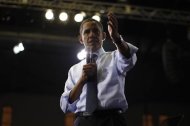
President Barack Obama will propose $1.5 trillion in new taxes as part of a plan to identify more than $3 trillion in long-term deficit reduction and slow the nation's escalating national debt.
Obama's tax plan is aimed predominantly at the wealthy and draws sharp contrasts with congressional Republicans.
It comes just days after House Speaker John Boehner ruled out tax increases to lower deficits. It also comes amid a clamor in his own Democratic Party for Obama to take a tougher stance against Republicans. And while the plan stands little chance of passing Congress, its populist pitch is one that the White House believes the public can support.
The core of the president's plan totals just more than $2 trillion in deficit reduction over 10 years. It combines the new taxes with $580 billion in cuts to mandatory benefit programs, including $248 billion from Medicare.
The administration also counts savings of $1 trillion over 10 years from the withdrawal of troops from Iraq and Afghanistan.
The deficit reduction plan represents an economic bookend to the $447 billion in tax cuts and new public works spending that Obama has proposed as a short-term measure to stimulate the economy and create jobs. He's submitting his deficit fighting plan to a special joint committee of Congress that is charged with recommending deficit reductions of up to $1.5 trillion over 10 years.
In a defiant note, administration officials made clear Sunday that Obama would veto any Medicare benefit cuts that aren't paired with tax increases on upper-income people.
Officials cast Obama's plan as his vision for deficit reduction, and distinguished it from the negotiations he had with Boehner in July as Obama sought to avoid a government default.
As a result, it includes no changes in Social Security and no increase in the Medicare eligibility age, which the president had been willing to accept this summer.
Moreover, the new tax revenue Obama is seeking is nearly double the $800 billion that Boehner had been willing to consider in July. Republicans were already lining up against the president's tax proposal before they even knew the magnitude of what he intended to recommend.
"Class warfare may make for really good politics but it makes for rotten economics," GOP Rep. Paul Ryan of Wisconsin, the House Budget Committee chairman, said Sunday in reaction to one Obama tax proposal to impose a minimum tax rate on wealthy filers.
Former President Bill Clinton on Monday dismissed GOP claims that the tax on the wealthy would discourage jobs creation and hamper economic growth.
"Republicans in Washington always say the same thing," Clinton said on NBC's "Today" show. He called their argument an insult to wealthy Americans, including many who don't mind paying more.
Key features of Obama's plan, as described by senior administration officials Sunday evening:
—$1.5 trillion in new revenue, which would include about $800 billion realized over 10 years from repealing the Bush-era tax rates for couples making more than $250,000. It also would place limits on deductions for wealthy filers and end certain corporate loopholes and subsidies for oil and gas companies.
—$580 billion in cuts in mandatory benefit programs, including $248 billion in Medicare and $72 billion in Medicaid and other health programs. Other mandatory benefit programs include farm subsidies.
—$430 billion in savings from lower interest payment on the national debt.
By adding about $1 trillion in spending cuts already enacted by Congress and counting about $1 trillion in savings from the drawdown of military forces from Iraq and Afghanistan, the combined deficit reduction would total more than $4 trillion over 10 years, senior administration officials said.
Republicans have ridiculed the war savings as gimmicky, but House Republicans included them in their budget proposal this year and Boehner had agreed to count them as savings during debt ceiling negotiations with the president this summer.
Obama backed away from proposing sweeping changes to Medicare, following the advice of fellow Democrats that it would only give political cover to a privatization plan supported by House Republicans that turned to be unpopular with older Americans.
Administration officials said 90 percent of the $248 billion in 10-year Medicare cuts would be squeezed from service providers. The plan does shift some additional costs to beneficiaries, but those changes would not start until 2017.
Illustrating Obama's populist pitch on tax revenue, one proposal would set a minimum tax on taxpayers making $1 million or more in income. The measure — Obama is going to call it the "Buffett Rule" for billionaire investor Warren Buffett — is designed to prevent millionaires from taking advantage of lower tax rates on investment earnings than what middle-income taxpayers pay on their wages.
At issue is the difference between a taxpayer's tax bracket and the effective tax rate that taxpayer pays. Millionaires face a 35 percent tax bracket, while middle income filers fall in the 15 or 25 percent bracket. But investment income is taxed at 15 percent and Buffett has complained that he and other wealthy people have been "coddled long enough" and shouldn't be paying a smaller share of their income in federal taxes than middle-class taxpayers.
ANP rally for ban on terrorist parties
The Awami National Party held a protest demonstration here in front Lahore Press Club on Sunday against the lawlessness in Karachi and demanded banning of political parties involved in terrorism.
The demonstration was organized by ANP’s City chapter and led by its local president Qurban Khan Kakar, while central General Secretary Ehsan Wayne and provincial leader Arif Azhar participated in it.
The protestors were carrying placards and banners inscribed with slogans in favour of their demands and chanted slogans against the political forces alleged to be involved in Karachi’s target killing. ANP leaders also demanded that for the restoration of ‘Commissionary System’ in Sindh.
The leaders of the ANP while addressing the participants claimed that MQM chief, Altaf Hussain media conference from London was a poor bid to pressure the judiciary against the backdrop of Supreme Court’s suo moto notice of the Karachi’s situation. They also claimed that MQM has trained militants at her disposal, as Altaf Hussain offered his support to the army in terms of manpower.
The demonstration was organized by ANP’s City chapter and led by its local president Qurban Khan Kakar, while central General Secretary Ehsan Wayne and provincial leader Arif Azhar participated in it.
The protestors were carrying placards and banners inscribed with slogans in favour of their demands and chanted slogans against the political forces alleged to be involved in Karachi’s target killing. ANP leaders also demanded that for the restoration of ‘Commissionary System’ in Sindh.
The leaders of the ANP while addressing the participants claimed that MQM chief, Altaf Hussain media conference from London was a poor bid to pressure the judiciary against the backdrop of Supreme Court’s suo moto notice of the Karachi’s situation. They also claimed that MQM has trained militants at her disposal, as Altaf Hussain offered his support to the army in terms of manpower.
Report argues that Afghan night raids make more enemies than they catch
http://www.washingtonpost.com
Increased nighttime military raids by international military forces in Afghanistan have created a resentment that has undercut any battlefield gains from the tactic, according to a report released Monday by a U.S. think tank.
The New York-based Open Society Foundations, founded by liberal billionaire George Soros, said in its report that NATO and U.S. troops have made important improvements in the way they conduct night raids following complaints from the Afghan government that its citizens were being treated unfairly or rudely. Civilian casualties are down, and the operations are better targeted.However, the report says even nighttime raids conducted with the best practices breed discontentment and mistrust among both ordinary Afghans — who feel less secure knowing that men in uniform might burst into their homes at any time. The Afghan government has repeatedly called for a reduction in nighttime operations over which it has little control and said such raids undermine efforts to reconcile with those who open to leaving the insurgency, according to the report.
The findings are potentially troubling for an international mission that is likely to depend even more on quick-strike operations like night raids as the U.S. and other troop-contributing nations draw down forces over the next few years.
Afghan President Hamid Karzai has publicly denouced nighttime raids in speeches and interviews, saying that the operations — in which a small group of soldiers push into a compound and search the premises and the residents — treat too many civilians as if they are insurgents and violate citizens’ privacy in an intensely closed society. Troops on night raids are also regularly accused of mistreating women or defiling copies of the Quran. Though the allegations often turn out to be specious, they still damage the reputation of NATO troops.International troops conducted an average of 19 raids a night between December 2010 and February 2011, according to NATO figures cited in the report. More up-to-date figures were not available but the researchers interviewed a NATO official in April who said that as many as 40 raids might take place on any given night in Afghanistan. That represents a sharp increase over the past two years, the report says.
“The escalation in raids has taken the battlefield more directly into Afghan homes, sparking tremendous backlash among the Afghan population,” the report argues, adding, “Complaints over night raids have marred Afghan relations with international partners, particularly the United States, and have complicated long-term strategic partnership discussions.”
A spokesman for NATO forces in Kabul said that night operations are always conducted along with Afghan forces and approved by Afghan officials. He said that the tactic continues to be one of the most effective ways to combat the Taliban insurgency.
“Night operations are an effective method of maintaining the pressure on the enemy while minimizing risk to innocent civilians,” Lt. Col. Jimmie Cummings said. “Eighty-five percent of night operations are conducted without a shot being fired and account for less than 1 percent of civilian casualties.”
Cummings said, however, that NATO forces are reviewing the report and is open to implementing any recommendations that will improve their operations in Afghanistan. He did not say if NATO was willing to sharply reduce raids.
The author of the report, Erica Gaston, said the increase in raids has come alongside an increase in insurgent attacks, meaning that Afghan citizens are not feeling any of security benefits from the operations.
“Afghan civilians are bearing the brunt of the surge in raids, without seeing security improvements,” Gaston said in a statement.
Increased nighttime military raids by international military forces in Afghanistan have created a resentment that has undercut any battlefield gains from the tactic, according to a report released Monday by a U.S. think tank.
The New York-based Open Society Foundations, founded by liberal billionaire George Soros, said in its report that NATO and U.S. troops have made important improvements in the way they conduct night raids following complaints from the Afghan government that its citizens were being treated unfairly or rudely. Civilian casualties are down, and the operations are better targeted.However, the report says even nighttime raids conducted with the best practices breed discontentment and mistrust among both ordinary Afghans — who feel less secure knowing that men in uniform might burst into their homes at any time. The Afghan government has repeatedly called for a reduction in nighttime operations over which it has little control and said such raids undermine efforts to reconcile with those who open to leaving the insurgency, according to the report.
The findings are potentially troubling for an international mission that is likely to depend even more on quick-strike operations like night raids as the U.S. and other troop-contributing nations draw down forces over the next few years.
Afghan President Hamid Karzai has publicly denouced nighttime raids in speeches and interviews, saying that the operations — in which a small group of soldiers push into a compound and search the premises and the residents — treat too many civilians as if they are insurgents and violate citizens’ privacy in an intensely closed society. Troops on night raids are also regularly accused of mistreating women or defiling copies of the Quran. Though the allegations often turn out to be specious, they still damage the reputation of NATO troops.International troops conducted an average of 19 raids a night between December 2010 and February 2011, according to NATO figures cited in the report. More up-to-date figures were not available but the researchers interviewed a NATO official in April who said that as many as 40 raids might take place on any given night in Afghanistan. That represents a sharp increase over the past two years, the report says.
“The escalation in raids has taken the battlefield more directly into Afghan homes, sparking tremendous backlash among the Afghan population,” the report argues, adding, “Complaints over night raids have marred Afghan relations with international partners, particularly the United States, and have complicated long-term strategic partnership discussions.”
A spokesman for NATO forces in Kabul said that night operations are always conducted along with Afghan forces and approved by Afghan officials. He said that the tactic continues to be one of the most effective ways to combat the Taliban insurgency.
“Night operations are an effective method of maintaining the pressure on the enemy while minimizing risk to innocent civilians,” Lt. Col. Jimmie Cummings said. “Eighty-five percent of night operations are conducted without a shot being fired and account for less than 1 percent of civilian casualties.”
Cummings said, however, that NATO forces are reviewing the report and is open to implementing any recommendations that will improve their operations in Afghanistan. He did not say if NATO was willing to sharply reduce raids.
The author of the report, Erica Gaston, said the increase in raids has come alongside an increase in insurgent attacks, meaning that Afghan citizens are not feeling any of security benefits from the operations.
“Afghan civilians are bearing the brunt of the surge in raids, without seeing security improvements,” Gaston said in a statement.
Eight killed as Pakistan anti-terror cop targeted

A car-borne Taliban suicide bomber flattened the house of a senior counter-terrorism police officer in Pakistan's financial capital Karachi on Monday, killing eight people including six policemen.
Senior Superintendent Aslam Khan, who was unhurt in the attack but whose home was destroyed, told AFP he had been threatened by the Pakistani Taliban -- which is allied to Al-Qaeda -- and that he was the target.
"It was a car bomb attack on my house," he said. "I was receiving threats from Tehreek-e-Taliban. Taliban are involved in this attack."
Khan heads the counter-terrorism unit of the Police Crime Investigation Department in Karachi, investigating Islamist militant cells in the city.
Several neighbouring houses were also wrecked in the attack, private Pakistan TV channels showed, with four cars being badly damaged and a two-metre (six feet) deep crater left in front of Khan's home.
An AFP reporter at scene saw rubble, mud and pieces of glass scattered over a large area in the upscale residential neighbourhood.
"Eight people including six policemen have been killed and several others were wounded," Shoukat Hussain, another senior police officer, told AFP. "A child and a woman were also killed.
"It was a car suicide attack," Hussain added.
Speaking to reporters outside the remains of his one-storey bungalow, Khan said: "I woke up from sleep and saw fire around. I ran towards the other rooms of the house and saw my family safe but bewildered.
"This was a cowardly act of Taliban. I am not scared of Taliban. Let me tell you that I will not spare them in future."
Saud Mirza, another senior police officer, confirmed that Khan had previously been threatened by the Pakistani Taliban and had recently received a written threat.
Witness Naeem Shaikh said he was taking his children to school when he heard a huge explosion.
"I went across a lane and saw this house destroyed and huge flames around it," said Shaikh, who lives in the area.
He saw the bodies of a boy, later identified as a second-year school pupil, and his mother lying near the house. "The boy's schoolbag was lying shattered nearby," Shaikh said, choking.
There was no immediate claim of responsibility for the bombing.
Nearly 4,700 people have been killed across Pakistan in attacks blamed on Taliban and Al-Qaeda-linked networks based in the country's northwestern tribal belt since government troops stormed a radical mosque in Islamabad in 2007.
On Thursday, a bomber killed 46 people when he blew himself up in a crowd of mourners as they gathered for prayers in the northwestern town of Jandol, 100 kilometres (60 miles) from the once Taliban-infested Swat Valley.
Karachi, Pakistan's economic hub, is currently undergoing its worst ethnic- and politically-linked unrest in 16 years, with more than 100 people killed in one week alone last month.
The gang wars have been linked to ethnic tensions between the Mohajirs, the Urdu-speaking majority represented by the Muttahida Qaumi Movement (MQM), and Pashtun migrants affiliated to the rival Awami National Party (ANP).
The nationally ruling Pakistan People's Party, which was elected in 2008 after nine years of military rule, insists that civilian authorities are capable of controlling the bloodshed, despite calls for military intervention.
Sunday, September 18, 2011
PML-N, PTI wrangle on dengue issue
Pakistan Today
In a critical time when dengue has created serious problems for people and all political forces should coordinate and unite, Pakistan Muslim League-Nawaz (PML-N) and Pakistan Tehreek-e-Insaaf (PTI) have chosen the warpath to gain political mileage on the dengue issue and have therefore created mistrust among people who are desperately seeking relief instead of a political brawl.
The PML-N-led Punjab government sealed two labs of the Shaukat Khanam Hospital which is being run by PTI Chairman Imran Khan to inflict political and financial damage to him. To this, Khan announced that the Punjab government would be dragged to court to settle the score. The PML-N government had raided all private labs which were found involved in charging over Rs 90 as test fee for detection of dengue.
Raids were conducted right after the CM had announced the low fee on Saturday and proper time to implement the instructions was not given to hospitals. PTI Secretary Information Omer Cheema told Pakistan Today that the party would go to the court against this injustice. “In order to hide its own criminal neglect and to extract political mileage out of a matter which is strictly human, the Punjab government has harassed functionaries of Shaukat Khanum Laboratory Collection Centers and has even arrested some of them,” he said.
He said this tyrant act was done despite the fact that Shaukat Khanam had reduced fee of the basic CBC test to Rs 80 against the government’s announced ceiling of Rs 90. He said this was a condemnable attempt, aimed at stopping the most acclaimed humanitarian organisation, nationally and internationally, from serving the poor of this country.
“The Shaukat Khanam funds are not spent on buying properties and building businesses in London, France and elsewhere in the world. They are, instead, meant for free treatment of people, thousands of whom have been cured of cancer,” he said. Khan, who is in London to launch his book “Pakistan: a personal history” in the UK, when contacted, condemned the act in strongest words and described it as the beginning of the end of a corrupt and anti-people leadership of PML-N.
He urged his party workers and functionaries to stay calm and to serve people in this hour of need. Punjab government spokesman Senator Pervaiz Rashid said Khan had announced to go to the court if action was taken against his laboratories for overcharging the dengue tests. He said Khan must go to the court and the Punjab government was ready to provide him services of the best lawyer at its own expense. However, he said Khan would not go to the court where he would be declared dishonest.
Rashid reminded Khan that there was also a court of the people where his claims of being pro-poor and people-friendly had been fully exposed. He said the Punjab government had fixed Rs 90 as fee for the dengue test in private hospitals and laboratories. He said Khan leveled baseless allegations against the Ittefaq Hospital and Sharif City Hospital as both had opened their doors for dengue patients. He said further that Khan should sympathise with the people instead of supporting the dengue mosquito.
In a critical time when dengue has created serious problems for people and all political forces should coordinate and unite, Pakistan Muslim League-Nawaz (PML-N) and Pakistan Tehreek-e-Insaaf (PTI) have chosen the warpath to gain political mileage on the dengue issue and have therefore created mistrust among people who are desperately seeking relief instead of a political brawl.
The PML-N-led Punjab government sealed two labs of the Shaukat Khanam Hospital which is being run by PTI Chairman Imran Khan to inflict political and financial damage to him. To this, Khan announced that the Punjab government would be dragged to court to settle the score. The PML-N government had raided all private labs which were found involved in charging over Rs 90 as test fee for detection of dengue.
Raids were conducted right after the CM had announced the low fee on Saturday and proper time to implement the instructions was not given to hospitals. PTI Secretary Information Omer Cheema told Pakistan Today that the party would go to the court against this injustice. “In order to hide its own criminal neglect and to extract political mileage out of a matter which is strictly human, the Punjab government has harassed functionaries of Shaukat Khanum Laboratory Collection Centers and has even arrested some of them,” he said.
He said this tyrant act was done despite the fact that Shaukat Khanam had reduced fee of the basic CBC test to Rs 80 against the government’s announced ceiling of Rs 90. He said this was a condemnable attempt, aimed at stopping the most acclaimed humanitarian organisation, nationally and internationally, from serving the poor of this country.
“The Shaukat Khanam funds are not spent on buying properties and building businesses in London, France and elsewhere in the world. They are, instead, meant for free treatment of people, thousands of whom have been cured of cancer,” he said. Khan, who is in London to launch his book “Pakistan: a personal history” in the UK, when contacted, condemned the act in strongest words and described it as the beginning of the end of a corrupt and anti-people leadership of PML-N.
He urged his party workers and functionaries to stay calm and to serve people in this hour of need. Punjab government spokesman Senator Pervaiz Rashid said Khan had announced to go to the court if action was taken against his laboratories for overcharging the dengue tests. He said Khan must go to the court and the Punjab government was ready to provide him services of the best lawyer at its own expense. However, he said Khan would not go to the court where he would be declared dishonest.
Rashid reminded Khan that there was also a court of the people where his claims of being pro-poor and people-friendly had been fully exposed. He said the Punjab government had fixed Rs 90 as fee for the dengue test in private hospitals and laboratories. He said Khan leveled baseless allegations against the Ittefaq Hospital and Sharif City Hospital as both had opened their doors for dengue patients. He said further that Khan should sympathise with the people instead of supporting the dengue mosquito.
Altaf takes his words back about Asfandyar Wali
MQM Chief Altaf Hussain on Monday took his words back about Asfandyar Wali, saying he was ashamed on hurting Asfandyar and ANP workers, Geo News reported.
Bill Clinton: Cheney trying to cause 2012 mischief
Former President Bill Clinton says he has high regard for Dick Cheney's political skills even if the former vice president tries to cause mischief for Democrats.
Cheney recently praised Secretary of State Hillary Rodham Clinton as one of the Obama administration's "most competent" members and said it would be "interesting to speculate" how she might be as president.
Cheney suggested, tongue in cheek, she might want to challenge Barack Obama in 2012, and said he wouldn't discourage a primary fight.
Bill Clinton tells CBS' "Face the Nation" he's "gratified whenever anyone says anything nice" about his wife, but one of Cheney's skills "is sowing discord among the opposition" and he doesn't want to help Cheney's strategy succeed.
Clinton did elbow Cheney, saying, "I admire that he's still out there hitting the ball."
Cheney recently praised Secretary of State Hillary Rodham Clinton as one of the Obama administration's "most competent" members and said it would be "interesting to speculate" how she might be as president.
Cheney suggested, tongue in cheek, she might want to challenge Barack Obama in 2012, and said he wouldn't discourage a primary fight.
Bill Clinton tells CBS' "Face the Nation" he's "gratified whenever anyone says anything nice" about his wife, but one of Cheney's skills "is sowing discord among the opposition" and he doesn't want to help Cheney's strategy succeed.
Clinton did elbow Cheney, saying, "I admire that he's still out there hitting the ball."
Tumult of Arab Spring Prompts Worries in Washington

While the popular uprisings of the Arab Spring created new opportunities for American diplomacy, the tumult has also presented the United States with challenges — and worst-case scenarios — that would have once been almost unimaginable.
What if the Palestinians’ quest for recognition of a state at the United Nations, despite American pleas otherwise, lands Israel in the International Criminal Court, fuels deeper resentment of the United States, or touches off a new convulsion of violence in the West Bank and Gaza?
Or if Egypt, emerging from decades of autocratic rule under President Hosni Mubarak, responds to anti-Israeli sentiments on the street and abrogates the Camp David peace treaty, a bulwark of Arab-Israeli stability for three decades?
“We’re facing an Arab awakening that nobody could have imagined and few predicted just a few years ago,” Secretary of State Hillary Rodham Clinton said in a recent interview with reporters and editors of The New York Times. “And it’s sweeping aside a lot of the old preconceptions.”
It may also sweep aside, or at least diminish, American influence in the region. The bold vow on Friday by the Palestinian president, Mahmoud Abbas, to seek full membership at the United Nations amounted to a public rebuff of weeks of feverish American diplomacy. His vow came on top of a rapid and worrisome deterioration of relations between Egypt and Israel and between Israel and Turkey, the three countries that have been the strongest American allies in the region.
Diplomacy has never been easy in the Middle East, but the recent events have so roiled the region that the United States fears being forced to take sides in diplomatic or, worse, military disputes among its friends. Hypothetical outcomes seem chillingly present. What would happen if Turkey, a NATO ally that the United States is bound by treaty to defend, sent warships to escort ships to Gaza in defiance of Israel’s blockade, as Prime Minister Recep Tayyip Erdogan has threatened to do?
Crises like the expulsion of Israel’s ambassador in Turkey, the storming of the Israeli Embassy in Cairo and protests outside the one in Amman, Jordan, have compounded a sense of urgency and forced the Obama administration to reassess some of this country’s fundamental assumptions, and to do so on the fly.
“The region has come unglued,” said Robert Malley, a senior analyst in Washington for the International Crisis Group. “And all the tools the United States has marshaled in the past are no longer as effective.”
The United States, as a global power and permanent member of the United Nations Security Council, still has significant ability to shape events in the region. This was underscored by the flurry of telephone calls that President Obama, Mrs. Clinton and Defense Secretary Leon E. Panetta made to their Egyptian and Israeli counterparts to diffuse tensions after the siege of Israeli Embassy in Cairo this month.
At the same time, the toppling of leaders who preserved a stable, if strained, status quo for decades — Mr. Mubarak, Col. Muammar el-Qaddafi of Libya and Zine el-Abidine Ben Ali of Tunisia — has unleashed powerful and still unpredictable forces that the United States has only begun to grapple with and is likely to be doing so for years.
In the process, diplomats worry, the actions of the United States could even nudge the Arab Spring toward radicalism by angering newly enfranchised citizens of democratic nations.
In the case of Egypt, the administration has promised millions of dollars in aid to support a democratic transition, only to see the military council ruling the country object to how and where it is spent, according to two administration officials, who spoke on the condition of anonymity to discuss diplomatic matters. The objection echoed similar ones that came from Mr. Mubarak’s government. The government and the political parties vying for support before new elections there have also intensified anti-American talk. The officials privately warned of the emergence of an outwardly hostile government, dominated by the Muslim Brotherhood and remnants of Mr. Mubarak’s party.
The upheaval in Egypt has even raised the prospect that it might break its Camp David peace treaty with Israel, with Egypt’s prime minister, Essam Sharaf, telling a Turkish television channel last week that the deal was “not a sacred thing and is always open to discussion.”
The administration, especially Mrs. Clinton, also spent months trying to mediate between Turkey and Israel over the response to the Israeli military operation last year that killed nine passengers aboard a ship trying to deliver aid to Gaza despite an Israeli embargo — only to see both sides harden their views after a United Nations report on the episode became public.
Unflinching support for Israel has, of course, been a constant of American foreign policy for years, often at the cost of political and diplomatic support elsewhere in the region, but the Obama administration has also sought to improve ties with Turkey after the chill that followed the invasion of Iraq in 2003.
Turkey, which aspires to broaden its own influence in the region, has been a crucial if imperfect partner, from the administration’s point of view, in the international response to the fighting in Libya and the diplomatic efforts to isolate Syria’s president, Bashar al-Assad.
The administration deferred to Turkey’s request last month to delay new sanctions on Mr. Assad’s government to give diplomacy another chance.
This month, only days before expelling Israel’s ambassador, Turkey agreed to install an American radar system that is part of a new NATO missile defense system, underscoring its importance to a policy goal of the last two administrations.
Mrs. Clinton, in the interview, expressed hope that the United States would be able to support the democratic aspirations of the Arab uprisings. She also acknowledged the constraints that the administration faced at home, given the country’s budget crisis and Republican calls in Congress to cut foreign aid, especially to the Palestinians and others seen as hostile to Israel.
“It’s a great opportunity for the United States, but we are constrained by budget and to some extent constrained by political obstacles,” she said. “I’m determined that we’re going to do as much as we can within those constraints to deal with the opportunities that I see from Tunisia to Libya and Egypt and beyond.”
The administration has faced criticism from all quarters — that it has not done enough to support Israel or has done too much, that it has supported some Arab uprisings, while remaining silent on the repression in Bahrain. That in itself illustrates how tumultuous the region has become and how the United States has had to scramble to keep up with events that are still unfolding.
“Things are so fluid,” said Robert Danin, a senior fellow at the Council on Foreign Relations. “They’re not driving the train. They’re reacting to the train, and no one knows where the train is going.”
Pakistan has Haqqani links: U.S. official

The U.S. ambassador to Pakistan accused the government there of having links to the Haqqani network, a pro-Taliban militant group that U.S. officials blame for this week's attack on the U.S. Embassy and NATO command center in Kabul, Afghanistan.
Speaking to Radio Pakistan, Ambassador Cameron Munter said relations between the United States and Pakistan "need a lot of work" and urged closer cooperation. The interview was available Saturday on the Radio Pakistan website.
A Taliban assault on the U.S. Embassy and NATO command center in central Kabul was brought to a bloody end Wednesday with the deaths of half a dozen militants. Four policemen and two civilians were killed and 27 injured in that attack and a handful of other incidents across Kabul, according to Afghan government figures.
"The attack that took place in Kabul a few days ago -- that was the work of the Haqqani network," Munter told Radio Pakistan. "There is evidence linking the Haqqani network to the Pakistani government. This is something that must stop. We have to make sure that we work together to fight terrorism."
U.S. officials have previously blamed this week's attack on the Haqqani network, a pro-Taliban militant group based in Pakistan's North Waziristan region. They have also previously accused the Pakistani government of maintaining a relationship with that network.Still, Munter's comments are noteworthy for their timing, amid heightened tensions between Pakistan and the United States, and because of their blunt nature.
They came one day after U.S. Chairman of the Joint Chiefs of Staff Adm. Michael Mullen told his Pakistani counterpart he was deeply concerned about the brazenness of attacks being staged by operatives loyal to the Haqqani network.
During a lengthy one-on-one meeting in Seville, Spain, Mullen "conveyed his deep concerns about the increasing -- and increasingly brazen -- activities of the Haqqani network and restated his strong desire to see the Pakistani military take action against them and their safe havens in North Waziristan," Capt. John Kirby, Mullen's spokesman, told CNN.
Mullen believes that "elements" of Pakistan's Inter-Services Intelligence agency, known as the ISI, "directly support" the Haqqani network, Kirby said.
The Haqqani network is aligned with the Taliban and al Qaeda and is considered one the most significant threats to stability in Afghanistan. U.S. officials believe Haqqani operatives are moving unfettered across the Afghanistan-Pakistan border and are responsible for several recent high-profile attacks in Kabul, including this week's assault.
In late April, Mullen said on Pakistan's Geo TV that the ISI has a "long-standing relationship" with the Haqqani network.
Pakistani officials have denied the existence of such a relationship.
Mullen, who is retiring at the end of this month, met with Pakistan's army chief, Gen. Ashfaq Kayani, for more than two hours in what was their final official meeting. Both men were in Spain to attend a high-level NATO military meeting.
"They agreed that the relationship between our two countries remained vital to the region and that both sides had taken positive steps to improve that relationship over the past few months. They also discussed the state of military-to-military cooperation and pledged to continue to find ways to make it better," Kirby said.
Meanwhile, Afghanistan's Interior Minister Bismillah Muhammadi avoided blaming Pakistan directly for this week's attack in Kabul. However, he used the phase "across the borders of Afghanistan," a typical way of referring to Pakistan in connection to the recovered phones of the attackers.
"The six cell phones we found on them, and the evidence we got on them all shows that this plot was made across the borders of Afghanistan," he said. "Without doubt they are across the borders of Afghanistan. They get equipped, they get trained there, and then they get sent here for killing of our people."
US drone crashes in Pakistan: security officials
An unmanned United States drone aircraft crashed in Pakistan's lawless northwestern tribal district on Sunday after suffering a technical fault, local security officials said.
The drone, the second to crash in Pakistan within the last month, went down in South Waziristan, part of the lawless tribal belt on the Afghan border that Washington calls a global headquarters of Al-Qaeda.
"The American drone crashed in Zangara village of South Waziristan, apparently because of some technical faults," a security official in Peshawar, the main town in Pakistan's northwest, told AFP.
Two intelligence officials in Wana, the main town of South Waziristan, confirmed the incident. It was an armed Predator drone, they said.
The United States uses unmanned surveillance aircraft in its war against the Taliban in Afghanistan to monitor militants in Pakistan, from where Al-Qaeda and Taliban-linked fighters launch attacks in Afghanistan.
It also uses Predator armed drones to launch missile attacks aimed at militants in Pakistan's unstable northwestern border areas.
US drone crashes are very rare in Pakistan, but a surveillance drone equipped with a camera crashed in southwestern Pakistan on August 25.
In September 2008, tribesmen in South Waziristan claimed to have shot down another surveillance drone in Jalal village, near the Afghan border.
The Pakistani army said at the time that it was investigating that incident but did not make the results of the probe public.
The US drone campaign is deeply unpopular among an anti-American Pakistani public and the government has publicly demanded an end to the attacks.
However, in private, Pakistani military and civilian leaders are thought to co-operate with the programme and Washington says it has been successful in eliminating a number of Al-Qaeda- and Taliban-linked militants in Pakistan.
Around two dozen drone strikes have been reported in Pakistan since elite US forces killed Al-Qaeda chief Osama bin Laden in a suburban home near Pakistan's main military academy in Abbottabad, close to the capital, on May 2.
The raid humiliated Pakistan and prompted allegations of incompetence and complicity in sheltering bin Laden.
Pakistan is seen as a key ally for the United States in its fight against Islamist militancy, but relations soured after the bin Laden raid, which both countries say was carried out without Islamabad being warned.
Human Right situation in Baluchistan quite bleak: HRCP
Human Rights Commission of Pakistan (HRCP) Baluchistan chapter’s leader Tahir Hussain Advocate has said that some 143 people were killed and about 180 were injured in the incidents of target killings, bomb blasts and other terrorists’ activities in Balochistan province.
Hussain expressed his apprehension during a press conference at Quetta Press Club here on Saturday. He said that HRCP had always raised its voice against human rights violation in the province. He said that extra judicial arrests, non-recovery of missing persons, targeted killings, kidnapping for ransom, religious terrorism and highway robberies have become a daily routine in Balochistan.
He said that political workers and people form other walks of life are disappearing , which is the violation of the law .Commission constituted for recovery of missing persons has also filed a writ petition in this regard, but no recovery could not be made so far.
He said that the incidents of finding defaced dead bodies are on the rise. He said that last year 50 people from Hindu community were kidnapped, returned after paying ransom. The minorities have stopped their children from going to school due to sense of insecurity in Balochistan. Similarly two people were killed in the name of religious terrorism during last month in the province.
He said that during last few years some 188 mutilated dead bodies were recovered , in addition to this some 83 people were killed in 50 incidents of targeted killings., whereas 58 lost their lives and 174 injured in 12 big blasts, whereas 26 people were kidnapped for ransom.
He severely condemned the incidents of acid throwing on the female teachers and demanded the government to provide security to them in the province.
Hussain expressed his apprehension during a press conference at Quetta Press Club here on Saturday. He said that HRCP had always raised its voice against human rights violation in the province. He said that extra judicial arrests, non-recovery of missing persons, targeted killings, kidnapping for ransom, religious terrorism and highway robberies have become a daily routine in Balochistan.
He said that political workers and people form other walks of life are disappearing , which is the violation of the law .Commission constituted for recovery of missing persons has also filed a writ petition in this regard, but no recovery could not be made so far.
He said that the incidents of finding defaced dead bodies are on the rise. He said that last year 50 people from Hindu community were kidnapped, returned after paying ransom. The minorities have stopped their children from going to school due to sense of insecurity in Balochistan. Similarly two people were killed in the name of religious terrorism during last month in the province.
He said that during last few years some 188 mutilated dead bodies were recovered , in addition to this some 83 people were killed in 50 incidents of targeted killings., whereas 58 lost their lives and 174 injured in 12 big blasts, whereas 26 people were kidnapped for ransom.
He severely condemned the incidents of acid throwing on the female teachers and demanded the government to provide security to them in the province.
Saturday, September 17, 2011
Taliban Zombies....Not down and out
Editorial:PAKISTAN TODAY
Not down and out

‘They attack school buses, they attack funerals, they attack mosques; they are obviously not Muslim, are they?’ The typical response from the people of Denialistan after hearing of another attack. Indeed, the ugliness of the violence befuddles the mind so that it is easier to take refuge in spun theories of foreign hands than look reality in the face: this is our war being fought with our people who were nurtured by our policies.
The attack in Lower Dir was targeting members of the anti-Taliban militia attending a local funeral. The previous attack on the school bus was also reportedly carried out to punish members of these militias and to pay them in kind for their resistance against the Taliban. Though the rising phenomenon of these militias is not documented in detail, the very fact that they exist is sufficient to indicate that the security machinery has failed at some, or many, levels at what it was supposed to do.
The spate of recent attacks has thwarted claims of the terrorists being on the down and out. If anything, it has demonstrated that not only are they organised and entrenched but a step ahead of the security apparatus. The much vaunted recent captures of a slew of leaders of Al-Qaeda and affiliates may have dented the terrorists fleetingly but the backlash has been full and furious.
Smack in the thick of things, it doesn’t bode well that the US and Pakistan aren’t as thick as thieves. Despite the fact that cooperation has paid rich dividends, there seems to be no move towards a joint strategy. The tetchy back and forth between officials and the ISI being denied a seat at the Qatar round table aren’t good omens. The US intractability on the N Waziristan operation and the Haqqani group has hampered any progress.
Both the countries need to revisit their military strategies; they still don’t know whether to talk to them or fight them. Our military needs to admit that North Waziristan is a problem than cannot be brushed under the carpet; in this regard, the US needs to understand that its not all smokes and mirrors and Pakistan can do no more than its capacity. The US military strategy too needs a review because they are still ambivalent about how to or whether to talk to the enemy. Being in two minds won’t help when the others are coming at you with single-minded determination.
Not down and out

‘They attack school buses, they attack funerals, they attack mosques; they are obviously not Muslim, are they?’ The typical response from the people of Denialistan after hearing of another attack. Indeed, the ugliness of the violence befuddles the mind so that it is easier to take refuge in spun theories of foreign hands than look reality in the face: this is our war being fought with our people who were nurtured by our policies.
The attack in Lower Dir was targeting members of the anti-Taliban militia attending a local funeral. The previous attack on the school bus was also reportedly carried out to punish members of these militias and to pay them in kind for their resistance against the Taliban. Though the rising phenomenon of these militias is not documented in detail, the very fact that they exist is sufficient to indicate that the security machinery has failed at some, or many, levels at what it was supposed to do.
The spate of recent attacks has thwarted claims of the terrorists being on the down and out. If anything, it has demonstrated that not only are they organised and entrenched but a step ahead of the security apparatus. The much vaunted recent captures of a slew of leaders of Al-Qaeda and affiliates may have dented the terrorists fleetingly but the backlash has been full and furious.
Smack in the thick of things, it doesn’t bode well that the US and Pakistan aren’t as thick as thieves. Despite the fact that cooperation has paid rich dividends, there seems to be no move towards a joint strategy. The tetchy back and forth between officials and the ISI being denied a seat at the Qatar round table aren’t good omens. The US intractability on the N Waziristan operation and the Haqqani group has hampered any progress.
Both the countries need to revisit their military strategies; they still don’t know whether to talk to them or fight them. Our military needs to admit that North Waziristan is a problem than cannot be brushed under the carpet; in this regard, the US needs to understand that its not all smokes and mirrors and Pakistan can do no more than its capacity. The US military strategy too needs a review because they are still ambivalent about how to or whether to talk to the enemy. Being in two minds won’t help when the others are coming at you with single-minded determination.
Plane crashes into Reno crowd; 2 dead

A pilot lost control of his vintage plane during an air race over the skies of Reno, plummeting toward thousands of spectators before narrowly missing a grandstand and slamming into box seats.
At least three people died and 54 people were transported from the scene with injuries, officials said shortly after the crash Friday at the National Championship Air Races and Air Show.
But the death toll could rise and tere could be "mass casualties," officials said.
The pilot, identified as Jimmy Leeward, a real estate developer from Ocala, Florida, was killed in the crash, according to a show official.
The 74-year-old was flying a P-51 Mustang. The event has been canceled and a memorial service will be held for the pilot Saturday afternoon, the show said.
A day before the crash, in an interview from Airshow TV, Leeward expressed confidence about his prospects in the race -- while hinting that his team would fly even faster in the days to come.
"We're as fast as anybody in the field, and maybe even faster," he said. "We've been playing poker since last Monday, so we're ready to show a couple more cards (so) we'll see what happens."
Several witnesses were calling the pilot a hero because he maneuvered the plane away from the crowded grandstands at the last moment.
Ben Cissell said the plane crashed about 100 feet from where he was seated.
"I think that pilot in the last seconds pulled up because he saw the bleachers and saved about 200 or 300 others," Cissell said.
"I don't mean this as a disrespect to others injured, but that pilot is a hero. He saved a lot of lives today. It could have been much worse."
Kim Fonda said she also saw the plane streaking toward where she was seated in the grandstand.
"I closed my eyes and said I am going to die now," Fonda said. "I was literally preparing to die and then he jerked the plane away and it landed like 25 feet from us. I want his family to know he was a hero."
A Reno hospital said Friday night on its website that it had received a "total of 25 patients" after the plane crashed. It said two people, one male and one female, had died.
The patients included 12 people in critical condition, meaning their vital signs are "not within normal limits," and 11 in fair condition, exhibiting stable vital signs, according to an update on the Renown Regional Medical Center website.
Four patients are in fair condition, the hospital said.
St. Mary's Hospital in Reno said it had accepted 25 patients Friday evening from the accident. A spokeswoman for the hospital did not release the conditions of the patients.
Video of the crash, posted on YouTube, showed a plane plummeting from the sky, sending up clouds of dust and debris. Shocked spectators rose to their feet.
Fatalities reported after air show crash 'Mass casualties' after plane crash Deadly plane crash at Nevada air show
RELATED TOPICS
Nevada
Fred Scholz, a witness, said he saw the plane seemingly "coming straight down."
"I thought he was coming right on top of us," he said, noting that the aircraft hit about 100 feet from him.
"Luckily there was no fire, which surprised me," said Scholz, 59, from Truckee, California, who says he goes to air races ever year. "It just happened so quickly."
Another witness, Greg Mills, added that the pilot "didn't have enough altitude to pull up," with the aircraft shuddering before slamming to the ground about 50 to 75 yards from where he was standing.
"We got showered by little stuff," said Mills, who works at the Pacific Aviation Museum based in Pearl Harbor, Hawaii, describing a chaotic scene afterward. "Everybody was running."
The plane, called the "Galloping Ghost," was taking part in a qualifying round in the "unlimited class" division of the air race when it went down around 4:15 p.m. PT Friday, said Mike Draper, the show spokesman. The final rounds had been slated for the weekend.
The aircraft was about a lap into the race when the pilot sent out a "Mayday signal" and pulled "out of the lap" before crashing into a box seat area that is in front of a grandstand about 15 miles north of Reno, Draper said.
"It was clear that (the plane) was pulling up and was in distress," he said.
He added that authorities do not know why the aircraft went down.
Besides the Federal Aviation Administration personnel already there to assist the National Transportation Safety Board in the investigation, the show's spokesman said that National Guard members -- who were on-site practicing before the incident -- are helping emergency personnel to clear the area.
"There are people still being escorted out of that area with various injuries," Draper said.
Reno Mayor Bob Cashell told CNN that "700 or 800 emergency personnel showed up in a matter of minutes."
"You couldn't believe how fast they came," said Cashell, adding that residents and some troops on site also helped with the injured. "Just watching these people and the way they responded, and it's been magnificent."
Local fire officials are reporting multiple fatalities and critical injuries, according to Ian Gregor, a spokesman with the FAA.
He said the aircraft did not catch fire, but there was a wide debris field following the crash.
Gary Arthur, another witness to the accident, said the plane wavered a few times, suggesting the pilot had tried to get control before going down.
"Just the sound of the impact was unbelievable," he said. "Almost can't believe you saw what actually happened."
In 2007, a mid-air collision during the annual National Championship Air Races in Reno claimed the life of one of the two pilots involved. The collision was the latest in a string of accidents that plagued the races that week, killing three pilots.
Friday, September 16, 2011
Three Congo Virus cases reported in Quetta
Three Congo Virus cases were reported in Quetta on Friday, Geo News reported. A senior surgeon and medical technician are amongst those who have contracted the virus.
Dr. Adam Khan the head of the isolation ward at Fatima Jinnah TB hospital said the surgeon and technician were infected with the virus while they were treating a patient. Dr. Khan added that the blood samples of the patients had been sent to Islamabad for testing.
U.S. lung cancer rates decline
The rates of new lung cancer cases in the United States dropped among men in 35 states and among women in six states between 1999 and 2008, according to a report released Thursday by the Centers for Disease Control and Prevention (CDC).
Among women, lung cancer incidence decreased nationwide between 2006 and 2008, after increasing steadily for decades.
The decrease in lung cancer cases corresponds closely with smoking patterns across the nation, the report said. In the West, where smoking prevalence is lower among men and women than in other regions, lung cancer incidence is decreasing faster. Studies show declines in lung cancer rates can be seen as soon as five years after smoking rates decline.
The report also noted that states that make greater investments in effective tobacco control strategies see larger reductions in smoking; and the longer they invest, the greater the savings in smoking -- related health care costs. Such strategies include higher tobacco prices, hard-hitting media campaigns, 100 percent smoke-free policies, and easily accessible quitting treatments and services for those who want to quit.
"Although lung cancer among men and women has decreased over the past few years," said CDC Director Thomas Frieden in a statement. "too many people continue to get sick and die from lung cancers, most of which are caused by smoking. The more we invest in proven tobacco control efforts, the fewer people will die from lung cancer."
Lung cancer is the most commonly diagnosed cancer, and the leading cause of cancer death in the United States. Cigarette smoking and exposure to secondhand smoke cause most lung cancer deaths in the United States.
Among women, lung cancer incidence decreased nationwide between 2006 and 2008, after increasing steadily for decades.
The decrease in lung cancer cases corresponds closely with smoking patterns across the nation, the report said. In the West, where smoking prevalence is lower among men and women than in other regions, lung cancer incidence is decreasing faster. Studies show declines in lung cancer rates can be seen as soon as five years after smoking rates decline.
The report also noted that states that make greater investments in effective tobacco control strategies see larger reductions in smoking; and the longer they invest, the greater the savings in smoking -- related health care costs. Such strategies include higher tobacco prices, hard-hitting media campaigns, 100 percent smoke-free policies, and easily accessible quitting treatments and services for those who want to quit.
"Although lung cancer among men and women has decreased over the past few years," said CDC Director Thomas Frieden in a statement. "too many people continue to get sick and die from lung cancers, most of which are caused by smoking. The more we invest in proven tobacco control efforts, the fewer people will die from lung cancer."
Lung cancer is the most commonly diagnosed cancer, and the leading cause of cancer death in the United States. Cigarette smoking and exposure to secondhand smoke cause most lung cancer deaths in the United States.
ANP and MQM willing to end rifts
The time for rifts with the Muttahida Qaumi Movement (MQM) was over, a private news channel reported Khyber Pakhtunkhwa (KP) Chief Minister (CM) Ameer Haider Khan Hoti as saying on Thursday. The chief minister, who was speaking to reporters after a polio eradication drive, said it was time to work for the prosperity of the nation and peace in Karachi. Hoti added that spirit and passion was required to establish peace in Karachi and all stakeholders had to work together to achieve this goal. “Until we move forward from these rifts, things will not improve,” the KP CM said. Separately, the MQM’s Rabita Committee welcomed the statement made by Hoti and said the party would not attach any conditions to ending rifts with the Awami National Party (ANP).
Pakistan PM cancels U.S. visit due to floods
REUTERS
Pakistani Prime Minister Yusuf Raza Gilani has cancelled a visit to the United States to attend the U.N. General Assembly session to direct relief efforts as floods devastate southern Pakistan, his office said on Friday.
President Asif Ali Zardari was widely criticised for trips to Britain and France last year when Pakistan was battling floods that killed about 2,000 people and made 11 million homeless and the government again stands accused of moving too slowly.
"The prime minister has cancelled his visit because of the floods and now the foreign minister will represent Pakistan on the visit," an official in Gilani's office told Reuters.
"The prime minister will visit flood-affected areas from tomorrow and supervise relief efforts."
The latest floods, triggered by monsoon rains, have killed more than 230 people, destroyed or damaged 1.2 million houses and flooded 4.5 million acres (1.8 million hectares) since late last month, officials and Western aid groups say.
More than 300,000 people have been moved to shelters. Some 800,000 families hit by last year's floods are still homeless.
Aid groups have warned of a growing risk of fatal diseases.
Last year, the military took charge of rescue and relief efforts, along with aid groups. The army is active again in the latest disaster. But some Pakistanis are growing impatient with the army as well. Juman and his extended family fled when water as high as 12 feet (3.6 metres) raged through their village. Home has been a thatched hut on a roadside for several weeks in another village called Mohammad Yusuf.
"We go to the army and we have been asking for food, but they beat us with sticks and told us to leave," said Juman, who added he was turned away because the army camp was already overwhelmed. "They scared us away."
The military, which has ruled Pakistan for more than half of its history, is seen as the only institution that can handle crises in the nuclear-armed South Asian nation.
Pakistan's cash-strapped government already faces many challenges, from a stubborn Taliban insurgency to growing frustrations over power cuts.
Islamabad's ties with Washington have been heavily strained since a unilateral U.S. raid killed Osama bin Laden in a Pakistani garrison town in May.
There were signs that ties were under repair when the allies recently spoke of counter-terrorism cooperation. But fresh tension has emerged.
The U.S. warning on militants based in Pakistan, blamed by Washington for this week's attack on the U.S. Embassy in Kabul, works against counter-terrorism cooperation between the two allies, the Pakistan Foreign Ministry said on Thursday.
It was referring to comments by U.S. Defence Secretary Leon Panetta that Washington would do whatever it takes to defend American forces in Afghanistan from Pakistan-based militants.
Gilani may have wanted to meet senior American officials on the sidelines of the U.N. General Assembly to try to patch up ties with the United States, the source of billions of dollars in aid.
Pakistani Foreign Minister Hina Rabbani Khar is expected to meet U.S. Secretary of State Hillary Clinton in the United States on September 18. She will be addressing the General Assembly in Gilani's place.
Pakistani Prime Minister Yusuf Raza Gilani has cancelled a visit to the United States to attend the U.N. General Assembly session to direct relief efforts as floods devastate southern Pakistan, his office said on Friday.
President Asif Ali Zardari was widely criticised for trips to Britain and France last year when Pakistan was battling floods that killed about 2,000 people and made 11 million homeless and the government again stands accused of moving too slowly.
"The prime minister has cancelled his visit because of the floods and now the foreign minister will represent Pakistan on the visit," an official in Gilani's office told Reuters.
"The prime minister will visit flood-affected areas from tomorrow and supervise relief efforts."
The latest floods, triggered by monsoon rains, have killed more than 230 people, destroyed or damaged 1.2 million houses and flooded 4.5 million acres (1.8 million hectares) since late last month, officials and Western aid groups say.
More than 300,000 people have been moved to shelters. Some 800,000 families hit by last year's floods are still homeless.
Aid groups have warned of a growing risk of fatal diseases.
Last year, the military took charge of rescue and relief efforts, along with aid groups. The army is active again in the latest disaster. But some Pakistanis are growing impatient with the army as well. Juman and his extended family fled when water as high as 12 feet (3.6 metres) raged through their village. Home has been a thatched hut on a roadside for several weeks in another village called Mohammad Yusuf.
"We go to the army and we have been asking for food, but they beat us with sticks and told us to leave," said Juman, who added he was turned away because the army camp was already overwhelmed. "They scared us away."
The military, which has ruled Pakistan for more than half of its history, is seen as the only institution that can handle crises in the nuclear-armed South Asian nation.
Pakistan's cash-strapped government already faces many challenges, from a stubborn Taliban insurgency to growing frustrations over power cuts.
Islamabad's ties with Washington have been heavily strained since a unilateral U.S. raid killed Osama bin Laden in a Pakistani garrison town in May.
There were signs that ties were under repair when the allies recently spoke of counter-terrorism cooperation. But fresh tension has emerged.
The U.S. warning on militants based in Pakistan, blamed by Washington for this week's attack on the U.S. Embassy in Kabul, works against counter-terrorism cooperation between the two allies, the Pakistan Foreign Ministry said on Thursday.
It was referring to comments by U.S. Defence Secretary Leon Panetta that Washington would do whatever it takes to defend American forces in Afghanistan from Pakistan-based militants.
Gilani may have wanted to meet senior American officials on the sidelines of the U.N. General Assembly to try to patch up ties with the United States, the source of billions of dollars in aid.
Pakistani Foreign Minister Hina Rabbani Khar is expected to meet U.S. Secretary of State Hillary Clinton in the United States on September 18. She will be addressing the General Assembly in Gilani's place.
Religious freedom in Pakistan
EDITORIAL:DAILY TIMES
US Department of State’s July-December, 2010 International Religious Freedom Report has documented “major developments with respect to religious freedom in 198 countries and territories”. The report placed China, Eritrea, Iran, Myanmar, North Korea, Saudi Arabia, Sudan and Uzbekistan as “countries of particular concern” regarding religious freedom while 10 other countries, including Pakistan, were cited for failing to sufficiently protect religious rights. The report has raised important points regarding our country. On Pakistan, it says: “The government did not reform a blasphemy law that had been used to prosecute those who belong to religious minorities, and in some cases Muslims who promote tolerance. The government also used provisions of the penal code to prevent Ahmedis from practicing their religion. Members of other Islamic sects, Christians, Sikhs, and Hindus also reported governmental and societal discrimination...The government of Pakistan rarely prosecuted perpetrators of extremist attacks, deepening the climate of impunity.”
When late Governor Salmaan Taseer raised the issue of amending the blasphemy laws, he was silenced by a fanatic’s bullets. With Mr Taseer’s death, the issue of blasphemy laws also died a silent death. Minorities Minister Shahbaz Bhatti was the second victim of the religious fanatics who opposed anyone challenging the flawed blasphemy laws. These laws have been used to settle petty feuds, personal rivalries, property disputes, etc, both against the Muslims and non-Muslims by people with vested interests. Many Islamic scholars are of the opinion that Pakistan’s blasphemy laws are man-made and thus can be changed since they are not based on Islamic teachings. Unfortunately, anybody who dares to challenge the veracity of these laws as per Islamic jurisprudence are threatened, harassed and/or killed. The government has, by the looks of it, given up on any debate regarding the blasphemy laws in view of two publicised killings of politicians this year — Punjab Governor Salmaan Taseer and federal Minorities Minister Shahbaz Bhatti. Blasphemy laws are not the only flawed laws present in Pakistan’s statute books. General Ziaul Haq might not have been responsible for declaring the Ahmedis non-Muslims but the laws promulgated under his command banning the Ahmedis from practicing their religion openly led to the persecution of the Ahmediyya community. The hate campaign against the Ahmedis continues to date. Just this year, Tehrik-e-Tahafuz-e-Khatm-e-Nabuwat took out pamphlets openly inciting violence against the Ahmedis in Punjab. It has led to various attacks on Ahmedi citizens resulting in the deaths. So far, the Punjab government has not just failed to nab the culprits but it has also turned a blind eye to such hate-mongering campaigns in the province. Sectarian violence is rampant all over Pakistan. Many Shias have lost their lives at the hands of banned sectarian outfits like the Lashkar-e-Jhangvi (LeJ) and Sipah-e-Sahaba Pakistan (SSP). These outfits have the overt and covert support of our intelligence agencies, which is why no action has been taken against them either. Christians, Hindus and Sikhs do not feel safe in this hostile environment. Religious minorities are treated worse than second-class citizens in our country.
There are many reasons for religious intolerance in Pakistan. Madrassas, jihadi organisations, textbooks with distorted history, sermons by illiterate and intolerance clerics, etc, are but a few reasons why Pakistan remains one of the most intolerant societies worldwide. The government must bring about educational reforms and close down religions seminaries or at least bring them into the mainstream. Hate literature should be banned. The military’s flawed policies of supporting sectarian outfits and other religious organisations must come to an end apart from making Pakistan’s constitution secular in letter and spirit.
US Department of State’s July-December, 2010 International Religious Freedom Report has documented “major developments with respect to religious freedom in 198 countries and territories”. The report placed China, Eritrea, Iran, Myanmar, North Korea, Saudi Arabia, Sudan and Uzbekistan as “countries of particular concern” regarding religious freedom while 10 other countries, including Pakistan, were cited for failing to sufficiently protect religious rights. The report has raised important points regarding our country. On Pakistan, it says: “The government did not reform a blasphemy law that had been used to prosecute those who belong to religious minorities, and in some cases Muslims who promote tolerance. The government also used provisions of the penal code to prevent Ahmedis from practicing their religion. Members of other Islamic sects, Christians, Sikhs, and Hindus also reported governmental and societal discrimination...The government of Pakistan rarely prosecuted perpetrators of extremist attacks, deepening the climate of impunity.”
When late Governor Salmaan Taseer raised the issue of amending the blasphemy laws, he was silenced by a fanatic’s bullets. With Mr Taseer’s death, the issue of blasphemy laws also died a silent death. Minorities Minister Shahbaz Bhatti was the second victim of the religious fanatics who opposed anyone challenging the flawed blasphemy laws. These laws have been used to settle petty feuds, personal rivalries, property disputes, etc, both against the Muslims and non-Muslims by people with vested interests. Many Islamic scholars are of the opinion that Pakistan’s blasphemy laws are man-made and thus can be changed since they are not based on Islamic teachings. Unfortunately, anybody who dares to challenge the veracity of these laws as per Islamic jurisprudence are threatened, harassed and/or killed. The government has, by the looks of it, given up on any debate regarding the blasphemy laws in view of two publicised killings of politicians this year — Punjab Governor Salmaan Taseer and federal Minorities Minister Shahbaz Bhatti. Blasphemy laws are not the only flawed laws present in Pakistan’s statute books. General Ziaul Haq might not have been responsible for declaring the Ahmedis non-Muslims but the laws promulgated under his command banning the Ahmedis from practicing their religion openly led to the persecution of the Ahmediyya community. The hate campaign against the Ahmedis continues to date. Just this year, Tehrik-e-Tahafuz-e-Khatm-e-Nabuwat took out pamphlets openly inciting violence against the Ahmedis in Punjab. It has led to various attacks on Ahmedi citizens resulting in the deaths. So far, the Punjab government has not just failed to nab the culprits but it has also turned a blind eye to such hate-mongering campaigns in the province. Sectarian violence is rampant all over Pakistan. Many Shias have lost their lives at the hands of banned sectarian outfits like the Lashkar-e-Jhangvi (LeJ) and Sipah-e-Sahaba Pakistan (SSP). These outfits have the overt and covert support of our intelligence agencies, which is why no action has been taken against them either. Christians, Hindus and Sikhs do not feel safe in this hostile environment. Religious minorities are treated worse than second-class citizens in our country.

There are many reasons for religious intolerance in Pakistan. Madrassas, jihadi organisations, textbooks with distorted history, sermons by illiterate and intolerance clerics, etc, are but a few reasons why Pakistan remains one of the most intolerant societies worldwide. The government must bring about educational reforms and close down religions seminaries or at least bring them into the mainstream. Hate literature should be banned. The military’s flawed policies of supporting sectarian outfits and other religious organisations must come to an end apart from making Pakistan’s constitution secular in letter and spirit.
Pakistan and International Democracy Day
Daily Times
By Muhammad Akram
The International Democracy Day in Pakistan was marked at a time when the nation is reeling under the constant threats of natural as well as man-made disasters. The threat of militancy and extremism was ever-growing as over 20 people were killed in a day in a suicide blast in Lower Dir in Khyber Pakhtunkhwa. Over 5 million people have been badly affected by monsoon rains with 2.5 million of them affected by various diseases in Sindh, while the dengue crisis is getting out of control in Punjab and insurgency in Balochistan is growing sans a healing touch.
The highlight of the day, however, remained a little ray of hope emanating from Karachi where a five-member bench of the Supreme Court concluded proceeding on suo motu about law and order situation in Karachi. It was largely been anticipated that the apex court would come out with a just solution of the crisis, without treading on the political path, as the staggering democracy would least afford a decision marred by expediencies that could further plunge the country and the city into turmoil.
The proceedings on suo motu case on Karachi situation, which concluded coincidently on the International Democracy Day, has largely been viewed as the only way to rid the city and the entire nation of the darkness of urban terrorism unleashed on the people in the name of so-called democracy.
The reported proceedings of the case and the observations made by the learned five-member bench while encompassing all aspects of the case, including political as well as administrative from all shades and colours of the society, has raised the hope that the apex court may have reached a point where it can come up with a decision that would not only help strengthen democracy in the country but also devise ways and means to help the city get out of the clutches of all mafias operating there. The apex court’s directions to the administration and the legal attorneys of the province for day-to-day reporting of the events in the city is a hint towards further stabilisation of the situation in the city as the bench had set up a monitoring system under its direct control for the time being till it pronounces its verdict in the case.
The epicentre of terrorism in the country, North and South Waziristan agencies and the adjoining areas bordering Afghanistan also echoed in the Supreme Court to narrate the intensity of violence or terrorism in the port city. However, the focus on violence in Karachi by no means allows the political parties, the real stakeholders in a democracy, to abdicate from their responsibility of dismantling the terror networks that has swayed the country like floodings. It rather emphasises on political parties to devise a more focused and multi-prong strategy to deal with the menace that keeps emanating the restive areas of north west of the country.
The ugly face of the terrorists though had long been viewed by the democratic people of Pakistan yet the new methods being applied by them, like mortar and hand grenade attack on a school bus the other day in Peshawar and attack on a funeral in Lower Dir requires all political forces to come out to condemn the forces of darkness without mincing words.
The Economic Survey of Pakistan, 2010 released last April should have served as an eye opener to many including the political forces that still attach ifs and buts to the condemnation they released following the terror acts by the occupants of Waziristan agency and adjoining areas and rooting in the democratic society at an alarming pace.
The Economic Survey of Pakistan has it to tell the people that the war on terror has cost the country more than 35,000 citizens, 3,500 security personnel, destruction of infrastructure, internal displacement of millions of people from parts of north-western Pakistan, erosion of investment climate, nose-diving of production, growing unemployment and above all it brought the economic activities to a virtual stand in many parts of the country.
The scarcity of funds to meet the natural calamities is man-made for which no heavens need to be moved, particularly for those who possessed the courage to take them head-on like the people of Pakistan. Offering prayers to end natural calamities has been a religious and cultural expression of the hapless people of this part of the world for centuries but the champions of these expressions had seldom contributed for the development of the people. In fact, they had been a source of keeping the hapless people in ignorance, illiteracy and of course had their role in decreeing the non-democratic rule in the country as permissible under their own version of interpretation of religion.
The situation in Balochistan and the denial of fundamental rights to the people there in a working democracy, where media and judiciary are considered to be ‘independent’, is nothing but travesty of democracy functioning in the country.
The cosmetic measures taken by the central government to address the problems being faced by the people of Balochistan, particularly the missing persons’ issue, could not bear fruit. This is so because the PPP-led coalition governments both in Centre and in the province had failed to fulfill their democratic responsibilities.
The situation is far from better in Balochistan despite certain steps taken by the democratic government.
The sham democracy that has been allowed to function in the country’s most populated province, Punjab, is suffering from dengue crisis because of the one-man rule of Khadam-e-Aala Shahbaz Sharif. The outbreak of dengue last year and year before that was not taken seriously and the provincial chief has no desire to appoint a team of ministers to look into the matter.
The one-man show in the province, as was evident from the fact that the Khadam-e-Aala directly controls 14 departments, including health, is not allowing anyone to handle the situation.
However, in a country where democracy is the only accepted political system despite many experiments made by the elected and un-elected individuals, all political ailments from militancy and extremism to bad governance to insurgencies and sham democracy could be cured only with more democracy.
Thursday, September 15, 2011
Saudi woman hits the road
Hiding under a hooded shirt, another Saudi woman drove on King Fahd Road in Riyadh.
The woman, identified as Nora, was accompanied by her mother, who had expressed her despair of using taxis to move around in the city. Taking taxis exhausted her, the mother complained, adding that it exposed her to a number of problems, as she had no man in the house.
“My only daughter learned to drive when we traveled and is in possession of a driving license, so I thought it more convenient to have her drive me around to finish my chores,” said the mother.
She added that recruiting a private driver was very expensive, and two of her previous drivers had run away, leaving her helpless.
The daughter, on the other hand, said she preferred to wear a hooded sweatshirt to hide her identity, as she was not sure about the law and how she would be treated if caught. “I also tried to keep a low profile, so men would not hassle me, given that I am not protected by the law. Things might turn against me if there was a clash,” said Nora.
Nora and her mother admitted that they had been driving since morning carrying out some chores all the way from Takhassosi Street, west of Riyadh, to Al-Woroud area, north of Riyadh, with no trouble at all. They were held in the traffic on King Fahd Road, where some of the drivers had spotted Nora, but left her alone.
Nora's mother said that once the government finally approved women driving, and bylaws were set to protect her daughter and other female drivers, her and other women’s problems would be reduced.
“I am retired and my salary is hardly enough for my expenses. I cannot afford a driver, and even if I could, I have no place for a strange man in my house,” said Nora's mother, confirming that she knew many other women in the same situation.
Yet Nora's mother expressed more despair about the present situation, as it remains unclear if driving is approved or not and whether she can come out openly with her daughter into the streets or has to keep dodging bullets.
Late last month Jeddah police briefly detained Najla Hariri, a social activist who was part of an Internet campaign titled “Women2Drive,” for driving her daughter to her workplace.
The woman, identified as Nora, was accompanied by her mother, who had expressed her despair of using taxis to move around in the city. Taking taxis exhausted her, the mother complained, adding that it exposed her to a number of problems, as she had no man in the house.
“My only daughter learned to drive when we traveled and is in possession of a driving license, so I thought it more convenient to have her drive me around to finish my chores,” said the mother.
She added that recruiting a private driver was very expensive, and two of her previous drivers had run away, leaving her helpless.
The daughter, on the other hand, said she preferred to wear a hooded sweatshirt to hide her identity, as she was not sure about the law and how she would be treated if caught. “I also tried to keep a low profile, so men would not hassle me, given that I am not protected by the law. Things might turn against me if there was a clash,” said Nora.
Nora and her mother admitted that they had been driving since morning carrying out some chores all the way from Takhassosi Street, west of Riyadh, to Al-Woroud area, north of Riyadh, with no trouble at all. They were held in the traffic on King Fahd Road, where some of the drivers had spotted Nora, but left her alone.
Nora's mother said that once the government finally approved women driving, and bylaws were set to protect her daughter and other female drivers, her and other women’s problems would be reduced.
“I am retired and my salary is hardly enough for my expenses. I cannot afford a driver, and even if I could, I have no place for a strange man in my house,” said Nora's mother, confirming that she knew many other women in the same situation.
Yet Nora's mother expressed more despair about the present situation, as it remains unclear if driving is approved or not and whether she can come out openly with her daughter into the streets or has to keep dodging bullets.
Late last month Jeddah police briefly detained Najla Hariri, a social activist who was part of an Internet campaign titled “Women2Drive,” for driving her daughter to her workplace.
Anti-sexual-harassment exhibition held

A series of exhibitions, marking decade-long working women's movements and raising awareness about sexual harassment at national level, is getting good response from womenfolk.
Alliance Against Sexual Harassment at workplace (AASHA) is arranging these exhibitions in ten major cities including Islamabad, Rawalpindi, Lahore, Karachi, Peshawar, Quetta, Hyderabad, Multan, Sialkot, and Faisalabad.
Talking to APP, Women Organization for Rights and Development (WORD), Executive Director Aqsa Khan said that the exhibitions have been successfully held in seven cities where it received positive response as women were keen to know about this specific legislation approved for ensuring conducive environment for them.
Aqsa said that the participants from across the country have send strong messages for supporting victims of sexual harassment especially those who report cases.
The participants have demanded the government, media and policy makers' support promoting zero tolerance for sexual harassment in the society, she added.
Aqsa said every single case of sexual harassment reported is an achievement of the efforts in implementing the anti sexual harassment laws. An organization that is committed to deal with cases of sexual harassment will enhance the productivity and efficiency of its employees. It should take pride in resolving cases of sexual harassment rather than feel afraid of damaging the reputation of the organization.
The management should not side with the perpetrator or put pressure on the enquiry committees due to outside political influence, she added.
Aqsa stressed the need to change the mindset of those who discriminate women on the basis of their sex and usually consider them inferior to men in the society.
The awareness material and key highlights of the struggle of decade long movement are a part of the display while awareness sessions are also being arranged at national level.
Through AASHA's platform, women are demanding appointment of provincial ombudspersons on priority, adding she said that the women are also demanding strengthening of inquiry committees for resolving cases swiftly.
The exhibition will be held in Multan on September 15-16 and in Lahore on September 17.
Rift surface in ranks of ANP ahead of party elections
The Awami National Party’s key leaders have developed serious differences over key slots of president and general secretary ahead of party elections expected this month.The visible two major groups are headed by ex minister for transport Mohammad Karim Babak who is uncle of minister for education while another by Mohammad Iqbal Khan of Panjtar. They are the expected another words aspirant candidates for the top slot of president while ex secretary general Rahim Zada of Salarzai is in the group of Mohammad Karim Babak and Waliur Rehman of Torwarsak in the group of Mohammad Iqbal Khan, inside sources confirmed.The said groups are supported by top leadership of the district including minister for education Sardar Hussain Babak and ex district nazim Haji Rauf Khan the former and MPA Qaisar Wali Khan the later one respectively. Both of them are active for gaining support of workers. The corner meetings of the confronting groups are levelling allegations against each other while MNA Istiqbal Khan and MPA Said Rahim Khan are playing role of silent spectators apparently. But secretly as reported they are supporting one of them, inside sources disclosed.The source confided that a committee of top leadership headed by provincial president Afrasiab Khattak was also summoned both of them to district Swabi when on trip to resolve differences among ranks there. But the groups from district Buner were not agreed over patch up request, sources revealed.The interesting aspect of the whole episode is that the existing general secretary and interim president Mian Syed Laiq Bacha and Qareebur Rehman are also taken mum over the ongoing developments in the party in spite they have contributed a lot and have wide ranging political influence at district and provincial level.The political pundits are of the view that the ongoing tussle amongst ranks will force the top bosses in the province to convince the resigned president Abdur Rashed Khan of Makhranai by removing his genuine grievances and pave way for his elections as a powerful president in the larger party interests. In case of winning elections by one or other group will lead to split in the party a head of general elections and resultantly will lose dominant position in the upcoming general elections, the pundits remarked.
Pakistan's breadbasket reels from more floods
One year after record floods left 21 million Pakistanis reeling, thousands living on the country's southern fertile plains have seen their homes washed away for a second time -- despite the spending of millions of dollars in aid to avert a fresh crisis.
Anwer Mirani is one of 20,000 people living in Sindh province's Jamshoro district who have been made homeless again after heavy downpours and rainwater from the surrounding mountains swept their homes away.
"We had just begun to restore our houses when we had to leave again because of the floods," said the 38-year-old construction worker, wearing a tatty shalwar kameez, the traditional garb of baggy trousers and long shirt.
He took his wife, parents and three children in a boat loaded with their few household goods and has made his way to the same nearby hills they had escaped to one year ago.
"What can we do except run away? No one can fight nature," he said.
The heavy rains that began falling in late August have so far affected at least 5.3 million people, made 200,000 homeless for a second time and deluged 1.7 million acres of arable land, government officials say.
The devastation has not reached the scale of 2010's catastrophe that caused $10 billion losses, but with the aid-dependent government seeking fresh funds, questions have been raised over whether the new disaster could have been prevented.
The government was last year pilloried by flood victims who accused civilian authorities of a delayed and inadequate response to the disaster, which was met with nearly one billion dollars in foreign donations.
In July, relief agency Oxfam said that Pakistan had failed to invest in prevention measures since last year and warned that river banks had not been rebuilt, estimating that 37,000 people in Sindh were still living in camps.
Local officials say the level of devastation is worse than last year in parts of southern Sindh province, the country's main breadbasket, with poor drainage and weak infrastructure exacerbating the problem.
Last year's floods hit 13 out of 24 districts of Sindh -- this year almost every district is affected.
But while last year's disaster was caused by the bulging River Indus, causing mass devastation where waters breached the broken banks, the flooding this year is a result of direct rainfall, affecting different areas.
Pakistan's meteorological department says average rainfall across Sindh province is three times the normal level, with the three worst-affected districts seeing eight times the usual rainfall.
"This year the river is quiet and the catastrophe came from the skies," said Idrees Rajput, a consultant with the provincial government's irrigation ministry, who added there was no budget to invest properly in infrastructure.
"The rains are unprecedented this year, which has exposed how weak our infrastructure is. It is not a matter of preparedness to face floods. Our system was even inadequate for lesser rains."
Relief workers said the government's rebuilding efforts along the river had focused more on strengthening the main protection walls and embankments and ignored some of the smaller weak spots.
"The monsoon exploited on all those weaker points and caused huge losses," said Akbar Khoso of Thar Deep, a non-governmental organisation in the area.
The UN's World Food Programme agency said it is currently working to provide emergency supplies to half a million people and would scale up operations with the aim of reaching over two million in October.
The United States says it is sending food aid for nearly 350,000 Pakistanis and medical assistance for about 500,000, while China, Pakistan's most trusted foreign ally, said it had pledged $4.7 million for urgent humanitarian help.
Meanwhile, residents of the southern region are resigned to facing another year of upheaval.
Ashraf Jatoi, 45, a peasant from Nausheroferoze district, has travelled with his family to the nearby town of Moro and has no idea how long he will have to wait before returning to his broken home.
"We spent months last year because of floods, and it seems we have to do it again. What can we do? It is the will of Allah," he said.
U.S. warns Pakistan after suspected Haqqani attack

Defense Secretary Leon Panetta warned Pakistan on Wednesday the United States would "do everything we can" to defend U.S. forces from Pakistan-based militants staging attacks in Afghanistan.
U.S. officials, including Panetta, suspect militants from the Haqqani network were behind Tuesday's rocket attack on the U.S. Embassy compound in Kabul, as well as a truck bomb last Saturday that wounded 77 American forces.
"Time and again we've urged the Pakistanis to exercise their influence over these kinds of attacks from the Haqqanis. And we have made very little progress in that area," Panetta told reporters flying with him to San Francisco.
He added, "I think the message they (the Pakistanis) need to know is: we're going to do everything we can to defend our forces."
Panetta, who was CIA director until July, has long pressed Islamabad to go after the Haqqanis, perhaps the most feared of the Taliban-allied insurgent factions fighting U.S.-led NATO and Afghan troops in Afghanistan.
He declined to answer questions about what steps the United States might take to defend U.S. forces. But Panetta said he was concerned about the Haqqanis' ability to attack American troops and then "escape back into what is a safe haven in Pakistan."
"And that's unacceptable," Panetta said.
The CIA has had success targeting militants in Pakistan using pilotless drones, and Navy SEALs killed al Qaeda leader Osama bin Laden in May during a covert raid in Pakistan. Last month, Admiral Mike Mullen, the top U.S. military officer, cited progress curtailing Haqqani movements within Afghanistan.
"I'm not going to talk about how we're going to respond. I'll just let you know that we are not going to allow these kinds of attacks to go on," Panetta said.
Pakistan's Directorate of Inter-Services Intelligence, or ISI, has long been suspected of maintaining ties to the Haqqani network, cultivated during the 1980s when Jalaluddin Haqqani was a feared battlefield commander against the Soviet Union in Afghanistan.
While based in Pakistan's North Waziristan area on the Afghan border, Haqqani refrains from attacking the Pakistani state and is seen as a way to maintain Pakistani influence in any future political settlement in Afghanistan.
U.S. officials including Panetta have played down the significance of Tuesday's attack on Kabul's diplomatic enclave, which showered rockets on Western embassies in a dramatic show of insurgent strength.
It was the longest and most audacious militant attack on the Afghan capital in the decade since the Taliban was ousted from power and a stark reminder of insurgents' resources and reach as Western forces start to return home.
Panetta stressed the attacks themselves were repelled by Afghan forces and inflicted a limited number of casualties. The U.S. military has cited gains against the Taliban in the past year, particularly in southern Afghanistan.
"These kinds of attacks -- sporadic attacks and assassination attempts -- are more a reflection of the fact that they're losing their ability to be able to attack our forces on a broader scale," Panetta said.
Wednesday, September 14, 2011
The Taliban’s shameless enterprise
The Taliban reached their lowest moral ebb when they acknowledged that they had killed four children in an attack on September 13, on a school van outside Peshawar. The boys and girls, 14 in all, were going from a village in Khyber Agency to their school in Peshawar when the attackers opened fire on them. Shamelessly, the Tehreek-i-Taliban Pakistan (TTP) owned the attack, thus thumbing their nose at their supporters and half-supporters, who think that Pakistan should not be fighting America’s war against terrorism.
The van was attacked with rocket launchers, hand-grenades, and Kalashnikovs, and the mayhem continued for 10 minutes, till the school van was pulverised. Instead of apologising for targeting children by mistake, a TTP spokesman proudly announced that his warriors had done this as revenge for locals raising an anti-Taliban lashkar. Now is the time for a rethink for those who believe that the Taliban are good people but have been provoked by Pakistan’s folly of allying itself with America in the latter’s war on terror. Now is the time to come out and unequivocally call a spade a spade and curse the TTP as an outfit of heartless criminals.
The TTP, based in Darra Adam Khel near Kohat but operating in Khyber, too, had earlier claimed that they targeted teachers and older children to teach Pakistan a lesson for organising lashkars from among the local population to fight the Taliban. But the children in the school van that the Taliban warriors killed were less than ten years old, and there is hardly any sign that the government is arming the common man to fight the Taliban. In fact, there is much evidence to suggest that the military is not all that keen in arming civilians and organising them as private lashkars to fight the militants. There is evidence too that some attacks by the Taliban on lashkars could have been prevented but that the establishment chose to stand by the side and do nothing.
The politicians need to come together and denounce the Taliban and to tell those who aspire to win the 2012 elections that they can no longer call the Taliban innocent tribesmen provoked into violence by Pakistan’s wrong policies. It is unfortunate that the TTP and its master al Qaeda have been destroying girls’ schools and attacking mosques during prayers in Ramazan without so much as a flutter of disapproval from our political parties.
The truth is that the Taliban have taken to killing children because they are getting desperate. Their support among the people is shrinking and there is nothing but coercion in their arsenal that will persuade people to accept their control over their lives. They are also increasingly using women as suicide bombers, which may suggest perhaps that they are running out of men, and they are increasingly kidnapping people to top up their coffers. Of course, they are still active because the state of Pakistan has lost its writ in many parts of the country, because its politicians are quarrelling with one another and there is much reluctance by those who matter to take the fight to the Taliban.
The Taliban will stick around as long as the state of Pakistan is weak. However, to come out of its doldrums, Pakistan needs to approach the world with a new non-isolationist face, through its foreign policy. It can effect radical changes in its foreign policy to relieve the pressure of isolationism, thus opening the door for broad-spectrum assistance from the international community. Foremost, in this respect is Pakistan’s ‘normalisation’ of relations with its neighbours.
In a number of ways, Pakistan’s internal disorder stems from its handling of its foreign policy in the region. This has happened mostly through actions taken by its embedded non-state actors across the national frontier. The situation demands that Pakistan reach out to its neighbours and pledge cooperation with them, if only to disarm the suspicion that Pakistan may be acting behind the non-state actors. This will isolate the Taliban and their master al Qaeda and open the door for the much-needed financial help.
Published in The Express Tribune
The van was attacked with rocket launchers, hand-grenades, and Kalashnikovs, and the mayhem continued for 10 minutes, till the school van was pulverised. Instead of apologising for targeting children by mistake, a TTP spokesman proudly announced that his warriors had done this as revenge for locals raising an anti-Taliban lashkar. Now is the time for a rethink for those who believe that the Taliban are good people but have been provoked by Pakistan’s folly of allying itself with America in the latter’s war on terror. Now is the time to come out and unequivocally call a spade a spade and curse the TTP as an outfit of heartless criminals.
The TTP, based in Darra Adam Khel near Kohat but operating in Khyber, too, had earlier claimed that they targeted teachers and older children to teach Pakistan a lesson for organising lashkars from among the local population to fight the Taliban. But the children in the school van that the Taliban warriors killed were less than ten years old, and there is hardly any sign that the government is arming the common man to fight the Taliban. In fact, there is much evidence to suggest that the military is not all that keen in arming civilians and organising them as private lashkars to fight the militants. There is evidence too that some attacks by the Taliban on lashkars could have been prevented but that the establishment chose to stand by the side and do nothing.
The politicians need to come together and denounce the Taliban and to tell those who aspire to win the 2012 elections that they can no longer call the Taliban innocent tribesmen provoked into violence by Pakistan’s wrong policies. It is unfortunate that the TTP and its master al Qaeda have been destroying girls’ schools and attacking mosques during prayers in Ramazan without so much as a flutter of disapproval from our political parties.
The truth is that the Taliban have taken to killing children because they are getting desperate. Their support among the people is shrinking and there is nothing but coercion in their arsenal that will persuade people to accept their control over their lives. They are also increasingly using women as suicide bombers, which may suggest perhaps that they are running out of men, and they are increasingly kidnapping people to top up their coffers. Of course, they are still active because the state of Pakistan has lost its writ in many parts of the country, because its politicians are quarrelling with one another and there is much reluctance by those who matter to take the fight to the Taliban.
The Taliban will stick around as long as the state of Pakistan is weak. However, to come out of its doldrums, Pakistan needs to approach the world with a new non-isolationist face, through its foreign policy. It can effect radical changes in its foreign policy to relieve the pressure of isolationism, thus opening the door for broad-spectrum assistance from the international community. Foremost, in this respect is Pakistan’s ‘normalisation’ of relations with its neighbours.
In a number of ways, Pakistan’s internal disorder stems from its handling of its foreign policy in the region. This has happened mostly through actions taken by its embedded non-state actors across the national frontier. The situation demands that Pakistan reach out to its neighbours and pledge cooperation with them, if only to disarm the suspicion that Pakistan may be acting behind the non-state actors. This will isolate the Taliban and their master al Qaeda and open the door for the much-needed financial help.
Published in The Express Tribune
Subscribe to:
Posts (Atom)