http://www.pressofatlanticcity.com
By DAN GOOD
Hurricane Irene rolled along South Jersey's coastline Sunday morning - passing within 10 miles of Ocean City before making landfall near Beach Haven, according to the Associated Press.
This is the first hurricane to strike South Jersey since 1903.
The storm, with winds measured at 75 miles per hour, remained a Category 1 hurricane at 5 a.m. as it approached Atlantic City's shoreline, according to Weather.com.
The previous night, the storm knocked out power to more than 100,000 Atlantic City Electric customers and flooded area roadways.
More than 90,000 ACE customers - the bulk in Atlantic County - remained without power at 6 a.m. Sunday.
Heavy rains and crippling rain turned the region's barrier islands into ghost towns, on what would have been a beach weekend for hundreds of thousands of residents and tourists. People were asked to leave those islands Friday, in anticipation of the storm.
Some residents stayed - hoping to ride out Hurricane Irene.
But most left, rooming with friends and family away from the coast or staying at one of the dozens of emergency shelters organized throughout the area.
Rain continued to fall at daybreak, the sky a heavy blue. Daylight will reveal the storm's full impacts.
Hurricane Irene posed the most serious storm threat to the region in decades. Locals worried that it would mimic the Great Atlantic Hurricane of 1944.
Heavy rain and wind are expected to linger for a few more hours, as Hurricane Irene continues its trip north.
Sunday, August 28, 2011
Gilded Traces of the Lives Qaddafis Led
His name of choice was the Brother Leader, though his nearly 42 years of rule were rarely brotherly, and his leadership left a country with plentiful oil in shambles.
Now, as the former subjects of Col. Muammar el-Qaddafi comb through his family’s estates, farms and seaside villas, the properties are revealing the details of lives lived far removed from the people, and ones filled with the signs of their peccadilloes and rivalries.
At one farm, horses wandered by marble statues of lions, tigers and bears, and on a sun-baked day, reindeer grazed by the deck of an empty pool. At the home of one son, Saadi, there were signs of a life mundane in its seeming frustration. A man who drifted through stints as an athlete, soldier and Hollywood producer, Saadi kept the English-language self-help book “Success Intelligence” in his master bedroom.
Given Colonel Qaddafi’s noted flamboyance, the residences of the House of Qaddafi were not quite as grand as people might have supposed.
They lacked the faux grandeur of Saddam Hussein’s marbled palaces. There are no columns that bear the colonel’s initials, or fists cast to resemble his hands or river-fed moats with voracious carp.
But in Baghdad and Tripoli, the physical remains of the leader’s rule still projected the distance between power and powerlessness. As rebels and residents started to pick through the detritus of the Qaddafis’ lives in recent days, there was a sense of laying claim to a country commandeered by the Arab world’s longest-ruling leader — and speaking their minds without fear about the country they have inherited, and the leader they hope they have left behind.
“For somebody who’s very rich, he was very cheap,” Fuad Gritli said as he drove through a sprawling parcel near the airport known as the Farm, where Colonel Qaddafi lived.
There was also a sense of something incomplete. Even as people pulled back the cloak on the Qaddafis’ lives, the colonel and his children remained at large.
In the sanctum of the Farm, there are rolling, irrigated fields. Camels wandered unattended. Still standing was a tent where Colonel Qaddafi met foreign dignitaries, its canvas decorated with pictures of camels and palm trees. NATO bombers seemed to have no idea where he was; their hunt destroyed an unfinished Moroccan-style house, other tents built with more expensive canvas and a knot of bunker-style concrete buildings for official use.
As Mr. Gritli and a friend drove along roads that seemed to lead nowhere, they shook their heads. Rebels rolled through a compound still not secure. So did looters.
“We weren’t allowed to get anywhere near, not even the gate,” Mr. Gritli said of the years before the revolt that shattered the colonel’s hold on power.
“Qaddafi was not living like a rich man, I admit that,” said Malik el-Bakouri, a 27-year-old doctor from Tripoli, as he drove past a guesthouse where water cascaded from a broken pipe in a city suffering from a shortage of it. “But his sons, all the people in his tribe, and all the families around him lived good, and they lived good for 40 years.”
Colonel Qaddafi’s sons’ behavior would have made reality show producers proud — Hannibal repeatedly had brushes with the law in Europe. And Seif al-Islam, the heir apparent, began his ascent with promises of democracy, then ended his tenure with a pledge to turn Libya into a country “like Saudi Arabia, like Iran.” (“So what?” he added.)
The villas of some of the sons on a sand bluff overlooking the Mediterranean, though, failed to match the ostentation they displayed in other facets of their lives. They were not lavish; the brown paint on the patio decks was peeling, and they had a distinctly 1970s feel. But to the young fighters roaming through Hannibal’s quarters — furnished overwhelmingly in whites and blacks, and ringed with plastic grass — there was just enough luxury to inspire envy in a country whose wealth was squandered.
“We’ve got to take this over!” said Bahaeddin Zintani, a 23-year-old fighter who took turns with his brother lying in bed and posing for pictures before a home gym fitted with a mirror. “This is the first time I’ve even seen anything like this.”
On a black granite bar, there were cases for Johnnie Walker Blue Label and Dom Pérignon Rose, all empty. The patio opened to a spectacular view of turquoise waters.
“All I can ask is why?” said Mr. Zintani’s older brother, Serajeddin, carting an Israeli-made rifle. “Why can’t we live like this, the good life? Every day you walk out and see the sea.”
Muatassim, another of Colonel Qaddafi’s sons and the country’s national security adviser, surrounded himself with more luxury. He regularly arrived in a convoy of cars to a farmhouse in the Ain Zara neighborhood of Tripoli protected by high walls and gates on four sides that were made to look like cinder-block walls. A driveway with a fountain featuring four horse-drawn carriages led to an ostentatious pool bungalow, with Roman columns at the entrance and topped by gold domes that looked like Hershey Kisses.
On Saturday, fighters from Misurata toured the house, stunned. “It’s like some Aladdin castle,” one said. “He doesn’t care about the Libyan people. Just living in heaven.”
Another fighter walked out with a book of stamps depicting the Brother Leader.
In a diplomatic cable from 2009 released by WikiLeaks, Muatassim was described as “ambitious and competitive,” and as being groomed as another potential successor. “Considered little more than a playboy two year ago, Muatassim has surprised many observers by the seriousness with which he has taken his new responsibilities as the national security adviser,” wrote Gene A. Cretz, who was then the United States ambassador to Libya.
In the charred remains of his house, limes littered the floors of a barroom. A painting of samurai doing battle was the only one not ripped from its frame. Chinese lanterns hung on long deck by a massive pool, with a gazebo in the middle. Mohamed al-Hutmani, who lived nearby, walked around the grounds, through the lemon trees and olive groves that covered several acres.
“We were not allowed to stop our cars on the street,” Mr. Hutmani said. “It was impossible to think that I would enter this place.”
Rebel guards closed the former home of Colonel Qaddafi’s daughter Aisha because too many Libyans were wandering through, having their pictures taken and looking for souvenirs.
Through his long reign, Colonel Qaddafi posed as an ever-struggling revolutionary, his ideas encapsulated in the Green Book. (In one memorable passage, he defended freedom of expression, even if a person chooses “to express his or her insanity.”) But the avowed simplicity never matched his lifestyle, prone as he was to epaulets, billowing robes and shirts emblazoned with green maps of Africa. His all-female contingent of guards was said to be sworn to celibacy. Interspersed in his ravings were the words of a man with the healthiest of egos, even as health, education and housing in his country crumbled. “King of kings,” he once declared himself.
At his former residence in Bab al-Aziziya, his leadership’s fortresslike preserve in the heart of Tripoli, there was a white binder with hundreds of pages of clippings about him.
Graffiti on a wall nearby taunted the Brother Leader, now nicknamed for another distinguishing trait: unmanageable grooming. “Where’s the guy with the crazy hair?” it said.
New York Wakes to Hurricane’s Fury


Hurricane Irene began pounding the New York City area with heavy rain and wind on Sunday morning, shutting down mass transit and causing power failures and some flooding.While New York had all but closed down in anticipation of what forecasters warned could be violent winds with the force to drive a wall of water over the beaches in the Rockaways and between the skyscrapers of Lower Manhattan, as of early Sunday morning, all bridges and tunnels remained open, with the exception of the lower level of the George Washington Bridge because of high winds, said Steve Coleman, a spokesman for the Port Authority of New York and New Jersey.


Windspeeds from the storm had diminished somewhat at it moved north, capping off at 75 miles an hour, the National Hurricane Center reported, slightly above the minimum needed to considered a Category I hurricane. A wind gust of 58 m.p.h. had been reported at JFK Airport. Still, forecasters said the relentless rain from the slow-moving storm made it very dangerous.
“Even though they are saying that the storm is quote-on-quote weakening, hurricane winds are hurricane winds,” John Searing, the deputy commissioner of the Suffolk County Department of Fire, Rescue and Emergency Services, said before daybreak Sunday as he prepared to deal with the damage. “Whether they say its 80 miles or 75 miles an hour, what’s the physical difference in that?”

City officials warned that a big problem could be flooding at high tide, at about 8 a.m. Sunday — before the storm has moved on and the wind has slacked off. The storm is expected to pass through by Sunday afternoon, moving into Southern New England.

“That is when you’ll see the water come over the side,” Mr. Bloomberg cautioned Saturday afternoon.
In its latest forecast, the National Hurricane Center warned that “water levels have been rising rapidly in advance of the center of Irene.” At 5 a.m., the center reported the storm surge of 3.1 feet at Cape May, N.J., 3.8 feet in Sandy Hook, N.J., and 3.9 feet in New York Harbor.
On the Jackie Robinson Parkway, three feet of water blocked all lanes, state and city officials reported. Floodwaters diverted traffic on the Verrazano Bridge and shut the southbound F.D.R. drive at 116th Street. The Union Turnpike ramp on the Grand Central Parkway was shut and on the Cross Bronx Expressway, the rising waters blocked the exit at White Plains Road.
More than 100,000 people in the New York area had lost electricity by early Sunday morning — 150,338 on Long Island, according to the Long Island Power Authority, which shut power to Fire Island, Captree Island, Robert Moses, and Oak Island; 166,000 in New Jersey, according to Public Service Electric and Gas; and about 57,992 in the city and in Westchester, according to Consolidated Edison. Of those more than 8,400 were on Staten Island, according to utility’s Web site, and about 5,000 in Queens and Brooklyn.
Utilities in Connecticut reported about 70,000 customers are without power, according to The Associated Press. The Connecticut Light and Power Company reported nearly 60,000 customers were without power early Sunday, and United Illuminating, which serves the Bridgeport and New Haven area, reported 10,000 customers.
“The number of outages continues to climb as Hurricane Irene moves north,” the New Jersey utility said in a statement on its Web site.
Since Friday, the city had done more than issue warnings. The subway system, one of the city’s trademarks, had shut down in the middle of the day on Saturday, and firefighters and social service workers had spent much of Saturday trying to complete the evacuation of about 370,000 residents in low-lying areas where officials expected flooding to follow the storm. In New Jersey, Gov. Chris Christie said that more than a million people had been evacuated, mainly from four counties in the southern part of the state.
The storm, a wide and relentless mass that had had lurched onto the Outer Banks of North Carolina in the early daylight hours of Saturday, heaved clumsily but implacably north, leaving in its wake at least nine deaths. After crawling slowly from North Carolina into Virginia, the storm weaved out to sea and onto a path that forecasters said would take it to Long Island and New York City.
The storm was a spinning kaleidoscope of weather, sometimes pounding windows with rain, sometimes flashing the sky with lightning, sometimes blacking out the horizon with ominous, low-riding clouds. As the hurricane moved up the East Coast, tornado watches had moved right along with it, and that lockstep continued as the storm closed in on the New York area: early Sunday, the National Weather Service announced a tornado watch for the city, along with Westchester, Suffolk, Nassau and Rockland Counties. “It’s actually common when we have these tropical systems,” said Brian Ceimnecki, a meteorologist with the Weather Service.The Nassau County executive, Edward P. Mangano, said that “thousands” of people were spending the night in county facilities, including Nassau County Community College. He asked people in areas that were in danger to stay with friends or relatives, if possible.The city opened 78 emergency shelters that could take in 70,000 people. But officials said that only 8,700 had arrived by 11 p.m. on Saturday. The only other statistics available pointed to the difficulty of getting people to abide by the mayor’s mandatory evacuation order in what the city calls Zone A low-lying areas: The mayor had said several hours earlier that 80 percent of the residents in some city-run buildings — but only 50 percent in others — had left.
Gov. Andrew M. Cuomo ordered 2,000 National Guard troops called up. Mr. Cuomo saw the first of them off from the 69th Regiment Armory, on Lexington Avenue at 26th Street, after saying they would assist the police, the Metropolitan Transportation Authority and the Port Authority of New York and New Jersey. He also said that some would be sent to Long Island, which could face heavy damage in the storm.
Mr. Christie said 1,500 National Guard troops had been deployed in New Jersey.
The mayor attributed one casualty to the storm, a 66-year-old man who fell from a ladder while trying to board up windows at his house in Jamaica, Queens, early in the day. A Fire Department spokesman said the man, who was not immediately identified, was in serious condition at Jamaica Hospital Medical Center.
The mayor said police rescuers had pulled two kayakers from the water off Staten Island after their boats capsized. “When they were out there in spite of all the warnings, I don’t know,” the mayor said at his late-evening briefing, adding that they had been “kept afloat by lifejackets” they were wearing. He said they had been given summonses.
He also said that going out in the water as the storm approached was a “reckless” move that had “diverted badly-needed N.Y.P.D. resources.”
The city’s beaches were closed, and at midday, as the transit system prepared to shut down, police officers sounded the warning, strolling along subway platforms and telling people that the next train would be the last. The conductor of a No. 4 train that pulled into the Borough Hall station in Brooklyn at 12:14 p.m. had the same message.
“This is it,” he said, smiling. “You’re just in time.”
Soon subway employees were stretching yellow tape across the entrances to stations to keep people from going down the steps and into a subterranean world that was suddenly off limits, but not deserted. Transit workers were charged with executing a huge, mostly underground ballet, moving 200 subway trains away from outdoor yards that could flood if the storm delivered the 6 to 12 inches of rain that forecasts called for. The trains were to be parked in tunnels across the city, making regular runs impossible.
Mr. Bloomberg said the transit system was “unlikely to be back” in service on Monday. He said crews would have to pump water from tunnels if they flooded and restore the signal system before they could move the parked trains out. That would mean “the equipment’s not where you would want it” for the morning rush, he said. “Plan on a commute without mass transit on Monday morning.”
Mr. Bloomberg also said electricity could be knocked out in Lower Manhattan if Consolidated Edison shut off the power to pre-empt the problems that flooding could cause for its cables. (A Con Ed spokesman said later that the company, while prepared, had no immediate plans for that kind of shutdown.)
Other officials, including Mr. Christie, repeated what they had said on Friday: Evacuate.
Mr. Christie said that 90 percent to 98 percent of residents in parts of four counties in South Jersey had left — Cape May, Atlantic, Ocean and Monmouth. About 1,200 people who were evacuated from Atlantic County on Friday had spent the night without cots at the Sun Center arena in Trenton, where many people ended up sleeping in seats, he said. They were taken to the Rutgers University campus in New Brunswick, which Mr. Christie visited after a news conference.
In New York, Mr. Bloomberg said the evacuation and the transit shutdown, actions that he said had not been ordered before, had gone as well as could be expected. Officials went door to door in high-rise housing projects and firefighters drove school buses to help get homebound residents out of low-lying neighborhoods.
But, for all the evacuation, some people had to stay put. The city did not evacuate inmates on Rikers Island because, a city spokesman explained, “It’s not in Zone A.”
The storm caused major disruptions long before the first bands of rain swirled by. The three major airports in the New York region stopped clearing flights for landing at noon. Officials said they would remain open for planes that wanted to take off, but most flights had been canceled on Friday, according to Steve Coleman, a spokesman for the Port Authority.
Amtrak canceled most trains after 11 a.m., although there was some confusion at Pennsylvania Station. A northbound train that left at 10:15 a.m. was, the conductor said, the last one going in that direction and was sold out.
The storm’s potential path reminded weather historians of the devastating hurricane of 1938. That storm devastated the Connecticut coast and rearranged Long Island’s geography, carving an inlet through what had been a thin but solid stretch of land on the way to the Hamptons.
On Saturday, New York awoke to an odd, greenish-gray sky, overheated air that felt heavy with moisture and only a light, summery breeze. It was not just another sleepy Saturday in August — too many people were on alert too early. In Battery Park City, long lines of taxis waited to take evacuees who carried their possessions to the curb. Uptown, some were dismayed when they found that stores like the new Fairway on East 86th Street had closed.
“It fits into the whole alarmist nature of the city,” said Mike Ortenau, 44, who lives in the neighborhood.
HRCP demands safe recovery of Shahbaz Taseer
The Human Rights Commission of Pakistan (HRCP) expressed concern over former Punjab governor Salmaan Taseer’s son Shahbaz Taseer’s kidnapping and urged the Punjab government to ensure his early and safe recovery. The abduction of Shahbaz highlights the Punjab government’s inability to afford security and protection even to those known to be at high risk, the commission said.
The human rights watchdog said that such brazen crimes reflect a general deterioration of law and order and add to the sense of insecurity that the people have now grown accustomed to. If those assigned special security are not safe from being snatched in broad daylight in the heart of the country’s second most populous city, the lot of the common person is not that difficult to imagine, the HRCP said. While it is too early to speculate about the abductors’ motives, the HRCP calls upon the Punjab government to ensure that Shahbaz is recovered speedily and his abductors are held to account.
It also demands that rather than responding to the crime after the fact, the Punjab government must invest its efforts and resources in preventing crime, irrespective of the victim’s identity.
Separately, the public expressed its sadness and fear over the horrific incident. Street interviews showed that people felt stripped of the little security that they had begun to feel after a long time. “It’s outrageous the way even people belonging from high-profile sections of society are being kidnapped and killed in broad day light,” Hassan, 26, said. “One can imagine the level of safety a common man would feel in Pakistan,” he said. “After the murders of Taseer and Shahbaz Bhatti, I have begun to feel that anything can happen,” Mohsin, 27, said.
Many also expressed their anger at the Punjab government for being incompetent in handling the problems of terrorism so rampant in the province. “Why is the CM in Sindh, while there are so many problems in his own province?” questioned one angry man. “We must support other provinces too, but at least today the CM should have immediately flown back to Lahore to handle the issue. Instead, he is giving speeches about target killings in Karachi and floods in Badin. What about floods in his own province?” he asked.
The public seems to have lost any kind of peace of mind that they might have wanted to maintain during Ramadan. “Who will get abducted, killed, or tortured here no one knows. But I wish the authorities responsible would really do something about this. No one can feel safe around here with such administration,” Shaheen, 45, said.
The human rights watchdog said that such brazen crimes reflect a general deterioration of law and order and add to the sense of insecurity that the people have now grown accustomed to. If those assigned special security are not safe from being snatched in broad daylight in the heart of the country’s second most populous city, the lot of the common person is not that difficult to imagine, the HRCP said. While it is too early to speculate about the abductors’ motives, the HRCP calls upon the Punjab government to ensure that Shahbaz is recovered speedily and his abductors are held to account.
It also demands that rather than responding to the crime after the fact, the Punjab government must invest its efforts and resources in preventing crime, irrespective of the victim’s identity.
Separately, the public expressed its sadness and fear over the horrific incident. Street interviews showed that people felt stripped of the little security that they had begun to feel after a long time. “It’s outrageous the way even people belonging from high-profile sections of society are being kidnapped and killed in broad day light,” Hassan, 26, said. “One can imagine the level of safety a common man would feel in Pakistan,” he said. “After the murders of Taseer and Shahbaz Bhatti, I have begun to feel that anything can happen,” Mohsin, 27, said.
Many also expressed their anger at the Punjab government for being incompetent in handling the problems of terrorism so rampant in the province. “Why is the CM in Sindh, while there are so many problems in his own province?” questioned one angry man. “We must support other provinces too, but at least today the CM should have immediately flown back to Lahore to handle the issue. Instead, he is giving speeches about target killings in Karachi and floods in Badin. What about floods in his own province?” he asked.
The public seems to have lost any kind of peace of mind that they might have wanted to maintain during Ramadan. “Who will get abducted, killed, or tortured here no one knows. But I wish the authorities responsible would really do something about this. No one can feel safe around here with such administration,” Shaheen, 45, said.
Khyber Pakhtunkhawa education institutions facing financial crunch

As many as 15 higher education institutions of Khyber Pakhtunkhawa (KPK) have sent letters to the governor informing him about the financial crunch that has made it impossible for the universities to pay 50 percent increase in salaries announced last year as well as the 15 percent increase announced this year.
According to well-placed sources, the higher education institutions of KPK have been intimated that funds related to the 50 percent increase announced last year as well as the 15 percent increase announced this year may not be released after all.
The universities that have written letters to the governor included KP Agriculture University, University of Malakand, University of Peshawar, University of Bannu, Gomal University, Institute of Management Sciences Peshawar, Frontier Women University, University of Swat, Kohat University, Abdul Wali Khan University Mardan, Islamia College University, Shaheed Benazir Bhutto University Sherigal, Khyber Medical University, Hazara University and KP University of Engineering and Technology.
According to information, the universities of KPK are facing liabilities of around Rs1.9 billion in which the impact of 50 percent increase in salaries is around Rs1.3 billion while the impact of 15 percent increase in salaries is around Rs838.377 million.
The break-up of liabilities of KPK universities is as follows: the KPK Agricultural University has a total liability of Rs222.328 million that include Rs119 million impact of 50 percent increase and Rs103 million impact of 15 percent increase. A total of Rs66.640 million is the liability of University of Malakand that includes Rs21.640 million impact of 50 percent increase and Rs45 million is the impact of 15 percent increase. The University of Peshawar has a total liability of Rs575.714 million that includes Rs297 million impact of 50 percent increase and Rs278.338 million impact of 15 percent increase.
The University of Bannu has total liability of Rs59.500 million that includes Rs45 million impact of 50 percent increase and Rs14.5 million impact of 15 percent increase. A total of Rs278.285 million is the liability of Gomal University that includes Rs131 million impact of 50 percent increase and Rs147.285 million impact of 15 percent increase. The Institute of Management Sciences, Peshawar, has a total liability of Rs38.731 million that includes Rs29.528 million impact of 50 percent increase and Rs9.203 million impact of 15 percent increase.
The Frontier Women University has a total liability of Rs25.191 million that includes Rs13.191 million impact of 50 percent increase and Rs12 million impact of 15 percent increase. Rs34.145 million are the total liability of the University of Swat that includes Rs14 million impact of 50 percent increase and Rs20 million impact of 15 percent. The Kohat University has a total liability of Rs143.569 million that includes Rs98.569 million impact of 50 percent increase and Rs45 million impact of 15 percent increase.
PML-N fails to impact Karachi turmoil
http://www.thenews.com.pk
The Pakistan Muslim League-Nawaz (PML-N) has failed to make its presence felt on the political horizon as far as the grim Karachi situation is concerned.
The PML-N leaders this correspondent talked to conceded that Punjab Chief Minister Shahbaz Sharif’s just concluded three-day visit to Karachi, which was intended to heal the wounds of its people, was too belated.
“Given our political standing and relevance, we have not paid the needed heed to Karachi when it was engulfed by worst violence with the government being busy playing tricks to gain political mileage and trying to expand its political base,” one PML-N leader said on condition of anonymity.
As per his practice being followed over the past several years, PML-N President Nawaz Sharif is spending the last ten days of the Ramazan in Saudi Arabia. Even when he was in Pakistan, he did not take time out to pay a visit to Karachi with the purpose of instilling a sense of urgency and emergency in the government to hurry up and rectify the deteriorating situation.
The PML-N leader said that Shahbaz Sharif’s activities in Karachi on the last day, which even otherwise were not very elaborately politically planned, were dampened by the sensational kidnapping of slain Punjab governor Salman Taseer’s son and he rushed back to Lahore. He met businessmen, entrepreneurs and intellectuals, and hoped to change that the PML-N was not popular in Karachi, acknowledging that it was not able to play an active role in Sindh.
He admitted that despite the unparalleled damage being done to Pakistan’s economy by the anarchy in Karachi, the PML-N simply left it to the ruling coalition to handle and bring the situation under control. “I believe we should have built up pressure on the government. This is what we being in the opposition are supposed to do. Had we done so, the government would not have acted the way it had since long.”
Another PML-N stalwart said that if the central party leadership avoided going to Karachi again and again during its difficult time to tell its people that it feels for them, the performance of its Sindh chapter has been too dismal in this regard. Elderly Leaguer Syed Ghous Ali Shah, who has been mainly managing (or mismanaging) the PML-N in Sindh has of late been displeased with the Sharif brothers due to its reorganization in Sindh.
The PML-N leader said that it was of course unsettling for a major political party like his to be totally ignored in the context of the Karachi situation. “We have faced constant embarrassment by repeatedly hearing that there are only three stakeholders in Karachi - Muttahidda Qaumi Movement (MQM), Pakistan People’s Party (PPP) and Awami National Party (ANP). No doubt, their representatives were elected from the Sindh metropolis in the last elections, but this doesn’t mean that the PML-N, Jamaat-e-Islami, Sunni Tehrik, MQM-H etc. don’t have any say there. They are also relevant players.”
While the PML-N took the back seat with the eruption of increased violence in Karachi over the past few months, the Jamaat-e-Islami continues to undertake activities there despite having been tremendously marginalized by the MQM.
The PML-N leader said that as Nawaz Sharif would return from Saudi Arabia early next month, the party would devise a policy for its activities in the Sindh including Karachi. “In any case, we are going to field our candidates for a number of national and provincial constituencies of Sindh in the next general elections.”
No matter the PML-N nominees win or lose, their participation will show that the party is seriously treating Sindh like other areas of Pakistan in the electoral contest, he said. The PML-N would also hold its provincial elections in September. After that Nawaz Sharif will visit all the provinces with his focus being on Sindh, the PML-N leader said.
The Pakistan Muslim League-Nawaz (PML-N) has failed to make its presence felt on the political horizon as far as the grim Karachi situation is concerned.
The PML-N leaders this correspondent talked to conceded that Punjab Chief Minister Shahbaz Sharif’s just concluded three-day visit to Karachi, which was intended to heal the wounds of its people, was too belated.
“Given our political standing and relevance, we have not paid the needed heed to Karachi when it was engulfed by worst violence with the government being busy playing tricks to gain political mileage and trying to expand its political base,” one PML-N leader said on condition of anonymity.
As per his practice being followed over the past several years, PML-N President Nawaz Sharif is spending the last ten days of the Ramazan in Saudi Arabia. Even when he was in Pakistan, he did not take time out to pay a visit to Karachi with the purpose of instilling a sense of urgency and emergency in the government to hurry up and rectify the deteriorating situation.
The PML-N leader said that Shahbaz Sharif’s activities in Karachi on the last day, which even otherwise were not very elaborately politically planned, were dampened by the sensational kidnapping of slain Punjab governor Salman Taseer’s son and he rushed back to Lahore. He met businessmen, entrepreneurs and intellectuals, and hoped to change that the PML-N was not popular in Karachi, acknowledging that it was not able to play an active role in Sindh.
He admitted that despite the unparalleled damage being done to Pakistan’s economy by the anarchy in Karachi, the PML-N simply left it to the ruling coalition to handle and bring the situation under control. “I believe we should have built up pressure on the government. This is what we being in the opposition are supposed to do. Had we done so, the government would not have acted the way it had since long.”
Another PML-N stalwart said that if the central party leadership avoided going to Karachi again and again during its difficult time to tell its people that it feels for them, the performance of its Sindh chapter has been too dismal in this regard. Elderly Leaguer Syed Ghous Ali Shah, who has been mainly managing (or mismanaging) the PML-N in Sindh has of late been displeased with the Sharif brothers due to its reorganization in Sindh.
The PML-N leader said that it was of course unsettling for a major political party like his to be totally ignored in the context of the Karachi situation. “We have faced constant embarrassment by repeatedly hearing that there are only three stakeholders in Karachi - Muttahidda Qaumi Movement (MQM), Pakistan People’s Party (PPP) and Awami National Party (ANP). No doubt, their representatives were elected from the Sindh metropolis in the last elections, but this doesn’t mean that the PML-N, Jamaat-e-Islami, Sunni Tehrik, MQM-H etc. don’t have any say there. They are also relevant players.”
While the PML-N took the back seat with the eruption of increased violence in Karachi over the past few months, the Jamaat-e-Islami continues to undertake activities there despite having been tremendously marginalized by the MQM.
The PML-N leader said that as Nawaz Sharif would return from Saudi Arabia early next month, the party would devise a policy for its activities in the Sindh including Karachi. “In any case, we are going to field our candidates for a number of national and provincial constituencies of Sindh in the next general elections.”
No matter the PML-N nominees win or lose, their participation will show that the party is seriously treating Sindh like other areas of Pakistan in the electoral contest, he said. The PML-N would also hold its provincial elections in September. After that Nawaz Sharif will visit all the provinces with his focus being on Sindh, the PML-N leader said.
PML-N fails to impact Karachi turmoil
The Pakistan Muslim League-Nawaz (PML-N) has failed to make its presence felt on the political horizon as far as the grim Karachi situation is concerned.
The PML-N leaders this correspondent talked to conceded that Punjab Chief Minister Shahbaz Sharif’s just concluded three-day visit to Karachi, which was intended to heal the wounds of its people, was too belated.
“Given our political standing and relevance, we have not paid the needed heed to Karachi when it was engulfed by worst violence with the government being busy playing tricks to gain political mileage and trying to expand its political base,” one PML-N leader said on condition of anonymity.
As per his practice being followed over the past several years, PML-N President Nawaz Sharif is spending the last ten days of the Ramazan in Saudi Arabia. Even when he was in Pakistan, he did not take time out to pay a visit to Karachi with the purpose of instilling a sense of urgency and emergency in the government to hurry up and rectify the deteriorating situation.
The PML-N leader said that Shahbaz Sharif’s activities in Karachi on the last day, which even otherwise were not very elaborately politically planned, were dampened by the sensational kidnapping of slain Punjab governor Salman Taseer’s son and he rushed back to Lahore. He met businessmen, entrepreneurs and intellectuals, and hoped to change that the PML-N was not popular in Karachi, acknowledging that it was not able to play an active role in Sindh.
He admitted that despite the unparalleled damage being done to Pakistan’s economy by the anarchy in Karachi, the PML-N simply left it to the ruling coalition to handle and bring the situation under control. “I believe we should have built up pressure on the government. This is what we being in the opposition are supposed to do. Had we done so, the government would not have acted the way it had since long.”
Another PML-N stalwart said that if the central party leadership avoided going to Karachi again and again during its difficult time to tell its people that it feels for them, the performance of its Sindh chapter has been too dismal in this regard. Elderly Leaguer Syed Ghous Ali Shah, who has been mainly managing (or mismanaging) the PML-N in Sindh has of late been displeased with the Sharif brothers due to its reorganization in Sindh.
The PML-N leader said that it was of course unsettling for a major political party like his to be totally ignored in the context of the Karachi situation. “We have faced constant embarrassment by repeatedly hearing that there are only three stakeholders in Karachi - Muttahidda Qaumi Movement (MQM), Pakistan People’s Party (PPP) and Awami National Party (ANP). No doubt, their representatives were elected from the Sindh metropolis in the last elections, but this doesn’t mean that the PML-N, Jamaat-e-Islami, Sunni Tehrik, MQM-H etc. don’t have any say there. They are also relevant players.”
While the PML-N took the back seat with the eruption of increased violence in Karachi over the past few months, the Jamaat-e-Islami continues to undertake activities there despite having been tremendously marginalized by the MQM.
The PML-N leader said that as Nawaz Sharif would return from Saudi Arabia early next month, the party would devise a policy for its activities in the Sindh including Karachi. “In any case, we are going to field our candidates for a number of national and provincial constituencies of Sindh in the next general elections.”
No matter the PML-N nominees win or lose, their participation will show that the party is seriously treating Sindh like other areas of Pakistan in the electoral contest, he said. The PML-N would also hold its provincial elections in September. After that Nawaz Sharif will visit all the provinces with his focus being on Sindh, the PML-N leader said.
PML-N has lost popularity
http://pakobserver.net
Federal Minister for Textile Makhdom Shahabddin has said the PML-N has lost its popularity among people in the country. Speaking at a press conference here on Saturday, he said Nawaz Sharif’s demand of snap polls was absolutely a reflection of an undemocratic approach and thinking, adding that general elections would be held at the scheduled time. The minister said democracy was the best for prosperity and progress of the country as well as the people. He said people of south Punjab would get a reward in shape of a new province and the PPP-led would honour its pledge in this regard. He said the demand of the PML-N to divide Punjab into 10 provinces was highly non-serious. He said the situation in Karachi was speedily getting normal. Standing Committee of National Assembly on Food and Agriculture chairman Javed Iqbal Warriach was also present at the press conference. Meanwhile, politically isolated, the PML-N is reaching out to smaller groups and parties that it had once rejected when their popularity was high. Pakistan Muslim League-Nawaz members had a meeting with a breakaway faction of Pakistan Muslim League-Quaid (PML-Q), PML-Like Minded, headed by Senator Saleem Saifullah Khan on Thursday. The PML-N is also in touch with some nationalist parties in Sindh and Balochistan for cooperation. “The two parties have decided in principle to form an alliance. We will decide the modalities of this alliance in another meeting after Eid,” former federal minister Hamayun Akhtar, a member of PML-Likeminded, told The Express Tribune. The two sides will give a fresh impetus to an attempt made last year to form an alliance of different Muslim Leagues, a PML-N leader said. The smaller factions of Muslim Leagues in the past had blamed the inflexible attitude of the Sharif brothers as a main hurdle in forming a united Muslim League. Pir Pagara’s PML-F, Ijaz ul Haq’s PML-Z, Sheikh Rashid’s Awami Muslim League and Chaudhry Shujaat’s PML-Q were to be part of the alliance with the PML-N if the effort had succeeded. The PML-N is also trying to put its own house in order and patch up with dissident voices within the party.
Federal Minister for Textile Makhdom Shahabddin has said the PML-N has lost its popularity among people in the country. Speaking at a press conference here on Saturday, he said Nawaz Sharif’s demand of snap polls was absolutely a reflection of an undemocratic approach and thinking, adding that general elections would be held at the scheduled time. The minister said democracy was the best for prosperity and progress of the country as well as the people. He said people of south Punjab would get a reward in shape of a new province and the PPP-led would honour its pledge in this regard. He said the demand of the PML-N to divide Punjab into 10 provinces was highly non-serious. He said the situation in Karachi was speedily getting normal. Standing Committee of National Assembly on Food and Agriculture chairman Javed Iqbal Warriach was also present at the press conference. Meanwhile, politically isolated, the PML-N is reaching out to smaller groups and parties that it had once rejected when their popularity was high. Pakistan Muslim League-Nawaz members had a meeting with a breakaway faction of Pakistan Muslim League-Quaid (PML-Q), PML-Like Minded, headed by Senator Saleem Saifullah Khan on Thursday. The PML-N is also in touch with some nationalist parties in Sindh and Balochistan for cooperation. “The two parties have decided in principle to form an alliance. We will decide the modalities of this alliance in another meeting after Eid,” former federal minister Hamayun Akhtar, a member of PML-Likeminded, told The Express Tribune. The two sides will give a fresh impetus to an attempt made last year to form an alliance of different Muslim Leagues, a PML-N leader said. The smaller factions of Muslim Leagues in the past had blamed the inflexible attitude of the Sharif brothers as a main hurdle in forming a united Muslim League. Pir Pagara’s PML-F, Ijaz ul Haq’s PML-Z, Sheikh Rashid’s Awami Muslim League and Chaudhry Shujaat’s PML-Q were to be part of the alliance with the PML-N if the effort had succeeded. The PML-N is also trying to put its own house in order and patch up with dissident voices within the party.
PPP blames authorities in Punjab for Taseer abduction
Pakistan People's Party (PPP) pinned blame on the opposition provincial government and announced it would hold protest rallies.
Shabaz was abducted by unidentified gunmen on Friday in Lahore, capital of Punjab province ruled by the Pakistan Muslim League-N (PML-N) of former prime minister Nawaz Sharif.
The kidnap came about eight months after the murder of Punjab governor Salman Taseer in January by one of his security guards, who confessed to killing him because of his public criticism of the country's blasphemy law.
PPP's Punjab leader Imtiaz Safdar Warraich said the PML-N provincial government led by chief minister Shahbaz Sharif, younger brother of the party president, was responsible for what happened as it had failed to ensure security and curb crime in the most populous province.
"We have decided to hold protest rallies at all divisional headquarters in the province on Monday [today] and will also agitate in the Punjab assembly over the kidnapping," he told the media.
Shabaz was abducted by unidentified gunmen on Friday in Lahore, capital of Punjab province ruled by the Pakistan Muslim League-N (PML-N) of former prime minister Nawaz Sharif.
The kidnap came about eight months after the murder of Punjab governor Salman Taseer in January by one of his security guards, who confessed to killing him because of his public criticism of the country's blasphemy law.
PPP's Punjab leader Imtiaz Safdar Warraich said the PML-N provincial government led by chief minister Shahbaz Sharif, younger brother of the party president, was responsible for what happened as it had failed to ensure security and curb crime in the most populous province.
"We have decided to hold protest rallies at all divisional headquarters in the province on Monday [today] and will also agitate in the Punjab assembly over the kidnapping," he told the media.
Police clueless on Taseer’s abduction
The police and law-enforcement agencies were still clueless about Shahbaz Taseer’s whereabouts as search operation for his recovery continued on Saturday. Separately, Capital City Police Officer Ahmad Raza Tahir claimed that Shahbaz Taseer was still in the city. He said that mobile data of Shahbaz Taseer and fingerprints report from NADRA could help resolve the abduction case. He said that Shahbaz Taseer was provided comprehensive security coverage, which included two assistant sub-inspectors, two head constables and 16 constables. He said that four Elite commandos were solely deployed for the protection of Shahbaz Taseer and four ladies Elite commandos for protection of Mrs Taseer besides five personnel of the Pakistan Rangers to protect and provide security to the family 24 hours. In addition to it, the Taseer family had also engaged four SSG-trained personnel. Talking to the media, DIG (Operations) Ghulam Mehmood Dogar said that the police had found some clue to Shahbaz Taseer case but did not want to discuss with the media due to security reasons. He said, “We were trying our level best to track the abductors and the operation was in full swing in this regard.”
Punjab chief minister should focus on improvement of Punjab, instead of interfering in Sindh
PML-Q senior leader and senior federal minister Ch Pervaiz Elahi said Saturday that the Punjab chief minister should focus on improvement of Punjab, instead of interfering in Sindh government affairs.
There had been a phenomenal surge in crime figures after his tenure as Punjab chief minister, Pervaiz Elahi claimed. Everyone in the province was feeling insecure now, he said and added that there had been 10-time increase in the incidents of dacoities while thieves and dacoits were ruling Lahore.
He was talking with the media after meeting with the family of Shahbaz Taseer, son of slain governor Salman Taseer, who was kidnapped the other day.
Ch Pervaiz Elahi expressed solidarity with the family and termed the incident deplorable , hoping that Shahbaz Taseer would return home safe, soon. Ch Pervaiz Elahi told the media that the Punjab government was unable to trace the incident and they should cooperate with the central agencies to reach the real culprits. He claimed that the law and order situation in the hometown of the CM was deplorable which reflected his incompetence and worried the trader community .
The chief minister had not given any formula or policy to improve situation in Punjab, Pervaiz said, referring to the World Bank report, according to which education ratio could have been improved in Punjab if the incumbent government had continued with the policies of Pervaiz Elahi government.
There had been a phenomenal surge in crime figures after his tenure as Punjab chief minister, Pervaiz Elahi claimed. Everyone in the province was feeling insecure now, he said and added that there had been 10-time increase in the incidents of dacoities while thieves and dacoits were ruling Lahore.
He was talking with the media after meeting with the family of Shahbaz Taseer, son of slain governor Salman Taseer, who was kidnapped the other day.
Ch Pervaiz Elahi expressed solidarity with the family and termed the incident deplorable , hoping that Shahbaz Taseer would return home safe, soon. Ch Pervaiz Elahi told the media that the Punjab government was unable to trace the incident and they should cooperate with the central agencies to reach the real culprits. He claimed that the law and order situation in the hometown of the CM was deplorable which reflected his incompetence and worried the trader community .
The chief minister had not given any formula or policy to improve situation in Punjab, Pervaiz said, referring to the World Bank report, according to which education ratio could have been improved in Punjab if the incumbent government had continued with the policies of Pervaiz Elahi government.
Saturday, August 27, 2011
New York Governor Orders Closure of NYC Mass Transit
MTA to shut down systemwide beginning Saturday at noon ahead of Hurricane Irene
Lahore,Abductions on the rise in City

Model Town Division of City Police badly failed to recover Amir Aftab Malik, son-in-law of Gen (r) Tariq Majeed and American citizen Dr Warren Weinstein, who were kidnapped on gunpoint from the different vicinities of the same police division.
According to the facts, Amir was kidnapped on August 25, 2010 whereas Dr Warren was abducted on August 13, 2011. The City Police especially SP Omer Virk-led CIA and SPs Malik Awais and Shoaib Khuram-led Operations and Investigation Wings of Model Town Division are clueless about the whereabouts of the kidnappers or abductees till filing of this report.
“A year has passed but no one knows where is Amir, a jeweller and Garden Town Traders Union President who was kidnapped when he was entering his home in Faisal Town,” said family sources.
According to them, they learnt several times that Taliban-led Al-Qaeda and Tehrik-e-Taliban Pakistan have kidnapped Amir and even someone from law enforcement agencies went on to say that Amir had been sent to Afghanistan.
The family sources further said that in different span of times, they further learnt that the Taliban were demanding immediate release of their 50 comrades including Aqeel alias Dr Usman and Zubair alias Naik Muhammad and were demanding Rs 300 million as ransom.
When contacted, couple of police investigators, requesting anonymity said the teams are yet probing into the matter and investigating various aspects of the case, including the possibility of kidnapping for ransom and monetary dispute. “Yes, terrorism act cannot be ruled out but we are still clueless,” they said, adding the kidnappers had not contacted the family so far.
On the other side, several persons broke into a house in Model Town on August 13, overcame security guards and kidnapped US citizen identified as an international development expert Dr Warren Weinstein.
“Weinstein had been working for JE Austin & Associates, an Arlington, Virginia-based consulting firm, on a development project in tribal areas of the country where troops are battling RAW, Mossad and CIA-fed extremists for the last several years,” a senior security source said. Reported crime statistics show that about four to five people, majority of them girls, are kidnapped every day in one way or the other in the provincial capital. Ironically, such incidents are not reported most of time in official diary of the City Police due to certain reasons. Law enforcement experts, however, have attributed this ever deteriorating situation across the province to bad governance at provincial as well as at federal level. They say ‘crime-encouraging’ policies are made at federal level whereas the provinces are bearing the consequences. They further said dozens of such incidents in the provincial capital have exposed the real performance of the government, law enforcement agencies and other security institutions.
Meanwhile, adopting old tradition, the City Police were put on high alert following the abduction of Shahbaz Taseer on Friday.
Patrolling has been intensified throughout the city besides cordoning off all intercity routes in the wake of Shahbaz Taseer kidnapping, said Capital City Police Officer Ahmad Raza Tahir. He said Additional SPs and SDPOs had been directed to take effective precautionary measures, especially in crowded public places, to prevent incidents of terrorism and subversion.
Minorities slam Taseer’s kidnap
The All Pakistan Minorities Alliance (APMA) has condemned the kidnapping of Shahbaz Taseer, the son of late governor Salmaan Taseer, and demanded the provincial government recover him at the earliest. In a joint statement issued by PM’s adviser on Minorities Affairs as well as APMA chairman Dr Paul Bhatti, MPAs Najmi Saleem, Tahir Naveed, Pervaiz Rafiq, Balochistan Minister Jaffar George condemned the incident of young Taseer’s kidnapping.
New York CITY:No subway, no Broadway: NYC goes dark for Irene

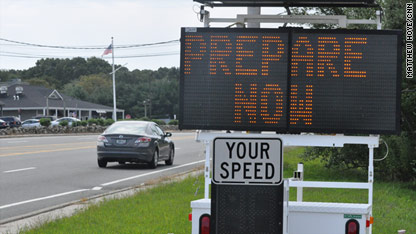
The nation's biggest subway system was ordered shut down as Hurricane Irene bore down Friday, potentially paralyzing movement for millions of carless people even as more than 300,000 were told to evacuate to safer places.
The unprecedented orders, which affect New Yorkers from the Bronx's most distant reaches down through Manhattan and out to the beaches of Brooklyn and Queens, dealt the congested metropolis a formidable logistical challenge that raised more questions than it resolved:
Where are all of those people in New York's flood-prone areas supposed to go? And, more pointedly, how are they going to get there — especially since many don't own a car?
Subways, buses and trains in one of the world's largest public transportation systems were to stop running at noon Saturday. Bridges and tunnels also could be closed as the storm approaches, clogging traffic in an already congested city.
The five main New York City-area airports were also scheduled to close at noon Saturday for arriving passenger flights. Three of them, John F. Kennedy International Airport, LaGuardia International Airport and Newark Liberty International Airport, are among the busiest airports in the nation.
Officials hoped most residents would stay with family and friends, and for the rest the city opened nearly 100 shelters with a capacity of 71,000 people.
Many people scoffed at the danger and vowed to ride it out at home.
"How can I get out of Coney Island? What am I going to do? Run with this walker?" said 82-year-old Abe Feinstein, who has lived since the early 1960s on the eighth floor of a building that overlooks the famed Coney Island boardwalk.
He said he watched Hurricane Gloria in 1985 from an apartment down the street.
"I think I have nothing to worry about," he said. "I've been through bad weather before. It's just not going to be a problem for us."
Irene was expected to make landfall in North Carolina on Saturday, then roll up the I-95 corridor reaching New York on Sunday. A hurricane warning was issued for the city Friday afternoon, the first time that's happened since Gloria.
If the storm stays on its current path, skyscraper windows could shatter, tree limbs would fall and debris would be tossed around. Streets in southern tip of the city could be under a few feet of water, and police readied rescue boats but said they wouldn't go out if conditions were poor.
Mayor Michael Bloomberg said he was confident people would get out of the storm's way.
"We do not have the manpower to go door-to-door and drag people out of their homes," he said. "Nobody's going to get fined. Nobody's going to go to jail. But if you don't follow this, people might die."
Several New York landmarks were under the evacuation order, including the Battery Park City area, where tourists catch ferries to the Statue of Liberty. Construction was stopping throughout the city, and workers at the site of the World Trade Center were dismantling a crane and securing equipment. Bloomberg said there would be no effect on the Sept. 11 memorial opening the day after the 10th anniversary of the 9/11 terrorist attacks.
Sporting events, concerts and even Broadway were going dark.
In Lower Manhattan, Milton Melendez and partner Shea Collins were headed to uptown to a neighborhood north of Little Italy. Melendez, who survived Hurricane David as a child in the Dominican Republic, was worried about windows being blown out at their apartment. Collins was a little more blase.
"This is the same thing as a snowstorm," she said. "They say there's going to be 10 feet and there's four inches."
Bloomberg weathered criticism after a Dec. 26 storm dumped nearly two feet of snow that seemed to catch officials by surprise. Subway trains, buses and ambulances got stuck in the snow, some for hours, and streets were impassable for days. Bloomberg ultimately called it an "inadequate and unacceptable" response.
This time officials weren't taking any chances. Transit officials said they can't run once sustained winds reach 39 mph, and they need eight hours to move trains and equipment to safety.
The subway system won't reopen until at least Monday, after pumps remove water from flooded stations. Even on a dry day, about 200 pump rooms remove between 13 million to 15 million gallons of water that seeps into the tunnels deep underground.
Still, not everyone was worried.
Probir Roy, a Bangladesh native who was waiting for a bus to New Jersey, went through a tsunami when he was 10.
"I'm not scared. It's my wife," said the Wall Street manager, who was traveling to Clifton, N.J. "I'm going by bus. She took my car."
There are about 1.6 million people in Manhattan and about 6.8 million in the city's other four boroughs.
Bloomberg warned residents not to be fooled by the sunny weather Friday and said police officers would use loudspeakers on patrol vehicles to spread the word about the evacuation.
At the Red Hook Lobster Pound facing the New York Harbor, owner Ralph Gorham had about $26,000 worth of lobster stored in a refrigerator, plus a tank filled with live crustaceans from Maine. "I'm staying," he said. "But if we get, say, a few feet of water in here, it'll be a huge loss."
For those with cars, parking was available at the city's evacuation centers. From there, each family will be assigned to a shelter and taken there by bus.
In the Queens community of the Rockaways, more than 111,000 people live on a barrier peninsula connected to the city by two bridges and to Long Island to the west.
The city's public transit system carries about 5 million passengers on an average weekday, and the entire system has never before been halted because of natural disaster. It was seriously hobbled by an August 2007 rainstorm that disabled or delayed every one of the city's subway lines. And it was shut down after the 9/11 attacks and during a 2005 strike.
"It's possible to evacuate without going very far," said John Nielsen-Gammon, a Texas A&M University meteorologist who has been involved in disaster planning in his role as the state climatologist. "The big wild card for New York is the fact that nobody there is used to a hurricane and can't rely on common sense or past experience as a guide. And what we learned from evacuations in Houston is that people rely on their friends and their own experience as much as, or more than, they rely on public officials."
Glenn Corbett, a professor who teaches in the emergency management program at the city's John Jay College of Criminal Justice, said he was startled at how early the city planned to halt subways.
"You can tell people to do things, and that doesn't actually mean they're going to do it until the last possible moment. And then what?" he said.
In the last 200 years, New York has seen only a few significant hurricanes. In September of 1821, a hurricane raised tides by 13 feet in an hour and flooded the southernmost tip of Manhattan in an area that now includes Wall Street and the World Trade Center memorial. In 1938, a storm dubbed the Long Island Express came ashore about 75 miles east of the city on neighboring Long Island and then hit New England, killing 700 people and leaving 63,000 homeless. And in 1944, an area was flooded in Midtown, where Times Square, Broadway theaters and the Empire State Building are located.
Workers at the North Cove marina were busy anchoring down boats or getting ready to set sail up the Hudson River. A number of yachts were leaving.
"It's going to be boats versus concrete and I don't think fiberglass is going to win," said Elizabeth Pellatte, the deck supervisor and assistant to the owner of the $35 million Remember When yacht. "It will be worth the $10,000 in gas to save $1 million in damage."
Ordinarily, the boat is based in Florida.
"We spend summers up here usually to escape the hurricanes but this time, one followed us," she said.
___
New York City With Storm Near, 370,000 in City Get Evacuation Order


New York City officials issued what they called an unprecedented order on Friday for the evacuation of about 370,000 residents of low-lying areas at the city’s edges — from the expensive apartments in Battery Park City to the roller coaster in Coney Island to the dilapidated boardwalk in the Rockaways — warning that Hurricane Irene was such a threat that people living there simply had to get out.Officials made what they said was another first-of-its-kind decision, announcing plans to shut down the city’s entire transit system Saturday — all 468 subway stations and 840 miles of tracks, and the rest of the nation’s largest mass transit network: thousands of buses in the city, as well as the buses and commuter trains that reach from Midtown Manhattan to the suburbs.
Underscoring what Mayor Michael R. Bloomberg and other officials said was the seriousness of the threat, President Obama approved a request from Gov. Andrew M. Cuomo of New York to declare a federal emergency in the state while the hurricane was still several hundred miles away, churning toward the Carolinas. The city was part of a hurricane warning that took in hundreds of miles of coastline, from Sandy Hook, N.J., to Sagamore Beach, Mass.
The hurricane, 290 miles of fury dancing angrily across the Atlantic Ocean toward the coast, was actually advancing more slowly than most late-summer storms, the National Weather Service said. It said that by doing a minuet instead of a faster step, the storm would prolong the pounding it delivered to coastal areas when it reached them.
A Weather Service forecast Friday night said rain associated with the storm would begin in Manhattan after 11 a.m. Saturday with conditions worsening into Sunday.
“You only have to look at the weather maps to understand how big this storm is and how unique it is,” Mr. Bloomberg said at a news conference on Friday at City Hall, “and it’s heading basically for us.”
The increasingly ominous announcements from officials — and the wall-to-wall coverage — sent New Yorkers hurrying to buy staples like canned food and candles. “Is this the apocalypse supply line?” a man asked as he stood in a line that stretched outside a hardware store on First Avenue, waiting to buy batteries.
Shoppers in places found that the shelves had been cleaned out. In shore towns in New Jersey and on Long Island, vacationers waited in lines at gas stations and watched as bulldozers built berms on low-lying beach roads.
In Point Lookout on Long Island, as in Point Pleasant Beach in New Jersey, homeowners covered windows with plywood, and boaters struggled to get their vessels away from docks. There were lines at the ramps at marinas as boats were pulled from the water and hitched on trailers, one at a time.
In the city — from high rises in Manhattan to smaller buildings in Queens and Brooklyn — apartment dwellers with balconies and terraces hauled in their patio furniture and their potted plants. The Federal Bureau of Investigation’s New York field office, with more than 1,000 agents in two buildings in Lower Manhattan, told employees by e-mail that they should put files in drawers for the weekend rather than leave them lying on their desks, apparently out of concern that paperwork would go flying if the storm broke the windows.
The announcement about the transit shutdown and the evacuation of what the city called Zone A low-lying areas prompted a cascade of cancellations for Saturday and Sunday: Broadway shows, the Mets’ games against the Atlanta Braves at Citi Field, the performances by the Dave Matthews Band on Governors Island and the outdoor showing of opera movies at Lincoln Center, among others. Even the New York Aquarium and the Bronx, Central Park and Prospect Park Zoos closed for the weekend.
Starting at noon Saturday, all three major airports in the New York region will be closed to arriving flights. They will remain open for departures, pending changes in the weather, but most of those scheduled departures have already been canceled, according to Steve Coleman, a Port Authority spokesman.Some Atlantic City casinos made plans to stop rolling the dice and turn off the slot machines by 8 p.m. Friday. The naval submarine base in Groton, Conn., sent four submarines out to ride out the storm deep in the Atlantic Ocean.
And Gov. Chris Christie of New Jersey said that all lanes of a 28-mile stretch of Route 72 in Ocean County would go in only one direction — westward — beginning at 6 p.m. on Friday to help speed the trip away from Long Beach Island, which is connected to the mainland by only a single bridge. He said he was also considering reversing traffic on part of the Garden State Parkway to help get drivers away from the shore.
But some beachgoers were staying. Some were surfers who wanted to catch a last wave. Mr. Christie, for his part, sounded annoyed that they had not followed his instructions when he said at a late-afternoon briefing that he had seen television coverage of “people sitting on the beach in Asbury Park.”
“Get the hell off the beach in Asbury Park and get out — you’re done,” he said. “You’ve maximized your tan. Get off the beach. Get in your cars, and get out of those areas. You know, it amazes me that you have responsible elected officials from North Carolina north through Massachusetts, along with National Weather Service folks, telling you this is going to be an enormous storm and something for New Jersey that we haven’t seen in over 60 years. Do not waste any more time working on your tan.”
Mayor Bloomberg said no one would be fined for violating the city’s evacuation orders. “Nobody’s going to go to jail,” he said, but he warned that the storm’s consequences could be fatal.
The number of people covered by the evacuation order was provided late Friday by Christopher Gilbride, a spokesman for the city’s Office of Emergency Management. An estimate of 250,000 had earlier been cited by the city.
Officials said the subway shutdown was prompted mainly by wind estimates that suggested the hurricane could rock subway cars in places where they run above ground. The commuter rail lines that serve Long Island, Westchester County and Connecticut will also be shut down, as will New Jersey Transit operations. New Jersey Transit will suspend train service at noon Saturday and will stop bus service six hours later.
Mr. Cuomo said tolls on the Verrazano-Narrows Bridge and on two other bridges in low-lying Brooklyn leading to the Rockaways would be suspended to help speed the evacuation. He also said that a half-dozen bridges — including the George Washington, the Robert F. Kennedy (formerly the Triborough), the Throgs Neck and the Whitestone — would be closed if winds reached 60 miles an hour for more than a short time.
Officials decided to go ahead with the Zone A evacuations, which they had first mentioned as a possibility on Thursday, because, Mr. Bloomberg said, “Irene is now bearing down on us at a faster speed than it was.” As he stepped up the plans on Friday, the city was already evacuating hospitals and nursing homes in low-lying areas. State officials continued arrangements for coordinating emergency services and restoring electricity if the storm does the kind of damage many fear.
Mr. Bloomberg said that 91 evacuation centers and shelters opened on Friday for people who could not stay in their homes. The Nassau County executive, Edward P. Mangano, said 20 shelters would be open by the time the storm hit.
Mr. Bloomberg had said Thursday that the city was ordering nursing homes and hospitals in those areas to evacuate residents and patients beginning at 8 a.m. Friday unless they received special permission from state and city health officials.
The city ordered construction work halted until 7 a.m. Monday. With the worst of the storm expected over the weekend, when relatively few construction crews would normally be on the job, the Buildings Department said Friday that its inspectors were checking construction sites to see that equipment had been secured. It said it would check over the weekend that builders complied with the no-work order.
In Connecticut, Gov. Dannel P. Malloy said officials were preparing for “tremendous tree damage” and the loss of electricity across the entire state.
Consolidated Edison warned that it would have to cut off power to some customers if underground pipes and cables became submerged in water. To be ready for repairs, Con Ed said it was bringing in 800 additional workers from as far away as Texas.
In some Zone A areas, residents seemed unsure what to do: Evacuate or not? But some had their backpacks on and their suitcases-on-wheels rolling.
“I’m getting out of here,” said Mila Downes, 25, of England, who was visiting her sister. “I expected some excitement in New York City, but not an earthquake and a hurricane on the same week.”
US senator asks Pakistan to curb Afghan explosives

A US senator visiting Islamabad said Friday he is pressing Pakistan to reduce the flow of an explosives material used in roadside bombs that wound and kill hundreds of US soldiers in Afghanistan.
Senator Robert Casey said in a conference call that his talks with civilian and military leaders as well as senators focused on having Pakistan implement its strategy to cut shipments of ammonium nitrate or fertilizer.
"I want to see their strategy implemented, and then we'll be able to better assess it. But they have not implemented a strategy yet, and... that's one of the reasons I'm over here," Casey told reporters.
But he added: "I think we made real progress impressing upon the Pakistani leadership our sense of urgency to get results on this strategy to reduce the flow of ammonium nitrate into Afghanistan."
He said the strategy involves better law enforcement, greater Pakistani public awareness of the threat posed by the chemicals, tracking the material better by dyeing it a certain color and better border interdiction.
"We have been told they will begin the implementation of this plan this fall, but not a date per se," Casey said after meeting Prime Minister Yousuf Raza Gilani and Pakistan's army chief General Ashfaq Kayani.
Casey, chairman of the Senate subcommittee on Near Eastern and South and Central Asian Affairs, He said last year 368 US servicemen and women were injured or killed by the bombs, Improvised Explosive Devices (IEDs).
Some 125 Americans have been killed this year by IEDs, he added.
"It is very, very rare that someone who is killed in action is not killed by an IED," he said.
"And that's why we've got to take steps to focus intensively on a strategy against this kind of explosive device and the main ingredient in that explosive device," Casey added.
Casey said his Pakistani interlocutors still disagreed strongly with the secret May 2 US raid that killed Al-Qaeda leader Osama bin Laden in Pakistan but were determined not to let it destroy their counter-terror cooperation.
"What I think came through today and yesterday was their willingness ... just to look beyond this and to move... forward," Casey said, adding the raid that violated Pakistani sovereignty will always be "a point of contention."
Ahmed Faraz's anniversary goes unnoticed in KP
No literary function was held here to remember Ahmed Faraz on his third death anniversary in his native province where his brother is the governor nowadays.
The famous Urdu poet Syed Ahmad Shah from Kohat, commonly known as Ahmad Faraz, died in Islamabad where he was laid to rest in Sector H-8 on August 25 three years ago. It could be due to Ramazan that no literary organisation held any event to observe his death anniversary in Peshawar or elsewhere.
Ahmad Faraz’s brother Syed Masood Kausar is a PPP leader and governor of Khyber Pakhtunkhwa. Faraz studied in Edwardes College Peshawar and then did his master’s in Urdu and Persian from the University of Peshawar.
He spent early days of his life in his hometown Kohat, but later moved to Peshawar and spent most of his time in the company of noted poets Farigh Bukhari, Raza Hamdani, Khatir Ghaznavi and Mohsin Ihsan.
The Peshawar Development Authority (PDA) has renamed Highland Chowk as Ahmed Faraz Chowk in the city where he lived for years.
The famous Urdu poet Syed Ahmad Shah from Kohat, commonly known as Ahmad Faraz, died in Islamabad where he was laid to rest in Sector H-8 on August 25 three years ago. It could be due to Ramazan that no literary organisation held any event to observe his death anniversary in Peshawar or elsewhere.
Ahmad Faraz’s brother Syed Masood Kausar is a PPP leader and governor of Khyber Pakhtunkhwa. Faraz studied in Edwardes College Peshawar and then did his master’s in Urdu and Persian from the University of Peshawar.
He spent early days of his life in his hometown Kohat, but later moved to Peshawar and spent most of his time in the company of noted poets Farigh Bukhari, Raza Hamdani, Khatir Ghaznavi and Mohsin Ihsan.
The Peshawar Development Authority (PDA) has renamed Highland Chowk as Ahmed Faraz Chowk in the city where he lived for years.
Shahbaz Taseer’s kidnapping
EDITORIAL:
Daily Times
In a startling development, slain Governor Punjab Salmaan Taseer’s son Shahbaz Taseer was abducted from Lahore in broad daylight yesterday morning. Shahbaz was on his way to his office when he was intercepted by a group of armed men in cars and motorcycles and whisked away along with a friend who was riding with him. The friend was later released, but there is no word where and why Shahbaz was taken away by his abductors. So far there has been no claim of responsibility, therefore conjecture as to the possible perpetrators and their motives must lie in the realm of speculation. There appear at first glance to be three likely suspects: ‘friends’ of Mumtaz Qadri, the self-confessed assassin of Salmaan Taseer, with the possible motive of pressurising the authorities to release the murderer; fanatics who think the Taseer family is fair game for their unwanted attentions in the light of the warped perception that Salmaan Taseer’s criticism of the misuse and abuse of the blasphemy law was itself tantamount to blasphemy; and criminals of the kidnapping for ransom variety. A joint investigation team has been set up, all exits from Lahore have been sealed, and the incident has attracted the notice of the president, prime minister and the Punjab chief minister. Condemnations of the kidnapping have flown in thick and fast, including statements from Human Rights Watch and the Human Rights Commission of Pakistan. We pray that Shahbaz is returned to his distraught family well and safe.
Having said that, there are some unanswered questions and suspicions surrounding the whole affair. Whoever is behind this heinous crime seemed to know Shahbaz’s routine, timing and route every day to his office, etc. That gives rise to the suspicion that either the perpetrators had been watching Shahbaz’s movements for some time, or they had insider information. Suspicion is further aroused by the fact that, contrary to Punjab Law Minister Rana Sanaullah’s repeated statement on television that Shahbaz had been provided a security detail but was in the habit of sometimes not taking the detail with him (a patent distortion of the truth), on the day of the occurrence, the security detail failed to turn up. Let us not forget that it was one of Salmaan Taseer’s own official security guards who shot him down in cowardly fashion and in cold blood in broad daylight. The rest of the security detail that day did not even twitch in response. Mumtaz Qadri’s lionisation by the right wing and religious extremists, including sadly sections of the lawyers community, focused minds on how far the influence of such warped ideas runs, including questions about how far the police and security forces are themselves imbued with extremist notions. The Taseer family, including Shahbaz, had been receiving threats since Salmaan Taseer’s assassination. That should have been enough to alert our somnolent security forces to take greater care. Even if, for the sake of argument, the mea culpa put forward by Rana Sanaullah and the high ups of the Punjab police that Shahbaz refused to take the security detail with him is accepted, why, in the light of the obtaining circumstances, were the security people so lax as to ‘surrender’ their clearly defined responsibility and duty? In the light of the above, there must remain questions whether Shahbaz Taseer’s kidnapping is merely a security lapse or a deep conspiracy.
The law and order and security situation in Punjab has given rise to concerns across the board in recent days. Not only is crime increasing, including kidnapping for ransom, a phenomenon to be expected when economic hardship is producing incremental desperation amongst the marginalised, the security situation is far from satisfactory, a result perhaps of the Punjab government’s acknowledged ‘soft’ approach to extremists and terrorists. In Punjab at least, such forces have been emboldened by the ruling PML-N’s kid gloves attitude to them, if not active collusion in some instances. It is a sad comment on the justice system that the Supreme Court’s suo motu notice produced a death sentence for the Rangers involved in the Sarfaraz Shah murder in Karachi within a month, but in Salmaan Taseer’s open and shut case with a self-confessed murderer, seven months have passed but the case is not being dealt with with any despatch. Had Salmaan Taseer’s murderer been administered swift and deserved justice by now, perhaps the right message would have gone out to Mumtaz Qadri’s ilk that such blatant murderous intent and actions would invite the full sanction of the law. Instead, the tardy pace of the proceedings in that case may well have encouraged such elements into believing they can get away with it. That view may be reinforced by the lack of closure in Federal Minister Shahbaz Bhatti’s assassination as well. It is now incumbent on the Punjab government and the provincial and federal law enforcement authorities to ensure the safe and unharmed recovery of Shahbaz Taseer. His family has already suffered grievously. We need to apply balm to their wounds, not sprinkle salt on them.
Daily Times
In a startling development, slain Governor Punjab Salmaan Taseer’s son Shahbaz Taseer was abducted from Lahore in broad daylight yesterday morning. Shahbaz was on his way to his office when he was intercepted by a group of armed men in cars and motorcycles and whisked away along with a friend who was riding with him. The friend was later released, but there is no word where and why Shahbaz was taken away by his abductors. So far there has been no claim of responsibility, therefore conjecture as to the possible perpetrators and their motives must lie in the realm of speculation. There appear at first glance to be three likely suspects: ‘friends’ of Mumtaz Qadri, the self-confessed assassin of Salmaan Taseer, with the possible motive of pressurising the authorities to release the murderer; fanatics who think the Taseer family is fair game for their unwanted attentions in the light of the warped perception that Salmaan Taseer’s criticism of the misuse and abuse of the blasphemy law was itself tantamount to blasphemy; and criminals of the kidnapping for ransom variety. A joint investigation team has been set up, all exits from Lahore have been sealed, and the incident has attracted the notice of the president, prime minister and the Punjab chief minister. Condemnations of the kidnapping have flown in thick and fast, including statements from Human Rights Watch and the Human Rights Commission of Pakistan. We pray that Shahbaz is returned to his distraught family well and safe.
Having said that, there are some unanswered questions and suspicions surrounding the whole affair. Whoever is behind this heinous crime seemed to know Shahbaz’s routine, timing and route every day to his office, etc. That gives rise to the suspicion that either the perpetrators had been watching Shahbaz’s movements for some time, or they had insider information. Suspicion is further aroused by the fact that, contrary to Punjab Law Minister Rana Sanaullah’s repeated statement on television that Shahbaz had been provided a security detail but was in the habit of sometimes not taking the detail with him (a patent distortion of the truth), on the day of the occurrence, the security detail failed to turn up. Let us not forget that it was one of Salmaan Taseer’s own official security guards who shot him down in cowardly fashion and in cold blood in broad daylight. The rest of the security detail that day did not even twitch in response. Mumtaz Qadri’s lionisation by the right wing and religious extremists, including sadly sections of the lawyers community, focused minds on how far the influence of such warped ideas runs, including questions about how far the police and security forces are themselves imbued with extremist notions. The Taseer family, including Shahbaz, had been receiving threats since Salmaan Taseer’s assassination. That should have been enough to alert our somnolent security forces to take greater care. Even if, for the sake of argument, the mea culpa put forward by Rana Sanaullah and the high ups of the Punjab police that Shahbaz refused to take the security detail with him is accepted, why, in the light of the obtaining circumstances, were the security people so lax as to ‘surrender’ their clearly defined responsibility and duty? In the light of the above, there must remain questions whether Shahbaz Taseer’s kidnapping is merely a security lapse or a deep conspiracy.
The law and order and security situation in Punjab has given rise to concerns across the board in recent days. Not only is crime increasing, including kidnapping for ransom, a phenomenon to be expected when economic hardship is producing incremental desperation amongst the marginalised, the security situation is far from satisfactory, a result perhaps of the Punjab government’s acknowledged ‘soft’ approach to extremists and terrorists. In Punjab at least, such forces have been emboldened by the ruling PML-N’s kid gloves attitude to them, if not active collusion in some instances. It is a sad comment on the justice system that the Supreme Court’s suo motu notice produced a death sentence for the Rangers involved in the Sarfaraz Shah murder in Karachi within a month, but in Salmaan Taseer’s open and shut case with a self-confessed murderer, seven months have passed but the case is not being dealt with with any despatch. Had Salmaan Taseer’s murderer been administered swift and deserved justice by now, perhaps the right message would have gone out to Mumtaz Qadri’s ilk that such blatant murderous intent and actions would invite the full sanction of the law. Instead, the tardy pace of the proceedings in that case may well have encouraged such elements into believing they can get away with it. That view may be reinforced by the lack of closure in Federal Minister Shahbaz Bhatti’s assassination as well. It is now incumbent on the Punjab government and the provincial and federal law enforcement authorities to ensure the safe and unharmed recovery of Shahbaz Taseer. His family has already suffered grievously. We need to apply balm to their wounds, not sprinkle salt on them.
Friday, August 26, 2011
Obama Warns of ‘Historic’ Storm; Cuts Short Vacation
New York Times
By JACKIE CALMES
VINEYARD HAVEN, Mass. – President Obama will cut short his Martha’s Vineyard vacation because of Hurricane Irene and return Friday night, as he urged Americans along the Eastern Seaboard to take precautions against the potentially “historic hurricane” making its way toward the coast this weekend.
Mr. Obama, his wife and two daughters were to leave Martha’s Vineyard, just off Massachusetts, on Saturday but he decided “it would be more prudent” for him to return to the White House with his family Friday to monitor events, said his spokesman, Josh Earnest. Island authorities had begun their own preparations for the storm, including canceling some ferries to the mainland.
Immediately before directing his aides to prepare to depart, Mr. Obama appeared before cameras at his rental farm property to warn that Hurricane Irene, which on Friday was barreling toward North Carolina on a path that threatened all the way through New England, is “likely to be an extremely dangerous and costly storm.”
“All indications point to this being a historic hurricane,” he added.
“I cannot stress this highly enough: If you are in the projected path of this hurricane, you have to take precautions now. Don’t wait. Don’t delay. We all hope for the best, but we have to be prepared for the worst. All of us have to take this storm seriously. You need to listen to your state and local officials, and if you are given an evacuation order, please follow it,” Mr. Obama said.
Underscoring the government’s own preparations, Mr. Obama said he had ordered an aircraft carrier group out to sea to avoid the storm. Before his remarks, the president for a second day had convened a conference call of senior administration officials about Irene’s progress and the status of federal relief efforts. The call included his chief of staff, William M. Daley; Janet Napolitano, the secretary of homeland security, and Craig Fugate, head of the Federal Emergency Management Administration, which since last weekend has been setting up outposts in coastal communities stocked with water, meals, cots, blankets and other supplies for those displaced.
Mr. Obama said he also had called mayors and governors of coastal states to reinforce that the federal government is standing by to help with preparations, evacuations and any damage in the storm’s aftermath. For residents, he recommended two government Web sites for advice: Ready.gov or Listo.gov.
By JACKIE CALMES
VINEYARD HAVEN, Mass. – President Obama will cut short his Martha’s Vineyard vacation because of Hurricane Irene and return Friday night, as he urged Americans along the Eastern Seaboard to take precautions against the potentially “historic hurricane” making its way toward the coast this weekend.
Mr. Obama, his wife and two daughters were to leave Martha’s Vineyard, just off Massachusetts, on Saturday but he decided “it would be more prudent” for him to return to the White House with his family Friday to monitor events, said his spokesman, Josh Earnest. Island authorities had begun their own preparations for the storm, including canceling some ferries to the mainland.
Immediately before directing his aides to prepare to depart, Mr. Obama appeared before cameras at his rental farm property to warn that Hurricane Irene, which on Friday was barreling toward North Carolina on a path that threatened all the way through New England, is “likely to be an extremely dangerous and costly storm.”
“All indications point to this being a historic hurricane,” he added.
“I cannot stress this highly enough: If you are in the projected path of this hurricane, you have to take precautions now. Don’t wait. Don’t delay. We all hope for the best, but we have to be prepared for the worst. All of us have to take this storm seriously. You need to listen to your state and local officials, and if you are given an evacuation order, please follow it,” Mr. Obama said.
Underscoring the government’s own preparations, Mr. Obama said he had ordered an aircraft carrier group out to sea to avoid the storm. Before his remarks, the president for a second day had convened a conference call of senior administration officials about Irene’s progress and the status of federal relief efforts. The call included his chief of staff, William M. Daley; Janet Napolitano, the secretary of homeland security, and Craig Fugate, head of the Federal Emergency Management Administration, which since last weekend has been setting up outposts in coastal communities stocked with water, meals, cots, blankets and other supplies for those displaced.
Mr. Obama said he also had called mayors and governors of coastal states to reinforce that the federal government is standing by to help with preparations, evacuations and any damage in the storm’s aftermath. For residents, he recommended two government Web sites for advice: Ready.gov or Listo.gov.
Human Rights First Group Condemns Shahbaz Taseer Abduction
Human Rights First is appalled by the violent abduction of Shahbaz Taseer
, son of slain Pakistani Governor Salman Taseer, an outspoken opponent of the nation’s blasphemy laws. Shahbaz Taseer was kidnapped at gunpoint on Thursday.
“We are shocked and appalled by Shahbaz’s senseless abduction,” said Human Rights First’s Elisa Massimino. “We hope those associated with this event will quickly resolve this matter and safely return Shahbaz to his family.”
Since Salman Taseer’s murder in January 2011, Human Rights First has worked closely with Sherbano Taseer, Shahbaz’s sister, in her ongoing efforts to amend blasphemy laws that fuel violence. She has been a strong proponent for tolerance and reform, often meeting with international leaders at the highest levels of government and publishing articles detailing the need for change. During its annual Human Rights Dinner in New York City, the organization will honor Sherbano’s commitment to her father’s cause in the face of ongoing threats to her own safety.

, son of slain Pakistani Governor Salman Taseer, an outspoken opponent of the nation’s blasphemy laws. Shahbaz Taseer was kidnapped at gunpoint on Thursday.
“We are shocked and appalled by Shahbaz’s senseless abduction,” said Human Rights First’s Elisa Massimino. “We hope those associated with this event will quickly resolve this matter and safely return Shahbaz to his family.”
Since Salman Taseer’s murder in January 2011, Human Rights First has worked closely with Sherbano Taseer, Shahbaz’s sister, in her ongoing efforts to amend blasphemy laws that fuel violence. She has been a strong proponent for tolerance and reform, often meeting with international leaders at the highest levels of government and publishing articles detailing the need for change. During its annual Human Rights Dinner in New York City, the organization will honor Sherbano’s commitment to her father’s cause in the face of ongoing threats to her own safety.
Garbage spoiling Peshawar’s beauty
http://www.thenews.com.pk
The heaps of garbage in numerous places have been spoiling the beauty and image of the provincial capital on the one hand and spreading infectious diseases on the other.
A survey conducted by The News showed that the authorities are paying little heed to the garbage and waste materials lying on roadsides despite presence of garbage bins. It shows the lack of responsibility of the concerned authorities and ignorance of people.
The unhygienic conditions in many areas in Peshawar Saddar have been troubling people, as they have to experience the odorous and bad smell of the garbage. Talking to The News, Muhammad Jamal, owner of a general store in Gulberg, said the shopkeepers only clean the front of their shops and they were not responsible for cleaning the entire road because it was the duty of the relevant authorities.
“Residents of the city are also responsible for the dirt. They do not throw the garbage in the bins. Instead they throw the garbage on the roads or on the nearby railway tracks that result in an ugly look and foul smell in the area,” he added.
Rahmanullah Khattak, another shopkeeper, said that roadside garbage and stagnant water were the main sources of spreading diseases in the city and the overflowing garbage cans on the roadside were the cause of odorous smell.
Medical specialist Dr Sohail said stagnant water on the roads and the garbage was the breeding place for mosquitoes and cause of environmental pollution. He urged awareness among the people about hygiene by arranging public awareness campaigns.
The heaps of garbage in numerous places have been spoiling the beauty and image of the provincial capital on the one hand and spreading infectious diseases on the other.
A survey conducted by The News showed that the authorities are paying little heed to the garbage and waste materials lying on roadsides despite presence of garbage bins. It shows the lack of responsibility of the concerned authorities and ignorance of people.
The unhygienic conditions in many areas in Peshawar Saddar have been troubling people, as they have to experience the odorous and bad smell of the garbage. Talking to The News, Muhammad Jamal, owner of a general store in Gulberg, said the shopkeepers only clean the front of their shops and they were not responsible for cleaning the entire road because it was the duty of the relevant authorities.
“Residents of the city are also responsible for the dirt. They do not throw the garbage in the bins. Instead they throw the garbage on the roads or on the nearby railway tracks that result in an ugly look and foul smell in the area,” he added.
Rahmanullah Khattak, another shopkeeper, said that roadside garbage and stagnant water were the main sources of spreading diseases in the city and the overflowing garbage cans on the roadside were the cause of odorous smell.
Medical specialist Dr Sohail said stagnant water on the roads and the garbage was the breeding place for mosquitoes and cause of environmental pollution. He urged awareness among the people about hygiene by arranging public awareness campaigns.
Khosa slams Punjab govt. over Shahbaz Taseer's kidnapping
Governor Punjab Latif Khosa strongly criticized the provincial government over the kidnapping of Shahbaz Taseer, Geo News reported.
He said that either the Punjab government was involved in the kidnapping or it was incompetent. He added that fingers had also been pointed at the Punjab government over the killing of slain Salman Taseer.
Speaking to a press conference at Governor House Lahore, Latif Khosa said that Shahbaz Sharif should come back to control Punjab and rescue Shahbaz Taseer rather than preaching about Karachi’s situation.
The governor said that the policy of reconciliation should not be considered their weakness.
Earlier Salman Taseer was killed and now his son Shahbaz Taseer has been kidnapped; actions like these will not be tolerated. The absence of providing security and the kidnapping of Shahbaz Taseer could be a conspiracy to derail democracy.
He said that either the Punjab government was involved in the kidnapping or it was incompetent. He added that fingers had also been pointed at the Punjab government over the killing of slain Salman Taseer.
Speaking to a press conference at Governor House Lahore, Latif Khosa said that Shahbaz Sharif should come back to control Punjab and rescue Shahbaz Taseer rather than preaching about Karachi’s situation.
The governor said that the policy of reconciliation should not be considered their weakness.
Earlier Salman Taseer was killed and now his son Shahbaz Taseer has been kidnapped; actions like these will not be tolerated. The absence of providing security and the kidnapping of Shahbaz Taseer could be a conspiracy to derail democracy.
Hurricane Irene moves closer to North Carolina
cnn.com
Tropical storm-force winds and heavy swells from Hurricane Irene loomed just over the horizon Friday morning for residents of North Carolina's south-facing coastal communities.
Irene was still 375 miles to the southwest of North Carolina at 8 a.m. ET on Friday but tropical storm-force winds were already within 100 miles of the North Carolina coast, National Hurricane Center Director Bill Read said.
The winds and heavy waves should arrive by late morning or early afternoon, he said.
"The timing is such that tonight into Saturday will be the worst for North Carolina and the Virginia Tidewater, Saturday into Sunday for the Delmarva (peninsula) and the eastern part of New Jersey, and then all day Sunday for New England," Read said.
With maximum winds of 110 mph, Irene still fell short Friday morning of major hurricane status and in its 8 a.m. forecast, the National Hurricane Center said the storm is unlikely to strengthen significantly. Forecasters did warn that some intensification is still possible, however.The storm is still expected to bring a storm surge of up to 11 feet to coastal North Carolina, tearing away beaches and likely damaging homes, businesses and other structures in the state before sliding up the East Coast of the United States all the way to New England, Read said.
The U.S. Navy prepared by sending 38 ships to sea, a U.S. Navy official told CNN. In Hampton, Virginia, officials ordered a mandatory evacuation on Friday.
In Hyde County, North Carolina, where officials had already ordered a mandatory evacuation, a caravan of school buses left Friday morning carrying evacuees to shelters as far away as Raleigh, 140 miles away. Many of those evacuating were Hispanic employees of Charles Carawan's seafood packaging business.
But Carawan and his family weren't among those planning to leave.
The 66-year-old owner of Mattamuskeet Seafood, his wife and son plan to ride out the storm along with about $500,000 worth of frozen crab they hope to keep frozen with a rented generator.
"I have nowhere else to go," Carawan said.
Up the coast, where a Sunday landfall in the New England area is likely, preparations were already well under way.
Tens of millions of people could be affected by the storm as it moves up the densely populated East Coast. In New York, emergency officials published evacuation maps for the city.
Frederico Martins of Williston, New York, found the bottled water and flashlight aisles at his local store cleaned out.
"People here are taking it very seriously. Better to be safe than sorry," Martins said, adding that it was "kind of cool" to see people getting ready for the storm.It was a similar story in Plainfield, New Jersey, where generators were going fast.
"Ran into my neighbor, he was trying to buy a generator for his sister. He went to Lowe's and Home Depot, and couldn't find one," said Mario Depeine. "He got some 'insider information' about when an expected shipment of generators will arrive. He has to be there to get one, they're going fast."
Officials in cities along much of the East Coast ordered evacuations.
Amtrak and major U.S. airlines began canceling routes and flights or putting them on a watch list. American Airlines canceled 126 flights Thursday, mostly out of Miami and the Bahamas, an airline spokesman said.
Airlines are expected to cancel more flights Friday.
Sunday's dedication of the Martin Luther King Jr. National Memorial in Washington was postponed until at least next month, officials announced Thursday night.
Pro sports teams juggled their schedules while colleges from Virginia to New Hampshire closed their campuses or delayed dormitory move-ins.
"Everybody should take this very seriously," said North Carolina Gov. Beverly Perdue, who declared a state of emergency in counties east of Interstate 95. "Everyone is telling us this is a big deal for North Carolina."
Hurricane watches and warnings are in place from North Carolina to Massachusetts, the Hurricane Center said.
A hurricane warning is issued 36 hours in advance of tropical storm-force winds. A hurricane has sustained winds of 74 mph or higher.
"Significant" storm surge flooding was possible within watch areas. Hurricane watches, issued 48 hours in advance of tropical storm-force winds, indicate hurricane conditions are possible.
cnn.com
A tropical storm warning, which indicates sustained winds of 39 to 73 mph are possible in the next 36 hours, was in effect for the portions of coastal South Carolina.
Governors of Delaware, Connecticut, New York, Virginia, New Jersey and Maryland declared states of emergency as Irene threatened to wreak havoc along the East Coast. Emergency declarations allow states to free funds and prepare resources that may be needed.
The last major hurricane to strike the United States was Wilma in 2005, which was a Category 3 at landfall in southwest Florida.
Tropical storm-force winds and heavy swells from Hurricane Irene loomed just over the horizon Friday morning for residents of North Carolina's south-facing coastal communities.
Irene was still 375 miles to the southwest of North Carolina at 8 a.m. ET on Friday but tropical storm-force winds were already within 100 miles of the North Carolina coast, National Hurricane Center Director Bill Read said.
The winds and heavy waves should arrive by late morning or early afternoon, he said.
"The timing is such that tonight into Saturday will be the worst for North Carolina and the Virginia Tidewater, Saturday into Sunday for the Delmarva (peninsula) and the eastern part of New Jersey, and then all day Sunday for New England," Read said.
With maximum winds of 110 mph, Irene still fell short Friday morning of major hurricane status and in its 8 a.m. forecast, the National Hurricane Center said the storm is unlikely to strengthen significantly. Forecasters did warn that some intensification is still possible, however.The storm is still expected to bring a storm surge of up to 11 feet to coastal North Carolina, tearing away beaches and likely damaging homes, businesses and other structures in the state before sliding up the East Coast of the United States all the way to New England, Read said.
The U.S. Navy prepared by sending 38 ships to sea, a U.S. Navy official told CNN. In Hampton, Virginia, officials ordered a mandatory evacuation on Friday.
In Hyde County, North Carolina, where officials had already ordered a mandatory evacuation, a caravan of school buses left Friday morning carrying evacuees to shelters as far away as Raleigh, 140 miles away. Many of those evacuating were Hispanic employees of Charles Carawan's seafood packaging business.
But Carawan and his family weren't among those planning to leave.
The 66-year-old owner of Mattamuskeet Seafood, his wife and son plan to ride out the storm along with about $500,000 worth of frozen crab they hope to keep frozen with a rented generator.
"I have nowhere else to go," Carawan said.
Up the coast, where a Sunday landfall in the New England area is likely, preparations were already well under way.
Tens of millions of people could be affected by the storm as it moves up the densely populated East Coast. In New York, emergency officials published evacuation maps for the city.
Frederico Martins of Williston, New York, found the bottled water and flashlight aisles at his local store cleaned out.
"People here are taking it very seriously. Better to be safe than sorry," Martins said, adding that it was "kind of cool" to see people getting ready for the storm.It was a similar story in Plainfield, New Jersey, where generators were going fast.
"Ran into my neighbor, he was trying to buy a generator for his sister. He went to Lowe's and Home Depot, and couldn't find one," said Mario Depeine. "He got some 'insider information' about when an expected shipment of generators will arrive. He has to be there to get one, they're going fast."
Officials in cities along much of the East Coast ordered evacuations.
Amtrak and major U.S. airlines began canceling routes and flights or putting them on a watch list. American Airlines canceled 126 flights Thursday, mostly out of Miami and the Bahamas, an airline spokesman said.
Airlines are expected to cancel more flights Friday.
Sunday's dedication of the Martin Luther King Jr. National Memorial in Washington was postponed until at least next month, officials announced Thursday night.
Pro sports teams juggled their schedules while colleges from Virginia to New Hampshire closed their campuses or delayed dormitory move-ins.
"Everybody should take this very seriously," said North Carolina Gov. Beverly Perdue, who declared a state of emergency in counties east of Interstate 95. "Everyone is telling us this is a big deal for North Carolina."
Hurricane watches and warnings are in place from North Carolina to Massachusetts, the Hurricane Center said.
A hurricane warning is issued 36 hours in advance of tropical storm-force winds. A hurricane has sustained winds of 74 mph or higher.
"Significant" storm surge flooding was possible within watch areas. Hurricane watches, issued 48 hours in advance of tropical storm-force winds, indicate hurricane conditions are possible.
cnn.com
A tropical storm warning, which indicates sustained winds of 39 to 73 mph are possible in the next 36 hours, was in effect for the portions of coastal South Carolina.
Governors of Delaware, Connecticut, New York, Virginia, New Jersey and Maryland declared states of emergency as Irene threatened to wreak havoc along the East Coast. Emergency declarations allow states to free funds and prepare resources that may be needed.
The last major hurricane to strike the United States was Wilma in 2005, which was a Category 3 at landfall in southwest Florida.
Condoleezza Rice memoir coming this fall
Los Angeles Times

Condoleezza Rice, secretary of State during President George W. Bush's second term, will publish a political memoir this fall with Crown.
The book, "No Higher Honor: A Memoir of My Years in Washington," is due Nov. 1, a little later than might be expected.
September will mark the 10th anniversary of the Sept. 11 attacks during Bush's first term, when Rice was his national security advisor. In that role, Rice was a key player in the country's response to the attacks.
In a news release, Crown says that Rice's book "describes the harrowing terrorist attacks of Sept. 11, 2001, and chronicles her experience of appearing before the 9/11 Commission, for which she was broadly saluted for her grace and forthrightness. She also reveals new details about the contentious debates in the lead-up to the wars in Afghanistan and Iraq."
But does publishing the book more than a month after the anniversary indicate that the stories Rice has to tell about her time in Washington won't be revelatory?
Other important issues that Rice confronted in Washington that might be addressed in "No Higher Honor": the fruitless search for weapons of mass destruction in Iraq, and America's use of torture in interrogations.
Before entering the administration, Rice was provost at Stanford. She had previously served under President George H.W. Bush in the National Security Council.
"No Higher Honor" is Rice's first memoir of her life in politics; she is also the author of "Extraordinary, Ordinary People: A Memoir of Family," which was a bestseller.
She is an accomplished pianist and has appeared, as herself, on television's "30 Rock."
Condoleezza Rice, secretary of State during President George W. Bush's second term, will publish a political memoir this fall with Crown.
The book, "No Higher Honor: A Memoir of My Years in Washington," is due Nov. 1, a little later than might be expected.
September will mark the 10th anniversary of the Sept. 11 attacks during Bush's first term, when Rice was his national security advisor. In that role, Rice was a key player in the country's response to the attacks.
In a news release, Crown says that Rice's book "describes the harrowing terrorist attacks of Sept. 11, 2001, and chronicles her experience of appearing before the 9/11 Commission, for which she was broadly saluted for her grace and forthrightness. She also reveals new details about the contentious debates in the lead-up to the wars in Afghanistan and Iraq."
But does publishing the book more than a month after the anniversary indicate that the stories Rice has to tell about her time in Washington won't be revelatory?
Other important issues that Rice confronted in Washington that might be addressed in "No Higher Honor": the fruitless search for weapons of mass destruction in Iraq, and America's use of torture in interrogations.
Before entering the administration, Rice was provost at Stanford. She had previously served under President George H.W. Bush in the National Security Council.
"No Higher Honor" is Rice's first memoir of her life in politics; she is also the author of "Extraordinary, Ordinary People: A Memoir of Family," which was a bestseller.
She is an accomplished pianist and has appeared, as herself, on television's "30 Rock."
Army Must Reveal Facts About Disappearances, Killings in Balochistan: Governor Magsi
http://www.thebalochhal.com
Balochistan’s Governor Nawaz Zulfiqar Magsi has said time is running out in Balochistan and more and more Baloch youngsters are joining the rebellion. The people are continuously exercising their right to question the authorities’ actions in the province.
“I have told the army chief publicly to provide answers to the killing of the disappered people in my province. People have the right to know the facts behind the current state of affairs,” he said while talking to a former senator and a newspaper editor Syed Fasehi Iqbal.
Magsi, also a former Balochistan chief minister, said if the State failed to expose the perpetarots of injsustice and violence, it was very likely that people would hold the State itself responsible for whatever is happening.
“Nawab Akbar Bugti was a truly respected Baloch tribal and political leader who could resolve the problems of Balochistan,” he referred to the seventy-nine year old Baloch leader who was killed in a military operation in 2006.
Balochistan’s Governor Nawaz Zulfiqar Magsi has said time is running out in Balochistan and more and more Baloch youngsters are joining the rebellion. The people are continuously exercising their right to question the authorities’ actions in the province.
“I have told the army chief publicly to provide answers to the killing of the disappered people in my province. People have the right to know the facts behind the current state of affairs,” he said while talking to a former senator and a newspaper editor Syed Fasehi Iqbal.
Magsi, also a former Balochistan chief minister, said if the State failed to expose the perpetarots of injsustice and violence, it was very likely that people would hold the State itself responsible for whatever is happening.
“Nawab Akbar Bugti was a truly respected Baloch tribal and political leader who could resolve the problems of Balochistan,” he referred to the seventy-nine year old Baloch leader who was killed in a military operation in 2006.
Lahore in free fall?

His father died for a value system he held dear, and which negated all bigotry and religious extremism. Shahbaz Taseer is now punished for being his father’s son. Are they going to leverage his release with the Taseers being pressured into accepting blood money and let Salmaan Taseer’s killer walk free? Anything is possible in Shahbaz Sharif’s Punjab, with the Sharifs presiding over a cabinet of ministers, some of whom are hand in glove with the banned militant outfits. The Punjab government’s soft-peddling on rising acts of extremist terrorism is little secret. Shahbazpura it is.
The abduction at gunpoint of Shahbaz Taseer from near his Gulberg home in Lahore is a sorry reminder that Pakistan’s second city is no more the safest place to be. This is the second high-profile kidnapping this month after the American development worker, Warren Weinstein, was taken away from his home in Model Town. Now those aren’t the neighbourhoods with a high crime rate, so these are obviously no ordinary crimes. They have all the extremist symbolism attached to them.
And hear this: while Lahore falls apart, the Punjab chief minister tours Sindh to sympathise with the flood victims in Badin and victims of the May 12, 2007 killings in Karachi, offering his sterling advice on how to tackle the law and order situation in this troubled metropolis from the safe environs of a five-star hotel. Why isn’t there a voice in the media saying that this Shahbaz (Sharif) is not up to his job, when there’s a chorus against the failure of the Karachi and Sindh administrations in the same quarters? While Kasur drowns in floodwaters, Mr Sharif feels pain and anguish for the flood-affected of Badin. As Punjab goes under the yoke of Talibanisation, with a series of terrorist attacks and kidnappings rocking the province, the Punjab CM’s heart bleeds for targeted killings in Karachi. Someone please help find the logic.
A terrible wave of extremism grips Punjab, while the police do little besides moral-policing citizens. Can someone ask the Punjab government that with such a terrible wave of extremism raging there, how many militants has the police nabbed so far? How many have been brought to justice? Is there really a figure to be quoted? Nay, the government’s priorities lie elsewhere. The Lahore police chief even thwarted the attempt at nabbing the kidnappers of Warren Weinstein by blowing the whistle at the wrong time. This is precisely why the Americans had to go it alone to kill bin Laden. Our law enforcers are not only inept, they have their strings attached to the fingers of more inept people in the administration.
Because nothing is done in Lahore without the CM being behind it, it is obvious that the cops sniffing people’s breath on the streets of Lahore have such explicit orders. Never mind the firearms that one may be carrying, and which may be used for terrorising the people, staging terrorist attacks on shrines or kidnappings, Lahore law enforcers only ensure that you don’t fly a kite by day or consume alcohol by night. And you are free to kill any number of Ahmadis even as they pray to the same Allah as you do. Can’t always find an Ahmadi? Well, there’s always a Shahbaz Bhatti somewhere in a Christian ghetto or a Salman Taseer who would stand up for him, so you are free to have a go at them instead. Welcome to Lahore, 2011.
The self-righteous cries for saving Karachi from the terror of political parties’ armed wings emanating from Lahore by such eminent people as Imran Khan, Shahbaz Sharif and Aitzaz Ahsan, for instance, are ill-timed, to say the least. Why don’t they do something about fixing Lahore, which for all practical purposes is becoming free-for-all. And all this in the name of Allah, which is a real shame.
The abduction of Warren Weinstein and Shahbaz Taseer are but indications of the severity of the threat posed to Punjab by rising extremism. Will Imran Khan, even if only with his supporters at Lums, stage a dharna at Lahore’s Charing Cross against this evil? Some fat chance, well… in Shahbazpura!
Son of slain Pakistani governor kidnapped
A senior police officer says gunmen have kidnapped the son of a Pakistani governor who was killed by an Islamist extremist earlier this year.
Officer Abdur Razzaq Cheema told The Associated Press that the governor's son, Shahbaz Taseer, was taken from his car on Friday by armed men in the eastern city of Lahore.
The abducted man's brother, Shaheryar Taseer, confirmed the kidnapping.
In January, an Islamist militant killed Punjab governor Salman Taseer. The killer confessed after the arrest, saying he murdered Taseer because of his opposition to laws that carry the death penalty for blaspheming Islam.
Officer Abdur Razzaq Cheema told The Associated Press that the governor's son, Shahbaz Taseer, was taken from his car on Friday by armed men in the eastern city of Lahore.
The abducted man's brother, Shaheryar Taseer, confirmed the kidnapping.
In January, an Islamist militant killed Punjab governor Salman Taseer. The killer confessed after the arrest, saying he murdered Taseer because of his opposition to laws that carry the death penalty for blaspheming Islam.
Subscribe to:
Posts (Atom)