The Charter for Human Rights was adopted and proclaimed by United Nations in 1949, where equal rights were granted to every individual.
Many Muslim countries are signatory to that document. Unfortunately, a country like Saudi Arabia is violating Human Rights.
Though Saudis are known as rich producers of oil and for their remarkable developmental projects in the fields of science, technology, health and education, they failed in providing equal rights to every citizen.
Saudi Arabia is not taking human rights, particularly women rights seriously. Recently, a few women were arrested in Saudi Arabia as they were caught driving. Women are not allowed to drive in Saudi Arabia.
This is a case of gender discrimination.
According to the law of nature, no one can restrict any one, as every human being has a right to express her/his views.
The women did not commit any heinous crime; they tried to do what they wanted to. If Muslim women could ride on camels 14 centuries ago, why can’t they drive a car in today’s world?
The Kingdom has contributed a lot to the world, but violating women rights has perplexed world leaders.
The law has been challenged a number of times in the past but in vain. Saudi law does not forbid women from driving, but there are some scholars who oppose women to drive.
Women in other Muslim countries are driving freely. They also work side by side with men. Saudi women today are educated and they want to live an independent life.
Women are equally contributing to the field of science, technology, education, medicine, etc. They are using Internet and are computer literate.
They are also raising their voice and are leading the world. We must respect them and their unheard voices must be supported by educated people all over the world.
Wednesday, July 13, 2011
France promises 1 million Euros to aid FATA health sector
France committed on Tuesday one million Euros towards health components of FATA Development Programme.
An agreement, among the FATA Secretariat, French Development Agency (AFD) and German Cooperation for Development (GIZ), was signed at the Governor’s House where Khyber Pakhtunkhwa Governor Masood Kausar, German Ambassador Dr Michael Koch and French envoy Daniel Jouanneau attended the ceremony, according to official communiqué.
Under the agreement, the AFD will contribute one million Euros towards the health component of FATA Development Programme in the Human Resource Management and Quality Improvement Initiatives in the FATA health sector. While the GIZ, under a previously signed agreement, has been spending 6.6 million Euros in the first phase of its development programme for FATA and the AFD component of the agreement will be in support of the GIZ initiated programme.
An agreement, among the FATA Secretariat, French Development Agency (AFD) and German Cooperation for Development (GIZ), was signed at the Governor’s House where Khyber Pakhtunkhwa Governor Masood Kausar, German Ambassador Dr Michael Koch and French envoy Daniel Jouanneau attended the ceremony, according to official communiqué.
Under the agreement, the AFD will contribute one million Euros towards the health component of FATA Development Programme in the Human Resource Management and Quality Improvement Initiatives in the FATA health sector. While the GIZ, under a previously signed agreement, has been spending 6.6 million Euros in the first phase of its development programme for FATA and the AFD component of the agreement will be in support of the GIZ initiated programme.
Tuesday, July 12, 2011
Why Ahmed Wali Karzai was a target
The Daily Beast
Many Afghans and American militarymen believed it was only a matter of time before he would be killed. Their predictions came true on Tuesday morning when Ahmed Wali Karzai, the half brother of the Afghan president and by far the most powerful man in southern Afghanistan, was gunned down by one of his own bodyguards inside his heavily fortified home in Kandahar City. For nearly the past decade he had acted as the region’s ultimate powerbroker. His death will doubtlessly unleash a power struggle among government officials, police and military officers, narcotics smugglers and tribal chieftains who kicked back a large share of their action made possible by his patronage.
His death could bring further turmoil to the strategic region. Without his firm hand to keep all those competing interests in check, southern Afghanistan could become less stable at a time when the U.S. military was confident that its surge forces had seriously weakened the insurgency in the Taliban’s strategic heartland. Over the past 18 months American forces had killed and captured thousands of insurgents, pushing them far away from the key populated areas they had long occupied. Karzai had long been seen as a crucial U.S. ally in the region. In 2009 it was widely reported that he had been on the CIA’s payroll for years. Not only had he provided a degree of stability through his vast patronage politics, the private militia forces that he had raised for the CIA took a heavy toll on the Taliban.
But U.S. militarymen also saw him as a liability. Although never proven, Karzai, 50, was widely accused of being at the center of the southern region’s multi-billion dollar narcotics industry, a charge he vehemently denied. His brother, President Hamid Karzai, also staunchly defended his brother’s innocence. Of late AWK, as the American militarymen called him, had become almost too authoritarian and powerful for his own good. He heavily favored his own tribe, the Popalzai, to the detriment of other clans who bitterly resented his partiality. This favoritism coupled with the fact that he sat atop of a pyramid of corruption ranging from shady real estate deals, to kickbacks on construction contracts, and getting his fair share of the shakedowns of truckers and buses at police posts and bureaucratic bribes certainly helped Taliban recruiters. “He was using all his power to get money from others, and even caused us to stop a road construction project,” says one Afghan aid official who declines to be quoted because of the sensitivity of his comment. “He had guns and money and was the king of Kandahar.” In the end, he may have overplayed his hand. There clearly was growing resentment toward him in the city and province. “There’s an undercurrent of anti-AWK sentiment,” said one American officer in the region last month. “Within six months you may hear a loud ‘pop’ in the city.”
That sound came from the AK-47 of one of his down bodyguards who reportedly entered a room of his home where Karzai was meeting with tribal elders and politicians and asked him to step outside. When Karzai did, the bodyguards opened up on him, hitting him at least three times. Karzai died on his way to the Kandahar hospital.
Until then he had lived a charmed life. The Taliban had tried to kill him multiple times unsuccessfully. In May 2009 his motorcade was ambushed by gunmen firing RPGs and automatic rifles. Only one of his bodyguards was killed. Earlier that year four Taliban suicide bombers attacked Kandahar’s provincial council office, killing 13 people but Karzai had just left the building before the attack. The year before a gasoline tanker truck exploded near a building in which he was holding a meeting. He emerged unscathed but six people were killed and 40 were wounded in the blast.
Although the Taliban has claimed responsibility for his death, a senior Taliban intelligence officer who has provided The Daily Beast with reliable information in the past says he doubts the boast. “I doubt that there is a Taliban connection to Ahmed Wali’s death.” He points out that there was also friction within the family among several brothers and cousins.
Regardless of who killed him, most Taliban certainly welcome his death. “Ahmed Wali was the best U.S. friend and the Taliban’s worst enemy. He and his whole family have the blood of thousands of Taliban on their hands,” says Mullah Adam Haji, a Taliban sub-commander. “His death is very good news for us.”
But another ranking Taliban who declined to be quoted by name for security reasons says his death could be a setback for possible peace talks as a result of Karzai’s contacts with the insurgency. “He was in indirect contact with lots of Taliban,” the senior Taliban says. “His men many times visited the Taliban not for peace talks but to talk about local, tribal and social issues… I don’t think the Taliban hate Ahmed Wali as much as his brother (President Karzai,)” the insurgent adds. “So his death has collapsed a strong and high bridge that could have been used for any upcoming peace talks.”
Regardless of how he is viewed, his death will have a significant impact on the region’s stability and its prospects for peace.
Many Afghans and American militarymen believed it was only a matter of time before he would be killed. Their predictions came true on Tuesday morning when Ahmed Wali Karzai, the half brother of the Afghan president and by far the most powerful man in southern Afghanistan, was gunned down by one of his own bodyguards inside his heavily fortified home in Kandahar City. For nearly the past decade he had acted as the region’s ultimate powerbroker. His death will doubtlessly unleash a power struggle among government officials, police and military officers, narcotics smugglers and tribal chieftains who kicked back a large share of their action made possible by his patronage.
His death could bring further turmoil to the strategic region. Without his firm hand to keep all those competing interests in check, southern Afghanistan could become less stable at a time when the U.S. military was confident that its surge forces had seriously weakened the insurgency in the Taliban’s strategic heartland. Over the past 18 months American forces had killed and captured thousands of insurgents, pushing them far away from the key populated areas they had long occupied. Karzai had long been seen as a crucial U.S. ally in the region. In 2009 it was widely reported that he had been on the CIA’s payroll for years. Not only had he provided a degree of stability through his vast patronage politics, the private militia forces that he had raised for the CIA took a heavy toll on the Taliban.
But U.S. militarymen also saw him as a liability. Although never proven, Karzai, 50, was widely accused of being at the center of the southern region’s multi-billion dollar narcotics industry, a charge he vehemently denied. His brother, President Hamid Karzai, also staunchly defended his brother’s innocence. Of late AWK, as the American militarymen called him, had become almost too authoritarian and powerful for his own good. He heavily favored his own tribe, the Popalzai, to the detriment of other clans who bitterly resented his partiality. This favoritism coupled with the fact that he sat atop of a pyramid of corruption ranging from shady real estate deals, to kickbacks on construction contracts, and getting his fair share of the shakedowns of truckers and buses at police posts and bureaucratic bribes certainly helped Taliban recruiters. “He was using all his power to get money from others, and even caused us to stop a road construction project,” says one Afghan aid official who declines to be quoted because of the sensitivity of his comment. “He had guns and money and was the king of Kandahar.” In the end, he may have overplayed his hand. There clearly was growing resentment toward him in the city and province. “There’s an undercurrent of anti-AWK sentiment,” said one American officer in the region last month. “Within six months you may hear a loud ‘pop’ in the city.”
That sound came from the AK-47 of one of his down bodyguards who reportedly entered a room of his home where Karzai was meeting with tribal elders and politicians and asked him to step outside. When Karzai did, the bodyguards opened up on him, hitting him at least three times. Karzai died on his way to the Kandahar hospital.
Until then he had lived a charmed life. The Taliban had tried to kill him multiple times unsuccessfully. In May 2009 his motorcade was ambushed by gunmen firing RPGs and automatic rifles. Only one of his bodyguards was killed. Earlier that year four Taliban suicide bombers attacked Kandahar’s provincial council office, killing 13 people but Karzai had just left the building before the attack. The year before a gasoline tanker truck exploded near a building in which he was holding a meeting. He emerged unscathed but six people were killed and 40 were wounded in the blast.
Although the Taliban has claimed responsibility for his death, a senior Taliban intelligence officer who has provided The Daily Beast with reliable information in the past says he doubts the boast. “I doubt that there is a Taliban connection to Ahmed Wali’s death.” He points out that there was also friction within the family among several brothers and cousins.
Regardless of who killed him, most Taliban certainly welcome his death. “Ahmed Wali was the best U.S. friend and the Taliban’s worst enemy. He and his whole family have the blood of thousands of Taliban on their hands,” says Mullah Adam Haji, a Taliban sub-commander. “His death is very good news for us.”
But another ranking Taliban who declined to be quoted by name for security reasons says his death could be a setback for possible peace talks as a result of Karzai’s contacts with the insurgency. “He was in indirect contact with lots of Taliban,” the senior Taliban says. “His men many times visited the Taliban not for peace talks but to talk about local, tribal and social issues… I don’t think the Taliban hate Ahmed Wali as much as his brother (President Karzai,)” the insurgent adds. “So his death has collapsed a strong and high bridge that could have been used for any upcoming peace talks.”
Regardless of how he is viewed, his death will have a significant impact on the region’s stability and its prospects for peace.
Hillary Clinton:'Our partnership depends on cooperation'
The US administration Monday defended its decision to suspend $800 million of military aid to Pakistan, saying its uneasy ally needed to make a greater effort in the fight against Islamists.
"When it comes to our military assistance, we're not prepared to continue providing that at the pace that we were providing it unless and until we see certain steps taken," State Department spokeswoman Victoria Nuland said.
The United States was particularly "looking to improve our cooperation in counterterrorism, in counterinsurgency," she told journalists.
Nuland recalled that on May 25 Islamabad demanded that about 100 US advisers leave Pakistani soil, effectively halting military training, adding "we obviously can't do that in an environment where Pakistan has asked our trainers to go."
US President Barack Obama's chief of staff, William Daley, confirmed in a television interview on Sunday that the United States has decided to withhold almost a third of its annual $2.7 billion security assistance to Islamabad.
US Secretary of State Hillary Clinton said Monday the decision to suspend part of the security aid to Pakistan "does not signify a shift in policy."
"Our relationship with Pakistan is not always easy, but it's one that we consider vital to our national security and to our regional interest," she told reporters.
"That said the government of Pakistan must take certain steps and we have outlined those steps in more than one occasion to make sure that we can deliver all the military assistance."
Clinton insisted: "Our decision to pause delivery on this portion of security assistance does not signify a shift in policy, but underscores the fact that our partnership depends on cooperation that's always been the case and it must continue to do so."
Her spokeswoman, Nuland, added: "We are working together on how we can improve our relationship particularly in the categories of counterterrorism and counterintelligence."
"When it comes to our military assistance, we're not prepared to continue providing that at the pace that we were providing it unless and until we see certain steps taken," State Department spokeswoman Victoria Nuland said.
The United States was particularly "looking to improve our cooperation in counterterrorism, in counterinsurgency," she told journalists.
Nuland recalled that on May 25 Islamabad demanded that about 100 US advisers leave Pakistani soil, effectively halting military training, adding "we obviously can't do that in an environment where Pakistan has asked our trainers to go."
US President Barack Obama's chief of staff, William Daley, confirmed in a television interview on Sunday that the United States has decided to withhold almost a third of its annual $2.7 billion security assistance to Islamabad.
US Secretary of State Hillary Clinton said Monday the decision to suspend part of the security aid to Pakistan "does not signify a shift in policy."
"Our relationship with Pakistan is not always easy, but it's one that we consider vital to our national security and to our regional interest," she told reporters.
"That said the government of Pakistan must take certain steps and we have outlined those steps in more than one occasion to make sure that we can deliver all the military assistance."
Clinton insisted: "Our decision to pause delivery on this portion of security assistance does not signify a shift in policy, but underscores the fact that our partnership depends on cooperation that's always been the case and it must continue to do so."
Her spokeswoman, Nuland, added: "We are working together on how we can improve our relationship particularly in the categories of counterterrorism and counterintelligence."
Karzai's half-brother shot dead

The half-brother of Afghan President Hamid Karzai was shot dead at his home in Kandahar on Tuesday, authorities said.
Ahmed Wali Karzai, the Kandahar provincial council chief, was killed during a gathering, said provincial governor Tooryalai Wesa. He did not know a motive.
While the governor initially said a friend killed Karzai, his spokesman later clarified that the death was at the hands of a guard.
Karzai suffered bullet wounds to his head and chest, said Mohammad Dawood Farhad, the head of Kandahar Hospital.
In a meeting with a senior U.S. diplomat, Karzai once made the case that he, not the governor of Kandahar, was "the most powerful official in Kandahar and could deliver whatever is needed," according to a cable about the meeting leaked last year by WikiLeaks.
Karzai, who has been dogged by drug dealing accusations, also brought the subject up in the meeting, according to the cable.
"Unprompted, AWK (Ahmed Wali Karzai) raised allegations of his involvement in narcotics, telling the (U.S. official) that he is willing to take a polygraph anytime, anywhere to prove his innocence," the cable said.
Karzai said the drug-dealing rap is part of a campaign to discredit him, "like a spice added to a dish to make it more enticing to eat."
After a separate meeting with Karzai, a U.S. official who authored another cable wrote, "While we must deal with AWK as the head of the Provincial Council, he is widely understood to be corrupt and a narcotics trafficker. End Note."
The cable concluded: "The meeting with AWK highlights one of our major challenges in Afghanistan. How to fight corruption and connect the people to their government, when the key government officials are themselves corrupt. Given AWK's reputation for shady dealings, his recommendations for large, costly infrastructure projects should be viewed with a healthy dose of skepticism."
In the first cable, Karzai offers suggestions on how to stop drug dealing. "He suggested that the coalition pay mullahs to preach against heroin, which would reduce demand for poppy cultivation."
The author of the cable also wrote that Karzai "appears not to understand the level of our knowledge of his activities, and that the coalition views many of his activities as malign, particularly relating to his influence over the police."
In addition to discussions of war, drugs and Afghan politics, a comment in one of the cables also addressed an American sports landmark.
"Further emphasizing his links to the United States, AWK fondly recalled his days in Chicago as a restaurant owner close to Chicago's Wrigley Field. His restaurant was a hub for American(s) in the Midwest who had worked or lived in Afghanistan prior to the Soviet invasion," the cable read.
Monday, July 11, 2011
Kandahar’s electrical system in shambles, despite years of foreign aid
www.theglobeandmail.com
If he goes to his office, Fazal Ahmad finds dozens of fuming businessmen and turbaned village elders waiting. If he stays away, people call his cell phone at all hours of the day and night.
The refrain is always the same: Give us electricity.
Mr. Ahmad, known to everyone here as Engineer Fazal, has the thankless job of running the utility company in Kandahar province. Through years of war and then neglect under Taliban rule, he has kept the shambolic system running, however imperfectly, by patching it with just about anything he could scrounge up short of chewing gum and rubber bands.But Mr. Ahmad cannot give what he does not have. Hundreds of billions of dollars have been spent on stabilizing and rebuilding Afghanistan. Yet the electrical system here in the country’s second-largest city is on the verge of collapse, leaving people like Mr. Ahmad puzzled and frustrated. “First they should have paid attention to electricity,” he said. “Where there is electricity, there is life. There is security.”
It is now 10 years since the world started pouring money into Afghanistan. Much of the largesse came to Kandahar, the Taliban heartland. The largest part of the spending has been driven and delivered by the military, pushed into what commanders call “hot” areas where Taliban influence is strong and the Afghan government is weak.
The assumption, voiced by civilian agencies and the military alike, was that the more money that could be spent here, the more secure it would become.
Kandahar has seen the impact. It has new schools and rural government centres. The provincial capital has paved roads, a new set of sidewalks and some solar-powered streetlights. Irrigation canals are being repaired and village playgrounds built.
Yet the massive infusion of foreign money has not paid off in increased security, according to many aid experts. Nor has the money bought the Afghan government or the international community much love. And only now are foreign aid agencies and the military starting to take on the basic infrastructure, like Kandahar’s patched-together electricity network, rather than quick-fix projects that ate up most of the money in the past.
With last week’s withdrawal of Canadian combat forces from Afghanistan and the start of a wider withdrawal by other NATO countries, questions are being raised about the utility of spending aid money to achieve military objectives.
That formula, instead, may be counterproductive: raising unrealistic expectations, distorting the economy and fuelling corruption that further erodes Afghans’ confidence in their government.
“The assumptions of what could be done were unrealistic,” said Andrew Wilder, the director of Afghanistan and Pakistan programs at the United States Institute for Peace. “There were high expectations that development aid would have a security effect. In the end, you got neither.”
While Canada and the United States devoted hundreds of millions of dollars to Kandahar projects, much of the foreign spending in the restive province came wrapped in a
military package.
In just the last eight months, Canada’s last battle group spent $51 million from the Commander’s Contingency Fund, the discretionary money available to military officers in the field for small-scale quick-fix projects. The comparable American commanders’ fund has dispensed nearly $2.7-billion in the last eight years. While the portion spent in Kandahar has not been made public, officers here say most of it was concentrated in southern Afghanistan.
Mr. Wilder, who oversaw a study of the counterinsurgency effectiveness of such spending in several Afghan provinces, said it often had “perverse” effects.
“In a tribal society, that kind of spending exacerbates rivalries,” he said. “You could do a really good project in this one village and have a good effect, but then nine villages around it are unhappy.”
Much of the aid money also ended up in the pockets of “malign actors” and insurgent groups, he added. “Basically if you pour lots of money into a war zone with little accountability and oversight, it’s inevitably going to fuel corruption,” Mr. Wilder said. “In some cases there probably wasn’t as much corruption as was perceived to be, but everyone assumes the worst.”Local officials say that not enough of the aid money reaches Afghans and when it does, it distorts the economy and undermines the government.
According to recent report from the Provincial Reconstruction Team, the civilian wing of the coalition aid effort in Kandahar, city officials complained that foreign contractors on aid projects were poaching skilled professionals by paying salaries 15 times higher than the government can pay.
The provincial governor, Tooryalai Wesa, also blasted a $200-million aid project that had foreign consultants giving horticultural classes to Afghan farmers. With that money, the report quoted him as saying, he “could have paved the streets of Kandahar in gold.”
Late last year, the regional military command in Kandahar set up a joint civilian-military unit to start planning big-ticket infrastructure projects. With the military mission in Afghanistan set to end in just over three years and military money to fade with it, it marks a shift toward more classic development projects.
Commanders in the field still want money for quick cash-for-work schemes. “He’ll want to do something that will counter a source of instability, whether or not it makes sense development-wise,” said Lieutenant-Colonel Pierre St-Laurent, a Canadian military engineer who runs the infrastructure arm of the new unit. “Between stabilization and pure development, there’s a zone in between where we’re at right now.”
The story of Kandahar’s electricity woes is emblematic of how muddy that zone has been.
Unless they have their own generators, live in the prison or stay at the main hospital, city residents have electricity for just six hours a day, every other day. Anything from a single frayed line or a strong gust of wind takes the whole thing down at any time. Poles sag. Lines droop. Insulation is worn away. Transformers lack fuses. Diesel fuel promised by the central government in Kabul to run the old generators arrives late or not at all.
Outside the provincial capital, service is even spottier. Some small towns have generators, but most places have no electricity. One small rural area gets power from a tiny hydroelectric station built by Germany during the Second World War. Mr. Ahmad, the utility director, is particularly proud of having kept its near-antique machinery in operation.
A sustainable solution remains elusive.
Before the wars that tore Afghanistan apart, the main source of Kandahar’s electricity was hydroelectric power from the Kajaki dam in neighbouring Helmand province. The dam is nearly 60 years old now and American attempts to modernize it have been frustrated for the past seven years by contractor delays and Taliban attacks. It provides only fitful power over frayed lines.
By late last summer, amid fierce fighting in the south, the city’s chronic electricity problems were finally deemed a military emergency. As a senior Pentagon official put it, fixing the system “was an essential part of our campaign plan … to defeat the Taliban.”
Using money from their discretionary cash, American commanders brought in a new set of generators and a warehouse full of equipment to repair the city’s grid earlier this year. The commanders’ fund will also pay the annual fuel bill of $106 million for four years.
“It’s going to take years to get this done, and we can’t wait to get the pretty package,” said Chief Warrant Officer 5 Thomas Black, the deputy commander of the project for the U.S. Army Corps of Engineers.
“You can’t say, wait and we’re going to do one big fix,” he added. “We have to look at what can we do right now.”
For Mr. Ahmad, it all represents a gift that is impossible to refuse but could be difficult to maintain. The Afghan government does not have the money for diesel fuel after the military stops paying for it.
Asked how many skilled employees he has who can run the new machinery, he answered, “Two or three.” He said he hopes to hire more, maybe some new engineering graduates. But the salary he can offer is not much more than what an illiterate teenaged police officer earns. His own salary is the equivalent of $400 a month.
If he goes to his office, Fazal Ahmad finds dozens of fuming businessmen and turbaned village elders waiting. If he stays away, people call his cell phone at all hours of the day and night.
The refrain is always the same: Give us electricity.
Mr. Ahmad, known to everyone here as Engineer Fazal, has the thankless job of running the utility company in Kandahar province. Through years of war and then neglect under Taliban rule, he has kept the shambolic system running, however imperfectly, by patching it with just about anything he could scrounge up short of chewing gum and rubber bands.But Mr. Ahmad cannot give what he does not have. Hundreds of billions of dollars have been spent on stabilizing and rebuilding Afghanistan. Yet the electrical system here in the country’s second-largest city is on the verge of collapse, leaving people like Mr. Ahmad puzzled and frustrated. “First they should have paid attention to electricity,” he said. “Where there is electricity, there is life. There is security.”
It is now 10 years since the world started pouring money into Afghanistan. Much of the largesse came to Kandahar, the Taliban heartland. The largest part of the spending has been driven and delivered by the military, pushed into what commanders call “hot” areas where Taliban influence is strong and the Afghan government is weak.
The assumption, voiced by civilian agencies and the military alike, was that the more money that could be spent here, the more secure it would become.
Kandahar has seen the impact. It has new schools and rural government centres. The provincial capital has paved roads, a new set of sidewalks and some solar-powered streetlights. Irrigation canals are being repaired and village playgrounds built.
Yet the massive infusion of foreign money has not paid off in increased security, according to many aid experts. Nor has the money bought the Afghan government or the international community much love. And only now are foreign aid agencies and the military starting to take on the basic infrastructure, like Kandahar’s patched-together electricity network, rather than quick-fix projects that ate up most of the money in the past.
With last week’s withdrawal of Canadian combat forces from Afghanistan and the start of a wider withdrawal by other NATO countries, questions are being raised about the utility of spending aid money to achieve military objectives.
That formula, instead, may be counterproductive: raising unrealistic expectations, distorting the economy and fuelling corruption that further erodes Afghans’ confidence in their government.
“The assumptions of what could be done were unrealistic,” said Andrew Wilder, the director of Afghanistan and Pakistan programs at the United States Institute for Peace. “There were high expectations that development aid would have a security effect. In the end, you got neither.”
While Canada and the United States devoted hundreds of millions of dollars to Kandahar projects, much of the foreign spending in the restive province came wrapped in a
military package.
In just the last eight months, Canada’s last battle group spent $51 million from the Commander’s Contingency Fund, the discretionary money available to military officers in the field for small-scale quick-fix projects. The comparable American commanders’ fund has dispensed nearly $2.7-billion in the last eight years. While the portion spent in Kandahar has not been made public, officers here say most of it was concentrated in southern Afghanistan.
Mr. Wilder, who oversaw a study of the counterinsurgency effectiveness of such spending in several Afghan provinces, said it often had “perverse” effects.
“In a tribal society, that kind of spending exacerbates rivalries,” he said. “You could do a really good project in this one village and have a good effect, but then nine villages around it are unhappy.”
Much of the aid money also ended up in the pockets of “malign actors” and insurgent groups, he added. “Basically if you pour lots of money into a war zone with little accountability and oversight, it’s inevitably going to fuel corruption,” Mr. Wilder said. “In some cases there probably wasn’t as much corruption as was perceived to be, but everyone assumes the worst.”Local officials say that not enough of the aid money reaches Afghans and when it does, it distorts the economy and undermines the government.
According to recent report from the Provincial Reconstruction Team, the civilian wing of the coalition aid effort in Kandahar, city officials complained that foreign contractors on aid projects were poaching skilled professionals by paying salaries 15 times higher than the government can pay.
The provincial governor, Tooryalai Wesa, also blasted a $200-million aid project that had foreign consultants giving horticultural classes to Afghan farmers. With that money, the report quoted him as saying, he “could have paved the streets of Kandahar in gold.”
Late last year, the regional military command in Kandahar set up a joint civilian-military unit to start planning big-ticket infrastructure projects. With the military mission in Afghanistan set to end in just over three years and military money to fade with it, it marks a shift toward more classic development projects.
Commanders in the field still want money for quick cash-for-work schemes. “He’ll want to do something that will counter a source of instability, whether or not it makes sense development-wise,” said Lieutenant-Colonel Pierre St-Laurent, a Canadian military engineer who runs the infrastructure arm of the new unit. “Between stabilization and pure development, there’s a zone in between where we’re at right now.”
The story of Kandahar’s electricity woes is emblematic of how muddy that zone has been.
Unless they have their own generators, live in the prison or stay at the main hospital, city residents have electricity for just six hours a day, every other day. Anything from a single frayed line or a strong gust of wind takes the whole thing down at any time. Poles sag. Lines droop. Insulation is worn away. Transformers lack fuses. Diesel fuel promised by the central government in Kabul to run the old generators arrives late or not at all.
Outside the provincial capital, service is even spottier. Some small towns have generators, but most places have no electricity. One small rural area gets power from a tiny hydroelectric station built by Germany during the Second World War. Mr. Ahmad, the utility director, is particularly proud of having kept its near-antique machinery in operation.
A sustainable solution remains elusive.
Before the wars that tore Afghanistan apart, the main source of Kandahar’s electricity was hydroelectric power from the Kajaki dam in neighbouring Helmand province. The dam is nearly 60 years old now and American attempts to modernize it have been frustrated for the past seven years by contractor delays and Taliban attacks. It provides only fitful power over frayed lines.
By late last summer, amid fierce fighting in the south, the city’s chronic electricity problems were finally deemed a military emergency. As a senior Pentagon official put it, fixing the system “was an essential part of our campaign plan … to defeat the Taliban.”
Using money from their discretionary cash, American commanders brought in a new set of generators and a warehouse full of equipment to repair the city’s grid earlier this year. The commanders’ fund will also pay the annual fuel bill of $106 million for four years.
“It’s going to take years to get this done, and we can’t wait to get the pretty package,” said Chief Warrant Officer 5 Thomas Black, the deputy commander of the project for the U.S. Army Corps of Engineers.
“You can’t say, wait and we’re going to do one big fix,” he added. “We have to look at what can we do right now.”
For Mr. Ahmad, it all represents a gift that is impossible to refuse but could be difficult to maintain. The Afghan government does not have the money for diesel fuel after the military stops paying for it.
Asked how many skilled employees he has who can run the new machinery, he answered, “Two or three.” He said he hopes to hire more, maybe some new engineering graduates. But the salary he can offer is not much more than what an illiterate teenaged police officer earns. His own salary is the equivalent of $400 a month.
Bahrainis defy Saudi-backed crackdown
Bahraini protesters have taken to the streets across the country once again, defying the Saudi-backed crackdown on peaceful demonstrations and calling for the downfall of the regime.
Bahrain's Saudi-backed security forces have clashed with anti-government protesters that demand an end to the autocratic rule of Al Khalifa regime across the tiny Persian Gulf sheikdom, Press TV sources report.
Regime forces struggled to disperse protesters who staged rallies in several areas late Sunday. The nightly clampdown came after groups of young men and women chanted slogans against the Al Khalifa family rule, calling for its ouster.
Similarly, security forces fired tear gas and live rounds on Saturday to disperse protesters in the northeastern village of Nuwaidrat, who rejected the call for talks with the government.
Anti-regime demonstrators also staged rallies in the villages of Dair and Musalla, renewing their calls for the regime to give up power.
Saudi-backed security forces have been suppressing Bahraini protesters on a daily basis since Saudi Arabia and the United Arab Emirates deployed military forces to the tiny country to assist the Bahraini government in its brutal crackdown on popular protests.
Bahrain's main opposition group, al-Wefaq, is currently in talks with Bahraini officials as part of the so-called “national dialogue.” It agreed to participate in the talks after the government pledged to allow an independent inquiry into the violent crackdown on protesters.
But the opposition bloc is not satisfied with the process, saying participants in the dialogue do not fairly represent the entire society and those in attendance are not allowed a fair chance to speak during the sessions.
On Friday, senior Bahraini cleric Sheikh Issa Qasim ruled out negotiations with the Al Khalifa regime, calling them meaningless and accusing Manama of using ongoing reconciliation talks as an instrument to delay democratic reforms.
In February, massive protests broke out in Bahrain, with people taking to the streets and calling for a constitutional monarchy -- a demand that later turned into calls for the regime's collapse.
Scores of protesters have been killed -- many under torture -- and numerous others detained and transferred to unknown locations during the regime's brutal onslaught on dissidents.
Bahrain's Saudi-backed security forces have clashed with anti-government protesters that demand an end to the autocratic rule of Al Khalifa regime across the tiny Persian Gulf sheikdom, Press TV sources report.
Regime forces struggled to disperse protesters who staged rallies in several areas late Sunday. The nightly clampdown came after groups of young men and women chanted slogans against the Al Khalifa family rule, calling for its ouster.
Similarly, security forces fired tear gas and live rounds on Saturday to disperse protesters in the northeastern village of Nuwaidrat, who rejected the call for talks with the government.
Anti-regime demonstrators also staged rallies in the villages of Dair and Musalla, renewing their calls for the regime to give up power.
Saudi-backed security forces have been suppressing Bahraini protesters on a daily basis since Saudi Arabia and the United Arab Emirates deployed military forces to the tiny country to assist the Bahraini government in its brutal crackdown on popular protests.
Bahrain's main opposition group, al-Wefaq, is currently in talks with Bahraini officials as part of the so-called “national dialogue.” It agreed to participate in the talks after the government pledged to allow an independent inquiry into the violent crackdown on protesters.
But the opposition bloc is not satisfied with the process, saying participants in the dialogue do not fairly represent the entire society and those in attendance are not allowed a fair chance to speak during the sessions.
On Friday, senior Bahraini cleric Sheikh Issa Qasim ruled out negotiations with the Al Khalifa regime, calling them meaningless and accusing Manama of using ongoing reconciliation talks as an instrument to delay democratic reforms.
In February, massive protests broke out in Bahrain, with people taking to the streets and calling for a constitutional monarchy -- a demand that later turned into calls for the regime's collapse.
Scores of protesters have been killed -- many under torture -- and numerous others detained and transferred to unknown locations during the regime's brutal onslaught on dissidents.
"Bol" Box-office hit boosts Pakistani film industry
A new Pakistani movie is breaking all box-office records here, and it's doing so by focusing on issues rarely discussed openly in Pakistani society such as women's rights and sexual identity. "Bol", which means "speak" in Urdu, has offered a rare glimmer of hope for a once-flourishing.
Pakistani film industry that has been on virtual life support in recent years as Pakistani moviegoers favored Hollywood and Bollywood productions at the expense of local films. A climate of growing insecurity and the widespread availability of the latest theatrical releases in DVD format have further hurt the industry by convincing many Pakistanis to watch movies at home.
So it came as a bit of a surprise to many observers when "Bol" earned more in ticket sales in its first week than My Name Is Khan, a 2010 Bollywood movie and the record holder until now.
"Bol" owes part of its success at the box office to the large-scale marketing orchestrated by one of the leading media conglomerates in Pakistan, but its appeal is also due to its unusually candid look at subjects that remain taboo in many sectors of Pakistan's society.
"Really looking at what are the issues, I think is essential," said Salima Hashmi, the dean of the School of Visual Arts at Lahore's Beaconhouse National University and a friend of Shoaib Mansoor, the movie's director.
"It's the only thing that makes Pakistanis go to the movies." "Bol" follows the story of a Pakistani father and his struggle to reconcile his religious conservatism with the aspirations of his daughters.
Throughout the movie tension rises between him and his eldest daughter, in particular over the treatment of his only son whose uncertain sexuality causes his father's despair and wrath.
Pakistani film industry that has been on virtual life support in recent years as Pakistani moviegoers favored Hollywood and Bollywood productions at the expense of local films. A climate of growing insecurity and the widespread availability of the latest theatrical releases in DVD format have further hurt the industry by convincing many Pakistanis to watch movies at home.
So it came as a bit of a surprise to many observers when "Bol" earned more in ticket sales in its first week than My Name Is Khan, a 2010 Bollywood movie and the record holder until now.
"Bol" owes part of its success at the box office to the large-scale marketing orchestrated by one of the leading media conglomerates in Pakistan, but its appeal is also due to its unusually candid look at subjects that remain taboo in many sectors of Pakistan's society.
"Really looking at what are the issues, I think is essential," said Salima Hashmi, the dean of the School of Visual Arts at Lahore's Beaconhouse National University and a friend of Shoaib Mansoor, the movie's director.
"It's the only thing that makes Pakistanis go to the movies." "Bol" follows the story of a Pakistani father and his struggle to reconcile his religious conservatism with the aspirations of his daughters.
Throughout the movie tension rises between him and his eldest daughter, in particular over the treatment of his only son whose uncertain sexuality causes his father's despair and wrath.
Providing education to youth a wise investment: Kausar
Khyber Pakhtunkhwa Governor Barrister Masood Kausar has said, providing education to youth especially in the stream of higher learning is a wise investment; a best contribution for image building of the country; a noble service to humanity and truly in line with the dreams of the Father of the Nation. Addressing as the chief guest at the 5th Convocation of Hazara University at its Main Campus in Mansehra on Sunday, the Governor further pointed out, that the purpose oriented and meaningful research activities through linkages with industries are the predominant characteristics of the modern age and there is a need to further concentrate on developing the dynamics of research and academic excellence, relevant to the modern and rapidly changing lifestyle. In all 612 graduates, 58 got gold medals for achieving distinctive positions in Genetics, Botany, Chemistry, Physics, Bio-Chemistry, Microbiology, Computer Science, Psychology, Archeology, Journalism & Mass Communication, Economics, Mathemetics, Islamiayat, English, Pushto, Urdu, Environmental Sciences, and Conservation Studies. Sahib Gul Afridi of Khyber Agency got the honour of being the first Ph.D scholar from the University in Genetics and also bagged gold medal for his distinctive position. Advisor to Prime Minister, Syed Qasim Shah, Minister of State, Sardar Shahjehan Yousaf and the provincial minister for Higher Education, Qazi Muhammad Asad Khan also attended the ceremony. Barrister Masood Kausar said, universities have been playing a decisive role for economic prosperity and social well-being of the people especially in the industrialized world and in our country too, the system of education, needs to be responsive to solve the confronting problems of life; ensure a stable society and better future for the coming generations. “There exists, tremendous expectations from the institutions of higher learning in this respect in our province too”, he remarked.In a vastly attended gathering, including heads of almost all the institutions of higher learning of the province, Barrister Masood Kausar said, “the universities should be the fountains of wisdom and the pillars of strength for the nation, and the scholars and researchers ought to provide the roadmap with clearly defined objectives for the society to achieve scientific ingenuity both as a source of power for economic prosperity and national security”. He further pointed out, ignorance and illiteracy, no doubt are the major social evils threatening the society in many ways and we need to focus on building of our universities to a level where they could contribute significantly towards sustainable development of the people and poverty alleviation. The Governor appreciated the working of the Hazara University and said that keeping in view the ground realities, its bold and courageous steps to build up its academic, administrative and research infrastructure, publication of research papers and books; carrying out collaborative research programs; holding of seminars and symposia and managing guest lectures are really the remarkable contributions. The ranking status of this University as NO.3 at the Provincial level and No.16 at the National level, he added, clearly depicts the achievement in this respect. He also assured to help in materializing the incomplete construction projects; as well as the proposed projects for its sub campuses at Haripur and Havelian.Pointing towards the graduates the Governor said that they have to prove their worth in the job market; be relevant and useful to serve Pakistan and deliver best services in the field of their specializations. ”The nation needs academically strong and creative youths to carry forward the motherland into 21st century with all its attending blessings of the modern world”, he said. Earlier, the Vice Chancellor of the University while welcoming the guests especially thanked the Governor for gracing the occasion despite rough weather because of torrential rains. The university, which, he said, started with seven faculty members and 57 students has now more than seven thousand students enrolled at its three campuses alongwith 290 faculty members including 65 Ph.D scholars. 25 Ph.D scholars, he added, will shortly join the campuses after completing their higher studies abroad. Three scientists of the University, he said, have been recognized productive scholars at the national level this year whereas, 125 research publications have been produced by the university.
Saleem Shahzad Commission
EDITORIAL:Daily Times
On May 31, Pakistan’s journalist community was shocked when Syed Saleem Shahzad’s body bearing torture marks was found two days after he had gone missing from Islamabad. Mr Shahzad had been voicing his concern about threats to his life from the Inter-Services Intelligence (ISI). Journalists from all over the world condemned this act of brutality. Fingers were directly pointed at the ISI for his abduction and murder. The ISI denied these charges. A judicial commission was set up at the insistence of Pakistani journalists after some dilly-dallying by the government. Supreme Court (SC) judge Justice Saqib Nisar, who is heading the Saleem Shahzad Commission, met senior journalists on Saturday (July 9) to share information regarding the murder of the slain journalist with members of the commission. They have been asked to submit their written statements by Friday. Justice Saqib Nisar also voiced his concerns over lack of cooperation from people who have not responded to the public appeal made by the commission.
Military dictators have ruled Pakistan for more than 30 years of its existence. Even when there is no direct military rule, our foreign and security policies are devised by the military establishment. Because of this, the military expanded its control over the media and developed a relationship with many media personalities. We find many mouthpieces of the military establishment amidst our journalist community. Those who do not cater to the military’s views are coerced, harassed, threatened and sometimes killed. Thus blaming the ISI for Shahzad’s murder has become quite a sensitive issue. There are not many people within the journalist community or the public who are willing to come forward and risk their lives. We have seen how the military has reacted to the recent humiliation it suffered after the Abbottabad raid, Kharotabad incident, PNS Mehran attack and Saleem Shahzad’s murder. Some journalists have received veiled while others have received not-so-veiled threats from the intelligence agencies following the media’s criticism of the armed forces in light of recent events. It is for this reason that the Saleem Shahzad Commission should make sure that whosoever comes forward with evidence against the ISI, he/she should be provided with adequate security. However, the case of the missing persons does not inspire much confidence in the judiciary as it backed out from making our intelligence agencies accountable. It is hoped that this time the judiciary will not hesitate in doing its work.
Suggestions were made by some journalists at Saturday’s hearing that a media ombudsman be set up in order to hear journalists’ complaints. This is a good idea since it would be able to provide redress and relief to many journalists. Publishers and editors have failed to get the Press Council going, which only exists on paper but does not do much. Perhaps a member of the judiciary can be appointed to ensure the safety of journalists. It was also suggested that the commission should be open to public since this was not a military tribunal. This should be done so that the public knows what is going on. Journalists also called for the commission to summon spy agencies since the ISI is being accused of committing this crime. It is hoped that the Saleem Shahzad Commission will take all these suggestions seriously and make its findings public. No one, especially state institutions, should be above the law.
On May 31, Pakistan’s journalist community was shocked when Syed Saleem Shahzad’s body bearing torture marks was found two days after he had gone missing from Islamabad. Mr Shahzad had been voicing his concern about threats to his life from the Inter-Services Intelligence (ISI). Journalists from all over the world condemned this act of brutality. Fingers were directly pointed at the ISI for his abduction and murder. The ISI denied these charges. A judicial commission was set up at the insistence of Pakistani journalists after some dilly-dallying by the government. Supreme Court (SC) judge Justice Saqib Nisar, who is heading the Saleem Shahzad Commission, met senior journalists on Saturday (July 9) to share information regarding the murder of the slain journalist with members of the commission. They have been asked to submit their written statements by Friday. Justice Saqib Nisar also voiced his concerns over lack of cooperation from people who have not responded to the public appeal made by the commission.
Military dictators have ruled Pakistan for more than 30 years of its existence. Even when there is no direct military rule, our foreign and security policies are devised by the military establishment. Because of this, the military expanded its control over the media and developed a relationship with many media personalities. We find many mouthpieces of the military establishment amidst our journalist community. Those who do not cater to the military’s views are coerced, harassed, threatened and sometimes killed. Thus blaming the ISI for Shahzad’s murder has become quite a sensitive issue. There are not many people within the journalist community or the public who are willing to come forward and risk their lives. We have seen how the military has reacted to the recent humiliation it suffered after the Abbottabad raid, Kharotabad incident, PNS Mehran attack and Saleem Shahzad’s murder. Some journalists have received veiled while others have received not-so-veiled threats from the intelligence agencies following the media’s criticism of the armed forces in light of recent events. It is for this reason that the Saleem Shahzad Commission should make sure that whosoever comes forward with evidence against the ISI, he/she should be provided with adequate security. However, the case of the missing persons does not inspire much confidence in the judiciary as it backed out from making our intelligence agencies accountable. It is hoped that this time the judiciary will not hesitate in doing its work.
Suggestions were made by some journalists at Saturday’s hearing that a media ombudsman be set up in order to hear journalists’ complaints. This is a good idea since it would be able to provide redress and relief to many journalists. Publishers and editors have failed to get the Press Council going, which only exists on paper but does not do much. Perhaps a member of the judiciary can be appointed to ensure the safety of journalists. It was also suggested that the commission should be open to public since this was not a military tribunal. This should be done so that the public knows what is going on. Journalists also called for the commission to summon spy agencies since the ISI is being accused of committing this crime. It is hoped that the Saleem Shahzad Commission will take all these suggestions seriously and make its findings public. No one, especially state institutions, should be above the law.
Saturday, July 9, 2011
‘Female enrolment urged to eliminate illiteracy’
Deputy Speaker Khyber Pakhtunkhwa Assembly Khushdil Khan Advocate Friday said keeping in view the significance of education provincial government has allocated huge funds for the sector.
Stressing on the need for female education, Khushdil Khan said that female enrolment should be increased to eliminate illiteracy and deprivations from society.He stated this while addressing a land demarcation ceremony in Government Girls High School at Sorizai Payan area here.EDO Education Peshawar Gohar Khan, Naib Tehsildar Shakil Barki, Gard, Iqbal Khan, Ex-Nazim Fazal Ilahi, Arbab Najeebullah Khan, Haji Fazal Malik, Haji Janat Gul and elite of the area were present on the occasion.
Khushdil Khan said that female education was the need of the hour and the country’s development was not possible sans female development.
Stressing on the need for female education, Khushdil Khan said that female enrolment should be increased to eliminate illiteracy and deprivations from society.He stated this while addressing a land demarcation ceremony in Government Girls High School at Sorizai Payan area here.EDO Education Peshawar Gohar Khan, Naib Tehsildar Shakil Barki, Gard, Iqbal Khan, Ex-Nazim Fazal Ilahi, Arbab Najeebullah Khan, Haji Fazal Malik, Haji Janat Gul and elite of the area were present on the occasion.
Khushdil Khan said that female education was the need of the hour and the country’s development was not possible sans female development.
Pakistan regains control with 95 dead in Karachi

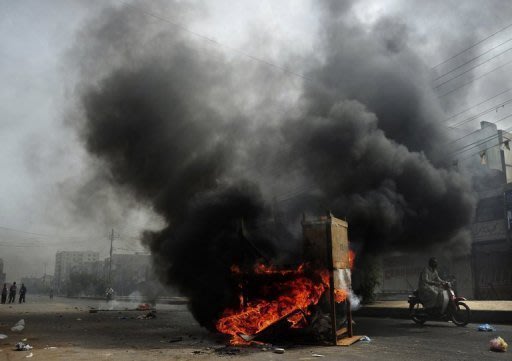
Pakistan announced on Saturday its troops had taken back areas of Karachi occupied by armed groups and arrested more than 100 people after political violence across the vast port city claimed 95 lives.
Four days of unrest has been blamed on political and ethnic tensions, with gunmen firing on two buses in the early hours of Friday, killing 12 people including a six-year-old girl, according to security officials.
"Our paramilitary soldiers have secured the troubled localities and hills where armed terrorists were firing on innocent people, and have restored normal life," interior minister Rehman Malik told reporters.
"We'll treat anyone who disrupts Pakistan's financial capital as a supporter of Taliban and an enemy operating against our war on terror," he said.
Home ministry spokesman Sharafuddin Memon told AFP a 12-year-old boy hit by a stray bullet in Baldia neighbourhood early Saturday was also among the dead.
"More than 100 suspects, many of them with weapons, have been arrested," Memon said, putting the death toll at 95.
Authorities said they had asked residents evacuated as the violence broke out to return home but few had responded.
"I had left my house in Qasba on Tuesday for my workplace, but could only return home now when peace has returned after four days," Abdullah Khan, 33, said.
"I am a construction labourer and support my elderly parents, wife and six children. I am happy to see my family safe but we don't know when the situation will turn difficult again."
Police and hospital officials confirmed the toll and arrests.
"We have taken control of all the affected areas," said Farooq Bilal, a spokesman for the paramilitary Rangers.
A grenade attack in southern Bhimpura neighbourhood killed two men and injured three on Saturday.
"Unknown motorcyclists threw a grenade on some shopkeepers who were trying to open their shops in Bhimpura, killing two and injuring three others," police official Mohammad Rafiq said.
Gunfire could be heard in western neighbourhoods and hospitals were still receiving casualties, witnesses said.
The violence has been blamed on loyalists of the Muttahida Qaumi Movement (MQM), the dominant local party that represents migrants from India, and the Awami National Party (ANP) of Pashtuns from the northwest.
The latest bout of killings comes days after the MQM walked out of the federal government led by the Pakistan People's Party (PPP), a move which some analysts said made it harder for the government to intervene.
The worst affected areas are impoverished, heavily populated neighbourhoods in western Karachi, dotted with construction sites where armed men of different ethnicities have exchanged gunfire.
Karachi’s mini-civil war
EDITORIAL:Daily Times
For the fourth day running, Karachi remained in the grip of large scale ethnic bloodletting on Thursday. Although at the time of writing these lines the city by and large appeared deserted since markets did not open and transport was off the roads on MQM’s declared day of mourning on Friday, in the troubled areas coinciding with the well known ethnic fault lines that run through the metropolis, the sound of gunfire was almost a constant. The toll of this virtual mini-civil war is rising, with widespread dissatisfaction being voiced by Karachi’s affected citizens that the government and law enforcement agencies are conspicuous by their absence. The gunmen have abandoned individual targeted killings that had been the bane of the city even before the parting of the ways of the MQM and the PPP-led coalition and instead taken to ‘positional’ warfare and indiscriminate killings of innocent citizens on buses and even within their houses. In the absence of any meaningful response by the law enforcement agencies to halt this unfettered massacre, Karachi too is witnessing its own version of internally displaced persons (IDPs) in the shape of desperate citizens being forced to abandon their homes and flee to safer areas with the minimum wherewithal to survive. For all intents and purposes, in the areas of intense fighting by means of their menacing presence, and in the rest of the city because of spreading fear, the gunmen rule the roost. It would come as no surprise if within their ranks could be counted land and drug mafias trying to take advantage of the unrest.
MQM’s day of mourning on Friday remained just that, mourning for the city of lights and the dire straits to which it has been condemned. Mercifully, the MQM postponed its planned march, which could have invited more trouble. Nevertheless, as we have said before in this space, the MQM, since leaving the government, has resorted to its time-tested usual terrorist-political tactics. It is difficult to believe that its hand is not detectable in the worst violence to wrack the city for years. That does not mean that there are not other actors who are equally to blame for the descent into open warfare along ethnic lines. The Urdu-speaking and Pashtun people of Karachi are the worst affected communities. The apprehension now is that the concentration of the violence in north-western Karachi may spill over into the rest of the city with a vengeance.
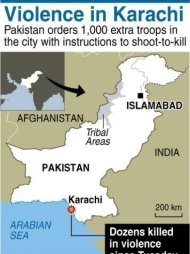
The government claims 235 perpetrators of violence arrested in the last four days. This is the result of a conscious decision not to launch a generalised operation a la the military offensive in 1992, which failed to leave any indelible mark on the circumstances of the city, but instead to gather intelligence and information and then conduct targeted operations against the miscreants. According to Federal Law Minister Maula Bux Chandio, an army action in Karachi would mean the collective failure of the political forces to manage the affairs of the country satisfactorily. He could also have added that it could pose a threat to the continuation of civilian rule once again. While Interior Minister Rehman Malik has once more dashed to Karachi to help out, promising the induction of 1,000 personnel of the Frontier Constabulary to bolster the police and Rangers in the city, the Sindh government has issued shoot on sight orders to quell the violence.
Prime Minister Yousaf Raza Gilani has appealed for calm and peace in Karachi, but his voice sounds more like a plaint than that of an authoritative chief executive, punctuated as the appeal is by the crackle of almost constant gunfire in the streets and alleyways of many areas of the city. In essence, the PPP’s strategy after the 2008 elections to “keep your friends close, and your enemies even closer” seems to have now run its course. It is MQM’s well known and demonstrated track record that it always resorts to the gun when it wants to dictate its own terms to rivals or the power structure. If it is unable to win the day through its habitual tactics of intimidation and at the same time anointing itself as the victim, Karachi is i
For the fourth day running, Karachi remained in the grip of large scale ethnic bloodletting on Thursday. Although at the time of writing these lines the city by and large appeared deserted since markets did not open and transport was off the roads on MQM’s declared day of mourning on Friday, in the troubled areas coinciding with the well known ethnic fault lines that run through the metropolis, the sound of gunfire was almost a constant. The toll of this virtual mini-civil war is rising, with widespread dissatisfaction being voiced by Karachi’s affected citizens that the government and law enforcement agencies are conspicuous by their absence. The gunmen have abandoned individual targeted killings that had been the bane of the city even before the parting of the ways of the MQM and the PPP-led coalition and instead taken to ‘positional’ warfare and indiscriminate killings of innocent citizens on buses and even within their houses. In the absence of any meaningful response by the law enforcement agencies to halt this unfettered massacre, Karachi too is witnessing its own version of internally displaced persons (IDPs) in the shape of desperate citizens being forced to abandon their homes and flee to safer areas with the minimum wherewithal to survive. For all intents and purposes, in the areas of intense fighting by means of their menacing presence, and in the rest of the city because of spreading fear, the gunmen rule the roost. It would come as no surprise if within their ranks could be counted land and drug mafias trying to take advantage of the unrest.
MQM’s day of mourning on Friday remained just that, mourning for the city of lights and the dire straits to which it has been condemned. Mercifully, the MQM postponed its planned march, which could have invited more trouble. Nevertheless, as we have said before in this space, the MQM, since leaving the government, has resorted to its time-tested usual terrorist-political tactics. It is difficult to believe that its hand is not detectable in the worst violence to wrack the city for years. That does not mean that there are not other actors who are equally to blame for the descent into open warfare along ethnic lines. The Urdu-speaking and Pashtun people of Karachi are the worst affected communities. The apprehension now is that the concentration of the violence in north-western Karachi may spill over into the rest of the city with a vengeance.
The government claims 235 perpetrators of violence arrested in the last four days. This is the result of a conscious decision not to launch a generalised operation a la the military offensive in 1992, which failed to leave any indelible mark on the circumstances of the city, but instead to gather intelligence and information and then conduct targeted operations against the miscreants. According to Federal Law Minister Maula Bux Chandio, an army action in Karachi would mean the collective failure of the political forces to manage the affairs of the country satisfactorily. He could also have added that it could pose a threat to the continuation of civilian rule once again. While Interior Minister Rehman Malik has once more dashed to Karachi to help out, promising the induction of 1,000 personnel of the Frontier Constabulary to bolster the police and Rangers in the city, the Sindh government has issued shoot on sight orders to quell the violence.
Prime Minister Yousaf Raza Gilani has appealed for calm and peace in Karachi, but his voice sounds more like a plaint than that of an authoritative chief executive, punctuated as the appeal is by the crackle of almost constant gunfire in the streets and alleyways of many areas of the city. In essence, the PPP’s strategy after the 2008 elections to “keep your friends close, and your enemies even closer” seems to have now run its course. It is MQM’s well known and demonstrated track record that it always resorts to the gun when it wants to dictate its own terms to rivals or the power structure. If it is unable to win the day through its habitual tactics of intimidation and at the same time anointing itself as the victim, Karachi is i
Karachi bleeds; 35 more killed
Daily Times
At least 35 more people were killed and scores of others wounded when unidentified gunmen strafed passenger buses and went on shooting sprees in several
neighbourhoods in Karachi on Friday – the forth day of continuing ethnic violence.
In a late night development, law enforcement agencies cordoned off and entered Kati Pahari area in a bid to quell terrorists after intelligence reports revealed that the Taliban were present there.
During the day, despite the deployment of Frontier Constabulary (FC), tension gripped various localities in the city’s west where gunfire reverberated and thousands of people stood stranded, short of food and too frightened to leave their houses. Relatives wept over the bodies of loved ones in morgues and hospitals on Friday. As per reports, four rockets were fired in Saeedabad and Baldia areas while unidentified attackers ridding motorbikes lobbed hand grenades at a building in Bhimpura area. One unidentified man, Hussain, Ghanchi and Maojee were killed when the attackers opened indiscriminate firing.
In Pirabad area, one Saifullah was shot dead while firing claimed the life of one Sakhiur Rehman in Qasba Colony. A passer-by, Ghaniur Rehman, was killed in another similar incident.
In Qasba area, one Akbar was shot dead while firing near Mubarak Mosque killed 19-year-old Usman and wounded Yumna, Rehan, Zaghfaran. A man, Yousuf Jinnah, was killed outside his house. In Orangi Town, Arshad Khan was mowed down while firing near a bakery in Iqbal Market killed one Iqbal and wounded his uncle Qadar. A passer-by, Rafiullah, was killed due to the firing in the limits of Sharah-e-Noor Jahan police. In North Nazimabad, one Arif Ibrahim lost his life because of unbridled firing.
In the limits of Kharadar police, Noor Muhammad got killed. A watchman, namely Abdul Qayyum, was shot dead by unidentified assailants near Bombay Bazaar. Near Miani Market, Fazlur Rehman, 28, was shot dead.
In Saeedabad area, Ayub Masih, Bismillah Khan and an unidentified man were gunned down. Twelve-year-old Shahabad received bullets at his house and later died. In the same area, Ahsan Rashid was killed.
Gunmen opened fire on four vehicles, killing two people, Dost Muhammad and Daniyal, while Lal Muhammad and Noor Ahmed sustained bullet injures.
Abid alias Baba and Ghulam Sarwar were shot dead by unidentified assassins in Model Colony and Bilal Colony, respectively.
In Nazimabad, 7-year-old Salman Siddique was shot dead. A mutilated dead body was recovered from Old Golimar area. In Aligarh Bazaar, unidentified arsonists torched a two-storey building while three shops were also set ablaze. Seven more shops and over a dozen vehicles were set on fire in various localities of the city. In a late night firing incident, Abdul Jabbar and Mir Afridi were killed in Ghousia Colony. A Jamaat-e-Islami activist, Ayub Ali, was ambushed in Lines Area. He died instantly. One passenger was killed and five others were wounded when unidentified men fired indiscriminately at a passenger bus near Hassan Square.
A dead body was recovered near Lea Market. The body is yet to be identified. Two more mutilated bodies were found in Baldia Town.
At least 35 more people were killed and scores of others wounded when unidentified gunmen strafed passenger buses and went on shooting sprees in several

neighbourhoods in Karachi on Friday – the forth day of continuing ethnic violence.
In a late night development, law enforcement agencies cordoned off and entered Kati Pahari area in a bid to quell terrorists after intelligence reports revealed that the Taliban were present there.
During the day, despite the deployment of Frontier Constabulary (FC), tension gripped various localities in the city’s west where gunfire reverberated and thousands of people stood stranded, short of food and too frightened to leave their houses. Relatives wept over the bodies of loved ones in morgues and hospitals on Friday. As per reports, four rockets were fired in Saeedabad and Baldia areas while unidentified attackers ridding motorbikes lobbed hand grenades at a building in Bhimpura area. One unidentified man, Hussain, Ghanchi and Maojee were killed when the attackers opened indiscriminate firing.
In Pirabad area, one Saifullah was shot dead while firing claimed the life of one Sakhiur Rehman in Qasba Colony. A passer-by, Ghaniur Rehman, was killed in another similar incident.
In Qasba area, one Akbar was shot dead while firing near Mubarak Mosque killed 19-year-old Usman and wounded Yumna, Rehan, Zaghfaran. A man, Yousuf Jinnah, was killed outside his house. In Orangi Town, Arshad Khan was mowed down while firing near a bakery in Iqbal Market killed one Iqbal and wounded his uncle Qadar. A passer-by, Rafiullah, was killed due to the firing in the limits of Sharah-e-Noor Jahan police. In North Nazimabad, one Arif Ibrahim lost his life because of unbridled firing.
In the limits of Kharadar police, Noor Muhammad got killed. A watchman, namely Abdul Qayyum, was shot dead by unidentified assailants near Bombay Bazaar. Near Miani Market, Fazlur Rehman, 28, was shot dead.
In Saeedabad area, Ayub Masih, Bismillah Khan and an unidentified man were gunned down. Twelve-year-old Shahabad received bullets at his house and later died. In the same area, Ahsan Rashid was killed.
Gunmen opened fire on four vehicles, killing two people, Dost Muhammad and Daniyal, while Lal Muhammad and Noor Ahmed sustained bullet injures.
Abid alias Baba and Ghulam Sarwar were shot dead by unidentified assassins in Model Colony and Bilal Colony, respectively.
In Nazimabad, 7-year-old Salman Siddique was shot dead. A mutilated dead body was recovered from Old Golimar area. In Aligarh Bazaar, unidentified arsonists torched a two-storey building while three shops were also set ablaze. Seven more shops and over a dozen vehicles were set on fire in various localities of the city. In a late night firing incident, Abdul Jabbar and Mir Afridi were killed in Ghousia Colony. A Jamaat-e-Islami activist, Ayub Ali, was ambushed in Lines Area. He died instantly. One passenger was killed and five others were wounded when unidentified men fired indiscriminately at a passenger bus near Hassan Square.
A dead body was recovered near Lea Market. The body is yet to be identified. Two more mutilated bodies were found in Baldia Town.
Thursday, July 7, 2011
Pakistan hardly to see any change in gov't soon
Despite the political mercury shooting up in Pakistan after the country's biggest opposition party, Pakistan Muslim league-Nawaz (PML-N), launched a campaign to unite other opposition parties against the current government, the country will hardly see any big political move or change in the government soon, analysts said.
The political circles got active when PML-N chief and two-time former prime minister Nawaz Sharif announced on June 30 to unite all opposition parties on a "minimum agenda" to overthrow the current government of the Pakistan People's Party (PPP) led by President Asif Ali Zardari.
Sharif took this decision soon after his two-decade rival party Muttahida Qaumi Movement (MQM), or United National Movement, quit the coalition government over some differences with the President Zardari.
Some key leaders of the PML-N were assigned tasks to make contacts with all opposition parties to oust the Zardari-led regime.
Two PML-N leaders, Ishaq Dar and party president Shahbaz Sharif, met MQM central leader Farooq Sattar in Dubai and London respectively and discussed political situation including the options to form the grand opposition alliance.
As a result of these political connections, MQM and PML-N on Wednesday agreed to work together as a joint opposition in both upper and lower houses, and in provincial assemblies to solve the key national issues.
The political circles got active when PML-N chief and two-time former prime minister Nawaz Sharif announced on June 30 to unite all opposition parties on a "minimum agenda" to overthrow the current government of the Pakistan People's Party (PPP) led by President Asif Ali Zardari.
Sharif took this decision soon after his two-decade rival party Muttahida Qaumi Movement (MQM), or United National Movement, quit the coalition government over some differences with the President Zardari.
Some key leaders of the PML-N were assigned tasks to make contacts with all opposition parties to oust the Zardari-led regime.
Two PML-N leaders, Ishaq Dar and party president Shahbaz Sharif, met MQM central leader Farooq Sattar in Dubai and London respectively and discussed political situation including the options to form the grand opposition alliance.
As a result of these political connections, MQM and PML-N on Wednesday agreed to work together as a joint opposition in both upper and lower houses, and in provincial assemblies to solve the key national issues.
Afghan civilians killed in NATO strike
A NATO air strike has killed at least 14 civilians, including eight children, in the eastern Afghan province of Khost, local police say.
But Nato said four Taliban members had been killed in the strike and that it was investigating reports of civilian casualties.
The deadly air raid came a day after two children were reportedly killed in a separate air strike in southwest Ghazni province.
The killing of civilians by foreign troops is a major source of friction between Afghan President Hamid Karzai and his Western backers, and has soured the feelings of many ordinary Afghans towards foreign forces.
Earlier this year, two NATO helicopters gunned down nine Afghan boys as they collected firewood in a volatile province in northeastern Afghanistan.
The incident prompted a sharp rebuke from Karzai and a rare apology by David Petraeus, the commander of US and NATO forces. US President Barack Obama also expressed "deep regret" over the killings.
As violence has spread across the country, casualties have risen, and the United Nations said May was the deadliest month for civilians since they began keeping records four years earlier.
A lasting solution for Balochistan
By Malik Siraj Akbar | DAWN.COM
The Balochistan solution has to be a political one rather than a ‘white-wash’ of replacing the military with a paramilitary force.
While the Chief of Army Staff General Parvez Ashfaq Kayani’s announcement to replace PA soldiers with the paramilitary Frontier Corps (FC) in Balochistan’s gas-rich town of Sui indicates a significant policy change on part of the military, it would be unwise to say that this is without precedent.
In the last eight years, the federal government has taken such steps to appease the Baloch but despite their goodwill, they did not translate into practical changes on the ground.
For instance, in 2004, then caretaker Prime Minister Chaudhry Shujaat Hussain made the first comprehensive effort to address Balochistan’s issues peacefully and constituted two parliamentary committees.
The committee headed by Senator Wasim Sajjad was tasked with compiling Balochistan’s concerns on constitutional issues such as provincial autonomy and decided on how much control the province should exercise on its natural resources. The second committee headed by Senator Mushahid Hussain Syed was responsible for addressing the Baloch’s reservations on military cantonment and mega projects such as the Gwadar Port. Unfortunately, the recommendations of the parliamentary committees were never implemented.
The Pakistan Peoples Party made a similar comprehensive move in November 2009 with the unveiling of the Aghaz-e-Haqooq-e-Balochistan Package in a joint session of the parliament. Two years on, no progress has been made in calming the Baloch sentiments of deprivation. The reasons are obvious by analysing the semantics only.
Firstly, there is a grand communication gap between the Baloch, the army and the federal government. All the parties involved in the conflict do not properly understand terms used from each other’s lexicons. The ambiguity of terminology has added to the issue at hand. For example, the army and the Baloch differently interpret the term “military operation”.
From Pakistan Army’s point of view, a “military operation” takes places when tanks and helicopters as well as weaponry are employed to accomplish a goal.
On the other hand, the Baloch equate extra-judicial killings, disappearances, and even the checking at check-posts with “operation”. So every time the army chief or the federal Interior Minister Rehman Malik decline any “ongoing operations” in Balochistan, the Baloch instantly cite the killing or “disappearance” of some young political workers and activists. The knee-jerk reaction by the Baloch to every government statement is: “So many Baloch were killed and many are missing, how can they deny that there is a military operation?”
In a similar vein, there is a difference in the interpretation of the term “development”. For the government, development projects means the work at Chamalong Coal mines or the establishment of cadet colleges and cantonments. On the other hand, the Baloch are sceptical of these measures and consider it a “usurpation” of Baloch resources under the umbrella of “development.”
The skepticism is not limited to semantics either. The Baloch see the army’s decision to recruit youth from Balochistan to stem the protest against “disappearances.”
The political establishment would be well advised to not rely on rhetoric and realise that a change in Balochistan can only come with a holistic approach, which means a lasting and sensible political solution.
General Kayani’s fresh announcement about pulling out the army in Sui is either because of his ignorance about the Baloch point of view or a deliberate attempt to block the way for a political settlement to the conflict. In fact, to them, the term “poj” (similar to Fauj in Urdu) includes both the army and the federal paramilitary force, the FC.
Today, the Baloch have more complaints against the FC than the army itself or the federal government. People see the FC, whose composition includes barely 10 per cent of local Baloch, as a troublemaker rather than a solution to the ragging conflict. Balochistan Chief Minister Nawab Mohammad Aslam Raisani blames the FC for allegedly running a “parallel government” within the province. Ministers in his cabinet accuse the FC of sabotaging every attempt to politically reconcile with the enraged Baloch leaders. The nationalists accuse it of whisking away political activists during broad daylight from public places like universities and markets. In one such incident, hundreds of people saw the FC personnel whisking away three Baloch nationalist leaders from Turbat district two years ago. Within a couple of days, all three leaders were killed and their bodies were thrown in an abandoned area.
Thus, when General Kayani says he is going to deploy FC in Sui, it means he, in the Baloch interpretation, approves of FC’s extra-constitutional actions such as the killing of political workers, arrests and enforced disappearances.
That said, General Kayani should realise that FC is no longer the only issue in Balochistan. As the head of the country’s armed forces, he can take some of the following proposed measures as confidence building measures (CBMs), among several others, to prevent Balochistan from falling apart. First, military and paramilitary presence has to be reduced in the province. FC-controlled check posts should be removed from the heart of the district headquarters as well as the alleged underground torture cells be disbanded.
Second, only the Supreme Court should have authority to decide the fate of the missing persons. Intelligence agencies must cooperate with the Supreme Court of Pakistan and an independent investigation be conducted by the concerned parties.
Moreover, the two newly formed groups, the Baloch Musla Defai Tanzeem and Sipa-e-Shudha-e-Balochistan, which have publicly accepted responsibility for the killing of around 120 missing Baloch persons, should be exposed and brought to justice. Allegations by the Baloch of these having links with the country’s security establishment should be investigated.
It must be underscored that the army at the federal level and the Frontier Corps (FC) at the provincial level should demonstrate respect and have faith in the policies of the elected governments. They should be offered an unconditional assurance of a non-interference policy for a peaceful and political settlement of the Balochistan imbroglio.
The Balochistan solution has to be a political one rather than a ‘white-wash’ of replacing the military with a paramilitary force.
While the Chief of Army Staff General Parvez Ashfaq Kayani’s announcement to replace PA soldiers with the paramilitary Frontier Corps (FC) in Balochistan’s gas-rich town of Sui indicates a significant policy change on part of the military, it would be unwise to say that this is without precedent.
In the last eight years, the federal government has taken such steps to appease the Baloch but despite their goodwill, they did not translate into practical changes on the ground.
For instance, in 2004, then caretaker Prime Minister Chaudhry Shujaat Hussain made the first comprehensive effort to address Balochistan’s issues peacefully and constituted two parliamentary committees.
The committee headed by Senator Wasim Sajjad was tasked with compiling Balochistan’s concerns on constitutional issues such as provincial autonomy and decided on how much control the province should exercise on its natural resources. The second committee headed by Senator Mushahid Hussain Syed was responsible for addressing the Baloch’s reservations on military cantonment and mega projects such as the Gwadar Port. Unfortunately, the recommendations of the parliamentary committees were never implemented.
The Pakistan Peoples Party made a similar comprehensive move in November 2009 with the unveiling of the Aghaz-e-Haqooq-e-Balochistan Package in a joint session of the parliament. Two years on, no progress has been made in calming the Baloch sentiments of deprivation. The reasons are obvious by analysing the semantics only.
Firstly, there is a grand communication gap between the Baloch, the army and the federal government. All the parties involved in the conflict do not properly understand terms used from each other’s lexicons. The ambiguity of terminology has added to the issue at hand. For example, the army and the Baloch differently interpret the term “military operation”.
From Pakistan Army’s point of view, a “military operation” takes places when tanks and helicopters as well as weaponry are employed to accomplish a goal.
On the other hand, the Baloch equate extra-judicial killings, disappearances, and even the checking at check-posts with “operation”. So every time the army chief or the federal Interior Minister Rehman Malik decline any “ongoing operations” in Balochistan, the Baloch instantly cite the killing or “disappearance” of some young political workers and activists. The knee-jerk reaction by the Baloch to every government statement is: “So many Baloch were killed and many are missing, how can they deny that there is a military operation?”
In a similar vein, there is a difference in the interpretation of the term “development”. For the government, development projects means the work at Chamalong Coal mines or the establishment of cadet colleges and cantonments. On the other hand, the Baloch are sceptical of these measures and consider it a “usurpation” of Baloch resources under the umbrella of “development.”
The skepticism is not limited to semantics either. The Baloch see the army’s decision to recruit youth from Balochistan to stem the protest against “disappearances.”
The political establishment would be well advised to not rely on rhetoric and realise that a change in Balochistan can only come with a holistic approach, which means a lasting and sensible political solution.
General Kayani’s fresh announcement about pulling out the army in Sui is either because of his ignorance about the Baloch point of view or a deliberate attempt to block the way for a political settlement to the conflict. In fact, to them, the term “poj” (similar to Fauj in Urdu) includes both the army and the federal paramilitary force, the FC.
Today, the Baloch have more complaints against the FC than the army itself or the federal government. People see the FC, whose composition includes barely 10 per cent of local Baloch, as a troublemaker rather than a solution to the ragging conflict. Balochistan Chief Minister Nawab Mohammad Aslam Raisani blames the FC for allegedly running a “parallel government” within the province. Ministers in his cabinet accuse the FC of sabotaging every attempt to politically reconcile with the enraged Baloch leaders. The nationalists accuse it of whisking away political activists during broad daylight from public places like universities and markets. In one such incident, hundreds of people saw the FC personnel whisking away three Baloch nationalist leaders from Turbat district two years ago. Within a couple of days, all three leaders were killed and their bodies were thrown in an abandoned area.
Thus, when General Kayani says he is going to deploy FC in Sui, it means he, in the Baloch interpretation, approves of FC’s extra-constitutional actions such as the killing of political workers, arrests and enforced disappearances.
That said, General Kayani should realise that FC is no longer the only issue in Balochistan. As the head of the country’s armed forces, he can take some of the following proposed measures as confidence building measures (CBMs), among several others, to prevent Balochistan from falling apart. First, military and paramilitary presence has to be reduced in the province. FC-controlled check posts should be removed from the heart of the district headquarters as well as the alleged underground torture cells be disbanded.
Second, only the Supreme Court should have authority to decide the fate of the missing persons. Intelligence agencies must cooperate with the Supreme Court of Pakistan and an independent investigation be conducted by the concerned parties.
Moreover, the two newly formed groups, the Baloch Musla Defai Tanzeem and Sipa-e-Shudha-e-Balochistan, which have publicly accepted responsibility for the killing of around 120 missing Baloch persons, should be exposed and brought to justice. Allegations by the Baloch of these having links with the country’s security establishment should be investigated.
It must be underscored that the army at the federal level and the Frontier Corps (FC) at the provincial level should demonstrate respect and have faith in the policies of the elected governments. They should be offered an unconditional assurance of a non-interference policy for a peaceful and political settlement of the Balochistan imbroglio.
Jolie, Parker Hollywood's highest paid actresses


Much of Parker's hefty earnings comes from reruns of the hit television show "Sex and the City", which she starred in and produced, and earnings from the second movie which generated $290 million at the global box office.
"People may be surprised to see Sarah Jessica Parker up there but they may not realize that in addition to acting, she earns big from her perfumes and endorsement deals," said writer Dorothy Pomerantz of Forbes.com. "Also she's coming off of 'Sex and the City 2' which turned a healthy profit."
Jennifer Aniston and Reese Witherspoon were not far behind in the rankings with each actress bringing home $28 million.
Aniston's film "Just Go With It" is her fourth highest earning film in the U.S.
The top 10 earning actress made a total of $218 million between May 2010 and May 2011, according to Forbes.com, which compiled the list by talking to producers, lawyers, agents and Hollywood insiders to estimate what each actress earned.
Last year's top earner, Sandra Bullock, took a 12-month break from making movies and dropped to No.9 with earning of $15 million. (Reuters)
'Al Khalifa, free prisoners then talk'
All political prisoners must be released for a national dialogue to occur between the Western-backed Bahraini regime and the opposition, an analyst says.
“If you want a dialogue, you need to start from the basis that all political prisoners need to be freed,” Raza Kazim, from the Islamic Human Rights Commission in London, said in an interview with Press TV.
The ruling regime in Bahrain has called for a fresh round of talks with the opposition after months of brutal crackdown on protesters, demanding an end to Al Khalifa dynasty, which has ruled the country for over 40 years.
Kazim believes the United States, a major influence on the government, is also persisting to push for the talks between the two sides.
However, he mocked the gesture stating that the US could have “exerted pressure” before the advancement of the popular uprising, which has now led to the regime willing to engage in dialogue.
In March, Saudi Arabia and the United Arab Emirates deployed military forces to Bahrain to help the regime crush nationwide protests that had broke out in mid-February.
US's reason behind sending intervening forces into Bahrain was to prevent the overthrow of the Bahraini regime, which would cost the US interest dearly, he added.
“If you want a dialogue, you need to start from the basis that all political prisoners need to be freed,” Raza Kazim, from the Islamic Human Rights Commission in London, said in an interview with Press TV.
The ruling regime in Bahrain has called for a fresh round of talks with the opposition after months of brutal crackdown on protesters, demanding an end to Al Khalifa dynasty, which has ruled the country for over 40 years.
Kazim believes the United States, a major influence on the government, is also persisting to push for the talks between the two sides.
However, he mocked the gesture stating that the US could have “exerted pressure” before the advancement of the popular uprising, which has now led to the regime willing to engage in dialogue.
In March, Saudi Arabia and the United Arab Emirates deployed military forces to Bahrain to help the regime crush nationwide protests that had broke out in mid-February.
US's reason behind sending intervening forces into Bahrain was to prevent the overthrow of the Bahraini regime, which would cost the US interest dearly, he added.
HRW blasts US over Bahrain crackdown

Human Rights Watch (HRW) has lashed out at the US and its allies for ignoring violent oppression against peaceful anti-regime protesters in Bahrain.
"Bahrain has brutally punished those protesting peacefully for greater freedom and accountability while the US and other allies looked the other way," HRW's deputy Middle East director Joe Stork said.
The rights group, in a statement on Wednesday, also criticized the Bahrain government for carrying out a "campaign of violent oppression" against its citizens.
Anti-government protesters took to the streets of Bahrain on February 14, but the country's Saudi-backed forces crushed the demonstrations in a bloody crackdown in March.
"The Bahrain government, since March 2011, has been carrying out a punitive and vindictive campaign of violent repression against its own citizens," the statement said.
Bahrain Center for Human Rights, a non-governmental organization, said there are currently over 1,000 political detainees, including medical staff, inside the country.
HRW called on Bahrain "to end unlawful and incommunicado detention, to free protesters unless legitimate criminal charges can be brought against them, and to allow monitoring by independent human rights organizations."
It also said it has been prevented from working in Bahrain since April.
Memories of Taliban still haunt Pakistanis in Swat
Daily Times
It is more than two years since the Taliban roamed Pakistan’s Swat Valley with impunity and threatened to kill him, but Muhammad Karim is still scared when he remembers how they paralysed life.
“The bad days are over... they (the Taliban) are in the past now and I don’t think they will ever come back,” he said as he prepared to close up his music and video shop and rejoin his family for the evening.
It was his merchandise of popular songs and films that saw the Taliban effectively shut down his shop two and a half years ago, after the picturesque mountain valley first started to slip out of government control in July 2007. Radical cleric Maulana Fazlullah led hundreds of Taliban in sowing terror in an area once loved by holidaymakers for its balmy summers and snowy winters.
His supporters beheaded opponents, burning schools and fighting to implant a harsh brand of Islamic law.
But in April 2009, Pakistan launched a major offensive to reclaim Swat from the Taliban, along with the neighbouring districts of Buner and Lower Dir.
Heavy fighting displaced an estimated two million people, but the military declared the region back under control in summer 2009 and tentative efforts began to kick start development and revive the economy. Two years later, the army still has a heavy presence in Mingora, the main town of Swat, and commanders confirm they are preparing to create a military-run cantonment area in a bid to protect long-term stability.
“They (the Taliban) ruined my business,” Karim said. He grew so frightened of their threats for running an “un-Islamic” shop that, after watching helplessly as his sales fell by 70 percent, he closed down for several months.
“Let me tell you very frankly, I got scared after they warned me of serious consequences.”
Standing behind big wooden shelves displaying CDs and DVDs of popular Urdu, Pashto and Indian songs and movies, Karim said it had been difficult to survive. “We’re in safe hands now but one thing I’m at a loss to understand is where did the Taliban come from and where did they disappear to so quickly?”
Nowadays shops, small restaurants and cafes are open in Mingora until late at night, with little outward sign of fear.
It may look like any normal Pakistani city, with people going about their routine business and markets crowded, but heavily armed police and soldiers are still deployed in large numbers, searching vehicles and even pedestrians. “This is one big problem that we’re facing. An over presence of military and civilian police on all roads and areas has been causing lots of problems for people,” a local grocer, Zahid Iqbal, said. He wants things to be more relaxed and for the army to hand over power to a civilian administration since Mingora and other areas of Swat are now peaceful.
“Gone are the days when we used to receive threats and collect dead bodies from different areas of the city,” he said. But Major General Javed Iqbal, commander of Swat, said it would take time before the situation fully returns to normal – a mantra that army leaders have been repeating for almost two years.
“As soon as the government and the general headquarters (of the army) determine that the job is done, the army will go out of Swat and hand over administrative control to civilians,” Iqbal said. He told reporters on the sidelines of a seminar on de-radicalisation in Swat that the area was experiencing a “victory of peace. A military solution was the temporary phase of a permanent solution.” The army has endorsed or organised a series of public events in Swat this year to revive tourist interest, such as a skiing competition in March and a public festival in June to showcase what is on offer.
But the rumble of violence is never far away in northwest Pakistan. On June 1 and June 3, hundreds of terrorists besieged an area in Upper Dir on the Afghan border, around 70 kilometres northeast of Swat, sparking prolonged fighting that killed at least 34 people.
Sporadic outbreaks of violence in Swat have led to fears that the Taliban who held it are regrouping elsewhere in the northwest. “Larger efforts are needed to sustain whatever we have achieved in Swat,” said Lieutenant General Asif Yasin Malik, supervising all military operations in the northwest. afp
It is more than two years since the Taliban roamed Pakistan’s Swat Valley with impunity and threatened to kill him, but Muhammad Karim is still scared when he remembers how they paralysed life.
“The bad days are over... they (the Taliban) are in the past now and I don’t think they will ever come back,” he said as he prepared to close up his music and video shop and rejoin his family for the evening.
It was his merchandise of popular songs and films that saw the Taliban effectively shut down his shop two and a half years ago, after the picturesque mountain valley first started to slip out of government control in July 2007. Radical cleric Maulana Fazlullah led hundreds of Taliban in sowing terror in an area once loved by holidaymakers for its balmy summers and snowy winters.
His supporters beheaded opponents, burning schools and fighting to implant a harsh brand of Islamic law.
But in April 2009, Pakistan launched a major offensive to reclaim Swat from the Taliban, along with the neighbouring districts of Buner and Lower Dir.
Heavy fighting displaced an estimated two million people, but the military declared the region back under control in summer 2009 and tentative efforts began to kick start development and revive the economy. Two years later, the army still has a heavy presence in Mingora, the main town of Swat, and commanders confirm they are preparing to create a military-run cantonment area in a bid to protect long-term stability.
“They (the Taliban) ruined my business,” Karim said. He grew so frightened of their threats for running an “un-Islamic” shop that, after watching helplessly as his sales fell by 70 percent, he closed down for several months.
“Let me tell you very frankly, I got scared after they warned me of serious consequences.”
Standing behind big wooden shelves displaying CDs and DVDs of popular Urdu, Pashto and Indian songs and movies, Karim said it had been difficult to survive. “We’re in safe hands now but one thing I’m at a loss to understand is where did the Taliban come from and where did they disappear to so quickly?”
Nowadays shops, small restaurants and cafes are open in Mingora until late at night, with little outward sign of fear.
It may look like any normal Pakistani city, with people going about their routine business and markets crowded, but heavily armed police and soldiers are still deployed in large numbers, searching vehicles and even pedestrians. “This is one big problem that we’re facing. An over presence of military and civilian police on all roads and areas has been causing lots of problems for people,” a local grocer, Zahid Iqbal, said. He wants things to be more relaxed and for the army to hand over power to a civilian administration since Mingora and other areas of Swat are now peaceful.
“Gone are the days when we used to receive threats and collect dead bodies from different areas of the city,” he said. But Major General Javed Iqbal, commander of Swat, said it would take time before the situation fully returns to normal – a mantra that army leaders have been repeating for almost two years.
“As soon as the government and the general headquarters (of the army) determine that the job is done, the army will go out of Swat and hand over administrative control to civilians,” Iqbal said. He told reporters on the sidelines of a seminar on de-radicalisation in Swat that the area was experiencing a “victory of peace. A military solution was the temporary phase of a permanent solution.” The army has endorsed or organised a series of public events in Swat this year to revive tourist interest, such as a skiing competition in March and a public festival in June to showcase what is on offer.
But the rumble of violence is never far away in northwest Pakistan. On June 1 and June 3, hundreds of terrorists besieged an area in Upper Dir on the Afghan border, around 70 kilometres northeast of Swat, sparking prolonged fighting that killed at least 34 people.
Sporadic outbreaks of violence in Swat have led to fears that the Taliban who held it are regrouping elsewhere in the northwest. “Larger efforts are needed to sustain whatever we have achieved in Swat,” said Lieutenant General Asif Yasin Malik, supervising all military operations in the northwest. afp
Saudi Women Taken Into Custody For Driving
Five Saudi women have been taken into custody because they defied the men-only driving rule.
In the campaign to overthrow this law in the ultraconservative Arab kingdom, these arrests mark the first ramifications to the activists. It started about two weeks ago and has brought out dozens of women drivers.
According to Saudi-based rights activist Eman al-Nafjan, police took one woman into custody while driving in Jiddah on the Red Sea coast, and another four women accused of driving were later detained in the city. Unfortunately, there’s been no new information about these women.
“This is the first big pushback from authorities, it seems,” al-Nafjan said. “We aren’t sure what it means at this point and whether this is the start of a harder line by the government against the campaign.”
The Saudi Women for Driving, as the group is called, is out to lift the restrictions, where women can only appear in public when escorted by a male relative. It’s interesting to note that Saudi Arabia has no written law that bans women from driving. What’s keeping them off the road are fatwas (religious edicts) that are put into place by senior clerics that follow a strict brand of Islam called Wahabism.
In the campaign to overthrow this law in the ultraconservative Arab kingdom, these arrests mark the first ramifications to the activists. It started about two weeks ago and has brought out dozens of women drivers.
According to Saudi-based rights activist Eman al-Nafjan, police took one woman into custody while driving in Jiddah on the Red Sea coast, and another four women accused of driving were later detained in the city. Unfortunately, there’s been no new information about these women.
“This is the first big pushback from authorities, it seems,” al-Nafjan said. “We aren’t sure what it means at this point and whether this is the start of a harder line by the government against the campaign.”
The Saudi Women for Driving, as the group is called, is out to lift the restrictions, where women can only appear in public when escorted by a male relative. It’s interesting to note that Saudi Arabia has no written law that bans women from driving. What’s keeping them off the road are fatwas (religious edicts) that are put into place by senior clerics that follow a strict brand of Islam called Wahabism.
8,000 incidents of violence against women
The year 2010 saw 8,000 incidents of violence against women in the country indicating a decrease of 6.85 per cent compared to the preceding year.
This was stated by the Aurat Foundation Resident Director Shabina Ayaz while releasing the annual report on the violence against women at a press conference here on Tuesday.
Accompanied by Deputy Resident Director Shireen Javed, she said the report was compiled under the Policy and Data Monitoring on Violence against Women Project from January-December 2010.
Unveiling the report titled ìViolence against Women in Pakistan; A qualitative review of statistics 2010,î she said incidents of violence gathered by the Aurat Foundation during this period were based on the cases reported in newspapers as mostly no first information reports (FIRs) were registered in a large number of incidents that reflected the citizen’s lack of confidence in the police.
Shabina Ayaz said violence against women may take the form of beating, torture, rape, burning, confinement, honour killings, acid-throwing crimes and women trafficking which were condemnable in any civilised society.
She said the total number of reported cases of violence against women in Pakistan were 8000 from January 1 to December 31, 2010. These were lower than the 8,548 cases reported in 2009.
“Out of the 8,000 incidents, 5,492 cases of violence were reported from Punjab, 1,652 from Sindh, 650 from Khyber-Pakhtunkhwa, 79 from Balochistan and 127 from Islamabad. The figure in Islamabad is alarming given the smaller population and high security maintained in the capital,” she pointed out.
Of the nature of the violence, she said 2,236 women were abducted, 1,436 were murdered, 557 were killed in the name of honour, 928 were raped, 633 committed suicide, 32 women were attacked with acid and 38 were victims of stove burning.
This was stated by the Aurat Foundation Resident Director Shabina Ayaz while releasing the annual report on the violence against women at a press conference here on Tuesday.
Accompanied by Deputy Resident Director Shireen Javed, she said the report was compiled under the Policy and Data Monitoring on Violence against Women Project from January-December 2010.
Unveiling the report titled ìViolence against Women in Pakistan; A qualitative review of statistics 2010,î she said incidents of violence gathered by the Aurat Foundation during this period were based on the cases reported in newspapers as mostly no first information reports (FIRs) were registered in a large number of incidents that reflected the citizen’s lack of confidence in the police.
Shabina Ayaz said violence against women may take the form of beating, torture, rape, burning, confinement, honour killings, acid-throwing crimes and women trafficking which were condemnable in any civilised society.
She said the total number of reported cases of violence against women in Pakistan were 8000 from January 1 to December 31, 2010. These were lower than the 8,548 cases reported in 2009.
“Out of the 8,000 incidents, 5,492 cases of violence were reported from Punjab, 1,652 from Sindh, 650 from Khyber-Pakhtunkhwa, 79 from Balochistan and 127 from Islamabad. The figure in Islamabad is alarming given the smaller population and high security maintained in the capital,” she pointed out.
Of the nature of the violence, she said 2,236 women were abducted, 1,436 were murdered, 557 were killed in the name of honour, 928 were raped, 633 committed suicide, 32 women were attacked with acid and 38 were victims of stove burning.
Wednesday, July 6, 2011
Another Pakistani woman is killed, yet officials remain silent
Daily Times
By Daud Khattak
No one noticed last month when Shazia, 19, was stoned, burnt with acid, and then shot dead for an unknown sin in Mardan, the second largest town in northern Pakistan after Peshawar.
Originally from a village in the Swat Valley, Shazia was taken away by her ex-husband from her mother to the mountains, tortured, and eventually killed. Her mother, Noor Jehan, a widow with no male relatives, has lodged complaints at three different police stations about her daughter’s fate, but her wailing has so far fallen on deaf ears. Law-enforcement personnel keep telling her that “investigations are under way.”
Days before Shazia’s heinous murder, another woman was stripped and paraded around Haripur, a city near the now-infamous suburb of Abbottabad, the last dwelling of al Qaeda chief Osama bin Laden. The woman, in her 50s, was punished because her son was found guilty of having illicit relations with the wife of another man.
This was local jirga’s sentence to ‘restore’ man’s honour – although it dishonoured an innocent woman. These two women are not exceptions. A Thomson Reuters Foundation expert poll lists Pakistan as the third most dangerous country for women in the world, just behind its war-ravaged neighbour, Afghanistan, and the Congo.
The Human Rights Commission of Pakistan (HRCP) says, “Around 3,000 women were raped and another 791 murdered for honour in 2010 alone.” This is apart from thousands of unreported cases when women are bartered, exchanged to settle family disputes, harassed in their workplaces, forced into marriage in childhood, or married off to men double and triple of their ages.
I still remember the daylight murder of a budding female singer, Ayman Odhas, in the city of Peshawar in 2009 by her own brothers for appearing on television, a move that defied the family norms. Although Odhas was an adult, living with her husband who had no objection to her singing on television and the stage, her brothers felt the act dishonoured them.
One morning they knocked on her door, before shooting her repeatedly when she stepped out to meet her visitors. This shows the collective mentality of a society where women, instead of being thought of as equals, are dealt as a commodity owned by men - father, brother, or husband – from birth to death.
These owners reserve every right to treat her as a commodity in terms of settling honour or blood disputes, monetary matters, marriage, or any other situation that may arise. Domestic violence is often ignored as a petty dispute and has become part of the culture where many people are living in a joint-family system. Interestingly enough, no Pakistani political or religious party has paid any attention to the woman paraded in Haripur or the murder of Shazia in Mardan.
They were vocal, however, about the detention of Dr Aafia Siddiqi, who was sentenced last year in the United States to 86 years in prison after being found guilty of attempting to kill her US interrogators in Afghanistan.
With the exception of a few statements from HRCP or the Aurat Foundation, a women’s advocacy organisation, no feathers are ruffled in Pakistani government circles at the federal or provincial levels, where the secular Pakistan People’s Party (PPP) of late Benazir Bhutto and Awami National Party (ANP) are ruling the roost, respectively.
Perhaps killing, forced marriage, or the dishonouring of a woman is not that important for a government in a country where scores are killed and maimed in bomb explosions in the name of religion.
It is a sad irony that these so-called religious warriors struggle throughout their life to attain several beautiful women in the afterlife.
By Daud Khattak
No one noticed last month when Shazia, 19, was stoned, burnt with acid, and then shot dead for an unknown sin in Mardan, the second largest town in northern Pakistan after Peshawar.
Originally from a village in the Swat Valley, Shazia was taken away by her ex-husband from her mother to the mountains, tortured, and eventually killed. Her mother, Noor Jehan, a widow with no male relatives, has lodged complaints at three different police stations about her daughter’s fate, but her wailing has so far fallen on deaf ears. Law-enforcement personnel keep telling her that “investigations are under way.”
Days before Shazia’s heinous murder, another woman was stripped and paraded around Haripur, a city near the now-infamous suburb of Abbottabad, the last dwelling of al Qaeda chief Osama bin Laden. The woman, in her 50s, was punished because her son was found guilty of having illicit relations with the wife of another man.
This was local jirga’s sentence to ‘restore’ man’s honour – although it dishonoured an innocent woman. These two women are not exceptions. A Thomson Reuters Foundation expert poll lists Pakistan as the third most dangerous country for women in the world, just behind its war-ravaged neighbour, Afghanistan, and the Congo.
The Human Rights Commission of Pakistan (HRCP) says, “Around 3,000 women were raped and another 791 murdered for honour in 2010 alone.” This is apart from thousands of unreported cases when women are bartered, exchanged to settle family disputes, harassed in their workplaces, forced into marriage in childhood, or married off to men double and triple of their ages.
I still remember the daylight murder of a budding female singer, Ayman Odhas, in the city of Peshawar in 2009 by her own brothers for appearing on television, a move that defied the family norms. Although Odhas was an adult, living with her husband who had no objection to her singing on television and the stage, her brothers felt the act dishonoured them.
One morning they knocked on her door, before shooting her repeatedly when she stepped out to meet her visitors. This shows the collective mentality of a society where women, instead of being thought of as equals, are dealt as a commodity owned by men - father, brother, or husband – from birth to death.
These owners reserve every right to treat her as a commodity in terms of settling honour or blood disputes, monetary matters, marriage, or any other situation that may arise. Domestic violence is often ignored as a petty dispute and has become part of the culture where many people are living in a joint-family system. Interestingly enough, no Pakistani political or religious party has paid any attention to the woman paraded in Haripur or the murder of Shazia in Mardan.
They were vocal, however, about the detention of Dr Aafia Siddiqi, who was sentenced last year in the United States to 86 years in prison after being found guilty of attempting to kill her US interrogators in Afghanistan.
With the exception of a few statements from HRCP or the Aurat Foundation, a women’s advocacy organisation, no feathers are ruffled in Pakistani government circles at the federal or provincial levels, where the secular Pakistan People’s Party (PPP) of late Benazir Bhutto and Awami National Party (ANP) are ruling the roost, respectively.
Perhaps killing, forced marriage, or the dishonouring of a woman is not that important for a government in a country where scores are killed and maimed in bomb explosions in the name of religion.
It is a sad irony that these so-called religious warriors struggle throughout their life to attain several beautiful women in the afterlife.
Tuesday, July 5, 2011
Chavez, back in Venezuela, says he will win 'battle for life'
Venezuelan President Hugo Chavez returned unexpectedly Monday to his nation's capital, where he vowed to win the "battle for life" after undergoing emergency surgery in Cuba.
Five killed in FC convoy attack in Ketch


A Frontrier Corps (FC) convoy was attacked in Gormazai area of District Kaich by a remote-controlled roadside bomb, killing five security personnel and injuring four others, Geo News reported Tuesday.
According to sources, Gormazai is located approximately 800 kilometers from Quetta where the FC convoy was attacked. After the convoy was ambushed with a road-side bomb, firing was also reported, however the FC spokesman in Quetta did not confirm the reports.
Pakistan’s Spies Tied to Slaying of a Journalist

Obama administration officials believe that Pakistan’s powerful spy agency ordered the killing of a Pakistani journalist who had written scathing reports about the infiltration of militants in the country’s military, according to American officials.
New classified intelligence obtained before the May 29 disappearance of the journalist, Saleem Shahzad, 40, from the capital, Islamabad, and after the discovery of his mortally wounded body, showed that senior officials of the spy agency, the Directorate for Inter-Services Intelligence, directed the attack on him in an effort to silence criticism, two senior administration officials said.
The intelligence, which several administration officials said they believed was reliable and conclusive, showed that the actions of the ISI, as it is known, were “barbaric and unacceptable,” one of the officials said. They would not disclose further details about the intelligence.
But the disclosure of the information in itself could further aggravate the badly fractured relationship between the United States and Pakistan, which worsened significantly with the American commando raid two months ago that killed Osama bin Laden in a Pakistan safehouse and deeply embarrassed the Pakistani government, military and intelligence hierarchy. Obama administration officials will deliberate in the coming days how to present the information about Mr. Shahzad to the Pakistani government, an administration official said.
The disclosure of the intelligence was made in answer to questions about the possibility of its existence, and was reluctantly confirmed by the two officials. “There is a lot of high-level concern about the murder; no one is too busy not to look at this,” said one.
A third senior American official said there was enough other intelligence and indicators immediately after Mr. Shahzad’s death for the Americans to conclude that the ISI had ordered him killed.
“Every indication is that this was a deliberate, targeted killing that was most likely meant to send shock waves through Pakistan’s journalist community and civil society,” said the official, who like others spoke on the condition of anonymity because of the delicate nature of the information.
A spokesman for the Pakistan intelligence agency said in Islamabad on Monday night that “I am not commenting on this.” George Little, a spokesman for the Central Intelligence Agency, declined to comment.
In a statement the day after Mr. Shahzad’s waterlogged body was retrieved from a canal 60 miles from Islamabad, the ISI publicly denied accusations in the Pakistani news media that it had been responsible, calling them “totally unfounded.”
The ISI said the journalist’s death was “unfortunate and tragic,” and should not be “used to target and malign the country’s security agency.”
The killing of Mr. Shahzad, a contributor to the Web site Asia Times Online, aroused an immediate furor in the freewheeling news media in Pakistan.
Mr. Shahzad was the 37th journalist killed in Pakistan since the 9/11 attacks, according to the Committee to Protect Journalists.
Pakistan’s civilian government, under pressure from the media, established a commission headed by a Supreme Court justice to investigate Mr. Shahzad’s death. The findings are scheduled to be released early next month.
Mr. Shahzad suffered 17 lacerated wounds delivered by a blunt instrument, a ruptured liver and two broken ribs, said Dr. Mohammed Farrukh Kamal, one of the three physicians who conducted the post-mortem.
The anger over Mr. Shahzad’s death followed unprecedented questioning in the media about the professionalism of the army and the ISI, a military-controlled spy agency, in the aftermath of the Bin Laden raid.
Since that initial volley of questioning, the ISI has mounted a steady counter-campaign. Senior ISI officials have called and visited journalists, warning them to douse their criticisms and rally around the theme of a united country, according to three journalists who declined to be named for fear of reprisals.
Mr. Shahzad, who wrote articles over the last several years that illuminated the relationship between the militants and the military, was abducted from the capital three days after publication of his article that said Al Qaeda was responsible for an audacious 16-hour commando attack on Pakistan’s main naval base in Karachi on May 22.
The attack was a reprisal for the navy’s arresting up to 10 naval personnel who had belonged to a Qaeda cell, Mr. Shahzad said.
The article, published by Asia Times Online, detailed how the attackers were guided by maps and logistical information provided from personnel inside the base.
Particularly embarrassing for the military, Mr. Shahzad described negotiations before the raid between the navy and a Qaeda representative, Abdul Samad Mansoor. The navy refused to release the detainees, Mr. Shahzad wrote. The Pakistani military maintains that it does not negotiate with militants.
Mr. Shahzad prided himself on staying out of the mainstream press, preferring, he wrote in a preface to his recently published book, “Inside Al Qaeda and the Taliban,” to challenge the “conventional wisdom.”
He had submitted articles to Asia Times Online, which claims 150,000 readers, since 2001, when he was a reporter in Karachi uncovering corruption in the public utility, the editor of the Web site, Tony Allison, said.
He broke into the limelight two years ago with an interview with Ilyas Kashmiri, a highly trained Pakistani militant allied to Al Qaeda. Mr. Kashmiri is believed to have been killed in a drone attack in early June.
According to associates, Mr. Shahzad cultivated contacts inside the military and the intelligence agency and members of militant groups, some from his student days in Jamaat Islami, a religious political party.
Some of his stories were threaded with embellishments. Soon after the Bin Laden raid, Mr. Shahzad wrote that Gen. David H. Petraeus visited the chief of the Pakistani Army, Gen. Ashfaq Parvez Kayani, and informed him, an account the White House strongly disputes. Pakistani journalists questioned the authenticity of some of Mr. Shahzad’s reporting: whether those doubts arose from professional jealousy or were well founded was never clear.
But the ISI had been interested in Mr. Shahzad for some time. In an e-mail written to Ali Dayan Hasan, the head of Human Rights Watch in Pakistan, which Mr. Shahzad instructed Mr. Hasan to release if something happened to him, Mr. Shahzad gave details of an Oct. 17 meeting at ISI headquarters, where two senior officials in the press section wanted to discuss an article he had written about the release of an interrogated Afghan Taliban commander, Abdul Ghani Baradar.
At the end, Mr. Shahzad said, he had been given what Mr. Hasan said he understood to be a veiled death threat from the head of the press section, Rear Adm. Adnan Nazir. “We have recently arrested a terrorist and recovered a lot of data, diaries and other material during the interrogation,” Mr. Shahzad quoted Admiral Nazir saying. “The terrorist had a list with him. If I find your name in the list, I will certainly let you know.”
In its statement after the death of Mr. Shahzad, the ISI said the agency notifies “institutions and individuals alike of any threat warning received about them.” There were no “veiled or unveiled threats” in the e-mail, the ISI said.
Hameed Haroon, the publisher of Dawn, an English-language newspaper and the head of the newspaper publishers’ association in Pakistan, said that the journalist had confided to him that “he had received death threats from various officers of the ISI on at least three occasions in the past five years.”
It was possible that Mr. Shahzad had become too cavalier, said Ayesha Siddiqa, a Pakistani columnist and author.
“The rules of the game are not completely well defined,” she said. “Sometimes friendly elements cross an imaginary threshold and it is felt they must be taught a lesson.”
The efforts by the ISI to constrain the Pakistani news media have, to a degree, worked in recent days. The virulent criticism after Mr. Shahzad’s death has tempered a bit.
A Pakistani reporter, Waqar Kiani, who works for the British newspaper The Guardian, was beaten in the capital after Mr. Shahzad’s death with wooden batons and a rubber whip, by men who said: “You want to be a hero. We’ll make you a hero,” the newspaper reported. Mr. Kiani had just published an account of his abduction two years earlier at the hands of intelligence agents.
Pakistanis thriving in Afghan market
http://surgar.net
With the Americans and their subsidiary companies – construction, supplies, telecom etc. – now running the show, Afghanistan has emerged as another labour market for the Pakistanis.
Security in Afghanistan is precarious and even Kabul wears the look of a war zone. The Afghan officials waste no opportunity to show their dislike, even hatred, for anything Pakistani. Yet underneath the political tensions between Pakistan and Afghanistan, the market appears to define and rule the relationship between Pakistani labour and their employers in Afghanistan. There are, according to unofficial estimates, over 70,000 Pakistanis working in different sectors – hotels, telecom and banking – and some are even running printing presses.
According to the Pakistanis working in and around Kabul, two factors – dollarisation of the Afghan economy and prevalence of English language – have opened the Afghan market to labour from Pakistan.
The Americans, one way or the other, are pumping over $100 billion into Afghanistan. “Even if three to four per cent of this money trickles down to a common man, it is more than enough to lift his economy,” says Haris Ali, country head of Aircom International in Afghanistan. Artificially pegged to dollar, the Afghani has improved to 45 Afghanis to a dollar; meaning that an Afghani is almost worth two Pakistani rupees. This exchange rate, though artificial as per economists’ claims, has become major attraction for the Pakistani labour, he concludes.
All major contracts, civil or military, go to the American companies, which, in turn, sub-let them to local or regional contractors. These contractors then need people who can write, speak and understand English and interact with American managers. That is where the Pakistanis as also the Afghan refugees who have been educated in Pakistan enter the picture.
“All the Afghans, who went to Iran during war, were put in secluded camps and Persian was their medium of instruction,” says a Pakistan diplomat in Afghanistan. In Pakistan, however, they lived in cities and were, by and large, integrated into the society and the education system.
This has turned out to be another advantage for Pakistanis. Even the mid-level Afghan managers feel much more comfortable with the Pakistani managerial staff and labour because of their own recent history and language affinity. Almost all of them also know Urdu language and can easily communicate with the Pakistani community. In fact, they became bridge between the American companies and the Afghan government, which hired local Afghans for all mid-level jobs and they in turn brought in the Pakistanis, the diplomat explains.
Afghanistan, even Kabul, is still not a family station. All the foreigners keep their families out because of security reasons. This situation also helps Pakistanis. “It takes only four hours to enter Pakistan by road from here,” says Shah Saleem – a hotel manager in Kabul, who hails from Hunza. Since it is a war zone salaries are higher. A worker gets salary either in dollars or Afghanis; both currencies are far better placed than the Pakistani rupee.
“I was employed at a Lahore hotel at a monthly salary of Rs17,000. Here, I am getting 35,000 Afghanis, which come to about
70,000 Pak rupees. All my boarding and lodging is covered,” Saleem said.
The hotel industry is booming because of a steady stream of foreigners who visit Afghanistan for different reasons. The NGO sector has become very vibrant for the last few years and their meetings – local, regional and international – generate a lot of business here.
The Pakistani labour gets one week off after three weeks of work, says Shahbaz Khan – who manages a printing press in one of busiest Kabul market. So, a man works for 21 days and earns more than double of what he gets in Pakistan after toiling for a month. The working hours are not long; by 7pm, everyone pulls the shutters down due to the Taliban scare and gets home
before dark.
Labour from Pakistan is a win-win proposition both for the Afghan employers and Pakistani workers. Pakistan workers get more money and the Afghans get cheap labour as compared to others. A mid-level American costs much more than a Pakistani. Then, they have to be supplied special food and taken to India or Dubai if they fall ill. In case of Pakistanis, food and health cover is not a problem: they eat the same food and dash back to Pakistan in case of an illness. And before long they are back, having either been treated at their own expense and at lower costs even if the company is paying, Shahbaz Khan said.
The telecom sector has turned out to be the most vibrant sector in Afghanistan, covering even the actual war zone and all those areas that fall under the Taliban control. Pakistanis’ presence in the sector is most dominating and visible too. “Call rates are much higher as compared to Pakistan as the companies also include war zone charges and insurance for the equipment,” says Abdul Hayee, from Azad Kashmir, working in Afghanistan for a cellular company.
The companies do not suffer as much losses on their equipment as they charge from the consumers. Since the Taliban are also beneficiaries of the system, they hardly ever are indiscreet enough to damage the company towers, etc. All the income coming in shape of war charges is companies’ profit. The telecom sector is certainly making huge profits, and Pakistanis being expert in the sector are also beneficiaries.
All these factors put together have made the Afghan economy attractive for labour, and the Pakistanis, given the proximity and historical ties, seem to be capitalising on it. Since most of them have also learnt Pashto and can hardly be distinguished from other Afghans, it only works to their added advantage in a market, which is open and thriving, even if on borrowed money and time.
With the Americans and their subsidiary companies – construction, supplies, telecom etc. – now running the show, Afghanistan has emerged as another labour market for the Pakistanis.
Security in Afghanistan is precarious and even Kabul wears the look of a war zone. The Afghan officials waste no opportunity to show their dislike, even hatred, for anything Pakistani. Yet underneath the political tensions between Pakistan and Afghanistan, the market appears to define and rule the relationship between Pakistani labour and their employers in Afghanistan. There are, according to unofficial estimates, over 70,000 Pakistanis working in different sectors – hotels, telecom and banking – and some are even running printing presses.
According to the Pakistanis working in and around Kabul, two factors – dollarisation of the Afghan economy and prevalence of English language – have opened the Afghan market to labour from Pakistan.
The Americans, one way or the other, are pumping over $100 billion into Afghanistan. “Even if three to four per cent of this money trickles down to a common man, it is more than enough to lift his economy,” says Haris Ali, country head of Aircom International in Afghanistan. Artificially pegged to dollar, the Afghani has improved to 45 Afghanis to a dollar; meaning that an Afghani is almost worth two Pakistani rupees. This exchange rate, though artificial as per economists’ claims, has become major attraction for the Pakistani labour, he concludes.
All major contracts, civil or military, go to the American companies, which, in turn, sub-let them to local or regional contractors. These contractors then need people who can write, speak and understand English and interact with American managers. That is where the Pakistanis as also the Afghan refugees who have been educated in Pakistan enter the picture.
“All the Afghans, who went to Iran during war, were put in secluded camps and Persian was their medium of instruction,” says a Pakistan diplomat in Afghanistan. In Pakistan, however, they lived in cities and were, by and large, integrated into the society and the education system.
This has turned out to be another advantage for Pakistanis. Even the mid-level Afghan managers feel much more comfortable with the Pakistani managerial staff and labour because of their own recent history and language affinity. Almost all of them also know Urdu language and can easily communicate with the Pakistani community. In fact, they became bridge between the American companies and the Afghan government, which hired local Afghans for all mid-level jobs and they in turn brought in the Pakistanis, the diplomat explains.
Afghanistan, even Kabul, is still not a family station. All the foreigners keep their families out because of security reasons. This situation also helps Pakistanis. “It takes only four hours to enter Pakistan by road from here,” says Shah Saleem – a hotel manager in Kabul, who hails from Hunza. Since it is a war zone salaries are higher. A worker gets salary either in dollars or Afghanis; both currencies are far better placed than the Pakistani rupee.
“I was employed at a Lahore hotel at a monthly salary of Rs17,000. Here, I am getting 35,000 Afghanis, which come to about
70,000 Pak rupees. All my boarding and lodging is covered,” Saleem said.
The hotel industry is booming because of a steady stream of foreigners who visit Afghanistan for different reasons. The NGO sector has become very vibrant for the last few years and their meetings – local, regional and international – generate a lot of business here.
The Pakistani labour gets one week off after three weeks of work, says Shahbaz Khan – who manages a printing press in one of busiest Kabul market. So, a man works for 21 days and earns more than double of what he gets in Pakistan after toiling for a month. The working hours are not long; by 7pm, everyone pulls the shutters down due to the Taliban scare and gets home
before dark.
Labour from Pakistan is a win-win proposition both for the Afghan employers and Pakistani workers. Pakistan workers get more money and the Afghans get cheap labour as compared to others. A mid-level American costs much more than a Pakistani. Then, they have to be supplied special food and taken to India or Dubai if they fall ill. In case of Pakistanis, food and health cover is not a problem: they eat the same food and dash back to Pakistan in case of an illness. And before long they are back, having either been treated at their own expense and at lower costs even if the company is paying, Shahbaz Khan said.
The telecom sector has turned out to be the most vibrant sector in Afghanistan, covering even the actual war zone and all those areas that fall under the Taliban control. Pakistanis’ presence in the sector is most dominating and visible too. “Call rates are much higher as compared to Pakistan as the companies also include war zone charges and insurance for the equipment,” says Abdul Hayee, from Azad Kashmir, working in Afghanistan for a cellular company.
The companies do not suffer as much losses on their equipment as they charge from the consumers. Since the Taliban are also beneficiaries of the system, they hardly ever are indiscreet enough to damage the company towers, etc. All the income coming in shape of war charges is companies’ profit. The telecom sector is certainly making huge profits, and Pakistanis being expert in the sector are also beneficiaries.
All these factors put together have made the Afghan economy attractive for labour, and the Pakistanis, given the proximity and historical ties, seem to be capitalising on it. Since most of them have also learnt Pashto and can hardly be distinguished from other Afghans, it only works to their added advantage in a market, which is open and thriving, even if on borrowed money and time.
Pakistan launches military offensive in tribal region

The Pakistani military has launched a fresh offensive against militants in its tribal region, the country's top military spokesman said Monday.
The offensive is targeting militants in Kurram, one of seven districts in Pakistan's tribal region bordering Afghanistan, Maj. Gen. Athar Abbas said. He gave no further details.
Pakistani security forces have conducted operations in Kurram as far back as 2009, but this appears to be the largest.
A Pakistani military official said air force fighter jets were "softening" targets on the ground to open the way for ground troops. The official asked not to be named because he is not authorized to speak to the media on the record.
Thousands of troops are taking part in the operation, according to two officials who did not want to be named because they are not authorized to speak to the media.
The offensive coincides with several others taking place in Pakistan's tribal region and is likely to please U.S. officials who are pressing Pakistan to do more in the fight against militancy.
The military has launched more than 10 offensives against violent extremists in northwest Pakistan in recent years, but for the United States, what matters most is North Waziristan, which U.S. officials call an epicenter of terrorism and a haven for the Haqqani network and other al Qaeda-linked militants killing American troops across the border in Afghanistan.
Washington has pressured Pakistan to launch a major offensive in North Waziristan, but the Pakistani military has refused. Some U.S. officials fear that the army here has held off because Pakistan's spy agencies have links with militant groups in North Waziristan.
Kurram is just north of North Waziristan and is believed to be a destination for many militants escaping other offensives in the region.
‘ZA Bhutto ruling on hearts, minds of millions of people’
Pakistan People’s Party (PPP) will observe black day on July 5 (today) as 34 years ago the then Chief of Army Staff General Zia-ul-Haq on July 5, 1977 imposed Martial Law by overthrowing the elected government of the PPP.
The dictator suspended the constitution, dissolved the National Assembly, the Senate and provincial assemblies and arrested the then elected prime minister Zulfikar Ali Bhutto.
The dictator later hanged the premier.
PPP will hold several programmes all over the province to commemorate the black day. Regarding the day, Members of Provincial Assembly (MPAs) Sindh belonging to PPP said that even after a passage of 34 years the ideology of Zulfikar Ali Bhutto had been alive in the hearts of poor people and it would remain so for centuries to come.
These and similar views were expressed by MPAs Saleem Khursheed Khokhar, Shama Arif Mithani, Farheen Moughal, Nadeem Ahmad Bhutto and others, when a survey was conducted by the Daily Times here on Monday.
Saleem Khursheed Khokhar said that it was first time when a man, who belonged to elite class came to common people informing them that they were true source of power in a democracy. According to Khokhar, Bhutto informed the common people that ‘you are the ultimate pillar of the strength,’ adding Bhutto empowered people of Pakistan and he also gave freedom of expression to them.
Khokhar further said, a dictator over-turned an elected government of the people of Pakistan and later hanged the leader. Bhutto had a revolutionary personality and he never compromised on his vision and the rights of the poor people, Khokhar added.
MPA Shama Arif Mithani said that the dictator had hoped to crush Bhuttoism by hanging Bhutto but that was his mistake. The day of July 5 was not only a black-day for Pakistan and Pakistanis but it was also a sad day for Muslims and all those people, who were living in third world, she added.
Mithani further said that the people of Pakistan from July 5, 1977 to this day had been observing this day as a black day for reminding those elements in society, which wanted to get the government by back-door or wanted to win elections through the help of anti-people forces.
MPA Farheen Moughal said that there was a time, when people were given two to three year of jail time for shouting the slogan ‘Jeay Bhutto.’ But the people fought against the martial law and several people had given their lives for the democracy but they eventually won, she added.
MPA Nadeem Ahmad Bhutto said that it was a wish of every dictator to eradicate PPP and the ideology of Bhutto but they were living in fools’ heaven. Those forces were unaware that every common person in Pakistan was fighting against the dictators and anti-people and anti-democratic forces.
The MPA said no one dictator had ever been remembered in the history for good deeds rather they had been recalled as dictator and enemy of people, adding, it was truth of the history that the ideology of Bhutto was alive and it would live in the hearts of poor people for centuries.
Sindh Chief Minister’s Special Assistant Ismail Dahri said the PPP protected the sovereignty of the country and the entire nation, protected the rights of the provinces, and gave a unanimously approved Constitution of 1973.
Dahri said it was the vision of Bhutto and Shaheed Benazir Bhutto (BB) to keep the nation united. He said that Shaheed Bhutto gave a unanimous Constitution, which was approved by all political parties and that was the first reconciliation policy of Bhutto.
Dahri claimed that BB re-launched the reconciliation policy and President Asif Ali Zardari had been continuing the same tradition.
The dictator suspended the constitution, dissolved the National Assembly, the Senate and provincial assemblies and arrested the then elected prime minister Zulfikar Ali Bhutto.

The dictator later hanged the premier.
PPP will hold several programmes all over the province to commemorate the black day. Regarding the day, Members of Provincial Assembly (MPAs) Sindh belonging to PPP said that even after a passage of 34 years the ideology of Zulfikar Ali Bhutto had been alive in the hearts of poor people and it would remain so for centuries to come.
These and similar views were expressed by MPAs Saleem Khursheed Khokhar, Shama Arif Mithani, Farheen Moughal, Nadeem Ahmad Bhutto and others, when a survey was conducted by the Daily Times here on Monday.
Saleem Khursheed Khokhar said that it was first time when a man, who belonged to elite class came to common people informing them that they were true source of power in a democracy. According to Khokhar, Bhutto informed the common people that ‘you are the ultimate pillar of the strength,’ adding Bhutto empowered people of Pakistan and he also gave freedom of expression to them.
Khokhar further said, a dictator over-turned an elected government of the people of Pakistan and later hanged the leader. Bhutto had a revolutionary personality and he never compromised on his vision and the rights of the poor people, Khokhar added.
MPA Shama Arif Mithani said that the dictator had hoped to crush Bhuttoism by hanging Bhutto but that was his mistake. The day of July 5 was not only a black-day for Pakistan and Pakistanis but it was also a sad day for Muslims and all those people, who were living in third world, she added.
Mithani further said that the people of Pakistan from July 5, 1977 to this day had been observing this day as a black day for reminding those elements in society, which wanted to get the government by back-door or wanted to win elections through the help of anti-people forces.
MPA Farheen Moughal said that there was a time, when people were given two to three year of jail time for shouting the slogan ‘Jeay Bhutto.’ But the people fought against the martial law and several people had given their lives for the democracy but they eventually won, she added.
MPA Nadeem Ahmad Bhutto said that it was a wish of every dictator to eradicate PPP and the ideology of Bhutto but they were living in fools’ heaven. Those forces were unaware that every common person in Pakistan was fighting against the dictators and anti-people and anti-democratic forces.
The MPA said no one dictator had ever been remembered in the history for good deeds rather they had been recalled as dictator and enemy of people, adding, it was truth of the history that the ideology of Bhutto was alive and it would live in the hearts of poor people for centuries.
Sindh Chief Minister’s Special Assistant Ismail Dahri said the PPP protected the sovereignty of the country and the entire nation, protected the rights of the provinces, and gave a unanimously approved Constitution of 1973.
Dahri said it was the vision of Bhutto and Shaheed Benazir Bhutto (BB) to keep the nation united. He said that Shaheed Bhutto gave a unanimous Constitution, which was approved by all political parties and that was the first reconciliation policy of Bhutto.
Dahri claimed that BB re-launched the reconciliation policy and President Asif Ali Zardari had been continuing the same tradition.
July 5 is a Black Day in the history of country
Prime Minister Yusuf Raza Gilani said that July 5, will always be remembered as a Black Day in the history of the country. It was on this day that a dictator overthrew a democratically elected government of Shaheed Zulifqar Ali Bhutto and plunged the country into darkness of martial law for eleven-long years, he said in his message marking the day.
He said today all the political forces should pledge to work for strengthening democracy and promote a culture of dialogue, instead of sabotaging he democratic order.
He further said that the democratic forces should demonstrate political sagacity, wisdom of thought and maturity of action for further strengthening the country, which was attained by rendering supreme sacrifices.
Prime Minister saidhad the people’s will been respected and their government allowed to serve them, Pakistan must have become politically and economically a great power both in the region as well as beyond.
He said the multiple challenges facing the country today owe themselves to lack of continuity of the democratic system.
Prime Minister Gilani said democracy and representative rule is the only way forward to secure country’s interests.
He said no nation can aspire to have any role at the regional and global level unless its institutions are strong, which is, otherwise, a function of strong democracy.
Prime Minister Yusuf Raza Gilani said the day also reminds us of the heroic struggle waged by the workers of Pakistan People’s Party against the dictatorial regime and for restoration of people’s inalienable right to determine their future through their elected representatives.
On July 5, let us pledge to work even harder for strengthening democracy in the country, he added.
He said today all the political forces should pledge to work for strengthening democracy and promote a culture of dialogue, instead of sabotaging he democratic order.
He further said that the democratic forces should demonstrate political sagacity, wisdom of thought and maturity of action for further strengthening the country, which was attained by rendering supreme sacrifices.
Prime Minister saidhad the people’s will been respected and their government allowed to serve them, Pakistan must have become politically and economically a great power both in the region as well as beyond.
He said the multiple challenges facing the country today owe themselves to lack of continuity of the democratic system.
Prime Minister Gilani said democracy and representative rule is the only way forward to secure country’s interests.
He said no nation can aspire to have any role at the regional and global level unless its institutions are strong, which is, otherwise, a function of strong democracy.
Prime Minister Yusuf Raza Gilani said the day also reminds us of the heroic struggle waged by the workers of Pakistan People’s Party against the dictatorial regime and for restoration of people’s inalienable right to determine their future through their elected representatives.
On July 5, let us pledge to work even harder for strengthening democracy in the country, he added.
Subscribe to:
Posts (Atom)