Wednesday, June 29, 2011
Attack on hotel in Kabul ends with deaths of 7 Taliban, 11 others
Seven Taliban attacked Kabul's Hotel Inter-Continental in a brazen, carefully orchestrated operation that began Tuesday night and continued into Wednesday, ending with their deaths and those of 11 other people some six hours after it began, police said.
"We are still searching the hotel; the death number may increase," said Chief of Criminal Investigations Mohammad Zahir on Wednesday morning. Twelve people were wounded or injured, he added.
"The situation is secure," Interior Minister Bismullah Khan said. By then, the top floor of the hotel was ablaze, but within a couple of hours, the flames were gone, though smoke continued to rise from the wreckage.
Two security personnel were killed in the attack, he said.
By dawn, security forces were allowing reporters to approach the hotel, and some guests were seen departing.Saiz Ahmed, a U.S. citizen in Kabul for a Ph.D. project, was among them. "I'm sure none of us thought we were going to make it," he said after having stayed on the floor of his darkened bedroom for more than five hours listening to gunfire and occasional bomb blasts. "I wrote my little will -- just in case."
The Taliban penetrated the hotel's typically heavy security in the attack, and one of them detonated an explosion on the second floor, said Erin Cunningham, a journalist for The Daily in Kabul.
Rocket-propelled grenades were launched from the roof of the hotel toward the first vice president's house. A few moments later, the hotel was rocked by three explosions, one of which knocked her off her feet, Cunningham said. U.S. forces were on the scene, she added.
At about 2 a.m., four hours after the attack began, International Security Assistance Force helicopters fired at insurgents on the roof, killing as many as three of the gunmen, ISAF spokesman Maj. Tim James told CNN.
An hour later, ISAF said the Afghan security forces had cleared the roof and were clearing the rest of the hotel.
At 4 a.m., police believed that all the attackers were dead, "but one was alive and hidden, and he started to resist" and continued to do so until 6:20 a.m., Zahir said.
Kabul hotel guest describes attack Taliban claims Kabul hotel attack
WHO ARE THE TALIBAN?
Operates primarily in Afghanistan, Pakistan since 1994
Imposed strict Islamic laws, particularly on women, in Afghanistan
Controlled Afghan government from 1996-2001 until overthrow by U.S. forces
Led by Mullah Mohammed Omar
Mullah Omar and senior Taliban leaders believed to be living in Quetta
RELATED TOPICS
Kabul
The Taliban
At least one of the attackers detonated his explosives, said Afghan Lt. Gen. Mohammad Ayoub Salangi, the city's chief of police.
A spokesman for the Taliban, Zabiullah Mujahid, said in an e-mail that the suicide attackers entered the hotel after killing the security guards at the entrance.
"One of the suicide attackers told us on the phone that they are in the lobby and chasing guests into their rooms by smashing the doors of the rooms," Mujahid told CNN in an e-mail he sent as the incident was unfolding.
There were no indications that U.S. military or diplomatic personnel were at the hotel, U.S. officials told CNN.
The Inter-Continental is popular among international guests. A news conference had been scheduled to take place there Wednesday to discuss the planned transition of security from international to Afghan forces that U.S. President Barack Obama announced last week. Obama was briefed on the attack while en route back to Washington from Iowa, White House spokesman Jay Carney told reporters.
Members of the Afghan National Security Forces were on the scene, but the city police had the lead, ISAF Maj. Jason Waggoner said in a statement. Waggoner said ISAF forces provided "some limited assistance."
Electricity around the hotel was shut off, said Jerome Starkey, a reporter for The Times.
The United States condemned the attack on the hotel, with State Department spokeswoman Victoria Nuland saying it "once again demonstrates the terrorists' complete disregard for human life."
The hotel was developed by the InterContinental Hotels Group and opened in 1969. But it has had no association with the group since the Soviet invasion in 1979, though it continues to use the name and logo without connection to the parent company.
The incident came on the same day that Lt. Gen. William B. Caldwell announced that NATO and other members of the international community involved in Afghanistan have decided to increase the number of security forces in the Afghan National Army and the Afghan National Police to 352,000.
The current number of Afghan National Army and Afghan National Police is about 300,000, the commander of the NATO training mission in Afghanistan and commanding general of the Combined Security Transition Command told the Atlanta Press Club.
The increased number will be sufficient to give the Afghans security without coalition forces having to do it, he said.
Tuesday's attack recalls a November 2008 assault on luxury hotels in Mumbai, India, which left more than 160 dead, including nine of the 10 gunmen who launched the attacks.
Officials said the gunmen targeted the Oberoi and the Taj Mahal hotels for their popularity with international travelers and tourists. The Taj Mahal was set afire.
The three-day stand-off between gunmen and police ended with the capture of Mohammad Ajmal Kasab, the only surviving gunman. Kasab was sentenced to death in 2010 and is awaiting an appeal of the decision to the Supreme Court in New Delhi. India says Kasab has told investigators that he and the others were trained for more than a year in Pakistan by Lashkar-e-Tayyiba, a banned Islamic militant group.
Tuesday, June 28, 2011
Kuwait arrests duo over Twitter comments
Kuwait will put two citizens on trial for criticising Gulf Arab ruling families on social media site Twitter, a security official said.
Nasser Abul, a Kuwaiti Shiite Muslim, was arrested for posting criticisms of the Sunni Muslim ruling families in Bahrain and Saudi Arabia, and Lawrence al-Rashidi posted defamatory comments of Kuwait's emir, the official said.
He said both would remain in detention for two more weeks before a hearing is scheduled, where they will likely face charges of harming the Gulf Arab state's interests and defaming the country's ruler after being arrested earlier in June.
Democracy activists have used social media such as Facebook and Twitter to debate, organise and share information in Bahrain, where the kingdom's Sunni rulers crushed a protest movement in March led mostly by the country's Shiite majority.
Bahrain called in troops from Sunni-led neighbours such as Saudi Arabia and the United Arab Emirates to enforce its crackdown.
OPEC member Kuwait, which has a Shiite minority, sent naval forces.
Bahrain questioned a rights activist in April for publishing an image which appeared to show signs of torture on a man who died in detention during the unrest.
It is not clear if the case will be brought to court.
Gulf Arab states, run by closely-allied ruling families, are trying to prevent protest movements that brought down Egyptian and Tunisian leaders earlier this year from taking off in their patch.
Nasser Abul, a Kuwaiti Shiite Muslim, was arrested for posting criticisms of the Sunni Muslim ruling families in Bahrain and Saudi Arabia, and Lawrence al-Rashidi posted defamatory comments of Kuwait's emir, the official said.
He said both would remain in detention for two more weeks before a hearing is scheduled, where they will likely face charges of harming the Gulf Arab state's interests and defaming the country's ruler after being arrested earlier in June.
Democracy activists have used social media such as Facebook and Twitter to debate, organise and share information in Bahrain, where the kingdom's Sunni rulers crushed a protest movement in March led mostly by the country's Shiite majority.
Bahrain called in troops from Sunni-led neighbours such as Saudi Arabia and the United Arab Emirates to enforce its crackdown.
OPEC member Kuwait, which has a Shiite minority, sent naval forces.
Bahrain questioned a rights activist in April for publishing an image which appeared to show signs of torture on a man who died in detention during the unrest.
It is not clear if the case will be brought to court.
Gulf Arab states, run by closely-allied ruling families, are trying to prevent protest movements that brought down Egyptian and Tunisian leaders earlier this year from taking off in their patch.
Afghans Build Security, and Hope to Avoid Infiltrators

For someone who had once joined an insurgent group, and whose family was tied to a top Taliban commander, Akmal had a strikingly easy path into the Afghan National Army.The district governor who approved his paperwork had never met him. A village elder who was supposed to vouch for him — as required by recruiting mandates — did little more than verify his identity.
No red flags went up when, after just six weeks in the army, he deserted. He returned more than three months later with the skimpiest of explanations and was allowed to rejoin. “I told them I got sick,” Akmal recalled.
Now Akmal, 18, who like many Afghans goes by one name, could face the death penalty for his admitted part in a suicide bombing on May 22 that killed six people on the grounds of the Afghan national military hospital.
He also helped in another suicide attack in February on a shopping mall in the capital, while he was absent without leave from the army, he said in an interview with The New York Times after his capture last month.
President Obama’s announcement last week of troop withdrawals from Afghanistan made clear that, more than ever, the onus is on Afghans to take responsibility for their own security. But the story of how Akmal went from jihadist to Afghan soldier and back again demonstrates the many problems that still plague the Afghan army and police force. These include the danger of Taliban infiltration, the divided loyalties of many recruits and even officers, and the sometimes explosive tensions between them and the foreign forces who are supposed to train them.
Interviews with intelligence officers, family members and other conspirators supported Akmal’s account. The Taliban never asked Akmal to join the Afghan National Army, he said. But once inside, he proved a useful tool. So have many others, NATO data show.
In the past two and a half years, 47 NATO soldiers have been killed by Afghan soldiers or police officers. Many of those deaths were the result of arguments that turned violent. But infiltrators are suspected in some of the cases, including one in which an Afghan soldier detonated a vest at an Afghan military base and another when a police officer killed the police chief at the Kandahar police headquarters.
As NATO hurries to build an Afghan security force of nearly 400,000 members by the end of 2014, Afghan military and intelligence officials concede that the task of screening the more than 8,000 army and police recruits who enlist each month is monumental.
“The army cannot do investigations for each individual person who joins,” said Gen. Zahir Azimi, a spokesman for the Defense Ministry.
This month, intelligence officials arrested a dozen people within the Defense and Interior Ministries, including an army colonel and a major, accusing them of aiding in an attack on the Defense Ministry headquarters in Kabul in April that left two soldiers dead.
Officials with the NATO Training Mission in Afghanistan say there is no evidence to suggest that infiltration is widespread. Still, they began bringing 80 counterintelligence officers and specialists to Afghanistan this month to enhance the recruit screening process.
“There’s a major effort to turn Afghans once they’re already inside the security forces, as well as a push to infiltrate existing militants into the ranks,” said a senior United States military officer who is helping to oversee the influx.
The Taliban use a range of tactics, including paying relatives who are sympathetic to the insurgents, to lure Afghan security forces into cooperating with them. “They’re even trying cold-calling on their cellphones to see who might be interested,” said the American officer, who spoke on the condition of anonymity.
Akmal enlisted in the military for the same reason many people do: to escape poverty. But his heart remained with the insurgency. Though he was offered money, about $290, to help in the hospital attack, he considered it supplemental income and not a motivating factor, he said.
His background offered hints of trouble. He grew up in Shakar Dara, a small farming district north of Kabul that at one time had been a hotbed of Taliban activity.
His father had served under Anwar Dangar, a top Taliban commander, Akmal said. His uncle was Mr. Dangar’s brother-in-law, though the uncle said in an interview that he had cut ties to the Dangar family.
That uncle raised Akmal and his older brother from the time they were young, after their mother died and their father disappeared. But last year, he kicked them out.
With nowhere to go, his brother joined the police. Akmal went the opposite direction, following a friend named Waris — Mr. Dangar’s nephew — to eastern Afghanistan, where they joined Hezb-e-Islami Gulbuddin, an insurgent group. Frustrated that the group was not doing much fighting, Akmal returned to Kabul a month later and, desperate for work, joined the army.
Under guidelines established in September 2009, all army and police recruits must undergo criminal background checks, drug screening and biometric scans as part of an eight-step vetting process. But in a country where computers are rare and many criminal matters are handled through the informal justice system, background checks are difficult. So a key step requires that two village elders or guarantors sign letters testifying to the recruit’s “identity and motivation to serve.”
But both those who signed Akmal’s letters said they knew little about him.
“All I do is something like, ‘I confirm that this guy lives in this place and he is the son of this man,’ ” said Malik Mohammad Din, the head elder in Akmal’s village. “And then I stamp it and sign it.”
He added that he did not know Akmal had ever joined the insurgency, or he would not have signed. The district governor, Mehrabudin, said, “I sign the letters because the elder knows that person well and so I give my approval.”
Akmal was assigned to the 53rd Health Battalion and began training as a combat medic at the national military hospital in Kabul. He shared his insurgent sympathies with no one. But told his unit would be sent to the front lines after its training, he quickly deserted. “I didn’t want to fight the Taliban and kill them,” he said.
By then, his friend Waris, with the help of Afghan associates in Pakistan, was plotting a suicide bombing of Kabul City Center, a shopping mall. Akmal agreed to help stake out the target, instructing the bomber where to go to kill the most foreigners.
The plan called for the bomber to blow himself up deep inside the crowded mall, but security guards stopped him at the entrance and he set the vest off, killing himself and two guards.
Afterward, Akmal fled briefly to Pakistan, but returned to Kabul a month later. Finding himself homeless again, he rejoined the army, saying he had been hospitalized with an infectious disease to explain his absence.
That he was allowed back was troubling but not unusual, Afghan and NATO officials said. Afghan soldiers often leave without permission to help their families. In fact, there is no penalty for desertion, according to the Defense Ministry.
“There is not yet a culture in the military that says you can’t go away and do harvests and come back,” said Maj. Gen. D. Michael Day, deputy commander of the NATO Training Mission in Afghanistan.
A few weeks after Akmal rejoined, Waris called with a new target: the national military hospital. Akmal’s job would be to supply an army uniform and arrange for the bomber to get past the guards at the heavily fortified complex. Akmal called his brother, the police officer, who is also now in custody, for help.
Two days before the attack, Akmal went to the home of another of the conspirators in Shakar Dara and met the suicide bomber, a burly Pakistani, for the first time. That night Akmal taught him how to walk like a soldier and gave him his army uniform and boots. As a final preparation, they rigged a grenade fuse to the suicide vest.
The next morning, Waris and Akmal escorted the bomber by taxi into Kabul. Inside a restroom at the Pul-e-Khesthi Mosque downtown, the bomber changed into the uniform, the vest hidden underneath. Outside the hospital, where Akmal’s brother had arranged for the bomber to pass through, Akmal gave the bomber a cellphone and they left him.
A few minutes later, Akmal called. The bomber told him he was seated under a tree outside a hospital dining tent, where dozens of medical trainees were just sitting down to lunch. As Akmal and Waris’s taxi weaved through downtown traffic, a report of a suicide blast at the hospital blared over the radio.
Akmal dialed the phone again. This time, no one answered.
Punjabi Taliban enemies of Pakistan
The Punjabi Taliban are the enemies of Pakistan and they should be dealt with accordingly, Punjab Governor Latif Khosa said on Monday.
They are the enemies of Islam and humanity,” Khosa told a news conference at the Governor’s House.
Suicide attacks were forbidden in Islam, he said. However, the governor stopped short while supporting military action against the strongholds of the Taliban in Punjab.
Separately, Khosa said that no political force was in favour of “derailing democracy”, adding that a strong political system would guarantee a strong economy.
“I don’t think any political force believes in third-party takeovers. No political force wants that democracy should be derailed,” he said.
The governor said that the recent boiling political atmosphere in the wake of the elections in Azad Jammu and Kashmir would subside after the success of the Pakistan People’s Party’s.
“I understand that temperature can rise when such events take place,” he said in indirect reference to the blame-game between Pakistan Muslim League-Nawaz (PML-N) leader Nawaz Sharif and PPP Co-Chairman Asif Ali Zardari. “The tolerance level of Zardari is quite high,” Khosa said, suggesting that whatever Nawaz was saying against the PPP leader had little effect on him.
The governor showed his unease at the way Chief Minister Shahbaz Sharif was running the affairs of the government. “I will continue to remind him that he is bound by law to keep the governor informed about administrative decisions,” Khosa said.
They are the enemies of Islam and humanity,” Khosa told a news conference at the Governor’s House.
Suicide attacks were forbidden in Islam, he said. However, the governor stopped short while supporting military action against the strongholds of the Taliban in Punjab.
Separately, Khosa said that no political force was in favour of “derailing democracy”, adding that a strong political system would guarantee a strong economy.
“I don’t think any political force believes in third-party takeovers. No political force wants that democracy should be derailed,” he said.
The governor said that the recent boiling political atmosphere in the wake of the elections in Azad Jammu and Kashmir would subside after the success of the Pakistan People’s Party’s.
“I understand that temperature can rise when such events take place,” he said in indirect reference to the blame-game between Pakistan Muslim League-Nawaz (PML-N) leader Nawaz Sharif and PPP Co-Chairman Asif Ali Zardari. “The tolerance level of Zardari is quite high,” Khosa said, suggesting that whatever Nawaz was saying against the PPP leader had little effect on him.
The governor showed his unease at the way Chief Minister Shahbaz Sharif was running the affairs of the government. “I will continue to remind him that he is bound by law to keep the governor informed about administrative decisions,” Khosa said.
Monday, June 27, 2011
US to provide technical assistance for FM radios
The US government will provide technical assistance for establishment of FM Radio stations of Khyber Pakhtunkhwa government and improvement in their managerial, operational and production capabilities under an agreement signed here at the Chief Minster`s House on Monday.
In this regard, Acting US Consul General Ms Constance C. Arvis and Khyber Pakhtunkhwa Director Information Shoaibuddin Khan signed the letter of agreement in the presence of the chief minister, Information Minister Mian Iftikhar Hussain and Secretary Information Azmat Haneef.
Speaking on the occasion, Mr Hoti said that his government was well aware of the importance and outreach of radio broadcast and that was why they had allocated funds in annual development programme for establishment of as many as 24 FM Radio stations throughout the province, says a handout.
He said that these radio stations would be run with the involvement of local communities so as to bring their problems to light. The chief minister said that were fully aware of the genuine needs of the people at grass-roots level and committed to solution of their problems.
The provincial government, he said, had also planned the establishment of its own television station, for the feasibility study was under way.
The chief minister said that the provincial government had evolved a communication strategy to reach the people and the establishment of FM Radio stations and the TV channel was part of it.
He said that radio was an effective medium among the mass communication channels through which a large portion of population could easily be accessed.
Ms Arvis assured the chief minister that the US government would fully support the development of local media in Khyber Pakhtunkhwa and the Federally Administered Tribal Areas.
In this regard, Acting US Consul General Ms Constance C. Arvis and Khyber Pakhtunkhwa Director Information Shoaibuddin Khan signed the letter of agreement in the presence of the chief minister, Information Minister Mian Iftikhar Hussain and Secretary Information Azmat Haneef.
Speaking on the occasion, Mr Hoti said that his government was well aware of the importance and outreach of radio broadcast and that was why they had allocated funds in annual development programme for establishment of as many as 24 FM Radio stations throughout the province, says a handout.
He said that these radio stations would be run with the involvement of local communities so as to bring their problems to light. The chief minister said that were fully aware of the genuine needs of the people at grass-roots level and committed to solution of their problems.
The provincial government, he said, had also planned the establishment of its own television station, for the feasibility study was under way.
The chief minister said that the provincial government had evolved a communication strategy to reach the people and the establishment of FM Radio stations and the TV channel was part of it.
He said that radio was an effective medium among the mass communication channels through which a large portion of population could easily be accessed.
Ms Arvis assured the chief minister that the US government would fully support the development of local media in Khyber Pakhtunkhwa and the Federally Administered Tribal Areas.
Kayani in Kabul: Pakistan comes under fire for cross border shelling
Fighting across the Pakistan-Afghanistan border will overshadow talks when the two countries meet along with the United States on Tuesday to map-out plans for reconciliation with the Taliban.
Pakistan on Monday rejected Afghan allegations it had fired 470 rockets into Afghanistan over the past three weeks, saying only that “a few accidental rounds” may have crossed the border when it pursued militants who had attacked its security forces. Afghanistan voiced its anger as Chief of Army Staff of Pakistan General Ashfaq Parvez Kayani, met with the Afghan President Hamid Karzai at his presidential palace in Kabul on Monday.
Kayani is in Afghanistan to attend a tripartite commission comprising him, Chief of the Afghan General Staff, General Sher Mahammed Karimi, and General David H. Petreaus Chief of the Afghan General Staff, General Sher Mahammed Karimi, and General David H. Petreaus.
The escalation of fighting on the border between Pakistan’s ethnic Pashtun tribal areas and Afghanistan has underscored the difficulties the three countries face in working together to reach a political settlement to the 10-year Afghan war.
“I think the main thing on the agenda this time may be the situation on the border,” said Waheed Mujhda, political analyst at the Afghan Analytical and Advisory Centre in Kabul.
The meeting, between US envoy Marc Grossman and top diplomats and military commanders from Afghanistan and Pakistan including,, follows President Barack Obama’s announcement last week of a faster-than-expected troop withdrawal, accompanied by talks with the Taliban.
“It’s a way to coordinate efforts on reconciliation but also a way for Afghanistan and the US to state clearly to the government of Pakistan … to end the support by Pakistan of safe havens,” Grossman told a news conference.
Pakistan blames Afghanistan for giving refuge to militants on its side of the border, particularly in eastern Kunar province, leaving it vulnerable to counter-attack when it chases them out of its own tribal areas.
Top military commanders of Pakistan, Afghanistan and the United States met in Kabul on Monday to review the situation on the border, a Pakistan army statement said.
Generals Ashfaq Kayani, Sher Mohammad Karimi and David Petraeus looked at ways of improving the effectiveness of operations, the statement said.
“Steps for better coordination and enhanced cooperation to avoid misunderstandings as regard to the border security were also discussed,” it said.
Pakistan badly bruised after US forces found and killed Osama bin Laden in the Pakistani town of Abbottabad on May 2, is keen to show it has a constructive role to play in helping the United States to bring stability to Afghanistan.
It has long wanted the United States to hold talks with the Taliban to seek a political settlement to the Afghan conflict which it says is fuelling its own domestic Islamist insurgency.
The United States has come some way towards sharing that view, opening its own preliminary talks with the Taliban.
It has also softened its stance on talks by saying its demands that insurgents renounce violence, sever ties with al Qaeda and respect the Afghan constitution are outcomes rather than preconditions for negotiations — a suggestion made last year by Pakistan.
“Strategically the two countries are on same page,” a senior military official said last month. “There are issues on operational and tactical levels.”
Karzai has also been pushing for reconciliation with the Taliban and for the first time in the 10-year war, Pakistan, Afghanistan and the United States all share — in theory at least — a commitment to seek a political settlement.
Distrust on all sides
But deep distrust remains, both between the United States and Pakistan and between Afghanistan and Pakistan.
Pakistan has so far been excluded from Washington’s early contacts with the Taliban, Grossman told a news conference in Kabul. “Up to now, the government of Pakistan has not been involved in that particular process at all, as yet.”
Kabul accuses Pakistan of continuing to support the Afghan Taliban, whom it openly backed when they were in power from 1996 to 2001, to maintain its influence in Afghanistan.
It also says Islamabad is trying to manipulate peace talks to its advantage, to the point of sabotaging them if they do not go in the direction it wants.
“We expect practical steps from Pakistan in the weeks and months ahead to help sustain the peace process,” a senior Afghan government official said. “The ball is in Pakistan’s court.”
With the Taliban talks still at a preliminary stage, and vulnerable to ethnic and regional rivalries which could plunge Afghanistan deeper into civil war as US troops withdraw, the cross-border shelling has added another complication to a fragile situation.
The Afghan government said on Sunday that “it strongly condemned the firing of 470 rockets over the past three weeks from the Pakistan side of the border in the eastern provinces of Kunar and Nangahar provinces”.
President Hamid Karzai expressed his deep concern, it said, and asked Pakistan to immediately stop firing into Afghanistan.
A spokesman for Karzai said on Monday Pakistan’s ambassador to Kabul had been summoned over the issue, adding: “We are sure it can be resolved.”
Pakistan army spokesman Major-General Athar Abbas said no rounds had been intentionally fired into Afghanistan.
In the last month, there had been five major attacks from the Afghan side of the border in which 55 men in the Pakistani security forces had been killed and 80 wounded. “The fleeing militants were engaged by the security forces and a few accidental rounds going across cannot be ruled out,” he said.
Pakistan says militants, including Pakistani Taliban commanders, have taken refuge on the Afghan side after it launched military operations to drive them out of its Federally Administered Tribal Areas.
It was angered by a US decision to thin out its troops in eastern Afghanistan, including the Korengal valley in Kunar province, when Washington decided to concentrate on population centres in southern Afghanistan, the Taliban heartland.
“For quite some time we have been highlighting that there are safe havens across the border,” Abbas said. “Something should be done about these.”
Before the killing of bin Laden, the United States had been talking about improving coordination of military operations on both sides of the border so that they could work with, rather than against, each other, in fighting insurgents.
That cooperation may have deteriorated in the breakdown of trust which followed the unilateral US raid to get bin Laden, perhaps explaining the escalation in cross-border shelling.
It is impossible to verify independently exactly what is happening on the remote mountainous border.
Pakistan on Monday rejected Afghan allegations it had fired 470 rockets into Afghanistan over the past three weeks, saying only that “a few accidental rounds” may have crossed the border when it pursued militants who had attacked its security forces. Afghanistan voiced its anger as Chief of Army Staff of Pakistan General Ashfaq Parvez Kayani, met with the Afghan President Hamid Karzai at his presidential palace in Kabul on Monday.
Kayani is in Afghanistan to attend a tripartite commission comprising him, Chief of the Afghan General Staff, General Sher Mahammed Karimi, and General David H. Petreaus Chief of the Afghan General Staff, General Sher Mahammed Karimi, and General David H. Petreaus.
The escalation of fighting on the border between Pakistan’s ethnic Pashtun tribal areas and Afghanistan has underscored the difficulties the three countries face in working together to reach a political settlement to the 10-year Afghan war.
“I think the main thing on the agenda this time may be the situation on the border,” said Waheed Mujhda, political analyst at the Afghan Analytical and Advisory Centre in Kabul.
The meeting, between US envoy Marc Grossman and top diplomats and military commanders from Afghanistan and Pakistan including,, follows President Barack Obama’s announcement last week of a faster-than-expected troop withdrawal, accompanied by talks with the Taliban.
“It’s a way to coordinate efforts on reconciliation but also a way for Afghanistan and the US to state clearly to the government of Pakistan … to end the support by Pakistan of safe havens,” Grossman told a news conference.
Pakistan blames Afghanistan for giving refuge to militants on its side of the border, particularly in eastern Kunar province, leaving it vulnerable to counter-attack when it chases them out of its own tribal areas.
Top military commanders of Pakistan, Afghanistan and the United States met in Kabul on Monday to review the situation on the border, a Pakistan army statement said.
Generals Ashfaq Kayani, Sher Mohammad Karimi and David Petraeus looked at ways of improving the effectiveness of operations, the statement said.
“Steps for better coordination and enhanced cooperation to avoid misunderstandings as regard to the border security were also discussed,” it said.
Pakistan badly bruised after US forces found and killed Osama bin Laden in the Pakistani town of Abbottabad on May 2, is keen to show it has a constructive role to play in helping the United States to bring stability to Afghanistan.
It has long wanted the United States to hold talks with the Taliban to seek a political settlement to the Afghan conflict which it says is fuelling its own domestic Islamist insurgency.
The United States has come some way towards sharing that view, opening its own preliminary talks with the Taliban.
It has also softened its stance on talks by saying its demands that insurgents renounce violence, sever ties with al Qaeda and respect the Afghan constitution are outcomes rather than preconditions for negotiations — a suggestion made last year by Pakistan.
“Strategically the two countries are on same page,” a senior military official said last month. “There are issues on operational and tactical levels.”
Karzai has also been pushing for reconciliation with the Taliban and for the first time in the 10-year war, Pakistan, Afghanistan and the United States all share — in theory at least — a commitment to seek a political settlement.
Distrust on all sides
But deep distrust remains, both between the United States and Pakistan and between Afghanistan and Pakistan.
Pakistan has so far been excluded from Washington’s early contacts with the Taliban, Grossman told a news conference in Kabul. “Up to now, the government of Pakistan has not been involved in that particular process at all, as yet.”
Kabul accuses Pakistan of continuing to support the Afghan Taliban, whom it openly backed when they were in power from 1996 to 2001, to maintain its influence in Afghanistan.
It also says Islamabad is trying to manipulate peace talks to its advantage, to the point of sabotaging them if they do not go in the direction it wants.
“We expect practical steps from Pakistan in the weeks and months ahead to help sustain the peace process,” a senior Afghan government official said. “The ball is in Pakistan’s court.”
With the Taliban talks still at a preliminary stage, and vulnerable to ethnic and regional rivalries which could plunge Afghanistan deeper into civil war as US troops withdraw, the cross-border shelling has added another complication to a fragile situation.
The Afghan government said on Sunday that “it strongly condemned the firing of 470 rockets over the past three weeks from the Pakistan side of the border in the eastern provinces of Kunar and Nangahar provinces”.
President Hamid Karzai expressed his deep concern, it said, and asked Pakistan to immediately stop firing into Afghanistan.
A spokesman for Karzai said on Monday Pakistan’s ambassador to Kabul had been summoned over the issue, adding: “We are sure it can be resolved.”
Pakistan army spokesman Major-General Athar Abbas said no rounds had been intentionally fired into Afghanistan.
In the last month, there had been five major attacks from the Afghan side of the border in which 55 men in the Pakistani security forces had been killed and 80 wounded. “The fleeing militants were engaged by the security forces and a few accidental rounds going across cannot be ruled out,” he said.
Pakistan says militants, including Pakistani Taliban commanders, have taken refuge on the Afghan side after it launched military operations to drive them out of its Federally Administered Tribal Areas.
It was angered by a US decision to thin out its troops in eastern Afghanistan, including the Korengal valley in Kunar province, when Washington decided to concentrate on population centres in southern Afghanistan, the Taliban heartland.
“For quite some time we have been highlighting that there are safe havens across the border,” Abbas said. “Something should be done about these.”
Before the killing of bin Laden, the United States had been talking about improving coordination of military operations on both sides of the border so that they could work with, rather than against, each other, in fighting insurgents.
That cooperation may have deteriorated in the breakdown of trust which followed the unilateral US raid to get bin Laden, perhaps explaining the escalation in cross-border shelling.
It is impossible to verify independently exactly what is happening on the remote mountainous border.
PPP wins AJK polls
The Pakistan People’s Party (PPP) 
won a majority of seats in the Azad Jammu and Kashmir (AJK) elections amid incidents of violence claiming three lives.
Those who were declared successful included former AJK prime ministers Barrister Sultan Mehmood Chaudhry, Farooq Haider, Sardar Yaqoob and Sardar Attique.
Senior politicians like Chaudhry Abdul Majeed, Sardar Qamaruz Zaman, Siyab Khalid, Chaudhry Ismail and Tariq Farooq also won their seats.
According to the unofficial results announced late on Sunday, elections were postponed in three constituencies after the death of three people in the violence.
Elections were held on 37 seats of the AJK Legislative Assembly and according to the last unconfirmed reports, Pakistan People’s Party was ahead of other contestants with 19 seats, Pakistan Muslim League-Nawaz (PML-N) bagged seven, Muslim Conference (MC) four while two independent candidates were also declared successful.
The unofficial results revealed that in LA-1, Mirpur 1, PPP candidate Afsar Shahid succeeded with 10,152 votes. Masood Khalid, an independent candidate, was the runner up.
PPP’s Arshad Hussain succeeded from LA-4, Mirpur 4, another PPP candidate Chaudhry Pervaiz Ashraf secured his seat for Legislative Assembly from LA-5, Bhimber 1. From LA-6, Bhimber 2, independent candidate Ali Khan Swati was declared successful. In LA-7, Bhimber 3, PML-N candidate Chaudhry Tariq Farooq was the successful candidate, LA-8, Kotli 1 went to Muslim Conference candidate Malik Muhammad Nawaz. Voters elected PML-N candidate Rao Naseer LA-10 Kotli 3 and Chaudhry Yasin of the PPP from LA-11.
PPP’s Matloob Inqalabi, Muslim Conference’s Sardar Attique, and PPP’s Qamar Zaman succeeded in their respective constituencies.
The polling for the AJK elections in Lahore had been suspended after a scuffle between supporters of the PPP and the PML-N candidates. The PPP claimed that PPP workers Afzal Butt, Khalid Usman and PPP Punjab General Secretary Samiullah Khan were injured by the PML-N attackers. The polling started at 8am but the atmosphere soon became charged and Presiding Officer Malik Tahir Iqbal decided to suspend the polling.
Meanwhile, Prime Minister Yousaf Raza Gilani talked to AJK Prime Minister Sardar Attique Ahmed Khan over telephone and discussed the overall political situation in AJK.
Both the leaders agreed to work for the development, progress and prosperity of the people of AJK.
The Gujranwala police have registered cases against 100 PML-N and PPP workers after a clash during polling at LA-31 Jammu-II on Sunday.
won a majority of seats in the Azad Jammu and Kashmir (AJK) elections amid incidents of violence claiming three lives.
Those who were declared successful included former AJK prime ministers Barrister Sultan Mehmood Chaudhry, Farooq Haider, Sardar Yaqoob and Sardar Attique.
Senior politicians like Chaudhry Abdul Majeed, Sardar Qamaruz Zaman, Siyab Khalid, Chaudhry Ismail and Tariq Farooq also won their seats.
According to the unofficial results announced late on Sunday, elections were postponed in three constituencies after the death of three people in the violence.
Elections were held on 37 seats of the AJK Legislative Assembly and according to the last unconfirmed reports, Pakistan People’s Party was ahead of other contestants with 19 seats, Pakistan Muslim League-Nawaz (PML-N) bagged seven, Muslim Conference (MC) four while two independent candidates were also declared successful.
The unofficial results revealed that in LA-1, Mirpur 1, PPP candidate Afsar Shahid succeeded with 10,152 votes. Masood Khalid, an independent candidate, was the runner up.
PPP’s Arshad Hussain succeeded from LA-4, Mirpur 4, another PPP candidate Chaudhry Pervaiz Ashraf secured his seat for Legislative Assembly from LA-5, Bhimber 1. From LA-6, Bhimber 2, independent candidate Ali Khan Swati was declared successful. In LA-7, Bhimber 3, PML-N candidate Chaudhry Tariq Farooq was the successful candidate, LA-8, Kotli 1 went to Muslim Conference candidate Malik Muhammad Nawaz. Voters elected PML-N candidate Rao Naseer LA-10 Kotli 3 and Chaudhry Yasin of the PPP from LA-11.
PPP’s Matloob Inqalabi, Muslim Conference’s Sardar Attique, and PPP’s Qamar Zaman succeeded in their respective constituencies.
The polling for the AJK elections in Lahore had been suspended after a scuffle between supporters of the PPP and the PML-N candidates. The PPP claimed that PPP workers Afzal Butt, Khalid Usman and PPP Punjab General Secretary Samiullah Khan were injured by the PML-N attackers. The polling started at 8am but the atmosphere soon became charged and Presiding Officer Malik Tahir Iqbal decided to suspend the polling.
Meanwhile, Prime Minister Yousaf Raza Gilani talked to AJK Prime Minister Sardar Attique Ahmed Khan over telephone and discussed the overall political situation in AJK.
Both the leaders agreed to work for the development, progress and prosperity of the people of AJK.
The Gujranwala police have registered cases against 100 PML-N and PPP workers after a clash during polling at LA-31 Jammu-II on Sunday.
Nawaz Sharif following Taliban line against Army: Sharmila
Pakistan Peoples’ Party Sindh Women Wing Secretary Information
Sharmila Faruqui has said that PML-N chief Nawaz Sharif has been working on agenda of Taliban and anti-Pakistan forces by propagating against the Pakistan Army.
In a statement issued here on Sunday, she said: “Nawaz Sharif was meeting a hidden agenda to defame the Pakistan Army and destabilize the country on the instructions of his foreign bosses”.
She said the stability of the country is in civil-military mutual cooperation adding that but Mr. Sharif wanted to damage the interests of the country at national and international level by leveling false allegations on the Pakistan Army and the democratic government.
“Maulvi Nawaz Sharif having a specific “Jihadi mindset” wanted to meet nefarious designs of Taliban and extremist forces while such mindset could not be taken as a peaceful religion of Islam,” she said.
She said that it was the PPP led democratic government which fully supported the Pakistan Army to secure peace in Swat, FATA and Wazirstan and to foil conspiracies against the country. “Pakistan Flag is being hoisted in Swat once gain due to mutual cooperation of the PPP government and the Pakistan Army,” she said adding that we could not allow any one to try to weak our defense by launching negative propaganda against our armed forces.
She said the PPP government would continue fully backing the armed forces to maintain peace in the restive parts of the country.
She said that one person ‘Maulvi Mushtaq’ damaged democracy by awarding death sentence to an elected and popular Prime Minister Shaheed Zulfikar Ali Bhutto who was completely innocent in the case adding that now another Maulvi Nawaz Sharif was showing his frustration by leveling false accusations against the democratic government and the Pakistan Army.She said that Mr. Sharif has been continuing negative propaganda campaign against the Pakistan Army as he was suffering from frustration due to not being in power.She said that Mr. Sharif should not damage the interests of the 18 karore people of the country because of his frustration.
“Nawaz Sharif should play role of a politician and not as Maulvi Mushtaq,” she said. She further said that law minister of the Punjab government; Rana Sanaullah was not a law minister but minister for terrorism.
She said that statements of Punjab chief minister Shehbaz Sharif in Lahore had exposed him and proved that he and his brother Nawaz Sharif was meeting hidden agenda of Taliban and anti-Pakistan elements.She said that how the Taliban could be taken as peaceful while they were carrying out attacks on mosques, Imambargahs, girls’ schools and public places.

Sharmila Faruqui has said that PML-N chief Nawaz Sharif has been working on agenda of Taliban and anti-Pakistan forces by propagating against the Pakistan Army.
In a statement issued here on Sunday, she said: “Nawaz Sharif was meeting a hidden agenda to defame the Pakistan Army and destabilize the country on the instructions of his foreign bosses”.
She said the stability of the country is in civil-military mutual cooperation adding that but Mr. Sharif wanted to damage the interests of the country at national and international level by leveling false allegations on the Pakistan Army and the democratic government.
“Maulvi Nawaz Sharif having a specific “Jihadi mindset” wanted to meet nefarious designs of Taliban and extremist forces while such mindset could not be taken as a peaceful religion of Islam,” she said.
She said that it was the PPP led democratic government which fully supported the Pakistan Army to secure peace in Swat, FATA and Wazirstan and to foil conspiracies against the country. “Pakistan Flag is being hoisted in Swat once gain due to mutual cooperation of the PPP government and the Pakistan Army,” she said adding that we could not allow any one to try to weak our defense by launching negative propaganda against our armed forces.
She said the PPP government would continue fully backing the armed forces to maintain peace in the restive parts of the country.
She said that one person ‘Maulvi Mushtaq’ damaged democracy by awarding death sentence to an elected and popular Prime Minister Shaheed Zulfikar Ali Bhutto who was completely innocent in the case adding that now another Maulvi Nawaz Sharif was showing his frustration by leveling false accusations against the democratic government and the Pakistan Army.She said that Mr. Sharif has been continuing negative propaganda campaign against the Pakistan Army as he was suffering from frustration due to not being in power.She said that Mr. Sharif should not damage the interests of the 18 karore people of the country because of his frustration.
“Nawaz Sharif should play role of a politician and not as Maulvi Mushtaq,” she said. She further said that law minister of the Punjab government; Rana Sanaullah was not a law minister but minister for terrorism.
She said that statements of Punjab chief minister Shehbaz Sharif in Lahore had exposed him and proved that he and his brother Nawaz Sharif was meeting hidden agenda of Taliban and anti-Pakistan elements.She said that how the Taliban could be taken as peaceful while they were carrying out attacks on mosques, Imambargahs, girls’ schools and public places.
World Food Program cuts Afghan food assistance
The U.N. World Food Program announced Monday it will cut food assistance to more than 3 million Afghans in about half the country's 34 provinces because of a shortage of money from donor nations.
The U.N. agency said it had planned to help feed more than 7 million people in Afghanistan this year, but a shortage of donor funds means 3.8 million people will be helped through meals provided at schools and training and work programs. The program said it needed an additional $220 million to continue its work in Afghanistan at the level originally planned.
The program will focus food assistance on helping the most needy Afghans, especially women and children, said Bradley Guerrant, the agency's deputy country director.
"We are working hard to raise the funds needed to restart these activities as soon as we can," he said.
Two roadside bomb blasts killed seven civilians Monday in Ghazni province in eastern Afghanistan, the Interior Ministry said. A vehicle struck one of the bombs in Qarabagh district, killing four civilians, including two children, the ministry said. Another vehicle hit a roadside bomb in Ghazni city, killing three civilians.
The U.N. agency said it had planned to help feed more than 7 million people in Afghanistan this year, but a shortage of donor funds means 3.8 million people will be helped through meals provided at schools and training and work programs. The program said it needed an additional $220 million to continue its work in Afghanistan at the level originally planned.
The program will focus food assistance on helping the most needy Afghans, especially women and children, said Bradley Guerrant, the agency's deputy country director.
"We are working hard to raise the funds needed to restart these activities as soon as we can," he said.
Two roadside bomb blasts killed seven civilians Monday in Ghazni province in eastern Afghanistan, the Interior Ministry said. A vehicle struck one of the bombs in Qarabagh district, killing four civilians, including two children, the ministry said. Another vehicle hit a roadside bomb in Ghazni city, killing three civilians.
Sunday, June 26, 2011
PPP secures majority in AJK elections

Pakistan People's Party (PPP) has secured majority in Azad Jammu and Kashmir (AJK) Legislative Assembly by securing 19 seats in elections on Sunday.
According to unofficial results of 34 seats so far, Pakistan Muslim League (N) stood at second position by grabbing nine seats, Muslim Conference got third position with four seats besides two independents.
The Pakistan People's Party (PPP) candidate and former Prime Minister of AJK Barrister Sultan Mahmood Chaudhry from LA-3 (City Mirpur-III) and President PPP AJK Ch. Abdul Majeed LA-2 (Chakswari Mirpur-II) have won their seats.
Among the other PPP winners were Afsar Shahid LA-1 (Dadayal Mirpur-I), Syed Azhar Hussain Gillani (LA 39, Valley-4), Sardar Yaqoob (LA 19 Rawalakot-3), Afsar Shahid (LA-39, Valley-4), Chaudhry Akbar Ibraheem (LA-34 Jammu-Gujarat), Abdul Salam Butt (LA-40, Valley-5) Sardar Qamar Zaman (LA-14, Bagh-II), Chaudhry Abdul Majeed (LA-2, Mirpur), Sardar Ghulam Sadiq (LA-18, Ponch-II) and Mian Abdul Waheed (LA-23, Neelum-1) Mutloob Inqalabi and some others.
President Muslim Conference Sardar Attique Ahmad Khan (LA-13,Bagh-1) and central PML(N) AJK Raja Farooq Haider also won their seats.
The result of one constituency from district Bagh has been held.
Arrest of Pakistani officer revives fears of extremism within military

Brigadier General Ali Khan was close to retiring at the end of a distinguished career in the Pakistani Army when he was detained early in May - and accused of links with an outlawed Islamist group.
His arrest, which became public Tuesday, shocked fellow officers at army headquarters and again raises the specter that senior ranks of the Pakistani officer corps may be infiltrated by Islamist militants.
Brigadier Khan is the most senior officer to face such allegations since 1995, according to a CNN analysis of previous cases.
Army spokesman Major General Athar Abbas said Khan was believed linked to Hizb ut-Tahrir (Party of Liberation). He said efforts were underway to arrest members of the group who had been in contact with Khan.
"The military has zero tolerance for any such activity and strict disciplinary action will be taken against those involved," said Major General Abbas.
Pakistani officials say Brigadier General Khan, who is 59, had an administrative role at army headquarters in Rawalpindi. His work did not involve counterterrorism and he did not command any unit. But he would have seen plenty of sensitive information.
Khan comes from a military family stretching back three generations, and has a son in the armed forces. Pakistani media report that one of his brothers is a colonel with the intelligence service.
Reuters news agency quoted Khan's wife as dismissing the allegations as "rubbish," saying her husband was "an intellectual, an honest, patriotic and ideological person."
"It's a fashion here that whosoever offers prayers and practices religion is dubbed as Taliban and militant," Reuters quoted her as saying.
One of his brothers, Bashir Khan, told the Pakistani television network Aaj that the brigadier had been in the army for 25 years – serving with UN peacekeepers in Bosnia and spending time in the United States. In 2008, Khan received the highest honor available to soldiers of his rank.
Khan's detention comes amid heightened concern about religious extremism within Pakistan's armed forces.
Hizb ut-Tahrir says it is committed to non-violence but has urged soldiers to rebel against the military hierarchy and its goal it to establish a global Islamic Caliphate.
Pakistani sources tell CNN that in the aftermath of the raid that killed Osama bin Laden in Abbottabad, it produced pamphlets urging soldiers to turn against their commanders.
The group was outlawed by General Pervez Musharraf in 2004 but a Pakistani court subsequently overturned the ban. It is also active in the United Kingdom, Malaysia and Indonesia.
Simon Valentine, a British researcher who has studied extremism in the Pakistani armed forces, said that while Hizb ut-Tahrir doesn't advocate violence "a cardinal element of its ideology and modus operandi is to infilitrate the armed forces and, once gaining sufficient support, cause a military coup."
"Despite claims of zero tolerance of HuT within the Army," he said, "militant Islam, including the HuT, has much support from the grass roots to the highest level within all branches of the armed forces."
Valentine, who has researched Hizb ut-Tahrir in depth, said its views enjoy widespread support throughout Pakistani society.
"Such militancy as seen in the HuT is fuelled by an increasing anti-Americanism which is rife throughout Pakistan," he told CNN.
Hassan Abbas, a scholar at Columbia University who has written extensively about Pakistani military intelligence, the ISI, told CNN he suspected there was more to the case than any alleged contacts with Hizb ul-Tahrir.
"Association with such a group would not be enough to hold him for six weeks," especially as Khan was weeks away from retirement, he said.
Abbas, author of "Pakistan's Drift into Extremism: Allah, the Army and America's War on Terror," said there is an alarming trend that includes Pakistani pilots refusing to bomb militant strongholds, and units surrendering to militant groups rather than fire on them.
Last month, Pakistani Taliban insurgents stormed the Naval Air Station in Karachi, apparently armed with inside information on its layout and security. They destroyed two U.S. supplied surveillance aircraft.
Days before he was abducted and murdered, Pakistani journalist Syed Shahzad described that attack as "the violent beginning of an internal ideological struggle between Islamist elements in the Pakistani armed forces and their secular and liberal top brass."
He went on to quote unnamed sources in the ISI, Pakistan's military intelligence service, as saying: "It was shown several months ago that the Pakistan navy is vulnerable to Islamists when a marine commando unit official was arrested.....Now, they (intelligence) realize how the organization (navy) is riddled and vulnerable to the influence of militant organizations."
Last year two serving officers - including a colonel – and two former officers were indicted in a court martial for allegedly planning a terrorist attack on the Shamsi airbase.
Shamsi - in Balochistan province - is a remote base reportedly used by the United States drone program. The four were alleged to have been in contact with Hizb ut-Tahrir. They have pled not guilty.
And in 2004, several lower-ranking air force personnel were convicted in connection with assassination attempts against Pakistan's leader at the time, General Pervez Musharraf.
One of them, Abdul Islam Siddiqui, was hanged but maintained he was innocent of involvement. Other soldiers said they had been tortured into implicating him.
Valentine, who is a regular visitor to Pakistan, said Khan's arrest may be "part of an attempt to bolster the army's reputation amid accusations that it is pro-militant," in the wake of the raid by U.S. special forces that killed bin Laden.
But Hassan Abbas believes the military had no desire for the Khan case to become public. "The military is in deep crisis in the aftermath of Abbottabad," he says. "They would have preferred to hush this up."
Diabetes explosion leads to 350 million suffering from disease worldwide
http://www.telegraph.co.uk/
Rates of diabetes have exploded in the past three decades with an estimated 350 million people in the world now suffering from the disease, according to new research.
Almost every region of the planet has seen a rise in diabetes prevalence or has failed to reduce levels of the disease, a major international study has revealed.
The condition, which is the result of poorly controlled sugar levels in the blood, can lead to serious compliations such as damage to the kidneys, blindness, nerve damage, heart disease and limb loss.
Each year, high blood sugar levels and diabetes kill three million people worldwide.
Increasing life span and increasing body weight are thought to be the main factors causing diabetes rates to rise, especially among women, say researchers.
But genetic factors in some ethnic groups, nutrition in the womb, diet in early life and levels of physical activity have also played a role in the rising diabetes rates.Scientists analysed blood sugar data on 2.7 million people aged 25 and over throughout the world and used the results to estimate diabetes prevalence.
Their results showed that the number of adults with diabetes more than doubled from 153 million in 1980 to 347 million in 2008, considerably higher than a 2009 estimate of 285 million.
Across the three decades, the proportion of men with diabetes rose by 18% from 8.3% to 9.8%. The proportion of women with diabetes increased even sharper, from 7.5% to 9.2%, an increase of 23%.
The findings were published in a special online report by The Lancet medical journal.
Professor Majid Ezzati, from Imperial College London, who co-led the investigation, said: "Diabetes is one of the biggest causes of morbidity (illness) and mortality worldwide.
"Our study has shown that diabetes is becoming more common almost everywhere in the world. This is in contrast to blood pressure and cholesterol, which have both fallen in many regions.
"Diabetes is much harder to prevent and treat than these other conditions."
Between 85% and 95% of diabetes cases fall into the type 2 category, which is linked to lifestyle. Type 1, or insulin-dependent, diabetes is a separate auto-immune disorder and much less common.
The study showed that diabetes rates had risen most dramatically in Pacific island nations, where a greater proportion of people have the condition than anywhere else in the world. In the Marshal Islands, one in three women and one in four men have diabetes.
Elevated blood glucose and diabetes prevalence was also high in southern Asia, Latin America, the Caribbean, central Asia, north Africa and the Middle East.
Among high-income countries, those of Western Europe had seen a relatively small increase in diabetes prevalence. Rates were highest in the US, Greenland, Malta, New Zealand and Spain and were lowest in The Netherlands, Austria and France.
Rates of diabetes have exploded in the past three decades with an estimated 350 million people in the world now suffering from the disease, according to new research.
Almost every region of the planet has seen a rise in diabetes prevalence or has failed to reduce levels of the disease, a major international study has revealed.
The condition, which is the result of poorly controlled sugar levels in the blood, can lead to serious compliations such as damage to the kidneys, blindness, nerve damage, heart disease and limb loss.
Each year, high blood sugar levels and diabetes kill three million people worldwide.
Increasing life span and increasing body weight are thought to be the main factors causing diabetes rates to rise, especially among women, say researchers.
But genetic factors in some ethnic groups, nutrition in the womb, diet in early life and levels of physical activity have also played a role in the rising diabetes rates.Scientists analysed blood sugar data on 2.7 million people aged 25 and over throughout the world and used the results to estimate diabetes prevalence.
Their results showed that the number of adults with diabetes more than doubled from 153 million in 1980 to 347 million in 2008, considerably higher than a 2009 estimate of 285 million.
Across the three decades, the proportion of men with diabetes rose by 18% from 8.3% to 9.8%. The proportion of women with diabetes increased even sharper, from 7.5% to 9.2%, an increase of 23%.
The findings were published in a special online report by The Lancet medical journal.
Professor Majid Ezzati, from Imperial College London, who co-led the investigation, said: "Diabetes is one of the biggest causes of morbidity (illness) and mortality worldwide.
"Our study has shown that diabetes is becoming more common almost everywhere in the world. This is in contrast to blood pressure and cholesterol, which have both fallen in many regions.
"Diabetes is much harder to prevent and treat than these other conditions."
Between 85% and 95% of diabetes cases fall into the type 2 category, which is linked to lifestyle. Type 1, or insulin-dependent, diabetes is a separate auto-immune disorder and much less common.
The study showed that diabetes rates had risen most dramatically in Pacific island nations, where a greater proportion of people have the condition than anywhere else in the world. In the Marshal Islands, one in three women and one in four men have diabetes.
Elevated blood glucose and diabetes prevalence was also high in southern Asia, Latin America, the Caribbean, central Asia, north Africa and the Middle East.
Among high-income countries, those of Western Europe had seen a relatively small increase in diabetes prevalence. Rates were highest in the US, Greenland, Malta, New Zealand and Spain and were lowest in The Netherlands, Austria and France.
Number of Afghanistan refugees has doubled in 2011

They are the faces of civilians caught in the crossfire in Afghanistan. Facing internal conflict, the number of people fleeing their homes in Afghanistan has more than doubled compared to this time last year, says Refugees International, an advocacy group for displaced persons.
"In the first five months of 2011, we have more than 91,000 people fleeing their homes. And this is in comparison to last year at the same time period when there was 42,000," Refugees International advocate Lynn Yoshikawa said.
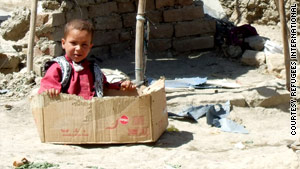
"They are living in cramped corridors ... sharing homes, living outside in tents. They have a lot of difficulties with breathing conditions, very limited access to medical facilities to address the problems. A lot of it is chronic," said Yoshikawa.
Yoshikawa visited tent cities across Afghanistan earlier this year with her colleagues, taking photos of the refugees' living conditions and sharing them publicly for the first time with CNN. In describing the makeshift camps, Refugees International representatives say some were situated along major roads within Afghanistan's capital of Kabul, thrown together with discarded objects such as old cars, plastic tarps and torn sheets.
The humanitarian group warns that Afghans continue to be driven from their homes by coalition air strikes and special forces raids.
"There is still a lot of displacement happening and it's not being properly addressed," said Yoshikawa. "The military isn't reporting people that they see displaced from their military operations. That prevents humanitarian agencies from going to respond because often these are areas inaccessible because of these high levels of conflict."Gen. David Petraeus, outgoing Commander of U.S. Forces in Afghanistan, has long said the military tries to be as careful as possible.
A U.S. State Department's spokeswoman said Friday that despite President Obama's announcement to withdraw 33,000 troops from Afghanistan within the next 15 months, the United States is committed to Afghanistan's long-term stability.
"We do continue to support efforts internally in Afghanistan to ensure that refugees are well managed," said State Department spokeswoman Victoria Nuland. "With regard to the larger question of security in Afghanistan ... our goal is not to allow more insecurity but continue to transfer increasing security to the Afghans. Refugees and other folks who need protecting we have in mind as this strategy evolves with Afghans gaining more strength."
Yet questions remain about the extent of corruption within Afghanistan's security forces, including local police, who Refugees International says are now also driving Afghans from their homes.
"We talked to displaced people who said the Afghan local police, which are supported by U.S. military... are extorting money from people, demanding taxes, using their power to abuse civilians. They've also been implicated in allegations of murder and torture in these communities," explained Yoshikawa.Afghan government officials have often said they are already trying to improve their security forces. Nuland says the United States is working closely with Afghans to ensure there are "good human rights standards" and "anti-corruption standards"
Refugees International says larger humanitarian concerns remain, with many displaced families fearful of returning home after fleeing violence.
The group says that many of those critical local police units, tasked with protecting Afghan residents, are now so corrupt that they should not be funded until strict recruiting and discipline standards are met.
Nawaz suffering from army, ISI phobia
Former President General (Retd) Pervez Musharraf has said the PML-N chief Nawaz Sharif has fallen in army and ISI phobia and making wrong statements to take credit for action which he has never taken.
In an interview with a private TV channel, the former military dictator said Mian Nawaz Sharif
was opposed to nuclear tests and these were carried out under pressure of institutions.
He also referred to the PML-N chief’s claim that Kashmir issue was nearly resolved during the Indian Prime Minister AB Vajpayee’s visit to Pakistan and said that that there was not a single world about Kashmir in the joint statement issued at the end of the Indian leader’s visit. He described Nawaz Sharif as the biggest enemy of Kashmiris and said that he in fact sold out Kashmir and now by speaking lies, he is trying to muster support.
Musharraf said Pakistan was in worst type of economic condition during the days of Nawaz Sharif while he (Nawaz) now talks of country making great progress during his rule.
He said it is beyond one’s comprehension how bin Laden stayed in Abbottabad for five years. He said the drone attacks were damaging the sovereignty of Pakistan and a way out will have to be found.
The former army chief said it is not appropriate to remain silent while the Pakistan Army was being criticised. He said army is a well organised institution but there could be some extremist elements at the lower level.
He regretted that while the country suffered the most in the war on terror, it is being made target of criticism and threatened.
Musharraf said terrorist attack at PNS Mehran base was a security failure which must be investigated.
In reply to a question, Musharraf said he cared for the Sharif family more than Nawaz Sharif. He reminded that he secured permission from Saudi Arabia for treatment abroad of Shahbaz Sharif when he fell ill.
He said whatever Nawaz Sharif says about him (Musharraf) is nothing but a bundle of lies. He said he failed to understand the problems of Nawaz Sharif and said that he put behind the bars Najam Sethi and Husain Haqqani and he (Musharraf) got them released
In an interview with a private TV channel, the former military dictator said Mian Nawaz Sharif

was opposed to nuclear tests and these were carried out under pressure of institutions.
He also referred to the PML-N chief’s claim that Kashmir issue was nearly resolved during the Indian Prime Minister AB Vajpayee’s visit to Pakistan and said that that there was not a single world about Kashmir in the joint statement issued at the end of the Indian leader’s visit. He described Nawaz Sharif as the biggest enemy of Kashmiris and said that he in fact sold out Kashmir and now by speaking lies, he is trying to muster support.
Musharraf said Pakistan was in worst type of economic condition during the days of Nawaz Sharif while he (Nawaz) now talks of country making great progress during his rule.
He said it is beyond one’s comprehension how bin Laden stayed in Abbottabad for five years. He said the drone attacks were damaging the sovereignty of Pakistan and a way out will have to be found.
The former army chief said it is not appropriate to remain silent while the Pakistan Army was being criticised. He said army is a well organised institution but there could be some extremist elements at the lower level.
He regretted that while the country suffered the most in the war on terror, it is being made target of criticism and threatened.
Musharraf said terrorist attack at PNS Mehran base was a security failure which must be investigated.
In reply to a question, Musharraf said he cared for the Sharif family more than Nawaz Sharif. He reminded that he secured permission from Saudi Arabia for treatment abroad of Shahbaz Sharif when he fell ill.
He said whatever Nawaz Sharif says about him (Musharraf) is nothing but a bundle of lies. He said he failed to understand the problems of Nawaz Sharif and said that he put behind the bars Najam Sethi and Husain Haqqani and he (Musharraf) got them released
Tehran moot confers award on late Benazir

The ‘International conference on the global fight against terrorism’ on Saturday, posthumously awarded former prime minister Benazir Bhutto for her leading role in the fight against terrorism. Iraqi President Jalal Talabani conferred the award, which was received by Bakhtawar Bhutto Zardari, the middle child of late Benazir. President Asif Ali Zardari, Iranian President Mahmoud Ahmadinejad and Sudanese President Omer Al Bashir were also present at the occasion.
Saturday, June 25, 2011
A community under siege in tribal Pakistan
aljazeera.net
 Parachinar, in Pakistan's tribal north west, remains under siege. The only road connecting this district bordering Afghanistan to the rest of Pakistan has been blocked by Taliban fighters since 2007.
The blockade was briefly lifted in March, or so the Pakistani government proudly announced. The road was open again and travellers would be protected, they said. Owais, a 25-year-old recent graduate of engineering, was one of the few who took the risk and decided to visit his family.
On March 25, his Toyota HiAce and two other vans were stopped on the Thal-Parachinar road by Taliban fighters. Owais and 44 others were kidnapped.
The Taliban freed the women and children, but killed seven - some claim ten - of the abducted passengers. A further 30 men remained in captivity for close to three months.
After protracted negotiations between tribal elders, the Pakistani government, and varying Taliban factions, 22 of the captives were set free on June 21. Owais was one of the lucky ones.
"They have been handed to the government forces of the Frontier Corps and are on their way home," a friend of Owais told Al Jazeera.
Reports suggest the Taliban were paid a ransom of at least 30 million rupees, roughly $350,000. Eight men remain in captivity. And the road, though no longer described as "blocked", still remains highly insecure.
In his speech this week announcing the military transition in Afghanistan, President Barack Obama once again emphasised Pakistan's crucial role in combating extremism.
"Of course, our efforts must also address terrorist safe havens in Pakistan," he said. "No country is more endangered by the presence of violent extremists, which is why we will … work with the Pakistani government to root out the cancer of violent extremism, and we will insist that it keeps its commitments."
The siege on Parachinar is prime evidence to caution the "mission accomplished" rhetoric already employed by US policy makers. It speaks to the Taliban's tight hold on the crucial border region, the absence of Pakistani government forces, and the challenges that lie ahead in reaching any meaningful conclusion to the "war against terror".
"The whole Kurram region has turned into a detention centre for the people," says local journalist Zulfiqar Ali, referring to the tribal agency of which Parachinar is the administrative capital. Pakistan's tribal areas are divided into seven agencies, with Kurram bordering Afghanistan's Khost province.
On the road to Parachinar, passenger vehicles are frequently attacked and food convoys are torched. Since 2007, hundreds of people have been killed in Kurram due to the violence, while the United Nations says at least 30,000 families have been forced to abandon their homes and move to camps for Internally Displaced People.
But escaping the region has become a difficult task. For residents to make it to Peshawar, the nearest Pakistani city, they have to first go into Afghanistan. That route has often been closed due to military operations by the Pakistani army. And even if they make it through, they face tremendous risks in Afghanistan - because the same fighters are active across the border.
"People cannot even travel there to bury their dead," a local human rights activist told Al Jazeera in condition of anonymity, due to the risks involved in discussing the matter.From sectarianism to militancy
The only road connecting Parachinar to the rest of the country has been blocked since 2007.
The recent troubles in Kurram began as sectarian violence but analysts and local sources say the situation was hijacked by Taliban fighters who use the tribal areas to launch attacks against NATO in Afghanistan.
"Local sectarian groups do not have enough resources to block the road," says Ali. "It is purely a militant issue now."
The Shia are a slight majority in Kurram Agency, an area of about 500,000 residents. During the Afghan Jihad, when the tribal regions were used by the CIA as the training grounds for anti-Soviet fighters, the region saw an insurgence of Sunni hardliners.
"There have been sectarian tensions between Sunni and Shia in Kurram for decades," says Reza Jan, Pakistan Team Lead at the American Enterprise Institute. "But in the past, Sunni-Shia clashes were usually minor. Clashes, when they did occur, were resolved fairly quickly by local leaders and authorities."
After the fall of the Taliban government in Kabul, and Pakistan's crackdown on radical elements in Punjab, the tribal areas became the hub of both Pakistani and Afghan insurgents. But many among the armed groups consider Kurram's Shia tribes - who refused to shelter fighters - as apostates. And Kurram's Shia paid a heavy price as a result.
"The Tareek-e-Taliban's current leader, Hakimullah Mehsud, is known to be fervently anti-Shia," says Reza Jan. "Before he led the TTP, he was the TTP commander for Kurram, Orakzai and Khyber agencies where he made a name for himself through his brutality towards Kurram's Shia."
For the past three years, locals have desperately looked for help, mainly from Islamabad - but also from Kabul. In 2008, they accepted a peace deal with the Taliban. The exact components of the deal are seen differently by analysts, but the purpose was clear: they wanted an end to the violence and a lifting of the blockade on the road.
"The Mari agreement in 2008 gave the government full authority to use force against any militants blocking the road," says Ali. "Why has the government not been able to deliver?"
Failure of the state
With Pakistan's security apparatus always focused on India, the insurgency in the tribal areas did not recieve sufficient attention in its early years.
As sectarian violence began to be dominated by the Sunni Taliban, the Pakistani government relied on the Frontier Corps, a federally-controlled paramilitary force. But the Frontier Corps was ill-equipped in counter-insurgency and failed to stem the Taliban's rapid growth.
In 2009, two Pakistani generals told the Associated Press that, of $6.6 billion in US military aid provided during the previous six years for counter-terrorism measures, only $500 million had been used for that purpose. The rest of the funds were used towards Pakistan's "defence against India".
Since April 2010, the Pakistani army has reportedly paid more attention to the problem and launched operations in central and lower Kurram agency. But the army's repeated reliance on peace deals with the insurgents suggests they have failed in rooting out the problem.
"It does not mean the state is not trying," says Irfan Ashraf, a journalism lecturer at neighbouring Peshawar University. "The fact of the matter is that [the] state is too weak to resolve the issue. And it is not accepting its weakness."
More people have been displaced by these recent operations. And the route via Afghanistan has also now closed, limiting the flow of food, medicine and other supplies.
"If a sack of flour costs 2000 rupees in Islamabad, it cost us 6000 in Parachinar," one local, recently relocated to Islamabad, said.
The presence of the army in the region has also limited media access, pushing the issue out of the public discussion.
"Anything that is security related is a 'no go area' for media and the rest," says Ashraf. "The media looks up to the security forces, and the official line of the security forces is that it is quiet there."
When the government announced the reopening of the road in March, it was on the back of a peace deal. Signed in 2008 at the height of the sectarian violence, the deal was being implemented three years later, when local dynamics had changed. Sectarianism was the smaller problem for locals. By then, the Taliban were dominating the area.
The deal itself is not problematic, but the peace deal's reported mediators, the Haqqani "independent militia", appears to have become one of the main sources of the abuses now.
"The Haqqanis - with backing from the state - were able to broker a deal between Shia and Sunni. They, in return, would be given transit rights through Kurram," says Reza Jan.
"The Haqqanis essentially fashioned themselves as the guarantors of the deal."
Not only has the deal brought more problems for the locals as the Haqqani fighters move around more easily, it has also brought US drone aircraft. The population, once caught in constant sectarian violence, now finds itself again under siege - by the Taliban and the Pakistani army on the ground - and US drones amid the skies.

The blockade was briefly lifted in March, or so the Pakistani government proudly announced. The road was open again and travellers would be protected, they said. Owais, a 25-year-old recent graduate of engineering, was one of the few who took the risk and decided to visit his family.
On March 25, his Toyota HiAce and two other vans were stopped on the Thal-Parachinar road by Taliban fighters. Owais and 44 others were kidnapped.
The Taliban freed the women and children, but killed seven - some claim ten - of the abducted passengers. A further 30 men remained in captivity for close to three months.
After protracted negotiations between tribal elders, the Pakistani government, and varying Taliban factions, 22 of the captives were set free on June 21. Owais was one of the lucky ones.
"They have been handed to the government forces of the Frontier Corps and are on their way home," a friend of Owais told Al Jazeera.
Reports suggest the Taliban were paid a ransom of at least 30 million rupees, roughly $350,000. Eight men remain in captivity. And the road, though no longer described as "blocked", still remains highly insecure.
In his speech this week announcing the military transition in Afghanistan, President Barack Obama once again emphasised Pakistan's crucial role in combating extremism.
"Of course, our efforts must also address terrorist safe havens in Pakistan," he said. "No country is more endangered by the presence of violent extremists, which is why we will … work with the Pakistani government to root out the cancer of violent extremism, and we will insist that it keeps its commitments."
The siege on Parachinar is prime evidence to caution the "mission accomplished" rhetoric already employed by US policy makers. It speaks to the Taliban's tight hold on the crucial border region, the absence of Pakistani government forces, and the challenges that lie ahead in reaching any meaningful conclusion to the "war against terror".
"The whole Kurram region has turned into a detention centre for the people," says local journalist Zulfiqar Ali, referring to the tribal agency of which Parachinar is the administrative capital. Pakistan's tribal areas are divided into seven agencies, with Kurram bordering Afghanistan's Khost province.
On the road to Parachinar, passenger vehicles are frequently attacked and food convoys are torched. Since 2007, hundreds of people have been killed in Kurram due to the violence, while the United Nations says at least 30,000 families have been forced to abandon their homes and move to camps for Internally Displaced People.
But escaping the region has become a difficult task. For residents to make it to Peshawar, the nearest Pakistani city, they have to first go into Afghanistan. That route has often been closed due to military operations by the Pakistani army. And even if they make it through, they face tremendous risks in Afghanistan - because the same fighters are active across the border.
"People cannot even travel there to bury their dead," a local human rights activist told Al Jazeera in condition of anonymity, due to the risks involved in discussing the matter.From sectarianism to militancy
The only road connecting Parachinar to the rest of the country has been blocked since 2007.
The recent troubles in Kurram began as sectarian violence but analysts and local sources say the situation was hijacked by Taliban fighters who use the tribal areas to launch attacks against NATO in Afghanistan.
"Local sectarian groups do not have enough resources to block the road," says Ali. "It is purely a militant issue now."
The Shia are a slight majority in Kurram Agency, an area of about 500,000 residents. During the Afghan Jihad, when the tribal regions were used by the CIA as the training grounds for anti-Soviet fighters, the region saw an insurgence of Sunni hardliners.
"There have been sectarian tensions between Sunni and Shia in Kurram for decades," says Reza Jan, Pakistan Team Lead at the American Enterprise Institute. "But in the past, Sunni-Shia clashes were usually minor. Clashes, when they did occur, were resolved fairly quickly by local leaders and authorities."
After the fall of the Taliban government in Kabul, and Pakistan's crackdown on radical elements in Punjab, the tribal areas became the hub of both Pakistani and Afghan insurgents. But many among the armed groups consider Kurram's Shia tribes - who refused to shelter fighters - as apostates. And Kurram's Shia paid a heavy price as a result.
"The Tareek-e-Taliban's current leader, Hakimullah Mehsud, is known to be fervently anti-Shia," says Reza Jan. "Before he led the TTP, he was the TTP commander for Kurram, Orakzai and Khyber agencies where he made a name for himself through his brutality towards Kurram's Shia."
For the past three years, locals have desperately looked for help, mainly from Islamabad - but also from Kabul. In 2008, they accepted a peace deal with the Taliban. The exact components of the deal are seen differently by analysts, but the purpose was clear: they wanted an end to the violence and a lifting of the blockade on the road.
"The Mari agreement in 2008 gave the government full authority to use force against any militants blocking the road," says Ali. "Why has the government not been able to deliver?"
Failure of the state
With Pakistan's security apparatus always focused on India, the insurgency in the tribal areas did not recieve sufficient attention in its early years.
As sectarian violence began to be dominated by the Sunni Taliban, the Pakistani government relied on the Frontier Corps, a federally-controlled paramilitary force. But the Frontier Corps was ill-equipped in counter-insurgency and failed to stem the Taliban's rapid growth.
In 2009, two Pakistani generals told the Associated Press that, of $6.6 billion in US military aid provided during the previous six years for counter-terrorism measures, only $500 million had been used for that purpose. The rest of the funds were used towards Pakistan's "defence against India".
Since April 2010, the Pakistani army has reportedly paid more attention to the problem and launched operations in central and lower Kurram agency. But the army's repeated reliance on peace deals with the insurgents suggests they have failed in rooting out the problem.
"It does not mean the state is not trying," says Irfan Ashraf, a journalism lecturer at neighbouring Peshawar University. "The fact of the matter is that [the] state is too weak to resolve the issue. And it is not accepting its weakness."
More people have been displaced by these recent operations. And the route via Afghanistan has also now closed, limiting the flow of food, medicine and other supplies.
"If a sack of flour costs 2000 rupees in Islamabad, it cost us 6000 in Parachinar," one local, recently relocated to Islamabad, said.
The presence of the army in the region has also limited media access, pushing the issue out of the public discussion.
"Anything that is security related is a 'no go area' for media and the rest," says Ashraf. "The media looks up to the security forces, and the official line of the security forces is that it is quiet there."
When the government announced the reopening of the road in March, it was on the back of a peace deal. Signed in 2008 at the height of the sectarian violence, the deal was being implemented three years later, when local dynamics had changed. Sectarianism was the smaller problem for locals. By then, the Taliban were dominating the area.
The deal itself is not problematic, but the peace deal's reported mediators, the Haqqani "independent militia", appears to have become one of the main sources of the abuses now.
"The Haqqanis - with backing from the state - were able to broker a deal between Shia and Sunni. They, in return, would be given transit rights through Kurram," says Reza Jan.
"The Haqqanis essentially fashioned themselves as the guarantors of the deal."
Not only has the deal brought more problems for the locals as the Haqqani fighters move around more easily, it has also brought US drone aircraft. The population, once caught in constant sectarian violence, now finds itself again under siege - by the Taliban and the Pakistani army on the ground - and US drones amid the skies.
Afghanistan, Iran, Pakistan to 'combat terrorism'

The presidents of Afghanistan, Iran and Pakistan

agreed on Saturday to join forces in combating militancy as they attended a counterterrorism summit in Tehran under the cloud of an Afghan hospital bombing that killed 60 people.
The joint statement by the three neighbours also came hot on the heels of an announcement by US President Barack Obama that Washington will withdraw 33,000 of its 99,000 troops from Afghanistan by the end of next summer.
"All sides stressed their commitment to efforts aimed at eliminating extremism, militancy, terrorism, as well as rejecting foreign interference, which is in blatant opposition to the spirit of Islam, the peaceful cultural traditions of the region and its peoples' interests," the statement said.
"All sides agreed to continue meeting at foreign, interior, security and economy ministers' level to prepare a roadmap for the next summit due to be held in Islamabad before the end of 2011," added the statement carried by Iran's official IRNA news agency.
Afghan President Hamid Karzai and his Iranian and Pakistani counterparts Mahmoud Ahmadinejad and Asif Ali Zardari held three-way talks on Friday ahead of a six-nation counterterrorism conference on Saturday.
The three leaders discussed "ways of battling terrorism, extremism and drug trafficking," IRNA said.
In his speech at the opening session of the two-day summit, Karzai said that despite his government's efforts, militancy was on the rise both in his country and in the region.
"Unfortunately, despite all the achievements in the fields of education, infrastructure and reconstruction, not only has Afghanistan not yet achieved peace and security, but terrorism is expanding and threatening more than ever Afghanistan and the region," the Afghan leader said.
The Pakistani president said: "Terrorists violate both human and divine values by inflicting death and destruction on fellow human beings. They have no religion."
He said attacks had resulted in the deaths of 35,000 people in Pakistan, 5,000 of them law enforcement personnel, and material damage totalling $67 billion.
In his speech to the opening session, Ahmadinejad again accused Iran's archfoe, the United States, of using the September 11, 2001 attacks as a "pretext" for sending troops to the region.
"In light of the way it was approached and exploited, September 11 is very much like the Holocaust," the Iranian leader charged.
"The American government used the attacks as a pretext to occupy two countries, and kill, injure and displace people in the region," he added.
"If the black box of the Holocaust and September 11 is opened, many of the realities will come to light. But unfortunately despite worldwide demand, the American government has not allowed it."
Ahmadinejad has repeatedly courted controversy by questioning the accepted version of both the September 11 attacks, which killed nearly 3,000 people in the United States, and the Holocaust.
He has dubbed 9/11 a "big lie" and a "suspect affair" similar to the Nazi Holocaust, which he dismissed as a "myth" shortly after coming to power in 2005, triggering an international outcry.
In his message to the counterterrorism conference, which was also attended by the leaders of Iraq, Sudan and Tajikistan, Iran's supreme leader Ayatollah Ali Khamenei also spoke out against what he charged was Western abuse of the terrorist threat.
"The diabolical calculation of the dominating powers is to exploit terrorism as a tool to gain their illegitimate aims and they have used it in their plans," he said in the message which was read out to the conference.
"In their view, terrorism is whatever threatens their interests. They consider those who are fighting for their legitimate right against occupiers as terrorists but do not consider their mercenaries and malicious groups who harm innocent people as terrorists."
Iranian Foreign Minister Ali Akbar Salehi said the next conference of the six nations would be held in Baghdad next year, and a permanent secretariat would be opened in Tehran.
While US talks withdrawal, Afghan corruption soars

These are some of the elements, large and small, that together form the elaborate organized crime environment Afghans contend with daily. And despite the hoped-for success of the U.S. military surge and President Barack Obama's claims of significant progress, Afghanistan's resemblance to a mafia state that cannot serve its citizens may only be getting worse, according to an upcoming report by the International Crisis Group, a Brussels-based think tank.
The 46-page study, to be released next week, looks specifically at Afghanistan's heartland: the rural areas of Ghazni, Wardak, Logar and other provinces just beyond the periphery of Kabul. Unemployment is high, government presence is low and the insurgency operates with impunity. Corruption and cooperation with the Taliban reach the highest levels of local governance.
"Nearly a decade after the U.S.-led military intervention little has been done to challenge the perverse incentives of continued conflict in Afghanistan," the research group says. Rather, violence and the billions of dollars in international aid have brought wealthy officials and insurgents together. And "the economy as a result is increasingly dominated by a criminal oligarchy of politically connected businessmen," the report concludes.
The sobering analysis of a culture of corruption that long predates the U.S.-military effort comes as Obama tries to highlight military and other gains in Afghanistan as proof that Americans can leave. The widespread abuse of power from simple shakedowns to outright collusion with the Taliban will surely outlive the presence of American combat troops.
In announcing that he would pull out 10,000 soldiers this year and 23,000 more by the end of next summer, Obama made it clear that his timetable for a U.S. military drawdown was not going to be beholden to further security advances or the ability of American and Afghan forces to maintain their recent gains. Obama didn't mention the issue of corruption.
But regardless of how many troops are withdrawn, and how fast they come home, Obama acknowledged the U.S. withdrawal by 2015 will create challenges for the country. "We will not try to make Afghanistan a perfect place," the president said. A responsible end to the war is achievable, but he warned of "dark days ahead."
For ordinary Afghans, the situation in the center of the country provides a valuable case study. There, the Pashtun majority lives alongside Hazaras and Tajiks. Foreign money has created competition even among the insurgent groups as fighters loyal to Mullah Omar's Taliban vie with the Haqqani network and local militants for a share of the riches. Citizens end up squeezed by them and government officials, the report argues.
In the district of Qarabagh, southwest of Kabul, insurgents share an informal alliance with the local commander, Gen. Bashi Habibubullah. In nearby Ghazni city and elsewhere, rich chromite mines were plundered for export for the benefit of the provincial governor, Usmani Usmani.
Usmani was eventually removed from his post but only after becoming a "particularly embarrassing example of corruption," according to Candace Rondeaux, International Crisis Group's senior analyst for Afghanistan. To move the chromite — a mineral that goes primarily to Pakistan and then to China for stainless steel production — Usmani contracted the help of insurgents. They would then coordinate attacks to distract security forces away from outgoing trucks, Rondeaux said.
The pervasiveness of the corruption hasn't escaped the attention of American officials, either. In a 2009 diplomatic memo released by the anti-secrecy website WikiLeaks, former Ambassador Francis Ricciardone noted how "conversations paint a picture of criminal enterprise masquerading as public administration in Ghazni."
At the most micro of levels, there are the apples. The taxes may pale in comparison to the weapons and drug trades, but with insurgents gaining a large chunk of the revenues from hundreds of thousands of exports each year, the profits help feed the conflict. And for farmers living close to subsistence levels, the extortion may make survival even a challenge.
Ultimately, the enduring corruption and collusion between political elites and insurgents may not define the post-war Afghanistan or what America's nearly 15-year legacy will mean when all U.S. troops have departed. But it does challenge any notion of a clean exit.
While the focus in Washington has centered on bringing the Taliban to the negotiating table, Rondeaux said her research of everyday life in Afghanistan shows it would be a mistake to see a political solution as a solve-all to the country's problems.
"It will not address the growing organized crime networks in Afghanistan," she said. "The U.S. and its partners can withdraw their forces and make power-sharing arrangements. It doesn't mean these will hold, or that Americans should feel comfortable with how they are leaving this place.
Nawaz Sharif a liar
In the interview with ARY channel, Pervez Musharraf accuses former premier Nawaz Sharif of maligning the army
Pakistan's former president Pervez Musharraf lambasted former prime minister Nawaz Sharif in a television interview aired on Friday , branding him a "liar" and accusing him of maligning the army.
In the interview with ARY channel, he said Nawaz Sharif was suffering from "paranoia" and that was why he "speaks against me day and night."
"He is a compulsive liar," said the former military ruler, who had toppled Sharif's government and seized power in October 1999 in a bloodless coup and sent him into exile in 2000 for a decade.
Musharraf claimed that as prime minister, Sharif had agreed to a "sell out" on Kashmir issue during the visit in February 1999 of then Indian prime minister Atal Behari Vajpayee to Lahore.
He ridiculed Sharif for taking credit for the nuclear weapon tests conducted by Pakistan in May 1998 in a response to similar tests earlier by rival India.
"Nawaz Sharif was against conducting the tests but agreed under pressure from others," he said, wihout identifying who exerted the pressure.
Musharraf, who has been living in self-imposed exile since leaving Pakistan in 2008 and has formed his own political party under the name of All Pakistan Muslim League, also answered questions about the May 2 US operation that killed Osama Bin Laden on Pakistani soil.
He said it was wrong that questions raised by the operation were not answered with promptness. For three days after the incident no one from the government or the military spoke on the matter and "this silence was a wrong strategy."
Musharraf voiced skepiticism about the claim that Bin Laden had been living in the garrison town of Abbottabad for five years, saying it "does not logically appeal to me that he was there for all these years."
Pakistan's former president Pervez Musharraf lambasted former prime minister Nawaz Sharif in a television interview aired on Friday , branding him a "liar" and accusing him of maligning the army.
In the interview with ARY channel, he said Nawaz Sharif was suffering from "paranoia" and that was why he "speaks against me day and night."
"He is a compulsive liar," said the former military ruler, who had toppled Sharif's government and seized power in October 1999 in a bloodless coup and sent him into exile in 2000 for a decade.
Musharraf claimed that as prime minister, Sharif had agreed to a "sell out" on Kashmir issue during the visit in February 1999 of then Indian prime minister Atal Behari Vajpayee to Lahore.
He ridiculed Sharif for taking credit for the nuclear weapon tests conducted by Pakistan in May 1998 in a response to similar tests earlier by rival India.
"Nawaz Sharif was against conducting the tests but agreed under pressure from others," he said, wihout identifying who exerted the pressure.
Musharraf, who has been living in self-imposed exile since leaving Pakistan in 2008 and has formed his own political party under the name of All Pakistan Muslim League, also answered questions about the May 2 US operation that killed Osama Bin Laden on Pakistani soil.
He said it was wrong that questions raised by the operation were not answered with promptness. For three days after the incident no one from the government or the military spoke on the matter and "this silence was a wrong strategy."
Musharraf voiced skepiticism about the claim that Bin Laden had been living in the garrison town of Abbottabad for five years, saying it "does not logically appeal to me that he was there for all these years."
Pakistan army chief shows no signs of quitting soon

At the height of the storm which swept Pakistan after the May 2 killing of Osama bin Laden, army chief General Ashfaq Kayani spoke for 1- hours, then told his officers they could ask whatever they wanted, and lit a cigarette.
"This is a very delicate situation," he said, in answer to a question about relations with the United States at the National Defense University on May 19. "It's not an easy one."
"If we come out of it, keep our relevance and show them we are part of the solution, not part of the problem, we will succeed," Kayani said in one of a series of "town hall" meetings he held to revive army morale.
Those meetings have since fueled speculation - particularly in the United States - that the most powerful man in Pakistan, by opening himself up to questions, is fighting for survival.
Participants at the meeting, however, said Kayani showed no outward sign of being under pressure as he sat in full dress uniform at a table on the same level as his audience.
Equipped only with a file, ash tray and glass of water and facing rows of some 80 officers along with a few civilians, he patiently answered questions from all ranks.
"In uniform, we tend to see everything in black and white," Kayani said when a young colonel asked why Pakistan kept a relationship United States if Washington did not trust it.
"In the real world there are a lot of grey areas and you have to deal with it."
A Reuters correspondent attended the meeting, but since it was off-the-record did not report it until after participants themselves relayed to the media versions of what Kayani had said. Kayani's comments were reported by participants and verified by Reuters.
The Pakistan army, the last line of Defense in a country battling a growing Islamist militant insurgency, has come under intense pressure since U.S. forces found and killed bin Laden in the garrison town of Abbottabad on May 2.
Its inability to find the al Qaeda leader and to detect the U.S. helicopter-borne raid in which he was killed has left it facing its most severe crisis since its humiliating defeat by India in the 1971 war in which then East Pakistan won independence as Bangladesh.
In some ways it is even worse than 1971, when state-run media suppressed the worst of the news in a war happening far away from the traditional heartland of the country.
This time, U.S. forces carried out a raid undetected deep within the heart of Pakistan, not far from the prestigious Pakistan Military Academy.
That same month militants attacked a naval base in Karachi and blew up two maritime patrol aircraft.
Nobody knows what is going to happen next.
DRAWING OUT QUESTIONS
Yet no one expects Kayani to step down any time soon, or at least not until he has restored confidence within the army. And nor do they expect his most senior officers to turn against him.
"The army as an institution is under attack so if the Corps Commanders ask him to leave, that unleashes a very explosive dynamic," said Imtiaz Gul at the Center for Research and Security Studies in Islamabad.
"That's why the Corps Commanders will never ask him to step down."
In inviting questions, Kayani was following a military tradition where officers encourage their men to express their doubts before going into battle, but after the orders are given, expect them to be followed without question.
"In the military, it is regarded as a reflection of loyalty if you are frank," said General (retired) Ehsan ul-Haq, when recalling meetings of the Corps Commanders, the army's top officers with command over troops across the country.
"There is a discussion (among the Corps Commanders), but there are no fireworks," said Haq, a former head of the military's Inter-Services Intelligence (ISI) agency and then chairman of the Joint Chiefs of Staff.
"There is a lot of poise and dignity in how you address issues."
At the evening meeting at the National Defense University, Kayani, far from appearing on the defensive, actively encouraged questions.
When a young female student put up her hand to ask a question and the officer running the event said there was no more time - it was by then nearly midnight - Kayani insisted on answering it.
The student asked about the threats Pakistan faced. Kayani in response made no mention of Pakistan's traditional rival India -- the subject did not come at all in four-hour long session. "What worries me is the indirect threat and that is the economy," he said. "If you want to be secure ... you have to address your internal situation and the economy is the major issue."
And rather than relying on the Americans for money, Pakistan should reform its economy and raise taxes domestically. "We have to stand up on our own feet and we cannot do this unless we have a strong economy," he said.
UNPRECEDENTED CRITICISM
U.S. media reports that Kayani is fighting for survival have infuriated the military which sees them as a deliberate attempt to malign the army.
Those have been accompanied by unprecedented domestic criticism of the army, which peaked after Pakistani journalist Saleem Shahzad was kidnapped in Islamabad and beaten to death at the end of May.
Shahzad had previously spoken of being threatened by the ISI over his reporting, and suspicion immediately fell on the powerful intelligence agency. It denied involvement.
And while the army still enjoys high approval ratings in Pakistan, its critics accuse it of sucking up scarce resources in military expenditure focused on India.
They also blame it for cultivating Islamist militants in the past for use against India, who are now increasingly slipping out of its control and turning on Pakistan.
There are, moreover, unquestionably strains within the military, a Muslim army which for 10 years has been asked to suppress the anti-Americanism which threads through society and fight in a campaign which many see as "America's war."
Some of those strains rose to the surface this week when the army said it had arrested a brigadier over links to the banned Hizb-ul-Tahrir, an Islamist political group seeking to overthrow the civilian government and establish an Islamic theocracy.
Kayani himself has also been the subject of private grumblings in the military after he obtained last year a three-year extension to his term of office to November 2013 - effectively strangling promotions further down the line.
But barring another big unexpected event which dents the army's credibility further, there appears to be little evidence to suggest that Kayani is about to be forced out.
Over tea, biscuits and sandwiches which followed the meeting at the National Defense University, he appeared relaxed and smiling as he chatted to participants.
"As long as you are in the (army chief's) seat, there is no threat to you," said Imtiaz Gul.
Friday, June 24, 2011
Hina Rabbani set to be Pak’s new foreign minister
Hina Rabbani Khar
, Pakistan's minister of state for foreign affairs, is being widely tipped to be elevated as a full-fledged foreign minister ahead of crucial talks with India next month, official sources said today.
Khar, 34, is the daughter of veteran politician Malik Ghulam Noor Rabbani Khar and the niece of former governor Malik Ghulam Mustafa Khar. She was a member of the PML-Q party during former military ruler Pervez Musharraf 's regime and joined the ruling Pakistan People's Party ahead of the 2008 general election.
Insiders in Pakistan's foreign office said that Khar had emerged as a front-runner in the race for the slot of foreign minister, which has been vacant since previous incumbent Shah Mahmood Qureshi was removed during a cabinet reshuffle in February.
Other candidates vying for the position, including federal ministers Sardar Aseff Ahmad Ali and Makhdoom Sahabuddin and national assembly speaker Fehmida Mirza, were no longer considered strong contenders for the slot, the sources said.
The move to appoint a full-time minister for the foreign office has gained urgency as talks between the foreign ministers of India and Pakistan are expected to be held next month.
, Pakistan's minister of state for foreign affairs, is being widely tipped to be elevated as a full-fledged foreign minister ahead of crucial talks with India next month, official sources said today.
Khar, 34, is the daughter of veteran politician Malik Ghulam Noor Rabbani Khar and the niece of former governor Malik Ghulam Mustafa Khar. She was a member of the PML-Q party during former military ruler Pervez Musharraf 's regime and joined the ruling Pakistan People's Party ahead of the 2008 general election.
Insiders in Pakistan's foreign office said that Khar had emerged as a front-runner in the race for the slot of foreign minister, which has been vacant since previous incumbent Shah Mahmood Qureshi was removed during a cabinet reshuffle in February.
Other candidates vying for the position, including federal ministers Sardar Aseff Ahmad Ali and Makhdoom Sahabuddin and national assembly speaker Fehmida Mirza, were no longer considered strong contenders for the slot, the sources said.
The move to appoint a full-time minister for the foreign office has gained urgency as talks between the foreign ministers of India and Pakistan are expected to be held next month.
Nawaz Sharif Tell nation why you fled country?
Former federal law minister Babar Awan has asked the Sharif brothers to tell the nation as to why they had fled the country twice, saying the state is like a mother and every sincere son cannot leave his mother alone in critical situation. Talking to reporters on Supreme Court premises on Thursday, Babar said that after a devastating defeat of the Pakistan Muslim League-Nawaz in Azad Jammu and Kashmir and Punjab elections, its top brass would again take off to a foreign country. He said that unlike the Sharifs, PPP leadership would not leave its motherland in any untoward situation as they belonged to a party that was quite popular among the masses for giving sacrifices for the cause of the nation and country. The former law minister also said that the PPP was determined to respond to any decree given by “Maulvi” Nawaz Sharif. “The political environment is quite sound in Gilgit-Baltistan, Sindh, Khyber Pakhtunkhwa and Balochistan, but the Lahore thrown is uneasy for which the Sharifs have constituted a bullets-and-abuses squad for giving a flurry of decrees (against the ruling PPP),” he added.
How Pakistan’s 'filthy rich' ruling elite project themselves as 'poor' to public!
The assets declared by the ruling elites of the Sindh and Punjab assemblies demonstrate the laughably pitiful attitude of Pakistan parliamentarians to hide their wealth details.
The Election Commission of Pakistan has made public the asset details of the ‘filthy rich’ ruling elites of the two provincial assemblies, in which they sound quite ‘timid’ in revealing their otherwise aristocratic lifestyles.
Despite the fact that Punjab Chief Minister Mian Shahbaz Sharif has assets worth over 175 million rupees in the United Kingdom, including a 146-million-rupee mortgaged property there, no record of his believably big assets in Saudi Arabia is provided in his assets returns.
Perhaps the huge brigade of vehicles parked at his Raiwand residence are just ‘delusional’ entities, as according to the asset details with the ECP, Shahbaz actually owns only one car ‘gifted’ to him, 2006 model Toyota Land Cruiser.
On the other hand, Sindh Chief Minister Syed Qaim Ali Shah conveniently managed to conceal the actual worth of his land details by attaching a two-line note right at the top of his assets returns which read: “These represent costs/valuations made by government agencies several years ago. No fresh valuations are available.”
The value of the imported bullet proof Toyota Land Cruiser that belongs to Prime Minister Yousuf Raza Gilani’s son Abdul Qadir Gilani, according to his assets returns, is 128 million rupees.
He has 500 tolas of gold that value 13 million rupees, according to the asset details with the ECP, but considering the current market price of gold being 49,110 rupees per tola, the 500 tolas of gold do not value less than 24 million rupees, The Nation reports.
The ‘poorest’ parliamentarians include Shazia Mari, Faisal Sabzwari, Nadia Gabol, Farah Deeba and several others, who do not have any movable or immovable property registered in their names, and are perhaps leading their ‘miserable’ lives with sheer reliance either on petty savings, small investments or some divine intervention!
The Election Commission of Pakistan has made public the asset details of the ‘filthy rich’ ruling elites of the two provincial assemblies, in which they sound quite ‘timid’ in revealing their otherwise aristocratic lifestyles.
Despite the fact that Punjab Chief Minister Mian Shahbaz Sharif has assets worth over 175 million rupees in the United Kingdom, including a 146-million-rupee mortgaged property there, no record of his believably big assets in Saudi Arabia is provided in his assets returns.
Perhaps the huge brigade of vehicles parked at his Raiwand residence are just ‘delusional’ entities, as according to the asset details with the ECP, Shahbaz actually owns only one car ‘gifted’ to him, 2006 model Toyota Land Cruiser.
On the other hand, Sindh Chief Minister Syed Qaim Ali Shah conveniently managed to conceal the actual worth of his land details by attaching a two-line note right at the top of his assets returns which read: “These represent costs/valuations made by government agencies several years ago. No fresh valuations are available.”
The value of the imported bullet proof Toyota Land Cruiser that belongs to Prime Minister Yousuf Raza Gilani’s son Abdul Qadir Gilani, according to his assets returns, is 128 million rupees.
He has 500 tolas of gold that value 13 million rupees, according to the asset details with the ECP, but considering the current market price of gold being 49,110 rupees per tola, the 500 tolas of gold do not value less than 24 million rupees, The Nation reports.
The ‘poorest’ parliamentarians include Shazia Mari, Faisal Sabzwari, Nadia Gabol, Farah Deeba and several others, who do not have any movable or immovable property registered in their names, and are perhaps leading their ‘miserable’ lives with sheer reliance either on petty savings, small investments or some divine intervention!
Sharif Brothers pursuing failed policies of past: Shahzia Marri
Sindh Minister for Electric Power Ms. Shazia Marri on Friday condemned the offending statements of PML-N Chief Nawaz Sharif and Chief Minister Punjab Shahbaz Sharif against the President Asif Ali Zardari and termed it ‘unwise’. Speaking at the floor of the house in Sindh Assembly on Friday, she lamented Sharif Brothers for being undemocratic in the democratic environment. She said they had been promoting their hostile politics of the past during the tenure of democratically elected government of PPP, which would never be accepted.
Pakistan must be part of Afghan peace process: US
Pakistan must be a part of the Afghan peace process, US Secretary of State Hillary Clinton told Congress on Thursday while announcing that senior Afghan, Pakistani and American officials would meet next week for further talks on this issue.
But the outgoing Defence Secretary Robert Gates said that success was possible in the war in Afghanistan even if Pakistan failed to fully cooperate in countering militants along its border.
In an interview to the AFP news agency, Mr Gates said that “some positive steps” by Pakistan were needed but “as long as the picture stays mixed like that, that we can be successful”.
In her opening remarks before the Senate Foreign Relations Committee, Secretary Clinton disclosed that the United States had also included Iran in the peace process.
US Special Representative Marc Grossman was leading an active diplomatic effort to build support for a political solution to the Afghan war, she said.
“What we call the Core Group — Afghanistan, Pakistan and the United States — has met twice and will convene again next week,” Mrs Clinton said, without saying where this group would meet.
But diplomatic sources told Dawn that the meeting would be held in Kabul on June 27 and Mr Grossman would lead the US delegation.
Reports in the US and international media suggest that senior American officials have already had several meetings with senior Taliban officials in Germany and other places. Pakistan also participated in these meetings. “Pakistan must be part of this process,” said Secretary Clinton, indirectly confirming Pakistan`s participation.
The US, she said, was also engaging other countries in the region “around a common vision of an independent, stable Afghanistan and a region free of Al Qaeda.”
The talks with those nations, she said, were also progressing smoothly. “We believe we`ve made progress with all of the neighbours, including India, Russia, and even Iran.”
Secretary Clinton noted that last Friday the UN Security Council voted unanimously to support reconciliation by splitting its sanctions on Al Qaeda and the Taliban into two separate lists.
This, she said, opened the door for the insurgents to abandon the terrorists and choose a different path.
“We welcome these steps, and for the United States the key diplomatic priority and indeed a lynchpin of this entire effort is closing the gap between Kabul and Islamabad.”
Secretary Clinton recalled that earlier this month, Pakistan and Afghanistan launched a joint peace commission and held substantive talks at the highest levels.
“Also, very significant, was the full implementation on June 12th of the Transit Trade Agreement, which will create new economic opportunity on both sides of the Durand Line and lay the foundation for a broader vision of regional economic integration and cooperation,” she said.
Secretary Clinton said that she recently visited Pakistan, and had, “as we say in diplo-speak, very candid discussions” with its leaders.
“The United States has clear expectations for this relationship, and as President Obama said last night, the United States will never tolerate a safe haven for those who kill Americans,” she said.
“We are looking to Pakistan to take concrete actions on the goals we share: Defeating violent extremism, which has also taken so many innocent Pakistani lives; ending the conflict in Afghanistan; and securing a stable, democratic, prosperous future.”
But the outgoing Defence Secretary Robert Gates said that success was possible in the war in Afghanistan even if Pakistan failed to fully cooperate in countering militants along its border.
In an interview to the AFP news agency, Mr Gates said that “some positive steps” by Pakistan were needed but “as long as the picture stays mixed like that, that we can be successful”.
In her opening remarks before the Senate Foreign Relations Committee, Secretary Clinton disclosed that the United States had also included Iran in the peace process.
US Special Representative Marc Grossman was leading an active diplomatic effort to build support for a political solution to the Afghan war, she said.
“What we call the Core Group — Afghanistan, Pakistan and the United States — has met twice and will convene again next week,” Mrs Clinton said, without saying where this group would meet.
But diplomatic sources told Dawn that the meeting would be held in Kabul on June 27 and Mr Grossman would lead the US delegation.
Reports in the US and international media suggest that senior American officials have already had several meetings with senior Taliban officials in Germany and other places. Pakistan also participated in these meetings. “Pakistan must be part of this process,” said Secretary Clinton, indirectly confirming Pakistan`s participation.
The US, she said, was also engaging other countries in the region “around a common vision of an independent, stable Afghanistan and a region free of Al Qaeda.”
The talks with those nations, she said, were also progressing smoothly. “We believe we`ve made progress with all of the neighbours, including India, Russia, and even Iran.”
Secretary Clinton noted that last Friday the UN Security Council voted unanimously to support reconciliation by splitting its sanctions on Al Qaeda and the Taliban into two separate lists.
This, she said, opened the door for the insurgents to abandon the terrorists and choose a different path.
“We welcome these steps, and for the United States the key diplomatic priority and indeed a lynchpin of this entire effort is closing the gap between Kabul and Islamabad.”
Secretary Clinton recalled that earlier this month, Pakistan and Afghanistan launched a joint peace commission and held substantive talks at the highest levels.
“Also, very significant, was the full implementation on June 12th of the Transit Trade Agreement, which will create new economic opportunity on both sides of the Durand Line and lay the foundation for a broader vision of regional economic integration and cooperation,” she said.
Secretary Clinton said that she recently visited Pakistan, and had, “as we say in diplo-speak, very candid discussions” with its leaders.
“The United States has clear expectations for this relationship, and as President Obama said last night, the United States will never tolerate a safe haven for those who kill Americans,” she said.
“We are looking to Pakistan to take concrete actions on the goals we share: Defeating violent extremism, which has also taken so many innocent Pakistani lives; ending the conflict in Afghanistan; and securing a stable, democratic, prosperous future.”
Thursday, June 23, 2011
President Zardari promulgates FATA/PATA Regulations to fight against miscreants
President of Pakistan, on advise of the Prime Minister and approval by the federal government, has promulgated the Regulations “Action in Aid of Civil Powers - 2011” for FATA and PATA to carry out operation in Khyber Pukhtoonkhwa (KPK) against miscreants who are waging war against the state of Pakistan, it is officially stated here Thursday. An official of the Ministry of States and Frontier Regions (SAFRAN) said that Pakistan has been facing a critical challenge from miscreants on its North-Western borders where hundreds of civilians and law enforcement agencies’ personnel have embraced martyrdom.
Miscreants are bent upon the destruction of our schools, hospitals, mosques and employ all means to erode the writ of the Government.
With a view to meet the challenges of such an extraordinary situation, these Regulations have been enacted.
The official said that Regulations will provide a legal framework for the armed forces that have been called upon by the Federal Government to conduct operations in KPK against the miscreants who are waging war against the state of Pakistan, attacking its infra-structure by raising unlawful private armies and trying to assert unlawful control over the territories of Pakistan.
The Regulations, he noted, permits incapacitating of the miscreants by interning them only during the duration of the action in aid of civil power operation and thereafter they shall be handed over to the concerned law enforcement agency for bringing them to justice.
He asserted that the Regulations guarantee interned miscreants proper health facilities and a right to meet their families.
The Regulations also create an obligation on the armed forces to comply with principles of humanitarian law and meet human rights standards while conducting operations and exercise necessary precautions before using force, failing which the personnel of armed forces shall be made liable to strict disciplinary/criminal penalties.
The official added that Regulations demonstrate improved control of the armed forces by the civilian democratic government which retains the power to withdraw the armed forces by recalling the requisition of the armed forces.
The Regulations also provides an interim framework for collection and preservation of the evidence against the terrorists and in thai sense it shall be supportive of prosecution efforts. The Regulations also create an obligation to carry out extensive de-radicalization program of the detainees and they explicitly prohibit torture, he opined.
Miscreants are bent upon the destruction of our schools, hospitals, mosques and employ all means to erode the writ of the Government.
With a view to meet the challenges of such an extraordinary situation, these Regulations have been enacted.
The official said that Regulations will provide a legal framework for the armed forces that have been called upon by the Federal Government to conduct operations in KPK against the miscreants who are waging war against the state of Pakistan, attacking its infra-structure by raising unlawful private armies and trying to assert unlawful control over the territories of Pakistan.
The Regulations, he noted, permits incapacitating of the miscreants by interning them only during the duration of the action in aid of civil power operation and thereafter they shall be handed over to the concerned law enforcement agency for bringing them to justice.
He asserted that the Regulations guarantee interned miscreants proper health facilities and a right to meet their families.
The Regulations also create an obligation on the armed forces to comply with principles of humanitarian law and meet human rights standards while conducting operations and exercise necessary precautions before using force, failing which the personnel of armed forces shall be made liable to strict disciplinary/criminal penalties.
The official added that Regulations demonstrate improved control of the armed forces by the civilian democratic government which retains the power to withdraw the armed forces by recalling the requisition of the armed forces.
The Regulations also provides an interim framework for collection and preservation of the evidence against the terrorists and in thai sense it shall be supportive of prosecution efforts. The Regulations also create an obligation to carry out extensive de-radicalization program of the detainees and they explicitly prohibit torture, he opined.
Footage shows Bahrain crackdown
New footage shows the Saudi-backed Bahraini regime's continued crackdown on peaceful anti-government protesters in the Persian Gulf nation.
The footage posted on Youtube shows regime forces firing at a group of Bahraini youths and arresting a young boy.
On Wednesday, regime forces attacked an anti-government rally held to protest harsh prison sentences handed down against Bahraini opposition activists. The security forces fired tear gas and sound grenades on protesters as they were heading to the Martyr Square, formerly called Pearl Square, in the capital of Manama.
A special security court in Bahrain sentenced eight prominent activists and opposition leaders to life in prison on Wednesday on charges of “plotting to overthrow the government” during demonstrations in the Persian Gulf island kingdom earlier this year.
Khalil al-Marzouq, spokesman of Bahrain's main opposition al-Wefaq, said the party would not meet the government's Thursday deadline for responding to the invitation to dialogue, and could not say if it would join.
“Those people are a critical portion of the movement. How can there be a dialogue while they are in prison” he said.
The Wednesday trial was one of several taking place in Bahrain as part of the government's crackdown on popular protests. Despite the lifting of an emergency law, the Manama regime continues to try civilians in its so-called special courts.
Dozens of people have been killed and hundreds, including doctors and journalists, were arrested in the Saudi-backed crackdown on peaceful protesters in Bahrain since mid-February.
Amnesty International and Human Rights Watch have rebuked the Manama regime for its brutal crackdown on civilians.
The footage posted on Youtube shows regime forces firing at a group of Bahraini youths and arresting a young boy.
On Wednesday, regime forces attacked an anti-government rally held to protest harsh prison sentences handed down against Bahraini opposition activists. The security forces fired tear gas and sound grenades on protesters as they were heading to the Martyr Square, formerly called Pearl Square, in the capital of Manama.
A special security court in Bahrain sentenced eight prominent activists and opposition leaders to life in prison on Wednesday on charges of “plotting to overthrow the government” during demonstrations in the Persian Gulf island kingdom earlier this year.
Khalil al-Marzouq, spokesman of Bahrain's main opposition al-Wefaq, said the party would not meet the government's Thursday deadline for responding to the invitation to dialogue, and could not say if it would join.
“Those people are a critical portion of the movement. How can there be a dialogue while they are in prison” he said.
The Wednesday trial was one of several taking place in Bahrain as part of the government's crackdown on popular protests. Despite the lifting of an emergency law, the Manama regime continues to try civilians in its so-called special courts.
Dozens of people have been killed and hundreds, including doctors and journalists, were arrested in the Saudi-backed crackdown on peaceful protesters in Bahrain since mid-February.
Amnesty International and Human Rights Watch have rebuked the Manama regime for its brutal crackdown on civilians.
Subscribe to:
Posts (Atom)