Sunday, May 23, 2010

N.Y. bomb plot probe shows radicalism might be on the rise among Pakistani elite


ISLAMABAD, PAKISTAN -- A crescendo of violence has steadily cramped the lifestyles of well-heeled Pakistanis and expatriates in this tidy city by targeting elite hotels and eateries. Now militancy may have infiltrated one remaining social reserve of those groups: private, canapé-laden parties in manicured compounds.
A Pakistani intelligence official said Saturday that the U.S.-educated co-owner of a catering firm to swanky events, including American Embassy functions, might have given money to the suspect in the Times Square bomb plot and been asked to aid attacks on diplomats' gatherings. Salman Ashraf Khan, 35, is among several detained in a widening Pakistani probe into the attempted bombing in New York that has netted a former army major, a computer salesman and other professionals.
Khan's suspected involvement prompted the U.S. Embassy to warn Americans to avoid the catering company. The arrests added to evidence that the terrorism threat in Pakistan emanates not just from cave-dwelling radicals but also from the Western-oriented upper crust -- and that those groups might overlap.
"It's not just an individual pulling strings," a Western official said on the condition of anonymity because of the sensitivity of the issue. "There are an awful lot of people connected."
The precise ties between those recently detained in Pakistan and Faisal Shahzad, the Pakistani American accused of the New York bomb attempt, have not been established, and the intelligence official said none had confessed to roles in the bomb plot. But Khan and at least two of them knew Shahzad -- a product of Pakistan's urban elite -- and all had lambasted "anti-Muslim" U.S. policies during interrogations, the official said.
In the United States, investigations of Shahzad, an American citizen, and other terrorism suspects have prompted concern about extremism among "assimilated" middle-class Muslims. Muhammad Amir Rana, a terrorism researcher in Islamabad, said his recent surveys indicate that radicalization is rising among privileged Pakistani youth, who relate neither to the West nor to Pakistan's impoverished masses.
"They feel alienated," said Rana, director of the Pak Institute for Peace Studies, who added that such feelings have rarely led to violence. "So they try to identify themselves through religion."
Combating Islamist radicalization is a focus of a new surge in U.S. aid money to Pakistan, where polls repeatedly reveal deep anti-Americanism.
The Pakistani intelligence official said Khan and Shahzad were friends and probably met during Shahzad's trip to Pakistan earlier this year. Another man detained, Shoaib Mughal, owns a small computer-sales firm in Islamabad and is suspected of linking Shahzad with the Pakistani Taliban in the tribal areas. A third is Khan's business partner; the two provided food to the cafeteria of the headquarters of Mobilink, a cellphone company, according to Khan's father.
The official said a former army major was also arrested on suspicions of links to the plot. But another senior intelligence officer, echoing military statements, said that arrest was unrelated to the Shahzad probe. The senior officer played down the Islamabad detentions, saying investigators were questioning and releasing many people.
But the rare U.S. alert on Friday about terrorists' ties to Hanif Rajput Catering Services, Khan's firm, indicated that investigators were looking at him more seriously. The family business caters more than 200 events a month for military, government and diplomatic circles in the Islamabad area, and the intelligence official said militant organizations might have sought to "use" Khan for access to them.
In an interview Saturday, Khan's father, Rana Ashraf Khan, called that idea "absurd." He said it was possible that his son, who graduated from the University of Houston in 2001, met Shahzad in the course of business. The elder Khan said his son was religious but displayed no extremist tendencies, nor did he have any connections to the Western regions populated by militants.
He said his son, who lived at his parents' home with his wife, also had no relationship with Mughal, the computer shop owner whom the Pakistani intelligence official said was the key focus of investigators. Merchants near the shop, Infinix Quality Services, described Mughal as devout but gentlemanly.
"He is a regular prayer-offering guy," said one business owner, who said he feared being quoted by name. "To me that doesn't suggest he is a militant."
Salman Khan vanished on the morning of May 10, and his father said the embassy alert confirmed the family's suspicions that he had been picked up by security agencies. The father said Khan's business partner "disappeared" the same day.
Rana Ashraf Khan said his son occasionally expressed a belief that American policies in Pakistan caused "suffering," but that he was "full of praise" about his five years in the United States and enjoyed Western movies.
"We are educated people. Not extremists. Not fanatics," the elder Khan said of his five children, who include two physicians living in the United States. "There was nothing in Salman that could have tempted him to even be sympathetic to people bent on the destruction of the United States."

Kandahar offensive may affect future U.S. moves

www.washingtonpost.com
The Obama administration's campaign to drive the Taliban out of Afghanistan's second-largest city is a go-for-broke move that even its authors are unsure will succeed.
The bet is that the Kandahar operation, backed by thousands of U.S. troops and billions of dollars, will break the mystique and morale of the insurgents, turn the tide of the war and validate the administration's Afghanistan strategy.
There is no Plan B.
The deadline for results is short: Administration officials anticipate that the operation will form the centerpiece of a major strategy assessment due in December and will justify the first withdrawals of U.S. troops from elsewhere in Afghanistan in July 2011. Although operations initiated last winter in southwestern Helmand province will continue, and new troop deployments are scheduled this year for northern and eastern Afghanistan, little else will matter if the news from Kandahar is not good.
The urgency and the difficulty of the task were illustrated Saturday when the Taliban launched an unprecedented rocket and ground attack against the Kandahar air field, NATO's largest installation in southern Afghanistan and the headquarters of the upcoming offensive. Several coalition troops and civilian employees were wounded when rockets sailed over perimeter fortifications, but gunmen who tried to fire their way inside through a gate were unsuccessful, the U.S. military said.
Officials have described the offensive's blend of civilian and military operations as the first true test of the counterinsurgency doctrine adopted five years ago on the eve of the 2007 surge in Iraq, but since only imperfectly applied. As troops battle insurgent forces entrenched among the population on the outskirts of the city, the birthplace of the Taliban movement, U.S.-mentored Afghan police will establish a presence in the relatively secure center.
There will be no "tanks rolling into the city," Secretary of State Hillary Rodham Clinton said May 13, adding that care will be taken so that the effort "doesn't destroy Kandahar in the effort to save Kandahar."
A delicate balance
"Shaping" operations for the offensive began late last winter as Special Operations forces began killing or capturing insurgent leaders. The Taliban has also begun an assassination campaign against people working for foreigners or the Afghan government. U.S. civilian officials are simultaneously trying to wrest control from local power brokers and to correct imbalances that favor one tribal group. They plan to set up 10 administrative districts, each with a representative council and money to spend.
Success has been only vaguely defined, and progress will be monitored through what the military calls "atmospherics reporting," including public opinion polls and levels of commerce in the streets. A senior military official said the central question, which the administration will pose and answer for itself, is: "Are we moving toward a solution in Kandahar that the people support?"
Public descriptions of the balance between the offensive's military and civilian aspects have fluctuated in response to Afghan sensibilities in a region that is arguably more hostile to foreign intervention and the government in Kabul than to the Taliban.
Senior U.S. military officials briefing American reporters in Kabul early last month described extensive "clearing operations" planned in the outlying Kandahar districts of Zhari, Argandab and Panjwai, where the Taliban is entrenched.
But Afghan President Hamid Karzai said last week that military force would be used only "if and when and where needed . . . in consultation with the community." Although the administration has pledged to consult with Karzai every step of the way, and Karzai with Kandaharis, it remains unclear whether consultation equals a veto. "It's not a military operation in the normal sense of the word," an administration official said. "Maybe they just should have done it," and not talked about it first, "but you couldn't . . . bring so many troops in" without an explanation, he said, referring to the 10,000 additional U.S. troops that have begun to flow into the Kandahar area.
The name of the offensive -- Hamkari Baraye Kandahar, or Cooperation for Kandahar -- was carefully chosen to avoid the word "operation," which suggests violence. The administration official described it benignly as a "military presence" and Karzai has defined it as a "process." Last week, Gen. Stanley A. McChrystal, the top U.S. commander in Afghanistan, called the offensive "a unique challenge."
"I actually think the U.S. military would love to find an enemy that was dug in on a piece of terrain, that we could establish a D-Day and we could attack with no civilians around," McChrystal said, "because that would play to every strength that the coalition has."
Instead, the Kandahar operation might highlight areas of traditional U.S. and Afghan government weakness. Avoiding the civilian casualties that have plagued U.S. operations elsewhere will be particularly difficult in and around Kandahar, an urban and farming area of 2 million people.
The offensive requires Afghan police to demonstrate, arguably for the first time, competence and integrity. It assumes that Americans, both military and civilian, can sort through complex tribal politics to ensure that power and funding go to the right people, and that Kandahar's chieftains will relinquish some control and support U.S. aims.
The perils underlying all these assumptions, and the pitfalls of getting it wrong, were outlined in an 80-page, unclassified analysis prepared this spring by McChrystal's command as a sociological primer on Kandahar.
"Of all the districts and cities in Afghanistan," the March 30 analysis said, "none is more important to the future of the Afghan government or the Taliban insurgency than Kandahar City."
'Significant risks'
Despite initial indications that the Taliban would not challenge the U.S. troop buildup and would lie low until the withdrawal begins, the analysis said, "There are signs the Taliban leadership believes it cannot afford to remain idle as a surge of foreign troops and the largest influx of development aid in modern Afghan history are focused on establishing governance in the Taliban's birthplace and former capital."
Military and civilian momentum in Kandahar, it concluded, "will probably compel the Taliban to make a political compromise with the Afghan government or to wage a climactic campaign of violence in Kandahar City (or perhaps even both)."
Statistics in the analysis are grim. Of 784 uniformed police in Kandahar city and the surrounding area, only 25 percent to 30 percent have been trained, although new forces are scheduled to arrive for the offensive. Of 87 slots for local judges, nine are filled. Saraposa prison, the main detention facility in Kandahar, is overpopulated and is considered less than secure, and the offensive is expected to produce "far more" prisoners than it can handle.
Among the "significant risks" the strategy poses, the analysis said, huge U.S. expenditures in Kandahar -- including 80 percent of U.S. Agency for International Development resources designated for Afghanistan this year -- could "undermine, rather than create, stability." Citing the "unsettling" results of research being conducted at Tufts University, it noted that little link has been established between aid and stability, and that most Afghans think more aid would simply contribute to the corruption seen as the primary fuel for insurgency.
The strategy envisions quickly "wrap[ping] Kandahar City in a circle of assistance and development projects," some of them up and running by June 1, "followed by an influx of new projects in the city itself," the analysis said. But, it said, "There is a risk that ISAF [International Security Assistance Force] will exacerbate the popular perception that powerbrokers are the only real beneficiaries."
Finding Afghans to run new development projects, it said, is problematic: "An ironic side-effect of the U.S. civilian surge in Kandahar is that, because we have hired many of the best educated and motivated Afghans to support us, fewer talented Afghans are available to work for the Afghan government itself in Kandahar City."
The influence of Kandahar's chief power brokers, presidential brother Ahmed Wali Karzai and former governor Gul Agha Sherzai, far exceeds the portion of the region's tribal makeup they represent, yet their competition is the dominant fact of political life there. Early this year, the two separately approached the Kandahar Provincial Reconstruction Team, the U.S. civilian headquarters, "to promote themselves as the preferred figure to bring the Taliban to the table to strike peace deals," the analysis said.
Rather than directly challenge them, U.S. planners will try to boost more representative alternatives appointed to district councils. That, too, presents a significant risk of failure, the analysis said. "The problem is that the Afghan central government . . . wants to nominate the district positions and staff from Kabul," the report said.
"Experience suggests this will not work," it said.

Friday, May 21, 2010

Peshawar's Youths Plot Their Future Amid Violence

In an area of Pakistan that has become synonymous with Islamist militants, a mural on a wall speaks of the other side of ethnic Pashtun culture: "Welcome to the Northwest Frontier Province, the home of hospitality."The mural is out of date -- the province was just renamed Khyber-Pakhtoonkhwa. And while the snarl of traffic at the entrance of Peshawar gives the impression of life humming normally, this thousand-year-old city is under siege.It is the capital of the restive province and gateway to Pakistan's lawless tribal belt. Suicide bombers have attacked the city nearly 40 times in the past 14 months. The famous market of the Old City is a favorite target -- and is considered too dangerous to visit.Talk of terrorism now dominates conversations in the city.

At the University of Peshawar, Qassim Kahn, 23, says because of the violence, "we can only dream about our plans, but we can't give them shape."Some of this region's young people are pessimistic that their lives will improve anytime soon.
Annan Saeed, 21, is studying economics at the Institute of Management Sciences in Hayatabad, an affluent suburb of Peshawar. She doesn't see things getting better.
"You might see that in Islamabad or Lahore," she says, "but Peshawar, basically it's not. It's not getting better at all."
Asked what effect the threat of violence has had on her daily life, Saeed says, "Totally ruined actually. ... Because you're fearful about your life the whole time. You're going out, you're not so sure you're going to come back home or not."
Music offers a means of expression for two young men in Peshawar who are rebelling against the claustrophobic atmosphere. They've formed a band that blends Western music with traditional Pashtun songs -- a risky thing to do here.

One of the defiant musicians, Mohammad Ameer Khan, taught himself to play guitar over the Internet and by mimicking what he saw on MTV. The other, Dilawar Qazi, 21, is a rapper.
"I remember people saying, 'Oh, Pashtun music and rock -- Oh my God, are you sure you're going to be taking that risk?' So I was like, yeah, why not?" Khan says.
Kazi says he wants to get his college degree and get out of Pakistan.
But other young people manage to maintain their optimism. Instead of letting their situation make them depressed, they insist that their country can have a bright future.
"Good pictures are developed in dark," says Fatima Khan, 20, a student at the Institute of Management Sciences. "Similarly, I'm optimistic about one day I'm going to get my prosperous country back."
Another student, Jawad Zeb, says the turmoil has made his generation's members strong enough to improve their lives.
"We are still carrying on our fight," says Zeb, 22. "We know that we can come out of it as a strong nation.""We're no different from the youth" anywhere in the world, Zeb says. "We've just evolved our lives according to the situation."

Russian president adds enduringly sinister Soviet-era ZiL limo to wish list


They were the ultimate symbols of Soviet power, used to whiz politburo members through snowy Moscow streets to the forbidding walls of the Kremlin. The ZiL limousine was the favoured mode of transport for a succession of leaders. Khrushchev, Brezhnev and Gorbachev all had one. After communism collapsed, however, Boris Yeltsin got himself a Mercedes.

Now, President Dmitry Medvedev has decided to trade in his Mercedes and bring back the ZiL, in what appears to be the latest attempt by Russia's nostalgic leadership to turn the country into a Soviet theme park. Medvedev has asked aides to examine whether the austere and enduringly sinister limousine can be brought back into production.

"There is a presidential order to explore this … We are currently discussing this with factories," Vladimir Kozhin, the head of the presidential property department, told Ekho Moskvy radio station. He added: "I do not exclude that in the medium term we will again see old but modern ZiLs."

Until now, the prime minister, Vladimir Putin, has expressed a preference for German vehicles – a love affair that may have begun when he was a KGB spy in east Germany. He has been keen to restore the emblems of superpower status, including the Soviet national anthem and showing off tanks and intercontinental missiles at the annual Red Square parade.

Today Dmitry Lomakov, who runs a classic car museum in Moscow, welcomed the ZiL's comeback, two decades after the Soviet Union's demise. "If it depended on me our leaders would already be driving them," he said. "The car of a leader is a symbol of the state, a bit like the tsar's orb and sceptre. We are a great power. We have a great history of automobile industry. We are not Botswana or Uganda."

The ZiL was one of the best cars in the world, Lomakov added, superior in every respect to the Rolls Royce. "I've driven a ZiL. It's a much more contemporary vehicle," he said. "We are capable of producing a real presidential vehicle as we have done in the past."

The gas-guzzling ZiL was modelled on the sleek American Packard. The Moscow automobile factory that built the limousine was founded in 1916 and is Russia's oldest. It initially churned out ZiSs, named after Josef Stalin. After Stalin's death, Khrushchev renamed the plant the Zavod imeni Likhachova – the Likhachev factory, after its director – with the cars given the distinctive ZiL initials.

Although production virtually halted after 1991, the Kremlin appears to have ordered at least two cabriolets for Red Square troop reviews. Earlier this month the defence minister, Anatoly Serdyukov, managed not to fall out of the back as his ZiL rolled across the cobbles.

The parade – which also featured British and US troops – was an unashamedly theatrical event that included Russian soldiers in historical uniforms carrying red communist banners. Although the Kremlin scrapped an earlier proposal to display portraits of Stalin, Lenin made several guest appearances. The Bolshevik leader and his mausoleum were tactfully hidden by a VIP tribune, however.

Today ZiL produces trucks and armoured fighting vehicles, though two luxury cars – a ZiL 41047 limousine and ZiL 41041 sedan – appear on its website.

A spokesman told the Moscow Times yesterday it was ready to restart production, if the investment was there. "We are always ready for new work," the spokesman said.

Obama Hails Breakthrough on Wall Street Reform


The Wall Street reform bill - the biggest shakeup since the 1930s - was passed late last night. Here are some of the key measures:
What we know
• There will be a new consumer financial protection bureau set up within the Federal Reserve, but independent from the central bank. It will tackle "abusive" mis-selling of mortgages, credit cards and other loan products. Banks and other financial institutions worry that reporting standards will become a burden, and that certain credit products could be banned.

• Most of the $600 trillion derivatives market will be forced through central clearing houses to increase oversight and to reduce the risk of one counterparty going bankrupt. There will be exemptions for non-financial companies using the contracts to hedge risk. Banks will be forced to spin off their derivatives dealing businesses.

• Government will be able to seize and wind up a large financial institution if it runs into difficulties and poses a risk to the wider financial system. It will be able to wipe out shareholders and fire executives. Creditors will be paid by the government upfront but those payments would be recouped later from levies on the industry.

• There will be a new multi-authority oversight body to identify risks in the financial system – the financial stability oversight council of regulators chaired by the treasury secretary. Companies considered systemically significant will face stricter capital, leverage and liquidity requirements and will have to draw up a "living will" to ensure an orderly wind-down should they fail.

And what we don't

• Will deposit-taking banks have to to spin off their proprietary trading arms and sell stakes in hedge funds and private equity firms? This is the Volcker rule, named after former Fed chairman Paul Volcker, who has argued for a complete separation of banks' risky "casino" activities from their commercial operations. Obama wants the Volcker rule implemented, but the Senate bill states that regulators will write the precise detail of the rule in the future.

This suggests that it could be watered down, although Democrats are still pushing for stricter controls.

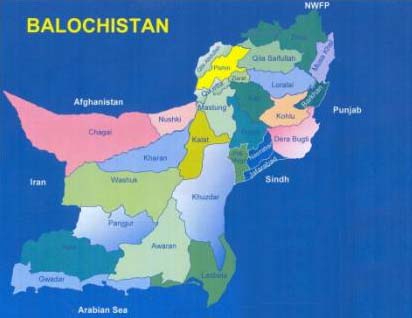
Social dynamics in Balochistan


Akbar Mayo
Ongoing clashes between Pakhtun and Baloch students in several educational institutions do not signal good. This is the symptom of the problem. Balochistan is the only province of Pakistan that shares boundaries with the two most strategically important countries of the world: Afghanistan and Iran. At the same time, besides Punjab, it is also the only province that has direct inland connection with all of the provinces of Pakistan. Therefore, the status of Balochistan as a prime strategic location is axiomatic. Representing the five per cent of total population, Balochistan constitutes the 42 per cent of total area of Pakistan. Furthermore, it is also the only federating unit where two significant ethnicities, the Baloch and the Pakhtuns, reside in almost equal proportions. This article aims at highlighting the critical dimensions of relations between both the communities. Though, at the moment both communities are at relative peace, there can be no speculations about peace in future. Each group has a history of wars and feuds, and there exists a visible crack in the socio-economic outlooks of both societies. Before delineating Pakhtun-Baloch relations, it will be pertinent to have a glimpse of the comparative view of their social build-up. The Baloch is a loosely interconnected ethnic group, majority of which is residing in Balochistan. It is divided into two major sub-groups; Sulaimani and Makrani. Contrary to this, the Pakhtuns are more interconnected and divided into hundreds of larger sub-groups. The majority of Pukhtuns resides in NWFP. They are proud of their rich cultural identity. Except few tribes, Pakhtuns speak Pakhto. However, from lingual perspective, the Balochs are divided into several lingual groups in Pakistan: Seraiki speaking Baloch, Sindhi speaking Baloch, Balochi speaking Baloch, Makrani speaking Baloch and etc. In Balochistan, the Pakhtuns are more educated and developed than the Baloch people. Overall, both populations have different socio-economic outlooks. Though, the Pakhtuns have not asserted their presence on the landscape of Balochistan so far, however, the chances of their likely dominance are understandable to anyone interested in the affairs of the province. Up till now, the Pakhtuns have proved to be tolerant towards other ethnicities in Balochistan. They have never resented for Baloch-dominated governance of the province. At the moment, the highest officials of the province, the Governor and the Chief Ministers, belong to the Baloch tribes. Interestingly, since the creation of the office of chief minister in Balochistan, only one Pakhtun held the office only for one year. Currently, out of 38 ministries, 13 are held by the Pakhtuns. And these do not include key portfolios. Despite being comparatively ignored in political terms, the Pakhtun people are happy and want to live in peace. Contrary to this, certain Baloch militant groups have manifested violent resentment to the Pakhtun people. Time and again, the Baloch student federations have created mess at campuses particularly for demanding fixation of quota for the Pakhtun students in all public sector universities and medical colleges in the province. Responding to this, the Pakhtun student federations have stressed for open merit. On the issue of education, two decades ago, the relations between both ethnic groups saw a period of extreme stiffness when an agriculture university was shifted from Kalat to the Pakhtun dominated Pishin. Decision was taken in view of the suitability of land for agriculture experiments and research. However, the move was withdrawn later. Even today, Pakhtun belt has not a single public sector university to name although the Pakhtun students constitute majority of the university students in the province. Similarly, in business sector, the Pakhtuns are restricted to conduct their activities in the areas where it is not possible for the Baloch people to bar them whereas the Baloch businessmen can carry on their businesses freely in Pakhtun areas. Karachi-Quetta highway is the only road that passes through the Baloch areas and on which the Pakhtun transporters can move. However, visiting Yousaf Goth bus stand in Karachi, one finds that not even a single Pakhtun transport company exists to provide travel facilities from Karachi to Gawader. Likewise, whenever ships are unloaded at Gawader Port, one can feel the absence of Pakhtun transport companies carrying goods across country. Last year, education minister of Balochistan was assassinated by a certain Baloch militant group. Though, the event went unnoticed, however the Pakhtuns gravely felt the brutal disappearance of their leader at the hands of the Baloch militant group. Inaction aside, there exist a thinking among the Pakhtuns of being targeted by the Balochs far unjust reasons. While the names of Pakhtun parties suggest that they only breathe for Pakhtuns on this planet, however, their leadership has been silent so far and has compromised the freedom and equality of Pakhtuns. Now two student groups each representing its respective community have started attacking each other. Dozens of students from both sides suffered injuries. Though for the time being FC has been employed to maintain status quo however, no word for the removal of root cause of this prolonging problem has been uttered by leadership of both communities. To conclude, in certain aspects the Pakhtun tolerance towards the Baloch response is a positive sign. However, the perennial compromise of the interests of Pakhtun community may evolve into a volcano of rage and rack the already messy province. Therefore, the leadership of both communities should gauge the underpinnings of contemporary relations between the Pakhtuns and the Balochs and should establish durable basis for lasting peace and harmony between them. Whoever supports anti-Pakhtun attitude must bear in mind that the word Balochistan does not mean that Pakhtuns deserve a secondary status in the province.

UN agencies to stay in Kandahar: Staffan


Special Representative of the United Nations Secretary-General for Afghanistan, Staffan de Mistura, has reassured presence of UN agencies in Kandahar despites insecurity. Staffan de Mistura who is also chief of United Nations Mission For Afghanistan (UNAMA) visited Kandahar today (May 20) to assess the situation on the ground and meet with local leaders and authorities and UN staff members, UNAMA said in a press statement. The UNAMA chief visit to Kandahar came at a time when UN temporarily withdrew its foreign staff from Kandahar a few weeks ago on security concerns and asked local staffers to say at home. During his day-long trip, Mr de Mistura reassured the people of Kandahar of the commitment and intention of UNAMA and UN agencies to be actively present in this region despite the insecurity, the statements said. Mr de Mistura stressed: "The UN has been here in this country and, particularly in the southern region, for a long time, and will continue to be there in support and by the side of the people of Kandahar even when times get difficult." Earlier in the day, the Special Representative had constructive discussions with Governor Tooryalai Wesa and the Chairman of Kandahar's Provincial Council Ahmad Wali Karzai. The Special Representative also met with tribal elders and heard their concerns on the security situation and access to humanitarian relief.

Miss USA to Behar: Pole-dancing pictures were all in fun


cnn.com
Miss USA Rima Fakih is a Muslim with Lebanese heritage, but her family is "not defined by religion," Fakih said.
"I'm an American girl," Fakih said. "And just to be clear, my family comes from many different backgrounds and religions."


The newest Miss USA, crowned last weekend, was interviewed Wednesday for HLN's "The Joy Behar Show."Fakih downplayed the significance of photographs that emerged online this week showing her dancing against a stripper's pole.
"Everyone took them as if I was stripping, which to be honest with you was just a competition," she said. "It was more of an event held by a radio station."
The Detroit, Michigan, radio station promotion held three years ago was like a class to help women "learn how to dance and feel sexy," she told Behar.
"To be extra funny, because I'm known to be silly, I put money in my bra," she said.
The controversy, however, has made her name a top search term on the internet, she said.
"Yeah, I'm the number one person on Yahoo or Google, I heard," she said.
Cheesecake photos helped last year's Miss USA runner-up, Carrie Prejean, become well known, but she was eventually stripped of her Miss California crown when racier images emerged.
Behar asked Fakih if there were any such photos of her that might eventually surface.
"Nothing at all," she said. "I've always been known to be very respectful to my family and my reputation."
The stripper pole photos did not upset her family, she said.
"They're very proud of me," she said. "They take it as if I'm not up there for beauty, or to pose in a bathing suit, but for something more significant -- for being beautiful on the inside, for being wise."
Fakih was born in Lebanon, but her family moved to New York when she was young. She moved to Michigan in 2003, where she attended the University of Michigan.
"My family comes from a Muslim background, and we're not defined by religion," she said. "I would like to say we're a spiritual liberal family."
Fakih will represent the United States in the Miss Universe pageant to take place in Las Vegas, Nevada, in August.

Thursday, May 20, 2010

Michelle Obama Caught in Immigration Debate

First lady Michelle Obama faced a tough, personal immigration question from a Maryland second-grader Wednesday when she visited an elementary school with her Mexican counterpart, Margarita Zavala.
The girl told Obama that her mother said President Barack Obama was "taking everybody away that doesn't have papers."

Mrs. Obama responded: "Yeah, well, that's something that we have to work on, right? To make sure that people can be here with the right kind of papers, right? That's exactly right."

The girl then said, "But my mom doesn't have papers."

"Well," Mrs. Obama said, "we have to work on that. We have to fix that. And everybody's got to work together in Congress to make sure that that happens."

New Hampshire Estates Elementary School principal Jane Litchko wouldn't identify the student but said a parent signed a release allowing the child to participate and be filmed. Litchko said the school doesn't inquire about the immigration status of families.

"We serve every child who comes through the door," Litchko said. "We don't ask that kind of question. If they want to share with us, fine. If they don't, we don't ask."

Litchko said roughly 65 percent of her students speak a language other than English, and she employs seven English teachers to help them get up to speed.

The school recently won the Agriculture Department's Healthier US School Challenge Silver Award, which rewards schools that promote nutrition and physical activity.

The first ladies' school visit came shortly after the Obamas welcomed Mexican President Felipe Calderon and his wife to the White House, where immigration also was a hot topic.

Obama condemned Arizona's crackdown on illegal immigration and called again for the nation to overhaul immigration. Calderon called Arizona's new law discriminatory and warned that Mexico would reject any effort to "criminalize migration."
pluginspage="http://www.macromedia.com/go/getflashplayer">

Mrs. Obama is leading a public awareness campaign against childhood obesity and has said she wants to help solve the problem in a generation so that babies born today will come of age at a healthy weight.

The first ladies ran, jumped, skipped and even played with a parachute in a physical education class. They also sat down with students in a free lunch program and passed bowls of broccoli around the cafeteria tables.

British Afghan mission to come under US control

www.independent.co.uk
British troops in Helmand province will move under American control as part of a radical restructuring plan being drawn up in preparation for what is being described as a defining time in the war against the Taliban.
The Independent has learnt that command in southern Afghanistan will be split in half, with the UK troops answering to a US general.
The transfer will include key towns like Sangin, which has seen the highest number of British deaths in the conflict, mostly due to lethal roadside bombs, and Kajaki, where UK forces installed a turbine engine in an operation in 2008.
The new strategy is expected to be publicly announced by Nato later this week after prolonged negotiations between the US, Britain and the other main contributors to Isaf (International Security Assistance Force) in Afghanistan.
It comes as the traditional Afghan fighting season gets under way with General Stanley McChrystal, the US commander of Nato forces in the country, warning that "nobody was winning" a conflict that has reached a "stalemate", although the Taliban has "lost momentum".
Yesterday saw another suicide bombing in the Afghan capital with 18 people, including five American soldiers, killed. More than a thousand members of the US forces have died so far in the Afghan war.
According to senior American sources, the switch will officially take place on 1 June, when the UK's Task Force Helmand will start reporting to Maj-Gen Richard Mills of the US Marine Corps, who will command the newly formed Regional Command South-West. Until now, the UK troops answered to the British Maj-Gen Nick Carter who was in charge of the whole of southern Afghanistan. He will head another newly created command, Regional Command South, comprising the provinces of Kandahar, Oruzgan and Zabul.General Carter's immediate focus, in the next few months, would be the forthcoming operation in Kandahar, the birthplace of the Taliban, and its hinterland. The move is expected to lead to criticism that "blood and treasure" (meaning lives and finance) expended by the British in Helmand is being given away to American control.Critics of the plan have drawn analogies with Basra, from which British forces pulled out, ending involvement in the Iraq conflict, forcing the US Marines to take over. But UK military commanders and diplomats hold that the situation in Afghanistan is very different and that the new chain of command reflects the reality on the ground, with more than twice as many American troops than British already in Helmand.
The course of action in the near future, the "final drive" against the insurgents, will be helped, they say, by the command being split, as it will allow the generals to concentrate on their respective areas.
There is also the possibility that in the future that Maj-Gen Mills will be replaced by a British officer, although no plans have been drawn up for that, as yet. A spokesman for the Ministry of Defence told The Independent last night "We have always said that given the significant and welcome increase of ISAF forces in Helmand and across southern Afghanistan, from 35,000 in October 2009 to over 50,000 by this summer, it is absolutely right that ISAF commanders should be considering changes to command and control structures.
"To do so makes complete military sense and will ensure that ISAF and Afghan forces are put to best use in the interest of the wider mission. The UK has been fully involved in the decision-making process," he said.
The new command structure will mean that British troops will concentrate on guarding population centres, while US forces, who took the lead in the recent Marjah offensive, will take over some of the outlying bases.
British troops, who have lost almost half of their members killed this year in Sangin, will remain in that town, under overall US command, and may see the arrival of some reinforcements. At Kajaki, where a hydroelectric project was supposed to provide power for a huge swathe of southern Afghanistan, the UK forces are expected to be replaced by Americans.

Obama strategy: tout rising economy, hit Republicans


President Barack Obama's strategy for helping Democrats limit losses in November congressional elections boils down to this: tout the improving U.S. economy and pound Republicans for opposing his policies.
Administration officials recognize a difficult political environment for Democrats with a U.S. jobless rate of 9.9 percent and Americans in an anti-incumbent mood. And Democrats, who hold large majorities in the Senate and the House of Representatives, are braced for some losses in November.The party in power typically loses seats in Congress in the first election after a new president takes office. This year is expected to follow the historic trend.
Democrats believe they can stave off some of the nightmare scenarios being spelled out by political prognosticators. Some analysts believe they could lose control of Congress to the Republicans.
Jobs are being created again and key indicators point to an economy on the mend.
"Things are getting better. Our policies are working," said a senior White House official, speaking on condition of anonymity. "There's a little more optimism out there, and that will help mitigate our losses and make this a traditional mid-term environment for the party in power."
Mindful that the elections are to some extent a referendum on his presidency, Obama is defending his actions.
On the road, Obama is telling crowds that policies he promoted that have proven unpopular with some Americans, such as a $787 billion economic stimulus measure and bailouts for banks and auto companies, are starting to pay off.
'ALL THE NAYSAYERS'
"Despite all the naysayers in Washington, who are always looking for the cloud in every silver lining, the fact is our economy is growing again," Obama said on Tuesday in Youngstown, Ohio.
He points to the creation in April of 290,000 jobs and the expectation that more are on the way.
And Obama is launching frequent attacks on Republicans. To vote for them, he says, would risk more political gridlock in Washington and make it harder to advance his agenda.
The idea is to make independent voters who voted for Obama in the 2008 presidential election but are now straying think twice about bringing Republicans back to power.
"They've done their best to gum up the works, to make things look broken, to say 'no' to every single thing," Obama told a Democratic fund-raising event in New York last week.
Democrats face a political headwind this year not just over the economy.
Some voters are upset by many aspects of the Obama agenda, such as a U.S. healthcare overhaul that they worry will increase costs but not care, higher government spending, rising deficits and the prospect of higher taxes.
Republicans see an opportunity to make big gains in Congress. They believe the Democrats were diverted from the main American concern -- jobs -- in favor of healthcare and other issues.
"The common thread in all of this is that the Democratic Party has lost the confidence of the American people who will, in turn, hold them accountable for their reckless spending and government takeovers in November," said Katie Wright, a spokeswoman for the Republican National Committee.
Obama and Vice President Joe Biden are expected to travel steadily in the months leading up to the election, appearing at rallies and raising money.
The White House will have to look carefully at the political map to determine where Obama's message will resonate best.
For instance, Democrat Mark Critz won a House seat in a special election in Pennsylvania on Tuesday over Republican Tim Burns in part by voicing opposition to the Democrats' healthcare overhaul and energy legislation.
"There's no question that they're going to use the president where he's more popular," said Steve Elmendorf, a Democratic strategist.

Illiteracy, corruption hamper Afghan police: NATO

reuters.com
An 80 percent illiteracy rate, corruption and a lack of trained personnel are hampering Afghan police, the NATO commander overseeing the training of Afghan security forces said on Wednesday.
NATO has stepped up training of Afghan police in an effort to reform a force that inspires little confidence among locals, struggles with high dropout rates and is frequently accused of incompetence and drug use.
But only 45 percent of Afghan police have had any formal preparation, said U.S. Lieutenant-General William Caldwell, who heads the training mission as the alliance prepares to boost the size of the Afghan army and police to over 300,000 by 2011.
The training is also central to NATO's strategy to eventually transfer control of security to Afghan forces so that Western troops can start withdrawing next year.
Professionalizing the police force will not happen overnight, Caldwell said.
"That is a real challenge, you've got a lot of policemen out there who're trying to do their job that have never had any kind of professional training," Caldwell told reporters in Rome.
"They've haven't been taught human rights, they haven't been instilled with this idea that they serve the people."
Taking on a literacy rate of 20 percent among police recruits, NATO has introduced mandatory reading and writing courses for the army and police, Caldwell said.
NATO's ambitions are modest on the literacy front -- with the focus on giving cadets third-grade level reading and writing skills rather than a high school education, Caldwell said.
"We saw that very early on as a problem," he said.
"If you're a policeman you need to be able to take some notes, write down the license plate number, take a statement from a person or something like that, and if they can't read or write they're going to be very challenged in performing their duties as a police officer or patrolman."
He also acknowledged that corruption remained a significant problem within the police force, something NATO hopes to counter through higher pay and improving transparency.
"Corruption is a challenge, there's no question. And I think everybody recognizes that. So we need to help set conditions that don't lead them to corrupt practices."

Obama, Calderon push for immigration law changes


Reuters.com
President Barack Obama pushed for sweeping changes in U.S. immigration policy on Wednesday, as Mexican President Felipe Calderon complained that a harsh new Arizona law discriminates against foreign-born workers.

Immigration, a traditional sticking point in the neighboring countries' relationship, became the focus of Calderon's Washington visit when the border state passed the law requiring police to check the immigration status of anyone they suspect is in the United States illegally.
The Arizona law has been criticized as discriminatory and Calderon, who had promised to bring it up in Washington, jumped into the controversy in his first formal remarks of the two-day state visit.
Despite their "significant contribution to the economy and society of the United States," Calderon said, many immigrant workers "live in the shadows, and at times, as in Arizona, confront patterns of discrimination."
Obama said the Arizona law underscored the need for comprehensive immigration reform and reflects U.S. frustrations, which he shares, with current law.
"In the United States of America, no law-abiding person -- be they an American citizen, a legal immigrant, or a visitor or tourist from Mexico -- should ever be subject to suspicion simply because of what they look like," Obama told reporters with Calderon at his side.
There are millions of Mexican-Americans and Mexicans living in the United States, and many Americans travel to and live in Mexico.
The United States needs a new law that secures the border, targets businesses that hire illegal workers and punishes illegals, but gives them a path to citizenship, Obama said. He asked for support from opposition Republicans to pass one.
Obama and first lady Michelle Obama hosted Calderon and his wife, Margarita Zavala, at a state dinner later on Wednesday, with a menu blending U.S. and Mexican cuisine and performances by U.S. pop star Beyonce Knowles and Mexican guitar duo Rodrigo Sanchez and Gabriela Quintero. Calderon will address a joint session of the U.S. Congress on Thursday.
SEEKING U.S. SUPPORT
The two countries broadly agree on issues like the global economy and climate change, despite tensions over immigration, border security, drug violence and trade. Their trade surpasses $1 billion a day, and Mexico sends 80 percent of its exports to the United States.
The presidents affirmed their commitment to mutual economic growth, securing the border, protecting the environment, and fighting crime, and ordered their cabinets to create a joint steering committee to come up with an action plan for creating a "21st century border." But they otherwise offered no major new initiatives.
Analysts said the main outcome of the visit for Calderon would be strong expressions of support for his policies, particularly in fighting the international drug trade, from Obama, who is hugely popular in Mexico.
Calderon is "a leader who is guiding his country through very difficult times with vision and with courage, and he has been an outstanding partner to me and an outstanding partner to the United States," Obama said.
The two presidents said they would cooperate to crush drug gangs. The joint statement said the United States would speed delivery of helicopters and other aircraft for the drug fight. The traffickers' turf wars and battles with federal forces in Mexico have killed 23,000 people since Calderon took office in December 2006 and launched an army-backed offensive.
The spiraling violence worries foreign investors and makes some tourists nervous about visiting Mexico. Drug-related abductions have spilled across the U.S. border.

The countries are more closely aligned on the issue than they have been in years, and Mexico is pleased Washington acknowledges that U.S.-made weapons and U.S. demand for drugs are big parts of the problem.

Miss USA Rima Fakih: My victory means anyone can make it in America


Praising America as a land of opportunity, the new Miss USA, Rima Fakih of Dearborn, told the Free Press today her victory shows that anyone can make it in the U.S. — regardless of background. And she hopes it will inspire Michiganders to rebuild the struggling state.
Touching upon the fact that she is the first open Arab American to win Miss USA, Fakih said she hopes her win will dispel anxieties.
“The fear that people had implanted since 9/11, maybe what I did can show people that, you know what, who cares what ethnicity you are,” Fakih said from an SUV driving her through Manhattan. “This is America. Everyone has been through hardships. Everyone has been through something. And that does not mean you should be afraid or should be shy to say who you really are, what your ethnicity is, and what your background is. Because America is the land of opportunity and the land of the free.”
Fakih said she broke down in tears when she heard that Arab Americans in Dearborn were cheering at parties and on the streets after her victory Sunday in Las Vegas.
“That right there made me cry when I heard such great news, that they were all so proud of me,” Fakih said. “Everyone should be proud of who they are and where they come from because America is a big melting pot of diverse ethnicities. It’s great to be part of this wonderful country.”
Born in Lebanon, Fakih grew up in New York City and moved to Dearborn, which has the highest concentration of Arab Americans in the U.S.
Since her victory, some have complained about the fact she is Arab-American and from Dearborn.
But Fakih said, “Dearborn and my community is part of me.”
Fakih also hoped her triumph can help “give Michigan hope that it is on the way up.”
“When you hit rock bottom, the only way is up,” she said. “And I want Michigan to know that my title should be a significant symbol that Michigan is going to go right back to where it was.”
Fakih said she was inspired by her parents and older brother to go for her dreams.
“There is nothing … worse than saying, I never tried,” Fakih said. “When you want something done, you got to do it yourself. … Nothing is impossible.”
Fakih said she is now on a media tour and will have an upcoming photo shoot. She also has plans to travel across the U.S., and to Africa and China. The president of Lebanon said this week he wanted to meet with her, which she hopes to do.
Fakih said she also would like to meet President Barack Obama. Since her victory, some have compared Fakih with Obama in that they are seen as historic firsts.

Residents express concerns over sugar shortage in Peshawar

PESHAWAR: Sugar has disappeared from utility stores of Peshawar since last ten days while, the residents have expressed concern over the situation.
According to details, sugar has become rare in Hayat Abad since last ten days and the situation is creating agitation amongst the residents. Talking to Online in this regard Director General Utility Stores Association Peshawar region Malik Javed said that Peshawar is being supplied sugar from Karachi and he has ordered for 1 thousand tons of sugar, which would be soon in Peshawar.
He said that 225-ton sugar has been supplied on 15 and 294 ton on 19 the sugar would soon available at the Peshawar utility stores.

Wednesday, May 19, 2010

Aid Program In Pakistan Under Threat


Last year, more than three million people fled fighting in South Waziristan and other areas in Pakistan's Federally Administered Tribal Areas. Most of these internally displaced people since have gone home.
The United Nations estimates more than one million people remain displaced.
U.N. Humanitarian Coordinator for Pakistan Martin Mogwanja says people are continuing to flee their homes because of ongoing military operations by the Pakistani government against Taliban militants in different parts of Northwestern Pakistan and he says U.N. aid agencies will need additional money."These are new IDPs who need, of course, new tents, new non-food item kits, new hygiene kits and indeed, the health care and so on has to be addressed. We are supporting wherever possible and where it can be done on a voluntary and sustainable basis the return of IDPs," he said. "And, we hope that, particularly in the Bajaur and Mohmand areas these IDPs will be able to return home in the coming days. But, all this is predicated upon the increased availability of resources, which is absolutely essential," said Mogwanja.
Mogwanja notes about 230,000 people fled the Federally Administered Tribal Areas in the past four months.
The United Nations appealed for $537 million for humanitarian operations from February through July and only 26 percent of that amount has been received.U.N. Coordinator Mogwanja says this will have serious consequences for the aid operation.
"We have tried to the extent possible to preserve the life-sustaining operations-food aid, health, clean water supply and sanitation," Mogwanja said. "But, even these services are now at risk because the funding is inadequate. For example ... The World Food Program is facing a break in services at the end of June, particularly in relation to the food aid, which is being provided for food for work, school feeding programs and other early recovery activities," he added.
Mogwanja warns military operations are continuing and could expand in the tribal areas. This, he says will increase the number of IDPs. He says the humanitarian community does not have the resources to support a new caseload of displaced people that is likely to take place in the future.

Cabinet approves Protection, Welfare of Child Bill 2010

Khyber Pakhtun-khwa Information Minister Mian Iftikhar Hussain on Tuesday warned of escalation in acts of terrorism, as the war being fought by foreign powers for their vested interest in this region was entering final round in coming months.

“Terrorism cannot be defeated as the world powers have their own stakes in the region and they have clash of interests. As long as their clash persists, the menace of terrorism could not be overcome,” Iftikhar said while briefing media persons after a meeting of the provincial cabinet.

“The America has already announced its roadmap for withdrawal of its troops from Afghanistan, as the date comes nearer, the clash of interests would intensify and have serious repercussions. To combat the backlash, we have to prepare ourselves and we are ready to face it with courage,” the provincial govt spokesman said.

The problem could only be resolved if all these countries join hands and evolve a combined strategy against terrorism. “The main three players — Pakistan, Afghanistan and the US — must share intelligence and coordinated actions should be taken against terrorists,” he said.

Assuring the people, Mian Iftikhar said: “We will save our people and children. We will fight the militants with same zeal as we fought earlier. We are on right path, victory will be ours and terrorists will be defeated.”

He paid glowing tributes to those who laid their lives in the war against militants including, soldiers, policemen, media persons and the common people of the country.

Rejecting talks with militants, Mian Iftikhar said the government would never negotiate with them. “There is no chance of talks with them. However, if they lay down arms, then we may think of negotiations,” he stated.

Referring to the government resolve, he said, the government would continue to target militants wherever they find them. The terrorists have no agenda to follow but terrorise people and create unrest in the society, he added.

Earlier, the Khyber Pakhtunkhwa cabinet, which met with Chief Minister Ameer Haider Hoti in the chair, decided to give ownership rights to the people living on state land in Jharma area of Kohat district.

The meeting approved the Protection and Welfare of Child Bill 2010. “The provincial cabinet decided to promulgate the draft as an ordinance,” he added.Mian Iftikhar said the cabinet, keeping in view the fragile economic situation of the province, rejected the raise in the salaries of the provincial ministers. The meeting also decided that prisoners sentenced to death would be kept in special barracks. The provincial cabinet also approved the two-year performance report of the government.

CIA chief briefs Pakistan on Times Square suspect

The CIA director briefed senior Pakistani officials Wednesday on the investigation into the failed Times Square car bombing and praised the country's cooperation, a statement from both sides said.A Pakistani-born American has been arrested on suspicion of masterminding the May 1 botched bombing and has allegedly told investigators he trained under the Pakistani Taliban in the largely militant-held region of Waziristan, close to the Afghan border.U.S. officials have praised a series of offensives against the Pakistani Taliban and allied groups in the border areas over the last two years. But the Times Square incident has added to pressure on the army to move into North Waziristan, a region it has previously largely left alone.The visit by CIA Director Leon Panetta and U.S. national security adviser former Gen. James Jones was the first since the failed attack. The two men met with President Asif Ali Zardari on Wednesday afternoon, said presidential spokesman Farhatullah Babar. They were also scheduled to meet with Pakistan's spy chief and other officials."Jones expressed appreciation for the excellent cooperation the United States is receiving from Pakistan," the statement said. "The talks covered measures that both countries are, and will be, taking to confront the common threat we face from extremists and prevent such potential attacks from occurring again."
Pakistani officials have said very little about the investigation. Anonymous officials say several people connected to the suspect, Faisal Shahzad, have been picked up, but they gave no information on what role — if any — they played in the attack.The Pakistani Taliban, which have previously not conducted attacks on U.S. soil, have been the target of several Pakistani army offensives over the last two years and been battered by scores of American missile strikes. They are allied to al-Qaida and the Afghan Taliban just across the border.As many as 60 militants and two soldiers were killed in fighting Wednesday in the Orakzai tribal region, said Samiullah Khan, an administrator in the office of the political agent in the region. He gave no more information and it was not possible to independently confirm the fighting.Orakzai has seen intense battles between the army and militants over the last month that have killed several hundred insurgents, officials say. The region is off-limit to journalists.The army has not moved into the North Waziristan region in part because powerful insurgent commanders there have generally not attacked targets in Pakistan and the army is unwilling to antagonize them. In recent months, however, fleeing fighters and commanders from the Pakistani Taliban — which have launched scores of bloody suicide attacks around the country since 2007 — have moved there.

Tuesday, May 18, 2010

Arab-Americans react with delight to Lebanese-American Miss USA

cnn.com
Arab-Americans expressed delight Monday, a day after 24-year-old Lebanese-American Rima Fakih was crowned Miss USA.


"For once, we're talking about beauty and not terror," said Osama Siblani, publisher of The Arab-American News, in Dearborn, Michigan, who knows Fakih and her family.

He and about 150 other Arab-Americans watched the pageant unfold on a 100-inch television screen at La Pita Restaurant in Dearborn, which was packed with her friends.

The place erupted in applause when she took the crown, he said.

"This sends a signal that we're part and parcel of this great country ... this is a part of being American. The American dream is still alive and kicking. Nobody can tell us that a Muslim cannot make it. Yes, we can make it."

"We couldn't hear ourselves," said Mohamad Dbouk, general manager of the restaurant. "Everybody was screaming."

Dancing continued until 2 a.m., said Siblani, who text-messaged Fakih after her victory. "She was very excited."

He said Fakih and her family describe themselves as Muslim. Asked if conservative Muslims might be offended by the pictures of the young woman wearing a bikini, he said, "Only stupid ones. It's like all religions: They have conservative, they have liberal, and they have in the middle."

He added, "If you're asking those conservatives, yes, they'll tell you that it's forbidden. But I'm a Muslim, and if you ask me would my sister wear a bikini or a swimsuit, I'd say yes, of course."

A Lebanese friend downplayed the issue. Though her name is Muslim, "Rima was raised in a family that's moderate, and they practiced both religions," including Christianity, said Rami Haddad, who said he helped with Fakih's publicity campaign in Michigan.

"She's American first, and I don't think religion has to play any role in this."

He also downplayed the impact of the pictures, including those showing a scantily clad Fakih dancing on a pole. "I don't think they are anything bad," he said.

A spokeswoman for Miss USA said pageant officials are not certain that Fakih is the first Arab-American to win the title, since such records are not kept, but she said she thought that was the case.

Either way, Samar Boulos, 23, was proud of Fakih's victory. "I would really hope that she would raise the Lebanese name up high," said the Beirut native who teaches Arabic at Kennesaw State University in suburban Atlanta, Georgia. "Instead of always showing the terrorism part of it, maybe she could show the good side of it, the beauty."

Similar sentiments surged across international borders: "9 years after 9/11. America has a president of Muslim origin and a Muslim Miss America," tweeted Khalid Alkhalifa, the foreign minister of Bahrain.

But it was not all positive. Octavia Nasr, CNN's senior editor of Middle East affairs, said criticism was emerging on some websites. "It's a mixed bag," she said.

Arabs are quick to adopt someone who becomes successful, even if their country of origin played no role in their success, she said.

"Arabs usually flee their land to find opportunities elsewhere. Until they make it, their countries of origin do nothing for them," she said.

Nasr said others took issue with the judges' decision, pointing to one blog entry. "Anyone who says she ain't pretty is lying, but I'm not sure she's all that," it said. "She is a very typical Lebanese beauty, nothing too out of the ordinary, but I may be wrong."

Fakih's victory came as no surprise to Linda Bement, who had just turned 18 when she won the title of Miss USA in 1960.

"I picked her out," said Bement, who watched the program from Salt Lake City, Utah, where she lived then and lives now. "She just looked like she was going to be the winner."

Bement said that though the bathing suits have gotten smaller and the promotional pictures more risque, little else appears to have changed in the half-century since she took home her pearl-encrusted tiara.

"The girls are still pretty," said Bement, who had to return the tiara and went on to work as a model for Max Factor and Royal Crown Cola after her pageant victory. "It's a business, it's big money," she said.

After her victory, Bement too was subject to criticism from conservatives -- in this case from Mormons -- though it had little impact.

"I just heard it secondhand that somebody said a Mormon girl shouldn't be showing her body off in a bathing suit," she said. "But I would say overwhelmingly the Mormons were just thrilled that I won. The president of the church at the time invited me to meet his wife, and I, of course, met with him.

"There's always a little tiny group of people who are even more conservative than the average bear."

Arab-American from Michigan crowned 2010 Miss USA


Rima Fakih knew she had won the 2010 Miss USA title when she saw the look on Donald Trump's face: It was the same one she'd seen him flash at the winners of "The Apprentice."

The 24-year-old Lebanese immigrant — Miss Michigan USA to the judges — beat out 50 other women to take the title Sunday night, despite nearly stumbling in her evening gown.

She told reporters later that she believed she had won after glancing at pageant owner Trump as she awaited the results with the first runner-up, Miss Oklahoma USA Morgan Elizabeth Woolard.

"That's the same look that he gives them when he says, 'You're hired,'" on Trump's reality show, she said.

"She's a great girl," said Trump, who owns the pageant with NBC in a joint venture.

Fakih took top honors at the pageant at the Planet Hollywood Resort & Casino on the Las Vegas Strip after strutting confidently in an orange and gold bikini, wearing a strapless white gown that resembled a wedding dress and saying health insurance should cover birth control pills.

Fakih was born into a powerful Shiite family in a village in southern Lebanon that was heavily bombed during the 2006 Israel-Hezbollah war. But she and her sister said the family celebrates both Muslim and Christian faiths and prefer to be referred to as Lebanese, Arabs or Arab-Americans.

She moved to the United States with her family in 1993 and attended a Catholic school in New York. Her family moved to Michigan in 2003.

Her sister, Rana Faqih, who moved back to Lebanon a few months ago for a new job, said she spent the night exchanging messages with her father, Hussein, and another sister, Ruba, who were attending the competition.

"It was a beautiful surprise," she said from the family's native village of Srifa in southern Lebanon. "It was not easy for Rima to reach this title."

"We're very proud as Lebanese Americans and as Lebanese that Rima reached this point despite all the pressures and stereotyping about Arabs and Lebanese. She made it. She fought and reached her goal," her sister said.

Pageant officials said historical pageant records were not detailed enough to show whether Fakih was the first Arab-American, Muslim or immigrant to win the Miss USA title. The pageant started in 1952 as a local bathing suit competition in Long Beach, Calif.

Fakih told reporters she sold her car after graduating college in Michigan to help pay for her run in the Miss Michigan USA pageant.

In a moment that was replayed during the pageant's broadcast, Fakih nearly fell while finishing her walk in her gown because of the length of its train.

"I did it here, I better not do it at Miss Universe," she said. "Modeling does help, after all."

Fakih replaces Miss USA 2009 Kristen Dalton and won a spot representing the United States this summer in the 2010 Miss Universe pageant. She also gets a one-year lease in a New York apartment with living expenses, an undisclosed salary, and various health, professional and beauty services.

During the interview portion of the competition, Fakih was asked whether she thought birth control should be paid for by health insurance, and she said she believed it should because it's costly.

"I believe that birth control is just like every other medication even though it's a controlled substance," Fakih said.

Woolard handled a question about Arizona's new immigration law. She said she supports the law, which requires police enforcing another law to verify a person's immigration status if there's "reasonable suspicion" that the person is in the country illegally.

"I'm a huge believer in states' rights. I think that's what's so wonderful about America," Woolard said. "So I think it's perfectly fine for Arizona to create that law."

Miss Virginia USA Samantha Evelyn Casey was the second runner-up, Miss Colorado USA Jessica Hartman was third runner-up, and Miss Maine USA Katherine Ashley Whittier was the fourth runner-up.

Most of the field of contestants from all 50 states and the District of Columbia were eliminated just after the pageant began and the entire group danced onstage to "TiK ToK" by Ke$ha.

A panel of eight judges, including NBA star Carmelo Anthony, Treasure Island casino-hotel owner Phil Ruffin and Olympic figure skater Johnny Weir, were judging the girls throughout the night.

After 15 contestants strutted in swimsuits, five were eliminated. Another five were eliminated after the evening gown competition.

Miss Nebraska USA Belinda Renee Wright won the Miss Congeniality award, roughly one week after her father was killed in a farm accident. Miss Alabama USA Audrey Moore won Miss Photogenic after an online fan vote.

The pageant aired live to East Coast viewers on NBC.

The competition, which is not affiliated with the Miss America pageant, was hosted by celebrity chef Curtis Stone and NBC correspondent Natalie Morales.

Sunday, May 16, 2010

US soldiers pay village calls in Afghanistan

The platoon's visit to a riverside village was a slog in and out: hours of hiking in body armor under the sun over rock-strewn hills, through rustling wheat fields and sweltering pomegranate groves. U.S. soldiers waded across an irrigation canal, holding rifles above chest-high water and grabbing tree roots to pull themselves out of the muck.
Another morning, they called on another earth-walled settlement a short ride from their base, Frontenac. Dust billowed through the hatches of the Stryker infantry vehicles. This time, the obstacles were less physical. Afghan men appeared wary of their unannounced visitors, refusing to accept a gift of one water pump because, they said, the Americans should give six or 10 pumps instead.
"It's like night and day from the other village," said 2nd Lt. Patrick Ryan, whose men now seek rapport with civilians in a relatively peaceful area of southern Afghanistan after months of deadly combat last year.
The war in southern Afghanistan is not all fighting. In areas where insurgents have been pushed to the fringes, NATO soldiers struggle to build trust with civilians who don't always respond readily to their upbeat message of community-building. The hard, plodding outreach lacks the immediacy of a combat operation. Progress — the kind that lasts — is uneven and difficult to measure, its prospects muddied by wobbly Afghan authorities who often look like bystanders in the process.
The challenges of building local loyalty to a weak Afghan government are numerous ahead of July 2011, President Barack Obama's deadline for the start of a troop withdrawal if conditions permit.
Shah Wali Kot, a district where the 800 soldiers of the 1st Battalion, 17th Infantry Regiment of Task Force Stryker operate, encompasses 1,120 square miles (3,000 square kilometers). It has tens of thousands of residents, no Afghan army presence, just 90 district policemen and additional police patrols along part of the main artery running north, Highway 617.
The district is more of a transit corridor than a strategic prize like the contested city of Kandahar, to the south. Taliban activity has dropped, and more village elders are attending a weekly meeting led by a district chief who once felt too unsafe to visit most of his area.
Coalition forces are opening a major campaign, both military and civic, this summer in Kandahar, the spiritual center of the Taliban, in what commanders believe will be a pivotal contest with the hard-line Islamist insurgency.
In Afghanistan, battle lines depend as much on who has the initiative as conviction. It's a shifting arena, where forces loyal to the ruling Taliban saw the tide turn in the U.S.-led invasion in 2001 and switched sides, and where today, many southern Afghan authorities who deal with the Americans on joint patrols, development projects and village meetings have ethnic or familial ties with the Taliban.
Ryan's commander in Bravo Company, Capt. Nick Ziemba, sees parallels with his earlier deployment in Iraq. There, the Americans undercut the Sunni-led insurgency by forming pro-government militias with some of the same Sunni Arabs who had attacked them, and they sought alliances with Shiite Arabs who had links to the Mahdi Army, an anti-American force led by cleric Muqtada al-Sadr.
"I kind of draw on my experiences in Iraq because there were a million shades of gray there," he said. "We operate fully knowing that there's an open line of communication between the police and the Taliban."
That doesn't necessarily mean Afghan police or government officials back the insurgents; rather, some are hedging their bets in a conflict whose outcome has not yet been determined. The ethnic Pashtun majority is concentrated in southern Afghanistan, the stronghold of the Taliban.
One morning, Ziemba joined men from Ryan's platoon on their march into Jaman, a village along the Arghandab river where the Americans are funding a canal retention wall that has employed dozens of men. Two Afghan policemen, one with a limp, accompanied them in a tepid show of local authority. They work for Bacha Khan, a police chief who has provided reliable intelligence to U.S. forces.
The visitors were warmly received by Abdul Wasi, a headman. Banter flowed like the river's gurgling water as the men sat in the shade.
"Are there rivers in America?" Wasi asked.
Ziemba, of Wilbraham, Massachusetts, praised the lush pocket. "A green jewel," he said.
The compliment drew an invitation to stay the night, an implausible prospect for soldiers whose base is fortified with berms and walls. Some nights, artillery guns at Frontenac shoot illumination rounds to light up surrounding desert in case of intruders.
On the east side of the river, across from Jaman, lies the village of Takatu. A week ago, insurgents killed a police informant in the village, and a firefight broke out between the assailants and villagers, according to American commanders. A U.S. helicopter evacuated a 16-year-old girl with a gunshot wound.
The area is hard to access and sparsely inhabited, less of a priority in a counterinsurgency campaign focused on nurturing ties in population centers rather than chasing insurgents in remote terrain.
"That's kind of where the dragons are," Ziemba said of the mountainous east. "It's off the map, really."
On another patrol, Ryan of Huntsville, Alabama, had a vexing conversation about a water pump with the villagers of Sadiq Kariz. His young Afghan interpreter, unarmed but wearing an American uniform and helmet, struggled to impose clarity on the discussion but got little respect from the bearded men in turbans in a culture where age is an important measure of status.
The villagers were split, insisting that the Americans deliver a pump for each of their canals because they would squabble among themselves with only one. Ryan concealed his frustration, his face an impassive mask behind protective sunshades.
"Last time we were here, they weren't real cooperative," he announced. "We'll try to build a relationship around one water pump."
The mood turned edgy. A boy hissed at a soldier to get his attention; the soldier hissed back. A youth stretched out his arms to another soldier, appealing for a handout. "We're the U.S. Army, not the Salvation Army, buddy," the American said.
As the soldiers headed to their vehicles, the elders had a sudden change of heart. OK, they said, we'll take the water pump.

Ash closes some UK airports; London stays open

A dense cloud of volcanic ash drifting from Iceland forced the closure of airports in northern England, Scotland and Northern Ireland on Sunday.All airports in Northern Ireland shut down at 1 p.m. (1200 GMT; 8 a.m. EDT), along with others in northern England — including Manchester and Liverpool — as well as Prestwick in Scotland, the National Air Traffic Service said.Dublin's international airport planned to close from 7 p.m. (1800 GMT, 2 p.m. EDT) until at least 9 a.m.0800 GMT, 4 a.m. EDT) on Monday.British and Irish aviation authorities could not say when or if other airports would have to close, but they expected London's airports — including Heathrow, Europe's busiest — to remain open until at least 7 p.m. (1800 GMT; 2 p.m. EDT), and Shannon, in western Ireland, to be open until 11 p.m. (2200 GMT; 6 p.m. EDT).The German Aerospace Center sent up a test flight Sunday to measure the ash concentration, and the country's air traffic control said flights in Germany would not be affected by volcanic ash before Wednesday.
Ash can clog jet engines. The April 14 eruption at Iceland's Eyjafjallajokul volcano forced most countries in northern Europe to shut their airspace April 15-20, grounding more than 100,000 flights and an estimated 10 million travelers worldwide and costing airlines more than $2 billion.
In southern Iceland, activity at the volcano fluctuated throughout Sunday, but had not particularly intensified, civil protection official Agust Gunnar Gylfason said. He blamed the closures on shifting winds.
"What really changes the situation is the weather pattern," he said.
The Icelandic weather service said "presently there are no indications that the eruption is about to end."
"No major changes are seen in the activity, the ash cloud is slightly higher than yesterday," the agency said.
Airlines complained bitterly over the air space closures last month, calling them an overreaction. The European air safety agency last week proposed drastically narrowing the continent's no-fly zone because of volcanic ash to 120 miles (190 kilometers) like the one used in the U.S. The proposal still must be approved.Virgin Atlantic's president, Sir Richard Branson, criticized the most recent decision by British authorities to impose a no-fly zone.
"The closing of Manchester airspace once again is beyond a joke," Branson said in a statement. He said test flights have "shown no evidence that airlines could not continue to fly completely safely."
A spokesman for Britain's Civil Aviation Authority said Branson's remarks were "surprising" because a meeting of representatives of airline and engine manufacturers last week had agreed to find a way to ensure planes could fly safely in the volcanic ash.
"We as an organization can't just say, 'Oh, I'm sure it's all right, go fly without evidence it's safe,'" Jonathan Nicholson said.
British Airways, facing cabin crew strikes beginning Tuesday, said it had canceled a small number of flights out of Manchester. The airline's chief executive, Willie Walsh, is to meet with Transport Secretary Philip Hammond on Monday.
Eurostar, which runs trains between Britain and continental Europe, said it was adding four extra trains — an additional 3,500 seats — between London and Paris on Monday.
Britain's weather service has said it expects the winds, blowing from the northwest, to shift midweek, which it says would redirect the ash away from Britain.
Eyjafjallajokul (pronounced ay-yah-FYAH-lah-yer-kuhl) erupted in April for the first time in nearly two centuries. During its last eruption, starting in 1821, its emissions rumbled on for two years.

Swat security situation ‘improved’: survey


PESHAWAR: A vast majority of Swat residents have described the security situation in the region after the military operation as “improved” while blaming the previous provincial government of the Muttahida Majlis-e-Amal for “not effectively fighting” militancy, a survey released on Friday revealed.
According to the survey by Peshawar-based Regional Institute of Policy Research and Training (RIPORT), the use of illegal FM radio stations, illiteracy, religion and the new governance system introduced in 2001 had contributed to the growth of militancy in the valley where the military used full force to evict the Taliban last year.
The survey, conducted in February and March, involved responses from 384 randomly selected households scattered over 16 union councils of the district and its design had a five percent margin of error. It covers a large area of the drivers of conflict and provides a comprehensive coverage of subjects that are divided into: strategic communication, development, foreign intervention, governance, security, social tradition, religion and poverty.
Khalid Aziz, the author of the survey, said, “The survey report is a timely warning to the government to improve security and provide reforms to deal with the situation in Swat or the cycle of death and destruction that has now been brought under control will re-emerge with a vengeance once the military withdraws.” An overwhelming majority of Swat residents - 78 percent of the respondents - said the security situation had “improved” after the military deployment, while just nine percent looked dissatisfied with the current situation, the survey revealed.
The survey found 78 percent respondents agreeing that illegal FM stations helped spread militancy, while 56 percent linked communications’ effectiveness to the spread of the Taliban in the district. The survey found that 75 residents believed the Friday sermon was used for “mobilisation of support for militancy” while 19 percent disagreed.

Saturday, May 15, 2010

What supremacy?

The Frontier Post
Editorial:

The prime minister was blowing hot and cold in the National Assembly. But what supremacy of the Parliament was he asking its members to uphold? Haven’t lawmakers been caught red-handed in these very times for fake degrees and they have resigned? Haven’t legislators resigned too for fear of being caught? And aren’t court challenges pending against dozens of parliamentarians for fake degrees? So what was he pleading to uphold? The supremacy of cheating, counterfeiting, fraud and felony? And what feathers has he added to his own hat by campaigning for a proven fraudster in an upcoming by-election? Hasn’t he splattered mud on his face all over with this ignominy? Should he have shunned the cheater? Or had he had to ennoble his abominable inerasable ignobility with his presence? And who says that Parliament here is supreme? Isn’t it itself a big deceit, invented and propagated by our self-conceited and self-assuming politicos? Can it be bigger than the Constitution from which it draws its life and its sustenance, as do the other pillars and institutions of the State? Can a son become his own father’s father and a daughter her own mother’s mother? The conceits of human beings certainly cannot be limitless. But do the conceits of the Pakistani politicos have to be only boundless, as is their hypocrisy always and as is their pretentiousness perennially? But who will tell the prime minister that even if constitutionally supreme, the real supremacy can come to Pparliament only from the respect and veneration that it commands in the public estimation? Does this Parliament command that kind of a prized place of glory in our people’s eyes? You must be kidding. More than two years have passed, and not even a single enactment has it legislated for the amelioration of the people’s multiplying hardships. Throughout, it has stayed engrossed undistracted in the elitist causes of the elitist classes hungering unquenchably for power and bickering meanly over the spoils of power. The commoners and the causes of commoners have throughout received just a short shrift from it, reducing into a sheer redundancy and an absolute irrelevancy to the life of the surging rung of the common citizenry. And with their own disinterest, the parliamentarians have made of it a mere superfluity that could be done away with, with no harm coming to the health of the State and with no tear welling up in the eye of the citizenry by and large. For the most part, they keep themselves absent from it, leaving it mired in an intermittent quorum problem. And whenever they turn up, they keep trooping down to the seats of the ministers with piles of applications pertaining to pursuits for their personal advancement and personal enrichment. The proceedings of the Parliament hardly interest them. And whenever and whoever speaks, it is all about politics, no economics, no people’s issues, no public problems, all of which, at best, get just some passing allusions or remarks without ever getting from them some in-depth analysis or exhaustive thought or possible solutions. Indeed, essentially there is hardly a difference between the act of the fascist praetorian generals and of the bloodsucking feudal barons and moneyed upstarts thronging this Parliament and the corridors of executive power. Both are one and the same. Both are the chips of the same block. Only they differ in dress. The praetorians keep the people subdued and emasculated under the tough heels of their heavy boots. The political lords, though they do all their politics in the name of the people, but the people they keep enslaved in their serfdom while thriving all the time on their toils and sweat on the farms and in the factories. And they too treat the commoners even worse than their pet dogs like stray dogs. And yet the cliché-savvy, populist-jargon-loving and patently-self-righteous commentariat would have it believed that the parliamentarians are what they are as the politicians had had not the chance to show their mettle, as if there have been no unobstructed civilian rules ever and as if even these two years or so were on a lease to the political leadership. But then hypocrisy is not the sole monopoly of the political elite as is not pretentiousness and chicanery. It cut across our elitist segments of polity. And it is no surprise if media channels always keep hosting our political elites who then pose as people of unquestionable probity and imbued with wells of love and affection for the common people, particularly the downtrodden, deprived and denied. But they stink, their act stinks, their talk stinks, and the gathering stench has now become just unendurable. The people must now stand up and declare they would have this stench no more. And in the Parliament, they would have no cheater, no fraudster, no counterfeiter, no matter whoever he or she may be. That’s that.