 Thousands of people have taken to the streets in Bahrain to demonstrate against the government in a permitted protest in the Gulf kingdom.
The demonstrators marched west of Bahrain's capital, Manama, on Friday to protest new strict new laws designed to curb dissent.
Opposition parties called for the protest and it had prior approval from the government — meaning it wasn't broken up like others recently called by demonstrators in the Sunni-ruled kingdom.
Security forces have kept other protests away from the center of the capital in this country that's home to the U.S. Navy's 5th Fleet.
The island nation with a native population of more than 550,000 has been gripped by near nonstop turmoil since February 2011, when Shiites inspired by the Arab Spring began the uprising.
Thousands of people have taken to the streets in Bahrain to demonstrate against the government in a permitted protest in the Gulf kingdom.
The demonstrators marched west of Bahrain's capital, Manama, on Friday to protest new strict new laws designed to curb dissent.
Opposition parties called for the protest and it had prior approval from the government — meaning it wasn't broken up like others recently called by demonstrators in the Sunni-ruled kingdom.
Security forces have kept other protests away from the center of the capital in this country that's home to the U.S. Navy's 5th Fleet.
The island nation with a native population of more than 550,000 has been gripped by near nonstop turmoil since February 2011, when Shiites inspired by the Arab Spring began the uprising.
Friday, August 23, 2013
Thousands Protest Against Government in Bahrain
Thousands of people have taken to the streets in Bahrain to demonstrate against the government in a permitted protest in the Gulf kingdom.
The demonstrators marched west of Bahrain's capital, Manama, on Friday to protest new strict new laws designed to curb dissent.
Opposition parties called for the protest and it had prior approval from the government — meaning it wasn't broken up like others recently called by demonstrators in the Sunni-ruled kingdom.
Security forces have kept other protests away from the center of the capital in this country that's home to the U.S. Navy's 5th Fleet.
The island nation with a native population of more than 550,000 has been gripped by near nonstop turmoil since February 2011, when Shiites inspired by the Arab Spring began the uprising.
President Obama: 50 years after King speech, discrimination feeds black economic gap
 President Barack Obama said on Friday that America's history of racial discrimination had contributed to a persistent economic gap between blacks and whites in the 50 years since Martin Luther King's landmark "I have a dream" speech.
Obama said his own story showed the "enormous strides" the United States had made since King's speech, but as Washington commemorates the anniversary of King's address, the disparity between black and white income remained.
"What we've also seen is that the legacy of discrimination, slavery, Jim Crow, has meant that some of the institutional barriers for success for a lot of groups still exist," Obama, the first black U.S. president, said in answering a question at a town hall meeting at Binghamton University in New York state.
"You know, African-American poverty in this country is still significantly higher than other groups. Same is true for Latinos. Same is true for Native Americans," he said.
Divisive U.S. politics is a factor in the growing gap between rich and poor in America, Obama said.
"The tendency to suggest somehow that government is taking something from you and giving it to somebody else and your problems will be solved if we just ignore them or don't help them ... is something that we have to constantly struggle against, whether we're black or white or whatever color we are," he said.
Data shows that five decades after King's speech during the "March for Jobs and Freedom" in Washington on August 28, 1963, the black-white economic gap has persisted despite huge gains in education and political clout by blacks.
Black unemployment is about twice that for whites, the same as in 1963. Blacks also have been disproportionately hammered by the deep 2007-2009 recession and credit crunch.
Heidi Shierholz, a labor economist at the Economic Policy Institute in Washington, said blacks lagged whites for a number of reasons. They include slightly lower levels of education, weaker business networking and the U.S. failure to create good-paying jobs since the 1970s.
But discrimination also plays a role, she said. Studies have shown, for example, that on identical job applications those with white-sounding names are more likely to get callbacks than those with black-sounding names.
Such studies "show that discrimination is still alive and well," she said.
In 1963, the jobless rate among blacks was 10.9 percent, more than twice that for whites, according to the Economic Policy Institute.
Last month, black unemployment was 12.6 percent, compared with 6.6 percent for whites, the Labor Department said.
The income gap between black and white families has narrowed somewhat in the last half century.
Black families on average had incomes in 2011 that were two-thirds that of whites, up from 57 percent in 1963, Census Bureau data shows. The poverty rate for blacks has dropped, to 28 percent in 2011 from 42 percent in 1966.
HOUSEHOLD INCOME
Census Bureau numbers show that since the recession started in 2007, average black household income has fallen 12.4 percent, compared with a 7 percent drop for whites.
Stuart Butler, director of the Center for Policy Innovation at the Heritage Foundation in Washington, said black economic achievement was hampered by such factors as a high rate of out-of-wedlock births, low savings rates, poor schools and a high rate of incarceration for black men.
With all of those in place, "it's just devastating for economic improvement," he said.
The economic gap between the races has remained nearly unchanged even as blacks have made big gains in education and political representation.
The percentage of blacks who graduate from high school has risen more than threefold, to 85 percent last year. There are more than 10 times as many black college students now than there were 50 years ago, according to the Census Bureau.
Political gains are just as marked. There were 10,500 black elected officials in 2011, a 10-fold increase from 1970, the first year the number was compiled, Census data showed.
The current Congress has 45 black representatives, up from five in 1963, according to the House historian's website. There is one black U.S. senator, Republican Tim Scott of South Carolina, and there were none in 1963.
President Barack Obama said on Friday that America's history of racial discrimination had contributed to a persistent economic gap between blacks and whites in the 50 years since Martin Luther King's landmark "I have a dream" speech.
Obama said his own story showed the "enormous strides" the United States had made since King's speech, but as Washington commemorates the anniversary of King's address, the disparity between black and white income remained.
"What we've also seen is that the legacy of discrimination, slavery, Jim Crow, has meant that some of the institutional barriers for success for a lot of groups still exist," Obama, the first black U.S. president, said in answering a question at a town hall meeting at Binghamton University in New York state.
"You know, African-American poverty in this country is still significantly higher than other groups. Same is true for Latinos. Same is true for Native Americans," he said.
Divisive U.S. politics is a factor in the growing gap between rich and poor in America, Obama said.
"The tendency to suggest somehow that government is taking something from you and giving it to somebody else and your problems will be solved if we just ignore them or don't help them ... is something that we have to constantly struggle against, whether we're black or white or whatever color we are," he said.
Data shows that five decades after King's speech during the "March for Jobs and Freedom" in Washington on August 28, 1963, the black-white economic gap has persisted despite huge gains in education and political clout by blacks.
Black unemployment is about twice that for whites, the same as in 1963. Blacks also have been disproportionately hammered by the deep 2007-2009 recession and credit crunch.
Heidi Shierholz, a labor economist at the Economic Policy Institute in Washington, said blacks lagged whites for a number of reasons. They include slightly lower levels of education, weaker business networking and the U.S. failure to create good-paying jobs since the 1970s.
But discrimination also plays a role, she said. Studies have shown, for example, that on identical job applications those with white-sounding names are more likely to get callbacks than those with black-sounding names.
Such studies "show that discrimination is still alive and well," she said.
In 1963, the jobless rate among blacks was 10.9 percent, more than twice that for whites, according to the Economic Policy Institute.
Last month, black unemployment was 12.6 percent, compared with 6.6 percent for whites, the Labor Department said.
The income gap between black and white families has narrowed somewhat in the last half century.
Black families on average had incomes in 2011 that were two-thirds that of whites, up from 57 percent in 1963, Census Bureau data shows. The poverty rate for blacks has dropped, to 28 percent in 2011 from 42 percent in 1966.
HOUSEHOLD INCOME
Census Bureau numbers show that since the recession started in 2007, average black household income has fallen 12.4 percent, compared with a 7 percent drop for whites.
Stuart Butler, director of the Center for Policy Innovation at the Heritage Foundation in Washington, said black economic achievement was hampered by such factors as a high rate of out-of-wedlock births, low savings rates, poor schools and a high rate of incarceration for black men.
With all of those in place, "it's just devastating for economic improvement," he said.
The economic gap between the races has remained nearly unchanged even as blacks have made big gains in education and political representation.
The percentage of blacks who graduate from high school has risen more than threefold, to 85 percent last year. There are more than 10 times as many black college students now than there were 50 years ago, according to the Census Bureau.
Political gains are just as marked. There were 10,500 black elected officials in 2011, a 10-fold increase from 1970, the first year the number was compiled, Census data showed.
The current Congress has 45 black representatives, up from five in 1963, according to the House historian's website. There is one black U.S. senator, Republican Tim Scott of South Carolina, and there were none in 1963.
U.S. military updates options for possible strikes on Syria
 The U.S. military has updated options for a forceful intervention in Syria to give President Barack Obama a range of choices should he decide to deepen American involvement in a civil war where new claims surfaced this week about possible chemical weapons use by the regime.
A senior Defense Department official told CNN on Friday that target lists for possible air strikes have been updated. The planning also included updates on the potential use of cruise missiles, which would not require fighter pilots to enter Syrian airspace.
But the official cautioned the steps were taken "to give the president a current and comprehensive range of choices" and that no decisions were made at a national security meeting on Thursday at the White House.
The official said there are certain static targets, like government buildings and military installations, but that forces and equipment of Syrian President Bashar al-Assad "continue to move" and thus require flexibility in planning. A U.N. team is in Syria attempting to investigate the latest claim of chemical weapons use outside Damascus that killed more than 1,300 people, according to the opposition.
Obama told CNN in an interview broadcast on Friday the United States is working with the United Nations to gather information on the alleged attack, but noted that preliminary signs point to a "big event of grave concern."
"It is very troublesome," he said. "That starts getting to some core national interests that the United States has, both in terms of us making sure that weapons of mass destruction are not proliferating, as well as needing to protect our allies, our bases in the region."
Obama said there was an abbreviated time frame for making decisions about Syria.
Speaking with "New Day" anchor Chris Cuomo, Obama defended his administration's decision to not intervene militarily in the conflict so far, but predicted that American focus on the country's strife would be necessary for the fighting to come to an end.
"I think it is fair to say that, as difficult as the problem is, this is something that is going to require America's attention and hopefully the entire international community's attention," Obama said.
If the United States affirmed evidence that indicated Syrian government responsibility, the U.S. military options would include targeting al-Assad's capability to deliver chemical weapons, the official added.
A White House spokesman said on Friday that the administration has long maintained that "all options remain on the table" regarding Syria. But Obama has previously indicated no plans to place American "boots on the ground."
Military planners last conducted a major update of options for Syria in April, in response to bipartisan pressure from members of Congress.
"The plans are constantly being reviewed and tweaked," the official said, adding that the latest update represented a more comprehensive review of airstrike target lists.
Sen. John McCain, an advocate for a more forceful U.S. response to the Syrian conflict, has suggested that American air power could take out runways and planes used by al-Assad's forces that he said are "dominating the battlefields and the towns and the cities."
He also said the administration could "supply the right kind of weapons to rebels to establish a 'no fly' zone" and utilize Patriot missile batteries elsewhere in the region.
So far, Obama has authorized a limited amount of military hardware for the rebels in addition to logistical and humanitarian assistance.
A chief problem has been identifying those rebels the United States would happily deal with vs elements said to be militants, including some with ties to al Qaeda.
"Syria today is not about choosing between two sides but rather about choosing one among many sides," Joint Chiefs Chairman Gen. Martin Dempsey wrote this week to a member of Congress.
"It is my belief that the side we choose must be ready to promote their interests and ours when the balance shifts in their favor. Today, they are not," he said in the August 19 letter.
Dempsey also warned that even limited military action in Syria could lead to deeper involvement.
Late on Friday, a defense official said the United States had added a Navy destroyer to the eastern Mediterranean fleet.
The USS Ramage arrived to replace the USS Mahan, but the Mahan is going to stay around a bit longer, so temporarily there will be four. The USS Gravelly and USS Barry remain.
These ships are all equipped with the Tomahawk Land Attack Missiles, a long-range subsonic cruise missile used to attack land targets.
The U.S. military has updated options for a forceful intervention in Syria to give President Barack Obama a range of choices should he decide to deepen American involvement in a civil war where new claims surfaced this week about possible chemical weapons use by the regime.
A senior Defense Department official told CNN on Friday that target lists for possible air strikes have been updated. The planning also included updates on the potential use of cruise missiles, which would not require fighter pilots to enter Syrian airspace.
But the official cautioned the steps were taken "to give the president a current and comprehensive range of choices" and that no decisions were made at a national security meeting on Thursday at the White House.
The official said there are certain static targets, like government buildings and military installations, but that forces and equipment of Syrian President Bashar al-Assad "continue to move" and thus require flexibility in planning. A U.N. team is in Syria attempting to investigate the latest claim of chemical weapons use outside Damascus that killed more than 1,300 people, according to the opposition.
Obama told CNN in an interview broadcast on Friday the United States is working with the United Nations to gather information on the alleged attack, but noted that preliminary signs point to a "big event of grave concern."
"It is very troublesome," he said. "That starts getting to some core national interests that the United States has, both in terms of us making sure that weapons of mass destruction are not proliferating, as well as needing to protect our allies, our bases in the region."
Obama said there was an abbreviated time frame for making decisions about Syria.
Speaking with "New Day" anchor Chris Cuomo, Obama defended his administration's decision to not intervene militarily in the conflict so far, but predicted that American focus on the country's strife would be necessary for the fighting to come to an end.
"I think it is fair to say that, as difficult as the problem is, this is something that is going to require America's attention and hopefully the entire international community's attention," Obama said.
If the United States affirmed evidence that indicated Syrian government responsibility, the U.S. military options would include targeting al-Assad's capability to deliver chemical weapons, the official added.
A White House spokesman said on Friday that the administration has long maintained that "all options remain on the table" regarding Syria. But Obama has previously indicated no plans to place American "boots on the ground."
Military planners last conducted a major update of options for Syria in April, in response to bipartisan pressure from members of Congress.
"The plans are constantly being reviewed and tweaked," the official said, adding that the latest update represented a more comprehensive review of airstrike target lists.
Sen. John McCain, an advocate for a more forceful U.S. response to the Syrian conflict, has suggested that American air power could take out runways and planes used by al-Assad's forces that he said are "dominating the battlefields and the towns and the cities."
He also said the administration could "supply the right kind of weapons to rebels to establish a 'no fly' zone" and utilize Patriot missile batteries elsewhere in the region.
So far, Obama has authorized a limited amount of military hardware for the rebels in addition to logistical and humanitarian assistance.
A chief problem has been identifying those rebels the United States would happily deal with vs elements said to be militants, including some with ties to al Qaeda.
"Syria today is not about choosing between two sides but rather about choosing one among many sides," Joint Chiefs Chairman Gen. Martin Dempsey wrote this week to a member of Congress.
"It is my belief that the side we choose must be ready to promote their interests and ours when the balance shifts in their favor. Today, they are not," he said in the August 19 letter.
Dempsey also warned that even limited military action in Syria could lead to deeper involvement.
Late on Friday, a defense official said the United States had added a Navy destroyer to the eastern Mediterranean fleet.
The USS Ramage arrived to replace the USS Mahan, but the Mahan is going to stay around a bit longer, so temporarily there will be four. The USS Gravelly and USS Barry remain.
These ships are all equipped with the Tomahawk Land Attack Missiles, a long-range subsonic cruise missile used to attack land targets.
U.S. uncertain if chemical weapons used in Syria: State Department
 The U.S. government said Thursday that it is unable to conclusively determine that chemical weapons were used in Syria, as it is scrambling to gather all possible information on what happened in the war-torn country that reportedly killed hundreds of people.
"At this time, right now, we are unable to conclusively determine CW (chemical weapons) use, but we are focused every minute of every day since these events happened yesterday on doing everything possible within our power to nail down the facts," State Department spokeswoman Jen Psaki told a news briefing.
U.S. President Barack Obama has directed the intelligence community to "urgently gather additional information" on the alleged use of chemical weapons by Syrian government forces. "That is our focus on this end," Psaki said.
Syrian opposition charged that government forces killed 1,300 people in chemical attacks in the suburbs of Damascus Wednesday, a charge denied by the Syrian government. The allegation came just two days after a group of UN inspectors began a probe into alleged use of chemical weapons in Syria in March.
Obama has previously declared that the use of chemical weapons will be considered to be crossing "a red line" by the Syrian government, and will lead to U.S. intervention in Syria's civil war.
But the president has failed to take major actions after the Syrian government and rebel forces exchanged accusations over a chemical attack on Khan al-Asal on March 19, which killed at least 25 people and injured 130 others.
Martin Dempsey, chairman of the U.S. Joint Chiefs of Staff, has revealed that the reason the U.S. is reluctant to intervene in the Syrian civil war militarily despite its capability is that no Syrian rebel faction has so far committed to supporting the U.S. interests once it seizes power.
Meanwhile, the U.S. government is seeking coordination and cooperation from its allies and partners on investigating the alleged use of chemical weapons in Syria, Psaki said.
U.S. Secretary of State John Kerry has spoken on the phone in the past days with the opposition Syrian National Coalition leader Ahmad Jarba, UN Secretary General Ban Ki-moon, EU High Representative for Foreign Affairs Catherine Ashton, and his counterparts in France, Jordan, Qatar and Turkey.
Psaki said those calls were "part of our efforts as an administration to discuss what other countries are hearing," and Kerry will report to the U.S. national security team which has been holding meetings on Syria.
The U.S. government said Thursday that it is unable to conclusively determine that chemical weapons were used in Syria, as it is scrambling to gather all possible information on what happened in the war-torn country that reportedly killed hundreds of people.
"At this time, right now, we are unable to conclusively determine CW (chemical weapons) use, but we are focused every minute of every day since these events happened yesterday on doing everything possible within our power to nail down the facts," State Department spokeswoman Jen Psaki told a news briefing.
U.S. President Barack Obama has directed the intelligence community to "urgently gather additional information" on the alleged use of chemical weapons by Syrian government forces. "That is our focus on this end," Psaki said.
Syrian opposition charged that government forces killed 1,300 people in chemical attacks in the suburbs of Damascus Wednesday, a charge denied by the Syrian government. The allegation came just two days after a group of UN inspectors began a probe into alleged use of chemical weapons in Syria in March.
Obama has previously declared that the use of chemical weapons will be considered to be crossing "a red line" by the Syrian government, and will lead to U.S. intervention in Syria's civil war.
But the president has failed to take major actions after the Syrian government and rebel forces exchanged accusations over a chemical attack on Khan al-Asal on March 19, which killed at least 25 people and injured 130 others.
Martin Dempsey, chairman of the U.S. Joint Chiefs of Staff, has revealed that the reason the U.S. is reluctant to intervene in the Syrian civil war militarily despite its capability is that no Syrian rebel faction has so far committed to supporting the U.S. interests once it seizes power.
Meanwhile, the U.S. government is seeking coordination and cooperation from its allies and partners on investigating the alleged use of chemical weapons in Syria, Psaki said.
U.S. Secretary of State John Kerry has spoken on the phone in the past days with the opposition Syrian National Coalition leader Ahmad Jarba, UN Secretary General Ban Ki-moon, EU High Representative for Foreign Affairs Catherine Ashton, and his counterparts in France, Jordan, Qatar and Turkey.
Psaki said those calls were "part of our efforts as an administration to discuss what other countries are hearing," and Kerry will report to the U.S. national security team which has been holding meetings on Syria.
Alleged Syrian chemical attack was 'a pre-planned action' – Russia
 Materials implicating the forces of Syrian president Bashar Assad in chemical weapons use near Damascus were prepared prior to the alleged incident on August 21, the Russian foreign ministry said.
Moscow continues to monitor closely the event surrounding the“alleged” chemical attack near Damascus, Russian Foreign Ministry spokesman, Aleksandr Lukashevich, said in a statement.
“We’re getting more new evidence that this criminal act was of a provocative nature,” he stressed. “In particular, there are reports circulating on the Internet, in particular that the materials of the incident and accusations against government troops had been posted for several hours before the so-called attack. Thus, it was a pre-planned action.”
The Damascus chemical attack accusations indicate the launch of “another anti-Syrian propaganda wave” and, in this context, the calls on the UN Security Council to immediately use force in Syria “heard from some EU capitals” are “unacceptable”, Lukashevich said.
The Foreign Ministry spokesman said that Assad’s government has demonstrated a “constructive approach” to the chemical weapons issue by allowing UN experts into the country.
But it’s alarming that the “same signals” aren’t coming from the Syrian opposition, which so far hasn’t displayed willingness to ensure the safety and efficient operations of UN investigators on the territory it controls, he said.
“This directly impedes the objective investigation of allegations of possible cases of chemical weapons use in Syria, which is called for by a number of countries and which the Russian side supports,” Lukashevich noted.
The Russian foreign ministry “strongly appeals to those who should put pressure on the opposition, making it take the necessary steps in order to ensure the full realization of the objectives of the international expert mission,” the spokesman said.
The reports of a chemical weapons use in the suburbs of the Ghouta region on the outskirts Damascus appeared in the pro-opposition media on Wednesday, August 21, coinciding with the arrival of the UN investigators to the Syrian capital.
The Islamist rebels claimed that over a 1,000 people, including many children, were killed in the attack, with the government saying that the accusations were fabricated in order to cover up the opposition’s battle losses and undermine the work of the UN mission.
Read more: http://voiceofrussia.com/news/2013_08_23/Alleged-Syrian-chemical-attack-was-a-pre-planned-action-Russia-2638/
Materials implicating the forces of Syrian president Bashar Assad in chemical weapons use near Damascus were prepared prior to the alleged incident on August 21, the Russian foreign ministry said.
Moscow continues to monitor closely the event surrounding the“alleged” chemical attack near Damascus, Russian Foreign Ministry spokesman, Aleksandr Lukashevich, said in a statement.
“We’re getting more new evidence that this criminal act was of a provocative nature,” he stressed. “In particular, there are reports circulating on the Internet, in particular that the materials of the incident and accusations against government troops had been posted for several hours before the so-called attack. Thus, it was a pre-planned action.”
The Damascus chemical attack accusations indicate the launch of “another anti-Syrian propaganda wave” and, in this context, the calls on the UN Security Council to immediately use force in Syria “heard from some EU capitals” are “unacceptable”, Lukashevich said.
The Foreign Ministry spokesman said that Assad’s government has demonstrated a “constructive approach” to the chemical weapons issue by allowing UN experts into the country.
But it’s alarming that the “same signals” aren’t coming from the Syrian opposition, which so far hasn’t displayed willingness to ensure the safety and efficient operations of UN investigators on the territory it controls, he said.
“This directly impedes the objective investigation of allegations of possible cases of chemical weapons use in Syria, which is called for by a number of countries and which the Russian side supports,” Lukashevich noted.
The Russian foreign ministry “strongly appeals to those who should put pressure on the opposition, making it take the necessary steps in order to ensure the full realization of the objectives of the international expert mission,” the spokesman said.
The reports of a chemical weapons use in the suburbs of the Ghouta region on the outskirts Damascus appeared in the pro-opposition media on Wednesday, August 21, coinciding with the arrival of the UN investigators to the Syrian capital.
The Islamist rebels claimed that over a 1,000 people, including many children, were killed in the attack, with the government saying that the accusations were fabricated in order to cover up the opposition’s battle losses and undermine the work of the UN mission.
Read more: http://voiceofrussia.com/news/2013_08_23/Alleged-Syrian-chemical-attack-was-a-pre-planned-action-Russia-2638/
Negotiations Advance On Crucial U.S.-Afghan Security Agreement
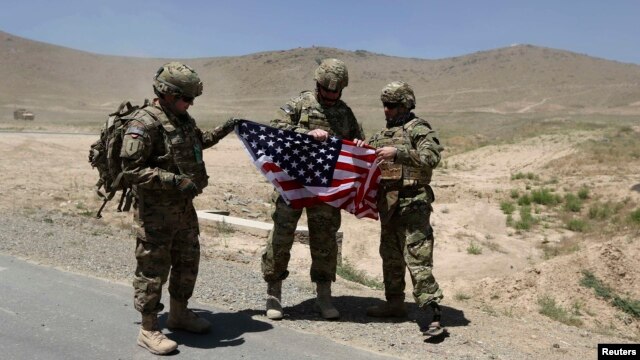 The Afghan government says protracted negotiations over a crucial security agreement with the United States have advanced to a new stage, raising hopes that a deal can be struck before the fast-approaching October deadline set by Washington.
Afghan and American negotiators have tried in vain for more than a year to hammer out the details of a bilateral security agreement that would provide a framework for U.S. forces to remain in Afghanistan after NATO's combat mission ends in late 2014.
To break the deadlock, Afghan President Hamid Karzai has lined up a new team of high-profile negotiators. On August 20, the Afghan Foreign Ministry announced that Karzai had tasked his national security adviser, Rangin Dadfar Spanta, former Finance Minister Ashraf Ghani Ahmadizai, and Foreign Minister Zalmay Rasul to accelerate talks and finalize a deal.
U.S. Ambassador to Afghanistan James Cunningham and U.S. General Joseph Dunford, the commander of U.S. and NATO forces in Afghanistan, have taken up their positions on the other side of the negotiating table.
A working draft has already been hashed out by the two sides. But negotiations are now expected to move up a gear.
The bilateral security agreement and accompanying Status of Forces Agreement (SOFA) will define the role and shape of a U.S. military presence in Afghanistan, as well as the legal status of U.S. special forces and civilian trainers.
Major Sticking Points
Aimal Faizi, Karzai's spokesman, told RFE/RL's Radio Free Afghanistan that technical issues the United States needs resolved to operate militarily in Afghanistan have been resolved. These include taxation, visas, what bases and facilities in Afghanistan the United States will use, transit routes, and rights over Afghan airspace.
He says Afghan and American negotiators will now look to agree on larger and more contentious issues where major sticking points remain.
"Defending Afghanistan from foreign aggression is one of our key demands," Faizi says. "There are also other issues where disagreement remains. When talks resume again, these two negotiating teams will discuss these issues until there is agreement."
Negotiations have taken place against a backdrop of mutual suspicion and worsening bilateral relations. Both sides entered the talks with a competing set of military priorities and legal concerns.
The long-term security deal is essential for Washington and Kabul because it would allow the United States to train and assist Afghan security forces so the latter can hold off the Taliban and maintain their own security after 2014. It would also allow the United States to pursue remnants of Al-Qaeda operating along Afghanistan's porous border with Pakistan.
'Zero Option' Possible
Without a deal, American officials and their NATO allies have said the "zero option" of leaving no troops behind is a very real possibility. Billions of dollars in promised aid to sustain Afghanistan's security forces and develop its fragile economy could be at risk.
Karzai suspended talks with the United States after the Taliban opened a diplomatic office in the Qatari capital, Doha, in June. Karzai protested the presence of the Taliban's flag and banner at the office, saying the move violated Washington's promises about how the office would work.
Karzai has said negotiations over a security agreement with the United States would only resume when the reconciliation process with the Taliban is led by the Afghan government. Faizi did not say when he expected talks over the security document to formally resume, although informal negotiations have continued.
Faizi also said that the president would convene a Loya Jirga -- a grand assembly of tribal, ethnic, and religious leaders -- within two months, raising hopes of fast progress. Karzai has pledged to consult a Loya Jirga before ratifying any deal.
"If the two governments reach agreement, that's fine. But if they don't, then a Loya Jirga will be convened on why a deal wasn't struck," Faizi says. "If everything goes well, then we will have a Loya Jirga in a month and a half or two months."
Until then, American and Afghan negotiators will have to navigate through tricky waters, as both sides have shown little willingness to make concessions.
The United States wants immunity from Afghan justice for U.S. service members serving in Afghanistan. Karzai has demanded that American troops answer to Afghan law.
Afghanistan wants Washington to guarantee its security. Kabul wants the U.S. military to intervene and defend the country from "foreign aggression," including cross-border incursions or artillery attacks on its territory from Pakistan. That guarantee, seen as a nonstarter by many, could compel the United States to retaliate against Taliban safe havens in Pakistan in the event of such attacks.
The Afghan government has also demanded assurances from Washington that it will pledge a multiyear financial commitment to sustain the country's security forces. But as with military assistance, Washington promises to seek funds on a yearly basis from the U.S. Congress for assistance to Afghanistan.
The Afghan government says protracted negotiations over a crucial security agreement with the United States have advanced to a new stage, raising hopes that a deal can be struck before the fast-approaching October deadline set by Washington.
Afghan and American negotiators have tried in vain for more than a year to hammer out the details of a bilateral security agreement that would provide a framework for U.S. forces to remain in Afghanistan after NATO's combat mission ends in late 2014.
To break the deadlock, Afghan President Hamid Karzai has lined up a new team of high-profile negotiators. On August 20, the Afghan Foreign Ministry announced that Karzai had tasked his national security adviser, Rangin Dadfar Spanta, former Finance Minister Ashraf Ghani Ahmadizai, and Foreign Minister Zalmay Rasul to accelerate talks and finalize a deal.
U.S. Ambassador to Afghanistan James Cunningham and U.S. General Joseph Dunford, the commander of U.S. and NATO forces in Afghanistan, have taken up their positions on the other side of the negotiating table.
A working draft has already been hashed out by the two sides. But negotiations are now expected to move up a gear.
The bilateral security agreement and accompanying Status of Forces Agreement (SOFA) will define the role and shape of a U.S. military presence in Afghanistan, as well as the legal status of U.S. special forces and civilian trainers.
Major Sticking Points
Aimal Faizi, Karzai's spokesman, told RFE/RL's Radio Free Afghanistan that technical issues the United States needs resolved to operate militarily in Afghanistan have been resolved. These include taxation, visas, what bases and facilities in Afghanistan the United States will use, transit routes, and rights over Afghan airspace.
He says Afghan and American negotiators will now look to agree on larger and more contentious issues where major sticking points remain.
"Defending Afghanistan from foreign aggression is one of our key demands," Faizi says. "There are also other issues where disagreement remains. When talks resume again, these two negotiating teams will discuss these issues until there is agreement."
Negotiations have taken place against a backdrop of mutual suspicion and worsening bilateral relations. Both sides entered the talks with a competing set of military priorities and legal concerns.
The long-term security deal is essential for Washington and Kabul because it would allow the United States to train and assist Afghan security forces so the latter can hold off the Taliban and maintain their own security after 2014. It would also allow the United States to pursue remnants of Al-Qaeda operating along Afghanistan's porous border with Pakistan.
'Zero Option' Possible
Without a deal, American officials and their NATO allies have said the "zero option" of leaving no troops behind is a very real possibility. Billions of dollars in promised aid to sustain Afghanistan's security forces and develop its fragile economy could be at risk.
Karzai suspended talks with the United States after the Taliban opened a diplomatic office in the Qatari capital, Doha, in June. Karzai protested the presence of the Taliban's flag and banner at the office, saying the move violated Washington's promises about how the office would work.
Karzai has said negotiations over a security agreement with the United States would only resume when the reconciliation process with the Taliban is led by the Afghan government. Faizi did not say when he expected talks over the security document to formally resume, although informal negotiations have continued.
Faizi also said that the president would convene a Loya Jirga -- a grand assembly of tribal, ethnic, and religious leaders -- within two months, raising hopes of fast progress. Karzai has pledged to consult a Loya Jirga before ratifying any deal.
"If the two governments reach agreement, that's fine. But if they don't, then a Loya Jirga will be convened on why a deal wasn't struck," Faizi says. "If everything goes well, then we will have a Loya Jirga in a month and a half or two months."
Until then, American and Afghan negotiators will have to navigate through tricky waters, as both sides have shown little willingness to make concessions.
The United States wants immunity from Afghan justice for U.S. service members serving in Afghanistan. Karzai has demanded that American troops answer to Afghan law.
Afghanistan wants Washington to guarantee its security. Kabul wants the U.S. military to intervene and defend the country from "foreign aggression," including cross-border incursions or artillery attacks on its territory from Pakistan. That guarantee, seen as a nonstarter by many, could compel the United States to retaliate against Taliban safe havens in Pakistan in the event of such attacks.
The Afghan government has also demanded assurances from Washington that it will pledge a multiyear financial commitment to sustain the country's security forces. But as with military assistance, Washington promises to seek funds on a yearly basis from the U.S. Congress for assistance to Afghanistan.
Karzai Heads to Pakistan for Talks on Afghan Peace Process
Peshawar seminary on US terrorist list: Wanted man a frequent international traveller
Sheikh Aminullah, who triggered the US economic sanctions on a small seminary in Peshawar on Tuesday, has been frequently travelling abroad despite having been declared a terrorist by the US government and the United Nations in 2009.
“Sheikh Aminullah travelled to Saudi Arabia in last Ramazan for performing Umra and then came back to Rawalpindi where he was teaching the Holy Quran at a mosque in Raja Bazaar,” said one source affiliated with Jamia Taleemul Quran wal Sunnah, which was declared a terrorist outfit by the US government.
He said he knew that Amanullah, who had taught here from 20 years, had been declared terrorist by the UN and the US.The US State Department said the seminary was being abused by terrorist organisations and today’s action appeared to be the first time, a seminary had been declared a terrorist outfit in Pakistan.Jamia Taleemul Quran wal Sunnah is situated in a narrow street outside Gunj Gate of Peshawar, where, according the administration, some 120 students are enrolled.
The seminary was established in 1990,receiving donations from Saudi Arabia,spreeading hate,brainwashing kids,on behalf of saudi arabia spreads hate against Shia,Ahmadi Muslims and other non-muslim groups in Pakistan.
The ground floor is used as a mosque while first floor is used as a classroom and dormitory. Three to four small rooms on the top floor are also used for teaching purposes.
President Zardari: Democracy taking root in Pakistan
 President Asif Ali Zardari on Thursday said democracy was taking root in Pakistan, as for the first time in the country's history one elected civilian president would be handing over charge to another elected civilian president in a smooth and orderly manner.
Pakistan and Israel hit by polio setback
By Jon Boone, Harriet Sherwood and Sarah Boseley

North Waziristan cases follow militants' vaccination ban, while Israel starts mass inoculation after virus detected in sewageThe battle to eliminate polio has hit apparent setbacks in northern Pakistan, where new cases are being reported, and in Israel, where the discovery of the virus in the sewage system has led to a mass immunisation campaign. Fourteen suspected cases of polio have been discovered in Pakistan's insurgency-racked north-west, where Taliban militants have banned vaccination workers. Although the country is awaiting the result of tests on stool samples from the affected children, a surge in cases could strike a major blow to the government's intense efforts to exit the small group of nations that has failed to eradicate the disease. All but two of the children were from North Waziristan, the most troubled of the seven tribal "agencies" that comprise the Federally Administered Tribal Areas, a semi-autonomous region of Pakistan that borders Afghanistan and is a hotbed for militancy. The majority of strikes by the CIA's unmanned drone campaign occur in North Waziristan, a situation that last year prompted Taliban commander Hafiz Gul Bahadur to block the anti-polio campaign in the agency. Militants in other areas have enacted similar bans, saying they will lift them only when drone strikes end. In North and South Waziristan, more than 260,000 under fives have not been immunised since June 2012. In tribal, highly conservative parts of the country health workers are regarded with intense suspicion. Popular fears are often stoked by local religious leaders who claim the vaccines are part of a western plot to sterilise Muslims. Elsewhere in the country, monsoon floods, insecurity and a string of byelections have forced authorities to postpone a vaccination drive originally scheduled to begin on Monday. According to the global polio eradication initiative, 181 cases had been recorded worldwide this year between January and 13 August. A total of 71 were in Afghanistan, Nigeria and Pakistan, countries where the disease is endemic. Bruce Aylward, who leads the World Health Organisation's global polio eradication campaign, pointed out that the actions of Gul Bahadur were not in line with the expressed views of the Afghan Taliban, which published a statement on its website two months ago about the importance of vaccinating children against polio (with the rider that it should be done in a manner appropriate for Muslims). Aylward said some of the reported cases were false alarms, with tests showing that children's symptoms were not caused by the polio virus. But, he added, cases were inevitable. "This is one of the very few areas in the world that is affected by polio where there is no vaccination ongoing," he said. "The endgame in stopping transmission is getting vaccination into every affected area. If we are not vaccinating, we are not eradicating." Experts are hopeful that vaccination may resume. A year has passed since it was suspended, making it probable that the political impact will have diminished. And while a ban can continue indefinitely while there are no polio cases, local sensitivities may change if children become sick or are harmed by the disease. Aylward pointed to conflict-hit areas such as the Democratic Republic of the Congo and northern Nigeria, where vaccination has resumed. "In each case, with time and understanding for the consequences of their own children, it has been possible to get a dialogue," he said. Meanwhile, Israel has launched a mass inoculation programme, aimed at reaching more than a million under-10s over the next three months, after one of the three strains of polio was detected in the country's sewage system. No one in Israel has developed the virus since the discovery of type one in the south of the country earlier this year. It has since spread to sewage systems in the centre and the north. Type one was identified in neighbouring Egypt in December. Drops containing vaccine against types one and three of the virus are being administered orally at health clinics. Israel routinely immunises children against polio, but this campaign aims to boost the level of protection. About 182,000 children were inoculated in the first three days. A legal petition against the move, on the grounds that it was unnecessary and could be harmful, was dismissed by the high court. The last outbreak of polio in Israel was 25 years ago, and Aylward said the situation there is different to that in Pakistan. Like most countries that have eliminated polio, Israel has switched from oral drops to the inactivated poliovirus vaccine (IPV), which is injected. The IPV prevents the virus causing illness but, if children or adults contract it, it will still travel through the gut. Israel, which has excellent surveillance systems, discovered the virus in the sewage system in February, said Aylward, but that happens in many countries using IPV. What is unusual is that it did not disappear and has since been detected in other parts of the country. The virus in the sewage is not a threat to children who have been immunised, but it is to the estimated 6% who have not been. "So far, they have been lucky – there are no cases," said Aylward. Without the vaccination campaign, however, it would be surprising if cases did not occur.
Africa and Pakistan Face Polio Outbreaks, in Blow to Global Fight
 By DONALD G. McNEIL Jr.
The global effort to eradicate polio, a disease that has been on the brink of extinction for years, is facing serious setbacks on two continents. The virus is surging in Somalia and the Horn of Africa, which had been largely free of cases for several years. And a new outbreak has begun in a part of Pakistan that a warlord declared off limits to vaccinators 14 months ago.
The African outbreak began in May with just two cases of polio paralysis: one in Mogadishu, Somalia’s capital, and another in the huge Dadaab refugee camp in Kenya, where thousands of Somalis have fled fighting between Islamic militants, clan militias, government troops and African peacekeepers.
Now there are 121 cases in the region; last year, there were only 223 in the world.
The new Pakistan outbreak is in North Waziristan, near the frontier with Afghanistan. It is in an area where a warlord banned polio vaccinations after it was disclosed that the C.I.A. had staged a hepatitis vaccination campaign in its hunt for Osama bin Laden. The warlord, Hafiz Gul Bahadur, banned all efforts until American drone strikes ended.
Although only three North Waziristan children have suffered polio paralysis since then, even one case shows that the virus is in the area and could spread.
The new outbreaks may delay a recently announced $5.5 billion plan to eradicate polio by 2018. Nonetheless, public health officials still believe that, with enough local political will and donor money, they can prevail by using techniques that have worked before.
To prevent the disease from reaching Mecca during next month’s hajj, Saudi Arabia has tightened its rules. Pilgrims from any country with polio cases must be vaccinated at home and again on arrival. Last year, nearly 500,000 pilgrims were vaccinated on arrival, Dr. Ziad A. Memish, the Saudi deputy health minister, said recently.
The Pakistan outbreak is particularly frustrating because eradication had been going steadily forward despite the killings in December of nine vaccinators for which some blamed the Taliban.
Public health officials had counted themselves lucky that despite simultaneous vaccination bans in North and South Waziristan, no polio virus was known to be circulating in the 250,000 children in those areas. Vaccination posts were set up on nearby highways and on buses and trains. Urban hospitals packed the vaccine on ice for families willing to smuggle it back to neighbors. But it was not enough.
“The equation is simple,” said Dr. Elias Durry, emergency coordinator for polio eradication in Pakistan for the World Health Organization. “Where you can immunize, the virus goes away. Where you can’t, the virus gets in, and it will paralyze these poor kids.”
Dr. Durry said he hoped that parents whose children were paralyzed would speak up at local decision-making councils, called shuras, that are common in tribal areas, and possibly put pressure on warlords to rescind the ban.
The Taliban warlord in South Waziristan, Maulvi Nazir, was killed by a drone strike in January.
Before the Waziristan outbreak, Pakistan had seen only 24 cases this year, about as many as it had at the same point in 2012. Most were around Karachi and Peshawar, where last year’s killings of the vaccinators took place and where resistance to vaccines is highest.
The Somali outbreak is different. There is little opposition to the vaccine itself, said Dr. Bruce Aylward, the W.H.O. assistant director general for polio. In several Muslim countries, including Pakistan, the drive has been hurt by rumors that the vaccine sterilizes girls or contains the virus that causes AIDS or pork products.
But, he said, many cases are in areas south of Mogadishu where the Shabab, a militant group, operate. The group opposes mass campaigns because it believes the sight of thousands of vaccinators going house to house would undercut its claim to rule those areas.
“It’s all about control,” Dr. Aylward said.
Instead, the campaign negotiates with local chiefs and midlevel Shabab members to hold small drives.
Other tactics have changed, too: children of any age, and sometimes adults, get the drops, and drives are held twice a month instead of every three months.
Refugee camps face other obstacles. Large ones often have lawless areas on their fringes where vaccinators may fear to work because of predatory criminals.
“When this started, I said, ‘Brace yourself for hundreds of cases,’ ” Dr. Aylward said, because he knew that few children born in the last five years had been immunized.
Still, he said he believed this outbreak could be beaten because it echoed the one that plagued the region from 2005 to 2007. It also began in Mogadishu, and it spread as far as Yemen and Eritrea and paralyzed about 700 children before multiple mass vaccination rounds snuffed it out. Kenya, Yemen and Ethiopia are already planning those with help from Geneva.
Somalia is so dangerous for health workers that Doctors Without Borders pulled out of the country this month after 22 years there. But polio officials hope their campaign will not be targeted, largely because it creates thousands of temporary paying jobs for “volunteer” vaccinators.
In Mogadishu in July, President Hassan Sheik Mohamud publicly took polio drops at an event encouraging parents to vaccinate.
Asha Ali, 38, a mother of four, changed her attitude. “I was thinking the vaccine might sicken our children,” she said. “I realized later that it was good.”
Hamdi Hashi, 26, said she accepted it “because I don’t want this serious disease to cripple my children.”
But Habow Madey, in a different Mogadishu neighborhood, said her husband had forbidden vaccination, believing it causes “a mysterious disease.”
By DONALD G. McNEIL Jr.
The global effort to eradicate polio, a disease that has been on the brink of extinction for years, is facing serious setbacks on two continents. The virus is surging in Somalia and the Horn of Africa, which had been largely free of cases for several years. And a new outbreak has begun in a part of Pakistan that a warlord declared off limits to vaccinators 14 months ago.
The African outbreak began in May with just two cases of polio paralysis: one in Mogadishu, Somalia’s capital, and another in the huge Dadaab refugee camp in Kenya, where thousands of Somalis have fled fighting between Islamic militants, clan militias, government troops and African peacekeepers.
Now there are 121 cases in the region; last year, there were only 223 in the world.
The new Pakistan outbreak is in North Waziristan, near the frontier with Afghanistan. It is in an area where a warlord banned polio vaccinations after it was disclosed that the C.I.A. had staged a hepatitis vaccination campaign in its hunt for Osama bin Laden. The warlord, Hafiz Gul Bahadur, banned all efforts until American drone strikes ended.
Although only three North Waziristan children have suffered polio paralysis since then, even one case shows that the virus is in the area and could spread.
The new outbreaks may delay a recently announced $5.5 billion plan to eradicate polio by 2018. Nonetheless, public health officials still believe that, with enough local political will and donor money, they can prevail by using techniques that have worked before.
To prevent the disease from reaching Mecca during next month’s hajj, Saudi Arabia has tightened its rules. Pilgrims from any country with polio cases must be vaccinated at home and again on arrival. Last year, nearly 500,000 pilgrims were vaccinated on arrival, Dr. Ziad A. Memish, the Saudi deputy health minister, said recently.
The Pakistan outbreak is particularly frustrating because eradication had been going steadily forward despite the killings in December of nine vaccinators for which some blamed the Taliban.
Public health officials had counted themselves lucky that despite simultaneous vaccination bans in North and South Waziristan, no polio virus was known to be circulating in the 250,000 children in those areas. Vaccination posts were set up on nearby highways and on buses and trains. Urban hospitals packed the vaccine on ice for families willing to smuggle it back to neighbors. But it was not enough.
“The equation is simple,” said Dr. Elias Durry, emergency coordinator for polio eradication in Pakistan for the World Health Organization. “Where you can immunize, the virus goes away. Where you can’t, the virus gets in, and it will paralyze these poor kids.”
Dr. Durry said he hoped that parents whose children were paralyzed would speak up at local decision-making councils, called shuras, that are common in tribal areas, and possibly put pressure on warlords to rescind the ban.
The Taliban warlord in South Waziristan, Maulvi Nazir, was killed by a drone strike in January.
Before the Waziristan outbreak, Pakistan had seen only 24 cases this year, about as many as it had at the same point in 2012. Most were around Karachi and Peshawar, where last year’s killings of the vaccinators took place and where resistance to vaccines is highest.
The Somali outbreak is different. There is little opposition to the vaccine itself, said Dr. Bruce Aylward, the W.H.O. assistant director general for polio. In several Muslim countries, including Pakistan, the drive has been hurt by rumors that the vaccine sterilizes girls or contains the virus that causes AIDS or pork products.
But, he said, many cases are in areas south of Mogadishu where the Shabab, a militant group, operate. The group opposes mass campaigns because it believes the sight of thousands of vaccinators going house to house would undercut its claim to rule those areas.
“It’s all about control,” Dr. Aylward said.
Instead, the campaign negotiates with local chiefs and midlevel Shabab members to hold small drives.
Other tactics have changed, too: children of any age, and sometimes adults, get the drops, and drives are held twice a month instead of every three months.
Refugee camps face other obstacles. Large ones often have lawless areas on their fringes where vaccinators may fear to work because of predatory criminals.
“When this started, I said, ‘Brace yourself for hundreds of cases,’ ” Dr. Aylward said, because he knew that few children born in the last five years had been immunized.
Still, he said he believed this outbreak could be beaten because it echoed the one that plagued the region from 2005 to 2007. It also began in Mogadishu, and it spread as far as Yemen and Eritrea and paralyzed about 700 children before multiple mass vaccination rounds snuffed it out. Kenya, Yemen and Ethiopia are already planning those with help from Geneva.
Somalia is so dangerous for health workers that Doctors Without Borders pulled out of the country this month after 22 years there. But polio officials hope their campaign will not be targeted, largely because it creates thousands of temporary paying jobs for “volunteer” vaccinators.
In Mogadishu in July, President Hassan Sheik Mohamud publicly took polio drops at an event encouraging parents to vaccinate.
Asha Ali, 38, a mother of four, changed her attitude. “I was thinking the vaccine might sicken our children,” she said. “I realized later that it was good.”
Hamdi Hashi, 26, said she accepted it “because I don’t want this serious disease to cripple my children.”
But Habow Madey, in a different Mogadishu neighborhood, said her husband had forbidden vaccination, believing it causes “a mysterious disease.”
Pakistan: ‘Ahmadis not allowed to do business in Muslim areas’
The Express Tribune
 A man was forced to abandon his woodworking business and flee Gujranwala with his family after his erstwhile friends and neighbours discovered that he was an Ahmadi, The Express Tribune has learnt.
Imran Ahmed, 35, started out as a daily wager at a woodwork shop in Gujranwala. He saved up money for three years, then invested Rs100,000 in machinery and setting up his own workshop. As his business grew, he hired two carpenters to work for him. “Things were going really well, but nobody knew I was an Ahmadi,” he said.
Ahmed said that his was the only Ahmadi family in Rana Colony in Gujranwala and he kept this a secret as he feared being victimised. He got along well with his neighbours and one day, when he was injured in a motorcycle accident, they came to ask after him. Inside his house, they saw pictures of Ahmadi personalities. “Their mood totally changed and they left without even having tea,” he said.
Things changed dramatically for Ahmed. He said some other workshop owners who were his business rivals began a hate campaign against him. One by one, his ‘friends’ began socially boycotting him. Shopkeepers would refuse to sell him groceries, and his employees resigned, saying it was prohibited to work with him. “Boys on the street started passing comments about me and things got worse day by day,” he said.
Then one day during Ramazan, Ahmed said, three neighbouring shopkeepers and two clerics barged into his workshop and began beating him. They told him to leave at once if he wanted to protect his life and his family, he said. He asked to be allowed to remove his machinery from the shop, but they refused, he said. He rushed home, just a few hundred yards away, gathered his wife and three young children, and left Gujranwala. He now lives with relatives in another city and works as a daily wager at a furniture shop.
Ahmed said that he had not filed a complaint with the police, but he intended to do so soon. He would also ask the police to recover his machinery and household items. He said that he would nominate Maulvi Abdul Rehman, Abid Ali and Mubashar in his application to the police. He said that Ali and Mubashar had been close friends up until they had found out that he was an Ahmadi.
When contacted, Abdul Rehman told The Express Tribune that he had no regrets about what had happened to Imran Ahmed. He said Ahmadis were apostates who deserved death. They don’t have a right to do business in Muslim areas, he said.
Asked why Ahmed had not been allowed to take his belongings with him, he said: “It is enough that he spent five years here and fed his family using money from Muslims. We are ready to deal with him if he returns. It is better for him to forget the belongings he left in his shop and his house.”
Munawar Ali Shahid, a human rights activist, said that this was just the latest manifestation of an anti-Ahmadi campaign being run by various hardline groups across the province, particularly in Lahore, where “baseless” cases had been registered against several Ahmadis in recent months. He said that the state had utterly failed to protect the lives and properties of minorities, particularly Ahmadis. He said he too had been threatened for seeking to protect the rights of Ahmadi citizens.
A man was forced to abandon his woodworking business and flee Gujranwala with his family after his erstwhile friends and neighbours discovered that he was an Ahmadi, The Express Tribune has learnt.
Imran Ahmed, 35, started out as a daily wager at a woodwork shop in Gujranwala. He saved up money for three years, then invested Rs100,000 in machinery and setting up his own workshop. As his business grew, he hired two carpenters to work for him. “Things were going really well, but nobody knew I was an Ahmadi,” he said.
Ahmed said that his was the only Ahmadi family in Rana Colony in Gujranwala and he kept this a secret as he feared being victimised. He got along well with his neighbours and one day, when he was injured in a motorcycle accident, they came to ask after him. Inside his house, they saw pictures of Ahmadi personalities. “Their mood totally changed and they left without even having tea,” he said.
Things changed dramatically for Ahmed. He said some other workshop owners who were his business rivals began a hate campaign against him. One by one, his ‘friends’ began socially boycotting him. Shopkeepers would refuse to sell him groceries, and his employees resigned, saying it was prohibited to work with him. “Boys on the street started passing comments about me and things got worse day by day,” he said.
Then one day during Ramazan, Ahmed said, three neighbouring shopkeepers and two clerics barged into his workshop and began beating him. They told him to leave at once if he wanted to protect his life and his family, he said. He asked to be allowed to remove his machinery from the shop, but they refused, he said. He rushed home, just a few hundred yards away, gathered his wife and three young children, and left Gujranwala. He now lives with relatives in another city and works as a daily wager at a furniture shop.
Ahmed said that he had not filed a complaint with the police, but he intended to do so soon. He would also ask the police to recover his machinery and household items. He said that he would nominate Maulvi Abdul Rehman, Abid Ali and Mubashar in his application to the police. He said that Ali and Mubashar had been close friends up until they had found out that he was an Ahmadi.
When contacted, Abdul Rehman told The Express Tribune that he had no regrets about what had happened to Imran Ahmed. He said Ahmadis were apostates who deserved death. They don’t have a right to do business in Muslim areas, he said.
Asked why Ahmed had not been allowed to take his belongings with him, he said: “It is enough that he spent five years here and fed his family using money from Muslims. We are ready to deal with him if he returns. It is better for him to forget the belongings he left in his shop and his house.”
Munawar Ali Shahid, a human rights activist, said that this was just the latest manifestation of an anti-Ahmadi campaign being run by various hardline groups across the province, particularly in Lahore, where “baseless” cases had been registered against several Ahmadis in recent months. He said that the state had utterly failed to protect the lives and properties of minorities, particularly Ahmadis. He said he too had been threatened for seeking to protect the rights of Ahmadi citizens.
Pakistan: Upsets define country’s biggest by-polls
 There was a massive turnout witnessed in the country’s biggest by-polls held on Thursday, with voters rejecting candidates from leading political parties in favour of unknown rivals.
Major upsets were witnessed in by-elections held across country on Thursday as Pakistan Tehreek-e-Insaf, ruling PML-N and PML-Functional failed to retain some of their previously-won seats vacated by the parties’ top leaders.
The PPP, which tasted its worst defeat in May 11 general elections, made a decent come back by clinching three NA seats.
Those who lost seats included the PTI, that lost both seats won by party chief Imran Khan in NA-1 Peshawar and NA-71 Mianwali, losing to ANP and PML-N candidates, respectively.
In Mianwali, the home constituency of PTI chief Imran Khan, his candidate Malik Amjad lost to PML-N candidate ShadiKhel, who won with 95,091 votes.
In NA-1 Peshawar, PTI candidate Gul Badshah faced a massive defeat at the hand of senior politician of ANP, Ghulam Ahmed Bilour. Per unofficial results, Bilour got over 37,000 votes while PTI Gul Badhsa bagged around 25,000 votes.
Political pundits believe that bad decision-making by the PTI chief in awarding tickets cost PTI both seats.
However, the PTI snatched two provincial assembly seats from DG khan, won and vacated earlier by Punjab CM Shahbaz Sharif and Zulfikar Khosa.
This is a rare achievement for the PTI as the party makes its mark in south Punjab. However, the PML-N won 10 provincial assembly seats from Punjab province on the whole.
According to unofficial results, the PML-N was leading the race with five NA seats followed by PPP with three seats, PTI with two, PkMAP and MQM with one NA seat each.
The MQM also won both provincial assembly seats from Karachi.
The ECP withheld results for NA-5 and NA-27 and ordered re-election on nine polling stations of each constituency.
The NA-5 seat was vacated by KP Chief Minister Pervez Khattak and NA-27 by JI chief Maulana Fazulur Rehman.
Per unofficial results, the PTI was leading the race for both seats.
The PTI managed to retain its NA-13 Swabi seat, which was vacated by KPK speaker Asad Qaisar. His brother managed to win the election for the PTI again.
The PTI also retained its vacated NA-48 Islamabad seat with Asad Umar’s victory.
Umar won the elections by getting 48,073 votes, while his rival, PML-N’s Ashraf Gujjar, got 44,186 votes.
The PPP’s Shazia Mari snatched NA-235 Sanghar from the PML-F. She defeated JUI-F’s Khuda Bakhs Dar. PPP candidate Mehrunnisa won the elections from Thatta, while in Punjab, former foreign minister, Hina Rabbani Khar’s father, Noor Rabbani, won the NA-177 seat against the Dastis.
This seat was won and vacated by Jamshad Dasti. His brother Javid Dasti, bagged only 49,547 votes against PPP’s Noor Khar, who won with 53,049 votes.
- See more at: http://www.pakistantoday.com.pk/2013/08/23/news/national/upsets-define-countrys-biggest-by-polls/#sthash.p7NjjpoB.dpuf
There was a massive turnout witnessed in the country’s biggest by-polls held on Thursday, with voters rejecting candidates from leading political parties in favour of unknown rivals.
Major upsets were witnessed in by-elections held across country on Thursday as Pakistan Tehreek-e-Insaf, ruling PML-N and PML-Functional failed to retain some of their previously-won seats vacated by the parties’ top leaders.
The PPP, which tasted its worst defeat in May 11 general elections, made a decent come back by clinching three NA seats.
Those who lost seats included the PTI, that lost both seats won by party chief Imran Khan in NA-1 Peshawar and NA-71 Mianwali, losing to ANP and PML-N candidates, respectively.
In Mianwali, the home constituency of PTI chief Imran Khan, his candidate Malik Amjad lost to PML-N candidate ShadiKhel, who won with 95,091 votes.
In NA-1 Peshawar, PTI candidate Gul Badshah faced a massive defeat at the hand of senior politician of ANP, Ghulam Ahmed Bilour. Per unofficial results, Bilour got over 37,000 votes while PTI Gul Badhsa bagged around 25,000 votes.
Political pundits believe that bad decision-making by the PTI chief in awarding tickets cost PTI both seats.
However, the PTI snatched two provincial assembly seats from DG khan, won and vacated earlier by Punjab CM Shahbaz Sharif and Zulfikar Khosa.
This is a rare achievement for the PTI as the party makes its mark in south Punjab. However, the PML-N won 10 provincial assembly seats from Punjab province on the whole.
According to unofficial results, the PML-N was leading the race with five NA seats followed by PPP with three seats, PTI with two, PkMAP and MQM with one NA seat each.
The MQM also won both provincial assembly seats from Karachi.
The ECP withheld results for NA-5 and NA-27 and ordered re-election on nine polling stations of each constituency.
The NA-5 seat was vacated by KP Chief Minister Pervez Khattak and NA-27 by JI chief Maulana Fazulur Rehman.
Per unofficial results, the PTI was leading the race for both seats.
The PTI managed to retain its NA-13 Swabi seat, which was vacated by KPK speaker Asad Qaisar. His brother managed to win the election for the PTI again.
The PTI also retained its vacated NA-48 Islamabad seat with Asad Umar’s victory.
Umar won the elections by getting 48,073 votes, while his rival, PML-N’s Ashraf Gujjar, got 44,186 votes.
The PPP’s Shazia Mari snatched NA-235 Sanghar from the PML-F. She defeated JUI-F’s Khuda Bakhs Dar. PPP candidate Mehrunnisa won the elections from Thatta, while in Punjab, former foreign minister, Hina Rabbani Khar’s father, Noor Rabbani, won the NA-177 seat against the Dastis.
This seat was won and vacated by Jamshad Dasti. His brother Javid Dasti, bagged only 49,547 votes against PPP’s Noor Khar, who won with 53,049 votes.
- See more at: http://www.pakistantoday.com.pk/2013/08/23/news/national/upsets-define-countrys-biggest-by-polls/#sthash.p7NjjpoB.dpuf
Punjab Assembly : ''Undemocratic practice
Blast targets security convoy in Peshawar
THE FRONTIER POSTA remote controlled blast occurred at Kohat Road in Peshawar when the convoy of security forces was passing through the Bazid Khel area Friday, Local tv reported. According to police, the security personnel were on their way when a bomb fixed in the motorcycle went off near the convoy at Kohat Road, causing a huge blast. As a result, one of the vehicles was partially damaged due to the impact, however, no casualty or injury was reported. Police and rescue teams reached the blast site and cordoned off the area.
Subscribe to:
Posts (Atom)