Sunday, March 10, 2013
Pakistan's Christens under Attack: '''Mob rule'''
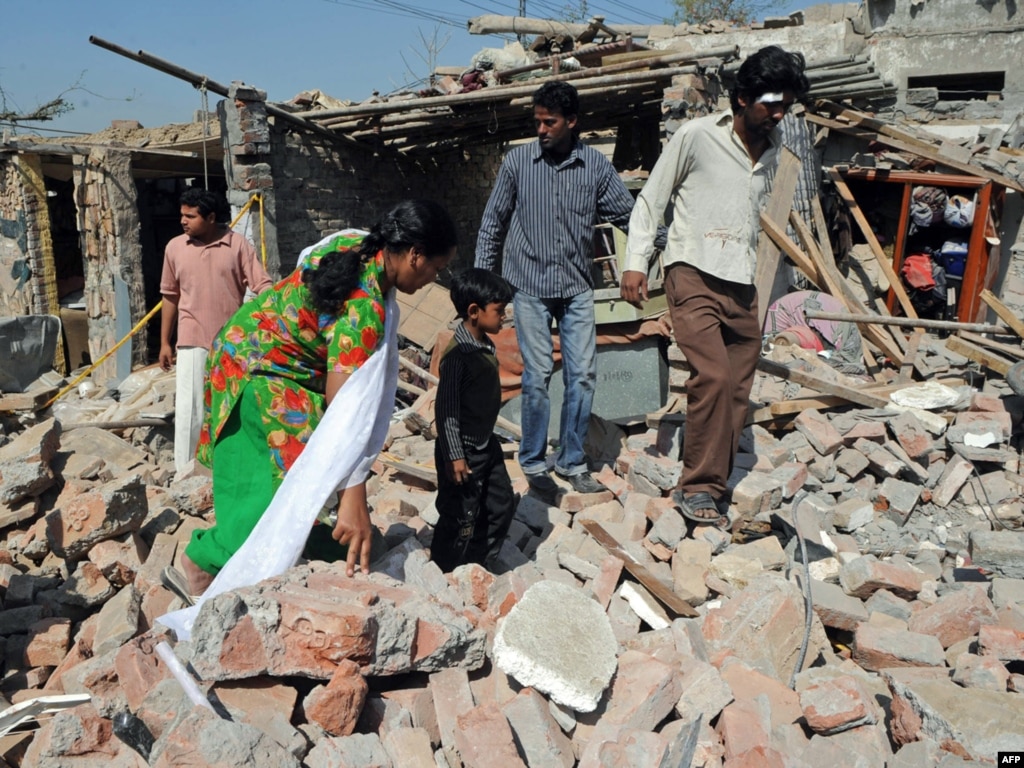
 Nobody died but a community was murdered. It was murdered deliberately and with malice aforethought. Over 175 houses in a primarily Christian colony in the Badami Bagh area of Lahore were damaged or destroyed, and the possessions of those who until two days ago lived in them were dragged out and burnt. Most of the residents had already fled before the destruction started, but there were harrowing scenes of women and children screaming in fear as they ran from the mob. Chilling images of young men hurling a Christian cross onto a bonfire and others dancing in what was a clearly triumphal mood mark this latest incident as yet another in the quickening string of attacks on religious minorities. The rioters, carrying cans of petrol, came prepared to do damage – and they came in thousands. There was nothing that spoke of spontaneity where at the most a few hundred might have gathered. There was organisation, planning, and a determination to drive the Christians from their homes. The police were silent onlookers, and made no serious attempt to prevent the looting and arson. In this they mirrored the actions of the police at Gojra, near Toba Tek Singh, several years ago when another Christian colony was attacked and burnt.
The background story to the incident has a familiar ring. The land the houses were on is in an industrial area and it is said that ‘vested interests’ wanted it vacated. Another thread to the narrative lies in a personal enmity, one man settling a score with another by making an allegation of blasphemy. The original ‘blasphemer’ (the allegation has yet to be substantiated) was arrested on Friday – which leads one to question why the colony was not attacked until Saturday? And why was it attacked if the ‘blasphemer’ was behind bars? This is not to say that the barbarity would have been justified otherwise. This is a ‘practical’ question raised about the motives of those who are not familiar with trivia like humanity, dignity and civilisation.
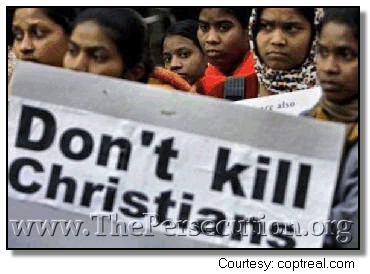
There were protests by Christians who pelted the new metro buses in Lahore; the police retaliated with tear gas. Protests have been called for in other cities, and the large Christian community in Karachi gathered outside St Josephs church. Whatever the truth or otherwise of the blasphemy allegation, here is yet another example of the forces of law and order standing by while a minority community was destroyed before their eyes. The police have arrested perhaps a couple of hundred, but there is no serious expectation of a successful prosecution of any of those so clearly identifiable from footage shot at the scene. All of the minority religious groups in Pakistan are vulnerable, some of them persecuted or murdered in their hundreds. The state in the widest sense, be it provincial or federal, pays lip service to their protection and well-being but never moves decisively to either protect or defend them. The Mob can be activated at the touch of a button, summoned and instructed by SMS, and it is The Mob and its manipulators that today hold the reins of power in a country where tolerance has been cast off. Courage must be found to stop and fight this madness that can only be the hallmark of a pariah state.
Nobody died but a community was murdered. It was murdered deliberately and with malice aforethought. Over 175 houses in a primarily Christian colony in the Badami Bagh area of Lahore were damaged or destroyed, and the possessions of those who until two days ago lived in them were dragged out and burnt. Most of the residents had already fled before the destruction started, but there were harrowing scenes of women and children screaming in fear as they ran from the mob. Chilling images of young men hurling a Christian cross onto a bonfire and others dancing in what was a clearly triumphal mood mark this latest incident as yet another in the quickening string of attacks on religious minorities. The rioters, carrying cans of petrol, came prepared to do damage – and they came in thousands. There was nothing that spoke of spontaneity where at the most a few hundred might have gathered. There was organisation, planning, and a determination to drive the Christians from their homes. The police were silent onlookers, and made no serious attempt to prevent the looting and arson. In this they mirrored the actions of the police at Gojra, near Toba Tek Singh, several years ago when another Christian colony was attacked and burnt.
The background story to the incident has a familiar ring. The land the houses were on is in an industrial area and it is said that ‘vested interests’ wanted it vacated. Another thread to the narrative lies in a personal enmity, one man settling a score with another by making an allegation of blasphemy. The original ‘blasphemer’ (the allegation has yet to be substantiated) was arrested on Friday – which leads one to question why the colony was not attacked until Saturday? And why was it attacked if the ‘blasphemer’ was behind bars? This is not to say that the barbarity would have been justified otherwise. This is a ‘practical’ question raised about the motives of those who are not familiar with trivia like humanity, dignity and civilisation.
There were protests by Christians who pelted the new metro buses in Lahore; the police retaliated with tear gas. Protests have been called for in other cities, and the large Christian community in Karachi gathered outside St Josephs church. Whatever the truth or otherwise of the blasphemy allegation, here is yet another example of the forces of law and order standing by while a minority community was destroyed before their eyes. The police have arrested perhaps a couple of hundred, but there is no serious expectation of a successful prosecution of any of those so clearly identifiable from footage shot at the scene. All of the minority religious groups in Pakistan are vulnerable, some of them persecuted or murdered in their hundreds. The state in the widest sense, be it provincial or federal, pays lip service to their protection and well-being but never moves decisively to either protect or defend them. The Mob can be activated at the touch of a button, summoned and instructed by SMS, and it is The Mob and its manipulators that today hold the reins of power in a country where tolerance has been cast off. Courage must be found to stop and fight this madness that can only be the hallmark of a pariah state.
Pakistan arrests members of anti-Christian mob, but convictions rare
Christian Science MonitorChristians and civil society activists across Pakistan took to the roads on Sunday demanding government protection for the rising persecution of religious minority communities which make up less than five percent of the country. The protests come a day after hundreds of Muslims rampaged inside a Lahore neighborhood of at least 50 Christian homes. The rioters apparently were outraged over accusations that a local Christian from the area had committed blasphemy. The accused blasphemer had already been arrested the night before, and the Christians in the area fled the same night in expectation of violence. The police have arrested dozens in connection to the rioting. But campaigners for religious minorities here note that arrests after past incidents have almost never led to punishments, and the blasphemy law that enables communal unrest remain on the books. “This current government passed many constitutional amendments during the last five year but did not touch the blasphemy law, even though everyone in the parliament was on board for the revisions in the constitution,” says Nadeem Anthony, a lawyer in Lahore who defends those facing a possible death sentence under the law.
 The human rights activist slammed the main political parties like the PPP and the PMLN, which are the traditional ruling elite in the country, for always siding with the religious extremists.
“Both these parties woo extremists groups, which ... are a creation of the military’s Islamization policy," says Khan. "[I]nstead of stopping them, mainstream parties have used the groups for their political benefit.”
The human rights activist slammed the main political parties like the PPP and the PMLN, which are the traditional ruling elite in the country, for always siding with the religious extremists.
“Both these parties woo extremists groups, which ... are a creation of the military’s Islamization policy," says Khan. "[I]nstead of stopping them, mainstream parties have used the groups for their political benefit.”Missionary schools to remain shut in Karachi, Quetta Monday
All Missinoary Schools will remain closed in Karachi and Quetta on Monday following the destruction unleashed by an unruly mob in Lahore's Joseph Colony inhabited by members of Christian community. Chairman Catholic Board has announced that the Missionary Schools will remains closed in Karachi on Monday.
A similar announcement has also been made in Quetta in reaction to the tragic incident that took place on Saturday in Joseph Colony where over 175 houses and shops were torched and damaged by an angry mob over an alleged act of blasphemy.
Chairman Catholic Board has announced that the Missionary Schools will remains closed in Karachi on Monday.
A similar announcement has also been made in Quetta in reaction to the tragic incident that took place on Saturday in Joseph Colony where over 175 houses and shops were torched and damaged by an angry mob over an alleged act of blasphemy.
Imran Khan: Joseph Colony attack could have been prevented
 Pakistan Tehreek-i-Insaf (PTI) Chairman Imran Khan condemned the Joseph Colony attack and said if the Punjab government had caught the terrorists in Gojra, then this attack could have been avoided altogether.
Imran was addressing a rally in Peshawar on Sunday. He blamed the Punjab government for the attack on Joseph Colony, in which a mob set ablaze more than 150 houses of Christians in the Joseph Colony over alleged blasphemous remarks by a Christian sanitation worker.
He also condemned the recent terrorist attacks on Shias and stated he had a solution for sectarian violence. He also claimed to have the answer to increasing terrorism and said it will be revealed during an upcoming rally.
“If this Punjab government does not make seat adjustment with terrorists then terrorism can be curbed. They [PML-N] only care about ‘the chair’, whatever comes along they do not care,” the PTI Chairman said.
Imran said he will unveil the PTI manifesto on March 23 during their Lahore rally to be held on the grounds of Minar-e-Pakistan. He said, “The manifesto will explain how we [PTI] will build Naya Pakistan [New Pakistan].”
He reiterated that corruption and tax evasion is the cause for Pakistan’s failure as a nation.
“We are the first party who asked each and every member to declare their assets and we have put up the results on our website,” Imran said.
Attacking political dynasties, the PTI Chairman said, “We [PTI] do not want to become a Family Limited Company.”
“The day my party members elect Suleman Khan [Imran Khan’s son] as the party leader, I will resign,” he declared.
Further attacking the political dynasties of Pakistan he said, “In all these years, they [politicians] haven’t made leaders but made children.”
He concluded by saying, “PTI is not a Tsunami but a ‘Tsunama’.”
After the rally, a staircase broke injuring seven people. The incident occurred when workers present on stage tried to follow Imran Khan on the stage.
Pakistan Tehreek-i-Insaf (PTI) Chairman Imran Khan condemned the Joseph Colony attack and said if the Punjab government had caught the terrorists in Gojra, then this attack could have been avoided altogether.
Imran was addressing a rally in Peshawar on Sunday. He blamed the Punjab government for the attack on Joseph Colony, in which a mob set ablaze more than 150 houses of Christians in the Joseph Colony over alleged blasphemous remarks by a Christian sanitation worker.
He also condemned the recent terrorist attacks on Shias and stated he had a solution for sectarian violence. He also claimed to have the answer to increasing terrorism and said it will be revealed during an upcoming rally.
“If this Punjab government does not make seat adjustment with terrorists then terrorism can be curbed. They [PML-N] only care about ‘the chair’, whatever comes along they do not care,” the PTI Chairman said.
Imran said he will unveil the PTI manifesto on March 23 during their Lahore rally to be held on the grounds of Minar-e-Pakistan. He said, “The manifesto will explain how we [PTI] will build Naya Pakistan [New Pakistan].”
He reiterated that corruption and tax evasion is the cause for Pakistan’s failure as a nation.
“We are the first party who asked each and every member to declare their assets and we have put up the results on our website,” Imran said.
Attacking political dynasties, the PTI Chairman said, “We [PTI] do not want to become a Family Limited Company.”
“The day my party members elect Suleman Khan [Imran Khan’s son] as the party leader, I will resign,” he declared.
Further attacking the political dynasties of Pakistan he said, “In all these years, they [politicians] haven’t made leaders but made children.”
He concluded by saying, “PTI is not a Tsunami but a ‘Tsunama’.”
After the rally, a staircase broke injuring seven people. The incident occurred when workers present on stage tried to follow Imran Khan on the stage.
Pakistan's Zardari to visit Iran on Monday for gas line ground-breaking
 Pakistani President Asif Ali Zardari will visit Iran on Monday to join the ground-breaking ceremony of the Iran gas pipeline project, the Petroleum Ministry said Sunday.
The ceremony will be held in the Iranian border city of Chahbahar on Monday in the afternoon, according to details released by the Ministry of Petroleum and Natural Resources in Islamabad.
Iranian President Mahmoud Ahmadinejad and Mr. Zardari will jointly inaugurate the construction of the pipeline.
President Zardari will be accompanied by a big delegation of ministers, members of parliament, political leaders, senior officials and journalists, officials said.
The Pakistani Foreign Ministry said last week that several Heads of State have also been invited.
The Foreign Ministry spokesman rejected the impression that Pakistan is in a fix over the project.
"We are very clear about this project. It is in our national interest to go ahead with this project," he said at the weekly briefing on Thursday.
He said Pakistan, being an energy deficient country, is suffering both economically and socially.
To a question about U.S. pressure, the spokesman had stated that Islamabad knows about some concerns but "we expect and hope that all our friends including the U.S. would show more understanding on the issue".
President Zardari also said this month that his energy-starved country will pursue the multi-billion U.S. dollars gas pipeline project with Iran despite strong U.S. opposition.
Zardari's latest statement came days after the U.S. State Department advised Pakistan to look for other energy options instead of the Iran gas project.
Section of the American media has also reported that Washington is likely to slap sanctions on Pakistan if it pushes through with the 7.5 billion U.S. dollars pipeline project with Iran.
Pakistani media has reported that Tehran has agreed to provide a 500 million U.S. dollars loan to partially finance construction of the pipeline on the Pakistan side, which will cost 1.5 billion U.S. dollars. Pakistan will shoulder the remaining cost from its own resources.
Pakistan and Iranian officials have already agreed to complete the project by mid-2014.
Iran has already completed the pipeline in its territory while the laying of 785-km long Pakistani section will start shortly.
Pakistan plans to import 21.5 million cubic meters of gas daily from Iran through the pipeline.
Pakistani President Asif Ali Zardari will visit Iran on Monday to join the ground-breaking ceremony of the Iran gas pipeline project, the Petroleum Ministry said Sunday.
The ceremony will be held in the Iranian border city of Chahbahar on Monday in the afternoon, according to details released by the Ministry of Petroleum and Natural Resources in Islamabad.
Iranian President Mahmoud Ahmadinejad and Mr. Zardari will jointly inaugurate the construction of the pipeline.
President Zardari will be accompanied by a big delegation of ministers, members of parliament, political leaders, senior officials and journalists, officials said.
The Pakistani Foreign Ministry said last week that several Heads of State have also been invited.
The Foreign Ministry spokesman rejected the impression that Pakistan is in a fix over the project.
"We are very clear about this project. It is in our national interest to go ahead with this project," he said at the weekly briefing on Thursday.
He said Pakistan, being an energy deficient country, is suffering both economically and socially.
To a question about U.S. pressure, the spokesman had stated that Islamabad knows about some concerns but "we expect and hope that all our friends including the U.S. would show more understanding on the issue".
President Zardari also said this month that his energy-starved country will pursue the multi-billion U.S. dollars gas pipeline project with Iran despite strong U.S. opposition.
Zardari's latest statement came days after the U.S. State Department advised Pakistan to look for other energy options instead of the Iran gas project.
Section of the American media has also reported that Washington is likely to slap sanctions on Pakistan if it pushes through with the 7.5 billion U.S. dollars pipeline project with Iran.
Pakistani media has reported that Tehran has agreed to provide a 500 million U.S. dollars loan to partially finance construction of the pipeline on the Pakistan side, which will cost 1.5 billion U.S. dollars. Pakistan will shoulder the remaining cost from its own resources.
Pakistan and Iranian officials have already agreed to complete the project by mid-2014.
Iran has already completed the pipeline in its territory while the laying of 785-km long Pakistani section will start shortly.
Pakistan plans to import 21.5 million cubic meters of gas daily from Iran through the pipeline.
Pakistan: Blasphemy and our minorities
EDITORIAL : Daily TimesIt is with deep sadness that one contemplates how 2013 is turning out to be one of the worst years for minorities in Pakistan’s sordid history of sectarian violence. Militant ire has been directed at the Shias throughout the first three months of this year and now mob frenzy has bared its teeth at a Christian colony in Lahore. On Friday, a rowdy and angry crowd of the ‘faithful’ gathered after being told of allegedly blasphemous remarks passed by a resident of Joseph Colony in the Badami Bagh area. The accuser led the mob of some 2,000 people to the man’s house and, upon not finding him, they spread their terror throughout the neighbourhood, forcing all the residents, particularly women and children, to flee. They did find the accused’s father and brutally beat him up. They dispersed only when the police promised to register a first information report (FIR) against the accused — without any proof whatsoever, one might add. This is not the sorry conclusion. Even after all this commotion, this violent and obviously militant crowd made its way back to the colony the very next day, Saturday, with a mission even more sinister. They reached the Christian residential area and burned to the ground 150 homes, destroying in moments of irrational aggression the lives and assets of many Christian families. Just how these vigilantes were able to return to the scene of the crime the next day without any obstacle in their path is mindboggling. There was not a single law enforcement officer present in Joseph Colony — an area under obvious threat after Friday’s events — which is why this mob found it easy to ransack the place and set ablaze the homes of so many Christians. How on earth could this happen? It seems as if the government in Punjab is either complacent about the goings on where such ‘defenders of the faith’ are concerned or are just indifferent to the plight of the minorities. The negligence on display is what led to this looting and destruction. The Christian minority has reacted. On Saturday, hundreds of protesters stormed Ferozepur Road in Lahore and different areas in Karachi, demanding that something be done about this unforgivable act. In Lahore, they attacked an office of the Metro Bus System and in Karachi, Rangers had to resort to aerial firing. However, this was the first time one has really seen a minority in Pakistan fighting back. Pushed into a corner after repeated attacks — the Gojra incident in 2009 still sends a shiver down one’s spine — the Christians turned to violent protests themselves, burning tyres, smashing bus windows, etc, to show that they had had enough. Meanwhile, Chief Minister Shahbaz Sharif has announced Rs 0.5 million as compensation to the victims but this is not all that is needed. What is necessary is an adequate safeguard for the rights of minorities. The fact that any Tom, Dick or Harry can accuse anyone of blasphemy without any sort of evidence to back up the claim is what is leading to this insanity in the name of religion. It is so simple and the results are so murderous that the very suspicion of blasphemy is enough to make one cower in their boots. Usually, this country’s minorities are targeted and most of the time the accusations are bogus — revenge, hidden agendas and provocation are the only reasons blasphemy accusations are so common, and nothing is done to stop them. Forget about the idealism of fixing or reforming the blasphemy laws, this nation’s people must reform their mentalities. The governments, provincial and federal, must wake up from their slumber and help our minorities against this targeted abuse and mayhem. Anyone can rent a crowd in Pakistan and have free licence to become rabid if blasphemy is even mentioned. This is ridiculous and it is high time that the government bring to book all those responsible for the Joseph Colony rampage. If they do not, no one will be safe.
Pakistan: Anti-terrorism authority
THE FRONTIER POSTJust a week before it runs out its five-year term and the presence of several identical enactments on statute books, the National Assembly on Friday passed by a unanimous vote a key anti-terror law that seeks to establish, for the first time, a National Counter Terrorism Authority as a focal institution to integrate efforts against terrorism and extremism. The bill, the latest in a series of anti-terror laws authored by the PPP-led coalition government, was adopted by the Senate of March 5 and the president's authentication will transform it into an act of parliament. The haste shown by the government in securing the passage of the bill gives a strong indication that the law was not given due consideration and the government wants it to enact it for reasons best known to the country's political leadership. The authority will function through a board of governors to be chaired by the prime minister and assisted by an executive committee headed by the interior minister, with a national coordinator and a deputy to execute the board's policies and plans and government instructions within the ambit of a national policy against terrorism that the authority has been mandated to formulate. The law seeks to interrogate suspects by at least by a police inspector and entertaining evidence coming through even through audio and video recordings, phone recordings and emails besides authorizing government authorities to take action against financiers of terrorism along with confiscation of assets. Anti-terrorism laws usually include specific amendments allowing the state to bypass its own legislations when fighting terrorism-related crimes, on the grounds of necessity. Because of this suspension of regular procedure, critics often allege that anti-terrorism legislation endangers democracy by creating a state of exception that allows an authoritarian style of government. Governments often state that they are necessary temporary measures that will go when the danger ends. The conflict, however, continues to persist as long as measures are necessary to combat terrorism. Thus, the means to counter terrorism may also include anti-democratic legislation. Pakistan has undergone several experiments while devising anti-terror legislation and this bill is one of them with all its merits and demerits. For example, the enactment has all the ingredients in it which cause infringement of fundamental rights in the wake of authorizing the police to accept even audio recording as evidence although this aspect can be misused to intimidate opponents which has been the hallmark of police investigations for long. As for formulating a fresh national anti-terror policy, the government could have adopted the consensus resolution that a joint session of parliament passed on October 22, 2008 after a two-week in-camera briefing by senior military and civil intelligence officers to work as a policy.
‘Categorically false’: US dismisses Karzai’s accusations of Taliban terror collusion
http://rt.comThe US has denied that it is collaborating with Islamic terrorists in Afghanistan to prolong the stay of its forces beyond next year, refuting an accusation made by President Hamid Karzai in the wake of a series of suicide bombings. Two explosions on Saturday killed 19 people in two different locations, including one in front of the Defense Ministry in the country's capital Kabul. "Yesterday's bombings in the name of the Taliban were aimed at serving the foreigners and supporting the presence of the foreigners in Afghanistan and keeping them in Afghanistan by intimidating us," Karzai said in a televised speech, who has been in power since 2001.The terrorist acts coincided with Chuck Hagel’s first visit to Kabul as the US Defense Secretary, in which he was meant to discuss the gradual reduction of America's presence and the fates of Afghans held in custody by US forces. "This attack was a message to him," Taliban spokesman Zabiullah Mujahid said in the aftermath of the detonations.But this is not how Karzai saw the incidents. "Taliban leaders and representatives are talking with the US abroad every day," he claimed. The Taliban, a radical Islamic movement that controls swathes of the country, refuses to recognize Karzai’s legitimacy. The Taliban has “strongly rejected” the accusations in an email communiqué. The US and NATO forces commander in the country, General Joseph Dunford, also rebuffed Karzai’s allegations. ``We have fought too hard over the past 12 years, we have shed too much blood over the last 12 years, to ever think that violence or instability would be to our advantage,'' Dunford said. Meanwhile, the US embassy in Kabul reminded Karzai that it has not even held talks with radicals following a breakdown in negotiations exactly a year ago, and insisted that it has “long supported an Afghan-led process for Afghans to talk to Afghans”. Karzai has form of making dramatic anti-American statements – including referring to NATO troops as “pillaging occupiers” – whether out of personal frustration, or a desire to portray himself as a sovereign leader and not an American puppet to his domestic audience. Gen Dunford stated that he had never heard Karzai express similar views to him in private. The explosions and the fallout appear to have derailed what already promised to be tumultuous talks between uneasy allies. Karzai and Hagel cancelled a joint news conference on Sunday, although US officials maintained that this was simply a security precaution, insisting the two men would still meet one-to-one. They have a lot to discuss, following a string of apparent disagreements. The US has just reneged on a promise to hand over Bagram prison, in the east of the country, which harbors those US intelligence believes to be some of the most dangerous Taliban insurgents. Although no official reason has been given, Karzai proclaimed last week that “we know there are innocent people in these jails, and I will order their release, as much as I am criticized for it”, and the statement appears to have infuriated Washington. Karzai also recently admonished NATO forces for a raft of alleged wrongdoings. He has demanded that US troops move out of the region of Wardak, which borders Kabul, after alleged incidents of torture and extrajudicial killings by US troops, which have been strenuously denied by the Pentagon. He also accused the US of directing CIA-trained local operatives, to kidnap an Afghan student, before releasing him at the Afghan President’s insistence. The US says that it has neither captured nor released anyone. The points of contention come amid a US withdrawal from the mountainous country, after more than a decade at war. There are currently about 66,000 US troops in Afghanistan, but that number will be halved next year. It is not clear how many will remain beyond that time. ``We will tell the NATO where we need them, and under which conditions. They must respect our laws. They must respect the national sovereignty of our country and must respect all our customs,'' Karzai declared on Sunday. The US has poured billions of dollars into training local police, army and security forces, to ensure that order does not collapse as soon as its ground forces leave. But the initiatives have met with local resistance (with recruits frequently shooting their NATO mentors) and suspicion from Karzai, who says the new organizations are opaque and are not under full command of his government.
Saudi spy agency funds al-Nusra terrorists in Syria
The Saudi intelligence agency has provided financial support for the terrorist al-Qaeda-linked group of al-Nusra Front in Syria, a report says.
Citing foreign intelligence sources, the Intelligence Online Newsletter said Saudi Arabia’s General Intelligence Presidency (GIP), which is led by Prince Bandar bin Sultan bin Abdulaziz, took advantage of its communications with terrorists in Iraq to help establish al-Nusra Front.
“Thanks to funding from the General Intelligence Presidency and support from the Saudi intelligence in Lebanon, al-Nusra was able to swiftly arm its forces,” the report stated.
The Intelligence Online Newsletter also confirmed Saudi confidential documents indicating that the Saudi Interior Ministry had sent a military official into Syria in line with Riyadh’s plans to provide the militants with money and weapons.
The crisis began in Syria in mid-March 2011. Many people, including large numbers of Syrian security forces, have been killed in the turmoil. Several international human rights organizations say the militant groups have committed war crimes.
The Syrian government says the chaos is being orchestrated from outside the country.
On March 6, a commander of the terrorist Free Syrian Army issued a request for more arms and ammunition from the Western countries to further assist the militants in Syria.
Pakistan: Sectarian Attacks Are 'Genocide'
 Pakistan's minority Shiite Muslims have started using the word "genocide" to describe a violent spike in attacks against them by a militant Sunni group with suspected links to the country's security agencies and a mainstream political party that governs the largest province.
Lashkar-e-Jhangvi, a group of radical Sunni Muslims, who revile Shiites as heretics, has claimed responsibility for dozens of attacks throughout Pakistan. Linked to al-Qaida, it has been declared a foreign terrorist organization by the U.S., yet it operates with relative ease in Pakistan's populous Punjab province, where Lashkar-e-Jhangvi and several other violent jihadi groups are based.
The violence against Shiites has ignited a national debate — and political arguments — about a burgeoning militancy in Pakistan. The latest attack was a massive bombing earlier this month that ripped apart a Shiite neighborhood in Pakistan's largest city of Karachi, killing 48 people, many of them as they left a mosque after saying their evening prayers. So far this year nearly 300 Shiites have been killed in devastating bombings, target killings and executions.
The unrelenting attacks also have focused the nation's attention on freedoms that Pakistani politicians give extremists groups, staggering corruption within the police and prison systems and the murky and protracted relationship between militant groups and Pakistan's military and intelligence agencies.
"The government doesn't have the will to go after them and the security agencies are littered with sympathizers who give them space to operate," Hazara Democratic Party chief Abdul Khaliq Hazara, told The Associated Press in a recent interview in Quetta, the capital of Baluchistan where some of the most ferocious anti-Shiite attacks have occurred.
He labeled the killings as the "genocide of Hazaras," whom are mostly Shiites and easily identified by their Central Asian facial features.
"I have a firm belief that our security agencies have not yet decided to end all extremists groups," said Hazara. "They still want those (militants) that they think they can control and will need either in India or Afghanistan," he said referring to allegations that Pakistan uses militants as proxies against hostile India to the east and Afghanistan to the west.
The army has a history of supporting militant Islamists using them as proxies to fight in Kashmir, a region divided between Pakistan and India and claimed by both in its entirety. It is repeatedly criticized by the United States and Afghanistan for not doing enough to deny Afghan insurgents sanctuary in the tribal regions that border Afghanistan. Angry at the criticism, Pakistani army officials say they have lost more than 4,000 soldiers — more than NATO and the U.S. combined — fighting militants.
Yet, police officials in Baluchistan and the capital, Islamabad, told the AP that Pakistan's intelligence agency had ordered them to release militant leaders who had been arrested. The militants were not necessarily affiliated with Lashkar-e-Jhangvi, said the officials, who asked not to be identified because they feared losing their jobs.
Even the judiciary has queried Pakistan's security agencies for information about their alleged ties to militants.
The Supreme Court previously ordered the intelligence agencies and the paramilitary Frontier Corp, which was given sweeping powers to track and arrest militants in Quetta, to explain accusations of their involvement in anti-Shiite attacks. The intelligence agency was told by the court to identify unregistered weapons and vehicles some of which were alleged to have been involved in suicide attacks targeting Shiites.
Still in Pakistan's most populous province of Punjab where 60 percent of the country's 180 million people live, Lashkar-e-Jhangvi and other militant groups move largely unrestricted.
In 2010, Punjab's Chief Minister Shahbaz Sharif issued a surprising appeal to the Taliban, asking them to stop attacks in Punjab province because his government — just like the militants — opposed the dictates of the West. In a recent interview with the AP, Ahsan Iqbal, the deputy secretary general of Sharif's conservative Pakistan Muslim League, clarified his boss's comments.
"What we were saying to the Taliban at the time was 'if you are fighting the Pakistan government because they are stooges of the U.S. ... if that is your logic then why are you attacking in the Punjab because we are not stooges of the United States," he said.
The dramatic increase in sectarian violence also has spawned fierce political debate in Parliament with rivals firing volleys of accusations and counter accusations.
The ruling, liberal-leaning Pakistan People's Party has accused its conservative rival, the Pakistan Muslim League, which governs Punjab province, of patronizing radical Sunni groups, including Lashkar-e-Jhangvi. In response, Punjab parliamentarians have shot back, charging the Pakistani federal government with inaction and ineptness for failing to establish a coordinated, nationwide anti-terrorist campaign during its five years at the helm.
Iqbal says his Pakistan Muslim League has "zero tolerance" for extremists yet its provincial Law Minister last year campaigned alongside the leader of Lashkar-e-Jhangvi's parent organization, Sipah-e-Sahabah Pakistan, which is outlawed in Pakistan.
"It is political expediency in the Punjab that they think they need the support from the SSP in some parts for votes," said Hazara. "But the policies of these extremists will destroy political parties in Pakistan. It will destroy Pakistan."
Today, the SSP operates in Pakistan's Punjab province under a new name, Ahle Sunnat wal Jamaat. It runs scores of religious schools unencumbered by government restrictions. The schools churn out students, who graduate with a loathing of Shiite Muslims, a willingness to be foot soldiers for other Sunni militant groups and ambitions of making Pakistan a radical Sunni state.
Both organizations also have links to Afghanistan's Taliban and in 2011 Lashkar-e-Jhangvi carried out an attack in Afghanistan, killing nearly 70 Shiites in a series of coordinated strikes in three Afghan cities. The attacks raised concern that insurgents wanted to further destabilize Afghanistan by adding a new and deadly sectarian flavor to the conflict already being waged between insurgents and Afghan and foreign forces.
Lashkar-e-Jhangvi operated militant training camps in Afghanistan during the Taliban's rule that ended in 2001, said Waliullah Rahmani, an ethnic Hazara and executive director of the Kabul Center for Strategic Studies, a private think tank in the Afghan capital, Kabul. Still, Rahmani said the Afghan Taliban have not promoted sectarian violence, which might explain why there have been no other anti-Shiite attacks, Rahmani said Thursday in an interview.
Zahid Hussain, whose books plot the rise of militancy in Pakistan, linked the latest round of sectarian carnage in Baluchistan to lashkars, or tribal militias, established with the support of Pakistan's intelligence agencies to crush a burgeoning secessionist movement.
The militias, Hussain said, draw heavily from local religious schools or madrassas, which are heavily financed by donations from Gulf and Arab countries and are run by hard-line clerics with close ties to Lashkar-e-Jhangvi.
"That provides a deadly and unholy nexus (between) forces fighting the Baluch separatists and those waging war against the Shia community," Hussain wrote in a recent column. It also implicates Pakistan's intelligence agencies, even if indirectly, in the carnage — an allegation they deny.
In a column assailing the Punjab government's "dangerous liaisons" with militants in its province, Hussain said: "Pity the nation where the blood of innocents comes cheap and murderers live under state patronage."
Pakistan's minority Shiite Muslims have started using the word "genocide" to describe a violent spike in attacks against them by a militant Sunni group with suspected links to the country's security agencies and a mainstream political party that governs the largest province.
Lashkar-e-Jhangvi, a group of radical Sunni Muslims, who revile Shiites as heretics, has claimed responsibility for dozens of attacks throughout Pakistan. Linked to al-Qaida, it has been declared a foreign terrorist organization by the U.S., yet it operates with relative ease in Pakistan's populous Punjab province, where Lashkar-e-Jhangvi and several other violent jihadi groups are based.
The violence against Shiites has ignited a national debate — and political arguments — about a burgeoning militancy in Pakistan. The latest attack was a massive bombing earlier this month that ripped apart a Shiite neighborhood in Pakistan's largest city of Karachi, killing 48 people, many of them as they left a mosque after saying their evening prayers. So far this year nearly 300 Shiites have been killed in devastating bombings, target killings and executions.
The unrelenting attacks also have focused the nation's attention on freedoms that Pakistani politicians give extremists groups, staggering corruption within the police and prison systems and the murky and protracted relationship between militant groups and Pakistan's military and intelligence agencies.
"The government doesn't have the will to go after them and the security agencies are littered with sympathizers who give them space to operate," Hazara Democratic Party chief Abdul Khaliq Hazara, told The Associated Press in a recent interview in Quetta, the capital of Baluchistan where some of the most ferocious anti-Shiite attacks have occurred.
He labeled the killings as the "genocide of Hazaras," whom are mostly Shiites and easily identified by their Central Asian facial features.
"I have a firm belief that our security agencies have not yet decided to end all extremists groups," said Hazara. "They still want those (militants) that they think they can control and will need either in India or Afghanistan," he said referring to allegations that Pakistan uses militants as proxies against hostile India to the east and Afghanistan to the west.
The army has a history of supporting militant Islamists using them as proxies to fight in Kashmir, a region divided between Pakistan and India and claimed by both in its entirety. It is repeatedly criticized by the United States and Afghanistan for not doing enough to deny Afghan insurgents sanctuary in the tribal regions that border Afghanistan. Angry at the criticism, Pakistani army officials say they have lost more than 4,000 soldiers — more than NATO and the U.S. combined — fighting militants.
Yet, police officials in Baluchistan and the capital, Islamabad, told the AP that Pakistan's intelligence agency had ordered them to release militant leaders who had been arrested. The militants were not necessarily affiliated with Lashkar-e-Jhangvi, said the officials, who asked not to be identified because they feared losing their jobs.
Even the judiciary has queried Pakistan's security agencies for information about their alleged ties to militants.
The Supreme Court previously ordered the intelligence agencies and the paramilitary Frontier Corp, which was given sweeping powers to track and arrest militants in Quetta, to explain accusations of their involvement in anti-Shiite attacks. The intelligence agency was told by the court to identify unregistered weapons and vehicles some of which were alleged to have been involved in suicide attacks targeting Shiites.
Still in Pakistan's most populous province of Punjab where 60 percent of the country's 180 million people live, Lashkar-e-Jhangvi and other militant groups move largely unrestricted.
In 2010, Punjab's Chief Minister Shahbaz Sharif issued a surprising appeal to the Taliban, asking them to stop attacks in Punjab province because his government — just like the militants — opposed the dictates of the West. In a recent interview with the AP, Ahsan Iqbal, the deputy secretary general of Sharif's conservative Pakistan Muslim League, clarified his boss's comments.
"What we were saying to the Taliban at the time was 'if you are fighting the Pakistan government because they are stooges of the U.S. ... if that is your logic then why are you attacking in the Punjab because we are not stooges of the United States," he said.
The dramatic increase in sectarian violence also has spawned fierce political debate in Parliament with rivals firing volleys of accusations and counter accusations.
The ruling, liberal-leaning Pakistan People's Party has accused its conservative rival, the Pakistan Muslim League, which governs Punjab province, of patronizing radical Sunni groups, including Lashkar-e-Jhangvi. In response, Punjab parliamentarians have shot back, charging the Pakistani federal government with inaction and ineptness for failing to establish a coordinated, nationwide anti-terrorist campaign during its five years at the helm.
Iqbal says his Pakistan Muslim League has "zero tolerance" for extremists yet its provincial Law Minister last year campaigned alongside the leader of Lashkar-e-Jhangvi's parent organization, Sipah-e-Sahabah Pakistan, which is outlawed in Pakistan.
"It is political expediency in the Punjab that they think they need the support from the SSP in some parts for votes," said Hazara. "But the policies of these extremists will destroy political parties in Pakistan. It will destroy Pakistan."
Today, the SSP operates in Pakistan's Punjab province under a new name, Ahle Sunnat wal Jamaat. It runs scores of religious schools unencumbered by government restrictions. The schools churn out students, who graduate with a loathing of Shiite Muslims, a willingness to be foot soldiers for other Sunni militant groups and ambitions of making Pakistan a radical Sunni state.
Both organizations also have links to Afghanistan's Taliban and in 2011 Lashkar-e-Jhangvi carried out an attack in Afghanistan, killing nearly 70 Shiites in a series of coordinated strikes in three Afghan cities. The attacks raised concern that insurgents wanted to further destabilize Afghanistan by adding a new and deadly sectarian flavor to the conflict already being waged between insurgents and Afghan and foreign forces.
Lashkar-e-Jhangvi operated militant training camps in Afghanistan during the Taliban's rule that ended in 2001, said Waliullah Rahmani, an ethnic Hazara and executive director of the Kabul Center for Strategic Studies, a private think tank in the Afghan capital, Kabul. Still, Rahmani said the Afghan Taliban have not promoted sectarian violence, which might explain why there have been no other anti-Shiite attacks, Rahmani said Thursday in an interview.
Zahid Hussain, whose books plot the rise of militancy in Pakistan, linked the latest round of sectarian carnage in Baluchistan to lashkars, or tribal militias, established with the support of Pakistan's intelligence agencies to crush a burgeoning secessionist movement.
The militias, Hussain said, draw heavily from local religious schools or madrassas, which are heavily financed by donations from Gulf and Arab countries and are run by hard-line clerics with close ties to Lashkar-e-Jhangvi.
"That provides a deadly and unholy nexus (between) forces fighting the Baluch separatists and those waging war against the Shia community," Hussain wrote in a recent column. It also implicates Pakistan's intelligence agencies, even if indirectly, in the carnage — an allegation they deny.
In a column assailing the Punjab government's "dangerous liaisons" with militants in its province, Hussain said: "Pity the nation where the blood of innocents comes cheap and murderers live under state patronage."
دبشري حقونو ادارې دپاکستان دلږکیو حالت اندیښمن کړي
http://www.mashaalradio.org/ډان ورځپاڼه په یوه مقاله کې لیکي، په داسې حال کې چې د خالي په ورځ د پاکستان په لاهور ښار کې د عیسوي اقلیت سره د تعلق لرونکیو خلکو کورونه وسوځول شول، د انساني حقونود څار نړیوالې ادارې هېومن رایټس واچ د پاکستان د حکومت نه غوښتنه کړې چې د هغو مذهبي وسله والوډلوپرضد دې ګامونه پورته کړي، چې د تشدد په دغو پېښو کې یې لاس درلودلو.
 دورځپاڼې په وېنا د انساني حقونو نړیوالو او پاکستاني ډلو لا د وړاندې نه د مذهب د سپکاوي په قانون کې داصلاحاتو غوښتنه کوله، خو په لاهور کې د قهرجنو مظاهره چیانو ددې ښار په عیسوي میشته سیمه کې برید، کورونو ته د اور اچونې او د سلګونو عیسوي مذهبو کسانو د سیمې نه تښتیدلو ته د مجبورلو پیښې دغه قانون لا نور د پوښتنو لاندې راولي .
ورځپاڼه پاکستان کې د بشري حقونو د څار دادارې د مشر علي دایان حسن دخولې لیکي د لاهور په جوزف کالونۍ قهرجنو خلکو بریدو وکړ او دا تور یې ولګوو چې دلته د مذهب سپکاوی شوی. دا هغه تور دی چې ددې هېواد اقلیتونه یې له وجې د خطرونو ښکار دي. نوموړې زیاتوي تر څو چې د هېواد مرکزي او صوبايي انتظامیې د امتیازي سلوک په هکله خپله تګلاره نه وي بدله کړې ، ترهغې امنیتي ادارو ته پکار دي چې د تعصب نه بالاتر د مذهبي اقلیتونو د حفاظت لپاره ګامونه پورته کړي ،ځکه چې هغوی په واضحه توګه د خطر سره مخ دي.
ورځپاڼه لیکي، مذهبي توپیر او ټولنیزه ځورونه د پاکستان په پنجاب صوبه کې ډېره عامه ده. دغه صوبه چې پکې د مسلم لیګ نواز ګوند واکمني ده، هېومن رایټس واچ د یاد ګوند نه غوښتنه کړې چې د عیسیانو، احمدیانو او نورو اقلیتونو خلاف د پارونې او تشدد د کمپاین خلاف دې مناسب اقدامات ترسره کړي.
په عین حال کې هیومن رایټس واچ د متعلقه حکومتي ادارو نه غوښتنه کړې چې په حکومت دې د۲۹۵ او ۲۹۸ دفعاتو د ختمولو لپاره فشار واچوي، دا دفعات د مذهب د سپکاوي او د احمديانو دمخالفت په اړه دي. په دې کې د ۲۹۵ -سي نومې دفعه د مذهب په سپکاوي کې ککړ تن ته د مرګ سزا لازمي ګرځوي.
ورځپاڼه د علي دایان حسن په حواله وايي ددې دفعاتو بد اثر دا دی چې په رڼا کې یې خلک داقلیتونو خلاف قهرجنو مظاهرو او تشدد ته هڅول کیږي. او تر څو چې دا ډول قانون موجود وي او دعدالت او ګواهانو بغیر په لارو کوڅو کې یې ناپوهه او قهرجن خلک عملي کوي، پاکستان کې به د مذهب په نوم د تشدد لړۍ روانه وي.
دورځپاڼې په وېنا د انساني حقونو نړیوالو او پاکستاني ډلو لا د وړاندې نه د مذهب د سپکاوي په قانون کې داصلاحاتو غوښتنه کوله، خو په لاهور کې د قهرجنو مظاهره چیانو ددې ښار په عیسوي میشته سیمه کې برید، کورونو ته د اور اچونې او د سلګونو عیسوي مذهبو کسانو د سیمې نه تښتیدلو ته د مجبورلو پیښې دغه قانون لا نور د پوښتنو لاندې راولي .
ورځپاڼه پاکستان کې د بشري حقونو د څار دادارې د مشر علي دایان حسن دخولې لیکي د لاهور په جوزف کالونۍ قهرجنو خلکو بریدو وکړ او دا تور یې ولګوو چې دلته د مذهب سپکاوی شوی. دا هغه تور دی چې ددې هېواد اقلیتونه یې له وجې د خطرونو ښکار دي. نوموړې زیاتوي تر څو چې د هېواد مرکزي او صوبايي انتظامیې د امتیازي سلوک په هکله خپله تګلاره نه وي بدله کړې ، ترهغې امنیتي ادارو ته پکار دي چې د تعصب نه بالاتر د مذهبي اقلیتونو د حفاظت لپاره ګامونه پورته کړي ،ځکه چې هغوی په واضحه توګه د خطر سره مخ دي.
ورځپاڼه لیکي، مذهبي توپیر او ټولنیزه ځورونه د پاکستان په پنجاب صوبه کې ډېره عامه ده. دغه صوبه چې پکې د مسلم لیګ نواز ګوند واکمني ده، هېومن رایټس واچ د یاد ګوند نه غوښتنه کړې چې د عیسیانو، احمدیانو او نورو اقلیتونو خلاف د پارونې او تشدد د کمپاین خلاف دې مناسب اقدامات ترسره کړي.
په عین حال کې هیومن رایټس واچ د متعلقه حکومتي ادارو نه غوښتنه کړې چې په حکومت دې د۲۹۵ او ۲۹۸ دفعاتو د ختمولو لپاره فشار واچوي، دا دفعات د مذهب د سپکاوي او د احمديانو دمخالفت په اړه دي. په دې کې د ۲۹۵ -سي نومې دفعه د مذهب په سپکاوي کې ککړ تن ته د مرګ سزا لازمي ګرځوي.
ورځپاڼه د علي دایان حسن په حواله وايي ددې دفعاتو بد اثر دا دی چې په رڼا کې یې خلک داقلیتونو خلاف قهرجنو مظاهرو او تشدد ته هڅول کیږي. او تر څو چې دا ډول قانون موجود وي او دعدالت او ګواهانو بغیر په لارو کوڅو کې یې ناپوهه او قهرجن خلک عملي کوي، پاکستان کې به د مذهب په نوم د تشدد لړۍ روانه وي.
’حملہ آور بیٹی کے تمام جہیز کو تباہ کر گئے‘......جوزف کالونی
BBC.COMپنجاب حکومت نے بستی کی بحالی کے لیے ہنگامی بنیادوں پر کام شروع کردیا ہے۔ تاہم بستی کے مکینوں کا کہنا ہے کہ وہ یہ نہیں جانتے ہیں کہ اب وہ کیسے زندگی کو دوبارہ شروع کریں گے اور اس میں انہیں کتنا وقت لگے گا۔
 لاہور کے گنجان آباد علاقے بادامی باغ میں جلائے جانے والی مسیحی بستی کے مکینوں نے تمام دن اپنے جلے ہوئے گھروں کی راکھ کو ہٹا کر اپنے بچے کچھے سامان کی تلاش کرتے گزارا کہ شاید ان کی عمر بھر کی پونجی کا کوئی حصہ انہیں صیح سلامت مل جائے لیکن ان متاثرین کے ہاتھ مایوسی کے سوا کچھ نہیں آیا۔
مسیحی بستی کے مکینوں کا کہنا ہے کہ ان کی عمر بھر کی جمع پونجی کے ساتھ ساتھ ان کے بچوں کا مستقبل بھی راکھ ہوگیا ہے۔
بستی جلنے سے جہاں کسی کا ذریعہ معاش ختم ہوگیا تو کسی کی بچی کا جہیز جل گیا۔ مسیحی متاثرین کا کہنا ہے کہ انہوں نے رات دن محنت کرکے اپنے گھر کے لیے چیزیں خریدیں تھی لیکن سب ختم ہوگیا۔
اتوار کی صبح ہوتے ہی بستی کے مکینوں نے اپنے جلے گھروں کا رخ کیا اور بے گھر لوگوں کی طرح اپنے جلے گھروں کے باہر غمزدہ بیٹھے رہے۔
ان متاثرین میں بیوہ شاد بی بی بھی شامل ہیں جن کا کہنا ہے کہ حملہ آوروں نے کچھ نہیں چھوڑا حتٰکہ ان کا مہینے بھر کا راشن بھی اپنے ساتھ لیےگئے ہیں۔
حکومت اور مختلف تنظیموں کی طرف سے بستی کے بے گھر مکین کے لیے کھانے کا انتظام بھی کیا جا رہ ہے لیکن متاثرین کا کہنا ہے کہ ان حالات میں یہ کھانا ان کے حلق سے نیچے نہیں اترتا۔
جلی ہوئی اپنے دکان کے باہر بیٹھے مسیحی نوجوان شان طارق کا کہنا ہے کہ جب ہمارا گھر ہی نہیں رہا تو کہاں کھانا کھائیں۔ان کے بقول زمین پر رکھ کر کھانا نہیں کھایا جا سکتا۔
انہیں متاثرین میں سے زاہدہ پروین بھی ایک ہیں جن کو یہ غم بےحال کر رہا ہے کہ وہ اپنی بیٹی کے آئندہ ماہ ہاتھ پیلے کیسے کریں گی۔
انہوں نے بتایا کہ ان کی بیٹی کی شادی اپریل میں ہونی ہے لیکن حملہ آور ان کی بیٹی کے تمام جہیز کو تباہ کر گئے ہیں اور اب ان کے لیے یہ ممکن نہیں ہے کہ وہ دوبارہ جہیز تیار کر لیں۔
جوزف کالونی کے متاثرین کا کہنا ہے کہ وہ یہ تصور بھی نہیں کرسکتے تھے کہ ان کے گھر اس طرح جلا دیے جائیں گے۔ وکرم مسیح نے بتایا کہ ان کے گھر کو آگ لگائی گئی اس میں ان کے تمام کے تمام کپڑے بھی جل گئے اور اب صرف ایک جوڑے کے علاوہ ان کے پاس پہننے کو کچھ نہیں۔
وکرم مسیح کا کہنا ہے کہ انہیں ایک ماہ کے بعد تنخواہ ملے گی اس وقت تک وہ انہیں کپڑوں میں گزرا کرنے پر مجبور ہیں۔ان کے بقول جب تنخواہ ملے گی تو اس سے راشن خریدیں یا کپڑے؟
نسیم بی بی نے بتایا کہ ان کی بیٹی نے میڑک کے امتحان دینا تھا لیکن بورڈ کی طرف سے جاری ہونے والی دستاویزات بھی جل گئی ہیں اور اب ان کی بیٹی امتحان میں کس طرح حصہ لے گی۔
ایک اور مسیحی خاتون نے بتایا کہ ان کے بچوں کے یونیفارم تک جلا دیےگئے۔
پنجاب حکومت نے بستی کے متاثرین کے لیے بستی کے باہر عارضی کیمپ بھی لگائے ہیں تاہم متاثرین نے ان تین کیمپوں کو ناکافی قرار دیا ہے اور ان کا کہنا ہے کہ وہ کتنی دیر ان کیمپوں میں وقت گزریں گے۔
امجد اور پطرس رکشا چلاتے تھے اور حملہ آور نے ان گھروں کے ساتھ ساتھ ان کے رکشوں کو بھی آگ لگا دی۔ ان کا کہنا ہے کہ انہوں نے پہلے ہی بڑی مشکلوں سے اپنے روزگار کے لیے رکشے خریدے اب وہ کیسے خرید سکیں گے۔
لاہور کے گنجان آباد علاقے بادامی باغ میں جلائے جانے والی مسیحی بستی کے مکینوں نے تمام دن اپنے جلے ہوئے گھروں کی راکھ کو ہٹا کر اپنے بچے کچھے سامان کی تلاش کرتے گزارا کہ شاید ان کی عمر بھر کی پونجی کا کوئی حصہ انہیں صیح سلامت مل جائے لیکن ان متاثرین کے ہاتھ مایوسی کے سوا کچھ نہیں آیا۔
مسیحی بستی کے مکینوں کا کہنا ہے کہ ان کی عمر بھر کی جمع پونجی کے ساتھ ساتھ ان کے بچوں کا مستقبل بھی راکھ ہوگیا ہے۔
بستی جلنے سے جہاں کسی کا ذریعہ معاش ختم ہوگیا تو کسی کی بچی کا جہیز جل گیا۔ مسیحی متاثرین کا کہنا ہے کہ انہوں نے رات دن محنت کرکے اپنے گھر کے لیے چیزیں خریدیں تھی لیکن سب ختم ہوگیا۔
اتوار کی صبح ہوتے ہی بستی کے مکینوں نے اپنے جلے گھروں کا رخ کیا اور بے گھر لوگوں کی طرح اپنے جلے گھروں کے باہر غمزدہ بیٹھے رہے۔
ان متاثرین میں بیوہ شاد بی بی بھی شامل ہیں جن کا کہنا ہے کہ حملہ آوروں نے کچھ نہیں چھوڑا حتٰکہ ان کا مہینے بھر کا راشن بھی اپنے ساتھ لیےگئے ہیں۔
حکومت اور مختلف تنظیموں کی طرف سے بستی کے بے گھر مکین کے لیے کھانے کا انتظام بھی کیا جا رہ ہے لیکن متاثرین کا کہنا ہے کہ ان حالات میں یہ کھانا ان کے حلق سے نیچے نہیں اترتا۔
جلی ہوئی اپنے دکان کے باہر بیٹھے مسیحی نوجوان شان طارق کا کہنا ہے کہ جب ہمارا گھر ہی نہیں رہا تو کہاں کھانا کھائیں۔ان کے بقول زمین پر رکھ کر کھانا نہیں کھایا جا سکتا۔
انہیں متاثرین میں سے زاہدہ پروین بھی ایک ہیں جن کو یہ غم بےحال کر رہا ہے کہ وہ اپنی بیٹی کے آئندہ ماہ ہاتھ پیلے کیسے کریں گی۔
انہوں نے بتایا کہ ان کی بیٹی کی شادی اپریل میں ہونی ہے لیکن حملہ آور ان کی بیٹی کے تمام جہیز کو تباہ کر گئے ہیں اور اب ان کے لیے یہ ممکن نہیں ہے کہ وہ دوبارہ جہیز تیار کر لیں۔
جوزف کالونی کے متاثرین کا کہنا ہے کہ وہ یہ تصور بھی نہیں کرسکتے تھے کہ ان کے گھر اس طرح جلا دیے جائیں گے۔ وکرم مسیح نے بتایا کہ ان کے گھر کو آگ لگائی گئی اس میں ان کے تمام کے تمام کپڑے بھی جل گئے اور اب صرف ایک جوڑے کے علاوہ ان کے پاس پہننے کو کچھ نہیں۔
وکرم مسیح کا کہنا ہے کہ انہیں ایک ماہ کے بعد تنخواہ ملے گی اس وقت تک وہ انہیں کپڑوں میں گزرا کرنے پر مجبور ہیں۔ان کے بقول جب تنخواہ ملے گی تو اس سے راشن خریدیں یا کپڑے؟
نسیم بی بی نے بتایا کہ ان کی بیٹی نے میڑک کے امتحان دینا تھا لیکن بورڈ کی طرف سے جاری ہونے والی دستاویزات بھی جل گئی ہیں اور اب ان کی بیٹی امتحان میں کس طرح حصہ لے گی۔
ایک اور مسیحی خاتون نے بتایا کہ ان کے بچوں کے یونیفارم تک جلا دیےگئے۔
پنجاب حکومت نے بستی کے متاثرین کے لیے بستی کے باہر عارضی کیمپ بھی لگائے ہیں تاہم متاثرین نے ان تین کیمپوں کو ناکافی قرار دیا ہے اور ان کا کہنا ہے کہ وہ کتنی دیر ان کیمپوں میں وقت گزریں گے۔
امجد اور پطرس رکشا چلاتے تھے اور حملہ آور نے ان گھروں کے ساتھ ساتھ ان کے رکشوں کو بھی آگ لگا دی۔ ان کا کہنا ہے کہ انہوں نے پہلے ہی بڑی مشکلوں سے اپنے روزگار کے لیے رکشے خریدے اب وہ کیسے خرید سکیں گے۔
Shia Muslims condemn attack on Christian community in Lahore
http://criticalppp.com
 سیحی برداری کی املاک نزر آتش – شیعہ مسلمانوں کی طرف سے مذمت
پاکستان کے شہر لاہور میں نو مارچ ہفتہ کے دن سپاہ صحابہ اور مسلم لیگ نواز کے گماشتوں اور تکفیری دیوبندی ملاؤں کے برین واشڈ ہجوم نے مسیحی برادری کے سینکڑوں گھروں اور گرجا گھر کو جلا دیا -
ہم پاکستانی شیعہ مسلمان اس وقعے کی پرزور مذمت کرتے ہیں اور اس ویڈیو کے زریعے اس ظلم کے خلاف آواز بلندکرتے ہیں۔
On 9 March 2013, Deobandi militants of Sipah-e-Sahaba (ASWJ), accompanies by other brainwashed Sunni Muslims, burned down more than 100 houses belonging to Christian community in Lahore.
On behalf of Pakistani Shia Muslims, we condemn this brutal inhuman act. This video is a voice against ASWJ-LeJ-PMLN brutality against Pakistan’s Christian community.
سیحی برداری کی املاک نزر آتش – شیعہ مسلمانوں کی طرف سے مذمت
پاکستان کے شہر لاہور میں نو مارچ ہفتہ کے دن سپاہ صحابہ اور مسلم لیگ نواز کے گماشتوں اور تکفیری دیوبندی ملاؤں کے برین واشڈ ہجوم نے مسیحی برادری کے سینکڑوں گھروں اور گرجا گھر کو جلا دیا -
ہم پاکستانی شیعہ مسلمان اس وقعے کی پرزور مذمت کرتے ہیں اور اس ویڈیو کے زریعے اس ظلم کے خلاف آواز بلندکرتے ہیں۔
On 9 March 2013, Deobandi militants of Sipah-e-Sahaba (ASWJ), accompanies by other brainwashed Sunni Muslims, burned down more than 100 houses belonging to Christian community in Lahore.
On behalf of Pakistani Shia Muslims, we condemn this brutal inhuman act. This video is a voice against ASWJ-LeJ-PMLN brutality against Pakistan’s Christian community.watch video on http://criticalppp.com/archives/249431?utm_source=twitterfeed&utm_medium=facebook
 تکفیری دیوبندی مجاہدین کا ایک اور کارنامہ ۔ مسیحی برادری پر حملہ۔
لاہور میں مسیح برادری کے 100 سے زائد گھر شدت پسند دہشتگردوں نے ندر آتش کردیے۔
یہ کھلا ظلم ہے، اس ظلم پر خاموش رہنا امام حسین(ع) کے نظریات کی خلاف ورزی ہے۔ اس طرح کسی خاص آبادی کو ٹارگٹ کرنا کون سا مذہب اجازت دیتا ہے
کل یہ ہمارے لئے نکلے احتجاج کرنے، آج خود بے گھر کر دیئے گئے۔
اسلام دينِ عقل و منطق ہے اس کے نظامِ معاشرت کی بنياد حريت ، اخوت ، مساوات پر مبنی ہے۔ انسانیت کو چراغِ راہِ حیات بنانے والی دین کو تکفیری دہشتگرد اب اِسی دین کے نام پر انسانیت کا خاتمہ کرنے کے درپے ہے۔
بادامی باغ لاہور میں 100 سے زائد مسیحی برادری کے گھروں کو نذرِ آتش کرنے والے اور کوئی نہیں یہی خود پسند مجاہدین کفر ہیں جنہوں نے پاکستان کو برباد کرنے کی قسم کھا رکھی ہے۔ شیعہ سنی فسادات پھیلانے میں ناکام رہنے کے بعد اب اقلیت مسیحی برادری کو نشانہ بنا کر بہیمیت اور درندگی کا منہ بولتا ثبوت دے چکے ہیں۔ تحریک ظالمین ، سپاہ کفر ریال خور ایجنٹ نے اسلام سے قبل ظلمت، جہالت اور بربریت کو بھی پیچھے چھوڑ دیا۔
اگست 2009، گوجرہ کے مقام میں ، گھروں کو نذرِ آتش کرنے کے ساتھ ساتھ 7 مسیحی برادی کو زندہ جلایا بھی گیا جس کی ذمہ داری سپاہ صحابہ نے قبول کی تھی۔ آج بھی اس دردنگی کا مرتکب ان خریدے ہوئے بھیڑیوں کے علاوہ کسی اور کا عمل نہیں۔ اب پاکستان کو اگر بچانا ہے تو تمام انسانیت اور بشریعت کو یک دست ہو کے قیام کرنا ہوگا۔
ہم اپنے مسیحی برادری سے اظہار یکجہتی کا اعلان کرتے ہیں ۔ ان وحشی سپاہ کفر کے خلاف، اسٹیبلشمنٹ کی ناکامی اور مجرمانہ کردار کے خلاف مظلوموں کے قیام کا وقت ہے۔
شانِ سپاہ صحابہ میں اقبال کے یہ شعر بالکل درست ہے کہ
کسے خبر تھی کہ لے کر چراغِ مصطفوی
جہاں میں آگ لگاتی پھرے گی بولہبی
اس ظلم پر خاموش رہنے والے قسم خدا کی تاریخ کیبھیانک تاریخ کا حصہ بن رہے ہیں۔
اگر کل امام مہدی(ع) کا ظہور ہوگیا اور انھوں نے ہم سے پوچھ لیا کہ تمھارے سامنے اقلیتی برادری کو نشانہ بنایا گیا تم نے کیا کیا؟ تو ہم کیا جواب دیں گے؟
اس معاشرے کی حالت اس لیے ایسی ہوگئی کیونکہ اس معاشرے نے یزید لعنتی کو آئیڈیل بنالیا اور امام حسین(ع) جو انسانیت کا درس دیا کرتے تھے اُن کو پس پشت ڈال دیا گیا۔
ملاحظہ کیجئے یزید بن معاویہ کے حق میں دیوبندیوں کے سب سے مستند مدرسے دار العلوم دیوبند کا فتویٰ
http://criticalppp.com/archives/231807
اہل تشیع کی آبادیوں پر حملے کرنے والے کون؟ انتہا پسند تکفیری دہشتگرد. اہلسنت کی مساجد پر حملے کرنے والے کون؟ انتہا پسند تکفیری دہشتگرد. مسیحی برادری کے گھر جلانے والے کون؟ انتہا پسند تکفیری دہشتگرد. ظالم ایک ہے، مظلوم بکھرے ہوئے ہیں. اگر ظالم کو شکست دینی ہے تو تمام مظلوموں کو ایک ہونا پڑے گا
سوال یہ ہونا چاہیے کہ سب مظلوموں کو ایک کرنے کے لئے نکتہ اشتراک کیا ہے؟ کیا یہ نقطہ تشیع ہے؟ نہیں، تسنن ہے؟ نہیں، مسیحیت ہے؟ نہیں. وہ نقطہ اشتراک ہے انسانیت. سب مظلوم کچھ اور ہوں نہ ہوں انسان تو ضرور ہے جبکہ ظالم تو انسان بھی نہیں
تو شیعہ شیعہ رہے، سنی سنی رہے، مسیحی مسیحی رہے لیکن آج سے انسانیت کے ناطے سب ایک ہوجائیں، پھر ظالم اپنی موت آپ مر جائے گا
Sources:
تکفیری دیوبندی مجاہدین کا ایک اور کارنامہ ۔ مسیحی برادری پر حملہ۔
لاہور میں مسیح برادری کے 100 سے زائد گھر شدت پسند دہشتگردوں نے ندر آتش کردیے۔
یہ کھلا ظلم ہے، اس ظلم پر خاموش رہنا امام حسین(ع) کے نظریات کی خلاف ورزی ہے۔ اس طرح کسی خاص آبادی کو ٹارگٹ کرنا کون سا مذہب اجازت دیتا ہے
کل یہ ہمارے لئے نکلے احتجاج کرنے، آج خود بے گھر کر دیئے گئے۔
اسلام دينِ عقل و منطق ہے اس کے نظامِ معاشرت کی بنياد حريت ، اخوت ، مساوات پر مبنی ہے۔ انسانیت کو چراغِ راہِ حیات بنانے والی دین کو تکفیری دہشتگرد اب اِسی دین کے نام پر انسانیت کا خاتمہ کرنے کے درپے ہے۔
بادامی باغ لاہور میں 100 سے زائد مسیحی برادری کے گھروں کو نذرِ آتش کرنے والے اور کوئی نہیں یہی خود پسند مجاہدین کفر ہیں جنہوں نے پاکستان کو برباد کرنے کی قسم کھا رکھی ہے۔ شیعہ سنی فسادات پھیلانے میں ناکام رہنے کے بعد اب اقلیت مسیحی برادری کو نشانہ بنا کر بہیمیت اور درندگی کا منہ بولتا ثبوت دے چکے ہیں۔ تحریک ظالمین ، سپاہ کفر ریال خور ایجنٹ نے اسلام سے قبل ظلمت، جہالت اور بربریت کو بھی پیچھے چھوڑ دیا۔
اگست 2009، گوجرہ کے مقام میں ، گھروں کو نذرِ آتش کرنے کے ساتھ ساتھ 7 مسیحی برادی کو زندہ جلایا بھی گیا جس کی ذمہ داری سپاہ صحابہ نے قبول کی تھی۔ آج بھی اس دردنگی کا مرتکب ان خریدے ہوئے بھیڑیوں کے علاوہ کسی اور کا عمل نہیں۔ اب پاکستان کو اگر بچانا ہے تو تمام انسانیت اور بشریعت کو یک دست ہو کے قیام کرنا ہوگا۔
ہم اپنے مسیحی برادری سے اظہار یکجہتی کا اعلان کرتے ہیں ۔ ان وحشی سپاہ کفر کے خلاف، اسٹیبلشمنٹ کی ناکامی اور مجرمانہ کردار کے خلاف مظلوموں کے قیام کا وقت ہے۔
شانِ سپاہ صحابہ میں اقبال کے یہ شعر بالکل درست ہے کہ
کسے خبر تھی کہ لے کر چراغِ مصطفوی
جہاں میں آگ لگاتی پھرے گی بولہبی
اس ظلم پر خاموش رہنے والے قسم خدا کی تاریخ کیبھیانک تاریخ کا حصہ بن رہے ہیں۔
اگر کل امام مہدی(ع) کا ظہور ہوگیا اور انھوں نے ہم سے پوچھ لیا کہ تمھارے سامنے اقلیتی برادری کو نشانہ بنایا گیا تم نے کیا کیا؟ تو ہم کیا جواب دیں گے؟
اس معاشرے کی حالت اس لیے ایسی ہوگئی کیونکہ اس معاشرے نے یزید لعنتی کو آئیڈیل بنالیا اور امام حسین(ع) جو انسانیت کا درس دیا کرتے تھے اُن کو پس پشت ڈال دیا گیا۔
ملاحظہ کیجئے یزید بن معاویہ کے حق میں دیوبندیوں کے سب سے مستند مدرسے دار العلوم دیوبند کا فتویٰ
http://criticalppp.com/archives/231807
اہل تشیع کی آبادیوں پر حملے کرنے والے کون؟ انتہا پسند تکفیری دہشتگرد. اہلسنت کی مساجد پر حملے کرنے والے کون؟ انتہا پسند تکفیری دہشتگرد. مسیحی برادری کے گھر جلانے والے کون؟ انتہا پسند تکفیری دہشتگرد. ظالم ایک ہے، مظلوم بکھرے ہوئے ہیں. اگر ظالم کو شکست دینی ہے تو تمام مظلوموں کو ایک ہونا پڑے گا
سوال یہ ہونا چاہیے کہ سب مظلوموں کو ایک کرنے کے لئے نکتہ اشتراک کیا ہے؟ کیا یہ نقطہ تشیع ہے؟ نہیں، تسنن ہے؟ نہیں، مسیحیت ہے؟ نہیں. وہ نقطہ اشتراک ہے انسانیت. سب مظلوم کچھ اور ہوں نہ ہوں انسان تو ضرور ہے جبکہ ظالم تو انسان بھی نہیں
تو شیعہ شیعہ رہے، سنی سنی رہے، مسیحی مسیحی رہے لیکن آج سے انسانیت کے ناطے سب ایک ہوجائیں، پھر ظالم اپنی موت آپ مر جائے گا
Sources:
Pakistan: Christian protesters decry Muslim mob's arson
 Outraged Pakistani Christians took to the streets of Lahore on Sunday, protesting a rash of violence against their community over the weekend.
 Demonstrators denounced the burning of more than 100 homes of Christians on Saturday -- a spree spurred by allegations that a Christian man made remarks against the Muslim prophet Mohammed.
 Some of the hundreds of protesters Sunday threw stones at police, saying the government failed to adequately protect Christians, Lahore senior police official Rai Tahir said.
Tahir said video footage of the fires helped lead to the arrests of more than 150 attackers. He said charges of terrorism have been filed against the suspects.
The violence that tore through Lahore's Badami Bagh community Saturday followed the arrest of Sawan Masih, a Christian in his 20s accused of blasphemy.
Some of the hundreds of protesters Sunday threw stones at police, saying the government failed to adequately protect Christians, Lahore senior police official Rai Tahir said.
Tahir said video footage of the fires helped lead to the arrests of more than 150 attackers. He said charges of terrorism have been filed against the suspects.
The violence that tore through Lahore's Badami Bagh community Saturday followed the arrest of Sawan Masih, a Christian in his 20s accused of blasphemy.
 But Masih's arrest wasn't enough to appease an angry mob of Muslims irate over the alleged crime.
"(The) mob wanted police to hand them over the alleged blasphemer," said Hafiz Majid, a senior police official in Badami Bagh.
The mob also looted some shops run by Christians, he said.
Majid said Christians have fled the area for fear of being killed.
If convicted, Masih faces the death penalty.
He denies the allegations made by the two men who filed the blasphemy complaint against him with police on Friday, Majid said.
Masih said the three got into an argument while drinking and that the other two men threatened to publicly accuse him of blasphemy, according to Majid.
But Masih's arrest wasn't enough to appease an angry mob of Muslims irate over the alleged crime.
"(The) mob wanted police to hand them over the alleged blasphemer," said Hafiz Majid, a senior police official in Badami Bagh.
The mob also looted some shops run by Christians, he said.
Majid said Christians have fled the area for fear of being killed.
If convicted, Masih faces the death penalty.
He denies the allegations made by the two men who filed the blasphemy complaint against him with police on Friday, Majid said.
Masih said the three got into an argument while drinking and that the other two men threatened to publicly accuse him of blasphemy, according to Majid.
 "The attack is yet another shameful incident against a vulnerable community and further confirmation of the slide toward extremism in society on the one hand and, on the other hand, the apathy and inaction that has become the norm among the police," the Human Rights Commission of Pakistan said in a statement.
The group accused police of arresting Christians in the incident "while those who went on a rampage and can easily be identified from television footage have gone scot-free."
Pakistan's blasphemy laws were first instituted to keep peace between religions. But they have been criticized by human rights advocates who say the laws enable legal discrimination against religious minorities. At time, the laws have been misused to settle personal differences between Muslims and Christians.
"The attack is yet another shameful incident against a vulnerable community and further confirmation of the slide toward extremism in society on the one hand and, on the other hand, the apathy and inaction that has become the norm among the police," the Human Rights Commission of Pakistan said in a statement.
The group accused police of arresting Christians in the incident "while those who went on a rampage and can easily be identified from television footage have gone scot-free."
Pakistan's blasphemy laws were first instituted to keep peace between religions. But they have been criticized by human rights advocates who say the laws enable legal discrimination against religious minorities. At time, the laws have been misused to settle personal differences between Muslims and Christians.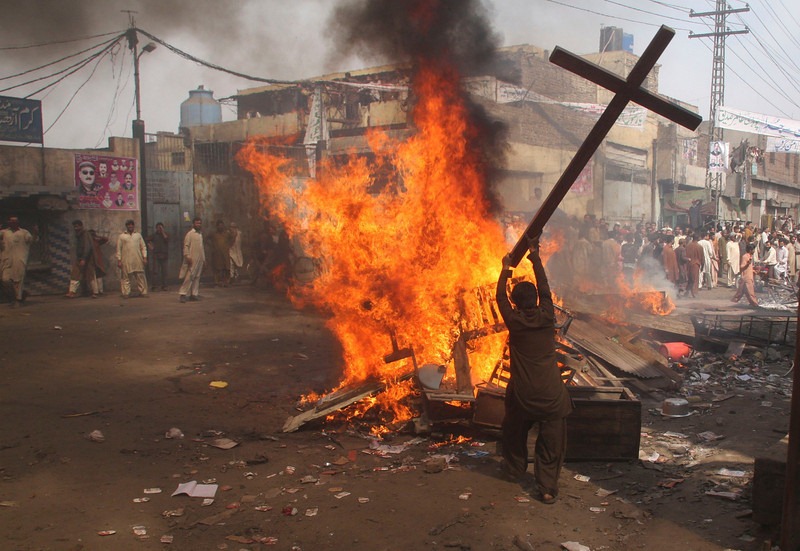 There have been about 1,400 blasphemy cases since the laws were first enacted in 1986, according to U.S.-based Human Rights Watch. There are more than 15 cases of people on death row for blasphemy in Pakistan, and more than 50 people have been killed while facing trial for the charge, according to the organization.
 Last year, a Pakistani court dismissed blasphemy charges against a Christian teenager whose case prompted international outrage.
Her detention stirred up religious tensions in the predominantly Muslim country. It also generated fierce criticism of Pakistani authorities and renewed debate over Pakistan's blasphemy laws.
President Asif Ali Zardari issued a statement Saturday on the most recent "unfortunate incident." He noted that the country's constitution protects the rights of all Pakistanis, and that "such acts of vandalism against minorities tarnish the image of the country."
Last year, a Pakistani court dismissed blasphemy charges against a Christian teenager whose case prompted international outrage.
Her detention stirred up religious tensions in the predominantly Muslim country. It also generated fierce criticism of Pakistani authorities and renewed debate over Pakistan's blasphemy laws.
President Asif Ali Zardari issued a statement Saturday on the most recent "unfortunate incident." He noted that the country's constitution protects the rights of all Pakistanis, and that "such acts of vandalism against minorities tarnish the image of the country."
National outcry over Joseph Colony incident
 Protests were held across Pakistan against the ransacking and burning of homes belonging to the Christian community in the Joseph Colony area of Badami Bagh in Lahore.
In Multan, the Christian community took out a protest rally from the Catholic Church to the press club. In Faisalabad, a peace walk was held led by Muslim and Christian religious leaders. The Christian community protested at the Pindi by-pass. Protestors burnt tyres and blocked the road, which brought a halt to traffic travelling to Lahore and Islamabad.
Protest rallies were also held in Sargodha, Gojar, Mandi Bahauddin and Dera Ismail Khan.
Members of the Christian community also held a protest in Lahore. Protestors chanted slogans against the provincial government, administration and police. Traffic was also blocked on Ferozepur road. Protestors pelted the Metro buses and police with stones. Police resorted to aerial firing and baton charging to disperse the protestors.
In Karachi, the MQM held a protest against the incident at the press club. MQM leader Farooq Sattar called for the immediate resignation of the Punjab government. The protest rally in Karachi took a violent turn following police shelling. Enraged people clashed with traders near Zainab Market and damaged shops and cars. The windscreens of two ambulances were also damaged.
On March 9 over 100 homes of the Christian community were ransacked and burnt by an angry mob after an individual was accused of blasphemy.
Protests were held across Pakistan against the ransacking and burning of homes belonging to the Christian community in the Joseph Colony area of Badami Bagh in Lahore.
In Multan, the Christian community took out a protest rally from the Catholic Church to the press club. In Faisalabad, a peace walk was held led by Muslim and Christian religious leaders. The Christian community protested at the Pindi by-pass. Protestors burnt tyres and blocked the road, which brought a halt to traffic travelling to Lahore and Islamabad.
Protest rallies were also held in Sargodha, Gojar, Mandi Bahauddin and Dera Ismail Khan.
Members of the Christian community also held a protest in Lahore. Protestors chanted slogans against the provincial government, administration and police. Traffic was also blocked on Ferozepur road. Protestors pelted the Metro buses and police with stones. Police resorted to aerial firing and baton charging to disperse the protestors.
In Karachi, the MQM held a protest against the incident at the press club. MQM leader Farooq Sattar called for the immediate resignation of the Punjab government. The protest rally in Karachi took a violent turn following police shelling. Enraged people clashed with traders near Zainab Market and damaged shops and cars. The windscreens of two ambulances were also damaged.
On March 9 over 100 homes of the Christian community were ransacked and burnt by an angry mob after an individual was accused of blasphemy.
Karzai says US and Taliban holding Doha talks
 The Taliban and a US offical have denied claims by Hamid Karzai, the Afghan president, that they have resumed talks in Qatar.
The Taliban formally suspended the talks one year ago, blaming "shaky, erratic and vague" US statements.
"Senior leaders of the Taliban and the Americans are engaged in talks in the Gulf state on a daily basis," Karzai told a gathering to mark International Women's Day.
His comments came ahead of talks on Sunday with Chuck Hagel, the US defence secretary, who is in Kabul for his first visit to Afghanistan since becoming the Pentagon chief.
The US government has said it remained committed to political reconciliation involving talks with the Taliban but
progress would require agreement between the Afghan government and the fighters.
"This is simply incorrect," said a US official, who declined to be identified, when asked about Karzai's remarks.
"We continue to support an Afghan-led process of political reconciliation."
Zabihullah Mujahid, the Taliban spokesman in Afghanistan, also denied that negotiations with the US had resumed
and said no progress had been made since they were suspended.
"The Taliban strongly rejects Karzai's comments," he said.
Hagel talks
Karzai is currently negotiating a pact with Washington for the long-term presence of US forces in Afghanistan, and his remarks come just days after an agreement to transfer the US prison outside of Kabul to Afghan authority fell through.
The issue of US troop levels after next year's withdrawal, when Washington will halve its 66,000 troop level, will be one of the main subjects on the agenda at the talks between Hagel and Karzai.
Hagel's visit also coincides with the passing of a deadline imposed by Karzai for US special forces to leave the province of Wardak, after Karzai accused them of overseeing torture and killings in the area.
US forces have denied involvement in any abuses and it was not clear if they were leaving Wardak by the deadline.
The Kabul government has been pushing hard to get the Taliban to the negotiating table before most US-led NATO combat troops withdraw by the end of 2014.
Afghan officials have not held direct talks with the fighters, who were toppled in 2001 and have proven resilient
after more than a decade of war with Western and Afghan forces.
US diplomats have been seeking to broaden exploratory talks with the Taliban that began clandestinely in Germany in
late 2010 after the Taliban offered to open a representative office in Qatar.
Regional power Pakistan indicated a few months ago that it would support the peace process by releasing Afghan Taliban detainees who may help promote the peace process.
But there have been no tangible signs the move advanced reconciliation.
Taliban accused
A day after two suicide bombings killed 19 people, Karzai also accused the Taliban of trying to show Afghans that violence will worsen if most foreign troops leave as planned by the end of next year.
Karzai said the two attacks, one outside the Afghan Defence Ministry and the other near a police checkpoint in eastern Khost province, show the Taliban is conducting attacks to help show that international forces will still be needed to keep the peace after 2014.
"The explosions in Kabul and Khost yesterday showed that they are at the service of America and at the service of this phrase: 2014," said Karzai.
"They are trying to frighten us into thinking that if the foreigners are not in Afghanistan, we would be facing these sorts of incidents."
Karzai is known for making incendiary comments in his public speeches, a move that is often attributed to him trying to appeal to those who sympathise with the Taliban or as a way to gain leverage when he feels his international allies are ignoring his country's sovereignty.
In previous speeches he has threatened to join the Taliban and called his NATO allies occupiers who want to plunder Afghanistan's resources.
The Taliban and a US offical have denied claims by Hamid Karzai, the Afghan president, that they have resumed talks in Qatar.
The Taliban formally suspended the talks one year ago, blaming "shaky, erratic and vague" US statements.
"Senior leaders of the Taliban and the Americans are engaged in talks in the Gulf state on a daily basis," Karzai told a gathering to mark International Women's Day.
His comments came ahead of talks on Sunday with Chuck Hagel, the US defence secretary, who is in Kabul for his first visit to Afghanistan since becoming the Pentagon chief.
The US government has said it remained committed to political reconciliation involving talks with the Taliban but
progress would require agreement between the Afghan government and the fighters.
"This is simply incorrect," said a US official, who declined to be identified, when asked about Karzai's remarks.
"We continue to support an Afghan-led process of political reconciliation."
Zabihullah Mujahid, the Taliban spokesman in Afghanistan, also denied that negotiations with the US had resumed
and said no progress had been made since they were suspended.
"The Taliban strongly rejects Karzai's comments," he said.
Hagel talks
Karzai is currently negotiating a pact with Washington for the long-term presence of US forces in Afghanistan, and his remarks come just days after an agreement to transfer the US prison outside of Kabul to Afghan authority fell through.
The issue of US troop levels after next year's withdrawal, when Washington will halve its 66,000 troop level, will be one of the main subjects on the agenda at the talks between Hagel and Karzai.
Hagel's visit also coincides with the passing of a deadline imposed by Karzai for US special forces to leave the province of Wardak, after Karzai accused them of overseeing torture and killings in the area.
US forces have denied involvement in any abuses and it was not clear if they were leaving Wardak by the deadline.
The Kabul government has been pushing hard to get the Taliban to the negotiating table before most US-led NATO combat troops withdraw by the end of 2014.
Afghan officials have not held direct talks with the fighters, who were toppled in 2001 and have proven resilient
after more than a decade of war with Western and Afghan forces.
US diplomats have been seeking to broaden exploratory talks with the Taliban that began clandestinely in Germany in
late 2010 after the Taliban offered to open a representative office in Qatar.
Regional power Pakistan indicated a few months ago that it would support the peace process by releasing Afghan Taliban detainees who may help promote the peace process.
But there have been no tangible signs the move advanced reconciliation.
Taliban accused
A day after two suicide bombings killed 19 people, Karzai also accused the Taliban of trying to show Afghans that violence will worsen if most foreign troops leave as planned by the end of next year.
Karzai said the two attacks, one outside the Afghan Defence Ministry and the other near a police checkpoint in eastern Khost province, show the Taliban is conducting attacks to help show that international forces will still be needed to keep the peace after 2014.
"The explosions in Kabul and Khost yesterday showed that they are at the service of America and at the service of this phrase: 2014," said Karzai.
"They are trying to frighten us into thinking that if the foreigners are not in Afghanistan, we would be facing these sorts of incidents."
Karzai is known for making incendiary comments in his public speeches, a move that is often attributed to him trying to appeal to those who sympathise with the Taliban or as a way to gain leverage when he feels his international allies are ignoring his country's sovereignty.
In previous speeches he has threatened to join the Taliban and called his NATO allies occupiers who want to plunder Afghanistan's resources.
Attack on Christians: PPP MPA Pervaiz Rafiq resigns in protest
The Express TribunePervaiz Rafiq, a minority MPA from Punjab, resigned from the provincial assembly in protest over the Joseph Colony attack, Express News reported on Sunday. On March 9, a huge mob attacked and set ablaze more than 150 houses of Christians living in the colony over alleged blasphemous remarks against Prophet Muhammad (pbuh) by Sawan Masih, a 28-year-old Christian sanitation worker. While speaking to Express News, Rafiq accused the Punjab government of protecting extremists. He further said that the provincial government had failed as it could not prevent the incident from happening despite signs of a possible attack. Rafiq added that material help to those affected is of no good if the root cause is not addressed. Rafiq belongs to the ruling Pakistan Peoples Party (PPP). He had served as an MPA from 2002 to 2007 and came back to power in 2008 elections on seat reserved for minorities.
President Zardari to attend groundbreaking of IP gas pipeline on March 11
 President Asif Zardari would be visiting Iran on Monday to attend the groundbreaking of $7.5 billion Iran-Pakistan gas pipeline project.
With the materialisation of the project, Pakistan plans to import 21.5 million cubic metres of gas daily from Iran. The project would solve the energy woes of the country to a great extent.
The mega ceremony would be held at Gabd Zero Point on the border from where the Pakistan section of the gas pipeline starts and would be attended by the presidents of the two countries besides other world leaders and foreign diplomats posted in Islamabad. According to sources, in a bid to promote national consensus over the project, the chief ministers and governors of the four provinces, including CM Punjab Shahbaz Sharif have been invited to the event, which is dubbed as a milestone project in the history of the country.
All chief ministers and governors have expressed their consent to join the ceremony with the exception of Punjab CM Shahbaz Sharif and has so far chosen to remain silence.
Tehran has agreed to provide a $500 million loan to partially finance construction of the pipeline on the Pakistan side, which will cost $1.5 billion. Pakistan will pay the remaining cost from its own resources.
If everything else goes well the pipeline will be completed in 15 months. Iran has already completed the pipeline in its territory, while the laying of 785-km-long Pakistani section would commence now.
President Asif Zardari would be visiting Iran on Monday to attend the groundbreaking of $7.5 billion Iran-Pakistan gas pipeline project.
With the materialisation of the project, Pakistan plans to import 21.5 million cubic metres of gas daily from Iran. The project would solve the energy woes of the country to a great extent.
The mega ceremony would be held at Gabd Zero Point on the border from where the Pakistan section of the gas pipeline starts and would be attended by the presidents of the two countries besides other world leaders and foreign diplomats posted in Islamabad. According to sources, in a bid to promote national consensus over the project, the chief ministers and governors of the four provinces, including CM Punjab Shahbaz Sharif have been invited to the event, which is dubbed as a milestone project in the history of the country.
All chief ministers and governors have expressed their consent to join the ceremony with the exception of Punjab CM Shahbaz Sharif and has so far chosen to remain silence.
Tehran has agreed to provide a $500 million loan to partially finance construction of the pipeline on the Pakistan side, which will cost $1.5 billion. Pakistan will pay the remaining cost from its own resources.
If everything else goes well the pipeline will be completed in 15 months. Iran has already completed the pipeline in its territory, while the laying of 785-km-long Pakistani section would commence now.
Pakistan: IP gas pipeline project
 President Asif Ali Zardari while addressing PPP lawmakers and prospective candidates for the forthcoming elections stated that the Iran-Pakistan (IP) gas pipeline project will help overcome the energy crisis and reiterated the government's commitment to implement it in spite of international pressure. The world community in general and the US in particular, must desist from pushing Pakistan into a corner. They must offer Pakistan a credible sweetener as offered to India and China because of the serious energy deficit the country faces.
The IP deal has not been finalised yet even though the recent visit by the President to Iran did take it a step further and his forthcoming visit to Iran may further matters in that direction. Those who argue that with less than two weeks remaining, and with the caretakers not having the mandate to implement a project that may have serious consequences on the country's foreign relations and economy, fail to take account of the fact that it has been the duly-elected President who has been engaged in furthering the deal and his term would end in September this year. Why the deal was not finalised during the past five years may be attributable to international pressure. Why now may be due to the need for the PPP to play a trump card with respect to the energy sector; and with loadshedding once again peaking at more than 12 hours in several cities, leave alone rural areas, the IP gas pipeline may be regarded by the leadership as a solution to diverting public attention from its abysmal performance in the sector for the past five years.
Be that as it may, it is necessary to undertake a cost-benefit analysis of the IP gas pipeline project. A number of factors continue to be ignored by the government. First and foremost, the problem of operating well below our generational capacity due to the intractable inter-circular debt continues. In other words, the energy sub-sectors continue to not clear each other's bills disabling the major fuel importer Pakistan State Oil (PSO) to pay for imports, which in turn, accounts for periodic releases by the Ministry of Finance that it can ill-afford. The current policy of periodic disbursement by the Ministry of Finance to enable PSO to pay for fuel has merely increased the budget deficit with its consequent impact on the rate of inflation so in effect this policy has neither solved the energy crisis nor succeeded in combating inflation. The first major step therefore for any government should be to ensure that the country is operating at capacity which would require a sustained effort to rid the sector of the circular debt, a problem that was acknowledged and consequent remedial measures identified in 2008 when Pakistan went on the International Monetary Fund programme and which to this day remain unimplemented.
Secondly, the government through massive annual injections to eliminate the inter-tariff differential has been supporting the inefficiently-run distribution companies (Discos). While it is understandable that no government can allow the poorly-run Discos mainly catering to poor areas to charge a higher tariff than those that supply to relatively richer regions yet there is a need to provide some incentive for the poorly-run Discos to minimise theft and transmission losses.
Thirdly, the government appears to be ignoring US warnings that under its legislation any deal with Iran in the oil and energy sector would trigger sanctions against Pakistan. The US has suggested long-term alternatives to the IP pipeline and is assisting Pakistan with improving the performance of the sector as well as investing in the construction of some dams. In this context, it is relevant to note that no Western country from where the bulk of our assistance emanates or any multilateral agency where US engagement remains significant, will extend any support in case the IP pipeline deal is finalised. It is unclear whether oil-rich Arab countries would follow suit but it is known that many of them have strained relations with Iran. Pakistan relies on foreign assistance to the tune of over 2 to 3 billion dollars each year. True that this amount could easily be generated from our own resources if tax reforms are implemented but that too has remained hostage to political compulsions.
President Asif Ali Zardari while addressing PPP lawmakers and prospective candidates for the forthcoming elections stated that the Iran-Pakistan (IP) gas pipeline project will help overcome the energy crisis and reiterated the government's commitment to implement it in spite of international pressure. The world community in general and the US in particular, must desist from pushing Pakistan into a corner. They must offer Pakistan a credible sweetener as offered to India and China because of the serious energy deficit the country faces.
The IP deal has not been finalised yet even though the recent visit by the President to Iran did take it a step further and his forthcoming visit to Iran may further matters in that direction. Those who argue that with less than two weeks remaining, and with the caretakers not having the mandate to implement a project that may have serious consequences on the country's foreign relations and economy, fail to take account of the fact that it has been the duly-elected President who has been engaged in furthering the deal and his term would end in September this year. Why the deal was not finalised during the past five years may be attributable to international pressure. Why now may be due to the need for the PPP to play a trump card with respect to the energy sector; and with loadshedding once again peaking at more than 12 hours in several cities, leave alone rural areas, the IP gas pipeline may be regarded by the leadership as a solution to diverting public attention from its abysmal performance in the sector for the past five years.
Be that as it may, it is necessary to undertake a cost-benefit analysis of the IP gas pipeline project. A number of factors continue to be ignored by the government. First and foremost, the problem of operating well below our generational capacity due to the intractable inter-circular debt continues. In other words, the energy sub-sectors continue to not clear each other's bills disabling the major fuel importer Pakistan State Oil (PSO) to pay for imports, which in turn, accounts for periodic releases by the Ministry of Finance that it can ill-afford. The current policy of periodic disbursement by the Ministry of Finance to enable PSO to pay for fuel has merely increased the budget deficit with its consequent impact on the rate of inflation so in effect this policy has neither solved the energy crisis nor succeeded in combating inflation. The first major step therefore for any government should be to ensure that the country is operating at capacity which would require a sustained effort to rid the sector of the circular debt, a problem that was acknowledged and consequent remedial measures identified in 2008 when Pakistan went on the International Monetary Fund programme and which to this day remain unimplemented.
Secondly, the government through massive annual injections to eliminate the inter-tariff differential has been supporting the inefficiently-run distribution companies (Discos). While it is understandable that no government can allow the poorly-run Discos mainly catering to poor areas to charge a higher tariff than those that supply to relatively richer regions yet there is a need to provide some incentive for the poorly-run Discos to minimise theft and transmission losses.
Thirdly, the government appears to be ignoring US warnings that under its legislation any deal with Iran in the oil and energy sector would trigger sanctions against Pakistan. The US has suggested long-term alternatives to the IP pipeline and is assisting Pakistan with improving the performance of the sector as well as investing in the construction of some dams. In this context, it is relevant to note that no Western country from where the bulk of our assistance emanates or any multilateral agency where US engagement remains significant, will extend any support in case the IP pipeline deal is finalised. It is unclear whether oil-rich Arab countries would follow suit but it is known that many of them have strained relations with Iran. Pakistan relies on foreign assistance to the tune of over 2 to 3 billion dollars each year. True that this amount could easily be generated from our own resources if tax reforms are implemented but that too has remained hostage to political compulsions.
Lahore: Joseph Colony victims pass traumatized night
 The mayhem caused by a charged mob in a Christian neighborhood in Lahore left a trail of ransacked, looted and burnt houses. Sobbing residents of Joseph Colony were seen sitting on the debris and ash of their houses with eyes full of tears into the night.
The protesting community refused to accept food offered by the provincial government and barred rescue workers from carrying out their activities, demanding the administration that the perpetrators be brought behind the bars.
The residents also protested when Provincial Minister Rana Sanaullah along with Hamza Shahbaz visit them.
Former federal minister Jay Salik said Rs200,000 compensation, announced by the government was not sufficient.
The mayhem caused by a charged mob in a Christian neighborhood in Lahore left a trail of ransacked, looted and burnt houses. Sobbing residents of Joseph Colony were seen sitting on the debris and ash of their houses with eyes full of tears into the night.
The protesting community refused to accept food offered by the provincial government and barred rescue workers from carrying out their activities, demanding the administration that the perpetrators be brought behind the bars.
The residents also protested when Provincial Minister Rana Sanaullah along with Hamza Shahbaz visit them.
Former federal minister Jay Salik said Rs200,000 compensation, announced by the government was not sufficient.
Protests held against Badami Bagh incident
 Several protests and demonstration were held on Sunday in various cities of Pakistan including Karachi, Lahore, Rawalpindi and Islamabad against Saturday’s Badami Bagh incident in Lahore which saw at least 125 houses belonging to the Christian community burnt by a mob allegedly enraged over a blasphemy incident, DawnNews reported.
 Members of the Christian community staged protests on Ferozepur road in Lahore. Some enraged demonstrators resorted to stone pelting and broke the windows of buses and stands of the recently-launched Metro Bus service in Lahore. Police also fired aerial shots to disperse the mob but to no avail.
Similar demonstrations were held in Karachi, Rawalpindi and Islamabad.
Spokesperson for Punjab Government, Pervez Rasheed said that those involved in the Badami Bagh incident would be tried under the Anti-terrorism laws.
An initial investigation report over the incident was submitted by Punjab’s Inspector General police to provincial Chief Minister Mian Shahbaz Sharif on Sunday according to which timely action by the police had prevented the loss of life.
The report further said that there were only a handful of people behind the incident and that the policemen avoided the use of gunfire and other lethal weapons in order to minimise the loss of life.
At least 131 persons were taken into custody who were suspected of involvement in Saturday’s gruesome incident whereas a letter was written to the Lahore High Court’s registrar requesting for a judicial inquiry into the incident.
The chief minister was informed that those involved in the incident were being identified with the help of CCTV footage of the attack.
Prime Minister Raja Pervez Ashraf ordered for the provision complete assistance to all affectees belonging to the minority community .
Prime Minister Raja spoke to Minister of State for National Harmony Akram Masih and advisor Paul Bhatti and instructed them to maintain contact the victims of the Badami Bagh incident.
Construction material and other related equipment began to arrive in Badami Bagh area on Sunday for the rehabilitation of the destroyed neighbourhood.
HRCP statement
The shocking incident occurred after a Christian young man was accused of blasphemy. It is regrettable that Punjab administration has not learnt any lesson from previous incidents such as those in Gojra and Shantinagar, and has totally failed in providing protection to a minority community under siege, HRCP said in a statement.
Instead of investigating the case, the police arrested Christians while those who went on a rampage and can easily be identified from television footage have gone scot free, the report claimed.
The attack is yet another shameful incident against a vulnerable community and further confirmation of the slide toward extremism in society on the one hand and, on the other hand, the apathy and inaction that has become norm among the police.
Handing out compensation cheques is not a solution, so strong action against those responsible must be ensured, it said.
Members of the Christian community staged protests on Ferozepur road in Lahore. Some enraged demonstrators resorted to stone pelting and broke the windows of buses and stands of the recently-launched Metro Bus service in Lahore. Police also fired aerial shots to disperse the mob but to no avail.
Similar demonstrations were held in Karachi, Rawalpindi and Islamabad.
Spokesperson for Punjab Government, Pervez Rasheed said that those involved in the Badami Bagh incident would be tried under the Anti-terrorism laws.
An initial investigation report over the incident was submitted by Punjab’s Inspector General police to provincial Chief Minister Mian Shahbaz Sharif on Sunday according to which timely action by the police had prevented the loss of life.
The report further said that there were only a handful of people behind the incident and that the policemen avoided the use of gunfire and other lethal weapons in order to minimise the loss of life.
At least 131 persons were taken into custody who were suspected of involvement in Saturday’s gruesome incident whereas a letter was written to the Lahore High Court’s registrar requesting for a judicial inquiry into the incident.
The chief minister was informed that those involved in the incident were being identified with the help of CCTV footage of the attack.
Prime Minister Raja Pervez Ashraf ordered for the provision complete assistance to all affectees belonging to the minority community .
Prime Minister Raja spoke to Minister of State for National Harmony Akram Masih and advisor Paul Bhatti and instructed them to maintain contact the victims of the Badami Bagh incident.
Construction material and other related equipment began to arrive in Badami Bagh area on Sunday for the rehabilitation of the destroyed neighbourhood.
HRCP statement
The shocking incident occurred after a Christian young man was accused of blasphemy. It is regrettable that Punjab administration has not learnt any lesson from previous incidents such as those in Gojra and Shantinagar, and has totally failed in providing protection to a minority community under siege, HRCP said in a statement.
Instead of investigating the case, the police arrested Christians while those who went on a rampage and can easily be identified from television footage have gone scot free, the report claimed.
The attack is yet another shameful incident against a vulnerable community and further confirmation of the slide toward extremism in society on the one hand and, on the other hand, the apathy and inaction that has become norm among the police.
Handing out compensation cheques is not a solution, so strong action against those responsible must be ensured, it said.
Subscribe to:
Posts (Atom)