
ON this spring day, when flowers bloom and sparrows sing, all of nature joins in celebrating creation. For the multitudes of this stricken nation, though, April 4 is a sad reminder of the day when the shadows lengthened and darkness set in forever. Z.A Bhutto was hanged by a military dictator General Zia-Ul Haq by orchestrating a judicial trial to get rid of a popular leader. When the light was put off in one of the most brilliant shining stars in the galaxy in that dark night of April 4, 1979 Bhutto had already made indelible imprints on the sand of time, which no dictator could erase.

When Zulfikar Ali Bhutto took the reins of a truncated Pakistan in December 1971, a new state was taking shape, not through gaining liberty , it had come into being because it had been decapitated and dismembered. Unlike 1947, there was no hope, no anticipation, no dreams, only distress and dejection. In 1947, Pakistan had to be built from the physical building blocks. In 1971, it had to be rebuilt psychologically. If Jinnah got a moth-eaten Pakistan, Bhutto got a truncated and traumatized Pakistan. He had to carry his charge forward through its first steps in a mocking world. He bore the pain and the passion of a new Pakistan. It was like the first chapter of Genesis. Myriad problems and challenges confronted Pakistan, both at home and abroad. Over 5,000 square miles of territory lay under enemy occupation and 90,000 prisoners of war, 20,000 of them civilians, were languishing in Indian jails. Not a day passed without the anguished cry of thousands of sisters, mothers and relatives reverberating across the country. The humiliating vision of Pakistani soldiers surrendering to General Aurora at the Dhaka Race Course haunted our people. An empty treasury, a tottering economy, an all-pervading sense of gloom - it seemed we were set to collapse in a slow dance of death. Globally, Pakistan had become a pariah. Indira Ghandi threatened and taunted us from across the border while Mujibur Rehman ranted and raved about war trials and demanded a share from our empty coffers. There was a mountain to climb and soon the mountain would become an Everest. But ZAB moved with amazing alacrity in all directions. "We have to pick up the pieces, very small pieces," he declared in his opening address to the nation.
Brick by brick, the edifice of a shattered Pakistan was rebuilt from the debris of defeat and dismemberment. An ailing economy was nursed back to health. In line with the PPP manifesto, agricultural reforms were introduced and land distributed amongst the landless peasants. Labour unions were allowed and the minimum wage for labour was fixed. He gave Pakistan its first constitution, nuclear programme, held peace talks with India and brought 90,000 POW who were in Indian prison and were going to face war crimes.

ZAB opened the doors for Pakistani labour to work in the Arab Gulf states, thus alleviating unemployment and providing the base for foreign remittances. The honor and morale of the demoralized armed forces was restored and they were equipped with some of the most sophisticated weapons the world had to offer. From the ashes of defeat was emerging a new Pakistan. In no time at all, the engines of government were rolling. "If you think FDR had an amazing first 100 days, watch us," he prophetically declared. ZAB possessed a vital magnetism which he transmitted to the people. He could touch the raw nerve of their emotion. He could tap the emotional wellsprings of the nation. He knew the pulse of the people, their heartbeat. They would laugh with him and cry with him. There was a compelling chemistry, an electrical charge that has not dulled with time. It was, in is own words, his greatest romance. He gave to the poor a future and he gave them a voice. He gave them consciousness and dignity which no tank, no dictator can take away. That bond has been frozen into doctrine. He liberated the small farmers and peasants from the repression and cruelty of big landlords and banished the jagirdari and sardari system declaring that all citizens are born equal and must live with equal rights. Z.A Bhutto was a Legend, who lived and died like a hero with courage, determination and devotion to his principles, when cruel dictator Zia was going to kill him, Z.A Bhutto could sign few papers and could live in exile but he was a real man, he was not a coward. He too could have made a deal and lived to fight another day; but only great men with principles sacrifice their life for their cause. Zulfikar Ali Bhutto earned everlasting fame in the pantheon of leaders from the Third World in the struggle against colonialism and imperialism. He had the privilege of interacting with many of those leaders who played a great role in the epic struggle for national independence in the 20th Century including Mao Tse Tung, Soekarno, Chou-en Lai, and Gamal Abdel Nasser. He belonged to a category of anti-imperialist leaders who included Jamal Nasir of Egypt and Jawahir Lal Nehru of India. Life in Pakistan has never been the same again following the judicial murder of Zulfikar Ali Bhutto by General Ziaul Haq in April 1979. Bhutto had crash-landed in Pakistan’s politics in 1958 as the youngest minister in the government of Ayub Khan. He was all together a different person in a cabinet that had generals and senior bureaucrats who had been in cahoots with each other to put their claim to power as the legal heirs to the British Raj. As opposed to them Bhutto was driven by his romance with democracy and freedom for the people as envisaged by his leader Quaid-i-Azam Mohammad Ali Jinnah. Having found a place for himself on a platform that was not favorable to politicians, Bhutto chartered himself on a course that would give a new sense of direction to the country and a fresh meaning to politics.

In no time Bhutto had made a tremendous impact all around. As Minister for Fuel and Power, he had diverse explorers tapping into Pakistan’s underground hidden energy resources. For the first time Russians were involved in oil and gas exploration. His time as Minister for Science and Technology was well spent. He could measure the advancements made by India in the atomic field. He gave a proper sense of direction to the Pakistan Atomic Energy Commission, set it on the mission to have a sound infrastructure and to educate and train a whole army of nuclear scientists and engineers. It was he who had convinced Ayub to seek enriched uranium course for acquiring nuclear wherewithal. From his death cell he wrote to his "dearest daughter" Benazir Bhutto, "There is personal bitterness no doubt [against Zia regime] but the impersonal hurt predominates over my personal feelings. These [ruling] individuals have taken Pakistan back to 1947. In the process they have robbed the nation of the high ideals and spirit of fraternity the people shared and demonstrated in 1947". He reflects further in the letter: "It is worst than saying we are back to square one or that we are right back to where we started from. Nations do not fall back to square one, nations progress or they deteriorate explosively or decompose silently". Bhutto had believed that the country's sound defense was dependent on a solid industrial base. Pakistan owes not only its nuclear arsenal - now inching towards a fold up - to Bhutto but to him goes the credit of establishing Pakistan Steel Mills, aeronautical and heavy machine tool complexes, shipyard, Karachi Nuclear Power Plant and its automobile industry. His daughter Benazir Bhutto picked up from where her father had left and the combined efforts of the two made Pakistan cover a long way in becoming self-sufficient in missile technology and arms manufacturing including exports. For Pakistan Bhutto was the harbinger of colossal changes. He harnessed socio-economic forces for challenging the status quo, unshackling the masses and their empowerment. His sense of direction not only gave him the strength but also a popular support to consolidate the edifice of the state on an egalitarian program seeking for his people roti, kapra and makkan. Besides, he awakened the masses, making them realized they were the legitimate fountainhead of political power. He deeply cherished democracy and viewed military rule as a negation of the very genesis of the country that came into being as a result of a democratic process and a vote. Zulfikar Ali Bhutto had the courage of his conviction to decide to lay down his life rather than compromise or seek appeasement. The last chapter of his life is a glorious example of martyrdom for the cause of resurrection of democracy. At the time of his over throw, Bhutto was emerging as a spokesman of the World of Islam and the leader of the Third World. The age of Bhutto was an Age of Revolution. Although his life and career were cruelly terminated, Zulfikar Ali Bhutto will forever shine in history as one of the Great leaders who took part in the liberation of the Third World from the yoke of Imperialism and Neo Colonialism during the Twentieth Century. Zulfikar Ali Bhutto used to say that, "courage is in our blood, we are the children of a rich heritage. We shall succeed in our dream of an Islamic association since destiny demands it, political reality justifies it, posterity awaits it".
He laid the foundation for his dream fortress of Islam in Lahore's Islamic Summit in 1974. The rest is then a chapter of blood in history--the blood shed of the Quaid and of his young followers. He was hanged by his own general who once said that the amount of attention Pakistan army received from Prime Minister Bhutto had "no parallel in the history of Pakistan army prior to 1971."
Bhutto pushed politics out of the posh drawing rooms into real Pakistan-into the muddy lanes and villages of the poor. ZAB was a principled friend to the poor, downtrodden and oppressed. He was fearless in his beliefs and refused to bow before any man or power other than the Almighty. ZAB’S contributions to an impregnable Pakistan are seen in the Kamra Aeronautical factory, Heavy Mechanical Complex at Taxila, modernisation of Karachi Shipyard, creation of precision engineering works, Pakistan Steel Mills, Port Qasim, Pakistan Automobile Corporation to name a few. By signing the Simla Accord of 1972 he negotiated longest peace between India and Pakistan. His social reforms laid the foundation of an egalitarian society, his non-aligned foreign policy earned Pakistan respect in the comity of nations. He lifted the nation drowning in a sea of despair to Himalayan heights.
Bhutto's inspiring leadership filled Pakistanis with hope, energy and strength. There was a sense of purpose and direction in the country in pursuit of peace and prosperity. The economic growth rate increased and money poured in from expatriates who got the universal right to passport. The Muslim countries donated roughly $500 million annually to Pakistan, freeing it of international financial institutions. The people got jobs and opportunities. Women of the country were emancipated entering the police force, Foreign, Civil Service and subordinate judiciary for the first time in the country's history. He was a modernizer and saw nationalism as the key to unity. He rejected fanaticism. He gave pride to the poor. As leader of the Third World he spoke boldly against racism, colonialism and imperialism. He fearlessly defended the right of nations to independence. He was true to his values. When the time came he sacrificed his life but refused to compromise on his lofty ideals. He was fond of saying; "It is better to live like a lion for one day than to live like a jackal for a thousand." He lived with the courage of a lion, defying death in embracing martyrdom. He said he would show "how a leader of the people lives and dies," and he did. The world pleaded for his life wanting to save a man whose intellect and contribution to peace and progress was vital to the world community. But a frightened dictator, ignoring the unanimous call of the Supreme Court of Pakistan to spare the Quaid's life, ordered the execution in the middle of the night. He was true to his values. Prime Minister Bhutto went bravely to the gallows as the world learnt in shock that it had lost its most beloved son. There was widespread national and international condemnation. Bhutto left his world to enter the pantheon of history where he stands today with other towering personalities who shaped the course of history. His martyrdom sparked freedom movements in many countries as people gathered in capitals across the world to condemn his murder. As a student of history, he knew that eternal life remains in sacrificing oneself for a cause that is larger than an individual. And the noblest of all causes is the cause of the liberation of humanity from tyranny and oppression.. Z A BHUTTO was indeed a great leader, a leader we must salute today. Education was nationalized and made available to every child. Scores of Universities were built to turn the children of the discriminated and downtrodden into lawyers, doctors and engineers liberating them from a destiny of backwardness. Quaid-i-Awam was born in 1928. He was martyred in 1979. Yet he lives in the hearts and minds of the people still shining like a star that brightens the sky motivating those caught in the prisons of oppression. He was the one who converted that static and decayed dictatorial polity into a vibrant and dynamic democratic society; the cost of which he paid with his own life. He who gave his blood, and the blood of his sons and daughter, Shaheed Mohtarma Benazir Bhutto

, knew that there can be no sacrifice greater than the sacrifice for the people whose respect, honor and dignity is the respect and dignity of the Nation. Quaid e Awam made the people proud of themselves and of their Nation. The 20th century has seen many great leaders, Zulfikar Ali Bhutto is one of them. Due to his glorious achievements, Mr. Bhutto rules the hearts of the Pakistani people from his grave. He was not only the leader of Pakistan, he was the leader of an Islamic world, the leader of Third World. He will forever be remembered by his countrymen as Quaid-e-Awam. ZAB's detractors have distorted history and tampered with the written word. They killed Plato's philosopher-king and filled the space with charlatans. But he has written his own history in blood and the legend has been nourished by the tears and the sweat of those who work in the fields and the factories. Bhutto belonged to the sweat and sorrow of this soil. His soul has mingled with the soul of the multitudes who cry out in their sorrow and in their pain, ZAB gave the people of Pakistan the foundation on which to build an inspired dream palace of their national thoughts. Today, we have surrendered ourselves to the momentum of mediocrity. In Plato's words, "what is honored in a country will be cultivated there." But we are not a nation given to honoring our heroes. Today, let us rise above narrow considerations and interests and acknowledge a man who was a brilliant beacon on the highway of history. As his followers say, "Zinda Hai Bhutto, Zinda Hai"--Bhutto lives, he lives. Indeed he does, in the hearts of all those who dream of a better tomorrow. Long Live Bhuttoism….
 ON this spring day, when flowers bloom and sparrows sing, all of nature joins in celebrating creation. For the multitudes of this stricken nation, though, April 4 is a sad reminder of the day when the shadows lengthened and darkness set in forever. Z.A Bhutto was hanged by a military dictator General Zia-Ul Haq by orchestrating a judicial trial to get rid of a popular leader. When the light was put off in one of the most brilliant shining stars in the galaxy in that dark night of April 4, 1979 Bhutto had already made indelible imprints on the sand of time, which no dictator could erase.
 ZAB opened the doors for Pakistani labour to work in the Arab Gulf states, thus alleviating unemployment and providing the base for foreign remittances. The honor and morale of the demoralized armed forces was restored and they were equipped with some of the most sophisticated weapons the world had to offer. From the ashes of defeat was emerging a new Pakistan. In no time at all, the engines of government were rolling. "If you think FDR had an amazing first 100 days, watch us," he prophetically declared. ZAB possessed a vital magnetism which he transmitted to the people. He could touch the raw nerve of their emotion. He could tap the emotional wellsprings of the nation. He knew the pulse of the people, their heartbeat. They would laugh with him and cry with him. There was a compelling chemistry, an electrical charge that has not dulled with time. It was, in is own words, his greatest romance. He gave to the poor a future and he gave them a voice. He gave them consciousness and dignity which no tank, no dictator can take away. That bond has been frozen into doctrine. He liberated the small farmers and peasants from the repression and cruelty of big landlords and banished the jagirdari and sardari system declaring that all citizens are born equal and must live with equal rights. Z.A Bhutto was a Legend, who lived and died like a hero with courage, determination and devotion to his principles, when cruel dictator Zia was going to kill him, Z.A Bhutto could sign few papers and could live in exile but he was a real man, he was not a coward. He too could have made a deal and lived to fight another day; but only great men with principles sacrifice their life for their cause. Zulfikar Ali Bhutto earned everlasting fame in the pantheon of leaders from the Third World in the struggle against colonialism and imperialism. He had the privilege of interacting with many of those leaders who played a great role in the epic struggle for national independence in the 20th Century including Mao Tse Tung, Soekarno, Chou-en Lai, and Gamal Abdel Nasser. He belonged to a category of anti-imperialist leaders who included Jamal Nasir of Egypt and Jawahir Lal Nehru of India. Life in Pakistan has never been the same again following the judicial murder of Zulfikar Ali Bhutto by General Ziaul Haq in April 1979. Bhutto had crash-landed in Pakistan’s politics in 1958 as the youngest minister in the government of Ayub Khan. He was all together a different person in a cabinet that had generals and senior bureaucrats who had been in cahoots with each other to put their claim to power as the legal heirs to the British Raj. As opposed to them Bhutto was driven by his romance with democracy and freedom for the people as envisaged by his leader Quaid-i-Azam Mohammad Ali Jinnah. Having found a place for himself on a platform that was not favorable to politicians, Bhutto chartered himself on a course that would give a new sense of direction to the country and a fresh meaning to politics.
 In no time Bhutto had made a tremendous impact all around. As Minister for Fuel and Power, he had diverse explorers tapping into Pakistan’s underground hidden energy resources. For the first time Russians were involved in oil and gas exploration. His time as Minister for Science and Technology was well spent. He could measure the advancements made by India in the atomic field. He gave a proper sense of direction to the Pakistan Atomic Energy Commission, set it on the mission to have a sound infrastructure and to educate and train a whole army of nuclear scientists and engineers. It was he who had convinced Ayub to seek enriched uranium course for acquiring nuclear wherewithal. From his death cell he wrote to his "dearest daughter" Benazir Bhutto, "There is personal bitterness no doubt [against Zia regime] but the impersonal hurt predominates over my personal feelings. These [ruling] individuals have taken Pakistan back to 1947. In the process they have robbed the nation of the high ideals and spirit of fraternity the people shared and demonstrated in 1947". He reflects further in the letter: "It is worst than saying we are back to square one or that we are right back to where we started from. Nations do not fall back to square one, nations progress or they deteriorate explosively or decompose silently". Bhutto had believed that the country's sound defense was dependent on a solid industrial base. Pakistan owes not only its nuclear arsenal - now inching towards a fold up - to Bhutto but to him goes the credit of establishing Pakistan Steel Mills, aeronautical and heavy machine tool complexes, shipyard, Karachi Nuclear Power Plant and its automobile industry. His daughter Benazir Bhutto picked up from where her father had left and the combined efforts of the two made Pakistan cover a long way in becoming self-sufficient in missile technology and arms manufacturing including exports. For Pakistan Bhutto was the harbinger of colossal changes. He harnessed socio-economic forces for challenging the status quo, unshackling the masses and their empowerment. His sense of direction not only gave him the strength but also a popular support to consolidate the edifice of the state on an egalitarian program seeking for his people roti, kapra and makkan. Besides, he awakened the masses, making them realized they were the legitimate fountainhead of political power. He deeply cherished democracy and viewed military rule as a negation of the very genesis of the country that came into being as a result of a democratic process and a vote. Zulfikar Ali Bhutto had the courage of his conviction to decide to lay down his life rather than compromise or seek appeasement. The last chapter of his life is a glorious example of martyrdom for the cause of resurrection of democracy. At the time of his over throw, Bhutto was emerging as a spokesman of the World of Islam and the leader of the Third World. The age of Bhutto was an Age of Revolution. Although his life and career were cruelly terminated, Zulfikar Ali Bhutto will forever shine in history as one of the Great leaders who took part in the liberation of the Third World from the yoke of Imperialism and Neo Colonialism during the Twentieth Century. Zulfikar Ali Bhutto used to say that, "courage is in our blood, we are the children of a rich heritage. We shall succeed in our dream of an Islamic association since destiny demands it, political reality justifies it, posterity awaits it".
He laid the foundation for his dream fortress of Islam in Lahore's Islamic Summit in 1974. The rest is then a chapter of blood in history--the blood shed of the Quaid and of his young followers. He was hanged by his own general who once said that the amount of attention Pakistan army received from Prime Minister Bhutto had "no parallel in the history of Pakistan army prior to 1971."
Bhutto pushed politics out of the posh drawing rooms into real Pakistan-into the muddy lanes and villages of the poor. ZAB was a principled friend to the poor, downtrodden and oppressed. He was fearless in his beliefs and refused to bow before any man or power other than the Almighty. ZAB’S contributions to an impregnable Pakistan are seen in the Kamra Aeronautical factory, Heavy Mechanical Complex at Taxila, modernisation of Karachi Shipyard, creation of precision engineering works, Pakistan Steel Mills, Port Qasim, Pakistan Automobile Corporation to name a few. By signing the Simla Accord of 1972 he negotiated longest peace between India and Pakistan. His social reforms laid the foundation of an egalitarian society, his non-aligned foreign policy earned Pakistan respect in the comity of nations. He lifted the nation drowning in a sea of despair to Himalayan heights.
Bhutto's inspiring leadership filled Pakistanis with hope, energy and strength. There was a sense of purpose and direction in the country in pursuit of peace and prosperity. The economic growth rate increased and money poured in from expatriates who got the universal right to passport. The Muslim countries donated roughly $500 million annually to Pakistan, freeing it of international financial institutions. The people got jobs and opportunities. Women of the country were emancipated entering the police force, Foreign, Civil Service and subordinate judiciary for the first time in the country's history. He was a modernizer and saw nationalism as the key to unity. He rejected fanaticism. He gave pride to the poor. As leader of the Third World he spoke boldly against racism, colonialism and imperialism. He fearlessly defended the right of nations to independence. He was true to his values. When the time came he sacrificed his life but refused to compromise on his lofty ideals. He was fond of saying; "It is better to live like a lion for one day than to live like a jackal for a thousand." He lived with the courage of a lion, defying death in embracing martyrdom. He said he would show "how a leader of the people lives and dies," and he did. The world pleaded for his life wanting to save a man whose intellect and contribution to peace and progress was vital to the world community. But a frightened dictator, ignoring the unanimous call of the Supreme Court of Pakistan to spare the Quaid's life, ordered the execution in the middle of the night. He was true to his values. Prime Minister Bhutto went bravely to the gallows as the world learnt in shock that it had lost its most beloved son. There was widespread national and international condemnation. Bhutto left his world to enter the pantheon of history where he stands today with other towering personalities who shaped the course of history. His martyrdom sparked freedom movements in many countries as people gathered in capitals across the world to condemn his murder. As a student of history, he knew that eternal life remains in sacrificing oneself for a cause that is larger than an individual. And the noblest of all causes is the cause of the liberation of humanity from tyranny and oppression.. Z A BHUTTO was indeed a great leader, a leader we must salute today. Education was nationalized and made available to every child. Scores of Universities were built to turn the children of the discriminated and downtrodden into lawyers, doctors and engineers liberating them from a destiny of backwardness. Quaid-i-Awam was born in 1928. He was martyred in 1979. Yet he lives in the hearts and minds of the people still shining like a star that brightens the sky motivating those caught in the prisons of oppression. He was the one who converted that static and decayed dictatorial polity into a vibrant and dynamic democratic society; the cost of which he paid with his own life. He who gave his blood, and the blood of his sons and daughter, Shaheed Mohtarma Benazir Bhutto
In no time Bhutto had made a tremendous impact all around. As Minister for Fuel and Power, he had diverse explorers tapping into Pakistan’s underground hidden energy resources. For the first time Russians were involved in oil and gas exploration. His time as Minister for Science and Technology was well spent. He could measure the advancements made by India in the atomic field. He gave a proper sense of direction to the Pakistan Atomic Energy Commission, set it on the mission to have a sound infrastructure and to educate and train a whole army of nuclear scientists and engineers. It was he who had convinced Ayub to seek enriched uranium course for acquiring nuclear wherewithal. From his death cell he wrote to his "dearest daughter" Benazir Bhutto, "There is personal bitterness no doubt [against Zia regime] but the impersonal hurt predominates over my personal feelings. These [ruling] individuals have taken Pakistan back to 1947. In the process they have robbed the nation of the high ideals and spirit of fraternity the people shared and demonstrated in 1947". He reflects further in the letter: "It is worst than saying we are back to square one or that we are right back to where we started from. Nations do not fall back to square one, nations progress or they deteriorate explosively or decompose silently". Bhutto had believed that the country's sound defense was dependent on a solid industrial base. Pakistan owes not only its nuclear arsenal - now inching towards a fold up - to Bhutto but to him goes the credit of establishing Pakistan Steel Mills, aeronautical and heavy machine tool complexes, shipyard, Karachi Nuclear Power Plant and its automobile industry. His daughter Benazir Bhutto picked up from where her father had left and the combined efforts of the two made Pakistan cover a long way in becoming self-sufficient in missile technology and arms manufacturing including exports. For Pakistan Bhutto was the harbinger of colossal changes. He harnessed socio-economic forces for challenging the status quo, unshackling the masses and their empowerment. His sense of direction not only gave him the strength but also a popular support to consolidate the edifice of the state on an egalitarian program seeking for his people roti, kapra and makkan. Besides, he awakened the masses, making them realized they were the legitimate fountainhead of political power. He deeply cherished democracy and viewed military rule as a negation of the very genesis of the country that came into being as a result of a democratic process and a vote. Zulfikar Ali Bhutto had the courage of his conviction to decide to lay down his life rather than compromise or seek appeasement. The last chapter of his life is a glorious example of martyrdom for the cause of resurrection of democracy. At the time of his over throw, Bhutto was emerging as a spokesman of the World of Islam and the leader of the Third World. The age of Bhutto was an Age of Revolution. Although his life and career were cruelly terminated, Zulfikar Ali Bhutto will forever shine in history as one of the Great leaders who took part in the liberation of the Third World from the yoke of Imperialism and Neo Colonialism during the Twentieth Century. Zulfikar Ali Bhutto used to say that, "courage is in our blood, we are the children of a rich heritage. We shall succeed in our dream of an Islamic association since destiny demands it, political reality justifies it, posterity awaits it".
He laid the foundation for his dream fortress of Islam in Lahore's Islamic Summit in 1974. The rest is then a chapter of blood in history--the blood shed of the Quaid and of his young followers. He was hanged by his own general who once said that the amount of attention Pakistan army received from Prime Minister Bhutto had "no parallel in the history of Pakistan army prior to 1971."
Bhutto pushed politics out of the posh drawing rooms into real Pakistan-into the muddy lanes and villages of the poor. ZAB was a principled friend to the poor, downtrodden and oppressed. He was fearless in his beliefs and refused to bow before any man or power other than the Almighty. ZAB’S contributions to an impregnable Pakistan are seen in the Kamra Aeronautical factory, Heavy Mechanical Complex at Taxila, modernisation of Karachi Shipyard, creation of precision engineering works, Pakistan Steel Mills, Port Qasim, Pakistan Automobile Corporation to name a few. By signing the Simla Accord of 1972 he negotiated longest peace between India and Pakistan. His social reforms laid the foundation of an egalitarian society, his non-aligned foreign policy earned Pakistan respect in the comity of nations. He lifted the nation drowning in a sea of despair to Himalayan heights.
Bhutto's inspiring leadership filled Pakistanis with hope, energy and strength. There was a sense of purpose and direction in the country in pursuit of peace and prosperity. The economic growth rate increased and money poured in from expatriates who got the universal right to passport. The Muslim countries donated roughly $500 million annually to Pakistan, freeing it of international financial institutions. The people got jobs and opportunities. Women of the country were emancipated entering the police force, Foreign, Civil Service and subordinate judiciary for the first time in the country's history. He was a modernizer and saw nationalism as the key to unity. He rejected fanaticism. He gave pride to the poor. As leader of the Third World he spoke boldly against racism, colonialism and imperialism. He fearlessly defended the right of nations to independence. He was true to his values. When the time came he sacrificed his life but refused to compromise on his lofty ideals. He was fond of saying; "It is better to live like a lion for one day than to live like a jackal for a thousand." He lived with the courage of a lion, defying death in embracing martyrdom. He said he would show "how a leader of the people lives and dies," and he did. The world pleaded for his life wanting to save a man whose intellect and contribution to peace and progress was vital to the world community. But a frightened dictator, ignoring the unanimous call of the Supreme Court of Pakistan to spare the Quaid's life, ordered the execution in the middle of the night. He was true to his values. Prime Minister Bhutto went bravely to the gallows as the world learnt in shock that it had lost its most beloved son. There was widespread national and international condemnation. Bhutto left his world to enter the pantheon of history where he stands today with other towering personalities who shaped the course of history. His martyrdom sparked freedom movements in many countries as people gathered in capitals across the world to condemn his murder. As a student of history, he knew that eternal life remains in sacrificing oneself for a cause that is larger than an individual. And the noblest of all causes is the cause of the liberation of humanity from tyranny and oppression.. Z A BHUTTO was indeed a great leader, a leader we must salute today. Education was nationalized and made available to every child. Scores of Universities were built to turn the children of the discriminated and downtrodden into lawyers, doctors and engineers liberating them from a destiny of backwardness. Quaid-i-Awam was born in 1928. He was martyred in 1979. Yet he lives in the hearts and minds of the people still shining like a star that brightens the sky motivating those caught in the prisons of oppression. He was the one who converted that static and decayed dictatorial polity into a vibrant and dynamic democratic society; the cost of which he paid with his own life. He who gave his blood, and the blood of his sons and daughter, Shaheed Mohtarma Benazir Bhutto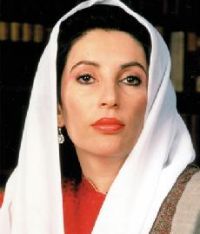 , knew that there can be no sacrifice greater than the sacrifice for the people whose respect, honor and dignity is the respect and dignity of the Nation. Quaid e Awam made the people proud of themselves and of their Nation. The 20th century has seen many great leaders, Zulfikar Ali Bhutto is one of them. Due to his glorious achievements, Mr. Bhutto rules the hearts of the Pakistani people from his grave. He was not only the leader of Pakistan, he was the leader of an Islamic world, the leader of Third World. He will forever be remembered by his countrymen as Quaid-e-Awam. ZAB's detractors have distorted history and tampered with the written word. They killed Plato's philosopher-king and filled the space with charlatans. But he has written his own history in blood and the legend has been nourished by the tears and the sweat of those who work in the fields and the factories. Bhutto belonged to the sweat and sorrow of this soil. His soul has mingled with the soul of the multitudes who cry out in their sorrow and in their pain, ZAB gave the people of Pakistan the foundation on which to build an inspired dream palace of their national thoughts. Today, we have surrendered ourselves to the momentum of mediocrity. In Plato's words, "what is honored in a country will be cultivated there." But we are not a nation given to honoring our heroes. Today, let us rise above narrow considerations and interests and acknowledge a man who was a brilliant beacon on the highway of history. As his followers say, "Zinda Hai Bhutto, Zinda Hai"--Bhutto lives, he lives. Indeed he does, in the hearts of all those who dream of a better tomorrow. Long Live Bhuttoism….


